Identification
- Summary
Levofloxacin is a fluoroquinolone antibiotic used to treat infections caused by susceptible bacteria of the upper respiratory tract, skin and skin structures, urinary tract, and prostate, as well as for post-exposure treatment of inhaled anthrax and the plague.
- Brand Names
- Levaquin, Quinsair
- Generic Name
- Levofloxacin
- DrugBank Accession Number
- DB01137
- Background
Levofloxacin is a fluoroquinolone antibiotic and the optical S-(-) isomer of racemic ofloxacin.1 It reportedly carries 8 to 128-fold more activity against both gram-negative and gram-positive bacteria compared to R-(+)-ofloxacin1 and remains stereochemically stable following administration (i.e. it does not invert to the inactive isomer).9 Levofloxacin, along with other quinolones such as gatifloxacin and moxifloxacin, is a member of the third generation of fluoroquinolones, colloquially referred to as the "respiratory quinolones" due to improved activity against gram-positive bacteria commonly implicated in respiratory infections.7,8
Levofloxacin was first approved by the FDA in 1996, and was approved in Canada and several South American countries soon after.1
- Type
- Small Molecule
- Groups
- Approved, Investigational
- Structure
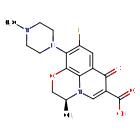
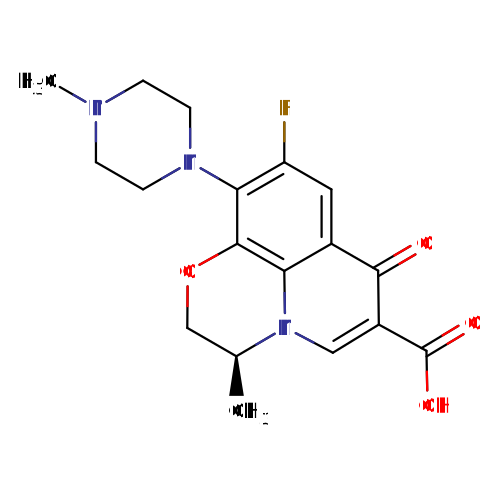
Structure for Levofloxacin (DB01137)
- Weight
- Average: 361.3675
Monoisotopic: 361.143784348 - Chemical Formula
- C18H20FN3O4
- Synonyms
- (-)-Ofloxacin
- (3S)-(-)-9-fluoro-3-methyl-10-(4-methyl-1-piperazinyl)-7-oxo-2,3-dihydro-7H-pyrido[1,2,3-de][1,4]benzoxazine-6-carboxylic acid
- (S)-(-)-9-fluoro-3-methyl-10-(4-methyl-1-piperazinyl)-7-oxo-2,3-dihydro-7H-pyrido[1,2,3-de][1,4]benzooxazine-6-carboxylic acid
- (S)-9-Fluoro-2,3-dihydro-3-methyl-10-(4-methyl-1-piperazinyl)-7-oxo-7H-pyrido(1,2,3-de)-1,4-benzoxazine-6-carboxylic acid
- (S)-Ofloxacin
- L-Ofloxacin
- Levofloxacin
- Levofloxacin anhydrous
- Levofloxacine
- Levofloxacino
- Levofloxacinum
- Ofloxacin S-(-)-form
- External IDs
- MP-376

Pharmacology
- Indication
In oral and intravenous formulations, levofloxacin is indicated in adults for the treatment of various infections caused by susceptible bacteria, including infections of the upper respiratory tract, lower respiratory tract, skin, skin structures, urinary tract, and prostate.9,13 The oral formulation is also indicated in both adults and children 6 months of age and older for the post-exposure management of inhalational anthrax caused by Bacillus anthracis and for the treatment and/or prophylaxis of plague caused by Yersinia pestis.9
In its ophthalmic formulation, levofloxacin is indicated for the treatment of bacterial conjunctivitis caused by susceptible organisms.10 An inhalational solution available in Canada is indicated for the management of cystic fibrosis patients aged 18 years or older with chronic pulmonary Pseudomonas aeruginosa infections.12
 Reduce drug development failure ratesBuild, train, & validate machine-learning modelswith evidence-based and structured datasets.Build, train, & validate predictive machine-learning models with structured datasets.
- Associated Conditions
Indication Type Indication Combined Product Details Approval Level Age Group Patient Characteristics Dose Form Treatment of Abscesses caused by susceptible bacteria •••••••••••• ••••• ••••••• ••••••• •••• •••••• Treatment of Acute bacterial exacerbation of chronic bronchitis (abecb) caused by susceptible bacteria •••••••••••• ••••• •••••••••• ••••••••••• ••••••••• ••••••• ••••••• ••••••• •••• •••••• Treatment of Acute pyelonephritis caused by infection due to escherichia coli •••••••••••• ••••••• ••••••• •••• •••••• Treatment of Bacterial conjunctivitis caused by susceptible bacteria •••••••••••• ••••••••• •••••••• • ••••• Treatment of Cellulitis caused by susceptible bacteria •••••••••••• ••••• ••••••• ••••••• •••• •••••• - Contraindications & Blackbox Warnings
 Prevent Adverse Drug Events TodayTap into our Clinical API for life-saving information on contraindications & blackbox warnings, population restrictions, harmful risks, & more.Avoid life-threatening adverse drug events with our Clinical API
- Pharmacodynamics
Levofloxacin is bactericidal and exerts its antimicrobial effects via inhibition of bacterial DNA replication.9 It has a relatively long duration of action in comparison with other antibiotics that allows for once or twice daily dosing. Levofloxacin is associated with QTc-interval prolongation and should be used with caution in patients with other risk factors for prolongation (e.g. hypokalemia, concomitant medications).9
Levofloxacin has demonstrated in vitro activity against a number of aerobic gram-positive and gram-negative bacteria and may carry some activity against certain species of anaerobic bacteria9 and other pathogens such as Chlamydia and Legionella.1 Resistance to levofloxacin may develop, and is generally due to mutations in DNA gyrase or topoisomerase IV, or via alterations to drug efflux.9,7 Cross-resistance may occur between levofloxacin and other fluoroquinolones, but is unlikely to develop between levofloxacin and other antibiotic classes (e.g. macrolides) due to significant differences in chemical structure and mechanism of action.9
As antimicrobial susceptibility patterns are geographically distinct, local antibiograms should be consulted to ensure adequate coverage of relevant pathogens prior to use.
- Mechanism of action
Levofloxacin, like other fluoroquinolone antibiotics, exerts its antimicrobial activity via the inhibition of two key bacterial enzymes: DNA gyrase and topoisomerase IV.9 Both targets are type II topoisomerases, but have unique functions within the bacterial cell. DNA gyrase is an enzyme found only in bacteria that introduces negative supercoils into DNA during replication - this helps to relieve torsional strain caused by the introduction of positive supercoils during replication, and these negative supercoils are essential for chromosome condensation and the promotion of transcription initiation.7 It is comprised of four subunits (two A subunits and two B subunits) of which the A subunits appear to be the target of fluoroquinolone antibiotics.1 Bacterial topoisomerase IV, in addition to contributing to the relaxation of positive supercoils, is essential at the terminal stages of DNA replication and functions to “unlink” newly replicated chromosomes to allow for the completion of cell division.7
Inhibition of these enzymes by levofloxacin likely occurs via complexation with the topoisomerase enzymes.7 The end result is a blockade of DNA replication, thus inhibiting cell division and resulting in cell death.
Target Actions Organism ADNA gyrase subunit A inhibitorHaemophilus influenzae (strain ATCC 51907 / DSM 11121 / KW20 / Rd) ADNA topoisomerase 4 subunit A inhibitorHaemophilus influenzae (strain ATCC 51907 / DSM 11121 / KW20 / Rd) - Absorption
Absorption of levofloxacin following oral administration is rapid and essentially complete, with an oral bioavailability of approximately 99%.9 Due to its nearly complete absorption, the intravenous and oral formulations of levofloxacin may be interchangeable.13 The Tmax is generally attained 1-2 hours following administration and the Cmax is proportional to the given dose - an intravenous dose of 500mg infused over 60 minutes resulted in a Cmax of 6.2 ± 1.0 µg/mL whereas a 750mg dose infused over 90 minutes resulted in a Cmax of 11.5 ± 4.0 µg/mL.9 Oral administration with food prolongs the Tmax by approximately 1 hour and slightly decreases the Cmax, but these changes are not likely to be clinically significant.9
Systemic absorption following oral inhalation is approximately 50% lower than that observed following oral administration.12
- Volume of distribution
Levofloxacin is widely distributed in the body, with an average volume of distribution following oral administration between 1.09-1.26 L/kg (~89-112 L).1,9 Concentrations in many tissues and fluids may exceed those observed in plasma.1 Levofloxacin is known to penetrate well into skin tissue, fluids (e.g. blisters), lung tissue, and prostatic tissue, amongst others.1
- Protein binding
Levofloxacin is 24-38% protein-bound in plasma, primarily to albumin. The extent of protein-binding is independent of its plasma concentration.9
- Metabolism
Only 2 metabolites, desmethyl-levofloxacin and levofloxacin-N-oxide, have been identified in humans, neither of which appears to carry any relevant pharmacological activity.9 Following oral administration, less than 5% of the administered dose was recovered in the urine as these metabolites, indicating very little metabolism of levofloxacin in humans.9 The specific enzymes responsible for the demethylation and oxidation of levofloxacin have yet to be ascertained.
Hover over products below to view reaction partners
- Route of elimination
The majority of administered levofloxacin is excreted unchanged in the urine.9 Following the administration of a single oral dose of levofloxacin, approximately 87% was eliminated unchanged in the urine within 48 hours and less than 4% was eliminated in the feces within 72 hours.9
- Half-life
The average terminal elimination half-life of levofloxacin is 6-8 hours.1,9
- Clearance
The average apparent total body clearance of levofloxacin ranges from 8.64-13.56 L/h, and its renal clearance ranges from 5.76-8.52 L/h.1,9 The relative similarity of these ranges indicates a small degree of non-renal clearance.1
- Adverse Effects
 Improve decision support & research outcomesWith structured adverse effects data, including: blackbox warnings, adverse reactions, warning & precautions, & incidence rates. View sample adverse effects data in our new Data Library!Improve decision support & research outcomes with our structured adverse effects data.
- Toxicity
The LD50 following oral administration in mice and rats is 1803 mg/kg and 1478 mg/kg, respectively.14
Levofloxacin exhibits low potential for acute toxicity - following a single high dose of levofloxacin in several different test animals (e.g. mice, rats, monkeys) observed symptoms included ataxia, ptosis, decreased motor activity, dyspnea, tremors, and convulsions.9 Treatment of acute overdosage should involve stomach emptying (e.g. with activated charcoal) and general supportive measures. Consider monitoring of the patient's ECG to ensure QTc values remain within range.13 Levofloxacin is not efficiently removed by dialysis (peritoneal or hemodialysis) and is therefore of little benefit in cases of overdose.9
- Pathways
- Not Available
- Pharmacogenomic Effects/ADRs
- Not Available
Interactions
- Drug Interactions
- This information should not be interpreted without the help of a healthcare provider. If you believe you are experiencing an interaction, contact a healthcare provider immediately. The absence of an interaction does not necessarily mean no interactions exist.
Drug Interaction Integrate drug-drug
interactions in your softwareAbacavir Abacavir may decrease the excretion rate of Levofloxacin which could result in a higher serum level. Abemaciclib The excretion of Abemaciclib can be decreased when combined with Levofloxacin. Acarbose The therapeutic efficacy of Acarbose can be increased when used in combination with Levofloxacin. Aceclofenac Aceclofenac may increase the neuroexcitatory activities of Levofloxacin. Acemetacin Acemetacin may increase the neuroexcitatory activities of Levofloxacin. - Food Interactions
- Take with or without food. Food slightly alters kinetics but not to any clinically significant extent.
Products
 Drug product information from 10+ global regionsOur datasets provide approved product information including:dosage, form, labeller, route of administration, and marketing period.Access drug product information from over 10 global regions.
- Product Ingredients
Ingredient UNII CAS InChI Key Levofloxacin hemihydrate 6GNT3Y5LMF 138199-71-0 SUIQUYDRLGGZOL-RCWTXCDDSA-N - Product Images
- International/Other Brands
- Cravit / Elequine / Floxel / Leroxacin / Levokacin / Levox / Levoxacin / Mosardal / Nofaxin / Reskuin / Tavanic
- Brand Name Prescription Products
Name Dosage Strength Route Labeller Marketing Start Marketing End Region Image Act Levofloxacin Tablet 250 mg Oral TEVA Canada Limited 2009-06-24 Not applicable Canada 
Act Levofloxacin Tablet 750 mg Oral TEVA Canada Limited 2009-06-24 Not applicable Canada Act Levofloxacin Tablet 500 mg Oral TEVA Canada Limited 2009-06-24 Not applicable Canada Iquix Solution 15 mg/1mL Ophthalmic Vistakon Pharmaceuticals 2004-06-01 2017-04-13 US 
Levaquin Tablet, film coated 500 mg/1 Oral McNeil Pharmaceuticals 1996-12-20 2012-03-31 US - Generic Prescription Products
Name Dosage Strength Route Labeller Marketing Start Marketing End Region Image Apo-levofloxacin Tablet 500 mg Oral Apotex Corporation 2009-06-24 Not applicable Canada Apo-levofloxacin Tablet 750 mg Oral Apotex Corporation 2009-06-24 Not applicable Canada Apo-levofloxacin Tablet 250 mg Oral Apotex Corporation 2009-06-24 Not applicable Canada Auro-levofloxacin Tablet 500 mg Oral Auro Pharma Inc 2016-04-12 Not applicable Canada Auro-levofloxacin Tablet 250 mg Oral Auro Pharma Inc 2016-04-12 Not applicable Canada - Mixture Products
Name Ingredients Dosage Route Labeller Marketing Start Marketing End Region Image Levodexa Levofloxacin hemihydrate (0.5 % w/v) + Dexamethasone sodium phosphate (0.1 % w/v) Solution Ophthalmic Xediton Pharmaceuticals Inc Not applicable Not applicable Canada TRILEVO 500 MG+30 MG+ 1000 MG TEDAVİ PAKETİ Levofloxacin hemihydrate (500 mg) + Amoxicillin (1000 mg) + Lansoprazole (30 mg) Tablet Oral Deva Holding A.S. 2012-02-13 Not applicable Turkey 
- Unapproved/Other Products
Name Ingredients Dosage Route Labeller Marketing Start Marketing End Region Image LEVONAT 500 MG FILM TABLET, 7 ADET Levofloxacin hemihydrate (500 mg) Tablet, film coated Oral ATABAY KİMYA SAN. VE TİC. A.Ş. 2013-01-29 Not applicable Turkey


Categories
- ATC Codes
- J01MA12 — Levofloxacin
- J01MA — Fluoroquinolones
- J01M — QUINOLONE ANTIBACTERIALS
- J01 — ANTIBACTERIALS FOR SYSTEMIC USE
- J — ANTIINFECTIVES FOR SYSTEMIC USE
- A02BD — Combinations for eradication of Helicobacter pylori
- A02B — DRUGS FOR PEPTIC ULCER AND GASTRO-OESOPHAGEAL REFLUX DISEASE (GORD)
- A02 — DRUGS FOR ACID RELATED DISORDERS
- A — ALIMENTARY TRACT AND METABOLISM
- J01RA — Combinations of antibacterials
- J01R — COMBINATIONS OF ANTIBACTERIALS
- J01 — ANTIBACTERIALS FOR SYSTEMIC USE
- J — ANTIINFECTIVES FOR SYSTEMIC USE
- Drug Categories
- Alimentary Tract and Metabolism
- Anti-Bacterial Agents
- Anti-Infective Agents
- Anti-Infective Agents, Urinary
- Antibacterials for Systemic Use
- Antiinfectives for Systemic Use
- Cytochrome P-450 CYP1A2 Inhibitors
- Cytochrome P-450 CYP1A2 Inhibitors (strength unknown)
- Cytochrome P-450 CYP2C9 Inhibitors
- Cytochrome P-450 CYP2C9 Inhibitors (strength unknown)
- Cytochrome P-450 Enzyme Inhibitors
- Drugs causing inadvertant photosensitivity
- Drugs that are Mainly Renally Excreted
- Enzyme Inhibitors
- Fluoroquinolone Antibacterial
- Fluoroquinolones
- Heterocyclic Compounds, Fused-Ring
- MATE 1 Inhibitors
- MATE 1 Substrates
- MATE 2 Inhibitors
- MATE inhibitors
- MATE substrates
- Moderate Risk QTc-Prolonging Agents
- OAT1/SLC22A6 Substrates
- OCT1 inhibitors
- OCT2 Inhibitors
- Ophthalmologicals
- P-glycoprotein inhibitors
- P-glycoprotein substrates
- Photosensitizing Agents
- QTc Prolonging Agents
- Quinolines
- Quinolone Antimicrobial
- Quinolones
- Renal Agents
- Sensory Organs
- Topoisomerase II Inhibitors
- Topoisomerase Inhibitors
- Chemical TaxonomyProvided by Classyfire
- Description
- This compound belongs to the class of organic compounds known as quinoline carboxylic acids. These are quinolines in which the quinoline ring system is substituted by a carboxyl group at one or more positions.
- Kingdom
- Organic compounds
- Super Class
- Organoheterocyclic compounds
- Class
- Quinolines and derivatives
- Sub Class
- Quinoline carboxylic acids
- Direct Parent
- Quinoline carboxylic acids
- Alternative Parents
- Fluoroquinolones / N-arylpiperazines / Haloquinolines / Hydroquinolones / Aminoquinolines and derivatives / Benzoxazines / Hydroquinolines / Pyridinecarboxylic acids / Dialkylarylamines / N-methylpiperazines show 15 more
- Substituents
- 1,4-diazinane / Alkyl aryl ether / Amine / Amino acid / Amino acid or derivatives / Aminoquinoline / Aromatic heteropolycyclic compound / Aryl fluoride / Aryl halide / Azacycle show 34 more
- Molecular Framework
- Aromatic heteropolycyclic compounds
- External Descriptors
- quinolone antibiotic, fluoroquinolone antibiotic, ofloxacin (CHEBI:63598)
- Affected organisms
- Pseudomonas aeruginosa
- Bacillus anthracis
- Streptococcus pyogenes
- Streptococcus pneumoniae
- Streptococcus agalactiae
- Staphylococcus saprophyticus
- Clostridium perfringens
- Haemophilus influenzae
- Mycoplasma pneumoniae
- Yersinia pestis
- Escherichia coli
- Legionella pneumophila
- Bordetella pertussis
- Staphylococcus aureus
- Enterococcus faecalis
- Moraxella catarrhalis
- Staphylococcus epidermidis
- Serratia marcescens
- Proteus vulgaris
- Proteus mirabilis
- Providencia stuartii
- Streptococcus viridans
- Providencia rettgeri
- Morganella morganii
- Enterobacter cloacae
- Klebsiella pneumoniae
- Staphylococcus haemolyticus
- Enterobacter aerogenes
- Haemophilus parainfluenzae
- Klebsiella oxytoca
- Pseudomonas fluorescens
- Chlamydophila pneumoniae
- Citrobacter freundii
- Streptococcus sp. group G
- Acinetobacter baumannii
- Acinetobacter lwoffii
- Group C Streptococcus sp.
- Streptococcus milleri
- Citrobacter koseri
- Cronobacter sakazakii
- Pantoea agglomerans
Chemical Identifiers
- UNII
- RIX4E89Y14
- CAS number
- 100986-85-4
- InChI Key
- GSDSWSVVBLHKDQ-JTQLQIEISA-N
- InChI
- InChI=1S/C18H20FN3O4/c1-10-9-26-17-14-11(16(23)12(18(24)25)8-22(10)14)7-13(19)15(17)21-5-3-20(2)4-6-21/h7-8,10H,3-6,9H2,1-2H3,(H,24,25)/t10-/m0/s1
- IUPAC Name
- (2S)-7-fluoro-2-methyl-6-(4-methylpiperazin-1-yl)-10-oxo-4-oxa-1-azatricyclo[7.3.1.0^{5,13}]trideca-5(13),6,8,11-tetraene-11-carboxylic acid
- SMILES
- C[C@H]1COC2=C3N1C=C(C(O)=O)C(=O)C3=CC(F)=C2N1CCN(C)CC1
References
- Synthesis Reference
Valerie Niddam-Hildesheim, "Preparation of levofloxacin and forms thereof." U.S. Patent US20030130507, issued July 10, 2003.
US20030130507- General References
- Fish DN, Chow AT: The clinical pharmacokinetics of levofloxacin. Clin Pharmacokinet. 1997 Feb;32(2):101-19. doi: 10.2165/00003088-199732020-00002. [Article]
- Giri P, Naidu S, Patel N, Patel H, Srinivas NR: Evaluation of In Vitro Cytochrome P450 Inhibition and In Vitro Fate of Structurally Diverse N-Oxide Metabolites: Case Studies with Clozapine, Levofloxacin, Roflumilast, Voriconazole and Zopiclone. Eur J Drug Metab Pharmacokinet. 2017 Aug;42(4):677-688. doi: 10.1007/s13318-016-0385-7. [Article]
- Sato T, Mishima E, Mano N, Abe T, Yamaguchi H: Potential Drug Interactions Mediated by Renal Organic Anion Transporter OATP4C1. J Pharmacol Exp Ther. 2017 Aug;362(2):271-277. doi: 10.1124/jpet.117.241703. Epub 2017 May 26. [Article]
- Parvez MM, Kaisar N, Shin HJ, Jung JA, Shin JG: Inhibitory Interaction Potential of 22 Antituberculosis Drugs on Organic Anion and Cation Transporters of the SLC22A Family. Antimicrob Agents Chemother. 2016 Oct 21;60(11):6558-6567. doi: 10.1128/AAC.01151-16. Print 2016 Nov. [Article]
- Maeda T, Takahashi K, Ohtsu N, Oguma T, Ohnishi T, Atsumi R, Tamai I: Identification of influx transporter for the quinolone antibacterial agent levofloxacin. Mol Pharm. 2007 Jan-Feb;4(1):85-94. doi: 10.1021/mp060082j. [Article]
- Nies AT, Damme K, Schaeffeler E, Schwab M: Multidrug and toxin extrusion proteins as transporters of antimicrobial drugs. Expert Opin Drug Metab Toxicol. 2012 Dec;8(12):1565-77. doi: 10.1517/17425255.2012.722996. Epub 2012 Sep 13. [Article]
- Fabrega A, Madurga S, Giralt E, Vila J: Mechanism of action of and resistance to quinolones. Microb Biotechnol. 2009 Jan;2(1):40-61. doi: 10.1111/j.1751-7915.2008.00063.x. Epub 2008 Oct 13. [Article]
- Fish DN: Levofloxacin: update and perspectives on one of the original 'respiratory quinolones'. Expert Rev Anti Infect Ther. 2003 Oct;1(3):371-87. doi: 10.1586/14787210.1.3.371. [Article]
- FDA Approved Drug Products: Levaquin (levofloxacin) oral tablets [Link]
- FDA Approved Drug Products: Quixin (levofloxacin) ophthalmic solution [Link]
- Health Canada Product Monograph: Levofloxacin oral tablets [Link]
- Health Canada Product Monograph: Quinsair (levofloxacin hemihydrate) solution for inhalation [Link]
- Health Canada Product Monograph: Levofloxacin in 5% dextrose for injection [Link]
- CaymanChem: Levofloxacin MSDS [Link]
- External Links
- Human Metabolome Database
- HMDB0001929
- KEGG Drug
- D08120
- KEGG Compound
- C07660
- PubChem Compound
- 149096
- PubChem Substance
- 46505134
- ChemSpider
- 131410
- BindingDB
- 50366826
- 82122
- ChEBI
- 63598
- ChEMBL
- CHEMBL33
- ZINC
- ZINC000000538273
- Therapeutic Targets Database
- DAP000160
- PharmGKB
- PA450214
- PDBe Ligand
- LFX
- RxList
- RxList Drug Page
- Drugs.com
- Drugs.com Drug Page
- PDRhealth
- PDRhealth Drug Page
- Wikipedia
- Levofloxacin
- PDB Entries
- 3k9f / 3rae / 4juo / 4z2d / 5btg / 5bti / 5eix / 7b8t
- FDA label
- Download (139 KB)
Clinical Trials
- Clinical Trials
Phase Status Purpose Conditions Count 4 Active Not Recruiting Treatment Acute Exacerbation of Bronchiectasis 1 4 Completed Basic Science Cataracts 1 4 Completed Basic Science Healthy Volunteers (HV) 1 4 Completed Diagnostic Healthy Volunteers (HV) 1 4 Completed Other Age Related Cataracts / Antibiotic Side Effect / Endophthalmitis / Safety Issues 1
Pharmacoeconomics
- Manufacturers
- Not Available
- Packagers
- Advanced Pharmaceutical Services Inc.
- Apotheca Inc.
- A-S Medication Solutions LLC
- Atlantic Biologicals Corporation
- Cardinal Health
- Comprehensive Consultant Services Inc.
- Dispensing Solutions
- Diversified Healthcare Services Inc.
- H.J. Harkins Co. Inc.
- Hospira Inc.
- Innoviant Pharmacy Inc.
- Janssen-Ortho Inc.
- Lake Erie Medical and Surgical Supply
- Letco Medical Inc.
- Liberty Pharmaceuticals
- McNeil Laboratories
- Medisca Inc.
- Murfreesboro Pharmaceutical Nursing Supply
- Neuman Distributors Inc.
- Nucare Pharmaceuticals Inc.
- OMJ Pharmaceuticals
- Ortho Mcneil Janssen Pharmaceutical Inc.
- Ortho-McNeil-Janssen Pharmaceuticals Inc.
- PD-Rx Pharmaceuticals Inc.
- Physicians Total Care Inc.
- Prepackage Specialists
- Rebel Distributors Corp.
- Redpharm Drug
- Remedy Repack
- Santen Inc.
- Southwood Pharmaceuticals
- Stat Rx Usa
- Teva Pharmaceutical Industries Ltd.
- Vistakon Pharmaceuticals LLC
- Yuhan Chemical Industrial Co. Ltd.
- Dosage Forms
Form Route Strength Tablet, coated Oral 768.75 mg Tablet, film coated Oral 250.0 mg Tablet Oral 512.466 mg Solution Intravenous 500.000 mg Tablet Oral 768.700 mg Tablet, film coated Oral 750 mg Injection Intravenous 5 mg/ml Solution Ophthalmic 0.5 % w/v Solution Ophthalmic 15 mg/ml Solution / drops Ophthalmic 5 MG/ML Tablet Oral 500.00 mg Solution Intravenous 250.000 mg Tablet Oral 500.000 mg Solution Intravenous 500 mg/100ml Solution Ophthalmic 5.000 mg Solution Ophthalmic 15 mg/1mL Solution Ophthalmic 5 mg Injection, solution Intravenous Tablet Oral 259.30 mg Tablet Oral 512.460 mg Tablet, coated Oral 500 mg Injection, solution Intravenous 5 mg/1mL Injection, solution, concentrate Intravenous 25 mg/1mL Solution Oral 25 mg/1mL Tablet Oral 250 mg Tablet, film coated Oral 250 mg/1 Tablet, film coated Oral 500 mg/1 Tablet, film coated Oral 750 mg/1 Solution Intravenous 25 mg / mL Tablet Oral 500 mg Solution Intravenous 5 mg / mL Tablet Oral 750 mg Tablet, film coated Oral 250.000 mg Tablet, film coated Oral 500.00 mg Tablet, film coated Oral Injection Intravenous 25 mg/1mL Injection Intravenous 5 mg/1mL Injection, solution Intravenous 25 mg/1mL Injection, solution Intravenous 250 mg/50mL Injection, solution Intravenous 500 mg/100mL Injection, solution Intravenous 750 mg/200mL Injection, solution Intravenous 750 mg/150mL Injection, solution, concentrate Intravenous 500 mg/20mL Injection, solution, concentrate Intravenous 750 mg/30mL Solution / drops Ophthalmic 15 mg/1mL Solution / drops Ophthalmic 5 mg/1mL Solution / drops Topical 5 mg/1mL Tablet Oral 250 mg/1 Tablet Oral 500 mg/1 Tablet Oral 750 mg/1 Solution Intravenous 5 mg/ml Tablet, film coated Oral 256.23 mg Tablet, film coated Oral 512.46 mg Injection Intravenous 500 mg/100ml Tablet, film coated Oral 512.5 MG Injection Parenteral 500 mg/100ml Solution Parenteral 5 mg/ml Injection, solution 5 MG/ML Injection, solution Injection, solution Intravenous 5 MG/ML Injection, solution Parenteral 500 MG/100ML Tablet, film coated Oral 500 mg Injection Intravenous Solution / drops Ophthalmic 0.5 % Solution Conjunctival; Ophthalmic 5 mg Solution / drops Auricular (otic); Ophthalmic 0.5 % Tablet Oral 768.680 mg Solution Ophthalmic Solution / drops Ophthalmic Solution Intravenous Tablet, coated Oral 75000000 mg Solution Intramuscular 512.500 mg Tablet, film coated Oral 512 MG Tablet, coated Oral 750 mg Solution Intravenous 512.000 mg Tablet, film coated Oral 512.58 MG Solution Respiratory (inhalation) 240 MG Solution Respiratory (inhalation) 240 mg / 2.4 mL Solution Ophthalmic 5 mg/1mL Solution / drops Ophthalmic Solution Intravenous 500 mg Tablet Oral 768.670 mg Injection, solution Parenteral 5 MG/ML Tablet Oral Solution Intravenous Injection Intravenous 500 mg Tablet Oral Injection Intravenous 750 mg/150ml Tablet, film coated Oral 100 mg Liquid Ophthalmic 5 mg/1ml Solution 5 mg/1ml Tablet, coated Oral 100 mg Tablet, coated Oral 250 mg Tablet, film coated Oral 250 mg Injection, solution 5 mg/1ml - Prices
Unit description Cost Unit Iquix 1.5% Solution 5ml Bottle 81.68USD bottle Levofloxacin hemihydr 100% powder 42.69USD g Levaquin 750 mg tablet 28.06USD each Levaquin 750 mg leva-pak tablet 27.51USD tablet Levaquin 500 mg tablet 16.57USD tablet Iquix 1.5% eye drops 15.71USD ml Levaquin 250 mg tablet 13.71USD tablet Quixin 0.5% eye drops 12.21USD ml Quixin 0.5% Solution 11.4USD ml Levaquin i.v. 25 mg/ml vial 1.94USD ml Levaquin 500 mg/100 ml d5w 0.44USD ml DrugBank does not sell nor buy drugs. Pricing information is supplied for informational purposes only.- Patents
Patent Number Pediatric Extension Approved Expires (estimated) Region US5053407 No 1991-10-01 2010-12-20 US US6806256 Yes 2004-10-19 2022-08-26 US
Properties
- State
- Solid
- Experimental Properties
Property Value Source melting point (°C) 225-227C Canadian label water solubility Sparingly soluble Canadian label logP 2.1 Not Available pKa 6.25 Canadian label - Predicted Properties
Property Value Source Water Solubility 1.44 mg/mL ALOGPS logP -0.02 ALOGPS logP 0.09 Chemaxon logS -2.4 ALOGPS pKa (Strongest Acidic) 5.35 Chemaxon pKa (Strongest Basic) 6.72 Chemaxon Physiological Charge -1 Chemaxon Hydrogen Acceptor Count 7 Chemaxon Hydrogen Donor Count 1 Chemaxon Polar Surface Area 73.32 Å2 Chemaxon Rotatable Bond Count 2 Chemaxon Refractivity 94.94 m3·mol-1 Chemaxon Polarizability 36.69 Å3 Chemaxon Number of Rings 4 Chemaxon Bioavailability 1 Chemaxon Rule of Five Yes Chemaxon Ghose Filter Yes Chemaxon Veber's Rule No Chemaxon MDDR-like Rule No Chemaxon - Predicted ADMET Features
- Not Available
Spectra
- Mass Spec (NIST)
- Not Available
- Spectra
- Chromatographic Properties
Collision Cross Sections (CCS)
Adduct CCS Value (Å2) Source type Source [M-H]- 194.4593641 predictedDarkChem Lite v0.1.0 [M-H]- 180.04735 predictedDeepCCS 1.0 (2019) [M+H]+ 194.6161641 predictedDarkChem Lite v0.1.0 [M+H]+ 182.41982 predictedDeepCCS 1.0 (2019) [M+Na]+ 194.3068641 predictedDarkChem Lite v0.1.0 [M+Na]+ 189.58098 predictedDeepCCS 1.0 (2019)
Targets

- Kind
- Protein
- Organism
- Haemophilus influenzae (strain ATCC 51907 / DSM 11121 / KW20 / Rd)
- Pharmacological action
- Yes
- Actions
- Inhibitor
- Curator comments
- Note: The above was chosen as a representative target protein in a representative bacterium, and does not encompass all proteins/bacteria affected by this agent.
- General Function
- Dna topoisomerase type ii (atp-hydrolyzing) activity
- Specific Function
- DNA gyrase negatively supercoils closed circular double-stranded DNA in an ATP-dependent manner and also catalyzes the interconversion of other topological isomers of double-stranded DNA rings, inc...
- Gene Name
- gyrA
- Uniprot ID
- P43700
- Uniprot Name
- DNA gyrase subunit A
- Molecular Weight
- 97817.145 Da
References
- Kind
- Protein
- Organism
- Haemophilus influenzae (strain ATCC 51907 / DSM 11121 / KW20 / Rd)
- Pharmacological action
- Yes
- Actions
- Inhibitor
- Curator comments
- Note: The above was chosen as a representative target protein in a representative bacterium, and does not encompass all proteins/bacteria affected by this agent.
- General Function
- Dna topoisomerase type ii (atp-hydrolyzing) activity
- Specific Function
- Topoisomerase IV is essential for chromosome segregation. It relaxes supercoiled DNA. Performs the decatenation events required during the replication of a circular DNA molecule.
- Gene Name
- parC
- Uniprot ID
- P43702
- Uniprot Name
- DNA topoisomerase 4 subunit A
- Molecular Weight
- 83366.24 Da
References
Enzymes
- Kind
- Protein
- Organism
- Humans
- Pharmacological action
- No
- Actions
- Inhibitor
- General Function
- Steroid hydroxylase activity
- Specific Function
- Cytochromes P450 are a group of heme-thiolate monooxygenases. In liver microsomes, this enzyme is involved in an NADPH-dependent electron transport pathway. It oxidizes a variety of structurally un...
- Gene Name
- CYP2C9
- Uniprot ID
- P11712
- Uniprot Name
- Cytochrome P450 2C9
- Molecular Weight
- 55627.365 Da
References
- Zhang L, Wei MJ, Zhao CY, Qi HM: Determination of the inhibitory potential of 6 fluoroquinolones on CYP1A2 and CYP2C9 in human liver microsomes. Acta Pharmacol Sin. 2008 Dec;29(12):1507-14. doi: 10.1111/j.1745-7254.2008.00908.x. [Article]
Carriers
- Kind
- Protein
- Organism
- Humans
- Pharmacological action
- Unknown
- Actions
- Substrate
- General Function
- Toxic substance binding
- Specific Function
- Serum albumin, the main protein of plasma, has a good binding capacity for water, Ca(2+), Na(+), K(+), fatty acids, hormones, bilirubin and drugs. Its main function is the regulation of the colloid...
- Gene Name
- ALB
- Uniprot ID
- P02768
- Uniprot Name
- Serum albumin
- Molecular Weight
- 69365.94 Da
References
- FDA Approved Drug Products: Levaquin (levofloxacin) oral tablets [Link]
Transporters
- Kind
- Protein
- Organism
- Humans
- Pharmacological action
- Unknown
- Actions
- SubstrateInhibitor
- General Function
- Xenobiotic-transporting atpase activity
- Specific Function
- Energy-dependent efflux pump responsible for decreased drug accumulation in multidrug-resistant cells.
- Gene Name
- ABCB1
- Uniprot ID
- P08183
- Uniprot Name
- Multidrug resistance protein 1
- Molecular Weight
- 141477.255 Da
References
- Ito T, Yano I, Tanaka K, Inui KI: Transport of quinolone antibacterial drugs by human P-glycoprotein expressed in a kidney epithelial cell line, LLC-PK1. J Pharmacol Exp Ther. 1997 Aug;282(2):955-60. [Article]
- Yamaguchi H, Yano I, Hashimoto Y, Inui KI: Secretory mechanisms of grepafloxacin and levofloxacin in the human intestinal cell line caco-2. J Pharmacol Exp Ther. 2000 Oct;295(1):360-6. [Article]
- Yamaguchi H, Yano I, Saito H, Inui K: Effect of cisplatin-induced acute renal failure on bioavailability and intestinal secretion of quinolone antibacterial drugs in rats. Pharm Res. 2004 Feb;21(2):330-8. [Article]
- Zimmermann ES, Laureano JV, Dos Santos CN, Schmidt S, Lagishetty CV, de Castro WV, Dalla Costa T: Simultaneous Semimechanistic Population Analyses of Levofloxacin in Plasma, Lung, and Prostate To Describe the Influence of Efflux Transporters on Drug Distribution following Intravenous and Intratracheal Administration. Antimicrob Agents Chemother. 2015 Nov 30;60(2):946-54. doi: 10.1128/AAC.02317-15. Print 2016 Feb. [Article]
- Kind
- Protein
- Organism
- Humans
- Pharmacological action
- Unknown
- Actions
- SubstrateInhibitor
- General Function
- Monovalent cation:proton antiporter activity
- Specific Function
- Solute transporter for tetraethylammonium (TEA), 1-methyl-4-phenylpyridinium (MPP), cimetidine, N-methylnicotinamide (NMN), metformin, creatinine, guanidine, procainamide, topotecan, estrone sulfat...
- Gene Name
- SLC47A1
- Uniprot ID
- Q96FL8
- Uniprot Name
- Multidrug and toxin extrusion protein 1
- Molecular Weight
- 61921.585 Da
References
- Nies AT, Damme K, Schaeffeler E, Schwab M: Multidrug and toxin extrusion proteins as transporters of antimicrobial drugs. Expert Opin Drug Metab Toxicol. 2012 Dec;8(12):1565-77. doi: 10.1517/17425255.2012.722996. Epub 2012 Sep 13. [Article]
- Ohta KY, Imamura Y, Okudaira N, Atsumi R, Inoue K, Yuasa H: Functional characterization of multidrug and toxin extrusion protein 1 as a facilitative transporter for fluoroquinolones. J Pharmacol Exp Ther. 2009 Feb;328(2):628-34. doi: 10.1124/jpet.108.142257. Epub 2008 Nov 12. [Article]
- Tanihara Y, Masuda S, Sato T, Katsura T, Ogawa O, Inui K: Substrate specificity of MATE1 and MATE2-K, human multidrug and toxin extrusions/H(+)-organic cation antiporters. Biochem Pharmacol. 2007 Jul 15;74(2):359-71. doi: 10.1016/j.bcp.2007.04.010. Epub 2007 Apr 13. [Article]
- Kind
- Protein
- Organism
- Humans
- Pharmacological action
- Unknown
- Actions
- Inhibitor
- Curator comments
- Data for this transporter inhibition are limited to an in vitro study.
- General Function
- Drug transmembrane transporter activity
- Specific Function
- Solute transporter for tetraethylammonium (TEA), 1-methyl-4-phenylpyridinium (MPP), cimetidine, N-methylnicotinamide, metformin, creatinine, guanidine, procainamide, topotecan, estrone sulfate, acy...
- Gene Name
- SLC47A2
- Uniprot ID
- Q86VL8
- Uniprot Name
- Multidrug and toxin extrusion protein 2
- Molecular Weight
- 65083.915 Da
References
- Tanihara Y, Masuda S, Sato T, Katsura T, Ogawa O, Inui K: Substrate specificity of MATE1 and MATE2-K, human multidrug and toxin extrusions/H(+)-organic cation antiporters. Biochem Pharmacol. 2007 Jul 15;74(2):359-71. doi: 10.1016/j.bcp.2007.04.010. Epub 2007 Apr 13. [Article]
- Kind
- Protein
- Organism
- Humans
- Pharmacological action
- Unknown
- Actions
- Inhibitor
- General Function
- Secondary active organic cation transmembrane transporter activity
- Specific Function
- Translocates a broad array of organic cations with various structures and molecular weights including the model compounds 1-methyl-4-phenylpyridinium (MPP), tetraethylammonium (TEA), N-1-methylnico...
- Gene Name
- SLC22A1
- Uniprot ID
- O15245
- Uniprot Name
- Solute carrier family 22 member 1
- Molecular Weight
- 61153.345 Da
References
- Parvez MM, Kaisar N, Shin HJ, Jung JA, Shin JG: Inhibitory Interaction Potential of 22 Antituberculosis Drugs on Organic Anion and Cation Transporters of the SLC22A Family. Antimicrob Agents Chemother. 2016 Oct 21;60(11):6558-6567. doi: 10.1128/AAC.01151-16. Print 2016 Nov. [Article]
- Kind
- Protein
- Organism
- Humans
- Pharmacological action
- Unknown
- Actions
- Inhibitor
- General Function
- Quaternary ammonium group transmembrane transporter activity
- Specific Function
- Mediates tubular uptake of organic compounds from circulation. Mediates the influx of agmatine, dopamine, noradrenaline (norepinephrine), serotonin, choline, famotidine, ranitidine, histamin, creat...
- Gene Name
- SLC22A2
- Uniprot ID
- O15244
- Uniprot Name
- Solute carrier family 22 member 2
- Molecular Weight
- 62579.99 Da
References
- Parvez MM, Kaisar N, Shin HJ, Jung JA, Shin JG: Inhibitory Interaction Potential of 22 Antituberculosis Drugs on Organic Anion and Cation Transporters of the SLC22A Family. Antimicrob Agents Chemother. 2016 Oct 21;60(11):6558-6567. doi: 10.1128/AAC.01151-16. Print 2016 Nov. [Article]
- Kind
- Protein
- Organism
- Humans
- Pharmacological action
- Unknown
- Actions
- Inhibitor
- General Function
- Symporter activity
- Specific Function
- Sodium-ion dependent, low affinity carnitine transporter. Probably transports one sodium ion with one molecule of carnitine. Also transports organic cations such as tetraethylammonium (TEA) without...
- Gene Name
- SLC22A4
- Uniprot ID
- Q9H015
- Uniprot Name
- Solute carrier family 22 member 4
- Molecular Weight
- 62154.48 Da
References
- Yabuuchi H, Tamai I, Nezu J, Sakamoto K, Oku A, Shimane M, Sai Y, Tsuji A: Novel membrane transporter OCTN1 mediates multispecific, bidirectional, and pH-dependent transport of organic cations. J Pharmacol Exp Ther. 1999 May;289(2):768-73. [Article]
- Kind
- Protein
- Organism
- Humans
- Pharmacological action
- Unknown
- Actions
- Substrate
- General Function
- Sodium-independent organic anion transmembrane transporter activity
- Specific Function
- Mediates the Na(+)-independent transport of organic anions such as sulfobromophthalein (BSP) and conjugated (taurocholate) and unconjugated (cholate) bile acids (By similarity). Selectively inhibit...
- Gene Name
- SLCO1A2
- Uniprot ID
- P46721
- Uniprot Name
- Solute carrier organic anion transporter family member 1A2
- Molecular Weight
- 74144.105 Da
References
- Maeda T, Takahashi K, Ohtsu N, Oguma T, Ohnishi T, Atsumi R, Tamai I: Identification of influx transporter for the quinolone antibacterial agent levofloxacin. Mol Pharm. 2007 Jan-Feb;4(1):85-94. doi: 10.1021/mp060082j. [Article]
- Kind
- Protein
- Organism
- Humans
- Pharmacological action
- Unknown
- Actions
- Inhibitor
- Curator comments
- Note: Inhibition was observed only at concentrations well above those seen with typical therapeutic use. Relevance to clinical practice is unclear.
- General Function
- Sodium-independent organic anion transmembrane transporter activity
- Specific Function
- Organic anion transporter, capable of transporting pharmacological substances such as digoxin, ouabain, thyroxine, methotrexate and cAMP. May participate in the regulation of membrane transport of ...
- Gene Name
- SLCO4C1
- Uniprot ID
- Q6ZQN7
- Uniprot Name
- Solute carrier organic anion transporter family member 4C1
- Molecular Weight
- 78947.525 Da
References
- Sato T, Mishima E, Mano N, Abe T, Yamaguchi H: Potential Drug Interactions Mediated by Renal Organic Anion Transporter OATP4C1. J Pharmacol Exp Ther. 2017 Aug;362(2):271-277. doi: 10.1124/jpet.117.241703. Epub 2017 May 26. [Article]

Drug created at June 13, 2005 13:24 / Updated at April 26, 2024 00:45