Identification
- Summary
Darunavir is a HIV protease inhibitor used in the treatment of human immunodeficiency virus (HIV) infection in patients with history of prior antiretroviral therapies.
- Brand Names
- Prezcobix, Prezista, Rezolsta
- Generic Name
- Darunavir
- DrugBank Accession Number
- DB01264
- Background
Darunavir is a protease inhibitor used with other HIV protease inhibitor drugs as well as ritonavir for the effective management of HIV-1 infection.17 As a second-generation protease inhibitor, darunavir is designed to combat resistance to standard HIV therapy.2,5 It was initially approved by the FDA in 2006.17
Darunavir is being studied as a possible treatment for SARS-CoV-2, the coronavirus responsible for COVID-19, due to in vitro evidence supporting its ability to combat this infection.14 Clinical trials are underway and are expected to conclude in August 2020.19
- Type
- Small Molecule
- Groups
- Approved
- Structure
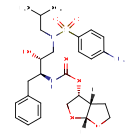
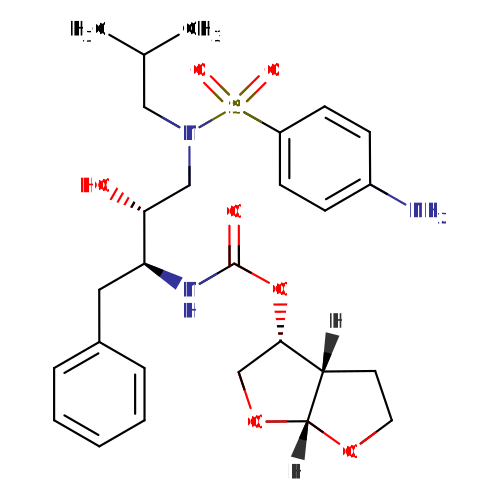
Structure for Darunavir (DB01264)
- Weight
- Average: 547.664
Monoisotopic: 547.235221243 - Chemical Formula
- C27H37N3O7S
- Synonyms
- (3R,3aS,6aR)-hexahydrofuro[2,3-b]furan-3-yl N-((1S,2R)-1-benzyl-2-hydroxy-3-(N1-isobutylsulfanilamido)propyl)carbamate
- (3R,3aS,6aR)-tetrahydro-2H-furo[2,3-b]furan-3-yl (2S,3R)-4-(4-amino-N-isobutylphenylsulfonamido)-3-hydroxy-1-phenylbutan-2-ylcarbamate
- (3R,3aS,6aR)-tetrahydro-2H-furo[2,3-b]furan-3-yl (2S,3R)-4-(4-amino-N-neopentylphenylsulfonamido)-3-hydroxy-1-phenylbutan-2-ylcarbamate
- [(S)-3-[(4-Amino-benzenesulfonyl)-isobutyl-amino]-2-hydroxy-1-((R)-phenylmethyl)-propyl]-carbamic acid (3R,3aS,6aR)-(hexahydro-furo[2,3-b]furan-3-yl) ester
- {(1S,2R)-3-[(4-Amino-benzenesulfonyl)-isobutyl-amino]-1-benzyl-2-hydroxy-propyl}-carbamic acid (3R,3aS,6aR)-(hexahydro-furo[2,3-b]furan-3-yl) ester
- Darunavir
- Darunavirum
- N-((1S,2R)-3-(((4-aminophenyl)sulfonyl)(2-methylpropyl)amino)-2-hydroxy-1-benzylpropyl)((1S,2R,5R)-4,6-dioxabicyclo(3.3.0)oct-2-yloxy)carboxamide
- External IDs
- AIDS073035
- TMC 114
- TMC 41629
- TMC-114
- TMC-41629
- TMC114
- TMC41629
- UIC 94017
- UIC-94017

Pharmacology
- Indication
Darunavir, co-administered with ritonavir, and with other antiretroviral agents, is indicated for the treatment of human immunodeficiency virus (HIV) in children age 3 or above and adults with HIV-1 infection.17
 Reduce drug development failure ratesBuild, train, & validate machine-learning modelswith evidence-based and structured datasets.Build, train, & validate predictive machine-learning models with structured datasets.
- Associated Conditions
Indication Type Indication Combined Product Details Approval Level Age Group Patient Characteristics Dose Form Used in combination to treat Hiv-1 infection Regimen in combination with: Ritonavir (DB00503) •••••••••••• ••••••••••• •••••• - Contraindications & Blackbox Warnings
 Prevent Adverse Drug Events TodayTap into our Clinical API for life-saving information on contraindications & blackbox warnings, population restrictions, harmful risks, & more.Avoid life-threatening adverse drug events with our Clinical API
- Pharmacodynamics
Darunavir is an inhibitor of the human immunodeficiency virus (HIV) protease, which prevents HIV viral replication.17 When administered with ritonavir in combination antiretroviral therapy, darunavir significantly decreases viral load and increases CD4 cell counts, decreasing the morbidity and mortality of HIV infection.2,5,8
- Mechanism of action
The HIV-1 protease enzyme is necessary for viral precursor protein processing and viral maturation in preparation for infection, and is therefore a target for antiretroviral therapy for HIV. Protease inhibitors are used as a part of highly active antiretroviral therapy (HAART) in patients diagnosed with HIV infection. It has been shown to effectively suppress the virus, leading to significantly decreased morbidity and mortality rates.5
Darunavir, a HIV protease inhibitor, prevents HIV replication through binding to the enzyme, stopping the dimerization and the catalytic activity of HIV-1 protease. In particular, it inhibits the cleavage of HIV encoded Gag-Pol proteins12 in cells that have been infected with the virus, halting the formation of mature virus particles, which spread the infection. The close contact that darunavir makes with the primary chains of the active site amino acids (Asp-29 and Asp-30) on the protease likely contributes to its potency and efficacy against resistant variants of HIV-1.5
Darunavir is known to bind to different sites on the enzyme: the active site cavity and the surface of one of the flexible flaps in the protease dimer. Darunavir can adapt to changes in the shape of a protease enzyme due to its molecular flexibility.5,9
Target Actions Organism AHuman immunodeficiency virus type 1 protease inhibitorHuman immunodeficiency virus 1 - Absorption
The absolute oral bioavailability of one single 600 mg dose of darunavir alone and with 100 mg of ritonavir twice a day was 37% and 82%, respectively.15 Exposure to darunavir in boosted patients has been found to be 11 times higher than in unboosted patients.7 Tmax is achieved approximately 2.4 to 4 hours after oral administration.15,17
When darunavir is taken with food, the Cmax and AUC of darunavir given with ritonavir increase by 30% when compared to the fasted state.15
- Volume of distribution
The volume of distribution of darunavir in one pharmacokinetic study in conjunction with ritonavir was 206.5 L (with a range of 161.0–264.9) in healthy young adult volunteers.10 Another pharmacokinetic study revealed a volume of distribution of 220 L.11
- Protein binding
Darunavir is approximately 95% bound to plasma proteins. Darunavir binds primarily to plasma alpha 1-acid glycoprotein (AAG).7,15,17
- Metabolism
Darunavir is heavily oxidized and metabolized by hepatic cytochrome enzymes, mainly CYP3A.17 Darunavir is extensively metabolized in subjects who do not receive a booster, primarily via carbamate hydrolysis, isobutyl aliphatic hydroxylation, and aniline aromatic hydroxylation, as well as both benzylic aromatic hydroxylation and glucuronidation.7
- Route of elimination
A mass balance study in healthy volunteers demonstrated that after single dose administration of 400 mg 14C-darunavir, given with 100 mg ritonavir, approximately 79.5% and 13.9% of the administered dose of radiolabeled darunavir was obtained in the feces and urine, respectively. Excretion of unchanged drug accounted for 8.0% of the darunavir dose in volunteers who were unboosted.7
In boosted darunavir administration, unchanged darunavir made up 48.8% of the excreted dose in boosted subjects due to inhibition of darunavir metabolism by ritonavir. Unchanged drug in the urine made up 1.2% of the administered dose in volunteers who where unboosted, and 7.7% in boosted volunteers.7
- Half-life
The terminal elimination half-life of darunavir is approximately 15 hours when it is combined with ritonavir.1,17
- Clearance
Darunavir has a low renal clearance.7 After intravenous administration, the clearance darunavir administered alone and with 100 mg ritonavir twice daily, was 32.8 L/h and 5.9 L/h, respectively.17
- Adverse Effects
 Improve decision support & research outcomesWith structured adverse effects data, including: blackbox warnings, adverse reactions, warning & precautions, & incidence rates. View sample adverse effects data in our new Data Library!Improve decision support & research outcomes with our structured adverse effects data.
- Toxicity
LD50 information for darunavir is not readily available in the literature.13 One-time doses of up to 3,200 mg of darunavir in an oral solution and up to 1,600 mg of the tablet formulation of darunavir with ritonavir have been given volunteers without significant symptoms.18
Information about an overdose with darunavir with ritonavir is limited. No specific antidote exists for this drug. Treatment of In the case of an overdose, employ general supportive measures. Monitor vital signs and clinical status. It is unlikely that darunavir not amenable to removal by dialysis due to its high level of protein binding.17
- Pathways
- Not Available
- Pharmacogenomic Effects/ADRs
- Not Available
Interactions
- Drug Interactions
- This information should not be interpreted without the help of a healthcare provider. If you believe you are experiencing an interaction, contact a healthcare provider immediately. The absence of an interaction does not necessarily mean no interactions exist.
Drug Interaction Integrate drug-drug
interactions in your software1,2-Benzodiazepine The metabolism of 1,2-Benzodiazepine can be decreased when combined with Darunavir. Abacavir The serum concentration of Abacavir can be decreased when it is combined with Darunavir. Abametapir The serum concentration of Darunavir can be increased when it is combined with Abametapir. Abemaciclib The serum concentration of Abemaciclib can be increased when it is combined with Darunavir. Abiraterone The metabolism of Abiraterone can be decreased when combined with Darunavir. - Food Interactions
- Take with food. Food increases absorption.
Products
 Drug product information from 10+ global regionsOur datasets provide approved product information including:dosage, form, labeller, route of administration, and marketing period.Access drug product information from over 10 global regions.
- Product Ingredients
Ingredient UNII CAS InChI Key Darunavir dihydrate KPC4NRB25L 2281870-65-1 QBRFTVBGMDIHGZ-OCMLJPQKSA-N Darunavir ethanolate 33O78XF0BW 635728-49-3 QWSHKNICRJHQCY-VBTXLZOXSA-N Darunavir propylene glycolate 6M6D7F3VC7 1447721-06-3 LMVMDGVDHYKETG-VBTXLZOXSA-N - Product Images


- Brand Name Prescription Products
Name Dosage Strength Route Labeller Marketing Start Marketing End Region Image Darunavir Tablet 400 mg Oral Jamp Pharma Corporation Not applicable Not applicable Canada 
Darunavir Tablet 800 mg Oral Jamp Pharma Corporation 2022-04-25 Not applicable Canada Darunavir Tablet 600 mg Oral Jamp Pharma Corporation 2022-04-25 Not applicable Canada Darunavir Krka Tablet, film coated 800 mg Oral Krka, D.D., Novo Mesto 2020-12-16 Not applicable EU 
Darunavir Krka Tablet, film coated 600 mg Oral Krka, D.D., Novo Mesto 2020-12-16 Not applicable EU - Generic Prescription Products
Name Dosage Strength Route Labeller Marketing Start Marketing End Region Image Apo-darunavir Tablet 600 mg Oral Apotex Corporation 2020-02-14 Not applicable Canada Apo-darunavir Tablet 800 mg Oral Apotex Corporation 2020-02-14 Not applicable Canada Auro-darunavir Tablet 800 mg Oral Auro Pharma Inc 2020-03-18 Not applicable Canada Auro-darunavir Tablet 600 mg Oral Auro Pharma Inc 2020-03-18 Not applicable Canada Auro-darunavir Tablet 400 mg Oral Auro Pharma Inc Not applicable Not applicable Canada - Mixture Products
Name Ingredients Dosage Route Labeller Marketing Start Marketing End Region Image FURTHAS®R TABLETAS RECUBIERTAS Darunavir ethanolate (800 mg) + Ritonavir (100 mg) Tablet, film coated Oral LABORATORIOS DEMAC LTDA. 2019-11-28 Not applicable Colombia 
Prezcobix Darunavir ethanolate (800 mg/1) + Cobicistat (150 mg/1) Tablet, film coated Oral REMEDYREPACK INC. 2017-08-28 2020-05-04 US 
Prezcobix Darunavir ethanolate (800 mg/1) + Cobicistat (150 mg/1) Tablet, film coated Oral Janssen Products LP 2015-01-31 Not applicable US Prezcobix Darunavir ethanolate (800 mg) + Cobicistat (150 mg) Tablet Oral Janssen Pharmaceuticals 2014-08-28 Not applicable Canada Prezcobix Darunavir ethanolate (800 mg/1) + Cobicistat (150 mg/1) Tablet, film coated Oral A-S Medication Solutions 2015-01-31 Not applicable US


Categories
- ATC Codes
- J05AR14 — Darunavir and cobicistat
- J05AR — Antivirals for treatment of HIV infections, combinations
- J05A — DIRECT ACTING ANTIVIRALS
- J05 — ANTIVIRALS FOR SYSTEMIC USE
- J — ANTIINFECTIVES FOR SYSTEMIC USE
- G01AE — Sulfonamides
- G01A — ANTIINFECTIVES AND ANTISEPTICS, EXCL. COMBINATIONS WITH CORTICOSTEROIDS
- G01 — GYNECOLOGICAL ANTIINFECTIVES AND ANTISEPTICS
- G — GENITO URINARY SYSTEM AND SEX HORMONES
- J05AR — Antivirals for treatment of HIV infections, combinations
- J05A — DIRECT ACTING ANTIVIRALS
- J05 — ANTIVIRALS FOR SYSTEMIC USE
- J — ANTIINFECTIVES FOR SYSTEMIC USE
- J05AR — Antivirals for treatment of HIV infections, combinations
- J05A — DIRECT ACTING ANTIVIRALS
- J05 — ANTIVIRALS FOR SYSTEMIC USE
- J — ANTIINFECTIVES FOR SYSTEMIC USE
- Drug Categories
- Amides
- Anti-HIV Agents
- Anti-Infective Agents
- Anti-Retroviral Agents
- Antiinfectives for Systemic Use
- Antiviral Agents
- Antivirals for Systemic Use
- Antivirals used in combination for the treatment of HIV infections
- Carbamates
- Cytochrome P-450 CYP2D6 Inhibitors
- Cytochrome P-450 CYP2D6 Inhibitors (strength unknown)
- Cytochrome P-450 CYP3A Inhibitors
- Cytochrome P-450 CYP3A Substrates
- Cytochrome P-450 CYP3A4 Inhibitors
- Cytochrome P-450 CYP3A4 Inhibitors (strength unknown)
- Cytochrome P-450 CYP3A4 Inhibitors (strong)
- Cytochrome P-450 CYP3A4 Substrates
- Cytochrome P-450 Enzyme Inhibitors
- Cytochrome P-450 Substrates
- Direct Acting Antivirals
- Enzyme Inhibitors
- Experimental Unapproved Treatments for COVID-19
- Furans
- Genito Urinary System and Sex Hormones
- Gynecological Antiinfectives and Antiseptics
- HIV Protease Inhibitors
- Hyperglycemia-Associated Agents
- OATP1B1/SLCO1B1 Inhibitors
- P-glycoprotein inducers
- P-glycoprotein inhibitors
- P-glycoprotein substrates
- Protease Inhibitors
- Sulfonamides
- Sulfones
- Sulfur Compounds
- Viral Protease Inhibitors
- Chemical TaxonomyProvided by Classyfire
- Description
- This compound belongs to the class of organic compounds known as aminobenzenesulfonamides. These are organic compounds containing a benzenesulfonamide moiety with an amine group attached to the benzene ring.
- Kingdom
- Organic compounds
- Super Class
- Benzenoids
- Class
- Benzene and substituted derivatives
- Sub Class
- Benzenesulfonamides
- Direct Parent
- Aminobenzenesulfonamides
- Alternative Parents
- Phenylbutylamines / Amphetamines and derivatives / Benzenesulfonyl compounds / Aniline and substituted anilines / Furofurans / Organosulfonamides / Tetrahydrofurans / Aminosulfonyl compounds / Carbamate esters / Secondary alcohols show 8 more
- Substituents
- Acetal / Alcohol / Amine / Aminobenzenesulfonamide / Aminosulfonyl compound / Amphetamine or derivatives / Aniline or substituted anilines / Aromatic heteropolycyclic compound / Benzenesulfonyl group / Carbamic acid ester show 21 more
- Molecular Framework
- Aromatic heteropolycyclic compounds
- External Descriptors
- carbamate ester, sulfonamide, furofuran (CHEBI:367163)
- Affected organisms
- Human Immunodeficiency Virus
- SARS-CoV-2
Chemical Identifiers
- UNII
- YO603Y8113
- CAS number
- 206361-99-1
- InChI Key
- CJBJHOAVZSMMDJ-HEXNFIEUSA-N
- InChI
- InChI=1S/C27H37N3O7S/c1-18(2)15-30(38(33,34)21-10-8-20(28)9-11-21)16-24(31)23(14-19-6-4-3-5-7-19)29-27(32)37-25-17-36-26-22(25)12-13-35-26/h3-11,18,22-26,31H,12-17,28H2,1-2H3,(H,29,32)/t22-,23-,24+,25-,26+/m0/s1
- IUPAC Name
- (3R,3aS,6aR)-hexahydrofuro[2,3-b]furan-3-yl N-[(2S,3R)-3-hydroxy-4-[N-(2-methylpropyl)4-aminobenzenesulfonamido]-1-phenylbutan-2-yl]carbamate
- SMILES
- [H][C@@]12CCO[C@]1([H])OC[C@@H]2OC(=O)N[C@@H](CC1=CC=CC=C1)[C@H](O)CN(CC(C)C)S(=O)(=O)C1=CC=C(N)C=C1
References
- Synthesis Reference
Agarwal Virendra, Kumar Katariya, Lalit Keshav, Upadhyay Ashish, Rameschandra Pada Ranjit Ravatbhai, Ghetiya Renish Mansukhlal ,Tuvar Sabirhusen Ismalbhai. 2016. Google patents: WO2016193481A1
US05158713- General References
- Back D, Sekar V, Hoetelmans RM: Darunavir: pharmacokinetics and drug interactions. Antivir Ther. 2008;13(1):1-13. [Article]
- Tremblay CL: Combating HIV resistance - focus on darunavir. Ther Clin Risk Manag. 2008 Aug;4(4):759-66. [Article]
- Koh Y, Matsumi S, Das D, Amano M, Davis DA, Li J, Leschenko S, Baldridge A, Shioda T, Yarchoan R, Ghosh AK, Mitsuya H: Potent inhibition of HIV-1 replication by novel non-peptidyl small molecule inhibitors of protease dimerization. J Biol Chem. 2007 Sep 28;282(39):28709-20. Epub 2007 Jul 17. [Article]
- Kovalevsky AY, Tie Y, Liu F, Boross PI, Wang YF, Leshchenko S, Ghosh AK, Harrison RW, Weber IT: Effectiveness of nonpeptide clinical inhibitor TMC-114 on HIV-1 protease with highly drug resistant mutations D30N, I50V, and L90M. J Med Chem. 2006 Feb 23;49(4):1379-87. [Article]
- De Meyer S, Azijn H, Surleraux D, Jochmans D, Tahri A, Pauwels R, Wigerinck P, de Bethune MP: TMC114, a novel human immunodeficiency virus type 1 protease inhibitor active against protease inhibitor-resistant viruses, including a broad range of clinical isolates. Antimicrob Agents Chemother. 2005 Jun;49(6):2314-21. [Article]
- Croteau D, Rossi SS, Best BM, Capparelli E, Ellis RJ, Clifford DB, Collier AC, Gelman BB, Marra CM, McArthur J, McCutchan JA, Morgello S, Simpson DM, Grant I, Letendre S: Darunavir is predominantly unbound to protein in cerebrospinal fluid and concentrations exceed the wild-type HIV-1 median 90% inhibitory concentration. J Antimicrob Chemother. 2013 Mar;68(3):684-9. doi: 10.1093/jac/dks441. Epub 2012 Nov 9. [Article]
- Vermeir M, Lachau-Durand S, Mannens G, Cuyckens F, van Hoof B, Raoof A: Absorption, metabolism, and excretion of darunavir, a new protease inhibitor, administered alone and with low-dose ritonavir in healthy subjects. Drug Metab Dispos. 2009 Apr;37(4):809-20. doi: 10.1124/dmd.108.024109. Epub 2009 Jan 8. [Article]
- Balayan T, Horvath H, Rutherford GW: Ritonavir-Boosted Darunavir Plus Two Nucleoside Reverse Transcriptase Inhibitors versus Other Regimens for Initial Antiretroviral Therapy for People with HIV Infection: A Systematic Review. AIDS Res Treat. 2017;2017:2345617. doi: 10.1155/2017/2345617. Epub 2017 Sep 26. [Article]
- Purohit R, Sethumadhavan R: Structural basis for the resilience of Darunavir (TMC114) resistance major flap mutations of HIV-1 protease. Interdiscip Sci. 2009 Dec;1(4):320-8. doi: 10.1007/s12539-009-0043-8. Epub 2009 Nov 14. [Article]
- Larson KB, Cressey TR, Yogev R, Wiznia A, Hazra R, Jean-Philippe P, Graham B, Gonzalez A, Britto P, Carey VJ, Acosta EP: Pharmacokinetics of Once-Daily Darunavir/Ritonavir With and Without Etravirine in Human Immunodeficiency Virus-Infected Children, Adolescents, and Young Adults. J Pediatric Infect Dis Soc. 2016 Jun;5(2):131-7. doi: 10.1093/jpids/piu142. Epub 2015 Jan 28. [Article]
- Ter Heine R, Mulder JW, van Gorp EC, Wagenaar JF, Beijnen JH, Huitema AD: Intracellular and plasma steady-state pharmacokinetics of raltegravir, darunavir, etravirine and ritonavir in heavily pre-treated HIV-infected patients. Br J Clin Pharmacol. 2010 May;69(5):475-83. doi: 10.1111/j.1365-2125.2010.03634.x. [Article]
- Davis DA, Soule EE, Davidoff KS, Daniels SI, Naiman NE, Yarchoan R: Activity of human immunodeficiency virus type 1 protease inhibitors against the initial autocleavage in Gag-Pol polyprotein processing. Antimicrob Agents Chemother. 2012 Jul;56(7):3620-8. doi: 10.1128/AAC.00055-12. Epub 2012 Apr 16. [Article]
- Rakhmanina NY, Neely MN, Capparelli EV: High dose of darunavir in treatment-experienced HIV-infected adolescent results in virologic suppression and improved CD4 cell count. Ther Drug Monit. 2012 Jun;34(3):237-41. doi: 10.1097/FTD.0b013e3182511efe. [Article]
- Charlotte Harrison: Coronavirus puts drug repurposing on the fast track Nature. [Article]
- Christine J Kubin, Scott M Hammer (2010). Infectious diseases (3rd ed.). Mosby.
- Link [Link]
- FDA Approved Drug Products: Prezista (darunavir) oral tablets/suspension [Link]
- Medicines UK: Zentiva 800mg film coated tablets [Link]
- Clinicaltrials.gov: Efficacy and Safety of Darunavir and Cobicistat for Treatment of Pneumonia Caused by 2019-nCoV (DACO-nCoV) [Link]
- External Links
- Human Metabolome Database
- HMDB0015393
- KEGG Drug
- D03656
- PubChem Compound
- 213039
- PubChem Substance
- 46506908
- ChemSpider
- 184733
- BindingDB
- 8125
- 460132
- ChEBI
- 367163
- ChEMBL
- CHEMBL1323
- ZINC
- ZINC000003955219
- Therapeutic Targets Database
- DAP001086
- PharmGKB
- PA163522472
- PDBe Ligand
- 017
- RxList
- RxList Drug Page
- Drugs.com
- Drugs.com Drug Page
- Wikipedia
- Darunavir
- PDB Entries
- 1t3r / 1t7i / 2f80 / 2f81 / 2f8g / 2hs1 / 2hs2 / 2idw / 2ien / 2ieo … show 62 more
- FDA label
- Download (281 KB)
Clinical Trials
- Clinical Trials
Phase Status Purpose Conditions Count 4 Active Not Recruiting Treatment Human Immunodeficiency Virus (HIV) Infections 2 4 Active Not Recruiting Treatment Human Immunodeficiency Virus Type 1 (HIV-1) Infection 1 4 Completed Not Available Healthy Volunteers (HV) 1 4 Completed Not Available Human Immunodeficiency Virus (HIV) Infections 1 4 Completed Not Available Human Immunodeficiency Virus (HIV) Infections / Proteinuria 1
Pharmacoeconomics
- Manufacturers
- Not Available
- Packagers
- A-S Medication Solutions LLC
- Centocor Ortho Biotech Inc.
- Janssen-Ortho Inc.
- Lake Erie Medical and Surgical Supply
- Physicians Total Care Inc.
- Quality Care
- Remedy Repack
- Dosage Forms
Form Route Strength Tablet Oral 400.000 mg Tablet, coated Oral 60000000 mg Powder Not applicable 1 kg/1kg Tablet Oral 600 mg/1 Tablet Oral 800 mg/1 Tablet, film coated Oral 75 mg Tablet, film coated Oral 800 mg Tablet, film coated Oral Tablet, coated Oral 867.3 mg Tablet, coated Oral 650 mg Tablet Oral 150 mg Tablet Oral 300 mg Tablet Oral 400 mg Tablet Oral 600 mg Tablet Oral 75 mg Tablet Oral 800 mg Tablet Oral Tablet, film coated Oral Suspension Oral 10.000 g Suspension Oral 100 MG/ML Suspension Oral 100 mg/1mL Suspension Oral 100 mg / mL Tablet Oral Tablet Oral 162.62 mg Tablet, coated Oral 150 MG Tablet, coated Oral 75 MG Tablet, film coated Oral 150 mg/1 Tablet, film coated Oral 300 MG Tablet, film coated Oral 300 mg/1 Tablet, film coated Oral 400 mg/1 Tablet, film coated Oral 600 mg/1 Tablet, film coated Oral 75 mg/1 Tablet, film coated Oral 800 mg/1 Tablet, film coated Oral 600 mg Tablet Oral 800.000 mg Tablet, coated Oral Tablet, coated Oral 400 mg Tablet, film coated Oral 150 mg Tablet, film coated Oral 400 mg Tablet, coated Oral 600 mg Tablet, coated Oral 800 mg - Prices
Unit description Cost Unit Prezista 600 mg tablet 25.75USD tablet Prezista 400 mg tablet 18.74USD tablet Prezista 300 mg tablet 16.2USD tablet Prezista 150 mg tablet 4.59USD tablet Prezista 75 mg tablet 2.3USD tablet DrugBank does not sell nor buy drugs. Pricing information is supplied for informational purposes only.- Patents
Patent Number Pediatric Extension Approved Expires (estimated) Region US6335460 No 2002-01-01 2012-08-25 US CA2469343 No 2008-05-13 2022-12-12 Canada CA2224738 No 2002-08-27 2016-06-28 Canada US6703403 Yes 2004-03-09 2016-12-26 US US6037157 Yes 2000-03-14 2016-12-26 US US6642245 Yes 2003-11-04 2021-05-04 US US6703396 Yes 2004-03-09 2021-09-09 US US5843946 Yes 1998-12-01 2016-06-01 US US7470506 Yes 2008-12-30 2019-12-23 US USRE43802 Yes 2012-11-13 2017-04-19 US US8597876 Yes 2013-12-03 2019-12-23 US US7700645 Yes 2010-04-20 2027-06-26 US USRE42889 Yes 2011-11-01 2017-04-19 US US8518987 Yes 2013-08-27 2024-08-16 US USRE43596 Yes 2012-08-21 2017-11-09 US US8148374 Yes 2012-04-03 2030-03-03 US US9296769 Yes 2016-03-29 2033-02-15 US US7803788 No 2010-09-28 2022-02-02 US US8754065 Yes 2014-06-17 2033-02-15 US US7390791 Yes 2008-06-24 2025-10-17 US US9889115 Yes 2018-02-13 2019-12-23 US US10039718 Yes 2018-08-07 2033-04-06 US US10786515 No 2020-09-29 2038-07-19 US US10786518 No 2020-09-29 2038-07-19 US
Properties
- State
- Solid
- Experimental Properties
Property Value Source melting point (°C) 74-76 https://www.chemicalbook.com/ChemicalProductProperty_EN_CB61121362.htm water solubility Approximately 0.15 mg/mL at https://www.accessdata.fda.gov/drugsatfda_docs/label/2008/021976s003s004lbl.pdf logP 1.89 http://www.antimicrobe.org/d94.asp pKa 11.43±0.46(Predicted) https://www.chemicalbook.com/ChemicalProductProperty_US_CB51176244.aspx - Predicted Properties
Property Value Source Water Solubility 0.0668 mg/mL ALOGPS logP 1.76 ALOGPS logP 2.82 Chemaxon logS -3.9 ALOGPS pKa (Strongest Acidic) 13.59 Chemaxon pKa (Strongest Basic) 2.39 Chemaxon Physiological Charge 0 Chemaxon Hydrogen Acceptor Count 7 Chemaxon Hydrogen Donor Count 3 Chemaxon Polar Surface Area 140.42 Å2 Chemaxon Rotatable Bond Count 11 Chemaxon Refractivity 142.34 m3·mol-1 Chemaxon Polarizability 57.49 Å3 Chemaxon Number of Rings 4 Chemaxon Bioavailability 0 Chemaxon Rule of Five No Chemaxon Ghose Filter No Chemaxon Veber's Rule No Chemaxon MDDR-like Rule Yes Chemaxon - Predicted ADMET Features
Property Value Probability Human Intestinal Absorption + 0.9636 Blood Brain Barrier - 0.5518 Caco-2 permeable + 0.7274 P-glycoprotein substrate Substrate 0.7464 P-glycoprotein inhibitor I Inhibitor 0.7588 P-glycoprotein inhibitor II Non-inhibitor 0.8683 Renal organic cation transporter Non-inhibitor 0.8847 CYP450 2C9 substrate Non-substrate 0.5747 CYP450 2D6 substrate Substrate 0.6809 CYP450 3A4 substrate Substrate 0.6496 CYP450 1A2 substrate Non-inhibitor 0.7328 CYP450 2C9 inhibitor Non-inhibitor 0.6999 CYP450 2D6 inhibitor Non-inhibitor 0.8784 CYP450 2C19 inhibitor Non-inhibitor 0.6587 CYP450 3A4 inhibitor Non-inhibitor 0.5076 CYP450 inhibitory promiscuity Low CYP Inhibitory Promiscuity 0.7132 Ames test Non AMES toxic 0.5933 Carcinogenicity Non-carcinogens 0.7991 Biodegradation Not ready biodegradable 1.0 Rat acute toxicity 2.5482 LD50, mol/kg Not applicable hERG inhibition (predictor I) Weak inhibitor 0.9824 hERG inhibition (predictor II) Non-inhibitor 0.857
Spectra
- Mass Spec (NIST)
- Not Available
- Spectra
- Chromatographic Properties
Collision Cross Sections (CCS)
Adduct CCS Value (Å2) Source type Source [M-H]- 241.3612152 predictedDarkChem Lite v0.1.0 [M-H]- 242.4657152 predictedDarkChem Lite v0.1.0 [M-H]- 225.93097 predictedDeepCCS 1.0 (2019) [M+H]+ 239.6139152 predictedDarkChem Lite v0.1.0 [M+H]+ 242.2813152 predictedDarkChem Lite v0.1.0 [M+H]+ 227.82639 predictedDeepCCS 1.0 (2019) [M+Na]+ 240.1758152 predictedDarkChem Lite v0.1.0 [M+Na]+ 242.4805152 predictedDarkChem Lite v0.1.0 [M+Na]+ 233.58351 predictedDeepCCS 1.0 (2019)
Targets

- Kind
- Protein
- Organism
- Human immunodeficiency virus 1
- Pharmacological action
- Yes
- Actions
- Inhibitor
- General Function
- Aspartic-type endopeptidase activity
- Specific Function
- Not Available
- Gene Name
- pol
- Uniprot ID
- Q72874
- Uniprot Name
- Pol polyprotein
- Molecular Weight
- 10778.7 Da
References
- Dierynck I, De Wit M, Gustin E, Keuleers I, Vandersmissen J, Hallenberger S, Hertogs K: Binding kinetics of darunavir to human immunodeficiency virus type 1 protease explain the potent antiviral activity and high genetic barrier. J Virol. 2007 Dec;81(24):13845-51. Epub 2007 Oct 10. [Article]
- Ghosh AK, Dawson ZL, Mitsuya H: Darunavir, a conceptually new HIV-1 protease inhibitor for the treatment of drug-resistant HIV. Bioorg Med Chem. 2007 Dec 15;15(24):7576-80. Epub 2007 Sep 14. [Article]
- Wang YF, Tie Y, Boross PI, Tozser J, Ghosh AK, Harrison RW, Weber IT: Potent new antiviral compound shows similar inhibition and structural interactions with drug resistant mutants and wild type HIV-1 protease. J Med Chem. 2007 Sep 6;50(18):4509-15. Epub 2007 Aug 16. [Article]
- McKeage K, Perry CM, Keam SJ: Darunavir: a review of its use in the management of HIV infection in adults. Drugs. 2009;69(4):477-503. doi: 10.2165/00003495-200969040-00007. [Article]
- Tremblay CL: Combating HIV resistance - focus on darunavir. Ther Clin Risk Manag. 2008 Aug;4(4):759-66. [Article]
- Kovalevsky AY, Tie Y, Liu F, Boross PI, Wang YF, Leshchenko S, Ghosh AK, Harrison RW, Weber IT: Effectiveness of nonpeptide clinical inhibitor TMC-114 on HIV-1 protease with highly drug resistant mutations D30N, I50V, and L90M. J Med Chem. 2006 Feb 23;49(4):1379-87. [Article]
- De Meyer S, Azijn H, Surleraux D, Jochmans D, Tahri A, Pauwels R, Wigerinck P, de Bethune MP: TMC114, a novel human immunodeficiency virus type 1 protease inhibitor active against protease inhibitor-resistant viruses, including a broad range of clinical isolates. Antimicrob Agents Chemother. 2005 Jun;49(6):2314-21. [Article]
- FDA Approved Drug Products: Prezista (darunavir) oral tablets/suspension [Link]
Enzymes
- Kind
- Protein
- Organism
- Humans
- Pharmacological action
- Unknown
- Actions
- Inhibitor
- Curator comments
- When given with ritonavir, cobicistat inhibits the CYP2D6 enzyme.
- General Function
- Steroid hydroxylase activity
- Specific Function
- Responsible for the metabolism of many drugs and environmental chemicals that it oxidizes. It is involved in the metabolism of drugs such as antiarrhythmics, adrenoceptor antagonists, and tricyclic...
- Gene Name
- CYP2D6
- Uniprot ID
- P10635
- Uniprot Name
- Cytochrome P450 2D6
- Molecular Weight
- 55768.94 Da
References
- FDA Approved Drug Products: Prezista (darunavir) oral tablets/suspension [Link]
- Kind
- Protein
- Organism
- Humans
- Pharmacological action
- Unknown
- Actions
- SubstrateInhibitor
- General Function
- Vitamin d3 25-hydroxylase activity
- Specific Function
- Cytochromes P450 are a group of heme-thiolate monooxygenases. In liver microsomes, this enzyme is involved in an NADPH-dependent electron transport pathway. It performs a variety of oxidation react...
- Gene Name
- CYP3A4
- Uniprot ID
- P08684
- Uniprot Name
- Cytochrome P450 3A4
- Molecular Weight
- 57342.67 Da
References
- McKeage K, Perry CM, Keam SJ: Darunavir: a review of its use in the management of HIV infection in adults. Drugs. 2009;69(4):477-503. doi: 10.2165/00003495-200969040-00007. [Article]
- Tremblay CL: Combating HIV resistance - focus on darunavir. Ther Clin Risk Manag. 2008 Aug;4(4):759-66. [Article]
- Busse KH, Penzak SR: Darunavir: a second-generation protease inhibitor. Am J Health Syst Pharm. 2007 Aug 1;64(15):1593-602. doi: 10.2146/ajhp060668. [Article]
- Brown KC, Paul S, Kashuba AD: Drug interactions with new and investigational antiretrovirals. Clin Pharmacokinet. 2009;48(4):211-41. [Article]
- FDA Drug Development and Drug Interactions: Table of Substrates, Inhibitors and Inducers [Link]
- FDA Approved Drug Products: Prezista (darunavir) oral tablets/suspension [Link]
Carriers
- Kind
- Protein
- Organism
- Humans
- Pharmacological action
- Unknown
- Actions
- Substrate
- General Function
- Toxic substance binding
- Specific Function
- Serum albumin, the main protein of plasma, has a good binding capacity for water, Ca(2+), Na(+), K(+), fatty acids, hormones, bilirubin and drugs. Its main function is the regulation of the colloid...
- Gene Name
- ALB
- Uniprot ID
- P02768
- Uniprot Name
- Serum albumin
- Molecular Weight
- 69365.94 Da
References
- Croteau D, Rossi SS, Best BM, Capparelli E, Ellis RJ, Clifford DB, Collier AC, Gelman BB, Marra CM, McArthur J, McCutchan JA, Morgello S, Simpson DM, Grant I, Letendre S: Darunavir is predominantly unbound to protein in cerebrospinal fluid and concentrations exceed the wild-type HIV-1 median 90% inhibitory concentration. J Antimicrob Chemother. 2013 Mar;68(3):684-9. doi: 10.1093/jac/dks441. Epub 2012 Nov 9. [Article]
- Shi JH, Zhou KL, Lou YY, Pan DQ: Multi-spectroscopic and molecular modeling approaches to elucidate the binding interaction between bovine serum albumin and darunavir, a HIV protease inhibitor. Spectrochim Acta A Mol Biomol Spectrosc. 2018 Jan 5;188:362-371. doi: 10.1016/j.saa.2017.07.040. Epub 2017 Jul 23. [Article]
- Yilmaz A, Izadkhashti A, Price RW, Mallon PW, De Meulder M, Timmerman P, Gisslen M: Darunavir concentrations in cerebrospinal fluid and blood in HIV-1-infected individuals. AIDS Res Hum Retroviruses. 2009 Apr;25(4):457-61. doi: 10.1089/aid.2008.0216. [Article]
- Kind
- Protein
- Organism
- Humans
- Pharmacological action
- Unknown
- Actions
- Substrate
- General Function
- Not Available
- Specific Function
- Functions as transport protein in the blood stream. Binds various ligands in the interior of its beta-barrel domain. Also binds synthetic drugs and influences their distribution and availability in...
- Gene Name
- ORM1
- Uniprot ID
- P02763
- Uniprot Name
- Alpha-1-acid glycoprotein 1
- Molecular Weight
- 23511.38 Da
References
- Croteau D, Rossi SS, Best BM, Capparelli E, Ellis RJ, Clifford DB, Collier AC, Gelman BB, Marra CM, McArthur J, McCutchan JA, Morgello S, Simpson DM, Grant I, Letendre S: Darunavir is predominantly unbound to protein in cerebrospinal fluid and concentrations exceed the wild-type HIV-1 median 90% inhibitory concentration. J Antimicrob Chemother. 2013 Mar;68(3):684-9. doi: 10.1093/jac/dks441. Epub 2012 Nov 9. [Article]
- Yilmaz A, Izadkhashti A, Price RW, Mallon PW, De Meulder M, Timmerman P, Gisslen M: Darunavir concentrations in cerebrospinal fluid and blood in HIV-1-infected individuals. AIDS Res Hum Retroviruses. 2009 Apr;25(4):457-61. doi: 10.1089/aid.2008.0216. [Article]
Transporters
- Kind
- Protein
- Organism
- Humans
- Pharmacological action
- Unknown
- Actions
- Inhibitor
- General Function
- Sodium-independent organic anion transmembrane transporter activity
- Specific Function
- Mediates the Na(+)-independent uptake of organic anions such as pravastatin, taurocholate, methotrexate, dehydroepiandrosterone sulfate, 17-beta-glucuronosyl estradiol, estrone sulfate, prostagland...
- Gene Name
- SLCO1B1
- Uniprot ID
- Q9Y6L6
- Uniprot Name
- Solute carrier organic anion transporter family member 1B1
- Molecular Weight
- 76447.99 Da
References
- Annaert P, Ye ZW, Stieger B, Augustijns P: Interaction of HIV protease inhibitors with OATP1B1, 1B3, and 2B1. Xenobiotica. 2010 Mar;40(3):163-76. doi: 10.3109/00498250903509375. [Article]
- Molto J, Xinarianos G, Miranda C, Pushpakom S, Cedeno S, Clotet B, Owen A, Valle M: Simultaneous pharmacogenetics-based population pharmacokinetic analysis of darunavir and ritonavir in HIV-infected patients. Clin Pharmacokinet. 2013 Jul;52(7):543-53. doi: 10.1007/s40262-013-0057-6. [Article]
- Kind
- Protein
- Organism
- Humans
- Pharmacological action
- Unknown
- Actions
- SubstrateInhibitorInducer
- General Function
- Xenobiotic-transporting atpase activity
- Specific Function
- Energy-dependent efflux pump responsible for decreased drug accumulation in multidrug-resistant cells.
- Gene Name
- ABCB1
- Uniprot ID
- P08183
- Uniprot Name
- Multidrug resistance protein 1
- Molecular Weight
- 141477.255 Da
References
- Tempestilli M, Gentilotti E, Tommasi C, Nicastri E, Martini F, De Nardo P, Narciso P, Pucillo LP: Determination of P-glycoprotein surface expression and functional ability after in vitro treatment with darunavir or raltegravir in lymphocytes of healthy donors. Int Immunopharmacol. 2013 Aug;16(4):492-7. doi: 10.1016/j.intimp.2013.05.003. Epub 2013 May 23. [Article]
- Konig SK, Herzog M, Theile D, Zembruski N, Haefeli WE, Weiss J: Impact of drug transporters on cellular resistance towards saquinavir and darunavir. J Antimicrob Chemother. 2010 Nov;65(11):2319-28. doi: 10.1093/jac/dkq324. Epub 2010 Sep 3. [Article]
- Chan GN, Patel R, Cummins CL, Bendayan R: Induction of P-glycoprotein by antiretroviral drugs in human brain microvessel endothelial cells. Antimicrob Agents Chemother. 2013 Sep;57(9):4481-8. doi: 10.1128/AAC.00486-13. Epub 2013 Jul 8. [Article]
- FDA Approved Drug Products: Prezista (darunavir) oral tablets/suspension [Link]

Drug created at May 16, 2007 17:43 / Updated at April 26, 2024 00:45