Identification
- Summary
Hydralazine is an antihypertensive agent used for the management of essential hypertension or severe hypertension associated with conditions requiring immediate action, heart failure, and pre-eclampsia or eclampsia .
- Brand Names
- Apresoline, Bidil
- Generic Name
- Hydralazine
- DrugBank Accession Number
- DB01275
- Background
Originally developed in the 1950s as a malaria treatment, hydralazine showed antihypertensive ability and was soon repurposed.15 Hydralazine is a hydrazine derivative vasodilator used alone or as adjunct therapy in the treatment of hypertension and only as adjunct therapy in the treatment of heart failure.10,19,20 Hydralazine is no longer a first line therapy for these indications since the development of newer antihypertensive medications.17
Hydralazine hydrochloride was FDA approved on 15 January 1953.18
- Type
- Small Molecule
- Groups
- Approved
- Structure
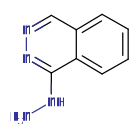
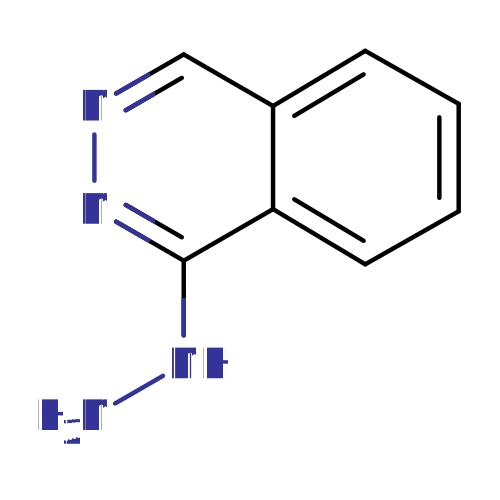
Structure for Hydralazine (DB01275)
- Weight
- Average: 160.1759
Monoisotopic: 160.074896276 - Chemical Formula
- C8H8N4
- Synonyms
- (1Z)-1(2H)-Phthalazinone hydrazone
- (2H)-Phthalazinone hydrazone
- 1-Hydrazinophthalazine
- 1-Phthalazinylhydrazine
- 6-Hydralazine
- Hidralazina
- Hydralazin
- Hydralazine
- Hydralazinum
- Hydrallazine
- Hydrazinophthalazine
- Hydrazone 1(2H)-phthalazinone
- Hypophthalin
- Idralazina
- Phthalazin-1-ylhydrazine

Pharmacology
- Indication
Hydralazine is indicated alone or adjunct to standard therapy to treat essential hypertension.19 A combination product with isosorbide dinitrate is indicated as an adjunct therapy in the treatment of heart failure.20
 Reduce drug development failure ratesBuild, train, & validate machine-learning modelswith evidence-based and structured datasets.Build, train, & validate predictive machine-learning models with structured datasets.
- Associated Conditions
Indication Type Indication Combined Product Details Approval Level Age Group Patient Characteristics Dose Form Management of Essential hypertension •••••••••••• Used in combination to treat Heart failure Combination Product in combination with: Isosorbide dinitrate (DB00883) •••••••••••• •••••• Management of Hypertensive crisis ••• ••••• Management of Severe hypertension •••••••••••• •••••••••• •••••••••• •••••••• - Contraindications & Blackbox Warnings
 Prevent Adverse Drug Events TodayTap into our Clinical API for life-saving information on contraindications & blackbox warnings, population restrictions, harmful risks, & more.Avoid life-threatening adverse drug events with our Clinical API
- Pharmacodynamics
Hydralazine interferes with calcium transport to relax arteriolar smooth muscle and lower blood pressure.19 Hydralazine has a short duration of action of 2-6h.10 This drug has a wide therapeutic window, as patients can tolerate doses of up to 300mg.19 Patients should be cautioned regarding the risk of developing systemic lupus erythematosus syndrome.19
- Mechanism of action
Hydralazine may interfere with calcium transport in vascular smooth muscle by an unknown mechanism to relax arteriolar smooth muscle and lower blood pressure.10,12 The interference with calcium transport may be by preventing influx of calcium into cells, preventing calcium release from intracellular compartments, directly acting on actin and myosin, or a combination of these actions.11 This decrease in vascular resistance leads to increased heart rate, stroke volume, and cardiac output.19
Hydralazine also competes with protocollagen prolyl hydroxylase (CPH) for free iron.12 This competition inhibits CPH mediated hydroxylation of HIF-1α, preventing the degradation of HIF-1α.12 Induction of HIF-1α and VEGF promote proliferation of endothelial cells and angiogenesis.12
Target Actions Organism AMembrane primary amine oxidase inhibitorHumans UHypoxia-inducible factor 1-alpha inducerHumans UProlyl 4-hydroxylase subunit alpha-1 inhibitorHumans - Absorption
Taking oral hydralazine with food improves the bioavailability of the drug.13 An intravenous dose of 0.3mg/kg leads to an AUC of 17.5-29.4µM*min and a 1mg/kg oral dose leads to an AUC of 4.0-30.4µM*min.14 The Cmax of oral hydralazine is 0.12-1.31µM depending on the acetylator status of patients.14
- Volume of distribution
The volume of distribution is 1.34±0.79L/kg in congestive heart failure patients and 1.98±0.22L/kg in hypertensive patients.9
- Protein binding
Hydralazine is 87% protein bound in serum19 likely to human serum albumin.2
- Metabolism
Acetylation is a minor metabolic pathway for hydralazine; the major pathway is hydroxylation followed by glucuronidation.4 There are 5 identified metabolic pathways for hydralazine.1,7,5,4,6,8
Hydralazine can be metabolized to phthalazine or α-ketoglutarate hydrazone.1,4 These metabolites can be further converted to phthalazinone or hydralazine can be metabolized directly to phthalazinone.1,4
Hydralazine can undergo a reversible converstion to the active hydralazine acetone hydrazone.6,8
Hydralazine is spontaneously converted to the active pyruvic acid hydrazone or the pyruvic acid hydrazone tricyclic dehydration product, and these metabolites can convert back and forth between these 2 forms.1,5
Hydralazine can be converted to hydrazinophthalazinone, which is further converted to the active acetylhydrazinophthalazinone.1,4
The final metabolic process hydralazine can undergo is the conversion to an unnamed hydralazine metabolite, which is further metabolized to 3-methyl-s-triazolophthalazine (MTP).1 MTP can be metabolized to 9-hydroxy-methyltriazolophthalazine or 3-hydroxy-methyltriazolophthalazine; the latter is converted to triazolophthalazine.1
Hover over products below to view reaction partners
- Route of elimination
<10% of hydralazine is recovered in the feces; 65-90% is recovered in the urine.9
- Half-life
Hydralazine has a half life of 2.2-7.8h in rapid acetylators and 2.0-5.8h in slow acetylators.4,19 The half life in heart failure patients is 57-241 minutes with an average of 105 minutes and in hypertensive patients is 200 minutes for rapid acetylators and 297 minutes for slow acetylators.9
Hydralazine is subject to polymorphic acetylation;16 slow acetylators generally have higher plasma levels of hydralazine and require lower doses to maintain control of pressure. However, other factors, such as acetylation being a minor metabolic pathway for hydralazine, will contribute to differences in elimination rates.
- Clearance
The majority of hydralazine clearance is extrahepatic- 55% for rapid acetylators and 70% for slow acetylators.9 The average clearance in congestive heart failure patients is 1.77±0.48L/kg/h,9 while hypertensive patients have an average clearance of 42.7±8.9mL/min/kg.14
- Adverse Effects
 Improve decision support & research outcomesWith structured adverse effects data, including: blackbox warnings, adverse reactions, warning & precautions, & incidence rates. View sample adverse effects data in our new Data Library!Improve decision support & research outcomes with our structured adverse effects data.
- Toxicity
The oral LD50 in rats is 173-187mg/kg and the highest known dose an adult human has survived is 10g orally.19
Patients experiencing an overdose may present with hypotension, tachycardia, headache, flushing, myocardial ischemia, myocardial infarction, cardiac arrhythmia, and shock.19 Overdose can be treated through emptying the gastric contents and administering activated charcoal, though these treatments may cause further arrhythmias and shock.19 Supportive and symptomatic treatment should be administered.19
- Pathways
- Not Available
- Pharmacogenomic Effects/ADRs
Interacting Gene/Enzyme Allele name Genotype(s) Defining Change(s) Type(s) Description Details Arylamine N-acetyltransferase 1 NAT1*14A Not Available G > A | T > A | C > A ADR Inferred Associated with systemic lupus erythematosus. Details Arylamine N-acetyltransferase 1 NAT1*14B Not Available G > A ADR Inferred Associated with systemic lupus erythematosus. Details Arylamine N-acetyltransferase 1 NAT1*15 Not Available C > T ADR Inferred Associated with systemic lupus erythematosus. Details Arylamine N-acetyltransferase 1 NAT1*17 Not Available C > T ADR Inferred Associated with systemic lupus erythematosus. Details Arylamine N-acetyltransferase 1 NAT1*19A Not Available C > T ADR Inferred Associated with systemic lupus erythematosus. Details Arylamine N-acetyltransferase 1 NAT1*19B Not Available C > T | C > T ADR Inferred Associated with systemic lupus erythematosus. Details Arylamine N-acetyltransferase 1 NAT1*22 Not Available A > T ADR Inferred Associated with systemic lupus erythematosus. Details Arylamine N-acetyltransferase 2 NAT2*5A Not Available T > C | C > T ADR Inferred Associated with systemic lupus erythematosus. Details Arylamine N-acetyltransferase 2 NAT2*5B Not Available T > C | C > T | A > G ADR Inferred Associated with systemic lupus erythematosus. Details Arylamine N-acetyltransferase 2 NAT2*5C Not Available T > C | A > G ADR Inferred Associated with systemic lupus erythematosus. Details Arylamine N-acetyltransferase 2 NAT2*5D Not Available T > C ADR Inferred Associated with systemic lupus erythematosus. Details Arylamine N-acetyltransferase 2 NAT2*5E Not Available T > C | G > A ADR Inferred Associated with systemic lupus erythematosus. Details Arylamine N-acetyltransferase 2 NAT2*5F Not Available T > C | C > T | C > T | A > G ADR Inferred Associated with systemic lupus erythematosus. Details Arylamine N-acetyltransferase 2 NAT2*5G Not Available T > C | C > T | C > T | A > G ADR Inferred Associated with systemic lupus erythematosus. Details Arylamine N-acetyltransferase 2 NAT2*5H Not Available T > C | C > T | A > G | S287 Frameshift ADR Inferred Associated with systemic lupus erythematosus. Details Arylamine N-acetyltransferase 2 NAT2*5I Not Available T > C | C > T | A > T | A > G ADR Inferred Associated with systemic lupus erythematosus. Details Arylamine N-acetyltransferase 2 NAT2*5J Not Available T > C | C > T | G > A ADR Inferred Associated with systemic lupus erythematosus. Details Arylamine N-acetyltransferase 2 NAT2*6A Not Available G > A | C > T ADR Inferred Associated with systemic lupus erythematosus. Details Arylamine N-acetyltransferase 2 NAT2*6B Not Available G > A ADR Inferred Associated with systemic lupus erythematosus. Details Arylamine N-acetyltransferase 2 NAT2*6C Not Available G > A | C > T | A > G ADR Inferred Associated with systemic lupus erythematosus. Details Arylamine N-acetyltransferase 2 NAT2*6D Not Available G > A | C > T | T > C ADR Inferred Associated with systemic lupus erythematosus. Details Arylamine N-acetyltransferase 2 NAT2*6E Not Available G > A | C > T ADR Inferred Associated with systemic lupus erythematosus. Details Arylamine N-acetyltransferase 2 NAT2*7A Not Available G > A ADR Inferred Associated with systemic lupus erythematosus. Details Arylamine N-acetyltransferase 2 NAT2*7B Not Available G > A | C > T ADR Inferred Associated with systemic lupus erythematosus. Details Arylamine N-acetyltransferase 2 NAT2*10 Not Available G > A ADR Inferred Associated with systemic lupus erythematosus. Details Arylamine N-acetyltransferase 2 NAT2*12D Not Available G > A | A > G ADR Inferred Associated with systemic lupus erythematosus. Details Arylamine N-acetyltransferase 2 NAT2*14A Not Available G > A ADR Inferred Associated with systemic lupus erythematosus. Details Arylamine N-acetyltransferase 2 NAT2*14B Not Available G > A | C > T ADR Inferred Associated with systemic lupus erythematosus. Details Arylamine N-acetyltransferase 2 NAT2*14C Not Available G > A | T > C | C > T | A > G ADR Inferred Associated with systemic lupus erythematosus. Details Arylamine N-acetyltransferase 2 NAT2*14D Not Available G > A | C > T | G > A ADR Inferred Associated with systemic lupus erythematosus. Details Arylamine N-acetyltransferase 2 NAT2*14E Not Available G > A | A > G ADR Inferred Associated with systemic lupus erythematosus. Details Arylamine N-acetyltransferase 2 NAT2*14F Not Available G > A | T > C | A > G ADR Inferred Associated with systemic lupus erythematosus. Details Arylamine N-acetyltransferase 2 NAT2*14G Not Available G > A | C > T | A > G ADR Inferred Associated with systemic lupus erythematosus. Details Arylamine N-acetyltransferase 2 NAT2*17 Not Available A > C ADR Inferred Associated with systemic lupus erythematosus. Details Arylamine N-acetyltransferase 2 NAT2*19 Not Available C > T ADR Inferred Associated with systemic lupus erythematosus. Details
Interactions
- Drug Interactions
- This information should not be interpreted without the help of a healthcare provider. If you believe you are experiencing an interaction, contact a healthcare provider immediately. The absence of an interaction does not necessarily mean no interactions exist.
Drug Interaction Integrate drug-drug
interactions in your softwareAbacavir Abacavir may decrease the excretion rate of Hydralazine which could result in a higher serum level. Abaloparatide The risk or severity of adverse effects can be increased when Hydralazine is combined with Abaloparatide. Abemaciclib The serum concentration of Abemaciclib can be increased when it is combined with Hydralazine. Acalabrutinib The serum concentration of Acalabrutinib can be increased when it is combined with Hydralazine. Acebutolol Acebutolol may increase the hypotensive activities of Hydralazine. - Food Interactions
- Take with or without food. Food increases exposure to hydralazine, though this may not be clinically significant.
Products
 Drug product information from 10+ global regionsOur datasets provide approved product information including:dosage, form, labeller, route of administration, and marketing period.Access drug product information from over 10 global regions.
- Product Ingredients
Ingredient UNII CAS InChI Key Hydralazine hydrochloride FD171B778Y 304-20-1 ZUXNZUWOTSUBMN-UHFFFAOYSA-N - Product Images
- International/Other Brands
- Alphapress (Alphapharm) / Aprezin (Johnson) / Cesoline W (Pharmasant) / Cesoline Y (Pharmasant) / Diazide (The Central) / Hidral (Biocontrol) / Pressfall (Nisshin Seiyaku) / Serpathiazide (Washington)
- Brand Name Prescription Products
Name Dosage Strength Route Labeller Marketing Start Marketing End Region Image Apresoline Solution 20 mg / mL Intravenous Sterimax Inc 1992-12-31 Not applicable Canada 
Apresoline hydrochloride Tablet, coated 100 mg/1 Oral Novartis Pharmaceuticals Corporation 1953-01-15 2010-10-07 US 
Apresoline hydrochloride Tablet, coated 50 mg/1 Oral Physicians Total Care, Inc. 1995-02-17 2010-10-07 US Apresoline hydrochloride Tablet, coated 25 mg/1 Oral Novartis Pharmaceuticals Corporation 1953-01-15 2010-10-07 US Apresoline hydrochloride Tablet, coated 50 mg/1 Oral Novartis Pharmaceuticals Corporation 1953-01-15 2010-10-07 US - Generic Prescription Products
Name Dosage Strength Route Labeller Marketing Start Marketing End Region Image Apo-hydralazine Tablet 50 mg Oral Apotex Corporation 1991-12-31 Not applicable Canada Apo-hydralazine Tablet 25 mg Oral Apotex Corporation 1991-12-31 Not applicable Canada Apo-hydralazine Tablet 10 mg Oral Apotex Corporation 1990-12-31 Not applicable Canada Hydralazine Tablet 100 mg/1 Oral Nivagen Pharmaceuticals, Inc. 2017-02-15 Not applicable US Hydralazine Tablet 50 mg/1 Oral Cardinal Health 2009-09-14 2020-10-31 US - Over the Counter Products
Name Dosage Strength Route Labeller Marketing Start Marketing End Region Image ไดลาซิน 25 Tablet, coated 25 mg Oral บริษัท พอนด์ เคมีคอล จำกัด 2017-10-21 Not applicable Thailand 
- Mixture Products
Name Ingredients Dosage Route Labeller Marketing Start Marketing End Region Image BiDil Hydralazine hydrochloride (37.5 mg/1) + Isosorbide dinitrate (20 mg/1) Tablet, film coated Oral Remedy Repack 2013-10-08 2013-10-09 US BiDil Hydralazine hydrochloride (37.5 mg/1) + Isosorbide dinitrate (20 mg/1) Tablet, film coated Oral Azurity 2012-12-05 Not applicable US 
BiDil Hydralazine hydrochloride (37.5 mg/1) + Isosorbide dinitrate (20 mg/1) Tablet, film coated Oral Arbor Pharmaceuticals 2005-06-23 2015-12-31 US 
Hydralazine HCl and Hydrochlorothiazide Hydralazine hydrochloride (25 mg/1) + Hydrochlorothiazide (25 mg/1) Capsule Oral Par Pharmaceutical 1985-10-21 2009-10-29 US Hydralazine HCl and Hydrochlorothiazide Hydralazine hydrochloride (100 mg/1) + Hydrochlorothiazide (50 mg/1) Capsule Oral Par Pharmaceutical 1985-10-21 2009-10-29 US


Categories
- ATC Codes
- C02DB02 — Hydralazine
- C02DB — Hydrazinophthalazine derivatives
- C02D — ARTERIOLAR SMOOTH MUSCLE, AGENTS ACTING ON
- C02 — ANTIHYPERTENSIVES
- C — CARDIOVASCULAR SYSTEM
- Drug Categories
- Antihypertensive Agents
- Antihypertensive Agents Indicated for Hypertension
- Arteriolar Smooth Muscle, Agents Acting On
- Arteriolar Vasodilation
- Arteriolar Vasodilator
- Cardiovascular Agents
- Cytochrome P-450 CYP3A Inhibitors
- Cytochrome P-450 CYP3A4 Inhibitors
- Cytochrome P-450 CYP3A4 Inhibitors (strength unknown)
- Cytochrome P-450 Enzyme Inhibitors
- Direct Vasodilators
- Drugs that are Mainly Renally Excreted
- Hydrazinophthalazine Derivatives
- Hydrazinophthalazine Derivatives and Diuretics
- Hypotensive Agents
- Phthalazines
- Pyridazines
- Vasodilating Agents
- Chemical TaxonomyProvided by Classyfire
- Description
- This compound belongs to the class of organic compounds known as phthalazines. These are compounds containing a phthalazine moiety, which consists of a benzene ring fused to a pyridazine, forming a 2,3-benzodiazine skeleton.
- Kingdom
- Organic compounds
- Super Class
- Organoheterocyclic compounds
- Class
- Diazanaphthalenes
- Sub Class
- Benzodiazines
- Direct Parent
- Phthalazines
- Alternative Parents
- Pyridazines and derivatives / Imidolactams / Benzenoids / Heteroaromatic compounds / Amidrazones / Hydrazones / Azacyclic compounds / Organopnictogen compounds / Hydrocarbon derivatives
- Substituents
- Aromatic heteropolycyclic compound / Azacycle / Benzenoid / Carboxylic acid amidrazone / Heteroaromatic compound / Hydrazone / Hydrocarbon derivative / Imidolactam / Organic nitrogen compound / Organonitrogen compound
- Molecular Framework
- Aromatic heteropolycyclic compounds
- External Descriptors
- hydrazines, phthalazines, azaarene, ortho-fused heteroarene (CHEBI:5775)
- Affected organisms
- Humans and other mammals
Chemical Identifiers
- UNII
- 26NAK24LS8
- CAS number
- 86-54-4
- InChI Key
- RPTUSVTUFVMDQK-UHFFFAOYSA-N
- InChI
- InChI=1S/C8H8N4/c9-11-8-7-4-2-1-3-6(7)5-10-12-8/h1-5H,9H2,(H,11,12)
- IUPAC Name
- 1-hydrazinylphthalazine
- SMILES
- NNC1=NN=CC2=CC=CC=C12
References
- Synthesis Reference
U.S. Patent 2,484,029.
- General References
- Hofstra AH: Metabolism of hydralazine: relevance to drug-induced lupus. Drug Metab Rev. 1994;26(3):485-505. doi: 10.3109/03602539408998315. [Article]
- Bolattin M, Nandibewoor S, Joshi S, Dixit S, Chimatadar S: Interaction of Hydralazine with Human Serum Albumin and Effect of β-Cyclodextrin on Binding: Insights from Spectroscopic and Molecular Docking Techniques Industrial & Engineering Chemistry Research. 2016 Apr 24;55(19):5454-5464. [Article]
- Machado JD, Gomez JF, Betancor G, Camacho M, Brioso MA, Borges R: Hydralazine reduces the quantal size of secretory events by displacement of catecholamines from adrenomedullary chromaffin secretory vesicles. Circ Res. 2002 Nov 1;91(9):830-6. doi: 10.1161/01.res.0000039530.30495.6f. [Article]
- Reidenberg MM, Drayer D, DeMarco AL, Bello CT: Hydralazine elimination in man. Clin Pharmacol Ther. 1973 Nov-Dec;14(6):970-7. doi: 10.1002/cpt1973146970. [Article]
- Haegele KD, Skrdlant HB, Talseth T, McNay JL, Shepherd AM, Clementi WA: Quantitative analysis of hydralazine pyruvic acid hydrazone, the major plasma metabolite of hydralazine. J Chromatogr. 1980 Jan 4;187(1):171-9. doi: 10.1016/s0021-9673(00)87883-8. [Article]
- Talseth T, McNay JL, Haegele KD: Hypotensive effect of the hydralazine--acetone hydrazone in conscious rabbits: evidence for its back-conversion to hydralazine in vivo. J Cardiovasc Pharmacol. 1982 May-Jun;4(3):370-4. doi: 10.1097/00005344-198205000-00005. [Article]
- Reece PA: Hydralazine and related compounds: chemistry, metabolism, and mode of action. Med Res Rev. 1981 Spring;1(1):73-96. [Article]
- Iwaki M, Ogiso T, Ito Y: Pharmacokinetics and biotransformation of hydralazine acetone hydrazone, a metabolite of hydralazine, in the rat. J Pharm Sci. 1989 Oct;78(10):867-73. doi: 10.1002/jps.2600781018. [Article]
- Mulrow JP, Crawford MH: Clinical pharmacokinetics and therapeutic use of hydralazine in congestive heart failure. Clin Pharmacokinet. 1989 Feb;16(2):86-9. doi: 10.2165/00003088-198916020-00003. [Article]
- Herman LL, Tivakaran VS: Hydralazine . [Article]
- Jacobs M: Mechanism of action of hydralazine on vascular smooth muscle. Biochem Pharmacol. 1984 Sep 15;33(18):2915-9. doi: 10.1016/0006-2952(84)90216-8. [Article]
- Knowles HJ, Tian YM, Mole DR, Harris AL: Novel mechanism of action for hydralazine: induction of hypoxia-inducible factor-1alpha, vascular endothelial growth factor, and angiogenesis by inhibition of prolyl hydroxylases. Circ Res. 2004 Jul 23;95(2):162-9. Epub 2004 Jun 10. [Article]
- Walden RJ, Hernandez R, Witts D, Graham BR, Prichard BN: Effect of food on the absorption of hydralazine in man. Eur J Clin Pharmacol. 1981;20(1):53-8. doi: 10.1007/bf00554667. [Article]
- Ludden TM, McNay JL Jr, Shepherd AM, Lin MS: Variability of plasma hydralazine concentrations in male hypertensive patients. Arthritis Rheum. 1981 Aug;24(8):987-93. doi: 10.1002/art.1780240802. [Article]
- Aeddula NR, Pathireddy S, Ansari A, Juran PJ: Hydralazine-associated antineutrophil cytoplasmic antibody vasculitis with pulmonary-renal syndrome. BMJ Case Rep. 2018 Nov 8;2018. pii: bcr-2018-227161. doi: 10.1136/bcr-2018-227161. [Article]
- Timbrell JA, Harland SJ, Facchini V: Polymorphic acetylation of hydralazine. Clin Pharmacol Ther. 1980 Sep;28(3):350-5. doi: 10.1038/clpt.1980.173. [Article]
- McInnes G (2007). 84. In Comprehensive Hypertension (pp. 1037-1048). Elsevier. [ISBN:978-0-323-03961-1]
- FDA Approved Drug Products: Apresoline Hydralazine Hydrochloride Tablets and Injections (Discontinued) [Link]
- FDA Approved Drug Products: Hydralazine Hydrochloride Oral Tablets [Link]
- FDA Approved Drug Products: Hydralazine and Isosorbide Dinitrate Oral Tablets [Link]
- External Links
- Human Metabolome Database
- HMDB0015400
- KEGG Drug
- D08044
- KEGG Compound
- C07040
- PubChem Compound
- 3637
- PubChem Substance
- 46507533
- ChemSpider
- 3511
- BindingDB
- 81461
- 5470
- ChEBI
- 5775
- ChEMBL
- CHEMBL276832
- ZINC
- ZINC000012360535
- Therapeutic Targets Database
- DAP000728
- PharmGKB
- PA449894
- PDBe Ligand
- HLZ
- RxList
- RxList Drug Page
- Drugs.com
- Drugs.com Drug Page
- Wikipedia
- Hydralazine
- PDB Entries
- 3ltw
- MSDS
- Download (73.7 KB)
Clinical Trials
- Clinical Trials
Phase Status Purpose Conditions Count 4 Completed Diagnostic Hypertension / Type 2 Diabetes Mellitus 1 4 Completed Prevention Chronic Hemodialysis (ESRD) 1 4 Completed Treatment Congestive Heart Failure (CHF) 1 4 Completed Treatment Hypertension 2 4 Completed Treatment Stage II Hypertension 1
Pharmacoeconomics
- Manufacturers
- Not Available
- Packagers
- Advanced Pharmaceutical Services Inc.
- American Regent
- Amerisource Health Services Corp.
- APP Pharmaceuticals
- A-S Medication Solutions LLC
- Camber Pharmaceuticals Inc.
- Cardinal Health
- Caremark LLC
- Direct Dispensing Inc.
- DispenseXpress Inc.
- Dispensing Solutions
- Diversified Healthcare Services Inc.
- General Injectables and Vaccines Inc.
- Glenmark Generics Ltd.
- Goldline Laboratories Inc.
- Heartland Repack Services LLC
- Heritage Pharmaceuticals
- Hetero Drugs Ltd.
- Ivax Pharmaceuticals
- Kaiser Foundation Hospital
- Lake Erie Medical and Surgical Supply
- Luitpold Pharmaceuticals Inc.
- Major Pharmaceuticals
- Mckesson Corp.
- Murfreesboro Pharmaceutical Nursing Supply
- Mutual Pharmaceutical Co.
- Nucare Pharmaceuticals Inc.
- Palmetto Pharmaceuticals Inc.
- Par Pharmaceuticals
- PCA LLC
- PD-Rx Pharmaceuticals Inc.
- Pharmedix
- Physicians Total Care Inc.
- Pliva Inc.
- Prepackage Specialists
- Prepak Systems Inc.
- Qualitest
- Remedy Repack
- Sandhills Packaging Inc.
- Southwood Pharmaceuticals
- Teva Pharmaceutical Industries Ltd.
- UDL Laboratories
- United Research Laboratories Inc.
- Vangard Labs Inc.
- Dosage Forms
Form Route Strength Solution Parenteral 20 mg Tablet, film coated Oral 25 mg Tablet, film coated Oral 50 mg Solution Intravenous 20 mg / mL Powder 20 mg/1ampoule Injection, powder, for solution Intravenous 20 mg/ampoule Tablet, coated Oral 10 mg/1 Tablet, coated Oral 100 mg/1 Tablet, coated Oral 25 mg/1 Tablet, coated Oral 50 mg/1 Tablet, film coated Oral Solution Parenteral 20.00 mg Solution Intravenous 20.000 mg Capsule Oral Injection Intramuscular; Intravascular 20 mg/1mL Injection Intramuscular; Intravenous 20 mg/1mL Injection, solution Intramuscular; Intravenous 20 mg/1mL Tablet Oral 10 mg/1 Tablet Oral 100 mg/1 Tablet Oral 25 mg/1 Tablet Oral 50 mg/1 Tablet, film coated Oral 10 mg/1 Tablet, film coated Oral 100 mg/1 Tablet, film coated Oral 25 mg/1 Tablet, film coated Oral 50 mg/1 Injection Intramuscular; Intravenous Tablet Oral 10 mg Tablet, film coated Oral 10 mg Solution Parenteral 20.000 mg Tablet Oral 25 mg Tablet Oral 50 mg Solution Intramuscular 20.000 mg Tablet, coated Oral Tablet Oral 83.000 mg Tablet, coated Oral 50 mg Tablet Oral Tablet, coated Oral 10 mg Tablet, coated Oral 25 mg Tablet, sugar coated Oral 25 mg - Prices
Unit description Cost Unit Hydralazine 20 mg/ml vial 18.0USD ml Hydralazine 100 mg tablet 1.65USD tablet Hydralazine-HCTZ 50-50 mg capsule 1.2USD capsule HydrALAZINE HCl 100 mg tablet 1.05USD tablet Hydralazine-HCTZ 25-25 mg capsule 0.81USD capsule Hydralazine-HCTZ 100-50 mg capsule 0.75USD capsule HydrALAZINE HCl 50 mg tablet 0.67USD tablet Apresoline 50 mg tablet 0.65USD tablet HydrALAZINE HCl 25 mg tablet 0.53USD tablet HydrALAZINE HCl 10 mg tablet 0.47USD tablet Hydralazine 50 mg tablet 0.44USD tablet Hydralazine 25 mg tablet 0.35USD tablet Apo-Hydralazine 50 mg Tablet 0.29USD tablet Novo-Hylazin 50 mg Tablet 0.29USD tablet Apo-Hydralazine 25 mg Tablet 0.24USD tablet Hydralazine 10 mg tablet 0.22USD tablet Apo-Hydralazine 10 mg Tablet 0.11USD tablet Novo-Hylazin 10 mg Tablet 0.11USD tablet DrugBank does not sell nor buy drugs. Pricing information is supplied for informational purposes only.- Patents
Patent Number Pediatric Extension Approved Expires (estimated) Region US6465463 No 2002-10-15 2020-09-08 US US6784177 No 2004-08-31 2020-09-08 US
Properties
- State
- Solid
- Experimental Properties
Property Value Source melting point (°C) 172-173 °C U.S. Patent 2,484,029. boiling point (°C) 251.3 ChemSpider water solubility <1mg/mL ChemSpider logP 1.00 SANGSTER (1993) pKa 7.3 Machado (2002) - Predicted Properties
Property Value Source Water Solubility 2.64 mg/mL ALOGPS logP 0.66 ALOGPS logP 0.75 Chemaxon logS -1.8 ALOGPS pKa (Strongest Acidic) 17.69 Chemaxon pKa (Strongest Basic) 8.88 Chemaxon Physiological Charge 1 Chemaxon Hydrogen Acceptor Count 4 Chemaxon Hydrogen Donor Count 2 Chemaxon Polar Surface Area 63.83 Å2 Chemaxon Rotatable Bond Count 1 Chemaxon Refractivity 50.23 m3·mol-1 Chemaxon Polarizability 16.06 Å3 Chemaxon Number of Rings 2 Chemaxon Bioavailability 1 Chemaxon Rule of Five Yes Chemaxon Ghose Filter Yes Chemaxon Veber's Rule No Chemaxon MDDR-like Rule No Chemaxon - Predicted ADMET Features
Property Value Probability Human Intestinal Absorption + 0.9854 Blood Brain Barrier + 0.9487 Caco-2 permeable + 0.8867 P-glycoprotein substrate Non-substrate 0.686 P-glycoprotein inhibitor I Non-inhibitor 0.9478 P-glycoprotein inhibitor II Non-inhibitor 0.9826 Renal organic cation transporter Non-inhibitor 0.8279 CYP450 2C9 substrate Non-substrate 0.8971 CYP450 2D6 substrate Non-substrate 0.9116 CYP450 3A4 substrate Non-substrate 0.7467 CYP450 1A2 substrate Inhibitor 0.9106 CYP450 2C9 inhibitor Non-inhibitor 0.9071 CYP450 2D6 inhibitor Non-inhibitor 0.9231 CYP450 2C19 inhibitor Non-inhibitor 0.9025 CYP450 3A4 inhibitor Inhibitor 0.526 CYP450 inhibitory promiscuity Low CYP Inhibitory Promiscuity 0.5294 Ames test AMES toxic 0.9107 Carcinogenicity Non-carcinogens 0.7719 Biodegradation Not ready biodegradable 1.0 Rat acute toxicity 3.2187 LD50, mol/kg Not applicable hERG inhibition (predictor I) Weak inhibitor 0.9253 hERG inhibition (predictor II) Non-inhibitor 0.8589
Spectra
- Mass Spec (NIST)
- Not Available
- Spectra
Spectrum Spectrum Type Splash Key Predicted GC-MS Spectrum - GC-MS Predicted GC-MS splash10-01q9-1900000000-f91e3313037f100cda4a Predicted MS/MS Spectrum - 10V, Positive (Annotated) Predicted LC-MS/MS splash10-03di-0900000000-d31fd54f379f4812178d Predicted MS/MS Spectrum - 10V, Negative (Annotated) Predicted LC-MS/MS splash10-0a4i-1900000000-9335ad3a2c549922182e Predicted MS/MS Spectrum - 20V, Positive (Annotated) Predicted LC-MS/MS splash10-01ox-6900000000-f987386056bc83a6f9f4 Predicted MS/MS Spectrum - 20V, Negative (Annotated) Predicted LC-MS/MS splash10-056r-0900000000-e4b73bef19648942bf09 Predicted MS/MS Spectrum - 40V, Negative (Annotated) Predicted LC-MS/MS splash10-004i-0900000000-75ae1b387070d2671ab4 Predicted MS/MS Spectrum - 40V, Positive (Annotated) Predicted LC-MS/MS splash10-0udl-9500000000-1e012c2a16b637d3cd06 Predicted 1H NMR Spectrum 1D NMR Not Applicable Predicted 13C NMR Spectrum 1D NMR Not Applicable - Chromatographic Properties
Collision Cross Sections (CCS)
Adduct CCS Value (Å2) Source type Source [M-H]- 134.4621392 predictedDarkChem Lite v0.1.0 [M-H]- 134.3885392 predictedDarkChem Lite v0.1.0 [M-H]- 128.11522 predictedDeepCCS 1.0 (2019) [M+H]+ 135.0616392 predictedDarkChem Lite v0.1.0 [M+H]+ 134.9165392 predictedDarkChem Lite v0.1.0 [M+H]+ 131.94301 predictedDeepCCS 1.0 (2019) [M+Na]+ 134.9794392 predictedDarkChem Lite v0.1.0 [M+Na]+ 134.6814392 predictedDarkChem Lite v0.1.0 [M+Na]+ 140.85289 predictedDeepCCS 1.0 (2019)
Targets

- Kind
- Protein
- Organism
- Humans
- Pharmacological action
- Yes
- Actions
- Inhibitor
- General Function
- Tryptamine:oxygen oxidoreductase (deaminating) activity
- Specific Function
- Cell adhesion protein that participates in lymphocyte extravasation and recirculation by mediating the binding of lymphocytes to peripheral lymph node vascular endothelial cells in an L-selectin-in...
- Gene Name
- AOC3
- Uniprot ID
- Q16853
- Uniprot Name
- Membrane primary amine oxidase
- Molecular Weight
- 84621.27 Da
References
- Claud P, Padovani P, Guichard JP, Artur Y, Laine R: Involvement of semicarbazide-sensitive amine oxidase in tresperimus metabolism in human and in rat. Drug Metab Dispos. 2001 May;29(5):735-41. [Article]
- Vidrio H, Medina M, Gonzalez-Romo P, Lorenzana-Jimenez M, Diaz-Arista P, Baeza A: Semicarbazide-sensitive amine oxidase substrates potentiate hydralazine hypotension: possible role of hydrogen peroxide. J Pharmacol Exp Ther. 2003 Nov;307(2):497-504. Epub 2003 Sep 11. [Article]
- Vidrio H: Semicarbazide-sensitive amine oxidase: role in the vasculature and vasodilation after in situ inhibition. Auton Autacoid Pharmacol. 2003 Oct-Dec;23(5-6):275-83. [Article]
- Vidrio H, Medina M: 2-bromoethylamine, a suicide inhibitor of semicarbazide-sensitive amine oxidase, increases hydralazine hypotension in rats. J Cardiovasc Pharmacol. 2005 Sep;46(3):316-24. [Article]
- Vidrio H, Medina M: Hypotensive effect of hydroxylamine, an endogenous nitric oxide donor and SSAO inhibitor. J Neural Transm (Vienna). 2007;114(6):863-5. Epub 2007 Mar 26. [Article]
- Gronvall JL, Garpenstrand H, Oreland L, Ekblom J: An autoradiographic method of visualising semicarbazide-sensitive amine oxidase activity in mouse tissue sections. Neurobiology (Bp). 2000;8(2):167-77. [Article]
- Gronvall JL, Garpenstrand H, Oreland L, Ekblom J: Autoradiographic imaging of formaldehyde adducts in mice: possible relevance for vascular damage in diabetes. Life Sci. 1998;63(9):759-68. [Article]
- Lizcano JM, Fernandez de Arriba A, Tipton KF, Unzeta M: Inhibition of bovine lung semicarbazide-sensitive amine oxidase (SSAO) by some hydrazine derivatives. Biochem Pharmacol. 1996 Jul 26;52(2):187-95. [Article]
- Lyles GA, McDougall SA: The enhanced daily excretion of urinary methylamine in rats treated with semicarbazide or hydralazine may be related to the inhibition of semicarbazide-sensitive amine oxidase activities. J Pharm Pharmacol. 1989 Feb;41(2):97-100. [Article]
- Barrand MA, Callingham BA: The interaction of hydralazine with a semicarbazide-sensitive amine oxidase in brown adipose tissue of the rat. Its use as a radioactive ligand for the enzyme. Biochem J. 1985 Dec 1;232(2):415-23. [Article]
- Barrand MA, Fox SA: Amine oxidase activities in brown adipose tissue of the rat: identification of semicarbazide-sensitive (clorgyline-resistant) activity at the fat cell membrane. J Pharm Pharmacol. 1984 Oct;36(10):652-8. [Article]
- Kind
- Protein
- Organism
- Humans
- Pharmacological action
- Unknown
- Actions
- Inducer
- General Function
- Ubiquitin protein ligase binding
- Specific Function
- Functions as a master transcriptional regulator of the adaptive response to hypoxia. Under hypoxic conditions, activates the transcription of over 40 genes, including erythropoietin, glucose transp...
- Gene Name
- HIF1A
- Uniprot ID
- Q16665
- Uniprot Name
- Hypoxia-inducible factor 1-alpha
- Molecular Weight
- 92669.595 Da
References
- Knowles HJ, Tian YM, Mole DR, Harris AL: Novel mechanism of action for hydralazine: induction of hypoxia-inducible factor-1alpha, vascular endothelial growth factor, and angiogenesis by inhibition of prolyl hydroxylases. Circ Res. 2004 Jul 23;95(2):162-9. Epub 2004 Jun 10. [Article]
- Kind
- Protein
- Organism
- Humans
- Pharmacological action
- Unknown
- Actions
- Inhibitor
- General Function
- Procollagen-proline 4-dioxygenase activity
- Specific Function
- Catalyzes the post-translational formation of 4-hydroxyproline in -Xaa-Pro-Gly- sequences in collagens and other proteins.
- Gene Name
- P4HA1
- Uniprot ID
- P13674
- Uniprot Name
- Prolyl 4-hydroxylase subunit alpha-1
- Molecular Weight
- 61048.775 Da
References
- Chen X, Ji ZL, Chen YZ: TTD: Therapeutic Target Database. Nucleic Acids Res. 2002 Jan 1;30(1):412-5. [Article]
- Knowles HJ, Tian YM, Mole DR, Harris AL: Novel mechanism of action for hydralazine: induction of hypoxia-inducible factor-1alpha, vascular endothelial growth factor, and angiogenesis by inhibition of prolyl hydroxylases. Circ Res. 2004 Jul 23;95(2):162-9. Epub 2004 Jun 10. [Article]
- Murad S, Tajima S, Pinnell SR: A paradoxical effect of hydralazine on prolyl and lysyl hydroxylase activities in cultured human skin fibroblasts. Arch Biochem Biophys. 1985 Sep;241(2):356-63. [Article]
- Chen KH, Paz MA, Gallop PM: Collagen prolyl hydroxylation in WI-38 fibroblast cultures: action of hydralazine. In Vitro. 1977 Jan;13(1):49-54. [Article]
Enzymes
- Kind
- Protein
- Organism
- Humans
- Pharmacological action
- No
- Actions
- Inhibitor
- General Function
- Vitamin d3 25-hydroxylase activity
- Specific Function
- Cytochromes P450 are a group of heme-thiolate monooxygenases. In liver microsomes, this enzyme is involved in an NADPH-dependent electron transport pathway. It performs a variety of oxidation react...
- Gene Name
- CYP3A4
- Uniprot ID
- P08684
- Uniprot Name
- Cytochrome P450 3A4
- Molecular Weight
- 57342.67 Da
References
- Zhao XJ, Ishizaki T: Metabolic interactions of selected antimalarial and non-antimalarial drugs with the major pathway (3-hydroxylation) of quinine in human liver microsomes. Br J Clin Pharmacol. 1997 Nov;44(5):505-11. [Article]
Carriers
- Kind
- Protein
- Organism
- Humans
- Pharmacological action
- Unknown
- Actions
- Binder
- General Function
- Toxic substance binding
- Specific Function
- Serum albumin, the main protein of plasma, has a good binding capacity for water, Ca(2+), Na(+), K(+), fatty acids, hormones, bilirubin and drugs. Its main function is the regulation of the colloid...
- Gene Name
- ALB
- Uniprot ID
- P02768
- Uniprot Name
- Serum albumin
- Molecular Weight
- 69365.94 Da
References
- Bolattin M, Nandibewoor S, Joshi S, Dixit S, Chimatadar S: Interaction of Hydralazine with Human Serum Albumin and Effect of β-Cyclodextrin on Binding: Insights from Spectroscopic and Molecular Docking Techniques Industrial & Engineering Chemistry Research. 2016 Apr 24;55(19):5454-5464. [Article]

Drug created at May 16, 2007 20:38 / Updated at April 27, 2024 09:44