Identification
- Summary
Drospirenone is a progestin used in oral contraceptive pills for the prevention of pregnancy and other conditions.
- Brand Names
- Angeliq 0.25/0.5 28 Day, Beyaz 28 Day, Gianvi 28-day, Jasmiel 28 Day, Lo-zumandimine 28 Day, Loryna, Nextstellis 28 Day, Nikki 28 Day, Ocella 28 Day, Safyral 28 Day, Slynd, Syeda 28 Day, Tydemy 28 Day, Vestura, Yasmin, Yasmin 28 Day, Yaz 28 Day, Yaz Plus, Zarah, Zumandimine 28 Day
- Generic Name
- Drospirenone
- DrugBank Accession Number
- DB01395
- Background
Drospirenone is a synthetic progestin commonly found in the popular oral contraceptive, Yaz in combination with Ethinyl estradiol.19 Most recently, it was approved by both Health Canada and the FDA in combination with Estetrol as an oral contraceptive therapy.27,28 Aside from its contraceptive effects, drospirenone is used with estrogens to control acne and premenstrual dysphoric disorder (PMDD).
Drospirenone has been the subject of widespread safety concern due to the possibility of an increased risk of venous thromboembolism associated with its use.4,7 In 2012, however, a safety statement by the FDA concluded that the increase in the risk of thromboembolism resulting from the use of drospirenone remains unclear, as studies regarding this risk are conflicting. Some studies have demonstrated a significantly increased risk and some demonstrating no risk of thromboembolic events. In its statement, the FDA has mentioned that increased risk of venous thromboembolism with oral contraceptives such as drospirenone exists but remains lower than the risk of this condition during pregnancy and during the postpartum period, and this should be considered when assessing potential risks of hormonal contraceptive use.21
- Type
- Small Molecule
- Groups
- Approved
- Structure
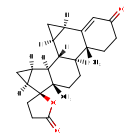
Structure for Drospirenone (DB01395)

- Weight
- Average: 366.4932
Monoisotopic: 366.219494826 - Chemical Formula
- C24H30O3
- Synonyms
- 1,2-Dihydrospirorenone
- 6β,7β;15β,16β-Dimethylene-3-oxo-17α-pregn-4-ene-21,17-carbolactone
- Dehydrospirorenone
- Drospirenona
- Drospirenone
- Drospirénone
- Drospirenonum
- DRSP
- External IDs
- ZK 30595
- ZK-30595

Pharmacology
- Indication
Drospirenone, in combination with ethinyl estradiol or estetrol, is indicated as an oral contraceptive for the prevention of pregnancy.19,28 In addition to its use for contraceptive effects, this combination is used to treat moderate acne vulgaris and the symptoms of premenstrual dysphoric disorder.19,20 The drug has approved indications for combination with estrogens for the treatment of menopause-associated symptoms, such as vasomotor symptoms and vulvovaginal atrophy. Drospirenone combined with estrogen may also may aid in the prevention of osteoporosis in women who have been post-menopausal for at least a year and are not candidates for other therapies.23,25 It can sometimes be found in preparations containing estrogen and folic acid for folic acid replenishment during oral contraception.26
When used for the treatment of acne vulgaris, drospirenone-containing contraceptives should only be used in women ≥14 years of age who have experienced menarche, desire oral contraception, and do not have any contraindications to oral contraceptives.20 Off-label uses for this drug include the treatment of menstrual irregularities, dysmenorrhea, hirsutism, and endometriosis.1,11
 Reduce drug development failure ratesBuild, train, & validate machine-learning modelswith evidence-based and structured datasets.Build, train, & validate predictive machine-learning models with structured datasets.
- Associated Conditions
Indication Type Indication Combined Product Details Approval Level Age Group Patient Characteristics Dose Form Used in combination to manage Atrophy of vulva Combination Product in combination with: Estradiol (DB00783) •••••••••••• •••••••• •• •••••• •••••••• •••••• Used in combination to manage Moderate to severe vasomotor symptoms Combination Product in combination with: Estradiol (DB00783) •••••••••••• •••••• Used in combination to prevent Neural tube defects (ntds) Combination Product in combination with: Ethinylestradiol (DB00977), Levomefolic acid (DB11256) •••••••••••• •••••••• ••••• •••• •••••• Used in combination to manage Premenstrual dysphoric disorder (pmdd) Combination Product in combination with: Ethinylestradiol (DB00977), Levomefolic acid (DB11256) •••••••••••• •••• •••••• Used in combination to manage Vulvo vaginal atrophy Combination Product in combination with: Estradiol (DB00783) •••••••••••• •••••••• •• •••••• •••••••• •••••• - Associated Therapies
- Contraindications & Blackbox Warnings
 Prevent Adverse Drug Events TodayTap into our Clinical API for life-saving information on contraindications & blackbox warnings, population restrictions, harmful risks, & more.Avoid life-threatening adverse drug events with our Clinical API
- Pharmacodynamics
Drospirenone inhibits the maturation of follicles and inhibits ovulation, preventing pregnancy. It has antiandrogen effects, improving acne and hirsutism. When combined with ethinyl estradiol, it has been shown to have favorable effects on the plasma lipid profile.20 Due to its similarity to naturally occurring progesterone, drospirenone is thought to be associated with a lower incidence of progesterone contraceptive related adverse effects, such as breast tenderness and mood swings.1
A note on venous thromboembolism risk and antimineralcorticoid effects
As with other oral contraceptives, the risk of venous thromboembolism and cardiovascular events may be increased when drospirenone is taken. The risk is especially higher in smokers and women aged 35 and older. Women taking this drug should be advised not to smoke. In addition, drospirenone, due to its antimineralcorticoid effects, may increase the risk of hyperkalemia. Patients at high risk for hyperkalemia should not be administered this drug. Consult the official prescribing information for detailed and updated information on the cardiovascular and other risks associated with drospirenone use.19,20,23
- Mechanism of action
Drospirenone and ethinyl estradiol in combination suppress the release of follicle stimulating hormone (FSH) and luteinizing hormone (LH), preventing ovulation. Other changes induced by this drug which may aid in the prevention of pregnancy include alterations in cervical mucus consistency, hindering sperm movement, and lowering the chance of embryo implantation.20
Drospirenone is an analog of the diuretic spironolactone, which exerts anti-mineralocorticoid activity, blocking aldosterone receptors, which increases sodium and water excretion.1 Studies in animals have demonstrated that drospirenone administration leads to antiandrogenic activity. This activity helps to oppose the effects of naturally occurring androgens, inhibiting the binding of dihydrotestosterone (DHT) to its receptor, and preventing androgen synthesis in the ovaries, helping to treat acne and hirsutism.1,12,19 Drospirenone may also decrease the level of edema in sebaceous follicle during the second half of the menstrual cycle, when acne often appears.19
Target Actions Organism AMineralocorticoid receptor antagonistHumans AAndrogen receptor antagonistHumans AProgesterone receptor agonistHumans UGlucocorticoid receptor binderHumans - Absorption
The absolute bioavailability of drospirenone is approximately 76% due to first-pass effects.13,19 The maximum plasma concentration of drospirenone occurs within 1 to 2 hours after oral administration and is estimated to range between 60 and 87 ng/mL.1 A European prescribing monograph for the combination product of estradiol and drospirenone indicates that drospirenone is both completely and rapidly absorbed. It reports a Cmax of 21.9 ng/ml, achieved approximately 1-hour post-administration. The absolute bioavailability is reported to range between 76 to 85%.23
- Volume of distribution
The volume of distribution of drospirenone is estimated to be 4 L/kg, according to the FDA label for Yaz.19 Prescribing information from a combination of estradiol and drospirenone estimates the volume of distribution to range from 3.7- 4.2 L/kg.23
- Protein binding
Drospirenone is about 95% to 97% bound to serum plasma protein, likely to albumin.1 During in vitro studies, drospirenone was found to bind with low affinity to sex hormone-binding globulin (SHBG).20 Another reference indicates that drospirenone binds to serum albumin but does not bind to sex hormone-binding globulin (SHBG), nor corticoid binding globulin (CBG). Only 3-5% of the total drospirenone concentration is measured as a free steroid. 23
- Metabolism
Drospirenone is heavily metabolized. The two major inactive metabolites identified are the acid form of drospirenone produced by the opening of its lactone ring, known as M11, and the 4,5-dihydro-drospirenone-3-sulfate (M14).1,13 Drospirenone also undergoes oxidative metabolism via the hepatic cytochrome enzyme CYP3A4.17,18,23
Hover over products below to view reaction partners
- Route of elimination
Various metabolites of drospirenone are measured in the urine and feces. Drospirenone elimination from the body is almost after 10 days post-administration1 when negligible amounts of drospirenone are found unchanged in both the urine and feces.23 Between 38% to 47% of the metabolites are identified as glucuronide and sulfate conjugates in the urine. In the feces, approximately 17% to 20% of identifiable metabolites are found to be excreted as glucuronides and sulfates.1
- Half-life
The serum half-life of drospirenone is estimated to be 30 hours.13 The half-life of drospirenone metabolite excretion in the urine and feces is approximately 40 hours.23
- Clearance
Drospirenone is rapidly cleared, typically within 2-3 days of administration of the last active tablet.14 The rate of clearance of drospirenone calculated in the serum ranges from 1.2-1.5 ml/min/kg, however, this value can vary by up to 25% according to the patient.23
- Adverse Effects
 Improve decision support & research outcomesWith structured adverse effects data, including: blackbox warnings, adverse reactions, warning & precautions, & incidence rates. View sample adverse effects data in our new Data Library!Improve decision support & research outcomes with our structured adverse effects data.
- Toxicity
The oral LD50 of drospirenone in rats is >2000 mg/kg.22
Overdose information An overdose of drospirenone, like other oral contraceptives, may lead to cause nausea or withdrawal bleeding. For drospirenone in particular, as an analog of spironolactone, may affect the levels of serum sodium and potassium. Their concentrations should be monitored in cases of overdose in addition to monitoring from metabolic acidosis and hyperkalemia, which may also result.15,19
- Pathways
- Not Available
- Pharmacogenomic Effects/ADRs
- Not Available
Interactions
- Drug Interactions
- This information should not be interpreted without the help of a healthcare provider. If you believe you are experiencing an interaction, contact a healthcare provider immediately. The absence of an interaction does not necessarily mean no interactions exist.
Drug Interaction Integrate drug-drug
interactions in your softwareAbacavir Drospirenone may increase the excretion rate of Abacavir which could result in a lower serum level and potentially a reduction in efficacy. Abametapir The serum concentration of Drospirenone can be increased when it is combined with Abametapir. Abatacept The metabolism of Drospirenone can be increased when combined with Abatacept. Abciximab The risk or severity of adverse effects can be increased when Drospirenone is combined with Abciximab. Abemaciclib The metabolism of Abemaciclib can be decreased when combined with Drospirenone. - Food Interactions
- Avoid St. John's Wort.
- Take at the same time every day.
- Take with or without food.
Products
 Drug product information from 10+ global regionsOur datasets provide approved product information including:dosage, form, labeller, route of administration, and marketing period.Access drug product information from over 10 global regions.
- Product Images
- Brand Name Prescription Products
Name Dosage Strength Route Labeller Marketing Start Marketing End Region Image Slynd Tablet 4 mg Oral Duchesnay Inc. 2022-04-20 Not applicable Canada 
Slynd Kit; Tablet, film coated 4 mg/1 Oral Exeltis Usa, Inc. 2019-06-06 Not applicable US 
- Mixture Products
Name Ingredients Dosage Route Labeller Marketing Start Marketing End Region Image Aliane 0,02 mg/3 mg Filmtabletten Drospirenone (3 mg) + Ethinylestradiol (0.02 mg) Tablet, film coated Oral Bayer Austria Ges.M.B.H. 2006-05-26 Not applicable Austria 
ANGELIQ Drospirenone (2 mg) + Estradiol (1 mg) Tablet, film coated Oral Bayer S.P.A. 2014-07-08 Not applicable Italy 
Angeliq Drospirenone (0.25 mg/1) + Estradiol (0.5 mg/1) Tablet, film coated Oral Bayer HealthCare Pharmaceuticals Inc. 2012-02-29 Not applicable US Angeliq Drospirenone (0.5 mg/1) + Estradiol (1 mg/1) Tablet, film coated Oral Physicians Total Care, Inc. 2010-09-29 Not applicable US ANGELIQ Drospirenone (2 mg) + Estradiol hemihydrate (1 mg) Tablet, film coated Oral 2017-01-01 Not applicable Germany 


Categories
- ATC Codes
- G03AA18 — Drospirenone and estetrol
- G03AA — Progestogens and estrogens, fixed combinations
- G03A — HORMONAL CONTRACEPTIVES FOR SYSTEMIC USE
- G03 — SEX HORMONES AND MODULATORS OF THE GENITAL SYSTEM
- G — GENITO URINARY SYSTEM AND SEX HORMONES
- G03AC — Progestogens
- G03A — HORMONAL CONTRACEPTIVES FOR SYSTEMIC USE
- G03 — SEX HORMONES AND MODULATORS OF THE GENITAL SYSTEM
- G — GENITO URINARY SYSTEM AND SEX HORMONES
- G03FA — Progestogens and estrogens, fixed combinations
- G03F — PROGESTOGENS AND ESTROGENS IN COMBINATION
- G03 — SEX HORMONES AND MODULATORS OF THE GENITAL SYSTEM
- G — GENITO URINARY SYSTEM AND SEX HORMONES
- Drug Categories
- Adrenal Cortex Hormones
- Agents causing hyperkalemia
- Androstanes
- Combination Contraceptives (with Estrogen and derivatives)
- Contraceptive Agents, Female
- Contraceptives, Oral
- Cytochrome P-450 CYP3A Substrates
- Cytochrome P-450 CYP3A4 Substrates
- Cytochrome P-450 CYP3A4 Substrates (strength unknown)
- Cytochrome P-450 Substrates
- Diuretics
- Fused-Ring Compounds
- Genito Urinary System and Sex Hormones
- Hormonal Contraceptives for Systemic Use
- Hormone Antagonists
- Hormones, Hormone Substitutes, and Hormone Antagonists
- Hyperglycemia-Associated Agents
- Mineralocorticoid Receptor Antagonists
- Natriuretic Agents
- Progesterone Congeners
- Progestin Contraceptives
- Progestins
- Sex Hormones and Modulators of the Genital System
- Steroids
- Chemical TaxonomyProvided by Classyfire
- Description
- This compound belongs to the class of organic compounds known as spironolactones and derivatives. These are steroid lactones with a structure based on the spironolactone skeleton.
- Kingdom
- Organic compounds
- Super Class
- Lipids and lipid-like molecules
- Class
- Steroids and steroid derivatives
- Sub Class
- Steroid lactones
- Direct Parent
- Spironolactones and derivatives
- Alternative Parents
- Cyclohexenones / Gamma butyrolactones / Tetrahydrofurans / Carboxylic acid esters / Oxacyclic compounds / Monocarboxylic acids and derivatives / Organic oxides / Hydrocarbon derivatives
- Substituents
- Aliphatic heteropolycyclic compound / Carbonyl group / Carboxylic acid derivative / Carboxylic acid ester / Cyclic ketone / Cyclohexenone / Gamma butyrolactone / Hydrocarbon derivative / Ketone / Lactone
- Molecular Framework
- Aliphatic heteropolycyclic compounds
- External Descriptors
- 3-oxo steroid, 3-oxo Delta(4)-steroid, steroid lactone (CHEBI:50838)
- Affected organisms
- Humans and other mammals
Chemical Identifiers
- UNII
- N295J34A25
- CAS number
- 67392-87-4
- InChI Key
- METQSPRSQINEEU-HXCATZOESA-N
- InChI
- InChI=1S/C24H30O3/c1-22-6-3-12(25)9-17(22)13-10-14(13)20-16(22)4-7-23(2)21(20)15-11-18(15)24(23)8-5-19(26)27-24/h9,13-16,18,20-21H,3-8,10-11H2,1-2H3/t13-,14+,15-,16+,18+,20-,21+,22-,23+,24+/m1/s1
- IUPAC Name
- (1R,2R,4R,10R,11S,14S,15S,16S,18S,19S)-10,14-dimethylspiro[hexacyclo[9.8.0.0^{2,4}.0^{5,10}.0^{14,19}.0^{16,18}]nonadecane-15,2'-oxolan]-5-ene-5',7-dione
- SMILES
- [H][C@@]12C[C@]1([H])[C@@]1([H])[C@]3([H])[C@]4([H])C[C@]4([H])[C@@]4(CCC(=O)O4)[C@@]3(C)CC[C@]1([H])[C@@]1(C)CCC(=O)C=C21
References
- Synthesis Reference
DOI: 10.1002/cjoc.201201147
- General References
- Krattenmacher R: Drospirenone: pharmacology and pharmacokinetics of a unique progestogen. Contraception. 2000 Jul;62(1):29-38. [Article]
- Wichianpitaya J, Taneepanichskul S: A comparative efficacy of low-dose combined oral contraceptives containing desogestrel and drospirenone in premenstrual symptoms. Obstet Gynecol Int. 2013;2013:487143. doi: 10.1155/2013/487143. Epub 2013 Feb 20. [Article]
- Larivee N, Suissa S, Khosrow-Khavar F, Tagalakis V, Filion KB: Drospirenone-containing oral contraceptive pills and the risk of venous thromboembolism: a systematic review of observational studies. BJOG. 2017 Sep;124(10):1490-1499. doi: 10.1111/1471-0528.14623. Epub 2017 May 5. [Article]
- Oedingen C, Scholz S, Razum O: Systematic review and meta-analysis of the association of combined oral contraceptives on the risk of venous thromboembolism: The role of the progestogen type and estrogen dose. Thromb Res. 2018 May;165:68-78. doi: 10.1016/j.thromres.2018.03.005. Epub 2018 Mar 15. [Article]
- Li J, Ren J, Sun W: A comparative systematic review of Yasmin (drospirenone pill) versus standard treatment options for symptoms of polycystic ovary syndrome. Eur J Obstet Gynecol Reprod Biol. 2017 Mar;210:13-21. doi: 10.1016/j.ejogrb.2016.11.013. Epub 2016 Nov 16. [Article]
- Lopez LM, Kaptein AA, Helmerhorst FM: Oral contraceptives containing drospirenone for premenstrual syndrome. Cochrane Database Syst Rev. 2012 Feb 15;(2):CD006586. doi: 10.1002/14651858.CD006586.pub4. [Article]
- Authors unspecified: ACOG Committee Opinion Number 540: Risk of venous thromboembolism among users of drospirenone-containing oral contraceptive pills. Obstet Gynecol. 2012 Nov;120(5):1239-42. doi: http://10.1097/AOG.0b013e318277c93b. [Article]
- Kluft C, Zimmerman Y, Mawet M, Klipping C, Duijkers IJ, Neuteboom J, Foidart JM, Bennink HC: Reduced hemostatic effects with drospirenone-based oral contraceptives containing estetrol vs. ethinyl estradiol. Contraception. 2017 Feb;95(2):140-147. doi: 10.1016/j.contraception.2016.08.018. Epub 2016 Sep 1. [Article]
- Regidor PA, Schindler AE: Antiandrogenic and antimineralocorticoid health benefits of COC containing newer progestogens: dienogest and drospirenone. Oncotarget. 2017 Aug 3;8(47):83334-83342. doi: 10.18632/oncotarget.19833. eCollection 2017 Oct 10. [Article]
- Momoeda M, Kondo M, Elliesen J, Yasuda M, Yamamoto S, Harada T: Efficacy and safety of a flexible extended regimen of ethinylestradiol/drospirenone for the treatment of dysmenorrhea: a multicenter, randomized, open-label, active-controlled study. Int J Womens Health. 2017 May 2;9:295-305. doi: 10.2147/IJWH.S134576. eCollection 2017. [Article]
- Suvarna Y, Maity N, Kalra P, Shivamurthy MC: Comparison of efficacy of metformin and oral contraceptive combination of ethinyl estradiol and drospirenone in polycystic ovary syndrome. J Turk Ger Gynecol Assoc. 2016 Jan 12;17(1):6-9. doi: 10.5152/jtgga.2016.16129. eCollection 2016. [Article]
- Mathur R, Levin O, Azziz R: Use of ethinylestradiol/drospirenone combination in patients with the polycystic ovary syndrome. Ther Clin Risk Manag. 2008 Apr;4(2):487-92. doi: 10.2147/tcrm.s6864. [Article]
- Rapkin AJ, Winer SA: Drospirenone: a novel progestin. Expert Opin Pharmacother. 2007 May;8(7):989-99. doi: 10.1517/14656566.8.7.989 . [Article]
- Breech LL, Braverman PK: Safety, efficacy, actions, and patient acceptability of drospirenone/ethinyl estradiol contraceptive pills in the treatment of premenstrual dysphoric disorder. Int J Womens Health. 2010 Aug 9;1:85-95. [Article]
- Bird ST, Pepe SR, Etminan M, Liu X, Brophy JM, Delaney JA: The association between drospirenone and hyperkalemia: a comparative-safety study. BMC Clin Pharmacol. 2011 Dec 30;11:23. doi: 10.1186/1472-6904-11-23. [Article]
- Zhang N, Shon J, Kim MJ, Yu C, Zhang L, Huang SM, Lee L, Tran D, Li L: Role of CYP3A in Oral Contraceptives Clearance. Clin Transl Sci. 2018 May;11(3):251-260. doi: 10.1111/cts.12499. Epub 2017 Oct 6. [Article]
- Cadeddu G, Deidda A, Stochino ME, Velluti N, Burrai C, Del Zompo M: Clozapine toxicity due to a multiple drug interaction: a case report. J Med Case Rep. 2015 Apr 2;9:77. doi: 10.1186/s13256-015-0547-2. [Article]
- Wiesinger H, Berse M, Klein S, Gschwend S, Hochel J, Zollmann FS, Schutt B: Pharmacokinetic interaction between the CYP3A4 inhibitor ketoconazole and the hormone drospirenone in combination with ethinylestradiol or estradiol. Br J Clin Pharmacol. 2015 Dec;80(6):1399-410. doi: 10.1111/bcp.12745. Epub 2015 Oct 28. [Article]
- YAZ fda label [Link]
- Yaz Bayer monograph [Link]
- 2012 FDA safety statement, YAZ [Link]
- FDA pharmacology review, Drospirenone [Link]
- Angeliq EU label [Link]
- drospirenone/ethinyl estradiol - Drug Summary [Link]
- Angeliq FDA label [Link]
- Safyral FDA label [Link]
- Product monograph: Nexstellis (estetrol and drospirenone) oral tablets [Link]
- FDA Approved Drug Products: NEXTSTELLIS (drospirenone and estetrol) tablets for oral use [Link]
- FDA Approved Drug Products: YASMIN (drospirenone/ethinyl estradiol) tablets, for oral use [Link]
- External Links
- Human Metabolome Database
- HMDB0015467
- KEGG Drug
- D03917
- PubChem Compound
- 68873
- PubChem Substance
- 46507653
- ChemSpider
- 62105
- BindingDB
- 150275
- 11636
- ChEBI
- 50838
- ChEMBL
- CHEMBL1509
- ZINC
- ZINC000003927200
- Therapeutic Targets Database
- DAP001206
- PharmGKB
- PA164749409
- RxList
- RxList Drug Page
- Drugs.com
- Drugs.com Drug Page
- Wikipedia
- Drospirenone
- FDA label
- Download (292 KB)
- MSDS
- Download (567 KB)
Clinical Trials
- Clinical Trials
Phase Status Purpose Conditions Count 4 Completed Not Available Blood Pressures / Contraception 1 4 Completed Not Available Polycystic Ovarian Syndrome (PCOS) 1 4 Completed Basic Science Adverse Effect of Oral Contraceptives, Subsequent Encounter 1 4 Completed Diagnostic Joint Stabilioty 1 4 Completed Prevention Breastfeeding / Contraception 1
Pharmacoeconomics
- Manufacturers
- Not Available
- Packagers
- Not Available
- Dosage Forms
Form Route Strength Tablet, film coated Oral Kit; tablet, film coated Oral Tablet, film coated Oral 0.03 MG Tablet Oral 20.000 mcg Tablet, coated Oral 4 mg Solution Oral Tablet Oral 3.000 mg Kit; tablet Oral Tablet, film coated Oral Tablet, film coated Oral 4 MG Kit; tablet, film coated Oral 4 mg/1 Tablet Oral 4 mg Capsule, liquid filled Oral Tablet Oral Tablet, coated Oral Tablet, film coated Oral 3 mg Kit Oral Tablet, film coated Oral 0.02 MG - Prices
- Not Available
- Patents
Patent Number Pediatric Extension Approved Expires (estimated) Region US6787531 No 2004-09-07 2020-08-31 US US6933395 No 2005-08-23 2017-08-11 US US8906890 No 2014-12-09 2031-10-22 US US6987101 No 2006-01-17 2017-12-22 US US7163931 No 2007-01-16 2021-12-20 US US6958326 No 2005-10-25 2021-12-20 US US5798338 No 1998-08-25 2015-07-10 US US6441168 No 2002-08-27 2022-07-30 US US8617597 No 2013-12-31 2030-02-08 US US10179140 No 2019-01-15 2031-06-28 US US9603860 No 2017-03-28 2031-06-28 US US10603281 No 2020-03-31 2031-06-08 US US10849857 No 2020-12-01 2031-06-28 US US7732430 No 2010-06-08 2025-03-02 US US10987364 No 2021-04-27 2031-06-28 US US11123299 No 2021-09-21 2031-06-28 US US11291633 No 2011-06-28 2031-06-28 US US11291632 No 2011-06-28 2031-06-28 US US11351122 No 2011-06-28 2031-06-28 US US11413249 No 2011-06-28 2031-06-28 US US11439598 No 2011-06-28 2031-06-28 US US11478487 No 2011-06-28 2031-06-28 US US11504334 No 2011-06-28 2031-06-28 US US11617751 No 2010-07-17 2030-07-17 US US11793760 No 2016-06-17 2036-06-17 US
Properties
- State
- Solid
- Experimental Properties
Property Value Source melting point (°C) 196-200 https://www.chemicalbook.com/ChemicalProductProperty_US_CB8695608.aspx boiling point (°C) 552.2 https://www.lookchem.com/Drospirenone/ logP 3.08 https://pdf.hres.ca/dpd_pm/00042999.PDF logS -5.2 http://www.hmdb.ca/metabolites/HMDB0015467 pKa -5 http://www.hmdb.ca/metabolites/HMDB0015467 - Predicted Properties
Property Value Source Water Solubility 0.00225 mg/mL ALOGPS logP 2.36 ALOGPS logP 3.37 Chemaxon logS -5.2 ALOGPS pKa (Strongest Acidic) 18.52 Chemaxon pKa (Strongest Basic) -5 Chemaxon Physiological Charge 0 Chemaxon Hydrogen Acceptor Count 2 Chemaxon Hydrogen Donor Count 0 Chemaxon Polar Surface Area 43.37 Å2 Chemaxon Rotatable Bond Count 0 Chemaxon Refractivity 101.68 m3·mol-1 Chemaxon Polarizability 41.81 Å3 Chemaxon Number of Rings 7 Chemaxon Bioavailability 1 Chemaxon Rule of Five Yes Chemaxon Ghose Filter Yes Chemaxon Veber's Rule No Chemaxon MDDR-like Rule No Chemaxon - Predicted ADMET Features
Property Value Probability Human Intestinal Absorption + 1.0 Blood Brain Barrier + 0.9383 Caco-2 permeable + 0.6376 P-glycoprotein substrate Substrate 0.6524 P-glycoprotein inhibitor I Inhibitor 0.6171 P-glycoprotein inhibitor II Non-inhibitor 0.6726 Renal organic cation transporter Non-inhibitor 0.7005 CYP450 2C9 substrate Non-substrate 0.796 CYP450 2D6 substrate Non-substrate 0.9116 CYP450 3A4 substrate Substrate 0.6964 CYP450 1A2 substrate Non-inhibitor 0.5534 CYP450 2C9 inhibitor Non-inhibitor 0.8665 CYP450 2D6 inhibitor Non-inhibitor 0.9336 CYP450 2C19 inhibitor Non-inhibitor 0.7754 CYP450 3A4 inhibitor Non-inhibitor 0.8355 CYP450 inhibitory promiscuity Low CYP Inhibitory Promiscuity 0.8541 Ames test Non AMES toxic 0.9163 Carcinogenicity Non-carcinogens 0.9505 Biodegradation Not ready biodegradable 0.9757 Rat acute toxicity 1.9430 LD50, mol/kg Not applicable hERG inhibition (predictor I) Weak inhibitor 0.9393 hERG inhibition (predictor II) Non-inhibitor 0.8215
Spectra
- Mass Spec (NIST)
- Download (37.1 KB)
- Spectra
Spectrum Spectrum Type Splash Key Predicted GC-MS Spectrum - GC-MS Predicted GC-MS splash10-0w9c-0169000000-37155c35a2dfebdf3836 Predicted MS/MS Spectrum - 10V, Negative (Annotated) Predicted LC-MS/MS splash10-014i-0009000000-d2c2b3f0083127b93331 Predicted MS/MS Spectrum - 10V, Positive (Annotated) Predicted LC-MS/MS splash10-014j-0009000000-fec0b9559b578e9c9431 Predicted MS/MS Spectrum - 20V, Negative (Annotated) Predicted LC-MS/MS splash10-014i-0009000000-e83f0561c8b894209b60 Predicted MS/MS Spectrum - 20V, Positive (Annotated) Predicted LC-MS/MS splash10-014j-0209000000-16e3f1168fe085039712 Predicted MS/MS Spectrum - 40V, Negative (Annotated) Predicted LC-MS/MS splash10-00xu-1019000000-7ac789c15184524f4e22 Predicted MS/MS Spectrum - 40V, Positive (Annotated) Predicted LC-MS/MS splash10-066r-0629000000-80294d71e68e61c9f972 Predicted 1H NMR Spectrum 1D NMR Not Applicable Predicted 13C NMR Spectrum 1D NMR Not Applicable - Chromatographic Properties
Collision Cross Sections (CCS)
Adduct CCS Value (Å2) Source type Source [M-H]- 198.3961196 predictedDarkChem Lite v0.1.0 [M-H]- 198.4750196 predictedDarkChem Lite v0.1.0 [M-H]- 197.7604196 predictedDarkChem Lite v0.1.0 [M-H]- 188.11028 predictedDeepCCS 1.0 (2019) [M+H]+ 198.9765196 predictedDarkChem Lite v0.1.0 [M+H]+ 199.0630196 predictedDarkChem Lite v0.1.0 [M+H]+ 197.9431196 predictedDarkChem Lite v0.1.0 [M+H]+ 189.834 predictedDeepCCS 1.0 (2019) [M+Na]+ 199.4102196 predictedDarkChem Lite v0.1.0 [M+Na]+ 198.7850196 predictedDarkChem Lite v0.1.0 [M+Na]+ 196.16295 predictedDeepCCS 1.0 (2019)
Targets

- Kind
- Protein
- Organism
- Humans
- Pharmacological action
- Yes
- Actions
- Antagonist
- General Function
- Zinc ion binding
- Specific Function
- Receptor for both mineralocorticoids (MC) such as aldosterone and glucocorticoids (GC) such as corticosterone or cortisol. Binds to mineralocorticoid response elements (MRE) and transactivates targ...
- Gene Name
- NR3C2
- Uniprot ID
- P08235
- Uniprot Name
- Mineralocorticoid receptor
- Molecular Weight
- 107066.575 Da
References
- Krattenmacher R: Drospirenone: pharmacology and pharmacokinetics of a unique progestogen. Contraception. 2000 Jul;62(1):29-38. [Article]
- Fuhrmann U, Krattenmacher R, Slater EP, Fritzemeier KH: The novel progestin drospirenone and its natural counterpart progesterone: biochemical profile and antiandrogenic potential. Contraception. 1996 Oct;54(4):243-51. [Article]
- Muhn P, Fuhrmann U, Fritzemeier KH, Krattenmacher R, Schillinger E: Drospirenone: a novel progestogen with antimineralocorticoid and antiandrogenic activity. Ann N Y Acad Sci. 1995 Jun 12;761:311-35. doi: 10.1111/j.1749-6632.1995.tb31386.x. [Article]
- Oelkers WK: Effects of estrogens and progestogens on the renin-aldosterone system and blood pressure. Steroids. 1996 Apr;61(4):166-71. [Article]
- Oelkers W: Antimineralocorticoid activity of a novel oral contraceptive containing drospirenone, a unique progestogen resembling natural progesterone. Eur J Contracept Reprod Health Care. 2002 Dec;7 Suppl 3:19-26; discussion 42-3. [Article]
- Oelkers W: Drospirenone, a progestogen with antimineralocorticoid properties: a short review. Mol Cell Endocrinol. 2004 Mar 31;217(1-2):255-61. doi: 10.1016/j.mce.2003.10.030. [Article]
- Kind
- Protein
- Organism
- Humans
- Pharmacological action
- Yes
- Actions
- Antagonist
- Curator comments
- References indicate a lower affinity to the androgen receptor.
- General Function
- Zinc ion binding
- Specific Function
- Steroid hormone receptors are ligand-activated transcription factors that regulate eukaryotic gene expression and affect cellular proliferation and differentiation in target tissues. Transcription ...
- Gene Name
- AR
- Uniprot ID
- P10275
- Uniprot Name
- Androgen receptor
- Molecular Weight
- 98987.9 Da
References
- Krattenmacher R: Drospirenone: pharmacology and pharmacokinetics of a unique progestogen. Contraception. 2000 Jul;62(1):29-38. [Article]
- Muhn P, Fuhrmann U, Fritzemeier KH, Krattenmacher R, Schillinger E: Drospirenone: a novel progestogen with antimineralocorticoid and antiandrogenic activity. Ann N Y Acad Sci. 1995 Jun 12;761:311-35. doi: 10.1111/j.1749-6632.1995.tb31386.x. [Article]
- Oelkers W: Drospirenone, a progestogen with antimineralocorticoid properties: a short review. Mol Cell Endocrinol. 2004 Mar 31;217(1-2):255-61. doi: 10.1016/j.mce.2003.10.030. [Article]
- Yaz Bayer monograph [Link]
- Kind
- Protein
- Organism
- Humans
- Pharmacological action
- Yes
- Actions
- Agonist
- General Function
- Zinc ion binding
- Specific Function
- The steroid hormones and their receptors are involved in the regulation of eukaryotic gene expression and affect cellular proliferation and differentiation in target tissues. Progesterone receptor ...
- Gene Name
- PGR
- Uniprot ID
- P06401
- Uniprot Name
- Progesterone receptor
- Molecular Weight
- 98979.96 Da
References
- Krattenmacher R: Drospirenone: pharmacology and pharmacokinetics of a unique progestogen. Contraception. 2000 Jul;62(1):29-38. [Article]
- Bray JD, Jelinsky S, Ghatge R, Bray JA, Tunkey C, Saraf K, Jacobsen BM, Richer JK, Brown EL, Winneker RC, Horwitz KB, Lyttle CR: Quantitative analysis of gene regulation by seven clinically relevant progestins suggests a highly similar mechanism of action through progesterone receptors in T47D breast cancer cells. J Steroid Biochem Mol Biol. 2005 Dec;97(4):328-41. Epub 2005 Sep 12. [Article]
- Fuhrmann U, Krattenmacher R, Slater EP, Fritzemeier KH: The novel progestin drospirenone and its natural counterpart progesterone: biochemical profile and antiandrogenic potential. Contraception. 1996 Oct;54(4):243-51. [Article]
- Arias-Loza PA, Hu K, Schafer A, Bauersachs J, Quaschning T, Galle J, Jazbutyte V, Neyses L, Ertl G, Fritzemeier KH, Hegele-Hartung C, Pelzer T: Medroxyprogesterone acetate but not drospirenone ablates the protective function of 17 beta-estradiol in aldosterone salt-treated rats. Hypertension. 2006 Nov;48(5):994-1001. Epub 2006 Sep 25. [Article]
- Sitruk-Ware R: New progestagens for contraceptive use. Hum Reprod Update. 2006 Mar-Apr;12(2):169-78. Epub 2005 Nov 16. [Article]
- Sitruk-Ware R: New progestogens: a review of their effects in perimenopausal and postmenopausal women. Drugs Aging. 2004;21(13):865-83. [Article]
- Muhn P, Fuhrmann U, Fritzemeier KH, Krattenmacher R, Schillinger E: Drospirenone: a novel progestogen with antimineralocorticoid and antiandrogenic activity. Ann N Y Acad Sci. 1995 Jun 12;761:311-35. doi: 10.1111/j.1749-6632.1995.tb31386.x. [Article]
- Kind
- Protein
- Organism
- Humans
- Pharmacological action
- Unknown
- Actions
- Binder
- Curator comments
- References indicate a weak binding affinity to the glucocorticoid receptor.
- General Function
- Zinc ion binding
- Specific Function
- Receptor for glucocorticoids (GC). Has a dual mode of action: as a transcription factor that binds to glucocorticoid response elements (GRE), both for nuclear and mitochondrial DNA, and as a modula...
- Gene Name
- NR3C1
- Uniprot ID
- P04150
- Uniprot Name
- Glucocorticoid receptor
- Molecular Weight
- 85658.57 Da
References
- Krattenmacher R: Drospirenone: pharmacology and pharmacokinetics of a unique progestogen. Contraception. 2000 Jul;62(1):29-38. [Article]
- Muhn P, Fuhrmann U, Fritzemeier KH, Krattenmacher R, Schillinger E: Drospirenone: a novel progestogen with antimineralocorticoid and antiandrogenic activity. Ann N Y Acad Sci. 1995 Jun 12;761:311-35. doi: 10.1111/j.1749-6632.1995.tb31386.x. [Article]
Enzymes
- Kind
- Protein
- Organism
- Humans
- Pharmacological action
- Unknown
- Actions
- InhibitorInducer
- Curator comments
- Amenorrheic patients on drospirenone were found to exhibit inhibition of COX-2 expression. Those with breakthrough bleeding on drospirenone were found to have increased COX-2 expression.
- General Function
- Prostaglandin-endoperoxide synthase activity
- Specific Function
- Converts arachidonate to prostaglandin H2 (PGH2), a committed step in prostanoid synthesis. Constitutively expressed in some tissues in physiological conditions, such as the endothelium, kidney and...
- Gene Name
- PTGS2
- Uniprot ID
- P35354
- Uniprot Name
- Prostaglandin G/H synthase 2
- Molecular Weight
- 68995.625 Da
References
- Maia H Jr, Casoy J, Athayde C, Valente Filho J, Coutinho EM: The effect of a continuous regimen of drospirenone 3 mg/ethinylestradiol 30 microg on Cox-2 and Ki-67 expression in the endometrium. Eur J Contracept Reprod Health Care. 2010 Feb;15(1):35-40. doi: 10.3109/13625180903383928. [Article]
- Maia H Jr, Haddad C, Pinheiro N, Casoy J: The effect of oral contraceptives on aromatase and Cox-2 expression in the endometrium of patients with idiopathic menorrhagia or adenomyosis. Int J Womens Health. 2013 Jun 13;5:293-9. doi: 10.2147/IJWH.S45093. Print 2013. [Article]
- Kind
- Protein
- Organism
- Humans
- Pharmacological action
- Unknown
- Actions
- Substrate
- Curator comments
- This enzyme activity is based on the results of an in vivo study with rat and dog subjects.
- General Function
- Protein homodimerization activity
- Specific Function
- Hydrolyzes the toxic metabolites of a variety of organophosphorus insecticides. Capable of hydrolyzing a broad spectrum of organophosphate substrates and lactones, and a number of aromatic carboxyl...
- Gene Name
- PON1
- Uniprot ID
- P27169
- Uniprot Name
- Serum paraoxonase/arylesterase 1
- Molecular Weight
- 39730.99 Da
References
- Koitka M, Hochel J, Gieschen H, Borchert HH: Improving the ex vivo stability of drug ester compounds in rat and dog serum: inhibition of the specific esterases and implications on their identity. J Pharm Biomed Anal. 2010 Feb 5;51(3):664-78. doi: 10.1016/j.jpba.2009.09.023. Epub 2009 Sep 23. [Article]
- Kind
- Protein
- Organism
- Humans
- Pharmacological action
- Unknown
- Actions
- Substrate
- General Function
- Vitamin d3 25-hydroxylase activity
- Specific Function
- Cytochromes P450 are a group of heme-thiolate monooxygenases. In liver microsomes, this enzyme is involved in an NADPH-dependent electron transport pathway. It performs a variety of oxidation react...
- Gene Name
- CYP3A4
- Uniprot ID
- P08684
- Uniprot Name
- Cytochrome P450 3A4
- Molecular Weight
- 57342.67 Da
References
- Wiesinger H, Berse M, Klein S, Gschwend S, Hochel J, Zollmann FS, Schutt B: Pharmacokinetic interaction between the CYP3A4 inhibitor ketoconazole and the hormone drospirenone in combination with ethinylestradiol or estradiol. Br J Clin Pharmacol. 2015 Dec;80(6):1399-410. doi: 10.1111/bcp.12745. Epub 2015 Oct 28. [Article]
- Cadeddu G, Deidda A, Stochino ME, Velluti N, Burrai C, Del Zompo M: Clozapine toxicity due to a multiple drug interaction: a case report. J Med Case Rep. 2015 Apr 2;9:77. doi: 10.1186/s13256-015-0547-2. [Article]
- Zhang N, Shon J, Kim MJ, Yu C, Zhang L, Huang SM, Lee L, Tran D, Li L: Role of CYP3A in Oral Contraceptives Clearance. Clin Transl Sci. 2018 May;11(3):251-260. doi: 10.1111/cts.12499. Epub 2017 Oct 6. [Article]
- Angeliq EU label [Link]


Drug created at July 08, 2007 17:03 / Updated at May 31, 2023 07:29