Identification
- Summary
Ethinylestradiol is an estradiol used as a contraceptive.
- Brand Names
- Afirmelle 28 Day, Alesse, Altavera 28 Day, Alyacen 1/35, Alyacen 7/7/7, Amethia 91 Day, Amethyst, Annovera, Apri 28 Day, Aranelle 28, Ashlyna 91 Day, Aubra 28 Day, Aurovela, Aurovela Fe, Aviane 28, Ayuna 28 Day Pack, Azurette 28 Day, Balcoltra 28 Day, Balziva 28 Day, Bekyree 28 Day, Beyaz 28 Day, Blisovi 21 Fe 1.5/30 28 Day Pack, Blisovi 21 Fe 1/20 28 Day Pack, Blisovi 24 Fe 1/20 28 Day, Brevicon, Briellyn 28 Day, Camrese 91 Day, Camreselo 91 Day, Caziant 28 Day, Cesia 28 Day, Charlotte 24 Fe Chewable 28 Day, Chateal 28 Day, Cléo -35, Cryselle 28, Cyclafem 1/35 28 Day, Cyclafem 7/7/7 28 Day, Cyestra-35, Cyonanz 28 Day, Cyred 28 Day, Dasetta 1/35 28 Day, Dasetta 7/7/7 28 Day, Daysee 91 Day, Delyla 28 Day, Diane, Dolishale 28 Day, Elinest 28 Day, Eluryng, Emoquette, Enilloring, Enpresse 28 Day, Enskyce 28 Day, Estarylla 28 Day, Evra, Falmina 28 Day, Fayosim 91 Day, Femcon Fe 28 Day, Femhrt 0.5/2.5 28 Day, Femynor 28 Day, Finzala 24 Fe Chewable 28 Day, Freya, Fyavolv, Gemmily 28 Day, Gianvi 28-day, Hailey 1.5/30 21 Day, Hailey 24 Fe 28 Day, Hailey Fe 1.5/30 28 Day, Hailey Fe 1/20 28 Day, Iclevia 91 Day, Indayo, Introvale 91 Day, Isibloom 28 Day, Jaimiess 91 Day, Jasmiel 28 Day, Jinteli, Jolessa 91 Day, Joyeaux 28 Day, Juleber 28 Day, Junel 1.5/30 21 Day, Junel 1/20 21 Day, Junel Fe 1.5/30 28 Day, Junel Fe 1/20 28 Day, Junel Fe 24 1/20 28 Day, Kaitlib Fe 28 Day, Kalliga, Kariva 28 Day, Kelnor 1/35 28 Day, Kelnor 1/50 28 Day, Kurvelo, Larin 1.5/30, Larin 1/20, Larin 24 Fe 1/20, Larin Fe 1.5/30, Larin Fe 1/20, Layolis Fe 28, Leena 28 Day, Levonest 28 Day, Levora 0.15/30 28 Day, Linessa, Lo Loestrin Fe 28 Day, Lo Simpesse, Lo-zumandimine 28 Day, Lo/ovral 28 Day, LoJaimiess, Loestrin 1.5/30 21 Day, Loestrin 24 Fe 28 Day, Loestrin Fe 1/20 28 Day, Lolo, Lomedia 24 Fe, Loryna, Loseasonique, Low-ogestrel 28 Day, Lutera 28 Day, Marlissa 28 Day, Marvelon, Melodetta 24 Fe Chewable 28 Day, Merzee 28 Day, Mibelas 24 Fe Chewable 28 Day, Microgestin 1.5/30 21 Day, Microgestin 1/20 21 Day, Microgestin 24 Fe 28 Day, Microgestin Fe 1.5/30 28 Day, Microgestin Fe 1/20 28 Day, Mili 28 Day, Min-ovral, Minastrin 24 Fe Chewable 28 Day, Mircette 28 Day, Mono-linyah 28 Day, Mononessa 28 Day, Myzilra 28 Day, Necon 0.5/35 28 Day, Necon 1/35 28 Day, Necon 7/7/7 28 Day, Nexesta Fe 28 Day, Nikki 28 Day, Nortrel 1/35 21 Day, Nortrel 1/35 28 Day, Nortrel 7/7/7 28 Day, Nuvaring, Nylia 1/35 28 Day, Nylia 7/7/7 28 Day, Nymyo 28 Day, Ocella 28 Day, Orsythia 28 Day, Ortho Tri-cyclen 28 Day, Ortho Tri-cyclen Lo 28 Day, Ortho-novum 7/7/7 28 Day, Philith 28 Day, Pimtrea Pack, Pirmella 1/35 28 Day, Pirmella 7/7/7 28 Day, Portia 28 Day, Previfem 28 Day, Quartette 91 Day Pack, Reclipsen, Rhuzdah 28 Day, Rivelsa 91 Day, Safyral 28 Day, Seasonale, Seasonique, Select, Setlakin 91 Day, Simliya, Simpesse, Sprintec 28 Day, Sronyx 28 Day, Syeda 28 Day, Synphasic, Tarina 24 Fe 1/20 28 Day, Tarina Fe 1/20 28 Day, Taysofy 28 Day, Taytulla 28 Day, Tilia Fe, Tri Femynor 28 Day, Tri-LO- Estarylla 28 Day, Tri-LO-marzia 28-day, Tri-LO-mili, Tri-Lo-Sprintec, Tri-estarylla 28 Day, Tri-legest 28 Day, Tri-linyah, Tri-mili 28 Day, Tri-nymyo 28 Day Pack, Tri-previfem 28 Day, Tri-sprintec 28 Day, Tri-vylibra 28 Day, Tri-vylibra Lo 28 Day, Trinessa 28 Day, Trinessa Lo 28 Day, Triquilar, Trivora 28 Day, Turqoz 28 Day, Twirla 3 Count Weekly Patch, Tyblume 28 Day, Tydemy 28 Day, Velivet 28 Day, Vestura, Vienva 28 Day, Viorele 28 Day, Volnea 28 Day, Vyfemla 28 Day, Vylibra 28 Day, Wera 28 Day, Wymzya Fe 28 Day, Xulane, Yasmin, Yasmin 28 Day, Yaz 28 Day, Yaz Plus, Zafemy, Zarah, Zenchent, Zovia 1/35e 28 Day, Zovia 1/50e 28 Day, Zumandimine 28 Day
- Generic Name
- Ethinylestradiol
- DrugBank Accession Number
- DB00977
- Background
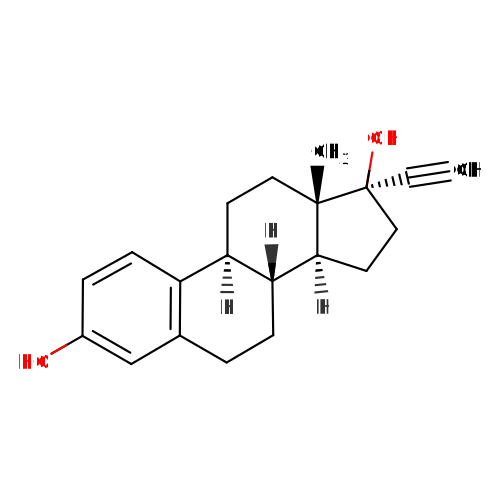
Ethinylestradiol was first synthesized in 1938 by Hans Herloff Inhoffen and Walter Hohlweg at Schering.1 It was developed in an effort to create an estrogen with greater oral bioavailability.1 These properties were achieved by the substitution of an ethinyl group at carbon 17 of estradiol.1 Ethinylestradiol soon replaced mestranol in contraceptive pills.1
Ethinylestradiol was granted FDA approval on 25 June 1943.14
- Type
- Small Molecule
- Groups
- Approved
- Structure
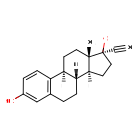
Structure for Ethinylestradiol (DB00977)
- Weight
- Average: 296.4034
Monoisotopic: 296.177630012 - Chemical Formula
- C20H24O2
- Synonyms
- 17-ethinyl-3,17-estradiol
- 17-ethinyl-3,17-oestradiol
- 17-ethinylestradiol
- 17alpha-Ethinyl estradiol
- 17α-ethynylestradiol
- Ethinyl estradiol
- Ethinylestradiol
- Ethinylestradiolum
- Ethinyloestradiol
- Ethynyl estradiol
- Etinilestradiol
- External IDs
- NSC-10973

Pharmacology
- Indication
Ethinylestradiol is combined with other drugs for use as a contraceptive, premenstrual dysphoric disorder, moderate acne, moderate to severe vasomotor symptoms of menopause, prevention of postmenopausal osteoporosis.15,25,16,17,24,18,19,20,21,22,23
 Reduce drug development failure ratesBuild, train, & validate machine-learning modelswith evidence-based and structured datasets.Build, train, & validate predictive machine-learning models with structured datasets.
- Associated Conditions
Indication Type Indication Combined Product Details Approval Level Age Group Patient Characteristics Dose Form Used in combination to prevent Menopausal osteoporosis Combination Product in combination with: Norethisterone (DB00717) •••••••••••• •••••••••• •••••• Used in combination to treat Mild to moderate acne Combination Product in combination with: Dienogest (DB09123) •••••••••••• ••••••• ••••••• •••• ••••••••••••• ••• ••••• ••••••• •••••• Used in combination to treat Premenstrual dysphoric disorder (pmdd) Combination Product in combination with: Drospirenone (DB01395) •••••••••••• •••••• Used in combination to treat Moderate acne vulgaris Combination Product in combination with: Ferrous fumarate (DB14491), Norethisterone (DB00717) •••••••••••• •••••• Used in combination to treat Moderate acne vulgaris Combination Product in combination with: Norgestimate (DB00957) •••••••••••• •••••• - Associated Therapies
- Contraindications & Blackbox Warnings
 Prevent Adverse Drug Events TodayTap into our Clinical API for life-saving information on contraindications & blackbox warnings, population restrictions, harmful risks, & more.Avoid life-threatening adverse drug events with our Clinical API
- Pharmacodynamics
Ethinylestradiol is a synthetic estrogen that decreases luteinizing hormone to decrease endometrial vascularization, and decreases gonadotrophic hormone to prevent ovulation.13,12,15 It has a long duration of action as it is taken once daily, and a wide therapeutic index as overdoses are generally not associated with serious adverse effects.15 Patients should be counselled regarding the risks of thrombotic events.15
- Mechanism of action
Ethinylestradiol is a synthetic estrogenic compound.15 Use of estrogens have a number of effects on the body including reduced bone density.11 Combined oral contraceptives suppress ovulation by suppressing gonadotrophic hormone, thickening cervical mucus to prevent the travel of sperm, and preventing changes in the endometrium required for implantation of a fertilized egg.12,15 Ethinylestradiol decreases luteinizing hormone, decreasing vascularity in the endometrium.13 It also increases sex hormone binding globulin.13
Target Actions Organism AEstrogen receptor alpha agonistHumans UNuclear receptor subfamily 1 group I member 2 agonistHumans - Absorption
A 30µg oral dose of ethinylestradiol reaches a Cmax of 74.1±35.6pg/mL, with a Tmax of 1.5±0.5h, and an AUC of 487.4±166.6pg*h/mL.10 A 1.2mg dose delivered via a patch reaches a Cmax of 28.8±10.3pg/mL, with a Tmax of 86±31h, and an AUC of3895±1423pg*h/mL.10
- Volume of distribution
A 30µg oral dose has an apparent volume of distribution of 625.3±228.7L and a 1.2mg topical dose has an apparent volume of distribution of 11745.3±15934.8L.10
- Protein binding
Enthinylestradiol is 98.3-98.5% bound to albumin in serum8 but also exhibits binding to sex hormone binding globulin.9
- Metabolism
Ethinylestradiol can be glucuronidated by UGT1A1, UGT1A3, UGT1A4, UGT1A9, and UGT2B7.3,7 Ethinylestradiol is also sulfated by SULT1A1, SULT1A3, and SULT1E1.6,7 Ethinylestradiol can also be hydroxylated at positions 2, 4, 6, 7, and 165,7 by CYP3A4, CYP3A5, CYP2C8, CYP2C9, and CYP1A2.4,7 These hydroxylated metabolites can be methylated by catechol-O-methyltransferase.7 The methoxy metabolites can in turn be sulfated or glucuronidated.7
Hover over products below to view reaction partners
- Route of elimination
Ethinylestradiol is 59.2% eliminated in the urine and bile, while 2-3% is eliminated in the feces.2 Over 90% of ethinylestradiol is eliminated as the unchanged parent drug.2
- Half-life
A 30µg oral dose has a half life of 8.4±4.8h and a 1.2mg topical dose has a half life of 27.7±34.2h.10
- Clearance
Ethinylestradiol has an intravenous clearance of 16.47L/h, and an estimated renal clearance of approximately 2.1L/h.4 A 30µg oral dose has a clearance of 58.0±19.8L/h and a 1.2mg topical dose has a clearance of 303.5±100.5L/h.10
- Adverse Effects
 Improve decision support & research outcomesWith structured adverse effects data, including: blackbox warnings, adverse reactions, warning & precautions, & incidence rates. View sample adverse effects data in our new Data Library!Improve decision support & research outcomes with our structured adverse effects data.
- Toxicity
Female patients experiencing and overdose may present with withdrawal bleeding, nausea, vomiting, breast tenderness, abdominal pain, drowsiness, and fatigue.15,25,16,17,24,18,19,20,21,22,23 Overdose should be treated with symptomatic and supportive care including monitoring for potassium concentrations, sodium concentrations, and signs of metabolic acidosis.15,25,16,17,24,18,19,20,21,22,23
- Pathways
- Not Available
- Pharmacogenomic Effects/ADRs
- Not Available
Interactions
- Drug Interactions
- This information should not be interpreted without the help of a healthcare provider. If you believe you are experiencing an interaction, contact a healthcare provider immediately. The absence of an interaction does not necessarily mean no interactions exist.
Drug Interaction Integrate drug-drug
interactions in your softwareAbacavir The metabolism of Abacavir can be increased when combined with Ethinylestradiol. Abametapir The serum concentration of Ethinylestradiol can be increased when it is combined with Abametapir. Abatacept The metabolism of Ethinylestradiol can be increased when combined with Abatacept. Abciximab The risk or severity of adverse effects can be increased when Ethinylestradiol is combined with Abciximab. Abiraterone The serum concentration of Ethinylestradiol can be increased when it is combined with Abiraterone. - Food Interactions
- Avoid St. John's Wort. St. John's Wort may decrease the effectiveness of ethinylestradiol.
Products
 Drug product information from 10+ global regionsOur datasets provide approved product information including:dosage, form, labeller, route of administration, and marketing period.Access drug product information from over 10 global regions.
- Active Moieties
Name Kind UNII CAS InChI Key Estradiol unknown 4TI98Z838E 50-28-2 VOXZDWNPVJITMN-ZBRFXRBCSA-N - Product Images
- International/Other Brands
- Estinyl (Schering)
- Brand Name Prescription Products
Name Dosage Strength Route Labeller Marketing Start Marketing End Region Image Estinyl Tab 0.05mg Tablet .05 mg / tab Oral Schering Plough 1951-12-31 2000-07-11 Canada 
Estinyl Tab 0.5mg Tablet .5 mg / tab Oral Schering Plough 1951-12-31 2000-07-11 Canada Estinyl Tablets 0.02 Mg. Tablet .02 mg / tab Oral Schering Plough 1951-12-31 1998-11-17 Canada - Mixture Products
Name Ingredients Dosage Route Labeller Marketing Start Marketing End Region Image ACTIVA 21 Ethinylestradiol (30 mcg) + Levonorgestrel (150 mcg) Tablet, coated Oral FAES FARMA COLOMBIA S.A.S. 2008-04-10 Not applicable Colombia 
ACTIVA 21 SUAVE® Ethinylestradiol (20 mcg) + Levonorgestrel (100 mcg) Tablet, coated Oral FAES FARMA COLOMBIA S.A.S. 2014-05-23 Not applicable Colombia ADELLA MINI TABLETA CON RECUBRIMIENTO DE GELATINA Ethinylestradiol (0.02 mg) + Chlormadinone (2 mg) Tablet, coated Oral PROCAPS S.A. 2013-03-06 Not applicable Colombia ADELLA® Ethinylestradiol (0.03 mg) + Chlormadinone (2 mg) Tablet, coated Oral PROCAPS S.A. 2013-04-03 Not applicable Colombia Afirmelle Ethinylestradiol (0.02 mg/1) + Levonorgestrel (0.1 mg/1) Kit; Tablet Oral Aurobindo Pharma Limited 2016-11-14 Not applicable US 
- Unapproved/Other Products
Name Ingredients Dosage Route Labeller Marketing Start Marketing End Region Image Falessa Ethinylestradiol (0.02 mg/1) + Folic acid (1 mg/1) + Levonorgestrel (0.1 mg/1) Kit Oral Avion Pharmaceuticals, Llc 2014-02-17 Not applicable US Mercilon Ethinylestradiol (0.02 mg/1) + Desogestrel (0.15 mg/1) Tablet Oral OASIS TRADING 2018-11-22 Not applicable US Minivlar 30 Ethinylestradiol (0.03 mg/1) + Levonorgestrel (0.15 mg/1) Tablet Oral OASIS TRADING 2018-11-21 Not applicable US Myvlar Ethinylestradiol (0.03 mg/1) + Gestodene (0.075 mg/1) Tablet Oral OASIS TRADING 2018-11-22 Not applicable US


Categories
- ATC Codes
- G03AA15 — Chlormadinone and ethinylestradiol
- G03AA — Progestogens and estrogens, fixed combinations
- G03A — HORMONAL CONTRACEPTIVES FOR SYSTEMIC USE
- G03 — SEX HORMONES AND MODULATORS OF THE GENITAL SYSTEM
- G — GENITO URINARY SYSTEM AND SEX HORMONES
- G03AA — Progestogens and estrogens, fixed combinations
- G03A — HORMONAL CONTRACEPTIVES FOR SYSTEMIC USE
- G03 — SEX HORMONES AND MODULATORS OF THE GENITAL SYSTEM
- G — GENITO URINARY SYSTEM AND SEX HORMONES
- L02AA — Estrogens
- L02A — HORMONES AND RELATED AGENTS
- L02 — ENDOCRINE THERAPY
- L — ANTINEOPLASTIC AND IMMUNOMODULATING AGENTS
- G03AA — Progestogens and estrogens, fixed combinations
- G03A — HORMONAL CONTRACEPTIVES FOR SYSTEMIC USE
- G03 — SEX HORMONES AND MODULATORS OF THE GENITAL SYSTEM
- G — GENITO URINARY SYSTEM AND SEX HORMONES
- G03AA — Progestogens and estrogens, fixed combinations
- G03A — HORMONAL CONTRACEPTIVES FOR SYSTEMIC USE
- G03 — SEX HORMONES AND MODULATORS OF THE GENITAL SYSTEM
- G — GENITO URINARY SYSTEM AND SEX HORMONES
- G03AB — Progestogens and estrogens, sequential preparations
- G03A — HORMONAL CONTRACEPTIVES FOR SYSTEMIC USE
- G03 — SEX HORMONES AND MODULATORS OF THE GENITAL SYSTEM
- G — GENITO URINARY SYSTEM AND SEX HORMONES
- G03CA — Natural and semisynthetic estrogens, plain
- G03C — ESTROGENS
- G03 — SEX HORMONES AND MODULATORS OF THE GENITAL SYSTEM
- G — GENITO URINARY SYSTEM AND SEX HORMONES
- G03AA — Progestogens and estrogens, fixed combinations
- G03A — HORMONAL CONTRACEPTIVES FOR SYSTEMIC USE
- G03 — SEX HORMONES AND MODULATORS OF THE GENITAL SYSTEM
- G — GENITO URINARY SYSTEM AND SEX HORMONES
- G03AA — Progestogens and estrogens, fixed combinations
- G03A — HORMONAL CONTRACEPTIVES FOR SYSTEMIC USE
- G03 — SEX HORMONES AND MODULATORS OF THE GENITAL SYSTEM
- G — GENITO URINARY SYSTEM AND SEX HORMONES
- G03AB — Progestogens and estrogens, sequential preparations
- G03A — HORMONAL CONTRACEPTIVES FOR SYSTEMIC USE
- G03 — SEX HORMONES AND MODULATORS OF THE GENITAL SYSTEM
- G — GENITO URINARY SYSTEM AND SEX HORMONES
- G03AB — Progestogens and estrogens, sequential preparations
- G03A — HORMONAL CONTRACEPTIVES FOR SYSTEMIC USE
- G03 — SEX HORMONES AND MODULATORS OF THE GENITAL SYSTEM
- G — GENITO URINARY SYSTEM AND SEX HORMONES
- G03AB — Progestogens and estrogens, sequential preparations
- G03A — HORMONAL CONTRACEPTIVES FOR SYSTEMIC USE
- G03 — SEX HORMONES AND MODULATORS OF THE GENITAL SYSTEM
- G — GENITO URINARY SYSTEM AND SEX HORMONES
- G03AA — Progestogens and estrogens, fixed combinations
- G03A — HORMONAL CONTRACEPTIVES FOR SYSTEMIC USE
- G03 — SEX HORMONES AND MODULATORS OF THE GENITAL SYSTEM
- G — GENITO URINARY SYSTEM AND SEX HORMONES
- G03AA — Progestogens and estrogens, fixed combinations
- G03A — HORMONAL CONTRACEPTIVES FOR SYSTEMIC USE
- G03 — SEX HORMONES AND MODULATORS OF THE GENITAL SYSTEM
- G — GENITO URINARY SYSTEM AND SEX HORMONES
- G03AA — Progestogens and estrogens, fixed combinations
- G03A — HORMONAL CONTRACEPTIVES FOR SYSTEMIC USE
- G03 — SEX HORMONES AND MODULATORS OF THE GENITAL SYSTEM
- G — GENITO URINARY SYSTEM AND SEX HORMONES
- G03AA — Progestogens and estrogens, fixed combinations
- G03A — HORMONAL CONTRACEPTIVES FOR SYSTEMIC USE
- G03 — SEX HORMONES AND MODULATORS OF THE GENITAL SYSTEM
- G — GENITO URINARY SYSTEM AND SEX HORMONES
- G03AA — Progestogens and estrogens, fixed combinations
- G03A — HORMONAL CONTRACEPTIVES FOR SYSTEMIC USE
- G03 — SEX HORMONES AND MODULATORS OF THE GENITAL SYSTEM
- G — GENITO URINARY SYSTEM AND SEX HORMONES
- G03AA — Progestogens and estrogens, fixed combinations
- G03A — HORMONAL CONTRACEPTIVES FOR SYSTEMIC USE
- G03 — SEX HORMONES AND MODULATORS OF THE GENITAL SYSTEM
- G — GENITO URINARY SYSTEM AND SEX HORMONES
- G03AB — Progestogens and estrogens, sequential preparations
- G03A — HORMONAL CONTRACEPTIVES FOR SYSTEMIC USE
- G03 — SEX HORMONES AND MODULATORS OF THE GENITAL SYSTEM
- G — GENITO URINARY SYSTEM AND SEX HORMONES
- G03AA — Progestogens and estrogens, fixed combinations
- G03A — HORMONAL CONTRACEPTIVES FOR SYSTEMIC USE
- G03 — SEX HORMONES AND MODULATORS OF THE GENITAL SYSTEM
- G — GENITO URINARY SYSTEM AND SEX HORMONES
- G03AB — Progestogens and estrogens, sequential preparations
- G03A — HORMONAL CONTRACEPTIVES FOR SYSTEMIC USE
- G03 — SEX HORMONES AND MODULATORS OF THE GENITAL SYSTEM
- G — GENITO URINARY SYSTEM AND SEX HORMONES
- G03AA — Progestogens and estrogens, fixed combinations
- G03A — HORMONAL CONTRACEPTIVES FOR SYSTEMIC USE
- G03 — SEX HORMONES AND MODULATORS OF THE GENITAL SYSTEM
- G — GENITO URINARY SYSTEM AND SEX HORMONES
- G03AB — Progestogens and estrogens, sequential preparations
- G03A — HORMONAL CONTRACEPTIVES FOR SYSTEMIC USE
- G03 — SEX HORMONES AND MODULATORS OF THE GENITAL SYSTEM
- G — GENITO URINARY SYSTEM AND SEX HORMONES
- G03AB — Progestogens and estrogens, sequential preparations
- G03A — HORMONAL CONTRACEPTIVES FOR SYSTEMIC USE
- G03 — SEX HORMONES AND MODULATORS OF THE GENITAL SYSTEM
- G — GENITO URINARY SYSTEM AND SEX HORMONES
- Drug Categories
- Adrenal Cortex Hormones
- Antineoplastic and Immunomodulating Agents
- BSEP/ABCB11 inducers
- BSEP/ABCB11 Inhibitors
- COMT Substrates
- Contraceptive Agents, Female
- Contraceptive Agents, Hormonal
- Contraceptives, Oral
- Contraceptives, Oral, Hormonal
- Contraceptives, Postcoital
- Cytochrome P-450 CYP1A2 Substrates
- Cytochrome P-450 CYP2C19 Inhibitors
- Cytochrome P-450 CYP2C19 inhibitors (strength unknown)
- Cytochrome P-450 CYP2C8 Inhibitors
- Cytochrome P-450 CYP2C8 Inhibitors (strength unknown)
- Cytochrome P-450 CYP2C8 Substrates
- Cytochrome P-450 CYP2C9 Substrates
- Cytochrome P-450 CYP3A Substrates
- Cytochrome P-450 CYP3A4 Substrates
- Cytochrome P-450 CYP3A5 Substrates
- Cytochrome P-450 Enzyme Inhibitors
- Cytochrome P-450 Substrates
- Endocrine Therapy
- Estradiol Congeners
- Estrogen Contraceptives
- Estrogenic Steroids, Alkylated
- Estrogens
- Fused-Ring Compounds
- Genito Urinary System and Sex Hormones
- Gonadal Hormones
- Gonadal Steroid Hormones
- Hormonal Contraceptives for Systemic Use
- Hormones
- Hormones and Related Agents
- Hormones, Hormone Substitutes, and Hormone Antagonists
- Hyperglycemia-Associated Agents
- Natural and Semisynthetic Estrogens, Plain
- Norpregnanes
- Norpregnatrienes
- Norsteroids
- P-glycoprotein substrates
- Progestogens and Estrogens, Sequential Preparations
- Reproductive Control Agents
- Sex Hormones and Modulators of the Genital System
- Steroids
- Thyroxine-binding globulin inducers
- UGT1A1 Inducers
- UGT1A1 Substrates
- UGT1A4 substrates
- UGT1A9 Substrates
- UGT2B7 substrates
- Chemical TaxonomyProvided by Classyfire
- Description
- This compound belongs to the class of organic compounds known as estrogens and derivatives. These are steroids with a structure containing a 3-hydroxylated estrane.
- Kingdom
- Organic compounds
- Super Class
- Lipids and lipid-like molecules
- Class
- Steroids and steroid derivatives
- Sub Class
- Estrane steroids
- Direct Parent
- Estrogens and derivatives
- Alternative Parents
- 3-hydroxysteroids / 17-hydroxysteroids / Phenanthrenes and derivatives / Tetralins / 1-hydroxy-2-unsubstituted benzenoids / Ynones / Tertiary alcohols / Cyclic alcohols and derivatives / Acetylides / Hydrocarbon derivatives
- Substituents
- 1-hydroxy-2-unsubstituted benzenoid / 17-hydroxysteroid / 3-hydroxysteroid / Acetylide / Alcohol / Aromatic homopolycyclic compound / Benzenoid / Cyclic alcohol / Estrogen-skeleton / Hydrocarbon derivative
- Molecular Framework
- Aromatic homopolycyclic compounds
- External Descriptors
- terminal acetylenic compound, 17-hydroxy steroid, 3-hydroxy steroid (CHEBI:4903) / C18 steroids (estrogens) and derivatives (C07534) / C18 steroids (estrogens) and derivatives (LMST02010036)
- Affected organisms
- Humans and other mammals
Chemical Identifiers
- UNII
- 423D2T571U
- CAS number
- 57-63-6
- InChI Key
- BFPYWIDHMRZLRN-SLHNCBLASA-N
- InChI
- InChI=1S/C20H24O2/c1-3-20(22)11-9-18-17-6-4-13-12-14(21)5-7-15(13)16(17)8-10-19(18,20)2/h1,5,7,12,16-18,21-22H,4,6,8-11H2,2H3/t16-,17-,18+,19+,20+/m1/s1
- IUPAC Name
- (1R,3aS,3bR,9bS,11aS)-1-ethynyl-11a-methyl-1H,2H,3H,3aH,3bH,4H,5H,9bH,10H,11H,11aH-cyclopenta[a]phenanthrene-1,7-diol
- SMILES
- [H][C@@]12CC[C@@](O)(C#C)[C@@]1(C)CC[C@]1([H])C3=C(CC[C@@]21[H])C=C(O)C=C3
References
- Synthesis Reference
Andreas Sachse, "Method of female hormonal contraception using a fixed extended cycle hormonal preparation containing dienogest and ethinyl estradiol." U.S. Patent US20060079491, issued April 13, 2006.
US20060079491- General References
- Dhont M: History of oral contraception. Eur J Contracept Reprod Health Care. 2010 Dec;15 Suppl 2:S12-8. doi: 10.3109/13625187.2010.513071. [Article]
- Cargill DI, Steinetz BG, Gosnell E, Beach VL, Meli A, Fujimoto GI, Reynolds BM: Fate of ingested radiolabeled ethynylestradiol and its 3-cyclopentyl ether in patients with bile fistulas. J Clin Endocrinol Metab. 1969 Aug;29(8):1051-61. doi: 10.1210/jcem-29-8-1051. [Article]
- Ebner T, Remmel RP, Burchell B: Human bilirubin UDP-glucuronosyltransferase catalyzes the glucuronidation of ethinylestradiol. Mol Pharmacol. 1993 Apr;43(4):649-54. [Article]
- Ezuruike U, Humphries H, Dickins M, Neuhoff S, Gardner I, Rowland Yeo K: Risk-Benefit Assessment of Ethinylestradiol Using a Physiologically Based Pharmacokinetic Modeling Approach. Clin Pharmacol Ther. 2018 Dec;104(6):1229-1239. doi: 10.1002/cpt.1085. Epub 2018 Apr 27. [Article]
- Bolt HM, Kappus H, Kasbohrer R: Metabolism of 17 alpha-ethinylestradiol by human liver microsomes in vitro: aromatic hydroxylation and irreversible protein binding of metabolites. J Clin Endocrinol Metab. 1974 Dec;39(6):1072-80. doi: 10.1210/jcem-39-6-1072. [Article]
- Schrag ML, Cui D, Rushmore TH, Shou M, Ma B, Rodrigues AD: Sulfotransferase 1E1 is a low km isoform mediating the 3-O-sulfation of ethinyl estradiol. Drug Metab Dispos. 2004 Nov;32(11):1299-303. doi: 10.1124/dmd.32.11.. [Article]
- Stegeman BH, Vos HL, Helmerhorst FM, Rosendaal FR, Reitsma PH, van Hylckama Vlieg A: Genetic variation in the first-pass metabolism of ethinylestradiol, sex hormone binding globulin levels and venous thrombosis risk. Eur J Intern Med. 2017 Jul;42:54-60. doi: 10.1016/j.ejim.2017.05.019. Epub 2017 Jun 1. [Article]
- Kuhnz W, Pfeffer M, al-Yacoub G: Protein binding of the contraceptive steroids gestodene, 3-keto-desogestrel and ethinylestradiol in human serum. J Steroid Biochem. 1990 Feb;35(2):313-8. doi: 10.1016/0022-4731(90)90290-9. [Article]
- Hong H, Branham WS, Ng HW, Moland CL, Dial SL, Fang H, Perkins R, Sheehan D, Tong W: Human sex hormone-binding globulin binding affinities of 125 structurally diverse chemicals and comparison with their binding to androgen receptor, estrogen receptor, and alpha-fetoprotein. Toxicol Sci. 2015 Feb;143(2):333-48. doi: 10.1093/toxsci/kfu231. Epub 2014 Oct 27. [Article]
- Zhang C, Li H, Xiong X, Zhai S, Wei Y, Zhang S, Zhang Y, Xu L, Liu L: An open-label, two-period comparative study on pharmacokinetics and safety of a combined ethinylestradiol/gestodene transdermal contraceptive patch. Drug Des Devel Ther. 2017 Mar 10;11:725-731. doi: 10.2147/DDDT.S131123. eCollection 2017. [Article]
- Almstedt HC, Cook MM, Bramble LF, Dabir DV, LaBrie JW: Oral contraceptive use, bone mineral density, and bone turnover markers over 12 months in college-aged females. J Bone Miner Metab. 2020 Jan 25. pii: 10.1007/s00774-019-01081-1. doi: 10.1007/s00774-019-01081-1. [Article]
- Regidor PA: Clinical relevance in present day hormonal contraception. Horm Mol Biol Clin Investig. 2018 Oct 26;37(1). pii: /j/hmbci.ahead-of-print/hmbci-2018-0030/hmbci-2018-0030.xml. doi: 10.1515/hmbci-2018-0030. [Article]
- Sahu A, Tripathy P, Mohanty J, Nagy A: Doppler analysis of ovarian stromal blood flow changes after treatment with metformin versus ethinyl estradiol-cyproterone acetate in women with polycystic ovarian syndrome: A randomized controlled trial. J Gynecol Obstet Hum Reprod. 2019 May;48(5):335-339. doi: 10.1016/j.jogoh.2018.10.006. Epub 2018 Oct 11. [Article]
- FDA Approved Drug Products: Estinyl Ethinylestradiol Oral Tablets (Discontinued) [Link]
- FDA Approved Drug Products: Yaz Ethinylestradiol and Drospirenone Oral Tablets [Link]
- FDA Approved Drug Products: Taytulla Ethinylestradiol and Norethindrone Acetate Oral Capsules and Ferrous Fumarate Oral Capsules [Link]
- FDA Approved Drug Products: Safyral Ethinylestradiol, Drospirenons, and Levomefolate Calcium Oral Tablets and Levomefolate Oral Tablets [Link]
- FDA Approved Drugs: Nuvaring® vaginal ring [Link]
- FDA Approved Drug Products: Lo Ovral 28 Ethinylestradiol and Norgestrel Oral Tablets and Ferrous Fumarate Oral Tablets [Link]
- FDA Approved Drug Products: Femhrt® tablets [Link]
- FDA Approved Drug Products: Estrostep Fe Ethinylestradiol and Norethindrone Oral Tablets and Ferrous Fumarate Oral Tablets [Link]
- FDA Approved Drug Products: Cyclessa Ethinylestradiol and Desogestrel Oral Tablets [Link]
- FDA Approved Drug Products: Annovera Ethinylestradiol and Segesterone Acetate Vaginal System [Link]
- FDA Approved Drug Products: Ortho Tri-Cyclen Norgestimate and Ethinyl Estradiol Oral Tablets [Link]
- FDA Approved Drug Products: Seasonale Ethinylestradiol and Levonorgestrel Oral Tablets [Link]
- FDA Approved Drug Products: LOSEASONIQUE® (levonorgestrel and ethinyl estradiol tablets; and ethinyl estradiol tablets) for oral use [Link]
- External Links
- Human Metabolome Database
- HMDB0001926
- KEGG Drug
- D00554
- KEGG Compound
- C07534
- PubChem Compound
- 5991
- PubChem Substance
- 46508618
- ChemSpider
- 5770
- BindingDB
- 50187243
- 4124
- ChEBI
- 4903
- ChEMBL
- CHEMBL691
- ZINC
- ZINC000003812897
- Therapeutic Targets Database
- DAP001018
- PharmGKB
- PA449527
- PDBe Ligand
- 3WF
- RxList
- RxList Drug Page
- Wikipedia
- Ethinylestradiol
- PDB Entries
- 4x1f / 4x1g / 8ssh
- FDA label
- Download (470 KB)
- MSDS
- Download (73.9 KB)
Clinical Trials
- Clinical Trials
Phase Status Purpose Conditions Count 4 Active Not Recruiting Basic Science Other Disorders of Bone Development and Growth 1 4 Completed Not Available Polycystic Ovarian Syndrome (PCOS) 1 4 Completed Basic Science Adverse Effect of Oral Contraceptives, Subsequent Encounter 1 4 Completed Basic Science Bone; Disorder, Development and Growth 1 4 Completed Basic Science Contraception 3
Pharmacoeconomics
- Manufacturers
- Schering corp sub schering plough corp
- Pharmacia and upjohn co
- Organon usa inc
- Packagers
- Amerisource Health Services Corp.
- Barr Pharmaceuticals
- Bayer Healthcare
- Dept Health Central Pharmacy
- Duramed
- Mckesson Corp.
- NV Organon
- Organon Pharmaceuticals
- Ortho Mcneil Janssen Pharmaceutical Inc.
- Ortho-McNeil-Janssen Pharmaceuticals Inc.
- Pharmaceutical Utilization Management Program VA Inc.
- Physicians Total Care Inc.
- Prasco Labs
- Schering Corp.
- Spectrum Pharmaceuticals
- Teva Pharmaceutical Industries Ltd.
- Watson Pharmaceuticals
- Dosage Forms
Form Route Strength Kit; tablet Oral Ring Vaginal Tablet, film coated Oral 15 MCG Tablet, film coated Oral 2.000 mg Kit Oral Tablet, delayed release Oral Tablet, film coated 0.03 MG/3MG Kit; tablet, film coated Oral Tablet, film coated Oral 2 MG Tablet, coated Oral 0.02 MG Tablet Oral .05 mg / tab Tablet Oral .5 mg / tab Tablet Oral .02 mg / tab Tablet, film coated Oral 0.03 MG Tablet, delayed release Oral 10 MICROGRAMMI Tablet, delayed release Oral 100 MICROGRAMMI Tablet, delayed release Oral 1000 MICROGRAMMI Tablet, delayed release Oral 50 MICROGRAMMI Tablet, sugar coated Oral Patch Transdermal 600 mcg Patch Transdermal 6 mg Solution Transdermal Tablet Oral Tablet, chewable Oral Tablet, coated Oral Tablet Oral 20.000 mcg Solution Oral Kit; tablet, chewable Oral Tablet Oral 3.000 mg Kit; tablet; tablet, chewable Oral Tablet Oral 0.150 mg Tablet, film coated Oral Tablet, sugar coated Oral 0.02 mg Tablet, sugar coated Oral 0.03 mg Tablet, film coated 0.03 MG/2MG Drug delivery system Vaginal Insert, extended release Vaginal Patch, extended release Transdermal Tablet, film coated 0.02 MG/3MG Tablet, film coated; tablet, sugar coated Oral Kit; tablet, coated Oral Capsule, liquid filled; kit Oral Capsule, liquid filled Oral Patch Transdermal Tablet, film coated Oral 3 mg Tablet, film coated Oral 0.02 MG Tablet, film coated Tablet Tablet, film coated - Prices
Unit description Cost Unit Ethinyl estradiol powder 140.0USD g Ortho-Cyclen (28) 28 0.25-35 mg-mcg tablet Disp Pack 38.99USD disp Ortho tri-cyclen lo tablet 2.68USD tablet Ortho-cyclen 28 tablet 1.13USD tablet DrugBank does not sell nor buy drugs. Pricing information is supplied for informational purposes only.- Patents
Patent Number Pediatric Extension Approved Expires (estimated) Region US6156742 No 2000-12-05 2020-12-05 US US6787531 No 2004-09-07 2020-08-31 US US6933395 No 2005-08-23 2017-08-11 US US5876746 No 1999-03-02 2015-11-20 US US5989581 No 1999-11-23 2018-04-08 US US6214815 Yes 2001-04-10 2019-12-09 US US6667050 No 2003-12-23 2019-04-06 US US5898032 No 1999-04-27 2017-06-23 US USRE39861 No 2007-09-25 2017-06-23 US US6987101 No 2006-01-17 2017-12-22 US US7163931 No 2007-01-16 2021-12-20 US US6958326 No 2005-10-25 2021-12-20 US US5798338 No 1998-08-25 2015-07-10 US US7320969 No 2008-01-22 2024-01-30 US US7615545 No 2009-11-10 2023-06-15 US US7855190 No 2010-12-21 2028-12-05 US US7858605 No 2010-12-28 2023-06-23 US US6500814 No 2002-12-31 2018-09-03 US US7704984 No 2010-04-27 2029-02-02 US US6441168 No 2002-08-27 2022-07-30 US US8617597 No 2013-12-31 2030-02-08 US US8450299 No 2013-05-28 2025-10-07 US US8415332 No 2013-04-09 2029-03-11 US US6652880 No 2003-11-25 2020-03-29 US US6716814 No 2004-04-06 2021-08-16 US US9050348 No 2015-06-09 2028-07-10 US US8221784 No 2012-07-17 2021-03-14 US US8747888 No 2014-06-10 2028-07-10 US US8221785 No 2012-07-17 2021-03-14 US US7384650 No 2008-06-10 2021-03-14 US US8246978 No 2012-08-21 2028-08-26 US US8883196 No 2014-11-11 2020-11-22 US US7045145 No 2006-05-16 2021-03-14 US US10632066 No 2020-04-28 2039-02-01 US US10780047 No 2020-09-22 2039-02-01 US US10765628 No 2020-09-08 2039-02-01 US US10918649 No 2021-02-16 2039-06-21 US US10925882 No 2021-02-23 2039-06-21 US US10940157 No 2021-03-09 2039-06-21 US US7838042 No 2010-11-23 2027-06-01 US US11529308 No 2019-06-21 2039-06-21 US US11617751 No 2010-07-17 2030-07-17 US US11850251 No 2019-06-21 2039-06-21 US
Properties
- State
- Solid
- Experimental Properties
Property Value Source melting point (°C) 142-144 Inhoffen, H.H. and Hohlweg, W.; U.S. Patent 2,265,976; December 9, 1941; assigned to Schering Corp. water solubility 11.3 mg/L (at 27 °C) YALKOWSKY,SH & DANNENFELSER,RM (1992) logP 3.67 HANSCH,C ET AL. (1995) logS -4.3 ADME Research, USCD - Predicted Properties
Property Value Source Water Solubility 0.00677 mg/mL ALOGPS logP 3.63 ALOGPS logP 3.9 Chemaxon logS -4.6 ALOGPS pKa (Strongest Acidic) 10.33 Chemaxon pKa (Strongest Basic) -1.7 Chemaxon Physiological Charge 0 Chemaxon Hydrogen Acceptor Count 2 Chemaxon Hydrogen Donor Count 2 Chemaxon Polar Surface Area 40.46 Å2 Chemaxon Rotatable Bond Count 0 Chemaxon Refractivity 87.37 m3·mol-1 Chemaxon Polarizability 34.53 Å3 Chemaxon Number of Rings 4 Chemaxon Bioavailability 1 Chemaxon Rule of Five Yes Chemaxon Ghose Filter Yes Chemaxon Veber's Rule No Chemaxon MDDR-like Rule No Chemaxon - Predicted ADMET Features
Property Value Probability Human Intestinal Absorption + 0.9965 Blood Brain Barrier + 0.8546 Caco-2 permeable + 0.8638 P-glycoprotein substrate Substrate 0.6892 P-glycoprotein inhibitor I Non-inhibitor 0.9006 P-glycoprotein inhibitor II Non-inhibitor 0.9449 Renal organic cation transporter Non-inhibitor 0.84 CYP450 2C9 substrate Non-substrate 0.7178 CYP450 2D6 substrate Non-substrate 0.9116 CYP450 3A4 substrate Substrate 0.715 CYP450 1A2 substrate Inhibitor 0.8941 CYP450 2C9 inhibitor Non-inhibitor 0.9186 CYP450 2D6 inhibitor Non-inhibitor 0.9506 CYP450 2C19 inhibitor Non-inhibitor 0.6641 CYP450 3A4 inhibitor Inhibitor 0.5224 CYP450 inhibitory promiscuity Low CYP Inhibitory Promiscuity 0.6776 Ames test Non AMES toxic 0.9155 Carcinogenicity Non-carcinogens 0.8519 Biodegradation Not ready biodegradable 0.9879 Rat acute toxicity 2.4584 LD50, mol/kg Not applicable hERG inhibition (predictor I) Weak inhibitor 0.8805 hERG inhibition (predictor II) Inhibitor 0.5788
Spectra
- Mass Spec (NIST)
- Download (9.42 KB)
- Spectra
- Chromatographic Properties
Collision Cross Sections (CCS)
Adduct CCS Value (Å2) Source type Source [M-H]- 180.8060476 predictedDarkChem Lite v0.1.0 [M-H]- 170.5988603 predictedDarkChem Lite v0.1.0 [M-H]- 181.5281476 predictedDarkChem Lite v0.1.0 [M-H]- 181.5711476 predictedDarkChem Lite v0.1.0 [M-H]- 180.6093 predictedDeepCCS 1.0 (2019) [M+H]+ 180.1968476 predictedDarkChem Lite v0.1.0 [M+H]+ 174.6208244 predictedDarkChem Lite v0.1.0 [M+H]+ 179.5511476 predictedDarkChem Lite v0.1.0 [M+H]+ 179.9237476 predictedDarkChem Lite v0.1.0 [M+H]+ 182.71953 predictedDeepCCS 1.0 (2019) [M+Na]+ 180.3334476 predictedDarkChem Lite v0.1.0 [M+Na]+ 185.0644334 predictedDarkChem Lite v0.1.0 [M+Na]+ 179.1851476 predictedDarkChem Lite v0.1.0 [M+Na]+ 178.4804476 predictedDarkChem Lite v0.1.0 [M+Na]+ 188.63206 predictedDeepCCS 1.0 (2019)
Targets

- Kind
- Protein
- Organism
- Humans
- Pharmacological action
- Yes
- Actions
- Agonist
- General Function
- Zinc ion binding
- Specific Function
- Nuclear hormone receptor. The steroid hormones and their receptors are involved in the regulation of eukaryotic gene expression and affect cellular proliferation and differentiation in target tissu...
- Gene Name
- ESR1
- Uniprot ID
- P03372
- Uniprot Name
- Estrogen receptor
- Molecular Weight
- 66215.45 Da
References
- Micevych PE, Chaban V, Ogi J, Dewing P, Lu JK, Sinchak K: Estradiol stimulates progesterone synthesis in hypothalamic astrocyte cultures. Endocrinology. 2007 Feb;148(2):782-9. Epub 2006 Nov 9. [Article]
- Garcia-Segura LM, Sanz A, Mendez P: Cross-talk between IGF-I and estradiol in the brain: focus on neuroprotection. Neuroendocrinology. 2006;84(4):275-9. Epub 2006 Nov 23. [Article]
- Brama M, Gnessi L, Basciani S, Cerulli N, Politi L, Spera G, Mariani S, Cherubini S, Scotto d'Abusco A, Scandurra R, Migliaccio S: Cadmium induces mitogenic signaling in breast cancer cell by an ERalpha-dependent mechanism. Mol Cell Endocrinol. 2007 Jan 29;264(1-2):102-8. Epub 2006 Nov 27. [Article]
- Lehnes K, Winder AD, Alfonso C, Kasid N, Simoneaux M, Summe H, Morgan E, Iann MC, Duncan J, Eagan M, Tavaluc R, Evans CH Jr, Russell R, Wang A, Hu F, Stoica A: The effect of estradiol on in vivo tumorigenesis is modulated by the human epidermal growth factor receptor 2/phosphatidylinositol 3-kinase/Akt1 pathway. Endocrinology. 2007 Mar;148(3):1171-80. Epub 2006 Nov 30. [Article]
- Mukai H, Tsurugizawa T, Ogiue-Ikeda M, Murakami G, Hojo Y, Ishii H, Kimoto T, Kawato S: Local neurosteroid production in the hippocampus: influence on synaptic plasticity of memory. Neuroendocrinology. 2006;84(4):255-63. Epub 2006 Dec 1. [Article]
- Notch EG, Mayer GD: 17alpha-Ethinylestradiol hinders nucleotide excision repair in zebrafish liver cells. Aquat Toxicol. 2009 Dec 13;95(4):273-8. doi: 10.1016/j.aquatox.2009.01.001. Epub 2009 Jan 23. [Article]
- Bennink HJ: Reprint of Are all estrogens the same? Maturitas. 2008 Sep-Oct;61(1-2):195-201. [Article]
- Chen X, Ji ZL, Chen YZ: TTD: Therapeutic Target Database. Nucleic Acids Res. 2002 Jan 1;30(1):412-5. [Article]
- Kind
- Protein
- Organism
- Humans
- Pharmacological action
- Unknown
- Actions
- Agonist
- General Function
- Zinc ion binding
- Specific Function
- Nuclear receptor that binds and is activated by variety of endogenous and xenobiotic compounds. Transcription factor that activates the transcription of multiple genes involved in the metabolism an...
- Gene Name
- NR1I2
- Uniprot ID
- O75469
- Uniprot Name
- Nuclear receptor subfamily 1 group I member 2
- Molecular Weight
- 49761.245 Da
References
- Xue Y, Moore LB, Orans J, Peng L, Bencharit S, Kliewer SA, Redinbo MR: Crystal structure of the pregnane X receptor-estradiol complex provides insights into endobiotic recognition. Mol Endocrinol. 2007 May;21(5):1028-38. Epub 2007 Feb 27. [Article]
Enzymes
- Kind
- Protein
- Organism
- Humans
- Pharmacological action
- Unknown
- Actions
- Substrate
- General Function
- Vitamin d3 25-hydroxylase activity
- Specific Function
- Cytochromes P450 are a group of heme-thiolate monooxygenases. In liver microsomes, this enzyme is involved in an NADPH-dependent electron transport pathway. It performs a variety of oxidation react...
- Gene Name
- CYP3A4
- Uniprot ID
- P08684
- Uniprot Name
- Cytochrome P450 3A4
- Molecular Weight
- 57342.67 Da
References
- Wang B, Sanchez RI, Franklin RB, Evans DC, Huskey SE: The involvement of CYP3A4 and CYP2C9 in the metabolism of 17 alpha-ethinylestradiol. Drug Metab Dispos. 2004 Nov;32(11):1209-12. Epub 2004 Aug 10. [Article]
- Ezuruike U, Humphries H, Dickins M, Neuhoff S, Gardner I, Rowland Yeo K: Risk-Benefit Assessment of Ethinylestradiol Using a Physiologically Based Pharmacokinetic Modeling Approach. Clin Pharmacol Ther. 2018 Dec;104(6):1229-1239. doi: 10.1002/cpt.1085. Epub 2018 Apr 27. [Article]
- Kind
- Protein
- Organism
- Humans
- Pharmacological action
- Unknown
- Actions
- SubstrateInhibitor
- General Function
- Steroid hydroxylase activity
- Specific Function
- Cytochromes P450 are a group of heme-thiolate monooxygenases. In liver microsomes, this enzyme is involved in an NADPH-dependent electron transport pathway. It oxidizes a variety of structurally un...
- Gene Name
- CYP2C8
- Uniprot ID
- P10632
- Uniprot Name
- Cytochrome P450 2C8
- Molecular Weight
- 55824.275 Da
References
- Walsky RL, Gaman EA, Obach RS: Examination of 209 drugs for inhibition of cytochrome P450 2C8. J Clin Pharmacol. 2005 Jan;45(1):68-78. [Article]
- Ezuruike U, Humphries H, Dickins M, Neuhoff S, Gardner I, Rowland Yeo K: Risk-Benefit Assessment of Ethinylestradiol Using a Physiologically Based Pharmacokinetic Modeling Approach. Clin Pharmacol Ther. 2018 Dec;104(6):1229-1239. doi: 10.1002/cpt.1085. Epub 2018 Apr 27. [Article]
- Kind
- Protein
- Organism
- Humans
- Pharmacological action
- Unknown
- Actions
- Substrate
- General Function
- Steroid hydroxylase activity
- Specific Function
- Cytochromes P450 are a group of heme-thiolate monooxygenases. In liver microsomes, this enzyme is involved in an NADPH-dependent electron transport pathway. It oxidizes a variety of structurally un...
- Gene Name
- CYP2C9
- Uniprot ID
- P11712
- Uniprot Name
- Cytochrome P450 2C9
- Molecular Weight
- 55627.365 Da
References
- Ezuruike U, Humphries H, Dickins M, Neuhoff S, Gardner I, Rowland Yeo K: Risk-Benefit Assessment of Ethinylestradiol Using a Physiologically Based Pharmacokinetic Modeling Approach. Clin Pharmacol Ther. 2018 Dec;104(6):1229-1239. doi: 10.1002/cpt.1085. Epub 2018 Apr 27. [Article]
- Kind
- Protein
- Organism
- Humans
- Pharmacological action
- Unknown
- Actions
- Substrate
- General Function
- Oxidoreductase activity, acting on paired donors, with incorporation or reduction of molecular oxygen, reduced flavin or flavoprotein as one donor, and incorporation of one atom of oxygen
- Specific Function
- Cytochromes P450 are a group of heme-thiolate monooxygenases. In liver microsomes, this enzyme is involved in an NADPH-dependent electron transport pathway. It oxidizes a variety of structurally un...
- Gene Name
- CYP1A2
- Uniprot ID
- P05177
- Uniprot Name
- Cytochrome P450 1A2
- Molecular Weight
- 58293.76 Da
References
- Ezuruike U, Humphries H, Dickins M, Neuhoff S, Gardner I, Rowland Yeo K: Risk-Benefit Assessment of Ethinylestradiol Using a Physiologically Based Pharmacokinetic Modeling Approach. Clin Pharmacol Ther. 2018 Dec;104(6):1229-1239. doi: 10.1002/cpt.1085. Epub 2018 Apr 27. [Article]
- Kind
- Protein
- Organism
- Humans
- Pharmacological action
- Unknown
- Actions
- Substrate
- General Function
- Oxygen binding
- Specific Function
- Cytochromes P450 are a group of heme-thiolate monooxygenases. In liver microsomes, this enzyme is involved in an NADPH-dependent electron transport pathway. It oxidizes a variety of structurally un...
- Gene Name
- CYP3A5
- Uniprot ID
- P20815
- Uniprot Name
- Cytochrome P450 3A5
- Molecular Weight
- 57108.065 Da
References
- Stegeman BH, Vos HL, Helmerhorst FM, Rosendaal FR, Reitsma PH, van Hylckama Vlieg A: Genetic variation in the first-pass metabolism of ethinylestradiol, sex hormone binding globulin levels and venous thrombosis risk. Eur J Intern Med. 2017 Jul;42:54-60. doi: 10.1016/j.ejim.2017.05.019. Epub 2017 Jun 1. [Article]
- Kind
- Protein
- Organism
- Humans
- Pharmacological action
- Unknown
- Actions
- Substrate
- General Function
- Protein homodimerization activity
- Specific Function
- UDPGT is of major importance in the conjugation and subsequent elimination of potentially toxic xenobiotics and endogenous compounds. This isoform glucuronidates bilirubin IX-alpha to form both the...
- Gene Name
- UGT1A4
- Uniprot ID
- P22310
- Uniprot Name
- UDP-glucuronosyltransferase 1-4
- Molecular Weight
- 60024.535 Da
References
- Ebner T, Remmel RP, Burchell B: Human bilirubin UDP-glucuronosyltransferase catalyzes the glucuronidation of ethinylestradiol. Mol Pharmacol. 1993 Apr;43(4):649-54. [Article]
- Kind
- Protein
- Organism
- Humans
- Pharmacological action
- Unknown
- General Function
- Retinoic acid binding
- Specific Function
- UDPGT is of major importance in the conjugation and subsequent elimination of potentially toxic xenobiotics and endogenous compounds. Isoform 2 lacks transferase activity but acts as a negative reg...
- Gene Name
- UGT1A3
- Uniprot ID
- P35503
- Uniprot Name
- UDP-glucuronosyltransferase 1-3
- Molecular Weight
- 60337.835 Da
References
- Stegeman BH, Vos HL, Helmerhorst FM, Rosendaal FR, Reitsma PH, van Hylckama Vlieg A: Genetic variation in the first-pass metabolism of ethinylestradiol, sex hormone binding globulin levels and venous thrombosis risk. Eur J Intern Med. 2017 Jul;42:54-60. doi: 10.1016/j.ejim.2017.05.019. Epub 2017 Jun 1. [Article]
- Kind
- Protein
- Organism
- Humans
- Pharmacological action
- No
- Actions
- SubstrateInducer
- General Function
- Steroid binding
- Specific Function
- UDPGT is of major importance in the conjugation and subsequent elimination of potentially toxic xenobiotics and endogenous compounds. This isoform glucuronidates bilirubin IX-alpha to form both the...
- Gene Name
- UGT1A1
- Uniprot ID
- P22309
- Uniprot Name
- UDP-glucuronosyltransferase 1-1
- Molecular Weight
- 59590.91 Da
References
- Williams JA, Hyland R, Jones BC, Smith DA, Hurst S, Goosen TC, Peterkin V, Koup JR, Ball SE: Drug-drug interactions for UDP-glucuronosyltransferase substrates: a pharmacokinetic explanation for typically observed low exposure (AUCi/AUC) ratios. Drug Metab Dispos. 2004 Nov;32(11):1201-8. doi: 10.1124/dmd.104.000794. Epub 2004 Aug 10. [Article]
- Ezuruike U, Humphries H, Dickins M, Neuhoff S, Gardner I, Rowland Yeo K: Risk-Benefit Assessment of Ethinylestradiol Using a Physiologically Based Pharmacokinetic Modeling Approach. Clin Pharmacol Ther. 2018 Dec;104(6):1229-1239. doi: 10.1002/cpt.1085. Epub 2018 Apr 27. [Article]
- Rohn-Glowacki KJ, Falany CN: The potent inhibition of human cytosolic sulfotransferase 1A1 by 17alpha-ethinylestradiol is due to interactions with isoleucine 89 on loop 1. Horm Mol Biol Clin Investig. 2014 Dec;20(3):81-90. doi: 10.1515/hmbci-2014-0028. [Article]
- Ebner T, Remmel RP, Burchell B: Human bilirubin UDP-glucuronosyltransferase catalyzes the glucuronidation of ethinylestradiol. Mol Pharmacol. 1993 Apr;43(4):649-54. [Article]
- Kind
- Protein
- Organism
- Humans
- Pharmacological action
- Unknown
- Actions
- Substrate
- General Function
- Retinoic acid binding
- Specific Function
- UDPGT is of major importance in the conjugation and subsequent elimination of potentially toxic xenobiotics and endogenous compounds. This isoform has specificity for phenols. Isoform 2 lacks trans...
- Gene Name
- UGT1A9
- Uniprot ID
- O60656
- Uniprot Name
- UDP-glucuronosyltransferase 1-9
- Molecular Weight
- 59940.495 Da
References
- Ebner T, Remmel RP, Burchell B: Human bilirubin UDP-glucuronosyltransferase catalyzes the glucuronidation of ethinylestradiol. Mol Pharmacol. 1993 Apr;43(4):649-54. [Article]
- Kind
- Protein
- Organism
- Humans
- Pharmacological action
- Unknown
- Actions
- Substrate
- General Function
- Glucuronosyltransferase activity
- Specific Function
- UDPGT is of major importance in the conjugation and subsequent elimination of potentially toxic xenobiotics and endogenous compounds.Its unique specificity for 3,4-catechol estrogens and estriol su...
- Gene Name
- UGT2B7
- Uniprot ID
- P16662
- Uniprot Name
- UDP-glucuronosyltransferase 2B7
- Molecular Weight
- 60694.12 Da
References
- Stegeman BH, Vos HL, Helmerhorst FM, Rosendaal FR, Reitsma PH, van Hylckama Vlieg A: Genetic variation in the first-pass metabolism of ethinylestradiol, sex hormone binding globulin levels and venous thrombosis risk. Eur J Intern Med. 2017 Jul;42:54-60. doi: 10.1016/j.ejim.2017.05.019. Epub 2017 Jun 1. [Article]
- Kind
- Protein
- Organism
- Humans
- Pharmacological action
- Unknown
- Actions
- Substrate
- General Function
- Sulfotransferase that utilizes 3'-phospho-5'-adenylyl sulfate (PAPS) as sulfonate donor to catalyze the sulfate conjugation of phenolic monoamines (neurotransmitters such as dopamine, norepinephrine and serotonin) and phenolic and catechol drugs.
- Specific Function
- Amine sulfotransferase activity
- Gene Name
- SULT1A3
- Uniprot ID
- P0DMM9
- Uniprot Name
- Sulfotransferase 1A3
- Molecular Weight
- 34195.96 Da
References
- Schrag ML, Cui D, Rushmore TH, Shou M, Ma B, Rodrigues AD: Sulfotransferase 1E1 is a low km isoform mediating the 3-O-sulfation of ethinyl estradiol. Drug Metab Dispos. 2004 Nov;32(11):1299-303. doi: 10.1124/dmd.32.11.. [Article]
- Kind
- Protein
- Organism
- Humans
- Pharmacological action
- Unknown
- Actions
- Substrate
- General Function
- Sulfotransferase activity
- Specific Function
- Sulfotransferase that utilizes 3'-phospho-5'-adenylyl sulfate (PAPS) as sulfonate donor to catalyze the sulfate conjugation of estradiol and estrone. May play a role in the regulation of estrogen r...
- Gene Name
- SULT1E1
- Uniprot ID
- P49888
- Uniprot Name
- Estrogen sulfotransferase
- Molecular Weight
- 35126.185 Da
References
- Schrag ML, Cui D, Rushmore TH, Shou M, Ma B, Rodrigues AD: Sulfotransferase 1E1 is a low km isoform mediating the 3-O-sulfation of ethinyl estradiol. Drug Metab Dispos. 2004 Nov;32(11):1299-303. doi: 10.1124/dmd.32.11.. [Article]
- Kind
- Protein
- Organism
- Humans
- Pharmacological action
- Unknown
- Actions
- Substrate
- General Function
- O-methyltransferase activity
- Specific Function
- Catalyzes the O-methylation, and thereby the inactivation, of catecholamine neurotransmitters and catechol hormones. Also shortens the biological half-lives of certain neuroactive drugs, like L-DOP...
- Gene Name
- COMT
- Uniprot ID
- P21964
- Uniprot Name
- Catechol O-methyltransferase
- Molecular Weight
- 30036.77 Da
References
- Stegeman BH, Vos HL, Helmerhorst FM, Rosendaal FR, Reitsma PH, van Hylckama Vlieg A: Genetic variation in the first-pass metabolism of ethinylestradiol, sex hormone binding globulin levels and venous thrombosis risk. Eur J Intern Med. 2017 Jul;42:54-60. doi: 10.1016/j.ejim.2017.05.019. Epub 2017 Jun 1. [Article]
- Kind
- Protein
- Organism
- Humans
- Pharmacological action
- Unknown
- Actions
- Inhibitor
- General Function
- Steroid hydroxylase activity
- Specific Function
- Responsible for the metabolism of a number of therapeutic agents such as the anticonvulsant drug S-mephenytoin, omeprazole, proguanil, certain barbiturates, diazepam, propranolol, citalopram and im...
- Gene Name
- CYP2C19
- Uniprot ID
- P33261
- Uniprot Name
- Cytochrome P450 2C19
- Molecular Weight
- 55930.545 Da
References
- Pedersen RS, Noehr-Jensen L, Brosen K: Inhibitory effect of oral contraceptives on CYP2C19 activity is not significant in carriers of the CYP2C19*17 allele. Clin Exp Pharmacol Physiol. 2013 Oct;40(10):683-8. doi: 10.1111/1440-1681.12153. [Article]
- Palovaara S, Tybring G, Laine K: The effect of ethinyloestradiol and levonorgestrel on the CYP2C19-mediated metabolism of omeprazole in healthy female subjects. Br J Clin Pharmacol. 2003 Aug;56(2):232-7. doi: 10.1046/j.1365-2125.2003.01868.x. [Article]
- Chang SY, Chen C, Yang Z, Rodrigues AD: Further assessment of 17alpha-ethinyl estradiol as an inhibitor of different human cytochrome P450 forms in vitro. Drug Metab Dispos. 2009 Aug;37(8):1667-75. doi: 10.1124/dmd.109.026997. Epub 2009 May 19. [Article]
Carriers
- Kind
- Protein
- Organism
- Humans
- Pharmacological action
- Unknown
- Actions
- Binder
- General Function
- Toxic substance binding
- Specific Function
- Serum albumin, the main protein of plasma, has a good binding capacity for water, Ca(2+), Na(+), K(+), fatty acids, hormones, bilirubin and drugs. Its main function is the regulation of the colloid...
- Gene Name
- ALB
- Uniprot ID
- P02768
- Uniprot Name
- Serum albumin
- Molecular Weight
- 69365.94 Da
References
- Kuhnz W, Pfeffer M, al-Yacoub G: Protein binding of the contraceptive steroids gestodene, 3-keto-desogestrel and ethinylestradiol in human serum. J Steroid Biochem. 1990 Feb;35(2):313-8. doi: 10.1016/0022-4731(90)90290-9. [Article]
- Kind
- Protein
- Organism
- Humans
- Pharmacological action
- Unknown
- Actions
- Binder
- General Function
- Androgen binding
- Specific Function
- Functions as an androgen transport protein, but may also be involved in receptor mediated processes. Each dimer binds one molecule of steroid. Specific for 5-alpha-dihydrotestosterone, testosterone...
- Gene Name
- SHBG
- Uniprot ID
- P04278
- Uniprot Name
- Sex hormone-binding globulin
- Molecular Weight
- 43778.755 Da
References
- Hong H, Branham WS, Ng HW, Moland CL, Dial SL, Fang H, Perkins R, Sheehan D, Tong W: Human sex hormone-binding globulin binding affinities of 125 structurally diverse chemicals and comparison with their binding to androgen receptor, estrogen receptor, and alpha-fetoprotein. Toxicol Sci. 2015 Feb;143(2):333-48. doi: 10.1093/toxsci/kfu231. Epub 2014 Oct 27. [Article]
Transporters
- Kind
- Protein
- Organism
- Humans
- Pharmacological action
- Unknown
- Actions
- Inhibitor
- Curator comments
- Estradiol trans-inhibits BSEP only after its secretion into bile canaliculi by Mrp2.
- General Function
- Transporter activity
- Specific Function
- Involved in the ATP-dependent secretion of bile salts into the canaliculus of hepatocytes.
- Gene Name
- ABCB11
- Uniprot ID
- O95342
- Uniprot Name
- Bile salt export pump
- Molecular Weight
- 146405.83 Da
References
- Lee JM, Trauner M, Soroka CJ, Stieger B, Meier PJ, Boyer JL: Expression of the bile salt export pump is maintained after chronic cholestasis in the rat. Gastroenterology. 2000 Jan;118(1):163-72. [Article]
- Huang L, Smit JW, Meijer DK, Vore M: Mrp2 is essential for estradiol-17beta(beta-D-glucuronide)-induced cholestasis in rats. Hepatology. 2000 Jul;32(1):66-72. [Article]
- Stieger B, Fattinger K, Madon J, Kullak-Ublick GA, Meier PJ: Drug- and estrogen-induced cholestasis through inhibition of the hepatocellular bile salt export pump (Bsep) of rat liver. Gastroenterology. 2000 Feb;118(2):422-30. [Article]
- Kind
- Protein
- Organism
- Humans
- Pharmacological action
- Unknown
- Actions
- Inhibitor
- General Function
- Virus receptor activity
- Specific Function
- The hepatic sodium/bile acid uptake system exhibits broad substrate specificity and transports various non-bile acid organic compounds as well. It is strictly dependent on the extracellular presenc...
- Gene Name
- SLC10A1
- Uniprot ID
- Q14973
- Uniprot Name
- Sodium/bile acid cotransporter
- Molecular Weight
- 38118.64 Da
References
- Lee JM, Trauner M, Soroka CJ, Stieger B, Meier PJ, Boyer JL: Expression of the bile salt export pump is maintained after chronic cholestasis in the rat. Gastroenterology. 2000 Jan;118(1):163-72. [Article]
- Kind
- Protein
- Organism
- Humans
- Pharmacological action
- Unknown
- Actions
- InhibitorInducer
- Curator comments
- This transporter is induced at low concentrations of ethinylestradiol and inhibited at higher concentrations.
- General Function
- Organic anion transmembrane transporter activity
- Specific Function
- Mediates hepatobiliary excretion of numerous organic anions. May function as a cellular cisplatin transporter.
- Gene Name
- ABCC2
- Uniprot ID
- Q92887
- Uniprot Name
- Canalicular multispecific organic anion transporter 1
- Molecular Weight
- 174205.64 Da
References
- Kauffmann HM, Schrenk D: Sequence analysis and functional characterization of the 5'-flanking region of the rat multidrug resistance protein 2 (mrp2) gene. Biochem Biophys Res Commun. 1998 Apr 17;245(2):325-31. [Article]
- Trauner M, Arrese M, Soroka CJ, Ananthanarayanan M, Koeppel TA, Schlosser SF, Suchy FJ, Keppler D, Boyer JL: The rat canalicular conjugate export pump (Mrp2) is down-regulated in intrahepatic and obstructive cholestasis. Gastroenterology. 1997 Jul;113(1):255-64. [Article]
- Kind
- Protein
- Organism
- Humans
- Pharmacological action
- Unknown
- Actions
- Substrate
- General Function
- Xenobiotic-transporting atpase activity
- Specific Function
- Energy-dependent efflux pump responsible for decreased drug accumulation in multidrug-resistant cells.
- Gene Name
- ABCB1
- Uniprot ID
- P08183
- Uniprot Name
- Multidrug resistance protein 1
- Molecular Weight
- 141477.255 Da
References
- Kim WY, Benet LZ: P-glycoprotein (P-gp/MDR1)-mediated efflux of sex-steroid hormones and modulation of P-gp expression in vitro. Pharm Res. 2004 Jul;21(7):1284-93. [Article]
- Huang L, Smit JW, Meijer DK, Vore M: Mrp2 is essential for estradiol-17beta(beta-D-glucuronide)-induced cholestasis in rats. Hepatology. 2000 Jul;32(1):66-72. [Article]
- Kind
- Protein
- Organism
- Humans
- Pharmacological action
- Unknown
- Actions
- Inhibitor
- General Function
- Sodium-independent organic anion transmembrane transporter activity
- Specific Function
- Mediates the Na(+)-independent transport of organic anions such as sulfobromophthalein (BSP) and conjugated (taurocholate) and unconjugated (cholate) bile acids (By similarity). Selectively inhibit...
- Gene Name
- SLCO1A2
- Uniprot ID
- P46721
- Uniprot Name
- Solute carrier organic anion transporter family member 1A2
- Molecular Weight
- 74144.105 Da
References
- Lee JM, Trauner M, Soroka CJ, Stieger B, Meier PJ, Boyer JL: Expression of the bile salt export pump is maintained after chronic cholestasis in the rat. Gastroenterology. 2000 Jan;118(1):163-72. [Article]


Drug created at June 13, 2005 13:24 / Updated at April 27, 2024 09:44