Identification
- Summary
Hydroxychloroquine is an antimalarial medication used to treat uncomplicated cases of malaria and for chemoprophylaxis in specific regions. Also a disease modifying anti-rheumatic drug (DMARD) indicated for treatment of rheumatoid arthritis and lupus erythematosus.
- Brand Names
- Plaquenil, Sovuna
- Generic Name
- Hydroxychloroquine
- DrugBank Accession Number
- DB01611
- Background
Hydroxychloroquine is a racemic mixture consisting of an R and S enantiomer.2 Hydroxychloroquine is an aminoquinoline like chloroquine.13 It is a commonly prescribed medication in the treatment of uncomplicated malaria, rheumatoid arthritis, chronic discoid lupus erythematosus, and systemic lupus erythematosus.13 Hydroxychloroquine is also used for the prophylaxis of malaria in regions where chloroquine resistance is unlikely.13 It was developed during World War II as a derivative of quinacrine with less severe side effects.6 Chloroquine and hydroxychloroquine are both being investigated for the treatment of SARS-CoV-2.7
The FDA emergency use authorization for hydroxychloroquine and chloroquine in the treatment of COVID-19 was revoked on 15 June 2020.14
Hydroxychloroquine was granted FDA approval on 18 April 1955.13
A recent study reported a fatality in the group being treated with hydroxychloroquine for COVID-19.10
- Type
- Small Molecule
- Groups
- Approved
- Structure
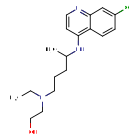
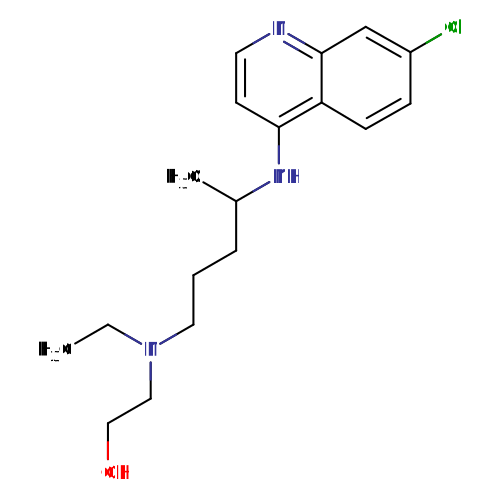
Structure for Hydroxychloroquine (DB01611)
- Weight
- Average: 335.872
Monoisotopic: 335.176440176 - Chemical Formula
- C18H26ClN3O
- Synonyms
- (±)-hydroxychloroquine
- 2-((4-((7-chloro-4-quinolyl)amino)pentyl)ethylamino)ethanol
- 2-(N-(4-(7-chlor-4-chinolylamino)-4-methylbutyl)ethylamino)ethanol
- 7-chloro-4-(4-(ethyl(2-hydroxyethyl)amino)-1-methylbutylamino)quinoline
- 7-chloro-4-(4-(N-ethyl-N-β-hydroxyethylamino)-1-methylbutylamino)quinoline
- 7-chloro-4-[4-(N-ethyl-N-β-hydroxyethylamino)-1-methylbutylamino]quinoline
- 7-chloro-4-[5-(N-ethyl-N-2-hydroxyethylamino)-2-pentyl]aminoquinoline
- Hidroxicloroquina
- Hydroxychloroquine
- Hydroxychloroquinum
- Oxichlorochine
- Oxichloroquine

Pharmacology
- Indication
Hydroxychloroquine is indicated for the prophylaxis of malaria where chloroquine resistance is not reported, treatment of uncomplicated malaria (caused by P. falciparum, P. malariae, P. ovale, or P. vivax), chronic discoid lupus erythematosus, systemic lupus erythematosus, acute rheumatoid arthritis, and chronic rheumatoid arthritis.13
 Reduce drug development failure ratesBuild, train, & validate machine-learning modelswith evidence-based and structured datasets.Build, train, & validate predictive machine-learning models with structured datasets.
- Associated Conditions
Indication Type Indication Combined Product Details Approval Level Age Group Patient Characteristics Dose Form Management of Acute rheumatoid arthritis •••••••••••• ••••• •••••• Prevention of Malaria •••••••••••• •••••• ••••••••• •••••• Treatment of Porphyria cutanea tarda ••• ••••• Used in combination to treat Q fever Regimen in combination with: Doxycycline (DB00254) ••• ••••• Management of Sjogren syndrome ••• ••••• - Contraindications & Blackbox Warnings
 Prevent Adverse Drug Events TodayTap into our Clinical API for life-saving information on contraindications & blackbox warnings, population restrictions, harmful risks, & more.Avoid life-threatening adverse drug events with our Clinical API
- Pharmacodynamics
Hydroxychloroquine affects the function of lysosomes in humans as well as plasmodia.4 Altering the pH of the lysosomes reduces low-affinity self-antigen presentation in autoimmune diseases and interferes with the ability of plasmodia to proteolyze hemoglobin for their energy requirements.4 Hydroxychloroquine has a long duration of action as it may be taken on a weekly basis for some indications.13 Hydroxychloroquine may lead to severe hypoglycemia and so diabetic patients are advised to monitor their blood glucose levels.13
Hydroxychloroquine is active against the erythrocytic forms of chloroquine-sensitive strains of P. falciparum, P. malariae, P. vivax, and P. ovale. Hydroxychloroquine is not active against the gametocytes and exoerythrocytic forms including the hypnozoite liver stage forms of P. vivax and P. ovale.15 Hydroxychloroquine is not effective against malaria in areas where chloroquine resistance has been reported.13
- Mechanism of action
The exact mechanisms of hydroxychloroquine are unknown. It has been shown that hydroxychloroquine accumulates in the lysosomes of the malaria parasite, raising the pH of the vacuole.4 This activity interferes with the parasite's ability to proteolyse hemoglobin, preventing the normal growth and replication of the parasite.4 Hydroxychloroquine can also interfere with the action of parasitic heme polymerase, an enzyme that uses ferriprotoporphyrin IX (FP) released from hemoglobin as a substrate to form beta-hematin. By reducing the activity of heme polymerase without inhibiting the release of FP, hydroxychloroquine leads to the accumulation of FP in a toxic form.5
Hydroxychloroquine accumulation in human organelles also raise their pH, which inhibits antigen processing, prevents the alpha and beta chains of the major histocompatibility complex (MHC) class II from dimerizing, inhibits antigen presentation of the cell, and reduces the inflammatory response.4 Elevated pH in the vesicles may alter the recycling of MHC complexes so that only the high affinity complexes are presented on the cell surface.4 Self peptides bind to MHC complexes with low affinity and so they will be less likely to be presented to autoimmune T cells.4 Hydroxychloroquine also reduces the release of cytokines like interleukin-1 and tumor necrosis factor, possibly through inhibition of Toll-like receptors.4,11
The raised pH in endosomes, prevent virus particles (such as SARS-CoV and SARS-CoV-2) from utilizing their activity for fusion and entry into the cell.8
Hydroxychloroquine inhibits terminal glycosylation of ACE2, the receptor that SARS-CoV and SARS-CoV-2 target for cell entry.9,8 ACE2 that is not in the glycosylated state may less efficiently interact with the SARS-CoV-2 spike protein, further inhibiting viral entry.8
Target Actions Organism AToll-like receptor 7 antagonistHumans AToll-like receptor 9 antagonistHumans ADNA cross-linking/alkylationHumans UAngiotensin-converting enzyme 2 modulatorHumans - Absorption
Hydroxychloroquine is 67-74% bioavailable.2 Bioavailability of the R and S enantiomers were not significantly different.2
Following a single 200 mg oral dose of hydroxychloroquine to healthy male volunteers, whole blood hydroxychloroquine Cmax was 129.6 ng/mL (plasma Cmax was 50.3 ng/mL) with Tmax of 3.3 hours (plasma Tmax 3.7 hours). Following a single oral hydroxychloroquine dose of 200 mg, the mean fraction of the dose absorbed was 0.74 (compared to the administration of 155 mg of hydroxychloroquine intravenous infusion). Peak blood concentrations of metabolites were observed at the same time as peak levels of hydroxychloroquine.15
After administration of single 155 mg and 310 mg intravenous doses, peak blood concentrations ranged from 1161 ng/mL to 2436 ng/mL (mean 1918 ng/mL) following the 155 mg infusion and 6 months following the 310 mg infusion. Pharmacokinetic parameters were not significantly different over the therapeutic dose range of 155 mg and 310 mg indicating linear kinetics.15
In patients with rheumatoid arthritis, there was large variability as to the fraction of the dose absorbed (i.e. 30 to 100%), and mean hydroxychloroquine levels were significantly higher in patients with less disease activity.15
- Volume of distribution
Hydroxychloroquine is extensively distributed to tissues; it has a volume of distribution of 5522L from blood and 44,257L from plasma.15,2
- Protein binding
The S enantiomer of hydroxychloroquine is 64% protein bound in plasma.2 It is 50% bound to serum albumin and 29% bound to alpha-1-acid glycoprotein.2 The R enantiomer is 37% protein bound in plasma.2 It is 29% bound to serum albumin and 41% bound to alpha-1-acid glycoprotein.2 In total, hydroxychloroquine is 50% protein bound in plasma.2
- Metabolism
Hydroxychloroquine is N-dealkylated by CYP3A4 to the active metabolite desethylhydroxychloroquine, as well as the inactive metabolites desethylchloroquine and bidesethylchloroquine.1,3 Desethylhydroxychloroquine is the major metabolite.13
Hover over products below to view reaction partners
- Route of elimination
40-50% of hydroxychloroquine is excreted renally, while only 16-21% of a dose is excreted in the urine as unchanged drug.2 5% of a dose is sloughed off in skin and 24-25% is eliminated through the feces.12
- Half-life
A half-life of 123.5 days in plasma was observed following a single 200 mg oral PLAQUENIL dose to healthy male volunteers. Urine hydroxychloroquine levels were still detectable after 3 months with approximately 10% of the dose excreted as the parent drug. Results following a single dose of a 200 mg tablet versus i.v. infusion (155 mg), demonstrated a half-life of about 40 days and a large volume of distribution. Following chronic oral administration of hydroxychloroquine, the absorption half-life was approximately 3 to 4 hours and the terminal half-life ranged from 40 to 50 days.15
- Clearance
The clearance of hydroxychloroquine is 96mL/min.2 Renal clearance of unchanged drug was approximately 16% to 30%.15
- Adverse Effects
 Improve decision support & research outcomesWith structured adverse effects data, including: blackbox warnings, adverse reactions, warning & precautions, & incidence rates. View sample adverse effects data in our new Data Library!Improve decision support & research outcomes with our structured adverse effects data.
- Toxicity
Patients experiencing an overdose may present with headache, drowsiness, visual disturbances, cardiovascular collapse, convulsions, hypokalemia, rhythm and conduction disorders including QT prolongation, torsades de pointes, ventricular tachycardia, and ventricular fibrillation.13 This may progress to sudden respiratory and cardiac arrest.13 Overdose should be treated with immediate gastric lavage and activated charcoal at a dose of at least 5 times the hydroxychloroquine dose within 30 minutes.2,13 Parenteral diazepam may be given to treat cardiotoxicity, transfusion may reduce serum concentrations of drug, patients should be monitored for at least 6 hours, fluids should be given, and ammonium chloride should be given to acidify urine and promote urinary excretion.13 Patients may also be given epinephrine.11
- Pathways
- Not Available
- Pharmacogenomic Effects/ADRs
- Not Available
Interactions
- Drug Interactions
- This information should not be interpreted without the help of a healthcare provider. If you believe you are experiencing an interaction, contact a healthcare provider immediately. The absence of an interaction does not necessarily mean no interactions exist.
Drug Interaction Integrate drug-drug
interactions in your softwareAbametapir The serum concentration of Hydroxychloroquine can be increased when it is combined with Abametapir. Abatacept The metabolism of Hydroxychloroquine can be increased when combined with Abatacept. Abiraterone The metabolism of Hydroxychloroquine can be decreased when combined with Abiraterone. Acarbose The therapeutic efficacy of Acarbose can be increased when used in combination with Hydroxychloroquine. Acebutolol The risk or severity of QTc prolongation can be decreased when Hydroxychloroquine is combined with Acebutolol. - Food Interactions
- Take with food. Take with a meal or glass of milk.
Products
 Drug product information from 10+ global regionsOur datasets provide approved product information including:dosage, form, labeller, route of administration, and marketing period.Access drug product information from over 10 global regions.
- Product Ingredients
Ingredient UNII CAS InChI Key Hydroxychloroquine sulfate 8Q2869CNVH 747-36-4 JCBIVZZPXRZKTI-UHFFFAOYSA-N - Product Images
- International/Other Brands
- Dolquine (Inmunosyn) / HCQS (Medigroup) / Polirreumin (TRB) / Quensyl (Sanofi)
- Brand Name Prescription Products
Name Dosage Strength Route Labeller Marketing Start Marketing End Region Image Hydroxychloroquine Tablet 200 mg Oral Sanis Health Inc 2022-04-18 Not applicable Canada 
Hydroxychloroquine Sulfate Tablet, film coated 200 mg/1 Oral ANI Pharmaceuticals, Inc. 2022-01-14 Not applicable US 
Hydroxychloroquine Sulfate Tablet, film coated 300 mg/1 Oral ANI Pharmaceuticals, Inc. 2022-01-14 Not applicable US Nra-hydroxychloroquine Tablet 200 mg Oral Nora Pharma Inc 2021-09-14 Not applicable Canada Plaquenil Tablet 200 mg/1 Oral AvKARE, Inc. 2016-07-14 2019-03-31 US - Generic Prescription Products
Name Dosage Strength Route Labeller Marketing Start Marketing End Region Image Ach-hydroxychloroquine Sulfate Tablet 200 mg Oral Accord Healthcare Inc Not applicable Not applicable Canada Ag-hydroxychloroquine Tablet 200 mg Oral Angita Pharma Inc. Not applicable Not applicable Canada Apo-hydroxyquine Tablet 200 mg Oral Apotex Corporation 2002-12-13 Not applicable Canada Hydroxychloroquine Sulfate Tablet 200 mg/1 Oral Cardinal Health 107, LLC 2018-05-01 Not applicable US Hydroxychloroquine Sulfate Tablet, film coated 200 mg/1 Oral Teva 1995-09-01 2013-09-30 US 


Categories
- ATC Codes
- P01BA02 — Hydroxychloroquine
- Drug Categories
- Aminoquinolines
- Anti-Infective Agents
- Antimalarials
- Antiparasitic Agents
- Antiparasitic Products, Insecticides and Repellents
- Antiprotozoals
- Antirheumatic Agents
- Cytochrome P-450 CYP2C8 Substrates
- Cytochrome P-450 CYP2D6 Inhibitors
- Cytochrome P-450 CYP2D6 Inhibitors (strength unknown)
- Cytochrome P-450 CYP2D6 Substrates
- Cytochrome P-450 CYP3A Substrates
- Cytochrome P-450 CYP3A4 Substrates
- Cytochrome P-450 Enzyme Inhibitors
- Cytochrome P-450 Substrates
- Drugs causing inadvertant photosensitivity
- Enzyme Inhibitors
- Heterocyclic Compounds, Fused-Ring
- Immunosuppressive Agents
- P-glycoprotein inhibitors
- Photosensitizing Agents
- Potential QTc-Prolonging Agents
- QTc Prolonging Agents
- Quinolines
- Chemical TaxonomyProvided by Classyfire
- Description
- This compound belongs to the class of organic compounds known as 4-aminoquinolines. These are organic compounds containing an amino group attached to the 4-position of a quinoline ring system.
- Kingdom
- Organic compounds
- Super Class
- Organoheterocyclic compounds
- Class
- Quinolines and derivatives
- Sub Class
- Aminoquinolines and derivatives
- Direct Parent
- 4-aminoquinolines
- Alternative Parents
- Chloroquinolines / Secondary alkylarylamines / Aminopyridines and derivatives / Benzenoids / Aryl chlorides / Heteroaromatic compounds / Trialkylamines / 1,2-aminoalcohols / Azacyclic compounds / Primary alcohols show 3 more
- Substituents
- 1,2-aminoalcohol / 4-aminoquinoline / Alcohol / Alkanolamine / Amine / Aminopyridine / Aromatic heteropolycyclic compound / Aryl chloride / Aryl halide / Azacycle show 18 more
- Molecular Framework
- Aromatic heteropolycyclic compounds
- External Descriptors
- tertiary amino compound, organochlorine compound, secondary amino compound, primary alcohol, aminoquinoline (CHEBI:5801)
- Affected organisms
- Plasmodium
Chemical Identifiers
- UNII
- 4QWG6N8QKH
- CAS number
- 118-42-3
- InChI Key
- XXSMGPRMXLTPCZ-UHFFFAOYSA-N
- InChI
- InChI=1S/C18H26ClN3O/c1-3-22(11-12-23)10-4-5-14(2)21-17-8-9-20-18-13-15(19)6-7-16(17)18/h6-9,13-14,23H,3-5,10-12H2,1-2H3,(H,20,21)
- IUPAC Name
- 2-({4-[(7-chloroquinolin-4-yl)amino]pentyl}(ethyl)amino)ethan-1-ol
- SMILES
- CCN(CCO)CCCC(C)NC1=C2C=CC(Cl)=CC2=NC=C1
References
- Synthesis Reference
U.S. Patent 2,546,658.
- General References
- Lim HS, Im JS, Cho JY, Bae KS, Klein TA, Yeom JS, Kim TS, Choi JS, Jang IJ, Park JW: Pharmacokinetics of hydroxychloroquine and its clinical implications in chemoprophylaxis against malaria caused by Plasmodium vivax. Antimicrob Agents Chemother. 2009 Apr;53(4):1468-75. doi: 10.1128/AAC.00339-08. Epub 2009 Feb 2. [Article]
- Furst DE: Pharmacokinetics of hydroxychloroquine and chloroquine during treatment of rheumatic diseases. Lupus. 1996 Jun;5 Suppl 1:S11-5. [Article]
- Collins KP, Jackson KM, Gustafson DL: Hydroxychloroquine: A Physiologically-Based Pharmacokinetic Model in the Context of Cancer-Related Autophagy Modulation. J Pharmacol Exp Ther. 2018 Jun;365(3):447-459. doi: 10.1124/jpet.117.245639. Epub 2018 Feb 8. [Article]
- Fox RI: Mechanism of action of hydroxychloroquine as an antirheumatic drug. Semin Arthritis Rheum. 1993 Oct;23(2 Suppl 1):82-91. [Article]
- Chou AC, Fitch CD: Heme polymerase: modulation by chloroquine treatment of a rodent malaria. Life Sci. 1992;51(26):2073-8. doi: 10.1016/0024-3205(92)90158-l. [Article]
- Shippey EA, Wagler VD, Collamer AN: Hydroxychloroquine: An old drug with new relevance. Cleve Clin J Med. 2018 Jun;85(6):459-467. doi: 10.3949/ccjm.85a.17034. [Article]
- Devaux CA, Rolain JM, Colson P, Raoult D: New insights on the antiviral effects of chloroquine against coronavirus: what to expect for COVID-19? Int J Antimicrob Agents. 2020 Mar 11:105938. doi: 10.1016/j.ijantimicag.2020.105938. [Article]
- Vincent MJ, Bergeron E, Benjannet S, Erickson BR, Rollin PE, Ksiazek TG, Seidah NG, Nichol ST: Chloroquine is a potent inhibitor of SARS coronavirus infection and spread. Virol J. 2005 Aug 22;2:69. doi: 10.1186/1743-422X-2-69. [Article]
- Wang M, Cao R, Zhang L, Yang X, Liu J, Xu M, Shi Z, Hu Z, Zhong W, Xiao G: Remdesivir and chloroquine effectively inhibit the recently emerged novel coronavirus (2019-nCoV) in vitro. Cell Res. 2020 Mar;30(3):269-271. doi: 10.1038/s41422-020-0282-0. Epub 2020 Feb 4. [Article]
- Gautret P, Lagier JC, Parola P, Hoang VT, Meddeb L, Mailhe M, Doudier B, Courjon J, Giordanengo V, Vieira VE, Dupont HT, Honore S, Colson P, Chabriere E, La Scola B, Rolain JM, Brouqui P, Raoult D: Hydroxychloroquine and azithromycin as a treatment of COVID-19: results of an open-label non-randomized clinical trial. Int J Antimicrob Agents. 2020 Mar 20:105949. doi: 10.1016/j.ijantimicag.2020.105949. [Article]
- Chary MA, Barbuto AF, Izadmehr S, Hayes BD, Burns MM: COVID-19: Therapeutics and Their Toxicities. J Med Toxicol. 2020 Apr 30. pii: 10.1007/s13181-020-00777-5. doi: 10.1007/s13181-020-00777-5. [Article]
- Browning, David J. (2014). Hydroxychloroquine and chloroquine retinopathy. Springer. [ISBN:9781493905973]
- FDA Approved Drug Products: Hydroxychloroquine Oral Tablets [Link]
- FDA: Emergency use Authorization for Hydroxychloroquine and Chloroquine Revoked [Link]
- FDA Approved Drug Products: PLAQUENIL (hydroxychloroquine sulfate) tablets, for oral use (July 2023) [Link]
- External Links
- Human Metabolome Database
- HMDB0015549
- KEGG Drug
- D08050
- KEGG Compound
- C07043
- PubChem Compound
- 3652
- PubChem Substance
- 46508459
- ChemSpider
- 3526
- BindingDB
- 50467780
- 5521
- ChEBI
- 5801
- ChEMBL
- CHEMBL1535
- Therapeutic Targets Database
- DAP000878
- PharmGKB
- PA164777036
- RxList
- RxList Drug Page
- Drugs.com
- Drugs.com Drug Page
- Wikipedia
- Hydroxychloroquine
Clinical Trials
- Clinical Trials
Phase Status Purpose Conditions Count 4 Active Not Recruiting Treatment Coronavirus Disease 2019 (COVID‑19) / Infections, Coronavirus 1 4 Active Not Recruiting Treatment Individuals Undergoing Cardiac and General Surgery 1 4 Active Not Recruiting Treatment Palindromic Rheumatism, Wrist 1 4 Active Not Recruiting Treatment Rheumatoid Arthritis 1 4 Completed Basic Science Impaired Glucose Tolerance 1
Pharmacoeconomics
- Manufacturers
- Not Available
- Packagers
- Amerisource Health Services Corp.
- Amneal Pharmaceuticals
- Apotheca Inc.
- A-S Medication Solutions LLC
- Cadila Healthcare Ltd.
- Cardinal Health
- Caremark LLC
- Comprehensive Consultant Services Inc.
- Dispensing Solutions
- Diversified Healthcare Services Inc.
- Ipca Laboratories Ltd.
- Kaiser Foundation Hospital
- Major Pharmaceuticals
- Mallinckrodt Inc.
- Murfreesboro Pharmaceutical Nursing Supply
- Mylan
- Nucare Pharmaceuticals Inc.
- Ohm Laboratories Inc.
- Pharmedix
- Physicians Total Care Inc.
- Professional Co.
- Qualitest
- Ranbaxy Laboratories
- Resource Optimization and Innovation LLC
- Sandoz
- Sanofi-Aventis Inc.
- Southwood Pharmaceuticals
- Teva Pharmaceutical Industries Ltd.
- United Research Laboratories Inc.
- Watson Pharmaceuticals
- West-Ward Pharmaceuticals
- Winthrop Us
- Zydus Pharmaceuticals
- Dosage Forms
Form Route Strength Tablet Oral 400 mg Tablet Oral 200.000 mg Tablet, coated Oral 400 mg Tablet, sugar coated Oral 100 mg Tablet, sugar coated Oral 200 mg Tablet, film coated Oral Tablet Oral 100 mg/1 Tablet Oral 300 mg/1 Tablet Oral 400 mg/1 Tablet, film coated Enteral 200 mg/1 Tablet, film coated Oral 200 mg/1 Tablet, film coated Oral 300 mg/1 Tablet, film coated Tablet, film coated 200 mg Pill Oral 200 mg Tablet Oral 200 mg Tablet Oral 200 mg/1 Tablet, film coated Oral 200 mg Tablet, coated Oral 155 mg Tablet Oral 40000000 mg Tablet, coated Oral 200 mg - Prices
Unit description Cost Unit Hydroxychloroquine sulf powder 4.8USD g Plaquenil 200 mg tablet 3.14USD tablet Hydroxychloroquine Sulfate 200 mg tablet 1.28USD tablet Hydroxychloroquine 200 mg tablet 1.17USD tablet Plaquenil Sulfate 200 mg Tablet 0.66USD tablet Apo-Hydroxyquine 200 mg Tablet 0.35USD tablet Mylan-Hydroxychloroquine 200 mg Tablet 0.35USD tablet DrugBank does not sell nor buy drugs. Pricing information is supplied for informational purposes only.- Patents
- Not Available
Properties
- State
- Solid
- Experimental Properties
Property Value Source melting point (°C) 89-91 U.S. Patent 2,546,658. pKa 9.67 https://watermark.silverchair.com/dkg319.pdf?token=AQECAHi208BE49Ooan9kkhW_Ercy7Dm3ZL_9Cf3qfKAc485ysgAAAjkwggI1BgkqhkiG9w0BBwagggImMIICIgIBADCCAhsGCSqGSIb3DQEHATAeBglghkgBZQMEAS4wEQQMINydGQAq9Ykq8ITSAgEQgIIB7KN6oy2fz4KHncExNPnuAQKYKCeJ2g-83oHmwqGXYloWqkUp7V_gNgs5P23NTTIZEIF_Tkfp9eBMlYlDl9YykaAzqA5UdihXdzBCxmyGaNX6adn_ov0d4hq2omPSpPVCW2dnKAaalROUpR1cm7FYyTXdiDdOn2LWFKDKmA7uuEFJ1ma7-5iCQKV86x7H1W4HOu7WEBQ_dgJPGZVH64g4KrC5SEw-ekFVVL4w40J_LDqVn5mR8sS57huG_Y7d4CWhtyc6Ko27hCp_nBEeaAo95nB4odR0zFGSEASSQZXGMaO2D8zHqk1wCTDVrTLJuyzjEFMel6T-k3yZQwIVdoNxcEY1bh8VwnEz0ugIrqAkimv5xjB9m8en6H1VhrEIhOVmW2GNJGF3No03F01vn3ePhKCXzgu7v3591flqV46i7r2ZnUYNDmE39IbXww4fqX_551wAPap6lMJ0fMsD_z2l3OzHUVis9cMUJm-nC3LtunwGotVRT4Xf8s7Y-La-5NGHI9KoQPfonM-jJcQ5C9sJFkQHasuB2_a3Inu_DFo-KMOAevqW4txzmR-QnwwV13kIHkcEP03vP0ByDKcsQM2mf2py_K2JxTENhiK0B2xc30W2W4fC1HbkrT-Jd9YStj2-A83nNX0_GMFSn4DT3A - Predicted Properties
Property Value Source Water Solubility 0.0261 mg/mL ALOGPS logP 3.87 ALOGPS logP 2.89 Chemaxon logS -4.1 ALOGPS pKa (Strongest Acidic) 15.59 Chemaxon pKa (Strongest Basic) 9.76 Chemaxon Physiological Charge 2 Chemaxon Hydrogen Acceptor Count 4 Chemaxon Hydrogen Donor Count 2 Chemaxon Polar Surface Area 48.39 Å2 Chemaxon Rotatable Bond Count 9 Chemaxon Refractivity 97.97 m3·mol-1 Chemaxon Polarizability 38.3 Å3 Chemaxon Number of Rings 2 Chemaxon Bioavailability 1 Chemaxon Rule of Five Yes Chemaxon Ghose Filter Yes Chemaxon Veber's Rule No Chemaxon MDDR-like Rule No Chemaxon - Predicted ADMET Features
Property Value Probability Human Intestinal Absorption + 0.9892 Blood Brain Barrier + 0.5602 Caco-2 permeable - 0.5154 P-glycoprotein substrate Substrate 0.8348 P-glycoprotein inhibitor I Non-inhibitor 0.7297 P-glycoprotein inhibitor II Inhibitor 0.5106 Renal organic cation transporter Non-inhibitor 0.5742 CYP450 2C9 substrate Non-substrate 0.8239 CYP450 2D6 substrate Non-substrate 0.9117 CYP450 3A4 substrate Non-substrate 0.5384 CYP450 1A2 substrate Non-inhibitor 0.5864 CYP450 2C9 inhibitor Non-inhibitor 0.8457 CYP450 2D6 inhibitor Non-inhibitor 0.6111 CYP450 2C19 inhibitor Non-inhibitor 0.8782 CYP450 3A4 inhibitor Non-inhibitor 0.6287 CYP450 inhibitory promiscuity Low CYP Inhibitory Promiscuity 0.7058 Ames test AMES toxic 0.6907 Carcinogenicity Non-carcinogens 0.837 Biodegradation Not ready biodegradable 1.0 Rat acute toxicity 2.6348 LD50, mol/kg Not applicable hERG inhibition (predictor I) Weak inhibitor 0.6798 hERG inhibition (predictor II) Inhibitor 0.7173
Spectra
- Mass Spec (NIST)
- Not Available
- Spectra
- Chromatographic Properties
Collision Cross Sections (CCS)
Adduct CCS Value (Å2) Source type Source [M-H]- 186.2340756 predictedDarkChem Lite v0.1.0 [M-H]- 178.0916 predictedDeepCCS 1.0 (2019) [M+H]+ 186.3571756 predictedDarkChem Lite v0.1.0 [M+H]+ 180.4496 predictedDeepCCS 1.0 (2019) [M+Na]+ 185.8199756 predictedDarkChem Lite v0.1.0 [M+Na]+ 186.54695 predictedDeepCCS 1.0 (2019)
Targets

- Kind
- Protein
- Organism
- Humans
- Pharmacological action
- Yes
- Actions
- Antagonist
- General Function
- Transmembrane signaling receptor activity
- Specific Function
- Key component of innate and adaptive immunity. TLRs (Toll-like receptors) control host immune response against pathogens through recognition of molecular patterns specific to microorganisms. TLR7 i...
- Gene Name
- TLR7
- Uniprot ID
- Q9NYK1
- Uniprot Name
- Toll-like receptor 7
- Molecular Weight
- 120920.8 Da
References
- Sun S, Rao NL, Venable J, Thurmond R, Karlsson L: TLR7/9 antagonists as therapeutics for immune-mediated inflammatory disorders. Inflamm Allergy Drug Targets. 2007 Dec;6(4):223-35. [Article]
- Trevani AS, Chorny A, Salamone G, Vermeulen M, Gamberale R, Schettini J, Raiden S, Geffner J: Bacterial DNA activates human neutrophils by a CpG-independent pathway. Eur J Immunol. 2003 Nov;33(11):3164-74. [Article]
- Kind
- Protein
- Organism
- Humans
- Pharmacological action
- Yes
- Actions
- Antagonist
- General Function
- Transmembrane signaling receptor activity
- Specific Function
- Key component of innate and adaptive immunity. TLRs (Toll-like receptors) control host immune response against pathogens through recognition of molecular patterns specific to microorganisms. TLR9 i...
- Gene Name
- TLR9
- Uniprot ID
- Q9NR96
- Uniprot Name
- Toll-like receptor 9
- Molecular Weight
- 115858.665 Da
References
- Sun S, Rao NL, Venable J, Thurmond R, Karlsson L: TLR7/9 antagonists as therapeutics for immune-mediated inflammatory disorders. Inflamm Allergy Drug Targets. 2007 Dec;6(4):223-35. [Article]
- Trevani AS, Chorny A, Salamone G, Vermeulen M, Gamberale R, Schettini J, Raiden S, Geffner J: Bacterial DNA activates human neutrophils by a CpG-independent pathway. Eur J Immunol. 2003 Nov;33(11):3164-74. [Article]
References
- Koranda FC: Antimalarials. J Am Acad Dermatol. 1981 Jun;4(6):650-5. [Article]
- Kind
- Protein
- Organism
- Humans
- Pharmacological action
- Unknown
- Actions
- Modulator
- General Function
- Zinc ion binding
- Specific Function
- Carboxypeptidase which converts angiotensin I to angiotensin 1-9, a peptide of unknown function, and angiotensin II to angiotensin 1-7, a vasodilator. Also able to hydrolyze apelin-13 and dynorphin...
- Gene Name
- ACE2
- Uniprot ID
- Q9BYF1
- Uniprot Name
- Angiotensin-converting enzyme 2
- Molecular Weight
- 92462.4 Da
References
- Vincent MJ, Bergeron E, Benjannet S, Erickson BR, Rollin PE, Ksiazek TG, Seidah NG, Nichol ST: Chloroquine is a potent inhibitor of SARS coronavirus infection and spread. Virol J. 2005 Aug 22;2:69. doi: 10.1186/1743-422X-2-69. [Article]
Enzymes
- Kind
- Protein
- Organism
- Humans
- Pharmacological action
- Unknown
- Actions
- Substrate
- General Function
- Vitamin d3 25-hydroxylase activity
- Specific Function
- Cytochromes P450 are a group of heme-thiolate monooxygenases. In liver microsomes, this enzyme is involved in an NADPH-dependent electron transport pathway. It performs a variety of oxidation react...
- Gene Name
- CYP3A4
- Uniprot ID
- P08684
- Uniprot Name
- Cytochrome P450 3A4
- Molecular Weight
- 57342.67 Da
References
- Lim HS, Im JS, Cho JY, Bae KS, Klein TA, Yeom JS, Kim TS, Choi JS, Jang IJ, Park JW: Pharmacokinetics of hydroxychloroquine and its clinical implications in chemoprophylaxis against malaria caused by Plasmodium vivax. Antimicrob Agents Chemother. 2009 Apr;53(4):1468-75. doi: 10.1128/AAC.00339-08. Epub 2009 Feb 2. [Article]
- Collins KP, Jackson KM, Gustafson DL: Hydroxychloroquine: A Physiologically-Based Pharmacokinetic Model in the Context of Cancer-Related Autophagy Modulation. J Pharmacol Exp Ther. 2018 Jun;365(3):447-459. doi: 10.1124/jpet.117.245639. Epub 2018 Feb 8. [Article]
- Chary MA, Barbuto AF, Izadmehr S, Hayes BD, Burns MM: COVID-19: Therapeutics and Their Toxicities. J Med Toxicol. 2020 Apr 30. pii: 10.1007/s13181-020-00777-5. doi: 10.1007/s13181-020-00777-5. [Article]
- Kind
- Protein
- Organism
- Humans
- Pharmacological action
- Unknown
- Actions
- SubstrateInhibitor
- General Function
- Steroid hydroxylase activity
- Specific Function
- Responsible for the metabolism of many drugs and environmental chemicals that it oxidizes. It is involved in the metabolism of drugs such as antiarrhythmics, adrenoceptor antagonists, and tricyclic...
- Gene Name
- CYP2D6
- Uniprot ID
- P10635
- Uniprot Name
- Cytochrome P450 2D6
- Molecular Weight
- 55768.94 Da
References
- Somer M, Kallio J, Pesonen U, Pyykko K, Huupponen R, Scheinin M: Influence of hydroxychloroquine on the bioavailability of oral metoprolol. Br J Clin Pharmacol. 2000 Jun;49(6):549-54. [Article]
- Chary MA, Barbuto AF, Izadmehr S, Hayes BD, Burns MM: COVID-19: Therapeutics and Their Toxicities. J Med Toxicol. 2020 Apr 30. pii: 10.1007/s13181-020-00777-5. doi: 10.1007/s13181-020-00777-5. [Article]
- Kind
- Protein
- Organism
- Humans
- Pharmacological action
- Unknown
- Actions
- Substrate
- General Function
- Steroid hydroxylase activity
- Specific Function
- Cytochromes P450 are a group of heme-thiolate monooxygenases. In liver microsomes, this enzyme is involved in an NADPH-dependent electron transport pathway. It oxidizes a variety of structurally un...
- Gene Name
- CYP2C8
- Uniprot ID
- P10632
- Uniprot Name
- Cytochrome P450 2C8
- Molecular Weight
- 55824.275 Da
References
- Chary MA, Barbuto AF, Izadmehr S, Hayes BD, Burns MM: COVID-19: Therapeutics and Their Toxicities. J Med Toxicol. 2020 Apr 30. pii: 10.1007/s13181-020-00777-5. doi: 10.1007/s13181-020-00777-5. [Article]
Carriers
- Kind
- Protein
- Organism
- Humans
- Pharmacological action
- Unknown
- Actions
- Binder
- General Function
- Toxic substance binding
- Specific Function
- Serum albumin, the main protein of plasma, has a good binding capacity for water, Ca(2+), Na(+), K(+), fatty acids, hormones, bilirubin and drugs. Its main function is the regulation of the colloid...
- Gene Name
- ALB
- Uniprot ID
- P02768
- Uniprot Name
- Serum albumin
- Molecular Weight
- 69365.94 Da
References
- Furst DE: Pharmacokinetics of hydroxychloroquine and chloroquine during treatment of rheumatic diseases. Lupus. 1996 Jun;5 Suppl 1:S11-5. [Article]
- Kind
- Protein group
- Organism
- Humans
- Pharmacological action
- Unknown
- Actions
- Binder
- General Function
- Not Available
- Specific Function
- Functions as transport protein in the blood stream. Binds various ligands in the interior of its beta-barrel domain. Also binds synthetic drugs and influences their distribution and availability in...
Components:
References
- Furst DE: Pharmacokinetics of hydroxychloroquine and chloroquine during treatment of rheumatic diseases. Lupus. 1996 Jun;5 Suppl 1:S11-5. [Article]
Transporters
- Kind
- Protein
- Organism
- Humans
- Pharmacological action
- Unknown
- Actions
- Inhibitor
- General Function
- Xenobiotic-transporting atpase activity
- Specific Function
- Energy-dependent efflux pump responsible for decreased drug accumulation in multidrug-resistant cells.
- Gene Name
- ABCB1
- Uniprot ID
- P08183
- Uniprot Name
- Multidrug resistance protein 1
- Molecular Weight
- 141477.255 Da
References
- Kind
- Protein
- Organism
- Humans
- Pharmacological action
- Unknown
- Actions
- Inhibitor
- General Function
- Sodium-independent organic anion transmembrane transporter activity
- Specific Function
- Mediates the Na(+)-independent transport of organic anions such as sulfobromophthalein (BSP) and conjugated (taurocholate) and unconjugated (cholate) bile acids (By similarity). Selectively inhibit...
- Gene Name
- SLCO1A2
- Uniprot ID
- P46721
- Uniprot Name
- Solute carrier organic anion transporter family member 1A2
- Molecular Weight
- 74144.105 Da
References
- Xu C, Zhu L, Chan T, Lu X, Shen W, Madigan MC, Gillies MC, Zhou F: Chloroquine and Hydroxychloroquine Are Novel Inhibitors of Human Organic Anion Transporting Polypeptide 1A2. J Pharm Sci. 2016 Feb;105(2):884-890. doi: 10.1002/jps.24663. Epub 2016 Jan 12. [Article]

Drug created at August 29, 2007 20:00 / Updated at April 26, 2024 00:45