Identification
- Summary
Doxycycline is a tetracycline antibiotic used to treat a wide variety of bacterial infections.
- Brand Names
- Acticlate, Adoxa, Apprilon, Atridox, Doryx, Doxy, Doxycin, Lymepak, Mondoxyne, Monodox, Morgidox, Okebo, Oracea, Periostat, Targadox, Vibramycin
- Generic Name
- Doxycycline
- DrugBank Accession Number
- DB00254
- Background
Doxycycline is a broad-spectrum antibiotic synthetically derived from oxytetracycline.13 It is a second-generation tetracycline that was first discovered in 1967.6 Second-generation tetracyclines exhibit lesser toxicity than first-generation tetracyclines.5 Doxycycline is used to treat a wide variety of gram-positive and gram-negative bacterial infections. It is also used to treat acne and malaria.8
- Type
- Small Molecule
- Groups
- Approved, Investigational, Vet approved
- Structure
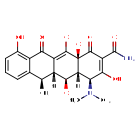
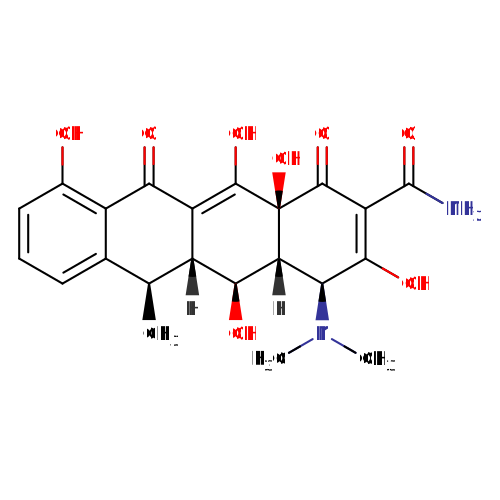
Structure for Doxycycline (DB00254)
- Weight
- Average: 444.4346
Monoisotopic: 444.153265754 - Chemical Formula
- C22H24N2O8
- Synonyms
- 5-hydroxy-α-6-deoxytetracycline
- 6-alpha-deoxy-5-oxytetracycline
- 6alpha-deoxy-5-oxytetracycline
- 6α-deoxy-5-oxytetracycline
- Anhydrous doxycycline
- Doxiciclina
- Doxycyclin
- Doxycycline
- Doxycycline (anhydrous)
- Doxycycline anhydrous
- Doxycyclinum

Pharmacology
- Indication
Doxycycline is indicated for the treatment of various infections by gram-positive and gram-negative bacteria, aerobes and anaerobes, as well other types of bacteria, including:
- Early Lyme disease (as evidenced by erythema migraines) due to Borrelia burgdorferi in adults and pediatric patients 8 years of age and older weighing 45 kg and above 12
- Rickettsial infections,11 such as Rocky Mountain spotted fever, typhus fever and the typhus group, Q fever, rickettsialpox, and tick fevers 13
- Sexually transmitted infections 11
- Respiratory tract infections 11 caused by Mycoplasma pneumoniae and Haemophilus influenzae 13
- Specific bacterial infections 11 after indicative bacteriologic testing. These include infections caused by Escherichia coli, Enterobacter aerogenes, Shigella species, Acinetobacter species, and Klebsiella species 13
- Ophthalmic infections,11 such as inclusion conjunctivitis caused by Chlamydia trachomatis 13
- Anthrax, including inhalational anthrax (post-exposure) 11
- Alternative treatment for selected infections when penicillin is contraindicated 11
- Adjunctive therapy in acute intestinal amebiasis and severe acne 11,13
- Lymphogranuloma venereum caused by Chlamydia trachomatis 13
- Psittacosis (ornithosis) caused by Chlamydophila psittaci 13
- Trachoma caused by Chlamydia trachomatis, although the infectious agent is not always eliminated, as judged by immunofluorescence 13
- Uncomplicated urethral, endocervical, or rectal infections in adults caused by Chlamydia trachomatis 13
- Nongonococcal urethritis caused by Ureaplasma urealyticum 13
- Relapsing fever due to Borrelia recurrentis 13
- Prophylaxis of malaria due to Plasmodium falciparum in short-term travelers (<4 months) to areas with chloroquine and/or pyrimethamine-sulfadoxine resistant strains 11,13
It is also used to treat infections caused by the following gram-negative microorganisms:
- Chancroid caused by Haemophilus ducreyi 13
- Plague due to Yersinia pestis 13
- Tularemia due to Francisella tularensis 13
- Cholera caused by Vibrio cholerae 13
- Campylobacter fetus infections caused by Campylobacter fetus 13
- Brucellosis due to Brucella species (in conjunction with streptomycin) 13
- Bartonellosis due to Bartonella bacilliformis 13
- Granuloma inguinale caused by Klebsiella granulomatis 13
 Reduce drug development failure ratesBuild, train, & validate machine-learning modelswith evidence-based and structured datasets.Build, train, & validate predictive machine-learning models with structured datasets.
- Associated Conditions
Indication Type Indication Combined Product Details Approval Level Age Group Patient Characteristics Dose Form Treatment of Acinetobacter infections •••••••••••• Treatment of Anthrax •••••••••••• Treatment of Bacterial infection caused by enterobacter aerogenes •••••••••••• Treatment of Bartonellosis •••••••••••• Used in combination to treat Brucellosis Regimen in combination with: Streptomycin (DB01082) •••••••••••• - Contraindications & Blackbox Warnings
 Prevent Adverse Drug Events TodayTap into our Clinical API for life-saving information on contraindications & blackbox warnings, population restrictions, harmful risks, & more.Avoid life-threatening adverse drug events with our Clinical API
- Pharmacodynamics
Doxycycline and other tetracyclines are mainly bacteriostatic and are thought to exert antimicrobial effects by the inhibition of protein synthesis. They suppress the growth of bacteria or keep them in the stationary phase of growth.3 Tetracyclines have antimicrobial spectrum of activity against a variety of gram-positive and gram-negative microorganisms.11 Cross-resistance of these microorganisms to tetracyclines is a common occurrence.11
As it is a highly lipophilic drug, doxycycline crosses multiple membranes of target molecules.8 Doxycycline shows favorable intra-cellular penetration, with bacteriostatic activity against a wide range of bacteria.9 Doxycycline also exhibits antiparasitic properties 1,2,3 and anti-inflammatory actions.4,8 Its anti-inflammatory effects were investigated in various inflammatory skin conditions, such as bullous dermatoses 8 and rosacea.4,8
- Mechanism of action
Protein synthesis is essential for survival and functioning of cells, including bacteria.7 Doxycycline inhibits bacterial protein synthesis by allosterically binding to the 30S prokaryotic ribosomal subunit.8,11 The drug blocks the association charged aminoacyl-tRNA (aa-tRNA) with the ribosomal A site, which is the acceptor site on the mRNA-ribosome complex. Doxycycline ultimately impedes the elongation phase of protein synthesis and halts the production of essential proteins for bacterial survival and functioning.7,8
Doxycycline mediates anti-inflammatory actions by preventing calcium-dependent microtubular assembly and lymphocytic proliferation, thereby inhibiting leukocyte movement during inflammation.8 It also inhibits nitric oxide synthase, which is an enzyme that produces nitric oxide, an inflammatory signaling molecule.8
Target Actions Organism A30S ribosomal protein inhibitor- Absorption
Doxycycline is virtually completely absorbed after oral administration 11 with a bioavailability of ranging from 73-95%.10 Following an oral dose of 500 mg, the Cmax of 15.3 mg/L was reached in four hours.10
Following a 200 mg dose, normal adult volunteers averaged peak serum levels of 2.6 mcg/mL of doxycycline at 2 hours, decreasing to 1.45 mcg/mL at 24 hours.13 While a high-fat meal lowers Cmax and the rate of absorption, the effect is not clinically significant.11
- Volume of distribution
There is limited information available.
- Protein binding
While there is limited information available, tetracyclines bound to plasma proteins in varying degree.13
- Metabolism
There is limited information available.
- Route of elimination
Tetracyclines, including doxycycline, are concentrated in bile by the liver and excreted in the urine and feces at high concentrations and in a biologically active form.11 Excretion of doxycycline by the kidney is about 40%/72 hours in individuals with a creatinine clearance of about 75 mL/min. This percentage may fall as low as 1-5%/72 hours in individuals with a creatinine clearance below 10 mL/min.11
- Half-life
There is limited information available.
- Clearance
Population pharmacokinetic analysis of sparse concentration-time data of doxycycline following standard of care intravenous and oral dosing in 44 pediatric patients two to 18 years of age showed allometrically -scaled clearance (CL) ranging from 3.27 to 3.58 L/h/70 kg.13
- Adverse Effects
 Improve decision support & research outcomesWith structured adverse effects data, including: blackbox warnings, adverse reactions, warning & precautions, & incidence rates. View sample adverse effects data in our new Data Library!Improve decision support & research outcomes with our structured adverse effects data.
- Toxicity
Oral LD50 is 2000 mg/kg in rats, 1870 mg/kg in mice, and 500 mg/kg in dog.14
In case of overdosage, doxycycline should be discontinued and symptomatic and supportive treatment should be initiated. Dialysis does not alter serum half-life and thus would not be of benefit in treating cases of overdosage.11
- Pathways
Pathway Category Doxycycline Action Pathway Drug action - Pharmacogenomic Effects/ADRs
- Not Available
Interactions
- Drug Interactions
- This information should not be interpreted without the help of a healthcare provider. If you believe you are experiencing an interaction, contact a healthcare provider immediately. The absence of an interaction does not necessarily mean no interactions exist.
Drug Interaction Integrate drug-drug
interactions in your softwareAbacavir Doxycycline may decrease the excretion rate of Abacavir which could result in a higher serum level. Abciximab The risk or severity of bleeding can be increased when Doxycycline is combined with Abciximab. Aceclofenac Aceclofenac may decrease the excretion rate of Doxycycline which could result in a higher serum level. Acemetacin Acemetacin may decrease the excretion rate of Doxycycline which could result in a higher serum level. Acenocoumarol The risk or severity of bleeding can be increased when Doxycycline is combined with Acenocoumarol. - Food Interactions
- Avoid multivalent ions. The absorption of tetracyclines is reduced when taken with foods, especially those which contain calcium.
- Take with or without food. The absorption of tetracyclines is reduced when taken with foods, but not to a significant extent. If gastric irritation occurs, it is recommended that doxycycline be given with food or milk.
Products
 Drug product information from 10+ global regionsOur datasets provide approved product information including:dosage, form, labeller, route of administration, and marketing period.Access drug product information from over 10 global regions.
- Product Ingredients
Ingredient UNII CAS InChI Key Doxycycline calcium 8ZL07I20SB 94088-85-4 IYECPECUTCOMMD-QFWOMMJSSA-N Doxycycline hyclate 19XTS3T51U 24390-14-5 HALQELOKLVRWRI-VDBOFHIQSA-N Doxycycline hydrochloride 4182Z6T2ET 10592-13-9 RUYHIJHUVHIMIR-CVHRZJFOSA-N Doxycycline monohydrate N12000U13O 17086-28-1 XQTWDDCIUJNLTR-CVHRZJFOSA-N - Product Images
- International/Other Brands
- Doxy (Galpharma) / Doxycin (Laboratoire Riva) / Doxylin (Actavis) / Jenacyclin / Microdox (Micro Labs) / NicAzelDoxyKit / Nu-Doxycycline (Nu-Pharm) / Supracyclin (Grünenthal) / Vibramycin (Pfizer)
- Brand Name Prescription Products
Name Dosage Strength Route Labeller Marketing Start Marketing End Region Image Acticlate Tablet, coated 150 mg/1 Oral Almirall, LLC 2014-07-28 Not applicable US 
Acticlate Tablet, coated 75 mg/1 Oral Almirall, LLC 2014-07-28 Not applicable US Acticlate CAP Capsule 75 mg/1 Oral Aqua Pharmaceuticals 2018-05-31 Not applicable US Apprilon 40 mg Oral Galderma 2012-11-29 Not applicable Canada 
Atridox Kit 50 mg/500mg Oral TOLMAR Inc. 1998-09-03 2018-10-01 US - Generic Prescription Products
Name Dosage Strength Route Labeller Marketing Start Marketing End Region Image Adoxa Capsule 150 mg/1 Oral Pharma Derm, A Division Of Fougera Pharmaceuticals Inc. 2011-06-01 Not applicable US 
Alodox Tablet 20 mg/1 Oral OCuSOFT Inc. 2008-10-01 2015-06-30 US Alti-doxycycline - Tab 100mg Tablet 100 mg / tab Oral Altimed Pharma Inc. 1995-12-31 2001-09-05 Canada Alti-doxycycline-cap 100mg Capsule 100 mg / cap Oral Altimed Pharma Inc. 1995-12-31 2001-09-05 Canada Apo-doxy Cap 100mg Capsule 100 mg Oral Apotex Corporation 1987-12-31 Not applicable Canada - Unapproved/Other Products
Name Ingredients Dosage Route Labeller Marketing Start Marketing End Region Image BenoxylDoxy 30 Kit Doxycycline monohydrate (100 mg/1) + Benzoyl peroxide (44 mg/1mL) Kit Oral; Topical Elorac, Inc. 2014-07-01 2014-08-07 US BenoxylDoxy 60 Kit Doxycycline monohydrate (100 mg/1) + Benzoyl peroxide (44 mg/1mL) Kit Oral; Topical Elorac, Inc. 2014-07-01 2015-07-18 US BenzoDox 30 Kit Doxycycline monohydrate (100 mg/1) + Benzoyl peroxide (44 mg/1mL) Kit Oral; Topical Elorac, Inc. 2015-10-01 Not applicable US BenzoDox 60 Kit Doxycycline monohydrate (100 mg/1) + Benzoyl peroxide (44 mg/1mL) Kit Oral; Topical Elorac, Inc. 2015-09-22 Not applicable US NicAzel Doxy Kit Doxycycline monohydrate (100 mg/1) + Cupric oxide (2 mg/1) + Folic acid (500 ug/1) + Pyridoxine (8 mg/1) + Zinc oxide (12 mg/1) Kit Oral Elorac, Inc. 2014-06-30 2015-07-30 US


Categories
- ATC Codes
- J01AA02 — Doxycycline
- J01AA — Tetracyclines
- J01A — TETRACYCLINES
- J01 — ANTIBACTERIALS FOR SYSTEMIC USE
- J — ANTIINFECTIVES FOR SYSTEMIC USE
- A01AB — Antiinfectives and antiseptics for local oral treatment
- A01A — STOMATOLOGICAL PREPARATIONS
- A01 — STOMATOLOGICAL PREPARATIONS
- A — ALIMENTARY TRACT AND METABOLISM
- Drug Categories
- Agents that produce neuromuscular block (indirect)
- Alimentary Tract and Metabolism
- Anti-Bacterial Agents
- Anti-Infective Agents
- Antibacterials for Systemic Use
- Antiinfectives and Antiseptics for Local Oral Treatment
- Antiinfectives for Systemic Use
- Antiparasitic Agents
- Antiprotozoals
- Cytochrome P-450 CYP3A Inhibitors
- Cytochrome P-450 CYP3A4 Inhibitors
- Cytochrome P-450 CYP3A4 Inhibitors (strength unknown)
- Cytochrome P-450 Enzyme Inhibitors
- Drugs causing inadvertant photosensitivity
- Drugs that are Mainly Renally Excreted
- Naphthacenes
- OAT1/SLC22A6 inhibitors
- Photosensitizing Agents
- Stomatological Preparations
- Tetracyclines
- Chemical TaxonomyProvided by Classyfire
- Description
- This compound belongs to the class of organic compounds known as tetracyclines. These are polyketides having an octahydrotetracene-2-carboxamide skeleton, substituted with many hydroxy and other groups.
- Kingdom
- Organic compounds
- Super Class
- Phenylpropanoids and polyketides
- Class
- Tetracyclines
- Sub Class
- Not Available
- Direct Parent
- Tetracyclines
- Alternative Parents
- Naphthacenes / Anthracenecarboxylic acids and derivatives / Tetralins / Aryl ketones / 1-hydroxy-2-unsubstituted benzenoids / 1-hydroxy-4-unsubstituted benzenoids / Aralkylamines / Cyclohexenones / Tertiary alcohols / Vinylogous acids show 9 more
- Substituents
- 1-hydroxy-2-unsubstituted benzenoid / 1-hydroxy-4-unsubstituted benzenoid / Alcohol / Amine / Amino acid or derivatives / Anthracene carboxylic acid or derivatives / Aralkylamine / Aromatic homopolycyclic compound / Aryl ketone / Benzenoid show 24 more
- Molecular Framework
- Aromatic homopolycyclic compounds
- External Descriptors
- tetracyclines (CHEBI:50845) / Linear tetracyclines (C06973) / Linear tetracyclines (LMPK07000001)
- Affected organisms
- Gram negative and gram positive bacteria
- Various aerobic and anaerobic microorganisms
- Plasmodium falciparum
Chemical Identifiers
- UNII
- 334895S862
- CAS number
- 564-25-0
- InChI Key
- JBIWCJUYHHGXTC-AKNGSSGZSA-N
- InChI
- InChI=1S/C22H24N2O8/c1-7-8-5-4-6-9(25)11(8)16(26)12-10(7)17(27)14-15(24(2)3)18(28)13(21(23)31)20(30)22(14,32)19(12)29/h4-7,10,14-15,17,25,27-29,32H,1-3H3,(H2,23,31)/t7-,10+,14+,15-,17-,22-/m0/s1
- IUPAC Name
- (4S,4aR,5S,5aR,6R,12aS)-4-(dimethylamino)-3,5,10,12,12a-pentahydroxy-6-methyl-1,11-dioxo-1,4,4a,5,5a,6,11,12a-octahydrotetracene-2-carboxamide
- SMILES
- [H][C@@]12[C@@H](C)C3=CC=CC(O)=C3C(=O)C1=C(O)[C@]1(O)C(=O)C(C(N)=O)=C(O)[C@@H](N(C)C)[C@]1([H])[C@H]2O
References
- Synthesis Reference
Dai-Wu Seol, "DNA cassette for the production of secretable recombinant trimeric TRAIL proteins, tetracycline/ doxycycline-inducible adeno-associated virus vector, their combination and use in gene therapy." U.S. Patent US20020128438, issued September 12, 2002.
US20020128438- General References
- Hoerauf A, Mand S, Fischer K, Kruppa T, Marfo-Debrekyei Y, Debrah AY, Pfarr KM, Adjei O, Buttner DW: Doxycycline as a novel strategy against bancroftian filariasis-depletion of Wolbachia endosymbionts from Wuchereria bancrofti and stop of microfilaria production. Med Microbiol Immunol. 2003 Nov;192(4):211-6. Epub 2003 Mar 5. [Article]
- Taylor MJ, Makunde WH, McGarry HF, Turner JD, Mand S, Hoerauf A: Macrofilaricidal activity after doxycycline treatment of Wuchereria bancrofti: a double-blind, randomised placebo-controlled trial. Lancet. 2005 Jun 18-24;365(9477):2116-21. [Article]
- Bernatova S, Samek O, Pilat Z, Sery M, Jezek J, Jakl P, Siler M, Krzyzanek V, Zemanek P, Hola V, Dvorackova M, Ruzicka F: Following the mechanisms of bacteriostatic versus bactericidal action using Raman spectroscopy. Molecules. 2013 Oct 24;18(11):13188-99. doi: 10.3390/molecules181113188. [Article]
- Valentin S, Morales A, Sanchez JL, Rivera A: Safety and efficacy of doxycycline in the treatment of rosacea. Clin Cosmet Investig Dermatol. 2009 Aug 12;2:129-40. [Article]
- Smilack JD: The tetracyclines. Mayo Clin Proc. 1999 Jul;74(7):727-9. doi: 10.4065/74.7.727. [Article]
- Chopra I, Roberts M: Tetracycline antibiotics: mode of action, applications, molecular biology, and epidemiology of bacterial resistance. Microbiol Mol Biol Rev. 2001 Jun;65(2):232-60 ; second page, table of contents. [Article]
- Shutter MC, Akhondi H: Tetracycline . [Article]
- Patel RS, Parmar M: Doxycycline Hyclate . [Article]
- Bonnetblanc JM: [Doxycycline]. Ann Dermatol Venereol. 2002 Jun-Jul;129(6-7):874-82. [Article]
- Agwuh KN, MacGowan A: Pharmacokinetics and pharmacodynamics of the tetracyclines including glycylcyclines. J Antimicrob Chemother. 2006 Aug;58(2):256-65. Epub 2006 Jul 1. [Article]
- FDA Approved Drug Products: DORYX (doxycycline hyclate) delayed-release tablets, for oral use [Link]
- DailyMed Label: LYMEPAK (doxycycline hyclate) tablets, for oral use [Link]
- DailyMed Label: VIBRAMYCIN and VIBRA-TABS (doxycycline), for oral use [Link]
- Merck: Doxycycline MSDS [Link]
- External Links
- Human Metabolome Database
- HMDB0014399
- KEGG Drug
- D07876
- KEGG Compound
- C06973
- PubChem Compound
- 54671203
- PubChem Substance
- 46506491
- ChemSpider
- 10469369
- BindingDB
- 50041429
- 1545992
- ChEBI
- 50845
- ChEMBL
- CHEMBL1433
- ZINC
- ZINC000016052277
- Therapeutic Targets Database
- DAP001371
- PharmGKB
- PA449415
- PDBe Ligand
- DXT
- RxList
- RxList Drug Page
- Drugs.com
- Drugs.com Drug Page
- Wikipedia
- Doxycycline
- PDB Entries
- 2o7o / 2xrl / 5om2 / 5om3 / 6rbl / 6rcr / 6rgx / 7b8r / 7x5p
Clinical Trials
- Clinical Trials
Phase Status Purpose Conditions Count 4 Active Not Recruiting Prevention Chlamydia Trachomatis Infection / Human Immunodeficiency Virus (HIV) Infections / Human Immunodeficiency Virus Infection(HIV)/Acquired Immunodeficiency Syndrome (AIDS) / Neisseria Gonorrheae Infection / Syphilis Infection 1 4 Active Not Recruiting Prevention Chlamydial Infections / Gonorrhea / Syphilis 1 4 Active Not Recruiting Prevention Sexually Transmitted Infections (STIs) / Syphilis 1 4 Completed Basic Science Bacterial Infections 1 4 Completed Basic Science Rabies 1
Pharmacoeconomics
- Manufacturers
- Mylan pharmaceuticals inc
- Par pharmaceutical inc
- Ranbaxy laboratories ltd
- Sandoz inc
- Watson laboratories inc
- Watson pharmaceuticals inc
- Galderma laboratories lp
- Rachelle laboratories inc
- Ivax pharmaceuticals inc sub teva pharmaceuticals usa
- Pfizer laboratories div pfizer inc
- Lannett holdings inc
- Mutual pharmaceutical co inc
- Pliva inc
- Mayne pharma international faulding pharm
- Warner chilcott bermuda ltd
- Medicis pharmaceutical corp
- Halsey drug co inc
- Heather drug co inc
- Interpharm inc
- Private formulations inc
- Ranbaxy pharmaceuticals inc
- Superpharm corp
- Warner chilcott div warner lambert co
- West ward pharmaceutical corp
- Teva pharmaceuticals usa inc
- Collagenex inc
- App pharmaceuticals llc
- Baxter healthcare corp anesthesia and critical care
- Bedford laboratories div ben venue laboratories inc
- Tolmar inc
- Corepharma llc
- Larken laboratories inc
- Mutual pharmacal co
- Truxton inc
- Vintage pharmaceuticals inc
- Packagers
- Actavis Group
- Acura Pharmaceutical Technologies Inc.
- Advanced Pharmaceutical Services Inc.
- Advanced Vision Research
- Aidarex Pharmacuticals LLC
- Amerisource Health Services Corp.
- Amneal Pharmaceuticals
- Apace Packaging
- Apical Pharmaceutical Corporation
- Apotheca Inc.
- Apothecon
- APP Pharmaceuticals
- Aqua Pharmaceuticals
- A-S Medication Solutions LLC
- Avidas Pharmaceuticals
- Bedford Labs
- Belgomex Sprl
- Ben Venue Laboratories Inc.
- Bioglan Pharmaceuticals Co.
- Blenheim Pharmacal
- Block Drug Corp.
- Blu Pharmaceuticals LLC
- Bryant Ranch Prepack
- Bv Pharbita
- Cardinal Health
- Carlisle Laboratories Inc.
- Catalent Pharma Solutions
- Collagenex Pharmaceuticals Inc.
- Community Action Inc. Community Health Services
- Comprehensive Consultant Services Inc.
- Corepharma LLC
- Coupler Enterprises Inc.
- Darby Dental Supply Co. Inc.
- Dept Health Central Pharmacy
- DHHS Program Support Center Supply Service Center
- Direct Dispensing Inc.
- Dispensing Solutions
- Diversified Healthcare Services Inc.
- DSM Corp.
- Eon Labs
- Galderma Laboratories
- Golden State Medical Supply Inc.
- Goldline Laboratories Inc.
- H and H Laboratories
- H.J. Harkins Co. Inc.
- Hikma Pharmaceuticals
- Innoviant Pharmacy Inc.
- Ivax Pharmaceuticals
- Kaiser Foundation Hospital
- Keltman Pharmaceuticals Inc.
- Lake Erie Medical and Surgical Supply
- Lannett Co. Inc.
- Liberty Pharmaceuticals
- Major Pharmaceuticals
- Mayne Pharma International Pty Ltd.
- Mckesson Corp.
- Medisca Inc.
- Medvantx Inc.
- Mississippi State Dept Health
- Murfreesboro Pharmaceutical Nursing Supply
- Mutual Pharmaceutical Co.
- Mylan
- Nucare Pharmaceuticals Inc.
- Oclassen Pharmaceuticals Inc.
- Ohm Laboratories Inc.
- Palmetto Pharmaceuticals Inc.
- Par Pharmaceuticals
- Patheon Inc.
- Patient First Corp.
- PCA LLC
- PD-Rx Pharmaceuticals Inc.
- Pfizer Inc.
- Pharmaceutical Manufacturing Research Services Inc.
- Pharmaceutical Utilization Management Program VA Inc.
- Pharmaderm
- Pharmedix
- Pharmpak Inc.
- Physicians Total Care Inc.
- Pliva Inc.
- Preferred Pharmaceuticals Inc.
- Prepackage Specialists
- Prepak Systems Inc.
- Qualitest
- Ranbaxy Laboratories
- Rebel Distributors Corp.
- Redpharm Drug
- Remedy Repack
- Sandhills Packaging Inc.
- Sandoz
- Southwood Pharmaceuticals
- St Mary's Medical Park Pharmacy
- Stat Rx Usa
- Teva Pharmaceutical Industries Ltd.
- Tolmar Inc.
- Tya Pharmaceuticals
- Universal Laboratories Inc.
- Veratex Corp.
- Versapharm Inc.
- Warner Chilcott Co. Inc.
- Watson Pharmaceuticals
- WC Pharmaceuticals
- West-Ward Pharmaceuticals
- Dosage Forms
Form Route Strength Capsule Oral 150 mg/1 Kit Oral 50 mg/1 Kit Oral 50 mg/500mg Kit Oral; Topical Capsule, delayed release pellets Oral 100 mg/1 Capsule, delayed release pellets Oral 75 mg/1 Tablet, delayed release Oral 150 mg/1 Tablet, delayed release Oral 80 mg/1 Capsule, extended release Oral 100 mg / cap Tablet, delayed release Oral 120 mg/1 Tablet, delayed release Oral 60 mg/1 Tablet, film coated Oral Capsule, coated Oral 40 mg Capsule, coated Oral 10000000 mg Tablet Oral 100 mg Tablet Oral 200 MG Tablet, soluble Oral Tablet Oral 200 mg/1 Capsule Oral 200 mg/1 For suspension Oral 25 mg/5mL Injection, powder, for solution Intravenous 100 mg/1 Injection, powder, lyophilized, for solution Intravenous 100 mg/10mL Injection, powder, lyophilized, for solution Intravenous 200 mg/20mL Powder, for suspension Oral 25 mg/5mL Tablet, coated Oral 100 mg/1 Tablet, film coated Oral 150 mg/1 Tablet, film coated Oral 50 mg/1 Tablet, film coated Oral 75 mg/1 Capsule Oral 100 mg/1 Capsule Oral 50 mg/1 Capsule, gelatin coated Oral 100 mg/1 Capsule, gelatin coated Oral 50 mg/1 Powder Not applicable 1 g/1g Tablet Oral 100 mg/1 Tablet, coated Oral 150 mg/1 Tablet, coated Oral 75 mg/1 Tablet, delayed release Oral 100 mg/1 Tablet, delayed release Oral 200 mg/1 Tablet, delayed release Oral 50 mg/1 Tablet, delayed release Oral 75 mg/100mg Tablet, delayed release Oral 75 mg/1 Tablet, film coated Oral 100 mg/1 Tablet, film coated Oral 100 1/1 Tablet, film coated Oral 20 mg/1 Tablet Oral 150 mg/1 Tablet Oral 50 mg/1 Tablet Oral 75 mg/1 Tablet, film coated Oral 50 mg Tablet, film coated Oral 200 mg Tablet, coated Oral Tablet Oral Capsule Oral 40 MG Capsule, coated Oral 100 mg Capsule Oral Capsule Oral 50.000 mg Gel Periodontal 140 mg/g Capsule Oral 50 mg/50mg Capsule Oral 100 mg/100mg Capsule Oral 75 mg/1 Capsule Oral; Topical 50 mg/1 Kit Oral Capsule Oral 40 mg/1 Capsule, delayed release pellets Oral 40 mg/1 Capsule, extended release Oral 40 mg Capsule, delayed release Oral 40 mg Capsule Oral 20 mg Tablet Oral 20 mg/1 Capsule Oral 100 mg / cap Tablet Oral 100 mg / tab Capsule Oral 100.000 mg Capsule Oral 100 MG Solution Intravenous 25.370 mg Syrup Oral 50 mg/5mL Powder Intravenous 100 mg / vial Solution Intravenous 100 mg/5ml Tablet, delayed release Oral 100 mg Tablet, film coated Oral 100 mg - Prices
Unit description Cost Unit Vibramycin 25 mg/5ml Suspension 60ml Bottle 36.29USD bottle Adoxa pak 1-150 mg tablet 19.93USD tablet Doryx 150 mg Enteric Coated Tabs 17.51USD tab Doryx dr 150 mg tablet 16.83USD tablet Doxycycline hyc 100 mg vial 14.16USD vial Adoxa 100 mg tablet 13.86USD tablet Monodox 100 mg capsule 13.46USD capsule Adoxa 75 mg tablet 12.77USD tablet Oracea 40 mg Delayed Release Capsule 12.44USD capsule Oracea 40 mg capsule 11.96USD capsule Avidoxy 100 mg tablet 11.52USD tablet Monodox 75 mg capsule 11.02USD capsule Doryx 100 mg Enteric Coated Tabs 10.31USD tab Doryx dr 100 mg tablet 9.91USD tablet Adoxa pak 1-100 mg tablet 9.88USD tablet Doxycycline Monohydrate 150 mg tablet 9.51USD tablet Adoxa 50 mg tablet 9.29USD tablet Doxycycline mono 150 mg tablet 9.13USD tablet Doryx 75 mg Enteric Coated Tabs 8.76USD tab Doryx dr 75 mg tablet 8.42USD tablet Vibramycin 100 mg capsule 6.67USD capsule Vibra-tabs 100 mg tablet 6.67USD tablet Monodox 50 mg capsule 6.0USD capsule Doxycycline mono 100 mg tablet 5.98USD tablet Periostat 20 mg tablet 5.75USD tablet Doxycycline mono 75 mg tablet 5.74USD tablet Doxycycline Monohydrate 100 mg tablet 5.12USD tablet Doxycycline mono 50 mg tablet 4.17USD tablet Doxycycline Monohydrate 50 mg tablet 3.0USD tablet Doxycycline hyclate powder 2.56USD g Vibramycin 50 mg capsule 2.41USD capsule Doxycycline Monohydrate 100 mg capsule 2.22USD capsule Vibramycin 100 mg Capsule 1.91USD capsule Doxycycline Monohydrate 50 mg capsule 1.51USD capsule Doxycycline hyclate 100 mg tablet 1.28USD tablet Doxycycline hyclate 20 mg tablet 1.28USD tablet Doxycycline Hyclate 100 mg capsule 1.18USD capsule Doxycycline Hyclate 50 mg capsule 0.76USD capsule Vibramycin 50 mg/5ml Syrup 0.67USD ml Vibramycin 50 mg/5 ml syrup 0.64USD ml Apo-Doxy 100 mg Capsule 0.61USD capsule Apo-Doxy 100 mg Tablet 0.61USD tablet Doxycin 100 mg Capsule 0.61USD capsule Doxycin 100 mg Tablet 0.61USD tablet Novo-Doxylin 100 mg Capsule 0.61USD capsule Novo-Doxylin 100 mg Tablet 0.61USD tablet Nu-Doxycycline 100 mg Capsule 0.61USD capsule Pms-Doxycycline 100 mg Capsule 0.61USD capsule Pms-Doxycycline 100 mg Tablet 0.61USD tablet DrugBank does not sell nor buy drugs. Pricing information is supplied for informational purposes only.- Patents
Patent Number Pediatric Extension Approved Expires (estimated) Region US6958161 No 2005-10-25 2022-12-15 US US8715724 No 2014-05-06 2028-02-03 US US7211267 No 2007-05-01 2022-04-05 US US7232572 No 2007-06-19 2022-04-05 US US7749532 No 2010-07-06 2027-12-19 US US8206740 No 2012-06-26 2025-12-24 US US8394405 No 2013-03-12 2024-04-07 US US8394406 No 2013-03-12 2024-04-07 US US8470364 No 2013-06-25 2024-04-07 US US8603506 No 2013-12-10 2022-04-05 US US5789395 No 1998-08-04 2016-08-30 US US5919775 No 1999-07-06 2016-08-30 US US8709478 No 2014-04-29 2024-04-07 US US9241946 No 2016-01-26 2022-04-05 US US9511031 No 2016-12-06 2034-10-23 US US9446057 No 2016-09-20 2034-12-23 US US9295652 No 2016-03-29 2034-10-23 US US10058564 No 2018-08-28 2022-04-05 US
Properties
- State
- Solid
- Experimental Properties
Property Value Source melting point (°C) 201 °C https://www.sigmaaldrich.com/content/dam/sigma-aldrich/docs/Sigma/Product_Information_Sheet/d9891pis.pdf water solubility 50 mg/mL https://www.sigmaaldrich.com/content/dam/sigma-aldrich/docs/Sigma/Product_Information_Sheet/d9891pis.pdf logP 0.63 https://deepblue.lib.umich.edu/bitstream/handle/2027.42/64911/21954_ftp.pdf?sequence=1 pKa 3.09 https://www.ncbi.nlm.nih.gov/pubmed/34018 - Predicted Properties
Property Value Source Water Solubility 0.63 mg/mL ALOGPS logP -0.72 ALOGPS logP -3.3 Chemaxon logS -2.8 ALOGPS pKa (Strongest Acidic) 3.27 Chemaxon pKa (Strongest Basic) 8.33 Chemaxon Physiological Charge 0 Chemaxon Hydrogen Acceptor Count 9 Chemaxon Hydrogen Donor Count 6 Chemaxon Polar Surface Area 181.62 Å2 Chemaxon Rotatable Bond Count 2 Chemaxon Refractivity 113.89 m3·mol-1 Chemaxon Polarizability 43.65 Å3 Chemaxon Number of Rings 4 Chemaxon Bioavailability 1 Chemaxon Rule of Five No Chemaxon Ghose Filter No Chemaxon Veber's Rule No Chemaxon MDDR-like Rule No Chemaxon - Predicted ADMET Features
Property Value Probability Human Intestinal Absorption + 0.85 Blood Brain Barrier - 0.9881 Caco-2 permeable - 0.8706 P-glycoprotein substrate Substrate 0.699 P-glycoprotein inhibitor I Non-inhibitor 0.8038 P-glycoprotein inhibitor II Non-inhibitor 0.8628 Renal organic cation transporter Non-inhibitor 0.9562 CYP450 2C9 substrate Non-substrate 0.8008 CYP450 2D6 substrate Non-substrate 0.9116 CYP450 3A4 substrate Substrate 0.6551 CYP450 1A2 substrate Non-inhibitor 0.9045 CYP450 2C9 inhibitor Non-inhibitor 0.9144 CYP450 2D6 inhibitor Non-inhibitor 0.9293 CYP450 2C19 inhibitor Non-inhibitor 0.9099 CYP450 3A4 inhibitor Non-inhibitor 0.8567 CYP450 inhibitory promiscuity Low CYP Inhibitory Promiscuity 0.8086 Ames test Non AMES toxic 0.9132 Carcinogenicity Non-carcinogens 0.8632 Biodegradation Not ready biodegradable 0.9941 Rat acute toxicity 2.3159 LD50, mol/kg Not applicable hERG inhibition (predictor I) Weak inhibitor 0.9946 hERG inhibition (predictor II) Non-inhibitor 0.7466
Spectra
- Mass Spec (NIST)
- Not Available
- Spectra
Spectrum Spectrum Type Splash Key Predicted GC-MS Spectrum - GC-MS Predicted GC-MS splash10-0zfr-5392300000-04bc3e193569d5361cd9 Predicted MS/MS Spectrum - 10V, Positive (Annotated) Predicted LC-MS/MS splash10-004j-0000900000-935048b8d3cfe4303be1 Predicted MS/MS Spectrum - 10V, Negative (Annotated) Predicted LC-MS/MS splash10-004l-0001900000-6ec51b6c9a3b8ec21d1e Predicted MS/MS Spectrum - 20V, Positive (Annotated) Predicted LC-MS/MS splash10-004i-0000900000-0b59d411d391a9e10b5b Predicted MS/MS Spectrum - 20V, Negative (Annotated) Predicted LC-MS/MS splash10-004l-0044900000-b17186c06c8d328522e0 Predicted MS/MS Spectrum - 40V, Positive (Annotated) Predicted LC-MS/MS splash10-0f6x-5796200000-66f53c607488d1a33712 Predicted MS/MS Spectrum - 40V, Negative (Annotated) Predicted LC-MS/MS splash10-0g59-1292200000-ddc4c8c94295c8f4b0cc Predicted 1H NMR Spectrum 1D NMR Not Applicable Predicted 13C NMR Spectrum 1D NMR Not Applicable - Chromatographic Properties
Collision Cross Sections (CCS)
Adduct CCS Value (Å2) Source type Source [M-H]- 209.2471399 predictedDarkChem Lite v0.1.0 [M-H]- 209.6925399 predictedDarkChem Lite v0.1.0 [M-H]- 197.94159 predictedDeepCCS 1.0 (2019) [M+H]+ 212.1786399 predictedDarkChem Lite v0.1.0 [M+H]+ 212.9159399 predictedDarkChem Lite v0.1.0 [M+H]+ 200.33716 predictedDeepCCS 1.0 (2019) [M+Na]+ 212.2655399 predictedDarkChem Lite v0.1.0 [M+Na]+ 212.5330399 predictedDarkChem Lite v0.1.0 [M+Na]+ 206.24968 predictedDeepCCS 1.0 (2019)
Targets

References
Enzymes
- Kind
- Protein
- Organism
- Humans
- Pharmacological action
- Unknown
- Actions
- Inhibitor
- Curator comments
- CYP3A4 inhibition was demonstrated in a single in vitro study, where doxycycline inhibited CYP3A4-mediated metabolism of quinine to 3-hydroxyquinine.
- General Function
- Vitamin d3 25-hydroxylase activity
- Specific Function
- Cytochromes P450 are a group of heme-thiolate monooxygenases. In liver microsomes, this enzyme is involved in an NADPH-dependent electron transport pathway. It performs a variety of oxidation react...
- Gene Name
- CYP3A4
- Uniprot ID
- P08684
- Uniprot Name
- Cytochrome P450 3A4
- Molecular Weight
- 57342.67 Da
References
- Zhao XJ, Ishizaki T: A further interaction study of quinine with clinically important drugs by human liver microsomes: determinations of inhibition constant (Ki) and type of inhibition. Eur J Drug Metab Pharmacokinet. 1999 Jul-Sep;24(3):272-8. [Article]
- Zhao XJ, Ishizaki T: The In vitro hepatic metabolism of quinine in mice, rats and dogs: comparison with human liver microsomes. J Pharmacol Exp Ther. 1997 Dec;283(3):1168-76. [Article]
- Tan KR, Magill AJ, Parise ME, Arguin PM: Doxycycline for malaria chemoprophylaxis and treatment: report from the CDC expert meeting on malaria chemoprophylaxis. Am J Trop Med Hyg. 2011 Apr;84(4):517-31. doi: 10.4269/ajtmh.2011.10-0285. [Article]
- CYP3A4 document, CTEP [File]
- MEDICATIONS METABOLIZED BY CYTOCHROME P450 3A4 [File]
Carriers
- Kind
- Protein
- Organism
- Humans
- Pharmacological action
- Unknown
- Actions
- SubstrateBinder
- General Function
- Toxic substance binding
- Specific Function
- Serum albumin, the main protein of plasma, has a good binding capacity for water, Ca(2+), Na(+), K(+), fatty acids, hormones, bilirubin and drugs. Its main function is the regulation of the colloid...
- Gene Name
- ALB
- Uniprot ID
- P02768
- Uniprot Name
- Serum albumin
- Molecular Weight
- 69365.94 Da
References
- Aver'eva EV, Kivman GIa, Markovich MN, Shraiber NF, Pognoevskii OT: [Competition of antibacterial drugs for binding sites of human serum albumin]. Antibiot Khimioter. 1988 Jun;33(6):444-8. [Article]
Transporters
- Kind
- Protein
- Organism
- Humans
- Pharmacological action
- Unknown
- Actions
- Inhibitor
- General Function
- Sodium-independent organic anion transmembrane transporter activity
- Specific Function
- Involved in the renal elimination of endogenous and exogenous organic anions. Functions as organic anion exchanger when the uptake of one molecule of organic anion is coupled with an efflux of one ...
- Gene Name
- SLC22A6
- Uniprot ID
- Q4U2R8
- Uniprot Name
- Solute carrier family 22 member 6
- Molecular Weight
- 61815.78 Da
References
- Babu E, Takeda M, Narikawa S, Kobayashi Y, Yamamoto T, Cha SH, Sekine T, Sakthisekaran D, Endou H: Human organic anion transporters mediate the transport of tetracycline. Jpn J Pharmacol. 2002 Jan;88(1):69-76. [Article]
- In Vitro and In Vivo Evidence of the Importance of Organic Anion Transporters (OATs) in Drug Therapy [File]
- Kind
- Protein
- Organism
- Humans
- Pharmacological action
- Unknown
- Actions
- Inducer
- General Function
- Efflux transmembrane transporter activity
- Specific Function
- Drug efflux transporter present in a number of stem cells that acts as a regulator of cellular differentiation. Able to mediate efflux from cells of the rhodamine dye and of the therapeutic drug do...
- Gene Name
- ABCB5
- Uniprot ID
- Q2M3G0
- Uniprot Name
- ATP-binding cassette sub-family B member 5
- Molecular Weight
- 138639.48 Da
References

Drug created at June 13, 2005 13:24 / Updated at April 26, 2024 00:45