Identification
- Summary
Tenofovir disoproxil is a nucleotide analog reverse transcriptase inhibitor used in the treatment of Hepatitis B infection and used in the management of HIV-1 infection.
- Brand Names
- Atripla, Cimduo, Complera, Delstrigo, Stribild, Symfi, Truvada, Viread
- Generic Name
- Tenofovir disoproxil
- DrugBank Accession Number
- DB00300
- Background
Tenofovir disoproxil fumarate (a prodrug of tenofovir), marketed by Gilead Sciences under the trade name Viread, belongs to a class of antiretroviral drugs known as nucleotide analogue reverse transcriptase inhibitors (nRTIs). This drug is prescribed in combination with other drugs for the management of HIV infection as well as for Hepatitis B therapy. Tenofovir disoproxil was initially approved in 2001 Label.
- Type
- Small Molecule
- Groups
- Approved, Investigational
- Structure
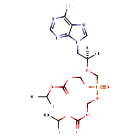
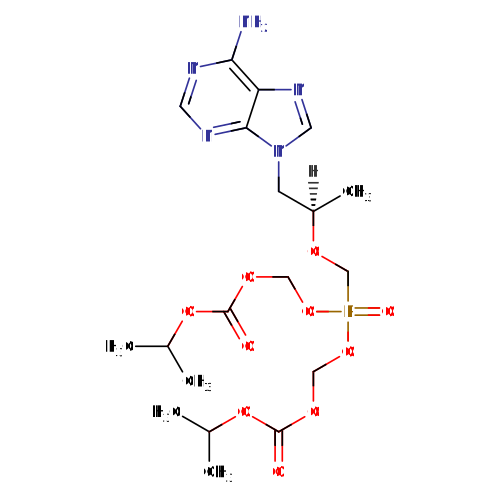
Structure for Tenofovir disoproxil (DB00300)
- Weight
- Average: 519.448
Monoisotopic: 519.173029184 - Chemical Formula
- C19H30N5O10P
- Synonyms
- Bis(POC)PMPA
- Tenofovir bis(isopropyloxycarbonyloxymethyl) ester
- External IDs
- GS-4331

Pharmacology
- Indication
Tenofovir disoproxil is indicated in combination with other antiretroviral agents for the treatment of HIV-1 infection in patients ≥2 years old and weighing ≥10 kg.19 It is also indicated for the treatment of chronic hepatitis B in patients ≥2 years old and weighing ≥10 kg.19
Tenofovir disoproxil is also an ingredient in several combination products, all of which are indicated either alone or in combination with other antiretrovirals for the treatment of HIV-1 infection.12,13,14,15,16,17,18
In addition, tenofovir disoproxil is available in combination with emtricitabine (under the brand name Truvada) for use as pre-exposure prophylaxis (PrEP) in at-risk adults and adolescents weighing ≥ 35kg to reduce the risk of sexually-acquired HIV-1 infection.18
 Reduce drug development failure ratesBuild, train, & validate machine-learning modelswith evidence-based and structured datasets.Build, train, & validate predictive machine-learning models with structured datasets.
- Associated Conditions
Indication Type Indication Combined Product Details Approval Level Age Group Patient Characteristics Dose Form Adjunct therapy in treatment of Hepatitis b chronic infection •••••••••••• •••••• ••••••••• •••• •••••• •• •• •• •• •••• ••••••• •••••• Adjunct therapy in treatment of Human immunodeficiency virus type 1 (hiv-1) infection •••••••••••• •••••• ••••••••• •••• •••••• •• •• •• •• •••• ••••••• •••••• Used in combination for prophylaxis of Human immunodeficiency virus type 1 (hiv-1) infection Combination Product in combination with: Emtricitabine (DB00879) •••••••••••• ••••••••••• ••••• •• •••• ••• •••• •••••• •• ••••• •• •• •••••• Used as adjunct in combination to treat Human immunodeficiency virus type 1 (hiv-1) infection Combination Product in combination with: Emtricitabine (DB00879) •••••••••••• •••••• ••••••••• •••••• • •• •• •••••• Used in combination to treat Human immunodeficiency virus type 1 (hiv-1) infection Combination Product in combination with: Lamivudine (DB00709), Efavirenz (DB00625) •••••••••••• •••••• ••••••••• ••••• ••• •• •••••• - Contraindications & Blackbox Warnings
 Prevent Adverse Drug Events TodayTap into our Clinical API for life-saving information on contraindications & blackbox warnings, population restrictions, harmful risks, & more.Avoid life-threatening adverse drug events with our Clinical API
- Pharmacodynamics
This drug prevents viral DNA chain elongation through inhibition of enzymes necessary for host cell infection viral replication in HIV-1 and Hepatitis B infections 9, 10.
In vitro effects
The antiviral activity of tenofovir against in laboratory and clinical isolates of HIV-1 was studied in lymphoblastoid cell lines, primary monocyte/macrophage cells, in addition to peripheral blood lymphocytes. The EC50 (50% effective concentration) values of tenofovir against HIV-1 virus ranged between 0.04 μM to 8.5 μM.
Combination of tenofovir disoproxil with other drugs
In drug combination studies of tenofovir with nucleoside reverse transcriptase inhibitors (abacavir, didanosine, lamivudine, stavudine, zalcitabine, zidovudine), non-nucleoside reverse transcriptase inhibitors (delavirdine, efavirenz, nevirapine), and protease inhibitors (amprenavir, indinavir, nelfinavir, ritonavir, saquinavir), additive and synergistic effects were seen. Tenofovir demonstrated antiviral activities in cell cultures against HIV-1 Label.
- Mechanism of action
Tenofovir belongs to a class of antiretroviral drugs known as nucleotide analog reverse transcriptase inhibitors (NtRTIs), which block reverse transcriptase, an enzyme necessary for viral production in HIV-infected individuals. This enables the management of HIV viral load through decreased viral replication Label.
Tenofovir disoproxil fumarate is the fumarate salt of the prodrug tenofovir disoproxil. Tenofovir disoproxil is absorbed and converted to its active form, tenofovir, a nucleoside monophosphate (nucleotide) analog. Tenofovir is then converted to the active metabolite, tenofovir diphosphate, a chain terminator, by constitutively expressed enzymes in the cell. Tenofovir diphosphate inhibits HIV-1 reverse transcriptase and the Hepatitis B polymerase by direct binding competition with the natural deoxyribonucleotide substrate (deoxyadenosine 5’-triphosphate) and, after integration into DNA, causes viral DNA chain termination 24, Label.
A note on resistance
HIV-1 isolates with decreased susceptibility to tenofovir have been identified in cell culture studies. These viruses expressed a K65R substitution in reverse transcriptase and showed a 2– 4 fold decrease in susceptibility to treatment with tenofovir Label.
Target Actions Organism AReverse transcriptase/RNaseH inhibitorHuman immunodeficiency virus 1 UDNA polymerase/reverse transcriptase inhibitorHBV-D - Absorption
After oral administration of tenofovir disoproxil to patients with HIV infection, tenofovir disoproxil is quickly absorbed and metabolized to tenofovir 24.
Administration of tenofovir disoproxil 300 mg tablets after a high-fat meal increases the oral bioavailability of this drug, as demonstrated by an increase in tenofovir AUC0-∞ of about 40% as well as an increase in Cmax of about 14%. On the contrary, the administration of tenofovir disoproxil with a light meal did not exert a relevant effect on the pharmacokinetics of tenofovir when compared to administration under fasting conditions. The presence of ingested food slows the time to tenofovir Cmax by approximately 1 hour. Cmax and AUC of tenofovir are 0.33 ± 0.12 μg/mL and 3.32 ± 1.37 μg•hr/mL after several doses of tenofovir disoproxil 300 mg once daily in the fed state when meal content is not controlled Label.
- Volume of distribution
The volume of distribution at steady-state is 1.3 ± 0.6 L/kg and 1.2 ± 0.4 L/kg, following intravenous administration of tenofovir 1.0 mg/kg and 3.0 mg/kg Label.
After oral administration of tenofovir disoproxil, tenofovir is distributed to the majority tissues with the highest concentrations measured in the kidney, liver and the intestinal contents (based on data from preclinical studies) 24.
- Protein binding
In vitro binding of tenofovir to human plasma or serum proteins is <0.7 and <7.2%, respectively, over the tenofovir concentration range 0.01 to 25 μg/mL Label.
- Metabolism
Tenofovir disoproxil fumarate is the fumarate salt of the prodrug tenofovir disoproxil. Tenofovir disoproxil is absorbed and converted to its active form, tenofovir, a nucleoside monophosphate (nucleotide) analog. Tenofovir is then converted to the active metabolite, tenofovir diphosphate, a chain terminator, by constitutively expressed enzymes in the cell Label. Two phosphorylation steps are required to convert tenofovir disoproxil to the active drug form 11.
The cytochrome P450 enzyme system is not involved with the metabolism of tenofovir disoproxil or tenofovir Label.
Hover over products below to view reaction partners
- Route of elimination
Following IV administration of tenofovir, approximately 70–80% of the dose is recovered in the urine as unchanged tenofovir within 72 hours of dosing. Tenofovir is eliminated by a combination of glomerular filtration and active tubular secretion Label. There may be competition for elimination with other compounds that are also eliminated by the kidneys.
- Half-life
When a single oral dose is given, the terminal elimination half-life is approximately 17 hours Label.
- Clearance
The clearance of tenofovir is highly dependent on renal function and may vary greatly. Total clearance has been estimated to be approximately 230 ml/h/kg (approximately 300 ml/min) 24.
On average, renal clearance has been estimated to be approximately 160 ml/h/kg (approximately 210 ml/min), which is in excess of the glomerular filtration rate. This shows that active tubular secretion is an essential part of the elimination of tenofovir 24.
The FDA label provides specific guidelines for dosing according to renal function. It is important to consult product labeling before administering tenofovir to individuals with renal dysfunction, as the clearance of this drug may vary greatly among these patients Label.
- Adverse Effects
 Improve decision support & research outcomesWith structured adverse effects data, including: blackbox warnings, adverse reactions, warning & precautions, & incidence rates. View sample adverse effects data in our new Data Library!Improve decision support & research outcomes with our structured adverse effects data.
- Toxicity
A note on breastfeeding
The Centers for Disease Control and Prevention recommend that HIV-1-infected mothers not breast-feed their infants to prevent postnatal transmission of HIV-1. Mothers should be advised not to breast-feed if they are receiving tenofovir disoproxil Label.
Carcinogenesis
Long-term oral carcinogenicity studies of tenofovir disoproxil fumarate in mice and rats were performed at exposures up to approximately 16 times (mice) and 5 times (rats) those observed in humans at the therapeutic dose for HIV-1 infection. At the higher dose in female mice, liver adenomas were increased at exposures 16 times that in humans. In rats, the study was negative for carcinogenic findings at exposures up to 5 times that observed in humans at the therapeutic dose Label.
Pregnancy
This drug is considered a pregnancy Category B drug. Reproduction studies have been performed in rats and rabbits at doses up to 14 and 19 times the recommended human dose based on body surface area comparisons and revealed no evidence of impaired fertility or harm to the fetus due to tenofovir. There are, however, no adequate and well-controlled studies in pregnant women.
Because animal reproduction studies are not consistently reflective of human effects, tenofovir disoproxil should be used during pregnancy only if clearly required. To monitor fetal outcomes of pregnant women taking tenofovir disoproxil, an Antiretroviral Pregnancy Registry has been formed. Healthcare providers are encouraged and advised to register patients by calling the number listed on the FDA label for tenofovir disoproxil Label.
Mutagenesis
Tenofovir disoproxil fumarate was mutagenic in the in vitro mouse lymphoma assay and negative for mutagenesis in an in vitro bacterial mutagenicity test (Ames test). In an in vivo mouse micronucleus assay, tenofovir disoproxil fumarate was negative when administered to male mice.
Impairment of Fertility
There were no observed effects on fertility, mating performance or early embryonic development when tenofovir disoproxil fumarate was given to male rats at a dose comparable to 10 times the human dose based on body surface area comparisons for 28 days before mating and to female rats for 15 days before mating through day seven of gestation. There was, however, changes in the estrous cycle in female rats Label.
- Pathways
Pathway Category Tenofovir Metabolism Pathway Drug metabolism - Pharmacogenomic Effects/ADRs
- Not Available
Interactions
- Drug Interactions
- This information should not be interpreted without the help of a healthcare provider. If you believe you are experiencing an interaction, contact a healthcare provider immediately. The absence of an interaction does not necessarily mean no interactions exist.
Drug Interaction Integrate drug-drug
interactions in your softwareAbacavir Tenofovir disoproxil may decrease the excretion rate of Abacavir which could result in a higher serum level. Abemaciclib The serum concentration of Abemaciclib can be increased when it is combined with Tenofovir disoproxil. Abrocitinib The serum concentration of Tenofovir disoproxil can be increased when it is combined with Abrocitinib. Aceclofenac Aceclofenac may increase the nephrotoxic activities of Tenofovir disoproxil. Acemetacin Acemetacin may increase the nephrotoxic activities of Tenofovir disoproxil. - Food Interactions
- Take with or without food.
Products
 Drug product information from 10+ global regionsOur datasets provide approved product information including:dosage, form, labeller, route of administration, and marketing period.Access drug product information from over 10 global regions.
- Product Ingredients
Ingredient UNII CAS InChI Key Tenofovir disoproxil fumarate OTT9J7900I 202138-50-9 VCMJCVGFSROFHV-WZGZYPNHSA-N Tenofovir disoproxil maleate 7BI6HE4F8S 1276030-80-8 VCMJCVGFSROFHV-VIEYUMQNSA-N Tenofovir disoproxil phosphate 05F4G8DO5I 1453166-76-1 DJCLNKKHALBVLK-PFEQFJNWSA-N Tenofovir disoproxil succinate 94882WB39E 1637632-97-3 CCGIINMVANPRGB-PFEQFJNWSA-N - Active Moieties
Name Kind UNII CAS InChI Key Tenofovir prodrug W4HFE001U5 147127-20-6 SGOIRFVFHAKUTI-ZCFIWIBFSA-N - Product Images
- Brand Name Prescription Products
Name Dosage Strength Route Labeller Marketing Start Marketing End Region Image Tenofovir Tablet 300 mg Oral Sivem Pharmaceuticals Ulc 2022-05-12 Not applicable Canada 
Tenofovir Tablet 300 mg Oral Sanis Health Inc 2021-08-20 Not applicable Canada Tenofovir Disoproxil Fumarate Tablet, film coated 250 mg/1 Oral Aizant Drug Research Solutions Pvt Ltd 2018-01-26 Not applicable US 
Tenofovir Disoproxil Fumarate Tablet, film coated 200 mg/1 Oral Aizant Drug Research Solutions Pvt Ltd 2018-01-26 Not applicable US Tenofovir Disoproxil Fumarate Tablet, film coated 300 mg/1 Oral Aizant Drug Research Solutions Pvt Ltd 2018-01-26 Not applicable US - Generic Prescription Products
Name Dosage Strength Route Labeller Marketing Start Marketing End Region Image Ag-tenofovir Tablet 300 mg Oral Angita Pharma Inc. 2022-06-09 Not applicable Canada Apo-tenofovir Tablet 300 mg Oral Apotex Corporation 2017-07-26 Not applicable Canada Auro-tenofovir Tablet 300 mg Oral Auro Pharma Inc 2017-07-26 Not applicable Canada Jamp-tenofovir Tablet 300 mg Oral Jamp Pharma Corporation 2018-10-24 Not applicable Canada Mint-tenofovir Tablet 300 mg Oral Mint Pharmaceuticals Inc 2021-09-07 Not applicable Canada - Mixture Products
Name Ingredients Dosage Route Labeller Marketing Start Marketing End Region Image ACRIPTEGA Tenofovir disoproxil fumarate (300 MG) + Dolutegravir (50 MG) + Lamivudine (300 MG) Tablet, coated Oral บริษัท ซาย ฟาร์มา จำกัด จำกัด 2019-12-27 Not applicable Thailand 
Ag-emtricitabine / Tenofovir Disoproxil Fumarate Tenofovir disoproxil fumarate (300 mg) + Emtricitabine (200 mg) Tablet Oral Angita Pharma Inc. 2020-11-09 Not applicable Canada Apo-efavirenz-emtricitabine-tenofovir Tenofovir disoproxil fumarate (300 mg) + Efavirenz (600 mg) + Emtricitabine (200 mg) Tablet Oral Apotex Corporation 2018-09-04 Not applicable Canada Apo-emtricitabine-tenofovir Tenofovir disoproxil fumarate (300 mg) + Emtricitabine (200 mg) Tablet Oral Apotex Corporation 2017-07-26 Not applicable Canada Atripla Tenofovir disoproxil fumarate (300 mg/1) + Efavirenz (600 mg/1) + Emtricitabine (200 mg/1) Tablet, film coated Oral REMEDYREPACK INC. 2017-03-20 Not applicable US - Unapproved/Other Products
Name Ingredients Dosage Route Labeller Marketing Start Marketing End Region Image Tenofovir Disoproxil Fumarate Tenofovir disoproxil fumarate (250 mg/1) Tablet, film coated Oral Aizant Drug Research Solutions Pvt Ltd 2018-01-26 Not applicable US Tenofovir Disoproxil Fumarate Tenofovir disoproxil fumarate (200 mg/1) Tablet, film coated Oral Aizant Drug Research Solutions Pvt Ltd 2018-01-26 Not applicable US Tenofovir Disoproxil Fumarate Tenofovir disoproxil fumarate (300 mg/1) Tablet, film coated Oral Aizant Drug Research Solutions Pvt Ltd 2018-01-26 Not applicable US Tenofovir Disoproxil Fumarate Tenofovir disoproxil fumarate (150 mg/1) Tablet, film coated Oral Aizant Drug Research Solutions Pvt Ltd 2018-01-26 Not applicable US TERNAVIR 245 MG FILM KAPLI TABLET, 30 ADET Tenofovir disoproxil (245 mg) Tablet, film coated Oral ATABAY KİMYA SAN. VE TİC. A.Ş. 2013-11-19 Not applicable Turkey 


Categories
- ATC Codes
- J05AR27 — Lamivudine, tenofovir disoproxil and dolutegravir
- J05AR — Antivirals for treatment of HIV infections, combinations
- J05A — DIRECT ACTING ANTIVIRALS
- J05 — ANTIVIRALS FOR SYSTEMIC USE
- J — ANTIINFECTIVES FOR SYSTEMIC USE
- J05AF — Nucleoside and nucleotide reverse transcriptase inhibitors
- J05A — DIRECT ACTING ANTIVIRALS
- J05 — ANTIVIRALS FOR SYSTEMIC USE
- J — ANTIINFECTIVES FOR SYSTEMIC USE
- J05AR — Antivirals for treatment of HIV infections, combinations
- J05A — DIRECT ACTING ANTIVIRALS
- J05 — ANTIVIRALS FOR SYSTEMIC USE
- J — ANTIINFECTIVES FOR SYSTEMIC USE
- J05AR — Antivirals for treatment of HIV infections, combinations
- J05A — DIRECT ACTING ANTIVIRALS
- J05 — ANTIVIRALS FOR SYSTEMIC USE
- J — ANTIINFECTIVES FOR SYSTEMIC USE
- J05AR — Antivirals for treatment of HIV infections, combinations
- J05A — DIRECT ACTING ANTIVIRALS
- J05 — ANTIVIRALS FOR SYSTEMIC USE
- J — ANTIINFECTIVES FOR SYSTEMIC USE
- J05AR — Antivirals for treatment of HIV infections, combinations
- J05A — DIRECT ACTING ANTIVIRALS
- J05 — ANTIVIRALS FOR SYSTEMIC USE
- J — ANTIINFECTIVES FOR SYSTEMIC USE
- J05AR — Antivirals for treatment of HIV infections, combinations
- J05A — DIRECT ACTING ANTIVIRALS
- J05 — ANTIVIRALS FOR SYSTEMIC USE
- J — ANTIINFECTIVES FOR SYSTEMIC USE
- J05AR — Antivirals for treatment of HIV infections, combinations
- J05A — DIRECT ACTING ANTIVIRALS
- J05 — ANTIVIRALS FOR SYSTEMIC USE
- J — ANTIINFECTIVES FOR SYSTEMIC USE
- Drug Categories
- Anti-HIV Agents
- Anti-Infective Agents
- Anti-Retroviral Agents
- Antiinfectives for Systemic Use
- Antiviral Agents
- Antivirals for Systemic Use
- Antivirals used in combination for the treatment of HIV infections
- Direct Acting Antivirals
- Drugs that are Mainly Renally Excreted
- Hepatitis B Virus Nucleoside Analog Reverse Transcriptase Inhibitor
- Heterocyclic Compounds, Fused-Ring
- Human Immunodeficiency Virus Nucleoside Analog Reverse Transcriptase Inhibitor
- Nephrotoxic agents
- Nucleoside and Nucleotide Reverse Transcriptase Inhibitors
- OAT1/SLC22A6 Substrates
- OAT3/SLC22A8 Substrates
- Organophosphorus Compounds
- P-glycoprotein inhibitors
- P-glycoprotein substrates
- Purines
- Reverse Transcriptase Inhibitors
- Tenofovir and prodrugs
- Chemical TaxonomyProvided by Classyfire
- Description
- This compound belongs to the class of organic compounds known as 6-aminopurines. These are purines that carry an amino group at position 6. Purine is a bicyclic aromatic compound made up of a pyrimidine ring fused to an imidazole ring.
- Kingdom
- Organic compounds
- Super Class
- Organoheterocyclic compounds
- Class
- Imidazopyrimidines
- Sub Class
- Purines and purine derivatives
- Direct Parent
- 6-aminopurines
- Alternative Parents
- Dialkyl alkylphosphonates / Aminopyrimidines and derivatives / Phosphonic acid esters / N-substituted imidazoles / Imidolactams / Carbonic acid diesters / Heteroaromatic compounds / Azacyclic compounds / Primary amines / Organopnictogen compounds show 4 more
- Substituents
- 6-aminopurine / Amine / Aminopyrimidine / Aromatic heteropolycyclic compound / Azacycle / Azole / Carbonic acid derivative / Carbonic acid diester / Carbonyl group / Dialkyl alkylphosphonate show 17 more
- Molecular Framework
- Aromatic heteropolycyclic compounds
- External Descriptors
- organic phosphonate (CHEBI:63717)
- Affected organisms
- Human Immunodeficiency Virus
Chemical Identifiers
- UNII
- F4YU4LON7I
- CAS number
- 201341-05-1
- InChI Key
- JFVZFKDSXNQEJW-CQSZACIVSA-N
- InChI
- InChI=1S/C19H30N5O10P/c1-12(2)33-18(25)28-9-31-35(27,32-10-29-19(26)34-13(3)4)11-30-14(5)6-24-8-23-15-16(20)21-7-22-17(15)24/h7-8,12-14H,6,9-11H2,1-5H3,(H2,20,21,22)/t14-/m1/s1
- IUPAC Name
- bis({[(propan-2-yloxy)carbonyl]oxy}methyl) {[(2R)-1-(6-amino-9H-purin-9-yl)propan-2-yl]oxy}methanephosphonate
- SMILES
- [H][C@@](C)(CN1C=NC2=C(N)N=CN=C12)OCP(=O)(OCOC(=O)OC(C)C)OCOC(=O)OC(C)C
References
- Synthesis Reference
Uma Maheswer Rao Vasireddy, Siva Rama Prasad Vellanki, Raja Babu Balusu, Naga Durga Rao Bandi, Pavan Kumar Jujjavarapu, Sambasiva Rao Ginjupalli, Rama Krishna Pilli, "Process for the preparation of Tenofovir." U.S. Patent US08049009, issued November 01, 2011.
US08049009- General References
- Gilden D: Tenofovir: Gilead applies for approval; expanded access liberalized. AIDS Treat News. 2001 May 11;(364):2-3, 1. [Article]
- Miller MD, Margot NA, Hertogs K, Larder B, Miller V: Antiviral activity of tenofovir (PMPA) against nucleoside-resistant clinical HIV samples. Nucleosides Nucleotides Nucleic Acids. 2001 Apr-Jul;20(4-7):1025-8. [Article]
- Thompson CA: Prodrug of tenofovir diphosphate approved for combination HIV therapy. Am J Health Syst Pharm. 2002 Jan 1;59(1):18. [Article]
- Gazzard BG: The potential place of tenofovir in antiretroviral treatment regimens. Int J Clin Pract. 2001 Dec;55(10):704-9. [Article]
- Lu C, Jia Y, Chen L, Ding Y, Yang J, Chen M, Song Y, Sun X, Wen A: Pharmacokinetics and food interaction of a novel prodrug of tenofovir, tenofovir dipivoxil fumarate, in healthy volunteers. J Clin Pharm Ther. 2013 Apr;38(2):136-40. doi: 10.1111/jcpt.12023. Epub 2012 Dec 28. [Article]
- Maskew M, Westreich D, Firnhaber C, Sanne I: Tenofovir use and pregnancy among women initiating HAART. AIDS. 2012 Nov 28;26(18):2393-7. doi: 10.1097/QAD.0b013e328359a95c. [Article]
- Uglietti A, Zanaboni D, Gnarini M, Maserati R: Emtricitabine/tenofovir in the treatment of HIV infection: current PK/PD evaluation. Expert Opin Drug Metab Toxicol. 2012 Oct;8(10):1305-14. doi: 10.1517/17425255.2012.714367. Epub 2012 Sep 4. [Article]
- Ransom CE, Huo Y, Patel K, Scott GB, Watts HD, Williams P, Siberry GK, Livingston EG: Infant growth outcomes after maternal tenofovir disoproxil fumarate use during pregnancy. J Acquir Immune Defic Syndr. 2013 Dec 1;64(4):374-81. doi: 10.1097/QAI.0b013e3182a7adb2. [Article]
- Duwal S, Schutte C, von Kleist M: Pharmacokinetics and pharmacodynamics of the reverse transcriptase inhibitor tenofovir and prophylactic efficacy against HIV-1 infection. PLoS One. 2012;7(7):e40382. doi: 10.1371/journal.pone.0040382. Epub 2012 Jul 11. [Article]
- Delaney WE 4th, Ray AS, Yang H, Qi X, Xiong S, Zhu Y, Miller MD: Intracellular metabolism and in vitro activity of tenofovir against hepatitis B virus. Antimicrob Agents Chemother. 2006 Jul;50(7):2471-7. doi: 10.1128/AAC.00138-06. [Article]
- Figueroa DB, Tillotson J, Li M, Piwowar-Manning E, Hendrix CW, Holtz TH, Bokoch K, Bekker LG, van Griensven F, Mannheimer S, Hughes JP, Grant RM, Bumpus NN: Discovery of genetic variants of the kinases that activate tenofovir among individuals in the United States, Thailand, and South Africa: HPTN067. PLoS One. 2018 Apr 11;13(4):e0195764. doi: 10.1371/journal.pone.0195764. eCollection 2018. [Article]
- FDA Approved Drug Products: Atripla (efavirenz, emtricitabine, and tenofovir disoproxil fumarate) tablets for oral use [Link]
- FDA Approved Drug Products: Cimduo (lamivudine and tenofovir disoproxil fumarate) tablets for oral use [Link]
- FDA Approved Drug Products: Complera (emtricitabine, rilpivirine, tenofovir disoproxil fumarate) tablets for oral use [Link]
- FDA Approved Drug Products: Delstrigo (doravirine, lamivudine, and tenofovir disoproxil fumarate) tablets for oral use [Link]
- FDA Approved Drug Products: Stribild (elvitegravir, cobicistat, emtricitabine, tenofovir disoproxil fumarate) tablets for oral use [Link]
- FDA Approved Drug Products: Symfi (efavirenz, lamivudine, and tenofovir disoproxil fumarate) tablets for oral use [Link]
- FDA Approved Drug Products: Truvada (emtricitabine and tenofovir disoproxil fumarate) tablets for oral use [Link]
- FDA Approved Drug Products: Viread (tenofovir disoproxil fumarate) powder/tablets for oral use [Link]
- Tenofovir Disoproxil FDA label [File]
- Auspar: Tenofovir disoproxil fumarate [File]
- Stribild FDA label [File]
- Truvada FDA label [File]
- Viread EPAR [File]
- External Links
- Human Metabolome Database
- HMDB14445
- PubChem Compound
- 5481350
- PubChem Substance
- 46508131
- ChemSpider
- 4587262
- BindingDB
- 77145
- 300195
- ChEBI
- 63717
- ChEMBL
- CHEMBL1538
- ZINC
- ZINC000003929022
- Therapeutic Targets Database
- DAP001430
- PharmGKB
- PA10204
- RxList
- RxList Drug Page
- Drugs.com
- Drugs.com Drug Page
- PDRhealth
- PDRhealth Drug Page
- Wikipedia
- Tenofovir_disoproxil
- MSDS
- Download (57.7 KB)
Clinical Trials
- Clinical Trials
Phase Status Purpose Conditions Count 4 Active Not Recruiting Prevention Hormone Therapy / Human Immunodeficiency Virus (HIV) Infections 1 4 Active Not Recruiting Prevention PrEP Adherence Monitoring 1 4 Active Not Recruiting Treatment Fatty Liver Disease / Human Immunodeficiency Virus (HIV) Infections 1 4 Active Not Recruiting Treatment HBV Coinfection / HCC 1 4 Active Not Recruiting Treatment Human Immunodeficiency Virus (HIV) Infections 2
Pharmacoeconomics
- Manufacturers
- Gilead sciences inc
- Gilead Sciences, Inc.
- Packagers
- A-S Medication Solutions LLC
- Bristol-Myers Squibb Co.
- Cardinal Health
- Dept Health Central Pharmacy
- Gilead Sciences Inc.
- Kaiser Foundation Hospital
- Lake Erie Medical and Surgical Supply
- Nycomed Inc.
- Patheon Inc.
- PCA LLC
- Physicians Total Care Inc.
- Quality Care
- Remedy Repack
- Dosage Forms
Form Route Strength Tablet Oral Tablet, film coated Oral 245 MG Tablet Oral 200.000 mg Tablet Oral 300.00 mg Tablet, film coated Oral Tablet Oral 400.000 mg Tablet, coated Oral Tablet, film coated Oral 150 mg Tablet, film coated Oral 123 MG Tablet, film coated Oral 163 MG Tablet, film coated Oral 204 MG Powder Not applicable 1 kg/1kg Tablet Oral 300 mg/1 Tablet, film coated Oral 150 mg/1 Tablet, film coated Oral 200 mg/1 Tablet, film coated Oral 250 mg/1 Tablet, film coated Oral 300 mg/1 Tablet, film coated Oral 245 MG Tablet, coated Oral 245 mg Tablet Oral 300.000 mg Tablet, film coated Oral Tablet, film coated Oral 200 mg Granule Oral 33 MG/G Powder Oral 40 mg/1g Tablet Oral 300 mg Tablet, coated Oral 150 mg/1 Tablet, coated Oral 200 mg/1 Tablet, coated Oral 250 mg/1 Tablet, coated Oral 300 mg/1 Tablet, coated Oral 300 MG Tablet, film coated Oral 300 MG - Prices
Unit description Cost Unit Viread 300 mg tablet 33.95USD tablet DrugBank does not sell nor buy drugs. Pricing information is supplied for informational purposes only.- Patents
Patent Number Pediatric Extension Approved Expires (estimated) Region CA2298059 No 2008-12-30 2018-07-23 Canada CA2261619 No 2006-05-23 2017-07-25 Canada US5914331 Yes 1999-06-22 2018-01-02 US US6043230 Yes 2000-03-28 2018-01-25 US US5814639 Yes 1998-09-29 2017-03-29 US US6939964 Yes 2005-09-06 2018-07-20 US US6639071 Yes 2003-10-28 2018-08-14 US US6642245 Yes 2003-11-04 2021-05-04 US US6703396 Yes 2004-03-09 2021-09-09 US US5922695 Yes 1999-07-13 2018-01-25 US US5935946 Yes 1999-08-10 2018-01-25 US US5977089 Yes 1999-11-02 2018-01-25 US US8592397 No 2013-11-26 2024-01-13 US US8716264 No 2014-05-06 2024-01-13 US US9018192 No 2015-04-28 2026-06-13 US US8598185 No 2013-12-03 2028-05-01 US US7125879 Yes 2006-10-24 2025-10-21 US US6838464 No 2005-01-04 2021-02-26 US US8080551 No 2011-12-20 2023-04-11 US US8101629 No 2012-01-24 2022-08-09 US US7067522 No 2006-06-27 2019-12-20 US US8148374 Yes 2012-04-03 2030-03-03 US US7635704 Yes 2009-12-22 2027-04-26 US US7176220 Yes 2007-02-13 2027-02-27 US US8981103 Yes 2015-03-17 2027-04-26 US US8633219 Yes 2014-01-21 2030-10-24 US US8841310 No 2014-09-23 2025-12-09 US US9545414 No 2017-01-17 2026-06-13 US US9457036 No 2016-10-04 2024-01-13 US US9744181 No 2017-08-29 2024-01-13 US US9891239 Yes 2018-02-13 2030-03-03 US US10039718 Yes 2018-08-07 2033-04-06 US US8486975 No 2013-07-16 2031-10-07 US US10603282 No 2020-03-31 2036-11-29 US US10842751 No 2020-11-24 2036-11-29 US US10857102 No 2020-12-08 2033-01-14 US
Properties
- State
- Solid
- Experimental Properties
Property Value Source melting point (°C) 113-115 https://www.chemicalbook.com/ChemicalProductProperty_US_CB7946998.aspx boiling point (°C) 642.7 https://www.lookchem.com/Tenofovir-disoproxil-fumarate/ water solubility 13.4 mg/mL in distilled water at 25 °C (disoproxil fumarate salt) https://www.accessdata.fda.gov/drugsatfda_docs/label/2006/021752s005lbl.pdf logP 1.25 https://www.accessdata.fda.gov/drugsatfda_docs/label/2006/021752s005lbl.pdf pKa 3.75 https://www.accessdata.fda.gov/drugsatfda_docs/label/2006/021752s005lbl.pdf - Predicted Properties
Property Value Source Water Solubility 0.712 mg/mL ALOGPS logP -0.02 ALOGPS logP 2.65 Chemaxon logS -2.9 ALOGPS pKa (Strongest Acidic) 18.59 Chemaxon pKa (Strongest Basic) 4.13 Chemaxon Physiological Charge 0 Chemaxon Hydrogen Acceptor Count 10 Chemaxon Hydrogen Donor Count 1 Chemaxon Polar Surface Area 185.44 Å2 Chemaxon Rotatable Bond Count 17 Chemaxon Refractivity 118.59 m3·mol-1 Chemaxon Polarizability 49.18 Å3 Chemaxon Number of Rings 2 Chemaxon Bioavailability 0 Chemaxon Rule of Five No Chemaxon Ghose Filter No Chemaxon Veber's Rule No Chemaxon MDDR-like Rule No Chemaxon - Predicted ADMET Features
Property Value Probability Human Intestinal Absorption + 0.5998 Blood Brain Barrier + 0.9194 Caco-2 permeable - 0.617 P-glycoprotein substrate Substrate 0.7203 P-glycoprotein inhibitor I Non-inhibitor 0.8706 P-glycoprotein inhibitor II Non-inhibitor 0.948 Renal organic cation transporter Non-inhibitor 0.8985 CYP450 2C9 substrate Non-substrate 0.8609 CYP450 2D6 substrate Non-substrate 0.9117 CYP450 3A4 substrate Non-substrate 0.6458 CYP450 1A2 substrate Non-inhibitor 0.7177 CYP450 2C9 inhibitor Non-inhibitor 0.7873 CYP450 2D6 inhibitor Non-inhibitor 0.8271 CYP450 2C19 inhibitor Non-inhibitor 0.7634 CYP450 3A4 inhibitor Non-inhibitor 0.8353 CYP450 inhibitory promiscuity Low CYP Inhibitory Promiscuity 0.85 Ames test Non AMES toxic 0.511 Carcinogenicity Non-carcinogens 0.7811 Biodegradation Not ready biodegradable 0.9914 Rat acute toxicity 2.4903 LD50, mol/kg Not applicable hERG inhibition (predictor I) Weak inhibitor 0.8936 hERG inhibition (predictor II) Non-inhibitor 0.7957
Spectra
- Mass Spec (NIST)
- Not Available
- Spectra
- Chromatographic Properties
Collision Cross Sections (CCS)
Adduct CCS Value (Å2) Source type Source [M-H]- 198.72456 predictedDeepCCS 1.0 (2019) [M+H]+ 201.12013 predictedDeepCCS 1.0 (2019) [M+Na]+ 207.03264 predictedDeepCCS 1.0 (2019)
Targets

- Kind
- Protein
- Organism
- Human immunodeficiency virus 1
- Pharmacological action
- Yes
- Actions
- Inhibitor
- General Function
- Rna-dna hybrid ribonuclease activity
- Specific Function
- Not Available
- Gene Name
- pol
- Uniprot ID
- Q72547
- Uniprot Name
- Reverse transcriptase/RNaseH
- Molecular Weight
- 65223.615 Da
References
- Fung HB, Stone EA, Piacenti FJ: Tenofovir disoproxil fumarate: a nucleotide reverse transcriptase inhibitor for the treatment of HIV infection. Clin Ther. 2002 Oct;24(10):1515-48. [Article]
- DeChristoforo R, Penzak SR: Tenofovir: a nucleotide analogue reverse-transcriptase inhibitor for treatment of HIV infection. Am J Health Syst Pharm. 2004 Jan 1;61(1):86-98; quiz 99-100. [Article]
- Link [Link]
- FDA label, Viread [File]
- Kind
- Protein
- Organism
- HBV-D
- Pharmacological action
- Unknown
- Actions
- Inhibitor
- General Function
- Rna-dna hybrid ribonuclease activity
- Specific Function
- Multifunctional enzyme that converts the viral RNA genome into dsDNA in viral cytoplasmic capsids. This enzyme displays a DNA polymerase activity that can copy either DNA or RNA templates, and a ri...
- Gene Name
- P
- Uniprot ID
- P24024
- Uniprot Name
- Protein P
- Molecular Weight
- 93588.765 Da
References
Enzymes
- Kind
- Protein
- Organism
- Humans
- Pharmacological action
- Unknown
- Actions
- Substrate
- General Function
- Atp binding
- Specific Function
- Catalyzes the reversible transfer of the terminal phosphate group between ATP and AMP. Plays an important role in cellular energy homeostasis and in adenine nucleotide metabolism. Adenylate kinase ...
- Gene Name
- AK2
- Uniprot ID
- P54819
- Uniprot Name
- Adenylate kinase 2, mitochondrial
- Molecular Weight
- 26477.44 Da
References
- Antoniou T, Park-Wyllie LY, Tseng AL: Tenofovir: a nucleotide analog for the management of human immunodeficiency virus infection. Pharmacotherapy. 2003 Jan;23(1):29-43. [Article]
- Topalis D, Snoeck R, Andrei G: Tenofovir Activating Kinases May Impact the Outcome of HIV Treatment and Prevention. EBioMedicine. 2015 Aug 3;2(9):1018-9. doi: 10.1016/j.ebiom.2015.07.042. eCollection 2015 Sep. [Article]
- Link [Link]
- Kind
- Protein
- Organism
- Humans
- Pharmacological action
- Unknown
- Actions
- Substrate
- General Function
- Nucleoside triphosphate adenylate kinase activity
- Specific Function
- Involved in maintaining the homeostasis of cellular nucleotides by catalyzing the interconversion of nucleoside phosphates. Efficiently phosphorylates AMP and dAMP using ATP as phosphate donor, but...
- Gene Name
- AK4
- Uniprot ID
- P27144
- Uniprot Name
- Adenylate kinase 4, mitochondrial
- Molecular Weight
- 25267.83 Da
References
- Antoniou T, Park-Wyllie LY, Tseng AL: Tenofovir: a nucleotide analog for the management of human immunodeficiency virus infection. Pharmacotherapy. 2003 Jan;23(1):29-43. [Article]
- Dahlin A, Wittwer M, de la Cruz M, Woo JM, Bam R, Scharen-Guivel V, Flaherty J, Ray AS, Cihlar T, Gupta SK, Giacomini KM: A pharmacogenetic candidate gene study of tenofovir-associated Fanconi syndrome. Pharmacogenet Genomics. 2015 Feb;25(2):82-92. doi: 10.1097/FPC.0000000000000110. [Article]
- Link [Link]
- Kind
- Protein group
- Organism
- Humans
- Pharmacological action
- Unknown
- Actions
- Substrate
- General Function
- Ribosomal small subunit binding
- Specific Function
- Major role in the synthesis of nucleoside triphosphates other than ATP. The ATP gamma phosphate is transferred to the NDP beta phosphate via a ping-pong mechanism, using a phosphorylated active-sit...
Components:
References
- Koch K, Chen Y, Feng JY, Borroto-Esoda K, Deville-Bonne D, Gallois-Montbrun S, Janin J, Morera S: Nucleoside diphosphate kinase and the activation of antiviral phosphonate analogs of nucleotides: binding mode and phosphorylation of tenofovir derivatives. Nucleosides Nucleotides Nucleic Acids. 2009 Aug;28(8):776-92. doi: 10.1080/15257770903155899. [Article]
- Watanabe D, Yoshino M, Yagura H, Hirota K, Yonemoto H, Bando H, Yajima K, Koizumi Y, Otera H, Tominari S, Nishida Y, Kuwahara T, Uehira T, Shirasaka T: Increase in serum mitochondrial creatine kinase levels induced by tenofovir administration. J Infect Chemother. 2012 Oct;18(5):675-82. doi: 10.1007/s10156-012-0393-8. Epub 2012 Feb 22. [Article]
- Figueroa DB, Tillotson J, Li M, Piwowar-Manning E, Hendrix CW, Holtz TH, Bokoch K, Bekker LG, van Griensven F, Mannheimer S, Hughes JP, Grant RM, Bumpus NN: Discovery of genetic variants of the kinases that activate tenofovir among individuals in the United States, Thailand, and South Africa: HPTN067. PLoS One. 2018 Apr 11;13(4):e0195764. doi: 10.1371/journal.pone.0195764. eCollection 2018. [Article]
- Suboptimal CD4 gains in HIV-infected patients receiving didanosine plus tenofovir [File]
- Kind
- Protein group
- Organism
- Humans
- Pharmacological action
- Unknown
- Actions
- SubstrateInducer
- General Function
- Ubiquitin protein ligase binding
- Specific Function
- Reversibly catalyzes the transfer of phosphate between ATP and various phosphogens (e.g. creatine phosphate). Creatine kinase isoenzymes play a central role in energy transduction in tissues with l...
Components:
| Name | UniProt ID |
|---|---|
| Creatine kinase B-type | P12277 |
| Creatine kinase M-type | P06732 |
| Creatine kinase S-type, mitochondrial | P17540 |
| Creatine kinase U-type, mitochondrial | P12532 |
References
- Koch K, Chen Y, Feng JY, Borroto-Esoda K, Deville-Bonne D, Gallois-Montbrun S, Janin J, Morera S: Nucleoside diphosphate kinase and the activation of antiviral phosphonate analogs of nucleotides: binding mode and phosphorylation of tenofovir derivatives. Nucleosides Nucleotides Nucleic Acids. 2009 Aug;28(8):776-92. doi: 10.1080/15257770903155899. [Article]
- Varga A, Graczer E, Chaloin L, Liliom K, Zavodszky P, Lionne C, Vas M: Selectivity of kinases on the activation of tenofovir, an anti-HIV agent. Eur J Pharm Sci. 2013 Jan 23;48(1-2):307-15. doi: 10.1016/j.ejps.2012.11.007. Epub 2012 Nov 28. [Article]
- Figueroa DB, Tillotson J, Li M, Piwowar-Manning E, Hendrix CW, Holtz TH, Bokoch K, Bekker LG, van Griensven F, Mannheimer S, Hughes JP, Grant RM, Bumpus NN: Discovery of genetic variants of the kinases that activate tenofovir among individuals in the United States, Thailand, and South Africa: HPTN067. PLoS One. 2018 Apr 11;13(4):e0195764. doi: 10.1371/journal.pone.0195764. eCollection 2018. [Article]
Transporters
- Kind
- Protein
- Organism
- Humans
- Pharmacological action
- Unknown
- Actions
- Substrate
- General Function
- Sodium-independent organic anion transmembrane transporter activity
- Specific Function
- Involved in the renal elimination of endogenous and exogenous organic anions. Functions as organic anion exchanger when the uptake of one molecule of organic anion is coupled with an efflux of one ...
- Gene Name
- SLC22A6
- Uniprot ID
- Q4U2R8
- Uniprot Name
- Solute carrier family 22 member 6
- Molecular Weight
- 61815.78 Da
References
- Cihlar T, Ho ES, Lin DC, Mulato AS: Human renal organic anion transporter 1 (hOAT1) and its role in the nephrotoxicity of antiviral nucleotide analogs. Nucleosides Nucleotides Nucleic Acids. 2001 Apr-Jul;20(4-7):641-8. [Article]
- Uwai Y, Ida H, Tsuji Y, Katsura T, Inui K: Renal transport of adefovir, cidofovir, and tenofovir by SLC22A family members (hOAT1, hOAT3, and hOCT2). Pharm Res. 2007 Apr;24(4):811-5. Epub 2007 Feb 15. [Article]
- Kind
- Protein
- Organism
- Humans
- Pharmacological action
- Unknown
- Actions
- Substrate
- General Function
- Sodium-independent organic anion transmembrane transporter activity
- Specific Function
- Plays an important role in the excretion/detoxification of endogenous and exogenous organic anions, especially from the brain and kidney. Involved in the transport basolateral of steviol, fexofenad...
- Gene Name
- SLC22A8
- Uniprot ID
- Q8TCC7
- Uniprot Name
- Solute carrier family 22 member 8
- Molecular Weight
- 59855.585 Da
References
- Uwai Y, Ida H, Tsuji Y, Katsura T, Inui K: Renal transport of adefovir, cidofovir, and tenofovir by SLC22A family members (hOAT1, hOAT3, and hOCT2). Pharm Res. 2007 Apr;24(4):811-5. Epub 2007 Feb 15. [Article]
- Moss DM, Neary M, Owen A: The role of drug transporters in the kidney: lessons from tenofovir. Front Pharmacol. 2014 Nov 11;5:248. doi: 10.3389/fphar.2014.00248. eCollection 2014. [Article]
- Kind
- Protein
- Organism
- Humans
- Pharmacological action
- Unknown
- Actions
- Substrate
- Curator comments
- Evidence in the literature is minimal, and this transporter action is currently under study.
- General Function
- Atpase activity, coupled to transmembrane movement of substances
- Specific Function
- ATP-dependent transporter probably involved in cellular detoxification through lipophilic anion extrusion.
- Gene Name
- ABCC10
- Uniprot ID
- Q5T3U5
- Uniprot Name
- Multidrug resistance-associated protein 7
- Molecular Weight
- 161627.375 Da
References
- Pushpakom SP, Liptrott NJ, Rodriguez-Novoa S, Labarga P, Soriano V, Albalater M, Hopper-Borge E, Bonora S, Di Perri G, Back DJ, Khoo S, Pirmohamed M, Owen A: Genetic variants of ABCC10, a novel tenofovir transporter, are associated with kidney tubular dysfunction. J Infect Dis. 2011 Jul 1;204(1):145-53. doi: 10.1093/infdis/jir215. [Article]
- Moss DM, Neary M, Owen A: The role of drug transporters in the kidney: lessons from tenofovir. Front Pharmacol. 2014 Nov 11;5:248. doi: 10.3389/fphar.2014.00248. eCollection 2014. [Article]
- Kind
- Protein
- Organism
- Humans
- Pharmacological action
- Unknown
- Actions
- Substrate
- General Function
- Atpase activity, coupled to transmembrane movement of substances
- Specific Function
- May be an organic anion pump relevant to cellular detoxification.
- Gene Name
- ABCC4
- Uniprot ID
- O15439
- Uniprot Name
- Multidrug resistance-associated protein 4
- Molecular Weight
- 149525.33 Da
References
- Imaoka T, Kusuhara H, Adachi M, Schuetz JD, Takeuchi K, Sugiyama Y: Functional involvement of multidrug resistance-associated protein 4 (MRP4/ABCC4) in the renal elimination of the antiviral drugs adefovir and tenofovir. Mol Pharmacol. 2007 Feb;71(2):619-27. Epub 2006 Nov 16. [Article]
- Tun-Yhong W, Chinpaisal C, Pamonsinlapatham P, Kaewkitichai S: Tenofovir Disoproxil Fumarate Is a New Substrate of ATP-Binding Cassette Subfamily C Member 11. Antimicrob Agents Chemother. 2017 Mar 24;61(4). pii: AAC.01725-16. doi: 10.1128/AAC.01725-16. Print 2017 Apr. [Article]
- Kind
- Protein
- Organism
- Humans
- Pharmacological action
- Unknown
- Actions
- Substrate
- General Function
- Organic anion transmembrane transporter activity
- Specific Function
- Mediates hepatobiliary excretion of numerous organic anions. May function as a cellular cisplatin transporter.
- Gene Name
- ABCC2
- Uniprot ID
- Q92887
- Uniprot Name
- Canalicular multispecific organic anion transporter 1
- Molecular Weight
- 174205.64 Da
References
- Izzedine H, Hulot JS, Villard E, Goyenvalle C, Dominguez S, Ghosn J, Valantin MA, Lechat P, Deray AG: Association between ABCC2 gene haplotypes and tenofovir-induced proximal tubulopathy. J Infect Dis. 2006 Dec 1;194(11):1481-91. Epub 2006 Oct 26. [Article]
- Perazella MA: Tenofovir-induced kidney disease: an acquired renal tubular mitochondriopathy. Kidney Int. 2010 Dec;78(11):1060-3. doi: 10.1038/ki.2010.344. [Article]
- Kind
- Protein
- Organism
- Humans
- Pharmacological action
- Unknown
- Actions
- SubstrateInhibitor
- General Function
- Xenobiotic-transporting atpase activity
- Specific Function
- Energy-dependent efflux pump responsible for decreased drug accumulation in multidrug-resistant cells.
- Gene Name
- ABCB1
- Uniprot ID
- P08183
- Uniprot Name
- Multidrug resistance protein 1
- Molecular Weight
- 141477.255 Da
References
- Storch CH, Theile D, Lindenmaier H, Haefeli WE, Weiss J: Comparison of the inhibitory activity of anti-HIV drugs on P-glycoprotein. Biochem Pharmacol. 2007 May 15;73(10):1573-81. Epub 2007 Jan 24. [Article]
- Soriano V, Labarga P, Fernandez-Montero JV, Mendoza C, Benitez-Gutierrez L, Pena JM, Barreiro P: Drug interactions in HIV-infected patients treated for hepatitis C. Expert Opin Drug Metab Toxicol. 2017 Aug;13(8):807-816. doi: 10.1080/17425255.2017.1351942. Epub 2017 Jul 13. [Article]
- van Gelder J, Deferme S, Naesens L, De Clercq E, van den Mooter G, Kinget R, Augustijns P: Intestinal absorption enhancement of the ester prodrug tenofovir disoproxil fumarate through modulation of the biochemical barrier by defined ester mixtures. Drug Metab Dispos. 2002 Aug;30(8):924-30. [Article]
- Moss DM, Domanico P, Watkins M, Park S, Randolph R, Wring S, Rajoli RKR, Hobson J, Rannard S, Siccardi M, Owen A: Simulating Intestinal Transporter and Enzyme Activity in a Physiologically Based Pharmacokinetic Model for Tenofovir Disoproxil Fumarate. Antimicrob Agents Chemother. 2017 Jun 27;61(7). pii: AAC.00105-17. doi: 10.1128/AAC.00105-17. Print 2017 Jul. [Article]
- HIV insite, UCSF: Tenofovir Alafenamide [Link]

Drug created at June 13, 2005 13:24 / Updated at April 24, 2024 14:30