Identification
- Summary
Floxuridine is an antimetabolite used as palliative management for liver metastases of gastrointestinal malignancy.
- Generic Name
- Floxuridine
- DrugBank Accession Number
- DB00322
- Background
An antineoplastic antimetabolite that is metabolized to fluorouracil when administered by rapid injection. Floxuridine is available as a sterile, nonpyrogenic, lyophilized powder for reconstitution. When administered by slow, continuous, intra-arterial infusion, it is converted to floxuridine monophosphate. It has been used to treat hepatic metastases of gastrointestinal adenocarcinomas and for palliation in malignant neoplasms of the liver and gastrointestinal tract.
- Type
- Small Molecule
- Groups
- Approved
- Structure
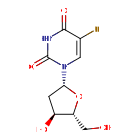
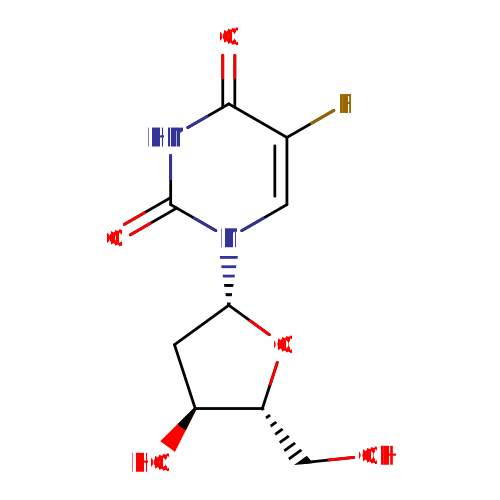
Structure for Floxuridine (DB00322)
- Weight
- Average: 246.1924
Monoisotopic: 246.065199677 - Chemical Formula
- C9H11FN2O5
- Synonyms
- 1-(2-Deoxy-beta-D-ribofuranosyl)-5-fluorouracil
- 1-beta-D-2'-Deoxyribofuranosyl-5-flurouracil
- 1beta-D-2'-Deoxyribofuranosyl-5-flurouracil
- 2'-Deoxy-5-fluorouridine
- 5-Fluoro-2-desoxyuridine
- 5-fluoro-2'-deoxyuridine
- 5-Fluorodeoxyuridine
- 5-Fluorouracil 2'-deoxyriboside
- 5-Fluorouracil deoxyriboside
- 5FDU
- beta-5-Fluoro-2'-deoxyuridine
- Deoxyfluorouridine
- FdU
- Floxiridina
- Floxuridin
- Floxuridine
- Floxuridinum
- Fluorodeoxyuridine
- Fluoruridine deoxyribose
- External IDs
- NSC-27640

Pharmacology
- Indication
For palliative management of gastrointestinal adenocarcinoma metastatic to the liver, when given by continuous regional intra-arterial infusion in carefully selected patients who are considered incurable by surgery or other means. Also for the palliative management of liver cancer (usually administered by hepatic intra-arterial infusion).
 Reduce drug development failure ratesBuild, train, & validate machine-learning modelswith evidence-based and structured datasets.Build, train, & validate predictive machine-learning models with structured datasets.
- Associated Conditions
Indication Type Indication Combined Product Details Approval Level Age Group Patient Characteristics Dose Form Management of Stage 4 gastrointestinal adenocarcinoma •••••••••••• ••••••••• •••••• - Associated Therapies
- Contraindications & Blackbox Warnings
 Prevent Adverse Drug Events TodayTap into our Clinical API for life-saving information on contraindications & blackbox warnings, population restrictions, harmful risks, & more.Avoid life-threatening adverse drug events with our Clinical API
- Pharmacodynamics
Floxuridine is an anti-metabolite or a pyrimidine analog that works by disrupting the process S-phase of cell division, selectively targeting rapidly dividing cells. Due to the structural similarities, antimetabolites act as pyrimidine-like molecules and prevent normal pyrimidines from being incorporated into DNA. After successful biotransformation, floxuridine is converted into an active component, flurouracil, which blocks the enzyme which converts cytosine nucleosides into the deoxy derivative. Flurouracil also physically prevents the incorporation of thymidine nucleotides into the DNA strand by taking their place, further preventing DNA synthesis.
- Mechanism of action
Floxuridine rapidly undergoes catabolism to form 5-fluorouracil, which is the active component of the drug. 5-Fluorouracil primarily works by interfering with DNA synthesis; however, it may also inhibit the formation of fraudulent RNA via physical incorporation into the RNA. It is also an inhibitor of riboside phophorylase, preventing the utilization of pre-formed uracil in RNA synthesis. Floxuridine can also form 5-fluoro-2'-deoxyuridine-5'-phosphate (FUDR-MP), which is the monophosphate of floxuridine that inhibits thymidylate synthetase that plays a role in the methylation of deoxyuridylic acid to thymidylic acid during DNA synthesis. FUDR-MP thus interferes with DNA synthesis.
Target Actions Organism AThymidylate synthase Not Available Humans - Absorption
Not Available
- Volume of distribution
Not Available
- Protein binding
Not Available
- Metabolism
Hepatic.
Hover over products below to view reaction partners
- Route of elimination
Floxuridine can be excreted as unchanged drug, urea, fluorouracil, a-fluoro-bureidopropionic acid, dihydrofluorouracil, a-fluoro-b-guanidopropionic acid and a-fluoro-b-alanine via the kidneys. Floxuridine may also be excreted as respiratory carbon dioxide.
- Half-life
Not Available
- Clearance
Not Available
- Adverse Effects
 Improve decision support & research outcomesWith structured adverse effects data, including: blackbox warnings, adverse reactions, warning & precautions, & incidence rates. View sample adverse effects data in our new Data Library!Improve decision support & research outcomes with our structured adverse effects data.
- Toxicity
Oral, rat LD50: 215 mg/kg. Signs of overdose include nausea, vomiting, diarrhea, gastrointestinal ulceration and bleeding, and bone marrow depression (including thrombocytopenia, leukopenia and agranulocytosis).
- Pathways
- Not Available
- Pharmacogenomic Effects/ADRs
- Not Available
Interactions
- Drug Interactions
- This information should not be interpreted without the help of a healthcare provider. If you believe you are experiencing an interaction, contact a healthcare provider immediately. The absence of an interaction does not necessarily mean no interactions exist.
Drug Interaction Integrate drug-drug
interactions in your softwareAbacavir Floxuridine may decrease the excretion rate of Abacavir which could result in a higher serum level. Abatacept The risk or severity of adverse effects can be increased when Floxuridine is combined with Abatacept. Abciximab The risk or severity of bleeding can be increased when Abciximab is combined with Floxuridine. Abrocitinib The metabolism of Abrocitinib can be decreased when combined with Floxuridine. Aceclofenac Aceclofenac may decrease the excretion rate of Floxuridine which could result in a higher serum level. - Food Interactions
- No interactions found.
Products
 Drug product information from 10+ global regionsOur datasets provide approved product information including:dosage, form, labeller, route of administration, and marketing period.Access drug product information from over 10 global regions.
- International/Other Brands
- FUDR (Mayne)
- Brand Name Prescription Products
Name Dosage Strength Route Labeller Marketing Start Marketing End Region Image Fdur Injection, powder, lyophilized, for solution 500 mg/5mL Intra-arterial Hospira Worldwide, Inc. 1970-12-18 2009-04-05 US 
- Generic Prescription Products
Name Dosage Strength Route Labeller Marketing Start Marketing End Region Image Floxuridine Injection, powder, lyophilized, for solution 500 mg/1 Intra-arterial Cerona Therapeutics, Inc. 2022-06-09 Not applicable US Floxuridine Injection, powder, lyophilized, for solution 100 mg/1mL Intra-arterial Bedford Pharmaceuticals 2000-10-16 2012-08-31 US Floxuridine Injection, powder, lyophilized, for solution 500 mg/5mL Intra-arterial Fresenius Kabi USA, LLC 2001-03-15 Not applicable US Floxuridine Injection, powder, lyophilized, for solution 100 mg/1mL Intra-arterial Hikma Pharmaceuticals USA Inc. 2018-02-15 Not applicable US
Categories
- ATC Codes
- L01BC09 — Floxuridine
- Drug Categories
- Antimetabolites
- Antineoplastic Agents
- Antineoplastic and Immunomodulating Agents
- Cytochrome P-450 CYP2C9 Inhibitors
- Cytochrome P-450 CYP2C9 Inhibitors (strong)
- Cytochrome P-450 Enzyme Inhibitors
- Deoxyribonucleosides
- Deoxyuridine
- Drugs that are Mainly Renally Excreted
- Drugs that are Mainly Renally Excreted with a Narrow Therapeutic Index
- Immunosuppressive Agents
- Myelosuppressive Agents
- Narrow Therapeutic Index Drugs
- Noxae
- Nucleic Acids, Nucleotides, and Nucleosides
- Nucleosides
- Pyrimidine Analogues
- Pyrimidine Nucleosides
- Pyrimidines
- Thyroxine-binding globulin inducers
- Toxic Actions
- Chemical TaxonomyProvided by Classyfire
- Description
- This compound belongs to the class of organic compounds known as pyrimidine 2'-deoxyribonucleosides. These are compounds consisting of a pyrimidine linked to a ribose which lacks a hydroxyl group at position 2.
- Kingdom
- Organic compounds
- Super Class
- Nucleosides, nucleotides, and analogues
- Class
- Pyrimidine nucleosides
- Sub Class
- Pyrimidine 2'-deoxyribonucleosides
- Direct Parent
- Pyrimidine 2'-deoxyribonucleosides
- Alternative Parents
- Pyrimidones / Halopyrimidines / Hydroxypyrimidines / Aryl fluorides / Hydropyrimidines / Tetrahydrofurans / Heteroaromatic compounds / Secondary alcohols / Oxacyclic compounds / Azacyclic compounds show 6 more
- Substituents
- Alcohol / Aromatic heteromonocyclic compound / Aryl fluoride / Aryl halide / Azacycle / Halopyrimidine / Heteroaromatic compound / Hydrocarbon derivative / Hydropyrimidine / Hydroxypyrimidine show 16 more
- Molecular Framework
- Aromatic heteromonocyclic compounds
- External Descriptors
- organofluorine compound, nucleoside analogue, pyrimidine 2'-deoxyribonucleoside (CHEBI:60761)
- Affected organisms
- Humans and other mammals
Chemical Identifiers
- UNII
- 039LU44I5M
- CAS number
- 50-91-9
- InChI Key
- ODKNJVUHOIMIIZ-RRKCRQDMSA-N
- InChI
- InChI=1S/C9H11FN2O5/c10-4-2-12(9(16)11-8(4)15)7-1-5(14)6(3-13)17-7/h2,5-7,13-14H,1,3H2,(H,11,15,16)/t5-,6+,7+/m0/s1
- IUPAC Name
- 5-fluoro-1-[(2R,4S,5R)-4-hydroxy-5-(hydroxymethyl)oxolan-2-yl]-1,2,3,4-tetrahydropyrimidine-2,4-dione
- SMILES
- OC[C@H]1O[C@H](C[C@@H]1O)N1C=C(F)C(=O)NC1=O
References
- Synthesis Reference
U.S. Patent 3,041,335.
- General References
- Not Available
- External Links
- Human Metabolome Database
- HMDB0014467
- KEGG Drug
- D04197
- KEGG Compound
- C11736
- PubChem Compound
- 5790
- PubChem Substance
- 46508645
- ChemSpider
- 5586
- BindingDB
- 50340678
- 4488
- ChEBI
- 60761
- ChEMBL
- CHEMBL917
- ZINC
- ZINC000003813010
- Therapeutic Targets Database
- DAP001245
- PharmGKB
- PA449652
- RxList
- RxList Drug Page
- Drugs.com
- Drugs.com Drug Page
- Wikipedia
- Floxuridine
- MSDS
- Download (40.5 KB)
Clinical Trials
- Clinical Trials
Phase Status Purpose Conditions Count 3 Completed Treatment Colorectal Cancer / Metastatic Cancer 2 3 Recruiting Treatment Hepatic Metastases / Stage IV Colorectal Cancer / Stage IV Colorectal Cancer AJCC v8 / Unresectable Colorectal Carcinoma 1 3 Recruiting Treatment Metastatic Colorectal Cancer (CRC) 1 3 Terminated Treatment Colorectal Cancer / HAI / Hepatic Metastases 1 3 Terminated Treatment Colorectal Cancer / Metastatic Cancer 1
Pharmacoeconomics
- Manufacturers
- App pharmaceuticals llc
- Bedford laboratories div ben venue laboratories inc
- Hospira inc
- Packagers
- APP Pharmaceuticals
- Bedford Labs
- Ben Venue Laboratories Inc.
- Ethex Corp.
- Hospira Inc.
- Dosage Forms
Form Route Strength Injection, powder, lyophilized, for solution Intra-arterial 500 mg/5mL Injection Intra-arterial 0.5 gr Injection, powder, lyophilized, for solution Intra-arterial 100 mg/1mL Injection, powder, lyophilized, for solution Intra-arterial 500 mg/1 - Prices
Unit description Cost Unit Floxuridine 500 mg vial 144.0USD vial Fudr 500 mg vial 121.06USD vial DrugBank does not sell nor buy drugs. Pricing information is supplied for informational purposes only.- Patents
- Not Available
Properties
- State
- Solid
- Experimental Properties
Property Value Source melting point (°C) 150.5 °C PhysProp water solubility 1.19E+004 mg/L Not Available logP -1.16 HANSCH,C ET AL. (1995) pKa 7.44 SANGSTER (1994) - Predicted Properties
Property Value Source Water Solubility 40.8 mg/mL ALOGPS logP -1.2 ALOGPS logP -1.3 Chemaxon logS -0.78 ALOGPS pKa (Strongest Acidic) 8.08 Chemaxon pKa (Strongest Basic) -3 Chemaxon Physiological Charge 0 Chemaxon Hydrogen Acceptor Count 5 Chemaxon Hydrogen Donor Count 3 Chemaxon Polar Surface Area 99.1 Å2 Chemaxon Rotatable Bond Count 2 Chemaxon Refractivity 51.26 m3·mol-1 Chemaxon Polarizability 20.95 Å3 Chemaxon Number of Rings 2 Chemaxon Bioavailability 1 Chemaxon Rule of Five Yes Chemaxon Ghose Filter No Chemaxon Veber's Rule No Chemaxon MDDR-like Rule No Chemaxon - Predicted ADMET Features
Property Value Probability Human Intestinal Absorption + 0.9589 Blood Brain Barrier + 0.768 Caco-2 permeable - 0.8988 P-glycoprotein substrate Non-substrate 0.7043 P-glycoprotein inhibitor I Non-inhibitor 0.854 P-glycoprotein inhibitor II Non-inhibitor 0.888 Renal organic cation transporter Non-inhibitor 0.8956 CYP450 2C9 substrate Non-substrate 0.805 CYP450 2D6 substrate Non-substrate 0.8668 CYP450 3A4 substrate Non-substrate 0.5459 CYP450 1A2 substrate Non-inhibitor 0.9125 CYP450 2C9 inhibitor Non-inhibitor 0.9159 CYP450 2D6 inhibitor Non-inhibitor 0.9235 CYP450 2C19 inhibitor Non-inhibitor 0.9162 CYP450 3A4 inhibitor Non-inhibitor 0.8926 CYP450 inhibitory promiscuity Low CYP Inhibitory Promiscuity 0.8378 Ames test Non AMES toxic 0.6041 Carcinogenicity Non-carcinogens 0.7542 Biodegradation Not ready biodegradable 0.9528 Rat acute toxicity 2.5247 LD50, mol/kg Not applicable hERG inhibition (predictor I) Weak inhibitor 0.9508 hERG inhibition (predictor II) Non-inhibitor 0.7771
Spectra
- Mass Spec (NIST)
- Download (9.43 KB)
- Spectra
- Chromatographic Properties
Collision Cross Sections (CCS)
Adduct CCS Value (Å2) Source type Source [M-H]- 158.6104097 predictedDarkChem Lite v0.1.0 [M-H]- 158.87955 predictedDeepCCS 1.0 (2019) [M+H]+ 162.2858097 predictedDarkChem Lite v0.1.0 [M+H]+ 161.27512 predictedDeepCCS 1.0 (2019) [M+Na]+ 159.0419097 predictedDarkChem Lite v0.1.0 [M+Na]+ 167.18782 predictedDeepCCS 1.0 (2019)
Targets

- Kind
- Protein
- Organism
- Humans
- Pharmacological action
- Yes
- General Function
- Thymidylate synthase activity
- Specific Function
- Contributes to the de novo mitochondrial thymidylate biosynthesis pathway.
- Gene Name
- TYMS
- Uniprot ID
- P04818
- Uniprot Name
- Thymidylate synthase
- Molecular Weight
- 35715.65 Da
References
- Ferguson PJ, Collins O, Dean NM, DeMoor J, Li CS, Vincent MD, Koropatnick J: Antisense down-regulation of thymidylate synthase to suppress growth and enhance cytotoxicity of 5-FUdR, 5-FU and Tomudex in HeLa cells. Br J Pharmacol. 1999 Aug;127(8):1777-86. [Article]
- Kubota T: [Theoretical basis for low-dose CDDP/5-FU therapy]. Gan To Kagaku Ryoho. 1999 Oct;26(11):1536-41. [Article]
- Kuwa K, Sakamoto S, Sassa S, Yoshimura S, Maemura M, Nakayama T: Effects of long-term administration of UFT plus leucovorin on colorectal tumors induced with 1,2-dimethylhydrazine in rats. Anticancer Res. 1999 Nov-Dec;19(6B):5139-42. [Article]
- Kuwa K, Sakamoto S, Mitamura T, Kudo H, Suzuki S, Fukushima M: Effects of a low dose leucovorin with 5-fluorouracil derivative on colorectal tumors induced with 1,2-dimethylhydrazine in rats. Anticancer Res. 1999 Nov-Dec;19(6B):5143-8. [Article]
- Murakami Y, Kazuno H, Emura T, Tsujimoto H, Suzuki N, Fukushima M: Different mechanisms of acquired resistance to fluorinated pyrimidines in human colorectal cancer cells. Int J Oncol. 2000 Aug;17(2):277-83. [Article]
Enzymes
- Kind
- Protein
- Organism
- Humans
- Pharmacological action
- Unknown
- Actions
- Substrate
- General Function
- Transferase activity, transferring pentosyl groups
- Specific Function
- May have a role in maintaining the integrity of the blood vessels. Has growth promoting activity on endothelial cells, angiogenic activity in vivo and chemotactic activity on endothelial cells in v...
- Gene Name
- TYMP
- Uniprot ID
- P19971
- Uniprot Name
- Thymidine phosphorylase
- Molecular Weight
- 49954.965 Da
References
- BIRNIE GD, KROEGER H, HEIDELBERGER C: STUDIES OF FLUORINATED PYRIMIDINES. XVIII. THE DEGRADATION OF 5-FLUORO-2'-DEOXYURIDINE AND RELATED COMPOUNDS BY NUCLEOSIDE PHOSPHORYLASE. Biochemistry. 1963 May-Jun;2:566-72. [Article]
- Tsume Y, Hilfinger JM, Amidon GL: Enhanced cancer cell growth inhibition by dipeptide prodrugs of floxuridine: increased transporter affinity and metabolic stability. Mol Pharm. 2008 Sep-Oct;5(5):717-27. doi: 10.1021/mp800008c. Epub 2008 Jul 25. [Article]
- Kind
- Protein
- Organism
- Humans
- Pharmacological action
- Unknown
- Actions
- Inhibitor
- General Function
- Steroid hydroxylase activity
- Specific Function
- Cytochromes P450 are a group of heme-thiolate monooxygenases. In liver microsomes, this enzyme is involved in an NADPH-dependent electron transport pathway. It oxidizes a variety of structurally un...
- Gene Name
- CYP2C9
- Uniprot ID
- P11712
- Uniprot Name
- Cytochrome P450 2C9
- Molecular Weight
- 55627.365 Da
References
- Gunes A, Coskun U, Boruban C, Gunel N, Babaoglu MO, Sencan O, Bozkurt A, Rane A, Hassan M, Zengil H, Yasar U: Inhibitory effect of 5-fluorouracil on cytochrome P450 2C9 activity in cancer patients. Basic Clin Pharmacol Toxicol. 2006 Feb;98(2):197-200. doi: 10.1111/j.1742-7843.2006.pto_304.x. [Article]
- Brown MC: An adverse interaction between warfarin and 5-fluorouracil: A case report and review of the literature. Chemotherapy. 1999 Sep-Oct;45(5):392-5. doi: 10.1159/000007230. [Article]
- Gilbar PJ, Brodribb TR: Phenytoin and fluorouracil interaction. Ann Pharmacother. 2001 Nov;35(11):1367-70. doi: 10.1345/aph.1A051. [Article]
- Karadag O, Babaoglu MO, Altundag K, Elkiran T, Yasar U, Bozkurt A: 5-Fluorouracil-induced coronary spasm: may inhibition of hyperpolarization factors produced by CYP2C enzymes be the cause? Oncology. 2004;66(6):510-1. doi: 10.1159/000079506. [Article]
- Up to Date: Floxuridine [Link]
Carriers
- Kind
- Protein
- Organism
- Humans
- Pharmacological action
- No
- Actions
- Inducer
- General Function
- Serine-type endopeptidase inhibitor activity
- Specific Function
- Major thyroid hormone transport protein in serum.
- Gene Name
- SERPINA7
- Uniprot ID
- P05543
- Uniprot Name
- Thyroxine-binding globulin
- Molecular Weight
- 46324.12 Da
References
- CYTOMEL (liothyronine) FDA label [File]


Drug created at June 13, 2005 13:24 / Updated at March 03, 2024 02:24