Identification
- Summary
Omeprazole is a proton pump inhibitor used to treat GERD associated conditions such as heartburn and gastric acid hypersecretion, and to promote healing of tissue damage and ulcers caused by gastric acid and H. pylori infection.
- Brand Names
- Konvomep, Losec, Omeclamox, Omesec, Previdolrx Analgesic Pak, Prilosec, Talicia, Yosprala, Zegerid, Zegerid Reformulated Aug 2006, Zegerid With Magnesium Hydroxide
- Generic Name
- Omeprazole
- DrugBank Accession Number
- DB00338
- Background
Originally approved by the FDA in 1989, omeprazole is a proton-pump inhibitor, used to treat gastric acid-related disorders. These disorders may include gastroesophageal reflux disease (GERD), peptic ulcer disease, and other diseases characterized by the oversecretion of gastric acid. This drug was the first clinical useful drug in its class, and its approval was followed by the formulation of many other proton pump inhibitor drugs 6. Omeprazole is generally effective and well-tolerated, promoting its popular use in children and adults Label.
- Type
- Small Molecule
- Groups
- Approved, Investigational, Vet approved
- Structure
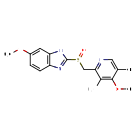
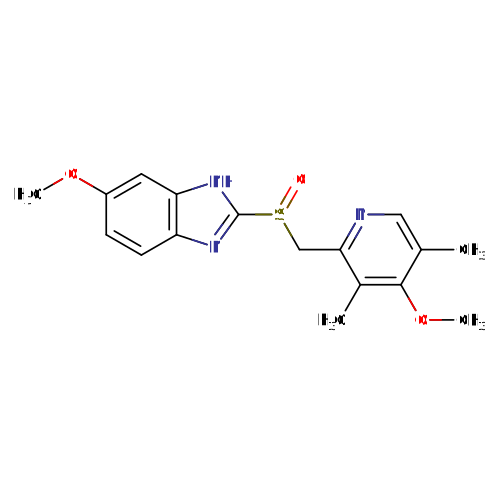
Structure for Omeprazole (DB00338)
- Weight
- Average: 345.416
Monoisotopic: 345.114712179 - Chemical Formula
- C17H19N3O3S
- Synonyms
- OMEP
- Omeprazol
- Omeprazole
- Omeprazolum

Pharmacology
- Indication
Omeprazole, according to the FDA label Label is a proton pump inhibitor (PPI) used for the following purposes:
• Treatment of active duodenal ulcer in adults
• Eradication of Helicobacter pylori to reduce the risk of duodenal ulcer recurrence in adults
• Treatment of active benign gastric ulcer in adults
• Reduction of risk of upper gastrointestinal (GI) bleeding in critically ill adult patients.
• Treatment of symptomatic gastroesophageal reflux disease (GERD) in patients 1 year of age and older
• Treatment of erosive esophagitis (EE) due to acid-mediated GERD in patients 1 month of age and older
• Maintenance of healing of EE due to acid-mediated GERD in patients 1 year of age and older
• Pathologic hypersecretory conditions in adults
 Reduce drug development failure ratesBuild, train, & validate machine-learning modelswith evidence-based and structured datasets.Build, train, & validate predictive machine-learning models with structured datasets.
- Associated Conditions
Indication Type Indication Combined Product Details Approval Level Age Group Patient Characteristics Dose Form Used in combination for symptomatic treatment of Ankylosing spondylitis (as) Combination Product in combination with: Diclofenac (DB00586) •••••••••••• ••••• •••• •••• •••••••••••••• •••••• •••••••• ••••••• ••••••• Treatment of Duodenal ulcers •••••••••••• ••••• Management of Erosive esophagitis •••••••••••• Treatment of Gastric ulcer •••••••••••• ••••• Symptomatic treatment of Gastroesophageal reflux disease •••••••••••• - Contraindications & Blackbox Warnings
 Prevent Adverse Drug Events TodayTap into our Clinical API for life-saving information on contraindications & blackbox warnings, population restrictions, harmful risks, & more.Avoid life-threatening adverse drug events with our Clinical API
- Pharmacodynamics
Effects on gastric acid secretion
This drug decreases gastric acid secretion Label. After oral administration, the onset of the antisecretory effect of omeprazole is usually achieved within one hour, with the maximum effect occurring by 2 hours after administration. The inhibitory effect of omeprazole on acid secretion increases with repeated once-daily dosing, reaching a plateau after four days Label.
Effects on serum gastrin
In studies of 200 or more patients, serum gastrin levels increased during the first 1-2 weeks of daily administration of therapeutic doses of omeprazole. This occurred in a parallel fashion with the inhibition of acid secretion. No further increase in serum gastrin occurred with continued omeprazole administration. Increased gastrin causes enterochromaffin-like cell hyperplasia and increased serum Chromogranin A (CgA) levels. The increased CgA levels may lead to false positive results in diagnostic studies for neuroendocrine tumors Label.
Enterochromaffin-like (ECL) cell effects
Human gastric biopsy samples have been obtained from more than 3000 pediatric and adult patients treated with omeprazole in long-term clinical studies. The incidence of enterochromaffin-like cell hyperplasia in these studies increased with time; however, no case of ECL cell carcinoids, dysplasia, or neoplasia have been identified in these patients. These studies, however, are of insufficient in power and duration to draw conclusions on the possible influence of long-term administration of omeprazole in the development of any premalignant or malignant conditions Label.
Other effects
Systemic effects of omeprazole in the central nervous system, cardiovascular and respiratory systems have not been found to date. Omeprazole, given in oral doses of 30 or 40 mg for 2-4 weeks, showed no effect on thyroid function, carbohydrate metabolism, or circulating levels of parathyroid hormone, cortisol, estradiol, testosterone, prolactin, cholecystokinin or secretin Label.
- Mechanism of action
Hydrochloric acid (HCl) secretion into the gastric lumen is a process regulated mainly by the H(+)/K(+)-ATPase of the proton pump 10, expressed in high quantities by the parietal cells of the stomach. ATPase is an enzyme on the parietal cell membrane that facilitates hydrogen and potassium exchange through the cell, which normally results in the extrusion of potassium and formation of HCl (gastric acid) 9.
Omeprazole is a member of a class of antisecretory compounds, the substituted benzimidazoles, that stop gastric acid secretion by selective inhibition of the H+/K+ ATPase enzyme system. Proton-pump inhibitors such as omeprazole bind covalently to cysteine residues via disulfide bridges on the alpha subunit of the H+/K+ ATPase pump, inhibiting gastric acid secretion for up to 36 hours 11. This antisecretory effect is dose-related and leads to the inhibition of both basal and stimulated acid secretion, regardless of the stimulus Label.
Mechanism of H. pylori eradication
Peptic ulcer disease (PUD) is frequently associated with Helicobacter pylori bacterial infection (NSAIDs) 12. The treatment of H. pylori infection may include the addition of omeprazole or other proton pump inhibitors as part of the treatment regimen Label, 13. H. pylori replicates most effectively at a neutral pH 14. Acid inhibition in H. pylori eradication therapy, including proton-pump inhibitors such as omeprazole, raises gastric pH, discouraging the growth of H.pylori 13. It is generally believed that proton pump inhibitors inhibit the urease enzyme, which increases the pathogenesis of H. pylori in gastric-acid related conditions 15.
Target Actions Organism APotassium-transporting ATPase alpha chain 1 inhibitorHumans UAryl hydrocarbon receptor agonistHumans - Absorption
Omeprazole delayed-release capsules contain an enteric-coated granule formulation of omeprazole (because omeprazole is acid-labile), so that absorption of omeprazole begins only after the granules exit the stomach Label.
Absorption of omeprazole occurs rapidly, with peak plasma concentrations of omeprazole achieved within 0.5-3.5 hours Label.
Absolute bioavailability (compared with intravenous administration) is approximately 30-40% at doses of 20-40 mg, largely due to pre-systemic metabolism. The bioavailability of omeprazole increases slightly upon repeated administration of omeprazole delayed-release capsules Label.
- Volume of distribution
Approximately 0.3 L/kg, corresponding to the volume of extracellular water 5.
- Protein binding
Approximately 95% bound to human plasma proteins Label.
- Metabolism
Omeprazole is heavily metabolized in the liver by the cytochrome P450 (CYP) enzyme system. The main part of its metabolism depends on the polymorphically expressed CYP2C19, which is responsible for the formation of hydroxyomeprazole, the major metabolite found in plasma. The remaining part depends on CYP3A4, responsible for the formation of omeprazole sulphone Label.
Hover over products below to view reaction partners
- Route of elimination
After a single dose oral dose of a buffered solution of omeprazole, negligible (if any) amounts of unchanged drug were excreted in urine. Most of the dose (about 77%) was eliminated in urine as at least six different metabolites. Two metabolites were identified as hydroxyomeprazole and the corresponding carboxylic acid. The remainder of the dose was found in the feces. This suggests significant biliary excretion of omeprazole metabolites. Three metabolites have been identified in the plasma, the sulfide and sulfone derivatives of omeprazole, and hydroxyomeprazole. These metabolites possess minimal or no antisecretory activity Label.
- Half-life
0.5-1 hour (healthy subjects, delayed-release capsule) Label
Approximately 3 hours (hepatic impairment) Label- Clearance
Healthy subject (delayed release capsule), total body clearance 500 - 600 mL/min Label
Geriatric plasma clearance: 250 mL/min Label
Hepatic impairment plasma clearance: 70 mL/min Label
- Adverse Effects
 Improve decision support & research outcomesWith structured adverse effects data, including: blackbox warnings, adverse reactions, warning & precautions, & incidence rates. View sample adverse effects data in our new Data Library!Improve decision support & research outcomes with our structured adverse effects data.
- Toxicity
Oral acute (LD50): 4000 mg/kg (mouse), 2210 mg/kg (rat) MSDS.
Overdose
Symptoms of overdose include confusion, drowsiness, blurred vision, tachycardia, nausea, diaphoresis, flushing, headache, and dry mouth.
Carcinogenesis and mutagenesis
In 24-month studies in rats, a dose-related significant increase in gastric carcinoid tumors and ECL cell hyperplasia was seen in male and female animals. Carcinoid tumors have also been found in rats treated with a fundectomy or long-term treatment with other proton pump inhibitors, or high doses of H2-receptor antagonists Label.
Omeprazole showed positive clastogenic effects in an in vitro human lymphocyte chromosomal aberration study, in one of two in vivo mouse micronucleus tests, and in an in vivo bone marrow cell chromosomal aberration test. Omeprazole tested negative in the in vitro Ames test, an in vitro mouse lymphoma cell forward mutation assay, and an in vivo rat liver DNA damage assay Label.
The use in breastfeeding
Limited data indicate that omeprazole may be present in human milk. There is currently no information on the effects of omeprazole on the breastfed infant or production of milk. The benefits of breastfeeding should be considered along with the level of need for omeprazole and any potential adverse effects on the breastfed infant from omeprazole Label.
Effects on fertility
Effects of omeprazole at oral doses up to 138 mg/kg/day in rats (about 34 times an oral human dose) was found to have no impact on fertility and reproductive performance Label.
- Pathways
Pathway Category Omeprazole Metabolism Pathway Drug metabolism Omeprazole Action Pathway Drug action - Pharmacogenomic Effects/ADRs
Interacting Gene/Enzyme Allele name Genotype(s) Defining Change(s) Type(s) Description Details Cytochrome P450 2C19 CYP2C19*2 (A;A) A Allele, homozygote Effect Directly Studied Patients with this genotype have reduced metabolism of omeprazole. Details Cytochrome P450 2C19 CYP2C19*3 (A;A) A Allele, homozygote Effect Directly Studied Patients with this genotype have reduced metabolism of omeprazole. Details Cytochrome P450 2C19 CYP2C19*2A Not Available 681G>A Effect Inferred Poor metabolizer, lower dose requirement, improved drug efficacy Details Cytochrome P450 2C19 CYP2C19*2B Not Available 681G>A Effect Inferred Poor metabolizer, lower dose requirement, improved drug efficacy Details Cytochrome P450 2C19 CYP2C19*4 Not Available 1A>G Effect Inferred Poor metabolizer, lower dose requirement, improved drug efficacy Details Cytochrome P450 2C19 CYP2C19*5 Not Available 1297C>T Effect Inferred Poor metabolizer, lower dose requirement, improved drug efficacy Details Cytochrome P450 2C19 CYP2C19*6 Not Available 395G>A Effect Inferred Poor metabolizer, lower dose requirement, improved drug efficacy Details Cytochrome P450 2C19 CYP2C19*7 Not Available 19294T>A Effect Inferred Poor metabolizer, lower dose requirement, improved drug efficacy Details Cytochrome P450 2C19 CYP2C19*22 Not Available 557G>C / 991A>G Effect Inferred Poor metabolizer, lower dose requirement, improved drug efficacy Details Cytochrome P450 2C19 CYP2C19*24 Not Available 99C>T / 991A>G … show all Effect Inferred Poor metabolizer, lower dose requirement, improved drug efficacy Details Cytochrome P450 2C19 CYP2C19*35 Not Available 12662A>G Effect Inferred Poor metabolizer, lower dose requirement, improved drug efficacy Details
Interactions
- Drug Interactions
- This information should not be interpreted without the help of a healthcare provider. If you believe you are experiencing an interaction, contact a healthcare provider immediately. The absence of an interaction does not necessarily mean no interactions exist.
Drug Interaction Integrate drug-drug
interactions in your softwareAbatacept The metabolism of Omeprazole can be increased when combined with Abatacept. Abrocitinib The metabolism of Abrocitinib can be decreased when combined with Omeprazole. Acenocoumarol The metabolism of Acenocoumarol can be decreased when combined with Omeprazole. Adalimumab The metabolism of Omeprazole can be increased when combined with Adalimumab. Albendazole The metabolism of Albendazole can be decreased when combined with Omeprazole. - Food Interactions
- Take before a meal. Allow 30-60 minutes before a meal.
Products
 Drug product information from 10+ global regionsOur datasets provide approved product information including:dosage, form, labeller, route of administration, and marketing period.Access drug product information from over 10 global regions.
- Product Ingredients
Ingredient UNII CAS InChI Key Omeprazole magnesium 426QFE7XLK 95382-33-5 KWORUUGOSLYAGD-UHFFFAOYSA-N Omeprazole sodium KV03YZ6QLW 95510-70-6 RYXPMWYHEBGTRV-UHFFFAOYSA-N - Product Images
- International/Other Brands
- Antra / Audazol / Belmazol / Ceprandal / Danlox / Desec / Elgam / Emeproton / Gasec / Gastrimut / Gastroloc / Indurgan / Inhibitron / Logastric / Losec / Mepral / Mopral / Olexin / Omapren / Omepral / Omeprazon / Omeprol / Omezol / Omisec / Omizac / Ortanol / Parizac / Prazidec / Prazolit / Procelac / Ramezol / Regulacid / Sanamidol / Ulceral / Ulcesep / Ultop / Zepral
- Brand Name Prescription Products
Name Dosage Strength Route Labeller Marketing Start Marketing End Region Image Leader Omeprazole Tablet, delayed release 20 mg/1 Oral Remedy Repack 2013-04-24 2014-04-24 US 
Losec Tablet, delayed release 20 mg Oral Cheplapharm Arzneimittel Gmbh 1996-12-31 2021-10-31 Canada 
Losec Capsule, delayed release 20 mg Oral Cheplapharm Arzneimittel Gmbh 1989-12-31 Not applicable Canada Losec 10 mg Tablet, delayed release 10 mg Oral Astra Zeneca 1997-04-28 2019-11-16 Canada Losec Capsules 10mg Capsule, delayed release 10 mg Oral Astra Zeneca 2000-10-03 2013-12-04 Canada - Generic Prescription Products
Name Dosage Strength Route Labeller Marketing Start Marketing End Region Image Ag-omeprazole Dr Tablet, delayed release 20 mg Oral Angita Pharma Inc. Not applicable Not applicable Canada Apo-omeprazole Capsule, delayed release 40 mg Oral Apotex Corporation Not applicable Not applicable Canada Apo-omeprazole Capsule, delayed release 20 mg Oral Apotex Corporation 2004-01-28 Not applicable Canada Auro-omeprazole Capsule, delayed release 20 mg Oral Auro Pharma Inc 2014-03-26 2014-03-26 Canada Auro-omeprazole Capsule, delayed release 10 mg Oral Auro Pharma Inc 2014-03-26 2014-03-26 Canada - Over the Counter Products
Name Dosage Strength Route Labeller Marketing Start Marketing End Region Image 24 Hr Omeprazole Tablet, delayed release 20 mg/1 Oral MEIJER, INC. 2022-05-25 Not applicable US Acid Reducer Tablet, delayed release 20 mg/1 Oral WALGREEN CO. 2021-05-06 Not applicable US Acid Reducer Tablet, delayed release 20 mg/1 Oral 7-Eleven 2018-06-06 Not applicable US Acid Reducer Tablet, delayed release 20 mg/1 Oral Best Choice 2018-06-06 Not applicable US Acid Reducer Tablet, delayed release 20 mg/1 Oral CVS Pharmacy, Inc. 2020-09-23 Not applicable US - Mixture Products
Name Ingredients Dosage Route Labeller Marketing Start Marketing End Region Image ArthroComb 75 mg/20 mg Hartkapseln mit veränderter Wirkstofffreisetzung Omeprazole (20 mg) + Diclofenac sodium (75 mg) Capsule, delayed release Oral Aristo Pharma Gmb H 2017-04-27 Not applicable Austria 
Aspirin and Omeprazole Delayed-release Tab Omeprazole (40 mg/1) + Acetylsalicylic acid (81 mg/1) Tablet, film coated Oral Innovida Therapeutique Corporation 2019-11-13 Not applicable US Aspirin and Omeprazole Delayed-release Tab Omeprazole (40 mg/1) + Acetylsalicylic acid (325 mg/1) Tablet, film coated Oral Innovida Phamaceutique Corporation 2019-07-17 2022-01-31 US Aspirin and Omeprazole Delayed-release Tab Omeprazole (40 mg/1) + Acetylsalicylic acid (81 mg/1) Tablet, film coated Oral Innovida Phamaceutique Corporation 2019-07-17 2021-11-30 US Basic Care Omeprazole and Sodium Bicarbonate Omeprazole (20 mg/1) + Sodium bicarbonate (1100 mg/1) Capsule, gelatin coated Oral Amazon.com Services LLC 2021-07-22 Not applicable US - Unapproved/Other Products
Name Ingredients Dosage Route Labeller Marketing Start Marketing End Region Image OMEPROL 20 MG MIKROPELLET KAPSUL, 28 ADET Omeprazole (20 mg) Capsule, coated pellets Oral SANDOZ İLAÇ SAN. VE TİC. A.Ş. 2014-11-11 Not applicable Turkey 


Categories
- ATC Codes
- A02BC01 — Omeprazole
- A02BC — Proton pump inhibitors
- A02B — DRUGS FOR PEPTIC ULCER AND GASTRO-OESOPHAGEAL REFLUX DISEASE (GORD)
- A02 — DRUGS FOR ACID RELATED DISORDERS
- A — ALIMENTARY TRACT AND METABOLISM
- A02BD — Combinations for eradication of Helicobacter pylori
- A02B — DRUGS FOR PEPTIC ULCER AND GASTRO-OESOPHAGEAL REFLUX DISEASE (GORD)
- A02 — DRUGS FOR ACID RELATED DISORDERS
- A — ALIMENTARY TRACT AND METABOLISM
- A02BD — Combinations for eradication of Helicobacter pylori
- A02B — DRUGS FOR PEPTIC ULCER AND GASTRO-OESOPHAGEAL REFLUX DISEASE (GORD)
- A02 — DRUGS FOR ACID RELATED DISORDERS
- A — ALIMENTARY TRACT AND METABOLISM
- Drug Categories
- 2-Pyridinylmethylsulfinylbenzimidazoles
- Acid Reducers
- Alimentary Tract and Metabolism
- Anti-Ulcer Agents
- BCRP/ABCG2 Inhibitors
- Benzimidazoles
- Cytochrome P-450 CYP1A2 Inducers
- Cytochrome P-450 CYP1A2 Inducers (strength unknown)
- Cytochrome P-450 CYP2C18 Substrates
- Cytochrome P-450 CYP2C19 Inhibitors
- Cytochrome P-450 CYP2C19 Inhibitors (weak)
- Cytochrome P-450 CYP2C19 Substrates
- Cytochrome P-450 CYP2C8 Substrates
- Cytochrome P-450 CYP2C9 Substrates
- Cytochrome P-450 CYP2D6 Inhibitors
- Cytochrome P-450 CYP2D6 Inhibitors (weak)
- Cytochrome P-450 CYP3A Inducers
- Cytochrome P-450 CYP3A Inhibitors
- Cytochrome P-450 CYP3A Substrates
- Cytochrome P-450 CYP3A4 Inducers
- Cytochrome P-450 CYP3A4 Inducers (strength unknown)
- Cytochrome P-450 CYP3A4 Inhibitors
- Cytochrome P-450 CYP3A4 Inhibitors (strength unknown)
- Cytochrome P-450 CYP3A4 Substrates
- Cytochrome P-450 Enzyme Inducers
- Cytochrome P-450 Enzyme Inhibitors
- Cytochrome P-450 Substrates
- Drugs for Acid Related Disorders
- Drugs for Peptic Ulcer and Gastro-Oesophageal Reflux Disease (Gord)
- Enzyme Inhibitors
- Gastric Acid Lowering Agents
- Gastrointestinal Agents
- Heterocyclic Compounds, Fused-Ring
- P-glycoprotein inhibitors
- P-glycoprotein substrates
- Proton Pump Inhibitors
- Proton-pump Inhibitors
- Pyridines
- Sulfoxides
- Sulfur Compounds
- Chemical TaxonomyProvided by Classyfire
- Description
- This compound belongs to the class of organic compounds known as sulfinylbenzimidazoles. These are polycyclic aromatic compounds containing a sulfinyl group attached at the position 2 of a benzimidazole moiety.
- Kingdom
- Organic compounds
- Super Class
- Organoheterocyclic compounds
- Class
- Benzimidazoles
- Sub Class
- Sulfinylbenzimidazoles
- Direct Parent
- Sulfinylbenzimidazoles
- Alternative Parents
- Anisoles / Methylpyridines / Alkyl aryl ethers / Imidazoles / Heteroaromatic compounds / Sulfoxides / Sulfinyl compounds / Azacyclic compounds / Organopnictogen compounds / Organonitrogen compounds show 2 more
- Substituents
- Alkyl aryl ether / Anisole / Aromatic heteropolycyclic compound / Azacycle / Azole / Benzenoid / Ether / Heteroaromatic compound / Hydrocarbon derivative / Imidazole show 12 more
- Molecular Framework
- Aromatic heteropolycyclic compounds
- External Descriptors
- aromatic ether, sulfoxide, pyridines, benzimidazoles (CHEBI:77260)
- Affected organisms
- Humans and other mammals
Chemical Identifiers
- UNII
- KG60484QX9
- CAS number
- 73590-58-6
- InChI Key
- SUBDBMMJDZJVOS-UHFFFAOYSA-N
- InChI
- InChI=1S/C17H19N3O3S/c1-10-8-18-15(11(2)16(10)23-4)9-24(21)17-19-13-6-5-12(22-3)7-14(13)20-17/h5-8H,9H2,1-4H3,(H,19,20)
- IUPAC Name
- 6-methoxy-2-[(4-methoxy-3,5-dimethylpyridin-2-yl)methanesulfinyl]-1H-1,3-benzodiazole
- SMILES
- COC1=CC2=C(C=C1)N=C(N2)S(=O)CC1=NC=C(C)C(OC)=C1C
References
- Synthesis Reference
Arne E. Brandstrom, Bo R. Lamm, "Processes for the preparation of omeprazole and intermediates therefore." U.S. Patent US4620008, issued October, 1982.
US4620008- General References
- Yang YX, Lewis JD, Epstein S, Metz DC: Long-term proton pump inhibitor therapy and risk of hip fracture. JAMA. 2006 Dec 27;296(24):2947-53. [Article]
- Castell D: Review of immediate-release omeprazole for the treatment of gastric acid-related disorders. Expert Opin Pharmacother. 2005 Nov;6(14):2501-10. doi: 10.1517/14656566.6.14.2501 . [Article]
- Higuera-de-la-Tijera F: Efficacy of omeprazole/sodium bicarbonate treatment in gastroesophageal reflux disease: a systematic review. Medwave. 2018 Mar 14;18(2):e7179. doi: 10.5867/medwave.2018.02.7179. [Article]
- Welage LS, Berardi RR: Evaluation of omeprazole, lansoprazole, pantoprazole, and rabeprazole in the treatment of acid-related diseases. J Am Pharm Assoc (Wash). 2000 Jan-Feb;40(1):52-62; quiz 121-3. [Article]
- Cederberg C, Andersson T, Skanberg I: Omeprazole: pharmacokinetics and metabolism in man. Scand J Gastroenterol Suppl. 1989;166:33-40; discussion 41-2. [Article]
- Strand DS, Kim D, Peura DA: 25 Years of Proton Pump Inhibitors: A Comprehensive Review. Gut Liver. 2017 Jan 15;11(1):27-37. doi: 10.5009/gnl15502. [Article]
- McTavish D, Buckley MM, Heel RC: Omeprazole. An updated review of its pharmacology and therapeutic use in acid-related disorders. Drugs. 1991 Jul;42(1):138-70. doi: 10.2165/00003495-199142010-00008. [Article]
- Langtry HD, Wilde MI: Omeprazole. A review of its use in Helicobacter pylori infection, gastro-oesophageal reflux disease and peptic ulcers induced by nonsteroidal anti-inflammatory drugs. Drugs. 1998 Sep;56(3):447-86. doi: 10.2165/00003495-199856030-00012. [Article]
- Lewin MJ: Cellular mechanisms and inhibitors of gastric acid secretion. Drugs Today (Barc). 1999 Oct;35(10):743-52. [Article]
- Sachs G, Wallmark B: The gastric H+,K+-ATPase: the site of action of omeprazole. Scand J Gastroenterol Suppl. 1989;166:3-11. [Article]
- Sachs G, Shin JM, Howden CW: Review article: the clinical pharmacology of proton pump inhibitors. Aliment Pharmacol Ther. 2006 Jun;23 Suppl 2:2-8. doi: 10.1111/j.1365-2036.2006.02943.x. [Article]
- Sung JJ, Kuipers EJ, El-Serag HB: Systematic review: the global incidence and prevalence of peptic ulcer disease. Aliment Pharmacol Ther. 2009 May 1;29(9):938-46. doi: 10.1111/j.1365-2036.2009.03960.x. [Article]
- Vcev A, Stimac D, Vceva A, Takac B, Pezerovic D, Ivandic A: High dose omeprazole plus amoxicillin and azithromycin in eradication of Helicobacter pylori in duodenal ulcers. Helicobacter. 1999 Mar;4(1):54-7. [Article]
- Scott DR, Sachs G, Marcus EA: The role of acid inhibition in Helicobacter pylori eradication. F1000Res. 2016 Jul 19;5. doi: 10.12688/f1000research.8598.1. eCollection 2016. [Article]
- Mobley HL: The role of Helicobacter pylori urease in the pathogenesis of gastritis and peptic ulceration. Aliment Pharmacol Ther. 1996 Apr;10 Suppl 1:57-64. [Article]
- FDA Approved Drug Products: Talicia Amoxicillin, Omeprazole, and Rifabutin Oral Delayed Release Capsules [Link]
- NIH StatPearls: Omeprazole [Link]
- FDA Approved Products: Prilosec (omeprazole) oral delayed release capsules [Link]
- FDA Approved Drug Products: KONVOMEP™ (omeprazole and sodium bicarbonate for oral suspension) [Link]
- External Links
- Human Metabolome Database
- HMDB0001913
- KEGG Drug
- D00455
- KEGG Compound
- C07324
- PubChem Compound
- 4594
- PubChem Substance
- 46509065
- ChemSpider
- 4433
- BindingDB
- 50241343
- 7646
- ChEBI
- 77260
- ChEMBL
- CHEMBL1503
- Therapeutic Targets Database
- DAP000180
- PharmGKB
- PA10075
- Guide to Pharmacology
- GtP Drug Page
- RxList
- RxList Drug Page
- Drugs.com
- Drugs.com Drug Page
- PDRhealth
- PDRhealth Drug Page
- Wikipedia
- Omeprazole
- FDA label
- Download (1.01 MB)
- MSDS
- Download (73.8 KB)
Clinical Trials
- Clinical Trials
Phase Status Purpose Conditions Count 4 Completed Not Available Achlorhydria / Gastro-esophageal Reflux Disease (GERD) / Hip Fracture / Osteoporosis 1 4 Completed Not Available Normal Healthy Subject Population 1 4 Completed Basic Science Clostridium Difficile 1 4 Completed Basic Science Healthy Volunteers (HV) 1 4 Completed Basic Science Probiotics 1
Pharmacoeconomics
- Manufacturers
- Apotex inc
- Dr reddys laboratories ltd
- Impax laboratories inc
- Kremers urban development co
- Lek pharmaceuticals d d
- Mylan pharmaceuticals inc
- Sandoz inc
- Watson laboratories inc florida
- Astrazeneca lp
- Dexcel pharma technologies ltd
- Santarus, Inc.
- Packagers
- Aidarex Pharmacuticals LLC
- Altura Pharmaceuticals Inc.
- Amerisource Health Services Corp.
- Apotex Inc.
- A-S Medication Solutions LLC
- Astra Pharma Inc.
- AstraZeneca Inc.
- Atlantic Biologicals Corporation
- Blenheim Pharmacal
- Bryant Ranch Prepack
- Cardinal Health
- Caremark LLC
- Comprehensive Consultant Services Inc.
- Concern Stirol
- Contract Packaging Resources Inc.
- Corepharma LLC
- Coupler Enterprises Inc.
- CVS Pharmacy
- Dept Health Central Pharmacy
- Dexcel Ltd.
- DHHS Program Support Center Supply Service Center
- Dispensing Solutions
- Diversified Healthcare Services Inc.
- Doctor Reddys Laboratories Ltd.
- Ftl International Inc.
- Global Pharmaceuticals
- Golden State Medical Supply Inc.
- H.J. Harkins Co. Inc.
- Heartland Repack Services LLC
- Impax Laboratories Inc.
- Innoviant Pharmacy Inc.
- Kaiser Foundation Hospital
- Keltman Pharmaceuticals Inc.
- Laboratorios Dr Esteve SA
- Lake Erie Medical and Surgical Supply
- Lek Pharmaceuticals Inc.
- Major Pharmaceuticals
- Mckesson Corp.
- Medisca Inc.
- Medsource Pharmaceuticals
- Merck & Co.
- Merial Inc.
- Murfreesboro Pharmaceutical Nursing Supply
- Mylan
- Nucare Pharmaceuticals Inc.
- Palmetto Pharmaceuticals Inc.
- Par Pharmaceuticals
- Patheon Inc.
- PD-Rx Pharmaceuticals Inc.
- Perrigo Co.
- Physicians Total Care Inc.
- Preferred Pharmaceuticals Inc.
- Prepak Systems Inc.
- Prescript Pharmaceuticals
- Procter & Gamble
- Ranbaxy Laboratories
- Rebel Distributors Corp.
- Remedy Repack
- S&P Healthcare
- Sandhills Packaging Inc.
- Sandoz
- Santarus Inc.
- Schwarz Pharma Inc.
- Southwood Pharmaceuticals
- St Mary's Medical Park Pharmacy
- Stat Rx Usa
- Teva Pharmaceutical Industries Ltd.
- Torpharm Inc.
- UDL Laboratories
- Vangard Labs Inc.
- Watson Pharmaceuticals
- Dosage Forms
Form Route Strength Solution Intravenous 44.632 mg Capsule Oral 20.0 mg Capsule Oral 20.0000 ml Capsule Oral 40 MG Capsule; kit; tablet Oral Tablet, delayed release Oral Capsule Oral 235.3 mg Solution Intravenous 40.000 mg Injection Intravenous Solution Intravenous 44.630 mg Capsule Oral 10.000 mg Capsule Oral 40.000 mg Kit; solution; suspension Oral Solution Parenteral Capsule, delayed release; capsule, extended release Oral Injection, powder, lyophilized, for solution Parenteral 40 mg Tablet, delayed release Oral 10 mg Capsule Oral 235.300 mg Capsule, delayed release Oral 40 mg Tablet, delayed release Oral 20 mg Tablet Oral 10 MG Tablet Oral 20 MG Tablet, film coated Oral 10 mg Capsule Oral 235.290 mg Injection, powder, lyophilized, for solution Intravenous Capsule, extended release Oral 10 mg Injection, solution Intravenous 40 mg Capsule, coated pellets Oral Injection, powder, for solution Intravenous 40 MG Capsule, delayed release Oral 10 MG Capsule Oral Capsule; capsule, delayed release; kit; tablet Oral Kit Oral Capsule, coated pellets Oral 20 mg Tablet, delayed release Oral 40 MG Tablet, coated Oral 20 mg Capsule Oral 20 MG Powder, for solution Intravenous 40 MG Capsule, coated Oral 10 mg Capsule, coated Oral Capsule, coated Oral 20 mg Capsule, coated Oral 40 mg Capsule, coated Oral 4000000 mg Powder Intravenous 40 mg Capsule, coated Oral 470.59 mg Capsule, coated Oral 21 mg Capsule, coated Oral 232.8 mg Capsule Oral 40 mg/1 Capsule, delayed release Oral 20.6 mg/1 Capsule, delayed release pellets Oral 10 mg/1 Capsule, delayed release pellets Oral 20 mg/1 Capsule, delayed release pellets Oral 40 mg/1 Powder Not applicable 1 kg/1kg Tablet, delayed release Oral 20 mg/1 Tablet, orally disintegrating, delayed release Oral 20 mg/1 Injection, powder, lyophilized, for solution Intravenous 40 mg For suspension Oral Capsule Oral 10 mg/1 Capsule, delayed release Oral 10 mg/1 Capsule, delayed release Oral 20 mg/1 Capsule, delayed release Oral 40 mg/1 Capsule Oral 20.6 mg/1 Tablet, film coated Oral 20 mg Injection, powder, for solution Intravenous 126 mg Tablet Oral Powder, for suspension Oral Capsule, delayed release Oral 15 MG Capsule, delayed release pellets Oral 10 MG Capsule, delayed release pellets Oral 20 MG Capsule Oral 10 MG Capsule, delayed release pellets Oral 40 MG Capsule, delayed release pellets Oral Injection, solution Intravenous Injection Intravenous 40 MG Capsule Oral 20.00 mg Capsule, coated Oral Kit Oral; Topical Solution Parenteral 40.000 mg Capsule; capsule, delayed release Oral 20 mg Capsule Oral 20 mg/1 Granule, delayed release Oral 10 mg/1 Granule, delayed release Oral 2.5 mg/1 Tablet, delayed release Oral 20.6 mg/1 Capsule, delayed release Oral 20.000 mg Solution Oral 20.000 mg Capsule Oral 235.294 mg Solution Intravenous Capsule, delayed release Oral Solution Intravenous 42.400 mg Tablet, coated Oral Capsule, delayed release Oral Capsule, gelatin coated Oral Capsule, coated Oral 2000000 mg Capsule, coated Oral 20.00007 mg Tablet, film coated Oral Solution Intravenous 40.00 mg Capsule Oral Tablet, chewable Oral Capsule Oral 20.000 mg Injection, powder, for solution Intravenous Capsule, delayed release Oral 20 mg Powder Intravenous 40 mg/1vial Injection, powder, for solution Intravenous 40 mg/1vial - Prices
Unit description Cost Unit PriLOSEC 30 20 mg Delayed Release Capsule Bottle 459.99USD bottle Zegerid 30 20-1680 mg Packets Packet 224.27USD packet Zegerid 30 40-1680 mg Packets Packet 224.27USD packet PriLOSEC 30 10 mg Delayed Release Capsule Bottle 174.37USD bottle Omeprazole 28 20 mg Enteric Coated Tabs Box 25.99USD box PriLOSEC OTC 14 20 mg Enteric Coated Tabs Box 19.99USD box PriLOSEC 40 mg Delayed Release Capsule 9.59USD capsule Prilosec dr 40 mg capsule 9.22USD capsule Omeprazole 40 mg Delayed Release Capsule 7.69USD capsule Zegerid 40-1100 mg capsule 7.48USD capsule Zegerid 20 mg capsule 7.19USD capsule Zegerid 40 mg capsule 6.46USD capsule Prilosec dr 20 mg capsule 6.24USD capsule Prilosec 20 mg capsule dr 6.15USD capsule Prilosec dr 10 mg capsule 5.59USD capsule Omeprazole powder 5.05USD g Omeprazole 20 mg Delayed Release Capsule 4.32USD capsule Omeprazole 10 mg Delayed Release Capsule 3.13USD capsule Losec (Sustained-Release Tablet) 20 mg Capsule/Sustained Release Tablet 2.48USD tablet Losec (Sustained-Release Tablet) 10 mg Capsule/Sustained Release Tablet 1.97USD tablet Losec (Sustained-Release Capsule) 20 mg Capsule/Sustained Release Tablet 1.24USD tablet Apo-Omeprazole 20 mg Capsule/Sustained Release Tablet 1.15USD tablet Mylan-Omeprazole 20 mg Capsule/Sustained Release Tablet 1.15USD tablet Pms-Omeprazole (Delayed Release Tablet) 20 mg Capsule/Sustained Release Tablet 1.15USD tablet Pms-Omeprazole (Sustained-Release Capsule) 20 mg Capsule/Sustained Release Tablet 1.15USD tablet Ratio-Omeprazole (Sustained-Release Tablet) 20 mg Capsule/Sustained Release Tablet 1.15USD tablet Sandoz Omeprazole (Sustained-Release Capsule) 20 mg Capsule/Sustained Release Tablet 1.15USD tablet Mylan-Omeprazole 10 mg Capsule/Sustained Release Tablet 0.86USD tablet Sandoz Omeprazole (Sustained-Release Capsule) 10 mg Capsule/Sustained Release Tablet 0.86USD tablet Zegerid otc 20-1100 mg capsule 0.78USD capsule Prilosec otc 20 mg tablet 0.76USD tablet Omeprazole dr 20 mg tablet 0.66USD tablet CVS Pharmacy omeprazole dr 20 mg tablet 0.53USD tablet DrugBank does not sell nor buy drugs. Pricing information is supplied for informational purposes only.- Patents
Patent Number Pediatric Extension Approved Expires (estimated) Region US5690960 No 1997-11-25 2014-11-25 US CA2180535 No 2004-03-23 2014-01-05 Canada CA1338377 No 1996-06-11 2013-06-11 Canada US6489346 No 2002-12-03 2016-07-16 US US6699885 No 2004-03-02 2016-07-16 US USRE45198 No 2014-10-14 2016-07-16 US US6645988 No 2003-11-11 2016-07-16 US US7399772 No 2008-07-15 2016-07-16 US US6150380 Yes 2000-11-21 2019-05-10 US US6191148 Yes 2001-02-20 2019-04-09 US US6147103 Yes 2000-11-14 2019-04-09 US US6166213 Yes 2000-12-26 2019-04-09 US US5900424 Yes 1999-05-04 2016-11-04 US US6428810 Yes 2002-08-06 2020-05-03 US US9023391 No 2015-05-05 2025-08-16 US US6403616 No 2002-06-11 2019-11-15 US US5817338 No 1998-10-06 2015-10-06 US US5840737 No 1998-11-24 2016-07-15 US US6780882 No 2004-08-24 2016-07-15 US US6926907 No 2005-08-09 2023-02-28 US US9539214 No 2017-01-10 2033-03-13 US US9364439 No 2016-06-14 2022-05-31 US US8206741 No 2012-06-26 2023-02-28 US US9987231 No 2018-06-05 2033-01-02 US US10076494 No 2018-09-18 2036-12-08 US US9603806 No 2017-03-28 2034-02-12 US US9498445 No 2016-11-22 2034-02-12 US US9050263 No 2015-06-09 2034-02-12 US US10238606 No 2019-03-26 2034-02-12 US US10835488 No 2020-11-17 2036-12-08 US US11135172 No 2021-10-05 2034-02-12 US US10751333 No 2020-08-25 2039-07-16 US US11103492 No 2021-08-31 2039-07-16 US US11633478 No 2019-07-16 2039-07-16 US US11771686 No 2020-03-01 2040-03-01 US US11878011 No 2022-05-27 2042-05-27 US
Properties
- State
- Solid
- Experimental Properties
Property Value Source melting point (°C) 155 °C FDA label boiling point (°C) 599.991 °C at 760 mmHg https://www.lookchem.com/Omeprazole/ water solubility 0.359 mg/ml http://www.thepharmajournal.com/archives/2015/vol4issue8/PartA/4-8-12.pdf logP 2.23 http://www.thepharmajournal.com/archives/2015/vol4issue8/PartA/4-8-12.pdf pKa 9.29 (acid), 4.77 (base) https://www.chemicalbook.com/ChemicalProductProperty_US_CB8160492.aspx - Predicted Properties
Property Value Source Water Solubility 0.359 mg/mL ALOGPS logP 1.66 ALOGPS logP 2.43 Chemaxon logS -3 ALOGPS pKa (Strongest Acidic) 9.29 Chemaxon pKa (Strongest Basic) 4.77 Chemaxon Physiological Charge 0 Chemaxon Hydrogen Acceptor Count 5 Chemaxon Hydrogen Donor Count 1 Chemaxon Polar Surface Area 77.1 Å2 Chemaxon Rotatable Bond Count 5 Chemaxon Refractivity 93.66 m3·mol-1 Chemaxon Polarizability 37.45 Å3 Chemaxon Number of Rings 3 Chemaxon Bioavailability 1 Chemaxon Rule of Five Yes Chemaxon Ghose Filter Yes Chemaxon Veber's Rule No Chemaxon MDDR-like Rule No Chemaxon - Predicted ADMET Features
Property Value Probability Human Intestinal Absorption + 0.9968 Blood Brain Barrier - 0.6326 Caco-2 permeable + 0.8867 P-glycoprotein substrate Non-substrate 0.5573 P-glycoprotein inhibitor I Inhibitor 0.6622 P-glycoprotein inhibitor II Non-inhibitor 0.968 Renal organic cation transporter Non-inhibitor 0.542 CYP450 2C9 substrate Non-substrate 0.7838 CYP450 2D6 substrate Substrate 0.6175 CYP450 3A4 substrate Substrate 0.6901 CYP450 1A2 substrate Inhibitor 0.7505 CYP450 2C9 inhibitor Non-inhibitor 0.907 CYP450 2D6 inhibitor Non-inhibitor 0.9231 CYP450 2C19 inhibitor Inhibitor 0.8994 CYP450 3A4 inhibitor Inhibitor 0.796 CYP450 inhibitory promiscuity High CYP Inhibitory Promiscuity 0.7895 Ames test Non AMES toxic 0.5692 Carcinogenicity Non-carcinogens 0.8318 Biodegradation Not ready biodegradable 0.9778 Rat acute toxicity 2.2254 LD50, mol/kg Not applicable hERG inhibition (predictor I) Weak inhibitor 0.719 hERG inhibition (predictor II) Non-inhibitor 0.8977
Spectra
- Mass Spec (NIST)
- Not Available
- Spectra
- Chromatographic Properties
Collision Cross Sections (CCS)
Adduct CCS Value (Å2) Source type Source [M-H]- 204.6499042 predictedDarkChem Lite v0.1.0 [M-H]- 179.86778 predictedDeepCCS 1.0 (2019) [M+H]+ 205.1663042 predictedDarkChem Lite v0.1.0 [M+H]+ 182.22575 predictedDeepCCS 1.0 (2019) [M+Na]+ 205.0830042 predictedDarkChem Lite v0.1.0 [M+Na]+ 189.21736 predictedDeepCCS 1.0 (2019)
Targets

- Kind
- Protein
- Organism
- Humans
- Pharmacological action
- Yes
- Actions
- Inhibitor
- General Function
- Sodium:potassium-exchanging atpase activity
- Specific Function
- Catalyzes the hydrolysis of ATP coupled with the exchange of H(+) and K(+) ions across the plasma membrane. Responsible for acid production in the stomach.
- Gene Name
- ATP4A
- Uniprot ID
- P20648
- Uniprot Name
- Potassium-transporting ATPase alpha chain 1
- Molecular Weight
- 114117.74 Da
References
- Shi S, Klotz U: Proton pump inhibitors: an update of their clinical use and pharmacokinetics. Eur J Clin Pharmacol. 2008 Oct;64(10):935-51. doi: 10.1007/s00228-008-0538-y. Epub 2008 Aug 5. [Article]
- Kirchheiner J, Glatt S, Fuhr U, Klotz U, Meineke I, Seufferlein T, Brockmoller J: Relative potency of proton-pump inhibitors-comparison of effects on intragastric pH. Eur J Clin Pharmacol. 2009 Jan;65(1):19-31. doi: 10.1007/s00228-008-0576-5. Epub 2008 Oct 17. [Article]
- Shin JM, Munson K, Vagin O, Sachs G: The gastric HK-ATPase: structure, function, and inhibition. Pflugers Arch. 2009 Jan;457(3):609-22. doi: 10.1007/s00424-008-0495-4. Epub 2008 Jun 6. [Article]
- Munson K, Law RJ, Sachs G: Analysis of the gastric H,K ATPase for ion pathways and inhibitor binding sites. Biochemistry. 2007 May 8;46(18):5398-417. doi: 10.1021/bi062305h. Epub 2007 Apr 11. [Article]
- Zuger B: Effeminate behavior present in boys from childhood: ten additional years of follow-up. Compr Psychiatry. 1978 Jul-Aug;19(4):363-9. [Article]
- Sachs G, Shin JM, Howden CW: Review article: the clinical pharmacology of proton pump inhibitors. Aliment Pharmacol Ther. 2006 Jun;23 Suppl 2:2-8. doi: 10.1111/j.1365-2036.2006.02943.x. [Article]
- FDA label, Omeprazole [File]
- Kind
- Protein
- Organism
- Humans
- Pharmacological action
- Unknown
- Actions
- Agonist
- General Function
- Transcription regulatory region dna binding
- Specific Function
- Ligand-activated transcriptional activator. Binds to the XRE promoter region of genes it activates. Activates the expression of multiple phase I and II xenobiotic chemical metabolizing enzyme genes...
- Gene Name
- AHR
- Uniprot ID
- P35869
- Uniprot Name
- Aryl hydrocarbon receptor
- Molecular Weight
- 96146.705 Da
References
- Dzeletovic N, McGuire J, Daujat M, Tholander J, Ema M, Fujii-Kuriyama Y, Bergman J, Maurel P, Poellinger L: Regulation of dioxin receptor function by omeprazole. J Biol Chem. 1997 May 9;272(19):12705-13. [Article]
Enzymes
- Kind
- Protein
- Organism
- Humans
- Pharmacological action
- Unknown
- Actions
- SubstrateInducer
- General Function
- Vitamin d 24-hydroxylase activity
- Specific Function
- Cytochromes P450 are a group of heme-thiolate monooxygenases. In liver microsomes, this enzyme is involved in an NADPH-dependent electron transport pathway. It oxidizes a variety of structurally un...
- Gene Name
- CYP1A1
- Uniprot ID
- P04798
- Uniprot Name
- Cytochrome P450 1A1
- Molecular Weight
- 58164.815 Da
References
- Harvey JL, Paine AJ, Maurel P, Wright MC: Effect of the adrenal 11-beta-hydroxylase inhibitor metyrapone on human hepatic cytochrome P-450 expression: induction of cytochrome P-450 3A4. Drug Metab Dispos. 2000 Jan;28(1):96-101. [Article]
- Kikuchi H, Hossain A: Signal transduction-mediated CYP1A1 induction by omeprazole in human HepG2 cells. Exp Toxicol Pathol. 1999 Jul;51(4-5):342-6. doi: 10.1016/S0940-2993(99)80018-9. [Article]
- Lee DY, Jung YS, Shin HS, Lee I, Kim YC, Lee MG: Faster clearance of omeprazole in rats with acute renal failure induced by uranyl nitrate: contribution of increased expression of hepatic cytochrome P450 (CYP) 3A1 and intestinal CYP1A and 3A subfamilies. J Pharm Pharmacol. 2008 Jul;60(7):843-51. doi: 10.1211/jpp.60.7.0005. [Article]
- Kind
- Protein
- Organism
- Humans
- Pharmacological action
- Unknown
- Actions
- Inducer
- General Function
- Oxidoreductase activity, acting on paired donors, with incorporation or reduction of molecular oxygen, reduced flavin or flavoprotein as one donor, and incorporation of one atom of oxygen
- Specific Function
- Cytochromes P450 are a group of heme-thiolate monooxygenases. In liver microsomes, this enzyme is involved in an NADPH-dependent electron transport pathway. It oxidizes a variety of structurally un...
- Gene Name
- CYP1A2
- Uniprot ID
- P05177
- Uniprot Name
- Cytochrome P450 1A2
- Molecular Weight
- 58293.76 Da
References
- Frick A, Kopitz J, Bergemann N: Omeprazole reduces clozapine plasma concentrations. A case report. Pharmacopsychiatry. 2003 May;36(3):121-3. doi: 10.1055/s-2003-39980. [Article]
- Krusekopf S, Roots I, Hildebrandt AG, Kleeberg U: Time-dependent transcriptional induction of CYP1A1, CYP1A2 and CYP1B1 mRNAs by H+/K+ -ATPase inhibitors and other xenobiotics. Xenobiotica. 2003 Feb;33(2):107-18. [Article]
- Zhou Q, Zhou S, Chan E: Effect of omeprazole on the hydroxylation of warfarin enantiomers in human: in-vitro studies with liver microsomes and cDNA-expressed cytochrome P450 isozymes. Curr Drug Metab. 2005 Oct;6(5):399-411. [Article]
- Han XM, Ouyang DS, Chen XP, Shu Y, Jiang CH, Tan ZR, Zhou HH: Inducibility of CYP1A2 by omeprazole in vivo related to the genetic polymorphism of CYP1A2. Br J Clin Pharmacol. 2002 Nov;54(5):540-3. [Article]
- Rost KL, Fuhr U, Thomsen T, Zaigler M, Brockmoller J, Bohnemeier H, Roots I: Omeprazole weakly inhibits CYP1A2 activity in man. Int J Clin Pharmacol Ther. 1999 Nov;37(11):567-74. [Article]
- Rost KL, Brosicke H, Brockmoller J, Scheffler M, Helge H, Roots I: Increase of cytochrome P450IA2 activity by omeprazole: evidence by the 13C-[N-3-methyl]-caffeine breath test in poor and extensive metabolizers of S-mephenytoin. Clin Pharmacol Ther. 1992 Aug;52(2):170-80. [Article]
- Daujat M, Peryt B, Lesca P, Fourtanier G, Domergue J, Maurel P: Omeprazole, an inducer of human CYP1A1 and 1A2, is not a ligand for the Ah receptor. Biochem Biophys Res Commun. 1992 Oct 30;188(2):820-5. [Article]
- Flockhart Table of Drug Interactions [Link]
- Kind
- Protein
- Organism
- Humans
- Pharmacological action
- Unknown
- Actions
- Inducer
- General Function
- Oxygen binding
- Specific Function
- Cytochromes P450 are a group of heme-thiolate monooxygenases. In liver microsomes, this enzyme is involved in an NADPH-dependent electron transport pathway. It oxidizes a variety of structurally un...
- Gene Name
- CYP1B1
- Uniprot ID
- Q16678
- Uniprot Name
- Cytochrome P450 1B1
- Molecular Weight
- 60845.33 Da
References
- Krusekopf S, Roots I, Hildebrandt AG, Kleeberg U: Time-dependent transcriptional induction of CYP1A1, CYP1A2 and CYP1B1 mRNAs by H+/K+ -ATPase inhibitors and other xenobiotics. Xenobiotica. 2003 Feb;33(2):107-18. [Article]
- Kind
- Protein
- Organism
- Humans
- Pharmacological action
- Unknown
- Actions
- Substrate
- General Function
- Steroid hydroxylase activity
- Specific Function
- Cytochromes P450 are a group of heme-thiolate monooxygenases. In liver microsomes, this enzyme is involved in an NADPH-dependent electron transport pathway. It oxidizes a variety of structurally un...
- Gene Name
- CYP2C8
- Uniprot ID
- P10632
- Uniprot Name
- Cytochrome P450 2C8
- Molecular Weight
- 55824.275 Da
References
- Karam WG, Goldstein JA, Lasker JM, Ghanayem BI: Human CYP2C19 is a major omeprazole 5-hydroxylase, as demonstrated with recombinant cytochrome P450 enzymes. Drug Metab Dispos. 1996 Oct;24(10):1081-7. [Article]
- Kind
- Protein
- Organism
- Humans
- Pharmacological action
- Unknown
- Actions
- Substrate
- General Function
- Steroid hydroxylase activity
- Specific Function
- Cytochromes P450 are a group of heme-thiolate monooxygenases. In liver microsomes, this enzyme is involved in an NADPH-dependent electron transport pathway. It oxidizes a variety of structurally un...
- Gene Name
- CYP2C9
- Uniprot ID
- P11712
- Uniprot Name
- Cytochrome P450 2C9
- Molecular Weight
- 55627.365 Da
References
- Lasker JM, Wester MR, Aramsombatdee E, Raucy JL: Characterization of CYP2C19 and CYP2C9 from human liver: respective roles in microsomal tolbutamide, S-mephenytoin, and omeprazole hydroxylations. Arch Biochem Biophys. 1998 May 1;353(1):16-28. [Article]
- Du H, Wei Z, Yan Y, Xiong Y, Zhang X, Shen L, Ruan Y, Wu X, Xu Q, He L, Qin S: Functional Characterization of Human CYP2C9 Allelic Variants in COS-7 Cells. Front Pharmacol. 2016 Apr 25;7:98. doi: 10.3389/fphar.2016.00098. eCollection 2016. [Article]
- Kind
- Protein
- Organism
- Humans
- Pharmacological action
- Unknown
- Actions
- Substrate
- General Function
- Steroid hydroxylase activity
- Specific Function
- Cytochromes P450 are a group of heme-thiolate monooxygenases. In liver microsomes, this enzyme is involved in an NADPH-dependent electron transport pathway. It oxidizes a variety of structurally un...
- Gene Name
- CYP2C18
- Uniprot ID
- P33260
- Uniprot Name
- Cytochrome P450 2C18
- Molecular Weight
- 55710.075 Da
References
- Karam WG, Goldstein JA, Lasker JM, Ghanayem BI: Human CYP2C19 is a major omeprazole 5-hydroxylase, as demonstrated with recombinant cytochrome P450 enzymes. Drug Metab Dispos. 1996 Oct;24(10):1081-7. [Article]
- Kind
- Protein
- Organism
- Humans
- Pharmacological action
- Unknown
- Actions
- Inhibitor
- General Function
- Steroid hydroxylase activity
- Specific Function
- Responsible for the metabolism of many drugs and environmental chemicals that it oxidizes. It is involved in the metabolism of drugs such as antiarrhythmics, adrenoceptor antagonists, and tricyclic...
- Gene Name
- CYP2D6
- Uniprot ID
- P10635
- Uniprot Name
- Cytochrome P450 2D6
- Molecular Weight
- 55768.94 Da
References
- Furuta S, Kamada E, Suzuki T, Sugimoto T, Kawabata Y, Shinozaki Y, Sano H: Inhibition of drug metabolism in human liver microsomes by nizatidine, cimetidine and omeprazole. Xenobiotica. 2001 Jan;31(1):1-10. doi: 10.1080/00498250110035615. [Article]
- Li XQ, Andersson TB, Ahlstrom M, Weidolf L: Comparison of inhibitory effects of the proton pump-inhibiting drugs omeprazole, esomeprazole, lansoprazole, pantoprazole, and rabeprazole on human cytochrome P450 activities. Drug Metab Dispos. 2004 Aug;32(8):821-7. [Article]
- Kind
- Protein
- Organism
- Humans
- Pharmacological action
- Unknown
- Actions
- SubstrateInhibitorInducer
- Curator comments
- Omeprazole and 5'-O-desmethylomeprazole were found to be time-dependent inhibitors of CYP3A4.
- General Function
- Vitamin d3 25-hydroxylase activity
- Specific Function
- Cytochromes P450 are a group of heme-thiolate monooxygenases. In liver microsomes, this enzyme is involved in an NADPH-dependent electron transport pathway. It performs a variety of oxidation react...
- Gene Name
- CYP3A4
- Uniprot ID
- P08684
- Uniprot Name
- Cytochrome P450 3A4
- Molecular Weight
- 57342.67 Da
References
- Li XQ, Weidolf L, Simonsson R, Andersson TB: Enantiomer/enantiomer interactions between the S- and R- isomers of omeprazole in human cytochrome P450 enzymes: major role of CYP2C19 and CYP3A4. J Pharmacol Exp Ther. 2005 Nov;315(2):777-87. Epub 2005 Aug 10. [Article]
- Zhou SF, Zhou ZW, Yang LP, Cai JP: Substrates, inducers, inhibitors and structure-activity relationships of human Cytochrome P450 2C9 and implications in drug development. Curr Med Chem. 2009;16(27):3480-675. Epub 2009 Sep 1. [Article]
- Botsch S, Gautier JC, Beaune P, Eichelbaum M, Kroemer HK: Identification and characterization of the cytochrome P450 enzymes involved in N-dealkylation of propafenone: molecular base for interaction potential and variable disposition of active metabolites. Mol Pharmacol. 1993 Jan;43(1):120-6. [Article]
- Turpeinen M, Uusitalo J, Jalonen J, Pelkonen O: Multiple P450 substrates in a single run: rapid and comprehensive in vitro interaction assay. Eur J Pharm Sci. 2005 Jan;24(1):123-32. [Article]
- Park EJ, Cho HY, Lee YB: Effect of Cimetidine and Phenobarbital on metabolite kinetics of Omeprazole in rats. Arch Pharm Res. 2005 Oct;28(10):1196-202. [Article]
- Zhou Q, Zhou S, Chan E: Effect of omeprazole on the hydroxylation of warfarin enantiomers in human: in-vitro studies with liver microsomes and cDNA-expressed cytochrome P450 isozymes. Curr Drug Metab. 2005 Oct;6(5):399-411. [Article]
- Roymans D, Van Looveren C, Leone A, Parker JB, McMillian M, Johnson MD, Koganti A, Gilissen R, Silber P, Mannens G, Meuldermans W: Determination of cytochrome P450 1A2 and cytochrome P450 3A4 induction in cryopreserved human hepatocytes. Biochem Pharmacol. 2004 Feb 1;67(3):427-37. doi: 10.1016/j.bcp.2003.09.022. [Article]
- Abelo A, Andersson TB, Antonsson M, Naudot AK, Skanberg I, Weidolf L: Stereoselective metabolism of omeprazole by human cytochrome P450 enzymes. Drug Metab Dispos. 2000 Aug;28(8):966-72. [Article]
- Tassaneeyakul W, Vannaprasaht S, Yamazoe Y: Formation of omeprazole sulphone but not 5-hydroxyomeprazole is inhibited by grapefruit juice. Br J Clin Pharmacol. 2000 Feb;49(2):139-44. [Article]
- Shirasaka Y, Sager JE, Lutz JD, Davis C, Isoherranen N: Inhibition of CYP2C19 and CYP3A4 by omeprazole metabolites and their contribution to drug-drug interactions. Drug Metab Dispos. 2013 Jul;41(7):1414-24. doi: 10.1124/dmd.113.051722. Epub 2013 Apr 25. [Article]
- Prilosec FDA label [File]
- Kind
- Protein
- Organism
- Humans
- Pharmacological action
- Unknown
- Actions
- SubstrateInhibitor
- Curator comments
- Omeprazole and 5'-O-desmethylomeprazole were found to be time-dependent inhibitors of CYP3A4.
- General Function
- Steroid hydroxylase activity
- Specific Function
- Responsible for the metabolism of a number of therapeutic agents such as the anticonvulsant drug S-mephenytoin, omeprazole, proguanil, certain barbiturates, diazepam, propranolol, citalopram and im...
- Gene Name
- CYP2C19
- Uniprot ID
- P33261
- Uniprot Name
- Cytochrome P450 2C19
- Molecular Weight
- 55930.545 Da
References
- Foti RS, Wahlstrom JL: CYP2C19 inhibition: the impact of substrate probe selection on in vitro inhibition profiles. Drug Metab Dispos. 2008 Mar;36(3):523-8. Epub 2007 Nov 29. [Article]
- Li XQ, Andersson TB, Ahlstrom M, Weidolf L: Comparison of inhibitory effects of the proton pump-inhibiting drugs omeprazole, esomeprazole, lansoprazole, pantoprazole, and rabeprazole on human cytochrome P450 activities. Drug Metab Dispos. 2004 Aug;32(8):821-7. [Article]
- Li XQ, Weidolf L, Simonsson R, Andersson TB: Enantiomer/enantiomer interactions between the S- and R- isomers of omeprazole in human cytochrome P450 enzymes: major role of CYP2C19 and CYP3A4. J Pharmacol Exp Ther. 2005 Nov;315(2):777-87. Epub 2005 Aug 10. [Article]
- Zhou SF, Zhou ZW, Yang LP, Cai JP: Substrates, inducers, inhibitors and structure-activity relationships of human Cytochrome P450 2C9 and implications in drug development. Curr Med Chem. 2009;16(27):3480-675. Epub 2009 Sep 1. [Article]
- Yamazaki H, Inoue K, Shaw PM, Checovich WJ, Guengerich FP, Shimada T: Different contributions of cytochrome P450 2C19 and 3A4 in the oxidation of omeprazole by human liver microsomes: effects of contents of these two forms in individual human samples. J Pharmacol Exp Ther. 1997 Nov;283(2):434-42. [Article]
- McGinnity DF, Parker AJ, Soars M, Riley RJ: Automated definition of the enzymology of drug oxidation by the major human drug metabolizing cytochrome P450s. Drug Metab Dispos. 2000 Nov;28(11):1327-34. [Article]
- Ko JW, Sukhova N, Thacker D, Chen P, Flockhart DA: Evaluation of omeprazole and lansoprazole as inhibitors of cytochrome P450 isoforms. Drug Metab Dispos. 1997 Jul;25(7):853-62. [Article]
- Ieiri I, Kubota T, Urae A, Kimura M, Wada Y, Mamiya K, Yoshioka S, Irie S, Amamoto T, Nakamura K, Nakano S, Higuchi S: Pharmacokinetics of omeprazole (a substrate of CYP2C19) and comparison with two mutant alleles, C gamma P2C19m1 in exon 5 and C gamma P2C19m2 in exon 4, in Japanese subjects. Clin Pharmacol Ther. 1996 Jun;59(6):647-53. doi: 10.1016/S0009-9236(96)90004-1. [Article]
- Liu S, Wang Z, Tian X, Cai W: Predicting the Effects of CYP2C19 and Carboxylesterases on Vicagrel, a Novel P2Y12 Antagonist, by Physiologically Based Pharmacokinetic/Pharmacodynamic Modeling Approach. Front Pharmacol. 2020 Dec 8;11:591854. doi: 10.3389/fphar.2020.591854. eCollection 2020. [Article]
- Shirasaka Y, Sager JE, Lutz JD, Davis C, Isoherranen N: Inhibition of CYP2C19 and CYP3A4 by omeprazole metabolites and their contribution to drug-drug interactions. Drug Metab Dispos. 2013 Jul;41(7):1414-24. doi: 10.1124/dmd.113.051722. Epub 2013 Apr 25. [Article]
- Flockhart Table of Drug Interactions [Link]
- Prilosec FDA label [File]
Transporters
- Kind
- Protein
- Organism
- Humans
- Pharmacological action
- Unknown
- Actions
- Inhibitor
- Curator comments
- This transporter action is based on data from in vitro studies.
- General Function
- Xenobiotic-transporting atpase activity
- Specific Function
- High-capacity urate exporter functioning in both renal and extrarenal urate excretion. Plays a role in porphyrin homeostasis as it is able to mediates the export of protoporhyrin IX (PPIX) both fro...
- Gene Name
- ABCG2
- Uniprot ID
- Q9UNQ0
- Uniprot Name
- ATP-binding cassette sub-family G member 2
- Molecular Weight
- 72313.47 Da
References
- Breedveld P, Zelcer N, Pluim D, Sonmezer O, Tibben MM, Beijnen JH, Schinkel AH, van Tellingen O, Borst P, Schellens JH: Mechanism of the pharmacokinetic interaction between methotrexate and benzimidazoles: potential role for breast cancer resistance protein in clinical drug-drug interactions. Cancer Res. 2004 Aug 15;64(16):5804-11. [Article]
- Suzuki K, Doki K, Homma M, Tamaki H, Hori S, Ohtani H, Sawada Y, Kohda Y: Co-administration of proton pump inhibitors delays elimination of plasma methotrexate in high-dose methotrexate therapy. Br J Clin Pharmacol. 2009 Jan;67(1):44-9. doi: 10.1111/j.1365-2125.2008.03303.x. Epub 2008 Nov 17. [Article]
- Kind
- Protein
- Organism
- Humans
- Pharmacological action
- Unknown
- Actions
- Inducer
- Curator comments
- This transporter action is based on in vitro data.
- General Function
- Organic anion transmembrane transporter activity
- Specific Function
- May act as an inducible transporter in the biliary and intestinal excretion of organic anions. Acts as an alternative route for the export of bile acids and glucuronides from cholestatic hepatocyte...
- Gene Name
- ABCC3
- Uniprot ID
- O15438
- Uniprot Name
- Canalicular multispecific organic anion transporter 2
- Molecular Weight
- 169341.14 Da
References
- Hitzl M, Klein K, Zanger UM, Fritz P, Nussler AK, Neuhaus P, Fromm MF: Influence of omeprazole on multidrug resistance protein 3 expression in human liver. J Pharmacol Exp Ther. 2003 Feb;304(2):524-30. [Article]
- Kind
- Protein
- Organism
- Humans
- Pharmacological action
- Unknown
- Actions
- SubstrateInhibitor
- General Function
- Xenobiotic-transporting atpase activity
- Specific Function
- Energy-dependent efflux pump responsible for decreased drug accumulation in multidrug-resistant cells.
- Gene Name
- ABCB1
- Uniprot ID
- P08183
- Uniprot Name
- Multidrug resistance protein 1
- Molecular Weight
- 141477.255 Da
References
- Pauli-Magnus C, Rekersbrink S, Klotz U, Fromm MF: Interaction of omeprazole, lansoprazole and pantoprazole with P-glycoprotein. Naunyn Schmiedebergs Arch Pharmacol. 2001 Dec;364(6):551-7. [Article]
- Li W, Zeng S, Yu LS, Zhou Q: Pharmacokinetic drug interaction profile of omeprazole with adverse consequences and clinical risk management. Ther Clin Risk Manag. 2013;9:259-71. doi: 10.2147/TCRM.S43151. Epub 2013 May 27. [Article]
- Shah Y, Iqbal Z, Ahmad L, Khuda F, Khan A, Khan A, Khan MI, Ismail: Effect of Omeprazole on the Pharmacokinetics of Rosuvastatin in Healthy Male Volunteers. Am J Ther. 2016 Nov/Dec;23(6):e1514-e1523. doi: 10.1097/MJT.0000000000000221. [Article]

Drug created at June 13, 2005 13:24 / Updated at April 27, 2024 09:44