Identification
- Summary
Diclofenac is an NSAID used to treat the signs and symptoms of osteoarthritis and rheumatoid arthritis.
- Brand Names
- Aleve Arthritis Pain, Arthrotec, Cambia, Cataflam, Flector, Licart, Lofena, Pennsaid, Previdolrx Analgesic Pak, Salonpas Pain Relieving Patch, Solaraze, Voltaren, Voltaren Emulgel, Xrylix, Zipsor, Zorvolex
- Generic Name
- Diclofenac
- DrugBank Accession Number
- DB00586
- Background
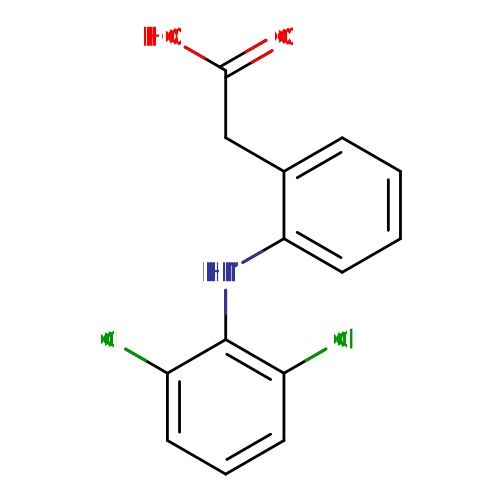
Diclofenac is a phenylacetic acid derivative and non-steroidal anti-inflammatory drug (NSAID).Label NSAIDs inhibit cyclooxygenase (COX)-1 and-2 which are the enzyme responsible for producing prostaglandins (PGs). PGs contribute to inflammation and pain signalling. Diclofenac, like other NSAIDs, is often used as first line therapy for acute and chronic pain and inflammation from a variety of causes. Diclofenac was the product of rational drug design based on the structures of phenylbutazone, mefenamic acid, and indomethacin.12 The addition of two chlorine groups in the ortho position of the phenyl ring locks the ring in maximal torsion which appears to be related to increased potency. It is often used in combination with misoprostol to prevent NSAID-induced gastric ulcers. Diclofenac was first approved by the FDA in July 1988 under the trade name Voltaren, marketed by Novartis (previously Ciba-Geigy).18
- Type
- Small Molecule
- Groups
- Approved, Vet approved
- Structure
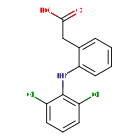
Structure for Diclofenac (DB00586)
- Weight
- Average: 296.149
Monoisotopic: 295.016684015 - Chemical Formula
- C14H11Cl2NO2
- Synonyms
- [2-(2,6-dichloroanilino)phenyl]acetic acid
- 2-((2,6-dichlorophenyl)amino)benzeneacetic acid
- Diclofenac
- Diclofenac acid
- Diclofenaco
- Diclofenacum
- External IDs
- ISV-205

Pharmacology
- Indication
Diclofenac is indicated for use in the treatment of pain and inflammation from varying sources including inflammatory conditions such as osteoarthritis, rheumatoid arthritis, and ankylosing spondylitis, as well as injury-related inflammation due to surgery and physical trauma. It is often used in combination with misoprostol as a gastro-protective agent in patients with high risk of developing NSAID-induced ulcers.
 Reduce drug development failure ratesBuild, train, & validate machine-learning modelswith evidence-based and structured datasets.Build, train, & validate predictive machine-learning models with structured datasets.
- Associated Conditions
Indication Type Indication Combined Product Details Approval Level Age Group Patient Characteristics Dose Form Treatment of Actinic keratosis •••••••••••• Used in combination to treat Acute arthritis Combination Product in combination with: Rabeprazole (DB01129) •••••••••••• ••••••• Used in combination to treat Acute gouty arthritis Combination Product in combination with: Rabeprazole (DB01129) •••••••••••• ••••••• Treatment of Acute migraine •••••••••••• ••••• ••••••• ••• •••••••• Treatment of Acute migraine •••••••••••• •••••••• - Contraindications & Blackbox Warnings
 Prevent Adverse Drug Events TodayTap into our Clinical API for life-saving information on contraindications & blackbox warnings, population restrictions, harmful risks, & more.Avoid life-threatening adverse drug events with our Clinical API
- Pharmacodynamics
Diclofenac reduces inflammation and by extension reduces nociceptive pain and combats fever.Label,17 It also increases the risk of developing a gastrointestinal ulcer by inhibiting the production of protective mucus in the stomach.
- Mechanism of action
Diclofenac inhibits cyclooxygenase-1 and -2, the enzymes responsible for production of prostaglandin (PG) G2 which is the precursor to other PGs.Label,17 These molecules have broad activity in pain and inflammation and the inhibition of their production is the common mechanism linking each effect of diclofenac.
PGE2 is the primary PG involved in modulation of nociception.10 It mediates peripheral sensitization through a variety of effects.17,10 PGE2 activates the Gq-coupled EP1 receptor leading to increased activity of the inositol trisphosphate/phospholipase C pathway. Activation of this pathway releases intracellular stores of calcium which directly reduces action potential threshold and activates protein kinase C (PKC) which contributes to several indirect mechanisms. PGE2 also activates the EP4 receptor, coupled to Gs, which activates the adenylyl cyclase/protein kinase A (AC/PKA) signaling pathway. PKA and PKC both contribute to the potentiation of transient receptor potential cation channel subfamily V member 1 (TRPV1) potentiation, which increases sensitivity to heat stimuli. They also activate tetrodotoxin-resistant sodium channels and inhibit inward potassium currents. PKA further contributes to the activation of the P2X3 purine receptor and sensitization of T-type calcium channels. The activation and sensitization of depolarizing ion channels and inhibition of inward potassium currents serve to reduce the intensity of stimulus necessary to generate action potentials in nociceptive sensory afferents. PGE2 act via EP3 to increase sensitivity to bradykinin and via EP2 to further increase heat sensitivity. Central sensitization occurs in the dorsal horn of the spinal cord and is mediated by the EP2 receptor which couples to Gs. Pre-synaptically, this receptor increases the release of pro-nociceptive neurotransmitters glutamate, CGRP, and substance P. Post-synaptically it increases the activity of AMPA and NMDA receptors and produces inhibition of inhibitory glycinergic neurons. Together these lead to a reduced threshold of activating, allowing low intensity stimuli to generate pain signals. PGI2 is known to play a role via its Gs-coupled IP receptor although the magnitude of its contribution varies. It has been proposed to be of greater importance in painful inflammatory conditions such as arthritis. By limiting sensitization, both peripheral and central, via these pathways NSAIDs can effectively reduce inflammatory pain.
PGI2 and PGE2 contribute to acute inflammation via their IP and EP2 receptors.17,11 Similarly to β adrenergic receptors these are Gs-coupled and mediate vasodilation through the AC/PKA pathway. PGE2 also contributes by increasing leukocyte adhesion to the endothelium and attracts the cells to the site of injury.17 PGD2 plays a role in the activation of endothelial cell release of cytokines through its DP1 receptor.11 PGI2 and PGE2 modulate T-helper cell activation and differentiation through IP, EP2, and EP4 receptors which is believed to be an important activity in the pathology of arthritic conditions. By limiting the production of these PGs at the site of injury, NSAIDs can reduce inflammation.
PGE2 can cross the blood-brain barrier and act on excitatory Gq EP3 receptors on thermoregulatory neurons in the hypothalamus.17 This activation triggers an increase in heat-generation and a reduction in heat-loss to produce a fever. NSAIDs prevent the generation of PGE2 thereby reducing the activity of these neurons.
Target Actions Organism AProstaglandin G/H synthase 2 inhibitorHumans AProstaglandin G/H synthase 1 inhibitorHumans - Absorption
Diclofenac is completely absorbed from the GI tract but likely undergoes significant first pass metabolism with only 60% of the drug reaching systemic circulation unchanged Label,7,8. Many topical formulations are absorbed percutaneous and produce clinically significant plasma concentrations. Absorption is dose proportional over the range of 25-150 mg.7 Tmax varies between formulations with the oral solution reaching peak plasma concentrations in 10-40min, the enteric coated tablet in 1.5-2h, and the sustained- and extended-release formulations prolonging Tmax even further. Administration with food has no significant effects on AUC but does delay Tmax to 2.5-12h.7,8
- Volume of distribution
Diclofenac has a total volume of distribution of 5-10 L or 0.1-0.2 L/kg.7 The volume of the central compartment is 0.04 L/kg.8 Diclofenac distributes to the synovial fluid reaching peak concentration 2-4h after administration.7 There is limited crossing of the blood brain barrier and cerebrospinal fluid concentrations only reach 8.22% of plasma concentrations. Doses of 50 mg delivered via intramuscular injection produced no detectable diclofenac concentrations in breast milk, however metabolite concentrations were not investigated. Diclofenac has been shown to cross the placenta in mice and rats but human data is unavailable.8
- Protein binding
Diclofenac is over 99.7% bound to serum proteins, primarily albumin.7 It is undergoes limited binding to lipoproteins as well with 1.1% bound to HDL, 0.3% to LDL, and 0.15% to VLDL.
- Metabolism
Diclofenac undergoes oxidative metabolism to hydroxy metabolites as well as conjugation to glucuronic acid, sulfate, and taurine.Label,7 The primary metabolite is 4'-hydroxy diclofenac which is generated by CYP2C9. This metabolite is very weakly active with one thirtieth the activity of diclofenac. Other metabolites include 3'-hydroxy diclofenac, 3'-hydroxy-4'methoxy diclofenac, 4',5-dihydroxy diclofenac, an acylglucuronide conjugate, and other conjugate metabolites.
Hover over products below to view reaction partners
- Route of elimination
Diclofenac is mainly eliminated via metabolism.7,8 Of the total dose, 60-70% is eliminated in the urine and 30% is eliminated in the feces. No significant enterohepatic recycling occurs.
- Half-life
The terminal half-life of diclofenac is approximately 2 h, however the apparent half-life including all metabolites is 25.8-33 h.Label,8
- Clearance
Diclofenac has a plasma clearance 16 L/h.8
- Adverse Effects
 Improve decision support & research outcomesWith structured adverse effects data, including: blackbox warnings, adverse reactions, warning & precautions, & incidence rates. View sample adverse effects data in our new Data Library!Improve decision support & research outcomes with our structured adverse effects data.
- Toxicity
Symptoms of overdose include lethargy, drowsiness, nausea, vomiting, and epigastric pain, and gastrointestinal bleeding.Label Hypertension, acute renal failure, respiratory depression and coma occur rarely. In case of overdose, provide supportive care and consider inducing emesis and administering activated charcoal if overdose occurred less than 4 hours prior.
- Pathways
Pathway Category Diclofenac Action Pathway Drug action - Pharmacogenomic Effects/ADRs
- Not Available
Interactions
- Drug Interactions
- This information should not be interpreted without the help of a healthcare provider. If you believe you are experiencing an interaction, contact a healthcare provider immediately. The absence of an interaction does not necessarily mean no interactions exist.
Drug Interaction Integrate drug-drug
interactions in your softwareAbacavir Diclofenac may decrease the excretion rate of Abacavir which could result in a higher serum level. Abametapir The serum concentration of Diclofenac can be increased when it is combined with Abametapir. Abatacept The metabolism of Diclofenac can be increased when combined with Abatacept. Abciximab The risk or severity of bleeding and hemorrhage can be increased when Diclofenac is combined with Abciximab. Abiraterone The serum concentration of Diclofenac can be increased when it is combined with Abiraterone. - Food Interactions
- Avoid excessive or chronic alcohol consumption. Co-administration with alcohol may increase the risk of gastrointestinal side effects, such as ulceration.
- Take with food. Food reduces gastric irritation.
Products
 Drug product information from 10+ global regionsOur datasets provide approved product information including:dosage, form, labeller, route of administration, and marketing period.Access drug product information from over 10 global regions.
- Product Ingredients
Ingredient UNII CAS InChI Key Diclofenac deanol 409Q1531N0 81811-14-5 AINBLHPPOHIAEC-UHFFFAOYSA-N Diclofenac diethylamine 6TGQ35Z71K 78213-16-8 ZQVZPANTCLRASL-UHFFFAOYSA-N Diclofenac epolamine X5F8EKL9ZG 119623-66-4 DCERVXIINVUMKU-UHFFFAOYSA-N Diclofenac potassium L4D5UA6CB4 15307-81-0 KXZOIWWTXOCYKR-UHFFFAOYSA-M Diclofenac sodium QTG126297Q 15307-79-6 KPHWPUGNDIVLNH-UHFFFAOYSA-M - Product Images
- International/Other Brands
- Aclonac / Allvoran / Ecofenac / Effekton / Nu-Diclo / Primofenac / Prophenatin / Rhumalgan / Voltarol
- Brand Name Prescription Products
Name Dosage Strength Route Labeller Marketing Start Marketing End Region Image Ambator Diclofenac Patch Patch 1 g/10mL Topical 7T Pharma LLC 2017-12-15 2018-03-29 US 
Cambia Powder, for solution 50 mg / sachet Oral Aralez Pharmaceuticals Canada Inc 2012-06-02 Not applicable Canada 
Cambia Powder, for solution 1 mg/1mg Oral Nautilus Neurosciences, Inc. 2010-04-20 2010-04-23 US Cambia Powder, for solution 1 mg/1mg Oral Nautilus Neurosciences, Inc. 2010-04-20 Not applicable US Cambia Powder, for solution 50 mg/1 Oral Assertio Therapeutics, Inc. 2010-04-20 Not applicable US - Generic Prescription Products
Name Dosage Strength Route Labeller Marketing Start Marketing End Region Image Apo-diclo Tablet, delayed release 25 mg Oral Apotex Corporation 1989-12-31 Not applicable Canada Apo-diclo Tablet, delayed release 50 mg Oral Apotex Corporation 1989-12-31 Not applicable Canada Apo-diclo Rapide 50 Mg Tablets Tablet 50 mg Oral Apotex Corporation 2001-05-25 Not applicable Canada Apo-diclo SR Tablet, extended release 100 mg / srt Oral Apotex Corporation 1994-12-31 Not applicable Canada Apo-diclo SR Tablet, extended release 75 mg Oral Apotex Corporation 1995-12-31 Not applicable Canada - Over the Counter Products
Name Dosage Strength Route Labeller Marketing Start Marketing End Region Image Aleve Arthritis Pain Gel Gel 1 mg/1g Topical Bayer HealthCare LLC 2021-06-01 Not applicable US ALMIRAL GEL 1% w/w Gel 1 g/100g Topical MEDOCHEMIE SINGAPORE PTE. LTD. 1991-05-27 Not applicable Singapore 
AMMI VOTARA EMULSTON GEL Gel 1 %w/w Topical บริษัท แมคโครฟาร์ จำกัด 1993-07-15 Not applicable Thailand 
Arthritis Pain Gel 10 mg/1g Topical DISCOUNT DRUG MART, INC. 2022-07-06 Not applicable US Arthritis Pain Gel 10 mg/1g Topical Strategic Sourcing Services, LLC 2022-07-06 Not applicable US - Mixture Products
Name Ingredients Dosage Route Labeller Marketing Start Marketing End Region Image Act Diclo-miso Diclofenac sodium (50 mg) + Misoprostol (200 mcg) Tablet, delayed release Oral Actavis Pharma Company 2013-03-27 2019-08-08 Canada Act Diclo-miso Diclofenac sodium (75 mg) + Misoprostol (200 mcg) Tablet, delayed release Oral Actavis Pharma Company 2013-03-27 2019-08-08 Canada ADORLAN® FORTE Diclofenac sodium (50 mg) + Tramadol hydrochloride (50 mg) Tablet Oral Grünenthal Colombiana S.A. 2018-08-02 Not applicable Colombia 
ADORLAN® TABLETAS Diclofenac sodium (25 mg) + Tramadol hydrochloride (25 mg) Tablet Oral Grünenthal Colombiana S.A. 2010-05-12 Not applicable Colombia AFTOJEL % 0,1 + %3 JEL (5 G) Diclofenac sodium (30 mg/g) + Triamcinolone acetonide (1 mg/g) Gel Topical ORVA İLAÇ SAN. VE TİC. A.Ş. 2008-04-30 Not applicable Turkey 
- Unapproved/Other Products
Name Ingredients Dosage Route Labeller Marketing Start Marketing End Region Image Ambator Diclofenac Patch Diclofenac sodium (1 g/10mL) Patch Topical 7T Pharma LLC 2017-12-15 2018-03-29 US Calcipotriene 0.005% / Diclofenac Sodium 3% / Hyaluronic Acid Sodium Salt 2% / Niacinamide 2% Diclofenac sodium (3 g/100g) + Calcipotriol (0.005 g/100g) + Sodium hyaluronate (2 g/100g) + Nicotinamide (2 g/100g) Cream Topical Sincerus Florida, LLC 2019-05-07 Not applicable US Clofenax Diclofenac sodium (16.05 mg/1mL) Kit; Solution Topical PureTek Corporation 2020-12-09 Not applicable US DermacinRx Lexitral PharmaPak Diclofenac sodium (16.05 mg/1mL) + Capsicum oleoresin (0.25 mg/1mL) Cream; Kit; Solution Topical PureTek Corporation 2015-11-06 2024-04-30 US DermacinRx Lexitral PharmaPak II Diclofenac sodium (16.05 mg/1mL) + Capsicum oleoresin (0.25 mg/1mL) Cream; Kit; Solution Topical PureTek Corporation 2022-03-02 2024-04-30 US


Categories
- ATC Codes
- S01CC01 — Diclofenac and antiinfectives
- S01CC — Antiinflammatory agents, non-steroids and antiinfectives in combination
- S01C — ANTIINFLAMMATORY AGENTS AND ANTIINFECTIVES IN COMBINATION
- S01 — OPHTHALMOLOGICALS
- S — SENSORY ORGANS
- S01BC — Antiinflammatory agents, non-steroids
- S01B — ANTIINFLAMMATORY AGENTS
- S01 — OPHTHALMOLOGICALS
- S — SENSORY ORGANS
- M01AB — Acetic acid derivatives and related substances
- M01A — ANTIINFLAMMATORY AND ANTIRHEUMATIC PRODUCTS, NON-STEROIDS
- M01 — ANTIINFLAMMATORY AND ANTIRHEUMATIC PRODUCTS
- M — MUSCULO-SKELETAL SYSTEM
- M02AA — Antiinflammatory preparations, non-steroids for topical use
- M02A — TOPICAL PRODUCTS FOR JOINT AND MUSCULAR PAIN
- M02 — TOPICAL PRODUCTS FOR JOINT AND MUSCULAR PAIN
- M — MUSCULO-SKELETAL SYSTEM
- M01AB — Acetic acid derivatives and related substances
- M01A — ANTIINFLAMMATORY AND ANTIRHEUMATIC PRODUCTS, NON-STEROIDS
- M01 — ANTIINFLAMMATORY AND ANTIRHEUMATIC PRODUCTS
- M — MUSCULO-SKELETAL SYSTEM
- Drug Categories
- Acetic Acid Derivatives and Related Substances
- Acids, Carbocyclic
- Agents causing angioedema
- Agents causing hyperkalemia
- Agents that produce hypertension
- Amines
- Analgesics
- Analgesics, Non-Narcotic
- Anti-Inflammatory Agents
- Anti-Inflammatory Agents, Non-Steroidal
- Anti-Inflammatory Agents, Non-Steroidal (Non-Selective)
- Antiinflammatory and Antirheumatic Products
- Antiinflammatory and Antirheumatic Products, Non-Steroids
- Antiinflammatory Preparations, Non-Steroids for Topical Use
- Antimigraine Agents, Miscellaneous
- Antirheumatic Agents
- BSEP/ABCB11 Substrates
- Central Nervous System Agents
- Cyclooxygenase Inhibitors
- Cyclooxygenase-2 (COX-2) Inhibitors
- Cytochrome P-450 CYP1A2 Substrates
- Cytochrome P-450 CYP2B6 Substrates
- Cytochrome P-450 CYP2C18 Substrates
- Cytochrome P-450 CYP2C19 Substrates
- Cytochrome P-450 CYP2C8 Substrates
- Cytochrome P-450 CYP2C9 Substrates
- Cytochrome P-450 CYP2E1 Inhibitors
- Cytochrome P-450 CYP2E1 Inhibitors (strength unknown)
- Cytochrome P-450 CYP3A Inhibitors
- Cytochrome P-450 CYP3A Substrates
- Cytochrome P-450 CYP3A4 Inhibitors
- Cytochrome P-450 CYP3A4 Inhibitors (strength unknown)
- Cytochrome P-450 CYP3A4 Substrates
- Cytochrome P-450 Enzyme Inhibitors
- Cytochrome P-450 Substrates
- Decreased Prostaglandin Production
- Dermatologicals
- Drugs causing inadvertant photosensitivity
- Enzyme Inhibitors
- Ethylamines
- Musculo-Skeletal System
- Nephrotoxic agents
- Non COX-2 selective NSAIDS
- OAT1/SLC22A6 inhibitors
- OAT3/SLC22A8 Inhibitors
- OATP1B1/SLCO1B1 Inhibitors
- Ophthalmologicals
- Other Nonsteroidal Anti-inflammatory Agents
- P-glycoprotein inducers
- Peripheral Nervous System Agents
- Phenylacetates
- Photosensitizing Agents
- Sensory Organs
- Sensory System Agents
- Topical Products for Joint and Muscular Pain
- UDP Glucuronosyltransferases Inhibitors
- UGT1A1 Substrates
- UGT1A3 substrates
- UGT1A9 Substrates
- UGT2B17 Inhibitors
- UGT2B7 substrates
- Chemical TaxonomyProvided by Classyfire
- Description
- This compound belongs to the class of organic compounds known as dichlorobenzenes. These are compounds containing a benzene with exactly two chlorine atoms attached to it.
- Kingdom
- Organic compounds
- Super Class
- Benzenoids
- Class
- Benzene and substituted derivatives
- Sub Class
- Halobenzenes
- Direct Parent
- Dichlorobenzenes
- Alternative Parents
- Aniline and substituted anilines / Aryl chlorides / Amino acids / Secondary amines / Monocarboxylic acids and derivatives / Carboxylic acids / Organopnictogen compounds / Organochlorides / Organic oxides / Hydrocarbon derivatives show 1 more
- Substituents
- 1,3-dichlorobenzene / Amine / Amino acid / Amino acid or derivatives / Aniline or substituted anilines / Aromatic homomonocyclic compound / Aryl chloride / Aryl halide / Carbonyl group / Carboxylic acid show 12 more
- Molecular Framework
- Aromatic homomonocyclic compounds
- External Descriptors
- monocarboxylic acid, secondary amino compound, dichlorobenzene, aromatic amine, amino acid (CHEBI:47381)
- Affected organisms
- Humans and other mammals
Chemical Identifiers
- UNII
- 144O8QL0L1
- CAS number
- 15307-86-5
- InChI Key
- DCOPUUMXTXDBNB-UHFFFAOYSA-N
- InChI
- InChI=1S/C14H11Cl2NO2/c15-10-5-3-6-11(16)14(10)17-12-7-2-1-4-9(12)8-13(18)19/h1-7,17H,8H2,(H,18,19)
- IUPAC Name
- 2-{2-[(2,6-dichlorophenyl)amino]phenyl}acetic acid
- SMILES
- OC(=O)CC1=CC=CC=C1NC1=C(Cl)C=CC=C1Cl
References
- Synthesis Reference
Takuzo Kamishita, "Gel preparations for topical application of diclofenac sodium." U.S. Patent US4670254, issued October, 1983.
US4670254- General References
- Kearney PM, Baigent C, Godwin J, Halls H, Emberson JR, Patrono C: Do selective cyclo-oxygenase-2 inhibitors and traditional non-steroidal anti-inflammatory drugs increase the risk of atherothrombosis? Meta-analysis of randomised trials. BMJ. 2006 Jun 3;332(7553):1302-8. [Article]
- Solomon DH, Avorn J, Sturmer T, Glynn RJ, Mogun H, Schneeweiss S: Cardiovascular outcomes in new users of coxibs and nonsteroidal antiinflammatory drugs: high-risk subgroups and time course of risk. Arthritis Rheum. 2006 May;54(5):1378-89. [Article]
- FitzGerald GA, Patrono C: The coxibs, selective inhibitors of cyclooxygenase-2. N Engl J Med. 2001 Aug 9;345(6):433-42. [Article]
- Graham DJ: COX-2 inhibitors, other NSAIDs, and cardiovascular risk: the seduction of common sense. JAMA. 2006 Oct 4;296(13):1653-6. Epub 2006 Sep 12. [Article]
- Brater DC: Renal effects of cyclooxygyenase-2-selective inhibitors. J Pain Symptom Manage. 2002 Apr;23(4 Suppl):S15-20; discussion S21-3. [Article]
- Gan TJ: Diclofenac: an update on its mechanism of action and safety profile. Curr Med Res Opin. 2010 Jul;26(7):1715-31. doi: 10.1185/03007995.2010.486301. [Article]
- Davies NM, Anderson KE: Clinical pharmacokinetics of diclofenac. Therapeutic insights and pitfalls. Clin Pharmacokinet. 1997 Sep;33(3):184-213. doi: 10.2165/00003088-199733030-00003. [Article]
- Todd PA, Sorkin EM: Diclofenac sodium. A reappraisal of its pharmacodynamic and pharmacokinetic properties, and therapeutic efficacy. Drugs. 1988 Mar;35(3):244-85. doi: 10.2165/00003495-198835030-00004. [Article]
- Kuehl GE, Lampe JW, Potter JD, Bigler J: Glucuronidation of nonsteroidal anti-inflammatory drugs: identifying the enzymes responsible in human liver microsomes. Drug Metab Dispos. 2005 Jul;33(7):1027-35. doi: 10.1124/dmd.104.002527. Epub 2005 Apr 20. [Article]
- Chen L, Yang G, Grosser T: Prostanoids and inflammatory pain. Prostaglandins Other Lipid Mediat. 2013 Jul-Aug;104-105:58-66. doi: 10.1016/j.prostaglandins.2012.08.006. Epub 2012 Sep 3. [Article]
- Hirata T, Narumiya S: Prostanoids as regulators of innate and adaptive immunity. Adv Immunol. 2012;116:143-74. doi: 10.1016/B978-0-12-394300-2.00005-3. [Article]
- Sallmann AR: The history of diclofenac. Am. J. Med. 1986 Apr 28;80(4):29-33. [Article]
- Bort R, Mace K, Boobis A, Gomez-Lechon MJ, Pfeifer A, Castell J: Hepatic metabolism of diclofenac: role of human CYP in the minor oxidative pathways. Biochem Pharmacol. 1999 Sep 1;58(5):787-96. [Article]
- Yan Z, Li J, Huebert N, Caldwell GW, Du Y, Zhong H: Detection of a novel reactive metabolite of diclofenac: evidence for CYP2C9-mediated bioactivation via arene oxides. Drug Metab Dispos. 2005 Jun;33(6):706-13. doi: 10.1124/dmd.104.003095. Epub 2005 Mar 11. [Article]
- Boerma JS, Vermeulen NP, Commandeur JN: One-electron oxidation of diclofenac by human cytochrome P450s as a potential bioactivation mechanism for formation of 2'-(glutathion-S-yl)-deschloro-diclofenac. Chem Biol Interact. 2014 Jan 25;207:32-40. doi: 10.1016/j.cbi.2013.11.001. Epub 2013 Nov 15. [Article]
- Kamimura H, Ito S, Nozawa K, Nakamura S, Chijiwa H, Nagatsuka S, Kuronuma M, Ohnishi Y, Suemizu H, Ninomiya S: Formation of the accumulative human metabolite and human-specific glutathione conjugate of diclofenac in TK-NOG chimeric mice with humanized livers. Drug Metab Dispos. 2015 Mar;43(3):309-16. doi: 10.1124/dmd.114.061689. Epub 2014 Dec 11. [Article]
- Brunton LL, Hilal-Dandan R, Knollmann BC. eds (2018). Goodman & Gilman's: The Pharmacological Basis of Therapeutics (13th ed.). McGraw-Hill Education. [ISBN:978-1-25-958473-2]
- Drugs@FDA: Voltaren Delayed Release [Link]
- Health Canada Product Monograph: Diclofenac oral tablets [Link]
- External Links
- Human Metabolome Database
- HMDB0014724
- KEGG Drug
- D07816
- KEGG Compound
- C01690
- PubChem Compound
- 3033
- PubChem Substance
- 46504644
- ChemSpider
- 2925
- BindingDB
- 13066
- 3355
- ChEBI
- 47381
- ChEMBL
- CHEMBL139
- ZINC
- ZINC000000001281
- Therapeutic Targets Database
- DAP000620
- PharmGKB
- PA449293
- Guide to Pharmacology
- GtP Drug Page
- PDBe Ligand
- DIF
- RxList
- RxList Drug Page
- Drugs.com
- Drugs.com Drug Page
- Wikipedia
- Diclofenac
- PDB Entries
- 1dvx / 1nr6 / 1pxx / 1sv9 / 2b17 / 2wek / 3cfq / 3ib0 / 3n8y / 4oj4 … show 10 more
- FDA label
- Download (610 KB)
- MSDS
- Download (73.6 KB)
Clinical Trials
- Clinical Trials
Phase Status Purpose Conditions Count 4 Active Not Recruiting Prevention Glaucoma 1 4 Completed Basic Science Actinic Keratosis (AK) 1 4 Completed Diagnostic Hypopituitarism 1 4 Completed Prevention Cesarean Delivery 1 4 Completed Prevention Family Planning 1
Pharmacoeconomics
- Manufacturers
- Institut biochemique sa
- Xanodyne pharmaceutics inc
- Nautilus neurosciences inc
- Novartis pharmaceuticals corp
- Apotex inc
- Mutual pharmaceutical co inc
- Mylan pharmaceuticals inc
- Sandoz inc
- Teva pharmaceuticals usa inc
- Watson laboratories inc
- Nycomed us inc
- Novartis consumer health inc
- Akorn inc
- Alcon inc
- Apotex inc richmond hill
- Bausch and lomb inc
- Falcon pharmaceuticals ltd
- Nexus pharmaceuticals inc
- Mallinckrodt inc
- Actavis elizabeth llc
- Alphapharm party ltd
- Carlsbad technology inc
- Nostrum laboratories inc
- Pliva inc
- Roxane laboratories inc
- Teva pharmaceuticals usa
- Unique pharmaceutical laboratories
- Biovail laboratories inc
- Dexcel ltd
- Packagers
- 4uOrtho LLC
- Actavis Group
- Advanced Pharmaceutical Services Inc.
- Advantage Dose LLC
- Aidarex Pharmacuticals LLC
- Akorn Inc.
- Alcon Laboratories
- Almirall Hermal GmbH
- Alpharma Pharmaceuticals LLC
- Altergon Italia SRL
- Amerisource Health Services Corp.
- Apotex Inc.
- Apotheca Inc.
- Apothecary Shop Wholesale
- AQ Pharmaceuticals Inc.
- A-S Medication Solutions LLC
- Bausch & Lomb Inc.
- Bioglan Pharmaceuticals Co.
- Biovail Pharmaceuticals
- Bryant Ranch Prepack
- Cardinal Health
- Carlsbad Technology Inc.
- Ciba Vision Canada Inc.
- Corepharma LLC
- Dexcel Ltd.
- Direct Dispensing Inc.
- Dispensing Solutions
- Diversified Healthcare Services Inc.
- Endo Pharmaceuticals Inc.
- Falcon Pharmaceuticals Ltd.
- H.J. Harkins Co. Inc.
- Heartland Repack Services LLC
- Indoco Remedies Limited
- Innoviant Pharmacy Inc.
- J.B. Chemicals & Pharmaceuticals
- Kaiser Foundation Hospital
- Keltman Pharmaceuticals Inc.
- Lake Erie Medical and Surgical Supply
- Mckesson Corp.
- Medvantx Inc.
- Murfreesboro Pharmaceutical Nursing Supply
- Mylan
- Nautilus Neurosciences Inc.
- Nexus Pharmaceuticals
- Novartis AG
- Novopharm Ltd.
- Nucare Pharmaceuticals Inc.
- Pack Pharmaceuticals
- Palmetto Pharmaceuticals Inc.
- Patheon Inc.
- PCA LLC
- PD-Rx Pharmaceuticals Inc.
- Pharmaceutical Utilization Management Program VA Inc.
- Pharmaderm
- Pharmedix
- Physicians Total Care Inc.
- Pliva Inc.
- Preferred Pharmaceuticals Inc.
- Prepak Systems Inc.
- Prescription Dispensing Service Inc.
- Rebel Distributors Corp.
- Redpharm Drug
- Resource Optimization and Innovation LLC
- Sandhills Packaging Inc.
- Sandoz
- Southwood Pharmaceuticals
- St Mary's Medical Park Pharmacy
- Stat Rx Usa
- Teikoku Seiyaku Co. Ltd.
- Teva Pharmaceutical Industries Ltd.
- UDL Laboratories
- Va Cmop Dallas
- Watson Pharmaceuticals
- Xanodyne Pharmaceuticals Inc.
- Yung Shin Pharmaceutical Industry Ltd.
- Dosage Forms
Form Route Strength Gel 11600 MG Injection, solution Intravenous Gel Topical 1 mg/1g Solution Intramuscular 75 MG/3ML Patch Topical 1 g/10mL Injection, solution Intramuscular 25 mg/mL Tablet, extended release Oral 100 mg / srt Tablet, film coated Oral 100.0 mg Tablet, film coated Oral 75 mg Solution Ophthalmic 0.1 % w/v Tablet Oral 100.00 mg Gel Topical 1 g Capsule, delayed release Oral Tablet, film coated Oral Tablet, coated Oral Gel Topical 5 g Capsule, coated Oral 100 mg Tablet, delayed release Oral 120 mg Tablet, delayed release Oral 75 mg Solution Intramuscular 100 mg Capsule, coated Oral 75 mg Gel Topical 0.01 g/1g Solution Topical 1 g Capsule, coated Rectal 100 mg Patch Transdermal 140 mg Cream; kit; solution / drops Topical Gel; kit; solution / drops Topical Spray Cutaneous 40 MG/ML Powder, for solution Oral 1 mg/1mg Powder, for solution Oral 50 mg/1 Powder, for solution Oral 50 mg / sachet Solution / drops; suspension / drops Suspension Oral 1.500 g Tablet, sugar coated Oral Tablet, sugar coated Oral 50 mg/1 Suspension / drops Oral Tablet, sugar coated Oral 25 mg Tablet, sugar coated Oral 50 mg Syrup Tablet Oral 25.000 mg Gel Topical 5 % Powder, for solution Oral 50 mg Injection Intramuscular 75 mg/3ml Spray Tablet, effervescent Gel Topical 50 G Gel Topical 1000 mg Injection, solution 25 MG/ML Capsule, extended release Oral Injection, solution Intramuscular; Intravenous 75 mg/3mL Suspension Oral 180.000 mg Kit Oral; Topical Cream; kit; solution Topical Suppository Rectal 100 mg/1 Tablet, extended release Oral 150 mg/1 Suppository Rectal 50 mg/1 Tablet, extended release Oral 75 mg/1 Tablet, for solution; tablet, for suspension Oral 50 mg/1 Tablet, film coated Oral Tablet Oral 75 mg Injection, solution Parenteral 75 MG Capsule, extended release Oral 75 mg/1 Capsule, extended release Oral 100 mg/1 Gel Topical 10 MG Gel Topical Capsule, delayed release Oral 75 mg/1 Capsule Oral Tablet, coated Oral 100 mg Injection, solution Intramuscular; Intravenous 75 mg/2mL Patch Topical Injection, solution Intramuscular; Parenteral 75 MG/3ML Aerosol Topical 1 % Capsule, liquid filled Oral Injection, solution Tablet, soluble Oral Injection, solution Intramuscular 75 MG/3ML Gel 3 % Aerosol, foam Drug delivery system Topical 0.013 g/1 Patch Topical 0.013 g/1 Injection, solution Parenteral 75 MG/3ML Solution Intravenous 0.075 g Solution Parenteral 75 mg Tablet, effervescent Oral 25 MG Tablet, effervescent Oral 50 MG Plaster Cutaneous Tablet Oral 50 mg/1 Tablet, coated Oral 25 mg/1 Tablet, coated Oral 50 mg/1 Tablet, film coated Oral 50 mg/1 Tablet, for solution; tablet, for suspension Oral 50 MG Capsule, extended release Oral 75 MG Injection, solution Parenteral 75 MG/2ML Gel Topical 1.0 g/100g Tablet, for suspension Oral 50 mg Tablet, extended release Oral 150 MG Injection Injection, solution Intramuscular Aerosol, metered Topical 30 mg/1mL Gel Topical 10 mg/1 Gel Topical 3 g/100g Gel Topical 30 mg/1g Solution Topical 16.05 mg/1mL Solution / drops Ophthalmic 1 mg/1mL Solution / drops Ophthalmic 3.5 mg/1mL Solution / drops Transdermal 16.05 mg/1mL Tablet Oral 25 mg/1 Tablet Oral 75 mg/1 Tablet, delayed release Oral 25 mg/1 Tablet, delayed release Oral 50 mg/1 Tablet, delayed release Oral 75 mg/1 Tablet, film coated Oral 100 mg/1 Tablet, film coated, extended release Oral 100 mg/1 Cream Topical 300 mg/1g Tablet, delayed release Oral Tablet, extended release Oral 100 mg/1 Gel Topical 1 mg/100g Gel Topical 1 g/100g Gel Topical 10 MG/G Gel Topical 20 MG/G Solution Intramuscular 75 U Solution Intraocular; Ophthalmic 1 mg Solution Intramuscular 75 mg Solution Intramuscular; Intravenous 75 mg Injection Parenteral 75 mg Tablet Oral 150 mg Tablet, coated Oral 5000000 mg Injection 25 mg Solution / drops Ophthalmic 1 MG/ML Gel Topical 1 % w/w Capsule, delayed release Oral 75 MG Mouthwash Oral Spray Oral Solution Ophthalmic 1.000 mg Rinse Oral 200 ml Capsule, extended release Oral 150 MG Granule, for solution Oral 50 MG Solution / drops Oral 25 MG/ML Solution / drops Oral 46.5 MG/ML Tablet Oral 50 MG Aerosol, foam Topical 3 % Patch Topical 180 MG Granule, for solution Oral 25 MG Cream; kit; solution / drops Topical; Transdermal Solution Intramuscular 75.000 mg Solution Intramuscular 100.000 mg Cream; gel; kit; solution Topical Gel; kit; solution Topical Gel Topical 1 g/1 Solution Ophthalmic 1 mg Tablet Oral Tablet, coated Oral 50 mg Capsule Oral 100 mg/1 Capsule Oral 200 mg/1 Capsule Oral 50 mg/1 Solution Intramuscular Gel; solution; spray Topical 4 % Injection, solution Intravenous 75 mg/3ml Kit; liquid; solution Topical Solution Oral Granule Oral 65.000 mg Tablet, coated Oral 75 mg Tablet Oral 50 mg Cream Cutaneous 1.000 g Gel Topical 1.000 g Solution Parenteral 75.00 mg Solution Ophthalmic; Topical 1 mg Solution Intramuscular 1.000 mg Tablet Oral 0.250 mg Tablet Oral 1.000 mg Tablet Oral 1.00 mg Tablet Oral 50.000 mg Solution Intravenous Injection Intramuscular 25 mg/ml Kit Topical 10 mg/1g Tablet, multilayer Oral Injection, solution Intravenous 37.5 mg/1mL Kit; oil; solution / drops Sublingual; Topical Solution Oral 50 MG/ML Tablet Oral 100.000 mg Spray Cutaneous Solution Conjunctival; Ophthalmic 1 mg Solution / drops Ophthalmic Suspension Oral 15 mg Patch Topical Patch Topical 0.013 mg/1 Patch Topical 13 mg/1 Patch Topical 180 mg/14g Patch Topical 180 mg/1 Granule Oral 25 MG Plaster Topical 180 mg Patch Topical 1 % Gel Topical 1 % Granule, for solution Oral Injection, solution 50 MG/ML Injection, solution 75 MG/ML Plaster Topical 1 % Cream Topical Solution / drops Oral Tablet Oral 50.0000 mg Tablet Oral 100.000 mg Gel Injection, solution Subcutaneous Gel; kit; tablet, delayed release Oral; Topical Injection, solution Subcutaneous 25 MG/ML Injection, solution Subcutaneous 50 MG/ML Injection, solution Subcutaneous 75 MG/ML Kit Topical Patch Topical 140 MG Aerosol, foam Topical Tablet Oral Cream Topical 1.000 g Gel Topical 1.160 g Gel; kit; tablet, film coated Oral; Topical Tablet, film coated Oral 25 mg/1 Solution Parenteral 75.000 mg Solution Intramuscular 75.000 mg Gel Topical Capsule, coated pellets Oral 100 mg Gel Topical 9.3 mg/1g Gel Topical 1.235 g Solution Parenteral Injection Intramuscular 75 mg Cream; kit; tablet, delayed release Oral; Topical Solution / drops Ophthalmic Capsule Oral 100 mg Injection Intramuscular 75 mg/2ml Spray Topical 1 % Gel Topical 10.0 mg/g Patch Topical 60 mg/12g Liquid Topical 16.05 mg/1mL Solution Cutaneous 16 MG/ML Solution Topical 1.5 % w/w Solution Topical 15 mg/1g Solution Topical 16 MG/ML Solution Topical 20 mg/1g Suppository Rectal 12.5 mg Solution Oral 15 mg Solution Intramuscular 7500000 mg Tablet, film coated Oral 100 mg Gel Topical 1 % w/v Tablet Oral 50 mg / tab Gel Topical 50 gr Gel Cutaneous 1.160 g Gel Cutaneous 1.000 g Gel Extracorporeal 3 % Kit Topical 30 mg/1g Gel Cutaneous 30 mg/g Gel Topical 1 g/100mL Tablet Oral 25 mg Capsule Oral Injection, solution Intramuscular 90 mg/3mL Solution Ophthalmic Solution Intramuscular 5.0000 mg Solution Parenteral 75.000 mg Spray Topical Gel; kit Topical 10 mg/1g Solution Conjunctival; Ophthalmic 0.1 g Liquid Ophthalmic 0.1 % Suppository Rectal 25 mg Suppository Rectal 50 mg Injection, solution Intramuscular 75 mg Tablet, delayed release Oral 100 mg Gel Cutaneous 1.050 g Gel Topical 11.6 mg/g Plaster Topical 140 mg Powder, for solution Oral 25 MG Capsule Oral 12.5 MG Capsule Oral 25 MG Suspension Oral 10 MG/5ML Gel 11.6 MG Gel Topical 10 mg/1g Gel Topical 2 % Injection Intramuscular Solution Ophthalmic 1 mg/1mL Suppository Rectal Tablet, soluble Oral 50 mg Suspension Oral 180 mg Patch Topical 30.000 mg Tablet Oral 50.000 mg Injection Intramuscular; Intravenous 75 MG/3ML Gel; kit Topical Tablet, for solution; tablet, for suspension Oral 46.5 MG Capsule Oral 12.500 mg Tablet Oral 12.5 mg Gel 1 % Gel 2 % Gel Topical 1.16 % w/w Gel Topical 100000 g Gel Topical 2.32 % Gel Topical 2.32 % w/w Solution / drops Ophthalmic 0.1 % Solution Ophthalmic 1 mg/ml Tablet, film coated Oral 12.5 mg Capsule Oral 75 mg Tablet, extended release Oral Gel Topical 23.2 MG/G Gel Topical 1.16 % Tablet Oral 75.000 mg Tablet Oral 100 mg Tablet, extended release Oral 75 mg Gel Topical 2 g Gel Topical 200000 g Tablet, extended release Oral 50 mg Tablet, delayed release Oral Powder 50 mg/1sachet Powder, for solution Oral 50.0 mg Tablet, effervescent Oral Capsule, coated pellets Oral Solution Intramuscular Gel Topical 0.0116 g Kit; solution Topical 16.05 mg/1mL Mouthwash Oral 0.074 G/100ML Spray Transmucosal 0.3 MG Capsule, liquid filled Oral 25 mg/1 Capsule Oral 18 mg/1 Capsule Oral 35 mg/1 Tablet, coated Oral Tablet, film coated Oral 25 mg Tablet, film coated Oral 50 mg Gel Topical 1 %w/w Solution 25 mg/1ml Solution Tablet, coated Oral 25 mg Liquid Ophthalmic 1 mg/1ml Tablet, delayed release Oral 25 mg Tablet, delayed release Oral 50 mg Capsule Oral 50 mg Capsule, extended release Oral 100 mg Cream Topical 2 %w/w Tablet, extended release Oral 100 mg Suppository Rectal 100 mg Spray Topical 1 %w/w - Prices
Unit description Cost Unit Voltaren Ophtha 0.1 % Solution 2.73USD ml Voltaren 100 mg Suppository 1.88USD suppository Voltaren Sr 100 mg Sustained-Release Tablet 1.86USD tablet Voltaren 50 mg Suppository 1.4USD suppository Voltaren Sr 75 mg Sustained-Release Tablet 1.31USD tablet Voltaren 50 mg Enteric-Coated Tablet 0.93USD tablet Pms-Diclofenac 100 mg Suppository 0.88USD suppository Sandoz Diclofenac 100 mg Suppository 0.88USD suppository Novo-Difenac Sr 100 mg Sustained-Release Tablet 0.8USD tablet Pms-Diclofenac-Sr 100 mg Sustained-Release Tablet 0.8USD tablet Sandoz Diclofenac Sr 100 mg Sustained-Release Tablet 0.8USD tablet Pms-Diclofenac 50 mg Suppository 0.65USD suppository Sandoz Diclofenac 50 mg Suppository 0.65USD suppository Novo-Difenac Sr 75 mg Sustained-Release Tablet 0.6USD tablet Pms-Diclofenac-Sr 75 mg Sustained-Release Tablet 0.6USD tablet Sandoz Diclofenac Sr 75 mg Sustained-Release Tablet 0.6USD tablet Apo-Diclo 50 mg Enteric-Coated Tablet 0.4USD tablet Novo-Difenac 50 mg Enteric-Coated Tablet 0.4USD tablet Pms-Diclofenac 50 mg Enteric-Coated Tablet 0.4USD tablet Sandoz Diclofenac 50 mg Enteric-Coated Tablet 0.4USD tablet Apo-Diclo 25 mg Enteric-Coated Tablet 0.2USD tablet Novo-Difenac 25 mg Enteric-Coated Tablet 0.2USD tablet Nu-Diclo 25 mg Enteric-Coated Tablet 0.2USD tablet Pms-Diclofenac 25 mg Enteric-Coated Tablet 0.2USD tablet Sandoz Diclofenac 25 mg Enteric-Coated Tablet 0.2USD tablet DrugBank does not sell nor buy drugs. Pricing information is supplied for informational purposes only.- Patents
Patent Number Pediatric Extension Approved Expires (estimated) Region US6407079 No 2002-06-18 2019-06-18 US US8217078 No 2012-07-10 2029-07-10 US US8546450 No 2013-10-01 2030-08-09 US US8618164 No 2013-12-31 2029-07-10 US US8741956 No 2014-06-03 2029-07-10 US US5985850 No 1999-11-16 2015-08-11 US US5792753 No 1998-08-11 2015-08-11 US US5914322 No 1999-06-22 2015-08-11 US US5607690 No 1997-03-04 2019-04-13 US US6974595 No 2005-12-13 2017-05-15 US US7482377 No 2009-01-27 2017-05-15 US US7759394 No 2010-07-20 2026-06-16 US US8097651 No 2012-01-17 2026-06-16 US US8927604 No 2015-01-06 2026-06-16 US US6365180 No 2002-04-02 2019-07-15 US US7662858 No 2010-02-16 2029-02-24 US US7884095 No 2011-02-08 2029-02-24 US US7939518 No 2011-05-10 2029-02-24 US US8110606 No 2012-02-07 2029-02-24 US US8623920 No 2014-01-07 2029-02-24 US US6287594 No 2001-09-11 2019-01-15 US US8946292 No 2015-02-03 2027-03-22 US US9180095 No 2015-11-10 2030-04-23 US US9186328 No 2015-11-17 2030-04-23 US US8999387 No 2015-04-07 2030-04-23 US US9173854 No 2015-11-03 2030-04-23 US US9180096 No 2015-11-10 2030-04-23 US US9017721 No 2015-04-28 2030-04-23 US US8679544 No 2014-03-25 2030-04-23 US US8252838 No 2012-08-28 2028-04-21 US US8563613 No 2013-10-22 2027-10-17 US US8871809 No 2014-10-28 2027-10-17 US US9132110 No 2015-09-15 2027-10-17 US US9220784 No 2015-12-29 2027-10-17 US US9101591 No 2015-08-11 2027-10-17 US US9168305 No 2015-10-27 2027-10-17 US US9066913 No 2015-06-30 2027-10-17 US US9168304 No 2015-10-27 2027-10-17 US US9561200 No 2017-02-07 2029-02-24 US US9370501 No 2016-06-21 2029-07-10 US US9375412 No 2016-06-28 2029-07-10 US US9339552 No 2016-05-17 2027-10-17 US US9539335 No 2017-01-10 2027-10-17 US US9415029 No 2016-08-16 2029-07-10 US US9339551 No 2016-05-17 2027-10-17 US US9827197 No 2017-11-28 2026-06-16 US US11351133 No 2015-02-20 2035-02-20 US US11344520 No 2015-02-20 2035-02-20 US
Properties
- State
- Solid
- Experimental Properties
Property Value Source melting point (°C) 283-285 °C Not Available water solubility 2.37 mg/L (at 25 °C) FINI,A ET AL. (1986) logP 4.51 AVDEEF,A (1997) pKa 4.15 SANGSTER (1994) - Predicted Properties
Property Value Source Water Solubility 0.00447 mg/mL ALOGPS logP 4.98 ALOGPS logP 4.26 Chemaxon logS -4.8 ALOGPS pKa (Strongest Acidic) 4 Chemaxon pKa (Strongest Basic) -2.1 Chemaxon Physiological Charge -1 Chemaxon Hydrogen Acceptor Count 3 Chemaxon Hydrogen Donor Count 2 Chemaxon Polar Surface Area 49.33 Å2 Chemaxon Rotatable Bond Count 4 Chemaxon Refractivity 75.46 m3·mol-1 Chemaxon Polarizability 27.93 Å3 Chemaxon Number of Rings 2 Chemaxon Bioavailability 1 Chemaxon Rule of Five Yes Chemaxon Ghose Filter Yes Chemaxon Veber's Rule No Chemaxon MDDR-like Rule No Chemaxon - Predicted ADMET Features
Property Value Probability Human Intestinal Absorption + 0.9548 Blood Brain Barrier + 0.9541 Caco-2 permeable + 0.8867 P-glycoprotein substrate Non-substrate 0.7976 P-glycoprotein inhibitor I Non-inhibitor 0.8254 P-glycoprotein inhibitor II Non-inhibitor 0.9548 Renal organic cation transporter Non-inhibitor 0.9086 CYP450 2C9 substrate Non-substrate 0.7779 CYP450 2D6 substrate Non-substrate 0.9116 CYP450 3A4 substrate Non-substrate 0.6724 CYP450 1A2 substrate Inhibitor 0.5923 CYP450 2C9 inhibitor Inhibitor 0.6786 CYP450 2D6 inhibitor Non-inhibitor 0.848 CYP450 2C19 inhibitor Non-inhibitor 0.8947 CYP450 3A4 inhibitor Non-inhibitor 0.8647 CYP450 inhibitory promiscuity Low CYP Inhibitory Promiscuity 0.6607 Ames test Non AMES toxic 0.9133 Carcinogenicity Non-carcinogens 0.6706 Biodegradation Not ready biodegradable 0.9719 Rat acute toxicity 3.6447 LD50, mol/kg Not applicable hERG inhibition (predictor I) Weak inhibitor 0.9514 hERG inhibition (predictor II) Non-inhibitor 0.868
Spectra
- Mass Spec (NIST)
- Not Available
- Spectra
- Chromatographic Properties
Collision Cross Sections (CCS)
Adduct CCS Value (Å2) Source type Source [M-H]- 159.517127 predictedDarkChem Lite v0.1.0 [M-H]- 155.47115 predictedDeepCCS 1.0 (2019) [M-H]- 159.517127 predictedDarkChem Lite v0.1.0 [M-H]- 159.517127 predictedDarkChem Lite v0.1.0 [M-H]- 155.47115 predictedDeepCCS 1.0 (2019) [M-H]- 155.47115 predictedDeepCCS 1.0 (2019) [M+H]+ 159.806427 predictedDarkChem Lite v0.1.0 [M+H]+ 157.82915 predictedDeepCCS 1.0 (2019) [M+H]+ 159.806427 predictedDarkChem Lite v0.1.0 [M+H]+ 159.806427 predictedDarkChem Lite v0.1.0 [M+H]+ 157.82915 predictedDeepCCS 1.0 (2019) [M+H]+ 157.82915 predictedDeepCCS 1.0 (2019) [M+Na]+ 160.063627 predictedDarkChem Lite v0.1.0 [M+Na]+ 163.92229 predictedDeepCCS 1.0 (2019) [M+Na]+ 160.063627 predictedDarkChem Lite v0.1.0 [M+Na]+ 160.063627 predictedDarkChem Lite v0.1.0 [M+Na]+ 163.92229 predictedDeepCCS 1.0 (2019) [M+Na]+ 163.92229 predictedDeepCCS 1.0 (2019)
Targets

- Kind
- Protein
- Organism
- Humans
- Pharmacological action
- Yes
- Actions
- Inhibitor
- General Function
- Prostaglandin-endoperoxide synthase activity
- Specific Function
- Converts arachidonate to prostaglandin H2 (PGH2), a committed step in prostanoid synthesis. Constitutively expressed in some tissues in physiological conditions, such as the endothelium, kidney and...
- Gene Name
- PTGS2
- Uniprot ID
- P35354
- Uniprot Name
- Prostaglandin G/H synthase 2
- Molecular Weight
- 68995.625 Da
References
- Kirchheiner J, Meineke I, Steinbach N, Meisel C, Roots I, Brockmoller J: Pharmacokinetics of diclofenac and inhibition of cyclooxygenases 1 and 2: no relationship to the CYP2C9 genetic polymorphism in humans. Br J Clin Pharmacol. 2003 Jan;55(1):51-61. [Article]
- Blomme EA, Chinn KS, Hardy MM, Casler JJ, Kim SH, Opsahl AC, Hall WA, Trajkovic D, Khan KN, Tripp CS: Selective cyclooxygenase-2 inhibition does not affect the healing of cutaneous full-thickness incisional wounds in SKH-1 mice. Br J Dermatol. 2003 Feb;148(2):211-23. [Article]
- Beubler E: [Pharmacology of cyclooxygenase 2 inhibition]. Wien Med Wochenschr. 2003;153(5-6):95-9. [Article]
- Chavez ML, DeKorte CJ: Valdecoxib: a review. Clin Ther. 2003 Mar;25(3):817-51. [Article]
- Rowlinson SW, Kiefer JR, Prusakiewicz JJ, Pawlitz JL, Kozak KR, Kalgutkar AS, Stallings WC, Kurumbail RG, Marnett LJ: A novel mechanism of cyclooxygenase-2 inhibition involving interactions with Ser-530 and Tyr-385. J Biol Chem. 2003 Nov 14;278(46):45763-9. Epub 2003 Aug 18. [Article]
- Kind
- Protein
- Organism
- Humans
- Pharmacological action
- Yes
- Actions
- Inhibitor
- General Function
- Prostaglandin-endoperoxide synthase activity
- Specific Function
- Converts arachidonate to prostaglandin H2 (PGH2), a committed step in prostanoid synthesis. Involved in the constitutive production of prostanoids in particular in the stomach and platelets. In gas...
- Gene Name
- PTGS1
- Uniprot ID
- P23219
- Uniprot Name
- Prostaglandin G/H synthase 1
- Molecular Weight
- 68685.82 Da
References
- Calkin AC, Sudhir K, Honisett S, Williams MR, Dawood T, Komesaroff PA: Rapid potentiation of endothelium-dependent vasodilation by estradiol in postmenopausal women is mediated via cyclooxygenase 2. J Clin Endocrinol Metab. 2002 Nov;87(11):5072-5. [Article]
- Kirchheiner J, Meineke I, Steinbach N, Meisel C, Roots I, Brockmoller J: Pharmacokinetics of diclofenac and inhibition of cyclooxygenases 1 and 2: no relationship to the CYP2C9 genetic polymorphism in humans. Br J Clin Pharmacol. 2003 Jan;55(1):51-61. [Article]
- Kampfer H, Brautigam L, Geisslinger G, Pfeilschifter J, Frank S: Cyclooxygenase-1-coupled prostaglandin biosynthesis constitutes an essential prerequisite for skin repair. J Invest Dermatol. 2003 May;120(5):880-90. [Article]
- Chavez ML, DeKorte CJ: Valdecoxib: a review. Clin Ther. 2003 Mar;25(3):817-51. [Article]
- Hinz B, Rau T, Auge D, Werner U, Ramer R, Rietbrock S, Brune K: Aceclofenac spares cyclooxygenase 1 as a result of limited but sustained biotransformation to diclofenac. Clin Pharmacol Ther. 2003 Sep;74(3):222-35. [Article]
- Chen X, Ji ZL, Chen YZ: TTD: Therapeutic Target Database. Nucleic Acids Res. 2002 Jan 1;30(1):412-5. [Article]
Enzymes
- Kind
- Protein
- Organism
- Humans
- Pharmacological action
- Unknown
- Actions
- Substrate
- General Function
- Steroid hydroxylase activity
- Specific Function
- Cytochromes P450 are a group of heme-thiolate monooxygenases. In liver microsomes, this enzyme is involved in an NADPH-dependent electron transport pathway. It oxidizes a variety of structurally un...
- Gene Name
- CYP2C9
- Uniprot ID
- P11712
- Uniprot Name
- Cytochrome P450 2C9
- Molecular Weight
- 55627.365 Da
References
- Mo SL, Zhou ZW, Yang LP, Wei MQ, Zhou SF: New insights into the structural features and functional relevance of human cytochrome P450 2C9. Part I. Curr Drug Metab. 2009 Dec;10(10):1075-126. [Article]
- Obach RS, Reed-Hagen AE: Measurement of Michaelis constants for cytochrome P450-mediated biotransformation reactions using a substrate depletion approach. Drug Metab Dispos. 2002 Jul;30(7):831-7. [Article]
- Leemann T, Transon C, Dayer P: Cytochrome P450TB (CYP2C): a major monooxygenase catalyzing diclofenac 4'-hydroxylation in human liver. Life Sci. 1993;52(1):29-34. [Article]
- Kumar V, Rock DA, Warren CJ, Tracy TS, Wahlstrom JL: Enzyme source effects on CYP2C9 kinetics and inhibition. Drug Metab Dispos. 2006 Nov;34(11):1903-8. doi: 10.1124/dmd.106.010249. Epub 2006 Aug 23. [Article]
- Roth H: Planning information services in the disability field: some essential steps. Int J Rehabil Res. 1989;12(4):439-48. [Article]
- Flockhart Table of Drug Interactions [Link]
- Kind
- Protein
- Organism
- Humans
- Pharmacological action
- Unknown
- Actions
- Substrate
- General Function
- Steroid hydroxylase activity
- Specific Function
- Responsible for the metabolism of a number of therapeutic agents such as the anticonvulsant drug S-mephenytoin, omeprazole, proguanil, certain barbiturates, diazepam, propranolol, citalopram and im...
- Gene Name
- CYP2C19
- Uniprot ID
- P33261
- Uniprot Name
- Cytochrome P450 2C19
- Molecular Weight
- 55930.545 Da
References
- Bort R, Mace K, Boobis A, Gomez-Lechon MJ, Pfeifer A, Castell J: Hepatic metabolism of diclofenac: role of human CYP in the minor oxidative pathways. Biochem Pharmacol. 1999 Sep 1;58(5):787-96. [Article]
- Mancy A, Antignac M, Minoletti C, Dijols S, Mouries V, Duong NT, Battioni P, Dansette PM, Mansuy D: Diclofenac and its derivatives as tools for studying human cytochromes P450 active sites: particular efficiency and regioselectivity of P450 2Cs. Biochemistry. 1999 Oct 26;38(43):14264-70. doi: 10.1021/bi991195u. [Article]
- Kind
- Protein
- Organism
- Humans
- Pharmacological action
- Unknown
- Actions
- Substrate
- Curator comments
- Data supporting these enzyme actions is limited to in vitro studies.
- General Function
- Oxidoreductase activity, acting on paired donors, with incorporation or reduction of molecular oxygen, reduced flavin or flavoprotein as one donor, and incorporation of one atom of oxygen
- Specific Function
- Cytochromes P450 are a group of heme-thiolate monooxygenases. In liver microsomes, this enzyme is involved in an NADPH-dependent electron transport pathway. It oxidizes a variety of structurally un...
- Gene Name
- CYP1A2
- Uniprot ID
- P05177
- Uniprot Name
- Cytochrome P450 1A2
- Molecular Weight
- 58293.76 Da
References
- Karjalainen MJ, Neuvonen PJ, Backman JT: In vitro inhibition of CYP1A2 by model inhibitors, anti-inflammatory analgesics and female sex steroids: predictability of in vivo interactions. Basic Clin Pharmacol Toxicol. 2008 Aug;103(2):157-65. doi: 10.1111/j.1742-7843.2008.00252.x. [Article]
- Ma Z, Shi X, Zhang G, Guo F, Shan L, Cai J: Metabolism and Metabolic Inhibition of Xanthotoxol in Human Liver Microsomes. Evid Based Complement Alternat Med. 2016;2016:5416509. doi: 10.1155/2016/5416509. Epub 2016 Mar 10. [Article]
- Kind
- Protein
- Organism
- Humans
- Pharmacological action
- Unknown
- Actions
- Substrate
- General Function
- Steroid hydroxylase activity
- Specific Function
- Cytochromes P450 are a group of heme-thiolate monooxygenases. In liver microsomes, this enzyme is involved in an NADPH-dependent electron transport pathway. It oxidizes a variety of structurally un...
- Gene Name
- CYP2C8
- Uniprot ID
- P10632
- Uniprot Name
- Cytochrome P450 2C8
- Molecular Weight
- 55824.275 Da
References
- Bort R, Mace K, Boobis A, Gomez-Lechon MJ, Pfeifer A, Castell J: Hepatic metabolism of diclofenac: role of human CYP in the minor oxidative pathways. Biochem Pharmacol. 1999 Sep 1;58(5):787-96. [Article]
- Mancy A, Antignac M, Minoletti C, Dijols S, Mouries V, Duong NT, Battioni P, Dansette PM, Mansuy D: Diclofenac and its derivatives as tools for studying human cytochromes P450 active sites: particular efficiency and regioselectivity of P450 2Cs. Biochemistry. 1999 Oct 26;38(43):14264-70. doi: 10.1021/bi991195u. [Article]
- Melet A, Marques-Soares C, Schoch GA, Macherey AC, Jaouen M, Dansette PM, Sari MA, Johnson EF, Mansuy D: Analysis of human cytochrome P450 2C8 substrate specificity using a substrate pharmacophore and site-directed mutants. Biochemistry. 2004 Dec 14;43(49):15379-92. doi: 10.1021/bi0489309. [Article]
- Kind
- Protein
- Organism
- Humans
- Pharmacological action
- Unknown
- Actions
- Substrate
- General Function
- Glucuronosyltransferase activity
- Specific Function
- UDPGT is of major importance in the conjugation and subsequent elimination of potentially toxic xenobiotics and endogenous compounds.Its unique specificity for 3,4-catechol estrogens and estriol su...
- Gene Name
- UGT2B7
- Uniprot ID
- P16662
- Uniprot Name
- UDP-glucuronosyltransferase 2B7
- Molecular Weight
- 60694.12 Da
References
- Zhou SF, Zhou ZW, Yang LP, Cai JP: Substrates, inducers, inhibitors and structure-activity relationships of human Cytochrome P450 2C9 and implications in drug development. Curr Med Chem. 2009;16(27):3480-675. Epub 2009 Sep 1. [Article]
- Kuehl GE, Lampe JW, Potter JD, Bigler J: Glucuronidation of nonsteroidal anti-inflammatory drugs: identifying the enzymes responsible in human liver microsomes. Drug Metab Dispos. 2005 Jul;33(7):1027-35. doi: 10.1124/dmd.104.002527. Epub 2005 Apr 20. [Article]
- Kind
- Protein
- Organism
- Humans
- Pharmacological action
- Unknown
- Actions
- SubstrateInhibitor
- General Function
- Vitamin d3 25-hydroxylase activity
- Specific Function
- Cytochromes P450 are a group of heme-thiolate monooxygenases. In liver microsomes, this enzyme is involved in an NADPH-dependent electron transport pathway. It performs a variety of oxidation react...
- Gene Name
- CYP3A4
- Uniprot ID
- P08684
- Uniprot Name
- Cytochrome P450 3A4
- Molecular Weight
- 57342.67 Da
References
- Ngui JS, Tang W, Stearns RA, Shou M, Miller RR, Zhang Y, Lin JH, Baillie TA: Cytochrome P450 3A4-mediated interaction of diclofenac and quinidine. Drug Metab Dispos. 2000 Sep;28(9):1043-50. [Article]
- Tang W: The metabolism of diclofenac--enzymology and toxicology perspectives. Curr Drug Metab. 2003 Aug;4(4):319-29. [Article]
- Masubuchi Y, Ose A, Horie T: Diclofenac-induced inactivation of CYP3A4 and its stimulation by quinidine. Drug Metab Dispos. 2002 Oct;30(10):1143-8. doi: 10.1124/dmd.30.10.1143. [Article]
- Kind
- Protein
- Organism
- Humans
- Pharmacological action
- Unknown
- Actions
- Substrate
- General Function
- Steroid hydroxylase activity
- Specific Function
- Cytochromes P450 are a group of heme-thiolate monooxygenases. In liver microsomes, this enzyme is involved in an NADPH-dependent electron transport pathway. It oxidizes a variety of structurally un...
- Gene Name
- CYP2B6
- Uniprot ID
- P20813
- Uniprot Name
- Cytochrome P450 2B6
- Molecular Weight
- 56277.81 Da
References
- Bort R, Mace K, Boobis A, Gomez-Lechon MJ, Pfeifer A, Castell J: Hepatic metabolism of diclofenac: role of human CYP in the minor oxidative pathways. Biochem Pharmacol. 1999 Sep 1;58(5):787-96. [Article]
- Kind
- Protein
- Organism
- Humans
- Pharmacological action
- Unknown
- Actions
- Substrate
- General Function
- Steroid hydroxylase activity
- Specific Function
- Cytochromes P450 are a group of heme-thiolate monooxygenases. In liver microsomes, this enzyme is involved in an NADPH-dependent electron transport pathway. It oxidizes a variety of structurally un...
- Gene Name
- CYP2C18
- Uniprot ID
- P33260
- Uniprot Name
- Cytochrome P450 2C18
- Molecular Weight
- 55710.075 Da
References
- Bort R, Mace K, Boobis A, Gomez-Lechon MJ, Pfeifer A, Castell J: Hepatic metabolism of diclofenac: role of human CYP in the minor oxidative pathways. Biochem Pharmacol. 1999 Sep 1;58(5):787-96. [Article]
- Mancy A, Antignac M, Minoletti C, Dijols S, Mouries V, Duong NT, Battioni P, Dansette PM, Mansuy D: Diclofenac and its derivatives as tools for studying human cytochromes P450 active sites: particular efficiency and regioselectivity of P450 2Cs. Biochemistry. 1999 Oct 26;38(43):14264-70. doi: 10.1021/bi991195u. [Article]
- Kind
- Protein
- Organism
- Humans
- Pharmacological action
- Unknown
- Actions
- Inhibitor
- General Function
- Steroid hydroxylase activity
- Specific Function
- Metabolizes several precarcinogens, drugs, and solvents to reactive metabolites. Inactivates a number of drugs and xenobiotics and also bioactivates many xenobiotic substrates to their hepatotoxic ...
- Gene Name
- CYP2E1
- Uniprot ID
- P05181
- Uniprot Name
- Cytochrome P450 2E1
- Molecular Weight
- 56848.42 Da
References
- Rendic S: Summary of information on human CYP enzymes: human P450 metabolism data. Drug Metab Rev. 2002 Feb-May;34(1-2):83-448. [Article]
- Kind
- Protein
- Organism
- Humans
- Pharmacological action
- Unknown
- Actions
- Substrate
- General Function
- Retinoic acid binding
- Specific Function
- UDPGT is of major importance in the conjugation and subsequent elimination of potentially toxic xenobiotics and endogenous compounds. Isoform 2 lacks transferase activity but acts as a negative reg...
- Gene Name
- UGT1A3
- Uniprot ID
- P35503
- Uniprot Name
- UDP-glucuronosyltransferase 1-3
- Molecular Weight
- 60337.835 Da
References
- Kuehl GE, Lampe JW, Potter JD, Bigler J: Glucuronidation of nonsteroidal anti-inflammatory drugs: identifying the enzymes responsible in human liver microsomes. Drug Metab Dispos. 2005 Jul;33(7):1027-35. doi: 10.1124/dmd.104.002527. Epub 2005 Apr 20. [Article]
- Kind
- Protein
- Organism
- Humans
- Pharmacological action
- Unknown
- Actions
- Substrate
- General Function
- Retinoic acid binding
- Specific Function
- UDPGT is of major importance in the conjugation and subsequent elimination of potentially toxic xenobiotics and endogenous compounds. This isoform has specificity for phenols. Isoform 2 lacks trans...
- Gene Name
- UGT1A9
- Uniprot ID
- O60656
- Uniprot Name
- UDP-glucuronosyltransferase 1-9
- Molecular Weight
- 59940.495 Da
References
- Kuehl GE, Lampe JW, Potter JD, Bigler J: Glucuronidation of nonsteroidal anti-inflammatory drugs: identifying the enzymes responsible in human liver microsomes. Drug Metab Dispos. 2005 Jul;33(7):1027-35. doi: 10.1124/dmd.104.002527. Epub 2005 Apr 20. [Article]
- Kind
- Protein
- Organism
- Humans
- Pharmacological action
- Unknown
- Actions
- Substrate
- General Function
- Glucuronosyltransferase activity
- Specific Function
- UDPGTs are of major importance in the conjugation and subsequent elimination of potentially toxic xenobiotics and endogenous compounds. This isozyme is active on polyhydroxylated estrogens (such as...
- Gene Name
- UGT2B4
- Uniprot ID
- P06133
- Uniprot Name
- UDP-glucuronosyltransferase 2B4
- Molecular Weight
- 60512.035 Da
References
- Kuehl GE, Lampe JW, Potter JD, Bigler J: Glucuronidation of nonsteroidal anti-inflammatory drugs: identifying the enzymes responsible in human liver microsomes. Drug Metab Dispos. 2005 Jul;33(7):1027-35. doi: 10.1124/dmd.104.002527. Epub 2005 Apr 20. [Article]
- Kind
- Protein
- Organism
- Humans
- Pharmacological action
- Unknown
- Actions
- Potentiator
- General Function
- Iron ion binding
- Specific Function
- Catalyzes the first step in leukotriene biosynthesis, and thereby plays a role in inflammatory processes.
- Gene Name
- ALOX5
- Uniprot ID
- P09917
- Uniprot Name
- Arachidonate 5-lipoxygenase
- Molecular Weight
- 77982.595 Da
References
- Charlier C, Michaux C: Dual inhibition of cyclooxygenase-2 (COX-2) and 5-lipoxygenase (5-LOX) as a new strategy to provide safer non-steroidal anti-inflammatory drugs. Eur J Med Chem. 2003 Jul-Aug;38(7-8):645-59. [Article]
- Kudo C, Kori M, Matsuzaki K, Yamai K, Nakajima A, Shibuya A, Niwa H, Kamisaki Y, Wada K: Diclofenac inhibits proliferation and differentiation of neural stem cells. Biochem Pharmacol. 2003 Jul 15;66(2):289-95. [Article]
- Whittle BJ: Cyclooxygenase and nitric oxide systems in the gut as therapeutic targets for safer anti-inflammatory drugs. Curr Opin Pharmacol. 2004 Dec;4(6):538-45. [Article]
- Kind
- Protein
- Organism
- Humans
- Pharmacological action
- Unknown
- Actions
- Inhibitor
- General Function
- Phospholipid binding
- Specific Function
- Thought to participate in the regulation of the phospholipid metabolism in biomembranes including eicosanoid biosynthesis. Catalyzes the calcium-dependent hydrolysis of the 2-acyl groups in 3-sn-ph...
- Gene Name
- PLA2G2A
- Uniprot ID
- P14555
- Uniprot Name
- Phospholipase A2, membrane associated
- Molecular Weight
- 16082.525 Da
References
- Madanick RD, O'Loughlin CJ, Barkin JS: Diclofenac reduces the incidence of acute pancreatitis after endoscopic retrograde cholangiopancreatography. Dig Dis Sci. 2005 May;50(5):879-81. [Article]
- Singh N, Jabeen T, Sharma S, Somvanshi RK, Dey S, Srinivasan A, Singh TP: Specific binding of non-steroidal anti-inflammatory drugs (NSAIDs) to phospholipase A2: structure of the complex formed between phospholipase A2 and diclofenac at 2.7 A resolution. Acta Crystallogr D Biol Crystallogr. 2006 Apr;62(Pt 4):410-6. Epub 2006 Mar 18. [Article]
- Makela A, Kuusi T, Schroder T: Inhibition of serum phospholipase-A2 in acute pancreatitis by pharmacological agents in vitro. Scand J Clin Lab Invest. 1997 Aug;57(5):401-7. [Article]
Carriers
- Kind
- Protein
- Organism
- Humans
- Pharmacological action
- Unknown
- General Function
- Identical protein binding
- Specific Function
- Thyroid hormone-binding protein. Probably transports thyroxine from the bloodstream to the brain.
- Gene Name
- TTR
- Uniprot ID
- P02766
- Uniprot Name
- Transthyretin
- Molecular Weight
- 15886.88 Da
References
- Miller SR, Sekijima Y, Kelly JW: Native state stabilization by NSAIDs inhibits transthyretin amyloidogenesis from the most common familial disease variants. Lab Invest. 2004 May;84(5):545-52. [Article]
- Almeida MR, Macedo B, Cardoso I, Alves I, Valencia G, Arsequell G, Planas A, Saraiva MJ: Selective binding to transthyretin and tetramer stabilization in serum from patients with familial amyloidotic polyneuropathy by an iodinated diflunisal derivative. Biochem J. 2004 Jul 15;381(Pt 2):351-6. [Article]
- Kind
- Protein
- Organism
- Humans
- Pharmacological action
- Unknown
- General Function
- Toxic substance binding
- Specific Function
- Serum albumin, the main protein of plasma, has a good binding capacity for water, Ca(2+), Na(+), K(+), fatty acids, hormones, bilirubin and drugs. Its main function is the regulation of the colloid...
- Gene Name
- ALB
- Uniprot ID
- P02768
- Uniprot Name
- Serum albumin
- Molecular Weight
- 69365.94 Da
References
- Yamasaki K, Rahman MH, Tsutsumi Y, Maruyama T, Ahmed S, Kragh-Hansen U, Otagiri M: Circular dichroism simulation shows a site-II-to-site-I displacement of human serum albumin-bound diclofenac by ibuprofen. AAPS PharmSciTech. 2000 May 14;1(2):E12. [Article]
- Davies NM, Anderson KE: Clinical pharmacokinetics of diclofenac. Therapeutic insights and pitfalls. Clin Pharmacokinet. 1997 Sep;33(3):184-213. doi: 10.2165/00003088-199733030-00003. [Article]
Transporters
- Kind
- Protein
- Organism
- Humans
- Pharmacological action
- Unknown
- Actions
- Inhibitor
- General Function
- Sodium-independent organic anion transmembrane transporter activity
- Specific Function
- Involved in the renal elimination of endogenous and exogenous organic anions. Functions as organic anion exchanger when the uptake of one molecule of organic anion is coupled with an efflux of one ...
- Gene Name
- SLC22A6
- Uniprot ID
- Q4U2R8
- Uniprot Name
- Solute carrier family 22 member 6
- Molecular Weight
- 61815.78 Da
References
- Mulato AS, Ho ES, Cihlar T: Nonsteroidal anti-inflammatory drugs efficiently reduce the transport and cytotoxicity of adefovir mediated by the human renal organic anion transporter 1. J Pharmacol Exp Ther. 2000 Oct;295(1):10-5. [Article]
- Kuze K, Graves P, Leahy A, Wilson P, Stuhlmann H, You G: Heterologous expression and functional characterization of a mouse renal organic anion transporter in mammalian cells. J Biol Chem. 1999 Jan 15;274(3):1519-24. [Article]
- Apiwattanakul N, Sekine T, Chairoungdua A, Kanai Y, Nakajima N, Sophasan S, Endou H: Transport properties of nonsteroidal anti-inflammatory drugs by organic anion transporter 1 expressed in Xenopus laevis oocytes. Mol Pharmacol. 1999 May;55(5):847-54. [Article]
- Kind
- Protein
- Organism
- Humans
- Pharmacological action
- Unknown
- Actions
- Inhibitor
- General Function
- Atpase activity, coupled to transmembrane movement of substances
- Specific Function
- May be an organic anion pump relevant to cellular detoxification.
- Gene Name
- ABCC4
- Uniprot ID
- O15439
- Uniprot Name
- Multidrug resistance-associated protein 4
- Molecular Weight
- 149525.33 Da
References
- Reid G, Wielinga P, Zelcer N, van der Heijden I, Kuil A, de Haas M, Wijnholds J, Borst P: The human multidrug resistance protein MRP4 functions as a prostaglandin efflux transporter and is inhibited by nonsteroidal antiinflammatory drugs. Proc Natl Acad Sci U S A. 2003 Aug 5;100(16):9244-9. Epub 2003 Jun 30. [Article]
- Kind
- Protein
- Organism
- Humans
- Pharmacological action
- Unknown
- Actions
- Inhibitor
- General Function
- Transporter activity
- Specific Function
- Mediates export of organic anions and drugs from the cytoplasm. Mediates ATP-dependent transport of glutathione and glutathione conjugates, leukotriene C4, estradiol-17-beta-o-glucuronide, methotre...
- Gene Name
- ABCC1
- Uniprot ID
- P33527
- Uniprot Name
- Multidrug resistance-associated protein 1
- Molecular Weight
- 171589.5 Da
References
- Reid G, Wielinga P, Zelcer N, van der Heijden I, Kuil A, de Haas M, Wijnholds J, Borst P: The human multidrug resistance protein MRP4 functions as a prostaglandin efflux transporter and is inhibited by nonsteroidal antiinflammatory drugs. Proc Natl Acad Sci U S A. 2003 Aug 5;100(16):9244-9. Epub 2003 Jun 30. [Article]
- Kind
- Protein
- Organism
- Humans
- Pharmacological action
- Unknown
- Actions
- Inhibitor
- General Function
- Sodium-independent organic anion transmembrane transporter activity
- Specific Function
- Plays an important role in the excretion/detoxification of endogenous and exogenous organic anions, especially from the brain and kidney. Involved in the transport basolateral of steviol, fexofenad...
- Gene Name
- SLC22A8
- Uniprot ID
- Q8TCC7
- Uniprot Name
- Solute carrier family 22 member 8
- Molecular Weight
- 59855.585 Da
References
- Cha SH, Sekine T, Fukushima JI, Kanai Y, Kobayashi Y, Goya T, Endou H: Identification and characterization of human organic anion transporter 3 expressing predominantly in the kidney. Mol Pharmacol. 2001 May;59(5):1277-86. [Article]
- Kind
- Protein
- Organism
- Humans
- Pharmacological action
- Unknown
- Actions
- Inhibitor
- General Function
- Sodium-independent organic anion transmembrane transporter activity
- Specific Function
- Mediates saturable uptake of estrone sulfate, dehydroepiandrosterone sulfate and related compounds.
- Gene Name
- SLC22A11
- Uniprot ID
- Q9NSA0
- Uniprot Name
- Solute carrier family 22 member 11
- Molecular Weight
- 59970.945 Da
References
- Cha SH, Sekine T, Kusuhara H, Yu E, Kim JY, Kim DK, Sugiyama Y, Kanai Y, Endou H: Molecular cloning and characterization of multispecific organic anion transporter 4 expressed in the placenta. J Biol Chem. 2000 Feb 11;275(6):4507-12. [Article]
- Kind
- Protein
- Organism
- Humans
- Pharmacological action
- Unknown
- Actions
- Inhibitor
- General Function
- Thyroid hormone transmembrane transporter activity
- Specific Function
- Mediates the Na(+)-independent high affinity transport of organic anions such as the thyroid hormones thyroxine (T4) and rT3. Other potential substrates, such as triiodothyronine (T3), 17-beta-gluc...
- Gene Name
- SLCO1C1
- Uniprot ID
- Q9NYB5
- Uniprot Name
- Solute carrier organic anion transporter family member 1C1
- Molecular Weight
- 78695.625 Da
References
- Westholm DE, Stenehjem DD, Rumbley JN, Drewes LR, Anderson GW: Competitive inhibition of organic anion transporting polypeptide 1c1-mediated thyroxine transport by the fenamate class of nonsteroidal antiinflammatory drugs. Endocrinology. 2009 Feb;150(2):1025-32. doi: 10.1210/en.2008-0188. Epub 2008 Oct 9. [Article]
- Berman HM, Westbrook J, Feng Z, Gilliland G, Bhat TN, Weissig H, Shindyalov IN, Bourne PE: The Protein Data Bank. Nucleic Acids Res. 2000 Jan 1;28(1):235-42. [Article]
- Kind
- Protein
- Organism
- Humans
- Pharmacological action
- Unknown
- Actions
- Inhibitor
- General Function
- Sodium-independent organic anion transmembrane transporter activity
- Specific Function
- Mediates the Na(+)-independent uptake of organic anions such as pravastatin, taurocholate, methotrexate, dehydroepiandrosterone sulfate, 17-beta-glucuronosyl estradiol, estrone sulfate, prostagland...
- Gene Name
- SLCO1B1
- Uniprot ID
- Q9Y6L6
- Uniprot Name
- Solute carrier organic anion transporter family member 1B1
- Molecular Weight
- 76447.99 Da
References
- Karlgren M, Ahlin G, Bergstrom CA, Svensson R, Palm J, Artursson P: In vitro and in silico strategies to identify OATP1B1 inhibitors and predict clinical drug-drug interactions. Pharm Res. 2012 Feb;29(2):411-26. doi: 10.1007/s11095-011-0564-9. Epub 2011 Aug 23. [Article]
- Kind
- Protein
- Organism
- Humans
- Pharmacological action
- No
- Actions
- Substrate
- General Function
- Transporter activity
- Specific Function
- Involved in the ATP-dependent secretion of bile salts into the canaliculus of hepatocytes.
- Gene Name
- ABCB11
- Uniprot ID
- O95342
- Uniprot Name
- Bile salt export pump
- Molecular Weight
- 146405.83 Da
References
- Pedersen JM, Matsson P, Bergstrom CA, Hoogstraate J, Noren A, LeCluyse EL, Artursson P: Early identification of clinically relevant drug interactions with the human bile salt export pump (BSEP/ABCB11). Toxicol Sci. 2013 Dec;136(2):328-43. doi: 10.1093/toxsci/kft197. Epub 2013 Sep 6. [Article]
- Kind
- Protein
- Organism
- Humans
- Pharmacological action
- Unknown
- Actions
- Inhibitor
- General Function
- Voltage-gated sodium channel activity
- Specific Function
- This protein mediates the voltage-dependent sodium ion permeability of excitable membranes. Assuming opened or closed conformations in response to the voltage difference across the membrane, the pr...
- Gene Name
- SCN4A
- Uniprot ID
- P35499
- Uniprot Name
- Sodium channel protein type 4 subunit alpha
- Molecular Weight
- 208059.175 Da
References
- Yang YC, Kuo CC: An inactivation stabilizer of the Na+ channel acts as an opportunistic pore blocker modulated by external Na+. J Gen Physiol. 2005 May;125(5):465-81. Epub 2005 Apr 11. [Article]
- Voilley N: Acid-sensing ion channels (ASICs): new targets for the analgesic effects of non-steroid anti-inflammatory drugs (NSAIDs). Curr Drug Targets Inflamm Allergy. 2004 Mar;3(1):71-9. [Article]
- Jones NG, Slater R, Cadiou H, McNaughton P, McMahon SB: Acid-induced pain and its modulation in humans. J Neurosci. 2004 Dec 1;24(48):10974-9. [Article]
- Kind
- Protein
- Organism
- Humans
- Pharmacological action
- Unknown
- Actions
- Inhibitor
- General Function
- Ligand-gated sodium channel activity
- Specific Function
- Isoform 2 and isoform 3 function as proton-gated sodium channels; they are activated by a drop of the extracellular pH and then become rapidly desensitized. The channel generates a biphasic current...
- Gene Name
- ASIC1
- Uniprot ID
- P78348
- Uniprot Name
- Acid-sensing ion channel 1
- Molecular Weight
- 59908.915 Da
References
- Voilley N, de Weille J, Mamet J, Lazdunski M: Nonsteroid anti-inflammatory drugs inhibit both the activity and the inflammation-induced expression of acid-sensing ion channels in nociceptors. J Neurosci. 2001 Oct 15;21(20):8026-33. [Article]
- Kind
- Protein
- Organism
- Humans
- Pharmacological action
- Unknown
- Actions
- Agonist
- General Function
- Voltage-gated potassium channel activity
- Specific Function
- Probably important in the regulation of neuronal excitability. Associates with KCNQ3 to form a potassium channel with essentially identical properties to the channel underlying the native M-current...
- Gene Name
- KCNQ2
- Uniprot ID
- O43526
- Uniprot Name
- Potassium voltage-gated channel subfamily KQT member 2
- Molecular Weight
- 95846.575 Da
References
- Peretz A, Degani N, Nachman R, Uziyel Y, Gibor G, Shabat D, Attali B: Meclofenamic acid and diclofenac, novel templates of KCNQ2/Q3 potassium channel openers, depress cortical neuron activity and exhibit anticonvulsant properties. Mol Pharmacol. 2005 Apr;67(4):1053-66. Epub 2004 Dec 14. [Article]
- Xiong Q, Gao Z, Wang W, Li M: Activation of Kv7 (KCNQ) voltage-gated potassium channels by synthetic compounds. Trends Pharmacol Sci. 2008 Feb;29(2):99-107. doi: 10.1016/j.tips.2007.11.010. Epub 2008 Jan 18. [Article]
- Kind
- Protein
- Organism
- Humans
- Pharmacological action
- Unknown
- Actions
- Agonist
- General Function
- Voltage-gated potassium channel activity
- Specific Function
- Probably important in the regulation of neuronal excitability. Associates with KCNQ2 or KCNQ5 to form a potassium channel with essentially identical properties to the channel underlying the native ...
- Gene Name
- KCNQ3
- Uniprot ID
- O43525
- Uniprot Name
- Potassium voltage-gated channel subfamily KQT member 3
- Molecular Weight
- 96741.515 Da
References
- Xiong Q, Gao Z, Wang W, Li M: Activation of Kv7 (KCNQ) voltage-gated potassium channels by synthetic compounds. Trends Pharmacol Sci. 2008 Feb;29(2):99-107. doi: 10.1016/j.tips.2007.11.010. Epub 2008 Jan 18. [Article]
- Peretz A, Degani N, Nachman R, Uziyel Y, Gibor G, Shabat D, Attali B: Meclofenamic acid and diclofenac, novel templates of KCNQ2/Q3 potassium channel openers, depress cortical neuron activity and exhibit anticonvulsant properties. Mol Pharmacol. 2005 Apr;67(4):1053-66. Epub 2004 Dec 14. [Article]
- Kind
- Protein
- Organism
- Humans
- Pharmacological action
- Unknown
- Actions
- Inducer
- General Function
- Xenobiotic-transporting atpase activity
- Specific Function
- Energy-dependent efflux pump responsible for decreased drug accumulation in multidrug-resistant cells.
- Gene Name
- ABCB1
- Uniprot ID
- P08183
- Uniprot Name
- Multidrug resistance protein 1
- Molecular Weight
- 141477.255 Da
References
- Sanchez-Covarrubias L, Slosky LM, Thompson BJ, Zhang Y, Laracuente ML, DeMarco KM, Ronaldson PT, Davis TP: P-glycoprotein modulates morphine uptake into the CNS: a role for the non-steroidal anti-inflammatory drug diclofenac. PLoS One. 2014 Feb 10;9(2):e88516. doi: 10.1371/journal.pone.0088516. eCollection 2014. [Article]

Drug created at June 13, 2005 13:24 / Updated at April 26, 2024 00:45