Identification
- Summary
Timolol is a non-selective beta adrenergic blocker used in the treatment of elevated intraocular pressure in ocular hypertension or open angle glaucoma.
- Brand Names
- Azarga, Betimol, Combigan, Cosopt, Duotrav, Istalol, Timoptic, Xalacom
- Generic Name
- Timolol
- DrugBank Accession Number
- DB00373
- Background
Timolol is a nonselective beta-adrenergic antagonist given in an eye drop solution to reduce intraocular pressure, or pressure in the eyes.16 It is also used in tablet form as a drug to treat hypertension.17 Timolol was first approved by the FDA in 1978.16 This drug is marketed by several manufacturers 20 and is an effective agent for the management of conditions such as open-angle glaucoma and hypertension.
- Type
- Small Molecule
- Groups
- Approved
- Structure
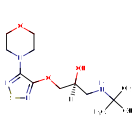
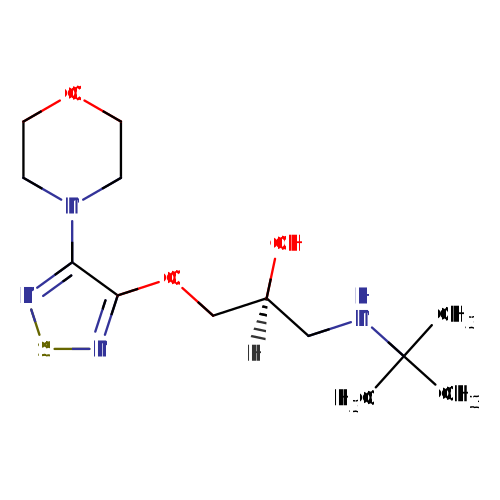
Structure for Timolol (DB00373)
- Weight
- Average: 316.42
Monoisotopic: 316.156911344 - Chemical Formula
- C13H24N4O3S
- Synonyms
- (S)-1-(tert-butylamino)-3-[(4-morpholin-4-yl-1,2,5-thiadiazol-3-yl)oxy]propan-2-ol
- Timolol
- Timolol anhydrous
- Timololo
- Timololum
- External IDs
- MK 950

Pharmacology
- Indication
Ophthalmic timolol is indicated for the treatment of increased intraocular pressure in patients with ocular hypertension or open-angle glaucoma. The oral form of this drug is used to treat high blood pressure.16,17 In certain cases, timolol is used in the prevention of migraine headaches.9,21
 Reduce drug development failure ratesBuild, train, & validate machine-learning modelswith evidence-based and structured datasets.Build, train, & validate predictive machine-learning models with structured datasets.
- Associated Conditions
Indication Type Indication Combined Product Details Approval Level Age Group Patient Characteristics Dose Form Management of Elevated intraocular pressure •••••••••••• •••••••• • •••••• •••••••••• • ••••• Used in combination to manage Elevated intraocular pressure Combination Product in combination with: Dorzolamide (DB00869) •••••••••••• •••••••••••• •••••••• •• ••••••••••••• •••••••••• Used in combination to manage Elevated intraocular pressure Combination Product in combination with: Dorzolamide (DB00869) •••••••••••• •••••••••••• •••••••• •• ••••••••••••• •••••••••• Used in combination to manage Elevated intraocular pressure Combination Product in combination with: Brimonidine (DB00484) •••••••••••• ••••••••• •••••••••• •• ••••••••••• ••••••• •••••••••• Used in combination to manage Elevated intraocular pressure Combination Product in combination with: Brimonidine (DB00484) •••••••••••• ••••••••• •••••••••• •• ••••••••••• ••••••• •••••••••• - Contraindications & Blackbox Warnings
 Prevent Adverse Drug Events TodayTap into our Clinical API for life-saving information on contraindications & blackbox warnings, population restrictions, harmful risks, & more.Avoid life-threatening adverse drug events with our Clinical API
- Pharmacodynamics
Timolol, when administered by the ophthalmic route, rapidly reduces intraocular pressure. When administered in the tablet form, it reduces blood pressure, heart rate, and cardiac output, and decreases sympathetic activity.1,2,3,17. This drug has a fast onset of action, usually occurring within 20 minutes of the administration of an ophthalmic dose. Timolol maleate can exert pharmacological actions for as long as 24 hours if given in the 0.5% or 0.25% doses.23
- Mechanism of action
Timolol competes with adrenergic neurotransmitters for binding to beta(1)-adrenergic receptors in the heart and the beta(2)-receptors in the vascular and bronchial smooth muscle. This leads to diminished actions of catecholamines, which normally bind to adrenergic receptors and exert sympathetic effects leading to an increase in blood pressure and heart rate.6 Beta(1)-receptor blockade by timolol leads to a decrease in both heart rate and cardiac output during rest and exercise, and a decrease in both systolic and diastolic blood pressure.7,8 In addition to this, a reduction in reflex orthostatic hypotension may also occur. The blockade of beta(2) receptors by timolol in the blood vessels leads to a decrease in peripheral vascular resistance, reducing blood pressure.16,17,19
The exact mechanism by which timolol reduces ocular pressure is unknown at this time, however, it likely decreases the secretion of aqueous humor in the eye.18 According to one study, the reduction of aqueous humor secretion may occur through the decreased blood supply to the ciliary body resulting from interference with the active transport system or interference with prostaglandin biosynthesis.4
Target Actions Organism ABeta-1 adrenergic receptor antagonistHumans ABeta-2 adrenergic receptor antagonistHumans ULysozyme Not Available Enterobacteria phage T4 - Absorption
The systemic bioavailability of the ophthalmic eyedrop in one study of healthy volunteers was 78.0 ± 24.5% 10, indicating that caution must be observed when this drug is administered, as it may be significantly absorbed and have various systemic effects. Another study measured the bioavailability of timolol eyedrops to be 60% in healthy volunteers.11
The peak concentration of ophthalmic timolol in plasma, Cmax was about 1.14 ng/ml in most subjects within 15 minutes following the administration of timolol by the ophthalmic route. The mean area under the curve (AUC) was about 6.46 ng/ml per hour after intravenous injection and about 4.78 ng/ml per hour following eyedrop administration.10
- Volume of distribution
1.3 - 1.7 L/kg 22
Timolol is distributed to the following tissues: the conjunctiva, cornea, iris, sclera, aqueous humor, kidney, liver, and lung.22
- Protein binding
The plasma protein binding of timolol is not extensive and is estimated to be about 10%.17,22
- Metabolism
Timolol is metabolized in the liver by the cytochrome P450 2D6 enzyme, with minor contributions from CYP2C19.12,16 15-20% of a dose undergoes first-pass metabolism.14 Despite its relatively low first pass metabolism, timolol is 90% metabolized.14 Four metabolites of timolol have been identified, with a hydroxy metabolite being the most predominant.12
Hover over products below to view reaction partners
- Route of elimination
Timolol and its metabolites are mainly found excreted in the urine.14
- Half-life
Timolol half-life was measured at 2.9 ± 0.3 h hours in a clinical study of healthy volunteers.14
- Clearance
One pharmacokinetic study in healthy volunteers measured the total plasma clearance of timolol to be 557 ± 61 ml/min.13 Another study determined the total clearance 751.5 ± 90.6 ml/min and renal clearance to be 97.2 ± 10.1 ml/min in healthy volunteers.14
- Adverse Effects
 Improve decision support & research outcomesWith structured adverse effects data, including: blackbox warnings, adverse reactions, warning & precautions, & incidence rates. View sample adverse effects data in our new Data Library!Improve decision support & research outcomes with our structured adverse effects data.
- Toxicity
The oral LD50 for timolol maleate is 1028 mg/kg in the rat and 1137 mg/kg in the mouse.MSDS
Symptoms of timolol overdose may include dizziness, headache, shortness of breath, bradycardia, in addition to bronchospasm. Sometimes, an overdose may lead to cardiac arrest. An overdose of timolol can be reversed with dialysis, however, patients with renal failure may not respond as well to dialysis treatment.16
- Pathways
Pathway Category Timolol Action Pathway Drug action - Pharmacogenomic Effects/ADRs
Interacting Gene/Enzyme Allele name Genotype(s) Defining Change(s) Type(s) Description Details Cytochrome P450 2D6 CYP2D6*3 Not Available C allele Effect Inferred Poor drug metabolizer. Details Cytochrome P450 2D6 CYP2D6*4 Not Available C allele Effect Inferred Poor drug metabolizer. Details Cytochrome P450 2D6 CYP2D6*5 Not Available Whole-gene deletion Effect Inferred Poor drug metabolizer. Details Cytochrome P450 2D6 CYP2D6*6 Not Available 1707delT Effect Inferred Poor drug metabolizer. Details Cytochrome P450 2D6 CYP2D6*7 Not Available 2935A>C Effect Inferred Poor drug metabolizer. Details Cytochrome P450 2D6 CYP2D6*8 Not Available 1758G>T Effect Inferred Poor drug metabolizer. Details Cytochrome P450 2D6 CYP2D6*11 Not Available 883G>C Effect Inferred Poor drug metabolizer. Details Cytochrome P450 2D6 CYP2D6*12 Not Available 124G>A Effect Inferred Poor drug metabolizer. Details Cytochrome P450 2D6 CYP2D6*13 Not Available CYP2D7/2D6 hybrid gene structure Effect Inferred Poor drug metabolizer. Details Cytochrome P450 2D6 CYP2D6*14A Not Available 1758G>A Effect Inferred Poor drug metabolizer. Details Cytochrome P450 2D6 CYP2D6*15 Not Available 137insT, 137_138insT Effect Inferred Poor drug metabolizer. Details Cytochrome P450 2D6 CYP2D6*19 Not Available 2539_2542delAACT Effect Inferred Poor drug metabolizer. Details Cytochrome P450 2D6 CYP2D6*20 Not Available 1973_1974insG Effect Inferred Poor drug metabolizer. Details Cytochrome P450 2D6 CYP2D6*21 Not Available 2573insC Effect Inferred Poor drug metabolizer. Details Cytochrome P450 2D6 CYP2D6*31 Not Available -1770G>A / -1584C>G … show all Effect Inferred Poor drug metabolizer. Details Cytochrome P450 2D6 CYP2D6*36 Not Available 100C>T / -1426C>T … show all Effect Inferred Poor drug metabolizer. Details Cytochrome P450 2D6 CYP2D6*38 Not Available 2587_2590delGACT Effect Inferred Poor drug metabolizer. Details Cytochrome P450 2D6 CYP2D6*40 Not Available 1863_1864ins(TTT CGC CCC)2 Effect Inferred Poor drug metabolizer. Details Cytochrome P450 2D6 CYP2D6*42 Not Available 3259_3260insGT Effect Inferred Poor drug metabolizer. Details Cytochrome P450 2D6 CYP2D6*44 Not Available 2950G>C Effect Inferred Poor drug metabolizer. Details Cytochrome P450 2D6 CYP2D6*47 Not Available 100C>T / -1426C>T … show all Effect Inferred Poor drug metabolizer. Details Cytochrome P450 2D6 CYP2D6*51 Not Available -1584C>G / -1235A>G … show all Effect Inferred Poor drug metabolizer. Details Cytochrome P450 2D6 CYP2D6*56 Not Available 3201C>T Effect Inferred Poor drug metabolizer. Details Cytochrome P450 2D6 CYP2D6*57 Not Available 100C>T / 310G>T … show all Effect Inferred Poor drug metabolizer. Details Cytochrome P450 2D6 CYP2D6*62 Not Available 4044C>T Effect Inferred Poor drug metabolizer. Details Cytochrome P450 2D6 CYP2D6*68A Not Available -1426C>T / -1235A>G … show all Effect Inferred Poor drug metabolizer. Details Cytochrome P450 2D6 CYP2D6*68B Not Available Similar but not identical switch region compared to CYP2D6*68A. Found in tandem arrangement with CYP2D6*4. Effect Inferred Poor drug metabolizer. Details Cytochrome P450 2D6 CYP2D6*69 Not Available 2988G>A / -1426C>T … show all Effect Inferred Poor drug metabolizer. Details Cytochrome P450 2D6 CYP2D6*92 Not Available 1995delC Effect Inferred Poor drug metabolizer. Details Cytochrome P450 2D6 CYP2D6*100 Not Available -1426C>T / -1235A>G … show all Effect Inferred Poor drug metabolizer. Details Cytochrome P450 2D6 CYP2D6*101 Not Available -1426C>T / -1235A>G … show all Effect Inferred Poor drug metabolizer. Details
Interactions
- Drug Interactions
- This information should not be interpreted without the help of a healthcare provider. If you believe you are experiencing an interaction, contact a healthcare provider immediately. The absence of an interaction does not necessarily mean no interactions exist.
Drug Interaction Integrate drug-drug
interactions in your softwareAbacavir Timolol may decrease the excretion rate of Abacavir which could result in a higher serum level. Abaloparatide The risk or severity of adverse effects can be increased when Timolol is combined with Abaloparatide. Abatacept The metabolism of Timolol can be increased when combined with Abatacept. Abiraterone The metabolism of Timolol can be decreased when combined with Abiraterone. Abrocitinib The metabolism of Abrocitinib can be decreased when combined with Timolol. - Food Interactions
- No interactions found.
Products
 Drug product information from 10+ global regionsOur datasets provide approved product information including:dosage, form, labeller, route of administration, and marketing period.Access drug product information from over 10 global regions.
- Product Ingredients
Ingredient UNII CAS InChI Key Timolol hemihydrate 817W3C6175 91524-16-2 TWBNMYSKRDRHAT-RCWTXCDDSA-N Timolol maleate P8Y54F701R 26921-17-5 WLRMANUAADYWEA-NWASOUNVSA-N - International/Other Brands
- Proflax (Sidus) / Tenopt (Sigma) / Timacar Depot (MSD) / Timacor (Gerda) / Timoptol (Merck)
- Brand Name Prescription Products
Name Dosage Strength Route Labeller Marketing Start Marketing End Region Image Beta-tim - 0.25% Liq Liquid 0.25 % Ophthalmic Ciba Vision 1994-12-31 1998-07-16 Canada 
Beta-tim - 0.5% Liq Liquid 0.5 % Ophthalmic Ciba Vision 1994-12-31 1998-07-16 Canada Betimol Solution 5 mg/1mL Ophthalmic Vistakon Pharmaceuticals 2000-10-01 Not applicable US 
Betimol Solution / drops 2.56 mg/1mL Ophthalmic Akorn 2014-01-02 Not applicable US Betimol Solution / drops 5.12 mg/1mL Ophthalmic Thea Pharma Inc. 2022-11-15 Not applicable US - Generic Prescription Products
Name Dosage Strength Route Labeller Marketing Start Marketing End Region Image Apo-timop Solution 0.25 % Ophthalmic Apotex Corporation 1988-12-31 Not applicable Canada Apo-timop Solution 0.5 % Ophthalmic Apotex Corporation 1988-12-31 Not applicable Canada Apo-timop Gel Solution, gel forming, extended release 0.25 % Ophthalmic Apotex Corporation Not applicable Not applicable Canada Apo-timop Gel Solution, gel forming, extended release 0.5 % Ophthalmic Apotex Corporation 2008-02-20 Not applicable Canada Dom-timolol Solution 0.25 % Ophthalmic Dominion Pharmacal 1999-03-08 Not applicable Canada - Mixture Products
Name Ingredients Dosage Route Labeller Marketing Start Marketing End Region Image Act Dorzotimolol Timolol maleate (5 mg / mL) + Dorzolamide hydrochloride (20 mg / mL) Solution Ophthalmic TEVA Canada Limited 2013-05-01 Not applicable Canada Act Latanoprost/timolol Timolol maleate (5 mg / mL) + Latanoprost (50 mcg / mL) Solution Ophthalmic TEVA Canada Limited 2015-09-29 Not applicable Canada Ag-dorzolamide Timolol Timolol maleate (5 mg / mL) + Dorzolamide hydrochloride (20 mg / mL) Solution Ophthalmic Angita Pharma Inc. Not applicable Not applicable Canada Akistan Duo 50 Mikrogramm/ml + 5 mg/ml Augentropfen, Lösung Timolol maleate (6.8 mg/ml) + Latanoprost (50 mcg/ml) Solution / drops Ophthalmic Pharmaselect International Beteiligungs Gmb H 2019-08-30 Not applicable Austria 
Apo-brimonidine-timop Timolol maleate (0.5 %) + Brimonidine tartrate (0.2 %) Solution Ophthalmic Apotex Corporation 2022-11-09 Not applicable Canada - Unapproved/Other Products
Name Ingredients Dosage Route Labeller Marketing Start Marketing End Region Image DORZOTIM GOZ DAMLASI 5 ML Timolol maleate (6.83 mg) + Dorzolamide (22.25 mg) Solution / drops Ophthalmic TEKA TEKNİK CİHAZLAR SAN.VE TİC. A.Ş. 2014-02-23 Not applicable Turkey 
Tim-Brim-Dor PF Timolol maleate (5 mg/1mL) + Brimonidine tartrate (1.5 mg/1mL) + Dorzolamide hydrochloride (20 mg/1mL) Solution / drops Ophthalmic ImprimisRx NJ 2018-01-01 Not applicable US Tim-Brim-Dor-Lat Timolol maleate (5 mg/1mL) + Brimonidine tartrate (1.5 mg/1mL) + Dorzolamide hydrochloride (20 mg/1mL) + Latanoprost (0.05 mg/1mL) Solution / drops Ophthalmic ImprimisRx NJ 2018-01-01 Not applicable US Tim-Dor PF Timolol maleate (5 mg/1mL) + Dorzolamide hydrochloride (20 mg/1mL) Solution / drops Ophthalmic ImprimisRx NJ 2018-01-01 Not applicable US Tim-Dor-Lat Timolol maleate (5 mg/1mL) + Dorzolamide hydrochloride (20 mg/1mL) + Latanoprost (0.05 mg/1mL) Solution / drops Ophthalmic ImprimisRx NJ 2018-01-01 Not applicable US
Categories
- ATC Codes
- C07AA06 — Timolol
- C07AA — Beta blocking agents, non-selective
- C07A — BETA BLOCKING AGENTS
- C07 — BETA BLOCKING AGENTS
- C — CARDIOVASCULAR SYSTEM
- S01ED — Beta blocking agents
- S01E — ANTIGLAUCOMA PREPARATIONS AND MIOTICS
- S01 — OPHTHALMOLOGICALS
- S — SENSORY ORGANS
- C07BA — Beta blocking agents, non-selective, and thiazides
- C07B — BETA BLOCKING AGENTS AND THIAZIDES
- C07 — BETA BLOCKING AGENTS
- C — CARDIOVASCULAR SYSTEM
- C07DA — Beta blocking agents, non-selective, thiazides and other diuretics
- C07D — BETA BLOCKING AGENTS, THIAZIDES AND OTHER DIURETICS
- C07 — BETA BLOCKING AGENTS
- C — CARDIOVASCULAR SYSTEM
- Drug Categories
- Adrenergic Antagonists
- Adrenergic beta-Antagonists
- Agents causing hyperkalemia
- Alcohols
- Amines
- Amino Alcohols
- Antiarrhythmic agents
- Antiglaucoma Preparations and Miotics
- Antihypertensive Agents
- Beta Blocking Agents and Thiazides
- Beta Blocking Agents, Non-Selective
- Beta Blocking Agents, Non-Selective, and Thiazides
- Bradycardia-Causing Agents
- Cardiovascular Agents
- Cytochrome P-450 CYP2C19 Substrates
- Cytochrome P-450 CYP2D6 Substrates
- Cytochrome P-450 Substrates
- Drugs that are Mainly Renally Excreted
- EENT Drugs, Miscellaneous
- Hypotensive Agents
- Morpholines
- Ophthalmologicals
- Oxazines
- P-glycoprotein substrates
- Potential QTc-Prolonging Agents
- Propanolamines
- Propanols
- QTc Prolonging Agents
- Sulfur Compounds
- Thiadiazoles
- Thiazoles
- Chemical TaxonomyProvided by Classyfire
- Description
- This compound belongs to the class of organic compounds known as dialkylarylamines. These are aliphatic aromatic amines in which the amino group is linked to two aliphatic chains and one aromatic group.
- Kingdom
- Organic compounds
- Super Class
- Organic nitrogen compounds
- Class
- Organonitrogen compounds
- Sub Class
- Amines
- Direct Parent
- Dialkylarylamines
- Alternative Parents
- Alkyl aryl ethers / Morpholines / Imidolactams / Thiadiazoles / Heteroaromatic compounds / Secondary alcohols / 1,2-aminoalcohols / Oxacyclic compounds / Dialkylamines / Dialkyl ethers show 3 more
- Substituents
- 1,2-aminoalcohol / Alcohol / Alkyl aryl ether / Aromatic heteromonocyclic compound / Azacycle / Azole / Dialkyl ether / Dialkylarylamine / Ether / Heteroaromatic compound show 13 more
- Molecular Framework
- Aromatic heteromonocyclic compounds
- External Descriptors
- timolol (CHEBI:9599)
- Affected organisms
- Humans and other mammals
Chemical Identifiers
- UNII
- 5JKY92S7BR
- CAS number
- 26839-75-8
- InChI Key
- BLJRIMJGRPQVNF-JTQLQIEISA-N
- InChI
- InChI=1S/C13H24N4O3S/c1-13(2,3)14-8-10(18)9-20-12-11(15-21-16-12)17-4-6-19-7-5-17/h10,14,18H,4-9H2,1-3H3/t10-/m0/s1
- IUPAC Name
- (2S)-1-(tert-butylamino)-3-{[4-(morpholin-4-yl)-1,2,5-thiadiazol-3-yl]oxy}propan-2-ol
- SMILES
- [H][C@](O)(CNC(C)(C)C)COC1=NSN=C1N1CCOCC1
References
- Synthesis Reference
Markku Per alampi, "S-timolol hemihydrate composition and method of preparation therefor." U.S. Patent US5574035, issued October, 1986.
US5574035- General References
- Nieminen T, Lehtimaki T, Maenpaa J, Ropo A, Uusitalo H, Kahonen M: Ophthalmic timolol: plasma concentration and systemic cardiopulmonary effects. Scand J Clin Lab Invest. 2007;67(2):237-45. doi: 10.1080/00365510601034736. [Article]
- Dunn FG, Frohlich ED: Pharmacokinetics, mechanisms of action, indications, and adverse effects of timolol maleate, a nonselective beta-adrenoreceptor blocking agent. Pharmacotherapy. 1981 Nov-Dec;1(3):188-200. [Article]
- Obel AO: A comparison of timolol plus hydrochlorothiazide plus amiloride and methyldopa in essential hypertension in Black Africans. Trop Geogr Med. 1983 Sep;35(3):285-91. [Article]
- Watanabe K, Chiou GC: Action mechanism of timolol to lower the intraocular pressure in rabbits. Ophthalmic Res. 1983;15(3):160-7. doi: 10.1159/000265251. [Article]
- Maenpaa J, Pelkonen O: Cardiac safety of ophthalmic timolol. Expert Opin Drug Saf. 2016 Nov;15(11):1549-1561. doi: 10.1080/14740338.2016.1225718. Epub 2016 Aug 31. [Article]
- Laverty R: Catecholamines: role in health and disease. Drugs. 1978 Nov;16(5):418-40. doi: 10.2165/00003495-197816050-00003. [Article]
- Leier CV, Baker ND, Weber PA: Cardiovascular effects of ophthalmic timolol. Ann Intern Med. 1986 Feb;104(2):197-9. doi: 10.7326/0003-4819-104-2-197. [Article]
- Valvo E, Gammaro L, Tessitore N, Fabris A, Ortalda V, Bedogna V, Maschio G: Effects of timolol on blood pressure, systemic hemodynamics, plasma renin activity, and glomerular filtration rate in patients with essential hypertension. Int J Clin Pharmacol Ther Toxicol. 1984 Mar;22(3):156-61. [Article]
- Migliazzo CV, Hagan JC 3rd: Beta blocker eye drops for treatment of acute migraine. Mo Med. 2014 Jul-Aug;111(4):283-8. [Article]
- Korte JM, Kaila T, Saari KM: Systemic bioavailability and cardiopulmonary effects of 0.5% timolol eyedrops. Graefes Arch Clin Exp Ophthalmol. 2002 Jun;240(6):430-5. doi: 10.1007/s00417-002-0462-2. Epub 2002 Apr 26. [Article]
- El-Rashidy R: Estimation of the systemic bioavailability of timolol in man. Biopharm Drug Dispos. 1981 Apr-Jun;2(2):197-202. [Article]
- Volotinen M, Turpeinen M, Tolonen A, Uusitalo J, Maenpaa J, Pelkonen O: Timolol metabolism in human liver microsomes is mediated principally by CYP2D6. Drug Metab Dispos. 2007 Jul;35(7):1135-41. doi: 10.1124/dmd.106.012906. Epub 2007 Apr 12. [Article]
- Ishizaki T, Tawara K, Oyama Y, Nakaya H: Clinical pharmacologic observations on timolol. I. Disposition and effect in relation to plasma level in normal individuals. J Clin Pharmacol. 1978 Nov-Dec;18(11-12):511-8. [Article]
- Mantyla R, Mannisto P, Nykanen S, Koponen A, Lamminsivu U: Pharmacokinetic interactions of timolol with vasodilating drugs, food and phenobarbitone in healthy human volunteers. Eur J Clin Pharmacol. 1983;24(2):227-30. [Article]
- Volotinen M, Hakkola J, Pelkonen O, Vapaatalo H, Maenpaa J: Metabolism of ophthalmic timolol: new aspects of an old drug. Basic Clin Pharmacol Toxicol. 2011 May;108(5):297-303. doi: 10.1111/j.1742-7843.2011.00694.x. [Article]
- Timolol FDA Label (Ophthalmic) [Link]
- Timolol maleate tablet [Link]
- Monograph, GD-LATANOPROST/TIMOLOL [Link]
- CV Pharmacology [Link]
- Approval information, FDA [Link]
- FDA summary review [Link]
- Link [Link]
- MedSafe NZ, Timolol [Link]
- External Links
- KEGG Compound
- C07141
- PubChem Compound
- 33624
- PubChem Substance
- 46507733
- ChemSpider
- 31013
- BindingDB
- 50292219
- 10600
- ChEBI
- 9599
- ChEMBL
- CHEMBL499
- ZINC
- ZINC000000002176
- Therapeutic Targets Database
- DAP000088
- PharmGKB
- PA451690
- PDBe Ligand
- TIM
- RxList
- RxList Drug Page
- Drugs.com
- Drugs.com Drug Page
- Wikipedia
- Timolol
- PDB Entries
- 3d4s / 6ps1 / 6ps6
- FDA label
- Download (471 KB)
- MSDS
- Download (73.5 KB)
Clinical Trials
- Clinical Trials
Phase Status Purpose Conditions Count 4 Completed Not Available Glaucoma 1 4 Completed Not Available Ocular Hypertension / Open Angle Glaucoma (OAG) 1 4 Completed Basic Science Glaucoma 1 4 Completed Diagnostic Glaucoma; Drugs / Normal Tension Glaucoma (NTG) / Ocular Hypertension, Primary Open-angle Glaucoma (POAG) 1 4 Completed Other Eye Diseases 1
Pharmacoeconomics
- Manufacturers
- Santen oy
- Falcon pharmaceuticals ltd
- Aton pharma inc
- Ista pharmaceuticals
- Akorn inc
- Bausch and lomb pharmaceuticals inc
- Bausch and lomb inc
- Falcon pharmaceuticals inc
- Fdc ltd
- E fougera div altana inc
- Hi tech pharmacal co inc
- Novex pharma
- Pacific pharma inc
- Pacific pharma
- Wockhardt ltd
- Merck research laboratories div merck co inc
- Mylan pharmaceuticals inc
- Quantum pharmics ltd
- Sandoz inc
- Teva pharmaceuticals usa inc
- Usl pharma inc
- Watson laboratories inc
- Packagers
- Akorn Inc.
- Alcon Laboratories
- Allergan Inc.
- Apotex Inc.
- A-S Medication Solutions LLC
- Aton Pharma Inc.
- Bausch & Lomb Inc.
- Dispensing Solutions
- E. Fougera and Co.
- Endo Pharmaceuticals Inc.
- Falcon Pharmaceuticals Ltd.
- Hi Tech Pharmacal Co. Inc.
- ISTA Pharmaceuticals
- Major Pharmaceuticals
- Medisca Inc.
- Merck & Co.
- Murfreesboro Pharmaceutical Nursing Supply
- Mylan
- Novex Pharma
- Novopharm Ltd.
- Pacific Pharma Lp
- Pack Pharmaceuticals
- Palmetto Pharmaceuticals Inc.
- PCAS Finland Oy
- Person & Covey
- Pharmedix
- Physicians Total Care Inc.
- Prasco Labs
- Qualitest
- Sandhills Packaging Inc.
- Sandoz
- Santen Inc.
- Vistakon Pharmaceuticals LLC
- Dosage Forms
Form Route Strength Solution Ophthalmic 20.000 mg Solution / drops; suspension / drops Ophthalmic Solution / drops Ophthalmic 2.5 mg/mL Solution / drops Ophthalmic 5 mg/mL Suspension Ophthalmic Suspension / drops Ophthalmic Suspension Ophthalmic 10 mg/mL Liquid Ophthalmic 0.25 % Liquid Ophthalmic 0.5 % Solution Ophthalmic 2.5 mg/1mL Solution Ophthalmic 5 mg/1mL Solution / drops Ophthalmic 2.56 mg/1mL Solution / drops Ophthalmic 5.12 mg/1mL Solution Conjunctival; Ophthalmic Tablet Oral 10 mg/1 Tablet Oral 20 mg/1 Tablet Oral 5 mg/1 Tablet Oral 10 mg / tab Tablet Oral 20 mg / tab Solution / drops Topical Solution / drops; suspension / drops Ophthalmic 1 mg/mL Solution Ophthalmic 2.0 MG/ML Solution Ophthalmic Solution Ophthalmic 2 % Solution Ophthalmic 20 mg/ml Solution Ophthalmic 5 % Solution / drops Ophthalmic 1 mg/0.4mL Solution / drops Ophthalmic 2 mg/0.4mL Solution / drops Ophthalmic Solution Buccal; Oral 0.06 g Solution Ophthalmic 0.3 mg/ml Liquid Ophthalmic Rinse Oral Gel Ophthalmic 1 MG/G Solution Ophthalmic 2.500 mg Ointment Topical Solution Ophthalmic; Topical Solution Intraocular; Ophthalmic 5 mg Solution Ophthalmic 0.25 % Gel Conjunctival; Topical 100 mg Solution Conjunctival; Ophthalmic 0.005 g Solution Conjunctival; Ophthalmic 0.34 g Solution / drops Ophthalmic Solution Ophthalmic 5 mg Solution Ophthalmic 5.00 mg Solution Ophthalmic 5.000 mg Tablet Oral 10 mg Tablet Oral 20 mg Tablet Oral 5 mg Solution Ophthalmic 5 MG/ML Solution 6.800 mg Solution / drops; suspension / drops Ophthalmic 0.1 % Solution / drops Ophthalmic 0.1 % Solution / drops; suspension / drops Ophthalmic 0.25 % Solution / drops Ophthalmic 0.25 % Solution / drops; suspension / drops Ophthalmic 0.5 % Solution / drops Ophthalmic 0.5 % Solution Ophthalmic 0.25 g/100ml Solution Ophthalmic 0.5 g/100ml Solution Ophthalmic 6.830 mg Tablet Oral Solution Conjunctival; Ophthalmic 5 mg Solution, gel forming / drops Ophthalmic 2.5 mg/1mL Solution, gel forming / drops Ophthalmic 5 mg/1mL Solution Ophthalmic 6.8 mg/1mL Solution / drops Ophthalmic 0.1 mg/1mL Solution / drops Ophthalmic 2.5 mg/1mL Solution / drops Ophthalmic 3.4 mg/1mL Solution / drops Ophthalmic 5 mg/1mL Solution / drops Ophthalmic 5.0 mg/1mL Solution / drops Ophthalmic 6.8 mg/1mL Solution Ophthalmic 5.0 mg/ml Solution Conjunctival; Ophthalmic 0.3417 g Solution / drops; suspension / drops Ophthalmic 5 MG/ML Solution / drops; suspension / drops Ophthalmic 2.5 MG/ML Solution Ophthalmic .25 % Solution Ophthalmic 0.5 % Solution Conjunctival; Ophthalmic 3.41 mg Solution Ophthalmic 5.0 mg/1mL Solution Ophthalmic 3.4 mg/1mL Solution, gel forming, extended release Ophthalmic 0.25 % Solution, gel forming, extended release Ophthalmic 0.5 % Solution, gel forming, extended release Ophthalmic 2.5 mg/1mL Solution, gel forming, extended release Ophthalmic 5 mg/1mL Solution / drops Ophthalmic 0.50 % Solution Ophthalmic 5.00 mg/mL Solution Conjunctival; Ophthalmic 2.5 mg Solution Ophthalmic 0.05 mg/ml Liquid Ophthalmic 5 mg/1ml Liquid Ophthalmic 2.5 mg/1ml Tablet - Prices
Unit description Cost Unit Betimol 0.5% Solution 15ml Bottle 152.24USD bottle Timolol maleate powder 107.1USD g Betimol 0.5% Solution 10ml Bottle 106.88USD bottle Betimol 0.25% Solution 15ml Bottle 93.56USD bottle Timoptic-XE 0.5% Gel Forming Solution 5ml Bottle 85.09USD bottle Timoptic 0.5% Solution 10ml Bottle 83.2USD bottle Timoptic-XE 0.25% Gel Forming Solution 5ml Bottle 65.37USD bottle Betimol 0.5% Solution 5ml Bottle 63.43USD bottle Timolol Maleate 0.5% Gel Forming Solution 5ml Bottle 60.84USD bottle Timoptic 0.5% Solution 5ml Bottle 59.8USD bottle Timolol Maleate 0.25% Gel Forming Solution 5ml Bottle 59.71USD bottle Betimol 0.25% Solution 5ml Bottle 55.56USD bottle Timolol Maleate 0.5% Solution 15ml Bottle 50.7USD bottle Betimol 0.25% Solution 10ml Bottle 49.99USD bottle Timolol Maleate 0.5% Gel Forming Solution 2.5ml Bottle 46.74USD bottle Timolol Maleate 0.25% Solution 15ml Bottle 43.68USD bottle Timoptic 0.25% Solution 5ml Bottle 43.06USD bottle Istalol 0.5% eye drops 36.43USD ml Timolol Maleate 0.5% Solution 10ml Bottle 33.58USD bottle Timolol Maleate 0.25% Solution 10ml Bottle 28.87USD bottle Timoptic-XE 0.25% Gel Forming Solution 2.5ml Bottle 23.99USD bottle Timolol Maleate 0.5% Solution 5ml Bottle 17.68USD bottle Timolol Maleate 0.25% Solution 5ml Bottle 15.6USD bottle Timoptic-xe 0.5% eye solution 13.6USD ml Timoptic-xe 0.25% eye solution 11.51USD ml Betimol 0.5% eye drops 10.15USD ml Betimol 0.25% eye drops 9.19USD ml Timoptic 0.5% eye drops 8.63USD ml Timoptic 0.25% eye drops 7.32USD ml Timoptic-Xe 0.5 % Long Acting Gellan Solution 4.64USD ml Timoptic 0.5% ocudose drops 4.57USD each Timoptic-Xe 0.25 % Long Acting Gellan Solution 3.88USD ml Timoptic 0.25% ocudose drops 3.8USD each Timoptic 0.5 % Solution 3.63USD ml Timolol 0.5% eye drops 3.24USD ml Timolol 0.25% eye drops 2.78USD ml Apo-Timop 0.5 % Solution 1.95USD ml Mylan-Timolol 0.5 % Solution 1.95USD ml Pms-Timolol 0.5 % Solution 1.95USD ml Sandoz Timolol Maleate 0.5 % Solution 1.95USD ml Apo-Timop 0.25 % Solution 1.62USD ml Mylan-Timolol 0.25 % Solution 1.62USD ml Pms-Timolol 0.25 % Solution 1.62USD ml Sandoz Timolol Maleate 0.25 % Solution 1.62USD ml Timolol maleate 20 mg tablet 0.94USD tablet Hydrocortisone 2.5% lotion 0.6USD ml Apo-Timol 20 mg Tablet 0.59USD tablet Novo-Timol 20 mg Tablet 0.59USD tablet Timolol maleate 10 mg tablet 0.51USD tablet Timolol maleate 5 mg tablet 0.41USD tablet Apo-Timol 10 mg Tablet 0.3USD tablet Novo-Timol 10 mg Tablet 0.3USD tablet Nu-Timolol 10 mg Tablet 0.3USD tablet Apo-Timol 5 mg Tablet 0.19USD tablet Novo-Timol 5 mg Tablet 0.19USD tablet Nu-Timolol 5 mg Tablet 0.19USD tablet Aquanil hc 1% lotion 0.12USD ml Aquanil cleanser 0.03USD ml DrugBank does not sell nor buy drugs. Pricing information is supplied for informational purposes only.- Patents
Patent Number Pediatric Extension Approved Expires (estimated) Region US5231095 No 1993-07-27 2010-07-27 US US6174524 Yes 2001-01-16 2019-09-26 US US7030149 No 2006-04-18 2022-04-19 US US7320976 No 2008-01-22 2022-04-19 US US7642258 No 2010-01-05 2022-04-19 US US8133890 No 2012-03-13 2022-04-19 US US8354409 No 2013-01-15 2022-04-19 US US8748425 No 2014-06-10 2022-04-19 US US7323463 No 2008-01-29 2023-01-19 US US6335335 No 2002-01-01 2018-11-02 US US6645963 No 2003-11-11 2018-11-16 US US9474751 No 2016-10-25 2022-04-19 US US9770453 No 2017-09-26 2022-04-19 US US9907801 No 2018-03-06 2022-04-19 US US9907802 No 2018-03-06 2022-04-19 US
Properties
- State
- Solid
- Experimental Properties
Property Value Source melting point (°C) 202-203 https://www.chemicalbook.com/ChemicalProductProperty_US_CB3711352.aspx boiling point (°C) >100 https://imgcdn.mckesson.com/CumulusWeb/Click_and_learn/SDS_9AKORN_TIMOLOL_MALEATE_DRP_OPHTH_5ML.pdf water solubility soluble in water https://www.accessdata.fda.gov/drugsatfda_docs/label/2011/019463s028lbl.pdf logP 1.8 http://secure.healthlinks.net.au/content/apo/index_pi_apo.cfm?product=txpdorti Caco2 permeability 159 https://journals.sagepub.com/doi/pdf/10.1177/1087057107308892 pKa 9.2 http://secure.healthlinks.net.au/content/apo/index_pi_apo.cfm?product=txpdorti - Predicted Properties
Property Value Source Water Solubility 0.269 mg/mL ALOGPS logP 1.44 ALOGPS logP 1.34 Chemaxon logS -3.1 ALOGPS pKa (Strongest Acidic) 14.08 Chemaxon pKa (Strongest Basic) 9.76 Chemaxon Physiological Charge 1 Chemaxon Hydrogen Acceptor Count 7 Chemaxon Hydrogen Donor Count 2 Chemaxon Polar Surface Area 79.74 Å2 Chemaxon Rotatable Bond Count 7 Chemaxon Refractivity 83.92 m3·mol-1 Chemaxon Polarizability 33.86 Å3 Chemaxon Number of Rings 2 Chemaxon Bioavailability 1 Chemaxon Rule of Five Yes Chemaxon Ghose Filter Yes Chemaxon Veber's Rule No Chemaxon MDDR-like Rule No Chemaxon - Predicted ADMET Features
Property Value Probability Human Intestinal Absorption + 0.9958 Blood Brain Barrier - 0.6467 Caco-2 permeable + 0.8867 P-glycoprotein substrate Substrate 0.8522 P-glycoprotein inhibitor I Non-inhibitor 0.6567 P-glycoprotein inhibitor II Non-inhibitor 0.9552 Renal organic cation transporter Non-inhibitor 0.9105 CYP450 2C9 substrate Non-substrate 0.7898 CYP450 2D6 substrate Substrate 0.8918 CYP450 3A4 substrate Substrate 0.5389 CYP450 1A2 substrate Non-inhibitor 0.9046 CYP450 2C9 inhibitor Non-inhibitor 0.9071 CYP450 2D6 inhibitor Inhibitor 0.8932 CYP450 2C19 inhibitor Non-inhibitor 0.9026 CYP450 3A4 inhibitor Non-inhibitor 0.8309 CYP450 inhibitory promiscuity Low CYP Inhibitory Promiscuity 0.8678 Ames test Non AMES toxic 0.9132 Carcinogenicity Non-carcinogens 0.7338 Biodegradation Not ready biodegradable 1.0 Rat acute toxicity 2.6096 LD50, mol/kg Not applicable hERG inhibition (predictor I) Weak inhibitor 0.9214 hERG inhibition (predictor II) Non-inhibitor 0.7334
Spectra
- Mass Spec (NIST)
- Not Available
- Spectra
- Chromatographic Properties
Collision Cross Sections (CCS)
Adduct CCS Value (Å2) Source type Source [M-H]- 163.53412 predictedDeepCCS 1.0 (2019) [M+H]+ 165.92998 predictedDeepCCS 1.0 (2019) [M+Na]+ 171.9153 predictedDeepCCS 1.0 (2019)
Targets

- Kind
- Protein
- Organism
- Humans
- Pharmacological action
- Yes
- Actions
- Antagonist
- General Function
- Receptor signaling protein activity
- Specific Function
- Beta-adrenergic receptors mediate the catecholamine-induced activation of adenylate cyclase through the action of G proteins. This receptor binds epinephrine and norepinephrine with approximately e...
- Gene Name
- ADRB1
- Uniprot ID
- P08588
- Uniprot Name
- Beta-1 adrenergic receptor
- Molecular Weight
- 51322.1 Da
References
- Nieminen T, Uusitalo H, Maenpaa J, Turjanmaa V, Rane A, Lundgren S, Ropo A, Rontu R, Lehtimaki T, Kahonen M: Polymorphisms of genes CYP2D6, ADRB1 and GNAS1 in pharmacokinetics and systemic effects of ophthalmic timolol. A pilot study. Eur J Clin Pharmacol. 2005 Dec;61(11):811-9. Epub 2005 Nov 17. [Article]
- Varma DR, Shen H, Deng XF, Peri KG, Chemtob S, Mulay S: Inverse agonist activities of beta-adrenoceptor antagonists in rat myocardium. Br J Pharmacol. 1999 Jun;127(4):895-902. [Article]
- Hirooka K, Kelly ME, Baldridge WH, Barnes S: Suppressive actions of betaxolol on ionic currents in retinal ganglion cells may explain its neuroprotective effects. Exp Eye Res. 2000 May;70(5):611-21. [Article]
- Bhattacharyya BJ, Lee E, Krupin D, Hockberger P, Krupin T: (-)-Isoproterenol modulation of maxi-K(+) channel in nonpigmented ciliary epithelial cells through a G-protein gated pathway. Curr Eye Res. 2002 Mar;24(3):173-81. [Article]
- Wang T, Kaumann AJ, Brown MJ: (--)-Timolol is a more potent antagonist of the positive inotropic effects of (--)-adrenaline than of those of (--)-noradrenaline in human atrium. Br J Clin Pharmacol. 1996 Aug;42(2):217-23. [Article]
- Timolol FDA Label (Ophthalmic) [Link]
- Kind
- Protein
- Organism
- Humans
- Pharmacological action
- Yes
- Actions
- Antagonist
- General Function
- Protein homodimerization activity
- Specific Function
- Beta-adrenergic receptors mediate the catecholamine-induced activation of adenylate cyclase through the action of G proteins. The beta-2-adrenergic receptor binds epinephrine with an approximately ...
- Gene Name
- ADRB2
- Uniprot ID
- P07550
- Uniprot Name
- Beta-2 adrenergic receptor
- Molecular Weight
- 46458.32 Da
References
- Fuchsjager-Mayrl G, Markovic O, Losert D, Lucas T, Wachek V, Muller M, Schmetterer L: Polymorphism of the beta-2 adrenoceptor and IOP lowering potency of topical timolol in healthy subjects. Mol Vis. 2005 Sep 23;11:811-5. [Article]
- Rotmensch HH, Vlasses PH, Feinberg JA, Abrams WB, Ferguson RK: Comparisons of beta-adrenergic blocking properties of S- and R-timolol in humans. J Clin Pharmacol. 1993 Jun;33(6):544-8. [Article]
- Borger P, Hoekstra Y, Esselink MT, Postma DS, Zaagsma J, Vellenga E, Kauffman HF: Beta-adrenoceptor-mediated inhibition of IFN-gamma, IL-3, and GM-CSF mRNA accumulation in activated human T lymphocytes is solely mediated by the beta2-adrenoceptor subtype. Am J Respir Cell Mol Biol. 1998 Sep;19(3):400-7. [Article]
- Van der Graaf PH, Saxena PR, Shankley NP, Black JW: Exposure and characterization of the action of noradrenaline at dopamine receptors mediating endothelium-independent relaxation of rat isolated small mesenteric arteries. Br J Pharmacol. 1995 Dec;116(8):3237-42. [Article]
- Ferro A, Hall JA, Dickerson JE, Brown MJ: A prospective study of the effects of prolonged timolol therapy on alpha- and beta-adrenoceptor and angiotensin II receptor mediated responses in normal subjects. Br J Clin Pharmacol. 1997 Mar;43(3):301-8. [Article]
- Berman HM, Westbrook J, Feng Z, Gilliland G, Bhat TN, Weissig H, Shindyalov IN, Bourne PE: The Protein Data Bank. Nucleic Acids Res. 2000 Jan 1;28(1):235-42. [Article]
- Timolol FDA Label (Ophthalmic) [Link]
- Kind
- Protein
- Organism
- Enterobacteria phage T4
- Pharmacological action
- Unknown
- General Function
- Lysozyme activity
- Specific Function
- Endolysin with lysozyme activity that degrades host peptidoglycans and participates with the holin and spanin proteins in the sequential events which lead to the programmed host cell lysis releasin...
- Gene Name
- E
- Uniprot ID
- P00720
- Uniprot Name
- Endolysin
- Molecular Weight
- 18691.385 Da
References
- Berman HM, Westbrook J, Feng Z, Gilliland G, Bhat TN, Weissig H, Shindyalov IN, Bourne PE: The Protein Data Bank. Nucleic Acids Res. 2000 Jan 1;28(1):235-42. [Article]
Enzymes
- Kind
- Protein
- Organism
- Humans
- Pharmacological action
- Unknown
- Actions
- Substrate
- General Function
- Steroid hydroxylase activity
- Specific Function
- Responsible for the metabolism of a number of therapeutic agents such as the anticonvulsant drug S-mephenytoin, omeprazole, proguanil, certain barbiturates, diazepam, propranolol, citalopram and im...
- Gene Name
- CYP2C19
- Uniprot ID
- P33261
- Uniprot Name
- Cytochrome P450 2C19
- Molecular Weight
- 55930.545 Da
References
- Volotinen M, Turpeinen M, Tolonen A, Uusitalo J, Maenpaa J, Pelkonen O: Timolol metabolism in human liver microsomes is mediated principally by CYP2D6. Drug Metab Dispos. 2007 Jul;35(7):1135-41. doi: 10.1124/dmd.106.012906. Epub 2007 Apr 12. [Article]
- Volotinen M, Hakkola J, Pelkonen O, Vapaatalo H, Maenpaa J: Metabolism of ophthalmic timolol: new aspects of an old drug. Basic Clin Pharmacol Toxicol. 2011 May;108(5):297-303. doi: 10.1111/j.1742-7843.2011.00694.x. [Article]
- Kind
- Protein
- Organism
- Humans
- Pharmacological action
- Unknown
- Actions
- Substrate
- General Function
- Steroid hydroxylase activity
- Specific Function
- Responsible for the metabolism of many drugs and environmental chemicals that it oxidizes. It is involved in the metabolism of drugs such as antiarrhythmics, adrenoceptor antagonists, and tricyclic...
- Gene Name
- CYP2D6
- Uniprot ID
- P10635
- Uniprot Name
- Cytochrome P450 2D6
- Molecular Weight
- 55768.94 Da
References
- Maenpaa J, Pelkonen O: Cardiac safety of ophthalmic timolol. Expert Opin Drug Saf. 2016 Nov;15(11):1549-1561. doi: 10.1080/14740338.2016.1225718. Epub 2016 Aug 31. [Article]
- Volotinen M, Turpeinen M, Tolonen A, Uusitalo J, Maenpaa J, Pelkonen O: Timolol metabolism in human liver microsomes is mediated principally by CYP2D6. Drug Metab Dispos. 2007 Jul;35(7):1135-41. doi: 10.1124/dmd.106.012906. Epub 2007 Apr 12. [Article]
- Flockhart Table of Drug Interactions [Link]
- Timolol maleate tablet [Link]
Transporters
- Kind
- Protein
- Organism
- Humans
- Pharmacological action
- Unknown
- Actions
- Substrate
- General Function
- Xenobiotic-transporting atpase activity
- Specific Function
- Energy-dependent efflux pump responsible for decreased drug accumulation in multidrug-resistant cells.
- Gene Name
- ABCB1
- Uniprot ID
- P08183
- Uniprot Name
- Multidrug resistance protein 1
- Molecular Weight
- 141477.255 Da
References
- Wessler JD, Grip LT, Mendell J, Giugliano RP: The P-glycoprotein transport system and cardiovascular drugs. J Am Coll Cardiol. 2013 Jun 25;61(25):2495-502. doi: 10.1016/j.jacc.2013.02.058. Epub 2013 Apr 3. [Article]

Drug created at June 13, 2005 13:24 / Updated at April 26, 2024 00:45