Identification
- Summary
Zoledronic acid is a bisphosphonate used to treat malignancy associated hypercalcemia, multiple myeloma, and bone metastasis from solid tumors.
- Brand Names
- Aclasta, Reclast, Zometa
- Generic Name
- Zoledronic acid
- DrugBank Accession Number
- DB00399
- Background
Zoledronic acid, or CGP 42'446,8 is a third generation, nitrogen containing bisphosphonate similar to ibandronic acid, minodronic acid, and risedronic acid.5 Zoledronic acid is used to treat and prevent multiple forms of osteoporosis, hypercalcemia of malignancy, multiple myeloma, bone metastases from solid tumors, and Paget’s disease of bone.14,15,16 Zoledronic acid was first described in the literature in 1994.8
Zoledronic acid was granted FDA approval on 20 August 2001.14
- Type
- Small Molecule
- Groups
- Approved
- Structure
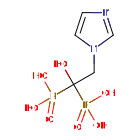
Structure for Zoledronic acid (DB00399)

- Weight
- Average: 272.0896
Monoisotopic: 271.996323708 - Chemical Formula
- C5H10N2O7P2
- Synonyms
- (1-hydroxy-2-(1H-imidazol-1-yl)ethylidene)bisphosphonic acid
- (1-hydroxy-2-imidazol-1-ylethylidene)diphosphonic acid
- ácido zoledrónico
- Anhydrous Zoledronic Acid
- Nanoparticles containing Zoledronic acid
- Zol
- Zoledronate
- Zoledronic acid
- Zoledronic Acid Anhydrous
- Zoledronic Acid, Anhydrous
- External IDs
- CGP 42446
- CGP-42446

Pharmacology
- Indication
Zoledronic acid is indicated to treat hypercalcemia of malignancy, multiple myeloma, bone metastases from solid tumors, osteoporosis in men and postmenopausal women, glucocorticoid induced osteoporosis, and Paget's disease of bone in men and women.14,15,16 Zoledronic acid is also indicated for the prevention of osteoporosis in post menopausal women and glucocorticoid induced osteoporosis.14,15,16
 Reduce drug development failure ratesBuild, train, & validate machine-learning modelswith evidence-based and structured datasets.Build, train, & validate predictive machine-learning models with structured datasets.
- Associated Conditions
Indication Type Indication Combined Product Details Approval Level Age Group Patient Characteristics Dose Form Used as adjunct in combination to treat Bone metastases •••••••••••• ••••••••• Treatment of Hypercalcemia of malignancy •••••••••••• ••••••••• Used as adjunct in combination to treat Multiple myeloma (mm) •••••••••••• ••••••••• Treatment of Osteoporosis •••••••••••• •••••••••••••• ••••• •••••••••• ••••••••• •••••••• Prevention of Osteoporosis •••••••••••• •••••••••• •••••••••• ••••••••• •••••••• - Associated Therapies
- Contraindications & Blackbox Warnings
 Prevent Adverse Drug Events TodayTap into our Clinical API for life-saving information on contraindications & blackbox warnings, population restrictions, harmful risks, & more.Avoid life-threatening adverse drug events with our Clinical API
- Pharmacodynamics
Zoledronic acid is a third generation, nitrogen containing bisphosphonate that inhibits osteoclast function and prevents bone resorption.5 The therapeutic window is wide as patients are unlikely to suffer severe effects from overdoses and the duration of action is long.14,15,16 Patients should be counselled regarding the risk of electrolyte deficiencies, renal impairment, osteonecrosis of the jaw, atypical femoral fractures, bronchoconstriction, hepatic impairment, hypocalcemia, and embryo-fetal toxicity.14,15,16
- Mechanism of action
Bisphosphonates are taken into the bone where they bind to hydroxyapatite. Bone resorption by osteoclasts causes local acidification, releasing the bisphosphonate, which is taken into the osteoclast by fluid-phase endocytosis.6 Endocytic vesicles become acidified, releasing bisphosphonates into the cytosol of osteoclasts where they act.6
Osteoclasts mediate resorption of bone.7 When osteoclasts bind to bone they form podosomes, ring structures of F-actin.7 Etidronic acid also inhibits V-ATPases in the osteoclast, though the exact subunits are unknown, preventing F-actin from forming podosomes.12,13,11 Disruption of the podosomes causes osteoclasts to detach from bones, preventing bone resorption.7
Nitrogen containing bisphosphonates such as zoledronate are known to induce apoptosis of hematopoietic tumor cells by inhibiting the components of the mevalonate pathway farnesyl diphosphate synthase, farnesyl diphosphate, and geranylgeranyl diphosphate.10,9 These components are essential for post-translational prenylation of GTP-binding proteins like Rap1.10,9 The lack of prenylation of these proteins interferes with their function, and in the case of Rap1, leads to apoptosis.10,9 zoledronate also activated caspases which further contribute to apoptosis.10,9
Target Actions Organism AGeranylgeranyl pyrophosphate synthase inhibitorHumans AHydroxylapatite antagonistbinderHumans AFarnesyl pyrophosphate synthase inhibitorHumans - Absorption
A 4mg intravenous dose reaches a Cmax of 370±78.5ng/mL, with a Tmax of 0.317±0.014h, and an AUC of 788±181ng*h/mL.4 A 5mg intravenous dose reaches a Cmax of 471±76.1ng/mL, with a Tmax of 0.368±0.005h, and an AUC of 917±226ng*h/mL.4
- Volume of distribution
Not Available
- Protein binding
- Metabolism
- Route of elimination
Zoledronic acid is 39 ± 16% eliminated in the urine as the unmetabolized parent drug.14,15,16
- Half-life
Zoledronic acid has a terminal elimination half life of 146 hours.14,15,16
- Clearance
Zoledronic acid has a renal clearance of 3.7 ± 2.0 L/h.14,15,16
- Adverse Effects
 Improve decision support & research outcomesWith structured adverse effects data, including: blackbox warnings, adverse reactions, warning & precautions, & incidence rates. View sample adverse effects data in our new Data Library!Improve decision support & research outcomes with our structured adverse effects data.
- Toxicity
Patients experiencing an overdose may present with renal impairment, hypocalcemia, hypophosphatemia, and hypomagnesemia.14,15,16 Overdose should be managed through intravenous administration of the insufficient ions.14,15,16
- Pathways
Pathway Category Zoledronate Action Pathway Drug action - Pharmacogenomic Effects/ADRs
- Not Available
Interactions
- Drug Interactions
- This information should not be interpreted without the help of a healthcare provider. If you believe you are experiencing an interaction, contact a healthcare provider immediately. The absence of an interaction does not necessarily mean no interactions exist.
Drug Interaction Integrate drug-drug
interactions in your softwareAceclofenac The risk or severity of gastrointestinal bleeding can be increased when Aceclofenac is combined with Zoledronic acid. Acemetacin The risk or severity of gastrointestinal bleeding can be increased when Acemetacin is combined with Zoledronic acid. Acetylsalicylic acid The risk or severity of gastrointestinal bleeding can be increased when Acetylsalicylic acid is combined with Zoledronic acid. Acyclovir The risk or severity of nephrotoxicity and hypocalcemia can be increased when Acyclovir is combined with Zoledronic acid. Adefovir dipivoxil The risk or severity of nephrotoxicity and hypocalcemia can be increased when Adefovir dipivoxil is combined with Zoledronic acid. - Food Interactions
- No interactions found.
Products
 Drug product information from 10+ global regionsOur datasets provide approved product information including:dosage, form, labeller, route of administration, and marketing period.Access drug product information from over 10 global regions.
- Product Ingredients
Ingredient UNII CAS InChI Key Zoledronate D,L-Lysine Monohydrate Not Available Not Available Not applicable Zoledronate disodium 7D7GS1SA24 165800-07-7 IEJZOPBVBXAOBH-UHFFFAOYSA-L Zoledronate trisodium ARL915IH66 165800-08-8 HYMYRPXSMHJPGD-UHFFFAOYSA-A Zoledronic acid hemipentahydrate 1K9U67HDID Not Available AZZILOGHCMYHQY-UHFFFAOYSA-N Zoledronic acid monohydrate 6XC1PAD3KF 165800-06-6 FUXFIVRTGHOMSO-UHFFFAOYSA-N - Brand Name Prescription Products
Name Dosage Strength Route Labeller Marketing Start Marketing End Region Image Aclasta Solution 5 mg / 100 mL Intravenous Sandoz Canada Incorporated 2005-08-22 Not applicable Canada 
Aclasta Injection, solution 5 mg/100ml Intravenous Sandoz Pharmaceuticals D.D. 2016-09-07 Not applicable EU 
Aclasta Injection, solution 5 mg/100ml Intravenous Sandoz Pharmaceuticals D.D. 2016-09-07 Not applicable EU Act Zoledronic Acid Solution 5 mg / 100 mL Intravenous Actavis Pharma Company Not applicable Not applicable Canada Act Zoledronic Acid Concentrate Solution 4 mg / 5 mL Intravenous Actavis Pharma Company Not applicable Not applicable Canada - Generic Prescription Products
Name Dosage Strength Route Labeller Marketing Start Marketing End Region Image Jamp-zoledronic Acid Solution 4 mg / 5 mL Intravenous Jamp Pharma Corporation 2020-01-20 Not applicable Canada PMS-zoledronic Acid Solution 4 mg / 5 mL Intravenous Pharmascience Inc 2014-11-25 Not applicable Canada Taro-zoledronic Acid Solution 5 mg / 100 mL Intravenous Taro Pharmaceuticals, Inc. 2014-04-02 Not applicable Canada Taro-zoledronic Acid Concentrate Solution 4 mg / 5 mL Intravenous Taro Pharmaceuticals, Inc. 2014-02-26 Not applicable Canada Val-zoledronic Acid Solution 4 mg / 5 mL Intravenous Bausch Health, Canada Inc. Not applicable Not applicable Canada - Unapproved/Other Products
Name Ingredients Dosage Route Labeller Marketing Start Marketing End Region Image ZOLDRIA 4 MG/5 ML IV INFUZYON ICIN KONSANTRE COZELTI ICEREN FLAKON, 1 ADET Zoledronic acid monohydrate (4 mg/5ml) Injection, solution, concentrate Intravenous PHARMADA İLAÇ SAN. VE TİC. A.Ş. 2018-07-31 2024-01-23 Turkey 
Categories
- ATC Codes
- M05BB08 — Zoledronic acid, calcium and colecalciferol, sequential
- M05BB — Bisphosphonates, combinations
- M05B — DRUGS AFFECTING BONE STRUCTURE AND MINERALIZATION
- M05 — DRUGS FOR TREATMENT OF BONE DISEASES
- M — MUSCULO-SKELETAL SYSTEM
- Drug Categories
- Chemical TaxonomyProvided by Classyfire
- Description
- This compound belongs to the class of organic compounds known as bisphosphonates. These are organic compounds containing two phosphonate groups linked together through a carbon atoms.
- Kingdom
- Organic compounds
- Super Class
- Organic acids and derivatives
- Class
- Organic phosphonic acids and derivatives
- Sub Class
- Bisphosphonates
- Direct Parent
- Bisphosphonates
- Alternative Parents
- N-substituted imidazoles / Organic phosphonic acids / Heteroaromatic compounds / Azacyclic compounds / Organopnictogen compounds / Organophosphorus compounds / Organooxygen compounds / Organonitrogen compounds / Organic oxides / Hydrocarbon derivatives
- Substituents
- Aromatic heteromonocyclic compound / Azacycle / Azole / Bisphosphonate / Heteroaromatic compound / Hydrocarbon derivative / Imidazole / N-substituted imidazole / Organic nitrogen compound / Organic oxide
- Molecular Framework
- Aromatic heteromonocyclic compounds
- External Descriptors
- imidazoles, 1,1-bis(phosphonic acid) (CHEBI:46557)
- Affected organisms
- Humans and other mammals
Chemical Identifiers
- UNII
- 70HZ18PH24
- CAS number
- 118072-93-8
- InChI Key
- XRASPMIURGNCCH-UHFFFAOYSA-N
- InChI
- InChI=1S/C5H10N2O7P2/c8-5(15(9,10)11,16(12,13)14)3-7-2-1-6-4-7/h1-2,4,8H,3H2,(H2,9,10,11)(H2,12,13,14)
- IUPAC Name
- [1-hydroxy-2-(1H-imidazol-1-yl)-1-phosphonoethyl]phosphonic acid
- SMILES
- OC(CN1C=CN=C1)(P(O)(O)=O)P(O)(O)=O
References
- Synthesis Reference
Judith Aronhime, Revital Lifshitz-Liron, "Zoledronic acid crystal forms, zoledronate sodium salt crystal forms, amorphous zoledronate sodium salt, and processes for their preparation." U.S. Patent US20050054616, issued March 10, 2005.
US20050054616- General References
- Lyles KW, Colon-Emeric CS, Magaziner JS, Adachi JD, Pieper CF, Mautalen C, Hyldstrup L, Recknor C, Nordsletten L, Moore KA, Lavecchia C, Zhang J, Mesenbrink P, Hodgson PK, Abrams K, Orloff JJ, Horowitz Z, Eriksen EF, Boonen S: Zoledronic acid and clinical fractures and mortality after hip fracture. N Engl J Med. 2007 Nov 1;357(18):1799-809. Epub 2007 Sep 17. [Article]
- Reid IR, Brown JP, Burckhardt P, Horowitz Z, Richardson P, Trechsel U, Widmer A, Devogelaer JP, Kaufman JM, Jaeger P, Body JJ, Brandi ML, Broell J, Di Micco R, Genazzani AR, Felsenberg D, Happ J, Hooper MJ, Ittner J, Leb G, Mallmin H, Murray T, Ortolani S, Rubinacci A, Saaf M, Samsioe G, Verbruggen L, Meunier PJ: Intravenous zoledronic acid in postmenopausal women with low bone mineral density. N Engl J Med. 2002 Feb 28;346(9):653-61. [Article]
- Durie BG, Katz M, Crowley J: Osteonecrosis of the jaw and bisphosphonates. N Engl J Med. 2005 Jul 7;353(1):99-102; discussion 99-102. [Article]
- Shiraki M, Tanaka S, Suzuki H, Ueda S, Nakamura T: Safety, pharmacokinetics, and changes in bone metabolism associated with zoledronic acid treatment in Japanese patients with primary osteoporosis. J Bone Miner Metab. 2017 Nov;35(6):675-684. doi: 10.1007/s00774-016-0806-3. Epub 2016 Dec 20. [Article]
- Cremers S, Drake MT, Ebetino FH, Bilezikian JP, Russell RGG: Pharmacology of bisphosphonates. Br J Clin Pharmacol. 2019 Jun;85(6):1052-1062. doi: 10.1111/bcp.13867. Epub 2019 Feb 28. [Article]
- Russell RG, Watts NB, Ebetino FH, Rogers MJ: Mechanisms of action of bisphosphonates: similarities and differences and their potential influence on clinical efficacy. Osteoporos Int. 2008 Jun;19(6):733-59. doi: 10.1007/s00198-007-0540-8. [Article]
- Murakami H, Takahashi N, Tanaka S, Nakamura I, Udagawa N, Nakajo S, Nakaya K, Abe M, Yuda Y, Konno F, Barbier A, Suda T: Tiludronate inhibits protein tyrosine phosphatase activity in osteoclasts. Bone. 1997 May;20(5):399-404. [Article]
- Green JR, Muller K, Jaeggi KA: Preclinical pharmacology of CGP 42'446, a new, potent, heterocyclic bisphosphonate compound. J Bone Miner Res. 1994 May;9(5):745-51. doi: 10.1002/jbmr.5650090521. [Article]
- Ullen A, Schwarz S, Lennartsson L, Kalkner KM, Sandstrom P, Costa F, Lennernas B, Linder S, Nilsson S: Zoledronic acid induces caspase-dependent apoptosis in renal cancer cell lines. Scand J Urol Nephrol. 2009;43(2):98-103. doi: 10.1080/00365590802475904. [Article]
- Miwa A, Takezako N, Hayakawa H, Hayakawa M, Tominaga S, Yanagisawa K: YM-175 induces apoptosis of human native monocyte-lineage cells via inhibition of prenylation. Am J Hematol. 2012 Dec;87(12):1084-8. doi: 10.1002/ajh.23328. Epub 2012 Oct 9. [Article]
- Russell RG: Bisphosphonates: the first 40 years. Bone. 2011 Jul;49(1):2-19. doi: 10.1016/j.bone.2011.04.022. Epub 2011 May 1. [Article]
- Qin A, Cheng TS, Pavlos NJ, Lin Z, Dai KR, Zheng MH: V-ATPases in osteoclasts: structure, function and potential inhibitors of bone resorption. Int J Biochem Cell Biol. 2012 Sep;44(9):1422-35. doi: 10.1016/j.biocel.2012.05.014. Epub 2012 May 29. [Article]
- Duan X, Yang S, Zhang L, Yang T: V-ATPases and osteoclasts: ambiguous future of V-ATPases inhibitors in osteoporosis. Theranostics. 2018 Oct 26;8(19):5379-5399. doi: 10.7150/thno.28391. eCollection 2018. [Article]
- FDA Approved Drug Products: Zometa Zoledronic Acid Intravenous Injection [Link]
- FDA Approved Drug Products: Reclast Zoledronic Acid Intravenous Injection [Link]
- FDA Approved Drug Products: Reclast Zoledronic Acid Injection [Link]
- External Links
- Human Metabolome Database
- HMDB0014543
- KEGG Drug
- D01968
- PubChem Compound
- 68740
- PubChem Substance
- 46507310
- ChemSpider
- 61986
- BindingDB
- 12578
- 1546014
- ChEBI
- 46557
- ChEMBL
- CHEMBL924
- ZINC
- ZINC000003803652
- Therapeutic Targets Database
- DAP001539
- PharmGKB
- PA10235
- PDBe Ligand
- ZOL
- RxList
- RxList Drug Page
- Wikipedia
- Zoledronic_acid
- PDB Entries
- 1zw5 / 2e91 / 2f8c / 2f8z / 2f9k / 2q58 / 3ez3 / 3iba / 3ldw / 3n45 … show 10 more
- MSDS
- Download (57.9 KB)
Clinical Trials
- Clinical Trials
Phase Status Purpose Conditions Count 4 Active Not Recruiting Prevention Bariatric Surgery Candidates / Bone Loss 1 4 Active Not Recruiting Treatment Osteoporosis / Sarcopenia 1 4 Active Not Recruiting Treatment Stage I Breast Cancer 1 4 Completed Prevention Bariatric Surgery Candidates 1 4 Completed Prevention Bone Fractures / Liver Transplantation / Osteoporosis 1
Pharmacoeconomics
- Manufacturers
- Novartis pharmaceuticals corp
- Packagers
- Novartis AG
- Dosage Forms
Form Route Strength Injection, powder, lyophilized, for solution Intravenous 4 mg Powder, for solution Parenteral 4 MG Injection, solution, concentrate Intravenous; Parenteral 4 MG/5ML Injection, solution Solution 5 mg/100ml Injection, solution Intravenous; Parenteral 5 MG/100ML Injection, solution Parenteral 5 MG Solution Intravenous 5 mg / 100 mL Solution Parenteral 5 MG Solution Parenteral 5 MG/100ML Solution Intravenous 5 mg Solution Intravenous 0.8 mg/ml Solution Parenteral 4 MG/100ML Solution Parenteral 4 MG/5ML Solution Parenteral 4 MG Injection Intravenous Solution 0.8000 mg Solution Intravenous 4.000 mg Solution, concentrate Intravenous 4 mg Solution Intravenous 4.625 mg Injection, solution, concentrate Intravenous 5 mg/100ml Solution Intravenous 4.265 mg Solution Intravenous 4.264 mg Solution Intravenous 5.33 mg Solution Parenteral 4.000 mg Solution Intravenous 0.8528 mg Solution Intravenous Solution Intravenous 0.800 mg Solution Solution Intravenous 5.000 mg Solution Intravenous 4 mg / 5 mL Solution Intravenous 4.26 mg Solution Intravenous 0.04 mg Solution Intravenous 4 mg Injection, solution, concentrate Intravenous 4.00 mg/5ml Solution Intravenous 4.00 mg Injection, solution, concentrate Intravenous 4 mg Injection, powder, lyophilized, for solution Intravenous; Parenteral 4 mg Injection Intravenous 4 mg/5mL Injection Intravenous 4 mg/100mL Injection Intravenous 5 mg/100mL Injection, solution Intravenous 0.04 mg/1mL Injection, solution Intravenous 0.05 mg/1mL Injection, solution Intravenous 4 mg/100mL Injection, solution Intravenous 5 mg/100mL Injection, solution, concentrate Intravenous 0.8 mg/1mL Injection, solution, concentrate Intravenous 4 mg/5mL Kit Intravenous 4 mg/5mL Solution Intravenous 4 mg/100mL Solution Intravenous 5 mg/100mL Injection Intravenous 4 mg Injection, solution Intravenous 5 mg Solution Parenteral Injection, solution, concentrate Intravenous Solution Intravenous 4 mg/5ml Injection, powder, for solution Intravenous 4 mg Injection, solution, concentrate Intravenous 4 mg/100mL Powder, for solution Intravenous 4 MG Solution Parenteral Solution 4 mg/100ml Injection, solution Intravenous Injection, solution, concentrate Intravenous 4.0 mg/5ml Powder, for solution Intravenous 4 mg / vial Injection, solution 4 mg/100ml Injection, solution 5 mg/100ml Injection, solution Intravenous 4 mg/5ml Solution 4 mg/5ml - Prices
Unit description Cost Unit Zometa 4 mg/5ml Concentrate 5ml Vial 1095.69USD vial Reclast 5 mg/100ml Solution 13.39USD ml Reclast 5 mg/100 ml solution 12.88USD ml DrugBank does not sell nor buy drugs. Pricing information is supplied for informational purposes only.- Patents
Patent Number Pediatric Extension Approved Expires (estimated) Region US4939130 No 1990-07-03 2013-03-02 US 
CA1338937 No 1997-02-25 2014-02-25 Canada CA1338895 No 1997-02-04 2014-02-04 Canada US8324189 Yes 2012-12-04 2025-11-29 US US7932241 Yes 2011-04-26 2028-08-05 US US8052987 No 2011-11-08 2023-10-27 US
Properties
- State
- Solid
- Experimental Properties
Property Value Source water solubility Sparingly soluble FDA Label - Predicted Properties
Property Value Source Water Solubility 3.27 mg/mL ALOGPS logP -0.93 ALOGPS logP -3.9 Chemaxon logS -1.9 ALOGPS pKa (Strongest Acidic) 0.66 Chemaxon pKa (Strongest Basic) 6.67 Chemaxon Physiological Charge -3 Chemaxon Hydrogen Acceptor Count 8 Chemaxon Hydrogen Donor Count 5 Chemaxon Polar Surface Area 153.11 Å2 Chemaxon Rotatable Bond Count 4 Chemaxon Refractivity 52.16 m3·mol-1 Chemaxon Polarizability 20.1 Å3 Chemaxon Number of Rings 1 Chemaxon Bioavailability 1 Chemaxon Rule of Five Yes Chemaxon Ghose Filter No Chemaxon Veber's Rule No Chemaxon MDDR-like Rule No Chemaxon - Predicted ADMET Features
Property Value Probability Human Intestinal Absorption - 0.9723 Blood Brain Barrier + 0.825 Caco-2 permeable - 0.6418 P-glycoprotein substrate Non-substrate 0.5602 P-glycoprotein inhibitor I Non-inhibitor 0.943 P-glycoprotein inhibitor II Non-inhibitor 0.9961 Renal organic cation transporter Non-inhibitor 0.9366 CYP450 2C9 substrate Non-substrate 0.8319 CYP450 2D6 substrate Non-substrate 0.8201 CYP450 3A4 substrate Non-substrate 0.7551 CYP450 1A2 substrate Non-inhibitor 0.8531 CYP450 2C9 inhibitor Non-inhibitor 0.8576 CYP450 2D6 inhibitor Non-inhibitor 0.8935 CYP450 2C19 inhibitor Non-inhibitor 0.8319 CYP450 3A4 inhibitor Non-inhibitor 0.9334 CYP450 inhibitory promiscuity Low CYP Inhibitory Promiscuity 0.9904 Ames test Non AMES toxic 0.5596 Carcinogenicity Non-carcinogens 0.8194 Biodegradation Not ready biodegradable 0.5431 Rat acute toxicity 2.3342 LD50, mol/kg Not applicable hERG inhibition (predictor I) Weak inhibitor 0.8515 hERG inhibition (predictor II) Non-inhibitor 0.8616
Spectra
- Mass Spec (NIST)
- Not Available
- Spectra
- Chromatographic Properties
Collision Cross Sections (CCS)
Adduct CCS Value (Å2) Source type Source [M-H]- 157.2670571 predictedDarkChem Lite v0.1.0 [M-H]- 155.5622571 predictedDarkChem Lite v0.1.0 [M-H]- 138.84532 predictedDeepCCS 1.0 (2019) [M+H]+ 156.1771571 predictedDarkChem Lite v0.1.0 [M+H]+ 155.1736571 predictedDarkChem Lite v0.1.0 [M+H]+ 141.24092 predictedDeepCCS 1.0 (2019) [M+Na]+ 155.9639571 predictedDarkChem Lite v0.1.0 [M+Na]+ 154.4681571 predictedDarkChem Lite v0.1.0 [M+Na]+ 147.15344 predictedDeepCCS 1.0 (2019)
Targets

- Kind
- Protein
- Organism
- Humans
- Pharmacological action
- Yes
- Actions
- Inhibitor
- General Function
- Metal ion binding
- Specific Function
- Catalyzes the trans-addition of the three molecules of IPP onto DMAPP to form geranylgeranyl pyrophosphate, an important precursor of carotenoids and geranylated proteins.
- Gene Name
- GGPS1
- Uniprot ID
- O95749
- Uniprot Name
- Geranylgeranyl pyrophosphate synthase
- Molecular Weight
- 34870.625 Da
References
- Guo RT, Cao R, Liang PH, Ko TP, Chang TH, Hudock MP, Jeng WY, Chen CK, Zhang Y, Song Y, Kuo CJ, Yin F, Oldfield E, Wang AH: Bisphosphonates target multiple sites in both cis- and trans-prenyltransferases. Proc Natl Acad Sci U S A. 2007 Jun 12;104(24):10022-7. Epub 2007 May 29. [Article]
References
- Jahnke W, Henry C: An in vitro assay to measure targeted drug delivery to bone mineral. ChemMedChem. 2010 May 3;5(5):770-6. doi: 10.1002/cmdc.201000016. [Article]
- Nancollas GH, Tang R, Phipps RJ, Henneman Z, Gulde S, Wu W, Mangood A, Russell RG, Ebetino FH: Novel insights into actions of bisphosphonates on bone: differences in interactions with hydroxyapatite. Bone. 2006 May;38(5):617-27. Epub 2005 Jul 20. [Article]
- Cremers S, Drake MT, Ebetino FH, Bilezikian JP, Russell RGG: Pharmacology of bisphosphonates. Br J Clin Pharmacol. 2019 Jun;85(6):1052-1062. doi: 10.1111/bcp.13867. Epub 2019 Feb 28. [Article]
- Kind
- Protein
- Organism
- Humans
- Pharmacological action
- Yes
- Actions
- Inhibitor
- General Function
- Poly(a) rna binding
- Specific Function
- Key enzyme in isoprenoid biosynthesis which catalyzes the formation of farnesyl diphosphate (FPP), a precursor for several classes of essential metabolites including sterols, dolichols, carotenoids...
- Gene Name
- FDPS
- Uniprot ID
- P14324
- Uniprot Name
- Farnesyl pyrophosphate synthase
- Molecular Weight
- 48275.03 Da
References
- Dunford JE, Thompson K, Coxon FP, Luckman SP, Hahn FM, Poulter CD, Ebetino FH, Rogers MJ: Structure-activity relationships for inhibition of farnesyl diphosphate synthase in vitro and inhibition of bone resorption in vivo by nitrogen-containing bisphosphonates. J Pharmacol Exp Ther. 2001 Feb;296(2):235-42. [Article]
- Glickman JF, Schmid A: Farnesyl pyrophosphate synthase: real-time kinetics and inhibition by nitrogen-containing bisphosphonates in a scintillation assay. Assay Drug Dev Technol. 2007 Apr;5(2):205-14. [Article]
- Guo RT, Cao R, Liang PH, Ko TP, Chang TH, Hudock MP, Jeng WY, Chen CK, Zhang Y, Song Y, Kuo CJ, Yin F, Oldfield E, Wang AH: Bisphosphonates target multiple sites in both cis- and trans-prenyltransferases. Proc Natl Acad Sci U S A. 2007 Jun 12;104(24):10022-7. Epub 2007 May 29. [Article]
- Chen X, Ji ZL, Chen YZ: TTD: Therapeutic Target Database. Nucleic Acids Res. 2002 Jan 1;30(1):412-5. [Article]
Transporters
- Kind
- Protein
- Organism
- Humans
- Pharmacological action
- Unknown
- Actions
- Substrate
- General Function
- Transporter activity
- Specific Function
- Mediates export of organic anions and drugs from the cytoplasm. Mediates ATP-dependent transport of glutathione and glutathione conjugates, leukotriene C4, estradiol-17-beta-o-glucuronide, methotre...
- Gene Name
- ABCC1
- Uniprot ID
- P33527
- Uniprot Name
- Multidrug resistance-associated protein 1
- Molecular Weight
- 171589.5 Da
References
- Yildiz M, Celik-Ozenci C, Akan S, Akan I, Sati L, Demir R, Savas B, Ozben T, Samur M, Ozdogan M, Artac M, Bozcuk H: Zoledronic acid is synergic with vinblastine to induce apoptosis in a multidrug resistance protein-1 dependent way: an in vitro study. Cell Biol Int. 2006 Mar;30(3):278-82. Epub 2006 Feb 2. [Article]

Drug created at June 13, 2005 13:24 / Updated at April 26, 2024 00:46