Identification
- Summary
Ciprofloxacin is a second generation fluoroquinolone used to treat various susceptible bacterial infections.
- Brand Names
- Cetraxal, Ciloxan, Cipro, Cipro HC, Ciprodex, Ciprofloxacin, Otiprio, Otixal, Otovel, Proquin
- Generic Name
- Ciprofloxacin
- DrugBank Accession Number
- DB00537
- Background
Ciprofloxacin is a second generation fluoroquinolone that has spawned many derivative antibiotics.9 It is formulated for oral, intravenous, intratympanic, ophthalmic, and otic administration for a number of bacterial infections.18,19,20,21,22,23,24,25,26
The first ciprofloxacin containing product was FDA approved on 22 October 1987.17
- Type
- Small Molecule
- Groups
- Approved, Investigational
- Structure
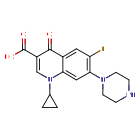
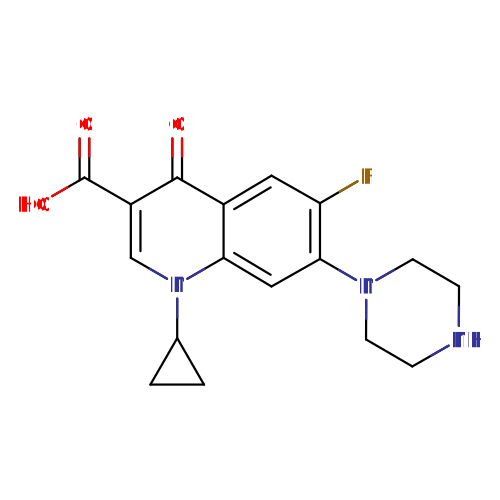
Structure for Ciprofloxacin (DB00537)
- Weight
- Average: 331.3415
Monoisotopic: 331.133219662 - Chemical Formula
- C17H18FN3O3
- Synonyms
- 1-cyclopropyl-6-fluoro-1,4-dihydro-4-oxo-7-(1-piperazinyl)-3-quinolinecarboxylic acid
- 1-cyclopropyl-6-fluoro-4-oxo-7-(piperazin-1-yl)-1,4-dihydroquinoline-3-carboxylic acid
- 1-Cyclopropyl-6-fluoro-4-oxo-7-piperazin-1-yl-1,4-dihydro-quinoline-3-carboxylic acid
- 1-cyclopropyl-6-fluoro-4-oxo-7-piperazin-1-ylquinoline-3-carboxylic acid
- 1-Cyclopropyl-6-fluoro-7-(4-methyl-piperazin-1-yl)-4-oxo-1,4-dihydro-quinoline-3-carboxylic acid
- 1-cyclopropyl-6-fluoro-7-hexahydro-1-pyrazinyl-4-oxo-1,4-dihydro-3-quinolinecarboxylic acid
- Ciprofloxacin
- Ciprofloxacine
- Ciprofloxacino
- Ciprofloxacinum
- External IDs
- BAY Q 3939
- BAY-Q-3939
- BAYQ3939
- J01MA02

Pharmacology
- Indication
Ciprofloxacin is only indicated in infections caused by susceptible bacteria.18,19,20,21,22,23,24,25,26
Ciprofloxacin immediate release tablets, oral suspensions, and intravenous injections are indicated for the treatment of skin and skin structure infections, bone and joint infections, complicated intra-abdominal infections, nosocomial pneumonia, febrile neutropenia, adults who have inhaled anthrax, plague, chronic bacterial prostatitis, lower respiratory tract infections including acute exacerbations of chronic bronchitis, urinary tract infections, complicated urinary tract infections in pediatrics, complicated pyelonephritis in pediatrics, and acute sinusitis.22,21
A ciprofloxacin otic solution and otic suspension with hydrocortisone are indicated for acute otitis externa.18,23 Ciprofloxacin suspension with dexamethasone is indicated for acute otitis media in pediatric patients with tympanostomy tubes or acute otitis externa.25 A ciprofloxacin intratympanic injection is indicated for pediatric patients with bilateral otitis media with effusion who are having tympanostomy tubes placed or pediatric patients 6 months or older with acute otitis externa.26
A ciprofloxacin eye drop is indicated for bacterial corneal ulcers and conjunctivitis.19 A ciprofloxacin eye ointment is indicated for bacterial conjunctivitis.20
A ciprofloxacin extended release tablet is indicated for uncomplicated urinary tract infections, complicated urinary tract infections, and acute uncomplicated pyelonephritis.24
 Reduce drug development failure ratesBuild, train, & validate machine-learning modelswith evidence-based and structured datasets.Build, train, & validate predictive machine-learning models with structured datasets.
- Associated Conditions
Indication Type Indication Combined Product Details Approval Level Age Group Patient Characteristics Dose Form Used in combination to treat Acute otitis externa Combination Product in combination with: Dexamethasone (DB01234) •••••••••••• •••••••• • ••••• Used in combination to treat Acute otitis externa Combination Product in combination with: Dexamethasone (DB01234) •••••••••••• •••••••••• • ••••• Treatment of Acute otitis externa caused by pseudomonas aeruginosa •••••••••••• •••••••• Used in combination to treat Acute otitis media Combination Product in combination with: Dexamethasone (DB01234) •••••••••••• •••••••••• • ••••• Treatment of Acute sinusitis •••••••••••• ••••• - Contraindications & Blackbox Warnings
 Prevent Adverse Drug Events TodayTap into our Clinical API for life-saving information on contraindications & blackbox warnings, population restrictions, harmful risks, & more.Avoid life-threatening adverse drug events with our Clinical API
- Pharmacodynamics
Ciprofloxacin is a second generation fluoroquinolone that is active against many Gram negative and Gram positive bacteria.9,18,19,20,21,22,23,24,25,26 It produces its action through inhibition of bacterial DNA gyrase and topoisomerase IV.12 Ciprofloxacin binds to bacterial DNA gyrase with 100 times the affinity of mammalian DNA gyrase.13 There is no cross resistance between fluoroquinolones and other classes of antibiotics, so it may be of clinical value when other antibiotics are no longer effective.13 Ciprofloxain and its derivatives are also being investigated for its action against malaria, cancers, and AIDS.12
- Mechanism of action
Ciprofloxacin acts on bacterial topoisomerase II (DNA gyrase) and topoisomerase IV.12 Ciprofloxacin's targeting of the alpha subunits of DNA gyrase prevents it from supercoiling the bacterial DNA which prevents DNA replication.10,11
Target Actions Organism ADNA topoisomerase 4 subunit A inhibitorHaemophilus influenzae (strain ATCC 51907 / DSM 11121 / KW20 / Rd) ADNA gyrase subunit A inhibitorHaemophilus influenzae (strain ATCC 51907 / DSM 11121 / KW20 / Rd) UDNA topoisomerase 2-alpha inhibitorHumans UPotassium voltage-gated channel subfamily H member 2 Not Available Humans UDNA gyrase subunit A Not Available Escherichia coli (strain K12) UDNA topoisomerase 4 subunit A Not Available Staphylococcus aureus UDNA topoisomerase 4 subunit B Not Available Bacillus subtilis (strain 168) UDNA gyrase subunit A Not Available Bacillus subtilis (strain 168) UMultidrug resistance protein MdtK Not Available Escherichia coli UGyrase A Not Available Mycobacterium tuberculosis UDNA gyrase subunit A Not Available Staphylococcus aureus - Absorption
A 250mg oral dose of ciprofloxacin reaches an average maximum concentration of 0.94mg/L in 0.81 hours with an average area under the curve of 1.013L/h*kg.8 The FDA reports an oral bioavailability of 70-80%Label,1 while other studies report it to be approximately 60%.8 An early review of ciprofloxacin reported an oral bioavailability of 64-85% but recommends 70% for all practical uses.10
- Volume of distribution
Cirpofloxacin follws a 3 compartment distribution model with a central compartment volume of 0.161L/kg8 and a total volume of distribution of 2.00-3.04L/kg.10
- Protein binding
- Metabolism
Ciprofloxacin is primarily metabolized by CYP1A2.22 The primary metabolites oxociprofloxacin and sulociprofloxacin make up 3-8% of the total dose each.24 Ciprofloxacin is also converted to the minor metabolites desethylene ciprofloxacin and formylciprofloxacin.24 These 4 metabolites account for 15% of a total oral dose.22
There is a lack of available data on the enzymes and types of reactions involved in forming these metabolites.2,3,4,5
Hover over products below to view reaction partners
- Route of elimination
27% of an oral dose was recovered unmetabolized in urine compared to 46% of an intravenous dose.8 Collection of radiolabelled ciprofloxacin resulted in 45% recovery in urine and 62% recovery in feces.10
- Half-life
The average half life following a 250mg oral dose was 4.71 hours and 3.65 hours following a 100mg intravenous dose.8 Generally the half life is reported as 4 hours.Label,8
- Clearance
The average renal clearance after a 250mg oral dose is 5.08mL/min*kg.8 Following a 100mg intravenous dose, the average total clearance is 9.62mL/min*kg, average renal clearance is 4.42mL/min*kg, and average non renal clearance is 5.21mL/min*kg.8
- Adverse Effects
 Improve decision support & research outcomesWith structured adverse effects data, including: blackbox warnings, adverse reactions, warning & precautions, & incidence rates. View sample adverse effects data in our new Data Library!Improve decision support & research outcomes with our structured adverse effects data.
- Toxicity
Patients experiencing an overdose may present with nausea, vomiting, abdominal pain, crystalluria, nephrotoxicity, and oliguria.14,15,16 Ciprofloxacin overdose typically leads to acute renal failure.16 An overdose may progress over the next 6 days with rising serum creatinine and BUN, as well as anuria.15 Patients may require prednisone therapy, urgent hemodialysis, or supportive therapy.14,16 Depending on the degree of overdose, patients may recover normal kidney function or progress to chronic kidney failure.16
The oral LD50 in rats is >2000mg/kg.27
Ciprofloxacin for intratympanic injection or otic use has low systemic absorption and so it unlikely to be a risk in pregnancy or lactation.26 There is generally no harm to the fetus in animal studies, however high doses may lead to gastrointestinal disturbances in the mother which may increase the incidence of abortion.25,19,23,20 In human studies there was no increase in fetal malformations above background rates.21,22 The risk and benefit of ciprofloxacin should be weighed in pregnancy and breast feeding.25,19,23,21,22,24,20,18
2/8 in vitro tests and 0/3 in vivo tests of mutagenicity of ciprofloxacin have yielded a positive result.26,25,19,23,21,22,24,20,18
Oral doses of 200 and 300 times the maximum recommended clinical dose in rats and mice have shown no carcinogenicity or tumorigenicity.26,19,23,21,22,24,20,18
Oral doses above the maximum recommended clinical dose have shown no effects on fertility in rats.26,23,21,22,24,20,18
- Pathways
- Not Available
- Pharmacogenomic Effects/ADRs
- Not Available
Interactions
- Drug Interactions
- This information should not be interpreted without the help of a healthcare provider. If you believe you are experiencing an interaction, contact a healthcare provider immediately. The absence of an interaction does not necessarily mean no interactions exist.
Drug Interaction Integrate drug-drug
interactions in your software1,2-Benzodiazepine The metabolism of 1,2-Benzodiazepine can be decreased when combined with Ciprofloxacin. Abacavir Ciprofloxacin may decrease the excretion rate of Abacavir which could result in a higher serum level. Abemaciclib The metabolism of Abemaciclib can be decreased when combined with Ciprofloxacin. Abiraterone The metabolism of Abiraterone can be decreased when combined with Ciprofloxacin. Acalabrutinib The metabolism of Acalabrutinib can be decreased when combined with Ciprofloxacin. - Food Interactions
- Avoid milk and dairy products. Dairy products and calcium fortified juices decrease the absorption of ciprofloxacin.
- Limit caffeine intake.
- Take with or without food. The absorption is not significantly affected by food.
Products
 Drug product information from 10+ global regionsOur datasets provide approved product information including:dosage, form, labeller, route of administration, and marketing period.Access drug product information from over 10 global regions.
- Product Ingredients
Ingredient UNII CAS InChI Key Ciprofloxacin hydrochloride 4BA73M5E37 86393-32-0 ARPUHYJMCVWYCZ-UHFFFAOYSA-N Ciprofloxacin lactate UEY6XFC224 96186-80-0 NRBJWZSFNGZBFQ-UHFFFAOYSA-N - Product Images
- International/Other Brands
- Bacquinor / Baycip / Ciflox / Cifloxin / Ciprinol / Ciprobay / Ciprocinol / Ciprodar / Ciproxan / Ciproxin / Flociprin / Proquin
- Brand Name Prescription Products
Name Dosage Strength Route Labeller Marketing Start Marketing End Region Image Act Ciprofloxacin Tablet 750 mg Oral TEVA Canada Limited 2004-02-18 Not applicable Canada 
Act Ciprofloxacin Tablet 500 mg Oral TEVA Canada Limited 2004-02-18 Not applicable Canada Act Ciprofloxacin Tablet 250 mg Oral TEVA Canada Limited 2004-02-18 Not applicable Canada Cetraxal Solution / drops 0.5 mg/0.25mL Auricular (otic) Wraser Llc 2009-05-14 Not applicable US 
Ciloxan Solution 3.5 mg/1mL Ophthalmic Physicians Total Care, Inc. 1995-07-10 Not applicable US - Generic Prescription Products
Name Dosage Strength Route Labeller Marketing Start Marketing End Region Image Ag-ciprofloxacin Tablet 500 mg Oral Angita Pharma Inc. 2020-01-20 Not applicable Canada Ag-ciprofloxacin Tablet 250 mg Oral Angita Pharma Inc. Not applicable Not applicable Canada Ag-ciprofloxacin Tablet 750 mg Oral Angita Pharma Inc. Not applicable Not applicable Canada Apo-ciproflox Tablet 750 mg Oral Apotex Corporation 2004-02-09 Not applicable Canada Apo-ciproflox Solution 0.3 % Ophthalmic Apotex Corporation 2005-09-14 Not applicable Canada - Mixture Products
Name Ingredients Dosage Route Labeller Marketing Start Marketing End Region Image ACEOTO PLUS® Ciprofloxacin hydrochloride (3 mg) + Fluocinolone acetonide (0.25 mg) Solution Auricular (otic) LABORATORIOS SALVAT S.A 2013-11-25 Not applicable Colombia 
CETRAXAL PLUS EAR DROPS SOLUTION Ciprofloxacin hydrochloride (3 mg) + Fluocinolone acetonide (0.25 mg) Solution Auricular (otic) HYPHENS PHARMA PTE. LTD. 2014-08-29 Not applicable Singapore 
CEXIDAL Ciprofloxacin (3 MG/ML) + Fluocinolone acetonide (0.25 MG/ML) Solution / drops Auricular (otic) Infectopharm Arzneimittel Und Consilium Gmbh 2014-07-08 Not applicable Italy 
CILODEX OTIC SUSPENSION Ciprofloxacin hydrochloride (0.3 %) + Dexamethasone (0.1 %) Solution Auricular (otic) NOVARTIS (SINGAPORE) PTE LTD 2006-04-18 Not applicable Singapore Cipro Ciprofloxacin (452.2 mg/1) + Ciprofloxacin hydrochloride (574.9 1/1) Tablet, film coated, extended release Oral Bayer HealthCare Pharmaceuticals Inc. 2012-10-01 2016-07-27 US - Unapproved/Other Products
Name Ingredients Dosage Route Labeller Marketing Start Marketing End Region Image CIPRONATIN 500 MG TABLET, 14 ADET Ciprofloxacin (500 mg) Tablet Oral ATABAY KİMYA SAN. VE TİC. A.Ş. 2013-01-29 Not applicable Turkey 
CIPRONATIN 750 MG TABLET, 14 ADET Ciprofloxacin (750 mg) Tablet Oral ATABAY KİMYA SAN. VE TİC. A.Ş. 2013-01-29 Not applicable Turkey CIPROXIN 400 MG FLAKON, 1 ADET Ciprofloxacin (400 mg) Injection, solution Intravenous BAYER TÜRK KİMYA SAN. LTD. ŞTİ. 2018-02-20 2024-01-23 Turkey


Categories
- ATC Codes
- J01RA11 — Ciprofloxacin and tinidazole
- J01RA — Combinations of antibacterials
- J01R — COMBINATIONS OF ANTIBACTERIALS
- J01 — ANTIBACTERIALS FOR SYSTEMIC USE
- J — ANTIINFECTIVES FOR SYSTEMIC USE
- S03AA — Antiinfectives
- S03A — ANTIINFECTIVES
- S03 — OPHTHALMOLOGICAL AND OTOLOGICAL PREPARATIONS
- S — SENSORY ORGANS
- J01MA — Fluoroquinolones
- J01M — QUINOLONE ANTIBACTERIALS
- J01 — ANTIBACTERIALS FOR SYSTEMIC USE
- J — ANTIINFECTIVES FOR SYSTEMIC USE
- J01RA — Combinations of antibacterials
- J01R — COMBINATIONS OF ANTIBACTERIALS
- J01 — ANTIBACTERIALS FOR SYSTEMIC USE
- J — ANTIINFECTIVES FOR SYSTEMIC USE
- J01RA — Combinations of antibacterials
- J01R — COMBINATIONS OF ANTIBACTERIALS
- J01 — ANTIBACTERIALS FOR SYSTEMIC USE
- J — ANTIINFECTIVES FOR SYSTEMIC USE
- Drug Categories
- Agents Causing Muscle Toxicity
- Anti-Bacterial Agents
- Anti-Infective Agents
- Antibacterials for Systemic Use
- Antiinfectives for Systemic Use
- Chemically-Induced Disorders
- Cytochrome P-450 CYP1A2 Inhibitors
- Cytochrome P-450 CYP1A2 Inhibitors (strong)
- Cytochrome P-450 CYP3A Inhibitors
- Cytochrome P-450 CYP3A4 Inhibitors
- Cytochrome P-450 CYP3A4 Inhibitors (moderate)
- Cytochrome P-450 CYP3A5 Inhibitors
- Cytochrome P-450 CYP3A5 Inhibitors (moderate)
- Cytochrome P-450 CYP3A7 Inhibitors
- Cytochrome P-450 CYP3A7 Inhibitors (moderate)
- Cytochrome P-450 Enzyme Inhibitors
- Drugs causing inadvertant photosensitivity
- Drugs that are Mainly Renally Excreted
- Enzyme Inhibitors
- Fluoroquinolone Antibacterial
- Fluoroquinolones
- Heterocyclic Compounds, Fused-Ring
- MATE 1 Inhibitors
- MATE 1 Substrates
- MATE 2 Inhibitors
- MATE inhibitors
- MATE substrates
- Moderate Risk QTc-Prolonging Agents
- Ophthalmological and Otological Preparations
- Ophthalmologicals
- Otologicals
- P-glycoprotein substrates
- Photosensitizing Agents
- QTc Prolonging Agents
- Quinolines
- Quinolone Antimicrobial
- Quinolones
- Sensory Organs
- Topoisomerase II Inhibitors
- Topoisomerase Inhibitors
- Chemical TaxonomyProvided by Classyfire
- Description
- This compound belongs to the class of organic compounds known as quinoline carboxylic acids. These are quinolines in which the quinoline ring system is substituted by a carboxyl group at one or more positions.
- Kingdom
- Organic compounds
- Super Class
- Organoheterocyclic compounds
- Class
- Quinolines and derivatives
- Sub Class
- Quinoline carboxylic acids
- Direct Parent
- Quinoline carboxylic acids
- Alternative Parents
- Fluoroquinolones / N-arylpiperazines / Haloquinolines / Hydroquinolones / Aminoquinolines and derivatives / Hydroquinolines / Pyridinecarboxylic acids / Dialkylarylamines / Benzenoids / Aryl fluorides show 12 more
- Substituents
- 1,4-diazinane / Amine / Amino acid / Amino acid or derivatives / Aminoquinoline / Aromatic heteropolycyclic compound / Aryl fluoride / Aryl halide / Azacycle / Benzenoid show 29 more
- Molecular Framework
- Aromatic heteropolycyclic compounds
- External Descriptors
- N-arylpiperazine, aminoquinoline, quinolone antibiotic, fluoroquinolone antibiotic, quinolone, quinolinemonocarboxylic acid (CHEBI:100241)
- Affected organisms
- Enteric bacteria and other eubacteria
Chemical Identifiers
- UNII
- 5E8K9I0O4U
- CAS number
- 85721-33-1
- InChI Key
- MYSWGUAQZAJSOK-UHFFFAOYSA-N
- InChI
- InChI=1S/C17H18FN3O3/c18-13-7-11-14(8-15(13)20-5-3-19-4-6-20)21(10-1-2-10)9-12(16(11)22)17(23)24/h7-10,19H,1-6H2,(H,23,24)
- IUPAC Name
- 1-cyclopropyl-6-fluoro-4-oxo-7-(piperazin-1-yl)-1,4-dihydroquinoline-3-carboxylic acid
- SMILES
- OC(=O)C1=CN(C2CC2)C2=CC(N3CCNCC3)=C(F)C=C2C1=O
References
- Synthesis Reference
- US4670444
- General References
- Drusano GL, Standiford HC, Plaisance K, Forrest A, Leslie J, Caldwell J: Absolute oral bioavailability of ciprofloxacin. Antimicrob Agents Chemother. 1986 Sep;30(3):444-6. [Article]
- van Geijlswijk IM, van Zanten AR, van der Meer YG: Reliable new high-performance liquid chromatographic method for the determination of ciprofloxacin in human serum. Ther Drug Monit. 2006 Apr;28(2):278-81. doi: 10.1097/01.ftd.0000189823.43236.90. [Article]
- Rusch M, Spielmeyer A, Zorn H, Hamscher G: Biotransformation of ciprofloxacin by Xylaria longipes: structure elucidation and residual antibacterial activity of metabolites. Appl Microbiol Biotechnol. 2018 Oct;102(19):8573-8584. doi: 10.1007/s00253-018-9231-y. Epub 2018 Jul 21. [Article]
- Mack G: Improved high-performance liquid chromatographic determination of ciprofloxacin and its metabolites in human specimens. J Chromatogr. 1992 Nov 6;582(1-2):263-7. [Article]
- Abadia AR, De Francesco L, Guaitani A: Disposition of ciprofloxacin in the isolated perfused rat liver. Drug Metab Dispos. 1995 Feb;23(2):197-200. [Article]
- Takács-Novák K, Józan M, Szász H: Lipophilicity of antibacterial fluoroquinolones International Journal of Pharmaceutics. 1992 Feb 1;79(1-3):89-96. [Article]
- Torniainen K, Tammilehto S, Ulvi V: The effect of pH, buffer type and drug concentration on the photodegradation of ciprofloxacin International Journal of Pharmaceutics. 1996 Apr 30;132(1):53-61. [Article]
- Wingender W, Graefe KH, Gau W, Forster D, Beermann D, Schacht P: Pharmacokinetics of ciprofloxacin after oral and intravenous administration in healthy volunteers. Eur J Clin Microbiol. 1984 Aug;3(4):355-9. [Article]
- Zhang GF, Liu X, Zhang S, Pan B, Liu ML: Ciprofloxacin derivatives and their antibacterial activities. Eur J Med Chem. 2018 Feb 25;146:599-612. doi: 10.1016/j.ejmech.2018.01.078. Epub 2018 Feb 4. [Article]
- LeBel M: Ciprofloxacin: chemistry, mechanism of action, resistance, antimicrobial spectrum, pharmacokinetics, clinical trials, and adverse reactions. Pharmacotherapy. 1988;8(1):3-33. [Article]
- Shen LL, Pernet AG: Mechanism of inhibition of DNA gyrase by analogues of nalidixic acid: the target of the drugs is DNA. Proc Natl Acad Sci U S A. 1985 Jan;82(2):307-11. doi: 10.1073/pnas.82.2.307. [Article]
- Pietsch F, Bergman JM, Brandis G, Marcusson LL, Zorzet A, Huseby DL, Hughes D: Ciprofloxacin selects for RNA polymerase mutations with pleiotropic antibiotic resistance effects. J Antimicrob Chemother. 2017 Jan;72(1):75-84. doi: 10.1093/jac/dkw364. Epub 2016 Sep 12. [Article]
- Varshney A, Ansari Y, Zaidi N, Ahmad E, Badr G, Alam P, Khan RH: Analysis of binding interaction between antibacterial ciprofloxacin and human serum albumin by spectroscopic techniques. Cell Biochem Biophys. 2014 Sep;70(1):93-101. doi: 10.1007/s12013-014-9863-1. [Article]
- George MJ, Dew RB 3rd, Daly JS: Acute renal failure after an overdose of ciprofloxacin. Arch Intern Med. 1991 Mar;151(3):620. [Article]
- Dharnidharka VR, Nadeau K, Cannon CL, Harris HW, Rosen S: Ciprofloxacin overdose: acute renal failure with prominent apoptotic changes. Am J Kidney Dis. 1998 Apr;31(4):710-2. [Article]
- Hajji M, Jebali H, Mrad A, Blel Y, Brahmi N, Kheder R, Beji S, Fatma LB, Smaoui W, Krid M, Hmida FB, Rais L, Zouaghi MK: Nephrotoxicity of Ciprofloxacin: Five Cases and a Review of the Literature. Drug Saf Case Rep. 2018 Apr 18;5(1):17. doi: 10.1007/s40800-018-0073-4. [Article]
- FDA Approved Drug Products: Cipro [Link]
- FDA Approved Drug Products: Cetraxal Solution/Drops;Otic [Link]
- FDA Approved Drug Products: Ciloxan Solution/Drops; Opthmalmic [Link]
- FDA Approved Drug Products: Ciloxan Ointment; Opthalmic [Link]
- FDA Approved Drug Products: CIPRO IV (ciprofloxacin) injection [Link]
- FDA Approved Drug Products: CIPRO (ciprofloxacin) oral tablets and suspension [Link]
- FDA Approved Drug Products: Cipro HC Suspension/Drops; Otic [Link]
- FDA Approved Drug Products: CIPRO XR (ciprofloxacin) extended-release tablets [Link]
- FDA Approved Drug Products: Ciprodex Suspension/Drops; Otic [Link]
- FDA Approved Drug Products: Otiprio Injection [Link]
- Pfizer: Ciprofloxacin MSDS [Link]
- FDA Approved Drug Products: OTOVEL (ciprofloxacin and fluocinolone acetonide) otic solution [Link]
- External Links
- Human Metabolome Database
- HMDB0014677
- KEGG Drug
- D00186
- KEGG Compound
- C05349
- PubChem Compound
- 2764
- PubChem Substance
- 46504733
- ChemSpider
- 2662
- BindingDB
- 21690
- 2551
- ChEBI
- 192484
- ChEMBL
- CHEMBL8
- ZINC
- ZINC000000020220
- Therapeutic Targets Database
- DAP001360
- PharmGKB
- PA449009
- PDBe Ligand
- CPF
- RxList
- RxList Drug Page
- Drugs.com
- Drugs.com Drug Page
- PDRhealth
- PDRhealth Drug Page
- Wikipedia
- Ciprofloxacin
- PDB Entries
- 1oye / 1t9u / 2xct / 4bvv / 4kra / 5btc / 8gjl
- FDA label
- Download (120 KB)
- MSDS
- Download (73.9 KB)
Clinical Trials
- Clinical Trials
Phase Status Purpose Conditions Count 4 Completed Health Services Research Antibiotic Resistant Infection / Uncomplicated Urinary Tract Infections 1 4 Completed Other Infection 1 4 Completed Other QTc Prolongation, Hyperglycemia, Hypoglycemia 1 4 Completed Prevention Adverse Reaction to Other Drugs and Medicines 1 4 Completed Prevention Bacteriuria / Urinary Tract Infection 1
Pharmacoeconomics
- Manufacturers
- Bayer healthcare pharmaceuticals inc
- Bayer pharmaceuticals corp
- App pharmaceuticals llc
- Bedford laboratories
- Claris lifesciences ltd
- Hospira inc
- Teva parenteral medicines inc
- West ward pharmaceutical corp
- Hikma farmaceutica (portugal) sa
- Acs dobfar info sa
- Baxter healthcare corp
- Bedford laboratories div ben venue laboratories inc
- Alcon inc
- Akorn inc
- Bausch and lomb pharmaceuticals inc
- Fdc ltd
- Hitech pharmacal corp
- Nexus pharmaceuticals inc
- Novex pharma
- Pharmaforce inc
- Wraser pharmaceuticals llc
- Depomed inc
- Apotex inc
- Aurobindo pharma ltd
- Barr laboratories inc
- Carlsbad technology inc
- Dr reddys laboratories ltd
- Hikma pharmaceuticals
- Ivax pharmaceuticals inc sub teva pharmaceuticals usa
- Mylan pharmaceuticals inc
- Nostrum laboratories inc
- Pliva inc
- Ranbaxy pharmaceuticals inc
- Sandoz inc
- Taro pharmaceuticals usa inc
- Teva pharmaceuticals usa inc
- Unique pharmaceutical laboratories
- Watson laboratories inc
- Allergan inc
- Packagers
- ACS Dobfar SPA
- Actavis Group
- Advanced Pharmaceutical Services Inc.
- Aidarex Pharmacuticals LLC
- Akorn Inc.
- Alcon Laboratories
- Allergan Inc.
- Amerisource Health Services Corp.
- Anchen Pharmaceuticals Inc.
- Apotex Inc.
- Apotheca Inc.
- AQ Pharmaceuticals Inc.
- Arrow Pharm Malta Ltd.
- A-S Medication Solutions LLC
- Aurobindo Pharma Ltd.
- Barr Pharmaceuticals
- Bausch & Lomb Inc.
- Baxter International Inc.
- Bayer Healthcare
- Bedford Labs
- Ben Venue Laboratories Inc.
- Blenheim Pharmacal
- Blu Pharmaceuticals LLC
- Bryant Ranch Prepack
- Cardinal Health
- Carlsbad Technology Inc.
- Claris Lifesciences Inc.
- Cobalt Pharmaceuticals Inc.
- Comprehensive Consultant Services Inc.
- Core Pharmaceuticals
- Daiichi Sankyo
- Depomed Inc.
- Dept Health Central Pharmacy
- DHHS Program Support Center Supply Service Center
- Direct Dispensing Inc.
- Dispensing Solutions
- Diversified Healthcare Services Inc.
- Doctor Reddys Laboratories Ltd.
- Dorx LLC
- Esprit Pharma Inc.
- Falcon Pharmaceuticals Ltd.
- Forum Products Inc.
- Golden State Medical Supply Inc.
- Goldline Laboratories Inc.
- H.J. Harkins Co. Inc.
- Hi Tech Pharmacal Co. Inc.
- Hikma Pharmaceuticals
- Hospira Inc.
- Indoco Remedies Limited
- Innoviant Pharmacy Inc.
- Ivax Pharmaceuticals
- J.B. Chemicals & Pharmaceuticals
- Kaiser Foundation Hospital
- Keltman Pharmaceuticals Inc.
- Kenyon Drug Co.
- Lake Erie Medical and Surgical Supply
- Lannett Co. Inc.
- Legacy Pharmaceuticals Packaging LLC
- Liberty Pharmaceuticals
- Major Pharmaceuticals
- Matrix Laboratories Ltd.
- Mckesson Corp.
- Medisca Inc.
- Murfreesboro Pharmaceutical Nursing Supply
- Mylan
- Neuman Distributors Inc.
- Nexus Pharmaceuticals
- Northstar Rx LLC
- Novartis AG
- Novex Pharma
- Nucare Pharmaceuticals Inc.
- Pack Pharmaceuticals
- Palmetto Pharmaceuticals Inc.
- Par Pharmaceuticals
- PCA LLC
- PD-Rx Pharmaceuticals Inc.
- Pfizer Inc.
- Pharmaceutical Utilization Management Program VA Inc.
- Pharmaforce Inc.
- Pharmedix
- Pharmpak Inc.
- Physicians Total Care Inc.
- Preferred Pharmaceuticals Inc.
- Prepackage Specialists
- Prepak Systems Inc.
- Prescript Pharmaceuticals
- Prescription Dispensing Service Inc.
- Ranbaxy Laboratories
- Rebel Distributors Corp.
- Redpharm Drug
- Remedy Repack
- Sagent Pharmaceuticals
- Sandhills Packaging Inc.
- Sandoz
- Schering Corp.
- Southwood Pharmaceuticals
- St Mary's Medical Park Pharmacy
- Stat Rx Usa
- Stat Scripts LLC
- Taro Pharmaceuticals USA
- Testpak Holding Company Inc.
- Teva Pharmaceutical Industries Ltd.
- Tya Pharmaceuticals
- UDL Laboratories
- West-Ward Pharmaceuticals
- WraSer Pharmaceuticals
- Yung Shin Pharmaceutical Industry Ltd.
- Dosage Forms
Form Route Strength Solution / drops Ophthalmic Solution 2 mg/1ml Tablet, film coated Oral 555 mg Tablet Oral 250.000 mg Solution Intravenous 200.000 mg Solution / drops Auricular (otic) 0.5 mg/0.25mL Solution Solution Auricular (otic) 2 mg Solution Auricular (otic) 3 mg Solution / drops Auricular (otic) Tablet Oral 250.0 mg Solution Intravenous 100 mg/50ml Tablet, coated Oral Solution Auricular (otic) 10 mg Solution Ophthalmic 3 mg Solution Auricular (otic) 0.3 % Ointment Ophthalmic 0.3 % w/w Ointment Ophthalmic 3 mg/1g Solution Ophthalmic 0.3 % w/v Solution Ophthalmic 3.5 mg/1mL Ointment Ophthalmic 3.5 mg/g Solution / drops Ophthalmic 3.5 mg/ml Ointment Ophthalmic 0.3 % Solution / drops Ophthalmic 0.3 % Solution Auricular (otic); Ophthalmic 3 mg/mL Ointment Ophthalmic 3 mg/g Solution Parenteral Solution Ophthalmic 3.5 mg/ml Kit Oral 10 g/100mL Kit Oral 5 g/100mL Kit; suspension Oral 10 g/100mL Kit; suspension Oral 5 g/100mL Solution, concentrate Intravenous 10 mg/1mL Solution, concentrate Intravenous 2 mg/1mL Suspension Auricular (otic) Tablet, film coated Oral 1000 mg/1 Solution Intravenous 400 mg Solution Intravenous 40000000 mg Tablet, coated Oral 750 mg Tablet, film coated Oral 100 MG Solution Intravenous 200 mg/100ml Liquid Intravenous 10 mg / mL Suspension Oral 500 mg / 5 mL Suspension Oral 5 g Tablet Oral 100 mg / tab Tablet Oral 250 mg / tab Tablet Oral 500 mg / tab Tablet, multilayer, extended release Oral 1000 mg Tablet, multilayer, extended release Oral 500 mg Tablet, film coated Oral Tablet, film coated Oral 250.0 mg Tablet, film coated Oral 500.0 mg Solution Ophthalmic 3.000 mg Tablet, film coated Oral 291.0 MG Tablet, film coated Oral 582.0 MG Solution Auricular (otic) 0.2 % Injection, solution Intravenous 400 mg/200ml Tablet, coated Oral 500 mg Suspension / drops Auricular (otic) Ointment Conjunctival; Ophthalmic Solution Parenteral 100 mg Tablet Oral 1164.400 mg Injection Intravenous Injection Intravenous 10 mg/1mL Injection Intravenous 2 mg/1mL Injection Intravenous 200 mg/1 Injection Intravenous 200 mg/100mL Injection Intravenous 400 mg/200mL Injection Intravenous 400 mg/1 Injection, solution Intravenous 10 mg/1mL Injection, solution Intravenous 200 mg/100mL Injection, solution, concentrate Intravenous 10 mg/1mL Injection, solution, concentrate Intravenous 200 mg/20mL Injection, solution, concentrate Intravenous 400 mg/40mL Kit; powder, for suspension Oral 250 mg/5mL Kit; powder, for suspension Oral 500 mg/5mL Solution Ophthalmic 3 mg/1mL Solution / drops Ophthalmic 3 mg/1mL Solution / drops Ophthalmic 3.0 mg/1mL Solution / drops Ophthalmic 3.5 mg/1mL Solution / drops Ophthalmic; Topical 3 mg/1mL Solution / drops Topical 3.5 mg/1mL Tablet Oral 250 mg/1 Tablet Oral 750 mg/1 Tablet, coated Oral 250 mg/1 Tablet, film coated Oral 100 mg/1 Tablet, film coated Oral 250 mg/1 Tablet, film coated Oral 500 mg/1 Tablet, film coated Oral 750 mg/1 Tablet, film coated, extended release Oral Tablet, film coated, extended release Oral 1000 mg/1 Injection, solution Intravenous 2 mg/1mL Solution Auricular (otic) Tablet, film coated Oral 582 MG Solution Parenteral Tablet Oral 500 mg/1 Tablet, coated Oral 500 mg/1 Tablet, film coated Oral 583 MG Solution Intravenous 0.2 % Solution Intravenous 10 mg / mL Solution Intravenous 2 mg/1ml Solution Intravenous 2 mg / mL Solution Intravenous 100 mg Injection Parenteral 0.1 g Solution Intravenous 2 mg Solution Parenteral 200000 mg Solution Parenteral 200 mg Solution Intravenous 20000000 mg Solution Intravenous 200 mg Injection, solution Intravenous Injection, solution Parenteral 100 MG/50ML Injection, solution Parenteral 200 MG/100ML Injection, solution Parenteral 400 MG/200ML Injection, solution Solution Intravenous 10000000 mg Solution Intravenous 10 mg Tablet, coated Oral 50000000 mg Injection, solution Intravenous 2 mg/ml Injection, solution Parenteral 2 MG/ML Injection Intravenous 254.4 mg/100ml Injection, solution 200 MG/100ML Injection, solution 400 MG/200ML Injection, solution Intravenous 100 mg/50ml Powder, for suspension Oral 250 MG/5ML Suspension Oral 10 % Tablet, coated Oral 1000 MG Injection, solution Intravenous 400 mg Suspension Oral Tablet, extended release Oral Suspension Oral 5.000 g Tablet Oral 500.000 mg Injection Intravenous 2 mg/ml Suspension Conjunctival; Ophthalmic Tablet, film coated Oral Solution / drops Injection, solution 100 MG/50ML Tablet Oral 250.00 mg Tablet Oral 589.17 mg Solution Auricular (otic) 3.000 mg Solution / drops Conjunctival Solution Conjunctival; Ophthalmic 3 mg Tablet Oral Tablet, extended release Oral 1000 mg Tablet, extended release Oral 500 mg Solution Parenteral 0.2 g Solution Parenteral 0.4 g Solution Ophthalmic 3.0 mg/ml Tablet Oral 500.00 mg Tablet Oral 100 mg Tablet Oral 250 mg Tablet Oral 750 mg Ointment Ophthalmic Solution / drops Auricular (otic) Solution Auricular (otic) 1 mg Suspension Auricular (otic); Intratympanic 60 mg/1mL Suspension Intratympanic 6 mg/6mg Suspension Intratympanic 60 mg/1mL Solution Auricular (otic) 3 mg Tablet, film coated, extended release Oral 500 mg/1 Tablet Oral 500.0000 mg Tablet, coated Oral 250 mg Solution Auricular (otic); Ophthalmic 3 mg Solution Ophthalmic 0.3 % Solution / drops Auricular (otic) 0.3 % Tablet, coated Suspension Ophthalmic Solution Ophthalmic Ointment Ophthalmic Ointment Ophthalmic 3.00 mg Solution Intravenous 2 mg/ml Injection, powder, for solution Intramuscular 200 mg/100mL Solution Intravenous 400 mg/200ml Tablet Oral Tablet, film coated Oral 750 mg Tablet, film coated Oral 250 mg Tablet Oral 500 mg Tablet, film coated Oral 500 mg Capsule 500 mg - Prices
Unit description Cost Unit Cipro 400 mg Solution 40ml Vial 259.99USD vial Floxin Otic 0.3% Solution 10ml Bottle 142.91USD bottle Cipro 500 mg/5ml(10%) Suspension 100ml Bottle 136.75USD bottle Cipro HC 0.2-1% Suspension 10ml Bottle 131.54USD bottle Cipro 250 mg/5ml(5%) Suspension 100ml Bottle 116.8USD bottle Ocuflox 0.3% Solution 10ml Bottle 106.09USD bottle Ciprofloxacin HCl 0.3% Solution 10ml Bottle 98.22USD bottle Ciloxan 0.3% Ointment 3.5 gm Tube 87.49USD tube Floxin Otic 0.3% Solution 5ml Bottle 86.49USD bottle Ciloxan 0.3% Solution 5ml Bottle 68.33USD bottle Ocuflox 0.3% Solution 5ml Bottle 57.32USD bottle Ciprofloxacin HCl 0.3% Solution 5ml Bottle 49.2USD bottle ProQuin XR 3 500 mg 24 Hour tablet Disp Pack 39.99USD disp Ciprofloxacin HCl 0.3% Solution 2.5ml Bottle 26.03USD bottle Ciloxan 0.3% eye drops 13.33USD ml Ciprofloxacin 0.3% eye drop 12.96USD ml Cipro hc otic suspension 12.65USD ml Proquin xr 500 mg tablet 12.18USD tablet Cipro xr 1000 mg tablet 11.91USD tablet Ciprofloxacin-Ciproflox HCl 1000 mg 24 Hour tablet 11.6USD tablet Ocuflox 0.3% eye drops 11.35USD ml ProQuin XR 500 mg 24 Hour tablet 11.18USD tablet Ciprofloxacin er 1000 mg tablet 11.16USD tablet Cipro XR 500 mg 24 Hour tablet 10.88USD tablet Cipro XR 1000 mg 24 Hour tablet 10.75USD tablet Cipro xr 500 mg tablet 10.46USD tablet Ciprofloxacin-Ciproflox HCl 500 mg 24 Hour tablet 10.19USD tablet Ciprofloxacin er 500 mg tablet 9.8USD tablet Floxin 400 mg tablet 9.55USD tablet Cetraxal 0.2% ear solution 7.14USD each Floxin 200 mg tablet 6.6USD tablet Cipro 750 mg tablet 6.26USD tablet Cipro 500 mg tablet 6.08USD tablet Ciprofloxacin hcl 750 mg tablet 5.65USD tablet Floxin 300 mg tablet 5.61USD tablet Ciprofloxacin hcl 500 mg tablet 5.59USD tablet Cipro 250 mg tablet 5.2USD tablet Ciprofloxacin hcl 250 mg tablet 4.59USD tablet Floxin otic singles 4.28USD each Ciprofloxacin hcl 100 mg tablet 4.17USD tablet Ciloxan 0.3 % Solution 2.18USD ml Ciprofloxacin hcl powder 1.29USD g Apo-Ciproflox 0.3 % Solution 1.18USD ml Pms-Ciprofloxacin 0.3 % Solution 1.18USD ml Cipro i.v. 10 mg/ml vial 0.72USD ml Cipro i.v. 200 mg/100 ml d5w 0.16USD ml Ciprofloxacin 200 mg/20 ml vial 0.13USD ml Ciprofloxacn-d5w 200 mg/100 ml 0.03USD ml DrugBank does not sell nor buy drugs. Pricing information is supplied for informational purposes only.- Patents
Patent Number Pediatric Extension Approved Expires (estimated) Region US5286754 No 1994-02-15 2011-02-15 US CA2414271 No 2005-09-27 2021-06-13 Canada CA1330946 No 1994-07-26 2011-07-26 Canada US8187632 Yes 2012-05-29 2021-12-23 US US7709022 Yes 2010-05-04 2021-12-23 US US8846650 No 2014-09-30 2025-06-04 US US9149486 No 2015-10-06 2022-09-13 US US6359016 No 2002-03-19 2020-08-10 US US6284804 No 2001-09-04 2020-08-10 US US5972389 No 1999-10-26 2016-09-19 US US6340475 No 2002-01-22 2016-09-19 US US6635280 No 2003-10-21 2016-09-19 US US6488962 No 2002-12-03 2020-06-20 US US9205048 No 2015-12-08 2029-04-21 US US8318817 No 2012-11-27 2030-04-27 US US9220796 No 2015-12-29 2035-07-01 US US9233068 No 2016-01-12 2029-12-11 US US8932610 No 2015-01-13 2030-03-24 US US9345714 No 2016-05-24 2022-09-13 US US9402805 No 2016-08-02 2022-09-13 US US9603796 No 2017-03-28 2029-04-21 US US11040004 No 2021-06-22 2037-11-12 US US11246863 No 2018-11-27 2038-11-27 US US11369566 No 2009-04-21 2029-04-21 US
Properties
- State
- Solid
- Experimental Properties
Property Value Source melting point (°C) 255-257 °C http://www.chemspider.com/Chemical-Structure.2662.html water solubility <1mg/mL http://www.chemspider.com/Chemical-Structure.2662.html logP 0.28 TAKACS-NOVAK,K ET AL. (1992) pKa 6.09 TORNIANEN,K ET AL. (1996) - Predicted Properties
Property Value Source Water Solubility 1.35 mg/mL ALOGPS logP -0.57 ALOGPS logP -0.86 Chemaxon logS -2.4 ALOGPS pKa (Strongest Acidic) 5.56 Chemaxon pKa (Strongest Basic) 8.77 Chemaxon Physiological Charge 0 Chemaxon Hydrogen Acceptor Count 6 Chemaxon Hydrogen Donor Count 2 Chemaxon Polar Surface Area 72.88 Å2 Chemaxon Rotatable Bond Count 3 Chemaxon Refractivity 87.94 m3·mol-1 Chemaxon Polarizability 33.11 Å3 Chemaxon Number of Rings 4 Chemaxon Bioavailability 1 Chemaxon Rule of Five Yes Chemaxon Ghose Filter No Chemaxon Veber's Rule No Chemaxon MDDR-like Rule No Chemaxon - Predicted ADMET Features
- Not Available
Spectra
- Mass Spec (NIST)
- Not Available
- Spectra
- Chromatographic Properties
Collision Cross Sections (CCS)
Adduct CCS Value (Å2) Source type Source [M-H]- 188.802573 predictedDarkChem Lite v0.1.0 [M-H]- 189.275373 predictedDarkChem Lite v0.1.0 [M-H]- 189.319373 predictedDarkChem Lite v0.1.0 [M-H]- 172.28362 predictedDeepCCS 1.0 (2019) [M+H]+ 189.742473 predictedDarkChem Lite v0.1.0 [M+H]+ 190.089073 predictedDarkChem Lite v0.1.0 [M+H]+ 190.213373 predictedDarkChem Lite v0.1.0 [M+H]+ 174.64162 predictedDeepCCS 1.0 (2019) [M+Na]+ 189.453073 predictedDarkChem Lite v0.1.0 [M+Na]+ 189.831673 predictedDarkChem Lite v0.1.0 [M+Na]+ 189.289373 predictedDarkChem Lite v0.1.0 [M+Na]+ 180.91954 predictedDeepCCS 1.0 (2019)
Targets

- Kind
- Protein
- Organism
- Haemophilus influenzae (strain ATCC 51907 / DSM 11121 / KW20 / Rd)
- Pharmacological action
- Yes
- Actions
- Inhibitor
- General Function
- Dna topoisomerase type ii (atp-hydrolyzing) activity
- Specific Function
- Topoisomerase IV is essential for chromosome segregation. It relaxes supercoiled DNA. Performs the decatenation events required during the replication of a circular DNA molecule.
- Gene Name
- parC
- Uniprot ID
- P43702
- Uniprot Name
- DNA topoisomerase 4 subunit A
- Molecular Weight
- 83366.24 Da
References
- Overington JP, Al-Lazikani B, Hopkins AL: How many drug targets are there? Nat Rev Drug Discov. 2006 Dec;5(12):993-6. [Article]
- Imming P, Sinning C, Meyer A: Drugs, their targets and the nature and number of drug targets. Nat Rev Drug Discov. 2006 Oct;5(10):821-34. [Article]
- Chaudhry U, Ray K, Bala M, Saluja D: Mutation patterns in gyrA and parC genes of ciprofloxacin resistant isolates of Neisseria gonorrhoeae from India. Sex Transm Infect. 2002 Dec;78(6):440-4. [Article]
- Lee JK, Lee YS, Park YK, Kim BS: Mutations in the gyrA and parC genes in ciprofloxacin-resistant clinical isolates of Acinetobacter baumannii in Korea. Microbiol Immunol. 2005;49(7):647-53. [Article]
- Leavis HL, Willems RJ, Top J, Bonten MJ: High-level ciprofloxacin resistance from point mutations in gyrA and parC confined to global hospital-adapted clonal lineage CC17 of Enterococcus faecium. J Clin Microbiol. 2006 Mar;44(3):1059-64. [Article]
- Drlica K, Zhao X: DNA gyrase, topoisomerase IV, and the 4-quinolones. Microbiol Mol Biol Rev. 1997 Sep;61(3):377-92. [Article]
- Kind
- Protein
- Organism
- Haemophilus influenzae (strain ATCC 51907 / DSM 11121 / KW20 / Rd)
- Pharmacological action
- Yes
- Actions
- Inhibitor
- General Function
- Dna topoisomerase type ii (atp-hydrolyzing) activity
- Specific Function
- DNA gyrase negatively supercoils closed circular double-stranded DNA in an ATP-dependent manner and also catalyzes the interconversion of other topological isomers of double-stranded DNA rings, inc...
- Gene Name
- gyrA
- Uniprot ID
- P43700
- Uniprot Name
- DNA gyrase subunit A
- Molecular Weight
- 97817.145 Da
References
- Overington JP, Al-Lazikani B, Hopkins AL: How many drug targets are there? Nat Rev Drug Discov. 2006 Dec;5(12):993-6. [Article]
- Imming P, Sinning C, Meyer A: Drugs, their targets and the nature and number of drug targets. Nat Rev Drug Discov. 2006 Oct;5(10):821-34. [Article]
- Chaudhry U, Ray K, Bala M, Saluja D: Mutation patterns in gyrA and parC genes of ciprofloxacin resistant isolates of Neisseria gonorrhoeae from India. Sex Transm Infect. 2002 Dec;78(6):440-4. [Article]
- Abdelbaqi K, Menard A, Prouzet-Mauleon V, Bringaud F, Lehours P, Megraud F: Nucleotide sequence of the gyrA gene of Arcobacter species and characterization of human ciprofloxacin-resistant clinical isolates. FEMS Immunol Med Microbiol. 2007 Apr;49(3):337-45. [Article]
- Taylor DE, Chau AS: Cloning and nucleotide sequence of the gyrA gene from Campylobacter fetus subsp. fetus ATCC 27374 and characterization of ciprofloxacin-resistant laboratory and clinical isolates. Antimicrob Agents Chemother. 1997 Mar;41(3):665-71. [Article]
- Kind
- Protein
- Organism
- Humans
- Pharmacological action
- Unknown
- Actions
- Inhibitor
- General Function
- Ubiquitin binding
- Specific Function
- Control of topological states of DNA by transient breakage and subsequent rejoining of DNA strands. Topoisomerase II makes double-strand breaks. Essential during mitosis and meiosis for proper segr...
- Gene Name
- TOP2A
- Uniprot ID
- P11388
- Uniprot Name
- DNA topoisomerase 2-alpha
- Molecular Weight
- 174383.88 Da
References
- Chen X, Ji ZL, Chen YZ: TTD: Therapeutic Target Database. Nucleic Acids Res. 2002 Jan 1;30(1):412-5. [Article]
- Robinson MJ, Martin BA, Gootz TD, McGuirk PR, Osheroff N: Effects of novel fluoroquinolones on the catalytic activities of eukaryotic topoisomerase II: Influence of the C-8 fluorine group. Antimicrob Agents Chemother. 1992 Apr;36(4):751-6. [Article]
- Hussy P, Maass G, Tummler B, Grosse F, Schomburg U: Effect of 4-quinolones and novobiocin on calf thymus DNA polymerase alpha primase complex, topoisomerases I and II, and growth of mammalian lymphoblasts. Antimicrob Agents Chemother. 1986 Jun;29(6):1073-8. [Article]
- Kind
- Protein
- Organism
- Humans
- Pharmacological action
- Unknown
- General Function
- Voltage-gated potassium channel activity involved in ventricular cardiac muscle cell action potential repolarization
- Specific Function
- Pore-forming (alpha) subunit of voltage-gated inwardly rectifying potassium channel. Channel properties are modulated by cAMP and subunit assembly. Mediates the rapidly activating component of the ...
- Gene Name
- KCNH2
- Uniprot ID
- Q12809
- Uniprot Name
- Potassium voltage-gated channel subfamily H member 2
- Molecular Weight
- 126653.52 Da
References
- Keseru GM: Prediction of hERG potassium channel affinity by traditional and hologram qSAR methods. Bioorg Med Chem Lett. 2003 Aug 18;13(16):2773-5. [Article]
- Kind
- Protein
- Organism
- Escherichia coli (strain K12)
- Pharmacological action
- Unknown
- General Function
- Identical protein binding
- Specific Function
- DNA gyrase negatively supercoils closed circular double-stranded DNA in an ATP-dependent manner and also catalyzes the interconversion of other topological isomers of double-stranded DNA rings, inc...
- Gene Name
- gyrA
- Uniprot ID
- P0AES4
- Uniprot Name
- DNA gyrase subunit A
- Molecular Weight
- 96962.63 Da
References
- Hubschwerlen C, Specklin JL, Baeschlin DK, Borer Y, Haefeli S, Sigwalt C, Schroeder S, Locher HH: Structure-activity relationship in the oxazolidinone-quinolone hybrid series: influence of the central spacer on the antibacterial activity and the mode of action. Bioorg Med Chem Lett. 2003 Dec 1;13(23):4229-33. [Article]
- Kind
- Protein
- Organism
- Staphylococcus aureus
- Pharmacological action
- Unknown
- General Function
- Dna topoisomerase type ii (atp-hydrolyzing) activity
- Specific Function
- Topoisomerase IV is essential for chromosome segregation. It relaxes supercoiled DNA. Performs the decatenation events required during the replication of a circular DNA molecule.
- Gene Name
- parC
- Uniprot ID
- P0C1U9
- Uniprot Name
- DNA topoisomerase 4 subunit A
- Molecular Weight
- 91040.465 Da
References
- Wiles JA, Song Y, Wang Q, Lucien E, Hashimoto A, Cheng J, Marlor CW, Ou Y, Podos SD, Thanassi JA, Thoma CL, Deshpande M, Pucci MJ, Bradbury BJ: Biological evaluation of isothiazoloquinolones containing aromatic heterocycles at the 7-position: In vitro activity of a series of potent antibacterial agents that are effective against methicillin-resistant Staphylococcus aureus. Bioorg Med Chem Lett. 2006 Mar 1;16(5):1277-81. Epub 2005 Dec 7. [Article]
- Kind
- Protein
- Organism
- Bacillus subtilis (strain 168)
- Pharmacological action
- Unknown
- General Function
- Magnesium ion binding
- Specific Function
- Topoisomerase IV is essential for chromosome segregation. It relaxes supercoiled DNA. Performs the decatenation events required during the replication of a circular DNA molecule.
- Gene Name
- parE
- Uniprot ID
- Q59192
- Uniprot Name
- DNA topoisomerase 4 subunit B
- Molecular Weight
- 73006.17 Da
References
- Butler MM, Lamarr WA, Foster KA, Barnes MH, Skow DJ, Lyden PT, Kustigian LM, Zhi C, Brown NC, Wright GE, Bowlin TL: Antibacterial activity and mechanism of action of a novel anilinouracil-fluoroquinolone hybrid compound. Antimicrob Agents Chemother. 2007 Jan;51(1):119-27. Epub 2006 Oct 30. [Article]
- Kind
- Protein
- Organism
- Bacillus subtilis (strain 168)
- Pharmacological action
- Unknown
- General Function
- Dna topoisomerase type ii (atp-hydrolyzing) activity
- Specific Function
- DNA gyrase negatively supercoils closed circular double-stranded DNA in an ATP-dependent manner and also catalyzes the interconversion of other topological isomers of double-stranded DNA rings, inc...
- Gene Name
- gyrA
- Uniprot ID
- P05653
- Uniprot Name
- DNA gyrase subunit A
- Molecular Weight
- 92098.19 Da
References
- Butler MM, Lamarr WA, Foster KA, Barnes MH, Skow DJ, Lyden PT, Kustigian LM, Zhi C, Brown NC, Wright GE, Bowlin TL: Antibacterial activity and mechanism of action of a novel anilinouracil-fluoroquinolone hybrid compound. Antimicrob Agents Chemother. 2007 Jan;51(1):119-27. Epub 2006 Oct 30. [Article]
- Kind
- Protein
- Organism
- Escherichia coli
- Pharmacological action
- Unknown
- General Function
- Drug transmembrane transporter activity
- Specific Function
- Multidrug efflux pump that functions probably as a Na(+)/drug antiporter.
- Gene Name
- mdtK
- Uniprot ID
- C3T8E2
- Uniprot Name
- Multidrug resistance protein MdtK
- Molecular Weight
- 49446.52 Da
References
- Long F, Rouquette-Loughlin C, Shafer WM, Yu EW: Functional cloning and characterization of the multidrug efflux pumps NorM from Neisseria gonorrhoeae and YdhE from Escherichia coli. Antimicrob Agents Chemother. 2008 Sep;52(9):3052-60. doi: 10.1128/AAC.00475-08. Epub 2008 Jun 30. [Article]
- Kind
- Protein
- Organism
- Mycobacterium tuberculosis
- Pharmacological action
- Unknown
- General Function
- Dna topoisomerase type ii (atp-hydrolyzing) activity
- Specific Function
- Not Available
- Gene Name
- Not Available
- Uniprot ID
- B4YQT9
- Uniprot Name
- Gyrase A
- Molecular Weight
- 17024.015 Da
References
- Karkare S, Chung TT, Collin F, Mitchenall LA, McKay AR, Greive SJ, Meyer JJ, Lall N, Maxwell A: The naphthoquinone diospyrin is an inhibitor of DNA gyrase with a novel mechanism of action. J Biol Chem. 2013 Feb 15;288(7):5149-56. doi: 10.1074/jbc.M112.419069. Epub 2012 Dec 28. [Article]
- Kind
- Protein
- Organism
- Staphylococcus aureus
- Pharmacological action
- Unknown
- General Function
- Dna topoisomerase type ii (atp-hydrolyzing) activity
- Specific Function
- DNA gyrase negatively supercoils closed circular double-stranded DNA in an ATP-dependent manner and also catalyzes the interconversion of other topological isomers of double-stranded DNA rings, inc...
- Gene Name
- gyrA
- Uniprot ID
- P20831
- Uniprot Name
- DNA gyrase subunit A
- Molecular Weight
- 99620.34 Da
References
- Surivet JP, Zumbrunn C, Rueedi G, Hubschwerlen C, Bur D, Bruyere T, Locher H, Ritz D, Keck W, Seiler P, Kohl C, Gauvin JC, Mirre A, Kaegi V, Dos Santos M, Gaertner M, Delers J, Enderlin-Paput M, Boehme M: Design, synthesis, and characterization of novel tetrahydropyran-based bacterial topoisomerase inhibitors with potent anti-gram-positive activity. J Med Chem. 2013 Sep 26;56(18):7396-415. doi: 10.1021/jm400963y. Epub 2013 Sep 11. [Article]
Enzymes
- Kind
- Protein
- Organism
- Humans
- Pharmacological action
- Unknown
- Actions
- Inhibitor
- General Function
- Oxidoreductase activity, acting on paired donors, with incorporation or reduction of molecular oxygen, reduced flavin or flavoprotein as one donor, and incorporation of one atom of oxygen
- Specific Function
- Cytochromes P450 are a group of heme-thiolate monooxygenases. In liver microsomes, this enzyme is involved in an NADPH-dependent electron transport pathway. It oxidizes a variety of structurally un...
- Gene Name
- CYP1A2
- Uniprot ID
- P05177
- Uniprot Name
- Cytochrome P450 1A2
- Molecular Weight
- 58293.76 Da
References
- Batty KT, Davis TM, Ilett KF, Dusci LJ, Langton SR: The effect of ciprofloxacin on theophylline pharmacokinetics in healthy subjects. Br J Clin Pharmacol. 1995 Mar;39(3):305-11. [Article]
- Granfors MT, Backman JT, Neuvonen M, Neuvonen PJ: Ciprofloxacin greatly increases concentrations and hypotensive effect of tizanidine by inhibiting its cytochrome P450 1A2-mediated presystemic metabolism. Clin Pharmacol Ther. 2004 Dec;76(6):598-606. doi: 10.1016/j.clpt.2004.08.018. [Article]
- Zhang L, Wei MJ, Zhao CY, Qi HM: Determination of the inhibitory potential of 6 fluoroquinolones on CYP1A2 and CYP2C9 in human liver microsomes. Acta Pharmacol Sin. 2008 Dec;29(12):1507-14. doi: 10.1111/j.1745-7254.2008.00908.x. [Article]
- Flockhart Table of Drug Interactions [Link]
- Drug Interactions & Labeling - FDA [Link]
- Kind
- Protein
- Organism
- Humans
- Pharmacological action
- Unknown
- Actions
- Inhibitor
- General Function
- Vitamin d3 25-hydroxylase activity
- Specific Function
- Cytochromes P450 are a group of heme-thiolate monooxygenases. In liver microsomes, this enzyme is involved in an NADPH-dependent electron transport pathway. It performs a variety of oxidation react...
- Gene Name
- CYP3A4
- Uniprot ID
- P08684
- Uniprot Name
- Cytochrome P450 3A4
- Molecular Weight
- 57342.67 Da
References
- McLellan RA, Drobitch RK, Monshouwer M, Renton KW: Fluoroquinolone antibiotics inhibit cytochrome P450-mediated microsomal drug metabolism in rat and human. Drug Metab Dispos. 1996 Oct;24(10):1134-8. [Article]
- Flockhart Table of Drug Interactions [Link]
- Drug Interactions & Labeling - FDA [Link]
- FDA Drug Development and Drug Interactions: Table of Substrates, Inhibitors and Inducers [Link]
- Kind
- Protein
- Organism
- Humans
- Pharmacological action
- Unknown
- Actions
- Inhibitor
- General Function
- Oxygen binding
- Specific Function
- Cytochromes P450 are a group of heme-thiolate monooxygenases. In liver microsomes, this enzyme is involved in an NADPH-dependent electron transport pathway. It oxidizes a variety of structurally un...
- Gene Name
- CYP3A5
- Uniprot ID
- P20815
- Uniprot Name
- Cytochrome P450 3A5
- Molecular Weight
- 57108.065 Da
References
- Kind
- Protein
- Organism
- Humans
- Pharmacological action
- Unknown
- Actions
- Inhibitor
- General Function
- Oxygen binding
- Specific Function
- Cytochromes P450 are a group of heme-thiolate monooxygenases. In liver microsomes, this enzyme is involved in an NADPH-dependent electron transport pathway. It oxidizes a variety of structurally un...
- Gene Name
- CYP3A7
- Uniprot ID
- P24462
- Uniprot Name
- Cytochrome P450 3A7
- Molecular Weight
- 57525.03 Da
References
Carriers
- Kind
- Protein
- Organism
- Humans
- Pharmacological action
- Unknown
- Actions
- Binder
- General Function
- Toxic substance binding
- Specific Function
- Serum albumin, the main protein of plasma, has a good binding capacity for water, Ca(2+), Na(+), K(+), fatty acids, hormones, bilirubin and drugs. Its main function is the regulation of the colloid...
- Gene Name
- ALB
- Uniprot ID
- P02768
- Uniprot Name
- Serum albumin
- Molecular Weight
- 69365.94 Da
References
- Varshney A, Ansari Y, Zaidi N, Ahmad E, Badr G, Alam P, Khan RH: Analysis of binding interaction between antibacterial ciprofloxacin and human serum albumin by spectroscopic techniques. Cell Biochem Biophys. 2014 Sep;70(1):93-101. doi: 10.1007/s12013-014-9863-1. [Article]
Transporters
- Kind
- Protein
- Organism
- Humans
- Pharmacological action
- Unknown
- Actions
- Substrate
- General Function
- Xenobiotic-transporting atpase activity
- Specific Function
- Energy-dependent efflux pump responsible for decreased drug accumulation in multidrug-resistant cells.
- Gene Name
- ABCB1
- Uniprot ID
- P08183
- Uniprot Name
- Multidrug resistance protein 1
- Molecular Weight
- 141477.255 Da
References
- Wang E, Lew K, Barecki M, Casciano CN, Clement RP, Johnson WW: Quantitative distinctions of active site molecular recognition by P-glycoprotein and cytochrome P450 3A4. Chem Res Toxicol. 2001 Dec;14(12):1596-603. [Article]
- Yamaguchi H, Yano I, Saito H, Inui K: Effect of cisplatin-induced acute renal failure on bioavailability and intestinal secretion of quinolone antibacterial drugs in rats. Pharm Res. 2004 Feb;21(2):330-8. [Article]
- Kind
- Protein
- Organism
- Humans
- Pharmacological action
- Unknown
- Actions
- SubstrateInhibitor
- Curator comments
- Data is limited to in vitro studies.
- General Function
- Monovalent cation:proton antiporter activity
- Specific Function
- Solute transporter for tetraethylammonium (TEA), 1-methyl-4-phenylpyridinium (MPP), cimetidine, N-methylnicotinamide (NMN), metformin, creatinine, guanidine, procainamide, topotecan, estrone sulfat...
- Gene Name
- SLC47A1
- Uniprot ID
- Q96FL8
- Uniprot Name
- Multidrug and toxin extrusion protein 1
- Molecular Weight
- 61921.585 Da
References
- Tanihara Y, Masuda S, Sato T, Katsura T, Ogawa O, Inui K: Substrate specificity of MATE1 and MATE2-K, human multidrug and toxin extrusions/H(+)-organic cation antiporters. Biochem Pharmacol. 2007 Jul 15;74(2):359-71. doi: 10.1016/j.bcp.2007.04.010. Epub 2007 Apr 13. [Article]
- Ohta KY, Imamura Y, Okudaira N, Atsumi R, Inoue K, Yuasa H: Functional characterization of multidrug and toxin extrusion protein 1 as a facilitative transporter for fluoroquinolones. J Pharmacol Exp Ther. 2009 Feb;328(2):628-34. doi: 10.1124/jpet.108.142257. Epub 2008 Nov 12. [Article]
- Kind
- Protein
- Organism
- Humans
- Pharmacological action
- Unknown
- Actions
- Inhibitor
- Curator comments
- Data are based on an in vitro study.
- General Function
- Drug transmembrane transporter activity
- Specific Function
- Solute transporter for tetraethylammonium (TEA), 1-methyl-4-phenylpyridinium (MPP), cimetidine, N-methylnicotinamide, metformin, creatinine, guanidine, procainamide, topotecan, estrone sulfate, acy...
- Gene Name
- SLC47A2
- Uniprot ID
- Q86VL8
- Uniprot Name
- Multidrug and toxin extrusion protein 2
- Molecular Weight
- 65083.915 Da
References
- Tanihara Y, Masuda S, Sato T, Katsura T, Ogawa O, Inui K: Substrate specificity of MATE1 and MATE2-K, human multidrug and toxin extrusions/H(+)-organic cation antiporters. Biochem Pharmacol. 2007 Jul 15;74(2):359-71. doi: 10.1016/j.bcp.2007.04.010. Epub 2007 Apr 13. [Article]

Drug created at June 13, 2005 13:24 / Updated at April 26, 2024 00:45