Identification
- Summary
Verapamil is a non-dihydropyridine calcium channel blocker used in the treatment of angina, arrhythmia, and hypertension.
- Brand Names
- Calan, Isoptin, Tarka, Verelan
- Generic Name
- Verapamil
- DrugBank Accession Number
- DB00661
- Background
Verapamil is a phenylalkylamine calcium channel blocker used in the treatment of high blood pressure, heart arrhythmias, and angina,19 and was the first calcium channel antagonist to be introduced into therapy in the early 1960s.13 It is a member of the non-dihydropyridine class of calcium channel blockers, which includes drugs like diltiazem and flunarizine, but is chemically unrelated to other cardioactive medications.19 Verapamil is administered as a racemic mixture containing equal amounts of the S- and R-enantiomer, each of which is pharmacologically distinct - the S-enantiomer carries approximately 20-fold greater potency than the R-enantiomer, but is metabolized at a higher rate.5
- Type
- Small Molecule
- Groups
- Approved
- Structure

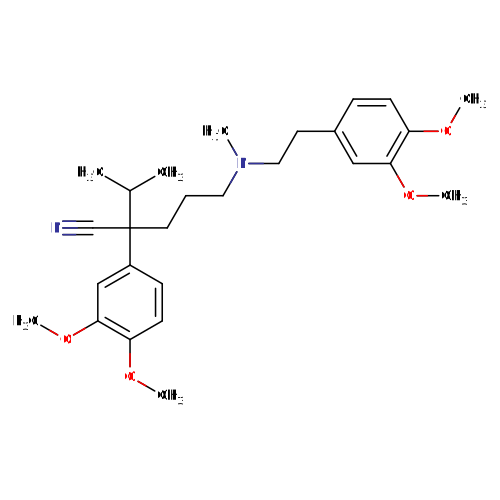
Structure for Verapamil (DB00661)
- Weight
- Average: 454.6016
Monoisotopic: 454.283157714 - Chemical Formula
- C27H38N2O4
- Synonyms
- Iproveratril
- Verapamil
- Vérapamil
- Verapamilo
- Verapamilum
- External IDs
- CP-16,533-1
- D-365

Pharmacology
- Indication
Verapamil is indicated in the treatment of vasopastic (i.e. Prinzmetal's) angina, unstable angina, and chronic stable angina. It is also indicated to treat hypertension, for the prophylaxis of repetitive paroxysmal supraventricular tachycardia, and in combination with digoxin to control ventricular rate in patients with atrial fibrillation or atrial flutter.19 Given intravenously, it is indicated for the treatment of various supraventricular tachyarrhythmias, including rapid conversion to sinus rhythm in patients with supraventricular tachycardia and for temporary control of ventricular rate in patients with atrial fibrillation or atrial flutter.18
Verapamil is commonly used off-label for prophylaxis of cluster headaches.4
 Reduce drug development failure ratesBuild, train, & validate machine-learning modelswith evidence-based and structured datasets.Build, train, & validate predictive machine-learning models with structured datasets.
- Associated Conditions
Indication Type Indication Combined Product Details Approval Level Age Group Patient Characteristics Dose Form Treatment of Chronic stable angina pectoris •••••••••••• •••••• Prophylaxis of Cluster headache ••• ••••• Used in combination to manage Heart rate Regimen in combination with: Digoxin (DB00390), Digitoxin (DB01396) •••••••••••• •••••• Treatment of High blood pressure (hypertension) •••••••••••• •••••••• •••••••• •••••••• ••••••• ••••••• •••••••• ••••••• Used in combination to manage Hypertension Combination Product in combination with: Trandolapril (DB00519) •••••••••••• ••••••• •••••••• ••••••• - Contraindications & Blackbox Warnings
 Prevent Adverse Drug Events TodayTap into our Clinical API for life-saving information on contraindications & blackbox warnings, population restrictions, harmful risks, & more.Avoid life-threatening adverse drug events with our Clinical API
- Pharmacodynamics
Verapamil is an L-type calcium channel blocker with antiarrhythmic, antianginal, and antihypertensive activity.19 Immediate-release verapamil has a relatively short duration of action, requiring dosing 3 to 4 times daily,19 but extended-release formulations are available that allow for once-daily dosing.17,22 As verapamil is a negative inotropic medication (i.e. it decreases the strength of myocardial contraction), it should not be used in patients with severe left ventricular dysfunction or hypertrophic cardiomyopathy as the decrease in contractility caused by verapamil may increase the risk of exacerbating these pre-existing conditions.17
- Mechanism of action
Verapamil inhibits L-type calcium channels by binding to a specific area of their alpha-1 subunit,17Cav1.2, which is highly expressed on L-type calcium channels in vascular smooth muscle and myocardial tissue where these channels are responsible for the control of peripheral vascular resistance and heart contractility.10 Calcium influx through these channels allows for the propagation of action potentials necessary for the contraction of muscle tissue and the heart's electrical pacemaker activity. Verapamil binds to these channels in a voltage- and frequency-dependent manner, meaning affinity is increased 1) as vascular smooth muscle membrane potential is reduced, and 2) with excessive depolarizing stimulus.17
Verapamil's mechanism of action in the treatment of angina and hypertension is likely due to the mechanism described above. Inhibition of calcium influx prevents the contraction of vascular smooth muscle, causing relaxation/dilation of blood vessels throughout the peripheral circulation - this lowers systemic vascular resistance (i.e. afterload) and thus blood pressure. This reduction in vascular resistance also reduces the force against which the heart must push, decreasing myocardial energy consumption and oxygen requirements and thus alleviating angina.19
Electrical activity through the AV node is responsible for determining heart rate, and this activity is dependent upon calcium influx through L-type calcium channels. By inhibiting these channels and decreasing the influx of calcium, verapamil prolongs the refractory period of the AV node and slows conduction, thereby slowing and controlling the heart rate in patients with arrhythmia.19
Verapamil's mechanism of action in the treatment of cluster headaches is unclear, but is thought to result from an effect on other calcium channels (e.g. N-, P-, Q-, or T-type).4
Verapamil is known to interact with other targets, including other calcium channels,14,15,7,8 potassium channels,6,16,4 and adrenergic receptors.11,12
Target Actions Organism AVoltage-dependent L-type calcium channel subunit alpha-1C inhibitorHumans UVoltage-dependent N-type calcium channel subunit alpha-1B inhibitorHumans UVoltage-dependent P/Q-type calcium channel subunit alpha-1A inhibitorHumans UATP-sensitive inward rectifier potassium channel 11 inhibitorHumans UVoltage-dependent T-type calcium channel subunit alpha-1G inhibitorHumans UVoltage-dependent T-type calcium channel subunit alpha-1H inhibitorHumans UPotassium voltage-gated channel subfamily H member 2 inhibitorHumans USodium-dependent serotonin transporter unknownHumans UAlpha-1A adrenergic receptor antagonistHumans UAlpha-1B adrenergic receptor antagonistHumans UAlpha-1D adrenergic receptor antagonistHumans UVoltage-dependent calcium channel inhibitorHumans UP-glycoprotein 1 inhibitorblockerHumans - Absorption
More than 90% of orally administered verapamil is absorbed - despite this, bioavailability ranges only from 20% to 30% due to rapid biotransformation following first-pass metabolism in the portal circulation.19 Absorption kinetic parameters are largely dependent on the specific formulation of verapamil involved. Immediate-release verapamil reaches peak plasma concentrations (i.e. Tmax) between 1-2 hours following administration,19 whereas sustained-release formulations tend to have a Tmax between 6 - 11 hours.17,22
AUC and Cmax values are similarly dependent upon formulation. Chronic administration of immediate-release verapamil every 6 hours resulted in plasma concentrations between 125 and 400 ng/mL.19 Steady-state AUC0-24h and Cmax values for a sustained-release formulation were 1037 ng∙h/ml and 77.8 ng/mL for the R-isomer and 195 ng∙h/ml and 16.8 ng/mL for the S-isomer, respectively.17
Interestingly, the absorption kinetics of verapamil are highly stereospecific - following oral administration of immediate-release verapamil every 8 hours, the relative systemic availability of the S-enantiomer compared to the R-enantiomer was 13% after a single dose and 18% at steady-state.17
- Volume of distribution
Verapamil has a steady-state volume of distribution of approximately 300L for its R-enantiomer and 500L for its S-enantiomer.4
- Protein binding
Verapamil is extensively protein-bound in plasma. R-verapamil is 94% bound to serum albumin while S-verapamil is 88% bound. Additionally, R-verapamil is 92% bound to alpha-1 acid glycoprotein and S-verapamil is 86% bound.19
- Metabolism
Verapamil is extensively metabolized by the liver, with up to 80% of an administered dose subject to elimination via pre-systemic metabolism - interestingly, this first-pass metabolism appears to clear the S-enantiomer of verapamil much faster than the R-enantiomer.17,9 The remaining parent drug undergoes O-demethylation, N-dealkylation, and N-demethylation to a number of different metabolites via the cytochrome P450 enzyme system.9 Norverapamil, one of the major circulating metabolites, is the result of verapamil's N-demethylation via CYP2C8, CYP3A4, and CYP3A5,9 and carries approximately 20% of the cardiovascular activity of its parent drug.17 The other major pathway involved in verapamil metabolism is N-dealkylation via CYP2C8, CYP3A4, and CYP1A2 to the D-617 metabolite. Both norverapamil and D-617 are further metabolized by other CYP isoenzymes to various secondary metabolites. CYP2D6 and CYP2E1 have also been implicated in the metabolic pathway of verapamil, albeit to a minor extent.9 Minor pathways of verapamil metabolism involve its O-demethylation to D-703 via CYP2C8, CYP2C9, and CYP2C18, and to D-702 via CYP2C9 and CYP2C18.9
Several steps in verapamil's metabolic pathway show stereoselective preference for the S-enantiomer of the given substrate, including the generation of the D-620 metabolite by CYP3A4/5 and the D-617 metabolite by CYP2C8.9
Hover over products below to view reaction partners
- Route of elimination
Approximately 70% of an administered dose is excreted as metabolites in the urine and ≥16% in the feces within 5 days. Approximately 3% - 4% is excreted in the urine as unchanged drug.19
- Half-life
Single-dose studies of immediate-release verapamil have demonstrated an elimination half-life of 2.8 to 7.4 hours, which increases to 4.5 to 12.0 hours following repetitive dosing.19 The elimination half-life is also prolonged in patients with hepatic insufficiency (14 to 16 hours) and in the elderly (approximately 20 hours).17 Intravenously administered verapamil has rapid distribution phase half-life of approximately 4 minutes, followed by a terminal elimination phase half-life of 2 to 5 hours.18
- Clearance
Systemic clearance following 3 weeks of continuous treatment was approximately 340 mL/min for R-verapamil and 664 mL/min for S-verapamil.5 Of note, apparent oral clearance appears to vary significantly between single dose and multiple-dose conditions. The apparent oral clearance following single doses of verapamil was approximately 1007 mL/min for R-verapamil and 5481 mL/min for S-verapamil, whereas 3 weeks of continuous treatment resulted in apparent oral clearance values of approximately 651 mL/min for R-verapamil and 2855 mL/min for S-verapamil.5
- Adverse Effects
 Improve decision support & research outcomesWith structured adverse effects data, including: blackbox warnings, adverse reactions, warning & precautions, & incidence rates. View sample adverse effects data in our new Data Library!Improve decision support & research outcomes with our structured adverse effects data.
- Toxicity
Verapamil's reported oral TDLo is 14.4 mg/kg in women and 3.429 mg/kg in men.21 The oral LD50 is 150 mg/kg in rats and 163 mg/kg in mice.21
As there is no antidote for verapamil overdosage, treatment is largely supportive. Symptoms of overdose are generally consistent with verapamil's adverse effect profile (i.e. hypotension, bradycardia, arrhythmia) but instances of non-cardiogenic pulmonary edema have been observed following ingestion of large overdoses (up to 9 grams).17 In acute overdosage, consider the use of gastrointestinal decontamination with cathartics and/or bowel irrigation. Patients presenting with significant myocardial depression may require intravenous calcium, atropine, vasopressors, or other inotropes. Consider the formulation responsible for the overdose prior to treatment - sustained-release formulations may result in delayed pharmacodynamic effects, and these patients should be monitored closely for at least 48 hours following ingestion.17
- Pathways
Pathway Category Verapamil Action Pathway Drug action - Pharmacogenomic Effects/ADRs
Interacting Gene/Enzyme Allele name Genotype(s) Defining Change(s) Type(s) Description Details Beta-1 adrenergic receptor --- (G;G) / (C;G) G > C Effect Directly Studied Patients with this genotype require a lower dosage of verapamil to achieve a favourable rate-control response when treating atrial fibrillation. Details
Interactions
- Drug Interactions
- This information should not be interpreted without the help of a healthcare provider. If you believe you are experiencing an interaction, contact a healthcare provider immediately. The absence of an interaction does not necessarily mean no interactions exist.
Drug Interaction Integrate drug-drug
interactions in your software1,2-Benzodiazepine The metabolism of 1,2-Benzodiazepine can be decreased when combined with Verapamil. Abacavir Verapamil may decrease the excretion rate of Abacavir which could result in a higher serum level. Abaloparatide The risk or severity of adverse effects can be increased when Verapamil is combined with Abaloparatide. Abametapir The serum concentration of Verapamil can be increased when it is combined with Abametapir. Abatacept The metabolism of Verapamil can be increased when combined with Abatacept. - Food Interactions
- Avoid alcohol. Verapamil significantly inhibits the elimination of alcohol, leading to elevated blood alcohol levels.
- Avoid grapefruit products. Co-administration with grapefruit may significantly increase serum concentrations.
- Take with or without food. Recommendations vary from product to product - consult individual product monographs for additional information.
Products
 Drug product information from 10+ global regionsOur datasets provide approved product information including:dosage, form, labeller, route of administration, and marketing period.Access drug product information from over 10 global regions.
- Product Ingredients
Ingredient UNII CAS InChI Key Verapamil hydrochloride V3888OEY5R 152-11-4 DOQPXTMNIUCOSY-UHFFFAOYSA-N - Product Images
- International/Other Brands
- Bosoptin (Bosnalijek) / Isoptin (Abbott) / Verisop (Gerard) / Vermin (Ratiopharm) / Vermine (Pharmasant) / Verogalid (Ivax) / Verogalid ER (Ivax) / Verpamil (Mylan) / Vertab (Trinity-Chiesi) / Vetrimil (CCPC) / Zolvera (Rosemont)
- Brand Name Prescription Products
Name Dosage Strength Route Labeller Marketing Start Marketing End Region Image Calan Tablet, film coated 80 mg/1 Oral G.D. Searle LLC Division of Pfizer Inc 1984-09-10 2018-06-30 US 
Calan Tablet, film coated 120 mg/1 Oral Physicians Total Care, Inc. 1994-07-05 2012-06-30 US Calan Tablet, film coated 120 mg/1 Oral G.D. Searle LLC Division of Pfizer Inc 1984-09-10 Not applicable US Calan Tablet, film coated 40 mg/1 Oral G.D. Searle LLC 2006-06-01 2006-06-01 US Calan SR Tablet, film coated, extended release 120 mg/1 Oral Physicians Total Care, Inc. 1994-07-25 2012-06-30 US - Generic Prescription Products
Name Dosage Strength Route Labeller Marketing Start Marketing End Region Image Alti-verapamil - 120mg Tablet 120 mg Oral Altimed Pharma Inc. 1990-12-31 2004-08-03 Canada 
Alti-verapamil - 80mg Tablet 80 mg Oral Altimed Pharma Inc. 1990-12-31 2004-08-03 Canada Apo-verap SR Tablet, extended release 180 mg Oral Apotex Corporation 2003-04-24 Not applicable Canada Apo-verap SR Tablet, extended release 120 mg Oral Apotex Corporation 2003-04-24 Not applicable Canada Apo-verap SR Tablet, extended release 240 mg Oral Apotex Corporation 2003-04-24 Not applicable Canada - Mixture Products
Name Ingredients Dosage Route Labeller Marketing Start Marketing End Region Image Tarka Verapamil hydrochloride (240 mg/1) + Trandolapril (2 mg/1) Tablet, film coated, extended release Oral AbbVie Inc. 1996-10-22 2021-09-13 US Tarka Verapamil hydrochloride (180 mg) + Trandolapril (2 mg) Tablet, extended release Oral Abbott 2002-07-15 2010-11-12 Canada Tarka Verapamil hydrochloride (180 mg/1) + Trandolapril (2 mg/1) Tablet, film coated, extended release Oral Physicians Total Care, Inc. 2009-01-01 Not applicable US Tarka Verapamil hydrochloride (240 mg/1) + Trandolapril (1 mg/1) Tablet, film coated, extended release Oral AbbVie Inc. 1996-10-22 2018-02-28 US Tarka Verapamil hydrochloride (240 mg) + Trandolapril (2 mg) Tablet, extended release Oral Bgp Pharma Ulc 2002-07-15 2019-11-19 Canada


Categories
- ATC Codes
- C09BB10 — Trandolapril and verapamil
- C09BB — ACE inhibitors and calcium channel blockers
- C09B — ACE INHIBITORS, COMBINATIONS
- C09 — AGENTS ACTING ON THE RENIN-ANGIOTENSIN SYSTEM
- C — CARDIOVASCULAR SYSTEM
- C08DA — Phenylalkylamine derivatives
- C08D — SELECTIVE CALCIUM CHANNEL BLOCKERS WITH DIRECT CARDIAC EFFECTS
- C08 — CALCIUM CHANNEL BLOCKERS
- C — CARDIOVASCULAR SYSTEM
- Drug Categories
- ACE Inhibitors and Calcium Channel Blockers
- Adrenergic alpha-1 Receptor Antagonists
- Adrenergic alpha-Antagonists
- Adrenergic Antagonists
- Amines
- Antiarrhythmic agents
- Antihypertensive Agents
- Antihypertensive Agents Indicated for Hypertension
- Bradycardia-Causing Agents
- Calcium Channel Blockers
- Calcium Channel Blockers (Nondihydropyridine)
- Cardiovascular Agents
- Cytochrome P-450 CYP1A2 Substrates
- Cytochrome P-450 CYP2B6 Substrates
- Cytochrome P-450 CYP2C18 Substrates
- Cytochrome P-450 CYP2C19 Substrates
- Cytochrome P-450 CYP2C8 Inhibitors
- Cytochrome P-450 CYP2C8 Inhibitors (strength unknown)
- Cytochrome P-450 CYP2C8 Substrates
- Cytochrome P-450 CYP2C9 Inhibitors
- Cytochrome P-450 CYP2C9 Inhibitors (weak)
- Cytochrome P-450 CYP2C9 Substrates
- Cytochrome P-450 CYP2D6 Inhibitors
- Cytochrome P-450 CYP2D6 Inhibitors (strength unknown)
- Cytochrome P-450 CYP2D6 Inhibitors (weak)
- Cytochrome P-450 CYP2E1 Substrates
- Cytochrome P-450 CYP3A Inhibitors
- Cytochrome P-450 CYP3A Substrates
- Cytochrome P-450 CYP3A4 Inhibitors
- Cytochrome P-450 CYP3A4 Inhibitors (moderate)
- Cytochrome P-450 CYP3A4 Substrates
- Cytochrome P-450 CYP3A5 Inhibitors
- Cytochrome P-450 CYP3A5 Inhibitors (moderate)
- Cytochrome P-450 CYP3A5 Substrates
- Cytochrome P-450 Enzyme Inhibitors
- Cytochrome P-450 Substrates
- Drugs that are Mainly Renally Excreted
- Hypotensive Agents
- MATE 1 Inhibitors
- MATE 2 Inhibitors
- MATE inhibitors
- Membrane Transport Modulators
- Miscellaneous Calcium-channel Blocking Agents
- Negative Inotrope
- OATP1B1/SLCO1B1 Inhibitors
- OCT1 inhibitors
- OCT1 substrates
- P-glycoprotein inhibitors
- P-glycoprotein substrates
- Phenylalkylamine Derivatives
- Selective Calcium Channel Blockers With Direct Cardiac Effects
- Vasodilating Agents
- Verapamil and analogues
- Chemical TaxonomyProvided by Classyfire
- Description
- This compound belongs to the class of organic compounds known as phenylbutylamines. These are compounds containing a phenylbutylamine moiety, which consists of a phenyl group substituted at the fourth carbon by an butan-1-amine.
- Kingdom
- Organic compounds
- Super Class
- Benzenoids
- Class
- Benzene and substituted derivatives
- Sub Class
- Phenylbutylamines
- Direct Parent
- Phenylbutylamines
- Alternative Parents
- Dimethoxybenzenes / Phenylpropanes / Phenethylamines / Phenoxy compounds / Anisoles / Aralkylamines / Alkyl aryl ethers / Trialkylamines / Nitriles / Organopnictogen compounds show 1 more
- Substituents
- Alkyl aryl ether / Amine / Anisole / Aralkylamine / Aromatic homomonocyclic compound / Carbonitrile / Dimethoxybenzene / Ether / Hydrocarbon derivative / Methoxybenzene show 14 more
- Molecular Framework
- Aromatic homomonocyclic compounds
- External Descriptors
- tertiary amino compound, aromatic ether, nitrile, polyether (CHEBI:77733)
- Affected organisms
- Humans and other mammals
Chemical Identifiers
- UNII
- CJ0O37KU29
- CAS number
- 52-53-9
- InChI Key
- SGTNSNPWRIOYBX-UHFFFAOYSA-N
- InChI
- InChI=1S/C27H38N2O4/c1-20(2)27(19-28,22-10-12-24(31-5)26(18-22)33-7)14-8-15-29(3)16-13-21-9-11-23(30-4)25(17-21)32-6/h9-12,17-18,20H,8,13-16H2,1-7H3
- IUPAC Name
- 2-(3,4-dimethoxyphenyl)-5-{[2-(3,4-dimethoxyphenyl)ethyl](methyl)amino}-2-(propan-2-yl)pentanenitrile
- SMILES
- COC1=C(OC)C=C(CCN(C)CCCC(C#N)(C(C)C)C2=CC(OC)=C(OC)C=C2)C=C1
References
- Synthesis Reference
Philippe Baudier, Arthur De Boeck, Jacques Fossion, "Novel galenic forms of verapamil, their preparation and medicines containing said novel galenic forms." U.S. Patent US4859469, issued April, 1987.
US4859469- General References
- Bellamy WT: P-glycoproteins and multidrug resistance. Annu Rev Pharmacol Toxicol. 1996;36:161-83. [Article]
- Ahmed JH, Meredith PA, Elliott HL: The influence of age on the pharmacokinetics of verapamil. Pharmacol Res. 1991 Oct;24(3):227-33. doi: 10.1016/1043-6618(91)90085-c. [Article]
- Dadashzadeh S, Javadian B, Sadeghian S: The effect of gender on the pharmacokinetics of verapamil and norverapamil in human. Biopharm Drug Dispos. 2006 Oct;27(7):329-34. doi: 10.1002/bdd.512. [Article]
- Tfelt-Hansen P, Tfelt-Hansen J: Verapamil for cluster headache. Clinical pharmacology and possible mode of action. Headache. 2009 Jan;49(1):117-25. doi: 10.1111/j.1526-4610.2008.01298.x. [Article]
- Busse D, Fromm MF, Morike K, Drescher S, Kuhlkamp V, Eichelbaum M: Disposition and pharmacologic effects of R/S-verapamil in patients with chronic atrial fibrillation: an investigation comparing single and multiple dosing. Clin Pharmacol Ther. 2001 May;69(5):324-32. doi: 10.1067/mcp.2001.115125. [Article]
- Ninomiya T, Takano M, Haruna T, Kono Y, Horie M: Verapamil, a Ca2+ entry blocker, targets the pore-forming subunit of cardiac type KATP channel (Kir6.2). J Cardiovasc Pharmacol. 2003 Aug;42(2):161-8. doi: 10.1097/00005344-200308000-00002. [Article]
- Bergson P, Lipkind G, Lee SP, Duban ME, Hanck DA: Verapamil block of T-type calcium channels. Mol Pharmacol. 2011 Mar;79(3):411-9. doi: 10.1124/mol.110.069492. Epub 2010 Dec 13. [Article]
- Perez-Reyes E, Van Deusen AL, Vitko I: Molecular pharmacology of human Cav3.2 T-type Ca2+ channels: block by antihypertensives, antiarrhythmics, and their analogs. J Pharmacol Exp Ther. 2009 Feb;328(2):621-7. doi: 10.1124/jpet.108.145672. Epub 2008 Oct 30. [Article]
- Zhou SF, Zhou ZW, Yang LP, Cai JP: Substrates, inducers, inhibitors and structure-activity relationships of human Cytochrome P450 2C9 and implications in drug development. Curr Med Chem. 2009;16(27):3480-675. Epub 2009 Sep 1. [Article]
- Striessnig J, Ortner NJ, Pinggera A: Pharmacology of L-type Calcium Channels: Novel Drugs for Old Targets? Curr Mol Pharmacol. 2015;8(2):110-22. [Article]
- Shibata K, Hirasawa A, Foglar R, Ogawa S, Tsujimoto G: Effects of quinidine and verapamil on human cardiovascular alpha1-adrenoceptors. Circulation. 1998 Apr 7;97(13):1227-30. [Article]
- Motulsky HJ, Snavely MD, Hughes RJ, Insel PA: Interaction of verapamil and other calcium channel blockers with alpha 1- and alpha 2-adrenergic receptors. Circ Res. 1983 Feb;52(2):226-31. [Article]
- Echizen H, Eichelbaum M: Clinical pharmacokinetics of verapamil, nifedipine and diltiazem. Clin Pharmacokinet. 1986 Nov-Dec;11(6):425-49. doi: 10.2165/00003088-198611060-00002. [Article]
- Dobrev D, Milde AS, Andreas K, Ravens U: The effects of verapamil and diltiazem on N-, P- and Q-type calcium channels mediating dopamine release in rat striatum. Br J Pharmacol. 1999 May;127(2):576-82. doi: 10.1038/sj.bjp.0702574. [Article]
- Freeze BS, McNulty MM, Hanck DA: State-dependent verapamil block of the cloned human Ca(v)3.1 T-type Ca(2+) channel. Mol Pharmacol. 2006 Aug;70(2):718-26. Epub 2006 May 12. [Article]
- Duan JJ, Ma JH, Zhang PH, Wang XP, Zou AR, Tu DN: Verapamil blocks HERG channel by the helix residue Y652 and F656 in the S6 transmembrane domain. Acta Pharmacol Sin. 2007 Jul;28(7):959-67. [Article]
- FDA Approved Drug Products: Verelan® PM extended-release capsules [Link]
- FDA Approved Drug Products: Verapamil HCl for intravenous injection [Link]
- Verapamil FDA Label [Link]
- FDA Approved Drugs: Tarka® extended-release tablets [Link]
- CaymanChem: Verapamil MSDS [Link]
- FDA Approved Drug Products: Calan SR tablets [Link]
- External Links
- Human Metabolome Database
- HMDB0001850
- KEGG Drug
- D02356
- KEGG Compound
- C07188
- PubChem Compound
- 2520
- PubChem Substance
- 46508158
- ChemSpider
- 2425
- BindingDB
- 81939
- 11170
- ChEBI
- 77733
- ChEMBL
- CHEMBL6966
- Therapeutic Targets Database
- DAP000040
- PharmGKB
- PA451868
- Guide to Pharmacology
- GtP Drug Page
- RxList
- RxList Drug Page
- Drugs.com
- Drugs.com Drug Page
- Wikipedia
- Verapamil
Clinical Trials
- Clinical Trials
Phase Status Purpose Conditions Count 4 Completed Prevention Kidney Stones 1 4 Completed Treatment Acute Myocardial Infarction (AMI) / Percutaneous Coronary Intervention (PCI) 1 4 Completed Treatment Coronary Artery Disease (CAD) / Hypertension 1 4 Completed Treatment Diabetes / Hypertension 1 4 Completed Treatment Diabetes / Hypertension / Proteinuria 1
Pharmacoeconomics
- Manufacturers
- Mylan pharmaceuticals inc
- Elan drug delivery inc
- Gd searle llc
- Fsc laboratories inc
- Abraxis pharmaceutical products
- Bedford laboratories div ben venue laboratories inc
- Hospira inc
- International medication system
- Luitpold pharmaceuticals inc
- Marsam pharmaceuticals llc
- Smith and nephew solopak div smith and nephew
- Solopak medical products inc
- Ranbaxy laboratories inc
- Glenmark generics ltd
- Ivax pharmaceuticals inc sub teva pharmaceuticals usa
- Par pharmaceutical inc
- Pliva inc
- Actavis elizabeth llc
- Heritage pharmaceuticals inc
- Mutual pharmaceutical co inc
- Sandoz inc
- Warner chilcott div warner lambert co
- Watson laboratories inc
- Packagers
- Abbott Laboratories Ltd.
- Advanced Pharmaceutical Services Inc.
- Alza Corp.
- Amerisource Health Services Corp.
- Apotheca Inc.
- A-S Medication Solutions LLC
- Atlantic Biologicals Corporation
- BASF Corp.
- Cardinal Health
- Caremark LLC
- Comprehensive Consultant Services Inc.
- Copley Chemical Co.
- Dee Stevens and Son Feeder
- Dept Health Central Pharmacy
- Direct Dispensing Inc.
- Dispensing Solutions
- Diversified Healthcare Services Inc.
- Duramed
- Elan Pharmaceuticals Inc.
- FSC Laboratories
- GD Searle LLC
- General Injectables and Vaccines Inc.
- Glenmark Generics Ltd.
- Golden State Medical Supply Inc.
- Group Health Cooperative
- H.J. Harkins Co. Inc.
- Heartland Repack Services LLC
- Hospira Inc.
- Ivax Pharmaceuticals
- Kaiser Foundation Hospital
- Lake Erie Medical and Surgical Supply
- Liberty Pharmaceuticals
- Major Pharmaceuticals
- Medisca Inc.
- Murfreesboro Pharmaceutical Nursing Supply
- Mylan
- Nucare Pharmaceuticals Inc.
- Palmetto Pharmaceuticals Inc.
- PD-Rx Pharmaceuticals Inc.
- Pfizer Inc.
- Pharmaceutical Utilization Management Program VA Inc.
- Pharmacia Inc.
- Pharmedix
- Physicians Total Care Inc.
- Preferred Pharmaceuticals Inc.
- Prepackage Specialists
- Prepak Systems Inc.
- Prescript Pharmaceuticals
- Ranbaxy Laboratories
- Remedy Repack
- Resource Optimization and Innovation LLC
- Sandhills Packaging Inc.
- Schwarz Pharma Inc.
- Southwood Pharmaceuticals
- Talbert Medical Management Corp.
- Tya Pharmaceuticals
- UDL Laboratories
- United Research Laboratories Inc.
- Vangard Labs Inc.
- Watson Pharmaceuticals
- Dosage Forms
Form Route Strength Tablet, film coated Oral 80 mg Tablet Oral Tablet, extended release Oral 180 mg Tablet Oral 240.000 mg Capsule 180 mg Capsule 240 mg Capsule, coated Oral 240 mg Tablet, coated Oral 120 mg Injection, solution Intravenous 125 MG/50ML Pill 80 MG Solution Intravenous 5 mg/2ml Solution 5 mg/2ml Tablet, film coated Oral 120 MG Tablet, sugar coated Oral 40 mg Injection, solution Intravenous 5 mg/2ml Tablet, sugar coated Oral Tablet, film coated Oral 40 MG Tablet, film coated Oral 240 mg Tablet, coated Oral 120 mg/1 Tablet, coated Oral 180 mg/1 Tablet, coated Oral 240 mg/1 Tablet, extended release Oral Tablet, extended release Oral 240 mg Tablet, film coated Oral 240.0 mg Injection Parenteral 5 mg Tablet Oral 120 mg Tablet, extended release Oral 120 mg Solution Parenteral 5 mg Tablet Oral 40 mg Tablet Oral 80 mg Tablet, extended release Oral Tablet, film coated, extended release Oral Tablet, film coated Oral Tablet, delayed release Oral Capsule, coated Oral Capsule Tablet Oral 80.00 mg Capsule Oral Solution Intravenous 5.000 mg Tablet, film coated Oral Capsule, delayed release Tablet, coated Oral Pill Tablet Oral 240 MG Injection Intravenous 5 mg/1mL Capsule, delayed release pellets Oral 120 mg/1 Capsule, delayed release pellets Oral 180 mg/1 Capsule, extended release Oral 100 mg/1 Capsule, extended release Oral 120 mg/1 Capsule, extended release Oral 180 mg/1 Capsule, extended release Oral 200 mg/1 Capsule, extended release Oral 240 mg/1 Capsule, extended release Oral 300 mg/1 Injection Intravenous 10 mg/4mL Injection Intravenous 2.5 mg/1mL Injection Intravenous 5 mg/2mL Injection, solution Intravenous 2.5 mg/1mL Injection, solution Intravenous 2.5 mg/1 mL Powder Not applicable 1 kg/1kg Tablet Oral 120 mg/1 Tablet Oral 180 mg/1 Tablet Oral 240 mg/1 Tablet Oral 40 mg/1 Tablet Oral 80 mg/1 Tablet, extended release Oral 120 mg/1 Tablet, extended release Oral 180 mg/1 Tablet, extended release Oral 240 mg/1 Tablet, extended release Oral 240 mg/301 Tablet, film coated Oral 120 mg/1 Tablet, film coated Oral 40 mg/1 Tablet, film coated Oral 80 mg/1 Tablet, film coated, extended release Oral 120 mg/1 Tablet, film coated, extended release Oral 180 mg/1 Tablet, film coated, extended release Oral 240 mg/1 Liquid Intravenous 2.5 mg / mL Solution Intravenous 2.5 mg / mL Capsule, extended release Oral Solution Intravenous 2.50 mg Tablet, coated Oral 12000000 mg Tablet, coated Oral 84 mg Tablet, film coated Oral 81.6 mg Tablet, coated Oral 80 mg Solution Intravenous 5 mg Tablet, delayed release Oral 80 mg Capsule, delayed release pellets Oral 240 mg/1 Capsule, delayed release pellets Oral 360 mg/1 Capsule, extended release Oral 120 mg Capsule, extended release Oral 180 mg Capsule, extended release Oral 240 mg Injection, solution Intravenous 2.5 mg/mL Injection Intravenous 2.5 mg/ml Tablet Oral 80.000 mg Solution Parenteral 250.000 mg Tablet, coated Oral 40 mg - Prices
Unit description Cost Unit Verelan 360 mg 24 Hour Capsule 6.82USD capsule Verelan 360 mg cap pellet 6.73USD pellet Verelan pm 300 mg cap pellet 5.87USD pellet Verelan 240 mg 24 Hour Capsule 4.76USD capsule Verelan 240 mg cap pellet 4.58USD pellet Verelan 180 mg 24 Hour Capsule 4.22USD capsule Verelan 180 mg cap pellet 4.06USD pellet Verelan pm 200 mg cap pellet 4.04USD pellet Verelan 120 mg cap pellet 3.87USD pellet Verapamil HCl CR 300 mg 24 Hour Capsule 3.82USD capsule Isoptin sr 240 mg tablet 3.32USD tablet Verapamil hcl powder 3.24USD g Calan SR 240 mg Controlled Release Tabs 3.15USD tab Isoptin SR 240 mg Controlled Release Tabs 3.14USD tab Verelan pm 100 mg cap pellet 3.13USD pellet Calan sr 240 mg caplet 3.09USD caplet Covera-HS 240 mg 24 Hour tablet 3.09USD tablet Covera-hs 240 mg tablet sa 2.97USD tablet Isoptin sr 180 mg tablet 2.9USD tablet Calan SR 180 mg Controlled Release Tabs 2.8USD tab Isoptin SR 180 mg Controlled Release Tabs 2.74USD tab Calan sr 180 mg caplet 2.7USD caplet Verapamil HCl CR 200 mg 24 Hour Capsule 2.62USD capsule Isoptin sr 120 mg tablet 2.29USD tablet Calan SR 120 mg Controlled Release Tabs 2.27USD tab Covera-HS 180 mg 24 Hour tablet 2.2USD tablet Isoptin SR 120 mg Controlled Release Tabs 2.16USD tab Calan sr 120 mg caplet 2.13USD caplet Covera-hs 180 mg tablet sa 2.11USD tablet Verapamil HCl CR 360 mg 24 Hour Capsule 2.1USD capsule Verapamil HCl CR 100 mg 24 Hour Capsule 2.04USD capsule Isoptin Sr 240 mg Sustained-Release Tablet 2.03USD tablet Calan sr 240 mg caplet sa 1.77USD caplet Verapamil HCl CR 240 mg 24 Hour Capsule 1.69USD capsule Verapamil HCl CR 240 mg Controlled Release Tabs 1.6USD tab Calan 120 mg tablet 1.56USD tablet Isoptin Sr 180 mg Sustained-Release Tablet 1.52USD tablet Verapamil HCl CR 180 mg 24 Hour Capsule 1.5USD capsule Calan sr 180 mg caplet sa 1.46USD caplet Verapamil HCl CR 120 mg 24 Hour Capsule 1.43USD capsule Verapamil HCl CR 180 mg Controlled Release Tabs 1.41USD tab Isoptin Sr 120 mg Sustained-Release Tablet 1.34USD tablet Calan 80 mg tablet 1.25USD tablet Verapamil 2.5 mg/ml vial 1.18USD ml Verapamil HCl CR 120 mg Controlled Release Tabs 1.12USD tab Apo-Verap Sr 240 mg Sustained-Release Tablet 0.91USD tablet Mylan-Verapamil Sr 240 mg Sustained-Release Tablet 0.91USD tablet Novo-Veramil Sr 240 mg Sustained-Release Tablet 0.91USD tablet Pms-Verapamil Sr 240 mg Sustained-Release Tablet 0.91USD tablet Calan 40 mg tablet 0.76USD tablet Apo-Verap Sr 120 mg Sustained-Release Tablet 0.72USD tablet Mylan-Verapamil Sr 120 mg Sustained-Release Tablet 0.72USD tablet Verapamil HCl 120 mg tablet 0.71USD tablet Apo-Verap Sr 180 mg Sustained-Release Tablet 0.69USD tablet Mylan-Verapamil Sr 180 mg Sustained-Release Tablet 0.69USD tablet Verapamil HCl 80 mg tablet 0.56USD tablet Apo-Verap 120 mg Tablet 0.45USD tablet Mylan-Verapamil 120 mg Tablet 0.45USD tablet Nu-Verap 120 mg Tablet 0.45USD tablet Verapamil 120 mg tablet 0.39USD tablet Verapamil 80 mg tablet 0.31USD tablet Verapamil HCl 40 mg tablet 0.29USD tablet Apo-Verap 80 mg Tablet 0.29USD tablet Mylan-Verapamil 80 mg Tablet 0.29USD tablet Nu-Verap 80 mg Tablet 0.29USD tablet Verapamil 40 mg tablet 0.28USD tablet DrugBank does not sell nor buy drugs. Pricing information is supplied for informational purposes only.- Patents
Patent Number Pediatric Extension Approved Expires (estimated) Region US5785994 No 1998-07-28 2009-10-22 US US6096339 No 2000-08-01 2017-04-04 US
Properties
- State
- Solid
- Experimental Properties
- Not Available
- Predicted Properties
Property Value Source Water Solubility 0.00394 mg/mL ALOGPS logP 5.23 ALOGPS logP 5.04 Chemaxon logS -5.1 ALOGPS pKa (Strongest Basic) 9.68 Chemaxon Physiological Charge 1 Chemaxon Hydrogen Acceptor Count 6 Chemaxon Hydrogen Donor Count 0 Chemaxon Polar Surface Area 63.95 Å2 Chemaxon Rotatable Bond Count 13 Chemaxon Refractivity 132.65 m3·mol-1 Chemaxon Polarizability 51.7 Å3 Chemaxon Number of Rings 2 Chemaxon Bioavailability 0 Chemaxon Rule of Five No Chemaxon Ghose Filter No Chemaxon Veber's Rule No Chemaxon MDDR-like Rule No Chemaxon - Predicted ADMET Features
Property Value Probability Human Intestinal Absorption + 0.9371 Blood Brain Barrier + 0.6323 Caco-2 permeable + 0.738 P-glycoprotein substrate Substrate 0.7874 P-glycoprotein inhibitor I Inhibitor 0.9056 P-glycoprotein inhibitor II Inhibitor 0.855 Renal organic cation transporter Inhibitor 0.6259 CYP450 2C9 substrate Non-substrate 0.8029 CYP450 2D6 substrate Non-substrate 0.8706 CYP450 3A4 substrate Substrate 0.7657 CYP450 1A2 substrate Non-inhibitor 0.9553 CYP450 2C9 inhibitor Non-inhibitor 0.9071 CYP450 2D6 inhibitor Non-inhibitor 0.9231 CYP450 2C19 inhibitor Non-inhibitor 0.9026 CYP450 3A4 inhibitor Inhibitor 0.796 CYP450 inhibitory promiscuity Low CYP Inhibitory Promiscuity 0.9181 Ames test Non AMES toxic 0.8393 Carcinogenicity Non-carcinogens 0.6463 Biodegradation Not ready biodegradable 1.0 Rat acute toxicity 3.4137 LD50, mol/kg Not applicable hERG inhibition (predictor I) Weak inhibitor 0.7687 hERG inhibition (predictor II) Inhibitor 0.8188
Spectra
- Mass Spec (NIST)
- Not Available
- Spectra
- Chromatographic Properties
Collision Cross Sections (CCS)
Adduct CCS Value (Å2) Source type Source [M-H]- 227.5669678 predictedDarkChem Lite v0.1.0 [M-H]- 212.53043 predictedDeepCCS 1.0 (2019) [M+H]+ 227.2429678 predictedDarkChem Lite v0.1.0 [M+H]+ 214.88843 predictedDeepCCS 1.0 (2019) [M+Na]+ 227.7249678 predictedDarkChem Lite v0.1.0 [M+Na]+ 221.00804 predictedDeepCCS 1.0 (2019)
Targets

- Kind
- Protein
- Organism
- Humans
- Pharmacological action
- Yes
- Actions
- Inhibitor
- General Function
- Voltage-gated calcium channel activity
- Specific Function
- Voltage-sensitive calcium channels (VSCC) mediate the entry of calcium ions into excitable cells and are also involved in a variety of calcium-dependent processes, including muscle contraction, hor...
- Gene Name
- CACNA1C
- Uniprot ID
- Q13936
- Uniprot Name
- Voltage-dependent L-type calcium channel subunit alpha-1C
- Molecular Weight
- 248974.1 Da
References
- Dilmac N, Hilliard N, Hockerman GH: Molecular determinants of frequency dependence and Ca2+ potentiation of verapamil block in the pore region of Cav1.2. Mol Pharmacol. 2004 Nov;66(5):1236-47. Epub 2004 Jul 30. [Article]
- Morel N, Buryi V, Feron O, Gomez JP, Christen MO, Godfraind T: The action of calcium channel blockers on recombinant L-type calcium channel alpha1-subunits. Br J Pharmacol. 1998 Nov;125(5):1005-12. [Article]
- Patel MK, Clunn GF, Lymn JS, Austin O, Hughes AD: Effect of serum withdrawal on the contribution of L-type calcium channels (CaV1.2) to intracellular Ca2+ responses and chemotaxis in cultured human vascular smooth muscle cells. Br J Pharmacol. 2005 Jul;145(6):811-7. [Article]
- Tfelt-Hansen P, Tfelt-Hansen J: Verapamil for cluster headache. Clinical pharmacology and possible mode of action. Headache. 2009 Jan;49(1):117-25. doi: 10.1111/j.1526-4610.2008.01298.x. [Article]
- Kind
- Protein
- Organism
- Humans
- Pharmacological action
- Unknown
- Actions
- Inhibitor
- General Function
- Voltage-gated calcium channel activity
- Specific Function
- Voltage-sensitive calcium channels (VSCC) mediate the entry of calcium ions into excitable cells and are also involved in a variety of calcium-dependent processes, including muscle contraction, hor...
- Gene Name
- CACNA1B
- Uniprot ID
- Q00975
- Uniprot Name
- Voltage-dependent N-type calcium channel subunit alpha-1B
- Molecular Weight
- 262493.84 Da
References
- Dobrev D, Milde AS, Andreas K, Ravens U: The effects of verapamil and diltiazem on N-, P- and Q-type calcium channels mediating dopamine release in rat striatum. Br J Pharmacol. 1999 May;127(2):576-82. doi: 10.1038/sj.bjp.0702574. [Article]
- Kind
- Protein
- Organism
- Humans
- Pharmacological action
- Unknown
- Actions
- Inhibitor
- General Function
- Voltage-gated calcium channel activity
- Specific Function
- Voltage-sensitive calcium channels (VSCC) mediate the entry of calcium ions into excitable cells and are also involved in a variety of calcium-dependent processes, including muscle contraction, hor...
- Gene Name
- CACNA1A
- Uniprot ID
- O00555
- Uniprot Name
- Voltage-dependent P/Q-type calcium channel subunit alpha-1A
- Molecular Weight
- 282362.39 Da
References
- Dobrev D, Milde AS, Andreas K, Ravens U: The effects of verapamil and diltiazem on N-, P- and Q-type calcium channels mediating dopamine release in rat striatum. Br J Pharmacol. 1999 May;127(2):576-82. doi: 10.1038/sj.bjp.0702574. [Article]
- Kind
- Protein
- Organism
- Humans
- Pharmacological action
- Unknown
- Actions
- Inhibitor
- General Function
- Voltage-gated potassium channel activity
- Specific Function
- This receptor is controlled by G proteins. Inward rectifier potassium channels are characterized by a greater tendency to allow potassium to flow into the cell rather than out of it. Their voltage ...
- Gene Name
- KCNJ11
- Uniprot ID
- Q14654
- Uniprot Name
- ATP-sensitive inward rectifier potassium channel 11
- Molecular Weight
- 43540.375 Da
References
- Ninomiya T, Takano M, Haruna T, Kono Y, Horie M: Verapamil, a Ca2+ entry blocker, targets the pore-forming subunit of cardiac type KATP channel (Kir6.2). J Cardiovasc Pharmacol. 2003 Aug;42(2):161-8. doi: 10.1097/00005344-200308000-00002. [Article]
- Kind
- Protein
- Organism
- Humans
- Pharmacological action
- Unknown
- Actions
- Inhibitor
- General Function
- Scaffold protein binding
- Specific Function
- Voltage-sensitive calcium channels (VSCC) mediate the entry of calcium ions into excitable cells and are also involved in a variety of calcium-dependent processes, including muscle contraction, hor...
- Gene Name
- CACNA1G
- Uniprot ID
- O43497
- Uniprot Name
- Voltage-dependent T-type calcium channel subunit alpha-1G
- Molecular Weight
- 262468.62 Da
References
- Freeze BS, McNulty MM, Hanck DA: State-dependent verapamil block of the cloned human Ca(v)3.1 T-type Ca(2+) channel. Mol Pharmacol. 2006 Aug;70(2):718-26. Epub 2006 May 12. [Article]
- Bergson P, Lipkind G, Lee SP, Duban ME, Hanck DA: Verapamil block of T-type calcium channels. Mol Pharmacol. 2011 Mar;79(3):411-9. doi: 10.1124/mol.110.069492. Epub 2010 Dec 13. [Article]
- Kind
- Protein
- Organism
- Humans
- Pharmacological action
- Unknown
- Actions
- Inhibitor
- General Function
- Scaffold protein binding
- Specific Function
- Voltage-sensitive calcium channels (VSCC) mediate the entry of calcium ions into excitable cells and are also involved in a variety of calcium-dependent processes, including muscle contraction, hor...
- Gene Name
- CACNA1H
- Uniprot ID
- O95180
- Uniprot Name
- Voltage-dependent T-type calcium channel subunit alpha-1H
- Molecular Weight
- 259160.2 Da
References
- Perez-Reyes E, Van Deusen AL, Vitko I: Molecular pharmacology of human Cav3.2 T-type Ca2+ channels: block by antihypertensives, antiarrhythmics, and their analogs. J Pharmacol Exp Ther. 2009 Feb;328(2):621-7. doi: 10.1124/jpet.108.145672. Epub 2008 Oct 30. [Article]
- Kind
- Protein
- Organism
- Humans
- Pharmacological action
- Unknown
- Actions
- Inhibitor
- General Function
- Voltage-gated potassium channel activity involved in ventricular cardiac muscle cell action potential repolarization
- Specific Function
- Pore-forming (alpha) subunit of voltage-gated inwardly rectifying potassium channel. Channel properties are modulated by cAMP and subunit assembly. Mediates the rapidly activating component of the ...
- Gene Name
- KCNH2
- Uniprot ID
- Q12809
- Uniprot Name
- Potassium voltage-gated channel subfamily H member 2
- Molecular Weight
- 126653.52 Da
References
- Duan JJ, Ma JH, Zhang PH, Wang XP, Zou AR, Tu DN: Verapamil blocks HERG channel by the helix residue Y652 and F656 in the S6 transmembrane domain. Acta Pharmacol Sin. 2007 Jul;28(7):959-67. [Article]
- Schneider J, Hauser R, Andreas JO, Linz K, Jahnel U: Differential effects of human ether-a-go-go-related gene (HERG) blocking agents on QT duration variability in conscious dogs. Eur J Pharmacol. 2005 Apr 4;512(1):53-60. [Article]
- Tfelt-Hansen P, Tfelt-Hansen J: Verapamil for cluster headache. Clinical pharmacology and possible mode of action. Headache. 2009 Jan;49(1):117-25. doi: 10.1111/j.1526-4610.2008.01298.x. [Article]
- Kind
- Protein
- Organism
- Humans
- Pharmacological action
- Unknown
- Actions
- Unknown
- General Function
- Serotonin:sodium symporter activity
- Specific Function
- Serotonin transporter whose primary function in the central nervous system involves the regulation of serotonergic signaling via transport of serotonin molecules from the synaptic cleft back into t...
- Gene Name
- SLC6A4
- Uniprot ID
- P31645
- Uniprot Name
- Sodium-dependent serotonin transporter
- Molecular Weight
- 70324.165 Da
References
- Tatsumi M, Groshan K, Blakely RD, Richelson E: Pharmacological profile of antidepressants and related compounds at human monoamine transporters. Eur J Pharmacol. 1997 Dec 11;340(2-3):249-58. [Article]
- Brown NL, Sirugue O, Worcel M: The effects of some slow channel blocking drugs on high affinity serotonin uptake by rat brain synaptosomes. Eur J Pharmacol. 1986 Apr 9;123(1):161-5. [Article]
- Kind
- Protein
- Organism
- Humans
- Pharmacological action
- Unknown
- Actions
- Antagonist
- Curator comments
- Inhibits receptor activity but shows little competition for binding. Likely an allosteric modulator.
- General Function
- Protein heterodimerization activity
- Specific Function
- This alpha-adrenergic receptor mediates its action by association with G proteins that activate a phosphatidylinositol-calcium second messenger system. Its effect is mediated by G(q) and G(11) prot...
- Gene Name
- ADRA1A
- Uniprot ID
- P35348
- Uniprot Name
- Alpha-1A adrenergic receptor
- Molecular Weight
- 51486.005 Da
References
- Shibata K, Hirasawa A, Foglar R, Ogawa S, Tsujimoto G: Effects of quinidine and verapamil on human cardiovascular alpha1-adrenoceptors. Circulation. 1998 Apr 7;97(13):1227-30. [Article]
- Kind
- Protein
- Organism
- Humans
- Pharmacological action
- Unknown
- Actions
- Antagonist
- Curator comments
- Inhibits receptor activity but shows little competition for binding. Likely an allosteric modulator.
- General Function
- Protein heterodimerization activity
- Specific Function
- This alpha-adrenergic receptor mediates its action by association with G proteins that activate a phosphatidylinositol-calcium second messenger system. Its effect is mediated by G(q) and G(11) prot...
- Gene Name
- ADRA1B
- Uniprot ID
- P35368
- Uniprot Name
- Alpha-1B adrenergic receptor
- Molecular Weight
- 56835.375 Da
References
- Shibata K, Hirasawa A, Foglar R, Ogawa S, Tsujimoto G: Effects of quinidine and verapamil on human cardiovascular alpha1-adrenoceptors. Circulation. 1998 Apr 7;97(13):1227-30. [Article]
- Kind
- Protein
- Organism
- Humans
- Pharmacological action
- Unknown
- Actions
- Antagonist
- Curator comments
- Inhibits receptor activity but shows little competition for binding. Likely an allosteric modulator.
- General Function
- Alpha1-adrenergic receptor activity
- Specific Function
- This alpha-adrenergic receptor mediates its effect through the influx of extracellular calcium.
- Gene Name
- ADRA1D
- Uniprot ID
- P25100
- Uniprot Name
- Alpha-1D adrenergic receptor
- Molecular Weight
- 60462.205 Da
References
- Shibata K, Hirasawa A, Foglar R, Ogawa S, Tsujimoto G: Effects of quinidine and verapamil on human cardiovascular alpha1-adrenoceptors. Circulation. 1998 Apr 7;97(13):1227-30. [Article]
- Kind
- Protein group
- Organism
- Humans
- Pharmacological action
- Unknown
- Actions
- Inhibitor
- General Function
- Voltage-gated calcium channel activity
- Specific Function
- This protein is a subunit of the dihydropyridine (DHP) sensitive calcium channel. Plays a role in excitation-contraction coupling. The skeletal muscle DHP-sensitive Ca(2+) channel may function only...
Components:
References
- Shima E, Katsube M, Kato T, Kitagawa M, Hato F, Hino M, Takahashi T, Fujita H, Kitagawa S: Calcium channel blockers suppress cytokine-induced activation of human neutrophils. Am J Hypertens. 2008 Jan;21(1):78-84. doi: 10.1038/ajh.2007.13. [Article]
- Kind
- Protein
- Organism
- Humans
- Pharmacological action
- Unknown
- Actions
- InhibitorBlocker
- General Function
- Xenobiotic-transporting atpase activity
- Specific Function
- Energy-dependent efflux pump responsible for decreased drug accumulation in multidrug-resistant cells.
- Gene Name
- ABCB1
- Uniprot ID
- P08183
- Uniprot Name
- Multidrug resistance protein 1
- Molecular Weight
- 141477.255 Da
References
- Asakura T, Imai A, Ohkubo-Uraoka N, Kuroda M, Iidaka Y, Uchida K, Shibasaki T, Ohkawa K: Relationship between expression of drug-resistance factors and drug sensitivity in normal human renal proximal tubular epithelial cells in comparison with renal cell carcinoma. Oncol Rep. 2005 Sep;14(3):601-7. [Article]
Enzymes
- Kind
- Protein
- Organism
- Humans
- Pharmacological action
- Unknown
- Actions
- SubstrateInhibitor
- General Function
- Vitamin d3 25-hydroxylase activity
- Specific Function
- Cytochromes P450 are a group of heme-thiolate monooxygenases. In liver microsomes, this enzyme is involved in an NADPH-dependent electron transport pathway. It performs a variety of oxidation react...
- Gene Name
- CYP3A4
- Uniprot ID
- P08684
- Uniprot Name
- Cytochrome P450 3A4
- Molecular Weight
- 57342.67 Da
References
- Zhou SF, Zhou ZW, Yang LP, Cai JP: Substrates, inducers, inhibitors and structure-activity relationships of human Cytochrome P450 2C9 and implications in drug development. Curr Med Chem. 2009;16(27):3480-675. Epub 2009 Sep 1. [Article]
- Wang YH, Jones DR, Hall SD: Differential mechanism-based inhibition of CYP3A4 and CYP3A5 by verapamil. Drug Metab Dispos. 2005 May;33(5):664-71. doi: 10.1124/dmd.104.001834. Epub 2005 Feb 2. [Article]
- Zhou S, Yung Chan S, Cher Goh B, Chan E, Duan W, Huang M, McLeod HL: Mechanism-based inhibition of cytochrome P450 3A4 by therapeutic drugs. Clin Pharmacokinet. 2005;44(3):279-304. doi: 10.2165/00003088-200544030-00005. [Article]
- Flockhart Table of Drug Interactions [Link]
- FDA Drug Development and Drug Interactions: Table of Substrates, Inhibitors and Inducers [Link]
- Verapamil FDA Label [Link]
- Kind
- Protein
- Organism
- Humans
- Pharmacological action
- Unknown
- Actions
- Substrate
- General Function
- Oxidoreductase activity, acting on paired donors, with incorporation or reduction of molecular oxygen, reduced flavin or flavoprotein as one donor, and incorporation of one atom of oxygen
- Specific Function
- Cytochromes P450 are a group of heme-thiolate monooxygenases. In liver microsomes, this enzyme is involved in an NADPH-dependent electron transport pathway. It oxidizes a variety of structurally un...
- Gene Name
- CYP1A2
- Uniprot ID
- P05177
- Uniprot Name
- Cytochrome P450 1A2
- Molecular Weight
- 58293.76 Da
References
- Kroemer HK, Gautier JC, Beaune P, Henderson C, Wolf CR, Eichelbaum M: Identification of P450 enzymes involved in metabolism of verapamil in humans. Naunyn Schmiedebergs Arch Pharmacol. 1993 Sep;348(3):332-7. [Article]
- Zhou SF, Yang LP, Zhou ZW, Liu YH, Chan E: Insights into the substrate specificity, inhibitors, regulation, and polymorphisms and the clinical impact of human cytochrome P450 1A2. AAPS J. 2009 Sep;11(3):481-94. doi: 10.1208/s12248-009-9127-y. Epub 2009 Jul 10. [Article]
- Flockhart Table of Drug Interactions [Link]
- Verapamil FDA Label [Link]
- Kind
- Protein
- Organism
- Humans
- Pharmacological action
- Unknown
- Actions
- SubstrateInhibitor
- General Function
- Steroid hydroxylase activity
- Specific Function
- Cytochromes P450 are a group of heme-thiolate monooxygenases. In liver microsomes, this enzyme is involved in an NADPH-dependent electron transport pathway. It oxidizes a variety of structurally un...
- Gene Name
- CYP2C8
- Uniprot ID
- P10632
- Uniprot Name
- Cytochrome P450 2C8
- Molecular Weight
- 55824.275 Da
References
- Totah RA, Rettie AE: Cytochrome P450 2C8: substrates, inhibitors, pharmacogenetics, and clinical relevance. Clin Pharmacol Ther. 2005 May;77(5):341-52. doi: 10.1016/j.clpt.2004.12.267. [Article]
- Busse D, Cosme J, Beaune P, Kroemer HK, Eichelbaum M: Cytochromes of the P450 2C subfamily are the major enzymes involved in the O-demethylation of verapamil in humans. Naunyn Schmiedebergs Arch Pharmacol. 1995 Dec;353(1):116-21. doi: 10.1007/bf00168924. [Article]
- Rendic S: Summary of information on human CYP enzymes: human P450 metabolism data. Drug Metab Rev. 2002 Feb-May;34(1-2):83-448. [Article]
- Verapamil FDA Label [Link]
- Kind
- Protein
- Organism
- Humans
- Pharmacological action
- Unknown
- Actions
- SubstrateInhibitor
- General Function
- Steroid hydroxylase activity
- Specific Function
- Cytochromes P450 are a group of heme-thiolate monooxygenases. In liver microsomes, this enzyme is involved in an NADPH-dependent electron transport pathway. It oxidizes a variety of structurally un...
- Gene Name
- CYP2C9
- Uniprot ID
- P11712
- Uniprot Name
- Cytochrome P450 2C9
- Molecular Weight
- 55627.365 Da
References
- Zhou SF, Zhou ZW, Yang LP, Cai JP: Substrates, inducers, inhibitors and structure-activity relationships of human Cytochrome P450 2C9 and implications in drug development. Curr Med Chem. 2009;16(27):3480-675. Epub 2009 Sep 1. [Article]
- Rendic S: Summary of information on human CYP enzymes: human P450 metabolism data. Drug Metab Rev. 2002 Feb-May;34(1-2):83-448. [Article]
- Verapamil FDA Label [Link]
- Kind
- Protein
- Organism
- Humans
- Pharmacological action
- Unknown
- Actions
- Substrate
- General Function
- Steroid hydroxylase activity
- Specific Function
- Cytochromes P450 are a group of heme-thiolate monooxygenases. In liver microsomes, this enzyme is involved in an NADPH-dependent electron transport pathway. It oxidizes a variety of structurally un...
- Gene Name
- CYP2C18
- Uniprot ID
- P33260
- Uniprot Name
- Cytochrome P450 2C18
- Molecular Weight
- 55710.075 Da
References
- Kind
- Protein
- Organism
- Humans
- Pharmacological action
- Unknown
- Actions
- SubstrateInhibitor
- General Function
- Oxygen binding
- Specific Function
- Cytochromes P450 are a group of heme-thiolate monooxygenases. In liver microsomes, this enzyme is involved in an NADPH-dependent electron transport pathway. It oxidizes a variety of structurally un...
- Gene Name
- CYP3A5
- Uniprot ID
- P20815
- Uniprot Name
- Cytochrome P450 3A5
- Molecular Weight
- 57108.065 Da
References
- Wang YH, Jones DR, Hall SD: Differential mechanism-based inhibition of CYP3A4 and CYP3A5 by verapamil. Drug Metab Dispos. 2005 May;33(5):664-71. doi: 10.1124/dmd.104.001834. Epub 2005 Feb 2. [Article]
- Langaee TY, Gong Y, Yarandi HN, Katz DA, Cooper-DeHoff RM, Pepine CJ, Johnson JA: Association of CYP3A5 polymorphisms with hypertension and antihypertensive response to verapamil. Clin Pharmacol Ther. 2007 Mar;81(3):386-91. doi: 10.1038/sj.clpt.6100090. [Article]
- Rendic S: Summary of information on human CYP enzymes: human P450 metabolism data. Drug Metab Rev. 2002 Feb-May;34(1-2):83-448. [Article]
- Flockhart Table of Drug Interactions [Link]
- Kind
- Protein
- Organism
- Humans
- Pharmacological action
- Unknown
- Actions
- SubstrateActivator
- General Function
- Steroid hydroxylase activity
- Specific Function
- Cytochromes P450 are a group of heme-thiolate monooxygenases. In liver microsomes, this enzyme is involved in an NADPH-dependent electron transport pathway. It oxidizes a variety of structurally un...
- Gene Name
- CYP2B6
- Uniprot ID
- P20813
- Uniprot Name
- Cytochrome P450 2B6
- Molecular Weight
- 56277.81 Da
References
- Rendic S: Summary of information on human CYP enzymes: human P450 metabolism data. Drug Metab Rev. 2002 Feb-May;34(1-2):83-448. [Article]
- Kind
- Protein
- Organism
- Humans
- Pharmacological action
- Unknown
- Actions
- Substrate
- General Function
- Steroid hydroxylase activity
- Specific Function
- Responsible for the metabolism of a number of therapeutic agents such as the anticonvulsant drug S-mephenytoin, omeprazole, proguanil, certain barbiturates, diazepam, propranolol, citalopram and im...
- Gene Name
- CYP2C19
- Uniprot ID
- P33261
- Uniprot Name
- Cytochrome P450 2C19
- Molecular Weight
- 55930.545 Da
References
- Busse D, Cosme J, Beaune P, Kroemer HK, Eichelbaum M: Cytochromes of the P450 2C subfamily are the major enzymes involved in the O-demethylation of verapamil in humans. Naunyn Schmiedebergs Arch Pharmacol. 1995 Dec;353(1):116-21. doi: 10.1007/bf00168924. [Article]
- Rendic S: Summary of information on human CYP enzymes: human P450 metabolism data. Drug Metab Rev. 2002 Feb-May;34(1-2):83-448. [Article]
- Kind
- Protein
- Organism
- Humans
- Pharmacological action
- Unknown
- Actions
- Inhibitor
- General Function
- Steroid hydroxylase activity
- Specific Function
- Responsible for the metabolism of many drugs and environmental chemicals that it oxidizes. It is involved in the metabolism of drugs such as antiarrhythmics, adrenoceptor antagonists, and tricyclic...
- Gene Name
- CYP2D6
- Uniprot ID
- P10635
- Uniprot Name
- Cytochrome P450 2D6
- Molecular Weight
- 55768.94 Da
References
- Rendic S: Summary of information on human CYP enzymes: human P450 metabolism data. Drug Metab Rev. 2002 Feb-May;34(1-2):83-448. [Article]
- Kind
- Protein
- Organism
- Humans
- Pharmacological action
- Unknown
- Actions
- Substrate
- General Function
- Steroid hydroxylase activity
- Specific Function
- Metabolizes several precarcinogens, drugs, and solvents to reactive metabolites. Inactivates a number of drugs and xenobiotics and also bioactivates many xenobiotic substrates to their hepatotoxic ...
- Gene Name
- CYP2E1
- Uniprot ID
- P05181
- Uniprot Name
- Cytochrome P450 2E1
- Molecular Weight
- 56848.42 Da
References
- Rendic S: Summary of information on human CYP enzymes: human P450 metabolism data. Drug Metab Rev. 2002 Feb-May;34(1-2):83-448. [Article]
Carriers
- Kind
- Protein
- Organism
- Humans
- Pharmacological action
- Unknown
- Actions
- Substrate
- General Function
- Toxic substance binding
- Specific Function
- Serum albumin, the main protein of plasma, has a good binding capacity for water, Ca(2+), Na(+), K(+), fatty acids, hormones, bilirubin and drugs. Its main function is the regulation of the colloid...
- Gene Name
- ALB
- Uniprot ID
- P02768
- Uniprot Name
- Serum albumin
- Molecular Weight
- 69365.94 Da
References
- FDA Approved Drug Products: Verelan® PM extended-release capsules [Link]
- Kind
- Protein
- Organism
- Humans
- Pharmacological action
- Unknown
- Actions
- Substrate
- General Function
- Not Available
- Specific Function
- Functions as transport protein in the blood stream. Binds various ligands in the interior of its beta-barrel domain. Also binds synthetic drugs and influences their distribution and availability in...
- Gene Name
- ORM1
- Uniprot ID
- P02763
- Uniprot Name
- Alpha-1-acid glycoprotein 1
- Molecular Weight
- 23511.38 Da
References
- FDA Approved Drug Products: Verelan® PM extended-release capsules [Link]
Transporters
- Kind
- Protein
- Organism
- Humans
- Pharmacological action
- Unknown
- Actions
- SubstrateInhibitor
- General Function
- Xenobiotic-transporting atpase activity
- Specific Function
- Energy-dependent efflux pump responsible for decreased drug accumulation in multidrug-resistant cells.
- Gene Name
- ABCB1
- Uniprot ID
- P08183
- Uniprot Name
- Multidrug resistance protein 1
- Molecular Weight
- 141477.255 Da
References
- Tfelt-Hansen P, Tfelt-Hansen J: Verapamil for cluster headache. Clinical pharmacology and possible mode of action. Headache. 2009 Jan;49(1):117-25. doi: 10.1111/j.1526-4610.2008.01298.x. [Article]
- FDA Drug Development and Drug Interactions: Table of Substrates, Inhibitors and Inducers [Link]
- Verapamil FDA Label [Link]
- Kind
- Protein
- Organism
- Humans
- Pharmacological action
- Unknown
- Actions
- Inhibitor
- General Function
- Secondary active organic cation transmembrane transporter activity
- Specific Function
- Translocates a broad array of organic cations with various structures and molecular weights including the model compounds 1-methyl-4-phenylpyridinium (MPP), tetraethylammonium (TEA), N-1-methylnico...
- Gene Name
- SLC22A1
- Uniprot ID
- O15245
- Uniprot Name
- Solute carrier family 22 member 1
- Molecular Weight
- 61153.345 Da
References
- Cho SK, Kim CO, Park ES, Chung JY: Verapamil decreases the glucose-lowering effect of metformin in healthy volunteers. Br J Clin Pharmacol. 2014 Dec;78(6):1426-32. doi: 10.1111/bcp.12476. [Article]
- Boxberger KH, Hagenbuch B, Lampe JN: Common drugs inhibit human organic cation transporter 1 (OCT1)-mediated neurotransmitter uptake. Drug Metab Dispos. 2014 Jun;42(6):990-5. doi: 10.1124/dmd.113.055095. Epub 2014 Mar 31. [Article]
- Kind
- Protein
- Organism
- Humans
- Pharmacological action
- Unknown
- Actions
- Inhibitor
- General Function
- Symporter activity
- Specific Function
- Sodium-ion dependent, low affinity carnitine transporter. Probably transports one sodium ion with one molecule of carnitine. Also transports organic cations such as tetraethylammonium (TEA) without...
- Gene Name
- SLC22A4
- Uniprot ID
- Q9H015
- Uniprot Name
- Solute carrier family 22 member 4
- Molecular Weight
- 62154.48 Da
References
- Yabuuchi H, Tamai I, Nezu J, Sakamoto K, Oku A, Shimane M, Sai Y, Tsuji A: Novel membrane transporter OCTN1 mediates multispecific, bidirectional, and pH-dependent transport of organic cations. J Pharmacol Exp Ther. 1999 May;289(2):768-73. [Article]
- Kind
- Protein
- Organism
- Humans
- Pharmacological action
- Unknown
- Actions
- Inhibitor
- General Function
- Symporter activity
- Specific Function
- Sodium-ion dependent, high affinity carnitine transporter. Involved in the active cellular uptake of carnitine. Transports one sodium ion with one molecule of carnitine. Also transports organic cat...
- Gene Name
- SLC22A5
- Uniprot ID
- O76082
- Uniprot Name
- Solute carrier family 22 member 5
- Molecular Weight
- 62751.08 Da
References
- Ohashi R, Tamai I, Yabuuchi H, Nezu JI, Oku A, Sai Y, Shimane M, Tsuji A: Na(+)-dependent carnitine transport by organic cation transporter (OCTN2): its pharmacological and toxicological relevance. J Pharmacol Exp Ther. 1999 Nov;291(2):778-84. [Article]
- Ohashi R, Tamai I, Nezu Ji J, Nikaido H, Hashimoto N, Oku A, Sai Y, Shimane M, Tsuji A: Molecular and physiological evidence for multifunctionality of carnitine/organic cation transporter OCTN2. Mol Pharmacol. 2001 Feb;59(2):358-66. [Article]
- Kind
- Protein
- Organism
- Humans
- Pharmacological action
- Unknown
- Actions
- Inhibitor
- General Function
- Organic anion transmembrane transporter activity
- Specific Function
- May act as an inducible transporter in the biliary and intestinal excretion of organic anions. Acts as an alternative route for the export of bile acids and glucuronides from cholestatic hepatocyte...
- Gene Name
- ABCC3
- Uniprot ID
- O15438
- Uniprot Name
- Canalicular multispecific organic anion transporter 2
- Molecular Weight
- 169341.14 Da
References
- Zeng H, Chen ZS, Belinsky MG, Rea PA, Kruh GD: Transport of methotrexate (MTX) and folates by multidrug resistance protein (MRP) 3 and MRP1: effect of polyglutamylation on MTX transport. Cancer Res. 2001 Oct 1;61(19):7225-32. [Article]
- Kind
- Protein
- Organism
- Humans
- Pharmacological action
- Unknown
- Actions
- Inhibitor
- General Function
- Sodium-independent organic anion transmembrane transporter activity
- Specific Function
- Mediates the Na(+)-independent uptake of organic anions such as pravastatin, taurocholate, methotrexate, dehydroepiandrosterone sulfate, 17-beta-glucuronosyl estradiol, estrone sulfate, prostagland...
- Gene Name
- SLCO1B1
- Uniprot ID
- Q9Y6L6
- Uniprot Name
- Solute carrier organic anion transporter family member 1B1
- Molecular Weight
- 76447.99 Da
References
- Oostendorp RL, van de Steeg E, van der Kruijssen CM, Beijnen JH, Kenworthy KE, Schinkel AH, Schellens JH: Organic anion-transporting polypeptide 1B1 mediates transport of Gimatecan and BNP1350 and can be inhibited by several classic ATP-binding cassette (ABC) B1 and/or ABCG2 inhibitors. Drug Metab Dispos. 2009 Apr;37(4):917-23. doi: 10.1124/dmd.108.024901. Epub 2009 Jan 12. [Article]
- Kind
- Protein
- Organism
- Humans
- Pharmacological action
- Unknown
- Actions
- Inhibitor
- General Function
- Sodium-independent organic anion transmembrane transporter activity
- Specific Function
- Mediates the Na(+)-independent transport of organic anions such as sulfobromophthalein (BSP) and conjugated (taurocholate) and unconjugated (cholate) bile acids (By similarity). Selectively inhibit...
- Gene Name
- SLCO1A2
- Uniprot ID
- P46721
- Uniprot Name
- Solute carrier organic anion transporter family member 1A2
- Molecular Weight
- 74144.105 Da
References
- Cvetkovic M, Leake B, Fromm MF, Wilkinson GR, Kim RB: OATP and P-glycoprotein transporters mediate the cellular uptake and excretion of fexofenadine. Drug Metab Dispos. 1999 Aug;27(8):866-71. [Article]
- Kind
- Protein
- Organism
- Humans
- Pharmacological action
- Unknown
- Actions
- Inhibitor
- General Function
- Transporter activity
- Specific Function
- Mediates export of organic anions and drugs from the cytoplasm. Mediates ATP-dependent transport of glutathione and glutathione conjugates, leukotriene C4, estradiol-17-beta-o-glucuronide, methotre...
- Gene Name
- ABCC1
- Uniprot ID
- P33527
- Uniprot Name
- Multidrug resistance-associated protein 1
- Molecular Weight
- 171589.5 Da
References
- Perrotton T, Trompier D, Chang XB, Di Pietro A, Baubichon-Cortay H: (R)- and (S)-verapamil differentially modulate the multidrug-resistant protein MRP1. J Biol Chem. 2007 Oct 26;282(43):31542-8. doi: 10.1074/jbc.M703964200. Epub 2007 Jul 22. [Article]
- Kind
- Protein
- Organism
- Humans
- Pharmacological action
- Unknown
- Actions
- Inhibitor
- General Function
- Atpase activity, coupled to transmembrane movement of substances
- Specific Function
- May be an organic anion pump relevant to cellular detoxification.
- Gene Name
- ABCC4
- Uniprot ID
- O15439
- Uniprot Name
- Multidrug resistance-associated protein 4
- Molecular Weight
- 149525.33 Da
References
- Chen ZS, Lee K, Walther S, Raftogianis RB, Kuwano M, Zeng H, Kruh GD: Analysis of methotrexate and folate transport by multidrug resistance protein 4 (ABCC4): MRP4 is a component of the methotrexate efflux system. Cancer Res. 2002 Jun 1;62(11):3144-50. [Article]
- Bai J, Lai L, Yeo HC, Goh BC, Tan TM: Multidrug resistance protein 4 (MRP4/ABCC4) mediates efflux of bimane-glutathione. Int J Biochem Cell Biol. 2004 Feb;36(2):247-57. [Article]
- Kind
- Protein
- Organism
- Humans
- Pharmacological action
- Unknown
- Actions
- Inhibitor
- General Function
- Atpase activity, coupled to transmembrane movement of substances
- Specific Function
- ATP-dependent transporter probably involved in cellular detoxification through lipophilic anion extrusion.
- Gene Name
- ABCC10
- Uniprot ID
- Q5T3U5
- Uniprot Name
- Multidrug resistance-associated protein 7
- Molecular Weight
- 161627.375 Da
References
- Chen ZS, Hopper-Borge E, Belinsky MG, Shchaveleva I, Kotova E, Kruh GD: Characterization of the transport properties of human multidrug resistance protein 7 (MRP7, ABCC10). Mol Pharmacol. 2003 Feb;63(2):351-8. [Article]
- Kind
- Protein
- Organism
- Humans
- Pharmacological action
- Unknown
- Actions
- Inhibitor
- General Function
- Monovalent cation:proton antiporter activity
- Specific Function
- Solute transporter for tetraethylammonium (TEA), 1-methyl-4-phenylpyridinium (MPP), cimetidine, N-methylnicotinamide (NMN), metformin, creatinine, guanidine, procainamide, topotecan, estrone sulfat...
- Gene Name
- SLC47A1
- Uniprot ID
- Q96FL8
- Uniprot Name
- Multidrug and toxin extrusion protein 1
- Molecular Weight
- 61921.585 Da
References
- Radchenko M, Symersky J, Nie R, Lu M: Structural basis for the blockade of MATE multidrug efflux pumps. Nat Commun. 2015 Aug 6;6:7995. doi: 10.1038/ncomms8995. [Article]
- Kind
- Protein
- Organism
- Humans
- Pharmacological action
- Unknown
- Actions
- Inhibitor
- General Function
- Drug transmembrane transporter activity
- Specific Function
- Solute transporter for tetraethylammonium (TEA), 1-methyl-4-phenylpyridinium (MPP), cimetidine, N-methylnicotinamide, metformin, creatinine, guanidine, procainamide, topotecan, estrone sulfate, acy...
- Gene Name
- SLC47A2
- Uniprot ID
- Q86VL8
- Uniprot Name
- Multidrug and toxin extrusion protein 2
- Molecular Weight
- 65083.915 Da
References
- Radchenko M, Symersky J, Nie R, Lu M: Structural basis for the blockade of MATE multidrug efflux pumps. Nat Commun. 2015 Aug 6;6:7995. doi: 10.1038/ncomms8995. [Article]

Drug created at June 13, 2005 13:24 / Updated at April 26, 2024 00:45