Identification
- Summary
Tranylcypromine is a monoamine oxidase inhibitor used to treat major depressive disorder.
- Brand Names
- Parnate
- Generic Name
- Tranylcypromine
- DrugBank Accession Number
- DB00752
- Background
A propylamine formed from the cyclization of the side chain of amphetamine. This monoamine oxidase inhibitor is effective in the treatment of major depression, dysthymic disorder, and atypical depression. It also is useful in panic and phobic disorders (From AMA Drug Evaluations Annual, 1994, p311).
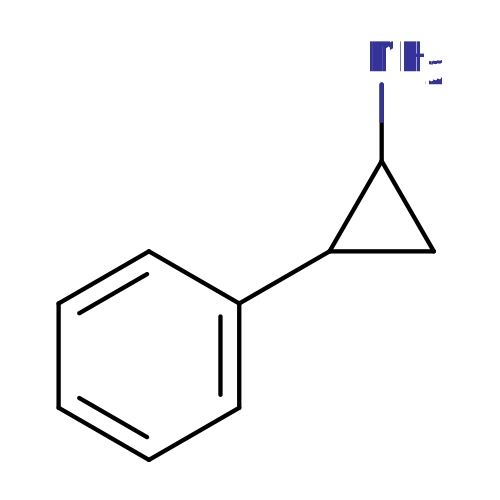
Tranylcypromine is a racemate comprising equal amounts of (1R,2S)- and (1S,2R)-2-phenylcyclopropan-1-amine with the chiral centers both located on the cylopropane ring. An irreversible monoamine oxidase inhibitor that is used as an antidepressant (INN tranylcypromine).
- Type
- Small Molecule
- Groups
- Approved, Investigational
- Structure
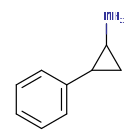
Structure for Tranylcypromine (DB00752)
- Weight
- Average: 133.194
Monoisotopic: 133.089149358 - Chemical Formula
- C9H11N
- Synonyms
- (±)-trans-2-phenylcyclopropylamine
- (1R*,2S*)-2-phenylcyclopropan-1-amine
- dl-tranylcypromine
- Racemic Tranylcypromine
- Tranilcipromina
- trans-2-phenylcyclopropylamine
- trans-DL-2-Phenylcyclopropylamine
- Transamine
- Tranylcypromin
- Tranylcypromine
- Tranylcyprominum
- External IDs
- SKF 385
- SKF Trans-385

Pharmacology
- Indication
For the treatment of major depressive episode without melancholia.
 Reduce drug development failure ratesBuild, train, & validate machine-learning modelswith evidence-based and structured datasets.Build, train, & validate predictive machine-learning models with structured datasets.
- Associated Conditions
Indication Type Indication Combined Product Details Approval Level Age Group Patient Characteristics Dose Form Treatment of Depressive episode •••••••••••• - Contraindications & Blackbox Warnings
 Prevent Adverse Drug Events TodayTap into our Clinical API for life-saving information on contraindications & blackbox warnings, population restrictions, harmful risks, & more.Avoid life-threatening adverse drug events with our Clinical API
- Pharmacodynamics
Tranylcypromine belongs to a class of antidepressants called monoamine oxidase inhibitors (MAOIs). Tranylcypromine is a non-hydrazine monoamine oxidase inhibitor with a rapid onset of activity. MAO is an enzyme that catalyzes the oxidative deamination of a number of amines, including serotonin, norepinephrine, epinephrine, and dopamine. Two isoforms of MAO, A and B, are found in the body. MAO-A is mainly found within cells located in the periphery and catalyzes the breakdown of serotonin, norepinephrine, epinephrine, dopamine and tyramine. MAO-B acts on phenylethylamine, norepinephrine, epinephrine, dopamine and tyramine, is localized extracellularly and is found predominantly in the brain. While the mechanism of MAOIs is still unclear, it is thought that they act by increasing free serotonin and norepinephrine concentrations and/or by altering the concentrations of other amines in the CNS. It has been postulated that depression is caused by low levels of serotonin and/or norepinephrine and that increasing serotonergic and norepinephrinergic neurotransmission results in relief of depressive symptoms. MAO A inhibition is thought to be more relevant to antidepressant activity than MAO B inhibition. Selective MAO B inhibitors, such as selegiline, have no antidepressant effects.
- Mechanism of action
Tranylcypromine irreversibly and nonselectively inhibits monoamine oxidase (MAO). Within neurons, MAO appears to regulate the levels of monoamines released upon synaptic firing. Since depression is associated with low levels of monoamines, the inhibition of MAO serves to ease depressive symptoms, as this results in an increase in the concentrations of these amines within the CNS.
Target Actions Organism AAmine oxidase [flavin-containing] B inhibitorHumans AAmine oxidase [flavin-containing] A inhibitorHumans - Absorption
Interindividual variability in absorption. May be biphasic in some individuals. Peak plasma concentrations occur in one hour following oral administration with a secondary peak occurring within 2-3 hours. Biphasic absorption may represent different rates of absorption of the stereoisomers of the drug, though additional studies are required to confirm this.
- Volume of distribution
1.1-5.7 L/kg
- Protein binding
Not Available
- Metabolism
Hepatic.
- Route of elimination
Not Available
- Half-life
1.5-3.2 hours in patients with normal renal and hepatic function
- Clearance
Not Available
- Adverse Effects
 Improve decision support & research outcomesWith structured adverse effects data, including: blackbox warnings, adverse reactions, warning & precautions, & incidence rates. View sample adverse effects data in our new Data Library!Improve decision support & research outcomes with our structured adverse effects data.
- Toxicity
In overdosage, some patients exhibit insomnia, restlessness and anxiety, progressing in severe cases to agitation, mental confusion and incoherence. Hypotension, dizziness, weakness and drowsiness may occur, progressing in severe cases to extreme dizziness and shock. A few patients have displayed hypertension with severe headache and other symptoms. Rare instances have been reported in which hypertension was accompanied by twitching or myoclonic fibrillation of skeletal muscles with hyperpyrexia, sometimes progressing to generalized rigidity and coma.
- Pathways
- Not Available
- Pharmacogenomic Effects/ADRs
- Not Available
Interactions
- Drug Interactions
- This information should not be interpreted without the help of a healthcare provider. If you believe you are experiencing an interaction, contact a healthcare provider immediately. The absence of an interaction does not necessarily mean no interactions exist.
Drug Interaction Integrate drug-drug
interactions in your software1,2-Benzodiazepine The risk or severity of CNS depression can be increased when Tranylcypromine is combined with 1,2-Benzodiazepine. Abaloparatide Tranylcypromine may increase the orthostatic hypotensive activities of Abaloparatide. Abciximab The risk or severity of bleeding and hemorrhage can be increased when Tranylcypromine is combined with Abciximab. Abrocitinib The metabolism of Abrocitinib can be decreased when combined with Tranylcypromine. Acarbose Tranylcypromine may increase the hypoglycemic activities of Acarbose. - Food Interactions
- Avoid alcohol. Ingesting alcohol may increase the CNS depressant effects of tranylcypromine.
- Avoid St. John's Wort. Administering tranylcypromine with St. John's Wort may increase the risk of serotonin syndrome.
- Avoid tyramine-containing foods and supplements. Tyramine-containing foods and beverages can cause a sudden elevation in blood pressure or a hypertensive crisis. Foods that contain tyramine include aged cheese, ripe bananas, red wine, some alcoholic beverages (beer), cured food, pickled food, and fava beans.
Products
 Drug product information from 10+ global regionsOur datasets provide approved product information including:dosage, form, labeller, route of administration, and marketing period.Access drug product information from over 10 global regions.
- Product Ingredients
Ingredient UNII CAS InChI Key Tranylcypromine sulfate 7ZAT6ES870 13492-01-8 BKPRVQDIOGQWTG-KAVFMPKWSA-N - Product Images


- International/Other Brands
- Jatrosom (Aristo Pharma)
- Brand Name Prescription Products
Name Dosage Strength Route Labeller Marketing Start Marketing End Region Image M-tranylcypromine Tablet 10 mg Oral Mantra Pharma Inc Not applicable Not applicable Canada 
Parnate Tablet, film coated 10 mg/1 Oral Glaxosmithkline Inc 2013-01-14 Not applicable US 
Parnate Tablet, film coated 10 mg/1 Oral Concordia Pharmaceuticals Inc. 2013-01-14 Not applicable US Parnate Tablet, film coated 10 mg/1 Oral Physicians Total Care, Inc. 1994-08-15 2011-06-30 US Parnate Tablet, film coated 10 mg/1 Oral Covis Pharmaceuticals, Inc. 2013-01-14 2017-09-30 US - Generic Prescription Products
Name Dosage Strength Route Labeller Marketing Start Marketing End Region Image Tranylcypromine Tablet 10 mg/1 Oral Lannett Company, Inc. 2022-07-07 Not applicable US Tranylcypromine Tablet 10 mg/1 Oral Solco Healthcare US, LLC 2022-12-10 Not applicable US Tranylcypromine Tablet 10 mg/1 Oral Novitium Pharma Llc 2021-06-06 Not applicable US Tranylcypromine Tablet 10 mg/1 Oral Marlex Pharmaceuticals, Inc. 2022-05-01 Not applicable US Tranylcypromine Sulfate Tablet, film coated 10 mg/1 Oral bryant ranch prepack 2006-06-30 Not applicable US


Categories
- ATC Codes
- N06AF04 — Tranylcypromine
- Drug Categories
- Agents that produce hypertension
- Agents that reduce seizure threshold
- Amines
- Anti-Anxiety Agents
- Antidepressive Agents
- Antidepressive Agents Indicated for Depression
- Central Nervous System Agents
- Central Nervous System Depressants
- Cytochrome P-450 CYP1A2 Inhibitors
- Cytochrome P-450 CYP1A2 Inhibitors (strength unknown)
- Cytochrome P-450 CYP2A6 Inhibitors
- Cytochrome P-450 CYP2A6 Inhibitors (strong)
- Cytochrome P-450 CYP2C19 Inhibitors
- Cytochrome P-450 CYP2C19 inhibitors (strength unknown)
- Cytochrome P-450 CYP2C9 Inhibitors
- Cytochrome P-450 CYP2C9 Inhibitors (strength unknown)
- Cytochrome P-450 CYP2D6 Inhibitors
- Cytochrome P-450 CYP2D6 Inhibitors (moderate)
- Cytochrome P-450 CYP3A Inhibitors
- Cytochrome P-450 CYP3A4 Inhibitors
- Cytochrome P-450 CYP3A4 Inhibitors (strength unknown)
- Cytochrome P-450 Enzyme Inhibitors
- Enzyme Inhibitors
- Hypotensive Agents
- Monoamine Oxidase A Inhibitors for interaction with Monoamine Oxidase A substrates
- Monoamine Oxidase Inhibitors
- Monoamine Oxidase Inhibitors, Non-Selective
- Nervous System
- Propylamines
- Psychoanaleptics
- Psychotropic Drugs
- Serotonergic Drugs Shown to Increase Risk of Serotonin Syndrome
- Serotonin Agents
- Serotonin Modulators
- Tranquilizing Agents
- Chemical TaxonomyProvided by Classyfire
- Description
- This compound belongs to the class of organic compounds known as aralkylamines. These are alkylamines in which the alkyl group is substituted at one carbon atom by an aromatic hydrocarbyl group.
- Kingdom
- Organic compounds
- Super Class
- Organic nitrogen compounds
- Class
- Organonitrogen compounds
- Sub Class
- Amines
- Direct Parent
- Aralkylamines
- Alternative Parents
- Benzene and substituted derivatives / Organopnictogen compounds / Monoalkylamines / Hydrocarbon derivatives
- Substituents
- Aralkylamine / Aromatic homomonocyclic compound / Benzenoid / Hydrocarbon derivative / Monocyclic benzene moiety / Organopnictogen compound / Primary aliphatic amine / Primary amine
- Molecular Framework
- Aromatic homomonocyclic compounds
- External Descriptors
- Not Available
- Affected organisms
- Humans and other mammals
Chemical Identifiers
- UNII
- 3E3V44J4Z9
- CAS number
- 155-09-9
- InChI Key
- AELCINSCMGFISI-UHFFFAOYSA-N
- InChI
- InChI=1S/C9H11N/c10-9-6-8(9)7-4-2-1-3-5-7/h1-5,8-9H,6,10H2
- IUPAC Name
- 2-phenylcyclopropan-1-amine
- SMILES
- NC1CC1C1=CC=CC=C1
References
- General References
- Frieling H, Bleich S: Tranylcypromine: new perspectives on an "old" drug. Eur Arch Psychiatry Clin Neurosci. 2006 Aug;256(5):268-73. [Article]
- Nolen WA: [Classical monoamine oxidase inhibitor: not registered for, but still a place in the treatment of depression]. Ned Tijdschr Geneeskd. 2003 Oct 4;147(40):1940-3. [Article]
- External Links
- Human Metabolome Database
- HMDB0243563
- KEGG Drug
- D08625
- KEGG Compound
- C07155
- PubChem Compound
- 5530
- PubChem Substance
- 46505832
- ChemSpider
- 5329
- BindingDB
- 50113851
- 10734
- ChEBI
- 131512
- ChEMBL
- CHEMBL313833
- Therapeutic Targets Database
- DAP000081
- PharmGKB
- PA451741
- PDBe Ligand
- GJZ
- RxList
- RxList Drug Page
- Drugs.com
- Drugs.com Drug Page
- PDRhealth
- PDRhealth Drug Page
- Wikipedia
- Tranylcypromine
- MSDS
- Download (38.3 KB)
Clinical Trials
- Clinical Trials
Phase Status Purpose Conditions Count 4 Completed Prevention Osteoarthritis of the Knee 2 4 Completed Treatment Bipolar Disorder (BD) 1 4 Completed Treatment Bipolar Disorder I or II 1 4 Completed Treatment Bleeding 1 4 Completed Treatment Depression 1
Pharmacoeconomics
- Manufacturers
- Glaxosmithkline
- Par pharmaceutical inc
- Packagers
- GlaxoSmithKline Inc.
- Kaiser Foundation Hospital
- Kali Laboratories Inc.
- Par Pharmaceuticals
- Physicians Total Care Inc.
- Dosage Forms
Form Route Strength Tablet Oral 10 mg Tablet, film coated Oral 10 mg/1 Tablet, film coated Oral 10 mg Tablet, film coated Oral 20 mg Tablet Oral 10 mg/1 - Prices
Unit description Cost Unit Parnate 10 mg tablet 1.64USD tablet Tranylcypromine Sulfate 10 mg tablet 1.3USD tablet Tranylcypromine sulf 10 mg tablet 1.25USD tablet Parnate 10 mg Tablet 0.41USD tablet DrugBank does not sell nor buy drugs. Pricing information is supplied for informational purposes only.- Patents
- Not Available
Properties
- State
- Solid
- Experimental Properties
Property Value Source melting point (°C) 79-80 °C at 1.50E+00 mm Hg Not Available water solubility 4.86E+004 mg/L Not Available logP 1.58 HANSCH,C ET AL. (1995) - Predicted Properties
Property Value Source Water Solubility 1.49 mg/mL ALOGPS logP 1.5 ALOGPS logP 1.34 Chemaxon logS -2 ALOGPS pKa (Strongest Basic) 9.62 Chemaxon Physiological Charge 1 Chemaxon Hydrogen Acceptor Count 1 Chemaxon Hydrogen Donor Count 1 Chemaxon Polar Surface Area 26.02 Å2 Chemaxon Rotatable Bond Count 1 Chemaxon Refractivity 41.7 m3·mol-1 Chemaxon Polarizability 15.51 Å3 Chemaxon Number of Rings 2 Chemaxon Bioavailability 1 Chemaxon Rule of Five Yes Chemaxon Ghose Filter No Chemaxon Veber's Rule Yes Chemaxon MDDR-like Rule No Chemaxon - Predicted ADMET Features
Property Value Probability Human Intestinal Absorption + 1.0 Blood Brain Barrier + 0.9383 Caco-2 permeable + 0.7935 P-glycoprotein substrate Non-substrate 0.8349 P-glycoprotein inhibitor I Non-inhibitor 0.9566 P-glycoprotein inhibitor II Non-inhibitor 0.9899 Renal organic cation transporter Non-inhibitor 0.8659 CYP450 2C9 substrate Non-substrate 0.8439 CYP450 2D6 substrate Non-substrate 0.9115 CYP450 3A4 substrate Non-substrate 0.7604 CYP450 1A2 substrate Inhibitor 0.9106 CYP450 2C9 inhibitor Non-inhibitor 0.8659 CYP450 2D6 inhibitor Non-inhibitor 0.7879 CYP450 2C19 inhibitor Inhibitor 0.8748 CYP450 3A4 inhibitor Non-inhibitor 0.9372 CYP450 inhibitory promiscuity Low CYP Inhibitory Promiscuity 0.6942 Ames test Non AMES toxic 0.9132 Carcinogenicity Non-carcinogens 0.6686 Biodegradation Ready biodegradable 0.5525 Rat acute toxicity 2.4266 LD50, mol/kg Not applicable hERG inhibition (predictor I) Weak inhibitor 0.9807 hERG inhibition (predictor II) Non-inhibitor 0.9378
Spectra
- Mass Spec (NIST)
- Not Available
- Spectra
Spectrum Spectrum Type Splash Key Predicted GC-MS Spectrum - GC-MS Predicted GC-MS splash10-0f6x-9700000000-d796ae001c1e5831bcd4 Predicted MS/MS Spectrum - 10V, Positive (Annotated) Predicted LC-MS/MS splash10-014i-1900000000-40f1936b6b7dedcfce15 Predicted MS/MS Spectrum - 20V, Positive (Annotated) Predicted LC-MS/MS splash10-014l-6900000000-ead5746e724ca8d82f3d Predicted MS/MS Spectrum - 10V, Negative (Annotated) Predicted LC-MS/MS splash10-014i-0900000000-eb878f4fe5c4512c35d1 Predicted MS/MS Spectrum - 20V, Negative (Annotated) Predicted LC-MS/MS splash10-05o3-2900000000-409421b3188be241b7a0 Predicted MS/MS Spectrum - 40V, Positive (Annotated) Predicted LC-MS/MS splash10-0006-9000000000-262cf90e69c7a61ad6fb Predicted MS/MS Spectrum - 40V, Negative (Annotated) Predicted LC-MS/MS splash10-014i-9300000000-589c17bfc4f9024c570d Predicted 1H NMR Spectrum 1D NMR Not Applicable Predicted 13C NMR Spectrum 1D NMR Not Applicable - Chromatographic Properties
Collision Cross Sections (CCS)
Adduct CCS Value (Å2) Source type Source [M-H]- 124.36418 predictedDeepCCS 1.0 (2019) [M+H]+ 127.79884 predictedDeepCCS 1.0 (2019) [M+Na]+ 136.73021 predictedDeepCCS 1.0 (2019)
Targets

- Kind
- Protein
- Organism
- Humans
- Pharmacological action
- Yes
- Actions
- Inhibitor
- General Function
- Primary amine oxidase activity
- Specific Function
- Catalyzes the oxidative deamination of biogenic and xenobiotic amines and has important functions in the metabolism of neuroactive and vasoactive amines in the central nervous system and peripheral...
- Gene Name
- MAOB
- Uniprot ID
- P27338
- Uniprot Name
- Amine oxidase [flavin-containing] B
- Molecular Weight
- 58762.475 Da
References
- Chen X, Ji ZL, Chen YZ: TTD: Therapeutic Target Database. Nucleic Acids Res. 2002 Jan 1;30(1):412-5. [Article]
- Volz HP, Gleiter CH: Monoamine oxidase inhibitors. A perspective on their use in the elderly. Drugs Aging. 1998 Nov;13(5):341-55. [Article]
- Shioda K, Nisijima K, Yoshino T, Kato S: Mirtazapine abolishes hyperthermia in an animal model of serotonin syndrome. Neurosci Lett. 2010 Oct 4;482(3):216-9. doi: 10.1016/j.neulet.2010.07.039. Epub 2010 Jul 23. [Article]
- Gatch MB, Taylor CM, Flores E, Selvig M, Forster MJ: Effects of monoamine oxidase inhibitors on cocaine discrimination in rats. Behav Pharmacol. 2006 Mar;17(2):151-9. [Article]
- Lang W, Masucci JA, Caldwell GW, Hageman W, Hall J, Jones WJ, Rafferty BM: Liquid chromatographic and tandem mass spectrometric assay for evaluation of in vivo inhibition of rat brain monoamine oxidases (MAO) A and B following a single dose of MAO inhibitors: application of biomarkers in drug discovery. Anal Biochem. 2004 Oct 1;333(1):79-87. [Article]
- Shioda K, Nisijima K, Yoshino T, Kato S: Extracellular serotonin, dopamine and glutamate levels are elevated in the hypothalamus in a serotonin syndrome animal model induced by tranylcypromine and fluoxetine. Prog Neuropsychopharmacol Biol Psychiatry. 2004 Jul;28(4):633-40. [Article]
- Salsali M, Holt A, Baker GB: Inhibitory effects of the monoamine oxidase inhibitor tranylcypromine on the cytochrome P450 enzymes CYP2C19, CYP2C9, and CYP2D6. Cell Mol Neurobiol. 2004 Feb;24(1):63-76. [Article]
- Nolen WA: [Classical monoamine oxidase inhibitor: not registered for, but still a place in the treatment of depression]. Ned Tijdschr Geneeskd. 2003 Oct 4;147(40):1940-3. [Article]
- Cohen C, Curet O, Perrault G, Sanger DJ: Reduction of oral ethanol self-administration in rats by monoamine oxidase inhibitors. Pharmacol Biochem Behav. 1999 Nov;64(3):535-9. [Article]
- Wiest SA, Steinberg MI: 3H[2-(2-benzofuranyl)-2-imidazoline] (BFI) binding in human platelets: modulation by tranylcypromine. Naunyn Schmiedebergs Arch Pharmacol. 1999 Aug;360(2):209-16. [Article]
- Loscher W, Lehmann H, Teschendorf HJ, Traut M, Gross G: Inhibition of monoamine oxidase type A, but not type B, is an effective means of inducing anticonvulsant activity in the kindling model of epilepsy. J Pharmacol Exp Ther. 1999 Mar;288(3):984-92. [Article]
- Todd KG, Baker GB: GABA-elevating effects of the antidepressant/antipanic drug phenelzine in brain: effects of pretreatment with tranylcypromine, (-)-deprenyl and clorgyline. J Affect Disord. 1995 Dec 13;35(3):125-9. [Article]
- Finberg JP, Youdim MB: Pharmacological properties of the anti-Parkinson drug rasagiline; modification of endogenous brain amines, reserpine reversal, serotonergic and dopaminergic behaviours. Neuropharmacology. 2002 Dec;43(7):1110-8. [Article]
- Kind
- Protein
- Organism
- Humans
- Pharmacological action
- Yes
- Actions
- Inhibitor
- General Function
- Serotonin binding
- Specific Function
- Catalyzes the oxidative deamination of biogenic and xenobiotic amines and has important functions in the metabolism of neuroactive and vasoactive amines in the central nervous system and peripheral...
- Gene Name
- MAOA
- Uniprot ID
- P21397
- Uniprot Name
- Amine oxidase [flavin-containing] A
- Molecular Weight
- 59681.27 Da
References
- Chen X, Ji ZL, Chen YZ: TTD: Therapeutic Target Database. Nucleic Acids Res. 2002 Jan 1;30(1):412-5. [Article]
- Volz HP, Gleiter CH: Monoamine oxidase inhibitors. A perspective on their use in the elderly. Drugs Aging. 1998 Nov;13(5):341-55. [Article]
- Shioda K, Nisijima K, Yoshino T, Kato S: Mirtazapine abolishes hyperthermia in an animal model of serotonin syndrome. Neurosci Lett. 2010 Oct 4;482(3):216-9. doi: 10.1016/j.neulet.2010.07.039. Epub 2010 Jul 23. [Article]
- Gatch MB, Taylor CM, Flores E, Selvig M, Forster MJ: Effects of monoamine oxidase inhibitors on cocaine discrimination in rats. Behav Pharmacol. 2006 Mar;17(2):151-9. [Article]
- Lang W, Masucci JA, Caldwell GW, Hageman W, Hall J, Jones WJ, Rafferty BM: Liquid chromatographic and tandem mass spectrometric assay for evaluation of in vivo inhibition of rat brain monoamine oxidases (MAO) A and B following a single dose of MAO inhibitors: application of biomarkers in drug discovery. Anal Biochem. 2004 Oct 1;333(1):79-87. [Article]
- Shioda K, Nisijima K, Yoshino T, Kato S: Extracellular serotonin, dopamine and glutamate levels are elevated in the hypothalamus in a serotonin syndrome animal model induced by tranylcypromine and fluoxetine. Prog Neuropsychopharmacol Biol Psychiatry. 2004 Jul;28(4):633-40. [Article]
- Salsali M, Holt A, Baker GB: Inhibitory effects of the monoamine oxidase inhibitor tranylcypromine on the cytochrome P450 enzymes CYP2C19, CYP2C9, and CYP2D6. Cell Mol Neurobiol. 2004 Feb;24(1):63-76. [Article]
- Nolen WA: [Classical monoamine oxidase inhibitor: not registered for, but still a place in the treatment of depression]. Ned Tijdschr Geneeskd. 2003 Oct 4;147(40):1940-3. [Article]
- Cohen C, Curet O, Perrault G, Sanger DJ: Reduction of oral ethanol self-administration in rats by monoamine oxidase inhibitors. Pharmacol Biochem Behav. 1999 Nov;64(3):535-9. [Article]
- Wiest SA, Steinberg MI: 3H[2-(2-benzofuranyl)-2-imidazoline] (BFI) binding in human platelets: modulation by tranylcypromine. Naunyn Schmiedebergs Arch Pharmacol. 1999 Aug;360(2):209-16. [Article]
- Loscher W, Lehmann H, Teschendorf HJ, Traut M, Gross G: Inhibition of monoamine oxidase type A, but not type B, is an effective means of inducing anticonvulsant activity in the kindling model of epilepsy. J Pharmacol Exp Ther. 1999 Mar;288(3):984-92. [Article]
- Todd KG, Baker GB: GABA-elevating effects of the antidepressant/antipanic drug phenelzine in brain: effects of pretreatment with tranylcypromine, (-)-deprenyl and clorgyline. J Affect Disord. 1995 Dec 13;35(3):125-9. [Article]
- Finberg JP, Youdim MB: Pharmacological properties of the anti-Parkinson drug rasagiline; modification of endogenous brain amines, reserpine reversal, serotonergic and dopaminergic behaviours. Neuropharmacology. 2002 Dec;43(7):1110-8. [Article]
Enzymes
- Kind
- Protein
- Organism
- Humans
- Pharmacological action
- Unknown
- Actions
- Inhibitor
- General Function
- Steroid hydroxylase activity
- Specific Function
- Responsible for the metabolism of many drugs and environmental chemicals that it oxidizes. It is involved in the metabolism of drugs such as antiarrhythmics, adrenoceptor antagonists, and tricyclic...
- Gene Name
- CYP2D6
- Uniprot ID
- P10635
- Uniprot Name
- Cytochrome P450 2D6
- Molecular Weight
- 55768.94 Da
References
- Salsali M, Holt A, Baker GB: Inhibitory effects of the monoamine oxidase inhibitor tranylcypromine on the cytochrome P450 enzymes CYP2C19, CYP2C9, and CYP2D6. Cell Mol Neurobiol. 2004 Feb;24(1):63-76. [Article]
- Zhang W, Kilicarslan T, Tyndale RF, Sellers EM: Evaluation of methoxsalen, tranylcypromine, and tryptamine as specific and selective CYP2A6 inhibitors in vitro. Drug Metab Dispos. 2001 Jun;29(6):897-902. [Article]
- Kind
- Protein
- Organism
- Humans
- Pharmacological action
- Unknown
- Actions
- Inhibitor
- Curator comments
- Data supporting this enzyme action are limited in the literature, and based on 1 in vitro study.
- General Function
- Steroid hydroxylase activity
- Specific Function
- Cytochromes P450 are a group of heme-thiolate monooxygenases. In liver microsomes, this enzyme is involved in an NADPH-dependent electron transport pathway. It oxidizes a variety of structurally un...
- Gene Name
- CYP2C9
- Uniprot ID
- P11712
- Uniprot Name
- Cytochrome P450 2C9
- Molecular Weight
- 55627.365 Da
References
- Salsali M, Holt A, Baker GB: Inhibitory effects of the monoamine oxidase inhibitor tranylcypromine on the cytochrome P450 enzymes CYP2C19, CYP2C9, and CYP2D6. Cell Mol Neurobiol. 2004 Feb;24(1):63-76. [Article]
- Kind
- Protein
- Organism
- Humans
- Pharmacological action
- Unknown
- Actions
- Inhibitor
- General Function
- Steroid hydroxylase activity
- Specific Function
- Responsible for the metabolism of a number of therapeutic agents such as the anticonvulsant drug S-mephenytoin, omeprazole, proguanil, certain barbiturates, diazepam, propranolol, citalopram and im...
- Gene Name
- CYP2C19
- Uniprot ID
- P33261
- Uniprot Name
- Cytochrome P450 2C19
- Molecular Weight
- 55930.545 Da
References
- Stadel R, Yang J, Nalwalk JW, Phillips JG, Hough LB: High-affinity binding of [3H]cimetidine to a heme-containing protein in rat brain. Drug Metab Dispos. 2008 Mar;36(3):614-21. Epub 2007 Dec 19. [Article]
- Salsali M, Holt A, Baker GB: Inhibitory effects of the monoamine oxidase inhibitor tranylcypromine on the cytochrome P450 enzymes CYP2C19, CYP2C9, and CYP2D6. Cell Mol Neurobiol. 2004 Feb;24(1):63-76. [Article]
- Kind
- Protein
- Organism
- Humans
- Pharmacological action
- Unknown
- Actions
- Inhibitor
- Curator comments
- Data supported only by in vitro studies.
- General Function
- Oxidoreductase activity, acting on paired donors, with incorporation or reduction of molecular oxygen, reduced flavin or flavoprotein as one donor, and incorporation of one atom of oxygen
- Specific Function
- Cytochromes P450 are a group of heme-thiolate monooxygenases. In liver microsomes, this enzyme is involved in an NADPH-dependent electron transport pathway. It oxidizes a variety of structurally un...
- Gene Name
- CYP1A2
- Uniprot ID
- P05177
- Uniprot Name
- Cytochrome P450 1A2
- Molecular Weight
- 58293.76 Da
References
- Taavitsainen P, Juvonen R, Pelkonen O: In vitro inhibition of cytochrome P450 enzymes in human liver microsomes by a potent CYP2A6 inhibitor, trans-2-phenylcyclopropylamine (tranylcypromine), and its nonamine analog, cyclopropylbenzene. Drug Metab Dispos. 2001 Mar;29(3):217-22. [Article]
- Kind
- Protein
- Organism
- Humans
- Pharmacological action
- Unknown
- Actions
- Inhibitor
- General Function
- Steroid hydroxylase activity
- Specific Function
- Exhibits a high coumarin 7-hydroxylase activity. Can act in the hydroxylation of the anti-cancer drugs cyclophosphamide and ifosphamide. Competent in the metabolic activation of aflatoxin B1. Const...
- Gene Name
- CYP2A6
- Uniprot ID
- P11509
- Uniprot Name
- Cytochrome P450 2A6
- Molecular Weight
- 56501.005 Da
References
- Draper AJ, Madan A, Parkinson A: Inhibition of coumarin 7-hydroxylase activity in human liver microsomes. Arch Biochem Biophys. 1997 May 1;341(1):47-61. doi: 10.1006/abbi.1997.9964. [Article]
- Taavitsainen P, Juvonen R, Pelkonen O: In vitro inhibition of cytochrome P450 enzymes in human liver microsomes by a potent CYP2A6 inhibitor, trans-2-phenylcyclopropylamine (tranylcypromine), and its nonamine analog, cyclopropylbenzene. Drug Metab Dispos. 2001 Mar;29(3):217-22. [Article]
- Zhang W, Kilicarslan T, Tyndale RF, Sellers EM: Evaluation of methoxsalen, tranylcypromine, and tryptamine as specific and selective CYP2A6 inhibitors in vitro. Drug Metab Dispos. 2001 Jun;29(6):897-902. [Article]
- Kind
- Protein
- Organism
- Humans
- Pharmacological action
- Unknown
- Actions
- Inhibitor
- General Function
- Vitamin d3 25-hydroxylase activity
- Specific Function
- Cytochromes P450 are a group of heme-thiolate monooxygenases. In liver microsomes, this enzyme is involved in an NADPH-dependent electron transport pathway. It performs a variety of oxidation react...
- Gene Name
- CYP3A4
- Uniprot ID
- P08684
- Uniprot Name
- Cytochrome P450 3A4
- Molecular Weight
- 57342.67 Da
References
- Taavitsainen P, Juvonen R, Pelkonen O: In vitro inhibition of cytochrome P450 enzymes in human liver microsomes by a potent CYP2A6 inhibitor, trans-2-phenylcyclopropylamine (tranylcypromine), and its nonamine analog, cyclopropylbenzene. Drug Metab Dispos. 2001 Mar;29(3):217-22. [Article]

Drug created at June 13, 2005 13:24 / Updated at April 27, 2024 09:44