Identification
- Summary
Chlorothiazide is a thiazide diuretic used to treat hypertension and edema in congestive heart failure, hepatic cirrhosis, and corticosteroid and estrogen therapy.
- Brand Names
- Diuril
- Generic Name
- Chlorothiazide
- DrugBank Accession Number
- DB00880
- Background
A thiazide diuretic with actions and uses similar to those of hydrochlorothiazide. (From Martindale, The Extra Pharmacopoeia, 30th ed, p812)
- Type
- Small Molecule
- Groups
- Approved, Vet approved
- Structure
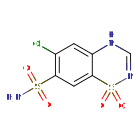
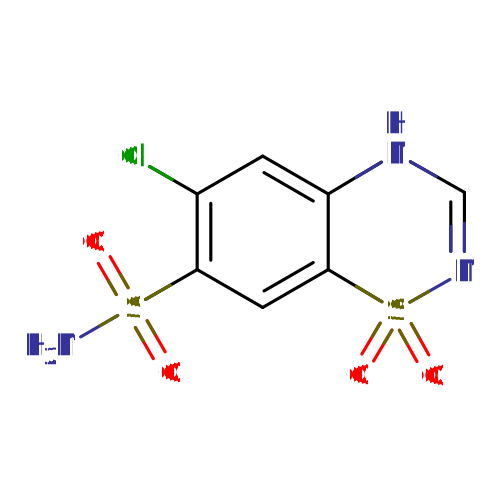
Structure for Chlorothiazide (DB00880)
- Weight
- Average: 295.723
Monoisotopic: 294.948824782 - Chemical Formula
- C7H6ClN3O4S2
- Synonyms
- 6-Chloro-1,1-dioxo-1,2-dihydro-1lambda*6*-benzo[1,2,4]thiadiazine-7-sulfonic acid amide
- 6-chloro-7-sulfamoyl-2H-1,2,4-benzothiadiazine 1,1-dioxide
- Chlorothiazid
- Chlorothiazide
- Chlorothiazidum
- Chlorthiazide
- Clorotiazida

Pharmacology
- Indication
Chlorothiazide is indicated as adjunctive therapy in edema associated with congestive heart failure, hepatic cirrhosis, and corticosteroid and estrogen therapy. It is also indicated in the management of hypertension either as the sole therapeutic agent or to enhance the effectiveness of other antihypertensive drugs in the more severe forms of hypertension.
 Reduce drug development failure ratesBuild, train, & validate machine-learning modelswith evidence-based and structured datasets.Build, train, & validate predictive machine-learning models with structured datasets.
- Associated Conditions
Indication Type Indication Combined Product Details Approval Level Age Group Patient Characteristics Dose Form Adjunct therapy in treatment of Edema •••••••••••• Management of Hypertension •••••••••••• - Contraindications & Blackbox Warnings
 Prevent Adverse Drug Events TodayTap into our Clinical API for life-saving information on contraindications & blackbox warnings, population restrictions, harmful risks, & more.Avoid life-threatening adverse drug events with our Clinical API
- Pharmacodynamics
Like other thiazides, chlorothiazide promotes water loss from the body (diuretics). It inhibits Na+/Cl- reabsorption from the distal convoluted tubules in the kidneys. Thiazides also cause loss of potassium and an increase in serum uric acid. Thiazides are often used to treat hypertension, but their hypotensive effects are not necessarily due to their diuretic activity. Thiazides have been shown to prevent hypertension-related morbidity and mortality although the mechanism is not fully understood. Thiazides cause vasodilation by activating calcium-activated potassium channels (large conductance) in vascular smooth muscles and inhibiting various carbonic anhydrases in vascular tissue. Chlorothiazide affects the distal renal tubular mechanism of electrolyte reabsorption. At maximal therapeutic dosages, all thiazides are approximately equal in their diuretic efficacy. Chlorothiazide increases excretion of sodium and chloride in approximately equivalent amounts. Natriuresis may be accompanied by some loss of potassium and bicarbonate. After oral doses, 10-15 percent of the dose is excreted unchanged in the urine. Chlorothiazide crosses the placental but not the blood-brain barrier and is excreted in breast milk.
- Mechanism of action
As a diuretic, chlorothiazide inhibits active chloride reabsorption at the early distal tubule via the Na-Cl cotransporter, resulting in an increase in the excretion of sodium, chloride, and water. Thiazides like chlorothiazide also inhibit sodium ion transport across the renal tubular epithelium through binding to the thiazide sensitive sodium-chloride transporter. This results in an increase in potassium excretion via the sodium-potassium exchange mechanism. The antihypertensive mechanism of chlorothiazide is less well understood although it may be mediated through its action on carbonic anhydrases in the smooth muscle or through its action on the large-conductance calcium-activated potassium (KCa) channel, also found in the smooth muscle.
Target Actions Organism ASolute carrier family 12 member 3 inhibitorHumans ACarbonic anhydrase 1 inhibitorHumans ACarbonic anhydrase 2 inhibitorHumans - Absorption
Rapidly absorbed following oral administration.
- Volume of distribution
Not Available
- Protein binding
Approximately 40% bound to plasma proteins.
- Metabolism
Chlorothiazide is not metabolized but is eliminated rapidly by the kidney.
- Route of elimination
Chlorothiazide is not metabolized but is eliminated rapidly by the kidney. After oral doses, 10 to 15 percent of the dose is excreted unchanged in the urine. Chlorothiazide crosses the placental but not the blood-brain barrier and is excreted in breast milk.
- Half-life
45-120 minutes
- Clearance
Not Available
- Adverse Effects
 Improve decision support & research outcomesWith structured adverse effects data, including: blackbox warnings, adverse reactions, warning & precautions, & incidence rates. View sample adverse effects data in our new Data Library!Improve decision support & research outcomes with our structured adverse effects data.
- Toxicity
Oral, rat LD50: > 10 g/kg. Signs of overdose include those caused by electrolyte depletion (hypokalemia, hypochloremia, hyponatremia) and dehydration resulting from excessive diuresis. If digitalis has also been administered hypokalemia may accentuate cardiac arrhythmias.
- Pathways
Pathway Category Chlorothiazide Action Pathway Drug action - Pharmacogenomic Effects/ADRs
- Not Available
Interactions
- Drug Interactions
- This information should not be interpreted without the help of a healthcare provider. If you believe you are experiencing an interaction, contact a healthcare provider immediately. The absence of an interaction does not necessarily mean no interactions exist.
Drug Interaction Integrate drug-drug
interactions in your softwareAbacavir Chlorothiazide may increase the excretion rate of Abacavir which could result in a lower serum level and potentially a reduction in efficacy. Abaloparatide The risk or severity of adverse effects can be increased when Chlorothiazide is combined with Abaloparatide. Abciximab The therapeutic efficacy of Abciximab can be decreased when used in combination with Chlorothiazide. Acarbose The therapeutic efficacy of Acarbose can be decreased when used in combination with Chlorothiazide. Acebutolol The therapeutic efficacy of Acebutolol can be increased when used in combination with Chlorothiazide. - Food Interactions
- No interactions found.
Products
 Drug product information from 10+ global regionsOur datasets provide approved product information including:dosage, form, labeller, route of administration, and marketing period.Access drug product information from over 10 global regions.
- Product Ingredients
Ingredient UNII CAS InChI Key Chlorothiazide sodium SN86FG7N2K 7085-44-1 CPIWHAFLBZQYLQ-UHFFFAOYSA-N - Product Images


- Brand Name Prescription Products
Name Dosage Strength Route Labeller Marketing Start Marketing End Region Image Diuril Suspension 250 mg/5mL Oral Merck Sharp & Dohme Limited 1961-10-06 2008-10-31 US 
Diuril Suspension 250 mg/5mL Oral Salix Pharmaceuticals, Inc 1962-02-15 Not applicable US DIURIL Sodium Injection, powder, lyophilized, for solution 0.5 g/18mL Intravenous MERCK and CO., INC. 2006-04-07 2006-08-21 US Sodium Diuril Injection 0.5 mg/18mL Intravenous Akorn 1958-10-03 Not applicable US Sodium Diuril Injection, powder, lyophilized, for solution 0.5 g/18mL Intravenous Lundbeck Inc. 1958-10-03 2011-12-22 US - Generic Prescription Products
Name Dosage Strength Route Labeller Marketing Start Marketing End Region Image Chlorothiazide Tablet 250 mg/1 Oral Mylan Pharmaceuticals Inc. 1975-06-26 2020-12-31 US Chlorothiazide Tablet 250 mg/1 Oral Golden State Medical Supply 2005-08-30 2017-01-02 US Chlorothiazide Tablet 500 mg/1 Oral Hikma Pharmaceuticals USA Inc. 2005-08-30 2015-12-31 US 
Chlorothiazide Tablet 500 mg/1 Oral Physicians Total Care, Inc. 2005-08-30 2012-06-30 US Chlorothiazide Tablet 250 mg/1 Oral Hikma Pharmaceuticals USA Inc. 2005-08-30 2014-10-31 US - Mixture Products
Name Ingredients Dosage Route Labeller Marketing Start Marketing End Region Image Diupres Chlorothiazide (500 mg/1) + Reserpine (0.125 mg/1) Tablet Oral Merck & Co., Inc. 2006-03-02 2006-07-13 US Diupres Chlorothiazide (250 mg/1) + Reserpine (0.125 mg/1) Tablet Oral Merck & Co., Inc. 2006-03-02 2006-07-13 US Supres 150 Tab Chlorothiazide (150 mg) + Methyldopa (250 mg) Tablet Oral Merck Frosst Canada & Cie, Merck Frosst Canada & Co. 1972-12-31 2000-06-14 Canada 
Supres 250 Tab Chlorothiazide (250 mg) + Methyldopa (250 mg) Tablet Oral Merck Frosst Canada & Cie, Merck Frosst Canada & Co. 1972-12-31 2000-06-14 Canada


Categories
- ATC Codes
- C03AB04 — Chlorothiazide and potassium
- C03AB — Thiazides and potassium in combination
- C03A — LOW-CEILING DIURETICS, THIAZIDES
- C03 — DIURETICS
- C — CARDIOVASCULAR SYSTEM
- G01AE — Sulfonamides
- G01A — ANTIINFECTIVES AND ANTISEPTICS, EXCL. COMBINATIONS WITH CORTICOSTEROIDS
- G01 — GYNECOLOGICAL ANTIINFECTIVES AND ANTISEPTICS
- G — GENITO URINARY SYSTEM AND SEX HORMONES
- C03AA — Thiazides, plain
- C03A — LOW-CEILING DIURETICS, THIAZIDES
- C03 — DIURETICS
- C — CARDIOVASCULAR SYSTEM
- Drug Categories
- Antihypertensive Agents
- Benzothiadiazines
- Cardiovascular Agents
- Diuretics
- Drugs causing inadvertant photosensitivity
- Genito Urinary System and Sex Hormones
- Gynecological Antiinfectives and Antiseptics
- Heterocyclic Compounds, Fused-Ring
- Hyperglycemia-Associated Agents
- Hypotensive Agents
- Increased Diuresis
- Membrane Transport Modulators
- Natriuretic Agents
- OAT1/SLC22A6 inhibitors
- Photosensitizing Agents
- Sodium Chloride Symporter Inhibitors
- Sulfonamides
- Sulfones
- Sulfur Compounds
- Thiazides
- Chemical TaxonomyProvided by Classyfire
- Description
- This compound belongs to the class of organic compounds known as 1,2,4-benzothiadiazine-1,1-dioxides. These are aromatic heterocyclic compounds containing a 1,2,4-benzothiadiazine ring system with two S=O bonds at the 1-position.
- Kingdom
- Organic compounds
- Super Class
- Organoheterocyclic compounds
- Class
- Thiadiazines
- Sub Class
- Benzothiadiazines
- Direct Parent
- 1,2,4-benzothiadiazine-1,1-dioxides
- Alternative Parents
- Organosulfonamides / Benzenoids / Aryl chlorides / Aminosulfonyl compounds / Propargyl-type 1,3-dipolar organic compounds / Formamidines / Azacyclic compounds / Organopnictogen compounds / Organochlorides / Organic oxides show 1 more
- Substituents
- 1,2,4-benzothiadiazine-1,1-dioxide / Amidine / Aminosulfonyl compound / Aromatic heteropolycyclic compound / Aryl chloride / Aryl halide / Azacycle / Benzenoid / Formamidine / Hydrocarbon derivative show 14 more
- Molecular Framework
- Aromatic heteropolycyclic compounds
- External Descriptors
- benzothiadiazine (CHEBI:3640)
- Affected organisms
- Humans and other mammals
Chemical Identifiers
- UNII
- 77W477J15H
- CAS number
- 58-94-6
- InChI Key
- JBMKAUGHUNFTOL-UHFFFAOYSA-N
- InChI
- InChI=1S/C7H6ClN3O4S2/c8-4-1-5-7(2-6(4)16(9,12)13)17(14,15)11-3-10-5/h1-3H,(H,10,11)(H2,9,12,13)
- IUPAC Name
- 6-chloro-1,1-dioxo-4H-1lambda6,2,4-benzothiadiazine-7-sulfonamide
- SMILES
- NS(=O)(=O)C1=C(Cl)C=C2NC=NS(=O)(=O)C2=C1
References
- Synthesis Reference
Eugene S. Barabas, "Water soluble complex of a poly (vinyl lactam) and chlorothiazide and process for producing same." U.S. Patent US4713238, issued December, 1985.
US4713238- General References
- Not Available
- External Links
- Human Metabolome Database
- HMDB0015018
- KEGG Drug
- D00519
- KEGG Compound
- C07461
- PubChem Compound
- 2720
- PubChem Substance
- 46507032
- ChemSpider
- 2619
- BindingDB
- 39351
- 2396
- ChEBI
- 3640
- ChEMBL
- CHEMBL842
- ZINC
- ZINC000003872055
- Therapeutic Targets Database
- DAP000605
- PharmGKB
- PA448953
- RxList
- RxList Drug Page
- Drugs.com
- Drugs.com Drug Page
- Wikipedia
- Chlorothiazide
- MSDS
- Download (72.7 KB)
Clinical Trials
- Clinical Trials
Phase Status Purpose Conditions Count 4 Completed Treatment Heart Failure 1 4 Suspended Prevention Coronavirus Disease 2019 (COVID‑19) / Hypertension 1 4 Terminated Treatment Acute Heart Failure (AHF) / Cardiovascular Disease (CVD) / Heart Failure / Hearth Failure With Reduced Ejection Fraction (HFrEF) 1 4 Withdrawn Treatment Acute Decompensated Heart Failure (ADHF) 1 3 Completed Prevention Cardiovascular Disease (CVD) / Hypertension / Vascular Diseases 1
Pharmacoeconomics
- Manufacturers
- Salix pharmaceuticals inc
- Abc holding corp
- Lederle laboratories div american cyanamid co
- Mylan pharmaceuticals inc
- Sandoz inc
- Watson laboratories inc
- West ward pharmaceutical corp
- Lundbeck inc
- App pharmaceuticals llc
- Packagers
- APP Pharmaceuticals
- Ben Venue Laboratories Inc.
- Endo Pharmaceuticals Inc.
- Lundbeck Inc.
- Major Pharmaceuticals
- Merck & Co.
- Murfreesboro Pharmaceutical Nursing Supply
- Mylan
- PD-Rx Pharmaceuticals Inc.
- Physicians Total Care Inc.
- Salix Pharmaceuticals
- Sandhills Packaging Inc.
- UDL Laboratories
- Watson Pharmaceuticals
- West-Ward Pharmaceuticals
- Dosage Forms
Form Route Strength Tablet Oral 250 mg/1 Tablet Oral 500 mg/1 Injection Intravenous 500 mg/1 Injection, powder, lyophilized, for solution Intravenous 500 mg/18mL Tablet Oral Tablet Oral Suspension Oral 250 mg/5mL Injection, powder, lyophilized, for solution Intravenous 0.5 g/18mL Injection Intravenous 0.5 mg/18mL - Prices
Unit description Cost Unit Diuril sodium 500 mg vial 519.62USD vial Chlorothiazide sod 500 mg vial 357.24USD vial Microzide 12.5 mg capsule 0.95USD capsule Aldoclor 250-250 mg tablet 0.67USD tablet Chlorothiazide 500 mg tablet 0.36USD tablet Chlorothiazide 250 mg tablet 0.28USD tablet DrugBank does not sell nor buy drugs. Pricing information is supplied for informational purposes only.- Patents
- Not Available
Properties
- State
- Solid
- Experimental Properties
Property Value Source melting point (°C) 342.5-343 Novello, F.C.; US. Patent 2,809,194; October 8,1957; assigned to Merck & Co.,Inc. Hinkley, D.F.; US. Patent 2,937,169; May 17,1960; assigned to Merck & Co., Inc. water solubility 266 mg/L (at 30 °C) YALKOWSKY,SH & DANNENFELSER,RM (1992) logP -0.24 HANSCH,C ET AL. (1995) logS -3.05 ADME Research, USCD Caco2 permeability -6.72 ADME Research, USCD pKa 6.85 MERCK INDEX (1996) - Predicted Properties
Property Value Source Water Solubility 0.398 mg/mL ALOGPS logP 0.41 ALOGPS logP -0.44 Chemaxon logS -2.9 ALOGPS pKa (Strongest Acidic) 9.19 Chemaxon pKa (Strongest Basic) -4.2 Chemaxon Physiological Charge 0 Chemaxon Hydrogen Acceptor Count 6 Chemaxon Hydrogen Donor Count 2 Chemaxon Polar Surface Area 118.69 Å2 Chemaxon Rotatable Bond Count 1 Chemaxon Refractivity 62.51 m3·mol-1 Chemaxon Polarizability 24.55 Å3 Chemaxon Number of Rings 2 Chemaxon Bioavailability 1 Chemaxon Rule of Five Yes Chemaxon Ghose Filter No Chemaxon Veber's Rule No Chemaxon MDDR-like Rule No Chemaxon - Predicted ADMET Features
Property Value Probability Human Intestinal Absorption + 0.9119 Blood Brain Barrier - 0.9506 Caco-2 permeable - 0.7368 P-glycoprotein substrate Non-substrate 0.706 P-glycoprotein inhibitor I Non-inhibitor 0.8482 P-glycoprotein inhibitor II Non-inhibitor 0.8381 Renal organic cation transporter Non-inhibitor 0.8177 CYP450 2C9 substrate Non-substrate 0.755 CYP450 2D6 substrate Non-substrate 0.8379 CYP450 3A4 substrate Non-substrate 0.6308 CYP450 1A2 substrate Non-inhibitor 0.9045 CYP450 2C9 inhibitor Non-inhibitor 0.9071 CYP450 2D6 inhibitor Non-inhibitor 0.923 CYP450 2C19 inhibitor Non-inhibitor 0.9382 CYP450 3A4 inhibitor Non-inhibitor 0.8901 CYP450 inhibitory promiscuity Low CYP Inhibitory Promiscuity 0.8658 Ames test Non AMES toxic 0.9132 Carcinogenicity Non-carcinogens 0.7792 Biodegradation Not ready biodegradable 1.0 Rat acute toxicity 1.5023 LD50, mol/kg Not applicable hERG inhibition (predictor I) Weak inhibitor 0.9654 hERG inhibition (predictor II) Non-inhibitor 0.9352
Spectra
- Mass Spec (NIST)
- Download (10.1 KB)
- Spectra
- Chromatographic Properties
Collision Cross Sections (CCS)
Adduct CCS Value (Å2) Source type Source [M-H]- 158.3834349 predictedDarkChem Lite v0.1.0 [M-H]- 150.32565 predictedDeepCCS 1.0 (2019) [M+H]+ 159.6735349 predictedDarkChem Lite v0.1.0 [M+H]+ 152.68364 predictedDeepCCS 1.0 (2019) [M+Na]+ 158.8415349 predictedDarkChem Lite v0.1.0 [M+Na]+ 158.77681 predictedDeepCCS 1.0 (2019)
Targets

- Kind
- Protein
- Organism
- Humans
- Pharmacological action
- Yes
- Actions
- Inhibitor
- General Function
- Transporter activity
- Specific Function
- Key mediator of sodium and chloride reabsorption in this nephron segment, accounting for a significant fraction of renal sodium reabsorption.
- Gene Name
- SLC12A3
- Uniprot ID
- P55017
- Uniprot Name
- Solute carrier family 12 member 3
- Molecular Weight
- 113138.04 Da
- Kind
- Protein
- Organism
- Humans
- Pharmacological action
- Yes
- Actions
- Inhibitor
- General Function
- Zinc ion binding
- Specific Function
- Reversible hydration of carbon dioxide. Can hydrates cyanamide to urea.
- Gene Name
- CA1
- Uniprot ID
- P00915
- Uniprot Name
- Carbonic anhydrase 1
- Molecular Weight
- 28870.0 Da
References
- Puscas I, Coltau M, Baican M, Domuta G, Hecht A: Vasodilatory effect of diuretics is dependent on inhibition of vascular smooth muscle carbonic anhydrase by a direct mechanism of action. Drugs Exp Clin Res. 1999;25(6):271-9. [Article]
- Puscas I, Coltau M, Baican M, Pasca R, Domuta G: The inhibitory effect of diuretics on carbonic anhydrases. Res Commun Mol Pathol Pharmacol. 1999;105(3):213-36. [Article]
- Kind
- Protein
- Organism
- Humans
- Pharmacological action
- Yes
- Actions
- Inhibitor
- General Function
- Zinc ion binding
- Specific Function
- Essential for bone resorption and osteoclast differentiation (By similarity). Reversible hydration of carbon dioxide. Can hydrate cyanamide to urea. Involved in the regulation of fluid secretion in...
- Gene Name
- CA2
- Uniprot ID
- P00918
- Uniprot Name
- Carbonic anhydrase 2
- Molecular Weight
- 29245.895 Da
References
- Weiner ID, Verlander JW: Renal and hepatic expression of the ammonium transporter proteins, Rh B Glycoprotein and Rh C Glycoprotein. Acta Physiol Scand. 2003 Dec;179(4):331-8. [Article]
- Puscas I, Coltau M, Baican M, Pasca R, Domuta G: The inhibitory effect of diuretics on carbonic anhydrases. Res Commun Mol Pathol Pharmacol. 1999;105(3):213-36. [Article]
- Verlander JW, Miller RT, Frank AE, Royaux IE, Kim YH, Weiner ID: Localization of the ammonium transporter proteins RhBG and RhCG in mouse kidney. Am J Physiol Renal Physiol. 2003 Feb;284(2):F323-37. Epub 2002 Oct 8. [Article]
- Chen X, Ji ZL, Chen YZ: TTD: Therapeutic Target Database. Nucleic Acids Res. 2002 Jan 1;30(1):412-5. [Article]
Transporters
- Kind
- Protein
- Organism
- Humans
- Pharmacological action
- Unknown
- Actions
- Inhibitor
- General Function
- Sodium-independent organic anion transmembrane transporter activity
- Specific Function
- Involved in the renal elimination of endogenous and exogenous organic anions. Functions as organic anion exchanger when the uptake of one molecule of organic anion is coupled with an efflux of one ...
- Gene Name
- SLC22A6
- Uniprot ID
- Q4U2R8
- Uniprot Name
- Solute carrier family 22 member 6
- Molecular Weight
- 61815.78 Da
References
- Uwai Y, Saito H, Hashimoto Y, Inui KI: Interaction and transport of thiazide diuretics, loop diuretics, and acetazolamide via rat renal organic anion transporter rOAT1. J Pharmacol Exp Ther. 2000 Oct;295(1):261-5. [Article]


Drug created at June 13, 2005 13:24 / Updated at February 02, 2024 22:45