Identification
- Summary
Zalcitabine is a dideoxynucleoside used to treat HIV.
- Generic Name
- Zalcitabine
- DrugBank Accession Number
- DB00943
- Background
A dideoxynucleoside compound in which the 3'-hydroxyl group on the sugar moiety has been replaced by a hydrogen. This modification prevents the formation of 5' to 3' phosphodiester linkages, which are needed for the elongation of DNA chains, thus resulting in the termination of viral DNA growth. The compound is a potent inhibitor of HIV replication at low concentrations, acting as a chain-terminator of viral DNA by binding to reverse transcriptase. Its principal toxic side effect is axonal degeneration resulting in peripheral neuropathy.
- Type
- Small Molecule
- Groups
- Approved, Investigational
- Structure
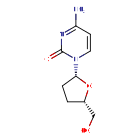
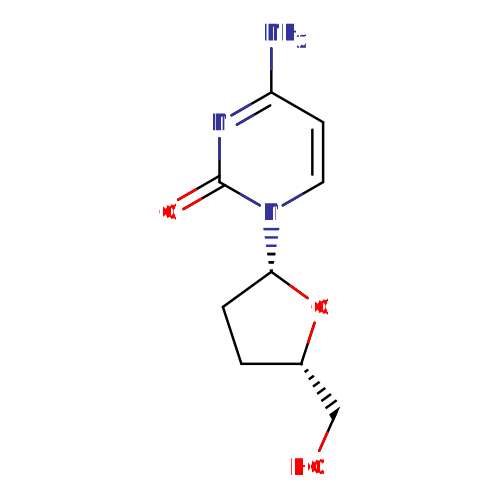
Structure for Zalcitabine (DB00943)
- Weight
- Average: 211.2178
Monoisotopic: 211.095691297 - Chemical Formula
- C9H13N3O3
- Synonyms
- 2',3'-Dideoxycytidine
- 4-amino-1-[(2R,5S)-5-(hydroxymethyl)tetrahydrofuran-2-yl]pyrimidin-2(1H)-one
- DDC
- DDCYD
- Dideoxycytidine
- Zalcitabine
- External IDs
- RO 24-2027/000
- RO-24-2027/000
- RO-24-2027000
- RO-242027000

Pharmacology
- Indication
For the treatment of Human immunovirus (HIV) infections in conjunction with other antivirals.
 Reduce drug development failure ratesBuild, train, & validate machine-learning modelswith evidence-based and structured datasets.Build, train, & validate predictive machine-learning models with structured datasets.
- Contraindications & Blackbox Warnings
 Prevent Adverse Drug Events TodayTap into our Clinical API for life-saving information on contraindications & blackbox warnings, population restrictions, harmful risks, & more.Avoid life-threatening adverse drug events with our Clinical API
- Pharmacodynamics
Zalcitabine is an analog of 2'-deoxycytidine that is pharmacologically related to but structurally different from other nucleotide reverse transcriptase inhibitors (NRTIs). Zalcitabine inhibits the activity of HIV-1 reverse transcriptase (RT) both by competing with the natural substrate dGTP and by its incorporation into viral DNA.
- Mechanism of action
Zalcitabine is a nucleoside reverse transcriptase inhibitor (NRTI) with activity against Human Immunodeficiency Virus Type 1 (HIV-1). Within cells, zalcitabine is converted to its active metabolite, dideoxycytidine 5'-triphosphate (ddCTP), by the sequential action of cellular enzymes. ddCTP interferes with viral RNA-directed DNA polymerase (reverse transcriptase) by competing for utilization of the natural substrate deoxycytidine 5'-triphosphate (dCTP), as well as incorpating into viral DNA. Due to it's lack of a 3'-OH group, the formation of a 5' to 3' phosphodiester linkage that is necessary for DNA chain elongation is inhibited, thus leading to the termination of viral DNA growth.
Target Actions Organism AReverse transcriptase/RNaseH inhibitorHuman immunodeficiency virus 1 - Absorption
Bioavailability is over 80% following oral administration.
- Volume of distribution
- 0.304 to 0.734 L/kg
- Protein binding
Less than 4%
- Metabolism
Zalcitabine is not reported to undergo significant hepatic metabolism; it is mainly phosphorylated intracellularly to zalcitabine triphosphate, the active substrate for HIV-reverse transcriptase. The concentration of zalcitabine triphosphate remains low for quantitative detection and measurement in the plasma following administration of therapeutic doses Label.
- Route of elimination
Renal excretion of unchanged drug appears to be the primary route of elimination, accounting for approximately 80% of an intravenous dose and 60% of an orally administered dose within 24 hours after dosing (n=19). Renal clearance exceeds glomerular filtration rate suggesting renal tubular secretion contributes to the elimination of zalcitabine by the kidneys.
- Half-life
2 hours
- Clearance
- 285 mL/min [HIV-infected patients receiving 1.5 mg IV infusion for 1 hour]
- Adverse Effects
 Improve decision support & research outcomesWith structured adverse effects data, including: blackbox warnings, adverse reactions, warning & precautions, & incidence rates. View sample adverse effects data in our new Data Library!Improve decision support & research outcomes with our structured adverse effects data.
- Toxicity
Acute overdose: Inadvertent pediatric overdoses have occurred with doses up to 1.5 mg/kg zalcitabine. Chronic overdose: in an initial dose-finding study in which zalcitabine was administered at doses 25 times (0.25 mg/kg every 8 hours) the currently recommended dose, one patient discontinued zalcitabine after 1½ weeks of treatment subsequent to the development of a rash and fever.
- Pathways
Pathway Category Zalcitabine Action Pathway Drug action - Pharmacogenomic Effects/ADRs
- Not Available
Interactions
- Drug Interactions
- This information should not be interpreted without the help of a healthcare provider. If you believe you are experiencing an interaction, contact a healthcare provider immediately. The absence of an interaction does not necessarily mean no interactions exist.
Drug Interaction Integrate drug-drug
interactions in your softwareAcetazolamide The excretion of Zalcitabine can be decreased when combined with Acetazolamide. Acetylsalicylic acid The excretion of Zalcitabine can be decreased when combined with Acetylsalicylic acid. Acyclovir The excretion of Zalcitabine can be decreased when combined with Acyclovir. Adefovir dipivoxil The excretion of Zalcitabine can be decreased when combined with Adefovir dipivoxil. Adenovirus type 7 vaccine live The therapeutic efficacy of Adenovirus type 7 vaccine live can be decreased when used in combination with Zalcitabine. - Food Interactions
- Avoid multivalent ions. Magnesium and aluminum containing products can reduce the absorption of this medication.
- Take on an empty stomach. Take at least 1 hour before or 2 hours after meals.
Products
 Drug product information from 10+ global regionsOur datasets provide approved product information including:dosage, form, labeller, route of administration, and marketing period.Access drug product information from over 10 global regions.
- Brand Name Prescription Products
Name Dosage Strength Route Labeller Marketing Start Marketing End Region Image Hivid Tablet, film coated 0.375 mg/1 Oral Genentech, Inc. 1992-06-19 2009-06-18 US 
Hivid Tablet, film coated 0.75 mg/1 Oral Physicians Total Care, Inc. 1992-06-19 2007-08-21 US Hivid Tablet, film coated 0.75 mg/1 Oral Genentech, Inc. 1992-06-19 2009-06-18 US Hivid Tab 0.375mg Tablet .375 mg Oral Hoffmann La Roche 1992-12-31 2003-07-30 Canada 
Hivid Tab 0.75 mg Tablet .75 mg Oral Hoffmann La Roche 1992-12-31 2006-07-25 Canada
Categories
- ATC Codes
- J05AF03 — Zalcitabine
- Drug Categories
- Anti-HIV Agents
- Anti-Infective Agents
- Anti-Retroviral Agents
- Antiinfectives for Systemic Use
- Antimetabolites
- Antiviral Agents
- Antivirals for Systemic Use
- Deoxycytidine
- Deoxyribonucleosides
- Dideoxynucleosides
- Direct Acting Antivirals
- Enzyme Inhibitors
- Noxae
- Nucleic Acid Synthesis Inhibitors
- Nucleic Acids, Nucleotides, and Nucleosides
- Nucleoside and Nucleotide Reverse Transcriptase Inhibitors
- Nucleoside Reverse Transcriptase Inhibitors
- Nucleosides
- OAT1/SLC22A6 Substrates
- Pyrimidine Nucleosides
- Pyrimidines
- Reverse Transcriptase Inhibitors
- Toxic Actions
- Chemical TaxonomyProvided by Classyfire
- Description
- This compound belongs to the class of organic compounds known as pyrimidine 2',3'-dideoxyribonucleosides. These are compounds consisting of a pyrimidine linked to a ribose which lacks a hydroxyl group at positions 2 and 3.
- Kingdom
- Organic compounds
- Super Class
- Nucleosides, nucleotides, and analogues
- Class
- Pyrimidine nucleosides
- Sub Class
- Pyrimidine 2',3'-dideoxyribonucleosides
- Direct Parent
- Pyrimidine 2',3'-dideoxyribonucleosides
- Alternative Parents
- Pyrimidones / Aminopyrimidines and derivatives / Imidolactams / Hydropyrimidines / Tetrahydrofurans / Heteroaromatic compounds / Oxacyclic compounds / Azacyclic compounds / Primary amines / Primary alcohols show 3 more
- Substituents
- Alcohol / Amine / Aminopyrimidine / Aromatic heteromonocyclic compound / Azacycle / Heteroaromatic compound / Hydrocarbon derivative / Hydropyrimidine / Imidolactam / Organic nitrogen compound show 13 more
- Molecular Framework
- Aromatic heteromonocyclic compounds
- External Descriptors
- pyrimidine 2',3'-dideoxyribonucleoside (CHEBI:10101)
- Affected organisms
- Human Immunodeficiency Virus
Chemical Identifiers
- UNII
- 6L3XT8CB3I
- CAS number
- 7481-89-2
- InChI Key
- WREGKURFCTUGRC-POYBYMJQSA-N
- InChI
- InChI=1S/C9H13N3O3/c10-7-3-4-12(9(14)11-7)8-2-1-6(5-13)15-8/h3-4,6,8,13H,1-2,5H2,(H2,10,11,14)/t6-,8+/m0/s1
- IUPAC Name
- 4-amino-1-[(2R,5S)-5-(hydroxymethyl)oxolan-2-yl]-1,2-dihydropyrimidin-2-one
- SMILES
- NC1=NC(=O)N(C=C1)[C@H]1CC[C@@H](CO)O1
References
- General References
- External Links
- Human Metabolome Database
- HMDB0015078
- KEGG Drug
- D00412
- KEGG Compound
- C07207
- PubChem Compound
- 24066
- PubChem Substance
- 46507879
- ChemSpider
- 22498
- BindingDB
- 50145605
- 3363
- ChEBI
- 10101
- ChEMBL
- CHEMBL853
- ZINC
- ZINC000000039906
- Therapeutic Targets Database
- DNC000527
- PharmGKB
- PA451950
- RxList
- RxList Drug Page
- Drugs.com
- Drugs.com Drug Page
- Wikipedia
- Zalcitabine
- FDA label
- Download (244 KB)
- MSDS
- Download (36 KB)
Clinical Trials
- Clinical Trials
Phase Status Purpose Conditions Count 4 Completed Treatment Hemophilia A / Human Immunodeficiency Virus (HIV) Infections 1 3 Completed Treatment Human Immunodeficiency Virus (HIV) Infections 7 2 Completed Treatment Human Immunodeficiency Virus (HIV) Infections 15 2 Completed Treatment Human Immunodeficiency Virus (HIV) Infections / Progressive Multifocal Leucoencephalopathy (PML) 1 1 Completed Treatment Hepatitis C Virus (HCV) Infection / Human Immunodeficiency Virus (HIV) Infections 1
Pharmacoeconomics
- Manufacturers
- Hoffmann la roche inc
- Packagers
- Murfreesboro Pharmaceutical Nursing Supply
- Pharmaceutical Utilization Management Program VA Inc.
- Physicians Total Care Inc.
- Dosage Forms
Form Route Strength Tablet Oral Tablet, film coated Oral 0.375 mg/1 Tablet, film coated Oral 0.75 mg/1 Tablet Oral .375 mg Tablet Oral .75 mg Tablet Oral 0.75 mg Tablet Oral 0.375 mg Tablet, film coated Oral 0.75 mg - Prices
Unit description Cost Unit Hivid 0.75 mg tablet 2.84USD tablet Hivid 0.375 mg tablet 2.27USD tablet DrugBank does not sell nor buy drugs. Pricing information is supplied for informational purposes only.- Patents
- Not Available
Properties
- State
- Solid
- Experimental Properties
Property Value Source melting point (°C) 217-218 °C PhysProp water solubility 7.64E+004 mg/L (at 25 °C) PHYSICIANS DESK REFERENCE (2001) logP -1.30 SANGSTER (1993) - Predicted Properties
Property Value Source Water Solubility 7.05 mg/mL ALOGPS logP -1.3 ALOGPS logP -1.2 Chemaxon logS -1.5 ALOGPS pKa (Strongest Acidic) 14.67 Chemaxon pKa (Strongest Basic) 4.48 Chemaxon Physiological Charge 0 Chemaxon Hydrogen Acceptor Count 5 Chemaxon Hydrogen Donor Count 2 Chemaxon Polar Surface Area 88.15 Å2 Chemaxon Rotatable Bond Count 2 Chemaxon Refractivity 52.24 m3·mol-1 Chemaxon Polarizability 20.92 Å3 Chemaxon Number of Rings 2 Chemaxon Bioavailability 1 Chemaxon Rule of Five Yes Chemaxon Ghose Filter No Chemaxon Veber's Rule No Chemaxon MDDR-like Rule No Chemaxon - Predicted ADMET Features
Property Value Probability Human Intestinal Absorption + 0.9972 Blood Brain Barrier + 0.9761 Caco-2 permeable - 0.7931 P-glycoprotein substrate Non-substrate 0.7746 P-glycoprotein inhibitor I Non-inhibitor 0.937 P-glycoprotein inhibitor II Non-inhibitor 0.9171 Renal organic cation transporter Non-inhibitor 0.8163 CYP450 2C9 substrate Non-substrate 0.8286 CYP450 2D6 substrate Non-substrate 0.8493 CYP450 3A4 substrate Non-substrate 0.5762 CYP450 1A2 substrate Non-inhibitor 0.9046 CYP450 2C9 inhibitor Non-inhibitor 0.9071 CYP450 2D6 inhibitor Non-inhibitor 0.9231 CYP450 2C19 inhibitor Non-inhibitor 0.9025 CYP450 3A4 inhibitor Non-inhibitor 0.8893 CYP450 inhibitory promiscuity Low CYP Inhibitory Promiscuity 0.9213 Ames test AMES toxic 0.9107 Carcinogenicity Non-carcinogens 0.8626 Biodegradation Not ready biodegradable 0.8721 Rat acute toxicity 2.0606 LD50, mol/kg Not applicable hERG inhibition (predictor I) Weak inhibitor 0.925 hERG inhibition (predictor II) Non-inhibitor 0.875
Spectra
- Mass Spec (NIST)
- Not Available
- Spectra
- Chromatographic Properties
Collision Cross Sections (CCS)
Adduct CCS Value (Å2) Source type Source [M-H]- 149.4572638 predictedDarkChem Lite v0.1.0 [M-H]- 149.3093638 predictedDarkChem Lite v0.1.0 [M-H]- 149.4220638 predictedDarkChem Lite v0.1.0 [M-H]- 144.52248 predictedDeepCCS 1.0 (2019) [M+H]+ 150.7527638 predictedDarkChem Lite v0.1.0 [M+H]+ 150.5403638 predictedDarkChem Lite v0.1.0 [M+H]+ 150.5553638 predictedDarkChem Lite v0.1.0 [M+H]+ 146.91806 predictedDeepCCS 1.0 (2019) [M+Na]+ 149.2785638 predictedDarkChem Lite v0.1.0 [M+Na]+ 149.5527638 predictedDarkChem Lite v0.1.0 [M+Na]+ 149.5601638 predictedDarkChem Lite v0.1.0 [M+Na]+ 152.90862 predictedDeepCCS 1.0 (2019)
Targets

- Kind
- Protein
- Organism
- Human immunodeficiency virus 1
- Pharmacological action
- Yes
- Actions
- Inhibitor
- General Function
- Rna-dna hybrid ribonuclease activity
- Specific Function
- Not Available
- Gene Name
- pol
- Uniprot ID
- Q72547
- Uniprot Name
- Reverse transcriptase/RNaseH
- Molecular Weight
- 65223.615 Da
References
- Devineni D, Gallo JM: Zalcitabine. Clinical pharmacokinetics and efficacy. Clin Pharmacokinet. 1995 May;28(5):351-60. [Article]
- Adkins JC, Peters DH, Faulds D: Zalcitabine. An update of its pharmacodynamic and pharmacokinetic properties and clinical efficacy in the management of HIV infection. Drugs. 1997 Jun;53(6):1054-80. [Article]
- De Clercq E: Emerging anti-HIV drugs. Expert Opin Emerg Drugs. 2005 May;10(2):241-73. [Article]
Enzymes
- Kind
- Protein
- Organism
- Humans
- Pharmacological action
- Unknown
- Actions
- Substrate
- General Function
- Protein homodimerization activity
- Specific Function
- Required for the phosphorylation of the deoxyribonucleosides deoxycytidine (dC), deoxyguanosine (dG) and deoxyadenosine (dA). Has broad substrate specificity, and does not display selectivity based...
- Gene Name
- DCK
- Uniprot ID
- P27707
- Uniprot Name
- Deoxycytidine kinase
- Molecular Weight
- 30518.315 Da
References
- Rossi L, Serafini S, Schiavano GF, Casabianca A, Vallanti G, Chiarantini L, Magnani M: Metabolism, mitochondrial uptake and toxicity of 2', 3'-dideoxycytidine. Biochem J. 1999 Dec 15;344 Pt 3:915-20. [Article]
- Kitos TE, Tyrrell DL: Intracellular metabolism of 2',3'-dideoxynucleosides in duck hepatocyte primary cultures. Biochem Pharmacol. 1995 May 11;49(9):1291-302. [Article]
Carriers
- Kind
- Protein
- Organism
- Humans
- Pharmacological action
- Unknown
- General Function
- Toxic substance binding
- Specific Function
- Serum albumin, the main protein of plasma, has a good binding capacity for water, Ca(2+), Na(+), K(+), fatty acids, hormones, bilirubin and drugs. Its main function is the regulation of the colloid...
- Gene Name
- ALB
- Uniprot ID
- P02768
- Uniprot Name
- Serum albumin
- Molecular Weight
- 69365.94 Da
References
- Bocedi A, Notaril S, Narciso P, Bolli A, Fasano M, Ascenzi P: Binding of anti-HIV drugs to human serum albumin. IUBMB Life. 2004 Oct;56(10):609-14. [Article]
Transporters
- Kind
- Protein
- Organism
- Humans
- Pharmacological action
- Unknown
- Actions
- Substrate
- General Function
- Sodium-independent organic anion transmembrane transporter activity
- Specific Function
- Involved in the renal elimination of endogenous and exogenous organic anions. Functions as organic anion exchanger when the uptake of one molecule of organic anion is coupled with an efflux of one ...
- Gene Name
- SLC22A6
- Uniprot ID
- Q4U2R8
- Uniprot Name
- Solute carrier family 22 member 6
- Molecular Weight
- 61815.78 Da
References
- Wada S, Tsuda M, Sekine T, Cha SH, Kimura M, Kanai Y, Endou H: Rat multispecific organic anion transporter 1 (rOAT1) transports zidovudine, acyclovir, and other antiviral nucleoside analogs. J Pharmacol Exp Ther. 2000 Sep;294(3):844-9. [Article]
- VanWert AL, Gionfriddo MR, Sweet DH: Organic anion transporters: discovery, pharmacology, regulation and roles in pathophysiology. Biopharm Drug Dispos. 2010 Jan;31(1):1-71. doi: 10.1002/bdd.693. [Article]
- Kind
- Protein
- Organism
- Humans
- Pharmacological action
- Unknown
- Actions
- Substrate
- General Function
- Sodium-independent organic anion transmembrane transporter activity
- Specific Function
- Mediates sodium-independent multispecific organic anion transport. Transport of prostaglandin E2, prostaglandin F2, tetracycline, bumetanide, estrone sulfate, glutarate, dehydroepiandrosterone sulf...
- Gene Name
- SLC22A7
- Uniprot ID
- Q9Y694
- Uniprot Name
- Solute carrier family 22 member 7
- Molecular Weight
- 60025.025 Da
References
- Morita N, Kusuhara H, Sekine T, Endou H, Sugiyama Y: Functional characterization of rat organic anion transporter 2 in LLC-PK1 cells. J Pharmacol Exp Ther. 2001 Sep;298(3):1179-84. [Article]
- Kind
- Protein
- Organism
- Humans
- Pharmacological action
- Unknown
- General Function
- Nucleoside transmembrane transporter activity
- Specific Function
- Mediates both influx and efflux of nucleosides across the membrane (equilibrative transporter). It is sensitive (ES) to low concentrations of the inhibitor nitrobenzylmercaptopurine riboside (NBMPR...
- Gene Name
- SLC29A1
- Uniprot ID
- Q99808
- Uniprot Name
- Equilibrative nucleoside transporter 1
- Molecular Weight
- 50218.805 Da
References
- Yao SY, Ng AM, Sundaram M, Cass CE, Baldwin SA, Young JD: Transport of antiviral 3'-deoxy-nucleoside drugs by recombinant human and rat equilibrative, nitrobenzylthioinosine (NBMPR)-insensitive (ENT2) nucleoside transporter proteins produced in Xenopus oocytes. Mol Membr Biol. 2001 Apr-Jun;18(2):161-7. [Article]
- Kind
- Protein
- Organism
- Humans
- Pharmacological action
- Unknown
- General Function
- Nucleoside transmembrane transporter activity
- Specific Function
- Mediates equilibrative transport of purine, pyrimidine nucleosides and the purine base hypoxanthine. Very less sensitive than SLC29A1 to inhibition by nitrobenzylthioinosine (NBMPR), dipyridamole, ...
- Gene Name
- SLC29A2
- Uniprot ID
- Q14542
- Uniprot Name
- Equilibrative nucleoside transporter 2
- Molecular Weight
- 50112.335 Da
References
- Yao SY, Ng AM, Sundaram M, Cass CE, Baldwin SA, Young JD: Transport of antiviral 3'-deoxy-nucleoside drugs by recombinant human and rat equilibrative, nitrobenzylthioinosine (NBMPR)-insensitive (ENT2) nucleoside transporter proteins produced in Xenopus oocytes. Mol Membr Biol. 2001 Apr-Jun;18(2):161-7. [Article]

Drug created at June 13, 2005 13:24 / Updated at February 02, 2024 22:46