Identification
- Summary
Pindolol is a beta adrenoceptor antagonist used to treat hypertension, edema, ventricular tachycardias, and atrial fibrillation.
- Brand Names
- Viskazide, Visken
- Generic Name
- Pindolol
- DrugBank Accession Number
- DB00960
- Background
Pindolol is a first generation non-selective beta blocker used in the treatment of hypertension.9 Early research into the use of pindolol found it had chronotropic effects, and so further investigation focused on the treatment of arrhythmia.6 Research into pindolol's use in the treatment of hypertension began in the early 1970s.7
Pindolol was granted FDA approval on 3 September 1982.8
- Type
- Small Molecule
- Groups
- Approved, Investigational
- Structure
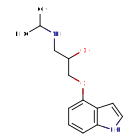
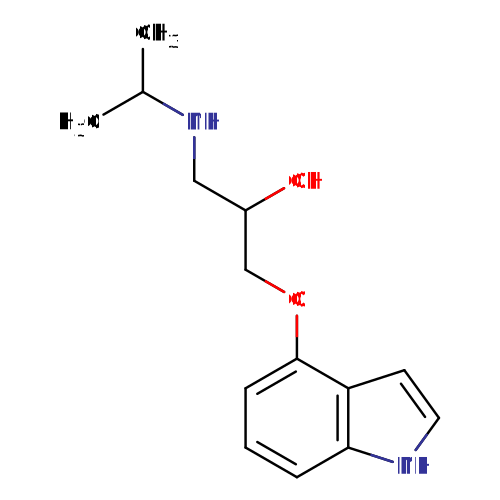
Structure for Pindolol (DB00960)
- Weight
- Average: 248.3208
Monoisotopic: 248.152477894 - Chemical Formula
- C14H20N2O2
- Synonyms
- 1-(1H-indol-4-yloxy)-3-(isopropylamino)propan-2-ol
- 1-(1H-indol-4-yloxy)-3-(propan-2-ylamino)-propan-2-ol
- 1-(1H-indol-4-yloxy)-3-[(1-methylethyl)amino]propan-2-ol
- 4-(2-hydroxy-3-isopropylaminopropoxy)-indole
- Pindolol
- Pindololum
- External IDs
- BRN 1536506
- CCRIS 9215
- DL-LB-46
- HSDB 6539
- LB 46
- LB-46

Pharmacology
- Indication
Pindolol is indicated in the management of hypertension.9 In Canada, it is also indicated in the prophylaxis of angina.10
 Reduce drug development failure ratesBuild, train, & validate machine-learning modelswith evidence-based and structured datasets.Build, train, & validate predictive machine-learning models with structured datasets.
- Associated Conditions
Indication Type Indication Combined Product Details Approval Level Age Group Patient Characteristics Dose Form Prophylaxis of Angina pectoris •••••••••••• •••••• Used in combination to treat Atrial fibrillation Regimen in combination with: Digoxin (DB00390) ••• ••••• Adjunct therapy in treatment of Depression ••• ••••• Used in combination to manage Hypertension •••••••••••• •••••• Management of Hypertension •••••••••••• •••••• - Contraindications & Blackbox Warnings
 Prevent Adverse Drug Events TodayTap into our Clinical API for life-saving information on contraindications & blackbox warnings, population restrictions, harmful risks, & more.Avoid life-threatening adverse drug events with our Clinical API
- Pharmacodynamics
Pindolol is a nonselective beta blocker indicated in the management of hypertension9 and prophylaxis of angina.10 It has a short duration of action as it is given twice daily, and a wide therapeutic window as doses can range from 10-60 mg/day.9 Patients should be counselled regarding the risk of cardiac failure, exacerbating ischemic heart disease with sudden withdrawal, nonallergic bronchospasm, masking hypoglycemia in diabetics, and masking hyperthyroidism.9
- Mechanism of action
The beta-1 adrenoceptor is a G-protein-coupled receptor.1 Agonism of the beta-1 adrenoceptor allows the Gs subunit to upregulate adenylyl cyclase, converting ATP to cyclic AMP (cAMP).1 Increased concentrations of cAMP activate cAMP-dependant kinase A, phosphorylating calcium channels, raising intracellular calcium, increasing calcium exchange through the sarcoplasmic reticulum, and increasing cardiac inotropy.1 cAMP-dependant kinase A also phosphorylates myosin light chains, increasing smooth muscle contractility.1 Increased smooth muscle contractility in the kidney releases renin.1
Pindolol is a non-selective beta blocker.3 Blocking beta-1 adrenergic receptors in the heart results in decreased heart rate and blood pressure.3 By blocking beta-1 receptors in the juxtaglomerular apparatus, pindolol inhibits the release of renin, which inhibits angiotensin II and aldosterone release.1,2 Reduced angiotensin II inhibits vasoconstriction and reduced aldosterone inhibits water retention.1,2
Beta-2 adrenoceptors located in the kidneys and peripheral blood vessels use a similar mechanism to activate cAMP-dependant kinase A to increase smooth muscle contractility.4 Blocking of the beta-2 adrenoceptor relaxes smooth muscle, leading to vasodilation.4
Target Actions Organism ABeta-1 adrenergic receptor partial agonistHumans ABeta-2 adrenergic receptor partial agonistHumans UBeta-3 adrenergic receptor agonistHumans U5-hydroxytryptamine receptor 1A antagonistinhibitorligandHumans U5-hydroxytryptamine receptor 1B other/unknownligandHumans - Absorption
The mean oral bioavailability of pindolol is 87-92%.10 A 5 mg oral dose reaches a Cmax of 33.1 ± 5.2 ng/mL, with a Tmax of 1-2 hours.10
- Volume of distribution
The volume of distribution of pindolol is approximately 2-3 L/kg.9,10
- Protein binding
Pindolol is 40% bound to proteins in plasma.9 Pindolol mainly binds more strongly to alpha-1-acid glycoprotein than it does to serum albumin.5
- Metabolism
30-40% of a dose of pindolol is not metabolized.10 The remainder is hydroxylated and subsequently undergoes glucuronidation or sulfate conjugation.10
Hover over products below to view reaction partners
- Route of elimination
80% of an oral dose is eliminated in the urine,10 with 25-40% of the dose as the unchanged parent compound.9 6-9% of an intravenous dose is eliminated in the feces.9 Overall, 60-65% of a dose is eliminated as glucuronide and sulfate metabolites.9
- Half-life
The half life of pindolol varies from 3-4 hours10 but can be as high as 30 hours in patients with cirrhosis of the liver.9
- Clearance
In otherwise healthy patients, the systemic clearance of pindolol is 400-500 mL/min.10 In patients with cirrhosis, the clearance of pindolol varies from 50-300 mL/min.9
- Adverse Effects
 Improve decision support & research outcomesWith structured adverse effects data, including: blackbox warnings, adverse reactions, warning & precautions, & incidence rates. View sample adverse effects data in our new Data Library!Improve decision support & research outcomes with our structured adverse effects data.
- Toxicity
Patients experiencing an overdose may experience excessive bradycardia, cardiac failure, hypotension, and bronchospasm.9 Initiate treatment with symptomatic and supportive measures.9
- Pathways
Pathway Category Pindolol Action Pathway Drug action - Pharmacogenomic Effects/ADRs
- Not Available
Interactions
- Drug Interactions
- This information should not be interpreted without the help of a healthcare provider. If you believe you are experiencing an interaction, contact a healthcare provider immediately. The absence of an interaction does not necessarily mean no interactions exist.
Drug Interaction Integrate drug-drug
interactions in your software1,2-Benzodiazepine The risk or severity of CNS depression can be increased when Pindolol is combined with 1,2-Benzodiazepine. Abacavir Pindolol may decrease the excretion rate of Abacavir which could result in a higher serum level. Abaloparatide The risk or severity of adverse effects can be increased when Pindolol is combined with Abaloparatide. Abatacept The metabolism of Pindolol can be increased when combined with Abatacept. Abiraterone The metabolism of Pindolol can be decreased when combined with Abiraterone. - Food Interactions
- Avoid alcohol. Alcohol may aggravate signs and symptoms of overdose.
- Take with or without food. Food does not significantly affect absorption.
Products
 Drug product information from 10+ global regionsOur datasets provide approved product information including:dosage, form, labeller, route of administration, and marketing period.Access drug product information from over 10 global regions.
- Product Images


- International/Other Brands
- Betapindol / Blockin L / Blocklin L / Calvisken / Decreten / Durapindol / Glauco-Visken / Pectobloc / Pinbetol / Prinodolol / Pynastin
- Brand Name Prescription Products
Name Dosage Strength Route Labeller Marketing Start Marketing End Region Image Pindolol-10 Tab 10mg Tablet 10 mg Oral Pro Doc Limitee 1989-12-31 2020-03-09 Canada 
Pindolol-15 Tab 15mg Tablet 15 mg Oral Pro Doc Limitee 1989-12-31 2012-07-23 Canada Pindolol-5 Tab 5mg Tablet 5 mg Oral Pro Doc Limitee 1989-12-31 2020-03-09 Canada Visken Tablet 5 mg Oral Xediton Pharmaceuticals Inc 1978-12-31 Not applicable Canada Visken Tablet 5 mg/1 Oral Novartis Pharmaceuticals Corporation 1982-09-03 2019-09-10 US 
- Generic Prescription Products
Name Dosage Strength Route Labeller Marketing Start Marketing End Region Image Apo-pindol Tab 10mg Tablet 10 mg Oral Apotex Corporation 1988-12-31 Not applicable Canada Apo-pindol Tab 15mg Tablet 15 mg Oral Apotex Corporation 1988-12-31 Not applicable Canada Apo-pindol Tab 5mg Tablet 5 mg Oral Apotex Corporation 1988-12-31 Not applicable Canada Dom-pindolol Tablet 5 mg Oral Dominion Pharmacal 1998-09-17 2018-10-10 Canada Dom-pindolol Tablet 15 mg Oral Dominion Pharmacal 1998-09-17 Not applicable Canada - Mixture Products
Name Ingredients Dosage Route Labeller Marketing Start Marketing End Region Image Viskazide Pindolol (10 mg) + Hydrochlorothiazide (50 mg) Tablet Oral Xediton Pharmaceuticals Inc 1983-12-31 Not applicable Canada Viskazide Pindolol (10 mg) + Hydrochlorothiazide (25 mg) Tablet Oral Xediton Pharmaceuticals Inc 1983-12-31 Not applicable Canada


Categories
- ATC Codes
- C07CA03 — Pindolol and other diuretics
- C07CA — Beta blocking agents, non-selective, and other diuretics
- C07C — BETA BLOCKING AGENTS AND OTHER DIURETICS
- C07 — BETA BLOCKING AGENTS
- C — CARDIOVASCULAR SYSTEM
- Drug Categories
- Adrenergic Agents
- Adrenergic Antagonists
- Adrenergic beta-Antagonists
- Agents causing hyperkalemia
- Alcohols
- Amines
- Amino Alcohols
- Antidepressive Agents
- Antihypertensive Agents
- Antihypertensive Agents Indicated for Hypertension
- Beta Blocking Agents, Non-Selective
- Bradycardia-Causing Agents
- Cardiovascular Agents
- Central Nervous System Depressants
- Cytochrome P-450 CYP2D6 Inhibitors
- Cytochrome P-450 CYP2D6 Inhibitors (weak)
- Cytochrome P-450 CYP2D6 Substrates
- Cytochrome P-450 Enzyme Inhibitors
- Cytochrome P-450 Substrates
- Drugs that are Mainly Renally Excreted
- Hypotensive Agents
- Neurotransmitter Agents
- OCT2 Substrates
- Phenoxypropanolamines
- Propanolamines
- Propanols
- Serotonergic Drugs Shown to Increase Risk of Serotonin Syndrome
- Serotonin 5-HT1 Receptor Antagonists
- Serotonin 5-HT1A Receptor Antagonists
- Serotonin Agents
- Serotonin Receptor Antagonists
- Vasodilating Agents
- Chemical TaxonomyProvided by Classyfire
- Description
- This compound belongs to the class of organic compounds known as indoles. These are compounds containing an indole moiety, which consists of pyrrole ring fused to benzene to form 2,3-benzopyrrole.
- Kingdom
- Organic compounds
- Super Class
- Organoheterocyclic compounds
- Class
- Indoles and derivatives
- Sub Class
- Indoles
- Direct Parent
- Indoles
- Alternative Parents
- Alkyl aryl ethers / Benzenoids / Pyrroles / Heteroaromatic compounds / Secondary alcohols / 1,2-aminoalcohols / Dialkylamines / Azacyclic compounds / Organopnictogen compounds / Hydrocarbon derivatives
- Substituents
- 1,2-aminoalcohol / Alcohol / Alkyl aryl ether / Amine / Aromatic heteropolycyclic compound / Azacycle / Benzenoid / Ether / Heteroaromatic compound / Hydrocarbon derivative
- Molecular Framework
- Aromatic heteropolycyclic compounds
- External Descriptors
- indoles, secondary amine (CHEBI:8214)
- Affected organisms
- Humans and other mammals
Chemical Identifiers
- UNII
- BJ4HF6IU1D
- CAS number
- 13523-86-9
- InChI Key
- JZQKKSLKJUAGIC-UHFFFAOYSA-N
- InChI
- InChI=1S/C14H20N2O2/c1-10(2)16-8-11(17)9-18-14-5-3-4-13-12(14)6-7-15-13/h3-7,10-11,15-17H,8-9H2,1-2H3
- IUPAC Name
- 1-(1H-indol-4-yloxy)-3-[(propan-2-yl)amino]propan-2-ol
- SMILES
- CC(C)NCC(O)COC1=CC=CC2=C1C=CN2
References
- Synthesis Reference
- US3471515
- General References
- Alhayek S, Preuss CV: Beta 1 Receptors . [Article]
- Blumenfeld JD, Sealey JE, Mann SJ, Bragat A, Marion R, Pecker MS, Sotelo J, August P, Pickering TG, Laragh JH: Beta-adrenergic receptor blockade as a therapeutic approach for suppressing the renin-angiotensin-aldosterone system in normotensive and hypertensive subjects. Am J Hypertens. 1999 May;12(5):451-9. doi: 10.1016/s0895-7061(99)00005-9. [Article]
- Clark BJ, Menninger K, Bertholet A: Pindolol--the pharmacology of a partial agonist. Br J Clin Pharmacol. 1982;13(Suppl 2):149S-158S. doi: 10.1111/j.1365-2125.1982.tb01904.x. [Article]
- Ferguson SS, Feldman RD: beta-adrenoceptors as molecular targets in the treatment of hypertension. Can J Cardiol. 2014 May;30(5 Suppl):S3-8. doi: 10.1016/j.cjca.2014.01.017. Epub 2014 Feb 12. [Article]
- Belpaire FM, Bogaert MG, Rosseneu M: Binding of beta-adrenoceptor blocking drugs to human serum albumin, to alpha 1-acid glycoprotein and to human serum. Eur J Clin Pharmacol. 1982;22(3):253-6. doi: 10.1007/BF00545224. [Article]
- Robak J, Gryglewski R: Influence of INPEA, pindolol and propranolol on the chronotropic and metabolic responses to -adrenergic stimulation in intact rats. Biochem Pharmacol. 1971 Oct;20(10):2749-58. doi: 10.1016/0006-2952(71)90184-5. [Article]
- Walter I, Kusus T, Lydtin H: [Clinical test of a new beta-receptor blockader in labile hypertension]. Verh Dtsch Ges Inn Med. 1971;77:940-3. [Article]
- FDA Approved Drug Products: Visken (Pindolol) Oral Tablets [Link]
- Dailymed: Pindolol Oral Tablet [Link]
- Health Canada Approved Drug Products: Apo-Pindolol (Pindolol) Oral Tablet [Link]
- External Links
- Human Metabolome Database
- HMDB0015095
- KEGG Drug
- D00513
- KEGG Compound
- C07445
- PubChem Compound
- 4828
- PubChem Substance
- 46508362
- ChemSpider
- 4662
- BindingDB
- 50019443
- 8332
- ChEBI
- 8214
- ChEMBL
- CHEMBL500
- Therapeutic Targets Database
- DAP000025
- PharmGKB
- PA450966
- Guide to Pharmacology
- GtP Drug Page
- RxList
- RxList Drug Page
- Drugs.com
- Drugs.com Drug Page
- PDRhealth
- PDRhealth Drug Page
- Wikipedia
- Pindolol
- MSDS
- Download (74.7 KB)
Clinical Trials
- Clinical Trials
Phase Status Purpose Conditions Count 4 Completed Other Cardiac Failure / Cardiovascular Disease (CVD) / Heart Failure / Heart Failure With Preserved Ejection Fraction (HFpEF) / Heart Failure, Diastolic 2 2 Completed Treatment Antidepressant Treatment Response / Major Depressive Disorder (MDD) 1 2 Recruiting Basic Science Healthy Volunteers (HV) 1 2, 3 Terminated Treatment Unipolar Depression 1 1 Completed Basic Science Amphetamine-Related Disorders / Moods Disorders / Substance Related Disorders 1
Pharmacoeconomics
- Manufacturers
- Genpharm pharmaceuticals inc
- Ivax pharmaceuticals inc sub teva pharmaceuticals usa
- Mutual pharmaceutical co inc
- Mylan pharmaceuticals inc
- Nostrum laboratories inc
- Purepac pharmaceutical co
- Sandoz inc
- Teva pharmaceuticals usa inc
- Watson laboratories inc
- Novartis pharmaceuticals corp
- Packagers
- Advanced Pharmaceutical Services Inc.
- Ivax Pharmaceuticals
- Major Pharmaceuticals
- Merckle GmbH
- Murfreesboro Pharmaceutical Nursing Supply
- Mylan
- Novartis AG
- Novopharm Ltd.
- Pharmaceutical Utilization Management Program VA Inc.
- Physicians Total Care Inc.
- Qualitest
- Sandhills Packaging Inc.
- Dosage Forms
Form Route Strength Tablet Oral Tablet Oral 10 mg/1 Tablet Oral 5 mg/1 Tablet Oral 10 mg / tab Tablet Oral 15 mg / tab Tablet Oral 5 mg / tab Tablet Oral 10 mg Tablet Oral 15 mg Tablet Oral 5 mg Tablet Oral Solution / drops Oral 5 mg/ml Tablet Oral 5.000 mg - Prices
Unit description Cost Unit Visken 15 mg Tablet 1.52USD tablet Visken 10 mg Tablet 1.05USD tablet Pindolol 10 mg tablet 1.0USD tablet Pindolol 5 mg tablet 0.73USD tablet Apo-Pindol 15 mg Tablet 0.61USD tablet Gen-Pindolol 15 mg Tablet 0.61USD tablet Novo-Pindol 15 mg Tablet 0.61USD tablet Nu-Pindol 15 mg Tablet 0.61USD tablet Pms-Pindolol 15 mg Tablet 0.61USD tablet Sandoz Pindolol 15 mg Tablet 0.61USD tablet Visken 5 mg Tablet 0.61USD tablet Apo-Pindol 10 mg Tablet 0.42USD tablet Gen-Pindolol 10 mg Tablet 0.42USD tablet Novo-Pindol 10 mg Tablet 0.42USD tablet Nu-Pindol 10 mg Tablet 0.42USD tablet Pms-Pindolol 10 mg Tablet 0.42USD tablet Sandoz Pindolol 10 mg Tablet 0.42USD tablet Apo-Pindol 5 mg Tablet 0.24USD tablet Gen-Pindolol 5 mg Tablet 0.24USD tablet Novo-Pindol 5 mg Tablet 0.24USD tablet Nu-Pindol 5 mg Tablet 0.24USD tablet Pms-Pindolol 5 mg Tablet 0.24USD tablet Sandoz Pindolol 5 mg Tablet 0.24USD tablet DrugBank does not sell nor buy drugs. Pricing information is supplied for informational purposes only.- Patents
- Not Available
Properties
- State
- Solid
- Experimental Properties
Property Value Source melting point (°C) 171 °C PhysProp water solubility Practically Insoluble FDA Label logP 1.75 SANGSTER (1994) Caco2 permeability -4.78 ADME Research, USCD pKa 9.25 SANGSTER (1994) - Predicted Properties
Property Value Source Water Solubility 0.861 mg/mL ALOGPS logP 2.17 ALOGPS logP 1.69 Chemaxon logS -2.5 ALOGPS pKa (Strongest Acidic) 14.09 Chemaxon pKa (Strongest Basic) 9.67 Chemaxon Physiological Charge 1 Chemaxon Hydrogen Acceptor Count 3 Chemaxon Hydrogen Donor Count 3 Chemaxon Polar Surface Area 57.28 Å2 Chemaxon Rotatable Bond Count 6 Chemaxon Refractivity 71.46 m3·mol-1 Chemaxon Polarizability 28.27 Å3 Chemaxon Number of Rings 2 Chemaxon Bioavailability 1 Chemaxon Rule of Five Yes Chemaxon Ghose Filter Yes Chemaxon Veber's Rule No Chemaxon MDDR-like Rule No Chemaxon - Predicted ADMET Features
Property Value Probability Human Intestinal Absorption + 0.9951 Blood Brain Barrier + 0.6929 Caco-2 permeable + 0.8867 P-glycoprotein substrate Substrate 0.6667 P-glycoprotein inhibitor I Non-inhibitor 0.9272 P-glycoprotein inhibitor II Non-inhibitor 0.9423 Renal organic cation transporter Non-inhibitor 0.8179 CYP450 2C9 substrate Non-substrate 0.8315 CYP450 2D6 substrate Substrate 0.8919 CYP450 3A4 substrate Non-substrate 0.708 CYP450 1A2 substrate Non-inhibitor 0.7809 CYP450 2C9 inhibitor Non-inhibitor 0.9071 CYP450 2D6 inhibitor Inhibitor 0.5 CYP450 2C19 inhibitor Non-inhibitor 0.9025 CYP450 3A4 inhibitor Non-inhibitor 0.831 CYP450 inhibitory promiscuity Low CYP Inhibitory Promiscuity 0.8331 Ames test Non AMES toxic 0.9218 Carcinogenicity Non-carcinogens 0.9367 Biodegradation Not ready biodegradable 0.9843 Rat acute toxicity 2.9438 LD50, mol/kg Not applicable hERG inhibition (predictor I) Weak inhibitor 0.9404 hERG inhibition (predictor II) Non-inhibitor 0.5774
Spectra
- Mass Spec (NIST)
- Download (8.77 KB)
- Spectra
- Chromatographic Properties
Collision Cross Sections (CCS)
Adduct CCS Value (Å2) Source type Source [M-H]- 168.5728657 predictedDarkChem Lite v0.1.0 [M-H]- 153.39436 predictedDeepCCS 1.0 (2019) [M+H]+ 168.4701657 predictedDarkChem Lite v0.1.0 [M+H]+ 155.75237 predictedDeepCCS 1.0 (2019) [M+Na]+ 168.6079657 predictedDarkChem Lite v0.1.0 [M+Na]+ 162.33968 predictedDeepCCS 1.0 (2019)
Targets

- Kind
- Protein
- Organism
- Humans
- Pharmacological action
- Yes
- Actions
- Partial agonist
- General Function
- Receptor signaling protein activity
- Specific Function
- Beta-adrenergic receptors mediate the catecholamine-induced activation of adenylate cyclase through the action of G proteins. This receptor binds epinephrine and norepinephrine with approximately e...
- Gene Name
- ADRB1
- Uniprot ID
- P08588
- Uniprot Name
- Beta-1 adrenergic receptor
- Molecular Weight
- 51322.1 Da
References
- Chen X, Ji ZL, Chen YZ: TTD: Therapeutic Target Database. Nucleic Acids Res. 2002 Jan 1;30(1):412-5. [Article]
- Joseph SS, Lynham JA, Molenaar P, Grace AA, Colledge WH, Kaumann AJ: Intrinsic sympathomimetic activity of (-)-pindolol mediated through a (-)-propranolol-resistant site of the beta1-adrenoceptor in human atrium and recombinant receptors. Naunyn Schmiedebergs Arch Pharmacol. 2003 Dec;368(6):496-503. Epub 2003 Nov 8. [Article]
- Doggrell SA: Effects of (+/-)- (+)- and (-)-metoprolol, (+/-)- (+)- and (-)-pindolol, (+/-)-mepindolol and (+/-)-bopindolol on the rat left atria and portal vein. Gen Pharmacol. 1991;22(6):1169-77. [Article]
- Berendsen HH, Broekkamp CL, Van Delft AM: Antagonism of 8-OH-DPAT-induced behaviour in rats. Eur J Pharmacol. 1990 Oct 2;187(1):97-103. [Article]
- Watkins DJ, Lawrence AJ, Lewis SJ, Jarrott B: Loss of [125I]-pindolol binding to beta-adrenoceptors on rat nodose ganglion after chronic isoprenaline treatment. J Auton Nerv Syst. 1996 Aug 27;60(1-2):12-6. [Article]
- Brodde OE, Michel MC, Wang XL, Zerkowski HR: Chronic beta-adrenoceptor antagonist treatment modulates human cardiac and vascular beta-adrenoceptor density in a subtype-selective fashion. J Hypertens Suppl. 1988 Dec;6(4):S497-500. [Article]
- Feve B, Emorine LJ, Lasnier F, Blin N, Baude B, Nahmias C, Strosberg AD, Pairault J: Atypical beta-adrenergic receptor in 3T3-F442A adipocytes. Pharmacological and molecular relationship with the human beta 3-adrenergic receptor. J Biol Chem. 1991 Oct 25;266(30):20329-36. [Article]
- Kind
- Protein
- Organism
- Humans
- Pharmacological action
- Yes
- Actions
- Partial agonist
- General Function
- Protein homodimerization activity
- Specific Function
- Beta-adrenergic receptors mediate the catecholamine-induced activation of adenylate cyclase through the action of G proteins. The beta-2-adrenergic receptor binds epinephrine with an approximately ...
- Gene Name
- ADRB2
- Uniprot ID
- P07550
- Uniprot Name
- Beta-2 adrenergic receptor
- Molecular Weight
- 46458.32 Da
References
- Rubenstein LA, Zauhar RJ, Lanzara RG: Molecular dynamics of a biophysical model for beta2-adrenergic and G protein-coupled receptor activation. J Mol Graph Model. 2006 Dec;25(4):396-409. Epub 2006 Mar 30. [Article]
- Dejgaard A, Liggett SB, Christensen NJ, Cryer PE, Hilsted J: Adrenergic receptors are a fallible index of adrenergic denervation hypersensitivity. Scand J Clin Lab Invest. 1991 Dec;51(8):659-66. [Article]
- Wheeldon NM, Newnham DM, Fraser GC, McDevitt DG, Lipworth BJ: The effect of pindolol on creatine kinase is not due to beta 2-adrenoceptor partial agonist activity. Br J Clin Pharmacol. 1991 Jun;31(6):723-4. [Article]
- Doggrell SA: Effects of (+/-)- (+)- and (-)-metoprolol, (+/-)- (+)- and (-)-pindolol, (+/-)-mepindolol and (+/-)-bopindolol on the rat left atria and portal vein. Gen Pharmacol. 1991;22(6):1169-77. [Article]
- Doggrell SA: Relaxant and beta 2-adrenoceptor blocking activities of (+/- )-, (+)- and (-)-pindolol on the rat isolated aorta. J Pharm Pharmacol. 1990 Jun;42(6):444-6. [Article]
- Chen X, Ji ZL, Chen YZ: TTD: Therapeutic Target Database. Nucleic Acids Res. 2002 Jan 1;30(1):412-5. [Article]
- Feve B, Emorine LJ, Lasnier F, Blin N, Baude B, Nahmias C, Strosberg AD, Pairault J: Atypical beta-adrenergic receptor in 3T3-F442A adipocytes. Pharmacological and molecular relationship with the human beta 3-adrenergic receptor. J Biol Chem. 1991 Oct 25;266(30):20329-36. [Article]
- Kind
- Protein
- Organism
- Humans
- Pharmacological action
- Unknown
- Actions
- Agonist
- General Function
- Protein homodimerization activity
- Specific Function
- Beta-adrenergic receptors mediate the catecholamine-induced activation of adenylate cyclase through the action of G proteins. Beta-3 is involved in the regulation of lipolysis and thermogenesis.
- Gene Name
- ADRB3
- Uniprot ID
- P13945
- Uniprot Name
- Beta-3 adrenergic receptor
- Molecular Weight
- 43518.615 Da
References
- Hoffmann C, Leitz MR, Oberdorf-Maass S, Lohse MJ, Klotz KN: Comparative pharmacology of human beta-adrenergic receptor subtypes--characterization of stably transfected receptors in CHO cells. Naunyn Schmiedebergs Arch Pharmacol. 2004 Feb;369(2):151-9. Epub 2004 Jan 17. [Article]
- Feve B, Emorine LJ, Lasnier F, Blin N, Baude B, Nahmias C, Strosberg AD, Pairault J: Atypical beta-adrenergic receptor in 3T3-F442A adipocytes. Pharmacological and molecular relationship with the human beta 3-adrenergic receptor. J Biol Chem. 1991 Oct 25;266(30):20329-36. [Article]
- Kind
- Protein
- Organism
- Humans
- Pharmacological action
- Unknown
- Actions
- AntagonistInhibitorLigand
- General Function
- Serotonin receptor activity
- Specific Function
- G-protein coupled receptor for 5-hydroxytryptamine (serotonin). Also functions as a receptor for various drugs and psychoactive substances. Ligand binding causes a conformation change that triggers...
- Gene Name
- HTR1A
- Uniprot ID
- P08908
- Uniprot Name
- 5-hydroxytryptamine receptor 1A
- Molecular Weight
- 46106.335 Da
References
- Smeraldi E, Benedetti F, Barbini B, Campori E, Colombo C: Sustained antidepressant effect of sleep deprivation combined with pindolol in bipolar depression. A placebo-controlled trial. Neuropsychopharmacology. 1999 Apr;20(4):380-5. [Article]
- Haddjeri N, de Montigny C, Blier P: Modulation of the firing activity of rat serotonin and noradrenaline neurons by (+/-)pindolol. Biol Psychiatry. 1999 May 1;45(9):1163-9. [Article]
- Gobert A, Millan MJ: Modulation of dialysate levels of dopamine, noradrenaline, and serotonin (5-HT) in the frontal cortex of freely-moving rats by (-)-pindolol alone and in association with 5-HT reuptake inhibitors: comparative roles of beta-adrenergic, 5-HT1A, and 5-HT1B receptors. Neuropsychopharmacology. 1999 Aug;21(2):268-84. [Article]
- Andree B, Thorberg SO, Halldin C, Farde L: Pindolol binding to 5-HT1A receptors in the human brain confirmed with positron emission tomography. Psychopharmacology (Berl). 1999 Jun;144(3):303-5. [Article]
- Fornal CA, Martin FJ, Metzler CW, Jacobs BL: Pindolol suppresses serotonergic neuronal activity and does not block the inhibition of serotonergic neurons produced by 8-hydroxy-2-(di-n-propylamino)tetralin in awake cats. J Pharmacol Exp Ther. 1999 Oct;291(1):229-38. [Article]
- Chen X, Ji ZL, Chen YZ: TTD: Therapeutic Target Database. Nucleic Acids Res. 2002 Jan 1;30(1):412-5. [Article]
- Wada Y, Hirao N, Shiraishi J, Nakamura M, Koshino Y: Pindolol potentiates the effect of fluoxetine on hippocampal seizures in rats. Neurosci Lett. 1999 May 21;267(1):61-4. doi: 10.1016/s0304-3940(99)00321-3. [Article]
- Sandell J, Halldin C, Hall H, Thorberg SO, Werner T, Sohn D, Sedvall G, Farde L: Radiosynthesis and autoradiographic evaluation of [11C]NAD-299, a radioligand for visualization of the 5-HT1A receptor. Nucl Med Biol. 1999 Feb;26(2):159-64. doi: 10.1016/s0969-8051(98)00091-2. [Article]
- Hayes ES, Adaikan PG, Ratnam SS, Ng SC: 5-HT4 receptors in isolated human corpus cavernosum? Int J Impot Res. 1999 Aug;11(4):219-25. doi: 10.1038/sj.ijir.3900425. [Article]
- Clemett DA, Kendall DA, Cockett MI, Marsden CA, Fone KC: Pindolol-insensitive [3H]-5-hydroxytryptamine binding in the rat hypothalamus; identity with 5-hydroxytryptamine7 receptors. Br J Pharmacol. 1999 May;127(1):236-42. doi: 10.1038/sj.bjp.0702503. [Article]
- Kind
- Protein
- Organism
- Humans
- Pharmacological action
- Unknown
- Actions
- Other/unknownLigand
- General Function
- Serotonin receptor activity
- Specific Function
- G-protein coupled receptor for 5-hydroxytryptamine (serotonin). Also functions as a receptor for ergot alkaloid derivatives, various anxiolytic and antidepressant drugs and other psychoactive subst...
- Gene Name
- HTR1B
- Uniprot ID
- P28222
- Uniprot Name
- 5-hydroxytryptamine receptor 1B
- Molecular Weight
- 43567.535 Da
References
- Dawson LA, Nguyen HQ: The role of 5-HT(1A) and 5-HT(1B/1D) receptors on the modulation of acute fluoxetine-induced changes in extracellular 5-HT: the mechanism of action of (+/-)pindolol. Neuropharmacology. 2000 Apr 3;39(6):1044-52. [Article]
- Ariani K, Hamblin MW, Tan GL, Stratford CA, Ciaranello RD: G protein dependent alterations in [125I]iodocyanopindolol and +/- cyanopindolol binding at 5-HT1B binding sites in rat brain membranes. Neurochem Res. 1989 Sep;14(9):835-43. [Article]
- Leonhardt S, Herrick-Davis K, Titeler M: Detection of a novel serotonin receptor subtype (5-HT1E) in human brain: interaction with a GTP-binding protein. J Neurochem. 1989 Aug;53(2):465-71. [Article]
- Herrick-Davis K, Titeler M, Leonhardt S, Struble R, Price D: Serotonin 5-HT1D receptors in human prefrontal cortex and caudate: interaction with a GTP binding protein. J Neurochem. 1988 Dec;51(6):1906-12. [Article]
- Terron JA, Lopez-Munoz FJ, Hong E, Villalon CM: 2-(2-Aminoethyl)-quinoline (D-1997): a novel agonist at 5-hydroxytryptamine1-like receptors in the canine basilar artery. Arch Int Pharmacodyn Ther. 1994 Jan-Feb;327(1):56-68. [Article]
- Clemett DA, Kendall DA, Cockett MI, Marsden CA, Fone KC: Pindolol-insensitive [3H]-5-hydroxytryptamine binding in the rat hypothalamus; identity with 5-hydroxytryptamine7 receptors. Br J Pharmacol. 1999 May;127(1):236-42. doi: 10.1038/sj.bjp.0702503. [Article]
Enzymes
- Kind
- Protein group
- Organism
- Humans
- Pharmacological action
- Unknown
- Actions
- Substrate
- General Function
- Steroid binding
- Specific Function
- UDPGT is of major importance in the conjugation and subsequent elimination of potentially toxic xenobiotics and endogenous compounds. This isoform glucuronidates bilirubin IX-alpha to form both the...
Components:
References
- Kind
- Protein group
- Organism
- Humans
- Pharmacological action
- Unknown
- Actions
- Substrate
- General Function
- Sulfotransferase activity
- Specific Function
- Sulfotransferase that utilizes 3'-phospho-5'-adenylyl sulfate (PAPS) as sulfonate donor to catalyze the sulfonation of steroids and bile acids in the liver and adrenal glands.
Components:
References
- Kind
- Protein
- Organism
- Humans
- Pharmacological action
- Unknown
- Actions
- SubstrateInhibitor
- General Function
- Steroid hydroxylase activity
- Specific Function
- Responsible for the metabolism of many drugs and environmental chemicals that it oxidizes. It is involved in the metabolism of drugs such as antiarrhythmics, adrenoceptor antagonists, and tricyclic...
- Gene Name
- CYP2D6
- Uniprot ID
- P10635
- Uniprot Name
- Cytochrome P450 2D6
- Molecular Weight
- 55768.94 Da
References
- Smith DA, Jones BC: Speculations on the substrate structure-activity relationship (SSAR) of cytochrome P450 enzymes. Biochem Pharmacol. 1992 Dec 1;44(11):2089-98. [Article]
- Ferrari S, Leemann T, Dayer P: The role of lipophilicity in the inhibition of polymorphic cytochrome P450IID6 oxidation by beta-blocking agents in vitro. Life Sci. 1991;48(23):2259-65. [Article]
Carriers
- Kind
- Protein group
- Organism
- Humans
- Pharmacological action
- Unknown
- Actions
- Binder
- General Function
- Not Available
- Specific Function
- Functions as transport protein in the blood stream. Binds various ligands in the interior of its beta-barrel domain. Also binds synthetic drugs and influences their distribution and availability in...
Components:
References
- Belpaire FM, Bogaert MG, Rosseneu M: Binding of beta-adrenoceptor blocking drugs to human serum albumin, to alpha 1-acid glycoprotein and to human serum. Eur J Clin Pharmacol. 1982;22(3):253-6. doi: 10.1007/BF00545224. [Article]
Transporters
- Kind
- Protein
- Organism
- Humans
- Pharmacological action
- Unknown
- Actions
- Substrate
- General Function
- Quaternary ammonium group transmembrane transporter activity
- Specific Function
- Mediates tubular uptake of organic compounds from circulation. Mediates the influx of agmatine, dopamine, noradrenaline (norepinephrine), serotonin, choline, famotidine, ranitidine, histamin, creat...
- Gene Name
- SLC22A2
- Uniprot ID
- O15244
- Uniprot Name
- Solute carrier family 22 member 2
- Molecular Weight
- 62579.99 Da
References
- Ciarimboli G, Schroter R, Neugebauer U, Vollenbroker B, Gabriels G, Brzica H, Sabolic I, Pietig G, Pavenstadt H, Schlatter E, Edemir B: Kidney transplantation down-regulates expression of organic cation transporters, which translocate beta-blockers and fluoroquinolones. Mol Pharm. 2013 Jun 3;10(6):2370-80. doi: 10.1021/mp4000234. Epub 2013 May 3. [Article]


Drug created at June 13, 2005 13:24 / Updated at April 27, 2024 09:44