Identification
- Summary
Glucosamine is a common ingredient in nutritional supplements used for the relief of joint pain.
- Generic Name
- Glucosamine
- DrugBank Accession Number
- DB01296
- Background
Osteoarthritis (OA) is a progressive and degenerative joint disease marked by loss of cartilage, bone changes, and synovial membrane inflammation.14 Treatment with chondroprotective drugs, such as glucosamine sulfate may offer additional benefits to nonsteroidal anti-inflammatory drugs treating the painful symptoms of OA. Glucosamine is commonly used over the counter as a treatment for arthritic joint pain, although its acceptance as a medical therapy varies due to contradictory and findings with unclear clinical significance during clinical trials.6,14 It is currently not approved as a prescription product by the FDA, but is widely available over the counter.
- Type
- Small Molecule
- Groups
- Approved, Investigational
- Structure
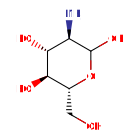
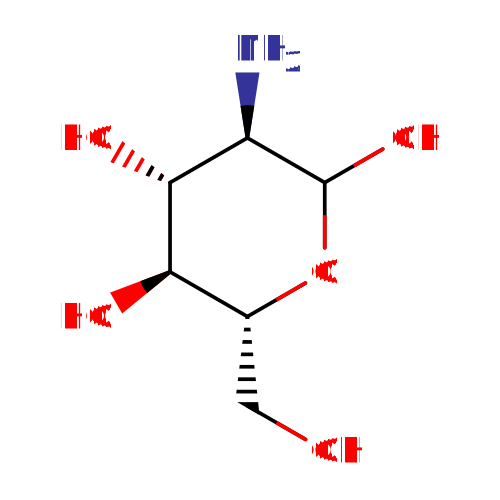
Structure for Glucosamine (DB01296)
- Weight
- Average: 179.1711
Monoisotopic: 179.079372531 - Chemical Formula
- C6H13NO5
- Synonyms
- 2-amino-2-deoxy-D-glucose
- Chitosamine
- D-Glucosamine
- Glucosamina
- Glucosamine

Pharmacology
- Indication
Glucosamine is generally used over the counter in the symptomatic treatment of osteoarthritis and joint pain,1 frequently combined with chondroitin sulfate and/or ibuprofen.27
 Reduce drug development failure ratesBuild, train, & validate machine-learning modelswith evidence-based and structured datasets.Build, train, & validate predictive machine-learning models with structured datasets.
- Associated Conditions
Indication Type Indication Combined Product Details Approval Level Age Group Patient Characteristics Dose Form Used in combination for symptomatic treatment of Arthritis Combination Product in combination with: Chondroitin sulfate (DB09301), Ibuprofen (DB01050) ••• ••• •••••• Used in combination for symptomatic treatment of Backache Combination Product in combination with: Ibuprofen (DB01050), Chondroitin sulfate (DB09301) ••• ••• •••••• Treatment of Joint pain •••••••••••• •••••••• •••••••• ••••••• ••••••• ••• ••••••••• •••••• Used in combination to treat Osteoarthritis (oa) Combination Product in combination with: Lidocaine (DB00281) •••••••••••• •••••••••• •••••••• Treatment of Osteoarthritis (oa) •••••••••••• •••••••• - Contraindications & Blackbox Warnings
 Prevent Adverse Drug Events TodayTap into our Clinical API for life-saving information on contraindications & blackbox warnings, population restrictions, harmful risks, & more.Avoid life-threatening adverse drug events with our Clinical API
- Pharmacodynamics
The administration of glucosamine, in theory, provides a building block towards the synthesis of glycosaminoglycans, slowing the progression of osteoarthritis and relieving symptoms of joint pain. Studies to this date examining the efficacy of glucosamine sulfate have been inconclusive. Glycosaminoglycans contribute to joint cartilage elasticity, strength, and flexibility.11 A systematic review of various studies and guidelines determined that modest improvements were reported for joint pain and function in patients taking glucosamine. A consistent joint space narrowing was observed, but with an unclear clinical significance.6
- Mechanism of action
The mechanism of action of glucosamine in joint health is unclear,6 however there are several possible mechanisms that contribute to its therapeutic effects. Because glucosamine is a precursor for glycosaminoglycans, and glycosaminoglycans are a major component of joint cartilage,14 glucosamine supplements may help to rebuild cartilage and treat the symptoms of arthritis. Some in vitro studies show evidence that glucosamine reduces inflammation via inhibition of interferon gamma15,16,17 and Nuclear factor kappa B subunit 65 (NF-κB p65),16,18 improving the symptoms of arthritis and joint pain. Clinical relevance is unknown at this time.
Target Actions Organism UInterferon gamma inhibitorHumans UTranscription factor p65 inhibitorHumans - Absorption
In a pharmacokinetic study, glucosamine was 88.7% absorption by the gastrointestinal tract. Absolute oral bioavailability was 44%, likely due to the hepatic first-pass effect.12 In a pharmacokinetic study of 12 healthy adults receiving oral crystalline glucosamine, plasma levels increased up to 30 times the baseline levels and Cmax was 10 microM with a 1,500 mg once-daily dose. Tmax was about 3 hours. AUC was 20,216 ± 5021 after a 15,000 mg dose.13
- Volume of distribution
Results of a pharmacokinetic study of 12 healthy volunteers receiving three daily consecutive oral administrations of glucosamine sulfate soluble powder demonstrated glucosamine distribution to extravascular compartments.13 Human pharmacokinetic data for glucosamine is limited in the literature, however, a large animal model study of horses revealed a mean apparent volume of distribution of 15.4 L/kg. Concentrations of glucosamine ranged from 9-15 microM after an intravenous dose, and 0.3-0.7 microM after nasogastric dosing. These concentrations remained in the range of 0.1-0.7 microM in the majority of horses 12 hours after dosing,5 suggesting effectiveness of a once-daily dose. In rats and dogs, radioactivity from a C-14 labeled dose of glucosamine is detected in the liver, kidneys, articular cartilage, and other areas.12
- Protein binding
Not Available
- Metabolism
Glucosamine undergoes metabolism in the liver.12 Metabolism information for glucosamine is limited in the literature.
- Route of elimination
Fecal excretion of glucosamine in a pharmacokinetic study was 11.3% within 120 hours after administration.13 Urinary elimination was found to be 1.19% within the first 8 hours post-administration.12
- Half-life
The estimated half-life for glucosamine is 15 hours after an oral dose.13 After a bolus intravenous injection of 1005 mg crystalline glucosamine sulfate, the parent drug has an apparent half life of 1.11 hours.12
- Clearance
Not Available
- Adverse Effects
 Improve decision support & research outcomesWith structured adverse effects data, including: blackbox warnings, adverse reactions, warning & precautions, & incidence rates. View sample adverse effects data in our new Data Library!Improve decision support & research outcomes with our structured adverse effects data.
- Toxicity
The oral LD50 of glucosamine in rats is >5000 mg/kg.24 Symptoms of an overdose with glucosamine may include nausea, vomiting, abdominal pain, and diarrhea (common side effects of this drug). Severe and life-threatening hypersensitivity reactions to glucosamine may occur in patients with a shellfish allergy or asthma.28
- Pathways
Pathway Category Amino Sugar Metabolism Metabolic G(M2)-Gangliosidosis: Variant B, Tay-Sachs Disease Disease Sialuria or French Type Sialuria Disease Sialuria or French Type Sialuria Disease Salla Disease/Infantile Sialic Acid Storage Disease Disease Tay-Sachs Disease Disease - Pharmacogenomic Effects/ADRs
- Not Available
Interactions
- Drug Interactions
- This information should not be interpreted without the help of a healthcare provider. If you believe you are experiencing an interaction, contact a healthcare provider immediately. The absence of an interaction does not necessarily mean no interactions exist.
Drug Interaction Integrate drug-drug
interactions in your softwareAbciximab Glucosamine may increase the antiplatelet activities of Abciximab. Acenocoumarol Glucosamine may increase the anticoagulant activities of Acenocoumarol. Acetylsalicylic acid Glucosamine may increase the antiplatelet activities of Acetylsalicylic acid. Anagrelide Glucosamine may increase the antiplatelet activities of Anagrelide. Cangrelor Glucosamine may increase the antiplatelet activities of Cangrelor. - Food Interactions
- No interactions found.
Products
 Drug product information from 10+ global regionsOur datasets provide approved product information including:dosage, form, labeller, route of administration, and marketing period.Access drug product information from over 10 global regions.
- Product Ingredients
Ingredient UNII CAS InChI Key Glucosamine hydrochloride 750W5330FY 66-84-2 QKPLRMLTKYXDST-NSEZLWDYSA-N Glucosamine sulfate 1FW7WLR731 14999-43-0 WLNBMPZUVDTASE-HXIISURNSA-N Glucosamine sulfate potassium chloride 15VQ11I66N 1296149-08-0 UOUQWMJTBOYJTE-YZJMRIMCSA-M Glucosamine sulfate sodium chloride 7RI65CXJ9S Not Available Not applicable - Over the Counter Products
Name Dosage Strength Route Labeller Marketing Start Marketing End Region Image Appeton Essentials Glucosamine-500mg Tablet Tablet Oral KOTRA PHARMA (M) SDN. BHD. 2020-09-08 Not applicable Malaysia 
Arthroflex Capsule Oral ALLPAC SOLUTIONS SDN. BHD. 2020-09-08 Not applicable Malaysia Artrisa Sachet for Oral Solution 1500 mg Powder, for solution Oral AV MANUFACTURING SDN.BHD 2020-09-08 Not applicable Malaysia AVM-Artrisa 250mg Capsule Capsule 250 mg Oral AV MANUFACTURING SDN.BHD 2020-09-08 Not applicable Malaysia AVM-Artrisa 500mg Capsule Capsule 500 mg Oral AV MANUFACTURING SDN.BHD 2020-09-08 Not applicable Malaysia - Mixture Products
Name Ingredients Dosage Route Labeller Marketing Start Marketing End Region Image Adaxil Glucosamine sulfate (750 mg) + Chondroitin sulfate sodium (bovine) (600 mg) Powder Oral MYLAN HEALTHCARE SDN. BHD. 2020-09-08 Not applicable Malaysia Appeton Essentials Glucosamine 500 + Chondroitin 400 Tablet Glucosamine sulfate potassium chloride (500 mg) + Chondroitin sulfate sodium (bovine) (400 mg) Tablet Oral KOTRA PHARMA (M) SDN. BHD. 2020-09-08 Not applicable Malaysia Arthro Capsule Glucosamine sulfate (375 mg) + Chondroitin sulfate sodium (bovine) (200 mg) Capsule Oral STERILINE SDN. BHD. 2020-09-08 Not applicable Malaysia ARTHRO-S Powder for Oral Solution Glucosamine sulfate potassium chloride (1500 mg) + Chondroitin sulfate sodium (bovine) (1200 mg) Powder Oral Noripharma Sdn. Bhd. 2020-09-08 Not applicable Malaysia ARTROFORT(R) COMPLEX Glucosamine (750 mg) + Chondroitin sulfate (bovine) (600 mg) Powder Oral บริษัท เมด้า ฟาม่าร์ (ประเทศไทย) จำกัด 2011-11-04 Not applicable Thailand 
- Unapproved/Other Products
Name Ingredients Dosage Route Labeller Marketing Start Marketing End Region Image Medi-flexx Rx Joint Support Formula Glucosamine sulfate (500 mg/1) + Chondroitin sulfate (chicken) (400 mg/1) + Dimethyl sulfone (200 mg/1) Tablet Oral Two Hip Consulting, Llc 2014-12-05 2016-04-11 US 
Remaxazon External Patch Glucosamine (5 g/100g) + Capsaicin (.0285 g/100g) + Chondroitin sulfate sodium (bovine) (3 g/100g) + Lidocaine (4 g/100g) Patch Topical Home Aide Diganostics, Inc. 2015-03-09 Not applicable US
Categories
- ATC Codes
- M01AX05 — Glucosamine
- Drug Categories
- Chemical TaxonomyProvided by Classyfire
- Description
- This compound belongs to the class of organic compounds known as hexoses. These are monosaccharides in which the sugar unit is a is a six-carbon containing moeity.
- Kingdom
- Organic compounds
- Super Class
- Organic oxygen compounds
- Class
- Organooxygen compounds
- Sub Class
- Carbohydrates and carbohydrate conjugates
- Direct Parent
- Hexoses
- Alternative Parents
- Aminosaccharides / Oxanes / Secondary alcohols / Hemiacetals / 1,2-aminoalcohols / Polyols / Oxacyclic compounds / Primary alcohols / Organopnictogen compounds / Monoalkylamines show 1 more
- Substituents
- 1,2-aminoalcohol / Alcohol / Aliphatic heteromonocyclic compound / Amine / Amino saccharide / Hemiacetal / Hexose monosaccharide / Hydrocarbon derivative / Organic nitrogen compound / Organoheterocyclic compound show 9 more
- Molecular Framework
- Aliphatic heteromonocyclic compounds
- External Descriptors
- D-glucosamine (CHEBI:47977) / Amino sugars (C00329)
- Affected organisms
- Humans and other mammals
Chemical Identifiers
- UNII
- N08U5BOQ1K
- CAS number
- 3416-24-8
- InChI Key
- MSWZFWKMSRAUBD-IVMDWMLBSA-N
- InChI
- InChI=1S/C6H13NO5/c7-3-5(10)4(9)2(1-8)12-6(3)11/h2-6,8-11H,1,7H2/t2-,3-,4-,5-,6?/m1/s1
- IUPAC Name
- (3R,4R,5S,6R)-3-amino-6-(hydroxymethyl)oxane-2,4,5-triol
- SMILES
- N[C@H]1C(O)O[C@H](CO)[C@@H](O)[C@@H]1O
References
- Synthesis Reference
Yuichi Yamamura, Ichiro Azuma, Shigeru Kobayashi, "Glucosamine peptide derivatives, their production and use." U.S. Patent US4369178, issued July, 1978.
US4369178- General References
- Towheed TE, Maxwell L, Anastassiades TP, Shea B, Houpt J, Robinson V, Hochberg MC, Wells G: Glucosamine therapy for treating osteoarthritis. Cochrane Database Syst Rev. 2005 Apr 18;(2):CD002946. [Article]
- Roseman S: Reflections on glycobiology. J Biol Chem. 2001 Nov 9;276(45):41527-42. Epub 2001 Sep 11. [Article]
- GHOSH S, BLUMENTHAL HJ, DAVIDSON E, ROSEMAN S: Glucosamine metabolism. V. Enzymatic synthesis of glucosamine 6-phosphate. J Biol Chem. 1960 May;235:1265-73. [Article]
- Buse MG: Hexosamines, insulin resistance, and the complications of diabetes: current status. Am J Physiol Endocrinol Metab. 2006 Jan;290(1):E1-E8. [Article]
- Laverty S, Sandy JD, Celeste C, Vachon P, Marier JF, Plaas AH: Synovial fluid levels and serum pharmacokinetics in a large animal model following treatment with oral glucosamine at clinically relevant doses. Arthritis Rheum. 2005 Jan;52(1):181-91. [Article]
- Black C, Clar C, Henderson R, MacEachern C, McNamee P, Quayyum Z, Royle P, Thomas S: The clinical effectiveness of glucosamine and chondroitin supplements in slowing or arresting progression of osteoarthritis of the knee: a systematic review and economic evaluation. Health Technol Assess. 2009 Nov;13(52):1-148. doi: 10.3310/hta13520. [Article]
- Vasiliadis HS, Tsikopoulos K: Glucosamine and chondroitin for the treatment of osteoarthritis. World J Orthop. 2017 Jan 18;8(1):1-11. doi: 10.5312/wjo.v8.i1.1. eCollection 2017 Jan 18. [Article]
- Adebowale A, Du J, Liang Z, Leslie JL, Eddington ND: The bioavailability and pharmacokinetics of glucosamine hydrochloride and low molecular weight chondroitin sulfate after single and multiple doses to beagle dogs. Biopharm Drug Dispos. 2002 Sep;23(6):217-25. doi: 10.1002/bdd.315. [Article]
- Setnikar I, Palumbo R, Canali S, Zanolo G: Pharmacokinetics of glucosamine in man. Arzneimittelforschung. 1993 Oct;43(10):1109-13. [Article]
- Persiani S, Matthews A, Larger P, Hall M, Rotini R, Trisolino G, Antonioli D, Zaccarelli L, Rovati LC: Glucosamine binding to proteins in plasma and synovial fluid and blood cell/plasma partitioning in mouse and man in vitro. Drug Metabol Drug Interact. 2009;24(2-4):211-27. doi: 10.1515/dmdi.2009.24.2-4.211. [Article]
- Williams C, Ampat G: Glucosamine Sulfate . [Article]
- Setnikar I, Rovati LC: Absorption, distribution, metabolism and excretion of glucosamine sulfate. A review. Arzneimittelforschung. 2001 Sep;51(9):699-725. doi: 10.1055/s-0031-1300105. [Article]
- Persiani S, Roda E, Rovati LC, Locatelli M, Giacovelli G, Roda A: Glucosamine oral bioavailability and plasma pharmacokinetics after increasing doses of crystalline glucosamine sulfate in man. Osteoarthritis Cartilage. 2005 Dec;13(12):1041-9. doi: 10.1016/j.joca.2005.07.009. Epub 2005 Sep 13. [Article]
- Jerosch J: Effects of Glucosamine and Chondroitin Sulfate on Cartilage Metabolism in OA: Outlook on Other Nutrient Partners Especially Omega-3 Fatty Acids. Int J Rheumatol. 2011;2011:969012. doi: 10.1155/2011/969012. Epub 2011 Aug 2. [Article]
- Sarrazin S, Bonnaffe D, Lubineau A, Lortat-Jacob H: Heparan sulfate mimicry: a synthetic glycoconjugate that recognizes the heparin binding domain of interferon-gamma inhibits the cytokine activity. J Biol Chem. 2005 Nov 11;280(45):37558-64. Epub 2005 Sep 9. [Article]
- Chen JT, Liang JB, Chou CL, Chien MW, Shyu RC, Chou PI, Lu DW: Glucosamine sulfate inhibits TNF-alpha and IFN-gamma-induced production of ICAM-1 in human retinal pigment epithelial cells in vitro. Invest Ophthalmol Vis Sci. 2006 Feb;47(2):664-72. [Article]
- Chen JT, Chen CH, Horng CT, Chien MW, Lu DW, Liang JB, Tai MC, Chang YH, Chen PL, Chen YH: Glucosamine sulfate inhibits proinflammatory cytokine-induced icam-1 production in human conjunctival cells in vitro. J Ocul Pharmacol Ther. 2006 Dec;22(6):402-16. [Article]
- Chen JT, Chen PL, Chang YH, Chien MW, Chen YH, Lu DW: Glucosamine sulfate inhibits leukocyte adhesion in response to cytokine stimulation of retinal pigment epithelial cells in vitro. Exp Eye Res. 2006 Nov;83(5):1052-62. doi: 10.1016/j.exer.2006.05.010. Epub 2006 Jul 5. [Article]
- Dahmer S, Schiller RM: Glucosamine. Am Fam Physician. 2008 Aug 15;78(4):471-6. [Article]
- Fox BA, Stephens MM: Glucosamine hydrochloride for the treatment of osteoarthritis symptoms. Clin Interv Aging. 2007;2(4):599-604. doi: 10.2147/cia.s1632. [Article]
- National Research Council; Institute of Medicine; Food and Nutrition Board; Board on Life Sciences; Committee on the Framework for Evaluating the Safety of the Dietary Supplements (2005). Dietary Supplements A Framework for Evaluating Safety:. National Academies Press (US). [ISBN:0-309-09110-1]
- TITCK Product Information: Dona (crystalline glucosamine sulfate) for intramuscular injection [Link]
- TITCK Product Information: Dona Plus (chondroitin sulfate/glucosamine sulfate) powder for oral use [Link]
- Zoetisus Safety Data Sheet: Glucosamine sulfate [Link]
- AAFP (American Family Physician): Glucosamine [Link]
- NIH MedlinePlus: Glucosamine [Link]
- DailyMed: Theraflex advance (ibuprofen, glucosamine sulfate, Chondroitin sulfate) oral tablet [Link]
- National Capital Poison Center: What you need to know about glucosamine [Link]
- External Links
- Human Metabolome Database
- HMDB0001514
- KEGG Drug
- D04334
- KEGG Compound
- C00329
- PubChem Compound
- 439213
- PubChem Substance
- 46506420
- ChemSpider
- 388352
- 4845
- ChEBI
- 47977
- ChEMBL
- CHEMBL493287
- Therapeutic Targets Database
- DAP001097
- PharmGKB
- PA164747613
- Drugs.com
- Drugs.com Drug Page
- Wikipedia
- Glucosamine
- MSDS
- Download (73.2 KB)
Clinical Trials
- Clinical Trials
Phase Status Purpose Conditions Count 4 Active Not Recruiting Treatment Rotator Cuff Tears 1 4 Completed Basic Science Osteoarthritis of the Knee 1 4 Completed Treatment Back pain 1 4 Completed Treatment Back Pain Lower Back 1 4 Completed Treatment Diacerein / Glucosamine / Osteoarthritis (OA) 1
Pharmacoeconomics
- Manufacturers
- Not Available
- Packagers
- 21st Century Healthcare Inc.
- Equaline Vitamins
- Freeda Vitamins
- Janssen-Ortho Inc.
- LeaderPharma
- Mckesson Corp.
- Mericon
- Nexgen Pharma Inc.
- Professional Co.
- Sunmark
- Walgreen Co.
- Zylera Pharmaceuticals LLC
- Dosage Forms
Form Route Strength Tablet Oral Drug delivery system Oral Capsule Oral Liquid Cutaneous Powder, for solution Oral 1884 mg Powder, for solution Oral Cream Intra-articular Injection, solution, concentrate Intramuscular Tablet, coated Oral 250 MG Tablet, film coated Oral 750 MG Powder, for solution Oral 1500 mg Solution Intramuscular 400 mg Capsule Oral 750 mg Powder, for suspension Oral Powder, for solution Oral 1500.14 mg Capsule, coated Oral 500 mg Tablet, coated Oral Capsule, liquid filled Oral Powder, for solution Oral 1200 mg Tablet, effervescent Oral Capsule, coated Oral 250 mg Capsule Oral Powder, for solution Oral 49.69 g Granule Oral Capsule, liquid filled Oral 250 mg Capsule, coated Oral Tablet Oral 1000 mg Solution Oral Tablet, effervescent Oral Powder Oral Powder Oral Tablet, film coated Capsule Oral 628 mg Tablet Oral 750 mg Tablet Oral Spray Topical Gel Cutaneous Drug delivery system Oral 1500.00 mg Tablet, delayed release Oral Granule Oral Tablet, film coated Oral 392.6 mg Powder Oral 1500.000 mg Patch Topical Tablet, film coated Oral Tablet, effervescent Oral 1500 MG Tablet, effervescent Oral 500 MG Granule Oral 1500.000 mg Injection, solution Intramuscular Powder, for solution Oral Tablet, film coated Oral Tablet Oral 300.000 mg Capsule Cream Topical Capsule Oral 450 mg Tablet, coated Oral 750 mg Capsule Oral 550 mg Tablet Oral 250 mg Tablet Oral 500 mg Capsule Oral 375 mg Tablet, film coated Oral 500 mg Capsule Oral 250 mg Capsule Oral 500 mg Granule, for solution Oral 1500 mg/1sachet Powder Oral 1500 mg/1sachet Granule Oral 1500 mg/1sachet Tablet, film coated Oral 1500 mg Tablet, coated Oral 500 mg Powder, for solution Oral 1500 mg/1sachet - Prices
Unit description Cost Unit Glucosamine hcl (d) powder 1.05USD g Cidatrine 500 mg tablet 0.81USD tablet Glucosamine 500 mg tablet 0.23USD tablet Glucosamine hcl 500 mg tablet 0.21USD tablet Sm glucosamine hcl 1500 mg tablet 0.2USD tablet Eql glucosamine 1000 mg tablet 0.17USD tablet Glucosamine sulf 750 mg cplt 0.16USD caplet Glucosamine 500 mg caplet 0.12USD tablet Glucosamine relief 1000 mg tablet 0.09USD tablet Glucosamine 750 mg caplet 0.08USD caplet DrugBank does not sell nor buy drugs. Pricing information is supplied for informational purposes only.- Patents
- Not Available
Properties
- State
- Solid
- Experimental Properties
Property Value Source melting point (°C) 88 °C PhysProp - Predicted Properties
Property Value Source Water Solubility 551.0 mg/mL ALOGPS logP -2.7 ALOGPS logP -3 Chemaxon logS 0.49 ALOGPS pKa (Strongest Acidic) 11.73 Chemaxon pKa (Strongest Basic) 8.23 Chemaxon Physiological Charge 1 Chemaxon Hydrogen Acceptor Count 6 Chemaxon Hydrogen Donor Count 5 Chemaxon Polar Surface Area 116.17 Å2 Chemaxon Rotatable Bond Count 1 Chemaxon Refractivity 37.58 m3·mol-1 Chemaxon Polarizability 16.87 Å3 Chemaxon Number of Rings 1 Chemaxon Bioavailability 1 Chemaxon Rule of Five Yes Chemaxon Ghose Filter No Chemaxon Veber's Rule No Chemaxon MDDR-like Rule No Chemaxon - Predicted ADMET Features
Property Value Probability Human Intestinal Absorption - 0.8589 Blood Brain Barrier - 0.9143 Caco-2 permeable - 0.8221 P-glycoprotein substrate Non-substrate 0.7833 P-glycoprotein inhibitor I Non-inhibitor 0.9452 P-glycoprotein inhibitor II Non-inhibitor 0.976 Renal organic cation transporter Non-inhibitor 0.9261 CYP450 2C9 substrate Non-substrate 0.8377 CYP450 2D6 substrate Non-substrate 0.8469 CYP450 3A4 substrate Non-substrate 0.7168 CYP450 1A2 substrate Non-inhibitor 0.9503 CYP450 2C9 inhibitor Non-inhibitor 0.9347 CYP450 2D6 inhibitor Non-inhibitor 0.9494 CYP450 2C19 inhibitor Non-inhibitor 0.9115 CYP450 3A4 inhibitor Non-inhibitor 0.9777 CYP450 inhibitory promiscuity Low CYP Inhibitory Promiscuity 0.9769 Ames test Non AMES toxic 0.7558 Carcinogenicity Non-carcinogens 0.9716 Biodegradation Ready biodegradable 0.8286 Rat acute toxicity 1.2287 LD50, mol/kg Not applicable hERG inhibition (predictor I) Weak inhibitor 0.9659 hERG inhibition (predictor II) Non-inhibitor 0.969
Spectra
- Mass Spec (NIST)
- Not Available
- Spectra
Spectrum Spectrum Type Splash Key Predicted GC-MS Spectrum - GC-MS Predicted GC-MS splash10-06tr-9300000000-7e2a89f48724cdda814c Predicted MS/MS Spectrum - 10V, Positive (Annotated) Predicted LC-MS/MS splash10-0006-0900000000-274288b8cbcc7dcd4691 Predicted MS/MS Spectrum - 10V, Negative (Annotated) Predicted LC-MS/MS splash10-0a4i-9200000000-4e583b9b11934055f25d Predicted MS/MS Spectrum - 20V, Positive (Annotated) Predicted LC-MS/MS splash10-01ox-9300000000-5a8602f81191c78b155e Predicted MS/MS Spectrum - 20V, Negative (Annotated) Predicted LC-MS/MS splash10-0a4i-9100000000-0e6a999a13f30188fc02 Predicted MS/MS Spectrum - 40V, Positive (Annotated) Predicted LC-MS/MS splash10-03di-9000000000-388074932db9668e29bc Predicted MS/MS Spectrum - 40V, Negative (Annotated) Predicted LC-MS/MS splash10-0a4l-9000000000-feb0c8448626c4509688 Predicted 1H NMR Spectrum 1D NMR Not Applicable Predicted 13C NMR Spectrum 1D NMR Not Applicable - Chromatographic Properties
Collision Cross Sections (CCS)
Adduct CCS Value (Å2) Source type Source [M-H]- 136.123608 predictedDarkChem Lite v0.1.0 [M-H]- 134.468708 predictedDarkChem Lite v0.1.0 [M-H]- 138.42891 predictedDeepCCS 1.0 (2019) [M+H]+ 136.153808 predictedDarkChem Lite v0.1.0 [M+H]+ 133.938908 predictedDarkChem Lite v0.1.0 [M+H]+ 140.81236 predictedDeepCCS 1.0 (2019) [M+Na]+ 135.456308 predictedDarkChem Lite v0.1.0 [M+Na]+ 133.181108 predictedDarkChem Lite v0.1.0 [M+Na]+ 147.13127 predictedDeepCCS 1.0 (2019)
Targets

- Kind
- Protein
- Organism
- Humans
- Pharmacological action
- Unknown
- Actions
- Inhibitor
- Curator comments
- Data supported by in vitro studies only. Clinical relevance is unknown.
- General Function
- Interferon-gamma receptor binding
- Specific Function
- Produced by lymphocytes activated by specific antigens or mitogens. IFN-gamma, in addition to having antiviral activity, has important immunoregulatory functions. It is a potent activator of macrop...
- Gene Name
- IFNG
- Uniprot ID
- P01579
- Uniprot Name
- Interferon gamma
- Molecular Weight
- 19348.165 Da
References
- Sarrazin S, Bonnaffe D, Lubineau A, Lortat-Jacob H: Heparan sulfate mimicry: a synthetic glycoconjugate that recognizes the heparin binding domain of interferon-gamma inhibits the cytokine activity. J Biol Chem. 2005 Nov 11;280(45):37558-64. Epub 2005 Sep 9. [Article]
- Chen JT, Liang JB, Chou CL, Chien MW, Shyu RC, Chou PI, Lu DW: Glucosamine sulfate inhibits TNF-alpha and IFN-gamma-induced production of ICAM-1 in human retinal pigment epithelial cells in vitro. Invest Ophthalmol Vis Sci. 2006 Feb;47(2):664-72. [Article]
- Lortat-Jacob H: Interferon and heparan sulphate. Biochem Soc Trans. 2006 Jun;34(Pt 3):461-4. [Article]
- Chen JT, Chen CH, Horng CT, Chien MW, Lu DW, Liang JB, Tai MC, Chang YH, Chen PL, Chen YH: Glucosamine sulfate inhibits proinflammatory cytokine-induced icam-1 production in human conjunctival cells in vitro. J Ocul Pharmacol Ther. 2006 Dec;22(6):402-16. [Article]
- Kind
- Protein
- Organism
- Humans
- Pharmacological action
- Unknown
- Actions
- Inhibitor
- Curator comments
- Data supported by in vitro studies only. Clinical relevance is unknown.
- General Function
- Ubiquitin protein ligase binding
- Specific Function
- NF-kappa-B is a pleiotropic transcription factor present in almost all cell types and is the endpoint of a series of signal transduction events that are initiated by a vast array of stimuli related...
- Gene Name
- RELA
- Uniprot ID
- Q04206
- Uniprot Name
- Transcription factor p65
- Molecular Weight
- 60218.53 Da
References
- Chen JT, Liang JB, Chou CL, Chien MW, Shyu RC, Chou PI, Lu DW: Glucosamine sulfate inhibits TNF-alpha and IFN-gamma-induced production of ICAM-1 in human retinal pigment epithelial cells in vitro. Invest Ophthalmol Vis Sci. 2006 Feb;47(2):664-72. [Article]
- Chen JT, Chen PL, Chang YH, Chien MW, Chen YH, Lu DW: Glucosamine sulfate inhibits leukocyte adhesion in response to cytokine stimulation of retinal pigment epithelial cells in vitro. Exp Eye Res. 2006 Nov;83(5):1052-62. doi: 10.1016/j.exer.2006.05.010. Epub 2006 Jul 5. [Article]
Transporters
- Kind
- Protein
- Organism
- Humans
- Pharmacological action
- Unknown
- Actions
- Substrate
- General Function
- Hexose transmembrane transporter activity
- Specific Function
- Facilitative glucose transporter. This isoform likely mediates the bidirectional transfer of glucose across the plasma membrane of hepatocytes and is responsible for uptake of glucose by the beta c...
- Gene Name
- SLC2A2
- Uniprot ID
- P11168
- Uniprot Name
- Solute carrier family 2, facilitated glucose transporter member 2
- Molecular Weight
- 57488.955 Da
References
- Uldry M, Ibberson M, Hosokawa M, Thorens B: GLUT2 is a high affinity glucosamine transporter. FEBS Lett. 2002 Jul 31;524(1-3):199-203. doi: 10.1016/s0014-5793(02)03058-2. [Article]
- Kind
- Protein
- Organism
- Humans
- Pharmacological action
- Unknown
- Actions
- Substrate
- General Function
- Xenobiotic transporter activity
- Specific Function
- Facilitative glucose transporter. This isoform may be responsible for constitutive or basal glucose uptake. Has a very broad substrate specificity; can transport a wide range of aldoses including b...
- Gene Name
- SLC2A1
- Uniprot ID
- P11166
- Uniprot Name
- Solute carrier family 2, facilitated glucose transporter member 1
- Molecular Weight
- 54083.325 Da
References
- Kind
- Protein
- Organism
- Humans
- Pharmacological action
- Unknown
- Actions
- Substrate
- General Function
- Glucose transmembrane transporter activity
- Specific Function
- Insulin-regulated facilitative glucose transporter.
- Gene Name
- SLC2A4
- Uniprot ID
- P14672
- Uniprot Name
- Solute carrier family 2, facilitated glucose transporter member 4
- Molecular Weight
- 54786.79 Da
References
- Mueckler M, Thorens B: The SLC2 (GLUT) family of membrane transporters. Mol Aspects Med. 2013 Apr-Jun;34(2-3):121-38. doi: 10.1016/j.mam.2012.07.001. [Article]
- Kind
- Protein
- Organism
- Humans
- Pharmacological action
- Unknown
- Actions
- Substrate
- General Function
- Glucose transmembrane transporter activity
- Specific Function
- Facilitative glucose transporter that can also mediate the uptake of various other monosaccharides across the cell membrane (PubMed:9477959, PubMed:26176916). Mediates the uptake of glucose, 2-deox...
- Gene Name
- SLC2A3
- Uniprot ID
- P11169
- Uniprot Name
- Solute carrier family 2, facilitated glucose transporter member 3
- Molecular Weight
- 53923.785 Da
References
- Chopra A: cypate-d: -(+)-glucosamine (cyp-GlcN), and d: -(+)-glucosamine-cypate-d: -(+)-glucosamine (cyp-2GlcN) . [Article]

Drug created at June 13, 2005 13:24 / Updated at September 28, 2021 21:54