Identification
- Summary
Oxprenolol is a non-selective beta-adrenergic antagonist used to treat hypertension, angina pectoris, arrhythmias, and anxiety.
- Generic Name
- Oxprenolol
- DrugBank Accession Number
- DB01580
- Background
A beta-adrenergic antagonist used in the treatment of hypertension, angina pectoris, arrhythmias, and anxiety.
- Type
- Small Molecule
- Groups
- Approved
- Structure
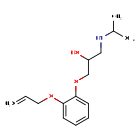
Structure for Oxprenolol (DB01580)
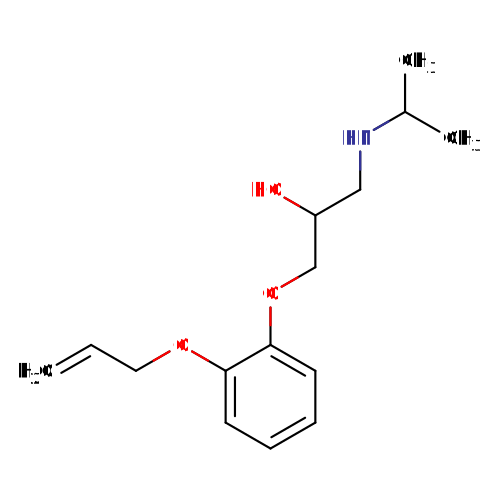
- Weight
- Average: 265.348
Monoisotopic: 265.167793607 - Chemical Formula
- C15H23NO3
- Synonyms
- Oxprenolol
- Oxprenololum

Pharmacology
- Indication
Used in the treatment of hypertension, angina pectoris, arrhythmias, and anxiety.
 Reduce drug development failure ratesBuild, train, & validate machine-learning modelswith evidence-based and structured datasets.Build, train, & validate predictive machine-learning models with structured datasets.
- Contraindications & Blackbox Warnings
 Prevent Adverse Drug Events TodayTap into our Clinical API for life-saving information on contraindications & blackbox warnings, population restrictions, harmful risks, & more.Avoid life-threatening adverse drug events with our Clinical API
- Pharmacodynamics
Oxprenolol is a non-selective beta blocker with some intrinsic sympathomimetic activity. Oxprenolol is a lipophilic molecule and hence, it is able to cross the blood-brain barrier. As such, it is associated with a higher incidence of CNS-related side effects than hydrophilic ligands such as atenolol, sotalol and nadolol. Oxprenolol is an potent beta-blocker and should not be administered to asthmatics because it can cause irreversible airway failure and inflammation.
- Mechanism of action
Like other beta-adrenergic antagonists, oxprenolol competes with adrenergic neurotransmitters such as catecholamines for binding at sympathetic receptor sites. Like propranolol and timolol, oxprenolol binds at beta(1)-adrenergic receptors in the heart and vascular smooth muscle, inhibiting the effects of the catecholamines epinephrine and norepinephrine and decreasing heart rate, cardiac output, and systolic and diastolic blood pressure. It also blocks beta-2 adrenergic receptors located in bronchiole smooth muscle, causing vasoconstriction. By binding beta-2 receptors in the juxtaglomerular apparatus, oxprenolol inhibits the production of renin, thereby inhibiting angiotensin II and aldosterone production. Oxprenolol therefore inhibits the vasoconstriction and water retention due to angiotensin II and aldosterone, respectively.
Target Actions Organism ABeta-1 adrenergic receptor antagonistHumans UBeta-3 adrenergic receptor Not Available Humans UBeta-2 adrenergic receptor antagonistHumans - Absorption
Oral bioavailability is 20-70%.
- Volume of distribution
Not Available
- Protein binding
Not Available
- Metabolism
Hepatic.
- Route of elimination
Not Available
- Half-life
1-2 hours
- Clearance
Not Available
- Adverse Effects
 Improve decision support & research outcomesWith structured adverse effects data, including: blackbox warnings, adverse reactions, warning & precautions, & incidence rates. View sample adverse effects data in our new Data Library!Improve decision support & research outcomes with our structured adverse effects data.
- Toxicity
Symptoms of overdose include abdominal irritation, central nervous system depression, coma, extremely slow heartbeat, heart failure, lethargy, low blood pressure, and wheezing.
- Pathways
Pathway Category Oxprenolol Action Pathway Drug action - Pharmacogenomic Effects/ADRs
- Not Available
Interactions
- Drug Interactions
- This information should not be interpreted without the help of a healthcare provider. If you believe you are experiencing an interaction, contact a healthcare provider immediately. The absence of an interaction does not necessarily mean no interactions exist.
Drug Interaction Integrate drug-drug
interactions in your software1,2-Benzodiazepine The risk or severity of CNS depression can be increased when Oxprenolol is combined with 1,2-Benzodiazepine. Abaloparatide The risk or severity of adverse effects can be increased when Oxprenolol is combined with Abaloparatide. Abatacept The metabolism of Oxprenolol can be increased when combined with Abatacept. Abiraterone The metabolism of Oxprenolol can be decreased when combined with Abiraterone. Acarbose The therapeutic efficacy of Acarbose can be increased when used in combination with Oxprenolol. - Food Interactions
- Avoid alcohol.
- Avoid natural licorice.
- Take with or without food. The absorption is unaffected by food.
Products
 Drug product information from 10+ global regionsOur datasets provide approved product information including:dosage, form, labeller, route of administration, and marketing period.Access drug product information from over 10 global regions.
- Product Ingredients
Ingredient UNII CAS InChI Key Oxprenolol hydrochloride F4XSI7SNIU 6452-73-9 COAJXCLTPGGDAJ-UHFFFAOYSA-N - International/Other Brands
- Trasacor / Trasicor
- Brand Name Prescription Products
Name Dosage Strength Route Labeller Marketing Start Marketing End Region Image Slow Trasicor Tab 160mg Tablet, extended release 160 mg / tab Oral Novartis 1981-12-31 2005-08-02 Canada 
Slow Trasicor Tab 80mg Tablet, extended release 80 mg / tab Oral Novartis 1981-12-31 2005-08-02 Canada Trasicor Tab 20mg Tablet 20 mg / tab Oral Novartis 1980-12-31 1999-08-04 Canada Trasicor Tab 40mg Tablet 40 mg Oral Novartis 1980-12-31 2008-01-22 Canada Trasicor Tab 80mg Tablet 80 mg Oral Novartis 1980-12-31 2009-02-25 Canada
Categories
- ATC Codes
- C07BA02 — Oxprenolol and thiazides
- C07BA — Beta blocking agents, non-selective, and thiazides
- C07B — BETA BLOCKING AGENTS AND THIAZIDES
- C07 — BETA BLOCKING AGENTS
- C — CARDIOVASCULAR SYSTEM
- C07AA — Beta blocking agents, non-selective
- C07A — BETA BLOCKING AGENTS
- C07 — BETA BLOCKING AGENTS
- C — CARDIOVASCULAR SYSTEM
- Drug Categories
- Adrenergic Agents
- Adrenergic Antagonists
- Adrenergic beta-Antagonists
- Agents causing hyperkalemia
- Alcohols
- Amines
- Amino Alcohols
- Anti-Anxiety Agents
- Antiarrhythmic agents
- Antihypertensive Agents
- Autonomic Agents
- Beta Blocking Agents and Thiazides
- Beta Blocking Agents, Non-Selective
- Beta Blocking Agents, Non-Selective, and Thiazides
- Bradycardia-Causing Agents
- Cardiovascular Agents
- Central Nervous System Agents
- Central Nervous System Depressants
- Cytochrome P-450 CYP2D6 Inhibitors
- Cytochrome P-450 CYP2D6 Inhibitors (strength unknown)
- Cytochrome P-450 CYP2D6 Substrates
- Cytochrome P-450 Enzyme Inhibitors
- Cytochrome P-450 Substrates
- Hypotensive Agents
- Negative Inotrope
- Neurotransmitter Agents
- OCT2 Inhibitors
- Peripheral Nervous System Agents
- Phenoxypropanolamines
- Propanolamines
- Propanols
- QTc Prolonging Agents
- Sympatholytics
- Tranquilizing Agents
- Vasodilating Agents
- Chemical TaxonomyProvided by Classyfire
- Description
- This compound belongs to the class of organic compounds known as phenol ethers. These are aromatic compounds containing an ether group substituted with a benzene ring.
- Kingdom
- Organic compounds
- Super Class
- Benzenoids
- Class
- Phenol ethers
- Sub Class
- Not Available
- Direct Parent
- Phenol ethers
- Alternative Parents
- Phenoxy compounds / Alkyl aryl ethers / Secondary alcohols / 1,2-aminoalcohols / Dialkylamines / Organopnictogen compounds / Hydrocarbon derivatives
- Substituents
- 1,2-aminoalcohol / Alcohol / Alkyl aryl ether / Amine / Aromatic homomonocyclic compound / Ether / Hydrocarbon derivative / Monocyclic benzene moiety / Organic nitrogen compound / Organic oxygen compound
- Molecular Framework
- Aromatic homomonocyclic compounds
- External Descriptors
- Not Available
- Affected organisms
- Humans and other mammals
Chemical Identifiers
- UNII
- 519MXN9YZR
- CAS number
- 6452-71-7
- InChI Key
- CEMAWMOMDPGJMB-UHFFFAOYSA-N
- InChI
- InChI=1S/C15H23NO3/c1-4-9-18-14-7-5-6-8-15(14)19-11-13(17)10-16-12(2)3/h4-8,12-13,16-17H,1,9-11H2,2-3H3
- IUPAC Name
- 1-[2-(prop-2-en-1-yloxy)phenoxy]-3-[(propan-2-yl)amino]propan-2-ol
- SMILES
- CC(C)NCC(O)COC1=CC=CC=C1OCC=C
References
- General References
- McDevitt DG: Comparison of pharmacokinetic properties of beta-adrenoceptor blocking drugs. Eur Heart J. 1987 Dec;8 Suppl M:9-14. [Article]
- External Links
Clinical Trials
Pharmacoeconomics
- Manufacturers
- Not Available
- Packagers
- Not Available
- Dosage Forms
Form Route Strength Tablet, extended release Oral 160 mg / tab Tablet, extended release Oral 80 mg / tab Tablet Oral 20 mg / tab Tablet Oral 40 mg Tablet Oral 80 mg - Prices
- Not Available
- Patents
- Not Available
Properties
- State
- Solid
- Experimental Properties
Property Value Source logP 2.10 HANSCH,C ET AL. (1995) Caco2 permeability -4.68 ADME Research, USCD - Predicted Properties
Property Value Source Water Solubility 0.68 mg/mL ALOGPS logP 2.44 ALOGPS logP 2.17 Chemaxon logS -2.6 ALOGPS pKa (Strongest Acidic) 14.09 Chemaxon pKa (Strongest Basic) 9.67 Chemaxon Physiological Charge 1 Chemaxon Hydrogen Acceptor Count 4 Chemaxon Hydrogen Donor Count 2 Chemaxon Polar Surface Area 50.72 Å2 Chemaxon Rotatable Bond Count 9 Chemaxon Refractivity 76 m3·mol-1 Chemaxon Polarizability 30.31 Å3 Chemaxon Number of Rings 1 Chemaxon Bioavailability 1 Chemaxon Rule of Five Yes Chemaxon Ghose Filter Yes Chemaxon Veber's Rule No Chemaxon MDDR-like Rule No Chemaxon - Predicted ADMET Features
Property Value Probability Human Intestinal Absorption + 0.9817 Blood Brain Barrier - 0.9759 Caco-2 permeable + 0.8866 P-glycoprotein substrate Substrate 0.6618 P-glycoprotein inhibitor I Non-inhibitor 0.5567 P-glycoprotein inhibitor II Non-inhibitor 0.8945 Renal organic cation transporter Non-inhibitor 0.8698 CYP450 2C9 substrate Non-substrate 0.8122 CYP450 2D6 substrate Non-substrate 0.5424 CYP450 3A4 substrate Non-substrate 0.7558 CYP450 1A2 substrate Inhibitor 0.9107 CYP450 2C9 inhibitor Non-inhibitor 0.9071 CYP450 2D6 inhibitor Inhibitor 0.8931 CYP450 2C19 inhibitor Non-inhibitor 0.9209 CYP450 3A4 inhibitor Non-inhibitor 0.8308 CYP450 inhibitory promiscuity Low CYP Inhibitory Promiscuity 0.8958 Ames test Non AMES toxic 0.9367 Carcinogenicity Non-carcinogens 0.9206 Biodegradation Not ready biodegradable 0.9593 Rat acute toxicity 2.5730 LD50, mol/kg Not applicable hERG inhibition (predictor I) Weak inhibitor 0.9351 hERG inhibition (predictor II) Non-inhibitor 0.7501
Spectra
- Mass Spec (NIST)
- Not Available
- Spectra
- Chromatographic Properties
Collision Cross Sections (CCS)
Adduct CCS Value (Å2) Source type Source [M-H]- 174.001551 predictedDarkChem Lite v0.1.0 [M-H]- 160.64359 predictedDeepCCS 1.0 (2019) [M+H]+ 173.769751 predictedDarkChem Lite v0.1.0 [M+H]+ 163.00157 predictedDeepCCS 1.0 (2019) [M+Na]+ 173.639251 predictedDarkChem Lite v0.1.0 [M+Na]+ 169.09471 predictedDeepCCS 1.0 (2019)
Targets

- Kind
- Protein
- Organism
- Humans
- Pharmacological action
- Yes
- Actions
- Antagonist
- General Function
- Receptor signaling protein activity
- Specific Function
- Beta-adrenergic receptors mediate the catecholamine-induced activation of adenylate cyclase through the action of G proteins. This receptor binds epinephrine and norepinephrine with approximately e...
- Gene Name
- ADRB1
- Uniprot ID
- P08588
- Uniprot Name
- Beta-1 adrenergic receptor
- Molecular Weight
- 51322.1 Da
References
- Overington JP, Al-Lazikani B, Hopkins AL: How many drug targets are there? Nat Rev Drug Discov. 2006 Dec;5(12):993-6. [Article]
- Imming P, Sinning C, Meyer A: Drugs, their targets and the nature and number of drug targets. Nat Rev Drug Discov. 2006 Oct;5(10):821-34. [Article]
- Campbell CA, Parratt JR, Kane KA, Bullock G: Effects of prolonged administration of oxprenolol on severity of ischaemic arrhythmias, enzyme leakage, infarct size, and intracellular cardiac muscle action potentials. J Cardiovasc Pharmacol. 1984 May-Jun;6(3):369-77. [Article]
- Lemmer B: [Pharmacological basis for the therapy of cardiovascular disease with beta-adrenoceptor blocking drugs (author's transl)]. Herz. 1982 Jun;7(3):168-78. [Article]
- Abrahamsson T: The beta 1- and beta 2-adrenoceptor stimulatory effects of alprenolol, oxprenolol and pindolol: a study in the isolated right atrium and uterus of the rat. Br J Pharmacol. 1986 Apr;87(4):657-64. [Article]
- Chen X, Ji ZL, Chen YZ: TTD: Therapeutic Target Database. Nucleic Acids Res. 2002 Jan 1;30(1):412-5. [Article]
- Kind
- Protein
- Organism
- Humans
- Pharmacological action
- Unknown
- General Function
- Protein homodimerization activity
- Specific Function
- Beta-adrenergic receptors mediate the catecholamine-induced activation of adenylate cyclase through the action of G proteins. Beta-3 is involved in the regulation of lipolysis and thermogenesis.
- Gene Name
- ADRB3
- Uniprot ID
- P13945
- Uniprot Name
- Beta-3 adrenergic receptor
- Molecular Weight
- 43518.615 Da
References
- Feve B, Emorine LJ, Lasnier F, Blin N, Baude B, Nahmias C, Strosberg AD, Pairault J: Atypical beta-adrenergic receptor in 3T3-F442A adipocytes. Pharmacological and molecular relationship with the human beta 3-adrenergic receptor. J Biol Chem. 1991 Oct 25;266(30):20329-36. [Article]
- Kind
- Protein
- Organism
- Humans
- Pharmacological action
- Unknown
- Actions
- Antagonist
- General Function
- Protein homodimerization activity
- Specific Function
- Beta-adrenergic receptors mediate the catecholamine-induced activation of adenylate cyclase through the action of G proteins. The beta-2-adrenergic receptor binds epinephrine with an approximately ...
- Gene Name
- ADRB2
- Uniprot ID
- P07550
- Uniprot Name
- Beta-2 adrenergic receptor
- Molecular Weight
- 46458.32 Da
References
- Overington JP, Al-Lazikani B, Hopkins AL: How many drug targets are there? Nat Rev Drug Discov. 2006 Dec;5(12):993-6. [Article]
- Imming P, Sinning C, Meyer A: Drugs, their targets and the nature and number of drug targets. Nat Rev Drug Discov. 2006 Oct;5(10):821-34. [Article]
- Sekut L, Champion BR, Page K, Menius JA Jr, Connolly KM: Anti-inflammatory activity of salmeterol: down-regulation of cytokine production. Clin Exp Immunol. 1995 Mar;99(3):461-6. [Article]
- Fujita H, Tanaka J, Maeda N, Sakanaka M: Adrenergic agonists suppress the proliferation of microglia through beta 2-adrenergic receptor. Neurosci Lett. 1998 Feb 6;242(1):37-40. [Article]
- Prinz M, Hausler KG, Kettenmann H, Hanisch U: beta-adrenergic receptor stimulation selectively inhibits IL-12p40 release in microglia. Brain Res. 2001 Apr 27;899(1-2):264-70. [Article]
Enzymes
- Kind
- Protein
- Organism
- Humans
- Pharmacological action
- Unknown
- Actions
- SubstrateInhibitor
- General Function
- Steroid hydroxylase activity
- Specific Function
- Responsible for the metabolism of many drugs and environmental chemicals that it oxidizes. It is involved in the metabolism of drugs such as antiarrhythmics, adrenoceptor antagonists, and tricyclic...
- Gene Name
- CYP2D6
- Uniprot ID
- P10635
- Uniprot Name
- Cytochrome P450 2D6
- Molecular Weight
- 55768.94 Da
References
- Sternieri E, Coccia CP, Pinetti D, Guerzoni S, Ferrari A: Pharmacokinetics and interactions of headache medications, part II: prophylactic treatments. Expert Opin Drug Metab Toxicol. 2006 Dec;2(6):981-1007. doi: 10.1517/17425255.2.6.981 . [Article]
- Brodde OE, Kroemer HK: Drug-drug interactions of beta-adrenoceptor blockers. Arzneimittelforschung. 2003;53(12):814-22. [Article]
- Iwaki M, Niwa T, Bandoh S, Itoh M, Hirose H, Kawase A, Komura H: Application of substrate depletion assay to evaluation of CYP isoforms responsible for stereoselective metabolism of carvedilol. Drug Metab Pharmacokinet. 2016 Dec;31(6):425-432. doi: 10.1016/j.dmpk.2016.08.007. Epub 2016 Sep 2. [Article]
- McMasters DR, Torres RA, Crathern SJ, Dooney DL, Nachbar RB, Sheridan RP, Korzekwa KR: Inhibition of recombinant cytochrome P450 isoforms 2D6 and 2C9 by diverse drug-like molecules. J Med Chem. 2007 Jul 12;50(14):3205-13. doi: 10.1021/jm0700060. Epub 2007 Jun 9. [Article]
Transporters
- Kind
- Protein
- Organism
- Humans
- Pharmacological action
- Unknown
- Actions
- Inhibitor
- General Function
- Quaternary ammonium group transmembrane transporter activity
- Specific Function
- Mediates tubular uptake of organic compounds from circulation. Mediates the influx of agmatine, dopamine, noradrenaline (norepinephrine), serotonin, choline, famotidine, ranitidine, histamin, creat...
- Gene Name
- SLC22A2
- Uniprot ID
- O15244
- Uniprot Name
- Solute carrier family 22 member 2
- Molecular Weight
- 62579.99 Da
References
- Dudley AJ, Bleasby K, Brown CD: The organic cation transporter OCT2 mediates the uptake of beta-adrenoceptor antagonists across the apical membrane of renal LLC-PK(1) cell monolayers. Br J Pharmacol. 2000 Sep;131(1):71-9. [Article]

Drug created at August 29, 2007 14:53 / Updated at December 02, 2023 07:00