Identification
- Summary
Metoprolol is a beta-blocker used in the treatment of hypertension and angina, and used to reduce mortality due to myocardial infarction.
- Brand Names
- Kapspargo, Lopressor, Lopressor Hct, Toprol
- Generic Name
- Metoprolol
- DrugBank Accession Number
- DB00264
- Background
Metoprolol is a selective beta-1 blocker commonly employed as the succinate and tartrate derivatives depending if the formulation is designed to be of immediate release or extended release.2,9 The possibility of the generation of these formulations comes from the lower systemic bioavailability of the succinate derivative.5 To this date, it is one of the preferred beta-blockers in general clinical guidelines and it is widely prescribed in the Netherlands, New Zealand, and the US.3 Metoprolol was developed since 1969 by US Pharmaceutical Holdings I and FDA approved in 1978.8
- Type
- Small Molecule
- Groups
- Approved, Investigational
- Structure
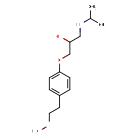
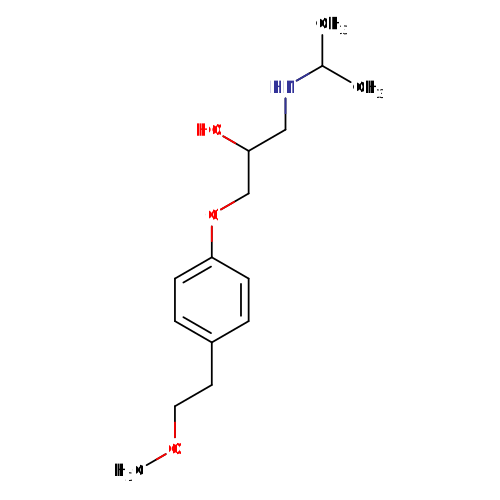
Structure for Metoprolol (DB00264)
- Weight
- Average: 267.3639
Monoisotopic: 267.183443671 - Chemical Formula
- C15H25NO3
- Synonyms
- (RS)-Metoprolol
- 1-(isopropylamino)-3-[4-(2-methoxyethyl)phenoxy]propan-2-ol
- DL-metoprolol
- Metoprolol
- External IDs
- CGP-2175

Pharmacology
- Indication
Metoprolol is indicated for the treatment of angina, heart failure, myocardial infarction, atrial fibrillation, atrial flutter and hypertension.1,14,17
Some off-label uses of metoprolol include supraventricular tachycardia and thyroid storm.1
All the indications of metoprolol are part of cardiovascular diseases. These conditions correspond to a number of diseases that involve the function of the heart and blood vessels. The underlying causes of these conditions are variable and can be due to genetic disposition, lifestyle decisions such as smoking, obesity, diet, and lack of exercise, and comorbidity with other conditions such as diabetes. The cardiovascular diseases are the leading cause of death on a global scale.10
 Reduce drug development failure ratesBuild, train, & validate machine-learning modelswith evidence-based and structured datasets.Build, train, & validate predictive machine-learning models with structured datasets.
- Associated Conditions
Indication Type Indication Combined Product Details Approval Level Age Group Patient Characteristics Dose Form Management of Angina pectoris •••••••••••• •••••••• •••••••• •••••••• ••••••• ••••••• •••••••• •••••••• ••••••• •••• ••••••• ••••••• •••• ••••••• •••••••• ••••••• Management of Atrial fibrillation ••• ••••• Management of Hypertension •••••••••••• ••••• •••••••• •••••••• •••••••• ••••••• ••••••• •••••••• •••••••• ••••••• •••• ••••••• ••••••• •••• ••••••• •••••••• ••••••• Used in combination to manage Hypertension Combination Product in combination with: Hydrochlorothiazide (DB00999) •••••••••••• ••••••••••••• •• •••••••••••••••• ••••••••••• •••••• Prophylaxis of Migraine ••• ••••• - Contraindications & Blackbox Warnings
 Prevent Adverse Drug Events TodayTap into our Clinical API for life-saving information on contraindications & blackbox warnings, population restrictions, harmful risks, & more.Avoid life-threatening adverse drug events with our Clinical API
- Pharmacodynamics
Administration of metoprolol in normal subjects is widely reported to produce a dose-dependent reduction on heart rate and cardiac output.1 This effect is generated due to a decreased cardiac excitability, cardiac output, and myocardial oxygen demand.6 In the case of arrhythmias, metoprolol produces its effect by reducing the slope of the pacemaker potential as well as suppressing the rate of atrioventricular conduction.7
The Metoprolol Atherosclerosis Prevention in Hypertensives (MAPHY) trial showed a significant improvement in sudden cardiac death and myocardial infarction when patients were given with metoprolol as compared with diuretics. As well, in clinical trials performed in 1990, metoprolol reduces mortality and re-infarction in 17% of the individuals when administered chronically after an episode of myocardial infarction.1
- Mechanism of action
Metoprolol is a beta-1-adrenergic receptor inhibitor specific to cardiac cells with negligible effect on beta-2 receptors. This inhibition decreases cardiac output by producing negative chronotropic and inotropic effects without presenting activity towards membrane stabilization nor intrinsic sympathomimetics.1
Target Actions Organism ABeta-1 adrenergic receptor antagonistHumans NBeta-2 adrenergic receptor antagonistHumans UBeta adrenergic receptor inhibitorHumans - Absorption
When metoprolol is administered orally, it is almost completely absorbed in the gastrointestinal tract.1 The maximum serum concentration is achieved 20 min after intravenous administration and 1-2 hours after oral administration. The bioavailability of metoprolol is of 100% when administered intravenously and when administered orally it presents about 50% for the tartrate derivative and 40% for the succinate derivative.5
The absorption of metoprolol in the form of the tartrate derivative is increased by the concomitant administration of food.5
- Volume of distribution
The reported volume of distribution of metoprolol is 4.2 L/kg.5 Due to the characteristics of metoprolol, this molecule is able to cross the blood-brain barrier and even 78% of the administered drug can be found in cerebrospinal fluid.11
- Protein binding
Metoprolol is not highly bound to plasma proteins and only about 11% of the administered dose is found bound. It is mainly bound to serum albumin.1
- Metabolism
Metoprolol goes through significant first-pass hepatic metabolism which covers around 50% of the administered dose.1 The metabolism of metoprolol is mainly driven by the activity of CYP2D63 and to a lesser extent due to the activity of CYP3A4. The metabolism of metoprolol is mainly represented by reactions of hydroxylation and O-demethylation.9
Hover over products below to view reaction partners
- Route of elimination
Metoprolol is mainly excreted via the kidneys. From the eliminated dose, less than 5% is recovered unchanged.1
- Half-life
The immediate release formulations of metoprolol present a half-life of about 3-7 hours.1
- Clearance
The reported clearance rate on patients with normal kidney function is 0.8 L/min. In cirrhotic patients, the clearance rate changes to 0.61 L/min.4
- Adverse Effects
 Improve decision support & research outcomesWith structured adverse effects data, including: blackbox warnings, adverse reactions, warning & precautions, & incidence rates. View sample adverse effects data in our new Data Library!Improve decision support & research outcomes with our structured adverse effects data.
- Toxicity
Oral administration of metoprolol to rats presents an LD50 in the range of 3090 to 4670 mg/kg. Cases of overdose have reported bradycardia, hypotension, bronchospasm, and cardiac failure. In the case of an overdose, gastric lavage is recommended followed by specific treatment according to symptoms.Label
Metoprolol is not reported to be carcinogenic nor mutagenic nor to impair fertility. The only event registered is the increase of macrophages in pulmonary alveoli and slight biliary hyperplasia. When metoprolol was given for long periods of time on the highest dose, there was evidence of small benign lung tumors.Label
- Pathways
Pathway Category Metoprolol Action Pathway Drug action - Pharmacogenomic Effects/ADRs
Interacting Gene/Enzyme Allele name Genotype(s) Defining Change(s) Type(s) Description Details Beta-1 adrenergic receptor --- (A;A) A Allele Effect Directly Studied Patients with this genotype have a greater reduction in blood pressure with metoprolol. Details Cytochrome P450 2D6 CYP2D6*4 (A;A) A allele Directly Studied Effect Patients with this genotype have reduced metabolism of metoprolol. Details Beta-1 adrenergic receptor --- (C;C) / (C;G) G > C Effect Directly Studied Patients with this genotype have a greater reduction in blood pressure with metoprolol. Details Cytochrome P450 2D6 CYP2D6*3 Not Available C allele ADR Inferred Increased risk of slow heart rate (bradycardia) Details Cytochrome P450 2D6 CYP2D6*5 Not Available Whole-gene deletion ADR Inferred Increased risk of slow heart rate (bradycardia) Details Cytochrome P450 2D6 CYP2D6*6 Not Available 1707delT ADR Inferred Increased risk of slow heart rate (bradycardia) Details Cytochrome P450 2D6 CYP2D6*7 Not Available 2935A>C ADR Inferred Increased risk of slow heart rate (bradycardia) Details Cytochrome P450 2D6 CYP2D6*8 Not Available 1758G>T ADR Inferred Increased risk of slow heart rate (bradycardia) Details Cytochrome P450 2D6 CYP2D6*11 Not Available 883G>C ADR Inferred Increased risk of slow heart rate (bradycardia) Details Cytochrome P450 2D6 CYP2D6*12 Not Available 124G>A ADR Inferred Increased risk of slow heart rate (bradycardia) Details Cytochrome P450 2D6 CYP2D6*13 Not Available CYP2D7/2D6 hybrid gene structure ADR Inferred Increased risk of slow heart rate (bradycardia) Details Cytochrome P450 2D6 CYP2D6*14A Not Available 1758G>A ADR Inferred Increased risk of slow heart rate (bradycardia) Details Cytochrome P450 2D6 CYP2D6*15 Not Available 137insT, 137_138insT ADR Inferred Increased risk of slow heart rate (bradycardia) Details Cytochrome P450 2D6 CYP2D6*19 Not Available 2539_2542delAACT ADR Inferred Increased risk of slow heart rate (bradycardia) Details Cytochrome P450 2D6 CYP2D6*20 Not Available 1973_1974insG ADR Inferred Increased risk of slow heart rate (bradycardia) Details Cytochrome P450 2D6 CYP2D6*21 Not Available 2573insC ADR Inferred Increased risk of slow heart rate (bradycardia) Details Cytochrome P450 2D6 CYP2D6*31 Not Available -1770G>A / -1584C>G … show all ADR Inferred Increased risk of slow heart rate (bradycardia) Details Cytochrome P450 2D6 CYP2D6*36 Not Available 100C>T / -1426C>T … show all ADR Inferred Increased risk of slow heart rate (bradycardia) Details Cytochrome P450 2D6 CYP2D6*38 Not Available 2587_2590delGACT ADR Inferred Increased risk of slow heart rate (bradycardia) Details Cytochrome P450 2D6 CYP2D6*40 Not Available 1863_1864ins(TTT CGC CCC)2 ADR Inferred Increased risk of slow heart rate (bradycardia) Details Cytochrome P450 2D6 CYP2D6*42 Not Available 3259_3260insGT ADR Inferred Increased risk of slow heart rate (bradycardia) Details Cytochrome P450 2D6 CYP2D6*44 Not Available 2950G>C ADR Inferred Increased risk of slow heart rate (bradycardia) Details Cytochrome P450 2D6 CYP2D6*47 Not Available 100C>T / -1426C>T … show all ADR Inferred Increased risk of slow heart rate (bradycardia) Details Cytochrome P450 2D6 CYP2D6*51 Not Available -1584C>G / -1235A>G … show all ADR Inferred Increased risk of slow heart rate (bradycardia) Details Cytochrome P450 2D6 CYP2D6*56 Not Available 3201C>T ADR Inferred Increased risk of slow heart rate (bradycardia) Details Cytochrome P450 2D6 CYP2D6*57 Not Available 100C>T / 310G>T … show all ADR Inferred Increased risk of slow heart rate (bradycardia) Details Cytochrome P450 2D6 CYP2D6*62 Not Available 4044C>T ADR Inferred Increased risk of slow heart rate (bradycardia) Details Cytochrome P450 2D6 CYP2D6*68A Not Available -1426C>T / -1235A>G … show all ADR Inferred Increased risk of slow heart rate (bradycardia) Details Cytochrome P450 2D6 CYP2D6*68B Not Available Similar but not identical switch region compared to CYP2D6*68A. Found in tandem arrangement with CYP2D6*4. ADR Inferred Increased risk of slow heart rate (bradycardia) Details Cytochrome P450 2D6 CYP2D6*69 Not Available 2988G>A / -1426C>T … show all ADR Inferred Increased risk of slow heart rate (bradycardia) Details Cytochrome P450 2D6 CYP2D6*92 Not Available 1995delC ADR Inferred Increased risk of slow heart rate (bradycardia) Details Cytochrome P450 2D6 CYP2D6*100 Not Available -1426C>T / -1235A>G … show all ADR Inferred Increased risk of slow heart rate (bradycardia) Details Cytochrome P450 2D6 CYP2D6*101 Not Available -1426C>T / -1235A>G … show all ADR Inferred Increased risk of slow heart rate (bradycardia) Details
Interactions
- Drug Interactions
- This information should not be interpreted without the help of a healthcare provider. If you believe you are experiencing an interaction, contact a healthcare provider immediately. The absence of an interaction does not necessarily mean no interactions exist.
Drug Interaction Integrate drug-drug
interactions in your softwareAbacavir Metoprolol may decrease the excretion rate of Abacavir which could result in a higher serum level. Abaloparatide The risk or severity of adverse effects can be increased when Metoprolol is combined with Abaloparatide. Abatacept The metabolism of Metoprolol can be increased when combined with Abatacept. Abiraterone The metabolism of Metoprolol can be decreased when combined with Abiraterone. Acarbose The therapeutic efficacy of Acarbose can be increased when used in combination with Metoprolol. - Food Interactions
- Avoid alcohol.
- Avoid natural licorice.
- Take with food.
Products
 Drug product information from 10+ global regionsOur datasets provide approved product information including:dosage, form, labeller, route of administration, and marketing period.Access drug product information from over 10 global regions.
- Product Ingredients
Ingredient UNII CAS InChI Key Metoprolol fumarate IO1C09Z674 119637-66-0 BRIPGNJWPCKDQZ-WXXKFALUSA-N Metoprolol succinate TH25PD4CCB 98418-47-4 RGHAZVBIOOEVQX-UHFFFAOYSA-N Metoprolol tartrate W5S57Y3A5L 56392-17-7 YGULWPYYGQCFMP-CEAXSRTFSA-N - Product Images
- International/Other Brands
- Corvitol (Berlin-Chemie AG / Menarini Group) / Minax (Alphapharm Pty Limited) / Selokeen (AstraZeneca) / TOPROL-XL (Lanett Company, Inc)
- Brand Name Prescription Products
Name Dosage Strength Route Labeller Marketing Start Marketing End Region Image Betaloc Durules Tab 200 mg Tablet, extended release 200 mg / srt Oral Astra Zeneca 1980-12-31 2009-12-15 Canada 
Betaloc IV Inj 1 mg/ml Solution 1 mg / mL Intravenous Astra Zeneca 1987-12-31 2016-05-12 Canada Betaloc Tab 100 mg Tablet 100 mg Oral Astra Zeneca 1977-12-31 2009-12-15 Canada Betaloc Tab 50 mg Tablet 50 mg Oral Astra Zeneca 1978-12-31 2009-12-15 Canada Co Metoprolol-L Tablets 100mg Tablet 100 mg Oral Cobalt Laboratories Not applicable Not applicable Canada - Generic Prescription Products
Name Dosage Strength Route Labeller Marketing Start Marketing End Region Image Aa-metoprolol SR Tablet, extended release 100 mg Oral Aa Pharma Inc 2007-07-30 Not applicable Canada Aa-metoprolol SR Tablet, extended release 200 mg Oral Aa Pharma Inc 2007-07-30 Not applicable Canada Ag-metoprolol-L Tablet 25 mg Oral Angita Pharma Inc. 2018-12-27 Not applicable Canada Ag-metoprolol-L Tablet 50 mg Oral Angita Pharma Inc. 2018-12-27 Not applicable Canada Ag-metoprolol-L Tablet 100 mg Oral Angita Pharma Inc. 2018-12-27 Not applicable Canada - Mixture Products
Name Ingredients Dosage Route Labeller Marketing Start Marketing End Region Image BELNIF Metoprolol tartrate (50 mg/1) + Nifedipine (15 mg/1) Capsule, extended release Oral 2018-10-01 2021-09-15 Germany 
BELOC ZOK COMP Metoprolol succinate (95 mg/1) + Hydrochlorothiazide (12.5 mg/1) Tablet, extended release Oral 2013-01-01 Not applicable Germany BELOC ZOK COMP Metoprolol succinate (95 mg/1) + Hydrochlorothiazide (12.5 mg/1) Tablet, extended release Oral 2013-01-01 2021-07-15 Germany BELOC ZOK COMP Metoprolol succinate (95 mg/1) + Hydrochlorothiazide (12.5 mg/1) Tablet, extended release Oral 2013-01-01 Not applicable Germany BELOC ZOK COMP Metoprolol succinate (95 mg/1) + Hydrochlorothiazide (12.5 mg/1) Tablet, extended release Oral 2013-01-01 2021-10-15 Germany - Unapproved/Other Products
Name Ingredients Dosage Route Labeller Marketing Start Marketing End Region Image Hypertensolol Metoprolol tartrate (50 mg/1) + Arginine (90 mg/1) Kit Oral Physician Therapeutics Llc 2011-07-07 Not applicable US 


Categories
- ATC Codes
- C07FB02 — Metoprolol and felodipine
- C07FB — Beta blocking agents and calcium channel blockers
- C07F — BETA BLOCKING AGENTS, OTHER COMBINATIONS
- C07 — BETA BLOCKING AGENTS
- C — CARDIOVASCULAR SYSTEM
- C07FX — Beta blocking agents, other combinations
- C07F — BETA BLOCKING AGENTS, OTHER COMBINATIONS
- C07 — BETA BLOCKING AGENTS
- C — CARDIOVASCULAR SYSTEM
- C07FX — Beta blocking agents, other combinations
- C07F — BETA BLOCKING AGENTS, OTHER COMBINATIONS
- C07 — BETA BLOCKING AGENTS
- C — CARDIOVASCULAR SYSTEM
- C07FB — Beta blocking agents and calcium channel blockers
- C07F — BETA BLOCKING AGENTS, OTHER COMBINATIONS
- C07 — BETA BLOCKING AGENTS
- C — CARDIOVASCULAR SYSTEM
- C07AB — Beta blocking agents, selective
- C07A — BETA BLOCKING AGENTS
- C07 — BETA BLOCKING AGENTS
- C — CARDIOVASCULAR SYSTEM
- C07BB — Beta blocking agents, selective, and thiazides
- C07B — BETA BLOCKING AGENTS AND THIAZIDES
- C07 — BETA BLOCKING AGENTS
- C — CARDIOVASCULAR SYSTEM
- C07CB — Beta blocking agents, selective, and other diuretics
- C07C — BETA BLOCKING AGENTS AND OTHER DIURETICS
- C07 — BETA BLOCKING AGENTS
- C — CARDIOVASCULAR SYSTEM
- Drug Categories
- Adrenergic Agents
- Adrenergic Antagonists
- Adrenergic beta-1 Receptor Antagonists
- Adrenergic beta-Antagonists
- Agents causing hyperkalemia
- Alcohols
- Amines
- Amino Alcohols
- Antiarrhythmic agents
- Antihypertensive Agents
- Antihypertensive Agents Indicated for Hypertension
- Beta blocking agents and calcium channel blockers
- Beta Blocking Agents and Thiazides
- Beta Blocking Agents, Selective
- Beta Blocking Agents, Selective, and Thiazides
- Beta-Blockers (Beta1 Selective)
- Bradycardia-Causing Agents
- Cardiovascular Agents
- Cytochrome P-450 CYP2D6 Inhibitors
- Cytochrome P-450 CYP2D6 Inhibitors (moderate)
- Cytochrome P-450 CYP2D6 Substrates
- Cytochrome P-450 CYP3A Substrates
- Cytochrome P-450 CYP3A4 Substrates
- Cytochrome P-450 CYP3A4 Substrates (strength unknown)
- Cytochrome P-450 Enzyme Inhibitors
- Cytochrome P-450 Substrates
- Drugs causing inadvertant photosensitivity
- Drugs that are Mainly Renally Excreted
- Hypotensive Agents
- OCT2 Inhibitors
- Photosensitizing Agents
- Propanolamines
- Chemical TaxonomyProvided by Classyfire
- Description
- This compound belongs to the class of organic compounds known as tyrosols and derivatives. These are compounds containing a hydroxyethyl group attached to the C4 carbon of a phenol group.
- Kingdom
- Organic compounds
- Super Class
- Benzenoids
- Class
- Phenols
- Sub Class
- Tyrosols and derivatives
- Direct Parent
- Tyrosols and derivatives
- Alternative Parents
- Phenoxy compounds / Phenol ethers / Alkyl aryl ethers / Secondary alcohols / 1,2-aminoalcohols / Dialkylamines / Dialkyl ethers / Organopnictogen compounds / Hydrocarbon derivatives
- Substituents
- 1,2-aminoalcohol / Alcohol / Alkyl aryl ether / Amine / Aromatic homomonocyclic compound / Dialkyl ether / Ether / Hydrocarbon derivative / Monocyclic benzene moiety / Organic nitrogen compound
- Molecular Framework
- Aromatic homomonocyclic compounds
- External Descriptors
- aromatic ether, secondary alcohol, secondary amino compound, propanolamine (CHEBI:6904)
- Affected organisms
- Humans and other mammals
Chemical Identifiers
- UNII
- GEB06NHM23
- CAS number
- 51384-51-1
- InChI Key
- IUBSYMUCCVWXPE-UHFFFAOYSA-N
- InChI
- InChI=1S/C15H25NO3/c1-12(2)16-10-14(17)11-19-15-6-4-13(5-7-15)8-9-18-3/h4-7,12,14,16-17H,8-11H2,1-3H3
- IUPAC Name
- 1-[4-(2-methoxyethyl)phenoxy]-3-[(propan-2-yl)amino]propan-2-ol
- SMILES
- COCCC1=CC=C(OCC(O)CNC(C)C)C=C1
References
- Synthesis Reference
- US3998790
- General References
- Morris J, Dunham A: Metoprolol . [Article]
- Silberstein SD: Preventive Migraine Treatment. Continuum (Minneap Minn). 2015 Aug;21(4 Headache):973-89. doi: 10.1212/CON.0000000000000199. [Article]
- Bahar MA, Kamp J, Borgsteede SD, Hak E, Wilffert B: The impact of CYP2D6 mediated drug-drug interaction: a systematic review on a combination of metoprolol and paroxetine/fluoxetine. Br J Clin Pharmacol. 2018 Dec;84(12):2704-2715. doi: 10.1111/bcp.13741. Epub 2018 Sep 24. [Article]
- Regardh CG, Jordo L, Ervik M, Lundborg P, Olsson R, Ronn O: Pharmacokinetics of metoprolol in patients with hepatic cirrhosis. Clin Pharmacokinet. 1981 Sep-Oct;6(5):375-88. doi: 10.2165/00003088-198106050-00004. [Article]
- Frishman W., Cheng-Lai A. and Nawarskas J. (2005). Current cardiovascular drugs (4th ed.). Current medicine LLC. [ISBN:1-57340-221-4]
- Jones & Bartlett (2016). 2016 Nurse's drug handbook (15th ed.). Jones and Bartlett Publishers Inc..
- Saeb-Parsy K., Assomull R., Khan F., Saeb-Parsy K. and Kelly A. (1990). Instant Pharmacology. Willey. [ISBN:0-471-98598-8]
- FDA approvals [Link]
- Researchgate publications [Link]
- Heart [Link]
- FDA reports [Link]
- FDA Approved Drug Products: Toprol-XL (metoprolol succinate) extended-release oral tablets [Link]
- FDA Approved Drug Products: Kapspargo Sprinkle (metoprolol succinate) extended-release oral capsules [Link]
- FDA Approved Drug Products: Lopressor (Metoprolol Tartrate) Oral Tablets [Link]
- FDA Approved Drug Products: Lopressor HCT (metoprolol tartrate/hydrochlorothiazide) oral tablets [Link]
- DailyMed: Metoprolol tartrate for intravenous injection [Link]
- FDA Approved Drug Products: TOPROL-XL (metoprolol succinate) extended-release tablets for oral use (March 2023) [Link]
- FDA Approved Drug Products: Lopressor (Metoprolol Tartrate) Tablets, for oral use (July 2023) [Link]
- External Links
- Human Metabolome Database
- HMDB0001932
- KEGG Drug
- D02358
- KEGG Compound
- C07202
- PubChem Compound
- 4171
- PubChem Substance
- 46506211
- ChemSpider
- 4027
- BindingDB
- 25756
- 6918
- ChEBI
- 6904
- ChEMBL
- CHEMBL13
- Therapeutic Targets Database
- DAP000481
- PharmGKB
- PA450480
- Guide to Pharmacology
- GtP Drug Page
- RxList
- RxList Drug Page
- Drugs.com
- Drugs.com Drug Page
- Wikipedia
- Metoprolol
- FDA label
- Download (69.4 KB)
- MSDS
- Download (43.5 KB)
Clinical Trials
- Clinical Trials
Phase Status Purpose Conditions Count 4 Active Not Recruiting Treatment Acute Myocardial Infarction (AMI) / Non ST Segment Elevation Myocardial Infarction (NSTEMI) / ST Segment Elevation Myocardial Infarction (STEMI) 1 4 Active Not Recruiting Treatment Vasovagal Syncope 1 4 Completed Not Available Acute Coronary Syndrome (ACS) 1 4 Completed Basic Science Acute Coronary Syndrome (ACS) 1 4 Completed Basic Science Blood Pressures 1
Pharmacoeconomics
- Manufacturers
- Novartis pharmaceuticals corp
- Kv pharmaceutical co
- Sandoz inc
- Watson laboratories inc florida
- Wockhardt ltd
- Astrazeneca lp
- Bedford laboratories
- Hikma farmaceutica (portugal) sa
- Hospira inc
- Luitpold pharmaceuticals inc
- Sagent strides llc
- Sandoz canada inc
- Watson laboratories inc
- Apothecon inc div bristol myers squibb
- Aurobindo pharma ltd
- Caraco pharmaceutical laboratories ltd
- Ipca laboratories ltd
- Mutual pharmaceutical co inc
- Mylan pharmaceuticals inc
- Purepac pharmaceutical co
- Solco healthcare us llc
- Teva pharmaceuticals usa inc
- Teva pharmaceuticals usa
- Packagers
- Advanced Pharmaceutical Services Inc.
- Amerisource Health Services Corp.
- Apothecon
- AQ Pharmaceuticals Inc.
- A-S Medication Solutions LLC
- Astra Pharma Inc.
- AstraZeneca Inc.
- Atlantic Biologicals Corporation
- Aurobindo Pharma Ltd.
- Bedford Labs
- Ben Venue Laboratories Inc.
- Boca Pharmacal
- Bryant Ranch Prepack
- Caraco Pharmaceutical Labs
- Cardinal Health
- Caremark LLC
- Comprehensive Consultant Services Inc.
- Corepharma LLC
- Coupler Enterprises Inc.
- Dept Health Central Pharmacy
- DHHS Program Support Center Supply Service Center
- Direct Dispensing Inc.
- Direct Pharmaceuticals Inc.
- Dispensing Solutions
- Diversified Healthcare Services Inc.
- Emcure Pharmaceuticals Ltd.
- Eon Labs
- Ethex Corp.
- General Injectables and Vaccines Inc.
- Golden State Medical Supply Inc.
- Greenstone LLC
- Heartland Repack Services LLC
- Hikma Pharmaceuticals
- Hospira Inc.
- Ipca Laboratories Ltd.
- Kaiser Foundation Hospital
- KV Pharmaceutical Co.
- Lake Erie Medical and Surgical Supply
- Legacy Pharmaceuticals Packaging LLC
- Liberty Pharmaceuticals
- Major Pharmaceuticals
- Mckesson Corp.
- Medisca Inc.
- Medvantx Inc.
- Murfreesboro Pharmaceutical Nursing Supply
- Mutual Pharmaceutical Co.
- Mylan
- Neighborcare Repackaging Inc.
- Novartis AG
- Novopharm Ltd.
- Nucare Pharmaceuticals Inc.
- Palmetto Pharmaceuticals Inc.
- Par Pharmaceuticals
- PCA LLC
- PD-Rx Pharmaceuticals Inc.
- Pharmaceutical Utilization Management Program VA Inc.
- Pharmedix
- Physicians Total Care Inc.
- Preferred Pharmaceuticals Inc.
- Prepackage Specialists
- Prepak Systems Inc.
- Prescript Pharmaceuticals
- Qualitest
- Ranbaxy Laboratories
- Rebel Distributors Corp.
- Redpharm Drug
- Remedy Repack
- Resource Optimization and Innovation LLC
- Sagent Pharmaceuticals
- Sandhills Packaging Inc.
- Sandoz
- Southwood Pharmaceuticals
- Stat Rx Usa
- Stat Scripts LLC
- Talbert Medical Management Corp.
- Teva Pharmaceutical Industries Ltd.
- Tya Pharmaceuticals
- UDL Laboratories
- Va Cmop Dallas
- Vangard Labs Inc.
- Veratex Corp.
- Watson Pharmaceuticals
- West-Ward Pharmaceuticals
- Wockhardt Ltd.
- Dosage Forms
Form Route Strength Tablet Oral 25 mg Capsule, extended release Oral Tablet, delayed release Oral 200 mg Tablet Oral 23.75 mg Tablet, extended release Oral 95 MG Tablet, extended release Oral 190 MG Tablet Oral Tablet, extended release Oral 200 mg / srt Solution Parenteral 5 mg Tablet, extended release Oral 23.75 MG Tablet, extended release Oral 47.5 MG Tablet, extended release Oral 200 mg Tablet, film coated Oral 200 mg Tablet, delayed release Oral 100 mg Tablet, delayed release Oral 50 mg Tablet Oral 100.000 mg Tablet, film coated Oral Injection Intravenous Kit Oral Tablet, film coated Oral 5 mg Tablet, film coated Oral 7.5 mg Tablet Tablet, extended release Oral 140 mg Tablet, extended release Oral 285 mg Tablet, coated Oral 50 mg Solution Intravenous 1 mg / 1 mL Tablet Oral 95.000 mg Tablet, delayed release Oral Tablet, film coated Oral 142.5 mg Tablet, film coated Oral Tablet, film coated Oral 23.75 mg Tablet, film coated Oral 47.5 mg Tablet, film coated Oral 95 mg Tablet, extended release Oral Tablet, extended release Oral 142.5 MG Injection Intravenous 5 mg/5mL Tablet, extended release Oral 50 mg Tablet Oral 50 mg Capsule, extended release Oral 100 mg/1 Capsule, extended release Oral 200 mg/1 Capsule, extended release Oral 25 mg/1 Capsule, extended release Oral 50 mg/1 Tablet Oral 200 mg/1 Tablet, coated Oral 100 mg/1 Tablet, coated Oral 200 mg/1 Tablet, coated Oral 25 mg/1 Tablet, coated Oral 50 mg/1 Tablet, extended release Oral 100 mg/1 Tablet, extended release Oral 200 mg/1 Tablet, extended release Oral 25 mg/1 Tablet, extended release Oral 50 mg/1 Tablet, film coated, extended release Oral 100 mg/1 Tablet, film coated, extended release Oral 200 mg/1 Tablet, film coated, extended release Oral 25 mg/301 Tablet, film coated, extended release Oral 25 mg/1 Tablet, film coated, extended release Oral 50 mg/1 Tablet, film coated, extended release Oral 50 mg/301 Tablet, film coated, extended release Oral 190 mg/1 Tablet, film coated, extended release Oral 23.75 mg/1 Tablet, film coated, extended release Oral 47.5 mg/1 Tablet, film coated, extended release Oral 90 mg/1 Injection Intravenous 1 mg/1mL Injection, solution Intravenous 1 mg/1mL Injection, solution Intravenous 5 mg/5mL Powder Not applicable 1 g/1g Tablet Oral 100 mg/1 Tablet Oral 25 mg/1 Tablet Oral 50 mg/1 Tablet, film coated Oral 100 mg/1 Tablet, film coated Oral 100 1/1 Tablet, film coated Oral 25 mg/1 Tablet, film coated Oral 37.5 mg/1 Tablet, film coated Oral 50 mg/1 Tablet, film coated Oral 75 mg/1 Tablet Oral Solution Intravenous 1 mg / mL Solution Intravenous 5 mg Tablet Oral 10000000 mg Solution Intravenous 1 mg Tablet, extended release Oral Tablet, film coated Oral 12.5 mg Tablet, film coated Oral 25 mg Tablet, film coated Oral 50 mg Tablet, coated Oral 100 mg Tablet Oral 100.00 mg Injection, solution Intravenous 1 MG/ML Tablet, film coated, extended release Oral Tablet, film coated, extended release Oral 100 mg Tablet, film coated, extended release Oral 25 mg Tablet, film coated, extended release Oral 50 mg Tablet Oral 100 mg/100mg Tablet, extended release Oral 100 mg Tablet, film coated Oral 100 mg Tablet Oral 200 mg Tablet Oral 100 mg - Prices
Unit description Cost Unit Metoprolol tartrate powder 5.51USD g Lopressor 5 mg/5 ml ampul 3.85USD ml Lopressor hct 100-25 tablet 3.21USD tablet Toprol XL 200 mg 24 Hour tablet 3.08USD tablet Lopressor HCT 100-50 mg tablet 3.06USD tablet Toprol xl 200 mg tablet 2.96USD tablet Lopressor hct 100-50 tablet 2.82USD tablet Lopressor 100 mg tablet 2.75USD tablet Metoprolol Succinate 200 mg 24 Hour tablet 2.62USD tablet Metoprolol succ er 200 mg tablet 2.29USD tablet Lopressor HCT 100-25 mg tablet 2.21USD tablet Lopressor HCT 50-25 mg tablet 2.14USD tablet Lopressor hct 50-25 tablet 2.06USD tablet Toprol XL 100 mg 24 Hour tablet 1.93USD tablet Toprol xl 100 mg tablet 1.86USD tablet Lopressor 50 mg tablet 1.81USD tablet Metoprolol Succinate 100 mg 24 Hour tablet 1.53USD tablet Metoprolol succ er 100 mg tablet 1.44USD tablet Toprol XL 25 mg 24 Hour tablet 1.43USD tablet Toprol XL 50 mg 24 Hour tablet 1.43USD tablet Lopresor 1 mg/ml 1.29USD ml Toprol xl 25 mg tablet 1.24USD tablet Toprol xl 50 mg tablet 1.24USD tablet Metoprolol Succinate 25 mg 24 Hour tablet 1.17USD tablet Metoprolol Succinate 50 mg 24 Hour tablet 1.13USD tablet Metoprolol succ er 50 mg tablet 0.9USD tablet Metoprolol succ er 25 mg tablet 0.87USD tablet Metoprolol tartrate 100 mg tablet 0.8USD tablet Toprol xl 100 mg tablet sa 0.8USD tablet Lopresor 100 mg Tablet 0.61USD tablet Lopresor Sr 200 mg Sustained-Release Tablet 0.61USD tablet Metoprolol tartrate 50 mg tablet 0.56USD tablet Metoprolol tartrate 25 mg tablet 0.34USD tablet Apo-Metoprolol Sr 200 mg Sustained-Release Tablet 0.34USD tablet Lopresor Sr 100 mg Sustained-Release Tablet 0.34USD tablet Sandoz Metoprolol Sr 200 mg Sustained-Release Tablet 0.34USD tablet Lopresor 50 mg Tablet 0.3USD tablet Apo-Metoprolol (Type L) 100 mg Tablet 0.23USD tablet Apo-Metoprolol 100 mg Tablet 0.23USD tablet Mylan-Metoprolol (Type L) 100 mg Tablet 0.23USD tablet Novo-Metoprol (Fc) 100 mg Tablet 0.23USD tablet Novo-Metoprol 100 mg Tablet 0.23USD tablet Nu-Metop 100 mg Tablet 0.23USD tablet Pms-Metoprolol-L 100 mg Tablet 0.23USD tablet Sandoz Metoprolol (Type L) 100 mg Tablet 0.23USD tablet Apo-Metoprolol Sr 100 mg Sustained-Release Tablet 0.19USD tablet Sandoz Metoprolol Sr 100 mg Sustained-Release Tablet 0.19USD tablet Apo-Metoprolol (Type L) 50 mg Tablet 0.13USD tablet Apo-Metoprolol 50 mg Tablet 0.13USD tablet Mylan-Metoprolol (Type L) 50 mg Tablet 0.13USD tablet Novo-Metoprol (Fc) 50 mg Tablet 0.13USD tablet Novo-Metoprol 50 mg Tablet 0.13USD tablet Nu-Metop 50 mg Tablet 0.13USD tablet Pms-Metoprolol-L 50 mg Tablet 0.13USD tablet Sandoz Metoprolol (Type L) 50 mg Tablet 0.13USD tablet Apo-Metoprolol 25 mg Tablet 0.07USD tablet Pms-Metoprolol-L 25 mg Tablet 0.07USD tablet DrugBank does not sell nor buy drugs. Pricing information is supplied for informational purposes only.- Patents
Patent Number Pediatric Extension Approved Expires (estimated) Region US9700530 No 2017-07-11 2035-07-09 US US9504655 No 2016-11-29 2035-07-09 US
Properties
- State
- Solid
- Experimental Properties
Property Value Source melting point (°C) 120 °C 'MSDS' boiling point (°C) 398ºC (estimate) 'MSDS' water solubility Soluble (tartrate form) 'MSDS' logP 2.15 'MSDS' Caco2 permeability -4.59 ADME Research, USCD pKa 9.7 Long W. Agilent Technologies. Separation of Beta Blockers at Low and High pH Using Agilent Poroshell HPH C18 - Predicted Properties
Property Value Source Water Solubility 0.402 mg/mL ALOGPS logP 1.8 ALOGPS logP 1.76 Chemaxon logS -2.8 ALOGPS pKa (Strongest Acidic) 14.09 Chemaxon pKa (Strongest Basic) 9.67 Chemaxon Physiological Charge 1 Chemaxon Hydrogen Acceptor Count 4 Chemaxon Hydrogen Donor Count 2 Chemaxon Polar Surface Area 50.72 Å2 Chemaxon Rotatable Bond Count 9 Chemaxon Refractivity 76.7 m3·mol-1 Chemaxon Polarizability 31.9 Å3 Chemaxon Number of Rings 1 Chemaxon Bioavailability 1 Chemaxon Rule of Five Yes Chemaxon Ghose Filter Yes Chemaxon Veber's Rule No Chemaxon MDDR-like Rule No Chemaxon - Predicted ADMET Features
Property Value Probability Human Intestinal Absorption + 0.9854 Blood Brain Barrier - 0.8426 Caco-2 permeable + 0.6895 P-glycoprotein substrate Substrate 0.7317 P-glycoprotein inhibitor I Non-inhibitor 0.8182 P-glycoprotein inhibitor II Non-inhibitor 0.8382 Renal organic cation transporter Non-inhibitor 0.8418 CYP450 2C9 substrate Non-substrate 0.81 CYP450 2D6 substrate Substrate 0.8918 CYP450 3A4 substrate Non-substrate 0.6527 CYP450 1A2 substrate Non-inhibitor 0.7018 CYP450 2C9 inhibitor Non-inhibitor 0.8691 CYP450 2D6 inhibitor Non-inhibitor 0.7909 CYP450 2C19 inhibitor Non-inhibitor 0.9555 CYP450 3A4 inhibitor Non-inhibitor 0.9476 CYP450 inhibitory promiscuity Low CYP Inhibitory Promiscuity 0.9897 Ames test Non AMES toxic 0.9163 Carcinogenicity Non-carcinogens 0.9387 Biodegradation Not ready biodegradable 0.8544 Rat acute toxicity 1.9180 LD50, mol/kg Not applicable hERG inhibition (predictor I) Weak inhibitor 0.8368 hERG inhibition (predictor II) Non-inhibitor 0.8202
Spectra
- Mass Spec (NIST)
- Not Available
- Spectra
- Chromatographic Properties
Collision Cross Sections (CCS)
Adduct CCS Value (Å2) Source type Source [M-H]- 174.9646914 predictedDarkChem Lite v0.1.0 [M-H]- 164.519 predictedDeepCCS 1.0 (2019) [M+H]+ 174.8888914 predictedDarkChem Lite v0.1.0 [M+H]+ 166.877 predictedDeepCCS 1.0 (2019) [M+Na]+ 174.6515914 predictedDarkChem Lite v0.1.0 [M+Na]+ 172.97014 predictedDeepCCS 1.0 (2019)
Targets

- Kind
- Protein
- Organism
- Humans
- Pharmacological action
- Yes
- Actions
- Antagonist
- General Function
- Receptor signaling protein activity
- Specific Function
- Beta-adrenergic receptors mediate the catecholamine-induced activation of adenylate cyclase through the action of G proteins. This receptor binds epinephrine and norepinephrine with approximately e...
- Gene Name
- ADRB1
- Uniprot ID
- P08588
- Uniprot Name
- Beta-1 adrenergic receptor
- Molecular Weight
- 51322.1 Da
References
- Schafer M, Frischkopf K, Taimor G, Piper HM, Schluter KD: Hypertrophic effect of selective beta(1)-adrenoceptor stimulation on ventricular cardiomyocytes from adult rat. Am J Physiol Cell Physiol. 2000 Aug;279(2):C495-503. [Article]
- Staudt A, Mobini R, Fu M, Grosse Y, Stangl V, Stangl K, Thiele A, Baumann G, Felix SB: beta(1)-Adrenoceptor antibodies induce positive inotropic response in isolated cardiomyocytes. Eur J Pharmacol. 2001 Jul 6;423(2-3):115-9. [Article]
- Staudt Y, Mobini R, Fu M, Felix SB, Kuhn JP, Staudt A: Beta1-adrenoceptor antibodies induce apoptosis in adult isolated cardiomyocytes. Eur J Pharmacol. 2003 Apr 11;466(1-2):1-6. [Article]
- Johnson JA, Zineh I, Puckett BJ, McGorray SP, Yarandi HN, Pauly DF: Beta 1-adrenergic receptor polymorphisms and antihypertensive response to metoprolol. Clin Pharmacol Ther. 2003 Jul;74(1):44-52. [Article]
- Liu J, Liu ZQ, Tan ZR, Chen XP, Wang LS, Zhou G, Zhou HH: Gly389Arg polymorphism of beta1-adrenergic receptor is associated with the cardiovascular response to metoprolol. Clin Pharmacol Ther. 2003 Oct;74(4):372-9. [Article]
- Chen X, Ji ZL, Chen YZ: TTD: Therapeutic Target Database. Nucleic Acids Res. 2002 Jan 1;30(1):412-5. [Article]
- Kind
- Protein
- Organism
- Humans
- Pharmacological action
- No
- Actions
- Antagonist
- General Function
- Protein homodimerization activity
- Specific Function
- Beta-adrenergic receptors mediate the catecholamine-induced activation of adenylate cyclase through the action of G proteins. The beta-2-adrenergic receptor binds epinephrine with an approximately ...
- Gene Name
- ADRB2
- Uniprot ID
- P07550
- Uniprot Name
- Beta-2 adrenergic receptor
- Molecular Weight
- 46458.32 Da
References
- Zebrack JS, Munger M, Macgregor J, Lombardi WL, Stoddard GP, Gilbert EM: Beta-receptor selectivity of carvedilol and metoprolol succinate in patients with heart failure (SELECT trial): a randomized dose-ranging trial. Pharmacotherapy. 2009 Aug;29(8):883-90. doi: 10.1592/phco.29.8.883. [Article]
- Kind
- Protein group
- Organism
- Humans
- Pharmacological action
- Unknown
- Actions
- Inhibitor
- General Function
- Receptor signaling protein activity
- Specific Function
- Beta-adrenergic receptors mediate the catecholamine-induced activation of adenylate cyclase through the action of G proteins. This receptor binds epinephrine and norepinephrine with approximately e...
Components:
| Name | UniProt ID |
|---|---|
| Beta-1 adrenergic receptor | P08588 |
| Beta-2 adrenergic receptor | P07550 |
| Beta-3 adrenergic receptor | P13945 |
References
- Imai Y, Watanabe N, Hashimoto J, Nishiyama A, Sakuma H, Sekino H, Omata K, Abe K: Muscle cramps and elevated serum creatine phosphokinase levels induced by beta-adrenoceptor blockers. Eur J Clin Pharmacol. 1995;48(1):29-34. doi: 10.1007/BF00202168. [Article]
Enzymes
- Kind
- Protein
- Organism
- Humans
- Pharmacological action
- No
- Actions
- Substrate
- General Function
- Vitamin d3 25-hydroxylase activity
- Specific Function
- Cytochromes P450 are a group of heme-thiolate monooxygenases. In liver microsomes, this enzyme is involved in an NADPH-dependent electron transport pathway. It performs a variety of oxidation react...
- Gene Name
- CYP3A4
- Uniprot ID
- P08684
- Uniprot Name
- Cytochrome P450 3A4
- Molecular Weight
- 57342.67 Da
References
- Researchgate publications [Link]
- Kind
- Protein
- Organism
- Humans
- Pharmacological action
- Unknown
- Actions
- SubstrateInhibitor
- General Function
- Steroid hydroxylase activity
- Specific Function
- Responsible for the metabolism of many drugs and environmental chemicals that it oxidizes. It is involved in the metabolism of drugs such as antiarrhythmics, adrenoceptor antagonists, and tricyclic...
- Gene Name
- CYP2D6
- Uniprot ID
- P10635
- Uniprot Name
- Cytochrome P450 2D6
- Molecular Weight
- 55768.94 Da
References
- Belpaire FM, Wijnant P, Temmerman A, Rasmussen BB, Brosen K: The oxidative metabolism of metoprolol in human liver microsomes: inhibition by the selective serotonin reuptake inhibitors. Eur J Clin Pharmacol. 1998 May;54(3):261-4. [Article]
- McGinnity DF, Parker AJ, Soars M, Riley RJ: Automated definition of the enzymology of drug oxidation by the major human drug metabolizing cytochrome P450s. Drug Metab Dispos. 2000 Nov;28(11):1327-34. [Article]
- Bahar MA, Kamp J, Borgsteede SD, Hak E, Wilffert B: The impact of CYP2D6 mediated drug-drug interaction: a systematic review on a combination of metoprolol and paroxetine/fluoxetine. Br J Clin Pharmacol. 2018 Dec;84(12):2704-2715. doi: 10.1111/bcp.13741. Epub 2018 Sep 24. [Article]
- Flockhart Table of Drug Interactions [Link]
Carriers
- Kind
- Protein
- Organism
- Humans
- Pharmacological action
- No
- Actions
- Binder
- General Function
- Toxic substance binding
- Specific Function
- Serum albumin, the main protein of plasma, has a good binding capacity for water, Ca(2+), Na(+), K(+), fatty acids, hormones, bilirubin and drugs. Its main function is the regulation of the colloid...
- Gene Name
- ALB
- Uniprot ID
- P02768
- Uniprot Name
- Serum albumin
- Molecular Weight
- 69365.94 Da
References
- Morris J, Dunham A: Metoprolol . [Article]
Transporters
- Kind
- Protein
- Organism
- Humans
- Pharmacological action
- Unknown
- Actions
- Inhibitor
- General Function
- Quaternary ammonium group transmembrane transporter activity
- Specific Function
- Mediates tubular uptake of organic compounds from circulation. Mediates the influx of agmatine, dopamine, noradrenaline (norepinephrine), serotonin, choline, famotidine, ranitidine, histamin, creat...
- Gene Name
- SLC22A2
- Uniprot ID
- O15244
- Uniprot Name
- Solute carrier family 22 member 2
- Molecular Weight
- 62579.99 Da
References
- Dudley AJ, Bleasby K, Brown CD: The organic cation transporter OCT2 mediates the uptake of beta-adrenoceptor antagonists across the apical membrane of renal LLC-PK(1) cell monolayers. Br J Pharmacol. 2000 Sep;131(1):71-9. [Article]

Drug created at June 13, 2005 13:24 / Updated at April 27, 2024 09:44