Identification
- Summary
Atomoxetine is a selective norepinephrine reuptake inhibitor (SNRI) used in the management of Attention Deficit Hyperactivity Disorder (ADHD).
- Brand Names
- Strattera
- Generic Name
- Atomoxetine
- DrugBank Accession Number
- DB00289
- Background
Atomoxetine is a selective norepinephrine (NE) reuptake inhibitor used for the treatment of attention deficit hyperactivity disorder (ADHD). Also known as the marketed product Strattera, atomoxetine is used with other treatment modalities (psychological, educational, cognitive behaviour therapy, etc) to improve developmentally inappropriate symptoms associated with ADHD including distractibility, short attention span, hyperactivity, emotional lability, and impulsivity. Although the underlying pathophysiology that causes ADHD remains unclear, evidence suggests that dysregulation in noradrenergic and dopaminergic pathways plays a critical role in suboptimal executive functioning within prefrontal regions of the brain, which are involved in attention and memory.5 Atomoxetine has been shown to specifically increase NA and DA within the prefrontal cortex, but not in the nucleus accumbens (NA) or striatum.8 This is beneficial in the treatment of ADHD as DA activation in the subcortical NA and striatum is associated with many stimulant-associated side effects and an increase in abuse potential, which is a limiting factor associated with the use of stimulant medications such as Methylphenidate, Dextroamphetamine, and Lisdexamfetamine.8 Use of non-stimulant medications such as atomoxetine is therefore thought to offer a clinical advantage over the use of traditional medications for the management of ADHD. More recently, positron emission tomography (PET) imaging studies in rhesus monkeys have shown that atomoxetine also binds to the serotonin transporter (SERT),9 and blocks the N-methyl-d-aspartate (NMDA) receptor,10 indicating a role for the glutamatergic system in the pathophysiology of ADHD.
Long-acting formulations of psychostimulants (such as Methylphenidate, Dextroamphetamine, and Lisdexamfetamine) are typically considered the most effective and first-line treatment for ADHD in adults and children as recommended by CADDRA (Canadian ADHD Resource Alliance).16 However, these stimulant medications are limited by dose-related side effects and concerns of abuse. Many contain a blackbox warning stating that CNS stimulants, including methylphenidate-containing products and amphetamines, have a high potential for abuse and dependence. In particular, increased dopamine in key areas caused by these stimulant medications is associated with their reinforcing and addictive properties, and even amplifies the potency and reinforcing effects of other drugs of abuse such as amphetamines, making ADHD sufferers more susceptible to their addictive effects.6 Concerns about abuse potential have spurred research into medications with fewer effects on DA and the use of non-stimulant ADHD medications including atomoxetine, Modafinil and Guanfacine. The non-stimulant norepinephrine/dopamine reuptake inhibitor Bupropion (commonly used for the treatment of depression and for smoking cessation) has also been shown to be effective in the treatment of ADHD.7
- Type
- Small Molecule
- Groups
- Approved
- Structure
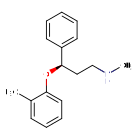
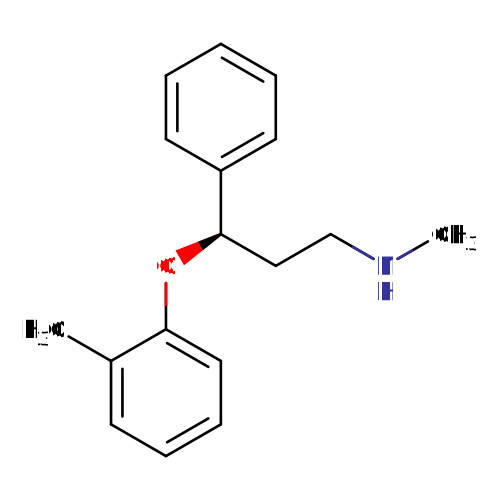
Structure for Atomoxetine (DB00289)
- Weight
- Average: 255.3547
Monoisotopic: 255.162314299 - Chemical Formula
- C17H21NO
- Synonyms
- (-)-Tomoxetine
- Atomoxetina
- Atomoxetine
- Tomoxetina
- Tomoxetine
- Tomoxetinum

Pharmacology
- Indication
Atomoxetine is indicated for the treatment of attention deficit hyperactivity disorder (ADHD) in children and adults.
 Reduce drug development failure ratesBuild, train, & validate machine-learning modelswith evidence-based and structured datasets.Build, train, & validate predictive machine-learning models with structured datasets.
- Associated Conditions
Indication Type Indication Combined Product Details Approval Level Age Group Patient Characteristics Dose Form Management of Adhd •••••••••••• •••••• •••••••• ••••••• - Contraindications & Blackbox Warnings
 Prevent Adverse Drug Events TodayTap into our Clinical API for life-saving information on contraindications & blackbox warnings, population restrictions, harmful risks, & more.Avoid life-threatening adverse drug events with our Clinical API
- Pharmacodynamics
Atomoxetine is a selective norepinephrine (NE) reuptake inhibitor used for the treatment of attention deficit hyperactivity disorder (ADHD). Atomoxetine has been shown to specifically increase norepinephrine and dopamine within the prefrontal cortex, which results in improved ADHD symptoms.8,8,18
Due to atomoxetine's noradrenergic activity, it also has effects on the cardiovascular system such as increased blood pressure and tachycardia.11 Sudden deaths, stroke, and myocardial infarction have been reported in patients taking atomoxetine at usual doses for ADHD. Atomoxetine should be used with caution in patients whose underlying medical conditions could be worsened by increases in blood pressure or heart rate such as certain patients with hypertension, tachycardia, or cardiovascular or cerebrovascular disease. It should not be used in patients with severe cardiac or vascular disorders whose condition would be expected to deteriorate if they experienced clinically important increases in blood pressure or heart rate. Although the role of atomoxetine in these cases is unknown, consideration should be given to not treating patients with clinically significant cardiac abnormalities. Patients who develop symptoms such as exertional chest pain, unexplained syncope, or other symptoms suggestive of cardiac disease during atomoxetine treatment should undergo a prompt cardiac evaluation.18
In general, particular care should be taken in treating ADHD in patients with comorbid bipolar disorder because of concern for possible induction of a mixed/manic episode in patients at risk for bipolar disorder. Treatment emergent psychotic or manic symptoms, e.g., hallucinations, delusional thinking, or mania in children and adolescents without a prior history of psychotic illness or mania can be caused by atomoxetine at usual doses. If such symptoms occur, consideration should be given to a possible causal role of atomoxetine, and discontinuation of treatment should be considered.18
Atomoxetine capsules increased the risk of suicidal ideation in short-term studies in children and adolescents with Attention-Deficit/Hyperactivity Disorder (ADHD). All pediatric patients being treated with atomoxetine should be monitored appropriately and observed closely for clinical worsening, suicidality, and unusual changes in behavior, especially during the initial few months of a course of drug therapy, or at times of dose changes, either increases or decreases.18
Postmarketing reports indicate that atomoxetine can cause severe liver injury. Although no evidence of liver injury was detected in clinical trials of about 6000 patients, there have been rare cases of clinically significant liver injury that were considered probably or possibly related to atomoxetine use in postmarketing experience. Rare cases of liver failure have also been reported, including a case that resulted in a liver transplant. Atomoxetine should be discontinued in patients with jaundice or laboratory evidence of liver injury, and should not be restarted. Laboratory testing to determine liver enzyme levels should be done upon the first symptom or sign of liver dysfunction (e.g., pruritus, dark urine, jaundice, right upper quadrant tenderness, or unexplained “flu like” symptoms).18
- Mechanism of action
Atomoxetine is known to be a potent and selective inhibitor of the norepinephrine transporter (NET),2 which prevents cellular reuptake of norepinephrine throughout the brain, which is thought to improve the symptoms of ADHD. More recently, positron emission tomography (PET) imaging studies in rhesus monkeys have shown that atomoxetine also binds to the serotonin transporter (SERT),9 and blocks the N-methyl-d-aspartate (NMDA) receptor,10 indicating a role for the glutamatergic system in the pathophysiology of ADHD.
Target Actions Organism ASodium-dependent noradrenaline transporter inhibitorHumans USodium-dependent serotonin transporter binderHumans UNMDA receptor blockerHumans UG protein-activated inward rectifier potassium channel 1 inhibitorHumans UKappa-type opioid receptor partial agonistHumans - Absorption
The pharmacokinetic profile of atomoxetine is highly dependent on cytochrome P450 2D6 genetic polymorphisms of the individual.1 A large fraction of the population (up to 10% of Caucasians and 2% of people of African descent and 1% of Asians) are poor metabolizers (PMs) of CYP2D6 metabolized drugs. These individuals have reduced activity in this pathway resulting in 10-fold higher AUCs, 5-fold higher peak plasma concentrations, and slower elimination (plasma half-life of 21.6 hours) of atomoxetine compared with people with normal CYP2D6 activity.
Atomoxetine is rapidly absorbed after oral administration, with absolute bioavailability of about 63% in extensive metabolizers (EMs) and 94% in poor metabolizers (PMs). Mean maximal plasma concentrations (Cmax) are reached approximately 1 to 2 hours after dosing with a maximal concentration of 350 ng/ml with an AUC of 2 mcg.h/ml.1
- Volume of distribution
The reported volume of distribution of oral atomoxetine was 1.6-2.6 L/kg. The steady-state volume of distribution of intravenous atomoxetine was approximately 0.85 L/kg.1
- Protein binding
At therapeutic concentrations, 98.7% of plasma atomoxetine is bound to protein, with 97.5% of that being bound to albumin, followed by alpha-1-acid glycoprotein and immunoglobulin G.1
- Metabolism
Atomoxetine undergoes biotransformation primarily through the cytochrome P450 2D6 (CYP2D6) enzymatic pathway. People with reduced activity in the CYP2D6 pathway (also known as poor metabolizers or PMs) have higher plasma concentrations of atomoxetine compared with people with normal activity (also known as extensive metabolizers, or EMs). For PMs, the AUC of atomoxetine at steady-state is approximately 10-fold higher and Cmax is about 5-fold greater than for EMs.
The major oxidative metabolite formed regardless of CYP2D6 status is 4-hydroxy-atomoxetine, which is rapidly glucuronidated. 4-Hydroxyatomoxetine is equipotent to atomoxetine as an inhibitor of the norepinephrine transporter, but circulates in plasma at much lower concentrations (1% of atomoxetine concentration in EMs and 0.1% of atomoxetine concentration in PMs).
In individuals that lack CYP2D6 activity, 4-hydroxyatomoxetine is still the primary metabolite, but is formed by several other cytochrome P450 enzymes and at a slower rate. Another minor metabolite, N-Desmethyl-atomoxetine is formed by CYP2C19 and other cytochrome P450 enzymes, but has much less pharmacological activity than atomoxetine and lower plasma concentrations (5% of atomoxetine concentration in EMs and 45% of atomoxetine concentration in PMs).18
Hover over products below to view reaction partners
- Route of elimination
Atomoxetine is excreted primarily as 4-hydroxyatomoxetine-O-glucuronide, mainly in the urine (greater than 80% of the dose) and to a lesser extent in the feces (less than 17% of the dose). Only a small fraction (less than 3%) of the atomoxetine dose is excreted as unchanged atomoxetine, indicating extensive biotransformation.18
- Half-life
The reported half-life depends on the CYP2D6 genetic polymorphisms of the individual and can range from 3 to 5.6 hours.1
- Clearance
The clearance rate of atomoxetine depends the CYP2D6 genetic polymorphisms of the individual and can range of 0.27-0.67 L.h/kg.1
- Adverse Effects
 Improve decision support & research outcomesWith structured adverse effects data, including: blackbox warnings, adverse reactions, warning & precautions, & incidence rates. View sample adverse effects data in our new Data Library!Improve decision support & research outcomes with our structured adverse effects data.
- Toxicity
There is limited clinical trial experience with atomoxetine overdose. During postmarketing, there have been fatalities reported involving a mixed ingestion overdose of atomoxetine capsules and at least one other drug. There have been no reports of death involving overdose of atomoxetine capsules alone, including intentional overdoses at amounts up to 1400 mg. In some cases of overdose involving atomoxetine, seizures have been reported. The most commonly reported symptoms accompanying acute and chronic overdoses of atomoxetine capsules were gastrointestinal symptoms, somnolence, dizziness, tremor, and abnormal behavior. Hyperactivity and agitation have also been reported. Signs and symptoms consistent with mild to moderate sympathetic nervous system activation (e.g., tachycardia, blood pressure increased, mydriasis, dry mouth) have also been observed. Most events were mild to moderate. Less commonly, there have been reports of QT prolongation and mental changes, including disorientation and hallucinations. If symptoms of overdose are suspected, a Certified Poison Control Center should be consulted for up to date guidance and advice. Because atomoxetine is highly protein-bound, dialysis is not likely to be useful in the treatment of overdose.18
- Pathways
- Not Available
- Pharmacogenomic Effects/ADRs
Interacting Gene/Enzyme Allele name Genotype(s) Defining Change(s) Type(s) Description Details Cytochrome P450 2D6 CYP2D6*3 (-;-) 2549delA Effect Directly Studied The presence of this genotype in CYP2D6 may be associated with reduced metabolism of atomoxetine and more frequent occurrence of adverse events. Details Cytochrome P450 2D6 CYP2D6*4 (A;A) A Allele, homozygote Effect Directly Studied The presence of this genotype in CYP2D6 is associated with poor metabolism of atomoxetine and more frequent occurrence of adverse events. Details Cytochrome P450 2D6 CYP2D6*5 Not Available Whole Gene Deletion Effect Directly Studied The presence of this genotype in CYP2D6 is associated with poor metabolism of atomoxetine and more frequent occurrence of adverse events. Details Cytochrome P450 2D6 CYP2D6*6 (-;-) / (-;T) T deletion, homozygote Effect Directly Studied The presence of this genotype in CYP2D6 is associated with poor metabolism of atomoxetine and more frequent occurrence of adverse events. Details Cytochrome P450 2D6 CYP2D6*7 Not Available 2935A>C Effect Inferred Poor drug metabolizer, increased side effects. Details Cytochrome P450 2D6 CYP2D6*8 Not Available 1758G>T Effect Inferred Poor drug metabolizer, increased side effects. Details Cytochrome P450 2D6 CYP2D6*11 Not Available 883G>C Effect Inferred Poor drug metabolizer, increased side effects. Details Cytochrome P450 2D6 CYP2D6*12 Not Available 124G>A Effect Inferred Poor drug metabolizer, increased side effects. Details Cytochrome P450 2D6 CYP2D6*13 Not Available CYP2D7/2D6 hybrid gene structure Effect Inferred Poor drug metabolizer, increased side effects. Details Cytochrome P450 2D6 CYP2D6*14A Not Available 1758G>A Effect Inferred Poor drug metabolizer, increased side effects. Details Cytochrome P450 2D6 CYP2D6*15 Not Available 137insT, 137_138insT Effect Inferred Poor drug metabolizer, increased side effects. Details Cytochrome P450 2D6 CYP2D6*19 Not Available 2539_2542delAACT Effect Inferred Poor drug metabolizer, increased side effects. Details Cytochrome P450 2D6 CYP2D6*20 Not Available 1973_1974insG Effect Inferred Poor drug metabolizer, increased side effects. Details Cytochrome P450 2D6 CYP2D6*21 Not Available 2573insC Effect Inferred Poor drug metabolizer, increased side effects. Details Cytochrome P450 2D6 CYP2D6*31 Not Available -1770G>A / -1584C>G … show all Effect Inferred Poor drug metabolizer, increased side effects. Details Cytochrome P450 2D6 CYP2D6*36 Not Available 100C>T / -1426C>T … show all Effect Inferred Poor drug metabolizer, increased side effects. Details Cytochrome P450 2D6 CYP2D6*38 Not Available 2587_2590delGACT Effect Inferred Poor drug metabolizer, increased side effects. Details Cytochrome P450 2D6 CYP2D6*40 Not Available 1863_1864ins(TTT CGC CCC)2 Effect Inferred Poor drug metabolizer, increased side effects. Details Cytochrome P450 2D6 CYP2D6*42 Not Available 3259_3260insGT Effect Inferred Poor drug metabolizer, increased side effects. Details Cytochrome P450 2D6 CYP2D6*44 Not Available 2950G>C Effect Inferred Poor drug metabolizer, increased side effects. Details Cytochrome P450 2D6 CYP2D6*47 Not Available 100C>T / -1426C>T … show all Effect Inferred Poor drug metabolizer, increased side effects. Details Cytochrome P450 2D6 CYP2D6*51 Not Available -1584C>G / -1235A>G … show all Effect Inferred Poor drug metabolizer, increased side effects. Details Cytochrome P450 2D6 CYP2D6*56 Not Available 3201C>T Effect Inferred Poor drug metabolizer, increased side effects. Details Cytochrome P450 2D6 CYP2D6*57 Not Available 100C>T / 310G>T … show all Effect Inferred Poor drug metabolizer, increased side effects. Details Cytochrome P450 2D6 CYP2D6*62 Not Available 4044C>T Effect Inferred Poor drug metabolizer, increased side effects. Details Cytochrome P450 2D6 CYP2D6*68A Not Available -1426C>T / -1235A>G … show all Effect Inferred Poor drug metabolizer, increased side effects. Details Cytochrome P450 2D6 CYP2D6*68B Not Available Similar but not identical switch region compared to CYP2D6*68A. Found in tandem arrangement with CYP2D6*4. Effect Inferred Poor drug metabolizer, increased side effects. Details Cytochrome P450 2D6 CYP2D6*69 Not Available 2988G>A / -1426C>T … show all Effect Inferred Poor drug metabolizer, increased side effects. Details Cytochrome P450 2D6 CYP2D6*92 Not Available 1995delC Effect Inferred Poor drug metabolizer, increased side effects. Details Cytochrome P450 2D6 CYP2D6*100 Not Available -1426C>T / -1235A>G … show all Effect Inferred Poor drug metabolizer, increased side effects. Details Cytochrome P450 2D6 CYP2D6*101 Not Available -1426C>T / -1235A>G … show all Effect Inferred Poor drug metabolizer, increased side effects. Details Cytochrome P450 2D6 CYP2D6*3 Not Available G allele Effect Directly Studied The presence of this genotype in CYP2D6 may be associated with reduced metabolism of atomoxetine and more frequent occurrence of adverse events. Details Cytochrome P450 2D6 CYP2D6*4 Not Available 3877G>A Effect Directly Studied The presence of this genotype in CYP2D6 may be associated with reduced metabolism of atomoxetine and more frequent occurrence of adverse events. Details
Interactions
- Drug Interactions
- This information should not be interpreted without the help of a healthcare provider. If you believe you are experiencing an interaction, contact a healthcare provider immediately. The absence of an interaction does not necessarily mean no interactions exist.
Drug Interaction Integrate drug-drug
interactions in your softwareAbacavir Atomoxetine may decrease the excretion rate of Abacavir which could result in a higher serum level. Abatacept The metabolism of Atomoxetine can be increased when combined with Abatacept. Abiraterone The metabolism of Atomoxetine can be decreased when combined with Abiraterone. Acebutolol The metabolism of Atomoxetine can be decreased when combined with Acebutolol. Aceclofenac The risk or severity of hypertension can be increased when Atomoxetine is combined with Aceclofenac. - Food Interactions
- Take with or without food.
Products
 Drug product information from 10+ global regionsOur datasets provide approved product information including:dosage, form, labeller, route of administration, and marketing period.Access drug product information from over 10 global regions.
- Product Ingredients
Ingredient UNII CAS InChI Key Atomoxetine hydrochloride 57WVB6I2W0 82248-59-7 LUCXVPAZUDVVBT-UNTBIKODSA-N - Product Images
- International/Other Brands
- Tomoxetin (Torrent Pharmaceuticals Ltd)
- Brand Name Prescription Products
Name Dosage Strength Route Labeller Marketing Start Marketing End Region Image Atomoxetine Capsule 40 mg Oral Sanis Health Inc 2018-01-15 Not applicable Canada 
Atomoxetine Capsule 10 mg Oral Sanis Health Inc 2018-01-15 Not applicable Canada Atomoxetine Capsule 25 mg Oral Pro Doc Limitee 2012-11-29 Not applicable Canada Atomoxetine Capsule 10 mg Oral Sivem Pharmaceuticals Ulc 2015-10-07 Not applicable Canada Atomoxetine Capsule 25 mg Oral Sivem Pharmaceuticals Ulc 2015-10-07 Not applicable Canada - Generic Prescription Products
Name Dosage Strength Route Labeller Marketing Start Marketing End Region Image Ag-atomoxetine Capsule 80 mg Oral Angita Pharma Inc. Not applicable Not applicable Canada Ag-atomoxetine Capsule 25 mg Oral Angita Pharma Inc. Not applicable Not applicable Canada Ag-atomoxetine Capsule 60 mg Oral Angita Pharma Inc. Not applicable Not applicable Canada Ag-atomoxetine Capsule 18 mg Oral Angita Pharma Inc. Not applicable Not applicable Canada Ag-atomoxetine Capsule 100 mg Oral Angita Pharma Inc. Not applicable Not applicable Canada - Mixture Products
Name Ingredients Dosage Route Labeller Marketing Start Marketing End Region Image Strattera Atomoxetine hydrochloride (10 mg/1) + Atomoxetine hydrochloride (18 mg/1) + Atomoxetine hydrochloride (25 mg/1) + Atomoxetine hydrochloride (40 mg/1) Kit Oral Eli Lilly and Company 2009-03-16 2009-11-03 US 
Strattera Atomoxetine hydrochloride (25 mg/1) + Atomoxetine hydrochloride (40 mg/1) + Atomoxetine hydrochloride (60 mg/1) + Atomoxetine hydrochloride (80 mg/1) Kit Oral Eli Lilly and Company 2009-03-16 2009-11-03 US Strattera Atomoxetine hydrochloride (18 mg/1) + Atomoxetine hydrochloride (25 mg/1) + Atomoxetine hydrochloride (40 mg/1) + Atomoxetine hydrochloride (60 mg/1) Kit Oral Eli Lilly and Company 2009-03-16 2009-11-03 US Strattera Atomoxetine hydrochloride (10 mg/1) + Atomoxetine hydrochloride (18 mg/1) + Atomoxetine hydrochloride (25 mg/1) + Atomoxetine hydrochloride (40 mg/1) Kit Oral Eli Lilly and Company 2009-03-16 2009-11-03 US Strattera Atomoxetine hydrochloride (25 mg/1) + Atomoxetine hydrochloride (40 mg/1) + Atomoxetine hydrochloride (60 mg/1) + Atomoxetine hydrochloride (80 mg/1) Kit Oral Eli Lilly and Company 2009-03-16 2009-11-03 US


Categories
- ATC Codes
- N06BA09 — Atomoxetine
- Drug Categories
- Adrenergic Agents
- Agents producing tachycardia
- Agents that produce hypertension
- Amines
- Cytochrome P-450 CYP2C19 Substrates
- Cytochrome P-450 CYP2D6 Substrates
- Cytochrome P-450 Enzyme Inhibitors
- Cytochrome P-450 Substrates
- Drugs that are Mainly Renally Excreted
- Membrane Transport Modulators
- Miscellaneous Central Nervous System Agents
- Nervous System
- Neurotransmitter Agents
- Neurotransmitter Uptake Inhibitors
- Norepinephrine Reuptake Inhibitor
- Norepinephrine Uptake Inhibitors
- Potential QTc-Prolonging Agents
- Propylamines
- Psychostimulants, Agents Used for ADHD and Nootropics
- QTc Prolonging Agents
- Chemical TaxonomyProvided by Classyfire
- Description
- This compound belongs to the class of organic compounds known as phenol ethers. These are aromatic compounds containing an ether group substituted with a benzene ring.
- Kingdom
- Organic compounds
- Super Class
- Benzenoids
- Class
- Phenol ethers
- Sub Class
- Not Available
- Direct Parent
- Phenol ethers
- Alternative Parents
- Phenoxy compounds / Toluenes / Aralkylamines / Alkyl aryl ethers / Dialkylamines / Organopnictogen compounds / Hydrocarbon derivatives
- Substituents
- Alkyl aryl ether / Amine / Aralkylamine / Aromatic homomonocyclic compound / Ether / Hydrocarbon derivative / Monocyclic benzene moiety / Organic nitrogen compound / Organic oxygen compound / Organonitrogen compound
- Molecular Framework
- Aromatic homomonocyclic compounds
- External Descriptors
- aromatic ether, secondary amino compound, toluenes (CHEBI:127342)
- Affected organisms
- Humans and other mammals
Chemical Identifiers
- UNII
- ASW034S0B8
- CAS number
- 83015-26-3
- InChI Key
- VHGCDTVCOLNTBX-QGZVFWFLSA-N
- InChI
- InChI=1S/C17H21NO/c1-14-8-6-7-11-16(14)19-17(12-13-18-2)15-9-4-3-5-10-15/h3-11,17-18H,12-13H2,1-2H3/t17-/m1/s1
- IUPAC Name
- methyl[(3R)-3-(2-methylphenoxy)-3-phenylpropyl]amine
- SMILES
- CNCC[C@@H](OC1=CC=CC=C1C)C1=CC=CC=C1
References
- Synthesis Reference
- US20060211772
- General References
- Yu G, Li GF, Markowitz JS: Atomoxetine: A Review of Its Pharmacokinetics and Pharmacogenomics Relative to Drug Disposition. J Child Adolesc Psychopharmacol. 2016 May;26(4):314-26. doi: 10.1089/cap.2015.0137. Epub 2016 Feb 9. [Article]
- Hutchison SL, Ghuman JK, Ghuman HS, Karpov I, Schuster JM: Efficacy of atomoxetine in the treatment of attention-deficit hyperactivity disorder in patients with common comorbidities in children, adolescents and adults: a review. Ther Adv Psychopharmacol. 2016 Oct;6(5):317-334. doi: 10.1177/2045125316647686. Epub 2016 May 20. [Article]
- Aman MG, Smith T, Arnold LE, Corbett-Dick P, Tumuluru R, Hollway JA, Hyman SL, Mendoza-Burcham M, Pan X, Mruzek DW, Lecavalier L, Levato L, Silverman LB, Handen B: A review of atomoxetine effects in young people with developmental disabilities. Res Dev Disabil. 2014 Jun;35(6):1412-24. doi: 10.1016/j.ridd.2014.03.006. Epub 2014 Apr 16. [Article]
- Kratochvil CJ, Heiligenstein JH, Dittmann R, Spencer TJ, Biederman J, Wernicke J, Newcorn JH, Casat C, Milton D, Michelson D: Atomoxetine and methylphenidate treatment in children with ADHD: a prospective, randomized, open-label trial. J Am Acad Child Adolesc Psychiatry. 2002 Jul;41(7):776-84. doi: 10.1097/00004583-200207000-00008. [Article]
- Del Campo N, Chamberlain SR, Sahakian BJ, Robbins TW: The roles of dopamine and noradrenaline in the pathophysiology and treatment of attention-deficit/hyperactivity disorder. Biol Psychiatry. 2011 Jun 15;69(12):e145-57. doi: 10.1016/j.biopsych.2011.02.036. Epub 2011 May 6. [Article]
- Marshall CA, Brodnik ZD, Mortensen OV, Reith MEA, Shumsky JS, Waterhouse BD, Espana RA, Kortagere S: Selective activation of Dopamine D3 receptors and norepinephrine transporter blockade enhances sustained attention. Neuropharmacology. 2019 Apr;148:178-188. doi: 10.1016/j.neuropharm.2019.01.003. Epub 2019 Jan 8. [Article]
- Verbeeck W, Bekkering GE, Van den Noortgate W, Kramers C: Bupropion for attention deficit hyperactivity disorder (ADHD) in adults. Cochrane Database Syst Rev. 2017 Oct 2;10:CD009504. doi: 10.1002/14651858.CD009504.pub2. [Article]
- Bymaster FP, Katner JS, Nelson DL, Hemrick-Luecke SK, Threlkeld PG, Heiligenstein JH, Morin SM, Gehlert DR, Perry KW: Atomoxetine increases extracellular levels of norepinephrine and dopamine in prefrontal cortex of rat: a potential mechanism for efficacy in attention deficit/hyperactivity disorder. Neuropsychopharmacology. 2002 Nov;27(5):699-711. [Article]
- Ding YS, Naganawa M, Gallezot JD, Nabulsi N, Lin SF, Ropchan J, Weinzimmer D, McCarthy TJ, Carson RE, Huang Y, Laruelle M: Clinical doses of atomoxetine significantly occupy both norepinephrine and serotonin transports: Implications on treatment of depression and ADHD. Neuroimage. 2014 Feb 1;86:164-71. doi: 10.1016/j.neuroimage.2013.08.001. Epub 2013 Aug 9. [Article]
- Ludolph AG, Udvardi PT, Schaz U, Henes C, Adolph O, Weigt HU, Fegert JM, Boeckers TM, Fohr KJ: Atomoxetine acts as an NMDA receptor blocker in clinically relevant concentrations. Br J Pharmacol. 2010 May;160(2):283-91. doi: 10.1111/j.1476-5381.2010.00707.x. [Article]
- Coleman J., Cox A. and Cowley N. (2011). Side Effects of Drugs Annual. Elsevier.
- Waller D., and Sampson A. (2018). Medical Pharmacology and Therapeutics (5th ed.). Elsevier.
- Kolevzon A. (2013). The neuroscience of autism spectrum disorders. Elsevier.
- FDA approvals [Link]
- NIH [Link]
- CADDRA - Canadian ADHD Practice Guidelines [Link]
- FDA Approved Drug Products: Strattera (atomoxetine) oral capsules [Link]
- FDA Label - atomoxetine [File]
- External Links
- Human Metabolome Database
- HMDB0014434
- KEGG Drug
- D07473
- PubChem Compound
- 54841
- PubChem Substance
- 46506160
- ChemSpider
- 49516
- BindingDB
- 50366567
- 38400
- ChEBI
- 127342
- ChEMBL
- CHEMBL641
- ZINC
- ZINC000001842633
- Therapeutic Targets Database
- DAP000721
- PharmGKB
- PA134688071
- RxList
- RxList Drug Page
- Drugs.com
- Drugs.com Drug Page
- Wikipedia
- Atomoxetine
- FDA label
- Download (363 KB)
- MSDS
- Download (108 KB)
Clinical Trials
- Clinical Trials
Phase Status Purpose Conditions Count 4 Completed Not Available Binge Eating Disorder (BED) 1 4 Completed Health Services Research Attention Deficit Hyperactivity Disorder (ADHD) 1 4 Completed Treatment ADHD NOS 2 4 Completed Treatment Aspergers Syndrome / Attention Deficit Hyperactivity Disorder (ADHD) / Autism Disorder / Pervasive Development Disorder 1 4 Completed Treatment Attention Deficit Hyperactivity Disorder (ADHD) 23
Pharmacoeconomics
- Manufacturers
- Eli lilly and co
- Packagers
- Atlantic Biologicals Corporation
- Cardinal Health
- Eli Lilly & Co.
- Lake Erie Medical and Surgical Supply
- Lilly Del Caribe Inc.
- Murfreesboro Pharmaceutical Nursing Supply
- Pharmacy Service Center
- Physicians Total Care Inc.
- Remedy Repack
- Dosage Forms
Form Route Strength Capsule, coated Oral 25 mg Capsule, coated Oral 10 mg Tablet, film coated Oral 100 MG Tablet, film coated Oral 10 MG Tablet, film coated Oral 18 MG Tablet, film coated Oral 25 MG Tablet, film coated Oral 40 MG Tablet, film coated Oral 60 MG Tablet, film coated Oral 80 MG Capsule Oral Capsule Oral 10 mg/1 Capsule Oral 100 mg/1 Capsule Oral 18 mg/1 Capsule Oral 40 mg/1 Capsule Oral 60 mg/1 Capsule Oral 80 mg/1 Capsule, coated Oral 40 mg Capsule, coated Oral 60 mg Capsule, coated Oral 18 mg Tablet, film coated Oral Capsule Oral 60.000 mg Capsule Oral 18.00 mg Capsule Oral 69.080 mg Capsule Oral 10.000 mg Capsule Oral 100 mg Capsule Oral 11.430 mg Capsule Oral 25 mg/1 Capsule Oral 5 MG Capsule Oral 80 mg Kit Oral Solution Oral 4 MG/ML Capsule Oral 10 mg Capsule Oral 18 mg Capsule Oral 25 mg Capsule Oral 40 mg Capsule Oral 60 mg Solution Oral 0.460 g Capsule, coated Oral 80 mg Capsule Oral 11.400 mg - Prices
Unit description Cost Unit Strattera 80 mg capsule 6.94USD capsule Strattera 100 mg capsule 6.83USD capsule Strattera 40 mg capsule 6.43USD capsule Strattera 60 mg capsule 6.43USD capsule Strattera 18 mg capsule 6.03USD capsule Strattera 25 mg capsule 5.85USD capsule Strattera 10 mg capsule 5.84USD capsule DrugBank does not sell nor buy drugs. Pricing information is supplied for informational purposes only.- Patents
Patent Number Pediatric Extension Approved Expires (estimated) Region CA2209735 No 2002-10-01 2016-01-04 Canada US5658590 Yes 1997-08-19 2017-05-26 US
Properties
- State
- Solid
- Experimental Properties
Property Value Source melting point (°C) 161-165 ºC 'MSDS' boiling point (°C) 64-65 ºC at 0.760 mmHg 'MSDS' water solubility 27.8 mg/mL Yu G., Li G. and Markowitz J. 2016. J Child Adolesc Psychopharmacol. logP 0.676 'MSDS' pKa 10.13 Atomoxetine. Eli Lilly product monograph. - Predicted Properties
Property Value Source Water Solubility 0.0039 mg/mL ALOGPS logP 3.95 ALOGPS logP 3.81 Chemaxon logS -4.8 ALOGPS pKa (Strongest Basic) 9.8 Chemaxon Physiological Charge 1 Chemaxon Hydrogen Acceptor Count 2 Chemaxon Hydrogen Donor Count 1 Chemaxon Polar Surface Area 21.26 Å2 Chemaxon Rotatable Bond Count 6 Chemaxon Refractivity 79.44 m3·mol-1 Chemaxon Polarizability 29.75 Å3 Chemaxon Number of Rings 2 Chemaxon Bioavailability 1 Chemaxon Rule of Five Yes Chemaxon Ghose Filter Yes Chemaxon Veber's Rule Yes Chemaxon MDDR-like Rule No Chemaxon - Predicted ADMET Features
Property Value Probability Human Intestinal Absorption + 1.0 Blood Brain Barrier + 0.964 Caco-2 permeable + 0.852 P-glycoprotein substrate Substrate 0.6133 P-glycoprotein inhibitor I Inhibitor 0.7771 P-glycoprotein inhibitor II Non-inhibitor 0.8003 Renal organic cation transporter Inhibitor 0.5929 CYP450 2C9 substrate Non-substrate 0.7443 CYP450 2D6 substrate Substrate 0.8919 CYP450 3A4 substrate Substrate 0.6216 CYP450 1A2 substrate Inhibitor 0.9324 CYP450 2C9 inhibitor Non-inhibitor 0.957 CYP450 2D6 inhibitor Inhibitor 0.9037 CYP450 2C19 inhibitor Non-inhibitor 0.9025 CYP450 3A4 inhibitor Non-inhibitor 0.8122 CYP450 inhibitory promiscuity Low CYP Inhibitory Promiscuity 0.7371 Ames test Non AMES toxic 0.7738 Carcinogenicity Non-carcinogens 0.8493 Biodegradation Not ready biodegradable 0.8013 Rat acute toxicity 2.5166 LD50, mol/kg Not applicable hERG inhibition (predictor I) Strong inhibitor 0.7132 hERG inhibition (predictor II) Inhibitor 0.7974
Spectra
- Mass Spec (NIST)
- Not Available
- Spectra
- Chromatographic Properties
Collision Cross Sections (CCS)
Adduct CCS Value (Å2) Source type Source [M-H]- 170.7715865 predictedDarkChem Lite v0.1.0 [M-H]- 161.82031 predictedDeepCCS 1.0 (2019) [M+H]+ 171.6717865 predictedDarkChem Lite v0.1.0 [M+H]+ 164.17833 predictedDeepCCS 1.0 (2019) [M+Na]+ 171.5131865 predictedDarkChem Lite v0.1.0 [M+Na]+ 170.27147 predictedDeepCCS 1.0 (2019)
Targets

- Kind
- Protein
- Organism
- Humans
- Pharmacological action
- Yes
- Actions
- Inhibitor
- General Function
- Norepinephrine:sodium symporter activity
- Specific Function
- Amine transporter. Terminates the action of noradrenaline by its high affinity sodium-dependent reuptake into presynaptic terminals.
- Gene Name
- SLC6A2
- Uniprot ID
- P23975
- Uniprot Name
- Sodium-dependent noradrenaline transporter
- Molecular Weight
- 69331.42 Da
References
- Michelson D, Adler L, Spencer T, Reimherr FW, West SA, Allen AJ, Kelsey D, Wernicke J, Dietrich A, Milton D: Atomoxetine in adults with ADHD: two randomized, placebo-controlled studies. Biol Psychiatry. 2003 Jan 15;53(2):112-20. [Article]
- Wernicke JF, Faries D, Girod D, Brown J, Gao H, Kelsey D, Quintana H, Lipetz R, Michelson D, Heiligenstein J: Cardiovascular effects of atomoxetine in children, adolescents, and adults. Drug Saf. 2003;26(10):729-40. [Article]
- Wernicke JF, Adler L, Spencer T, West SA, Allen AJ, Heiligenstein J, Milton D, Ruff D, Brown WJ, Kelsey D, Michelson D: Changes in symptoms and adverse events after discontinuation of atomoxetine in children and adults with attention deficit/hyperactivity disorder: a prospective, placebo-controlled assessment. J Clin Psychopharmacol. 2004 Feb;24(1):30-5. [Article]
- Garnock-Jones KP, Keating GM: Atomoxetine: a review of its use in attention-deficit hyperactivity disorder in children and adolescents. Paediatr Drugs. 2009;11(3):203-26. doi: 10.2165/00148581-200911030-00005. [Article]
- Kaplan S, Heiligenstein J, West S, Busner J, Harder D, Dittmann R, Casat C, Wernicke JF: Efficacy and safety of atomoxetine in childhood attention-deficit/hyperactivity disorder with comorbid oppositional defiant disorder. J Atten Disord. 2004 Oct;8(2):45-52. [Article]
- Purper-Ouakil D, Fourneret P, Wohl M, Reneric JP: [Atomoxetine: a new treatment for Attention Deficit/Hyperactivity Disorder (ADHD) in children and adolescents]. Encephale. 2005 May-Jun;31(3):337-48. [Article]
- Gaillez C, Sorbara F, Perrin E: [Atomoxetine (Strattera), an alternative in the treatment of attention-deficit/hyperactivity disorder (ADHD) in children]. Encephale. 2007 Sep;33(4 Pt 1):621-8. [Article]
- Tatsumi M, Groshan K, Blakely RD, Richelson E: Pharmacological profile of antidepressants and related compounds at human monoamine transporters. Eur J Pharmacol. 1997 Dec 11;340(2-3):249-58. [Article]
- Yu G, Li GF, Markowitz JS: Atomoxetine: A Review of Its Pharmacokinetics and Pharmacogenomics Relative to Drug Disposition. J Child Adolesc Psychopharmacol. 2016 May;26(4):314-26. doi: 10.1089/cap.2015.0137. Epub 2016 Feb 9. [Article]
- Kind
- Protein
- Organism
- Humans
- Pharmacological action
- Unknown
- Actions
- Binder
- General Function
- Serotonin:sodium symporter activity
- Specific Function
- Serotonin transporter whose primary function in the central nervous system involves the regulation of serotonergic signaling via transport of serotonin molecules from the synaptic cleft back into t...
- Gene Name
- SLC6A4
- Uniprot ID
- P31645
- Uniprot Name
- Sodium-dependent serotonin transporter
- Molecular Weight
- 70324.165 Da
References
- Tatsumi M, Groshan K, Blakely RD, Richelson E: Pharmacological profile of antidepressants and related compounds at human monoamine transporters. Eur J Pharmacol. 1997 Dec 11;340(2-3):249-58. [Article]
- Yu G, Li GF, Markowitz JS: Atomoxetine: A Review of Its Pharmacokinetics and Pharmacogenomics Relative to Drug Disposition. J Child Adolesc Psychopharmacol. 2016 May;26(4):314-26. doi: 10.1089/cap.2015.0137. Epub 2016 Feb 9. [Article]
- Ding YS, Naganawa M, Gallezot JD, Nabulsi N, Lin SF, Ropchan J, Weinzimmer D, McCarthy TJ, Carson RE, Huang Y, Laruelle M: Clinical doses of atomoxetine significantly occupy both norepinephrine and serotonin transports: Implications on treatment of depression and ADHD. Neuroimage. 2014 Feb 1;86:164-71. doi: 10.1016/j.neuroimage.2013.08.001. Epub 2013 Aug 9. [Article]
- Kind
- Protein group
- Organism
- Humans
- Pharmacological action
- Unknown
- Actions
- Blocker
- General Function
- Voltage-gated cation channel activity
- Specific Function
- NMDA receptor subtype of glutamate-gated ion channels with high calcium permeability and voltage-dependent sensitivity to magnesium. Mediated by glycine. This protein plays a key role in synaptic p...
Components:
References
- Ludolph AG, Udvardi PT, Schaz U, Henes C, Adolph O, Weigt HU, Fegert JM, Boeckers TM, Fohr KJ: Atomoxetine acts as an NMDA receptor blocker in clinically relevant concentrations. Br J Pharmacol. 2010 May;160(2):283-91. doi: 10.1111/j.1476-5381.2010.00707.x. [Article]
- Kind
- Protein
- Organism
- Humans
- Pharmacological action
- Unknown
- Actions
- Inhibitor
- General Function
- G-protein activated inward rectifier potassium channel activity
- Specific Function
- This potassium channel is controlled by G proteins. Inward rectifier potassium channels are characterized by a greater tendency to allow potassium to flow into the cell rather than out of it. Their...
- Gene Name
- KCNJ3
- Uniprot ID
- P48549
- Uniprot Name
- G protein-activated inward rectifier potassium channel 1
- Molecular Weight
- 56602.84 Da
References
- Kobayashi T, Washiyama K, Ikeda K: Inhibition of G-protein-activated inwardly rectifying K+ channels by the selective norepinephrine reuptake inhibitors atomoxetine and reboxetine. Neuropsychopharmacology. 2010 Jun;35(7):1560-9. doi: 10.1038/npp.2010.27. Epub 2010 Mar 10. [Article]
- Kind
- Protein
- Organism
- Humans
- Pharmacological action
- Unknown
- Actions
- Partial agonist
- General Function
- Opioid receptor activity
- Specific Function
- G-protein coupled opioid receptor that functions as receptor for endogenous alpha-neoendorphins and dynorphins, but has low affinity for beta-endorphins. Also functions as receptor for various synt...
- Gene Name
- OPRK1
- Uniprot ID
- P41145
- Uniprot Name
- Kappa-type opioid receptor
- Molecular Weight
- 42644.665 Da
References
- Creighton CJ, Ramabadran K, Ciccone PE, Liu J, Orsini MJ, Reitz AB: Synthesis and biological evaluation of the major metabolite of atomoxetine: elucidation of a partial kappa-opioid agonist effect. Bioorg Med Chem Lett. 2004 Aug 2;14(15):4083-5. doi: 10.1016/j.bmcl.2004.05.018. [Article]
Enzymes
- Kind
- Protein
- Organism
- Humans
- Pharmacological action
- Unknown
- Actions
- Substrate
- General Function
- Steroid hydroxylase activity
- Specific Function
- Responsible for the metabolism of a number of therapeutic agents such as the anticonvulsant drug S-mephenytoin, omeprazole, proguanil, certain barbiturates, diazepam, propranolol, citalopram and im...
- Gene Name
- CYP2C19
- Uniprot ID
- P33261
- Uniprot Name
- Cytochrome P450 2C19
- Molecular Weight
- 55930.545 Da
References
- Yu G, Li GF, Markowitz JS: Atomoxetine: A Review of Its Pharmacokinetics and Pharmacogenomics Relative to Drug Disposition. J Child Adolesc Psychopharmacol. 2016 May;26(4):314-26. doi: 10.1089/cap.2015.0137. Epub 2016 Feb 9. [Article]
- Choi CI, Bae JW, Lee YJ, Lee HI, Jang CG, Lee SY: Effects of CYP2C19 genetic polymorphisms on atomoxetine pharmacokinetics. J Clin Psychopharmacol. 2014 Feb;34(1):139-42. doi: 10.1097/JCP.0b013e3182a608a2. [Article]
- STRATTERA (atomoxetine HCl) - FDA Label [Link]
- Kind
- Protein
- Organism
- Humans
- Pharmacological action
- Unknown
- Actions
- Substrate
- General Function
- Steroid hydroxylase activity
- Specific Function
- Responsible for the metabolism of many drugs and environmental chemicals that it oxidizes. It is involved in the metabolism of drugs such as antiarrhythmics, adrenoceptor antagonists, and tricyclic...
- Gene Name
- CYP2D6
- Uniprot ID
- P10635
- Uniprot Name
- Cytochrome P450 2D6
- Molecular Weight
- 55768.94 Da
References
- Purper-Ouakil D, Fourneret P, Wohl M, Reneric JP: [Atomoxetine: a new treatment for Attention Deficit/Hyperactivity Disorder (ADHD) in children and adolescents]. Encephale. 2005 May-Jun;31(3):337-48. [Article]
- Garnock-Jones KP, Keating GM: Atomoxetine: a review of its use in attention-deficit hyperactivity disorder in children and adolescents. Paediatr Drugs. 2009;11(3):203-26. doi: 10.2165/00148581-200911030-00005. [Article]
- Sauer JM, Long AJ, Ring B, Gillespie JS, Sanburn NP, DeSante KA, Petullo D, VandenBranden MR, Jensen CB, Wrighton SA, Smith BP, Read HA, Witcher JW: Atomoxetine hydrochloride: clinical drug-drug interaction prediction and outcome. J Pharmacol Exp Ther. 2004 Feb;308(2):410-8. doi: 10.1124/jpet.103.058727. Epub 2003 Nov 10. [Article]
- Yu G, Li GF, Markowitz JS: Atomoxetine: A Review of Its Pharmacokinetics and Pharmacogenomics Relative to Drug Disposition. J Child Adolesc Psychopharmacol. 2016 May;26(4):314-26. doi: 10.1089/cap.2015.0137. Epub 2016 Feb 9. [Article]
- Flockhart Table of Drug Interactions [Link]
Carriers
- Kind
- Protein
- Organism
- Humans
- Pharmacological action
- No
- Actions
- Binder
- General Function
- Toxic substance binding
- Specific Function
- Serum albumin, the main protein of plasma, has a good binding capacity for water, Ca(2+), Na(+), K(+), fatty acids, hormones, bilirubin and drugs. Its main function is the regulation of the colloid...
- Gene Name
- ALB
- Uniprot ID
- P02768
- Uniprot Name
- Serum albumin
- Molecular Weight
- 69365.94 Da
References
- Aman MG, Smith T, Arnold LE, Corbett-Dick P, Tumuluru R, Hollway JA, Hyman SL, Mendoza-Burcham M, Pan X, Mruzek DW, Lecavalier L, Levato L, Silverman LB, Handen B: A review of atomoxetine effects in young people with developmental disabilities. Res Dev Disabil. 2014 Jun;35(6):1412-24. doi: 10.1016/j.ridd.2014.03.006. Epub 2014 Apr 16. [Article]
- Hutchison SL, Ghuman JK, Ghuman HS, Karpov I, Schuster JM: Efficacy of atomoxetine in the treatment of attention-deficit hyperactivity disorder in patients with common comorbidities in children, adolescents and adults: a review. Ther Adv Psychopharmacol. 2016 Oct;6(5):317-334. doi: 10.1177/2045125316647686. Epub 2016 May 20. [Article]
- Kind
- Protein group
- Organism
- Humans
- Pharmacological action
- No
- Actions
- Binder
- General Function
- Not Available
- Specific Function
- Functions as transport protein in the blood stream. Binds various ligands in the interior of its beta-barrel domain. Also binds synthetic drugs and influences their distribution and availability in...
Components:
References
- Hutchison SL, Ghuman JK, Ghuman HS, Karpov I, Schuster JM: Efficacy of atomoxetine in the treatment of attention-deficit hyperactivity disorder in patients with common comorbidities in children, adolescents and adults: a review. Ther Adv Psychopharmacol. 2016 Oct;6(5):317-334. doi: 10.1177/2045125316647686. Epub 2016 May 20. [Article]
- Aman MG, Smith T, Arnold LE, Corbett-Dick P, Tumuluru R, Hollway JA, Hyman SL, Mendoza-Burcham M, Pan X, Mruzek DW, Lecavalier L, Levato L, Silverman LB, Handen B: A review of atomoxetine effects in young people with developmental disabilities. Res Dev Disabil. 2014 Jun;35(6):1412-24. doi: 10.1016/j.ridd.2014.03.006. Epub 2014 Apr 16. [Article]
- Kind
- Protein
- Organism
- Humans
- Pharmacological action
- No
- Actions
- Binder
- General Function
- Receptor signaling protein activity
- Specific Function
- High affinity receptor for the Fc region of immunoglobulins gamma. Functions in both innate and adaptive immune responses.
- Gene Name
- FCGR1A
- Uniprot ID
- P12314
- Uniprot Name
- High affinity immunoglobulin gamma Fc receptor I
- Molecular Weight
- 42631.525 Da
References
- Hutchison SL, Ghuman JK, Ghuman HS, Karpov I, Schuster JM: Efficacy of atomoxetine in the treatment of attention-deficit hyperactivity disorder in patients with common comorbidities in children, adolescents and adults: a review. Ther Adv Psychopharmacol. 2016 Oct;6(5):317-334. doi: 10.1177/2045125316647686. Epub 2016 May 20. [Article]
- Aman MG, Smith T, Arnold LE, Corbett-Dick P, Tumuluru R, Hollway JA, Hyman SL, Mendoza-Burcham M, Pan X, Mruzek DW, Lecavalier L, Levato L, Silverman LB, Handen B: A review of atomoxetine effects in young people with developmental disabilities. Res Dev Disabil. 2014 Jun;35(6):1412-24. doi: 10.1016/j.ridd.2014.03.006. Epub 2014 Apr 16. [Article]

Drug created at June 13, 2005 13:24 / Updated at April 26, 2024 00:45