Identification
- Summary
Mupirocin is an antibacterial ointment used to treat impetigo and secondary skin infections caused by Staphylococcus aureus and Streptococcus pyogenes.
- Brand Names
- Bactroban, Centany, Pirnuo
- Generic Name
- Mupirocin
- DrugBank Accession Number
- DB00410
- Background
Mupirocin, formerly termed pseudomonic acid A,1 is a novel antibacterial agent with a unique chemical structure and mode of action apart from other antibiotic agents. Produced by fermentation using the organism Pseudomonas fluorescens, mupirocin is a naturally-occurring antibiotic that displays a broad-specturm activity against many gram-positive bacteria and certain gram-negative bacteria in vitro.7 It primarily works by inhibiting bacterial protein synthesis. Due to its unique mode of action of inhibiting the activity of bacterial isoleucyl-tRNA synthetase, mupirocin does not demonstrate cross-resistance with other classes of antimicrobial agents, giving it a therapeutic advantage.7 It is available in topical formulations only due to extensive systemic metabolism1 and is used in the treatment of impetigo caused by Staphylococcus aureus and Streptococcus pyogenes and traumatic skin lesions due to secondary skin infections caused by S. aureus and S. pyogenes. There is also some clinical evidence that suggests the potential role of mupirocin in eradicating nasal carriage of Staphylococci when administered intranasally.1,3 Mupirocin is commonly marketed under the brand name Bactroban.
- Type
- Small Molecule
- Groups
- Approved, Investigational, Vet approved
- Structure
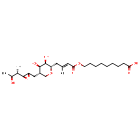
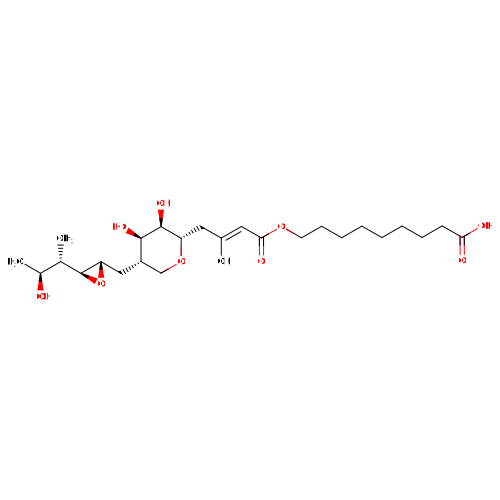
Structure for Mupirocin (DB00410)
- Weight
- Average: 500.6222
Monoisotopic: 500.298533006 - Chemical Formula
- C26H44O9
- Synonyms
- 9-[(E)-4-[(2S,3R,4R,5S)-3,4-dihydroxy-5-[[(2S,3S)-3- [(2S,3S)-3-hydroxybutan-2-yl]oxiran-2-yl]methyl] oxan-2-yl]-3-methylbut-2-enoyl]oxynonanoic acid
- Mupirocin
- Mupirocina
- Mupirocine
- Mupirocinum
- Pseudomonic acid
- Pseudomonic acid A
- External IDs
- BRL 4910A
- BRL 4910F
- BRL-4910A

Pharmacology
- Indication
Indicated for the treatment of impetigo and secondary skin infections, leading to traumatic skin lesions, due to Staphylococcus aureus and Streptococcus pyogenes.7
 Reduce drug development failure ratesBuild, train, & validate machine-learning modelswith evidence-based and structured datasets.Build, train, & validate predictive machine-learning models with structured datasets.
- Associated Conditions
Indication Type Indication Combined Product Details Approval Level Age Group Patient Characteristics Dose Form Treatment of Impetigo •••••••••••• Treatment of Impetigo •••••••••••• Used in combination to treat Impetigo caused by staphylococccus aureus Combination Product in combination with: Chlorhexidine (DB00878), Dimethicone (DB11074) •••••••••••• Used in combination to treat Impetigo caused by streptococcus pyogenes Combination Product in combination with: Dimethicone (DB11074), Chlorhexidine (DB00878) •••••••••••• Treatment of Secondary infection skin infection •••••••••••• - Contraindications & Blackbox Warnings
 Prevent Adverse Drug Events TodayTap into our Clinical API for life-saving information on contraindications & blackbox warnings, population restrictions, harmful risks, & more.Avoid life-threatening adverse drug events with our Clinical API
- Pharmacodynamics
Mupirocin is reported to be active against susceptible aerobic gram-positive cocci, such as Staphylococcus aureus, Staphylococcus epidermidis, and other beta-hemolytic streptococciStreptococcus pyogenes.4 It mediates its antibacterial activity by inhibiting the bacterial protein synthesis and formation of bacterial proteins essential for survival. The minimum bactericidal concentration (MBC) against relevant pathogens is generally eight-fold to thirty-fold higher than the minimum inhibitory concentration (MIC).7 In one clinical study investigating the therapeutic effectiveness of topical mupirocin in impetigo, the therapeutic response rate was about 94 to 98% after one week following the end of therapy.7 In clinical studies of patients with primary and secondary skin infections, both elimination of the bacterial pathogen and clinical cure or improvement hav been demonstrated in over 90% of patients receiving topical mupirocin.3 Mupirocin resistance as high as 81% has been reported previously.5 Resistance to mupirocin, which occurs more frequently in methicillin-resistant than methicillin-susceptible staphylococci, may occur with the production of a modified isoleucyl-tRNA synthetase, or the acquisition of, by genetic transfer, a plasmid mediating a new isoleucyl-tRNA synthetase.7
- Mechanism of action
Mupirocin specifically and reversibly binds to bacterial isoleucyl transfer-RNA (tRNA) synthetase, which is an enzyme that promotes the conversion of isoleucine and tRNA to isoleucyl-tRNA. Inhibition of this enzyme subsequently leads to the inhibition of the bacterial protein and RNA synthesis.1 Mupirocin is bacteriostatic at lower concentrations but it exerts bactericidal effects with prolonged exposure, killing 90-99% of susceptible bacteria over a 24 hour period.2
Target Actions Organism AIsoleucine--tRNA ligase inhibitorStaphylococcus aureus - Absorption
Systemic or percutaneous absorption of mupirocin following dermal application is expected to be minimal in adults and children.7 Occlusive dressings do not significantly enhance drug absorption, but damaged skin may allow enhanced penetration of the drug across the skin barrier.2
- Volume of distribution
No information available.
- Protein binding
The protein binding of mupirocin is reported to be over 95%.7
- Metabolism
Following intravenous or oral administration, mupirocin undergoes rapid hepatic metabolism to form the principal metabolite monic acid, which has no antibacterial activity.7
Hover over products below to view reaction partners
- Route of elimination
Any mupirocin reaching the systemic circulation is rapidly metabolized to form the inactive monic acid, which is eliminated by renal excretion. Following the application of Centany (mupirocin ointment),2% to a 400 cm2 area on the back of 23 healthy volunteers once daily for 7 days, the mean (range) cumulative urinary excretion of monic acid over 24 hrs following the last administration was 1.25% (0.2% to 3.0%) of the administered dose of mupirocin.7
- Half-life
In healthy male volunteers, the elimination half-life of mupirocin was about 20 to 40 minutes following intravenous administration. The elimination half-life of monic acid was about 30 to 80 minutes.6
- Clearance
No information available.
- Adverse Effects
 Improve decision support & research outcomesWith structured adverse effects data, including: blackbox warnings, adverse reactions, warning & precautions, & incidence rates. View sample adverse effects data in our new Data Library!Improve decision support & research outcomes with our structured adverse effects data.
- Toxicity
LD50 and Nonclinical Toxicity
The oral LD50 value in rats is 5000 mg/kg.MSDS Studies evaluating the carcinogenic potential of mupirocin have not been performed. In various in vivo animal and in vitro bacterial assays, there was no evidence of genotoxicity caused by mupirocin. In reproduction studies using male and female rats, there were no signs of impaired fertility upon subcutaneous administration of mupirocin.7
Use in special populations
Mupirocin was found to be excreted in human milk. As there is limited data on the use of topical mupirocin in pregnant women, the use of this drug in these patients should be undertaken with caution. Based on the findings in clinical trials, topical mupirocin was shown to be safe and effective in pediatric patients aged 2 months to 16 years.7
- Pathways
- Not Available
- Pharmacogenomic Effects/ADRs
- Not Available
Interactions
- Drug Interactions
- This information should not be interpreted without the help of a healthcare provider. If you believe you are experiencing an interaction, contact a healthcare provider immediately. The absence of an interaction does not necessarily mean no interactions exist.
Drug Interaction Integrate drug-drug
interactions in your softwareAcenocoumarol The risk or severity of bleeding can be increased when Mupirocin is combined with Acenocoumarol. Ambroxol The risk or severity of methemoglobinemia can be increased when Mupirocin is combined with Ambroxol. Articaine The risk or severity of methemoglobinemia can be increased when Mupirocin is combined with Articaine. Benzocaine The risk or severity of methemoglobinemia can be increased when Mupirocin is combined with Benzocaine. Benzyl alcohol The risk or severity of methemoglobinemia can be increased when Mupirocin is combined with Benzyl alcohol. - Food Interactions
- No interactions found.
Products
 Drug product information from 10+ global regionsOur datasets provide approved product information including:dosage, form, labeller, route of administration, and marketing period.Access drug product information from over 10 global regions.
- Product Ingredients
Ingredient UNII CAS InChI Key Mupirocin calcium RG38I2P540 115074-43-6 DDHVILIIHBIMQU-YJGQQKNPSA-L - International/Other Brands
- Bactroban Nasal (GlaxoSmithKline) / Plasimine (GlaxoSmithKline) / Spectroderm (GlaxoSmithKline) / T-Bact (GlaxoSmithKline) / Turixin (GlaxoSmithKline)
- Brand Name Prescription Products
Name Dosage Strength Route Labeller Marketing Start Marketing End Region Image Bactroban Cream 20 mg/1g Topical Lake Erie Medical &Surgical Supply Dba Quality Care Products Llc 2012-03-28 2015-12-31 US 
Bactroban Ointment 20 mg/1g Topical Physicians Total Care, Inc. 1996-04-10 Not applicable US Bactroban Cream 20 mg/1g Topical GlaxoSmithKline LLC 1998-01-23 Not applicable US Bactroban Ointment 20 mg/1g Topical GlaxoSmithKline LLC 1996-04-10 Not applicable US Bactroban Ointment 20 mg/1g Topical Lake Erie Medical Dba Quality Care Produts Llc 1996-04-10 2016-12-31 US - Generic Prescription Products
Name Dosage Strength Route Labeller Marketing Start Marketing End Region Image Mupirocin Cream 2 g/100g Topical Amneal Pharmaceuticals NY LLC 2022-11-17 Not applicable US Mupirocin Ointment 20 mg/1g Topical Nucare Pharmaceuticals,inc. 2009-10-30 Not applicable US Mupirocin Ointment 20 mg/1g Topical Directrx 2015-01-01 Not applicable US Mupirocin Cream 2 g/100g Topical REMEDYREPACK INC. 2015-11-09 2016-11-09 US Mupirocin Ointment 20 mg/1g Topical Rpk Pharmaceuticals, Inc. 2011-06-08 Not applicable US - Over the Counter Products
Name Dosage Strength Route Labeller Marketing Start Marketing End Region Image Bactroban Ointment 2 % Topical Glaxosmithkline Consumer Healthcare Ulc 1992-12-31 2020-07-24 Canada 
Bactroban Cream Cream 2 % Topical Glaxosmithkline Consumer Healthcare Ulc 1999-04-13 2020-07-24 Canada Bactroban Nasal Ointment Ointment 2 % Nasal Glaxosmithkline Inc Not applicable Not applicable Canada Stramucin Cream 2 % w/w Topical Glenmark Pharmaceuticals, Inc 2019-06-05 Not applicable Canada Taro-mupirocin Ointment 2 % Topical Taro Pharmaceuticals, Inc. 2006-07-10 Not applicable Canada - Mixture Products
Name Ingredients Dosage Route Labeller Marketing Start Marketing End Region Image DERMA Q CREMA TOPICA Mupirocin (2.148 g) + Clotrimazole (1 g) + Mometasone furoate (0.1 g) Cream Topical PHARMETIQUE S.A 2010-05-26 Not applicable Colombia 
Dermawerx Surgical Plus Pak Mupirocin (20 mg/1g) + Chlorhexidine gluconate (4 g/100mL) + Dimethicone (50 mg/1mL) Kit Topical Patchwerx Labs 2015-10-21 Not applicable US NuSurgePak Surgical Prep/CarePak Mupirocin (20 mg/1g) + Chlorhexidine gluconate (4 g/100mL) + Dimethicone (50 ug/1mg) Kit Topical Nucare Pharmaceuticals Inc 2011-06-08 Not applicable US NuSurgePak Surgical Prep/CarePak Mupirocin (20 mg/1g) + Chlorhexidine gluconate (4 g/100mL) + Dimethicone (50 mg/1mL) Cream; Kit; Ointment; Solution Topical Nucare Pharmaceuticals Inc 2016-07-29 Not applicable US WhyteDerm SurgiPak Mupirocin (20 mg/1g) + Chlorhexidine gluconate (4 g/100mL) + Dimethicone (20 mg/1mL) Kit Topical Whyteman Labs Llc 2015-10-21 2016-04-04 US - Unapproved/Other Products
Name Ingredients Dosage Route Labeller Marketing Start Marketing End Region Image DermacinRx Clorhexacin Mupirocin (20 mg/1g) + Chlorhexidine gluconate (4 g/100mL) + Dimethicone (50 mg/1mL) Kit Topical PureTek Corporation 2016-06-02 Not applicable US DermacinRx Surgical PharmaPak Mupirocin (20 mg/1g) + Chlorhexidine gluconate (4 g/100mL) + Dimethicone (50 mg/1mL) Kit Topical PureTek Corporation 2015-08-27 Not applicable US Levocetirizine Dihydrochloride 2% / Mupirocin 2% / Triamcinolone Acetonide 0.025% Mupirocin (2 g/100g) + Levocetirizine dihydrochloride (2 g/100g) + Triamcinolone acetonide (0.025 g/100g) Cream Topical Sincerus Florida, LLC 2019-05-15 Not applicable US Lidocaine 2% / Mupirocin 2% Mupirocin (2 g/100g) + Lidocaine (2 g/100g) Ointment Topical Sincerus Florida, LLC 2019-05-15 Not applicable US Metronidazole 1% / Mupirocin 2% Mupirocin (2 g/100g) + Metronidazole (1 g/100g) Ointment Topical Sincerus Florida, LLC 2019-05-15 Not applicable US
Categories
- ATC Codes
- R01AX06 — Mupirocin
- R01AX — Other nasal preparations
- R01A — DECONGESTANTS AND OTHER NASAL PREPARATIONS FOR TOPICAL USE
- R01 — NASAL PREPARATIONS
- R — RESPIRATORY SYSTEM
- Drug Categories
- Chemical TaxonomyProvided by Classyfire
- Description
- This compound belongs to the class of organic compounds known as medium-chain fatty acids. These are fatty acids with an aliphatic tail that contains between 4 and 12 carbon atoms.
- Kingdom
- Organic compounds
- Super Class
- Lipids and lipid-like molecules
- Class
- Fatty Acyls
- Sub Class
- Fatty acids and conjugates
- Direct Parent
- Medium-chain fatty acids
- Alternative Parents
- Branched fatty acids / Epoxy fatty acids / Fatty acid esters / Hydroxy fatty acids / Dicarboxylic acids and derivatives / Oxanes / Monosaccharides / Enoate esters / Secondary alcohols / Oxacyclic compounds show 6 more
- Substituents
- Alcohol / Aliphatic heteromonocyclic compound / Alpha,beta-unsaturated carboxylic ester / Branched fatty acid / Carbonyl group / Carboxylic acid / Carboxylic acid derivative / Carboxylic acid ester / Dialkyl ether / Dicarboxylic acid or derivatives show 17 more
- Molecular Framework
- Aliphatic heteromonocyclic compounds
- External Descriptors
- monocarboxylic acid, secondary alcohol, epoxide, triol, alpha,beta-unsaturated carboxylic ester, oxanes (CHEBI:7025)
- Affected organisms
- Enteric bacteria and other eubacteria
- Streptococcus pyogenes
- Staphylococcus aureus
Chemical Identifiers
- UNII
- D0GX863OA5
- CAS number
- 12650-69-0
- InChI Key
- MINDHVHHQZYEEK-HBBNESRFSA-N
- InChI
- InChI=1S/C26H44O9/c1-16(13-23(30)33-11-9-7-5-4-6-8-10-22(28)29)12-20-25(32)24(31)19(15-34-20)14-21-26(35-21)17(2)18(3)27/h13,17-21,24-27,31-32H,4-12,14-15H2,1-3H3,(H,28,29)/b16-13+/t17-,18-,19-,20-,21-,24+,25-,26-/m0/s1
- IUPAC Name
- 9-{[(2E)-4-[(2S,3R,4R,5S)-3,4-dihydroxy-5-{[(2S,3S)-3-[(2S,3S)-3-hydroxybutan-2-yl]oxiran-2-yl]methyl}oxan-2-yl]-3-methylbut-2-enoyl]oxy}nonanoic acid
- SMILES
- C[C@H](O)[C@H](C)[C@@H]1O[C@H]1C[C@H]1CO[C@@H](C\C(C)=C\C(=O)OCCCCCCCCC(O)=O)[C@H](O)[C@@H]1O
References
- Synthesis Reference
Harvey Lee Zimmerman, "Pharmaceutical and veterinary compositions of mupirocin and methods for their preparation." U.S. Patent US6025389, issued January, 1988.
US6025389- General References
- Parenti MA, Hatfield SM, Leyden JJ: Mupirocin: a topical antibiotic with a unique structure and mechanism of action. Clin Pharm. 1987 Oct;6(10):761-70. [Article]
- Putnam CD, Reynolds MS: Mupirocin: a new topical therapy for impetigo. J Pediatr Health Care. 1989 Jul-Aug;3(4):224-7. [Article]
- Lamb YJ: Overview of the role of mupirocin. J Hosp Infect. 1991 Sep;19 Suppl B:27-30. [Article]
- Pappa KA: The clinical development of mupirocin. J Am Acad Dermatol. 1990 May;22(5 Pt 1):873-9. [Article]
- Poovelikunnel T, Gethin G, Humphreys H: Mupirocin resistance: clinical implications and potential alternatives for the eradication of MRSA. J Antimicrob Chemother. 2015 Oct;70(10):2681-92. doi: 10.1093/jac/dkv169. Epub 2015 Jul 3. [Article]
- MUPIROCIN OINTMENT USP, 2% - DailyMed [Link]
- MUPIROCIN OINTMENT - FDA Label [Link]
- BACTROBAN (mupirocin) ointment, for topical use - FDA Label [Link]
- External Links
- Human Metabolome Database
- HMDB0014554
- KEGG Drug
- D01076
- KEGG Compound
- C11758
- PubChem Compound
- 446596
- PubChem Substance
- 46505594
- ChemSpider
- 393914
- BindingDB
- 50290686
- 42372
- ChEBI
- 7025
- ChEMBL
- CHEMBL719
- ZINC
- ZINC000004102194
- Therapeutic Targets Database
- DAP000711
- PharmGKB
- PA164764568
- PDBe Ligand
- MRC
- RxList
- RxList Drug Page
- Drugs.com
- Drugs.com Drug Page
- Wikipedia
- Mupirocin
- PDB Entries
- 1ffy / 1jzs / 1qu2 / 1qu3 / 8c8u / 8c9g / 8wo3
- MSDS
- Download (184 KB)
Clinical Trials
- Clinical Trials
Phase Status Purpose Conditions Count 4 Active Not Recruiting Treatment Methicillin Resistant Staphylococcus Aureus Infection (MRSA) / Skin and Subcutaneous Tissue Bacterial Infections / Staphylococcus Aureus 1 4 Completed Health Services Research Microbiome, Human 2 4 Completed Prevention Crossing Infections / Infection caused by staphylococci 1 4 Completed Prevention Cutaneous Abscess 1 4 Completed Prevention End Stage Renal Disease (ESRD) 1
Pharmacoeconomics
- Manufacturers
- Glaxosmithkline
- Perrigo new york inc
- Altana inc
- Taro pharmaceuticals usa inc
- Teva pharmaceuticals usa inc
- Packagers
- A-S Medication Solutions LLC
- Atlantic Biologicals Corporation
- Dispensing Solutions
- Diversified Healthcare Services Inc.
- E. Fougera and Co.
- Gallipot
- GlaxoSmithKline Inc.
- Innoviant Pharmacy Inc.
- Lake Erie Medical and Surgical Supply
- Medimetriks Pharmaceuticals Inc.
- Nycomed Inc.
- Ortho Mcneil Janssen Pharmaceutical Inc.
- Palmetto Pharmaceuticals Inc.
- Perrigo Co.
- Pharmedix
- Physicians Total Care Inc.
- Preferred Pharmaceuticals Inc.
- Rebel Distributors Corp.
- Stat Scripts LLC
- Taro Pharmaceuticals USA
- Teva Pharmaceutical Industries Ltd.
- Dosage Forms
Form Route Strength Ointment Ointment 2 %W/W Cream Cutaneous 2.578 g Cream Topical 2 % Cream Topical 20 mg/1g Cream Topical 21.5 mg/1g Ointment Cutaneous 20.000 mg Ointment Topical 2 % Ointment Nasal 21.5 mg/g Cream Topical Cream Topical 2 % w/w Ointment Nasal 2 % Ointment Nasal 2 % w/w Ointment Nasal Ointment Nasal 20 MG/G Ointment Topical 20 MG/G Ointment Cutaneous 2.000 g Ointment Topical 20 mg/1g Kit Topical Ointment Topical 2000 mg Ointment Topical Cream Topical Ointment Topical Cream Topical 2 g Ointment Topical 2 % w/w Cream Topical 2 g/100g Powder Not applicable 1 g/1g Ointment Topical 2.00 % w/w Cream; kit; ointment; solution Topical Ointment Topical 2 g Ointment Cutaneous Ointment Cutaneous 0.020 g Cream Topical 2 %w/w Ointment Topical 2 %w/w - Prices
Unit description Cost Unit Bactroban 2% Cream 30 gm Tube 92.21USD tube Bactroban 2% Ointment 22 gm Tube 77.01USD tube Bactroban 2% Cream 15 gm Tube 62.17USD tube Mupirocin powder 44.8USD g Mupirocin 2% Ointment 22 gm Tube 44.46USD tube Bactroban Nasal 2% Ointment 1 gm Tube 11.5USD tube Bactroban nasal 2% ointment 10.03USD g Centany 2% ointment 3.98USD g Bactroban 2% cream 3.57USD g Bactroban 2% ointment 3.37USD g Mupirocin 2% ointment 1.94USD g Bactroban 2 % Cream 0.55USD g Bactroban 2 % Ointment 0.55USD g Taro-Mupirocin 2 % Ointment 0.36USD g DrugBank does not sell nor buy drugs. Pricing information is supplied for informational purposes only.- Patents
Patent Number Pediatric Extension Approved Expires (estimated) Region US6013657 No 2000-01-11 2018-07-08 US
Properties
- State
- Solid
- Experimental Properties
Property Value Source melting point (°C) 77-78 MSDS - Predicted Properties
Property Value Source Water Solubility 0.0265 mg/mL ALOGPS logP 2.25 ALOGPS logP 2.45 Chemaxon logS -4.3 ALOGPS pKa (Strongest Acidic) 4.83 Chemaxon pKa (Strongest Basic) -2.7 Chemaxon Physiological Charge -1 Chemaxon Hydrogen Acceptor Count 8 Chemaxon Hydrogen Donor Count 4 Chemaxon Polar Surface Area 146.05 Å2 Chemaxon Rotatable Bond Count 17 Chemaxon Refractivity 129.39 m3·mol-1 Chemaxon Polarizability 55.82 Å3 Chemaxon Number of Rings 2 Chemaxon Bioavailability 0 Chemaxon Rule of Five No Chemaxon Ghose Filter No Chemaxon Veber's Rule No Chemaxon MDDR-like Rule No Chemaxon - Predicted ADMET Features
Property Value Probability Human Intestinal Absorption - 0.7512 Blood Brain Barrier - 0.5988 Caco-2 permeable - 0.7665 P-glycoprotein substrate Substrate 0.7774 P-glycoprotein inhibitor I Non-inhibitor 0.6451 P-glycoprotein inhibitor II Non-inhibitor 0.7478 Renal organic cation transporter Non-inhibitor 0.8891 CYP450 2C9 substrate Non-substrate 0.8948 CYP450 2D6 substrate Non-substrate 0.8694 CYP450 3A4 substrate Substrate 0.5877 CYP450 1A2 substrate Non-inhibitor 0.8337 CYP450 2C9 inhibitor Non-inhibitor 0.8776 CYP450 2D6 inhibitor Non-inhibitor 0.9147 CYP450 2C19 inhibitor Non-inhibitor 0.8118 CYP450 3A4 inhibitor Non-inhibitor 0.7508 CYP450 inhibitory promiscuity Low CYP Inhibitory Promiscuity 0.9828 Ames test Non AMES toxic 0.7653 Carcinogenicity Non-carcinogens 0.9543 Biodegradation Not ready biodegradable 0.6731 Rat acute toxicity 2.0323 LD50, mol/kg Not applicable hERG inhibition (predictor I) Weak inhibitor 0.8815 hERG inhibition (predictor II) Non-inhibitor 0.6686
Spectra
- Mass Spec (NIST)
- Not Available
- Spectra
- Chromatographic Properties
Collision Cross Sections (CCS)
Adduct CCS Value (Å2) Source type Source [M-H]- 260.869884 predictedDarkChem Lite v0.1.0 [M-H]- 267.750384 predictedDarkChem Lite v0.1.0 [M-H]- 248.431384 predictedDarkChem Lite v0.1.0 [M-H]- 209.88649 predictedDeepCCS 1.0 (2019) [M+H]+ 261.361284 predictedDarkChem Lite v0.1.0 [M+H]+ 266.970384 predictedDarkChem Lite v0.1.0 [M+H]+ 246.186684 predictedDarkChem Lite v0.1.0 [M+H]+ 212.2115 predictedDeepCCS 1.0 (2019) [M+Na]+ 259.654084 predictedDarkChem Lite v0.1.0 [M+Na]+ 265.409384 predictedDarkChem Lite v0.1.0 [M+Na]+ 247.508384 predictedDarkChem Lite v0.1.0 [M+Na]+ 217.95193 predictedDeepCCS 1.0 (2019)
Targets

- Kind
- Protein
- Organism
- Staphylococcus aureus
- Pharmacological action
- Yes
- Actions
- Inhibitor
- General Function
- Zinc ion binding
- Specific Function
- Catalyzes the attachment of isoleucine to tRNA(Ile). As IleRS can inadvertently accommodate and process structurally similar amino acids such as valine, to avoid such errors it has two additional d...
- Gene Name
- ileS
- Uniprot ID
- P41972
- Uniprot Name
- Isoleucine--tRNA ligase
- Molecular Weight
- 104883.78 Da
References
- Hurdle JG, O'Neill AJ, Chopra I: The isoleucyl-tRNA synthetase mutation V588F conferring mupirocin resistance in glycopeptide-intermediate Staphylococcus aureus is not associated with a significant fitness burden. J Antimicrob Chemother. 2004 Jan;53(1):102-4. Epub 2003 Dec 4. [Article]
- Thomas DG, Wilson JM, Day MJ, Russell AD: Mupirocin resistance in staphylococci: development and transfer of isoleucyl-tRNA synthetase-mediated resistance in vitro. J Appl Microbiol. 1999 Apr;86(4):715-22. [Article]
- Antonio M, McFerran N, Pallen MJ: Mutations affecting the Rossman fold of isoleucyl-tRNA synthetase are correlated with low-level mupirocin resistance in Staphylococcus aureus. Antimicrob Agents Chemother. 2002 Feb;46(2):438-42. [Article]
- Hughes J, Mellows G: On the mode of action of pseudomonic acid: inhibition of protein synthesis in Staphylococcus aureus. J Antibiot (Tokyo). 1978 Apr;31(4):330-5. [Article]
- Hughes J, Mellows G: Inhibition of isoleucyl-transfer ribonucleic acid synthetase in Escherichia coli by pseudomonic acid. Biochem J. 1978 Oct 15;176(1):305-18. [Article]
- Brown MJ, Mensah LM, Doyle ML, Broom NJ, Osbourne N, Forrest AK, Richardson CM, O'Hanlon PJ, Pope AJ: Rational design of femtomolar inhibitors of isoleucyl tRNA synthetase from a binding model for pseudomonic acid-A. Biochemistry. 2000 May 23;39(20):6003-11. [Article]
- Rechsteiner T, Leisinger T: Purification of isoleucyl-tRNA synthetase from Methanobacterium thermoautotrophicum by pseudomonic acid affinity chromatography. Eur J Biochem. 1989 Apr 15;181(1):41-6. [Article]
- Thomas CM, Hothersall J, Willis CL, Simpson TJ: Resistance to and synthesis of the antibiotic mupirocin. Nat Rev Microbiol. 2010 Apr;8(4):281-9. doi: 10.1038/nrmicro2278. Epub 2010 Mar 1. [Article]

Drug created at June 13, 2005 13:24 / Updated at April 27, 2024 09:44