Identification
- Summary
Hyoscyamine is an anticholinergic indicated to treat functional gastrointestinal disorders, biliary and renal colic, and acute rhinitis.
- Brand Names
- Anaspaz, Donnatal, Ed Spaz, Hyophen, Levbid, Levsin, Nulev, Oscimin, Phenohytro, Phosphasal, Symax, Urelle, Uribel, Urimar Reformulated Oct 2013, Urin DS, Urogesic Blue Reformulated Apr 2012, Ustell
- Generic Name
- Hyoscyamine
- DrugBank Accession Number
- DB00424
- Background
Hyoscyamine is a tropane alkaloid and the levo-isomer of atropine.2 It is commonly extracted from plants in the Solanaceae or nightshade family.2 Research into the action of hyoscyamine in published literature dates back to 1826.6 Hyoscyamine is used for a wide variety of treatments and therapeutics due to its antimuscarinic properties.7,8
Although hyoscyamine is marketed in the United States, it is not FDA approved.7,8
- Type
- Small Molecule
- Groups
- Approved
- Structure
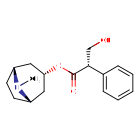
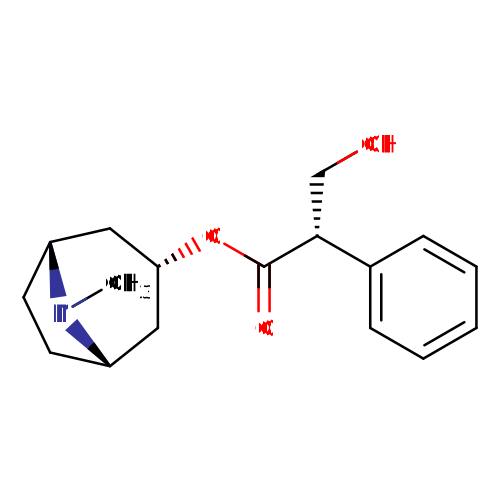
Structure for Hyoscyamine (DB00424)
- Weight
- Average: 289.3694
Monoisotopic: 289.167793607 - Chemical Formula
- C17H23NO3
- Synonyms
- (−)-atropine
- (−)-hyoscyamine
- (S)-(−)-hyoscyamine
- (S)-atropine
- [3(S)-endo]-α-(hydroxymethyl)benzeneacetic acid 8-methyl-8-azabicyclo[3.2.1]oct-3-yl ester
- Daturin
- Daturine
- Duboisine
- Hyoscyamin
- Hyoscyamine
- Hyoscyaminum
- L-Hyoscyamine
- L-Tropine tropate
- Tropine-L-tropate
Pharmacology
- Indication
As a drug that is not FDA approved, hyscyamine has no official indications.7,8 Intravenous hysocyamine has been used to reduce gastric motility, reduce pancreatic pain and secretions, to facilitate imaging of the gastrointestinal tract, treat anticholinesterase toxicity, treat certain cases of partial heart block, improve visualization of the kidneys, and for symptomatic relief of biliary and renal colic.7 Intravenous hyoscyamine is also used pre-operatively to reduce secretions of the mouth and respiratory tract to facilitate intubation.7 Oral hyoscyamine is used to treat functional intestinal disorders, for symptomatic relief of biliary and renal colic, and symptomatic relief of acute rhinitis.8
 Reduce drug development failure ratesBuild, train, & validate machine-learning modelswith evidence-based and structured datasets.Build, train, & validate predictive machine-learning models with structured datasets.
- Associated Conditions
Indication Type Indication Combined Product Details Approval Level Age Group Patient Characteristics Dose Form Treatment of Biliary colic •••••••••••• Treatment of Colic •••••••••••• Treatment of Cystitis •••••••••••• Management of Diverticulitis •••••••••••• ••••••• •••••• •••••••••••••• Treatment of Heart block •••••••••••• •••••••••• - Contraindications & Blackbox Warnings
 Prevent Adverse Drug Events TodayTap into our Clinical API for life-saving information on contraindications & blackbox warnings, population restrictions, harmful risks, & more.Avoid life-threatening adverse drug events with our Clinical API
- Pharmacodynamics
Hyoscyamine is not FDA approved, and so it has not official indications.7,8 However, it is used as an antimuscarinic agent in a number of treatments and therapies.7,8 Hyoscyamine has a short duration of action as it may need to be given multiple times per day.7,8 Patients should be counselled regarding the risks and signs of anticholinergic toxicity.7,8
- Mechanism of action
Hyoscyamine competitively and non-selectively antagonises muscarinic receptors in the smooth muscle, cardiac muscle, sino-atrial node, atrioventricular node, exocrine nodes, gastrointestinal tract, and respiratory tract.3,7,8 Antagonism of muscarinic M1, M4, and M5 receptors in the central nervous system lead to cognitive impairment; antagonism of M2 in the sinoatrial and atrioventricular nodes leads to increases in heart rate and atrial contractility; and antagonism of M3 in smooth muscle results in reduced peristalsis, bladder contraction, salivary secretions, gastric secretions, bronchial secretions, sweating, increased bronchodilation, mydriasis, and cycloplegia.3,4,5
Target Actions Organism AMuscarinic acetylcholine receptor M1 antagonistHumans AMuscarinic acetylcholine receptor M2 antagonistHumans UMuscarinic acetylcholine receptor M3 antagonistHumans UMuscarinic acetylcholine receptor M4 antagonistHumans UAdenylate cyclase type 1 inhibitorHumans - Absorption
Hyoscyamine is completely absorbed by sublingual and oral routes, though exact data regarding the Cmax, Tmax, and AUC are not readily available.7,8
- Volume of distribution
Not Available
- Protein binding
Not Available
- Metabolism
Hyoscyamine is largely unmetabolized, however a small amount is hydrolyzed into tropine and tropic acid.1,8
Hover over products below to view reaction partners
- Route of elimination
The majority of hyoscyamine is eliminated in the urine as the unmetabolized parent compound.7,8
- Half-life
- Clearance
Not Available
- Adverse Effects
 Improve decision support & research outcomesWith structured adverse effects data, including: blackbox warnings, adverse reactions, warning & precautions, & incidence rates. View sample adverse effects data in our new Data Library!Improve decision support & research outcomes with our structured adverse effects data.
- Toxicity
Patients experiencing an overdose may present with headache, nausea, vomiting, dizziness, dry mouth, difficulty in swallowing, dilated pupils, blurred vision, urinary retention, hot dry and flushed skin, tachycardia, hypertension, hypotension, respiratory depression, CNS stimulation, fever, ataxia, excitation, lethargy, stupor, coma, and paralysis.7,8 Patients should be treated with symptomatic and supportive therapy which may include emesis, gastric lavage, activated charcoal, artificial respiration, or intravenous physostigmine.2,7,8 Dialysis is expected to remove hyoscyamine sulfate from circulation.7,8
- Pathways
- Not Available
- Pharmacogenomic Effects/ADRs
- Not Available
Interactions
- Drug Interactions
- This information should not be interpreted without the help of a healthcare provider. If you believe you are experiencing an interaction, contact a healthcare provider immediately. The absence of an interaction does not necessarily mean no interactions exist.
Drug Interaction Integrate drug-drug
interactions in your softwareAcebutolol Hyoscyamine may increase the arrhythmogenic activities of Acebutolol. Acetophenazine Acetophenazine may increase the anticholinergic activities of Hyoscyamine. Acetyldigitoxin Hyoscyamine may increase the arrhythmogenic activities of Acetyldigitoxin. Aclidinium The risk or severity of adverse effects can be increased when Hyoscyamine is combined with Aclidinium. Acrivastine Acrivastine may increase the anticholinergic activities of Hyoscyamine. - Food Interactions
- Take before a meal. Take 30-60 minutes before a meal.
- Take separate from antacids. Take oral hyoscyamine before meals and antacids after meals.
Products
 Drug product information from 10+ global regionsOur datasets provide approved product information including:dosage, form, labeller, route of administration, and marketing period.Access drug product information from over 10 global regions.
- Product Ingredients
Ingredient UNII CAS InChI Key Hyoscyamine hydrobromide IWT50P9S79 306-03-6 VZDNSFSBCMCXSK-PGQIENJJSA-N Hyoscyamine sulfate OB570Z127K 620-61-1 Not applicable Hyoscyamine sulfate dihydrate F2R8V82B84 6835-16-1 BXSVDJUWKSRQMD-ITMJLNKNSA-N - Product Images
- International/Other Brands
- Acupaz (Glitz) / Anapaz (Hilton) / Atropen / Boots Travel Calm (Boots) / Buwecon (Yung Shin) / Cystospaz / Cytospaz (Amerifit) / Donnamar / Egazil (BioPhausia) / Levsinex / Symax (Capellon)
- Brand Name Prescription Products
Name Dosage Strength Route Labeller Marketing Start Marketing End Region Image Anaspaz Tablet, orally disintegrating 0.125 mg/1 Oral; Sublingual BF ASCHER AND CO INC 1973-01-02 Not applicable US 
Anaspaz Tablet, orally disintegrating 0.125 mg/1 Oral; Sublingual Physicians Total Care, Inc. 1973-01-02 2011-06-30 US Ed-spaz Tablet, orally disintegrating 0.125 mg/1 Oral EDWARDS PHARMACEUTICALS, INC. 2010-05-12 Not applicable US HyoMax Tablet .125 mg/1 Oral Aristos Phamaceuticals, Inc. 2009-10-08 2010-12-31 US HyoMax-DT Tablet 0.375 mg/1 Oral Aristos Phamaceuticals, Inc. 2008-07-19 2012-10-31 US 
- Mixture Products
Name Ingredients Dosage Route Labeller Marketing Start Marketing End Region Image Calmitol Itching Relief Ont Hyoscyamine (.0001 %) + Camphor (.62 %) + Chloral hydrate (.496 %) + Levomenthol (.58 %) + Zinc oxide (12.5 %) Ointment Topical Pfizer Canada Inc., Consumer Healthcare Division 1964-12-31 1996-09-09 Canada 
Diban Cap Hyoscyamine sulfate (0.0519 mg) + Atropine sulfate (9.7 mcg) + Attapulgite (300 mg) + Opium (12 mg) + Pectin (71.4 mg) + Scopolamine (3.3 mcg) Capsule Oral Wyeth Ayerst Canada Inc. 1998-02-18 2001-01-30 Canada Diban Cap Hyoscyamine sulfate (0.0519 mg) + Atropine sulfate (9.7 mcg) + Attapulgite (300 mg) + Opium (12 mg) + Pectin (71.4 mg) + Scopolamine (3.3 mcg) Capsule Oral Ayerst Laboratories 1992-12-31 1999-04-12 Canada Donnagel Liq Hyoscyamine sulfate (0.1037 mg / 30 mL) + Atropine sulfate (0.0194 mg / 30 mL) + Kaolin (6 g / 30 mL) + Pectin (142.8 mg / 30 mL) + Scopolamine (6.5 mcg / 30 mL) Liquid Oral Ayerst Laboratories 1993-12-31 1996-09-10 Canada Donnagel Liq Hyoscyamine sulfate (0.1037 mg / 30 mL) + Atropine sulfate (0.0194 mg / 30 mL) + Kaolin (6 g / 30 mL) + Pectin (142.8 mg / 30 mL) + Scopolamine (6.5 mcg / 30 mL) Liquid Oral Wyeth Ayerst Canada Inc. 1995-12-31 1997-08-14 Canada - Unapproved/Other Products
Name Ingredients Dosage Route Labeller Marketing Start Marketing End Region Image Anaspaz Hyoscyamine sulfate dihydrate (0.125 mg/1) Tablet, orally disintegrating Oral; Sublingual Physicians Total Care, Inc. 1973-01-02 2011-06-30 US Anaspaz Hyoscyamine sulfate dihydrate (0.125 mg/1) Tablet, orally disintegrating Oral; Sublingual BF ASCHER AND CO INC 1973-01-02 Not applicable US Azuphen Mb Hyoscyamine sulfate dihydrate (0.12 mg/1) + Methenamine (120 mg/1) + Methylene blue trihydrate (10 mg/1) + Phenyl salicylate (36 mg/1) + Sodium phosphate, monobasic, monohydrate (40.8 mg/1) Capsule Oral Burel Pharmaceuticals, Llc 2015-09-28 2016-11-01 US B-Donna Hyoscyamine sulfate dihydrate (0.1037 mg/1) + Atropine sulfate (0.0194 mg/1) + Phenobarbital (16.2 mg/1) + Scopolamine (0.0065 mg/1) Tablet Oral Winder Laboratories, LLC 2015-12-30 2016-03-03 US Belladonna Alkaloids with Phenobarbital Hyoscyamine sulfate dihydrate (0.1037 mg/1) + Atropine sulfate (0.0194 mg/1) + Phenobarbital (16.2 mg/1) + Scopolamine (0.0065 mg/1) Tablet Oral bryant ranch prepack 1966-01-01 2015-05-01 US


Categories
- ATC Codes
- A03BA03 — Hyoscyamine
- A03BA — Belladonna alkaloids, tertiary amines
- A03B — BELLADONNA AND DERIVATIVES, PLAIN
- A03 — DRUGS FOR FUNCTIONAL GASTROINTESTINAL DISORDERS
- A — ALIMENTARY TRACT AND METABOLISM
- Drug Categories
- Adjuvants, Anesthesia
- Agents producing tachycardia
- Alimentary Tract and Metabolism
- Alkaloids
- Anti-Asthmatic Agents
- Antiarrhythmic agents
- Anticholinergic Agents
- Atropine Derivatives
- Autonomic Agents
- Aza Compounds
- Azabicyclo Compounds
- Belladonna Alkaloids
- Belladonna Alkaloids, Tertiary Amines
- Belladonna and Derivatives, Plain
- Bronchodilator Agents
- Cardiovascular Agents
- Central Nervous System Agents
- Cholinergic Agents
- Drugs for Functional Gastrointestinal Disorders
- Muscarinic Antagonists
- Mydriatics
- Neurotransmitter Agents
- Parasympatholytics
- Peripheral Nervous System Agents
- Potential QTc-Prolonging Agents
- QTc Prolonging Agents
- Respiratory System Agents
- Solanaceous Alkaloids
- Tropanes
- Chemical TaxonomyProvided by Classyfire
- Description
- This compound belongs to the class of organic compounds known as tropane alkaloids. These are organic compounds containing the nitrogenous bicyclic alkaloid parent N-Methyl-8-azabicyclo[3.2.1]octane.
- Kingdom
- Organic compounds
- Super Class
- Alkaloids and derivatives
- Class
- Tropane alkaloids
- Sub Class
- Not Available
- Direct Parent
- Tropane alkaloids
- Alternative Parents
- Beta hydroxy acids and derivatives / Piperidines / N-alkylpyrrolidines / Benzene and substituted derivatives / Trialkylamines / Carboxylic acid esters / Amino acids and derivatives / Monocarboxylic acids and derivatives / Azacyclic compounds / Primary alcohols show 4 more
- Substituents
- Alcohol / Amine / Amino acid or derivatives / Aromatic heteropolycyclic compound / Azacycle / Benzenoid / Beta-hydroxy acid / Carbonyl group / Carboxylic acid derivative / Carboxylic acid ester show 18 more
- Molecular Framework
- Aromatic heteropolycyclic compounds
- External Descriptors
- tropan-3alpha-yl 3-hydroxy-2-phenylpropanoate (CHEBI:17486) / Tropane alkaloids, Tropan alkaloids (C02046)
- Affected organisms
- Humans and other mammals
Chemical Identifiers
- UNII
- PX44XO846X
- CAS number
- 101-31-5
- InChI Key
- RKUNBYITZUJHSG-FXUDXRNXSA-N
- InChI
- InChI=1S/C17H23NO3/c1-18-13-7-8-14(18)10-15(9-13)21-17(20)16(11-19)12-5-3-2-4-6-12/h2-6,13-16,19H,7-11H2,1H3/t13-,14+,15+,16-/m1/s1
- IUPAC Name
- (1R,3S,5S)-8-methyl-8-azabicyclo[3.2.1]octan-3-yl (2S)-3-hydroxy-2-phenylpropanoate
- SMILES
- CN1[C@H]2CC[C@@H]1C[C@@H](C2)OC(=O)[C@H](CO)C1=CC=CC=C1
References
- Synthesis Reference
Jeffrey Kiel, H. Thomas, Emily Ware, Brady Ware, "Phenolic acid complexes of hyoscyamine and process for preparing the same." U.S. Patent US20060128637, issued June 15, 2006.
US20060128637- General References
- Evans WC, Ghani A, Treagust PG: Proceedings: Preliminary studies concerning the metabolism of hyoscine and hyoscyamine in the Solanaceae. J Pharm Pharmacol. 1974 Dec;26 Suppl:112P. doi: 10.1111/j.2042-7158.1974.tb10143.x. [Article]
- Kohnen-Johannsen KL, Kayser O: Tropane Alkaloids: Chemistry, Pharmacology, Biosynthesis and Production. Molecules. 2019 Feb 22;24(4). pii: molecules24040796. doi: 10.3390/molecules24040796. [Article]
- Naji A, Gatling JW: Muscarinic Antagonists . [Article]
- Cheshire WP, Fealey RD: Drug-induced hyperhidrosis and hypohidrosis: incidence, prevention and management. Drug Saf. 2008;31(2):109-26. doi: 10.2165/00002018-200831020-00002. [Article]
- Mitchelson F: Muscarinic receptor agonists and antagonists: effects on ocular function. Handb Exp Pharmacol. 2012;(208):263-98. doi: 10.1007/978-3-642-23274-9_12. [Article]
- Reisinger F: On the Effects of Hyoscyamine and Atropia. Edinb Med Surg J. 1826 Oct 1;26(89):276-279. [Article]
- Dailymed: Hyoscyamine Subcutaneous Injection [Link]
- Dailymed: Anaspaz (Hyoscyamine) Orally Disintegrating Tablet [Link]
- External Links
- Human Metabolome Database
- HMDB0014568
- KEGG Drug
- D00147
- KEGG Compound
- C02046
- PubChem Compound
- 154417
- PubChem Substance
- 46507345
- ChemSpider
- 10246417
- BindingDB
- 50239982
- 153970
- ChEBI
- 17486
- ChEMBL
- CHEMBL1331216
- ZINC
- ZINC000100009280
- Therapeutic Targets Database
- DNC000758
- PharmGKB
- PA164776844
- PDBe Ligand
- HYO
- RxList
- RxList Drug Page
- Drugs.com
- Drugs.com Drug Page
- Wikipedia
- Hyoscyamine
- PDB Entries
- 6ttm / 6ttn / 8cv8 / 8cv9 / 8cve / 8cvf
- MSDS
- Download (73.4 KB)
Clinical Trials
- Clinical Trials
Phase Status Purpose Conditions Count 4 Terminated Treatment Lower Urinary Tract Symptoms (LUTS) 1 4 Unknown Status Prevention Bradycardia / Hypoxemia 1 1 Completed Treatment Organophosphorus Poisoning 1 Not Available Completed Supportive Care Sialorrhea 1 Not Available Completed Treatment Dyspepsia / Functional Abdominal Pain / Functional Gastrointestinal Disorders (FGID) / Irritable Bowel Syndrome (IBS) 1
Pharmacoeconomics
- Manufacturers
- Not Available
- Packagers
- Advanced Pharmaceutical Services Inc.
- AG Marin Pharmaceuticals
- Alaven Pharmaceutical
- Allaire Pharmaceuticals
- Alphagen Laboratories Inc.
- Amerifit Inc.
- Amerisource Health Services Corp.
- Apicore LLC
- Apotheca Inc.
- Aristos Pharmaceuticals
- Atlantic Biologicals Corporation
- BF Ascher & Co.
- Breckenridge Pharmaceuticals
- Capellon Pharmaceuticals LLC
- Cardinal Health
- Cima Laboratories Inc.
- Concord Labs
- Contract Pharm
- County Line Pharmaceuticals LLC
- Cypress Pharmaceutical Inc.
- Dayton Pharmaceuticals
- Dispensing Solutions
- Diversified Healthcare Services Inc.
- Duramed
- Econolab Inc.
- Edwards Pharmaceuticals
- Equipharm Inc.
- Eros Pharma Private Ltd.
- Ethex Corp.
- Excellium Pharmaceutical Inc.
- Franklin Pharmaceutical LLC
- Great Southern Laboratories
- Hi Tech Pharmacal Co. Inc.
- Iopharm Laboratories Inc.
- Jerome Stevens Pharmaceuticals Inc.
- Kaiser Foundation Hospital
- KV Pharmaceutical Co.
- Kylemore Pharmaceuticals
- Liberty Pharmaceuticals
- Major Pharmaceuticals
- Marlop Pharmaceuticals Inc.
- Mckesson Corp.
- Med Tek Pharmaceuticals Inc.
- Murfreesboro Pharmaceutical Nursing Supply
- Nucare Pharmaceuticals Inc.
- Paddock Labs
- Palmetto Pharmaceuticals Inc.
- PCA LLC
- Physicians Total Care Inc.
- Prasco Labs
- Prescript Pharmaceuticals
- Provident Pharmaceuticals LLC
- Qualitest
- RA McNeil Co.
- Resource Optimization and Innovation LLC
- River's Edge Pharmaceuticals
- Sandhills Packaging Inc.
- Schwarz Pharma Inc.
- Seton Pharmaceuticals LLC
- Silarx Pharmaceuticals
- Southwood Pharmaceuticals
- Sovereign Pharmaceuticals Ltd.
- Spectrum Pharmaceuticals
- Sunrise Pharmaceutical Inc.
- Taylor Pharmaceuticals
- United Research Laboratories Inc.
- Vintage Pharmaceuticals Inc.
- Vision Pharma LLC
- Dosage Forms
Form Route Strength Tablet, orally disintegrating Oral; Sublingual 0.125 mg/1 Ointment Topical Tablet Oral Liquid Oral Tablet, extended release Oral Tablet, film coated, extended release Oral Tablet Oral .125 mg/1 Liquid Oral 0.125 mg/5mL Liquid Oral 0.125 mg/1mL Tablet Sublingual 0.125 mg/1 Elixir Oral 0.125 mg/5mL Elixir Oral 25 mg/1mL Solution Oral 0.125 mg/1mL Solution / drops Oral 0.125 mg/1mL Tablet Oral 0.125 mg/1 Tablet Oral 0.15 mg/1 Tablet Oral 0.375 mg/1 Tablet Oral; Sublingual 0.125 mg/1 Tablet, extended release Oral 0.375 mg/1 Tablet, multilayer Oral .375 mg/1 Tablet, orally disintegrating Oral 0.125 mg/1 Tablet, orally disintegrating Sublingual 0.125 mg/1 Tablet, soluble Oral 0.125 mg/1 Injection, solution Subcutaneous 0.5 mg/1mL Tablet Oral 0.125 mg Solution / drops Oral 0.125 mg / mL Tablet, chewable Oral 0.125 mg/1 Tablet, coated Oral Elixir Oral Capsule Oral Tablet, multilayer, extended release Oral 0.375 mg/1 Tablet, sugar coated Oral - Prices
Unit description Cost Unit Levsin 0.125 mg/ml Solution 15ml Bottle 49.09USD bottle Levsin 0.5 mg/ml ampul 27.33USD ml Hyoscyamine sulfate powder 25.69USD g Symax Duotab 0.375 mg Controlled Release Tabs 3.73USD tab Symax-SL 0.125 mg Sublingual Tabs 3.29USD tab Symax duotab 2.4USD tablet Levbid 0.375 mg 12 Hour tablet 2.12USD tablet Levbid er 0.375 mg tablet 2.09USD tablet Hyoscyamine Sulfate CR 0.375 mg 12 Hour tablet 1.66USD tablet Levbid 0.375 mg tablet sa 1.44USD tablet Symax-sr 0.375 mg tablet 1.4USD tablet Levsin/SL 0.125 mg Sublingual Tabs 1.24USD tab Symax fastabs 0.125 mg tablet 1.21USD tablet Symax-sl 0.125 mg tablet sl 1.17USD tablet Levsin 0.125 mg tablet 1.08USD tablet Levsin-sl 0.125 mg tablet sl 0.97USD tablet Hyoscyamine Sulfate 0.125 mg tablet 0.93USD tablet Nulev 0.125 mg tablet 0.91USD tablet Hyoscyamine Sulfate 0.125 mg Sublingual Tabs 0.88USD tab Hyomax-sl 0.125 mg tablet sl 0.86USD tablet Hyoscyamine Sulfate 0.125 mg Dispersible Tablet 0.83USD dispersible tablet Hyoscyamine sulf 0.125 mg tablet 0.79USD tablet Hyoscyamine su 0.125 mg tablet 0.64USD tablet Hyoscyamine 0.125 mg tablet sl 0.53USD tablet Hyoscyamine sul 0.15 mg tablet sl 0.39USD tablet Anaspaz 0.125 mg Dispersible Tablet 0.36USD dispersible tablet Levsin 0.125 mg/5ml Elixir 0.29USD ml Anaspaz 0.125 mg tablet sl 0.26USD tablet DrugBank does not sell nor buy drugs. Pricing information is supplied for informational purposes only.- Patents
- Not Available
Properties
- State
- Solid
- Experimental Properties
Property Value Source melting point (°C) 108.5 °C PhysProp water solubility 3560 mg/L (at 20 °C) MERCK INDEX (1996); pH 9.5 logS -1.91 ADME Research, USCD pKa 11.7 MERCK INDEX (1996) - Predicted Properties
Property Value Source logP 1.57 Chemaxon pKa (Strongest Acidic) 15.15 Chemaxon pKa (Strongest Basic) 9.39 Chemaxon Physiological Charge 1 Chemaxon Hydrogen Acceptor Count 3 Chemaxon Hydrogen Donor Count 1 Chemaxon Polar Surface Area 49.77 Å2 Chemaxon Rotatable Bond Count 5 Chemaxon Refractivity 80.82 m3·mol-1 Chemaxon Polarizability 31.74 Å3 Chemaxon Number of Rings 3 Chemaxon Bioavailability 1 Chemaxon Rule of Five Yes Chemaxon Ghose Filter Yes Chemaxon Veber's Rule No Chemaxon MDDR-like Rule No Chemaxon - Predicted ADMET Features
Property Value Probability Human Intestinal Absorption + 0.9286 Blood Brain Barrier + 0.9569 Caco-2 permeable + 0.8866 P-glycoprotein substrate Substrate 0.5 P-glycoprotein inhibitor I Non-inhibitor 0.6542 P-glycoprotein inhibitor II Non-inhibitor 0.8595 Renal organic cation transporter Inhibitor 0.7956 CYP450 2C9 substrate Non-substrate 0.7041 CYP450 2D6 substrate Non-substrate 0.6838 CYP450 3A4 substrate Substrate 0.5496 CYP450 1A2 substrate Non-inhibitor 0.9045 CYP450 2C9 inhibitor Non-inhibitor 0.9275 CYP450 2D6 inhibitor Non-inhibitor 0.9231 CYP450 2C19 inhibitor Non-inhibitor 0.9285 CYP450 3A4 inhibitor Non-inhibitor 0.95 CYP450 inhibitory promiscuity Low CYP Inhibitory Promiscuity 0.9113 Ames test Non AMES toxic 0.7742 Carcinogenicity Non-carcinogens 0.9631 Biodegradation Ready biodegradable 0.5527 Rat acute toxicity 2.7305 LD50, mol/kg Not applicable hERG inhibition (predictor I) Weak inhibitor 0.8354 hERG inhibition (predictor II) Inhibitor 0.5378
Spectra
- Mass Spec (NIST)
- Download (8.14 KB)
- Spectra
- Chromatographic Properties
Collision Cross Sections (CCS)
Adduct CCS Value (Å2) Source type Source [M-H]- 179.097358 predictedDarkChem Lite v0.1.0 [M-H]- 180.646958 predictedDarkChem Lite v0.1.0 [M-H]- 167.79716 predictedDeepCCS 1.0 (2019) [M-H]- 179.097358 predictedDarkChem Lite v0.1.0 [M-H]- 180.646958 predictedDarkChem Lite v0.1.0 [M-H]- 179.097358 predictedDarkChem Lite v0.1.0 [M-H]- 180.646958 predictedDarkChem Lite v0.1.0 [M-H]- 167.79716 predictedDeepCCS 1.0 (2019) [M-H]- 167.79716 predictedDeepCCS 1.0 (2019) [M+H]+ 178.949158 predictedDarkChem Lite v0.1.0 [M+H]+ 180.944958 predictedDarkChem Lite v0.1.0 [M+H]+ 170.15515 predictedDeepCCS 1.0 (2019) [M+H]+ 178.949158 predictedDarkChem Lite v0.1.0 [M+H]+ 180.944958 predictedDarkChem Lite v0.1.0 [M+H]+ 178.949158 predictedDarkChem Lite v0.1.0 [M+H]+ 180.944958 predictedDarkChem Lite v0.1.0 [M+H]+ 170.15515 predictedDeepCCS 1.0 (2019) [M+H]+ 170.15515 predictedDeepCCS 1.0 (2019) [M+Na]+ 178.756058 predictedDarkChem Lite v0.1.0 [M+Na]+ 180.180958 predictedDarkChem Lite v0.1.0 [M+Na]+ 176.88173 predictedDeepCCS 1.0 (2019) [M+Na]+ 178.756058 predictedDarkChem Lite v0.1.0 [M+Na]+ 180.180958 predictedDarkChem Lite v0.1.0 [M+Na]+ 178.756058 predictedDarkChem Lite v0.1.0 [M+Na]+ 180.180958 predictedDarkChem Lite v0.1.0 [M+Na]+ 176.88173 predictedDeepCCS 1.0 (2019) [M+Na]+ 176.88173 predictedDeepCCS 1.0 (2019)
Targets

- Kind
- Protein
- Organism
- Humans
- Pharmacological action
- Yes
- Actions
- Antagonist
- General Function
- Phosphatidylinositol phospholipase c activity
- Specific Function
- The muscarinic acetylcholine receptor mediates various cellular responses, including inhibition of adenylate cyclase, breakdown of phosphoinositides and modulation of potassium channels through the...
- Gene Name
- CHRM1
- Uniprot ID
- P11229
- Uniprot Name
- Muscarinic acetylcholine receptor M1
- Molecular Weight
- 51420.375 Da
References
- Overington JP, Al-Lazikani B, Hopkins AL: How many drug targets are there? Nat Rev Drug Discov. 2006 Dec;5(12):993-6. [Article]
- Imming P, Sinning C, Meyer A: Drugs, their targets and the nature and number of drug targets. Nat Rev Drug Discov. 2006 Oct;5(10):821-34. [Article]
- Huang XP, Williams FE, Peseckis SM, Messer WS Jr: Pharmacological characterization of human m1 muscarinic acetylcholine receptors with double mutations at the junction of TM VI and the third extracellular domain. J Pharmacol Exp Ther. 1998 Sep;286(3):1129-39. [Article]
- Kind
- Protein
- Organism
- Humans
- Pharmacological action
- Yes
- Actions
- Antagonist
- General Function
- G-protein coupled acetylcholine receptor activity
- Specific Function
- The muscarinic acetylcholine receptor mediates various cellular responses, including inhibition of adenylate cyclase, breakdown of phosphoinositides and modulation of potassium channels through the...
- Gene Name
- CHRM2
- Uniprot ID
- P08172
- Uniprot Name
- Muscarinic acetylcholine receptor M2
- Molecular Weight
- 51714.605 Da
References
- Overington JP, Al-Lazikani B, Hopkins AL: How many drug targets are there? Nat Rev Drug Discov. 2006 Dec;5(12):993-6. [Article]
- Imming P, Sinning C, Meyer A: Drugs, their targets and the nature and number of drug targets. Nat Rev Drug Discov. 2006 Oct;5(10):821-34. [Article]
- Lysikova M, Havlas Z, Tucek S: Interactions between allosteric modulators and 4-DAMP and other antagonists at muscarinic receptors: potential significance of the distance between the N and carboxyl C atoms in the molecules of antagonists. Neurochem Res. 2001 Apr;26(4):383-94. [Article]
- Kind
- Protein
- Organism
- Humans
- Pharmacological action
- Unknown
- Actions
- Antagonist
- General Function
- Receptor activity
- Specific Function
- The muscarinic acetylcholine receptor mediates various cellular responses, including inhibition of adenylate cyclase, breakdown of phosphoinositides and modulation of potassium channels through the...
- Gene Name
- CHRM3
- Uniprot ID
- P20309
- Uniprot Name
- Muscarinic acetylcholine receptor M3
- Molecular Weight
- 66127.445 Da
References
- Lysikova M, Havlas Z, Tucek S: Interactions between allosteric modulators and 4-DAMP and other antagonists at muscarinic receptors: potential significance of the distance between the N and carboxyl C atoms in the molecules of antagonists. Neurochem Res. 2001 Apr;26(4):383-94. [Article]
- Kind
- Protein
- Organism
- Humans
- Pharmacological action
- Unknown
- Actions
- Antagonist
- General Function
- Guanyl-nucleotide exchange factor activity
- Specific Function
- The muscarinic acetylcholine receptor mediates various cellular responses, including inhibition of adenylate cyclase, breakdown of phosphoinositides and modulation of potassium channels through the...
- Gene Name
- CHRM4
- Uniprot ID
- P08173
- Uniprot Name
- Muscarinic acetylcholine receptor M4
- Molecular Weight
- 53048.65 Da
References
- Lysikova M, Havlas Z, Tucek S: Interactions between allosteric modulators and 4-DAMP and other antagonists at muscarinic receptors: potential significance of the distance between the N and carboxyl C atoms in the molecules of antagonists. Neurochem Res. 2001 Apr;26(4):383-94. [Article]
- Kind
- Protein
- Organism
- Humans
- Pharmacological action
- Unknown
- Actions
- Inhibitor
- General Function
- Metal ion binding
- Specific Function
- Catalyzes the formation of the signaling molecule cAMP in response to G-protein signaling. Mediates responses to increased cellular Ca(2+)/calmodulin levels (By similarity). May be involved in regu...
- Gene Name
- ADCY1
- Uniprot ID
- Q08828
- Uniprot Name
- Adenylate cyclase type 1
- Molecular Weight
- 123438.85 Da
References
- Ricny J, Gualtieri F, Tucek S: Constitutive inhibitory action of muscarinic receptors on adenylyl cyclase in cardiac membranes and its stereospecific suppression by hyoscyamine. Physiol Res. 2002;51(2):131-7. [Article]


Drug created at June 13, 2005 13:24 / Updated at April 26, 2024 00:16