Identification
- Summary
Pentoxifylline is a methylxanthine derivative used to treat intermittent claudication caused by chronic occlusive arterial disease of the limbs.
- Generic Name
- Pentoxifylline
- DrugBank Accession Number
- DB00806
- Background
Pentoxifylline (PTX) is a synthetic dimethylxanthine derivative that modulates the rheological properties of blood and also has both anti-oxidant and anti-inflammatory properties.2,29 Although originally developed to treat intermittent claudication, a form of exertion-induced leg pain common in patients with peripheral arterial disease, PTX has been investigated for its possible use in diverse conditions, including osteoradionecrosis, diabetic kidney disease, and generally any condition associated with fibrosis.1,2,13 More recently, PTX has been suggested as a possible treatment for COVID-19-induced pulmonary complications due to its ability to regulate the production of inflammatory cytokines.28
Pentoxifylline has been marketed in Europe since 1972; PTX extended-release tablets sold under the trade name TRENTAL by US Pharm Holdings were first approved by the FDA on Aug 30, 1984, but have since been discontinued. A branded product, PENTOXIL, marketed by Upsher-Smith Laboratories, and generic forms marketed by Valeant Pharmaceuticals and APOTEX have been available since the late 1990s.29
- Type
- Small Molecule
- Groups
- Approved, Investigational
- Structure
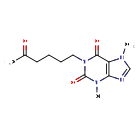
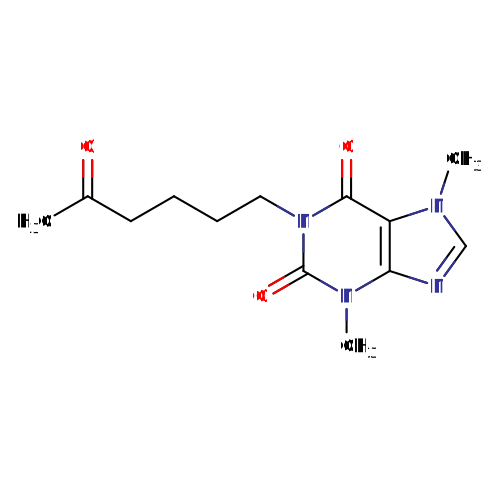
Structure for Pentoxifylline (DB00806)
- Weight
- Average: 278.307
Monoisotopic: 278.137890462 - Chemical Formula
- C13H18N4O3
- Synonyms
- Oxpentifylline
- Pentoxifilina
- Pentoxifyllin
- Pentoxifylline
- Pentoxifyllinum
- External IDs
- BL 191
- BL-191
- C04AD03
- PTX

Pharmacology
- Indication
Pentoxifylline is indicated for the treatment of intermittent claudication in patients with chronic occlusive arterial disease. Pentoxifylline may improve limb function and reduce symptoms but cannot replace other therapies such as surgical bypass or removal of vascular obstructions.29
 Reduce drug development failure ratesBuild, train, & validate machine-learning modelswith evidence-based and structured datasets.Build, train, & validate predictive machine-learning models with structured datasets.
- Associated Conditions
Indication Type Indication Combined Product Details Approval Level Age Group Patient Characteristics Dose Form Management of Alcoholic liver disease ••• ••••• Management of Intermittent claudication •••••••••••• •••••• Management of Venous leg ulcer ••• ••••• - Contraindications & Blackbox Warnings
 Prevent Adverse Drug Events TodayTap into our Clinical API for life-saving information on contraindications & blackbox warnings, population restrictions, harmful risks, & more.Avoid life-threatening adverse drug events with our Clinical API
- Pharmacodynamics
Pentoxifylline, a synthetic dimethylxanthine derivative structurally related to theophylline and caffeine, exhibits hemorheological, anti-oxidative, and anti-inflammatory properties and is traditionally indicated in the treatment of peripheral arterial disease (PAD). In PAD patients with concurrent cerebrovascular and coronary artery diseases, pentoxifylline treatment has occasionally been associated with angina, arrhythmia, and hypotension. Concurrent use with warfarin should be associated with more frequent monitoring of prothrombin times. Also, patients with risk factors complicated by hemorrhages, such as retinal bleeding, peptic ulceration, and recent surgery, should be monitored periodically for bleeding signs.29
- Mechanism of action
Patients with peripheral arterial disease (PAD) may suffer from intermittent claudication, exertional leg pain that resolves upon rest, which is underscored by a complex etiology including vascular dysfunction (reduced limb perfusion, angiogenesis, and microcirculatory flow), systemic inflammation, and skeletal muscle dysfunction.1 Pentoxifylline (PTX), (3,7-dimethyl-1-(5-oxohexyl)-3,7-dihydro-1H-purine-2,6-dione) or 1-(5-oxohexyl)-3,7-dimethylxanthine, is a methyl-xanthine derivative that acts to lower blood viscosity by increasing erythrocyte flexibility, reducing plasma fibrinogen, inhibiting neutrophil activation, and suppressing erythrocyte/platelet aggregation; it also has antioxidant and anti-inflammatory effects.2,29 Although the precise mechanism of action has yet to be elucidated, numerous studies have suggested several effects of PTX.
The classical interpretation of PTX's broad effects is due to its ability to act, in vitro, as a non-specific cyclic-3',5'-phosphodiesterase (PDE) inhibitor at millimolar concentrations; specifically, it has been proposed that inhibition of PDE type III and IV isozymes leads to elevated cyclic adenosine monophosphate (cAMP) levels, which mediate diverse downstream effects.3,4,5 This view has been challenged, specifically by observing those plasma concentrations of PTX in routine clinical use are typically only around 1μM, far lower than those used to inhibit PDEs in vitro.5 Instead, several studies have suggested that PTX can modulate adenosine receptor function, specifically the Gα-coupled A2A receptor (A2AR). Whether PTX acts directly as an A2AR agonist is unclear, although it can clearly increase the response of A2AR to adenosine.6,7,8,9 A2AR activation activates adenylyl cyclase, which increases intracellular cAMP levels; this observation may explain PTX's ability to increase intracellular cAMP in a PDE-independent fashion.10
Elevated cAMP levels have numerous downstream effects. cAMP-mediated activation of protein kinase A (PKA) suppresses nuclear translocation of NF-κB, which suppresses transcription of pro-inflammatory cytokines such as tumour necrosis factor (TNF-α), interleukin-1 (IL-1), and IL-6 as well as TNF-induced molecules such as adhesion molecules (ICAM1 and VCAM1) and the C-reactive protein (CRP).2,11,12,13 PTX has also been shown to prevent the downstream phosphorylation of p38 MAPK and ERK, which are responsible for assembling the NADPH oxidase involved in the neutrophil oxidative burst. This effect is due to a PKA-independent decrease in Akt phosphorylation and a PKA-dependent decrease in phosphorylation of p38 MAPK and ERK.12,15,16 This transcriptional regulation at least partially explains the anti-inflammatory and anti-oxidative properties of PTX.
Also, activated PKA can activate the cAMP response element-binding protein (CREB), which itself blocks SMAD-driven gene transcription, effectively disrupting transforming growth factor (TGF-β1) signalling.10,17 This results in lower levels of fibrinogenic molecules such as collagens, fibronectin, connective tissue growth factor, and alpha-smooth muscle actin.10,12,17,14 Hence, disruption of TGF-β1 signalling may explain the anti-fibrotic effects of PTX, including at least some of the decrease in blood viscosity.
The picture is complicated by the observation that PTX metabolites M1, M4, and M5 have been shown to inhibit C5 Des Arg- and formyl-methionylleucylphenylalanine-induced superoxide production in neutrophils and M1 and M5 significantly contribute to PTX's observed hemorheological effects.2,5,18 Overall, PTX administration is associated with decreased pro-inflammatory molecules, an increase in anti-inflammatory molecules such as IL-10, and decreased production of fibrinogenic and cellular adhesion molecules.
Target Actions Organism AAdenosine receptor A2a agonistHumans APhosphodiesterase enzymes inhibitorHumans UAdenosine receptor A1 Not Available Humans U5'-nucleotidase inhibitorHumans - Absorption
Oral pentoxifylline (PTX) is almost completely absorbed but has low bioavailability of 20-30% due to extensive first-pass metabolism; three of the seven known metabolites, M1, M4, and M5 are present in plasma and appear soon after dosing.22,23,29 Single oral doses of 100, 200, and 400 mg of pentoxifylline in healthy males produced a mean tmax of 0.29-0.41 h, a mean Cmax of 272-1607 ng/mL, and a mean AUC0-∞ of 193-1229 ng*h/mL; corresponding ranges for metabolites 1, 4, and 5 were 0.72-1.15, 114-2753, and 189-7057.19 Single administration of a 400 mg extended-release tablet resulted in a heightened tmax of 2.08 ± 1.16 h, lowered Cmax of 55.33 ± 22.04 ng/mL, and a comparable AUC0-t of 516 ± 165 ng*h/mL; all these parameters were increased in cirrhotic patients.20
Smoking was associated with a decrease in the Cmax and AUCsteady-state of metabolite M1 but did not dramatically affect the pharmacokinetic parameters of pentoxifylline or other measured metabolites.21 Renal impairment increases the mean Cmax, AUC, and ratio to parent compound AUC of metabolites M4 and M5, but has no significant effect on PTX or M1 pharmacokinetics.22 Finally, similar to cirrhotic patients, the Cmax and tmax of PTX and its metabolites are increased in patients with varying degrees of chronic heart failure.23
Overall, metabolites M1 and M5 exhibit plasma concentrations roughly five and eight times greater than PTX, respectively. PTX and M1 pharmacokinetics are approximately dose-dependent, while those of M5 are not. Food intake before PTX ingestion delays time to peak plasma concentrations but not overall absorption. Extended-release forms of PTX extend the tmax to between two and four hours but also serves to ameliorate peaks and troughs in plasma concentration over time.29
- Volume of distribution
Pentoxifylline has a volume of distribution of 4.15 ± 0.85 following a single intravenous 100 mg dose in healthy subjects.20
- Protein binding
Pentoxifylline is approximately 45% bound to erythrocyte membranes.22
- Metabolism
Pentoxifylline (PTX) metabolism is incompletely understood. There are seven known metabolites (M1 through M7), although only M1, M4, and M5 are detected in plasma at appreciable levels, following the general pattern M5 > M1 > PTX > M4.2,29 As PTX apparent clearance is higher than hepatic blood flow and the AUC ratio of M1 to PTX is not appreciably different in cirrhotic patients, it is clear that erythrocytes are the main site of PTX-M1 interconversion. However, the reaction likely occurs in the liver as well.20,24,25 PTX is reduced in an NADPH-dependent manner by unknown an unidentified carbonyl reductase to form either lisofylline (the (R)-M1 enantiomer) or (S)-M1; the reaction is stereoselective, producing (S)-M1 exclusively in liver cytosol, 85% (S)-M1 in liver microsomes, and a ratio of 0.010-0.025 R:S-M1 after IV or oral dosing in humans.24,25 Although both (R)- and (S)-M1 can be oxidized back into PTX, (R)-M1 can also give rise to M2 and M3 in liver microsomes.24,25 In vitro studies suggest that CYP1A2 is at least partly responsible for the conversion of lisofylline ((R)-M1) back into PTX.26 Unlike the reversible oxidation/reduction of PTX and its M1 metabolites, M4 and M5 are formed via irreversible oxidation of PTX in the liver.19,22,23,24,25 Studies in mice recapitulating the PTX-ciprofloxacin drug reaction suggest that CYP1A2 is responsible for the formation of M6 from PTX and of M7 from M1, both through de-methylation at position 7.27 In general, metabolites M2, M3, and M6 are formed at very low levels in mammals.19
Hover over products below to view reaction partners
- Route of elimination
Pentoxifylline is eliminated almost entirely in the urine and predominantly as M5, which accounts for between 57 and 65 percent of the administered dose. Smaller amounts of M4 are recovered, while M1 and the parent compound account for less than 1% of the recovered dose. The fecal route accounts for less than 4% of the administered dose.2,19,29
- Half-life
Overall, pentoxifylline has an elimination half-life of between 0.39 and 0.84 hours, while its primary metabolites have elimination half-lives of between 0.96 and 1.61 hours.2
- Clearance
Pentoxifylline given as a single 100 mg intravenous infusion has a clearance of 3.62 ± 0.75 L/h/kg in healthy subjects, which decreased to 1.44 ± 0.46 L/h/kg in cirrhotic patients.20 In another study, the apparent clearance of either 300 or 600 mg of pentoxifylline given intravenously (median and range) was 4.2 (2.8-6.3) and 4.1 (2.3-4.6) L/min, respectively.25 It is important to note that, due to the reversible extra-hepatic metabolism of the parent compound and metabolite 1, the true clearance of pentoxifylline may be even higher than the measured values.25
- Adverse Effects
 Improve decision support & research outcomesWith structured adverse effects data, including: blackbox warnings, adverse reactions, warning & precautions, & incidence rates. View sample adverse effects data in our new Data Library!Improve decision support & research outcomes with our structured adverse effects data.
- Toxicity
Overdoses of pentoxifylline have been reported with symptoms including agitation, fever, flushing, hypotension, convulsions, somnolence, and loss of consciousness beginning 4-5 hours following ingestion and lasting up to 12 hours. Symptomatic treatment is recommended, specifically pertaining to maintaining proper respiration, blood pressure, and controlling convulsions. Activated charcoal may prove useful in absorbing excess pentoxifylline in overdose cases. Patients have recovered from overdose even at doses as high as 80 mg/kg.29
- Pathways
- Not Available
- Pharmacogenomic Effects/ADRs
- Not Available
Interactions
- Drug Interactions
- This information should not be interpreted without the help of a healthcare provider. If you believe you are experiencing an interaction, contact a healthcare provider immediately. The absence of an interaction does not necessarily mean no interactions exist.
Drug Interaction Integrate drug-drug
interactions in your software1,2-Benzodiazepine The therapeutic efficacy of 1,2-Benzodiazepine can be decreased when used in combination with Pentoxifylline. Abacavir Pentoxifylline may decrease the excretion rate of Abacavir which could result in a higher serum level. Abametapir The serum concentration of Pentoxifylline can be increased when it is combined with Abametapir. Abatacept The metabolism of Pentoxifylline can be increased when combined with Abatacept. Abciximab The therapeutic efficacy of Abciximab can be increased when used in combination with Pentoxifylline. - Food Interactions
- Limit caffeine intake.
- Take with food. Administration with food may reduce irritation. Co-administration with food modestly increases the mean pentoxifylline AUC and maximum plasma concentrations (1.1- and 1.3-fold, respectively) achieved with an extended-release tablet.
Products
 Drug product information from 10+ global regionsOur datasets provide approved product information including:dosage, form, labeller, route of administration, and marketing period.Access drug product information from over 10 global regions.
- Product Images
- International/Other Brands
- Agapurin (Zentiva) / Agapurin SR (Zentiva) / An Ruo Ning (Nanjing Yaoda Bio-Pharmaceutical) / Angiopent (Helcor) / Ao Le Ni (C & O Pharmaceuticals) / Ao Nuo Hong (AosaiKang Pharmaceutical) / Aotong (Treeful Pharmaceutical) / Azupentat / Behrifil (Sanofi-Aventis) / Bo Shu Te (Jisheng Pharmaceutical) / Claudicat (Nycomed) / Durapental (Mylan dura) / Elorgan (Sanofi Aventis) / Endopentoksas (Endokriniai) / Pentilin (Krka) / Pentilin Retard (Krka) / Pentoflux (Bouchara-Recordati) / Pentofyllin (Sopharma) / Pentoksifilin (Panfarma) / Pentolab (Lamsa) / Pentomer (ratiopharm) / Rentylin (Amdipharm) / Torental (Sanofi-Aventis) / Trentilin Retard (Santa-Farma)
- Brand Name Prescription Products
Name Dosage Strength Route Labeller Marketing Start Marketing End Region Image Pentoxifylline SR Tablet, extended release 400 mg Oral Aa Pharma Inc 1997-01-14 Not applicable Canada 
Trental Tablet, extended release 400 mg Oral Sanofi Aventis 1996-10-23 2013-03-01 Canada Trental Tablet, film coated, extended release 400 mg/1 Oral Sanofi Aventis 1984-08-30 2013-12-31 US 
Trental Tablet, film coated 400 mg/1 Oral Physicians Total Care, Inc. 1984-08-30 2011-09-30 US Trental Srt 400mg Tablet, extended release 400 mg / tab Oral Hoechst Roussel Canada Inc. 1993-12-31 1998-08-12 Canada - Generic Prescription Products
Name Dosage Strength Route Labeller Marketing Start Marketing End Region Image Jamp Pentoxifylline SR Tablet, extended release 400 mg Oral Jamp Pharma Corporation Not applicable Not applicable Canada Nu-pentoxifylline-SR 400 mg Tablet, extended release 400 mg Oral Nu Pharm Inc 1998-03-18 2012-09-04 Canada Pentoxifylline Tablet, extended release 400 mg/1 Oral Preferred Pharmaceuticals, Inc. 2012-09-28 2019-11-11 US 
Pentoxifylline Tablet, film coated, extended release 400 mg/1 Oral Cardinal Health 2010-07-23 2012-06-30 US Pentoxifylline Tablet, film coated, extended release 400 mg/1 Oral Ncs Health Care Of Ky, Inc Dba Vangard Labs 2009-09-21 Not applicable US - Unapproved/Other Products
Name Ingredients Dosage Route Labeller Marketing Start Marketing End Region Image Betamethasone Dipropionate 0.05% / Minoxidil 5% / Niacinamide 2% / Pentoxifylline 0.5% Pentoxifylline (2 g/100g) + Betamethasone dipropionate (0.05 g/100g) + Minoxidil (5 g/100g) + Nicotinamide (2 g/100g) Solution Topical Sincerus Florida, LLC 2019-05-09 Not applicable US Gapeam Budibac Pentoxifylline (1 g/1g) + Amantadine hydrochloride (1 g/1g) + Baclofen (1 g/1g) + Bupivacaine hydrochloride anhydrous (1 g/1g) + Cyclobenzaprine hydrochloride (1 g/1g) + Diclofenac sodium (1 g/1g) + Gabapentin (1 g/1g) Kit Topical Alvix Laboratories 2014-12-05 2018-03-08 US Pentoxifylline 0.5% / Triamcinolone Acetonide 0.1% Pentoxifylline (0.5 g/100g) + Triamcinolone acetonide (0.1 g/100g) Gel Topical Sincerus Florida, LLC 2019-05-15 Not applicable US


Categories
- ATC Codes
- C04AD03 — Pentoxifylline
- C04AD — Purine derivatives
- C04A — PERIPHERAL VASODILATORS
- C04 — PERIPHERAL VASODILATORS
- C — CARDIOVASCULAR SYSTEM
- Drug Categories
- Alkaloids
- Antioxidants
- Antiplatelet agents
- Blood Viscosity Reducer
- Cardiovascular Agents
- Compounds used in a research, industrial, or household setting
- Cytochrome P-450 CYP1A2 Substrates
- Cytochrome P-450 Substrates
- Drugs for Obstructive Airway Diseases
- Drugs that are Mainly Renally Excreted
- Enzyme Inhibitors
- Free Radical Scavengers
- Hematologic Activity Alteration
- Hematologic Agents
- Hemorrheologic Agents
- Heterocyclic Compounds, Fused-Ring
- Peripheral Vasodilators
- Phosphodiesterase 5 Inhibitors
- Phosphodiesterase Inhibitors
- Protective Agents
- Purine Derivatives
- Purines
- Purinones
- Radiation-Protective Agents
- Vasodilating Agents
- Xanthine derivatives
- Chemical TaxonomyProvided by Classyfire
- Description
- This compound belongs to the class of organic compounds known as xanthines. These are purine derivatives with a ketone group conjugated at carbons 2 and 6 of the purine moiety.
- Kingdom
- Organic compounds
- Super Class
- Organoheterocyclic compounds
- Class
- Imidazopyrimidines
- Sub Class
- Purines and purine derivatives
- Direct Parent
- Xanthines
- Alternative Parents
- 6-oxopurines / Alkaloids and derivatives / Pyrimidones / N-substituted imidazoles / Vinylogous amides / Heteroaromatic compounds / Ureas / Lactams / Ketones / Azacyclic compounds show 4 more
- Substituents
- 6-oxopurine / Alkaloid or derivatives / Aromatic heteropolycyclic compound / Azacycle / Azole / Carbonyl group / Heteroaromatic compound / Hydrocarbon derivative / Imidazole / Ketone show 14 more
- Molecular Framework
- Aromatic heteropolycyclic compounds
- External Descriptors
- oxopurine (CHEBI:7986)
- Affected organisms
- Humans and other mammals
Chemical Identifiers
- UNII
- SD6QCT3TSU
- CAS number
- 6493-05-6
- InChI Key
- BYPFEZZEUUWMEJ-UHFFFAOYSA-N
- InChI
- InChI=1S/C13H18N4O3/c1-9(18)6-4-5-7-17-12(19)10-11(14-8-15(10)2)16(3)13(17)20/h8H,4-7H2,1-3H3
- IUPAC Name
- 3,7-dimethyl-1-(5-oxohexyl)-2,3,6,7-tetrahydro-1H-purine-2,6-dione
- SMILES
- CN1C=NC2=C1C(=O)N(CCCCC(C)=O)C(=O)N2C
References
- General References
- Hamburg NM, Creager MA: Pathophysiology of Intermittent Claudication in Peripheral Artery Disease. Circ J. 2017 Feb 24;81(3):281-289. doi: 10.1253/circj.CJ-16-1286. Epub 2017 Jan 26. [Article]
- Wen WX, Lee SY, Siang R, Koh RY: Repurposing Pentoxifylline for the Treatment of Fibrosis: An Overview. Adv Ther. 2017 Jun;34(6):1245-1269. doi: 10.1007/s12325-017-0547-2. Epub 2017 May 8. [Article]
- Meskini N, Nemoz G, Okyayuz-Baklouti I, Lagarde M, Prigent AF: Phosphodiesterase inhibitory profile of some related xanthine derivatives pharmacologically active on the peripheral microcirculation. Biochem Pharmacol. 1994 Mar 2;47(5):781-8. doi: 10.1016/0006-2952(94)90477-4. [Article]
- Windmeier C, Gressner AM: Pharmacological aspects of pentoxifylline with emphasis on its inhibitory actions on hepatic fibrogenesis. Gen Pharmacol. 1997 Aug;29(2):181-96. doi: 10.1016/s0306-3623(96)00314-x. [Article]
- McCarty MF, O'Keefe JH, DiNicolantonio JJ: Pentoxifylline for vascular health: a brief review of the literature. Open Heart. 2016 Feb 8;3(1):e000365. doi: 10.1136/openhrt-2015-000365. eCollection 2016. [Article]
- Schwabe U, Ukena D, Lohse MJ: Xanthine derivatives as antagonists at A1 and A2 adenosine receptors. Naunyn Schmiedebergs Arch Pharmacol. 1985 Sep;330(3):212-21. [Article]
- Kreth S, Ledderose C, Luchting B, Weis F, Thiel M: Immunomodulatory properties of pentoxifylline are mediated via adenosine-dependent pathways. Shock. 2010 Jul;34(1):10-6. doi: 10.1097/SHK.0b013e3181cdc3e2. [Article]
- Konrad FM, Neudeck G, Vollmer I, Ngamsri KC, Thiel M, Reutershan J: Protective effects of pentoxifylline in pulmonary inflammation are adenosine receptor A2A dependent. FASEB J. 2013 Sep;27(9):3524-35. doi: 10.1096/fj.13-228122. Epub 2013 May 22. [Article]
- Li H, Tan G, Tong L, Han P, Zhang F, Liu B, Sun X: Pentoxifylline inhibits pulmonary inflammation induced by infrarenal aorticcross-clamping dependent of adenosine receptor A2A. Am J Transl Res. 2016 May 15;8(5):2210-21. eCollection 2016. [Article]
- Schulte G, Fredholm BB: Signalling from adenosine receptors to mitogen-activated protein kinases. Cell Signal. 2003 Sep;15(9):813-27. doi: 10.1016/s0898-6568(03)00058-5. [Article]
- Chen YM, Chiang WC, Yang Y, Lai CF, Wu KD, Lin SL: Pentoxifylline Attenuates Proteinuria in Anti-Thy1 Glomerulonephritis via Downregulation of Nuclear Factor-kappaB and Smad2/3 Signaling. Mol Med. 2015 Apr 13;21:276-84. doi: 10.2119/molmed.2015.00023. [Article]
- Chen YM, Chiang WC, Lin SL, Tsai TJ: Therapeutic efficacy of pentoxifylline on proteinuria and renal progression: an update. J Biomed Sci. 2017 Nov 13;24(1):84. doi: 10.1186/s12929-017-0390-4. [Article]
- Donate-Correa J, Tagua VG, Ferri C, Martin-Nunez E, Hernandez-Carballo C, Urena-Torres P, Ruiz-Ortega M, Ortiz A, Mora-Fernandez C, Navarro-Gonzalez JF: Pentoxifylline for Renal Protection in Diabetic Kidney Disease. A Model of Old Drugs for New Horizons. J Clin Med. 2019 Feb 27;8(3). pii: jcm8030287. doi: 10.3390/jcm8030287. [Article]
- Chen YM, Wu KD, Tsai TJ, Hsieh BS: Pentoxifylline inhibits PDGF-induced proliferation of and TGF-beta-stimulated collagen synthesis by vascular smooth muscle cells. J Mol Cell Cardiol. 1999 Apr;31(4):773-83. doi: 10.1006/jmcc.1998.0910. [Article]
- Costantini TW, Deree J, Peterson CY, Putnam JG, Woon T, Loomis WH, Bansal V, Coimbra R: Pentoxifylline modulates p47phox activation and downregulates neutrophil oxidative burst through PKA-dependent and -independent mechanisms. Immunopharmacol Immunotoxicol. 2010 Mar;32(1):82-91. doi: 10.3109/08923970903183557. [Article]
- Deree J, Melbostad H, Loomis WH, Putnam JG, Coimbra R: The effects of a novel resuscitation strategy combining pentoxifylline and hypertonic saline on neutrophil MAPK signaling. Surgery. 2007 Aug;142(2):276-83. doi: 10.1016/j.surg.2007.04.008. [Article]
- Lyons AJ, Brennan PA: Pentoxifylline - a review of its use in osteoradionecrosis. Br J Oral Maxillofac Surg. 2017 Apr;55(3):230-234. doi: 10.1016/j.bjoms.2016.12.006. Epub 2016 Dec 27. [Article]
- Crouch SP, Fletcher J: Effect of ingested pentoxifylline on neutrophil superoxide anion production. Infect Immun. 1992 Nov;60(11):4504-9. doi: 10.1128/IAI.60.11.4504-4509.1992. [Article]
- Smith RV, Waller ES, Doluisio JT, Bauza MT, Puri SK, Ho I, Lassman HB: Pharmacokinetics of orally administered pentoxifylline in humans. J Pharm Sci. 1986 Jan;75(1):47-52. doi: 10.1002/jps.2600750111. [Article]
- Rames A, Poirier JM, LeCoz F, Midavaine M, Lecocq B, Grange JD, Poupon R, Cheymol G, Jaillon P: Pharmacokinetics of intravenous and oral pentoxifylline in healthy volunteers and in cirrhotic patients. Clin Pharmacol Ther. 1990 Mar;47(3):354-9. doi: 10.1038/clpt.1990.39. [Article]
- Mauro VF, Mauro LS, Hageman JH: Comparison of pentoxifylline pharmacokinetics between smokers and nonsmokers. J Clin Pharmacol. 1992 Nov;32(11):1054-8. doi: 10.1002/j.1552-4604.1992.tb03811.x. [Article]
- Paap CM, Simpson KS, Horton MW, Schaefer KL, Lassman HB, Sack MR: Multiple-dose pharmacokinetics of pentoxifylline and its metabolites during renal insufficiency. Ann Pharmacother. 1996 Jul-Aug;30(7-8):724-9. doi: 10.1177/106002809603000702. [Article]
- Nisi A, Panfili M, De Rosa G, Boffa G, Groppa F, Gusella M, Padrini R: Pharmacokinetics of pentoxifylline and its main metabolites in patients with different degrees of heart failure following a single dose of a modified-release formulation. J Clin Pharmacol. 2013 Jan;53(1):51-7. doi: 10.1177/0091270011433435. Epub 2013 Jan 24. [Article]
- Lillibridge JA, Kalhorn TF, Slattery JT: Metabolism of lisofylline and pentoxifylline in human liver microsomes and cytosol. Drug Metab Dispos. 1996 Nov;24(11):1174-9. [Article]
- Nicklasson M, Bjorkman S, Roth B, Jonsson M, Hoglund P: Stereoselective metabolism of pentoxifylline in vitro and in vivo in humans. Chirality. 2002 Aug;14(8):643-52. doi: 10.1002/chir.10121. [Article]
- Lee SH, Slattery JT: Cytochrome P450 isozymes involved in lisofylline metabolism to pentoxifylline in human liver microsomes. Drug Metab Dispos. 1997 Dec;25(12):1354-8. [Article]
- Peterson TC, Peterson MR, Wornell PA, Blanchard MG, Gonzalez FJ: Role of CYP1A2 and CYP2E1 in the pentoxifylline ciprofloxacin drug interaction. Biochem Pharmacol. 2004 Jul 15;68(2):395-402. doi: 10.1016/j.bcp.2004.03.035. [Article]
- Hendry BM, Stafford N, Arnold AD, Sangwaiya A, Manglam V, Rosen SD, Arnold J: Hypothesis: Pentoxifylline is a potential cytokine modulator therapeutic in COVID-19 patients. Pharmacol Res Perspect. 2020 Aug;8(4):e00631. doi: 10.1002/prp2.631. [Article]
- FDA Approved Drug Products: TRENTAL (pentoxifylline) tablets [Link]
- MSDS: pentoxifylline [Link]
- External Links
- Human Metabolome Database
- HMDB0014944
- KEGG Drug
- D00501
- KEGG Compound
- C07424
- PubChem Compound
- 4740
- PubChem Substance
- 46505940
- ChemSpider
- 4578
- BindingDB
- 10850
- 8013
- ChEBI
- 7986
- ChEMBL
- CHEMBL628
- ZINC
- ZINC000001530776
- Therapeutic Targets Database
- DAP000048
- PharmGKB
- PA450864
- PDBe Ligand
- PNX
- RxList
- RxList Drug Page
- Drugs.com
- Drugs.com Drug Page
- Wikipedia
- Pentoxifylline
- PDB Entries
- 2a3c / 3arr / 3aru / 3tvx
- FDA label
- Download (51.7 KB)
- MSDS
- Download (73.9 KB)
Clinical Trials
- Clinical Trials
Phase Status Purpose Conditions Count 4 Active Not Recruiting Treatment Lumbar Disc Disease / Lumbar Spine Disc Herniation / Radiculopathy Lumbar 1 4 Completed Prevention Diabetic Nephropathy 1 4 Completed Treatment (NAFLD) / Type 2 Diabetes Mellitus 1 4 Completed Treatment Chronic Kidney Disease (CKD) 1 4 Completed Treatment End Stage Renal Disease (ESRD) / Hemodialysis Treatment / Inflammation 1
Pharmacoeconomics
- Manufacturers
- Actavis elizabeth llc
- Apotex inc
- Biovail laboratories inc
- Heritage pharmaceuticals inc
- Impax laboratories inc
- Mylan pharmaceuticals inc
- Pliva inc
- Teva pharmaceuticals usa inc
- Watson laboratories inc
- Upsher smith laboratories inc
- Sanofi aventis us llc
- Packagers
- Amerisource Health Services Corp.
- Amneal Pharmaceuticals
- Apotex Inc.
- A-S Medication Solutions LLC
- Atlantic Biologicals Corporation
- Biovail Pharmaceuticals
- Cardinal Health
- Dept Health Central Pharmacy
- Dispensing Solutions
- Diversified Healthcare Services Inc.
- Gallipot
- Golden State Medical Supply Inc.
- Heartland Repack Services LLC
- Lake Erie Medical and Surgical Supply
- Major Pharmaceuticals
- Mckesson Corp.
- Merrell Pharmaceuticals Inc.
- Murfreesboro Pharmaceutical Nursing Supply
- Mylan
- Nucare Pharmaceuticals Inc.
- Pharmedix
- Physicians Total Care Inc.
- Pliva Inc.
- Prepak Systems Inc.
- Remedy Repack
- Sandhills Packaging Inc.
- Sanofi-Aventis Inc.
- Southwood Pharmaceuticals
- Teva Pharmaceutical Industries Ltd.
- Torpharm Inc.
- Tya Pharmaceuticals
- UDL Laboratories
- Upsher Smith Laboratories
- Va Cmop Dallas
- Vangard Labs Inc.
- Zoetica Pharmaceutical Corp.
- Dosage Forms
Form Route Strength Tablet Oral 600 MG Solution Topical Tablet, extended release Oral Kit Topical Injection Intravenous 100 mg Capsule, coated pellets Oral Injection, solution Intravenous 100 mg/5ml Solution Intravenous 300.000 mg Tablet, film coated Oral 600 mg Tablet, extended release Oral 400 mg Capsule 400 mg Tablet, extended release Oral 600 MG Powder Not applicable 1 g/1g Tablet, extended release Oral 400 mg/1 Tablet, film coated, extended release Oral 400 mg/1 Gel Topical Tablet Oral Tablet Oral 400.0000 mg Injection Tablet, sugar coated Oral Tablet, sugar coated Oral 400 MG Solution Parenteral 300.00 mg Tablet, film coated Oral Injection, solution Intravenous Solution Intravenous 20.000 mg Tablet Oral 400 MG Tablet Oral 400.000 mg Tablet, coated Oral Tablet, film coated Oral 400 mg/1 Tablet, film coated Oral 400 mg Concentrate Intravenous 100 mg Concentrate Intravenous 300 mg Solution Intravenous 100 mg Tablet, extended release Oral 400 mg / tab Injection, solution Intravenous 100 mg Tablet Oral 400 mg/400mg Tablet, extended release Oral 400.000 mg Injection, solution, concentrate Intravenous 100 mg Injection, solution, concentrate Intravenous 300 mg Injection Intramuscular; Intravenous 100 mg/5ml Tablet, coated Oral 400 mg Tablet, coated Oral 100 mg - Prices
Unit description Cost Unit TRENtal 400 mg Controlled Release Tabs 1.4USD tab Trental er 400 mg tablet 1.27USD tablet Pentoxifylline powder 0.91USD g Trental 400 mg Sustained-Release Tablet 0.88USD tablet Pentoxifylline 400 mg tablet sa 0.71USD tablet Pentoxifylline CR 400 mg Controlled Release Tabs 0.62USD tab Pentoxil 400 mg Controlled Release Tabs 0.62USD tab Pentoxil er 400 mg tablet 0.62USD tablet Pentoxifylline er 400 mg tablet 0.6USD tablet Apo-Pentoxifylline Sr 400 mg Sustained-Release Tablet 0.4USD tablet Nu-Pentoxifylline-Sr 400 mg Sustained-Release Tablet 0.4USD tablet DrugBank does not sell nor buy drugs. Pricing information is supplied for informational purposes only.- Patents
- Not Available
Properties
- State
- Solid
- Experimental Properties
Property Value Source melting point (°C) 105 °C Not Available water solubility 7.7E+004 mg/L (at 25 °C) MERCK INDEX (1996) logP 0.29 BIOBYTE (1995) - Predicted Properties
Property Value Source logP 0.23 Chemaxon pKa (Strongest Acidic) 19.64 Chemaxon pKa (Strongest Basic) -1.2 Chemaxon Physiological Charge 0 Chemaxon Hydrogen Acceptor Count 4 Chemaxon Hydrogen Donor Count 0 Chemaxon Polar Surface Area 75.51 Å2 Chemaxon Rotatable Bond Count 5 Chemaxon Refractivity 73.52 m3·mol-1 Chemaxon Polarizability 29.27 Å3 Chemaxon Number of Rings 2 Chemaxon Bioavailability 1 Chemaxon Rule of Five Yes Chemaxon Ghose Filter Yes Chemaxon Veber's Rule No Chemaxon MDDR-like Rule No Chemaxon - Predicted ADMET Features
Property Value Probability Human Intestinal Absorption + 1.0 Blood Brain Barrier + 0.9851 Caco-2 permeable - 0.5056 P-glycoprotein substrate Substrate 0.595 P-glycoprotein inhibitor I Non-inhibitor 0.6905 P-glycoprotein inhibitor II Inhibitor 0.7157 Renal organic cation transporter Non-inhibitor 0.7023 CYP450 2C9 substrate Non-substrate 0.7897 CYP450 2D6 substrate Non-substrate 0.9117 CYP450 3A4 substrate Substrate 0.6511 CYP450 1A2 substrate Inhibitor 0.9107 CYP450 2C9 inhibitor Non-inhibitor 0.9518 CYP450 2D6 inhibitor Non-inhibitor 0.943 CYP450 2C19 inhibitor Non-inhibitor 0.9313 CYP450 3A4 inhibitor Non-inhibitor 0.9827 CYP450 inhibitory promiscuity Low CYP Inhibitory Promiscuity 0.901 Ames test Non AMES toxic 0.7131 Carcinogenicity Non-carcinogens 0.8965 Biodegradation Not ready biodegradable 0.7457 Rat acute toxicity 2.4070 LD50, mol/kg Not applicable hERG inhibition (predictor I) Weak inhibitor 0.6463 hERG inhibition (predictor II) Non-inhibitor 0.8734
Spectra
- Mass Spec (NIST)
- Not Available
- Spectra
- Chromatographic Properties
Collision Cross Sections (CCS)
Adduct CCS Value (Å2) Source type Source [M-H]- 177.2315306 predictedDarkChem Lite v0.1.0 [M-H]- 175.6285306 predictedDarkChem Lite v0.1.0 [M-H]- 176.4939306 predictedDarkChem Lite v0.1.0 [M-H]- 157.22597 predictedDeepCCS 1.0 (2019) [M+H]+ 178.1793306 predictedDarkChem Lite v0.1.0 [M+H]+ 165.9374664 predictedDarkChem Lite v0.1.0 [M+H]+ 177.1605306 predictedDarkChem Lite v0.1.0 [M+H]+ 159.58397 predictedDeepCCS 1.0 (2019) [M+Na]+ 177.7108306 predictedDarkChem Lite v0.1.0 [M+Na]+ 177.380096 predictedDarkChem Lite v0.1.0 [M+Na]+ 166.49176 predictedDeepCCS 1.0 (2019)
Targets

- Kind
- Protein
- Organism
- Humans
- Pharmacological action
- Yes
- Actions
- Agonist
- General Function
- Identical protein binding
- Specific Function
- Receptor for adenosine. The activity of this receptor is mediated by G proteins which activate adenylyl cyclase.
- Gene Name
- ADORA2A
- Uniprot ID
- P29274
- Uniprot Name
- Adenosine receptor A2a
- Molecular Weight
- 44706.925 Da
References
- Kreth S, Ledderose C, Luchting B, Weis F, Thiel M: Immunomodulatory properties of pentoxifylline are mediated via adenosine-dependent pathways. Shock. 2010 Jul;34(1):10-6. doi: 10.1097/SHK.0b013e3181cdc3e2. [Article]
- Konrad FM, Neudeck G, Vollmer I, Ngamsri KC, Thiel M, Reutershan J: Protective effects of pentoxifylline in pulmonary inflammation are adenosine receptor A2A dependent. FASEB J. 2013 Sep;27(9):3524-35. doi: 10.1096/fj.13-228122. Epub 2013 May 22. [Article]
References
- Gresele P, Momi S, Falcinelli E: Anti-platelet therapy: phosphodiesterase inhibitors. Br J Clin Pharmacol. 2011 Oct;72(4):634-46. doi: 10.1111/j.1365-2125.2011.04034.x. [Article]
- Kruuse C, Jacobsen TB, Thomsen LL, Hasselbalch SG, Frandsen EK, Dige-Petersen H, Olesen J: Effects of the non-selective phosphodiesterase inhibitor pentoxifylline on regional cerebral blood flow and large arteries in healthy subjects. Eur J Neurol. 2000 Nov;7(6):629-38. doi: 10.1046/j.1468-1331.2000.00116.x. [Article]
- Swierczek A, Wyska E, Bas S, Woyciechowska M, Mlynarski J: PK/PD studies on non-selective PDE inhibitors in rats using cAMP as a marker of pharmacological response. Naunyn Schmiedebergs Arch Pharmacol. 2017 Oct;390(10):1047-1059. doi: 10.1007/s00210-017-1406-z. Epub 2017 Jul 20. [Article]
- Meskini N, Nemoz G, Okyayuz-Baklouti I, Lagarde M, Prigent AF: Phosphodiesterase inhibitory profile of some related xanthine derivatives pharmacologically active on the peripheral microcirculation. Biochem Pharmacol. 1994 Mar 2;47(5):781-8. doi: 10.1016/0006-2952(94)90477-4. [Article]
- Windmeier C, Gressner AM: Pharmacological aspects of pentoxifylline with emphasis on its inhibitory actions on hepatic fibrogenesis. Gen Pharmacol. 1997 Aug;29(2):181-96. doi: 10.1016/s0306-3623(96)00314-x. [Article]
- McCarty MF, O'Keefe JH, DiNicolantonio JJ: Pentoxifylline for vascular health: a brief review of the literature. Open Heart. 2016 Feb 8;3(1):e000365. doi: 10.1136/openhrt-2015-000365. eCollection 2016. [Article]
- Kind
- Protein
- Organism
- Humans
- Pharmacological action
- Unknown
- General Function
- Purine nucleoside binding
- Specific Function
- Receptor for adenosine. The activity of this receptor is mediated by G proteins which inhibit adenylyl cyclase.
- Gene Name
- ADORA1
- Uniprot ID
- P30542
- Uniprot Name
- Adenosine receptor A1
- Molecular Weight
- 36511.325 Da
References
- Daly JW, Jacobson KA, Ukena D: Adenosine receptors: development of selective agonists and antagonists. Prog Clin Biol Res. 1987;230:41-63. [Article]
- Schwabe U, Ukena D, Lohse MJ: Xanthine derivatives as antagonists at A1 and A2 adenosine receptors. Naunyn Schmiedebergs Arch Pharmacol. 1985 Sep;330(3):212-21. [Article]
- Kind
- Protein
- Organism
- Humans
- Pharmacological action
- Unknown
- Actions
- Inhibitor
- General Function
- Nucleotide binding
- Specific Function
- Hydrolyzes extracellular nucleotides into membrane permeable nucleosides. Exhibits AMP-, NAD-, and NMN-nucleosidase activities.
- Gene Name
- NT5E
- Uniprot ID
- P21589
- Uniprot Name
- 5'-nucleotidase
- Molecular Weight
- 63367.255 Da
References
- Ustunsoy H, Sivrikoz MC, Tarakcioglu M, Bakir K, Guldur E, Celkan MA: The effects of pentoxifylline on the myocardial inflammation and ischemia-reperfusion injury during cardiopulmonary bypass. J Card Surg. 2006 Jan-Feb;21(1):57-61. [Article]
Enzymes
- Kind
- Protein
- Organism
- Humans
- Pharmacological action
- Unknown
- Actions
- Substrate
- Curator comments
- CYP1A2 appears important both for the oxidation of metabolite M1 back to parent compound and for the formation of metabolites M6 and M7 from pentoxifylline and M1, respectively.
- General Function
- Oxidoreductase activity, acting on paired donors, with incorporation or reduction of molecular oxygen, reduced flavin or flavoprotein as one donor, and incorporation of one atom of oxygen
- Specific Function
- Cytochromes P450 are a group of heme-thiolate monooxygenases. In liver microsomes, this enzyme is involved in an NADPH-dependent electron transport pathway. It oxidizes a variety of structurally un...
- Gene Name
- CYP1A2
- Uniprot ID
- P05177
- Uniprot Name
- Cytochrome P450 1A2
- Molecular Weight
- 58293.76 Da
References
- Lee SH, Slattery JT: Cytochrome P450 isozymes involved in lisofylline metabolism to pentoxifylline in human liver microsomes. Drug Metab Dispos. 1997 Dec;25(12):1354-8. [Article]
- Zhou SF, Yang LP, Zhou ZW, Liu YH, Chan E: Insights into the substrate specificity, inhibitors, regulation, and polymorphisms and the clinical impact of human cytochrome P450 1A2. AAPS J. 2009 Sep;11(3):481-94. doi: 10.1208/s12248-009-9127-y. Epub 2009 Jul 10. [Article]
- Peterson TC, Peterson MR, Wornell PA, Blanchard MG, Gonzalez FJ: Role of CYP1A2 and CYP2E1 in the pentoxifylline ciprofloxacin drug interaction. Biochem Pharmacol. 2004 Jul 15;68(2):395-402. doi: 10.1016/j.bcp.2004.03.035. [Article]

Drug created at June 13, 2005 13:24 / Updated at April 26, 2024 00:45