Identification
- Summary
Isoniazid is an antibiotic used to treat mycobacterial infections; most commonly use in combination with other antimycobacterial agents for the treatment of active or latent tuberculosis.
- Brand Names
- Isonarif, Isotamine, Isotamine B, Rifamate, Rifater
- Generic Name
- Isoniazid
- DrugBank Accession Number
- DB00951
- Background
Antibacterial agent used primarily as a tuberculostatic. It remains the treatment of choice for tuberculosis.
- Type
- Small Molecule
- Groups
- Approved, Investigational
- Structure
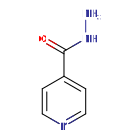
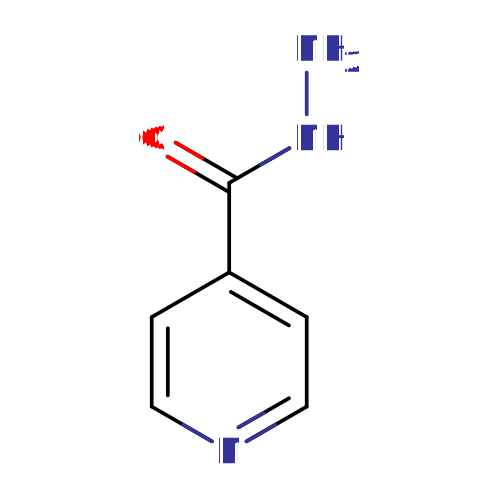
Structure for Isoniazid (DB00951)
- Weight
- Average: 137.1393
Monoisotopic: 137.058911861 - Chemical Formula
- C6H7N3O
- Synonyms
- 4-pyridinecarbohydrazide
- INH
- Isoniazid
- Isoniazida
- Isonicotinic acid hydrazide
- Isonicotinic hydrazide
- Isonicotinohydrazide
- Isonicotinoylhydrazide
- Isonicotinsäurehydrazid
- Isonicotinylhydrazine
- Pyridine-4-carboxylic acid hydrazide
- External IDs
- NSC-9659

Pharmacology
- Indication
Isoniazid is used for the treatment of all forms of tuberculosis in which organisms are susceptible. It is also used in combination with rifampin and pyrazinamide.1
 Reduce drug development failure ratesBuild, train, & validate machine-learning modelswith evidence-based and structured datasets.Build, train, & validate predictive machine-learning models with structured datasets.
- Associated Conditions
Indication Type Indication Combined Product Details Approval Level Age Group Patient Characteristics Dose Form Used in combination to treat Active tuberculosis Combination Product in combination with: Pyrazinamide (DB00339), Rifampicin (DB01045) •••••••••••• Used in combination to treat Active tuberculosis Combination Product in combination with: Rifampicin (DB01045) •••••••••••• Treatment of Latent tuberculosis •••••••••••• Used in combination to treat Mycobacterium kansasii infection Regimen in combination with: Rifampicin (DB01045), Ethambutol (DB00330) ••• ••••• - Contraindications & Blackbox Warnings
 Prevent Adverse Drug Events TodayTap into our Clinical API for life-saving information on contraindications & blackbox warnings, population restrictions, harmful risks, & more.Avoid life-threatening adverse drug events with our Clinical API
- Pharmacodynamics
Isoniazid is a bactericidal agent active against organisms of the genus Mycobacterium, specifically M. tuberculosis, M. bovis and M. kansasii. It is a highly specific agent, ineffective against other microorganisms. Isoniazid is bactericidal when mycobacteria grow rapidly and bacteriostatic when they grow slowly.
- Mechanism of action
Isoniazid is a prodrug and must be activated by bacterial catalase. Specficially, activation is associated with reduction of the mycobacterial ferric KatG catalase-peroxidase by hydrazine and reaction with oxygen to form an oxyferrous enzyme complex. Once activated, isoniazid inhibits the synthesis of mycoloic acids, an essential component of the bacterial cell wall. At therapeutic levels isoniazid is bacteriocidal against actively growing intracellular and extracellular Mycobacterium tuberculosis organisms. Specifically isoniazid inhibits InhA, the enoyl reductase from Mycobacterium tuberculosis, by forming a covalent adduct with the NAD cofactor. It is the INH-NAD adduct that acts as a slow, tight-binding competitive inhibitor of InhA.
Target Actions Organism ACatalase-peroxidase other/unknownMycobacterium tuberculosis AEnoyl-[acyl-carrier-protein] reductase [NADH] adductMycobacterium tuberculosis UCytochrome P450 2C8 Not Available Humans UCytochrome P450 1A2 Not Available Humans UCytochrome P450 3A4 Not Available Humans UCytochrome P450 2C19 Not Available Humans UDihydrofolate reductase Not Available Mycobacterium tuberculosis - Absorption
Readily absorbed following oral administration; however, may undergo significant first pass metabolism. Absorption and bioavailability are reduced when isoniazid is administered with food.
- Volume of distribution
Not Available
- Protein binding
Very low (0-10%)
- Metabolism
Primarily hepatic. Isoniazid is acetylated by N -acetyl transferase to N -acetylisoniazid; it is then biotransformed to isonicotinic acid and monoacetylhydrazine. Monoacetylhydrazine is associated with hepatotoxicity via formation of a reactive intermediate metabolite when N-hydroxylated by the cytochrome P450 mixed oxidase system. The rate of acetylation is genetically determined. Slow acetylators are characterized by a relative lack of hepatic N -acetyltransferase.
- Route of elimination
From 50 to 70 percent of a dose of isoniazid is excreted in the urine within 24 hours.
- Half-life
Fast acetylators: 0.5 to 1.6 hours. Slow acetylators: 2 to 5 hours.
- Clearance
Not Available
- Adverse Effects
 Improve decision support & research outcomesWith structured adverse effects data, including: blackbox warnings, adverse reactions, warning & precautions, & incidence rates. View sample adverse effects data in our new Data Library!Improve decision support & research outcomes with our structured adverse effects data.
- Toxicity
LD50 100 mg/kg (Human, oral). Adverse reactions include rash, abnormal liver function tests, hepatitis, peripheral neuropathy, mild central nervous system (CNS) effects. In vivo, Isoniazid reacts with pyridoxal to form a hydrazone, and thus inhibits generation of pyridoxal phosphate. Isoniazid also combines with pyridoxal phosphate; high doses interfere with the coenzyme function of the latter.
- Pathways
- Not Available
- Pharmacogenomic Effects/ADRs
Interacting Gene/Enzyme Allele name Genotype(s) Defining Change(s) Type(s) Description Details Cytochrome P450 2E1 CYP2E1*4 (A;A) --- ADR Directly Studied The presence of this genotype in CYP2E1 may be associated with an increased risk of drug-induced hepatotoxicity from isoniazid treatment. Details Arylamine N-acetyltransferase 1 NAT1*14A Not Available G > A | T > A | C > A ADR Inferred Increased risk of toxic reactions. Details Arylamine N-acetyltransferase 1 NAT1*14B Not Available G > A ADR Inferred Increased risk of toxic reactions. Details Arylamine N-acetyltransferase 1 NAT1*15 Not Available C > T ADR Inferred Increased risk of toxic reactions. Details Arylamine N-acetyltransferase 1 NAT1*17 Not Available C > T ADR Inferred Increased risk of toxic reactions. Details Arylamine N-acetyltransferase 1 NAT1*19A Not Available C > T ADR Inferred Increased risk of toxic reactions. Details Arylamine N-acetyltransferase 1 NAT1*19B Not Available C > T | C > T ADR Inferred Increased risk of toxic reactions. Details Arylamine N-acetyltransferase 1 NAT1*22 Not Available A > T ADR Inferred Increased risk of toxic reactions. Details Arylamine N-acetyltransferase 2 NAT2*5A Not Available T > C | C > T ADR Inferred Increased risk of toxic reactions. Details Arylamine N-acetyltransferase 2 NAT2*5B Not Available T > C | C > T | A > G ADR Inferred Increased risk of toxic reactions. Details Arylamine N-acetyltransferase 2 NAT2*5C Not Available T > C | A > G ADR Inferred Increased risk of toxic reactions. Details Arylamine N-acetyltransferase 2 NAT2*5D Not Available T > C ADR Inferred Increased risk of toxic reactions. Details Arylamine N-acetyltransferase 2 NAT2*5E Not Available T > C | G > A ADR Inferred Increased risk of toxic reactions. Details Arylamine N-acetyltransferase 2 NAT2*5F Not Available T > C | C > T | C > T | A > G ADR Inferred Increased risk of toxic reactions. Details Arylamine N-acetyltransferase 2 NAT2*5G Not Available T > C | C > T | C > T | A > G ADR Inferred Increased risk of toxic reactions. Details Arylamine N-acetyltransferase 2 NAT2*5H Not Available T > C | C > T | A > G | S287 Frameshift ADR Inferred Increased risk of toxic reactions. Details Arylamine N-acetyltransferase 2 NAT2*5I Not Available T > C | C > T | A > T | A > G ADR Inferred Increased risk of toxic reactions. Details Arylamine N-acetyltransferase 2 NAT2*5J Not Available T > C | C > T | G > A ADR Inferred Increased risk of toxic reactions. Details Arylamine N-acetyltransferase 2 NAT2*6A Not Available G > A | C > T ADR Inferred Increased risk of toxic reactions. Details Arylamine N-acetyltransferase 2 NAT2*6B Not Available G > A ADR Inferred Increased risk of toxic reactions. Details Arylamine N-acetyltransferase 2 NAT2*6C Not Available G > A | C > T | A > G ADR Inferred Increased risk of toxic reactions. Details Arylamine N-acetyltransferase 2 NAT2*6D Not Available G > A | C > T | T > C ADR Inferred Increased risk of toxic reactions. Details Arylamine N-acetyltransferase 2 NAT2*6E Not Available G > A | C > T ADR Inferred Increased risk of toxic reactions. Details Arylamine N-acetyltransferase 2 NAT2*7A Not Available G > A ADR Inferred Increased risk of toxic reactions. Details Arylamine N-acetyltransferase 2 NAT2*7B Not Available G > A | C > T ADR Inferred Increased risk of toxic reactions. Details Arylamine N-acetyltransferase 2 NAT2*10 Not Available G > A ADR Inferred Increased risk of toxic reactions. Details Arylamine N-acetyltransferase 2 NAT2*12D Not Available G > A | A > G ADR Inferred Increased risk of toxic reactions. Details Arylamine N-acetyltransferase 2 NAT2*14A Not Available G > A ADR Inferred Increased risk of toxic reactions. Details Arylamine N-acetyltransferase 2 NAT2*14B Not Available G > A | C > T ADR Inferred Increased risk of toxic reactions. Details Arylamine N-acetyltransferase 2 NAT2*14C Not Available G > A | T > C | C > T | A > G ADR Inferred Increased risk of toxic reactions. Details Arylamine N-acetyltransferase 2 NAT2*14D Not Available G > A | C > T | G > A ADR Inferred Increased risk of toxic reactions. Details Arylamine N-acetyltransferase 2 NAT2*14E Not Available G > A | A > G ADR Inferred Increased risk of toxic reactions. Details Arylamine N-acetyltransferase 2 NAT2*14F Not Available G > A | T > C | A > G ADR Inferred Increased risk of toxic reactions. Details Arylamine N-acetyltransferase 2 NAT2*14G Not Available G > A | C > T | A > G ADR Inferred Increased risk of toxic reactions. Details Arylamine N-acetyltransferase 2 NAT2*17 Not Available A > C ADR Inferred Increased risk of toxic reactions. Details Arylamine N-acetyltransferase 2 NAT2*19 Not Available C > T ADR Inferred Increased risk of toxic reactions. Details
Interactions
- Drug Interactions
- This information should not be interpreted without the help of a healthcare provider. If you believe you are experiencing an interaction, contact a healthcare provider immediately. The absence of an interaction does not necessarily mean no interactions exist.
Drug Interaction Integrate drug-drug
interactions in your software1,2-Benzodiazepine The metabolism of 1,2-Benzodiazepine can be decreased when combined with Isoniazid. Abacavir Isoniazid may decrease the excretion rate of Abacavir which could result in a higher serum level. Abemaciclib The metabolism of Abemaciclib can be decreased when combined with Isoniazid. Abiraterone The metabolism of Abiraterone can be decreased when combined with Isoniazid. Abrocitinib The metabolism of Abrocitinib can be decreased when combined with Isoniazid. - Food Interactions
- Administer vitamin supplements. Vitamin B6 (pyridoxine) should be given with isoniazid to prevent deficiency.
- Avoid alcohol. Avoid drinking alcoholic beverages such as unpasteurized beer; unless approved by your physician, as they may contain tyramine. Consuming alcohol may also increase the risk of isoniazid induced hepatitis and neuropathy.
- Avoid chocolate. Chocolate contains caffeine, which should be limited during isoniazid therapy.
- Avoid histamine-containing foods and supplements. Histamine-containing foods (e.g., skipjack, tuna, other tropical fish) can cause headaches, sweating, palpitations, flushing, and hypotension.
- Avoid tyramine-containing foods and supplements. Tyramine-containing foods include cheese, red wine, fava beans, pickled food, cured food, and alcoholic beverages.
- Limit caffeine intake.
- Take on an empty stomach. Take at least 1 hour before or 2 hours after meals.
- Take separate from antacids. Taking this medication with antacids can reduce absorption.
Products
 Drug product information from 10+ global regionsOur datasets provide approved product information including:dosage, form, labeller, route of administration, and marketing period.Access drug product information from over 10 global regions.
- Product Images
- International/Other Brands
- Nicozid (Piam) / Nidrazid (Zentiva) / Nydrazid (Sandoz) / Rimicid (Sopharma) / Rimifon (Roche) / Servizid (Novartis) / Tibinide (Meda)
- Brand Name Prescription Products
Name Dosage Strength Route Labeller Marketing Start Marketing End Region Image Isoniazid Tablet 300 mg/1 Oral Remedy Repack 2011-12-07 2012-12-07 US 
Isoniazid Tablet 100 mg/1 Oral PD-Rx Pharmaceuticals, Inc. 1978-12-11 2020-06-30 US Isoniazid Tablet 100 mg/1 Oral Eon Labs, Inc. 1978-12-11 2020-06-30 US Isoniazid Tablet 100 mg/1 Oral REMEDYREPACK INC. 2016-05-04 2017-05-04 US Isoniazid Tablet 100 mg/1 Oral Remedy Repack 2016-09-01 2016-09-01 US - Generic Prescription Products
Name Dosage Strength Route Labeller Marketing Start Marketing End Region Image Dom-isoniazid 300mg Tablets Tablet 300 mg Oral Dominion Pharmacal 1995-12-31 Not applicable Canada 
Isoniazid Tablet 300 mg/1 Oral Liberty Pharmaceuticals, Inc. 1972-09-01 Not applicable US 
Isoniazid Tablet 100 mg/1 Oral Clinical Solutions Wholesale 1972-09-01 2017-06-15 US 
Isoniazid Tablet 100 mg/1 Oral Remedy Repack 2013-02-01 2014-09-12 US Isoniazid Tablet 100 mg/1 Oral Physicians Total Care, Inc. 1972-09-01 2002-06-30 US 
- Mixture Products
Name Ingredients Dosage Route Labeller Marketing Start Marketing End Region Image FORECOX-TRAC TABLETAS RECUBIERTAS Isoniazid (75 mg) + Ethambutol hydrochloride (275 mg) + Pyrazinamide (400 mg) + Rifampicin (150 mg) Tablet, coated Oral MACLEODS PHARMACEUTICAL LTD. INDIA 2010-10-11 2018-02-22 Colombia 
IsonaRif Isoniazid (150 mg/1) + Rifampicin (300 mg/1) Capsule Oral VersaPharm Incorporated 2005-09-01 Not applicable US Isotamine B 300 Isoniazid (300 mg) + Pyridoxine hydrochloride (15 mg) Tablet Oral Bausch Health, Canada Inc. 1967-12-31 Not applicable Canada ISOTHAM Isoniazid (150 MG) + Ethambutol (400 MG) Tablet, film coated บริษัท ยูเมด้า จำกัด 2016-07-10 2020-08-23 Thailand 
ISOVIT 100 MG/25 MG TABLET, 100 TABLET Isoniazid (100 mg) + Pyridoxine (25 mg) Tablet Oral Deva Holding A.S. 1964-09-02 Not applicable Turkey 


Categories
- ATC Codes
- J04AM04 — Thioacetazone and isoniazid
- J04AM — Combinations of drugs for treatment of tuberculosis
- J04A — DRUGS FOR TREATMENT OF TUBERCULOSIS
- J04 — ANTIMYCOBACTERIALS
- J — ANTIINFECTIVES FOR SYSTEMIC USE
- J04AM — Combinations of drugs for treatment of tuberculosis
- J04A — DRUGS FOR TREATMENT OF TUBERCULOSIS
- J04 — ANTIMYCOBACTERIALS
- J — ANTIINFECTIVES FOR SYSTEMIC USE
- J04AM — Combinations of drugs for treatment of tuberculosis
- J04A — DRUGS FOR TREATMENT OF TUBERCULOSIS
- J04 — ANTIMYCOBACTERIALS
- J — ANTIINFECTIVES FOR SYSTEMIC USE
- J04AM — Combinations of drugs for treatment of tuberculosis
- J04A — DRUGS FOR TREATMENT OF TUBERCULOSIS
- J04 — ANTIMYCOBACTERIALS
- J — ANTIINFECTIVES FOR SYSTEMIC USE
- J04AC — Hydrazides
- J04A — DRUGS FOR TREATMENT OF TUBERCULOSIS
- J04 — ANTIMYCOBACTERIALS
- J — ANTIINFECTIVES FOR SYSTEMIC USE
- J04AM — Combinations of drugs for treatment of tuberculosis
- J04A — DRUGS FOR TREATMENT OF TUBERCULOSIS
- J04 — ANTIMYCOBACTERIALS
- J — ANTIINFECTIVES FOR SYSTEMIC USE
- J04AM — Combinations of drugs for treatment of tuberculosis
- J04A — DRUGS FOR TREATMENT OF TUBERCULOSIS
- J04 — ANTIMYCOBACTERIALS
- J — ANTIINFECTIVES FOR SYSTEMIC USE
- J04AM — Combinations of drugs for treatment of tuberculosis
- J04A — DRUGS FOR TREATMENT OF TUBERCULOSIS
- J04 — ANTIMYCOBACTERIALS
- J — ANTIINFECTIVES FOR SYSTEMIC USE
- J04AM — Combinations of drugs for treatment of tuberculosis
- J04A — DRUGS FOR TREATMENT OF TUBERCULOSIS
- J04 — ANTIMYCOBACTERIALS
- J — ANTIINFECTIVES FOR SYSTEMIC USE
- Drug Categories
- Agents Causing Muscle Toxicity
- Agents that reduce seizure threshold
- Anti-Bacterial Agents
- Anti-Infective Agents
- Antiinfectives for Systemic Use
- Antimycobacterials
- Cytochrome P-450 CYP1A2 Inhibitors
- Cytochrome P-450 CYP1A2 Inhibitors (strength unknown)
- Cytochrome P-450 CYP2A6 Inhibitors
- Cytochrome P-450 CYP2A6 Inhibitors (strength unknown)
- Cytochrome P-450 CYP2C19 Inhibitors
- Cytochrome P-450 CYP2C19 Inhibitors (strong)
- Cytochrome P-450 CYP2C19 Inhibitors (weak)
- Cytochrome P-450 CYP2C8 Inhibitors
- Cytochrome P-450 CYP2C8 Inhibitors (strength unknown)
- Cytochrome P-450 CYP2C9 Inhibitors
- Cytochrome P-450 CYP2C9 Inhibitors (strength unknown)
- Cytochrome P-450 CYP2D6 Inhibitors
- Cytochrome P-450 CYP2D6 Inhibitors (weak)
- Cytochrome P-450 CYP2E1 Inducers
- Cytochrome P-450 CYP2E1 Inducers (strength unknown)
- Cytochrome P-450 CYP2E1 Inhibitors
- Cytochrome P-450 CYP2E1 Inhibitors (moderate)
- Cytochrome P-450 CYP2E1 Substrates
- Cytochrome P-450 CYP3A Inhibitors
- Cytochrome P-450 CYP3A4 Inhibitors
- Cytochrome P-450 CYP3A4 Inhibitors (moderate)
- Cytochrome P-450 CYP3A4 Inhibitors (strength unknown)
- Cytochrome P-450 Enzyme Inducers
- Cytochrome P-450 Enzyme Inhibitors
- Cytochrome P-450 Substrates
- Drugs for Treatment of Tuberculosis
- Drugs that are Mainly Renally Excreted
- Fatty Acid Synthesis Inhibitors
- Hepatotoxic Agents
- Hydrazides
- Hydrazines
- Hyperglycemia-Associated Agents
- Hypolipidemic Agents
- Isonicotinic Acids
- Pyridines
- Serotonergic Drugs Shown to Increase Risk of Serotonin Syndrome
- Chemical TaxonomyProvided by Classyfire
- Description
- This compound belongs to the class of organic compounds known as pyridinecarboxylic acids and derivatives. These are compounds containing a pyridine ring bearing a carboxylic acid group or a derivative thereof.
- Kingdom
- Organic compounds
- Super Class
- Organoheterocyclic compounds
- Class
- Pyridines and derivatives
- Sub Class
- Pyridinecarboxylic acids and derivatives
- Direct Parent
- Pyridinecarboxylic acids and derivatives
- Alternative Parents
- Heteroaromatic compounds / Carboxylic acid hydrazides / Azacyclic compounds / Organopnictogen compounds / Organooxygen compounds / Organonitrogen compounds / Organic oxides / Hydrocarbon derivatives
- Substituents
- Aromatic heteromonocyclic compound / Azacycle / Carboxylic acid derivative / Carboxylic acid hydrazide / Heteroaromatic compound / Hydrocarbon derivative / Organic nitrogen compound / Organic oxide / Organic oxygen compound / Organonitrogen compound
- Molecular Framework
- Aromatic heteromonocyclic compounds
- External Descriptors
- carbohydrazide (CHEBI:6030) / a small molecule (ISONIAZIDE)
- Affected organisms
- Mycobacteria
- Mycobacterium tuberculosis
Chemical Identifiers
- UNII
- V83O1VOZ8L
- CAS number
- 54-85-3
- InChI Key
- QRXWMOHMRWLFEY-UHFFFAOYSA-N
- InChI
- InChI=1S/C6H7N3O/c7-9-6(10)5-1-3-8-4-2-5/h1-4H,7H2,(H,9,10)
- IUPAC Name
- pyridine-4-carbohydrazide
- SMILES
- NNC(=O)C1=CC=NC=C1
References
- Synthesis Reference
Costin Rentzea, Albrecht Harreus, Eberhard Ammermann, Gisela Lorenz, "Oxalyl hydrazide-hydroxamic acid derivatives, their preparation and their use as fungicides." U.S. Patent US5399589, issued November, 1969.
US5399589- General References
- FDA Approved Drug Products: RIFATER (rifampin, isoniazid and pyrazinamide USP) tablets (February 2023) [Link]
- External Links
- Human Metabolome Database
- HMDB0015086
- KEGG Drug
- D00346
- KEGG Compound
- C07054
- PubChem Compound
- 3767
- PubChem Substance
- 46506039
- ChemSpider
- 3635
- BindingDB
- 50336507
- 6038
- ChEBI
- 6030
- ChEMBL
- CHEMBL64
- ZINC
- ZINC000000001590
- Therapeutic Targets Database
- DAP000011
- PharmGKB
- PA450112
- PDBe Ligand
- NIZ
- RxList
- RxList Drug Page
- Drugs.com
- Drugs.com Drug Page
- Wikipedia
- Isoniazid
- PDB Entries
- 3wxo / 4pae / 5ksg / 5ksn / 5kt8 / 5sxq / 5sxs / 5sxt / 5syi / 5syj … show 2 more
- MSDS
- Download (73.1 KB)
Clinical Trials
- Clinical Trials
Phase Status Purpose Conditions Count 4 Active Not Recruiting Prevention Tuberculosis (TB) 1 4 Completed Basic Science Late phase Tuberculosis / Type 2 Diabetes Mellitus 1 4 Completed Diagnostic Tuberculosis (TB) 1 4 Completed Other Alcohol Abuse / Human Immunodeficiency Virus Infection(HIV)/Acquired Immunodeficiency Syndrome (AIDS) / Tuberculosis (TB) 1 4 Completed Prevention Female Infertility 1
Pharmacoeconomics
- Manufacturers
- Sandoz canada inc
- Sandoz inc
- Hoffmann la roche inc
- Carolina medical products co
- Mikart inc
- Lannett co inc
- Dow pharmaceutical corp sub dow chemical co
- Medpointe pharmaceuticals medpointe healthcare inc
- Novartis pharmaceuticals corp
- Barr laboratories inc
- Duramed pharmaceuticals inc sub barr laboratories inc
- Halsey drug co inc
- Impax laboratories inc
- Ivax pharmaceuticals inc sub teva pharmaceuticals usa
- Eli lilly and co
- Mk laboratories inc
- Mutual pharmaceutical co inc
- Nexgen pharma inc
- Panray corp sub ormont drug and chemical co inc
- L perrigo co
- Pharmavite pharmaceuticals
- Phoenix laboratories inc
- Purepac pharmaceutical co
- Watson laboratories inc
- West ward pharmaceutical corp
- Whiteworth towne paulsen inc
- Bristol myers squibb co
- Everylife
- Packagers
- Advanced Pharmaceutical Services Inc.
- Aidarex Pharmacuticals LLC
- Amend
- Amneal Pharmaceuticals
- Apotheca Inc.
- A-S Medication Solutions LLC
- Barr Pharmaceuticals
- Blenheim Pharmacal
- Bristol-Myers Squibb Co.
- Bryant Ranch Prepack
- Carolina Medical Products Co.
- Consolidated Midland Corp.
- Dept Health Central Pharmacy
- Direct Dispensing Inc.
- Dispensing Solutions
- E.R. Squibb and Sons LLC
- Eon Labs
- Golden State Medical Supply Inc.
- H.J. Harkins Co. Inc.
- Heartland Repack Services LLC
- Huffman Laboratories
- Liberty Pharmaceuticals
- Major Pharmaceuticals
- Murfreesboro Pharmaceutical Nursing Supply
- Nexgen Pharma Inc.
- Nucare Pharmaceuticals Inc.
- PCA LLC
- PD-Rx Pharmaceuticals Inc.
- Pharmpak Inc.
- Physicians Total Care Inc.
- Preferred Pharmaceuticals Inc.
- Prepackage Specialists
- Prepak Systems Inc.
- Remedy Repack
- Sandhills Packaging Inc.
- Sandoz
- Sanofi-Aventis Inc.
- Southwood Pharmaceuticals
- UDL Laboratories
- Versapharm Inc.
- West-Ward Pharmaceuticals
- Dosage Forms
Form Route Strength Tablet Tablet, coated Oral 100 mg Tablet, coated Oral 300 mg Tablet Oral Tablet Oral Capsule Oral 50 mg/5mL Injection, solution Intramuscular 100 mg/1mL Solution Oral 50 mg/5mL Syrup Oral 50 mg/5mL Tablet Oral 100 mg/1 Tablet Oral 300 mg/1 Syrup Oral 50 mg / 5 mL Tablet Oral 100 mg / tab Tablet Oral 300 mg / tab Tablet Oral 50 mg / tab Powder Oral 500 g / bottle Syrup Oral 10 mg / mL Tablet, film coated Tablet Oral 0.050 G Injection, solution Intramuscular 100 mg Injection, solution Intramuscular; Intrathecal; Intravenous 500 mg/5ml Tablet Oral 200 MG Solution Oral 50 mg / 5 mL Tablet Oral 300 mg Capsule Oral Tablet, film coated Oral Tablet, soluble Oral Capsule, coated Oral Tablet, sugar coated Oral Tablet, chewable Buccal Tablet, delayed release Oral Tablet, chewable Oral Syrup Oral 1.000 g Tablet Oral 100.000 mg Tablet, coated Oral Solution Oral 100 mg/2ml Tablet Oral 50 mg Capsule 100 mg Tablet Oral 100 mg - Prices
Unit description Cost Unit Isoniazid 100 mg/ml vial 27.37USD ml Rifamate 150-300 mg capsule 4.36USD capsule Rifamate capsule 4.19USD capsule Isoniazid 100 mg tablet 0.28USD tablet Isoniazid 300 mg tablet 0.18USD tablet Isoniazid 50 mg/5ml Syrup 0.16USD ml Isoniazid powder 0.11USD g DrugBank does not sell nor buy drugs. Pricing information is supplied for informational purposes only.- Patents
- Not Available
Properties
- State
- Solid
- Experimental Properties
Property Value Source melting point (°C) 171.4 °C PhysProp water solubility 1.4E+005 mg/L (at 25 °C) MERCK INDEX (2001) logP -0.70 HANSCH,C ET AL. (1995) logS 0.01 ADME Research, USCD pKa 1.82 (at 20 °C) PERRIN,DD (1965) - Predicted Properties
Property Value Source Water Solubility 34.9 mg/mL ALOGPS logP -0.71 ALOGPS logP -0.69 Chemaxon logS -0.59 ALOGPS pKa (Strongest Acidic) 13.61 Chemaxon pKa (Strongest Basic) 3.35 Chemaxon Physiological Charge 0 Chemaxon Hydrogen Acceptor Count 3 Chemaxon Hydrogen Donor Count 2 Chemaxon Polar Surface Area 68.01 Å2 Chemaxon Rotatable Bond Count 1 Chemaxon Refractivity 37.46 m3·mol-1 Chemaxon Polarizability 13.21 Å3 Chemaxon Number of Rings 1 Chemaxon Bioavailability 1 Chemaxon Rule of Five Yes Chemaxon Ghose Filter No Chemaxon Veber's Rule No Chemaxon MDDR-like Rule No Chemaxon - Predicted ADMET Features
Property Value Probability Human Intestinal Absorption + 0.9892 Blood Brain Barrier + 0.9895 Caco-2 permeable + 0.6959 P-glycoprotein substrate Non-substrate 0.8315 P-glycoprotein inhibitor I Non-inhibitor 0.9778 P-glycoprotein inhibitor II Non-inhibitor 0.996 Renal organic cation transporter Non-inhibitor 0.9054 CYP450 2C9 substrate Non-substrate 0.9088 CYP450 2D6 substrate Non-substrate 0.9116 CYP450 3A4 substrate Non-substrate 0.7557 CYP450 1A2 substrate Inhibitor 0.6482 CYP450 2C9 inhibitor Non-inhibitor 0.9273 CYP450 2D6 inhibitor Non-inhibitor 0.9443 CYP450 2C19 inhibitor Non-inhibitor 0.9513 CYP450 3A4 inhibitor Non-inhibitor 0.5111 CYP450 inhibitory promiscuity Low CYP Inhibitory Promiscuity 0.9342 Ames test AMES toxic 0.8557 Carcinogenicity Non-carcinogens 0.7514 Biodegradation Not ready biodegradable 0.981 Rat acute toxicity 2.0713 LD50, mol/kg Not applicable hERG inhibition (predictor I) Weak inhibitor 0.9872 hERG inhibition (predictor II) Non-inhibitor 0.9586
Spectra
- Mass Spec (NIST)
- Download (8.21 KB)
- Spectra
- Chromatographic Properties
Collision Cross Sections (CCS)
Adduct CCS Value (Å2) Source type Source [M-H]- 127.5994495 predictedDarkChem Lite v0.1.0 [M-H]- 127.8578495 predictedDarkChem Lite v0.1.0 [M-H]- 127.6716495 predictedDarkChem Lite v0.1.0 [M-H]- 123.86061 predictedDeepCCS 1.0 (2019) [M+H]+ 128.4651495 predictedDarkChem Lite v0.1.0 [M+H]+ 128.4978495 predictedDarkChem Lite v0.1.0 [M+H]+ 128.3348495 predictedDarkChem Lite v0.1.0 [M+H]+ 127.0702 predictedDeepCCS 1.0 (2019) [M+Na]+ 127.9723495 predictedDarkChem Lite v0.1.0 [M+Na]+ 127.7392495 predictedDarkChem Lite v0.1.0 [M+Na]+ 136.167 predictedDeepCCS 1.0 (2019)
Targets

- Kind
- Protein
- Organism
- Mycobacterium tuberculosis
- Pharmacological action
- Yes
- Actions
- Other/unknown
- General Function
- Bifunctional enzyme with both catalase and broad-spectrum peroxidase activity, oxidizing various electron donors including NADP(H) (PubMed:9006925, PubMed:18178143). Protects M.tuberculosis against toxic reactive oxygen species (ROS) including hydrogen peroxide as well as organic peroxides and thus contributes to its survival within host macrophages by countering the phagocyte oxidative burst (PubMed:8658136, PubMed:15165233). Also displays efficient peroxynitritase activity, which may help the bacterium to persist in macrophages (PubMed:10080924).
- Specific Function
- Catalase activity
- Gene Name
- katG
- Uniprot ID
- P9WIE5
- Uniprot Name
- Catalase-peroxidase
- Molecular Weight
- 80604.275 Da
References
- Pym AS, Domenech P, Honore N, Song J, Deretic V, Cole ST: Regulation of catalase-peroxidase (KatG) expression, isoniazid sensitivity and virulence by furA of Mycobacterium tuberculosis. Mol Microbiol. 2001 May;40(4):879-89. [Article]
- Heym B, Alzari PM, Honore N, Cole ST: Missense mutations in the catalase-peroxidase gene, katG, are associated with isoniazid resistance in Mycobacterium tuberculosis. Mol Microbiol. 1995 Jan;15(2):235-45. [Article]
- Wilson TM, de Lisle GW, Collins DM: Effect of inhA and katG on isoniazid resistance and virulence of Mycobacterium bovis. Mol Microbiol. 1995 Mar;15(6):1009-15. [Article]
- Vilcheze C, Jacobs WR Jr: The mechanism of isoniazid killing: clarity through the scope of genetics. Annu Rev Microbiol. 2007;61:35-50. [Article]
- Kind
- Protein
- Organism
- Mycobacterium tuberculosis
- Pharmacological action
- Yes
- Actions
- Adduct
- General Function
- Enoyl-ACP reductase of the type II fatty acid syntase (FAS-II) system, which is involved in the biosynthesis of mycolic acids, a major component of mycobacterial cell walls (PubMed:25227413). Catalyzes the NADH-dependent reduction of the double bond of 2-trans-enoyl-[acyl-carrier protein], an essential step in the fatty acid elongation cycle of the FAS-II pathway (PubMed:7599116). Shows preference for long-chain fatty acyl thioester substrates (>C16), and can also use 2-trans-enoyl-CoAs as alternative substrates (PubMed:7599116). The mycobacterial FAS-II system utilizes the products of the FAS-I system as primers to extend fatty acyl chain lengths up to C56, forming the meromycolate chain that serves as the precursor for final mycolic acids (PubMed:25227413).
- Specific Function
- Enoyl-[acyl-carrier-protein] reductase (nadh) activity
- Gene Name
- inhA
- Uniprot ID
- P9WGR1
- Uniprot Name
- Enoyl-[acyl-carrier-protein] reductase [NADH]
- Molecular Weight
- 28527.55 Da
References
- Schroeder EK, Basso LA, Santos DS, de Souza ON: Molecular dynamics simulation studies of the wild-type, I21V, and I16T mutants of isoniazid-resistant Mycobacterium tuberculosis enoyl reductase (InhA) in complex with NADH: toward the understanding of NADH-InhA different affinities. Biophys J. 2005 Aug;89(2):876-84. Epub 2005 May 20. [Article]
- Wilson TM, de Lisle GW, Collins DM: Effect of inhA and katG on isoniazid resistance and virulence of Mycobacterium bovis. Mol Microbiol. 1995 Mar;15(6):1009-15. [Article]
- Broussy S, Coppel Y, Nguyen M, Bernadou J, Meunier B: 1H and 13C NMR characterization of hemiamidal isoniazid-NAD(H) adducts as possible inhibitors of InhA reductase of Mycobacterium tuberculosis. Chemistry. 2003 May 9;9(9):2034-8. [Article]
- Vilcheze C, Jacobs WR Jr: The mechanism of isoniazid killing: clarity through the scope of genetics. Annu Rev Microbiol. 2007;61:35-50. [Article]
- Chen X, Ji ZL, Chen YZ: TTD: Therapeutic Target Database. Nucleic Acids Res. 2002 Jan 1;30(1):412-5. [Article]
- Kind
- Protein
- Organism
- Humans
- Pharmacological action
- Unknown
- General Function
- Steroid hydroxylase activity
- Specific Function
- Cytochromes P450 are a group of heme-thiolate monooxygenases. In liver microsomes, this enzyme is involved in an NADPH-dependent electron transport pathway. It oxidizes a variety of structurally un...
- Gene Name
- CYP2C8
- Uniprot ID
- P10632
- Uniprot Name
- Cytochrome P450 2C8
- Molecular Weight
- 55824.275 Da
References
- Fontana E, Dansette PM, Poli SM: Cytochrome p450 enzymes mechanism based inhibitors: common sub-structures and reactivity. Curr Drug Metab. 2005 Oct;6(5):413-54. [Article]
- Kind
- Protein
- Organism
- Humans
- Pharmacological action
- Unknown
- General Function
- Oxidoreductase activity, acting on paired donors, with incorporation or reduction of molecular oxygen, reduced flavin or flavoprotein as one donor, and incorporation of one atom of oxygen
- Specific Function
- Cytochromes P450 are a group of heme-thiolate monooxygenases. In liver microsomes, this enzyme is involved in an NADPH-dependent electron transport pathway. It oxidizes a variety of structurally un...
- Gene Name
- CYP1A2
- Uniprot ID
- P05177
- Uniprot Name
- Cytochrome P450 1A2
- Molecular Weight
- 58293.76 Da
References
- Fontana E, Dansette PM, Poli SM: Cytochrome p450 enzymes mechanism based inhibitors: common sub-structures and reactivity. Curr Drug Metab. 2005 Oct;6(5):413-54. [Article]
- Kind
- Protein
- Organism
- Humans
- Pharmacological action
- Unknown
- General Function
- Vitamin d3 25-hydroxylase activity
- Specific Function
- Cytochromes P450 are a group of heme-thiolate monooxygenases. In liver microsomes, this enzyme is involved in an NADPH-dependent electron transport pathway. It performs a variety of oxidation react...
- Gene Name
- CYP3A4
- Uniprot ID
- P08684
- Uniprot Name
- Cytochrome P450 3A4
- Molecular Weight
- 57342.67 Da
References
- Fontana E, Dansette PM, Poli SM: Cytochrome p450 enzymes mechanism based inhibitors: common sub-structures and reactivity. Curr Drug Metab. 2005 Oct;6(5):413-54. [Article]
- Kind
- Protein
- Organism
- Humans
- Pharmacological action
- Unknown
- General Function
- Steroid hydroxylase activity
- Specific Function
- Responsible for the metabolism of a number of therapeutic agents such as the anticonvulsant drug S-mephenytoin, omeprazole, proguanil, certain barbiturates, diazepam, propranolol, citalopram and im...
- Gene Name
- CYP2C19
- Uniprot ID
- P33261
- Uniprot Name
- Cytochrome P450 2C19
- Molecular Weight
- 55930.545 Da
References
- Fontana E, Dansette PM, Poli SM: Cytochrome p450 enzymes mechanism based inhibitors: common sub-structures and reactivity. Curr Drug Metab. 2005 Oct;6(5):413-54. [Article]
- Kind
- Protein
- Organism
- Mycobacterium tuberculosis
- Pharmacological action
- Unknown
- General Function
- Key enzyme in folate metabolism. Catalyzes an essential reaction for de novo glycine and purine synthesis, and for DNA precursor synthesis.
- Specific Function
- Dihydrofolate reductase activity
- Gene Name
- folA
- Uniprot ID
- P9WNX1
- Uniprot Name
- Dihydrofolate reductase
- Molecular Weight
- 17872.18 Da
References
- Wang F, Jain P, Gulten G, Liu Z, Feng Y, Ganesula K, Motiwala AS, Ioerger TR, Alland D, Vilcheze C, Jacobs WR Jr, Sacchettini JC: Mycobacterium tuberculosis dihydrofolate reductase is not a target relevant to the antitubercular activity of isoniazid. Antimicrob Agents Chemother. 2010 Sep;54(9):3776-82. doi: 10.1128/AAC.00453-10. Epub 2010 Jun 21. [Article]
Enzymes
- Kind
- Protein
- Organism
- Humans
- Pharmacological action
- Unknown
- Actions
- Substrate
- General Function
- Arylamine n-acetyltransferase activity
- Specific Function
- Participates in the detoxification of a plethora of hydrazine and arylamine drugs. Catalyzes the N- or O-acetylation of various arylamine and heterocyclic amine substrates and is able to bioactivat...
- Gene Name
- NAT2
- Uniprot ID
- P11245
- Uniprot Name
- Arylamine N-acetyltransferase 2
- Molecular Weight
- 33542.235 Da
References
- Upton AM, Mushtaq A, Victor TC, Sampson SL, Sandy J, Smith DM, van Helden PV, Sim E: Arylamine N-acetyltransferase of Mycobacterium tuberculosis is a polymorphic enzyme and a site of isoniazid metabolism. Mol Microbiol. 2001 Oct;42(2):309-17. [Article]
- Kind
- Protein
- Organism
- Mycobacterium tuberculosis
- Pharmacological action
- Unknown
- Actions
- Inhibitor
- General Function
- Catalyzes the transfer of the acetyl group from acetyl coenzyme A to the free amino group of arylamines and hydrazines (PubMed:18795795). Is able to utilize not only acetyl-CoA, but also n-propionyl-CoA and acetoacetyl-CoA as acyl donors, although at a lower rate (PubMed:19014350). As acetyl-CoA and propionyl-CoA are products of cholesterol catabolism and the nat gene is likely present in the same operon than genes involved in cholesterol degradation, this enzyme could have a role in the utilization and regulation of these CoA species (PubMed:19014350).
- Specific Function
- Arylamine n-acetyltransferase activity
- Gene Name
- nat
- Uniprot ID
- P9WJI5
- Uniprot Name
- Arylamine N-acetyltransferase
- Molecular Weight
- 31028.88 Da
References
- Upton AM, Mushtaq A, Victor TC, Sampson SL, Sandy J, Smith DM, van Helden PV, Sim E: Arylamine N-acetyltransferase of Mycobacterium tuberculosis is a polymorphic enzyme and a site of isoniazid metabolism. Mol Microbiol. 2001 Oct;42(2):309-17. [Article]
- Kind
- Protein
- Organism
- Humans
- Pharmacological action
- Unknown
- Actions
- Inhibitor
- General Function
- Steroid hydroxylase activity
- Specific Function
- Exhibits a high coumarin 7-hydroxylase activity. Can act in the hydroxylation of the anti-cancer drugs cyclophosphamide and ifosphamide. Competent in the metabolic activation of aflatoxin B1. Const...
- Gene Name
- CYP2A6
- Uniprot ID
- P11509
- Uniprot Name
- Cytochrome P450 2A6
- Molecular Weight
- 56501.005 Da
References
- Wen X, Wang JS, Neuvonen PJ, Backman JT: Isoniazid is a mechanism-based inhibitor of cytochrome P450 1A2, 2A6, 2C19 and 3A4 isoforms in human liver microsomes. Eur J Clin Pharmacol. 2002 Jan;57(11):799-804. [Article]
- Nishimura Y, Kurata N, Sakurai E, Yasuhara H: Inhibitory effect of antituberculosis drugs on human cytochrome P450-mediated activities. J Pharmacol Sci. 2004 Nov;96(3):293-300. Epub 2004 Nov 5. [Article]
- Court MH, Almutairi FE, Greenblatt DJ, Hazarika S, Sheng H, Klein K, Zanger UM, Bourgea J, Patten CJ, Kwara A: Isoniazid mediates the CYP2B6*6 genotype-dependent interaction between efavirenz and antituberculosis drug therapy through mechanism-based inactivation of CYP2A6. Antimicrob Agents Chemother. 2014 Jul;58(7):4145-52. doi: 10.1128/AAC.02532-14. Epub 2014 May 12. [Article]
- Clin-Info. (2006). In Compendium of Pharmaceuticals and Specialties: The Canadian Drug Reference for Health Professionals (pp. L56). Canadian Pharmacists Association. [ISBN:1-894402-22-7]
- Kind
- Protein
- Organism
- Humans
- Pharmacological action
- Unknown
- Actions
- Inhibitor
- Curator comments
- This enzyme relationship is supported by data from 1 in vitro study available in the literature.
- General Function
- Steroid hydroxylase activity
- Specific Function
- Cytochromes P450 are a group of heme-thiolate monooxygenases. In liver microsomes, this enzyme is involved in an NADPH-dependent electron transport pathway. It oxidizes a variety of structurally un...
- Gene Name
- CYP2C8
- Uniprot ID
- P10632
- Uniprot Name
- Cytochrome P450 2C8
- Molecular Weight
- 55824.275 Da
References
- Polasek TM, Elliot DJ, Lewis BC, Miners JO: Mechanism-based inactivation of human cytochrome P4502C8 by drugs in vitro. J Pharmacol Exp Ther. 2004 Dec;311(3):996-1007. doi: 10.1124/jpet.104.071803. Epub 2004 Aug 10. [Article]
- Kind
- Protein
- Organism
- Humans
- Pharmacological action
- Unknown
- Actions
- SubstrateInhibitorInducer
- Curator comments
- Isoniazid tends to inhibit 2E1 while it is in the body, followed by induction once it is stopped and its plasma concentration becomes undetectable - CPS Compendium of Pharmaceuticals and Specialties.
- General Function
- Steroid hydroxylase activity
- Specific Function
- Metabolizes several precarcinogens, drugs, and solvents to reactive metabolites. Inactivates a number of drugs and xenobiotics and also bioactivates many xenobiotic substrates to their hepatotoxic ...
- Gene Name
- CYP2E1
- Uniprot ID
- P05181
- Uniprot Name
- Cytochrome P450 2E1
- Molecular Weight
- 56848.42 Da
References
- Madan A, Graham RA, Carroll KM, Mudra DR, Burton LA, Krueger LA, Downey AD, Czerwinski M, Forster J, Ribadeneira MD, Gan LS, LeCluyse EL, Zech K, Robertson P Jr, Koch P, Antonian L, Wagner G, Yu L, Parkinson A: Effects of prototypical microsomal enzyme inducers on cytochrome P450 expression in cultured human hepatocytes. Drug Metab Dispos. 2003 Apr;31(4):421-31. doi: 10.1124/dmd.31.4.421. [Article]
- Zand R, Nelson SD, Slattery JT, Thummel KE, Kalhorn TF, Adams SP, Wright JM: Inhibition and induction of cytochrome P4502E1-catalyzed oxidation by isoniazid in humans. Clin Pharmacol Ther. 1993 Aug;54(2):142-9. [Article]
- Caro AA, Cederbaum AI: Inhibition of CYP2E1 catalytic activity in vitro by S-adenosyl-L-methionine. Biochem Pharmacol. 2005 Apr 1;69(7):1081-93. [Article]
- Spracklin DK, Emery ME, Thummel KE, Kharasch ED: Concordance between trifluoroacetic acid and hepatic protein trifluoroacetylation after disulfiram inhibition of halothane metabolism in rats. Acta Anaesthesiol Scand. 2003 Jul;47(6):765-70. [Article]
- Leclercq I, Desager JP, Horsmans Y: Inhibition of chlorzoxazone metabolism, a clinical probe for CYP2E1, by a single ingestion of watercress. Clin Pharmacol Ther. 1998 Aug;64(2):144-9. doi: 10.1016/S0009-9236(98)90147-3. [Article]
- Wang P, Pradhan K, Zhong XB, Ma X: Isoniazid metabolism and hepatotoxicity. Acta Pharm Sin B. 2016 Sep;6(5):384-392. doi: 10.1016/j.apsb.2016.07.014. Epub 2016 Aug 3. [Article]
- Clin-Info. (2006). In Compendium of Pharmaceuticals and Specialties: The Canadian Drug Reference for Health Professionals (pp. L57). Canadian Pharmacists Association. [ISBN:1-894402-22-7]
- Kind
- Protein
- Organism
- Humans
- Pharmacological action
- Unknown
- Actions
- Inhibitor
- General Function
- Oxidoreductase activity, acting on paired donors, with incorporation or reduction of molecular oxygen, reduced flavin or flavoprotein as one donor, and incorporation of one atom of oxygen
- Specific Function
- Cytochromes P450 are a group of heme-thiolate monooxygenases. In liver microsomes, this enzyme is involved in an NADPH-dependent electron transport pathway. It oxidizes a variety of structurally un...
- Gene Name
- CYP1A2
- Uniprot ID
- P05177
- Uniprot Name
- Cytochrome P450 1A2
- Molecular Weight
- 58293.76 Da
References
- Wang B, Zhou SF: Synthetic and natural compounds that interact with human cytochrome P450 1A2 and implications in drug development. Curr Med Chem. 2009;16(31):4066-218. [Article]
- Desta Z, Soukhova NV, Flockhart DA: Inhibition of cytochrome P450 (CYP450) isoforms by isoniazid: potent inhibition of CYP2C19 and CYP3A. Antimicrob Agents Chemother. 2001 Feb;45(2):382-92. doi: 10.1128/AAC.45.2.382-392.2001. [Article]
- Wen X, Wang JS, Neuvonen PJ, Backman JT: Isoniazid is a mechanism-based inhibitor of cytochrome P450 1A2, 2A6, 2C19 and 3A4 isoforms in human liver microsomes. Eur J Clin Pharmacol. 2002 Jan;57(11):799-804. [Article]
- Clin-Info. (2006). In Compendium of Pharmaceuticals and Specialties: The Canadian Drug Reference for Health Professionals (pp. L56). Canadian Pharmacists Association. [ISBN:1-894402-22-7]
- Kind
- Protein
- Organism
- Humans
- Pharmacological action
- Unknown
- Actions
- Inhibitor
- General Function
- Steroid hydroxylase activity
- Specific Function
- Cytochromes P450 are a group of heme-thiolate monooxygenases. In liver microsomes, this enzyme is involved in an NADPH-dependent electron transport pathway. It oxidizes a variety of structurally un...
- Gene Name
- CYP2C9
- Uniprot ID
- P11712
- Uniprot Name
- Cytochrome P450 2C9
- Molecular Weight
- 55627.365 Da
References
- Nishimura Y, Kurata N, Sakurai E, Yasuhara H: Inhibitory effect of antituberculosis drugs on human cytochrome P450-mediated activities. J Pharmacol Sci. 2004 Nov;96(3):293-300. Epub 2004 Nov 5. [Article]
- Clin-info. (2006). In Compendium of Pharmaceuticals and Specialties: The Canadian Drug Reference for Health Professionals (pp. L56). Canadian Pharmacists Association. [ISBN:1-894402-22-7]
- Flockhart Table of Drug Interactions [Link]
- Kind
- Protein
- Organism
- Humans
- Pharmacological action
- Unknown
- Actions
- Inhibitor
- Curator comments
- This enzyme relationship is considered weak in the literature and is supported by 1 in vitro study.
- General Function
- Steroid hydroxylase activity
- Specific Function
- Responsible for the metabolism of many drugs and environmental chemicals that it oxidizes. It is involved in the metabolism of drugs such as antiarrhythmics, adrenoceptor antagonists, and tricyclic...
- Gene Name
- CYP2D6
- Uniprot ID
- P10635
- Uniprot Name
- Cytochrome P450 2D6
- Molecular Weight
- 55768.94 Da
References
- Desta Z, Soukhova NV, Flockhart DA: Inhibition of cytochrome P450 (CYP450) isoforms by isoniazid: potent inhibition of CYP2C19 and CYP3A. Antimicrob Agents Chemother. 2001 Feb;45(2):382-92. doi: 10.1128/AAC.45.2.382-392.2001. [Article]
- Kind
- Protein
- Organism
- Humans
- Pharmacological action
- Unknown
- Actions
- Inhibitor
- General Function
- Steroid hydroxylase activity
- Specific Function
- Responsible for the metabolism of a number of therapeutic agents such as the anticonvulsant drug S-mephenytoin, omeprazole, proguanil, certain barbiturates, diazepam, propranolol, citalopram and im...
- Gene Name
- CYP2C19
- Uniprot ID
- P33261
- Uniprot Name
- Cytochrome P450 2C19
- Molecular Weight
- 55930.545 Da
References
- Nishimura Y, Kurata N, Sakurai E, Yasuhara H: Inhibitory effect of antituberculosis drugs on human cytochrome P450-mediated activities. J Pharmacol Sci. 2004 Nov;96(3):293-300. Epub 2004 Nov 5. [Article]
- Desta Z, Soukhova NV, Flockhart DA: Inhibition of cytochrome P450 (CYP450) isoforms by isoniazid: potent inhibition of CYP2C19 and CYP3A. Antimicrob Agents Chemother. 2001 Feb;45(2):382-92. doi: 10.1128/AAC.45.2.382-392.2001. [Article]
- Clin-Info. (2006). In Compendium of Pharmaceuticals and Specialties: The Canadian Drug Reference for Health Professionals (pp. L56). Canadian Pharmacists Association. [ISBN:1-894402-22-7]
- Kind
- Protein
- Organism
- Humans
- Pharmacological action
- Unknown
- Actions
- Inhibitor
- General Function
- Vitamin d3 25-hydroxylase activity
- Specific Function
- Cytochromes P450 are a group of heme-thiolate monooxygenases. In liver microsomes, this enzyme is involved in an NADPH-dependent electron transport pathway. It performs a variety of oxidation react...
- Gene Name
- CYP3A4
- Uniprot ID
- P08684
- Uniprot Name
- Cytochrome P450 3A4
- Molecular Weight
- 57342.67 Da
References
- Zhou S, Yung Chan S, Cher Goh B, Chan E, Duan W, Huang M, McLeod HL: Mechanism-based inhibition of cytochrome P450 3A4 by therapeutic drugs. Clin Pharmacokinet. 2005;44(3):279-304. doi: 10.2165/00003088-200544030-00005. [Article]
Carriers
- Kind
- Protein
- Organism
- Humans
- Pharmacological action
- Unknown
- General Function
- Toxic substance binding
- Specific Function
- Serum albumin, the main protein of plasma, has a good binding capacity for water, Ca(2+), Na(+), K(+), fatty acids, hormones, bilirubin and drugs. Its main function is the regulation of the colloid...
- Gene Name
- ALB
- Uniprot ID
- P02768
- Uniprot Name
- Serum albumin
- Molecular Weight
- 69365.94 Da
References
- Meng X, Maggs JL, Usui T, Whitaker P, French NS, Naisbitt DJ, Park BK: Auto-oxidation of Isoniazid Leads to Isonicotinic-Lysine Adducts on Human Serum Albumin. Chem Res Toxicol. 2015 Jan 20;28(1):51-8. doi: 10.1021/tx500285k. Epub 2014 Dec 9. [Article]


Drug created at June 13, 2005 13:24 / Updated at April 26, 2024 00:45