Identification
- Summary
Ketamine is a rapid-acting general anesthetic and NMDA receptor antagonist used for induction of anesthesia diagnostic and surgical procedures typically in combination with a muscle relaxant.
- Brand Names
- Ketalar
- Generic Name
- Ketamine
- DrugBank Accession Number
- DB01221
- Background
Ketamine is an NMDA receptor antagonist with a potent anesthetic effect.6 It was developed in 1963 as a replacement for phencyclidine (PCP) by Calvin Stevens at Parke Davis Laboratories. It started being used for veterinary purposes in Belgium and in 1964 was proven that compared to PCP, it produced minor hallucinogenic effects and shorter psychotomimetic effects. It was FDA approved in 1970, and from there, it has been used as an anesthetic for children or patients undergoing minor surgeries but mainly for veterinary purposes.14
- Type
- Small Molecule
- Groups
- Approved, Vet approved
- Structure
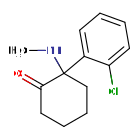
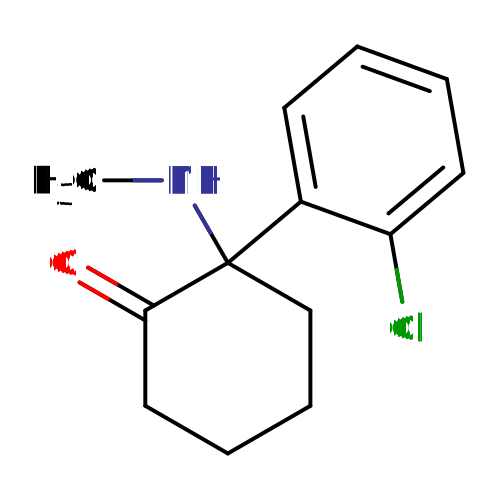
Structure for Ketamine (DB01221)
- Weight
- Average: 237.725
Monoisotopic: 237.092041846 - Chemical Formula
- C13H16ClNO
- Synonyms
- (+-)-Ketamine
- (±)-ketamine
- 2-(2-Chloro-phenyl)-2-methylamino-cyclohexanone
- 2-(methylamino)-2-(2-chlorophenyl)cyclohexanone
- 2-(o-chlorophenyl)-2-(methylamino)-cyclohexanone
- DL-ketamine
- Ketamina
- Kétamine
- Ketamine
- Ketaminum
- NMDA
- Special K
- External IDs
- 100477-72-3
- NSC-70151

Pharmacology
- Indication
Ketamine is indicated as an anesthetic agent for recommended diagnostic and surgical procedures. If skeletal muscle relaxation is needed, it should be combined with a muscle relaxant. If the surgical procedure involves visceral pain, it should be supplemented with an agent that obtunds visceral pain. Ketamine can be used for induction of anesthesia prior other general anesthetic agents and as a supplement of low potency agents.15,Label
Reports have indicated a potential use of ketamine as a therapeutic tool for the management of depression when administered in lower doses.7 These reports have increased the interest for ketamine in this area and several clinical trials are launched for this indication.16,8
 Reduce drug development failure ratesBuild, train, & validate machine-learning modelswith evidence-based and structured datasets.Build, train, & validate predictive machine-learning models with structured datasets.
- Associated Therapies
- Contraindications & Blackbox Warnings
 Prevent Adverse Drug Events TodayTap into our Clinical API for life-saving information on contraindications & blackbox warnings, population restrictions, harmful risks, & more.Avoid life-threatening adverse drug events with our Clinical API
- Pharmacodynamics
Ketamine is a rapid-acting general anesthetic producing an anesthetic state characterized by profound analgesia, normal pharyngeal-laryngeal reflexes, normal or slightly enhanced skeletal muscle tone, cardiovascular and respiratory stimulation, and occasionally a transient and minimal respiratory depression. The anesthetic state produced by Ketamine has been termed as "dissociative anesthesia" in that it appears to selectively interrupt association pathways of the brain before producing somesthetic sensory blockade. It may selectively depress the thalamoneocortical system before significantly obtunding the more ancient cerebral centers and pathways (reticular-activating and limbic systems).2
Ketamine enhances descending inhibiting serotoninergic pathways and can exert antidepressive effects. These effects are seen in concentrations ten times lower than the needed concentration for anesthetic proposes. The effect of ketamine can be described as analgesic by the prevention of central sensitization in dorsal horn neurons as well as by the inhibition on the synthesis of nitric oxide. Ketamine can present cardiovascular changes and bronchodilatation.9
- Mechanism of action
Ketamine interacts with N-methyl-D-aspartate (NMDA) receptors, opioid receptors, monoaminergic receptors, muscarinic receptors and voltage sensitive Ca ion channels. Unlike other general anaesthetic agents, ketamine does not interact with GABA receptors.5
Target Actions Organism AGlutamate receptor ionotropic, NMDA 3A antagonistHumans A5-hydroxytryptamine receptor 3A potentiatorHumans ANeuronal acetylcholine receptor subunit alpha-7 antagonistHumans ACholinesterase inhibitorHumans ANitric oxide synthase, brain inhibitorHumans UNeurokinin 1 receptor antagonistHumans UDopamine D2 receptor agonistpartial agonistHumans UDelta-type opioid receptor binderHumans USodium-dependent noradrenaline transporter inhibitorHumans UKappa-type opioid receptor agonistHumans UMu-type opioid receptor binderHumans UMuscarinic acetylcholine receptor binderHumans U5-hydroxytryptamine receptor 2 antagonistHumans U5-hydroxytryptamine receptor 1 antagonistHumans - Absorption
Ketamine absorption is very rapid and the bioavailability is around 93%. After the first pass metabolism, only 17% of the administered dose is absorbed.10 It distributes very rapidly and presents a distribution half-life of 1.95 min.12 The Cmax levels at peak reach 0.75 mcg/ml in plasma and 0.2 mcg/ml in cerebrospinal fluid.15
- Volume of distribution
The apparent volume of distribution of the central compartment and at steady-state are 371.3 ml/kg and 4060.3 ml/kg, respectively.13
- Protein binding
The plasma protein binding of ketamine accounts for 53.5% of the administered dose.12
- Metabolism
Ketamine presents a mainly hepatic metabolism and its major metabolite is norketamine. The biotransformation of ketamine corresponds to N-dealkylation, hydroxylation of the cyclohexone ring, conjugation to glucuronic acid and dehydration of the hydroxylated metabolites for the formation of cyclohexene derivatives.10
Hover over products below to view reaction partners
- Route of elimination
Pharmacokinetic studies have resulted in the recovery of 85-95% of the administered dose in urine mainly in the form of metabolites. Some other routes of elimination of ketamine are bile and feces. When administered intravenously the resultant recovery is distributed by 91% of the administered dose in urine and 3% in feces.15
- Half-life
The reported half-life in preclinical studies for ketamine is 186 min.10
- Clearance
The clearance rate of ketamine is high and of around 95 L/h/70kg.11
- Adverse Effects
 Improve decision support & research outcomesWith structured adverse effects data, including: blackbox warnings, adverse reactions, warning & precautions, & incidence rates. View sample adverse effects data in our new Data Library!Improve decision support & research outcomes with our structured adverse effects data.
- Toxicity
Preclinical studies related to the blocking of NMDA receptors have shown an increase in apoptosis in the developing brain which results in cognitive deficits when used for longer than 3 hours. Toxicity studies regarding carcinogenesis have not been performed. Regarding mutagenesis and fertility, ketamine showed to be clastogenic and to not have effects on fertility.Label
- Pathways
- Not Available
- Pharmacogenomic Effects/ADRs
- Not Available
Interactions
- Drug Interactions
- This information should not be interpreted without the help of a healthcare provider. If you believe you are experiencing an interaction, contact a healthcare provider immediately. The absence of an interaction does not necessarily mean no interactions exist.
Drug Interaction Integrate drug-drug
interactions in your software1,2-Benzodiazepine The risk or severity of CNS depression can be increased when Ketamine is combined with 1,2-Benzodiazepine. Abacavir Abacavir may decrease the excretion rate of Ketamine which could result in a higher serum level. Abametapir The serum concentration of Ketamine can be increased when it is combined with Abametapir. Abatacept The metabolism of Ketamine can be increased when combined with Abatacept. Abiraterone The metabolism of Ketamine can be decreased when combined with Abiraterone. - Food Interactions
- Avoid alcohol.
Products
 Drug product information from 10+ global regionsOur datasets provide approved product information including:dosage, form, labeller, route of administration, and marketing period.Access drug product information from over 10 global regions.
- Product Ingredients
Ingredient UNII CAS InChI Key Ketamine hydrochloride O18YUO0I83 1867-66-9 VCMGMSHEPQENPE-UHFFFAOYSA-N - International/Other Brands
- Ketaject (Bristol-Myers Squibb) / Ketanest (Parke Davis)
- Brand Name Prescription Products
Name Dosage Strength Route Labeller Marketing Start Marketing End Region Image Ketalar Injection 10 mg/1mL Intramuscular; Intravenous General Injectables & Vaccines, Inc 2012-10-17 2025-02-28 US 
Ketalar Injection 10 mg/1mL Intramuscular; Intravenous Par Pharmaceutical, Inc. 2007-10-01 Not applicable US Ketalar Injection 10 mg/1mL Intramuscular; Intravenous Monarch Pharmaceuticals, Inc. 1970-02-19 2007-10-01 US Ketalar Injection 100 mg/1mL Intramuscular; Intravenous Par Pharmaceutical, Inc. 2007-10-01 Not applicable US Ketalar Injection 100 mg/1mL Intramuscular; Intravenous Monarch Pharmaceuticals, Inc. 1970-02-19 2007-10-01 US - Generic Prescription Products
Name Dosage Strength Route Labeller Marketing Start Marketing End Region Image Ketamine Hydrochloride Injection, solution, concentrate 100 mg/1mL Intramuscular; Intravenous Medical Purchasing Solutions, Llc 2004-11-30 Not applicable US Ketamine Hydrochloride Injection, solution, concentrate 100 mg/1mL Intramuscular; Intravenous Hospira, Inc. 2004-11-30 Not applicable US Ketamine Hydrochloride Injection 10 mg/1mL Intramuscular; Intravenous Fresenius Kabi USA, LLC 2023-07-10 Not applicable US Ketamine Hydrochloride Injection 10 mg/1mL Intramuscular; Intravenous Eugia US LLC 2021-03-15 Not applicable US Ketamine Hydrochloride Injection, solution 100 mg/1mL Intramuscular; Intravenous Mylan Institutional LLC 2013-06-04 2023-08-31 US - Unapproved/Other Products
Name Ingredients Dosage Route Labeller Marketing Start Marketing End Region Image MKH Dose Pack Ketamine hydrochloride (25 mg/1) + Hydroxyzine hydrochloride (10 mg/1) + Midazolam (3 mg/1) Troche Sublingual Imprimis Njof, Llc 2019-03-04 Not applicable US MKO Melt Ketamine hydrochloride (25 mg/1) + Midazolam (3 mg/1) + Ondansetron hydrochloride dihydrate (2 mg/1) Troche Sublingual Imprimis Njof, Llc 2018-12-01 2019-03-04 US MKO Melt Dose Pack Ketamine hydrochloride (25 mg/1) + Midazolam (3 mg/1) + Ondansetron hydrochloride (2 mg/1) Troche Sublingual Imprimis Njof, Llc 2019-03-04 Not applicable US Topical Nerve Pain Ketamine (0.1 g/100mL) + Diazepam (0.1 g/100mL) + Diclofenac sodium (0.1 g/100mL) + Gabapentin (0.1 g/100mL) Cream Topical Dr Marc's Manufacturing And Sales 2016-02-23 2018-04-17 US
Categories
- ATC Codes
- N01AX03 — Ketamine
- Drug Categories
- Agents producing tachycardia
- Amino Acids
- Amino Acids, Acidic
- Amino Acids, Dicarboxylic
- Amino Acids, Peptides, and Proteins
- Analgesics
- Anesthetics
- Anesthetics, Dissociative
- Anesthetics, General
- Anesthetics, Intravenous
- Central Nervous System Agents
- Central Nervous System Depressants
- Cholinesterase Inhibitors
- Cyclohexanes
- Cycloparaffins
- Cytochrome P-450 CYP2B6 Substrates
- Cytochrome P-450 CYP2C8 Substrates
- Cytochrome P-450 CYP2C9 Substrates
- Cytochrome P-450 CYP3A Inducers
- Cytochrome P-450 CYP3A Substrates
- Cytochrome P-450 CYP3A4 Inducers
- Cytochrome P-450 CYP3A4 Inducers (strength unknown)
- Cytochrome P-450 CYP3A4 Substrates
- Cytochrome P-450 Enzyme Inducers
- Cytochrome P-450 Substrates
- Drugs that are Mainly Renally Excreted
- Excitatory Amino Acid Agents
- Excitatory Amino Acid Agonists
- Excitatory Amino Acid Antagonists
- Miscellaneous General Anesthetics
- N-Methylaspartate, agonists
- Nervous System
- Neurotransmitter Agents
- NMDA Receptor Antagonists
- Peripheral Nervous System Agents
- Sensory System Agents
- Vasodilating Agents
- Chemical TaxonomyProvided by Classyfire
- Description
- This compound belongs to the class of organic compounds known as chlorobenzenes. These are compounds containing one or more chlorine atoms attached to a benzene moiety.
- Kingdom
- Organic compounds
- Super Class
- Benzenoids
- Class
- Benzene and substituted derivatives
- Sub Class
- Halobenzenes
- Direct Parent
- Chlorobenzenes
- Alternative Parents
- Aralkylamines / Aryl chlorides / Cyclic ketones / Dialkylamines / Organopnictogen compounds / Organochlorides / Organic oxides / Hydrocarbon derivatives
- Substituents
- Amine / Aralkylamine / Aromatic homomonocyclic compound / Aryl chloride / Aryl halide / Carbonyl group / Chlorobenzene / Cyclic ketone / Hydrocarbon derivative / Ketone
- Molecular Framework
- Aromatic homomonocyclic compounds
- External Descriptors
- secondary amino compound, monochlorobenzenes, cyclohexanones (CHEBI:6121)
- Affected organisms
- Humans and other mammals
Chemical Identifiers
- UNII
- 690G0D6V8H
- CAS number
- 6740-88-1
- InChI Key
- YQEZLKZALYSWHR-UHFFFAOYSA-N
- InChI
- InChI=1S/C13H16ClNO/c1-15-13(9-5-4-8-12(13)16)10-6-2-3-7-11(10)14/h2-3,6-7,15H,4-5,8-9H2,1H3
- IUPAC Name
- 2-(2-chlorophenyl)-2-(methylamino)cyclohexan-1-one
- SMILES
- CNC1(CCCCC1=O)C1=CC=CC=C1Cl
References
- Synthesis Reference
John A. Flores, Kenton L. Crowley, "Process for the preparation of ketamine ointment." U.S. Patent US5817699, issued June, 1995.
US5817699- General References
- Harrison NL, Simmonds MA: Quantitative studies on some antagonists of N-methyl D-aspartate in slices of rat cerebral cortex. Br J Pharmacol. 1985 Feb;84(2):381-91. [Article]
- Bergman SA: Ketamine: review of its pharmacology and its use in pediatric anesthesia. Anesth Prog. 1999 Winter;46(1):10-20. [Article]
- Bonanno FG: Ketamine in war/tropical surgery (a final tribute to the racemic mixture). Injury. 2002 May;33(4):323-7. [Article]
- Lankenau SE, Sanders B, Bloom JJ, Hathazi D, Alarcon E, Tortu S, Clatts MC: First injection of ketamine among young injection drug users (IDUs) in three U.S. cities. Drug Alcohol Depend. 2007 Mar 16;87(2-3):183-93. Epub 2006 Sep 18. [Article]
- Reboso Morales JA, Gonzalez Miranda F: [Ketamine]. Rev Esp Anestesiol Reanim. 1999 Mar;46(3):111-22. [Article]
- Ivani G, Vercellino C, Tonetti F: Ketamine: a new look to an old drug. Minerva Anestesiol. 2003 May;69(5):468-71. [Article]
- Yang Y, Cui Y, Sang K, Dong Y, Ni Z, Ma S, Hu H: Ketamine blocks bursting in the lateral habenula to rapidly relieve depression. Nature. 2018 Feb 14;554(7692):317-322. doi: 10.1038/nature25509. [Article]
- Kirby T: Ketamine for depression: the highs and lows. Lancet Psychiatry. 2015 Sep;2(9):783-4. doi: 10.1016/S2215-0366(15)00392-2. [Article]
- Xu J, Lei H: Ketamine-an update on its clinical uses and abuses. CNS Neurosci Ther. 2014 Dec;20(12):1015-20. doi: 10.1111/cns.12363. [Article]
- Clements JA, Nimmo WS, Grant IS: Bioavailability, pharmacokinetics, and analgesic activity of ketamine in humans. J Pharm Sci. 1982 May;71(5):539-42. [Article]
- Fanta S, Kinnunen M, Backman JT, Kalso E: Population pharmacokinetics of S-ketamine and norketamine in healthy volunteers after intravenous and oral dosing. Eur J Clin Pharmacol. 2015 Apr;71(4):441-7. doi: 10.1007/s00228-015-1826-y. Epub 2015 Mar 1. [Article]
- Kaka JS, Hayton WL: Pharmacokinetics of ketamine and two metabolites in the dog. J Pharmacokinet Biopharm. 1980 Apr;8(2):193-202. [Article]
- Pypendop BH, Ilkiw JE: Pharmacokinetics of ketamine and its metabolite, norketamine, after intravenous administration of a bolus of ketamine to isoflurane-anesthetized dogs. Am J Vet Res. 2005 Dec;66(12):2034-8. doi: 10.2460/ajvr.2005.66.2034. [Article]
- Ketamine [Link]
- Ketamine monograph [Link]
- Time magazine [Link]
- External Links
- Human Metabolome Database
- HMDB0015352
- KEGG Drug
- D08098
- KEGG Compound
- C07525
- PubChem Compound
- 3821
- PubChem Substance
- 46508295
- ChemSpider
- 3689
- BindingDB
- 50044140
- 6130
- ChEBI
- 6121
- ChEMBL
- CHEMBL742
- Therapeutic Targets Database
- DAP001148
- PharmGKB
- PA450144
- RxList
- RxList Drug Page
- Drugs.com
- Drugs.com Drug Page
- Wikipedia
- Ketamine
- FDA label
- Download (228 KB)
- MSDS
- Download (67.5 KB)
Clinical Trials
- Clinical Trials
Phase Status Purpose Conditions Count 4 Active Not Recruiting Prevention Pain / Postpartum Depression 1 4 Active Not Recruiting Treatment Acute Pain / Coronary Artery Disease (CAD) / Postoperative pain / Valvular Heart Diseases 1 4 Active Not Recruiting Treatment Coronavirus Disease 2019 (COVID‑19) / Stress Reaction; Acute 1 4 Active Not Recruiting Treatment Critically Ill Patients / Postoperative pain 1 4 Active Not Recruiting Treatment Depression, Bipolar / Suicidal Thoughts / Unipolar Depression 1
Pharmacoeconomics
- Manufacturers
- Not Available
- Packagers
- Bedford Labs
- Ben Venue Laboratories Inc.
- Bioniche Pharma
- Hospira Inc.
- JHP Pharmaceuticals LLC
- Medisca Inc.
- Monarch Pharmacy
- Pharmedium
- Physicians Total Care Inc.
- Dosage Forms
Form Route Strength Injection Intramuscular Injection Intramuscular; Intravenous Injection Intramuscular 50 MG/ML Injection Intramuscular; Intravenous 10 mg/1mL Injection Intramuscular; Intravenous 100 mg/1mL Injection Intramuscular; Intravenous 50 mg/1mL Injection Intravenous 50 MG/ML Solution Intramuscular; Intravenous 50 mg / mL Injection 500 mg Injection Intramuscular; Intravenous 500 mg Injection, solution 10 mg/ml Injection, solution Parenteral 10 mg/ml Injection, solution 50 mg/ml Solution Intramuscular; Intravenous 500 mg Injection, solution Parenteral 50 MG/ML Injection 57.677 mg/ml Injection, solution Intramuscular; Intravenous 50 MG Injection, solution Intramuscular; Intravenous 10 mg/1mL Injection, solution Intramuscular; Intravenous 100 mg/1mL Injection, solution Intramuscular; Intravenous 50 mg/1mL Injection, solution, concentrate Intramuscular; Intravenous 100 mg/1mL Injection, solution, concentrate Intramuscular; Intravenous 50 mg/1mL Powder Not applicable 1 g/1g Injection Intramuscular; Intravenous 50 mg/ml Solution Intramuscular; Intravenous 10 mg / mL Solution Intramuscular; Intravenous 100 mg / 2 mL Solution Intramuscular; Intravenous 500 mg / 10 mL Troche Sublingual Cream Topical - Prices
Unit description Cost Unit Ketamine hcl powder 7.22USD g Ketamine hcl-ns 50 mg/5 ml syr 2.82USD ml Ketamine 100 mg/ml vial 2.36USD ml Ketalar 100 mg/ml vial 1.95USD ml Ketamine hcl-ns 100 mg/10 ml 1.95USD ml Ketamine HCl 50 mg/ml Solution 1.77USD ml Ketalar 10 mg/ml vial 0.99USD ml Ketamine 10 mg/ml vial 0.99USD ml Ketalar 50 mg/ml vial 0.75USD ml Ketamine 50 mg/ml vial 0.61USD ml DrugBank does not sell nor buy drugs. Pricing information is supplied for informational purposes only.- Patents
- Not Available
Properties
- State
- Solid
- Experimental Properties
Property Value Source melting point (°C) 92.5ºC Medical toxicology of drug abuse. (2012) water solubility Soluble 'MSDS' logP 3.120 Medical toxicology of drug abuse. (2012) pKa 7.5 Ketamine monograph - Predicted Properties
Property Value Source Water Solubility 0.0464 mg/mL ALOGPS logP 2.69 ALOGPS logP 3.35 Chemaxon logS -3.7 ALOGPS pKa (Strongest Acidic) 19.77 Chemaxon pKa (Strongest Basic) 7.16 Chemaxon Physiological Charge 1 Chemaxon Hydrogen Acceptor Count 2 Chemaxon Hydrogen Donor Count 1 Chemaxon Polar Surface Area 29.1 Å2 Chemaxon Rotatable Bond Count 2 Chemaxon Refractivity 65.55 m3·mol-1 Chemaxon Polarizability 24.97 Å3 Chemaxon Number of Rings 2 Chemaxon Bioavailability 1 Chemaxon Rule of Five Yes Chemaxon Ghose Filter Yes Chemaxon Veber's Rule Yes Chemaxon MDDR-like Rule No Chemaxon - Predicted ADMET Features
Property Value Probability Human Intestinal Absorption + 0.9974 Blood Brain Barrier + 0.9826 Caco-2 permeable + 0.6326 P-glycoprotein substrate Substrate 0.5753 P-glycoprotein inhibitor I Non-inhibitor 0.5948 P-glycoprotein inhibitor II Non-inhibitor 0.8383 Renal organic cation transporter Non-inhibitor 0.6737 CYP450 2C9 substrate Non-substrate 0.6363 CYP450 2D6 substrate Substrate 0.8918 CYP450 3A4 substrate Substrate 0.7407 CYP450 1A2 substrate Non-inhibitor 0.7323 CYP450 2C9 inhibitor Non-inhibitor 0.7985 CYP450 2D6 inhibitor Non-inhibitor 0.6912 CYP450 2C19 inhibitor Non-inhibitor 0.5347 CYP450 3A4 inhibitor Non-inhibitor 0.8253 CYP450 inhibitory promiscuity High CYP Inhibitory Promiscuity 0.5426 Ames test Non AMES toxic 0.7223 Carcinogenicity Non-carcinogens 0.8878 Biodegradation Not ready biodegradable 0.9937 Rat acute toxicity 2.3939 LD50, mol/kg Not applicable hERG inhibition (predictor I) Weak inhibitor 0.8859 hERG inhibition (predictor II) Inhibitor 0.6047
Spectra
- Mass Spec (NIST)
- Not Available
- Spectra
- Chromatographic Properties
Collision Cross Sections (CCS)
Adduct CCS Value (Å2) Source type Source [M-H]- 152.3173949 predictedDarkChem Lite v0.1.0 [M-H]- 149.78523 predictedDeepCCS 1.0 (2019) [M+H]+ 152.3352949 predictedDarkChem Lite v0.1.0 [M+H]+ 152.14323 predictedDeepCCS 1.0 (2019) [M+Na]+ 152.3356949 predictedDarkChem Lite v0.1.0 [M+Na]+ 159.28464 predictedDeepCCS 1.0 (2019)
Targets

- Kind
- Protein
- Organism
- Humans
- Pharmacological action
- Yes
- Actions
- Antagonist
- General Function
- Protein phosphatase 2a binding
- Specific Function
- NMDA receptor subtype of glutamate-gated ion channels with reduced single-channel conductance, low calcium permeability and low voltage-dependent sensitivity to magnesium. Mediated by glycine. May ...
- Gene Name
- GRIN3A
- Uniprot ID
- Q8TCU5
- Uniprot Name
- Glutamate receptor ionotropic, NMDA 3A
- Molecular Weight
- 125464.07 Da
References
- Smothers CT, Woodward JJ: Pharmacological characterization of glycine-activated currents in HEK 293 cells expressing N-methyl-D-aspartate NR1 and NR3 subunits. J Pharmacol Exp Ther. 2007 Aug;322(2):739-48. Epub 2007 May 14. [Article]
- Harrison NL, Simmonds MA: Quantitative studies on some antagonists of N-methyl D-aspartate in slices of rat cerebral cortex. Br J Pharmacol. 1985 Feb;84(2):381-91. [Article]
- Sinner B, Graf BM: Ketamine. Handb Exp Pharmacol. 2008;(182):313-33. doi: 10.1007/978-3-540-74806-9_15. [Article]
- Radovanovic D, Pjevic M: [Ketamine: the past 30 years and its future]. Med Pregl. 2003 Sep-Oct;56(9-10):439-45. [Article]
- Kind
- Protein
- Organism
- Humans
- Pharmacological action
- Yes
- Actions
- Potentiator
- General Function
- Voltage-gated potassium channel activity
- Specific Function
- This is one of the several different receptors for 5-hydroxytryptamine (serotonin), a biogenic hormone that functions as a neurotransmitter, a hormone, and a mitogen. This receptor is a ligand-gate...
- Gene Name
- HTR3A
- Uniprot ID
- P46098
- Uniprot Name
- 5-hydroxytryptamine receptor 3A
- Molecular Weight
- 55279.835 Da
References
- Appadu BL, Lambert DG: Interaction of i.v. anaesthetic agents with 5-HT3 receptors. Br J Anaesth. 1996 Feb;76(2):271-3. [Article]
- Kind
- Protein
- Organism
- Humans
- Pharmacological action
- Yes
- Actions
- Antagonist
- General Function
- Toxic substance binding
- Specific Function
- After binding acetylcholine, the AChR responds by an extensive change in conformation that affects all subunits and leads to opening of an ion-conducting channel across the plasma membrane. The cha...
- Gene Name
- CHRNA7
- Uniprot ID
- P36544
- Uniprot Name
- Neuronal acetylcholine receptor subunit alpha-7
- Molecular Weight
- 56448.925 Da
References
- Kohrs R, Durieux ME: Ketamine: teaching an old drug new tricks. Anesth Analg. 1998 Nov;87(5):1186-93. [Article]
- Kind
- Protein
- Organism
- Humans
- Pharmacological action
- Yes
- Actions
- Inhibitor
- General Function
- Identical protein binding
- Specific Function
- Esterase with broad substrate specificity. Contributes to the inactivation of the neurotransmitter acetylcholine. Can degrade neurotoxic organophosphate esters.
- Gene Name
- BCHE
- Uniprot ID
- P06276
- Uniprot Name
- Cholinesterase
- Molecular Weight
- 68417.575 Da
References
- Kohrs R, Durieux ME: Ketamine: teaching an old drug new tricks. Anesth Analg. 1998 Nov;87(5):1186-93. [Article]
- Kind
- Protein
- Organism
- Humans
- Pharmacological action
- Yes
- Actions
- Inhibitor
- General Function
- Tetrahydrobiopterin binding
- Specific Function
- Produces nitric oxide (NO) which is a messenger molecule with diverse functions throughout the body. In the brain and peripheral nervous system, NO displays many properties of a neurotransmitter. P...
- Gene Name
- NOS1
- Uniprot ID
- P29475
- Uniprot Name
- Nitric oxide synthase, brain
- Molecular Weight
- 160969.095 Da
References
- Kohrs R, Durieux ME: Ketamine: teaching an old drug new tricks. Anesth Analg. 1998 Nov;87(5):1186-93. [Article]
- Kind
- Protein
- Organism
- Humans
- Pharmacological action
- Unknown
- Actions
- Antagonist
- General Function
- Tachykinin receptor activity
- Specific Function
- This is a receptor for the tachykinin neuropeptide substance P. It is probably associated with G proteins that activate a phosphatidylinositol-calcium second messenger system. The rank order of aff...
- Gene Name
- TACR1
- Uniprot ID
- P25103
- Uniprot Name
- Substance-P receptor
- Molecular Weight
- 46250.5 Da
References
- Okamoto T, Minami K, Uezono Y, Ogata J, Shiraishi M, Shigematsu A, Ueta Y: The inhibitory effects of ketamine and pentobarbital on substance p receptors expressed in Xenopus oocytes. Anesth Analg. 2003 Jul;97(1):104-10, table of contents. [Article]
- Kind
- Protein
- Organism
- Humans
- Pharmacological action
- Unknown
- Actions
- AgonistPartial agonist
- General Function
- Potassium channel regulator activity
- Specific Function
- Dopamine receptor whose activity is mediated by G proteins which inhibit adenylyl cyclase.
- Gene Name
- DRD2
- Uniprot ID
- P14416
- Uniprot Name
- D(2) dopamine receptor
- Molecular Weight
- 50618.91 Da
References
- Seeman P, Guan HC, Hirbec H: Dopamine D2High receptors stimulated by phencyclidines, lysergic acid diethylamide, salvinorin A, and modafinil. Synapse. 2009 Aug;63(8):698-704. doi: 10.1002/syn.20647. [Article]
- Kind
- Protein
- Organism
- Humans
- Pharmacological action
- Unknown
- Actions
- Binder
- General Function
- Opioid receptor activity
- Specific Function
- G-protein coupled receptor that functions as receptor for endogenous enkephalins and for a subset of other opioids. Ligand binding causes a conformation change that triggers signaling via guanine n...
- Gene Name
- OPRD1
- Uniprot ID
- P41143
- Uniprot Name
- Delta-type opioid receptor
- Molecular Weight
- 40368.235 Da
References
- Smith DJ, Pekoe GM, Martin LL, Coalgate B: The interaction of ketamine with the opiate receptor. Life Sci. 1980 Mar 10;26(10):789-95. [Article]
- Hustveit O, Maurset A, Oye I: Interaction of the chiral forms of ketamine with opioid, phencyclidine, sigma and muscarinic receptors. Pharmacol Toxicol. 1995 Dec;77(6):355-9. [Article]
- Kind
- Protein
- Organism
- Humans
- Pharmacological action
- Unknown
- Actions
- Inhibitor
- General Function
- Norepinephrine:sodium symporter activity
- Specific Function
- Amine transporter. Terminates the action of noradrenaline by its high affinity sodium-dependent reuptake into presynaptic terminals.
- Gene Name
- SLC6A2
- Uniprot ID
- P23975
- Uniprot Name
- Sodium-dependent noradrenaline transporter
- Molecular Weight
- 69331.42 Da
References
- Salt PJ, Barnes PK, Beswick FJ: Inhibition of neuronal and extraneuronal uptake of noradrenaline by ketamine in the isolated perfused rat heart. Br J Anaesth. 1979 Sep;51(9):835-8. [Article]
- Kind
- Protein
- Organism
- Humans
- Pharmacological action
- Unknown
- Actions
- Agonist
- General Function
- Opioid receptor activity
- Specific Function
- G-protein coupled opioid receptor that functions as receptor for endogenous alpha-neoendorphins and dynorphins, but has low affinity for beta-endorphins. Also functions as receptor for various synt...
- Gene Name
- OPRK1
- Uniprot ID
- P41145
- Uniprot Name
- Kappa-type opioid receptor
- Molecular Weight
- 42644.665 Da
References
- Smith DJ, Pekoe GM, Martin LL, Coalgate B: The interaction of ketamine with the opiate receptor. Life Sci. 1980 Mar 10;26(10):789-95. [Article]
- Hustveit O, Maurset A, Oye I: Interaction of the chiral forms of ketamine with opioid, phencyclidine, sigma and muscarinic receptors. Pharmacol Toxicol. 1995 Dec;77(6):355-9. [Article]
- Kind
- Protein
- Organism
- Humans
- Pharmacological action
- Unknown
- Actions
- Binder
- General Function
- Voltage-gated calcium channel activity
- Specific Function
- Receptor for endogenous opioids such as beta-endorphin and endomorphin. Receptor for natural and synthetic opioids including morphine, heroin, DAMGO, fentanyl, etorphine, buprenorphin and methadone...
- Gene Name
- OPRM1
- Uniprot ID
- P35372
- Uniprot Name
- Mu-type opioid receptor
- Molecular Weight
- 44778.855 Da
References
- Smith DJ, Pekoe GM, Martin LL, Coalgate B: The interaction of ketamine with the opiate receptor. Life Sci. 1980 Mar 10;26(10):789-95. [Article]
- Hustveit O, Maurset A, Oye I: Interaction of the chiral forms of ketamine with opioid, phencyclidine, sigma and muscarinic receptors. Pharmacol Toxicol. 1995 Dec;77(6):355-9. [Article]
- Kind
- Protein group
- Organism
- Humans
- Pharmacological action
- Unknown
- Actions
- Binder
- General Function
- Phosphatidylinositol phospholipase c activity
- Specific Function
- The muscarinic acetylcholine receptor mediates various cellular responses, including inhibition of adenylate cyclase, breakdown of phosphoinositides and modulation of potassium channels through the...
Components:
References
- Hustveit O, Maurset A, Oye I: Interaction of the chiral forms of ketamine with opioid, phencyclidine, sigma and muscarinic receptors. Pharmacol Toxicol. 1995 Dec;77(6):355-9. [Article]
- Kind
- Protein group
- Organism
- Humans
- Pharmacological action
- Unknown
- Actions
- Antagonist
- General Function
- Virus receptor activity
- Specific Function
- G-protein coupled receptor for 5-hydroxytryptamine (serotonin). Also functions as a receptor for various drugs and psychoactive substances, including mescaline, psilocybin, 1-(2,5-dimethoxy-4-iodop...
Components:
| Name | UniProt ID |
|---|---|
| 5-hydroxytryptamine receptor 2A | P28223 |
| 5-hydroxytryptamine receptor 2B | P41595 |
| 5-hydroxytryptamine receptor 2C | P28335 |
References
- Martin LL, Bouchal RL, Smith DJ: Ketamine inhibits serotonin uptake in vivo. Neuropharmacology. 1982 Feb;21(2):113-8. [Article]
- Kind
- Protein group
- Organism
- Humans
- Pharmacological action
- Unknown
- Actions
- Antagonist
- General Function
- Serotonin receptor activity
- Specific Function
- G-protein coupled receptor for 5-hydroxytryptamine (serotonin). Also functions as a receptor for various drugs and psychoactive substances. Ligand binding causes a conformation change that triggers...
Components:
| Name | UniProt ID |
|---|---|
| 5-hydroxytryptamine receptor 1A | P08908 |
| 5-hydroxytryptamine receptor 1B | P28222 |
| 5-hydroxytryptamine receptor 1D | P28221 |
| 5-hydroxytryptamine receptor 1E | P28566 |
| 5-hydroxytryptamine receptor 1F | P30939 |
References
- Martin LL, Bouchal RL, Smith DJ: Ketamine inhibits serotonin uptake in vivo. Neuropharmacology. 1982 Feb;21(2):113-8. [Article]
Enzymes
- Kind
- Protein
- Organism
- Humans
- Pharmacological action
- Unknown
- Actions
- Substrate
- General Function
- Prostaglandin-endoperoxide synthase activity
- Specific Function
- Converts arachidonate to prostaglandin H2 (PGH2), a committed step in prostanoid synthesis. Involved in the constitutive production of prostanoids in particular in the stomach and platelets. In gas...
- Gene Name
- PTGS1
- Uniprot ID
- P23219
- Uniprot Name
- Prostaglandin G/H synthase 1
- Molecular Weight
- 68685.82 Da
References
- Zhou SF, Zhou ZW, Yang LP, Cai JP: Substrates, inducers, inhibitors and structure-activity relationships of human Cytochrome P450 2C9 and implications in drug development. Curr Med Chem. 2009;16(27):3480-675. Epub 2009 Sep 1. [Article]
- Kind
- Protein
- Organism
- Humans
- Pharmacological action
- Unknown
- Actions
- Substrate
- General Function
- Steroid hydroxylase activity
- Specific Function
- Cytochromes P450 are a group of heme-thiolate monooxygenases. In liver microsomes, this enzyme is involved in an NADPH-dependent electron transport pathway. It oxidizes a variety of structurally un...
- Gene Name
- CYP2C8
- Uniprot ID
- P10632
- Uniprot Name
- Cytochrome P450 2C8
- Molecular Weight
- 55824.275 Da
References
- Desta Z, Moaddel R, Ogburn ET, Xu C, Ramamoorthy A, Venkata SL, Sanghvi M, Goldberg ME, Torjman MC, Wainer IW: Stereoselective and regiospecific hydroxylation of ketamine and norketamine. Xenobiotica. 2012 Nov;42(11):1076-87. doi: 10.3109/00498254.2012.685777. Epub 2012 May 21. [Article]
- Kind
- Protein
- Organism
- Humans
- Pharmacological action
- Unknown
- Actions
- Substrate
- General Function
- Steroid hydroxylase activity
- Specific Function
- Cytochromes P450 are a group of heme-thiolate monooxygenases. In liver microsomes, this enzyme is involved in an NADPH-dependent electron transport pathway. It oxidizes a variety of structurally un...
- Gene Name
- CYP2B6
- Uniprot ID
- P20813
- Uniprot Name
- Cytochrome P450 2B6
- Molecular Weight
- 56277.81 Da
References
- Hijazi Y, Boulieu R: Contribution of CYP3A4, CYP2B6, and CYP2C9 isoforms to N-demethylation of ketamine in human liver microsomes. Drug Metab Dispos. 2002 Jul;30(7):853-8. [Article]
- Yanagihara Y, Kariya S, Ohtani M, Uchino K, Aoyama T, Yamamura Y, Iga T: Involvement of CYP2B6 in n-demethylation of ketamine in human liver microsomes. Drug Metab Dispos. 2001 Jun;29(6):887-90. [Article]
- Kind
- Protein
- Organism
- Humans
- Pharmacological action
- Unknown
- Actions
- Substrate
- Curator comments
- One in vivo study in rats demonstrated the induction of CYP3A4 by ketamine. Several other studies indicate that ketamine is a CYP3A4 substrate.
- General Function
- Steroid hydroxylase activity
- Specific Function
- Cytochromes P450 are a group of heme-thiolate monooxygenases. In liver microsomes, this enzyme is involved in an NADPH-dependent electron transport pathway. It oxidizes a variety of structurally un...
- Gene Name
- CYP2C9
- Uniprot ID
- P11712
- Uniprot Name
- Cytochrome P450 2C9
- Molecular Weight
- 55627.365 Da
References
- Lin F, He Y, Zhang L, Zhang M, Zhang Y, Wen C: Assessment of the effect of ketamine on cytochrome P450 isoforms activity in rats by cocktail method. Int J Clin Exp Med. 2015 Mar 15;8(3):4335-41. eCollection 2015. [Article]
- Mossner LD, Schmitz A, Theurillat R, Thormann W, Mevissen M: Inhibition of cytochrome P450 enzymes involved in ketamine metabolism by use of liver microsomes and specific cytochrome P450 enzymes from horses, dogs, and humans. Am J Vet Res. 2011 Nov;72(11):1505-13. doi: 10.2460/ajvr.72.11.1505. [Article]
- Yanagihara Y, Kariya S, Ohtani M, Uchino K, Aoyama T, Yamamura Y, Iga T: Involvement of CYP2B6 in n-demethylation of ketamine in human liver microsomes. Drug Metab Dispos. 2001 Jun;29(6):887-90. [Article]
- Hijazi Y, Boulieu R: Contribution of CYP3A4, CYP2B6, and CYP2C9 isoforms to N-demethylation of ketamine in human liver microsomes. Drug Metab Dispos. 2002 Jul;30(7):853-8. [Article]
- Kind
- Protein
- Organism
- Humans
- Pharmacological action
- Unknown
- Actions
- SubstrateInducer
- General Function
- Vitamin d3 25-hydroxylase activity
- Specific Function
- Cytochromes P450 are a group of heme-thiolate monooxygenases. In liver microsomes, this enzyme is involved in an NADPH-dependent electron transport pathway. It performs a variety of oxidation react...
- Gene Name
- CYP3A4
- Uniprot ID
- P08684
- Uniprot Name
- Cytochrome P450 3A4
- Molecular Weight
- 57342.67 Da
References
- Lin F, He Y, Zhang L, Zhang M, Zhang Y, Wen C: Assessment of the effect of ketamine on cytochrome P450 isoforms activity in rats by cocktail method. Int J Clin Exp Med. 2015 Mar 15;8(3):4335-41. eCollection 2015. [Article]

Drug created at June 13, 2005 13:24 / Updated at April 26, 2024 00:45