Identification
- Summary
Diazepam is a long-acting benzodiazepine with rapid onset commonly used to treat panic disorders, severe anxiety, alcohol withdrawal, and seizures.
- Brand Names
- Diastat, Valium, Valtoco 5 Mg Dose Kit
- Generic Name
- Diazepam
- DrugBank Accession Number
- DB00829
- Background
A benzodiazepine with anticonvulsant, anxiolytic, sedative, muscle relaxant, and amnesic properties and a long duration of action. Its actions are mediated by enhancement of gamma-aminobutyric acid activity. It is used in the treatment of severe anxiety disorders, as a hypnotic in the short-term management of insomnia, as a sedative and premedicant, as an anticonvulsant, and in the management of alcohol withdrawal syndrome. (From Martindale, The Extra Pharmacopoeia, 30th ed, p589)
Given diazepam's storied history as a commonly used and effective medication for a variety of indications, contemporary advancements in the formulation and administration of the agent include the development and US FDA approval of an auto-injectable formulation for the rapid treatment of uncontrolled seizures in 2015-2016 7. Combining diazepam, a proven effective therapy for acute repetitive seizures, with an auto-injector designed for subcutaneous administration that is quickly and easily administered offers the potential for complete, consistent drug absorption and rapid onset of effect 7. This current development is subsequently an important addition to the rescue therapy tool chest for patients with epilepsy 7.
- Type
- Small Molecule
- Groups
- Approved, Illicit, Investigational, Vet approved
- Structure

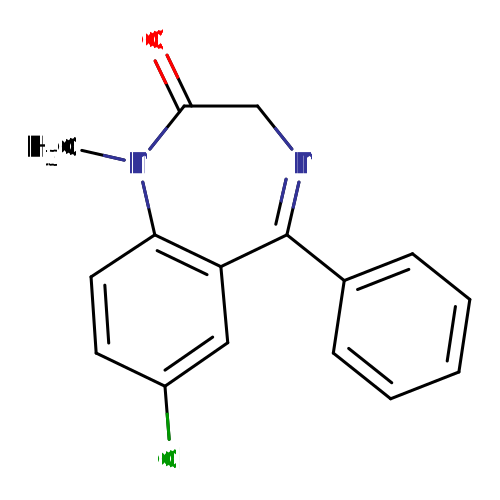
Structure for Diazepam (DB00829)
- Weight
- Average: 284.74
Monoisotopic: 284.071640755 - Chemical Formula
- C16H13ClN2O
- Synonyms
- 7-chloro-1,3-dihydro-1-methyl-5-phenyl-2H-1,4-benzodiazepin-2-one
- Diazepam
- Methyl diazepinone
- NRL-1
- External IDs
- NSC-169897
- NSC-77518
- RO 5-2807
- RO-5-2807
- WY-3467

Pharmacology
- Indication
In general, diazepam is useful in the symptomatic management of mild to moderate degrees of anxiety in conditions dominated by tension, excitation, agitation, fear, or aggressiveness such as may occur in psychoneurosis, anxiety reactions due to stress conditions, and anxiety states with somatic expression.16
Moreover, in acute alcoholic withdrawal, diazepam may be useful in the symptomatic relief of acute agitation, tremor, and impending acute delirium tremens.16
Furthermore, diazepam is a useful adjunct for the relief of skeletal muscle spasm due to reflex spasm to local pathologies, such as inflammation of the muscle and joints or secondary to trauma; spasticity caused by upper motor neuron disorders, such as cerebral palsy and paraplegia; athetosis and the rare "stiff man syndrome".16
Particular label information from the United Kingdom also lists particular age-specific indications, including for adults: (1) The short-term relief (2-4 weeks) only, of anxiety which is severe, disabling, or subjecting the individual to unacceptable distress, occurring alone or in association with insomnia or short-term psychosomatic, organic or psychotic illness, (2) cerebral palsy, (3) muscle spasm, (4) as an adjunct to certain types of epilepsy (eg. myoclonus), (5) symptomatic treatment of acute alcohol withdrawal, (6) as oral premedication for the nervous dental patient, and (7) for premedication before surgery.6
In the same UK label information, diazepam is indicated in children for: (1) control of tension and irritability in cerebral spasticity in selected cases, (2) as an adjunct to the control of muscle spasm in tetanus, and for (3) oral premedication.6
A diazepam nasal spray is indicated in patients 6 years and older to treat intermittent, stereotypic episodes of frequent seizure activity that are different than the patient's usual seizure pattern.8
 Reduce drug development failure ratesBuild, train, & validate machine-learning modelswith evidence-based and structured datasets.Build, train, & validate predictive machine-learning models with structured datasets.
- Associated Conditions
Indication Type Indication Combined Product Details Approval Level Age Group Patient Characteristics Dose Form Symptomatic treatment of Acute agitation •••••••••••• ••••••••• •••••• Symptomatic treatment of Acute agitation •••••••••••• •••••••••• •••••••• Symptomatic treatment of Alcohol withdrawal delirium •••••••••••• •••••••••• •••••••• Symptomatic treatment of Alcohol withdrawal delirium •••••••••••• ••••••••• •••••• Symptomatic treatment of Alcohol withdrawal hallucinosis •••••••••••• •••••••••• •••••••• - Associated Therapies
- Contraindications & Blackbox Warnings
 Prevent Adverse Drug Events TodayTap into our Clinical API for life-saving information on contraindications & blackbox warnings, population restrictions, harmful risks, & more.Avoid life-threatening adverse drug events with our Clinical API
- Pharmacodynamics
Diazepam is a benzodiazepine that exerts anxiolytic, sedative, muscle- relaxant, anticonvulsant and amnestic effects 15,16,6. Most of these effects are thought to result from facilitation of the action of gamma aminobutyric acid (GABA), an inhibitory neurotransmitter in the central nervous system 15,16,6.
- Mechanism of action
Diazepam is a benzodiazepine tranquilliser with anticonvulsant, sedative, muscle relaxant and amnesic properties 15,16,6.
Benzodiazepines, such as diazepam, bind to receptors in various regions of the brain and spinal cord. This binding increases the inhibitory effects of gamma-aminobutyric acid (GABA) 15,16,6. GABAs functions include CNS involvement in sleep induction. Also involved in the control of hypnosis, memory, anxiety, epilepsy and neuronal excitability 15,16,6.
Target Actions Organism AGABA(A) Receptor positive allosteric modulatorHumans AGABA(A) Receptor Benzodiazepine Binding Site ligandHumans - Absorption
After oral administration, it is considered that diazepam is rapidly and completely absorbed from the gastrointestinal tract as >90% of diazepam is absorbed and the average time to achieve peak plasma concentrations is 1 – 1.5 hours with a range of 0.25 to 2.5 hours 15,16,6.
Absorption is delayed and decreased when administered with a moderate fat meal 15. In the presence of food mean lag times are approximately 45 minutes as compared with 15 minutes when fasting 15. There is also an increase in the average time to achieve peak concentrations to about 2.5 hours in the presence of food as compared with 1.25 hours when fasting 15. This results in an average decrease in Cmax of 20% in addition to a 27% decrease in AUC (range 15% to 50%) when administered with food 15.
- Volume of distribution
In young healthy males, the volume of distribution at steady-state is 0.8 to 1.0 L/kg 15.
- Protein binding
Despite high binding to plasma proteins (98-99%) - mainly albumin and to a lesser extent α1-acid glycoprotein - diazepam is widely distributed into tissues and crosses the blood-brain barrier and is highly lipid soluble, which causes the initial effects to decrease rapidly as it is redistributed into fat deposits and tissues 15,16,6.
- Metabolism
Diazepam is N-demethylated by CYP3A4 and 2C19 to the active metabolite N-desmethyldiazepam, and is hydroxylated by CYP3A4 to the active metabolite temazepam 15,16. N-desmethyldiazepam and temazepam are both further metabolized to oxazepam 15,16. Temazepam and oxazepam are further largely eliminated by way of conjugation to glucuronic acid via glucuronidation 15,16.
Furthermore, oxidation of diazepam is mediated by cytochrome P450 isozymes; formation of desmethyl-diazepam mainly by CYP2C19 and CYP3A and 3-hydroxy-diazepam (temazepam) and oxazepam by CYP3A. Because CYP2C19 is polymorphic, extensive metabolizers (EMs), and poor metabolizers (PMs) of diazepam can be distinguished 15,16. PMs of diazepam showed significantly lower clearance (12 vs 26 mL/min) and longer elimination half-life (88 vs 41 h) of diazepam than EMs after a single oral dose 15,16. Also, PMs had lower clearance, higher AUC and longer elimination half-life of desmethyl-diazepam 15,16.
Hover over products below to view reaction partners
- Route of elimination
Diazepam and its metabolites are excreted mainly in the urine, predominantly as their glucuronide conjugates 15,16,6.
- Half-life
Diazepam has a biphasic half-life with an initial rapid distribution phase followed by a prolonged terminal elimination phase of 1 or 2 days; its action is further prolonged by the even longer half-life of 2-5 days of its principal active metabolite, desmethyldiazepam (nordiazepam), the relative proportion of which increases in the body on long-term administration 6. The plasma half-life of diazepam is prolonged in neonates, in the elderly, and in patients with kidney or liver disease 6.
- Clearance
The clearance of diazepam is 20 to 30 mL/min in young adults 15,16.
- Adverse Effects
 Improve decision support & research outcomesWith structured adverse effects data, including: blackbox warnings, adverse reactions, warning & precautions, & incidence rates. View sample adverse effects data in our new Data Library!Improve decision support & research outcomes with our structured adverse effects data.
- Toxicity
The symptoms of diazepam overdose are mainly an intensification of the therapeutic effects (ataxia, drowsiness, dysarthria, sedation, muscle weakness, profound sleep, hypotension, bradycardia, nystagmus) or paradoxical excitation 15,16,6. In most cases only observation of vital functions is required 15,16,6.
Extreme overdosage may lead to coma, areflexia, cardio-respiratory depression and apnoea, requiring appropriate countermeasures (ventilation, cardiovascular support) 15,16,6.
Benzodiazepine respiratory depressant effects are more serious in patients with severe chronic obstructive airways disease 15,16,6. Severe effects in overdose also include rhabdomyolysis and hypothermia 6. Overdose of benzodiazepines in combination with other CNS depressants (including alcohol) may be fatal and should be closely monitored 15.
In general, the use of diazepam in women of childbearing potential, and more specifically during known pregnancy, should be considered only when the clinical situation warrants the risk to the fetus 15. The possibility that a woman of childbearing potential may be pregnant at the time of institution of therapy should be considered 15. If this drug is used during pregnancy, or if the patient becomes pregnant while taking this drug, the patient should be apprised of the potential hazard to the fetus 15. Patients should also be advised that if they become pregnant during therapy or intend to become pregnant they should communicate with their physician about the desirability of discontinuing the drug 15.
Special care must be taken when diazepam is used during labor and delivery, as high single doses may produce irregularities in the fetal heart rate and hypotonia, poor sucking, hypothermia, and moderate respiratory depression in the neonates 15. With newborn infants it must be remembered that the enzyme system involved in the breakdown of the drug is not yet fully developed (especially in premature infants) 15.
Diazepam passes into breast milk 15. Breastfeeding is therefore not recommended in patients receiving diazepam 15.
Safety and effectiveness in pediatric patients below the age of 6 months have not been established 15.
In elderly patients, it is recommended that the dosage be limited to the smallest effective amount to preclude the development of ataxia or oversedation (2 mg to 2.5 mg once or twice daily, initially to be increased gradually as needed and tolerated) 15. Extensive accumulation of diazepam and its major metabolite, desmethyldiazepam, has been noted following chronic administration of diazepam in healthy elderly male subjects. Metabolites of this drug are known to be substantially excreted by the kidney, and the risk of toxic reactions may be greater in patients with impaired renal function 15. Because elderly patients are more likely to have decreased renal function, care should be taken in dose selection, and it may be useful to monitor renal function 15.
Decreases in clearance and protein binding, and increases in volume of distribution and half-life has been reported in patients with cirrhosis 15. In such patients, a 2- to 5- fold increase in mean half-life has been reported 15. Delayed elimination has also been reported for the active metabolite desmethyldiazepam 15. Benzodiazepines are commonly implicated in hepatic encephalopathy 15. Increases in half-life have also been reported in hepatic fibrosis and in both acute and chronic hepatitis 15.
- Pathways
- Not Available
- Pharmacogenomic Effects/ADRs
Interacting Gene/Enzyme Allele name Genotype(s) Defining Change(s) Type(s) Description Details Cytochrome P450 2C19 CYP2C19*2A Not Available 681G>A Effect Inferred Poor drug metabolizer. Details Cytochrome P450 2C19 CYP2C19*2B Not Available 681G>A Effect Inferred Poor drug metabolizer. Details Cytochrome P450 2C19 CYP2C19*3 Not Available 636G>A Effect Inferred Poor drug metabolizer. Details Cytochrome P450 2C19 CYP2C19*4 Not Available 1A>G Effect Inferred Poor drug metabolizer. Details Cytochrome P450 2C19 CYP2C19*5 Not Available 1297C>T Effect Inferred Poor drug metabolizer. Details Cytochrome P450 2C19 CYP2C19*6 Not Available 395G>A Effect Inferred Poor drug metabolizer. Details Cytochrome P450 2C19 CYP2C19*7 Not Available 19294T>A Effect Inferred Poor drug metabolizer. Details Cytochrome P450 2C19 CYP2C19*22 Not Available 557G>C / 991A>G Effect Inferred Poor drug metabolizer. Details Cytochrome P450 2C19 CYP2C19*24 Not Available 99C>T / 991A>G … show all Effect Inferred Poor drug metabolizer. Details Cytochrome P450 2C19 CYP2C19*35 Not Available 12662A>G Effect Inferred Poor drug metabolizer. Details Cytochrome P450 3A4 CYP3A4*20 Not Available 1461_1462insA Effect Inferred Poor drug metabolizer. Details Cytochrome P450 3A4 CYP3A4*26 Not Available 802C>T Effect Inferred Poor drug metabolizer. Details
Interactions
- Drug Interactions
- This information should not be interpreted without the help of a healthcare provider. If you believe you are experiencing an interaction, contact a healthcare provider immediately. The absence of an interaction does not necessarily mean no interactions exist.
Drug Interaction Integrate drug-drug
interactions in your software1,2-Benzodiazepine The risk or severity of CNS depression can be increased when Diazepam is combined with 1,2-Benzodiazepine. Abacavir Diazepam may decrease the excretion rate of Abacavir which could result in a higher serum level. Abametapir The serum concentration of Diazepam can be increased when it is combined with Abametapir. Abatacept The metabolism of Diazepam can be increased when combined with Abatacept. Abrocitinib The metabolism of Abrocitinib can be decreased when combined with Diazepam. - Food Interactions
- Avoid alcohol.
- Take on an empty stomach. Food may decrease absorption and time to therapeutic effect.
Products
 Drug product information from 10+ global regionsOur datasets provide approved product information including:dosage, form, labeller, route of administration, and marketing period.Access drug product information from over 10 global regions.
- Product Ingredients
Ingredient UNII CAS InChI Key Diazepam hydrochloride 6JD21U639H 52468-36-7 BPYZIOINRAWEQL-UHFFFAOYSA-N - Product Images
- International/Other Brands
- Diapam (Orion) / Nervium (Saba) / Relanium (GlaxoSmithKline)
- Brand Name Prescription Products
Name Dosage Strength Route Labeller Marketing Start Marketing End Region Image Diastat Gel 20 mg/5mL Rectal Physicians Total Care, Inc. 1997-07-29 2011-06-30 US 
Diastat Gel 15 mg / 3 mL Rectal Bausch Health, Canada Inc. 2022-04-21 Not applicable Canada 
Diastat Gel 10 mg / 2 mL Rectal Bausch Health, Canada Inc. 2022-04-21 Not applicable Canada Diastat Gel 10 mg/2mL Rectal Bausch Health US, LLC 1997-07-29 2024-08-31 US Diastat Gel 20 mg/4mL Rectal Bausch Health US, LLC 1997-07-29 2023-12-31 US - Generic Prescription Products
Name Dosage Strength Route Labeller Marketing Start Marketing End Region Image Bio-diazepam Tablet 10 mg Oral Biomed Pharma 2003-04-23 2022-07-19 Canada Bio-diazepam Tablet 5 mg Oral Biomed Pharma 2003-04-23 2022-07-19 Canada Bio-diazepam Tablet 2 mg Oral Biomed Pharma 2003-04-23 2022-07-19 Canada Diazepam Tablet 10 mg/1 Oral bryant ranch prepack 2019-10-31 Not applicable US Diazepam Tablet 10 mg/1 Oral A S Medication Solutions 2006-03-31 Not applicable US - Mixture Products
Name Ingredients Dosage Route Labeller Marketing Start Marketing End Region Image OPINEURON Diazepam (2 mg) + Metamizole sodium (500 mg) Tablet Otto Pharmaceutical Industries 2017-01-31 2024-01-28 Indonesia 
- Unapproved/Other Products
Name Ingredients Dosage Route Labeller Marketing Start Marketing End Region Image Gabavale-5 Diazepam (5 mg/1) + Choline (125 mg/1) Kit Oral Physician Therapeutics Llc 2011-05-07 Not applicable US Topical Nerve Pain Diazepam (0.1 g/100mL) + Diclofenac sodium (0.1 g/100mL) + Gabapentin (0.1 g/100mL) + Ketamine (0.1 g/100mL) Cream Topical Dr Marc's Manufacturing And Sales 2016-02-23 2018-04-17 US Topical Pain Diazepam (0.1 g/100mL) + Hydrocodone (0.1 g/100mL) + Ibuprofen (0.1 g/100mL) + Tramadol (0.1 g/100mL) Cream Topical Dr Marc's Manufacturing And Sales 2016-02-23 2018-04-17 US


Categories
- ATC Codes
- N05BA01 — Diazepam
- Drug Categories
- Adjuvants, Anesthesia
- Anesthetics
- Anesthetics, General
- Anesthetics, Intravenous
- Anti-Anxiety Agents
- Anticonvulsants
- Autonomic Agents
- Benzazepines
- Benzodiazepine hypnotics and sedatives
- Benzodiazepines and benzodiazepine derivatives
- Benzodiazepinones
- Central Nervous System Agents
- Central Nervous System Depressants
- Cytochrome P-450 CYP2B6 Substrates
- Cytochrome P-450 CYP2C18 Substrates
- Cytochrome P-450 CYP2C19 Inhibitors
- Cytochrome P-450 CYP2C19 inhibitors (strength unknown)
- Cytochrome P-450 CYP2C19 Substrates
- Cytochrome P-450 CYP2C8 Substrates
- Cytochrome P-450 CYP2C9 Substrates
- Cytochrome P-450 CYP2E1 Inhibitors
- Cytochrome P-450 CYP2E1 Inhibitors (strength unknown)
- Cytochrome P-450 CYP3A Inhibitors
- Cytochrome P-450 CYP3A Substrates
- Cytochrome P-450 CYP3A4 Inhibitors
- Cytochrome P-450 CYP3A4 Inhibitors (strength unknown)
- Cytochrome P-450 CYP3A4 Substrates
- Cytochrome P-450 CYP3A5 Substrates
- Cytochrome P-450 CYP3A7 Substrates
- Cytochrome P-450 Enzyme Inhibitors
- Cytochrome P-450 Substrates
- Drugs that are Mainly Renally Excreted
- GABA Agents
- GABA Modulators
- Heterocyclic Compounds, Fused-Ring
- Hypnotics and Sedatives
- Muscle Relaxants
- Muscle Relaxants, Centrally Acting Agents
- Nervous System
- P-glycoprotein substrates
- Peripheral Nervous System Agents
- Psycholeptics
- Psychotropic Drugs
- Tranquilizing Agents
- Chemical TaxonomyProvided by Classyfire
- Description
- This compound belongs to the class of organic compounds known as 1,4-benzodiazepines. These are organic compounds containing a benzene ring fused to a 1,4-azepine.
- Kingdom
- Organic compounds
- Super Class
- Organoheterocyclic compounds
- Class
- Benzodiazepines
- Sub Class
- 1,4-benzodiazepines
- Direct Parent
- 1,4-benzodiazepines
- Alternative Parents
- Alpha amino acids and derivatives / Benzene and substituted derivatives / Aryl chlorides / Tertiary carboxylic acid amides / Lactams / Ketimines / Propargyl-type 1,3-dipolar organic compounds / Azacyclic compounds / Organopnictogen compounds / Organochlorides show 3 more
- Substituents
- 1,4-benzodiazepine / Alpha-amino acid or derivatives / Aromatic heteropolycyclic compound / Aryl chloride / Aryl halide / Azacycle / Benzenoid / Carbonyl group / Carboxamide group / Carboxylic acid derivative show 16 more
- Molecular Framework
- Aromatic heteropolycyclic compounds
- External Descriptors
- organochlorine compound, 1,4-benzodiazepinone (CHEBI:49575)
- Affected organisms
- Humans and other mammals
Chemical Identifiers
- UNII
- Q3JTX2Q7TU
- CAS number
- 439-14-5
- InChI Key
- AAOVKJBEBIDNHE-UHFFFAOYSA-N
- InChI
- InChI=1S/C16H13ClN2O/c1-19-14-8-7-12(17)9-13(14)16(18-10-15(19)20)11-5-3-2-4-6-11/h2-9H,10H2,1H3
- IUPAC Name
- 7-chloro-1-methyl-5-phenyl-2,3-dihydro-1H-1,4-benzodiazepin-2-one
- SMILES
- CN1C2=C(C=C(Cl)C=C2)C(=NCC1=O)C1=CC=CC=C1
References
- Synthesis Reference
Chase, G.; U.S. Patent 3,102,116; August 27, 1963; assigned to Hoffmann-La Roche Inc. Reeder, E. and Sternbach, L.H.; U.S. Patent 3,109,843; November 5, 1963; assigned to Hoffmann-La Roche lnc. Reeder, E. and Sternbach, L.H.; U.S. Patent 3,136,815; June 9, 1964; assigned to Hoffmann- La Roche Inc. Reeder, E. and Sternbach, L.H.; US. Patent 3,371,085; February 27, 1968; assigned to Hoffmann-La Roche Inc.
- General References
- Mant A, Whicker SD, McManus P, Birkett DJ, Edmonds D, Dumbrell D: Benzodiazepine utilisation in Australia: report from a new pharmacoepidemiological database. Aust J Public Health. 1993 Dec;17(4):345-9. [Article]
- Earley JV, Fryer RI, Ning RY: Quinazolines and 1,4-benzodiazepines. LXXXIX: Haptens useful in benzodiazepine immunoassay development. J Pharm Sci. 1979 Jul;68(7):845-50. [Article]
- Usami N, Yamamoto T, Shintani S, Ishikura S, Higaki Y, Katagiri Y, Hara A: Substrate specificity of human 3(20)alpha-hydroxysteroid dehydrogenase for neurosteroids and its inhibition by benzodiazepines. Biol Pharm Bull. 2002 Apr;25(4):441-5. [Article]
- Oishi R, Nishibori M, Itoh Y, Saeki K: Diazepam-induced decrease in histamine turnover in mouse brain. Eur J Pharmacol. 1986 May 27;124(3):337-42. [Article]
- McLean MJ, Macdonald RL: Benzodiazepines, but not beta carbolines, limit high frequency repetitive firing of action potentials of spinal cord neurons in cell culture. J Pharmacol Exp Ther. 1988 Feb;244(2):789-95. [Article]
- Electronic Medicines Compendium: Diazepam Tablets BP 2mg Monograph [Link]
- Xeris Pharmaceuticals Awarded Phase I-II NIH SBIR Fast Track Grant to Advance a Stable, Non-Aqueous Diazepam, Subcutaneous Injection for Treatment of Acute Repetitive Seizures in Patients with Epilepsy: Press Release [Link]
- FDA Approved Drug Products Valtoco Diazepam Nasal Spray [Link]
- FDA Approved Drug Products: VALTOCO® (diazepam nasal spray), CIV Jan 2023 [Link]
- FDA Approved Drug Products: Diastat® AcuDial™ Rectal Delivery System (diazepam rectal gel) [Link]
- FDA Approved Drug Products: VALIUM (diazepam) tablets, for oral use [Link]
- FDA Approved Drug Products: DIAZEPAM AUTOINJECTOR [Link]
- FDA Approved Drug Products: DIAZEPAM- diazepam injection, solution [Link]
- FDA Approved Drug Products: DIAZEPAM- diazepam oral solution [Link]
- Diazepam FDA Label [File]
- Diazepam Canadian Product Information [File]
- WHO Model Prescribing Information: Drugs Used in Anaesthesia, Premedication: Diazepam [File]
- External Links
- Human Metabolome Database
- HMDB0014967
- KEGG Drug
- D00293
- KEGG Compound
- C06948
- PubChem Compound
- 3016
- PubChem Substance
- 46505210
- ChemSpider
- 2908
- BindingDB
- 50000766
- 3322
- ChEBI
- 49575
- ChEMBL
- CHEMBL12
- ZINC
- ZINC000000006427
- Therapeutic Targets Database
- DNC000549
- PharmGKB
- PA449283
- Guide to Pharmacology
- GtP Drug Page
- PDBe Ligand
- DZP
- RxList
- RxList Drug Page
- Drugs.com
- Drugs.com Drug Page
- PDRhealth
- PDRhealth Drug Page
- Wikipedia
- Diazepam
- PDB Entries
- 2bxf / 6hup / 6x3x / 8bhk
- FDA label
- Download (260 KB)
- MSDS
- Download (53.1 KB)
Clinical Trials
- Clinical Trials
Phase Status Purpose Conditions Count 4 Completed Diagnostic Partial Epilepsy 1 4 Completed Other Abuse Potential 1 4 Completed Prevention Febrile Convulsions 1 4 Completed Supportive Care Cerebral Palsy (CP) / Excessive crying / Pain 1 4 Completed Supportive Care Infertility 1
Pharmacoeconomics
- Manufacturers
- Hoffmann la roche inc
- Roxane laboratories inc
- Valeant pharmaceuticals international
- Abraxis pharmaceutical products
- Baxter healthcare corp anesthesia and critical care
- Hospira inc
- Marsam pharmaceuticals llc
- Parenta pharmaceuticals inc
- Us army medical research materiel command
- Warner chilcott div warner lambert co
- Watson laboratories inc
- Pharmacia and upjohn co
- Actavis elizabeth llc
- Barr laboratories inc
- Dava pharmaceuticals inc
- Duramed pharmaceuticals inc sub barr laboratories inc
- Ferndale laboratories inc
- Halsey drug co inc
- Ivax pharmaceuticals inc sub teva pharmaceuticals usa
- Martec usa llc
- Mylan pharmaceuticals inc
- Par pharmaceutical inc
- Pioneer pharmaceuticals inc
- Sandoz inc
- Vintage pharmaceuticals inc
- Quantum pharmics ltd
- Packagers
- Aidarex Pharmacuticals LLC
- Amerisource Health Services Corp.
- Apotheca Inc.
- A-S Medication Solutions LLC
- Barr Pharmaceuticals
- Baxter International Inc.
- Blenheim Pharmacal
- Bryant Ranch Prepack
- C.O. Truxton Inc.
- Cardinal Health
- Caremark LLC
- Carlisle Laboratories Inc.
- Centaur Pharmaceuticals Pvt Ltd.
- Comprehensive Consultant Services Inc.
- Corepharma LLC
- Direct Dispensing Inc.
- Dispensing Solutions
- Diversified Healthcare Services Inc.
- DPT Laboratories Ltd.
- Ebewe Pharma
- F Hoffmann-La Roche Ltd.
- General Injectables and Vaccines Inc.
- Group Health Cooperative
- H.J. Harkins Co. Inc.
- Heartland Repack Services LLC
- Hospira Inc.
- Innoviant Pharmacy Inc.
- Ivax Pharmaceuticals
- Kaiser Foundation Hospital
- Keltman Pharmaceuticals Inc.
- Lake Erie Medical and Surgical Supply
- Liberty Pharmaceuticals
- Major Pharmaceuticals
- Mckesson Corp.
- Meridian Medical Technologies Inc.
- Murfreesboro Pharmaceutical Nursing Supply
- Mylan
- Nucare Pharmaceuticals Inc.
- Palmetto Pharmaceuticals Inc.
- PCA LLC
- PD-Rx Pharmaceuticals Inc.
- Pharmedix
- Physicians Total Care Inc.
- Preferred Pharmaceuticals Inc.
- Prepackage Specialists
- Prepak Systems Inc.
- Qualitest
- Rebel Distributors Corp.
- Redpharm Drug
- Remedy Repack
- Roxane Labs
- Shire Inc.
- Southwood Pharmaceuticals
- Spectrum Pharmaceuticals
- St Mary's Medical Park Pharmacy
- Stat Rx Usa
- Talbert Medical Management Corp.
- UDL Laboratories
- United Research Laboratories Inc.
- Va Cmop Dallas
- Valeant Ltd.
- Vintage Pharmaceuticals Inc.
- Watson Pharmaceuticals
- Wyeth Pharmaceuticals
- Dosage Forms
Form Route Strength Capsule Oral 2 MG Capsule Oral 5 MG Injection, solution Intravenous Tablet, film coated Oral Tablet Oral 5 mg Solution Intravenous 10 mg Injection Intramuscular; Intravenous 10 mg/2ml Injection Intramuscular Injection Intramuscular; Intravenous 5 mg/ml Tablet Oral 2 mg Tablet Oral 10 mg Gel Rectal 10 mg / 2 mL Gel Rectal 15 mg / 3 mL Gel Rectal 20 mg/5mL Gel Rectal 5 mg / 1 mL Capsule Oral 8.0000 mg Capsule Oral 10 mg Injection, solution Intramuscular; Intravenous Emulsion Intramuscular; Intravenous Emulsion Intramuscular; Intravenous 5 mg / mL Enema Rectal 10 MG Enema Rectal 5 MG Gel Rectal 10 mg/2mL Gel Rectal 10 mg/2g Gel Rectal 2.5 mg/0.5mL Gel Rectal 20 mg/4mL Gel Rectal 20 mg/4g Injection Intramuscular 10 mg/2mL Injection Intramuscular; Intravenous Injection Intramuscular; Intravenous 5 mg/1mL Injection Intramuscular; Intravenous 5.0 mg/1.0mL Injection, solution Intramuscular; Intravenous 10 mg/2mL Injection, solution Intramuscular; Intravenous 5 mg/1mL Solution Oral 5 mg/1mL Solution Oral 5 mg/5mL Tablet Oral 10 mg/1 Tablet Oral 2 mg/1 Tablet Oral 5 mg/1 Tablet, coated Oral Tablet, film coated Oral 10 mg Solution Intramuscular; Intravenous 5 mg Tablet Oral 10 mg / tab Capsule, liquid filled Oral 5 mg Tablet Oral Liquid Intramuscular 10 mg / 2 mL Pill Solution Rectal Solution Intramuscular; Intravenous 10 mg / 2 mL Solution Intramuscular; Intravenous 5 mg / mL Solution, concentrate Oral 5 mg/1mL Tablet, coated Oral 5 MG Solution / drops; suspension / drops Oral 10 MG/ML Solution Intramuscular; Intravenous 1000000 mg Solution Parenteral 10 mg Capsule Oral 6.000 mg Kit Oral Solution Intramuscular; Intravenous Injection Parenteral 10 mg Tablet Oral 2 mg / tab Tablet Oral 5 mg / tab Solution Rectal 10 MG/2.5ML Solution Rectal 5 MG/2.5ML Tablet Tablet, film coated Oral Injection, solution Intramuscular; Intravenous 10 MG/1ML Pill 15 MG Solution / drops Oral 500 MG/100ML Tablet Oral 5.000 mg Solution Intravenous 10.000 mg Solution Oral 1 mg / mL Solution / drops Oral Solution Parenteral 10.000 mg Tablet Oral 10.000 mg Solution Intramuscular 10 mg Solution Intramuscular; Intravenous 10 mg Tablet, coated Oral Syrup Oral Enema Rectal 5 mg/2.5ml Solution Parenteral 10.00 mg Cream Topical Solution / drops Oral 0.5 % Enema Rectal Injection Solution / drops Oral 5 MG/ML Liquid Intramuscular; Intravenous 10 mg / 2 mL Solution / drops Oral Spray Nasal 10 mg/100uL Spray Nasal 5 mg/100uL Spray Nasal 7.5 mg/100uL Tablet Oral Injection, solution Suppository - Prices
Unit description Cost Unit Diastat acudial 12.5-15-20 mg 429.58USD each Diastat acudial 5-7.5-10 mg kit 429.58USD kit Diastat AcuDial 10 mg Gel 1 Box Contains Two 10 mg Syringes 423.95USD box Diastat AcuDial 20 mg Gel 1 Box Contains Two 20 mg Syringes 413.6USD box Diastat 2.5 mg pedi system 362.12USD each Valium 10 mg tablet 6.06USD tablet Diazepam powder 3.99USD g Valium 5 mg tablet 2.55USD tablet Valium 2 mg tablet 2.43USD tablet Diazemuls 5 mg/ml Emulsion 1.23USD ml Diazepam 5 mg/ml 0.69USD ml Diazepam 10 mg tablet 0.38USD tablet Diazepam 5 mg tablet 0.3USD tablet Diazepam 2 mg tablet 0.26USD tablet Diazepam 5 mg/ml vial 0.17USD ml Apo-Diazepam 10 mg Tablet 0.09USD tablet Apo-Diazepam 5 mg Tablet 0.07USD tablet Apo-Diazepam 2 mg Tablet 0.05USD tablet DrugBank does not sell nor buy drugs. Pricing information is supplied for informational purposes only.- Patents
Patent Number Pediatric Extension Approved Expires (estimated) Region US5462740 No 1995-10-31 2013-09-17 US CA2171627 No 2006-01-31 2014-09-12 Canada US10265402 No 2019-04-23 2025-05-11 US US9642913 No 2017-05-09 2025-05-11 US US8895546 No 2014-11-25 2029-03-27 US US8927497 No 2015-01-06 2025-07-21 US US9763876 No 2017-09-19 2029-03-27 US US11241414 No 2009-03-27 2029-03-27 US US11793786 No 2009-03-27 2029-03-27 US
Properties
- State
- Solid
- Experimental Properties
Property Value Source melting point (°C) 125-126 Chase, G.; U.S. Patent 3,102,116; August 27, 1963; assigned to Hoffmann-La Roche Inc. Reeder, E. and Sternbach, L.H.; U.S. Patent 3,109,843; November 5, 1963; assigned to Hoffmann-La Roche lnc. Reeder, E. and Sternbach, L.H.; U.S. Patent 3,136,815; June 9, 1964; assigned to Hoffmann- La Roche Inc. Reeder, E. and Sternbach, L.H.; US. Patent 3,371,085; February 27, 1968; assigned to Hoffmann-La Roche Inc. water solubility 50 mg/L (at 25 °C) YALKOWSKY,SH & DANNENFELSER,RM (1992) logP 2.82 SANGSTER (1994) Caco2 permeability -4.32 ADME Research, USCD pKa 3.4 MERCK INDEX (1996) - Predicted Properties
Property Value Source Water Solubility 0.0122 mg/mL ALOGPS logP 2.63 ALOGPS logP 3.08 Chemaxon logS -4.4 ALOGPS pKa (Strongest Basic) 2.92 Chemaxon Physiological Charge 0 Chemaxon Hydrogen Acceptor Count 2 Chemaxon Hydrogen Donor Count 0 Chemaxon Polar Surface Area 32.67 Å2 Chemaxon Rotatable Bond Count 1 Chemaxon Refractivity 79.81 m3·mol-1 Chemaxon Polarizability 29.39 Å3 Chemaxon Number of Rings 3 Chemaxon Bioavailability 1 Chemaxon Rule of Five Yes Chemaxon Ghose Filter Yes Chemaxon Veber's Rule Yes Chemaxon MDDR-like Rule No Chemaxon - Predicted ADMET Features
Property Value Probability Human Intestinal Absorption + 0.9948 Blood Brain Barrier + 0.9934 Caco-2 permeable + 0.8867 P-glycoprotein substrate Substrate 0.661 P-glycoprotein inhibitor I Non-inhibitor 0.5557 P-glycoprotein inhibitor II Non-inhibitor 0.8383 Renal organic cation transporter Inhibitor 0.6152 CYP450 2C9 substrate Non-substrate 0.6699 CYP450 2D6 substrate Non-substrate 0.9116 CYP450 3A4 substrate Substrate 0.8177 CYP450 1A2 substrate Inhibitor 0.8175 CYP450 2C9 inhibitor Non-inhibitor 0.5562 CYP450 2D6 inhibitor Non-inhibitor 0.858 CYP450 2C19 inhibitor Inhibitor 0.5221 CYP450 3A4 inhibitor Inhibitor 0.6423 CYP450 inhibitory promiscuity High CYP Inhibitory Promiscuity 0.5693 Ames test Non AMES toxic 0.9133 Carcinogenicity Non-carcinogens 0.8312 Biodegradation Not ready biodegradable 1.0 Rat acute toxicity 2.5946 LD50, mol/kg Not applicable hERG inhibition (predictor I) Weak inhibitor 0.9948 hERG inhibition (predictor II) Non-inhibitor 0.8734
Spectra
- Mass Spec (NIST)
- Download (10.4 KB)
- Spectra
- Chromatographic Properties
Collision Cross Sections (CCS)
Adduct CCS Value (Å2) Source type Source [M-H]- 167.7189021 predictedDarkChem Lite v0.1.0 [M-H]- 164.47304 predictedDeepCCS 1.0 (2019) [M+H]+ 167.8973021 predictedDarkChem Lite v0.1.0 [M+H]+ 166.83104 predictedDeepCCS 1.0 (2019) [M+Na]+ 167.4292021 predictedDarkChem Lite v0.1.0 [M+Na]+ 172.9242 predictedDeepCCS 1.0 (2019)
Targets

- Kind
- Protein group
- Organism
- Humans
- Pharmacological action
- Yes
- Actions
- Positive allosteric modulator
- Curator comments
- The GABA(A) receptor is pentameric (i.e. comprising 5 subunit proteins) and therefore has a multitude of potential isoforms. The above target is a collection of all possible GABA(A) subunits that may participate in the formation of the pentameric receptor and is not meant to imply direct a drug-protein interaction for each individual subunit.
- General Function
- Inhibitory extracellular ligand-gated ion channel activity
- Specific Function
- Component of the heteropentameric receptor for GABA, the major inhibitory neurotransmitter in the vertebrate brain. Functions also as histamine receptor and mediates cellular responses to histamine...
Components:
References
- Zhu S, Noviello CM, Teng J, Walsh RM Jr, Kim JJ, Hibbs RE: Structure of a human synaptic GABAA receptor. Nature. 2018 Jul;559(7712):67-72. doi: 10.1038/s41586-018-0255-3. Epub 2018 Jun 27. [Article]
- Sigel E, Steinmann ME: Structure, function, and modulation of GABA(A) receptors. J Biol Chem. 2012 Nov 23;287(48):40224-31. doi: 10.1074/jbc.R112.386664. Epub 2012 Oct 4. [Article]
- Kind
- Protein group
- Organism
- Humans
- Pharmacological action
- Yes
- Actions
- Ligand
- Curator comments
- Benzodiazepines modulate GABA(A) function by binding at the interface between alpha (α) and gamma (γ) subunits. Of the 6 α-subunits, only 4 (α-1, -2, -3, and -5) participate in the formation of this binding site. The above target is a collection of all α- and γ-subunits that are known to participate in the formation of the benzodiazepine binding site.
- General Function
- Inhibitory extracellular ligand-gated ion channel activity
- Specific Function
- Component of the heteropentameric receptor for GABA, the major inhibitory neurotransmitter in the vertebrate brain. Functions also as histamine receptor and mediates cellular responses to histamine...
Components:
References
- Sigel E, Steinmann ME: Structure, function, and modulation of GABA(A) receptors. J Biol Chem. 2012 Nov 23;287(48):40224-31. doi: 10.1074/jbc.R112.386664. Epub 2012 Oct 4. [Article]
- Zhu S, Noviello CM, Teng J, Walsh RM Jr, Kim JJ, Hibbs RE: Structure of a human synaptic GABAA receptor. Nature. 2018 Jul;559(7712):67-72. doi: 10.1038/s41586-018-0255-3. Epub 2018 Jun 27. [Article]
Enzymes
- Kind
- Protein
- Organism
- Humans
- Pharmacological action
- Unknown
- Actions
- Substrate
- General Function
- Steroid hydroxylase activity
- Specific Function
- Cytochromes P450 are a group of heme-thiolate monooxygenases. In liver microsomes, this enzyme is involved in an NADPH-dependent electron transport pathway. It oxidizes a variety of structurally un...
- Gene Name
- CYP2C9
- Uniprot ID
- P11712
- Uniprot Name
- Cytochrome P450 2C9
- Molecular Weight
- 55627.365 Da
References
- Zhou SF, Zhou ZW, Yang LP, Cai JP: Substrates, inducers, inhibitors and structure-activity relationships of human Cytochrome P450 2C9 and implications in drug development. Curr Med Chem. 2009;16(27):3480-675. Epub 2009 Sep 1. [Article]
- Jung F, Richardson TH, Raucy JL, Johnson EF: Diazepam metabolism by cDNA-expressed human 2C P450s: identification of P4502C18 and P4502C19 as low K(M) diazepam N-demethylases. Drug Metab Dispos. 1997 Feb;25(2):133-9. [Article]
- Calcaterra NE, Barrow JC: Classics in chemical neuroscience: diazepam (valium). ACS Chem Neurosci. 2014 Apr 16;5(4):253-60. doi: 10.1021/cn5000056. Epub 2014 Feb 27. [Article]
- Kind
- Protein
- Organism
- Humans
- Pharmacological action
- Unknown
- Actions
- Substrate
- General Function
- Oxygen binding
- Specific Function
- Cytochromes P450 are a group of heme-thiolate monooxygenases. In liver microsomes, this enzyme is involved in an NADPH-dependent electron transport pathway. It oxidizes a variety of structurally un...
- Gene Name
- CYP3A7
- Uniprot ID
- P24462
- Uniprot Name
- Cytochrome P450 3A7
- Molecular Weight
- 57525.03 Da
References
- Flockhart Table of Drug Interactions [Link]
- Kind
- Protein
- Organism
- Humans
- Pharmacological action
- Unknown
- Actions
- SubstrateInhibitor
- General Function
- Vitamin d3 25-hydroxylase activity
- Specific Function
- Cytochromes P450 are a group of heme-thiolate monooxygenases. In liver microsomes, this enzyme is involved in an NADPH-dependent electron transport pathway. It performs a variety of oxidation react...
- Gene Name
- CYP3A4
- Uniprot ID
- P08684
- Uniprot Name
- Cytochrome P450 3A4
- Molecular Weight
- 57342.67 Da
References
- Zhou SF, Zhou ZW, Yang LP, Cai JP: Substrates, inducers, inhibitors and structure-activity relationships of human Cytochrome P450 2C9 and implications in drug development. Curr Med Chem. 2009;16(27):3480-675. Epub 2009 Sep 1. [Article]
- Iribarne C, Dreano Y, Bardou LG, Menez JF, Berthou F: Interaction of methadone with substrates of human hepatic cytochrome P450 3A4. Toxicology. 1997 Feb 14;117(1):13-23. [Article]
- Flockhart Table of Drug Interactions [Link]
- Kind
- Protein
- Organism
- Humans
- Pharmacological action
- Unknown
- Actions
- SubstrateInhibitor
- General Function
- Steroid hydroxylase activity
- Specific Function
- Responsible for the metabolism of a number of therapeutic agents such as the anticonvulsant drug S-mephenytoin, omeprazole, proguanil, certain barbiturates, diazepam, propranolol, citalopram and im...
- Gene Name
- CYP2C19
- Uniprot ID
- P33261
- Uniprot Name
- Cytochrome P450 2C19
- Molecular Weight
- 55930.545 Da
References
- Zhou SF, Zhou ZW, Yang LP, Cai JP: Substrates, inducers, inhibitors and structure-activity relationships of human Cytochrome P450 2C9 and implications in drug development. Curr Med Chem. 2009;16(27):3480-675. Epub 2009 Sep 1. [Article]
- Jung F, Richardson TH, Raucy JL, Johnson EF: Diazepam metabolism by cDNA-expressed human 2C P450s: identification of P4502C18 and P4502C19 as low K(M) diazepam N-demethylases. Drug Metab Dispos. 1997 Feb;25(2):133-9. [Article]
- Murphy A, Wilbur K: Phenytoin-diazepam interaction. Ann Pharmacother. 2003 May;37(5):659-63. doi: 10.1345/aph.1C413. [Article]
- Rasmussen BB, Nielsen TL, Brosen K: Fluvoxamine inhibits the CYP2C19-catalysed metabolism of proguanil in vitro. Eur J Clin Pharmacol. 1998 Nov-Dec;54(9-10):735-40. [Article]
- Flockhart Table of Drug Interactions [Link]
- Kind
- Protein
- Organism
- Humans
- Pharmacological action
- Unknown
- Actions
- Substrate
- General Function
- Oxygen binding
- Specific Function
- Cytochromes P450 are a group of heme-thiolate monooxygenases. In liver microsomes, this enzyme is involved in an NADPH-dependent electron transport pathway. It oxidizes a variety of structurally un...
- Gene Name
- CYP3A5
- Uniprot ID
- P20815
- Uniprot Name
- Cytochrome P450 3A5
- Molecular Weight
- 57108.065 Da
References
- Mei Q, Tang C, Assang C, Lin Y, Slaughter D, Rodrigues AD, Baillie TA, Rushmore TH, Shou M: Role of a potent inhibitory monoclonal antibody to cytochrome P-450 3A4 in assessment of human drug metabolism. J Pharmacol Exp Ther. 1999 Nov;291(2):749-59. [Article]
- Flockhart Table of Drug Interactions [Link]
- Diazepam Therapy and CYP2C19 Genotype [Link]
- Kind
- Protein
- Organism
- Humans
- Pharmacological action
- Unknown
- Actions
- Substrate
- General Function
- Steroid hydroxylase activity
- Specific Function
- Cytochromes P450 are a group of heme-thiolate monooxygenases. In liver microsomes, this enzyme is involved in an NADPH-dependent electron transport pathway. It oxidizes a variety of structurally un...
- Gene Name
- CYP2B6
- Uniprot ID
- P20813
- Uniprot Name
- Cytochrome P450 2B6
- Molecular Weight
- 56277.81 Da
References
- Lin Y, Lu P, Tang C, Mei Q, Sandig G, Rodrigues AD, Rushmore TH, Shou M: Substrate inhibition kinetics for cytochrome P450-catalyzed reactions. Drug Metab Dispos. 2001 Apr;29(4 Pt 1):368-74. [Article]
- Hedrich WD, Hassan HE, Wang H: Insights into CYP2B6-mediated drug-drug interactions. Acta Pharm Sin B. 2016 Sep;6(5):413-425. doi: 10.1016/j.apsb.2016.07.016. Epub 2016 Aug 9. [Article]
- Ono S, Hatanaka T, Miyazawa S, Tsutsui M, Aoyama T, Gonzalez FJ, Satoh T: Human liver microsomal diazepam metabolism using cDNA-expressed cytochrome P450s: role of CYP2B6, 2C19 and the 3A subfamily. Xenobiotica. 1996 Nov;26(11):1155-66. doi: 10.3109/00498259609050260. [Article]
- Kind
- Protein
- Organism
- Humans
- Pharmacological action
- Unknown
- Actions
- Substrate
- General Function
- Prostaglandin-endoperoxide synthase activity
- Specific Function
- Converts arachidonate to prostaglandin H2 (PGH2), a committed step in prostanoid synthesis. Involved in the constitutive production of prostanoids in particular in the stomach and platelets. In gas...
- Gene Name
- PTGS1
- Uniprot ID
- P23219
- Uniprot Name
- Prostaglandin G/H synthase 1
- Molecular Weight
- 68685.82 Da
References
- Zhou SF, Zhou ZW, Yang LP, Cai JP: Substrates, inducers, inhibitors and structure-activity relationships of human Cytochrome P450 2C9 and implications in drug development. Curr Med Chem. 2009;16(27):3480-675. Epub 2009 Sep 1. [Article]
- Kind
- Protein
- Organism
- Humans
- Pharmacological action
- Unknown
- Actions
- Substrate
- General Function
- Steroid hydroxylase activity
- Specific Function
- Cytochromes P450 are a group of heme-thiolate monooxygenases. In liver microsomes, this enzyme is involved in an NADPH-dependent electron transport pathway. It oxidizes a variety of structurally un...
- Gene Name
- CYP2C18
- Uniprot ID
- P33260
- Uniprot Name
- Cytochrome P450 2C18
- Molecular Weight
- 55710.075 Da
References
- Richardson TH, Griffin KJ, Jung F, Raucy JL, Johnson EF: Targeted antipeptide antibodies to cytochrome P450 2C18 based on epitope mapping of an inhibitory monoclonal antibody to P450 2C51. Arch Biochem Biophys. 1997 Feb 15;338(2):157-64. doi: 10.1006/abbi.1996.9817. [Article]
- Kind
- Protein
- Organism
- Humans
- Pharmacological action
- Unknown
- Actions
- Substrate
- Curator comments
- This enzyme relationship is supported by the results of 1 in vitro study in the literature.
- General Function
- Steroid hydroxylase activity
- Specific Function
- Cytochromes P450 are a group of heme-thiolate monooxygenases. In liver microsomes, this enzyme is involved in an NADPH-dependent electron transport pathway. It oxidizes a variety of structurally un...
- Gene Name
- CYP2C8
- Uniprot ID
- P10632
- Uniprot Name
- Cytochrome P450 2C8
- Molecular Weight
- 55824.275 Da
References
- Shou M, Lu T, Krausz KW, Sai Y, Yang T, Korzekwa KR, Gonzalez FJ, Gelboin HV: Use of inhibitory monoclonal antibodies to assess the contribution of cytochromes P450 to human drug metabolism. Eur J Pharmacol. 2000 Apr 14;394(2-3):199-209. doi: 10.1016/s0014-2999(00)00079-0. [Article]
Carriers
- Kind
- Protein
- Organism
- Humans
- Pharmacological action
- No
- General Function
- Toxic substance binding
- Specific Function
- Serum albumin, the main protein of plasma, has a good binding capacity for water, Ca(2+), Na(+), K(+), fatty acids, hormones, bilirubin and drugs. Its main function is the regulation of the colloid...
- Gene Name
- ALB
- Uniprot ID
- P02768
- Uniprot Name
- Serum albumin
- Molecular Weight
- 69365.94 Da
References
Transporters
- Kind
- Protein
- Organism
- Humans
- Pharmacological action
- Unknown
- Actions
- Substrate
- General Function
- Xenobiotic-transporting atpase activity
- Specific Function
- Energy-dependent efflux pump responsible for decreased drug accumulation in multidrug-resistant cells.
- Gene Name
- ABCB1
- Uniprot ID
- P08183
- Uniprot Name
- Multidrug resistance protein 1
- Molecular Weight
- 141477.255 Da
References
- Yamazaki M, Neway WE, Ohe T, Chen I, Rowe JF, Hochman JH, Chiba M, Lin JH: In vitro substrate identification studies for p-glycoprotein-mediated transport: species difference and predictability of in vivo results. J Pharmacol Exp Ther. 2001 Mar;296(3):723-35. [Article]
- Adachi Y, Suzuki H, Sugiyama Y: Comparative studies on in vitro methods for evaluating in vivo function of MDR1 P-glycoprotein. Pharm Res. 2001 Dec;18(12):1660-8. [Article]


Drug created at June 13, 2005 13:24 / Updated at April 27, 2024 09:44