Identification
- Summary
Tetracycline is an antibiotic used to treat a wide variety of susceptible infections.
- Brand Names
- Pylera, Sumycin
- Generic Name
- Tetracycline
- DrugBank Accession Number
- DB00759
- Background
Tetracycline is a broad spectrum polyketide antibiotic produced by the Streptomyces genus of Actinobacteria. It exerts a bacteriostatic effect on bacteria by binding reversible to the bacterial 30S ribosomal subunit and blocking incoming aminoacyl tRNA from binding to the ribosome acceptor site. It also binds to some extent to the bacterial 50S ribosomal subunit and may alter the cytoplasmic membrane causing intracellular components to leak from bacterial cells.
The FDA withdrew its approval for the use of all liquid oral drug products formulated for pediatric use containing tetracycline in a concentration greater than 25 mg/ml.2 Other formulations of tetracycline continue to be used.
- Type
- Small Molecule
- Groups
- Approved, Vet approved, Withdrawn
- Structure
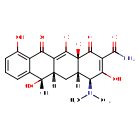
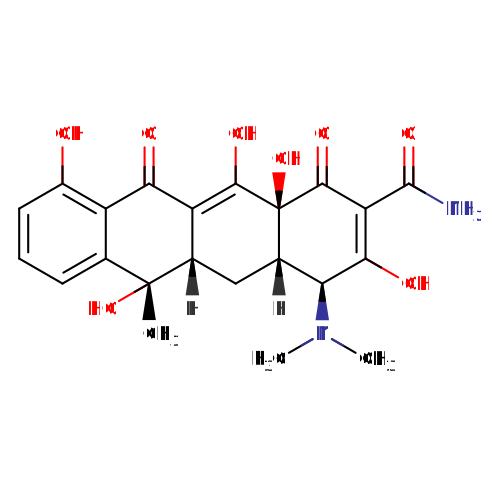
Structure for Tetracycline (DB00759)
- Weight
- Average: 444.4346
Monoisotopic: 444.153265754 - Chemical Formula
- C22H24N2O8
- Synonyms
- (4S,4aS,5aS,12aS)-4-(Dimethylamino)-1,4,4a,5,5a,6,11,12a-octahydro-3,6,10,12,12a-pentahydroxy-6-methyl-1,11-dioxo-2-naphthacenecarboxamide
- Abramycin
- Anhydrotetracycline
- Deschlorobiomycin
- Tetracyclin
- Tétracycline
- Tetracycline
- Tetracyclinum
- Tetrazyklin
- Tsiklomitsin

Pharmacology
- Indication
Used to treat bacterial infections such as Rocky Mountain spotted fever, typhus fever, tick fevers, Q fever, rickettsialpox and Brill-Zinsser disease. May be used to treat infections caused by Chlamydiae spp., B. burgdorferi (Lyme disease), and upper respiratory infections caused by typical (S. pneumoniae, H. influenzae, and M. catarrhalis) and atypical organisms (C. pneumoniae, M. pneumoniae, L. pneumophila). May also be used to treat acne. Tetracycline may be an alternative drug for people who are allergic to penicillin.
 Reduce drug development failure ratesBuild, train, & validate machine-learning modelswith evidence-based and structured datasets.Build, train, & validate predictive machine-learning models with structured datasets.
- Associated Conditions
Indication Type Indication Combined Product Details Approval Level Age Group Patient Characteristics Dose Form Treatment of Acinetobacter infection •••••••••••• Treatment of Actinomycosis •••••••••••• Used in combination to treat Acute urinary tract infection Combination Product in combination with: Sulfamethizole (DB00576), Phenazopyridine (DB01438) •••••••••••• ••••••• Treatment of Anthrax •••••••••••• Treatment of Bacterial infections •••••••••••• - Contraindications & Blackbox Warnings
 Prevent Adverse Drug Events TodayTap into our Clinical API for life-saving information on contraindications & blackbox warnings, population restrictions, harmful risks, & more.Avoid life-threatening adverse drug events with our Clinical API
- Pharmacodynamics
Tetracycline is a short-acting antibiotic that inhibits bacterial growth by inhibiting translation. It binds to the 30S ribosomal subunit and prevents the amino-acyl tRNA from binding to the A site of the ribosome. It also binds to some extent to the 50S ribosomal subunit. This binding is reversible in nature. Additionally tetracycline may alter the cytoplasmic membrane of bacteria causing leakage of intracellular contents, such as nucleotides, from the cell.
- Mechanism of action
Tetracycline passively diffuses through porin channels in the bacterial membrane and reversibly binds to the 30S ribosomal subunit, preventing binding of tRNA to the mRNA-ribosome complex, and thus interfering with protein synthesis.
Target Actions Organism A30S ribosomal protein S7 inhibitorEscherichia coli (strain K12) A30S ribosomal protein S14 inhibitorEscherichia coli (strain K12) A30S ribosomal protein S3 inhibitorEscherichia coli (strain K12) A30S ribosomal protein S8 inhibitorEscherichia coli (strain K12) A30S ribosomal protein S19 inhibitorEscherichia coli (strain K12) A16S ribosomal RNA inhibitorEnteric bacteria and other eubacteria UMajor prion protein inhibitorHumans UMultidrug translocase MdfA Not Available Escherichia coli UProtein-arginine deiminase type-4 Not Available Humans - Absorption
Bioavailability is less than 40% when administered via intramuscular injection, 100% intravenously, and 60-80% orally (fasting adults). Food and/or milk reduce GI absorption of oral preparations of tetracycline by 50% or more.
- Volume of distribution
Not Available
- Protein binding
20 - 67% protein bound
- Metabolism
Not metabolized
- Route of elimination
They are concentrated by the liver in the bile and excreted in the urine and feces at high concentrations in a biologically active form.
- Half-life
6-12 hours
- Clearance
Not Available
- Adverse Effects
 Improve decision support & research outcomesWith structured adverse effects data, including: blackbox warnings, adverse reactions, warning & precautions, & incidence rates. View sample adverse effects data in our new Data Library!Improve decision support & research outcomes with our structured adverse effects data.
- Toxicity
LD50=808mg/kg (orally in mice)
- Pathways
Pathway Category Tetracycline Action Pathway Drug action - Pharmacogenomic Effects/ADRs
- Not Available
Interactions
- Drug Interactions
- This information should not be interpreted without the help of a healthcare provider. If you believe you are experiencing an interaction, contact a healthcare provider immediately. The absence of an interaction does not necessarily mean no interactions exist.
Drug Interaction Integrate drug-drug
interactions in your softwareAbacavir Tetracycline may decrease the excretion rate of Abacavir which could result in a higher serum level. Abametapir The serum concentration of Tetracycline can be increased when it is combined with Abametapir. Abemaciclib The serum concentration of Abemaciclib can be increased when it is combined with Tetracycline. Acalabrutinib The serum concentration of Acalabrutinib can be increased when it is combined with Tetracycline. Acamprosate The excretion of Acamprosate can be decreased when combined with Tetracycline. - Food Interactions
- Avoid milk and dairy products.
- Take on an empty stomach. Take at least 1 hour before or 2 hours after meals.
- Take with a full glass of water.
Products
 Drug product information from 10+ global regionsOur datasets provide approved product information including:dosage, form, labeller, route of administration, and marketing period.Access drug product information from over 10 global regions.
- Product Ingredients
Ingredient UNII CAS InChI Key Tetracycline hydrochloride P6R62377KV 64-75-5 XMEVHPAGJVLHIG-FMZCEJRJSA-N Tetracycline phosphate NZ662XY5PP 13930-32-0 WXDJNRXQVCECPF-IZGCTLQUSA-N - Product Images
- International/Other Brands
- Achromycin / Liquamycin
- Brand Name Prescription Products
Name Dosage Strength Route Labeller Marketing Start Marketing End Region Image Achromycin Ont Oph 1% Ointment 1 % Ophthalmic Lederle Cyanamid Canada Inc. 1955-12-31 1997-08-14 Canada 
Achromycin V Capsule 500 mg/1 Oral Heritage Pharmaceuticals Inc. 2013-10-18 2019-09-23 US 
Achromycin V Capsule 250 mg/1 Oral Heritage Pharmaceuticals Inc. 2013-10-18 2019-09-23 US Achromycin V Cap 250mg Capsule 250 mg / cap Oral Lederle Cyanamid Canada Inc. 1957-12-31 1997-08-14 Canada Actisite 12.7 mg / piece Dental Procter And Gamble Not applicable Not applicable Canada - Generic Prescription Products
Name Dosage Strength Route Labeller Marketing Start Marketing End Region Image Apo Tetra Tabs 250mg Tablet 250 mg Oral Apotex Corporation 1984-12-31 2008-08-21 Canada Novo-tetra 250mg Capsule 250 mg / cap Oral Novopharm Limited 1967-12-31 2008-08-20 Canada Novo-tetra 250mg Tablet 250 mg Oral Novopharm Limited 1967-12-31 2008-08-20 Canada Novo-tetra Sus 125mg/5ml Liquid 125 mg / 5 mL Oral Novopharm Limited 1967-12-31 2005-08-10 Canada Nu-tetra Capsules 250mg Capsule 250 mg Oral Nu Pharm Inc 1990-12-31 2012-09-04 Canada - Over the Counter Products
Name Dosage Strength Route Labeller Marketing Start Marketing End Region Image Abrasa Spray 30 mg/1mL Topical Azimuth Pharma, LLC 2021-01-30 Not applicable US Acnecycline Ointment 0.03 mg/1mL Topical Phillips Company 2011-02-15 Not applicable US Anistem Spray 30 mg/1mL Topical MATRIX MIXOLOGY, INC 2020-07-01 Not applicable US APT T3X Tetracycline Hydrochloride First Aid Antibiotic Ointment 30 mg/1g Topical Patient Focused Tele-Health, LLC 2020-09-01 Not applicable US BWell First Aid Antibiotic Spray 30 mg/1mL Topical Viaderma II, Inc 2020-05-01 Not applicable US - Mixture Products
Name Ingredients Dosage Route Labeller Marketing Start Marketing End Region Image Bismuth Subcitrate Potassium, Metronidazole and Tetracycline Hydrochloride Tetracycline hydrochloride (125 mg/1) + Bismuth subcitrate potassium monohydrate (140 mg/1) + Metronidazole (125 mg/1) Capsule Oral Par Pharmaceutical, Inc. 2023-03-07 Not applicable US Bismuth Subcitrate Potassium, Metronidazole, and Tetracycline Hydrochloride Tetracycline hydrochloride (125 mg/1) + Bismuth subcitrate potassium monohydrate (140 mg/1) + Metronidazole (125 mg/1) Capsule Oral H2-Pharma, LLC 2023-07-31 Not applicable US Bismuth subcitrate potassium, Metronidazole, Tetracycline hydrochloride Tetracycline hydrochloride (125 mg/1) + Bismuth subcitrate potassium monohydrate (140 mg/1) + Metronidazole (125 mg/1) Capsule Oral Ingenus Pharmaceuticals, LLC 2023-07-04 Not applicable US Bismuth Subsalicylate/Metronidazole/Tetracycline Hydrochloride Tetracycline hydrochloride (500 mg/1) + Bismuth subsalicylate (262.4 mg/1) + Metronidazole (250 mg/1) Kit Oral Ailex Pharmaceuticals, Llc 2018-11-30 Not applicable US COLBIOCIN Tetracycline (5 MG/G) + Chloramphenicol (10 MG/G) + Colistimethate sodium (180000 IU) Ointment Ophthalmic Sifi S.P.A. 2014-07-08 Not applicable Italy 
- Unapproved/Other Products
Name Ingredients Dosage Route Labeller Marketing Start Marketing End Region Image FIRST Marys Mouthwash Compounding Tetracycline hydrochloride (1.5 g/1.5g) + Diphenhydramine hydrochloride (0.45 g/0.45g) + Hydrocortisone (0.06 g/0.06g) + Nystatin (1.2 g/1.2g) Kit Oral CutisPharma, Inc. 2010-12-15 Not applicable US Tetracycline Hydrochloride Tetracycline hydrochloride (250 mg/1) Capsule Oral Remedy Repack 2012-08-28 2013-08-28 US


Categories
- ATC Codes
- S02AA08 — TetracyclineA02BD02 — Lansoprazole, tetracycline and metronidazole
- A02BD — Combinations for eradication of Helicobacter pylori
- A02B — DRUGS FOR PEPTIC ULCER AND GASTRO-OESOPHAGEAL REFLUX DISEASE (GORD)
- A02 — DRUGS FOR ACID RELATED DISORDERS
- A — ALIMENTARY TRACT AND METABOLISM
- A01AB — Antiinfectives and antiseptics for local oral treatment
- A01A — STOMATOLOGICAL PREPARATIONS
- A01 — STOMATOLOGICAL PREPARATIONS
- A — ALIMENTARY TRACT AND METABOLISM
- J01AA — Tetracyclines
- J01A — TETRACYCLINES
- J01 — ANTIBACTERIALS FOR SYSTEMIC USE
- J — ANTIINFECTIVES FOR SYSTEMIC USE
- J01AA — Tetracyclines
- J01A — TETRACYCLINES
- J01 — ANTIBACTERIALS FOR SYSTEMIC USE
- J — ANTIINFECTIVES FOR SYSTEMIC USE
- J01RA — Combinations of antibacterials
- J01R — COMBINATIONS OF ANTIBACTERIALS
- J01 — ANTIBACTERIALS FOR SYSTEMIC USE
- J — ANTIINFECTIVES FOR SYSTEMIC USE
- S03AA — Antiinfectives
- S03A — ANTIINFECTIVES
- S03 — OPHTHALMOLOGICAL AND OTOLOGICAL PREPARATIONS
- S — SENSORY ORGANS
- D06AA — Tetracycline and derivatives
- D06A — ANTIBIOTICS FOR TOPICAL USE
- D06 — ANTIBIOTICS AND CHEMOTHERAPEUTICS FOR DERMATOLOGICAL USE
- D — DERMATOLOGICALS
- Drug Categories
- Agents that produce neuromuscular block (indirect)
- Alimentary Tract and Metabolism
- Anti-Bacterial Agents
- Anti-Infective Agents
- Antibacterials for Systemic Use
- Antibiotics for Topical Use
- Antiinfectives and Antiseptics for Local Oral Treatment
- Antiinfectives for Systemic Use
- Cytochrome P-450 CYP3A Inhibitors
- Cytochrome P-450 CYP3A Substrates
- Cytochrome P-450 CYP3A4 Inhibitors
- Cytochrome P-450 CYP3A4 Inhibitors (strength unknown)
- Cytochrome P-450 CYP3A4 Substrates
- Cytochrome P-450 Enzyme Inhibitors
- Cytochrome P-450 Substrates
- Dermatologicals
- Drugs causing inadvertant photosensitivity
- Drugs for Acid Related Disorders
- Drugs for Peptic Ulcer and Gastro-Oesophageal Reflux Disease (Gord)
- Drugs that are Mainly Renally Excreted
- Enzyme Inhibitors
- Naphthacenes
- OAT1/SLC22A6 inhibitors
- OAT3/SLC22A8 Inhibitors
- OAT3/SLC22A8 Substrates
- Ophthalmological and Otological Preparations
- Ophthalmologicals
- Organic Anion Transporting Polypeptide 2B1 Inhibitors
- Otologicals
- Photosensitizing Agents
- Protein Synthesis Inhibitors
- Sensory Organs
- Stomatological Preparations
- Tetracyclines
- Chemical TaxonomyProvided by Classyfire
- Description
- This compound belongs to the class of organic compounds known as tetracyclines. These are polyketides having an octahydrotetracene-2-carboxamide skeleton, substituted with many hydroxy and other groups.
- Kingdom
- Organic compounds
- Super Class
- Phenylpropanoids and polyketides
- Class
- Tetracyclines
- Sub Class
- Not Available
- Direct Parent
- Tetracyclines
- Alternative Parents
- Naphthacenes / Anthracenecarboxylic acids and derivatives / Tetralins / Aryl ketones / 1-hydroxy-2-unsubstituted benzenoids / 1-hydroxy-4-unsubstituted benzenoids / Aralkylamines / Cyclohexenones / Tertiary alcohols / Vinylogous acids show 8 more
- Substituents
- 1-hydroxy-2-unsubstituted benzenoid / 1-hydroxy-4-unsubstituted benzenoid / Alcohol / Amine / Amino acid or derivatives / Anthracene carboxylic acid or derivatives / Aralkylamine / Aromatic homopolycyclic compound / Aryl ketone / Benzenoid show 23 more
- Molecular Framework
- Aromatic homopolycyclic compounds
- External Descriptors
- tetracyclines (CHEBI:27902) / tetracyclines, Linear tetracyclines (C06570)
- Affected organisms
- Enteric bacteria and other eubacteria
- Borrelia burgdorferi
- Chlamydia trachomatis
- Mycoplasma pneumoniae
- Rickettsia rickettsii
- Vibrio cholerae
- Escherichia coli
- Shigella
- Coxiella
Chemical Identifiers
- UNII
- F8VB5M810T
- CAS number
- 60-54-8
- InChI Key
- OFVLGDICTFRJMM-WESIUVDSSA-N
- InChI
- InChI=1S/C22H24N2O8/c1-21(31)8-5-4-6-11(25)12(8)16(26)13-9(21)7-10-15(24(2)3)17(27)14(20(23)30)19(29)22(10,32)18(13)28/h4-6,9-10,15,25,27-28,31-32H,7H2,1-3H3,(H2,23,30)/t9-,10-,15-,21+,22-/m0/s1
- IUPAC Name
- (4S,4aS,5aS,6S,12aS)-4-(dimethylamino)-3,6,10,12,12a-pentahydroxy-6-methyl-1,11-dioxo-1,4,4a,5,5a,6,11,12a-octahydrotetracene-2-carboxamide
- SMILES
- [H][C@@]12C[C@@]3([H])C(=C(O)[C@]1(O)C(=O)C(C(N)=O)=C(O)[C@H]2N(C)C)C(=O)C1=C(O)C=CC=C1[C@@]3(C)O
References
- Synthesis Reference
Thomas F. McNamara, Nungavaram S. Ramamurthy, Lorne M. Golub, "Non-antibacterial tetracycline compositions possessing anti-collagenolytic properties and methods of preparing and using same." U.S. Patent US4704383, issued May, 1963.
US4704383- General References
- Griffin MO, Fricovsky E, Ceballos G, Villarreal F: Tetracyclines: a pleitropic family of compounds with promising therapeutic properties. Review of the literature. Am J Physiol Cell Physiol. 2010 Sep;299(3):C539-48. doi: 10.1152/ajpcell.00047.2010. Epub 2010 Jun 30. [Article]
- Code of Federal Regulations 216.24: Drug products withdrawn or removed from the market for reasons of safety or effectiveness. [Link]
- External Links
- Human Metabolome Database
- HMDB0014897
- KEGG Drug
- D00201
- KEGG Compound
- C06570
- PubChem Compound
- 54675776
- PubChem Substance
- 46506693
- ChemSpider
- 10257122
- BindingDB
- 50237605
- 10395
- ChEBI
- 27902
- ChEMBL
- CHEMBL1440
- ZINC
- ZINC000084441937
- Therapeutic Targets Database
- DAP001527
- PharmGKB
- PA451640
- PDBe Ligand
- TAC
- RxList
- RxList Drug Page
- Drugs.com
- Drugs.com Drug Page
- Wikipedia
- Tetracycline
- PDB Entries
- 1hnw / 1i97 / 2hcj / 2hdn / 2trt / 2uxo / 2vke / 3q5p / 4b3a / 4v9a … show 6 more
- MSDS
- Download (73.8 KB)
Clinical Trials
- Clinical Trials
Phase Status Purpose Conditions Count 4 Completed Prevention Trichiasis 1 4 Completed Treatment Chronic Fatigue Syndrome/ Myalgic Encephalitis (CFS/ME) / Coxiella Infection / Q Fever 1 4 Completed Treatment Cure Rate of Helicobacter Pylori Infection 1 4 Completed Treatment Dyspepsia / Gastric Cancer / Gastritis / Helicobacter Pylori Infection / Peptic Ulcer 1 4 Completed Treatment Dyspepsia / Scarred Peptic Ulcer 1
Pharmacoeconomics
- Manufacturers
- Heritage pharmaceuticals inc
- Bristol laboratories inc div bristol myers co
- Warner chilcott div warner lambert co
- Pharmacia and upjohn co
- Solvay pharmaceuticals
- Wyeth ayerst laboratories
- Apothecon inc div bristol myers squibb
- Angus chemical co
- Pfipharmecs div pfizer inc
- On site therapeutics inc
- Shire development inc
- Lederle laboratories div american cyanamid co
- Pfizer laboratories div pfizer inc
- Storz ophthalmics inc sub american cyanamid co
- Par pharmaceutical
- Ivax pharmaceuticals inc sub teva pharmaceuticals usa
- Par pharmaceutical inc
- Packagers
- Advanced Pharmaceutical Services Inc.
- Aidarex Pharmacuticals LLC
- Apotheca Inc.
- A-S Medication Solutions LLC
- Axcan Pharma Inc.
- Barr Pharmaceuticals
- Belgomex Sprl
- Blenheim Pharmacal
- Bryant Ranch Prepack
- C.O. Truxton Inc.
- Central Texas Community Health Centers
- Comprehensive Consultant Services Inc.
- Coupler Enterprises Inc.
- Direct Dispensing Inc.
- Dispensing Solutions
- Diversified Healthcare Services Inc.
- Draxis Specialty Pharmaceuticals Inc.
- E.R. Squibb and Sons LLC
- Gallipot
- Global Pharmaceuticals
- Golden State Medical Supply Inc.
- Goldline Laboratories Inc.
- Group Health Cooperative
- H and H Laboratories
- H.J. Harkins Co. Inc.
- Heartland Repack Services LLC
- Ivax Pharmaceuticals
- Kaiser Foundation Hospital
- Laboratorios Atral Sarl
- Liberty Pharmaceuticals
- Major Pharmaceuticals
- Medisca Inc.
- Murfreesboro Pharmaceutical Nursing Supply
- Mylan
- Nucare Pharmaceuticals Inc.
- Palmetto Pharmaceuticals Inc.
- Par Pharmaceuticals
- Patient First Corp.
- PCA LLC
- PD-Rx Pharmaceuticals Inc.
- Pharmedix
- Physicians Total Care Inc.
- Preferred Pharmaceuticals Inc.
- Prepackage Specialists
- Prepak Systems Inc.
- Prometheus Laboratories Inc.
- Proter SPA
- Qualitest
- Rebel Distributors Corp.
- Remedy Repack
- Sandhills Packaging Inc.
- Sino American Shanghai Squibb Pharmaceutical Ltd.
- Southwood Pharmaceuticals
- Talbert Medical Management Corp.
- Tya Pharmaceuticals
- Veratex Corp.
- Warner Chilcott Co. Inc.
- Watson Pharmaceuticals
- Dosage Forms
Form Route Strength Ointment Ophthalmic 1 % Tablet Oral 250.000 mg Ointment Topical 3 % Ointment Topical 30 mg/g Solution / drops Ophthalmic Capsule, coated Oral 500 mg Capsule, coated Oral 250 mg Suspension Oral 2.5 g Ointment Topical 3 % w/w Pill Tablet Oral Ointment Topical 30 mg/1mL Ointment Topical 30 mg/1g Capsule Oral 100 MG Ointment Topical 0.03 mg/1mL Kit Oral Ointment Topical 100 g Ointment Topical 20 g Ointment Topical 50 g Capsule Oral 250 mg / cap Tablet Oral 250 mg Liquid Oral 125 mg / 5 mL Ointment Ophthalmic Powder, for solution Oral 2 G/0.25G Capsule Oral Syrup Oral Syrup Oral 125 mg/5mL Tablet, film coated Oral 250 mg/1 Tablet, film coated Oral 500 mg/1 Cream Vaginal Ointment Capsule Oral 250.000 mg Ointment Topical 3 g/100g Powder, for solution Oral Solution / drops Suspension Oral Ointment Ophthalmic Ointment Ophthalmic 10 mg / g Capsule Oral 250 mg/1 Capsule Oral 500 mg/1 Powder Not applicable 1 g/1g Tablet, film coated Oral 250 mg Capsule Oral Ointment Spray Topical 30 mg/1mL Ointment Topical 3 %w/w Capsule Capsule Oral 250 mg Tablet, film coated Oral 500 mg Tablet, sugar coated Oral 250 mg Tablet, coated Oral 250 mg Capsule Oral 500 mg - Prices
Unit description Cost Unit Tetracycline hcl powder 2.14USD g Tetracycline powder 1.37USD g Tetracycline HCl 500 mg capsule 0.2USD capsule Tetracycline HCl 250 mg capsule 0.15USD capsule Apo-Tetra 250 mg Capsule 0.07USD capsule DrugBank does not sell nor buy drugs. Pricing information is supplied for informational purposes only.- Patents
Patent Number Pediatric Extension Approved Expires (estimated) Region US6350468 No 2002-02-26 2018-12-14 US
Properties
- State
- Solid
- Experimental Properties
Property Value Source melting point (°C) 172.5 dec °C PhysProp water solubility 231 mg/L (at 25 °C) YALKOWSKY,SH & DANNENFELSER,RM (1992) logP -1.30 HANSCH,C ET AL. (1995) logS -3.12 ADME Research, USCD pKa 3.3 (at 25 °C) SERJEANT,EP & DEMPSEY,B (1979) - Predicted Properties
Property Value Source Water Solubility 1.33 mg/mL ALOGPS logP -0.56 ALOGPS logP -3.5 Chemaxon logS -2.5 ALOGPS pKa (Strongest Acidic) 3.26 Chemaxon pKa (Strongest Basic) 9.25 Chemaxon Physiological Charge -1 Chemaxon Hydrogen Acceptor Count 9 Chemaxon Hydrogen Donor Count 6 Chemaxon Polar Surface Area 181.62 Å2 Chemaxon Rotatable Bond Count 2 Chemaxon Refractivity 114.19 m3·mol-1 Chemaxon Polarizability 42.9 Å3 Chemaxon Number of Rings 4 Chemaxon Bioavailability 1 Chemaxon Rule of Five No Chemaxon Ghose Filter No Chemaxon Veber's Rule No Chemaxon MDDR-like Rule No Chemaxon - Predicted ADMET Features
Property Value Probability Human Intestinal Absorption + 0.8006 Blood Brain Barrier - 0.9841 Caco-2 permeable + 0.7439 P-glycoprotein substrate Substrate 0.791 P-glycoprotein inhibitor I Non-inhibitor 0.8025 P-glycoprotein inhibitor II Non-inhibitor 0.7562 Renal organic cation transporter Non-inhibitor 0.9437 CYP450 2C9 substrate Non-substrate 0.7897 CYP450 2D6 substrate Non-substrate 0.9117 CYP450 3A4 substrate Substrate 0.6758 CYP450 1A2 substrate Non-inhibitor 0.9046 CYP450 2C9 inhibitor Non-inhibitor 0.9071 CYP450 2D6 inhibitor Non-inhibitor 0.9231 CYP450 2C19 inhibitor Non-inhibitor 0.9089 CYP450 3A4 inhibitor Non-inhibitor 0.8686 CYP450 inhibitory promiscuity Low CYP Inhibitory Promiscuity 0.781 Ames test Non AMES toxic 0.9132 Carcinogenicity Non-carcinogens 0.9314 Biodegradation Not ready biodegradable 0.9906 Rat acute toxicity 2.7095 LD50, mol/kg Not applicable hERG inhibition (predictor I) Weak inhibitor 0.9968 hERG inhibition (predictor II) Non-inhibitor 0.7201
Spectra
- Mass Spec (NIST)
- Not Available
- Spectra
- Chromatographic Properties
Collision Cross Sections (CCS)
Adduct CCS Value (Å2) Source type Source [M-H]- 210.6017399 predictedDarkChem Lite v0.1.0 [M-H]- 210.2821399 predictedDarkChem Lite v0.1.0 [M-H]- 212.1346399 predictedDarkChem Lite v0.1.0 [M-H]- 197.8802 predictedDeepCCS 1.0 (2019) [M+H]+ 210.3582399 predictedDarkChem Lite v0.1.0 [M+H]+ 211.6236399 predictedDarkChem Lite v0.1.0 [M+H]+ 214.2466399 predictedDarkChem Lite v0.1.0 [M+H]+ 199.77562 predictedDeepCCS 1.0 (2019) [M+Na]+ 210.4444399 predictedDarkChem Lite v0.1.0 [M+Na]+ 210.8334399 predictedDarkChem Lite v0.1.0 [M+Na]+ 214.0786399 predictedDarkChem Lite v0.1.0 [M+Na]+ 205.68051 predictedDeepCCS 1.0 (2019)
Targets

- Kind
- Protein
- Organism
- Escherichia coli (strain K12)
- Pharmacological action
- Yes
- Actions
- Inhibitor
- General Function
- Trna binding
- Specific Function
- One of the primary rRNA binding proteins, it binds directly to 16S rRNA where it nucleates assembly of the head domain of the 30S subunit. Is located at the subunit interface close to the decoding ...
- Gene Name
- rpsG
- Uniprot ID
- P02359
- Uniprot Name
- 30S ribosomal protein S7
- Molecular Weight
- 20018.91 Da
References
- Buck MA, Cooperman BS: Single protein omission reconstitution studies of tetracycline binding to the 30S subunit of Escherichia coli ribosomes. Biochemistry. 1990 Jun 5;29(22):5374-9. [Article]
- Kind
- Protein
- Organism
- Escherichia coli (strain K12)
- Pharmacological action
- Yes
- Actions
- Inhibitor
- General Function
- Structural constituent of ribosome
- Specific Function
- Binds 16S rRNA, required for the assembly of 30S particles and may also be responsible for determining the conformation of the 16S rRNA at the A site.
- Gene Name
- rpsN
- Uniprot ID
- P0AG59
- Uniprot Name
- 30S ribosomal protein S14
- Molecular Weight
- 11580.36 Da
References
- Buck MA, Cooperman BS: Single protein omission reconstitution studies of tetracycline binding to the 30S subunit of Escherichia coli ribosomes. Biochemistry. 1990 Jun 5;29(22):5374-9. [Article]
- Kind
- Protein
- Organism
- Escherichia coli (strain K12)
- Pharmacological action
- Yes
- Actions
- Inhibitor
- General Function
- Structural constituent of ribosome
- Specific Function
- Binds the lower part of the 30S subunit head. Binds mRNA in the 70S ribosome, positioning it for translation (By similarity).Plays a role in mRNA unwinding by the ribosome, possibly by forming part...
- Gene Name
- rpsC
- Uniprot ID
- P0A7V3
- Uniprot Name
- 30S ribosomal protein S3
- Molecular Weight
- 25983.07 Da
References
- Buck MA, Cooperman BS: Single protein omission reconstitution studies of tetracycline binding to the 30S subunit of Escherichia coli ribosomes. Biochemistry. 1990 Jun 5;29(22):5374-9. [Article]
- Kind
- Protein
- Organism
- Escherichia coli (strain K12)
- Pharmacological action
- Yes
- Actions
- Inhibitor
- General Function
- Structural constituent of ribosome
- Specific Function
- One of the primary rRNA binding proteins, it binds directly to 16S rRNA central domain where it helps coordinate assembly of the platform of the 30S subunit.Protein S8 is a translational repressor ...
- Gene Name
- rpsH
- Uniprot ID
- P0A7W7
- Uniprot Name
- 30S ribosomal protein S8
- Molecular Weight
- 14126.435 Da
References
- Buck MA, Cooperman BS: Single protein omission reconstitution studies of tetracycline binding to the 30S subunit of Escherichia coli ribosomes. Biochemistry. 1990 Jun 5;29(22):5374-9. [Article]
- Kind
- Protein
- Organism
- Escherichia coli (strain K12)
- Pharmacological action
- Yes
- Actions
- Inhibitor
- General Function
- Trna binding
- Specific Function
- In the E.coli 70S ribosome in the initiation state (PubMed:12809609) it has been modeled to contact the 23S rRNA of the 50S subunit forming part of bridge B1a; this bridge is broken in the model wi...
- Gene Name
- rpsS
- Uniprot ID
- P0A7U3
- Uniprot Name
- 30S ribosomal protein S19
- Molecular Weight
- 10430.235 Da
References
- Buck MA, Cooperman BS: Single protein omission reconstitution studies of tetracycline binding to the 30S subunit of Escherichia coli ribosomes. Biochemistry. 1990 Jun 5;29(22):5374-9. [Article]
References
- Nawaz M, Sung K, Khan SA, Khan AA, Steele R: Biochemical and molecular characterization of tetracycline-resistant Aeromonas veronii isolates from catfish. Appl Environ Microbiol. 2006 Oct;72(10):6461-6. [Article]
- Domingue GJ Sr: Cryptic bacterial infection in chronic prostatitis: diagnostic and therapeutic implications. Curr Opin Urol. 1998 Jan;8(1):45-9. [Article]
- Pringle M, Fellstrom C, Johansson KE: Decreased susceptibility to doxycycline associated with a 16S rRNA gene mutation in Brachyspira hyodysenteriae. Vet Microbiol. 2007 Jul 20;123(1-3):245-8. Epub 2007 Feb 25. [Article]
- Rasmussen B, Noller HF, Daubresse G, Oliva B, Misulovin Z, Rothstein DM, Ellestad GA, Gluzman Y, Tally FP, Chopra I: Molecular basis of tetracycline action: identification of analogs whose primary target is not the bacterial ribosome. Antimicrob Agents Chemother. 1991 Nov;35(11):2306-11. [Article]
- Kind
- Protein
- Organism
- Humans
- Pharmacological action
- Unknown
- Actions
- Inhibitor
- General Function
- Tubulin binding
- Specific Function
- Its primary physiological function is unclear. Has cytoprotective activity against internal or environmental stresses. May play a role in neuronal development and synaptic plasticity. May be requir...
- Gene Name
- PRNP
- Uniprot ID
- P04156
- Uniprot Name
- Major prion protein
- Molecular Weight
- 27661.21 Da
References
- Chen X, Ji ZL, Chen YZ: TTD: Therapeutic Target Database. Nucleic Acids Res. 2002 Jan 1;30(1):412-5. [Article]
- De Luigi A, Colombo L, Diomede L, Capobianco R, Mangieri M, Miccolo C, Limido L, Forloni G, Tagliavini F, Salmona M: The efficacy of tetracyclines in peripheral and intracerebral prion infection. PLoS One. 2008 Mar 26;3(3):e1888. doi: 10.1371/journal.pone.0001888. [Article]
- Kind
- Protein
- Organism
- Escherichia coli
- Pharmacological action
- Unknown
- General Function
- Transporter activity
- Specific Function
- Not Available
- Gene Name
- mdfA
- Uniprot ID
- C9EH48
- Uniprot Name
- Multidrug translocase MdfA
- Molecular Weight
- 10133.045 Da
References
- Nelson ML, Park BH, Andrews JS, Georgian VA, Thomas RC, Levy SB: Inhibition of the tetracycline efflux antiport protein by 13-thio-substituted 5-hydroxy-6-deoxytetracyclines. J Med Chem. 1993 Feb 5;36(3):370-7. [Article]
- Kind
- Protein
- Organism
- Humans
- Pharmacological action
- Unknown
- General Function
- Protein-arginine deiminase activity
- Specific Function
- Catalyzes the citrullination/deimination of arginine residues of proteins such as histones, thereby playing a key role in histone code and regulation of stem cell maintenance. Citrullinates histone...
- Gene Name
- PADI4
- Uniprot ID
- Q9UM07
- Uniprot Name
- Protein-arginine deiminase type-4
- Molecular Weight
- 74078.65 Da
References
- Knuckley B, Luo Y, Thompson PR: Profiling Protein Arginine Deiminase 4 (PAD4): a novel screen to identify PAD4 inhibitors. Bioorg Med Chem. 2008 Jan 15;16(2):739-45. Epub 2007 Oct 13. [Article]
Enzymes
- Kind
- Protein
- Organism
- Humans
- Pharmacological action
- Unknown
- Actions
- SubstrateInhibitor
- General Function
- Vitamin d3 25-hydroxylase activity
- Specific Function
- Cytochromes P450 are a group of heme-thiolate monooxygenases. In liver microsomes, this enzyme is involved in an NADPH-dependent electron transport pathway. It performs a variety of oxidation react...
- Gene Name
- CYP3A4
- Uniprot ID
- P08684
- Uniprot Name
- Cytochrome P450 3A4
- Molecular Weight
- 57342.67 Da
References
- Zhao XJ, Ishizaki T: Metabolic interactions of selected antimalarial and non-antimalarial drugs with the major pathway (3-hydroxylation) of quinine in human liver microsomes. Br J Clin Pharmacol. 1997 Nov;44(5):505-11. [Article]
- Zhao XJ, Ishizaki T: The In vitro hepatic metabolism of quinine in mice, rats and dogs: comparison with human liver microsomes. J Pharmacol Exp Ther. 1997 Dec;283(3):1168-76. [Article]
- Bassi PU, Onyeji CO, Ukponmwan OE: Effects of tetracycline on the pharmacokinetics of halofantrine in healthy volunteers. Br J Clin Pharmacol. 2004 Jul;58(1):52-5. doi: 10.1111/j.1365-2125.2004.02087.x. [Article]
Carriers
- Kind
- Protein
- Organism
- Humans
- Pharmacological action
- No
- General Function
- Toxic substance binding
- Specific Function
- Serum albumin, the main protein of plasma, has a good binding capacity for water, Ca(2+), Na(+), K(+), fatty acids, hormones, bilirubin and drugs. Its main function is the regulation of the colloid...
- Gene Name
- ALB
- Uniprot ID
- P02768
- Uniprot Name
- Serum albumin
- Molecular Weight
- 69365.94 Da
References
- Bratlid D, Bergan T: Displacement of albumin-bound antimicrobial agents by bilirubin. Pharmacology. 1976;14(5):464-72. doi: 10.1159/000136629. [Article]
Transporters
- Kind
- Protein
- Organism
- Humans
- Pharmacological action
- Unknown
- Actions
- Inhibitor
- General Function
- Sodium-independent organic anion transmembrane transporter activity
- Specific Function
- Involved in the renal elimination of endogenous and exogenous organic anions. Functions as organic anion exchanger when the uptake of one molecule of organic anion is coupled with an efflux of one ...
- Gene Name
- SLC22A6
- Uniprot ID
- Q4U2R8
- Uniprot Name
- Solute carrier family 22 member 6
- Molecular Weight
- 61815.78 Da
References
- Babu E, Takeda M, Narikawa S, Kobayashi Y, Yamamoto T, Cha SH, Sekine T, Sakthisekaran D, Endou H: Human organic anion transporters mediate the transport of tetracycline. Jpn J Pharmacol. 2002 Jan;88(1):69-76. [Article]
- Kind
- Protein
- Organism
- Humans
- Pharmacological action
- Unknown
- Actions
- SubstrateInhibitor
- Curator comments
- Substrate activity was observed in vitro using hOAT3 expressed on S2 cells. Reported Km value was 566.2 ± 28.4 μM.
- General Function
- Sodium-independent organic anion transmembrane transporter activity
- Specific Function
- Plays an important role in the excretion/detoxification of endogenous and exogenous organic anions, especially from the brain and kidney. Involved in the transport basolateral of steviol, fexofenad...
- Gene Name
- SLC22A8
- Uniprot ID
- Q8TCC7
- Uniprot Name
- Solute carrier family 22 member 8
- Molecular Weight
- 59855.585 Da
References
- Babu E, Takeda M, Narikawa S, Kobayashi Y, Yamamoto T, Cha SH, Sekine T, Sakthisekaran D, Endou H: Human organic anion transporters mediate the transport of tetracycline. Jpn J Pharmacol. 2002 Jan;88(1):69-76. [Article]
- VanWert AL, Gionfriddo MR, Sweet DH: Organic anion transporters: discovery, pharmacology, regulation and roles in pathophysiology. Biopharm Drug Dispos. 2010 Jan;31(1):1-71. doi: 10.1002/bdd.693. [Article]
- Kind
- Protein
- Organism
- Humans
- Pharmacological action
- Unknown
- Actions
- Inhibitor
- General Function
- Sodium-independent organic anion transmembrane transporter activity
- Specific Function
- Mediates saturable uptake of estrone sulfate, dehydroepiandrosterone sulfate and related compounds.
- Gene Name
- SLC22A11
- Uniprot ID
- Q9NSA0
- Uniprot Name
- Solute carrier family 22 member 11
- Molecular Weight
- 59970.945 Da
References
- Babu E, Takeda M, Narikawa S, Kobayashi Y, Yamamoto T, Cha SH, Sekine T, Sakthisekaran D, Endou H: Human organic anion transporters mediate the transport of tetracycline. Jpn J Pharmacol. 2002 Jan;88(1):69-76. [Article]
- Kind
- Protein
- Organism
- Humans
- Pharmacological action
- Unknown
- Actions
- Inhibitor
- General Function
- Sodium-independent organic anion transmembrane transporter activity
- Specific Function
- Mediates sodium-independent multispecific organic anion transport. Transport of prostaglandin E2, prostaglandin F2, tetracycline, bumetanide, estrone sulfate, glutarate, dehydroepiandrosterone sulf...
- Gene Name
- SLC22A7
- Uniprot ID
- Q9Y694
- Uniprot Name
- Solute carrier family 22 member 7
- Molecular Weight
- 60025.025 Da
References
- Babu E, Takeda M, Narikawa S, Kobayashi Y, Yamamoto T, Cha SH, Sekine T, Sakthisekaran D, Endou H: Human organic anion transporters mediate the transport of tetracycline. Jpn J Pharmacol. 2002 Jan;88(1):69-76. [Article]
- Kind
- Protein
- Organism
- Humans
- Pharmacological action
- Unknown
- Actions
- Inhibitor
- General Function
- Sodium-independent organic anion transmembrane transporter activity
- Specific Function
- Mediates the Na(+)-independent transport of organic anions such as taurocholate, the prostaglandins PGD2, PGE1, PGE2, leukotriene C4, thromboxane B2 and iloprost.
- Gene Name
- SLCO2B1
- Uniprot ID
- O94956
- Uniprot Name
- Solute carrier organic anion transporter family member 2B1
- Molecular Weight
- 76709.98 Da
References
- Karlgren M, Vildhede A, Norinder U, Wisniewski JR, Kimoto E, Lai Y, Haglund U, Artursson P: Classification of inhibitors of hepatic organic anion transporting polypeptides (OATPs): influence of protein expression on drug-drug interactions. J Med Chem. 2012 May 24;55(10):4740-63. doi: 10.1021/jm300212s. Epub 2012 May 15. [Article]

Drug created at June 13, 2005 13:24 / Updated at April 26, 2024 00:45