Identification
- Summary
Hydrocodone is an opioid agonist used as an analgesic and antitussive agent.
- Brand Names
- Dalmacol, Hycet, Hycodan, Hydromet, Hysingla, Lorcet, Lortab, Norco, Obredon, Reprexain, Tussicaps, Tussionex, Vicoprofen, Xodol, Zamicet, Zohydro, Zydone
- Generic Name
- Hydrocodone
- DrugBank Accession Number
- DB00956
- Background
Hydrocodone is a synthetic opioid derivative of codeine.14 It is commonly used in combination with acetaminophen to control moderate to severe pain. Historically, hydrocodone has been used as a cough suppressant although this has largely been replaced by dextromethorphan in current cough and cold formulations. Hydrocodone's more potent metabolite, hydromorphone has also found wide use as an analgesic and is frequently used in cases of severe pain. The FDA first approved Hydrocodone for use as part of the cough suppressant syrup Hycodan in March of 1943.17
- Type
- Small Molecule
- Groups
- Approved, Illicit, Investigational
- Structure
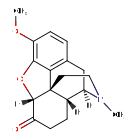
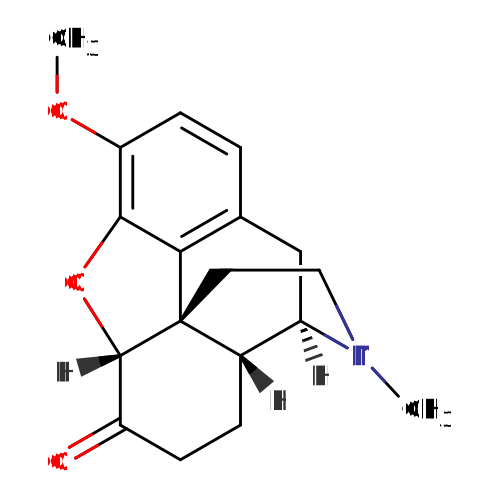
Structure for Hydrocodone (DB00956)
- Weight
- Average: 299.3642
Monoisotopic: 299.152143543 - Chemical Formula
- C18H21NO3
- Synonyms
- (-)-Dihydrocodeinone
- 4,5-alpha-Epoxy-3-methoxy-17-methylmorphinan-6-one
- Dihydrocodeinone
- Hidrocodona
- Hydrocodon
- Hydrocodone
- Hydrocodonum
- Hydrocone
- Hydroconum
- Idrocodone
- External IDs
- NSC-19044

Pharmacology
- Indication
Hydrocodone is indicated for the management of acute pain, sometimes in combination with acetaminophen or ibuprofen, as well as the symptomatic treatment of the common cold and allergic rhinitis in combination with decongestants, antihistamines, and expectorants.Label,16
 Reduce drug development failure ratesBuild, train, & validate machine-learning modelswith evidence-based and structured datasets.Build, train, & validate predictive machine-learning models with structured datasets.
- Associated Conditions
Indication Type Indication Combined Product Details Approval Level Age Group Patient Characteristics Dose Form Used in combination to manage Acute pain Combination Product in combination with: Ibuprofen (DB01050) •••••••••••• •••••• Used in combination for symptomatic treatment of Cough Combination Product in combination with: Sodium citrate (DB09154), Doxylamine (DB00366), Ethanol (DB00898), Etafedrine (DB11587) •••••••••••• ••••• Symptomatic treatment of Cough •••••••••••• ••••• Used in combination for symptomatic treatment of Cough Combination Product in combination with: Homatropine (DB11181) •••••••••••• •••••• •••••• Used in combination for symptomatic treatment of Cough caused by allergic rhinitis Combination Product in combination with: Guaifenesin (DB00874), Brompheniramine (DB00835), Phenylephrine (DB00388) •••••••••••• ••••• - Contraindications & Blackbox Warnings
 Prevent Adverse Drug Events TodayTap into our Clinical API for life-saving information on contraindications & blackbox warnings, population restrictions, harmful risks, & more.Avoid life-threatening adverse drug events with our Clinical API
- Pharmacodynamics
Hydrocodone inhibits pain signaling in both the spinal cord and brain 12. Its actions in the brain also produce euphoria, respiratory depression, and sedation.
- Mechanism of action
Hydrocodone binds to the mu opioid receptor (MOR) with the highest affinity followed by the delta opioid receptors (DOR).13 Hydrocodone's agonist effect at the MOR is considered to contribute the most to its analgesic effects. Both MOR and DOR are Gi/o coupled and and produces its signal through activation of inward rectifier potassium (GIRK) channels, inhibition of voltage gated calcium channel opening, and decreased adenylyl cyclase activity.14 In the dorsal horn of the spinal cord, activation of pre-synaptic MOR on primary afferents the inhibition of calcium channel opening and increased activity of GIRK channels hyperpolarizes the neuron and prevents release of neurotransmitters. Post-synaptic MOR can also prevent activation of neurons by glutamate through the aforementioned mechanisms.
Hydrocodone can also produce several actions in the brain similarly to other opioids. Activation of MOR in the periaquaductal gray (PAG) inhibits the GABAergic tone on medulo-spinal neurons.14,12 This allows these neurons, which project to the dorsal horn of the spinal cord, to suppress pain signalling in secondary afferents by activating inhibitory interneurons. MOR can also inhibit GABAergic neurons in the ventral tegmental area, removing the inhibitory tone on dopaminergic neurons in the nucleus accumbens and contributing to the activation of the brain's reward and addiction pathway. The inhibitory action or MOR likely contributes to respiratory depression, sedation, and suppression of the cough reflex.
Activation of DOR may contribute to analgesia through the above mechanisms but has not been well studied.12
Target Actions Organism AMu-type opioid receptor agonistHumans ADelta-type opioid receptor agonistHumans USigma non-opioid intracellular receptor 1 ligandHumans - Absorption
The absolute bioavailability of hydrocodone has not been characterized due to lack of an IV formulation. The liquid formulations of hydrocodone have a Tmax of 0.83-1.33 h.3,5 The extended release tablet formulations have a Tmax of 14-16 h.Label The Cmax remains dose proportional over the range of 2.5-10 mg in liquid formulations and 20-120 mg in extended release formulations.3,5,Label Administration with food increases Cmax by about 27% while Tmax and AUC remain the same.6 Administration with 40% ethanol has been observed to increase Cmax 2-fold with an approximate 20% increase in AUC with no change in Tmax. 20% alcohol produces no significant effect.
- Volume of distribution
The apparent volume of distribution ranges widely in published literature. The official FDA labeling reports a value of 402 L.Label Pharmacokinetic studies report values from 210-714 L with higher values associated with higher doses or single dose studies and lower values associated with lower doses and multiple dose studies.2,3,4,5 Hydrocodone has been observed in human breast milk at levels equivalent to 1.6% of the maternal dosage.11 Only 12 of the 30 women studied had detectable concentrations of hydromorphone at mean levels of 0.3 mcg/kg/day.
- Protein binding
Hydrocodone is 36% bound to plasma proteins.Label
- Metabolism
Hydrocodone undergoes oxidative O-demethylation to form hydromorphone, a more potent active metabolite.8 Though hydromorphone is active it is not present in sufficient quantities to contribute significantly to hydrocodone's therapeutic effects.1 Both hydrocodone and hydromorphone form 6-α- and 6-β-hydroxy metabolites through 6-ketoreduction. The hydroxy metabolites and hydromorphone can form glucuronide conjugates. Hydrocodone also undergoes oxidative N-demthylation to norhydrocodone. O-demethylation is primarily catalyzed by CYP2D6 while N-demethylation is primarily CYP3A4.9
Hover over products below to view reaction partners
- Route of elimination
Most hydrocodone appears to be eliminated via a non-renal route as renal clearance is substantially lower than total apparent clearance.Label Hepatic metabolism may account for a portion of this, however the slight increase in serum concentration and AUC seen in hepatic impairment indicates a different primary route of elimination.
- Half-life
The half-life of elimination reported for hydrocodone is 7-9 h.Label,6,10
- Clearance
Official FDA labeling reports an apparent clearance of 83 L/h.Label Pharmacokinetic studies report values ranging from 24.5-58.8 L/h largely dependent on CYP2D6 metabolizer status.2,3,4,5
- Adverse Effects
 Improve decision support & research outcomesWith structured adverse effects data, including: blackbox warnings, adverse reactions, warning & precautions, & incidence rates. View sample adverse effects data in our new Data Library!Improve decision support & research outcomes with our structured adverse effects data.
- Toxicity
Overdosage with hydrocodone presents as opioid intoxication including respiratory depression, somnolence, coma, skeletal muscle flaccidity, cold and clammy skin, constricted pupils, pulmonary edema, bradycardia, hypotension, partial or complete airway obstruction, atypical snoring, and death.15
In case of oversdosage the foremost priority is the maintenance of a patent and protected airway with the provision of assisted ventilation if necessary. Supportive measures such as IV fluids, supplemental oxygen, and vasopressors may be used to manage circulatory shock.15 Advanced life support may be necessary in the case of cardiac arrest or arrhythmias. Opioid antagonists such as naloxone may be used to reverse the respiratory and circulatory effects of hydrocodone. Emergency monitoring is still required after naloxone administration as the opioid effects may reappear. Additionally, if used in an opioid tolerant patient, naloxone may produce opioid withdrawal symptoms.
- Pathways
Pathway Category Hydrocodone Action Pathway Drug action - Pharmacogenomic Effects/ADRs
- Not Available
Interactions
- Drug Interactions
- This information should not be interpreted without the help of a healthcare provider. If you believe you are experiencing an interaction, contact a healthcare provider immediately. The absence of an interaction does not necessarily mean no interactions exist.
Drug Interaction Integrate drug-drug
interactions in your software1,2-Benzodiazepine 1,2-Benzodiazepine may increase the central nervous system depressant (CNS depressant) activities of Hydrocodone. Abametapir The serum concentration of Hydrocodone can be increased when it is combined with Abametapir. Abatacept The metabolism of Hydrocodone can be increased when combined with Abatacept. Abiraterone The metabolism of Hydrocodone can be decreased when combined with Abiraterone. Acebutolol The metabolism of Hydrocodone can be decreased when combined with Acebutolol. - Food Interactions
- Avoid alcohol. Profound CNS depression, including sedation, respiratory depression, coma, and death may occur.
- Take with or without food. Cmax and AUC are not altered by food in a clinically significant way.
Products
 Drug product information from 10+ global regionsOur datasets provide approved product information including:dosage, form, labeller, route of administration, and marketing period.Access drug product information from over 10 global regions.
- Product Ingredients
Ingredient UNII CAS InChI Key Hydrocodone bitartrate NO70W886KK 34195-34-1 JMBRWJAVUIITGV-LNNMZZBZSA-N Hydrocodone hydrochloride QKZ0920OV3 25968-91-6 GCJAEXSZUXBMFS-RNWHKREASA-N Hydrocodone polistirex Not Available Not Available Not applicable - Product Images
- Brand Name Prescription Products
Name Dosage Strength Route Labeller Marketing Start Marketing End Region Image Hycodan Syrup Syrup 5 mg / 5 mL Oral Bristol Myers Squibb 1992-12-31 2017-07-14 Canada 
Hycodan Tablets Tablet 5 mg Oral Bristol Myers Squibb 1992-12-31 2017-08-18 Canada Hysingla ER Tablet, extended release 80 mg/1 Oral Purdue Pharma LP 2015-01-15 Not applicable US 
Hysingla ER Tablet, extended release 20 mg/1 Oral Purdue Pharma LP 2015-01-15 Not applicable US Hysingla ER Tablet, extended release 120 mg/1 Oral Purdue Pharma LP 2015-01-15 Not applicable US - Generic Prescription Products
Name Dosage Strength Route Labeller Marketing Start Marketing End Region Image Hydrocodone Bitartrate Capsule, extended release 40 mg/1 Oral Alvogen Inc. 2020-01-21 Not applicable US Hydrocodone Bitartrate Capsule, extended release 15 mg/1 Oral Alvogen Inc. 2020-01-21 Not applicable US Hydrocodone Bitartrate Tablet, extended release 80 mg/1 Oral Alvogen Inc. 2021-03-03 Not applicable US Hydrocodone Bitartrate Capsule, extended release 10 mg/1 Oral Persion Pharmaceuticals LLC 2013-10-25 Not applicable US Hydrocodone Bitartrate Tablet, extended release 30 mg/1 Oral Alvogen Inc. 2021-03-03 Not applicable US - Mixture Products
Name Ingredients Dosage Route Labeller Marketing Start Marketing End Region Image ACETAMINOFÉN / HIDROCODONA BITARTRATO 325 MG / 5 MG TABLETAS Hydrocodone bitartrate (5 mg) + Acetaminophen (325 mg) Tablet Oral SANOFI - AVENTIS DE COLOMBIA S.A 2021-09-02 Not applicable Colombia 
ACETAMINOFÉN 325 MG + HIDROCODONA BITARTRATO 10 MG TABLETA Hydrocodone bitartrate (10 mg) + Acetaminophen (325 mg) Tablet Oral GENFAR DESARROLLO Y MANUFACTURA S.A. 2023-08-25 Not applicable Colombia Antitussive hydrocodone bitartrate and homatropine methylbromide Hydrocodone bitartrate (5 mg/1) + Homatropine methylbromide (1.5 mg/1) Tablet Oral Actavis Totowa LLC 2001-01-01 2008-08-20 US BALANDOF® 5 - 325TABLETAS Hydrocodone bitartrate (5 mg) + Acetaminophen (325 mg) Tablet Oral CLARIPACK S.A 2017-11-14 Not applicable Colombia BALANDOF® 7.5 - 325 Hydrocodone bitartrate (7.5 mg) + Acetaminophen (325 mg) Tablet Oral CLARIPACKS.A 2017-11-14 Not applicable Colombia - Unapproved/Other Products
Name Ingredients Dosage Route Labeller Marketing Start Marketing End Region Image Atuss HS Tannate Hydrocodone bitartrate (5 mg/5mL) + Chlorpheniramine maleate (4 mg/5mL) + Pseudoephedrine hydrochloride (30 mg/5mL) Suspension Oral Atley Pharmaceuticals 2006-11-21 2009-08-03 US Hydrocodone/Guaifenesin Hydrocodone bitartrate (2.5 mg/1) + Guaifenesin (300 mg/1) Tablet Oral Physicians Total Care, Inc. 2005-12-20 2007-10-31 US HyTan Hydrocodone (5 mg/5mL) + Chlorpheniramine tannate (4 mg/5mL) Suspension Oral Prasco, Laboratories 2006-05-31 2007-12-31 US P-Tuss Hydrocodone bitartrate (5 mg/5mL) + Potassium guaiacolsulfonate (300 mg/5mL) Liquid Oral Prasco, Laboratories 2010-12-01 2011-01-21 US Pancof HC Hydrocodone bitartrate (3 mg/5mL) + Pseudoephedrine hydrochloride (15 mg/5mL) Syrup Oral Physicians Total Care, Inc. 2007-02-02 2007-10-31 US


Categories
- ATC Codes
- R05DA03 — Hydrocodone
- Drug Categories
- Alkaloids
- Analgesics
- Antitussive Agents
- Central Nervous System Agents
- Central Nervous System Depressants
- Cough and Cold Preparations
- Cytochrome P-450 CYP2B6 Substrates
- Cytochrome P-450 CYP2C19 Substrates
- Cytochrome P-450 CYP2D6 Substrates
- Cytochrome P-450 CYP3A Substrates
- Cytochrome P-450 CYP3A4 Substrates
- Cytochrome P-450 Substrates
- Heterocyclic Compounds, Fused-Ring
- Morphinans
- Morphine Derivatives
- Narcotics
- Opiate Alkaloids
- Opioid Agonist
- Opioids
- Opium Alkaloids and Derivatives
- Peripheral Nervous System Agents
- Respiratory System Agents
- Semi-synthetic Opioids
- Sensory System Agents
- Serotonergic Drugs Shown to Increase Risk of Serotonin Syndrome
- Chemical TaxonomyProvided by Classyfire
- Description
- This compound belongs to the class of organic compounds known as morphinans. These are polycyclic compounds with a four-ring skeleton with three condensed six-member rings forming a partially hydrogenated phenanthrene moiety, one of which is aromatic while the two others are alicyclic.
- Kingdom
- Organic compounds
- Super Class
- Alkaloids and derivatives
- Class
- Morphinans
- Sub Class
- Not Available
- Direct Parent
- Morphinans
- Alternative Parents
- Phenanthrenes and derivatives / Isoquinolones and derivatives / Tetralins / Coumarans / Anisoles / Aralkylamines / Alkyl aryl ethers / Piperidines / Trialkylamines / Ketones show 5 more
- Substituents
- Alkyl aryl ether / Amine / Anisole / Aralkylamine / Aromatic heteropolycyclic compound / Azacycle / Benzenoid / Carbonyl group / Coumaran / Ether show 17 more
- Molecular Framework
- Aromatic heteropolycyclic compounds
- External Descriptors
- organic heteropentacyclic compound (CHEBI:5779)
- Affected organisms
- Humans and other mammals
Chemical Identifiers
- UNII
- 6YKS4Y3WQ7
- CAS number
- 125-29-1
- InChI Key
- LLPOLZWFYMWNKH-CMKMFDCUSA-N
- InChI
- InChI=1S/C18H21NO3/c1-19-8-7-18-11-4-5-13(20)17(18)22-16-14(21-2)6-3-10(15(16)18)9-12(11)19/h3,6,11-12,17H,4-5,7-9H2,1-2H3/t11-,12+,17-,18-/m0/s1
- IUPAC Name
- (1S,5R,13R,17R)-10-methoxy-4-methyl-12-oxa-4-azapentacyclo[9.6.1.0^{1,13}.0^{5,17}.0^{7,18}]octadeca-7(18),8,10-trien-14-one
- SMILES
- [H][C@@]12OC3=C(OC)C=CC4=C3[C@@]11CCN(C)[C@]([H])(C4)[C@]1([H])CCC2=O
References
- Synthesis Reference
Anne M. Hailes, Christopher E. French, Neil C. Bruce, "Morphinone reductase for the preparation of hydromorphone and hydrocodone." U.S. Patent US5571685, issued November, 1990.
US5571685- General References
- Melhem MR, Rubino CM, Farr SJ, Robinson CY: Population pharmacokinetic analysis for hydrocodone following the administration of hydrocodone bitartrate extended-release capsules. Clin Pharmacokinet. 2013 Oct;52(10):907-17. doi: 10.1007/s40262-013-0081-6. [Article]
- Linares OA, Fudin J, Daly AL, Boston RC: Individualized Hydrocodone Therapy Based on Phenotype, Pharmacogenetics, and Pharmacokinetic Dosing. Clin J Pain. 2015 Dec;31(12):1026-35. doi: 10.1097/AJP.0000000000000214. [Article]
- Liu W, Dutta S, Kearns G, Awni W, Neville KA: Pharmacokinetics of hydrocodone/acetaminophen combination product in children ages 6-17 with moderate to moderately severe postoperative pain. J Clin Pharmacol. 2015 Feb;55(2):204-11. doi: 10.1002/jcph.394. Epub 2014 Sep 26. [Article]
- Otton SV, Schadel M, Cheung SW, Kaplan HL, Busto UE, Sellers EM: CYP2D6 phenotype determines the metabolic conversion of hydrocodone to hydromorphone. Clin Pharmacol Ther. 1993 Nov;54(5):463-72. doi: 10.1038/clpt.1993.177. [Article]
- Deng S, Huang W, Ni X, Zhang M, Lu H, Wang Z, Hu J, Zhu X, Qiu C, Shang D, Zhang Y, Xiong L, Wen Y: Pharmacokinetics of guaifenesin, pseudoephedrine and hydrocodone in a combination oral liquid formulation, administered as single and multiple doses in healthy Chinese volunteers, and comparison with data for individual compounds formulated as Antuss(R). Xenobiotica. 2017 Oct;47(10):870-878. doi: 10.1080/00498254.2016.1241451. Epub 2016 Oct 24. [Article]
- Farr SJ, Robinson CY, Rubino CM: Effects of food and alcohol on the pharmacokinetics of an oral, extended-release formulation of hydrocodone in healthy volunteers. Clin Pharmacol. 2015 Jan 19;7:1-9. doi: 10.2147/CPAA.S70831. eCollection 2015. [Article]
- Cardia L, Calapai G, Quattrone D, Mondello C, Arcoraci V, Calapai F, Mannucci C, Mondello E: Preclinical and Clinical Pharmacology of Hydrocodone for Chronic Pain: A Mini Review. Front Pharmacol. 2018 Oct 1;9:1122. doi: 10.3389/fphar.2018.01122. eCollection 2018. [Article]
- Cone EJ, Darwin WD, Gorodetzky CW, Tan T: Comparative metabolism of hydrocodone in man, rat, guinea pig, rabbit, and dog. Drug Metab Dispos. 1978 Jul-Aug;6(4):488-93. [Article]
- Hutchinson MR, Menelaou A, Foster DJ, Coller JK, Somogyi AA: CYP2D6 and CYP3A4 involvement in the primary oxidative metabolism of hydrocodone by human liver microsomes. Br J Clin Pharmacol. 2004 Mar;57(3):287-97. [Article]
- Kapil RP, Cipriano A, Wen W, Yu Lynch S, He E, Colucci SV, Harris SC: Pharmacokinetic Profile and Sustained 24-hour Analgesia of a Once-daily Hydrocodone Bitartrate Extended-release Tablet with Abuse-deterrent Properties. Clin Ther. 2016 Feb;38(2):302-14. doi: 10.1016/j.clinthera.2015.12.003. Epub 2015 Dec 31. [Article]
- Sauberan JB, Anderson PO, Lane JR, Rafie S, Nguyen N, Rossi SS, Stellwagen LM: Breast milk hydrocodone and hydromorphone levels in mothers using hydrocodone for postpartum pain. Obstet Gynecol. 2011 Mar;117(3):611-7. doi: 10.1097/AOG.0b013e31820ca504. [Article]
- Trescot AM, Datta S, Lee M, Hansen H: Opioid pharmacology. Pain Physician. 2008 Mar;11(2 Suppl):S133-53. [Article]
- Olson KM, Duron DI, Womer D, Fell R, Streicher JM: Comprehensive molecular pharmacology screening reveals potential new receptor interactions for clinically relevant opioids. PLoS One. 2019 Jun 6;14(6):e0217371. doi: 10.1371/journal.pone.0217371. eCollection 2019. [Article]
- Brunton LL, Hilal-Dandan R, Knollmann BC. eds (2018). Goodman & Gilman's: The Pharmacological Basis of Therapeutics (13th ed.). McGraw-Hill Education. [ISBN:978-1-25-958473-2]
- FDA Label: Hydrocodone Tab ER [Link]
- DPD Monograph: Dimetane Syrup [Link]
- Drugs@FDA: Hycodan [Link]
- FDA Approved Drug Products: HYSINGLA® ER (hydrocodone bitartrate) extended-release tablets, for oral use, CII [Link]
- External Links
- Human Metabolome Database
- HMDB0015091
- KEGG Drug
- D08045
- KEGG Compound
- C08024
- PubChem Compound
- 5284569
- PubChem Substance
- 46506225
- ChemSpider
- 4447623
- BindingDB
- 50386689
- 5489
- ChEBI
- 5779
- ChEMBL
- CHEMBL1457
- ZINC
- ZINC000001280665
- Therapeutic Targets Database
- DAP000253
- PharmGKB
- PA449900
- RxList
- RxList Drug Page
- Wikipedia
- Hydrocodone
- FDA label
- Download (496 KB)
- MSDS
- Download (48.8 KB)
Clinical Trials
- Clinical Trials
Phase Status Purpose Conditions Count 4 Completed Not Available Chronic Pain 1 4 Completed Basic Science Driving Behaviors 1 4 Completed Supportive Care Carpal Tunnel Syndrome (CTS) 1 4 Completed Treatment Alzheimer's Disease (AD) / Dementia / Pain / Vascular Dementia (VaD) 1 4 Completed Treatment Chronic Pain 1
Pharmacoeconomics
- Manufacturers
- Not Available
- Packagers
- Abbott Laboratories Ltd.
- Actavis Group
- AG Marin Pharmaceuticals
- Aidarex Pharmacuticals LLC
- Altura Pharmaceuticals Inc.
- Amerisource Health Services Corp.
- Amneal Pharmaceuticals
- Andrx Laboratories Inc.
- Apotheca Inc.
- A-S Medication Solutions LLC
- Auriga Pharmaceuticals LLC
- BASF Corp.
- Blenheim Pharmacal
- Brighton Pharmaceuticals
- Bristol-Myers Squibb Co.
- Bryant Ranch Prepack
- Caraco Pharmaceutical Labs
- Cardinal Health
- Caremark LLC
- Comfortpak Inc.
- Corepharma LLC
- Cypress Pharmaceutical Inc.
- D.M. Graham Laboratories Inc.
- Dartmouth Pharmaceuticals Inc.
- Deltex Pharmaceuticals Inc.
- Direct Dispensing Inc.
- Dispensing Solutions
- Diversified Healthcare Services Inc.
- Econolab Inc.
- ECR Pharmaceuticals
- Edwards Pharmaceuticals
- Endo Pharmaceuticals Inc.
- Everett Laboratories Inc.
- Gm Pharmaceuticals Inc.
- Great Southern Laboratories
- H.J. Harkins Co. Inc.
- Hampton Laine LLC
- Hawthorn Pharmaceuticals
- Heartland Repack Services LLC
- Hi Tech Pharmacal Co. Inc.
- Innoviant Pharmacy Inc.
- Iopharm Laboratories Inc.
- Ivax Pharmaceuticals
- JMI Daniels Pharmaceuticals Inc.
- Kaiser Foundation Hospital
- Keltman Pharmaceuticals Inc.
- King Pharmaceuticals Inc.
- KV Pharmaceutical Co.
- Lake Erie Medical and Surgical Supply
- Larken Laboratories Inc.
- Liberty Pharmaceuticals
- Llorens Pharmaceutical
- Magna Pharmaceuticals
- Major Pharmaceuticals
- Mallinckrodt Inc.
- Marnel Pharmaceuticals Inc.
- Mason Pharmaceuticals Inc.
- Mckesson Corp.
- MCR American Pharmaceuticals Inc.
- Medvantx Inc.
- Mikart Inc.
- Monarch Pharmacy
- Monte Sano Pharmaceuticals Inc.
- Murfreesboro Pharmaceutical Nursing Supply
- Nippon Protein Co. Ltd.
- Novartis AG
- Nucare Pharmaceuticals Inc.
- Ohm Laboratories Inc.
- Palmetto Pharmaceuticals Inc.
- Pamlab LLC
- Patient First Corp.
- PCA LLC
- PD-Rx Pharmaceuticals Inc.
- Pharmaceutical Association
- Pharmedix
- Pharmpak Inc.
- Physicians Total Care Inc.
- Poly Pharmaceuticals Inc.
- Prasco Labs
- Preferred Pharmaceuticals Inc.
- Prepackage Specialists
- Prepak Systems Inc.
- Provident Pharmaceuticals LLC
- Qualitest
- Ranbaxy Laboratories
- Rebel Distributors Corp.
- Redpharm Drug
- Remedy Repack
- Sandhills Packaging Inc.
- Sandoz
- Schwarz Pharma Inc.
- Seatrace Pharmaceuticals Inc.
- Southwood Pharmaceuticals
- Sovereign Pharmaceuticals Ltd.
- St Mary's Medical Park Pharmacy
- Stat Rx Usa
- Sun Pharmaceutical Industries Ltd.
- Superior Pharmeceuticals
- Talbert Medical Management Corp.
- Teamm Pharmaceuticals Inc.
- UCB Pharma
- UDL Laboratories
- United Research Laboratories Inc.
- Va Cmop Dallas
- Veratex Corp.
- Victory Pharma
- Vintage Pharmaceuticals Inc.
- Vistapharm Inc.
- Watson Pharmaceuticals
- Wockhardt Ltd.
- WraSer Pharmaceuticals
- Xanodyne Pharmaceuticals Inc.
- Zyber Pharmaceuticals
- Dosage Forms
Form Route Strength Tablet Oral 325 mg Suspension Oral Tablet Oral 5 mg Capsule Oral Elixir Oral Solution Oral Tablet Oral Tablet Oral 5 mg/1 Tablet, film coated Oral Tablet, extended release Oral 100 mg/1 Tablet, extended release Oral 120 mg/1 Tablet, extended release Oral 20 mg/1 Tablet, extended release Oral 40 mg/1 Tablet, extended release Oral 80 mg/1 Syrup Oral Syrup Oral 5 mg / 5 mL Syrup Oral 1 mg / mL Kit Oral Cream Topical Capsule, extended release Oral Tablet, extended release Oral Suspension, extended release Oral Tablet, extended release Oral 15 mg/1 Tablet, extended release Oral 30 mg/1 Tablet, extended release Oral 45 mg/1 Tablet, extended release Oral 60 mg/1 Tablet, extended release Oral 90 mg/1 Tablet, coated Oral Liquid Oral Capsule, extended release Oral 10 mg/1 Capsule, extended release Oral 15 mg/1 Capsule, extended release Oral 20 mg/1 Capsule, extended release Oral 30 mg/1 Capsule, extended release Oral 40 mg/1 Capsule, extended release Oral 50 mg/1 - Prices
Unit description Cost Unit Hydrocodone-Acetaminophen 7.5-500 mg/15ml Solution 473ml Bottle 60.97USD bottle Hydrocodone-Ibuprofen 7.5-200 mg tablet 1.13USD tablet Hydrocodone-Acetaminophen 10-750 mg tablet 1.1USD tablet Hydrocodone-Acetaminophen 7.5-325 mg tablet 0.63USD tablet Hydrocodone-Acetaminophen 10-325 mg tablet 0.57USD tablet Hydrocodone-Acetaminophen 5-325 mg tablet 0.57USD tablet Hydrocodone-Acetaminophen 10-660 mg tablet 0.53USD tablet Hydrocodone-Acetaminophen 10-500 mg tablet 0.5USD tablet Hydrocodone-Acetaminophen 10-650 mg tablet 0.47USD tablet Hydrocodone-Acetaminophen 7.5-500 mg tablet 0.47USD tablet Hydrocodone-Acetaminophen 2.5-500 mg tablet 0.43USD tablet Hydrocodone-Acetaminophen 7.5-750 mg tablet 0.43USD tablet Hydrocodone-Acetaminophen 5-500 mg tablet 0.4USD tablet Hydrocodone-Acetaminophen 7.5-650 mg tablet 0.16USD tablet Hydrocodone-Homatropine 5-1.5 mg/5ml Syrup 0.15USD ml DrugBank does not sell nor buy drugs. Pricing information is supplied for informational purposes only.- Patents
Patent Number Pediatric Extension Approved Expires (estimated) Region US9265760 No 2016-02-23 2033-07-23 US US6599531 No 2003-07-29 2017-06-10 US US6348216 No 2002-02-19 2017-06-10 US US6228398 No 2001-05-08 2019-11-01 US US8309060 No 2012-11-13 2023-11-20 US US6488963 No 2002-12-03 2017-06-24 US US9060940 No 2015-06-23 2021-10-30 US US8808740 No 2014-08-19 2031-12-21 US US6733783 No 2004-05-11 2021-10-30 US US9095614 No 2015-08-04 2027-08-24 US US9095615 No 2015-08-04 2027-08-24 US US8361499 No 2013-01-29 2021-10-30 US US9084816 No 2015-07-21 2027-08-24 US US9205056 No 2015-12-08 2021-10-30 US US8647667 No 2014-02-11 2021-10-30 US US9198863 No 2015-12-01 2021-10-30 US US9289391 No 2016-03-22 2021-10-30 US US9056052 No 2015-06-16 2021-10-30 US US8529948 No 2013-09-10 2022-08-06 US US8551520 No 2013-10-08 2021-10-30 US US9023401 No 2015-05-05 2021-10-30 US US9326982 No 2016-05-03 2033-07-25 US US6902742 No 2005-06-07 2019-11-01 US US9132096 No 2015-09-15 2034-09-12 US US9492389 No 2016-11-15 2027-08-24 US US9492391 No 2016-11-15 2027-08-24 US US9549907 No 2017-01-24 2035-11-13 US US9572804 No 2017-02-21 2020-10-30 US US9669023 No 2017-06-06 2020-10-30 US US9486412 No 2016-11-08 2027-08-24 US US9669024 No 2017-06-06 2020-10-30 US US9572779 No 2017-02-21 2031-12-21 US US9486413 No 2016-11-08 2027-08-24 US US9517236 No 2016-12-13 2020-10-30 US US9492390 No 2016-11-15 2027-08-24 US US9675611 No 2017-06-13 2020-10-30 US US9682077 No 2017-06-20 2020-10-30 US US9545380 No 2017-01-17 2027-08-24 US US9333201 No 2016-05-10 2033-07-25 US US9610286 No 2017-04-04 2033-07-25 US US9452163 No 2016-09-27 2034-09-12 US US9486451 No 2016-11-08 2034-09-12 US US9339499 No 2016-05-17 2033-07-25 US US9421200 No 2016-08-23 2033-07-25 US US9433619 No 2016-09-06 2033-07-25 US US9675610 No 2017-06-13 2023-06-16 US US9572803 No 2017-02-21 2027-09-13 US US9216176 No 2015-12-22 2027-09-13 US US8445018 No 2013-05-21 2029-07-31 US US9713611 No 2017-07-25 2034-09-12 US US9763933 No 2017-09-19 2027-08-24 US US9770416 No 2017-09-26 2027-08-24 US US9775809 No 2017-10-03 2027-08-24 US US9750703 No 2017-09-05 2031-12-21 US US9861584 No 2018-01-09 2031-12-21 US US9872837 No 2018-01-23 2031-12-21 US US10028946 No 2018-07-24 2033-07-25 US US10092559 No 2018-10-09 2034-09-12 US US10130591 No 2018-11-20 2023-11-20 US US9808431 No 2017-11-07 2035-11-13 US US10105324 No 2018-10-23 2035-11-13 US US10369109 No 2019-08-06 2023-06-16 US US10322120 No 2019-06-18 2033-07-25 US US10456393 No 2019-10-29 2033-07-25 US US10722511 No 2020-07-28 2033-07-25 US US11304909 No 2007-08-24 2027-08-24 US US11304908 No 2007-08-24 2027-08-24 US US11844865 No 2005-02-13 2025-02-13 US
Properties
- State
- Solid
- Experimental Properties
Property Value Source melting point (°C) 198 °C PhysProp - Predicted Properties
Property Value Source Water Solubility 0.797 mg/mL ALOGPS logP 2.13 ALOGPS logP 1.96 Chemaxon logS -2.6 ALOGPS pKa (Strongest Acidic) 19.44 Chemaxon pKa (Strongest Basic) 9.17 Chemaxon Physiological Charge 1 Chemaxon Hydrogen Acceptor Count 4 Chemaxon Hydrogen Donor Count 0 Chemaxon Polar Surface Area 38.77 Å2 Chemaxon Rotatable Bond Count 1 Chemaxon Refractivity 82.74 m3·mol-1 Chemaxon Polarizability 32.03 Å3 Chemaxon Number of Rings 5 Chemaxon Bioavailability 1 Chemaxon Rule of Five Yes Chemaxon Ghose Filter Yes Chemaxon Veber's Rule Yes Chemaxon MDDR-like Rule No Chemaxon - Predicted ADMET Features
Property Value Probability Human Intestinal Absorption + 1.0 Blood Brain Barrier + 0.9984 Caco-2 permeable + 0.8621 P-glycoprotein substrate Substrate 0.8253 P-glycoprotein inhibitor I Inhibitor 0.6425 P-glycoprotein inhibitor II Non-inhibitor 0.8664 Renal organic cation transporter Inhibitor 0.6604 CYP450 2C9 substrate Non-substrate 0.8546 CYP450 2D6 substrate Substrate 0.8997 CYP450 3A4 substrate Substrate 0.8168 CYP450 1A2 substrate Non-inhibitor 0.8207 CYP450 2C9 inhibitor Non-inhibitor 0.9412 CYP450 2D6 inhibitor Inhibitor 0.6629 CYP450 2C19 inhibitor Non-inhibitor 0.8402 CYP450 3A4 inhibitor Non-inhibitor 0.7625 CYP450 inhibitory promiscuity Low CYP Inhibitory Promiscuity 0.8675 Ames test Non AMES toxic 0.7735 Carcinogenicity Non-carcinogens 0.9419 Biodegradation Not ready biodegradable 0.984 Rat acute toxicity 3.0914 LD50, mol/kg Not applicable hERG inhibition (predictor I) Weak inhibitor 0.9024 hERG inhibition (predictor II) Non-inhibitor 0.8165
Spectra
- Mass Spec (NIST)
- Download (10.3 KB)
- Spectra
- Chromatographic Properties
Collision Cross Sections (CCS)
Adduct CCS Value (Å2) Source type Source [M-H]- 175.161393 predictedDarkChem Lite v0.1.0 [M-H]- 175.83595 predictedDeepCCS 1.0 (2019) [M+H]+ 175.164293 predictedDarkChem Lite v0.1.0 [M+H]+ 178.38687 predictedDeepCCS 1.0 (2019) [M+Na]+ 175.026193 predictedDarkChem Lite v0.1.0 [M+Na]+ 185.9405 predictedDeepCCS 1.0 (2019)
Targets

- Kind
- Protein
- Organism
- Humans
- Pharmacological action
- Yes
- Actions
- Agonist
- General Function
- Voltage-gated calcium channel activity
- Specific Function
- Receptor for endogenous opioids such as beta-endorphin and endomorphin. Receptor for natural and synthetic opioids including morphine, heroin, DAMGO, fentanyl, etorphine, buprenorphin and methadone...
- Gene Name
- OPRM1
- Uniprot ID
- P35372
- Uniprot Name
- Mu-type opioid receptor
- Molecular Weight
- 44778.855 Da
References
- Chen X, Ji ZL, Chen YZ: TTD: Therapeutic Target Database. Nucleic Acids Res. 2002 Jan 1;30(1):412-5. [Article]
- Kotzer CJ, Hay DW, Dondio G, Giardina G, Petrillo P, Underwood DC: The antitussive activity of delta-opioid receptor stimulation in guinea pigs. J Pharmacol Exp Ther. 2000 Feb;292(2):803-9. [Article]
- Peckham EM, Traynor JR: Comparison of the antinociceptive response to morphine and morphine-like compounds in male and female Sprague-Dawley rats. J Pharmacol Exp Ther. 2006 Mar;316(3):1195-201. Epub 2005 Nov 16. [Article]
- Hennies HH, Friderichs E, Schneider J: Receptor binding, analgesic and antitussive potency of tramadol and other selected opioids. Arzneimittelforschung. 1988 Jul;38(7):877-80. [Article]
- Thompson CM, Wojno H, Greiner E, May EL, Rice KC, Selley DE: Activation of G-proteins by morphine and codeine congeners: insights to the relevance of O- and N-demethylated metabolites at mu- and delta-opioid receptors. J Pharmacol Exp Ther. 2004 Feb;308(2):547-54. Epub 2003 Nov 4. [Article]
- Stoops WW, Hatton KW, Lofwall MR, Nuzzo PA, Walsh SL: Intravenous oxycodone, hydrocodone, and morphine in recreational opioid users: abuse potential and relative potencies. Psychopharmacology (Berl). 2010 Oct;212(2):193-203. doi: 10.1007/s00213-010-1942-4. Epub 2010 Jul 28. [Article]
- Walsh SL, Nuzzo PA, Lofwall MR, Holtman JR Jr: The relative abuse liability of oral oxycodone, hydrocodone and hydromorphone assessed in prescription opioid abusers. Drug Alcohol Depend. 2008 Dec 1;98(3):191-202. doi: 10.1016/j.drugalcdep.2008.05.007. Epub 2008 Jul 7. [Article]
- Olson KM, Duron DI, Womer D, Fell R, Streicher JM: Comprehensive molecular pharmacology screening reveals potential new receptor interactions for clinically relevant opioids. PLoS One. 2019 Jun 6;14(6):e0217371. doi: 10.1371/journal.pone.0217371. eCollection 2019. [Article]
- Kind
- Protein
- Organism
- Humans
- Pharmacological action
- Yes
- Actions
- Agonist
- General Function
- Opioid receptor activity
- Specific Function
- G-protein coupled receptor that functions as receptor for endogenous enkephalins and for a subset of other opioids. Ligand binding causes a conformation change that triggers signaling via guanine n...
- Gene Name
- OPRD1
- Uniprot ID
- P41143
- Uniprot Name
- Delta-type opioid receptor
- Molecular Weight
- 40368.235 Da
References
- Thompson CM, Wojno H, Greiner E, May EL, Rice KC, Selley DE: Activation of G-proteins by morphine and codeine congeners: insights to the relevance of O- and N-demethylated metabolites at mu- and delta-opioid receptors. J Pharmacol Exp Ther. 2004 Feb;308(2):547-54. Epub 2003 Nov 4. [Article]
- Olson KM, Duron DI, Womer D, Fell R, Streicher JM: Comprehensive molecular pharmacology screening reveals potential new receptor interactions for clinically relevant opioids. PLoS One. 2019 Jun 6;14(6):e0217371. doi: 10.1371/journal.pone.0217371. eCollection 2019. [Article]
- Kind
- Protein
- Organism
- Humans
- Pharmacological action
- Unknown
- Actions
- Ligand
- General Function
- Opioid receptor activity
- Specific Function
- Functions in lipid transport from the endoplasmic reticulum and is involved in a wide array of cellular functions probably through regulation of the biogenesis of lipid microdomains at the plasma m...
- Gene Name
- SIGMAR1
- Uniprot ID
- Q99720
- Uniprot Name
- Sigma non-opioid intracellular receptor 1
- Molecular Weight
- 25127.52 Da
References
- Olson KM, Duron DI, Womer D, Fell R, Streicher JM: Comprehensive molecular pharmacology screening reveals potential new receptor interactions for clinically relevant opioids. PLoS One. 2019 Jun 6;14(6):e0217371. doi: 10.1371/journal.pone.0217371. eCollection 2019. [Article]
Enzymes
- Kind
- Protein
- Organism
- Humans
- Pharmacological action
- Unknown
- Actions
- Substrate
- General Function
- Steroid hydroxylase activity
- Specific Function
- Responsible for the metabolism of many drugs and environmental chemicals that it oxidizes. It is involved in the metabolism of drugs such as antiarrhythmics, adrenoceptor antagonists, and tricyclic...
- Gene Name
- CYP2D6
- Uniprot ID
- P10635
- Uniprot Name
- Cytochrome P450 2D6
- Molecular Weight
- 55768.94 Da
References
- Hutchinson MR, Menelaou A, Foster DJ, Coller JK, Somogyi AA: CYP2D6 and CYP3A4 involvement in the primary oxidative metabolism of hydrocodone by human liver microsomes. Br J Clin Pharmacol. 2004 Mar;57(3):287-97. [Article]
- Monte AA, Heard KJ, Campbell J, Hamamura D, Weinshilboum RM, Vasiliou V: The effect of CYP2D6 drug-drug interactions on hydrocodone effectiveness. Acad Emerg Med. 2014 Aug;21(8):879-85. doi: 10.1111/acem.12431. Epub 2014 Aug 24. [Article]
- Kind
- Protein
- Organism
- Humans
- Pharmacological action
- Unknown
- Actions
- Substrate
- General Function
- Vitamin d3 25-hydroxylase activity
- Specific Function
- Cytochromes P450 are a group of heme-thiolate monooxygenases. In liver microsomes, this enzyme is involved in an NADPH-dependent electron transport pathway. It performs a variety of oxidation react...
- Gene Name
- CYP3A4
- Uniprot ID
- P08684
- Uniprot Name
- Cytochrome P450 3A4
- Molecular Weight
- 57342.67 Da
References
- Hutchinson MR, Menelaou A, Foster DJ, Coller JK, Somogyi AA: CYP2D6 and CYP3A4 involvement in the primary oxidative metabolism of hydrocodone by human liver microsomes. Br J Clin Pharmacol. 2004 Mar;57(3):287-97. [Article]
- Monte AA, Heard KJ, Campbell J, Hamamura D, Weinshilboum RM, Vasiliou V: The effect of CYP2D6 drug-drug interactions on hydrocodone effectiveness. Acad Emerg Med. 2014 Aug;21(8):879-85. doi: 10.1111/acem.12431. Epub 2014 Aug 24. [Article]
- Kind
- Protein
- Organism
- Humans
- Pharmacological action
- Unknown
- Actions
- Substrate
- General Function
- Steroid hydroxylase activity
- Specific Function
- Cytochromes P450 are a group of heme-thiolate monooxygenases. In liver microsomes, this enzyme is involved in an NADPH-dependent electron transport pathway. It oxidizes a variety of structurally un...
- Gene Name
- CYP2B6
- Uniprot ID
- P20813
- Uniprot Name
- Cytochrome P450 2B6
- Molecular Weight
- 56277.81 Da
References
- FDA Label: Hydrocodone Tab ER [Link]
- Kind
- Protein
- Organism
- Humans
- Pharmacological action
- Unknown
- Actions
- Substrate
- General Function
- Steroid hydroxylase activity
- Specific Function
- Responsible for the metabolism of a number of therapeutic agents such as the anticonvulsant drug S-mephenytoin, omeprazole, proguanil, certain barbiturates, diazepam, propranolol, citalopram and im...
- Gene Name
- CYP2C19
- Uniprot ID
- P33261
- Uniprot Name
- Cytochrome P450 2C19
- Molecular Weight
- 55930.545 Da
References
- FDA Label: Hydrocodone Tab ER [Link]


Drug created at June 13, 2005 13:24 / Updated at April 26, 2024 00:45