Identification
- Summary
Cyclobenzaprine is a skeletal muscle relaxant that works on the brainstem to treat muscle spasms of local origin.
- Brand Names
- Amrix, Fexmid, Flexeril
- Generic Name
- Cyclobenzaprine
- DrugBank Accession Number
- DB00924
- Background
Cyclobenzaprine, a centrally-acting muscle relaxant, was first synthesized in 196111 and has been available for human use since 1977.10 It was initially studied for use as antidepressant given its structural similarity to tricyclic antidepressants - it differs from Amitriptyline by only a single double bond.11,10 Since its approval, it has remained relatively popular as an adjunctive, short-term treatment for acute skeletal muscle spasms secondary to musculoskeletal injury.
- Type
- Small Molecule
- Groups
- Approved
- Structure
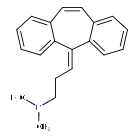
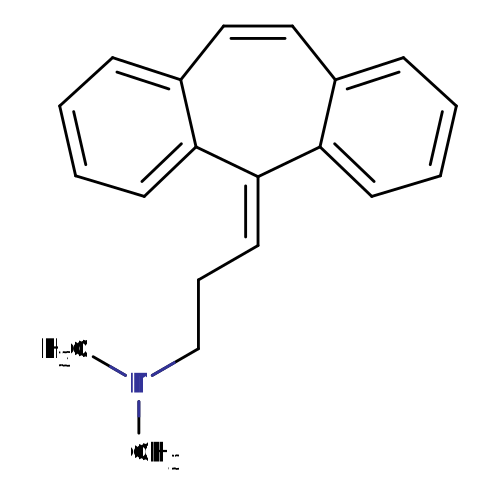
Structure for Cyclobenzaprine (DB00924)
- Weight
- Average: 275.3874
Monoisotopic: 275.167399677 - Chemical Formula
- C20H21N
- Synonyms
- (3-Dibenzo[a,d]cyclohepten-5-ylidene-propyl)-dimethyl-amine
- Ciclobenzaprina
- Cyclobenzaprine
- Cyclobenzaprinum
- N,N-dimethyl-5H-dibenzo(a,d)cycloheptene-Δ5,γ-propylamine
- External IDs
- MK-130
- TNX-102

Pharmacology
- Indication
Cyclobenzaprine is indicated as a short-term (2-3 weeks) adjunct therapy, along with rest and physical therapy, for relief of muscle spasm associated with acute, painful musculoskeletal conditions. It has not been found effective in the treatment of spasticity originating from cerebral or spinal cord disease, or spasticity in children with cerebral palsy.15,16 Cyclobenzaprine is also occasionally used off-label for reducing pain and sleep disturbances in patients with fibromyalgia.9
 Reduce drug development failure ratesBuild, train, & validate machine-learning modelswith evidence-based and structured datasets.Build, train, & validate predictive machine-learning models with structured datasets.
- Associated Conditions
Indication Type Indication Combined Product Details Approval Level Age Group Patient Characteristics Dose Form Adjunct therapy in treatment of Muscle spasm •••••••••••• Used in combination to treat Muscle spasms Combination Product in combination with: Clonixin (DB09218) •••••••••••• ••••••• •••••• - Contraindications & Blackbox Warnings
 Prevent Adverse Drug Events TodayTap into our Clinical API for life-saving information on contraindications & blackbox warnings, population restrictions, harmful risks, & more.Avoid life-threatening adverse drug events with our Clinical API
- Pharmacodynamics
Cyclobenzaprine is a skeletal muscle relaxant that works on areas of the brainstem to reduce skeletal muscle spasm, though its exact pharmacodynamic behaviour is currently unclear.15,16,10 Despite its long half-life, it is relatively short-acting with a typical duration of action of 4-6 hours.10 Cyclobenzaprine has been reported to contribute to the development of serotonin syndrome when used in combination with other serotonergic medications.15,16,5 Symptoms of serotonin syndrome may include autonomic instability, changes to mental status, neuromuscular abnormalities, or gastrointestinal symptoms - treatment with cyclobenzaprine should be discontinued immediately if any of these reactions occur during therapy.15,16
- Mechanism of action
The exact mechanism of action of cyclobenzaprine has not been fully elucidated in humans, and much of the information available regarding its mechanism has been ascertained from early animal studies. There is some evidence that cyclobenzaprine exerts its effects at the supraspinal level, specifically within the locus coeruleus of the brainstem, with little-to-no action at neuromuscular junctions or directly on skeletal musculature16,10. Action on the brainstem is thought to result in diminished activity of efferent alpha and gamma motor neurons, likely mediated by inhibition of coeruleus-spinal or reticulospinal pathways, and ultimately depressed spinal cord interneuron activity.10
More recently it has been suggested that inhibition of descending serotonergic pathways in the spinal cord via action on 5-HT2 receptors may contribute to cyclobenzaprine’s observed effects.3,10,4
Target Actions Organism A5-hydroxytryptamine receptor 2A antagonistHumans U5-hydroxytryptamine receptor 2B antagonistHumans U5-hydroxytryptamine receptor 2C antagonistHumans U5-hydroxytryptamine receptor 6 antagonistHumans USodium-dependent serotonin transporter inhibitorHumans USodium-dependent noradrenaline transporter inhibitorHumans U5-hydroxytryptamine receptor 7 antagonistHumans UToll-like receptor 4 inhibitorHumans UAldehyde oxidase inhibitorHumans - Absorption
The oral bioavailability of cyclobenzaprine has been estimated to be between 0.33 and 0.55.8,11,15 Cmax is between 5-35 ng/mL and is achieved after 4 hours (Tmax).15,10 AUC over an 8 hour dosing interval was reported to be approximately 177 ng.hr/mL.15
- Volume of distribution
The volume of distribution of cyclobenzaprine is approximately 146 L.11 The combination of high plasma clearance despite a relatively long half-life observed with cyclobenzaprine is suggestive of extensive tissue distribution.13,8
- Protein binding
Cyclobenzaprine is approximately 93% protein bound in plasma.11 It has been identified as specifically having a high affinity for human serum albumin.12
- Metabolism
Cyclobenzaprine is extensively metabolized in the liver via both oxidative and conjugative pathways.15,8,10 Oxidative metabolism, mainly N-demethylation, is catalyzed primarily by CYP3A4 and CYP1A2 (with CYP2D6 implicated to a lesser extent) and is responsible for the major metabolite desmethylcyclobenzaprine15,1,10. Cyclobenzaprine also undergoes N-glucuronidation in the liver catalyzed by UGT1A4 and UGT2B102, and has been shown to undergo enterohepatic circulation.15,8,10
Hover over products below to view reaction partners
- Route of elimination
After administration of a radio-labeled dose of cyclobenzaprine, 38-51% of radioactivity was excreted in the urine while 14-15% was excreted in the feces.16 Cyclobenzaprine is highly metabolized, with only approximately 1% of this same radio-labeled dose recovered in the urine as unchanged drug. Metabolites excreted in the urine are likely water-soluble glucuronide conjugates.16
- Half-life
The effective half-life of cyclobenzaprine in young healthy subjects is approximately 18 hours.8,15,16 These values are extended in the elderly and those with hepatic insufficiency, with a mean effective half-life of 33.4 hours and 46.2 hours in these groups, respectively.8
- Clearance
The approximate plasma clearance of cyclobenzaprine is 0.7 L/min.8,15,16
- Adverse Effects
 Improve decision support & research outcomesWith structured adverse effects data, including: blackbox warnings, adverse reactions, warning & precautions, & incidence rates. View sample adverse effects data in our new Data Library!Improve decision support & research outcomes with our structured adverse effects data.
- Toxicity
The oral LD50 of cyclobenzaprine in mice and rats is 338 mg/kg and 425 mg/kg, respectively. Signs of overdose may develop rapidly after ingestion and commonly include significant drowsiness and tachycardia, with less common manifestations including tremor, agitation, ataxia, GI upset, and other CNS effects such as confusion and hallucinations. Potentially critical manifestations, though rare, include cardiac arrest or dysrhythmias, severe hypotension, seizures, and neuroleptic malignant syndrome.15,16
As the management of cyclobenzaprine overdose is complex and ever-changing, it is recommended that a poison control center be consulted prior to treatment. Typical management involves gastrointestinal decontamination, close cardiac monitoring, and monitoring for signs of CNS or respiratory depression. As cyclobenzaprine exists in relatively low concentrations in plasma, monitoring of drug plasma levels should not guide management and dialysis is likely of no value.15,16
- Pathways
- Not Available
- Pharmacogenomic Effects/ADRs
- Not Available
Interactions
- Drug Interactions
- This information should not be interpreted without the help of a healthcare provider. If you believe you are experiencing an interaction, contact a healthcare provider immediately. The absence of an interaction does not necessarily mean no interactions exist.
Drug Interaction Integrate drug-drug
interactions in your software1,2-Benzodiazepine The risk or severity of CNS depression can be increased when Cyclobenzaprine is combined with 1,2-Benzodiazepine. Abametapir The serum concentration of Cyclobenzaprine can be increased when it is combined with Abametapir. Abatacept The metabolism of Cyclobenzaprine can be increased when combined with Abatacept. Abiraterone The serum concentration of Cyclobenzaprine can be increased when it is combined with Abiraterone. Acenocoumarol The metabolism of Acenocoumarol can be decreased when combined with Cyclobenzaprine. - Food Interactions
- Avoid alcohol. Cyclobenzaprine is a central nervous system depressant which may be potentiated by the co-administration of alcohol.
Products
 Drug product information from 10+ global regionsOur datasets provide approved product information including:dosage, form, labeller, route of administration, and marketing period.Access drug product information from over 10 global regions.
- Product Ingredients
Ingredient UNII CAS InChI Key Cyclobenzaprine hydrochloride 0VE05JYS2P 6202-23-9 VXEAYBOGHINOKW-UHFFFAOYSA-N - Product Images
- International/Other Brands
- Flexiban (SIT)
- Brand Name Prescription Products
Name Dosage Strength Route Labeller Marketing Start Marketing End Region Image Amrix Capsule, extended release 15 mg/1 Oral Stat Rx USA 2007-10-01 Not applicable US 

Amrix Capsule, extended release 15 mg/1 Oral Lake Erie Medical DBA Quality Care Products LLC 2012-01-03 2019-10-11 US Amrix Capsule, extended release 15 mg/1 Oral Cephalon, LLC 2007-10-02 Not applicable US Amrix Capsule, extended release 30 mg/1 Oral Rebel Distributors 2007-10-01 Not applicable US 
Amrix Capsule, extended release 15 mg/1 Oral Rebel Distributors 2007-10-01 Not applicable US 
- Generic Prescription Products
Name Dosage Strength Route Labeller Marketing Start Marketing End Region Image Ag-cyclobenzaprine Tablet 10 mg Oral Angita Pharma Inc. 2020-02-28 Not applicable Canada 
Alti-cyclobenzaprine - Tab 10mg Tablet 10 mg Oral Altimed Pharma Inc. 1995-12-31 2005-05-27 Canada Apo-cyclobenzaprine Tablet 10 mg Oral Apotex Corporation 1995-12-31 Not applicable Canada Auro-cyclobenzaprine Tablet 10 mg Oral Auro Pharma Inc 2011-06-15 Not applicable Canada Ava-cyclobenzaprine Tablet 10 mg Oral Avanstra Inc 2011-10-11 2014-08-21 Canada - Mixture Products
Name Ingredients Dosage Route Labeller Marketing Start Marketing End Region Image BENRELAX CÁPSULA BLANDA Cyclobenzaprine hydrochloride (5 mg) + Clonixin lysine (125 mg) Capsule, liquid filled Oral TECNOQUIMICAS S.A. 2020-11-26 Not applicable Colombia 
CLONIXINATO / CICLOBENZAPRINA 125MG/5MG Cyclobenzaprine hydrochloride (5 mg) + Clonixin lysine (125 mg) Capsule, liquid filled Oral TECNOQUIMICAS S.A. 2020-11-26 Not applicable Colombia Cyclo/Gaba 10/300 Pack Cyclobenzaprine hydrochloride (10 mg/1) + Gabapentin (300 mg/1) Kit Oral Tmig, Inc. 2011-01-29 Not applicable US DORIXINA® RELAX COMPRIMIDOS RECUBIERTOS Cyclobenzaprine hydrochloride (5 mg) + Clonixin lysine (125 mg) Tablet, coated Oral MEGA LABS S.A. 2006-11-10 Not applicable Colombia NOpiod-TC Cyclobenzaprine hydrochloride (7.5 mg/1) + Levomenthol (600 mg/1) + Lidocaine (600 mg/1) Oral; Topical Skya Health, LLC 2020-05-15 Not applicable US - Unapproved/Other Products
Name Ingredients Dosage Route Labeller Marketing Start Marketing End Region Image Cyclo/Mag Cyclobenzaprine hydrochloride (1 g/1g) + Magnesium oxide (1 g/1g) Kit Oral Living Well Pharmacy, Inc. 2010-03-03 Not applicable US Cyclo/Mag 10mg/200mg Cyclobenzaprine hydrochloride (1 g/1g) + Magnesium oxide (1 g/1g) Kit Not applicable Living Well Pharmacy, Inc. 2010-02-17 Not applicable US Cyclobenzaprine Hydrochloride Cyclobenzaprine hydrochloride (10 mg/1) Capsule, film coated, extended release Oral Sterling Knight Pharmaceuticals, Llc 2016-10-31 Not applicable US CyclobenzaprinePax Cyclobenzaprine hydrochloride (10 mg/1) + Capsaicin (0.0375 g/100g) + Menthol (5 1/100g) Kit Oral; Topical Solubiomix 2015-09-05 2016-03-04 US Cyclopak Cyclobenzaprine hydrochloride (5 mg/1) + Lidocaine (25 mg/1g) + Prilocaine (25 mg/1g) Cream; Kit; Tablet, film coated Oral; Topical PureTek Corporation 2020-11-30 2024-04-30 US


Categories
- ATC Codes
- M03BX08 — Cyclobenzaprine
- Drug Categories
- Agents that reduce seizure threshold
- Antidepressive Agents
- Benzocycloheptenes
- Central Nervous System Agents
- Central Nervous System Depressants
- Centrally-mediated Muscle Relaxation
- Cytochrome P-450 CYP1A2 Substrates
- Cytochrome P-450 CYP2D6 Substrates
- Cytochrome P-450 CYP3A Substrates
- Cytochrome P-450 CYP3A4 Substrates
- Cytochrome P-450 Substrates
- Dibenzocycloheptenes
- Drugs causing inadvertant photosensitivity
- Muscle Relaxants
- Muscle Relaxants, Centrally Acting Agents
- Musculo-Skeletal System
- Neurotoxic agents
- Photosensitizing Agents
- Serotonergic Drugs Shown to Increase Risk of Serotonin Syndrome
- Serotonin 5-HT2 Receptor Antagonists
- Serotonin 5-HT2A Receptor Antagonists
- Serotonin 5-HT2C Receptor Antagonists
- Serotonin Agents
- Serotonin Receptor Antagonists
- Tranquilizing Agents
- UGT1A4 substrates
- Chemical TaxonomyProvided by Classyfire
- Description
- This compound belongs to the class of organic compounds known as dibenzocycloheptenes. These are compounds containing a dibenzocycloheptene moiety, which consists of two benzene rings connected by a cycloheptene ring.
- Kingdom
- Organic compounds
- Super Class
- Benzenoids
- Class
- Dibenzocycloheptenes
- Sub Class
- Not Available
- Direct Parent
- Dibenzocycloheptenes
- Alternative Parents
- Trialkylamines / Organopnictogen compounds / Hydrocarbon derivatives
- Substituents
- Amine / Aromatic homopolycyclic compound / Dibenzocycloheptene / Hydrocarbon derivative / Organic nitrogen compound / Organonitrogen compound / Organopnictogen compound / Tertiary aliphatic amine / Tertiary amine
- Molecular Framework
- Aromatic homopolycyclic compounds
- External Descriptors
- organic tricyclic compound (CHEBI:3996)
- Affected organisms
- Humans and other mammals
Chemical Identifiers
- UNII
- 69O5WQQ5TI
- CAS number
- 303-53-7
- InChI Key
- JURKNVYFZMSNLP-UHFFFAOYSA-N
- InChI
- InChI=1S/C20H21N/c1-21(2)15-7-12-20-18-10-5-3-8-16(18)13-14-17-9-4-6-11-19(17)20/h3-6,8-14H,7,15H2,1-2H3
- IUPAC Name
- dimethyl(3-{tricyclo[9.4.0.0^{3,8}]pentadeca-1(15),3,5,7,9,11,13-heptaen-2-ylidene}propyl)amine
- SMILES
- CN(C)CCC=C1C2=CC=CC=C2C=CC2=CC=CC=C12
References
- Synthesis Reference
Villani, F.J.; US. Patent 3,409,640; November 5,1968; assigned to Schering Corporation.
- General References
- Wang RW, Liu L, Cheng H: Identification of human liver cytochrome P450 isoforms involved in the in vitro metabolism of cyclobenzaprine. Drug Metab Dispos. 1996 Jul;24(7):786-91. [Article]
- Lu D, Xie Q, Wu B: N-glucuronidation catalyzed by UGT1A4 and UGT2B10 in human liver microsomes: Assay optimization and substrate identification. J Pharm Biomed Anal. 2017 Oct 25;145:692-703. doi: 10.1016/j.jpba.2017.07.037. Epub 2017 Aug 4. [Article]
- Kobayashi H, Hasegawa Y, Ono H: Cyclobenzaprine, a centrally acting muscle relaxant, acts on descending serotonergic systems. Eur J Pharmacol. 1996 Sep 5;311(1):29-35. [Article]
- Honda M, Nishida T, Ono H: Tricyclic analogs cyclobenzaprine, amitriptyline and cyproheptadine inhibit the spinal reflex transmission through 5-HT(2) receptors. Eur J Pharmacol. 2003 Jan 1;458(1-2):91-9. [Article]
- Mestres J, Seifert SA, Oprea TI: Linking pharmacology to clinical reports: cyclobenzaprine and its possible association with serotonin syndrome. Clin Pharmacol Ther. 2011 Nov;90(5):662-5. doi: 10.1038/clpt.2011.177. Epub 2011 Oct 5. [Article]
- Hutchinson MR, Loram LC, Zhang Y, Shridhar M, Rezvani N, Berkelhammer D, Phipps S, Foster PS, Landgraf K, Falke JJ, Rice KC, Maier SF, Yin H, Watkins LR: Evidence that tricyclic small molecules may possess toll-like receptor and myeloid differentiation protein 2 activity. Neuroscience. 2010 Jun 30;168(2):551-63. doi: 10.1016/j.neuroscience.2010.03.067. Epub 2010 Apr 8. [Article]
- Obach RS, Huynh P, Allen MC, Beedham C: Human liver aldehyde oxidase: inhibition by 239 drugs. J Clin Pharmacol. 2004 Jan;44(1):7-19. [Article]
- Winchell GA, King JD, Chavez-Eng CM, Constanzer ML, Korn SH: Cyclobenzaprine pharmacokinetics, including the effects of age, gender, and hepatic insufficiency. J Clin Pharmacol. 2002 Jan;42(1):61-9. doi: 10.1177/0091270002042001007. [Article]
- Calandre EP, Rico-Villademoros F, Slim M: An update on pharmacotherapy for the treatment of fibromyalgia. Expert Opin Pharmacother. 2015 Jun;16(9):1347-68. doi: 10.1517/14656566.2015.1047343. [Article]
- Cimolai N: Cyclobenzaprine: a new look at an old pharmacological agent. Expert Rev Clin Pharmacol. 2009 May;2(3):255-63. doi: 10.1586/ecp.09.5. [Article]
- Brioschi TM, Schramm SG, Kano EK, Koono EE, Ching TH, Serra CH, Porta V: Pharmacokinetics and bioequivalence evaluation of cyclobenzaprine tablets. Biomed Res Int. 2013;2013:281392. doi: 10.1155/2013/281392. Epub 2013 Sep 16. [Article]
- Baig MH, Rahman S, Rabbani G, Imran M, Ahmad K, Choi I: Multi-Spectroscopic Characterization of Human Serum Albumin Binding with Cyclobenzaprine Hydrochloride: Insights from Biophysical and In Silico Approaches. Int J Mol Sci. 2019 Feb 3;20(3). pii: ijms20030662. doi: 10.3390/ijms20030662. [Article]
- Hucker HB, Stauffer SC, Balletto AJ, White SD, Zacchei AG, Arison BH: Physiological disposition and metabolism of cyclobenzaprine in the rat, dog, rhesus monkey, and man. Drug Metab Dispos. 1978 Nov-Dec;6(6):659-72. [Article]
- CaymenChem: Cyclobenzaprine hydrochloride MSDS [Link]
- FDA Approved Drugs: Cyclobenzaprine [Link]
- DPD Approved Drugs: Cyclobenzaprine [Link]
- External Links
- Human Metabolome Database
- HMDB0015060
- KEGG Drug
- D07758
- KEGG Compound
- C06931
- PubChem Compound
- 2895
- PubChem Substance
- 46508313
- ChemSpider
- 2792
- BindingDB
- 112774
- 21949
- ChEBI
- 3996
- ChEMBL
- CHEMBL669
- ZINC
- ZINC000000968263
- Therapeutic Targets Database
- DAP000891
- PharmGKB
- PA449160
- RxList
- RxList Drug Page
- Drugs.com
- Drugs.com Drug Page
- PDRhealth
- PDRhealth Drug Page
- Wikipedia
- Cyclobenzaprine
Clinical Trials
- Clinical Trials
Phase Status Purpose Conditions Count 4 Completed Treatment Acute Low Back Pain 1 4 Completed Treatment Pain / Spasms 1 4 Recruiting Treatment Back Pain Lower Back / Coronavirus Disease 2019 (COVID‑19) / Myofascial Pain Syndrome - Lower Back 1 4 Recruiting Treatment Bariatric Surgery Candidates / Obesity, Morbid / Surgery 1 4 Terminated Treatment Fatigue / Fibromyalgia / Pain / Sleep 1
Pharmacoeconomics
- Manufacturers
- Anesta ag
- Actavis totowa llc
- Aurobindo pharma ltd
- Cadista pharmaceuticals inc
- Invagen pharmaceuticals inc
- Mutual pharmaceutical co inc
- Mylan pharmaceuticals inc
- Orit laboratories llc
- Pliva inc
- Ranbaxy laboratories ltd
- Sandoz inc
- Vintage pharmaceuticals inc
- Watson laboratories inc
- Mcneil pediatrics
- Packagers
- 4uOrtho LLC
- Advanced Pharmaceutical Services Inc.
- Aidarex Pharmacuticals LLC
- Amerisource Health Services Corp.
- Amneal Pharmaceuticals
- Apotheca Inc.
- AQ Pharmaceuticals Inc.
- A-S Medication Solutions LLC
- Aurobindo Pharma Ltd.
- Blenheim Pharmacal
- Breckenridge Pharmaceuticals
- Brighton Pharmaceuticals
- Bryant Ranch Prepack
- Cadista Pharmaceuticals Inc.
- Cardinal Health
- Cephalon Inc.
- Comprehensive Consultant Services Inc.
- Corepharma LLC
- Coupler Enterprises Inc.
- Dept Health Central Pharmacy
- DHHS Program Support Center Supply Service Center
- Direct Dispensing Inc.
- Dispensing Solutions
- Diversified Healthcare Services Inc.
- Dorx LLC
- ECR Pharmaceuticals
- Endo Pharmaceuticals Inc.
- Eurand Pharmaceuticals Inc.
- Fusion Pharmaceuticals LLC
- Golden State Medical Supply Inc.
- H.J. Harkins Co. Inc.
- Heartland Repack Services LLC
- Innoviant Pharmacy Inc.
- Kaiser Foundation Hospital
- Keltman Pharmaceuticals Inc.
- Lake Erie Medical and Surgical Supply
- Liberty Pharmaceuticals
- Major Pharmaceuticals
- Mckesson Corp.
- McNeil Laboratories
- Medisca Inc.
- Merck & Co.
- Murfreesboro Pharmaceutical Nursing Supply
- Mutual Pharmaceutical Co.
- Mylan
- Neighborcare Repackaging Inc.
- Nucare Pharmaceuticals Inc.
- Ortho Mcneil Janssen Pharmaceutical Inc.
- Palmetto Pharmaceuticals Inc.
- Patient First Corp.
- PCA LLC
- PD-Rx Pharmaceuticals Inc.
- Pharmaceutical Utilization Management Program VA Inc.
- Pharmedix
- Physicians Total Care Inc.
- Pliva Inc.
- Preferred Pharmaceuticals Inc.
- Prepackage Specialists
- Prepak Systems Inc.
- Prescript Pharmaceuticals
- Prescription Dispensing Service Inc.
- Qualitest
- Rebel Distributors Corp.
- Redpharm Drug
- Remedy Repack
- Sandhills Packaging Inc.
- Sandoz
- Southwood Pharmaceuticals
- Spectrum Pharmaceuticals
- St Mary's Medical Park Pharmacy
- Stat Rx Usa
- Stat Scripts LLC
- Teva Pharmaceutical Industries Ltd.
- UDL Laboratories
- United Research Laboratories Inc.
- Va Cmop Dallas
- Vangard Labs Inc.
- Victory Pharma
- Vintage Pharmaceuticals Inc.
- Watson Pharmaceuticals
- Dosage Forms
Form Route Strength Capsule, extended release Oral 15 mg/1 Capsule, extended release Oral 30 mg/1 Tablet Oral 10.000 mg Tablet, coated Oral 1000000 mg Tablet, coated Oral 5 mg Capsule, liquid filled Oral Kit Oral Kit Not applicable Capsule, film coated, extended release Oral 10 mg/1 Capsule, film coated, extended release Oral 5 mg/1 Kit Oral 10 mg/1 Powder Not applicable 1 g/1g Tablet Oral 10 mg/10mg Tablet Oral 10 mg/1 Tablet Oral 5 mg/1 Tablet Oral 7.5 mg/1 Tablet, coated Oral 10 mg/1 Tablet, film coated Oral 10 mg/301 Tablet, film coated Oral 10 mg/1 Tablet, film coated Oral 5 mg/1 Cream; kit; tablet, film coated Oral; Topical Kit Topical 5.6 g/5.6g Kit; tablet, film coated Oral 10 mg/1 Tablet, coated Oral 10 mg Tablet Oral Tablet, coated Oral Tablet, film coated Oral 7.5 mg/1 Tablet, film coated Oral 10 mg Tablet, film coated Oral 5 mg Kit Oral; Topical Tablet Oral Kit Topical Capsule, extended release Oral 15 mg Tablet Oral 10 mg Kit Oral 0.25 g/0.25g Kit Oral 0.28 g/0.28g Tablet Oral 5 mg Tablet Oral 10.000 mg Capsule Oral Capsule Oral 10.000 mg - Prices
Unit description Cost Unit Cyclobenzaprine hcl crystal 273.88USD g Cyclobenzaprine hcl powder 35.84USD g Fexmid 7.5 mg tablet 4.18USD tablet Flexeril 5 mg tablet 2.04USD tablet Flexeril 10 mg tablet 1.74USD tablet Cyclobenzaprine HCl 5 mg tablet 1.71USD tablet Cyclobenzaprine 5 mg tablet 1.64USD tablet Cyclobenzaprine HCl 10 mg tablet 0.47USD tablet Cyclobenzaprine 10 mg tablet 0.41USD tablet DrugBank does not sell nor buy drugs. Pricing information is supplied for informational purposes only.- Patents
Patent Number Pediatric Extension Approved Expires (estimated) Region US7544372 No 2009-06-09 2023-11-14 US US7829121 No 2010-11-09 2023-11-14 US US7820203 No 2010-10-26 2023-11-14 US US7790199 No 2010-09-07 2023-11-14 US US7387793 No 2008-06-17 2025-02-26 US US9399025 No 2016-07-26 2023-11-14 US US9375410 No 2016-06-28 2023-11-14 US US8877245 No 2014-11-04 2023-11-14 US
Properties
- State
- Solid
- Experimental Properties
Property Value Source melting point (°C) 217 FDA Label water solubility Freely Soluble FDA Label logP 5.2 Not Available pKa 8.47 FDA Label - Predicted Properties
Property Value Source Water Solubility 0.00689 mg/mL ALOGPS logP 4.73 ALOGPS logP 4.61 Chemaxon logS -4.6 ALOGPS pKa (Strongest Basic) 9.76 Chemaxon Physiological Charge 1 Chemaxon Hydrogen Acceptor Count 1 Chemaxon Hydrogen Donor Count 0 Chemaxon Polar Surface Area 3.24 Å2 Chemaxon Rotatable Bond Count 3 Chemaxon Refractivity 102.62 m3·mol-1 Chemaxon Polarizability 32.94 Å3 Chemaxon Number of Rings 3 Chemaxon Bioavailability 1 Chemaxon Rule of Five Yes Chemaxon Ghose Filter Yes Chemaxon Veber's Rule Yes Chemaxon MDDR-like Rule No Chemaxon - Predicted ADMET Features
Property Value Probability Human Intestinal Absorption + 0.9941 Blood Brain Barrier + 0.9512 Caco-2 permeable + 0.8867 P-glycoprotein substrate Substrate 0.7567 P-glycoprotein inhibitor I Inhibitor 0.8563 P-glycoprotein inhibitor II Inhibitor 0.6447 Renal organic cation transporter Inhibitor 0.7955 CYP450 2C9 substrate Non-substrate 0.7826 CYP450 2D6 substrate Substrate 0.8918 CYP450 3A4 substrate Substrate 0.7501 CYP450 1A2 substrate Inhibitor 0.7324 CYP450 2C9 inhibitor Non-inhibitor 0.9071 CYP450 2D6 inhibitor Inhibitor 0.8933 CYP450 2C19 inhibitor Non-inhibitor 0.9025 CYP450 3A4 inhibitor Non-inhibitor 0.9158 CYP450 inhibitory promiscuity Low CYP Inhibitory Promiscuity 0.6955 Ames test Non AMES toxic 0.9132 Carcinogenicity Non-carcinogens 0.8127 Biodegradation Not ready biodegradable 0.8727 Rat acute toxicity 2.9697 LD50, mol/kg Not applicable hERG inhibition (predictor I) Weak inhibitor 0.7531 hERG inhibition (predictor II) Inhibitor 0.6767
Spectra
- Mass Spec (NIST)
- Not Available
- Spectra
Spectrum Spectrum Type Splash Key Predicted GC-MS Spectrum - GC-MS Predicted GC-MS splash10-0a4i-9040000000-6d92a6b3b68f574cfa96 Predicted MS/MS Spectrum - 10V, Positive (Annotated) Predicted LC-MS/MS splash10-0059-0090000000-a17c87d96e87759e8759 Predicted MS/MS Spectrum - 10V, Negative (Annotated) Predicted LC-MS/MS splash10-00di-0090000000-67665c8b4af4806e196e Predicted MS/MS Spectrum - 20V, Positive (Annotated) Predicted LC-MS/MS splash10-001i-1090000000-271db85655416bd128ee Predicted MS/MS Spectrum - 20V, Negative (Annotated) Predicted LC-MS/MS splash10-00di-0090000000-ac7c444841684cf3ec3f Predicted MS/MS Spectrum - 40V, Positive (Annotated) Predicted LC-MS/MS splash10-0ldi-1190000000-e0d58d478124ca8be533 Predicted MS/MS Spectrum - 40V, Negative (Annotated) Predicted LC-MS/MS splash10-0udi-0090000000-beb4219f204adff5d006 Predicted 1H NMR Spectrum 1D NMR Not Applicable Predicted 13C NMR Spectrum 1D NMR Not Applicable - Chromatographic Properties
Collision Cross Sections (CCS)
Adduct CCS Value (Å2) Source type Source [M-H]- 179.7846796 predictedDarkChem Lite v0.1.0 [M-H]- 180.6520796 predictedDarkChem Lite v0.1.0 [M-H]- 160.99794 predictedDeepCCS 1.0 (2019) [M+H]+ 180.1553796 predictedDarkChem Lite v0.1.0 [M+H]+ 180.8070796 predictedDarkChem Lite v0.1.0 [M+H]+ 163.35594 predictedDeepCCS 1.0 (2019) [M+Na]+ 180.0051796 predictedDarkChem Lite v0.1.0 [M+Na]+ 179.9551796 predictedDarkChem Lite v0.1.0 [M+Na]+ 169.44908 predictedDeepCCS 1.0 (2019)
Targets

- Kind
- Protein
- Organism
- Humans
- Pharmacological action
- Yes
- Actions
- Antagonist
- General Function
- Virus receptor activity
- Specific Function
- G-protein coupled receptor for 5-hydroxytryptamine (serotonin). Also functions as a receptor for various drugs and psychoactive substances, including mescaline, psilocybin, 1-(2,5-dimethoxy-4-iodop...
- Gene Name
- HTR2A
- Uniprot ID
- P28223
- Uniprot Name
- 5-hydroxytryptamine receptor 2A
- Molecular Weight
- 52602.58 Da
References
- Honda M, Nishida T, Ono H: Tricyclic analogs cyclobenzaprine, amitriptyline and cyproheptadine inhibit the spinal reflex transmission through 5-HT(2) receptors. Eur J Pharmacol. 2003 Jan 1;458(1-2):91-9. [Article]
- Kobayashi H, Hasegawa Y, Ono H: Cyclobenzaprine, a centrally acting muscle relaxant, acts on descending serotonergic systems. Eur J Pharmacol. 1996 Sep 5;311(1):29-35. [Article]
- Mestres J, Seifert SA, Oprea TI: Linking pharmacology to clinical reports: cyclobenzaprine and its possible association with serotonin syndrome. Clin Pharmacol Ther. 2011 Nov;90(5):662-5. doi: 10.1038/clpt.2011.177. Epub 2011 Oct 5. [Article]
- Kind
- Protein
- Organism
- Humans
- Pharmacological action
- Unknown
- Actions
- Antagonist
- General Function
- Serotonin receptor activity
- Specific Function
- G-protein coupled receptor for 5-hydroxytryptamine (serotonin). Also functions as a receptor for various ergot alkaloid derivatives and psychoactive substances. Ligand binding causes a conformation...
- Gene Name
- HTR2B
- Uniprot ID
- P41595
- Uniprot Name
- 5-hydroxytryptamine receptor 2B
- Molecular Weight
- 54297.41 Da
References
- Mestres J, Seifert SA, Oprea TI: Linking pharmacology to clinical reports: cyclobenzaprine and its possible association with serotonin syndrome. Clin Pharmacol Ther. 2011 Nov;90(5):662-5. doi: 10.1038/clpt.2011.177. Epub 2011 Oct 5. [Article]
- Kind
- Protein
- Organism
- Humans
- Pharmacological action
- Unknown
- Actions
- Antagonist
- General Function
- Serotonin receptor activity
- Specific Function
- G-protein coupled receptor for 5-hydroxytryptamine (serotonin). Also functions as a receptor for various drugs and psychoactive substances, including ergot alkaloid derivatives, 1-2,5,-dimethoxy-4-...
- Gene Name
- HTR2C
- Uniprot ID
- P28335
- Uniprot Name
- 5-hydroxytryptamine receptor 2C
- Molecular Weight
- 51820.705 Da
References
- Mestres J, Seifert SA, Oprea TI: Linking pharmacology to clinical reports: cyclobenzaprine and its possible association with serotonin syndrome. Clin Pharmacol Ther. 2011 Nov;90(5):662-5. doi: 10.1038/clpt.2011.177. Epub 2011 Oct 5. [Article]
- Kind
- Protein
- Organism
- Humans
- Pharmacological action
- Unknown
- Actions
- Antagonist
- General Function
- Serotonin receptor activity
- Specific Function
- This is one of the several different receptors for 5-hydroxytryptamine (serotonin), a biogenic hormone that functions as a neurotransmitter, a hormone, and a mitogen. The activity of this receptor ...
- Gene Name
- HTR6
- Uniprot ID
- P50406
- Uniprot Name
- 5-hydroxytryptamine receptor 6
- Molecular Weight
- 46953.625 Da
References
- Mestres J, Seifert SA, Oprea TI: Linking pharmacology to clinical reports: cyclobenzaprine and its possible association with serotonin syndrome. Clin Pharmacol Ther. 2011 Nov;90(5):662-5. doi: 10.1038/clpt.2011.177. Epub 2011 Oct 5. [Article]
- Kind
- Protein
- Organism
- Humans
- Pharmacological action
- Unknown
- Actions
- Inhibitor
- General Function
- Serotonin:sodium symporter activity
- Specific Function
- Serotonin transporter whose primary function in the central nervous system involves the regulation of serotonergic signaling via transport of serotonin molecules from the synaptic cleft back into t...
- Gene Name
- SLC6A4
- Uniprot ID
- P31645
- Uniprot Name
- Sodium-dependent serotonin transporter
- Molecular Weight
- 70324.165 Da
References
- Mestres J, Seifert SA, Oprea TI: Linking pharmacology to clinical reports: cyclobenzaprine and its possible association with serotonin syndrome. Clin Pharmacol Ther. 2011 Nov;90(5):662-5. doi: 10.1038/clpt.2011.177. Epub 2011 Oct 5. [Article]
- Kind
- Protein
- Organism
- Humans
- Pharmacological action
- Unknown
- Actions
- Inhibitor
- General Function
- Norepinephrine:sodium symporter activity
- Specific Function
- Amine transporter. Terminates the action of noradrenaline by its high affinity sodium-dependent reuptake into presynaptic terminals.
- Gene Name
- SLC6A2
- Uniprot ID
- P23975
- Uniprot Name
- Sodium-dependent noradrenaline transporter
- Molecular Weight
- 69331.42 Da
References
- Mestres J, Seifert SA, Oprea TI: Linking pharmacology to clinical reports: cyclobenzaprine and its possible association with serotonin syndrome. Clin Pharmacol Ther. 2011 Nov;90(5):662-5. doi: 10.1038/clpt.2011.177. Epub 2011 Oct 5. [Article]
- Kind
- Protein
- Organism
- Humans
- Pharmacological action
- Unknown
- Actions
- Antagonist
- General Function
- Serotonin receptor activity
- Specific Function
- This is one of the several different receptors for 5-hydroxytryptamine (serotonin), a biogenic hormone that functions as a neurotransmitter, a hormone, and a mitogen. The activity of this receptor ...
- Gene Name
- HTR7
- Uniprot ID
- P34969
- Uniprot Name
- 5-hydroxytryptamine receptor 7
- Molecular Weight
- 53554.43 Da
References
- Mestres J, Seifert SA, Oprea TI: Linking pharmacology to clinical reports: cyclobenzaprine and its possible association with serotonin syndrome. Clin Pharmacol Ther. 2011 Nov;90(5):662-5. doi: 10.1038/clpt.2011.177. Epub 2011 Oct 5. [Article]
- Kind
- Protein
- Organism
- Humans
- Pharmacological action
- Unknown
- Actions
- Inhibitor
- General Function
- Transmembrane signaling receptor activity
- Specific Function
- Cooperates with LY96 and CD14 to mediate the innate immune response to bacterial lipopolysaccharide (LPS). Acts via MYD88, TIRAP and TRAF6, leading to NF-kappa-B activation, cytokine secretion and ...
- Gene Name
- TLR4
- Uniprot ID
- O00206
- Uniprot Name
- Toll-like receptor 4
- Molecular Weight
- 95679.19 Da
References
- Hutchinson MR, Loram LC, Zhang Y, Shridhar M, Rezvani N, Berkelhammer D, Phipps S, Foster PS, Landgraf K, Falke JJ, Rice KC, Maier SF, Yin H, Watkins LR: Evidence that tricyclic small molecules may possess toll-like receptor and myeloid differentiation protein 2 activity. Neuroscience. 2010 Jun 30;168(2):551-63. doi: 10.1016/j.neuroscience.2010.03.067. Epub 2010 Apr 8. [Article]
- Mestres J, Seifert SA, Oprea TI: Linking pharmacology to clinical reports: cyclobenzaprine and its possible association with serotonin syndrome. Clin Pharmacol Ther. 2011 Nov;90(5):662-5. doi: 10.1038/clpt.2011.177. Epub 2011 Oct 5. [Article]
- Kind
- Protein
- Organism
- Humans
- Pharmacological action
- Unknown
- Actions
- Inhibitor
- General Function
- Xanthine dehydrogenase activity
- Specific Function
- Oxidase with broad substrate specificity, oxidizing aromatic azaheterocycles, such as N1-methylnicotinamide and N-methylphthalazinium, as well as aldehydes, such as benzaldehyde, retinal, pyridoxal...
- Gene Name
- AOX1
- Uniprot ID
- Q06278
- Uniprot Name
- Aldehyde oxidase
- Molecular Weight
- 147916.735 Da
References
- Obach RS, Huynh P, Allen MC, Beedham C: Human liver aldehyde oxidase: inhibition by 239 drugs. J Clin Pharmacol. 2004 Jan;44(1):7-19. [Article]
Enzymes
- Kind
- Protein
- Organism
- Humans
- Pharmacological action
- Unknown
- Actions
- Substrate
- General Function
- Vitamin d3 25-hydroxylase activity
- Specific Function
- Cytochromes P450 are a group of heme-thiolate monooxygenases. In liver microsomes, this enzyme is involved in an NADPH-dependent electron transport pathway. It performs a variety of oxidation react...
- Gene Name
- CYP3A4
- Uniprot ID
- P08684
- Uniprot Name
- Cytochrome P450 3A4
- Molecular Weight
- 57342.67 Da
References
- Wang RW, Liu L, Cheng H: Identification of human liver cytochrome P450 isoforms involved in the in vitro metabolism of cyclobenzaprine. Drug Metab Dispos. 1996 Jul;24(7):786-91. [Article]
- Witenko C, Moorman-Li R, Motycka C, Duane K, Hincapie-Castillo J, Leonard P, Valaer C: Considerations for the appropriate use of skeletal muscle relaxants for the management of acute low back pain. P T. 2014 Jun;39(6):427-35. [Article]
- Kind
- Protein
- Organism
- Humans
- Pharmacological action
- Unknown
- Actions
- Substrate
- General Function
- Oxidoreductase activity, acting on paired donors, with incorporation or reduction of molecular oxygen, reduced flavin or flavoprotein as one donor, and incorporation of one atom of oxygen
- Specific Function
- Cytochromes P450 are a group of heme-thiolate monooxygenases. In liver microsomes, this enzyme is involved in an NADPH-dependent electron transport pathway. It oxidizes a variety of structurally un...
- Gene Name
- CYP1A2
- Uniprot ID
- P05177
- Uniprot Name
- Cytochrome P450 1A2
- Molecular Weight
- 58293.76 Da
References
- Wang RW, Liu L, Cheng H: Identification of human liver cytochrome P450 isoforms involved in the in vitro metabolism of cyclobenzaprine. Drug Metab Dispos. 1996 Jul;24(7):786-91. [Article]
- Zhou SF, Yang LP, Zhou ZW, Liu YH, Chan E: Insights into the substrate specificity, inhibitors, regulation, and polymorphisms and the clinical impact of human cytochrome P450 1A2. AAPS J. 2009 Sep;11(3):481-94. doi: 10.1208/s12248-009-9127-y. Epub 2009 Jul 10. [Article]
- Flockhart Table of Drug Interactions [Link]
- Cyclobenzaprine FDA label [File]
- Kind
- Protein
- Organism
- Humans
- Pharmacological action
- Unknown
- Actions
- Substrate
- Curator comments
- This enzyme relationship is reported to be weak in the literature and is unlikely to result in clinically significant drug interactions.
- General Function
- Steroid hydroxylase activity
- Specific Function
- Responsible for the metabolism of many drugs and environmental chemicals that it oxidizes. It is involved in the metabolism of drugs such as antiarrhythmics, adrenoceptor antagonists, and tricyclic...
- Gene Name
- CYP2D6
- Uniprot ID
- P10635
- Uniprot Name
- Cytochrome P450 2D6
- Molecular Weight
- 55768.94 Da
References
- Kind
- Protein
- Organism
- Humans
- Pharmacological action
- Unknown
- Actions
- Substrate
- General Function
- Protein homodimerization activity
- Specific Function
- UDPGT is of major importance in the conjugation and subsequent elimination of potentially toxic xenobiotics and endogenous compounds. This isoform glucuronidates bilirubin IX-alpha to form both the...
- Gene Name
- UGT1A4
- Uniprot ID
- P22310
- Uniprot Name
- UDP-glucuronosyltransferase 1-4
- Molecular Weight
- 60024.535 Da
References
- Lu D, Xie Q, Wu B: N-glucuronidation catalyzed by UGT1A4 and UGT2B10 in human liver microsomes: Assay optimization and substrate identification. J Pharm Biomed Anal. 2017 Oct 25;145:692-703. doi: 10.1016/j.jpba.2017.07.037. Epub 2017 Aug 4. [Article]
- Kind
- Protein
- Organism
- Humans
- Pharmacological action
- Unknown
- Actions
- Substrate
- General Function
- UDPGT is of major importance in the conjugation and subsequent elimination of potentially toxic xenobiotics and endogenous compounds.
- Specific Function
- Glucuronosyltransferase activity
- Gene Name
- UGT2B10
- Uniprot ID
- P36537
- Uniprot Name
- UDP-glucuronosyltransferase 2B10
- Molecular Weight
- 60773.485 Da
References
- Lu D, Xie Q, Wu B: N-glucuronidation catalyzed by UGT1A4 and UGT2B10 in human liver microsomes: Assay optimization and substrate identification. J Pharm Biomed Anal. 2017 Oct 25;145:692-703. doi: 10.1016/j.jpba.2017.07.037. Epub 2017 Aug 4. [Article]
Carriers
- Kind
- Protein
- Organism
- Humans
- Pharmacological action
- Unknown
- Actions
- Substrate
- General Function
- Toxic substance binding
- Specific Function
- Serum albumin, the main protein of plasma, has a good binding capacity for water, Ca(2+), Na(+), K(+), fatty acids, hormones, bilirubin and drugs. Its main function is the regulation of the colloid...
- Gene Name
- ALB
- Uniprot ID
- P02768
- Uniprot Name
- Serum albumin
- Molecular Weight
- 69365.94 Da
References
- Baig MH, Rahman S, Rabbani G, Imran M, Ahmad K, Choi I: Multi-Spectroscopic Characterization of Human Serum Albumin Binding with Cyclobenzaprine Hydrochloride: Insights from Biophysical and In Silico Approaches. Int J Mol Sci. 2019 Feb 3;20(3). pii: ijms20030662. doi: 10.3390/ijms20030662. [Article]

Drug created at June 13, 2005 13:24 / Updated at May 10, 2024 22:30