Identification
- Generic Name
- Resveratrol
- DrugBank Accession Number
- DB02709
- Background
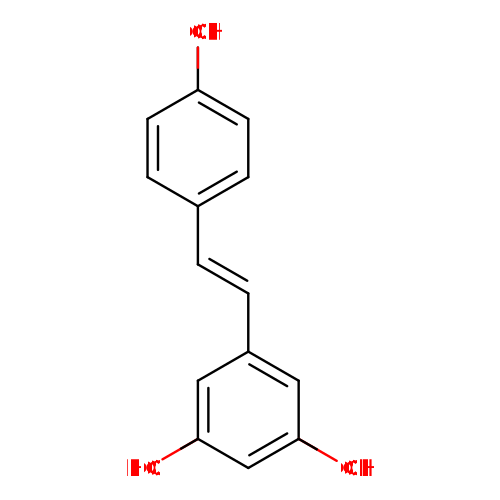
Resveratrol (3,5,4'-trihydroxystilbene) is a polyphenolic phytoalexin. It is a stilbenoid, a derivate of stilbene, and is produced in plants with the help of the enzyme stilbene synthase. It exists as cis-(Z) and trans-(E) isomers. The trans- form can undergo isomerisation to the cis- form when heated or exposed to ultraviolet irradiation. In a 2004 issue of Science, Dr. Sinclair of Harvard University said resveratrol is not an easy molecule to protect from oxidation. It has been claimed that it is readily degraded by exposure to light, heat, and oxygen. However, studies find that Trans-resveratrol undergoes negligible oxidation in normal atmosphere at room temperature.
- Type
- Small Molecule
- Groups
- Investigational
- Structure
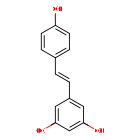
Structure for Resveratrol (DB02709)
- Weight
- Average: 228.2433
Monoisotopic: 228.07864425 - Chemical Formula
- C14H12O3
- Synonyms
- (E)-5-(2-(4-hydroxyphenyl)ethenyl)-1,3-benzenediol(E)-5-(2-(4-hydroxyphenyl)ethenyl)-1,3-benzenediol
- (E)-resveratrol
- 3,4',5-trihydroxy-trans-stilbene
- 3,4',5-trihydroxystilbene
- 3,5,4'-trihydroxystilbene
- 5-[(1E)-2-(4-hydroxyphenyl)ethenyl]benzene-1,3-diol
- 5-[(E)-2-(4-Hydroxyphenyl)-Ethenyl] Benzene-1,3 Diol
- 5-[(E)-2-(4-hydroxyphenyl)ethenyl]benzene-1,3-diol
- 5-[(E)-2-(4-hydroxyphenyl)vinyl]benzene-1,3-diol
- trans-resveratrol
- External IDs
- SRT 501
- SRT-501
- SRT501

Pharmacology
- Indication
Being investigated for the treatment of Herpes labialis infections (cold sores).
 Reduce drug development failure ratesBuild, train, & validate machine-learning modelswith evidence-based and structured datasets.Build, train, & validate predictive machine-learning models with structured datasets.
- Contraindications & Blackbox Warnings
 Prevent Adverse Drug Events TodayTap into our Clinical API for life-saving information on contraindications & blackbox warnings, population restrictions, harmful risks, & more.Avoid life-threatening adverse drug events with our Clinical API
- Pharmacodynamics
Resveratrol, a phytoalexin, has been found to inhibit herpes simplex virus types 1 and 2 (HSV-1 and HSV-2) replication in a dose-dependent, reversible manner, although this is only one of its many pharmaceutical properties. In some countries where there is higher consumption of red wine, there appears to be a lower incidence of heart disease. Other benefits of resveratrol include its anti-inflammatory and antioxidant effects. In preclinical studies, Resveratrol has been found to have potential anticancer properties.
- Mechanism of action
Resveratrol suppresses NF-kappaB (NF-kappaB) activation in HSV infected cells. Reports have indicated that HSV activates NF-kappaB during productive infection and this may be an essential aspect of its replication scheme [PMID: 9705914].
- Absorption
High absorption but very low bioavailability.
- Volume of distribution
Not Available
- Protein binding
Strong affinity towards protein binding.
- Metabolism
Hepatic. Rapidly metabolized and excreted.
Hover over products below to view reaction partners
- Route of elimination
Not Available
- Half-life
Not Available
- Clearance
Not Available
- Adverse Effects
 Improve decision support & research outcomesWith structured adverse effects data, including: blackbox warnings, adverse reactions, warning & precautions, & incidence rates. View sample adverse effects data in our new Data Library!Improve decision support & research outcomes with our structured adverse effects data.
- Toxicity
Not Available
- Pathways
- Not Available
- Pharmacogenomic Effects/ADRs
- Not Available
Interactions
- Drug Interactions
- This information should not be interpreted without the help of a healthcare provider. If you believe you are experiencing an interaction, contact a healthcare provider immediately. The absence of an interaction does not necessarily mean no interactions exist.
Drug Interaction Integrate drug-drug
interactions in your softwareAbciximab The risk or severity of bleeding can be increased when Resveratrol is combined with Abciximab. Abrocitinib The risk or severity of bleeding and thrombocytopenia can be increased when Resveratrol is combined with Abrocitinib. Aceclofenac The risk or severity of bleeding can be increased when Aceclofenac is combined with Resveratrol. Acemetacin The risk or severity of bleeding can be increased when Acemetacin is combined with Resveratrol. Acenocoumarol The risk or severity of bleeding can be increased when Resveratrol is combined with Acenocoumarol. - Food Interactions
- No interactions found.
Products
 Drug product information from 10+ global regionsOur datasets provide approved product information including:dosage, form, labeller, route of administration, and marketing period.Access drug product information from over 10 global regions.
- Mixture Products
Name Ingredients Dosage Route Labeller Marketing Start Marketing End Region Image Ascuoli Resveratrol (600 mg/1) + Nicotinamide Mononucleotide (500 mg/1) + White pepper (50 mg/1) Capsule Oral HEALGROW INC 2023-03-20 Not applicable US 
Ascuoli Resveratrol (400 mg/1) + Nicotinamide Mononucleotide (500 mg/1) + White pepper (50 mg/1) Lozenge Oral HEALGROW INC 2023-03-20 Not applicable US Herodianow Resveratrol (400 mg/1) + Nicotinamide Mononucleotide (500 mg/1) + White pepper (50 mg/1) Lozenge Oral HEALGROW INC 2023-09-30 Not applicable US Liquid Resveratrol (4.5 mg/30mL) + Hyaluronic acid (7.5 mg/30mL) + Nicotinamide (7.5 mg/30mL) Liquid Cutaneous Shantou Youjia E-Commerce Co., Ltd. 2024-02-01 2024-12-31 US Lovita NMN 12000 Resveratrol (85 mg/447mg) + Nicotinamide Mononucleotide (200 mg/447mg) Capsule, coated Oral ACCOLADE PHARMA USA 2023-06-01 Not applicable US - Unapproved/Other Products
Name Ingredients Dosage Route Labeller Marketing Start Marketing End Region Image Ascuoli Resveratrol (600 mg/1) + Nicotinamide Mononucleotide (500 mg/1) + White pepper (50 mg/1) Capsule Oral HEALGROW INC 2023-03-20 Not applicable US Ascuoli Resveratrol (400 mg/1) + Nicotinamide Mononucleotide (500 mg/1) + White pepper (50 mg/1) Lozenge Oral HEALGROW INC 2023-03-20 Not applicable US Co-Balamin Resveratrol (400 mg/1mg) + Folic acid (0.8 mg/1mg) + Mecobalamin (5 mg/1mg) + Ubiquinol (200 mg/1mg) Capsule Oral Home Aide Diagnostics, Inc. 2015-08-01 Not applicable US Co-Veratrol Resveratrol (400 mg/1mg) + Folic acid (0.8 mg/1mg) + Mecobalamin (5 mg/1mg) + Ubiquinol (200 mg/1mg) Capsule Oral Home Aide Diagnostics, Inc. 2015-08-01 2018-10-05 US Dyzbac Resveratrol (50 mg/1) + Ascorbic acid (125 mg/1) + Cholecalciferol (500 [iU]/1) + Leucovorin (1 mg/1) + Lipoic acid (150 mg/1) + Mecobalamin (1 mg/1) + Pyridoxal phosphate (12.5 mg/1) + Ubidecarenone (25 mg/1) Tablet Oral Basiem 2015-11-05 2016-01-01 US
Categories
- Drug Categories
- Angiogenesis Inhibitors
- Anticarcinogenic Agents
- Antioxidants
- Antiplatelet agents
- Antirheumatic Agents
- Benzene Derivatives
- Benzylidene Compounds
- Biological Factors
- Compounds used in a research, industrial, or household setting
- Cytochrome P-450 CYP1A2 Inducers
- Cytochrome P-450 CYP1A2 Inducers (strength unknown)
- Cytochrome P-450 CYP1A2 Inhibitors
- Cytochrome P-450 CYP1A2 Inhibitors (strength unknown)
- Cytochrome P-450 CYP1A2 Substrates
- Cytochrome P-450 CYP2B6 Inhibitors
- Cytochrome P-450 CYP2B6 Inhibitors (strength unknown)
- Cytochrome P-450 CYP2C19 Inhibitors
- Cytochrome P-450 CYP2C19 inhibitors (strength unknown)
- Cytochrome P-450 CYP2C9 Inhibitors
- Cytochrome P-450 CYP2C9 Inhibitors (strength unknown)
- Cytochrome P-450 CYP2D6 Inhibitors
- Cytochrome P-450 CYP2D6 Inhibitors (strength unknown)
- Cytochrome P-450 CYP3A Inhibitors
- Cytochrome P-450 CYP3A4 Inhibitors
- Cytochrome P-450 CYP3A4 Inhibitors (strength unknown)
- Cytochrome P-450 Enzyme Inducers
- Cytochrome P-450 Enzyme Inhibitors
- Cytochrome P-450 Substrates
- Enzyme Inhibitors
- Hematologic Agents
- Phenols
- Polyphenols
- Protective Agents
- Stilbenes
- Stilbestrols
- Vasodilating Agents
- Chemical TaxonomyProvided by Classyfire
- Description
- This compound belongs to the class of organic compounds known as stilbenes. These are organic compounds containing a 1,2-diphenylethylene moiety. Stilbenes (C6-C2-C6 ) are derived from the common phenylpropene (C6-C3) skeleton building block. The introduction of one or more hydroxyl groups to a phenyl ring lead to stilbenoids.
- Kingdom
- Organic compounds
- Super Class
- Phenylpropanoids and polyketides
- Class
- Stilbenes
- Sub Class
- Not Available
- Direct Parent
- Stilbenes
- Alternative Parents
- Styrenes / Resorcinols / 1-hydroxy-4-unsubstituted benzenoids / 1-hydroxy-2-unsubstituted benzenoids / Organooxygen compounds / Hydrocarbon derivatives
- Substituents
- 1-hydroxy-2-unsubstituted benzenoid / 1-hydroxy-4-unsubstituted benzenoid / Aromatic homomonocyclic compound / Benzenoid / Hydrocarbon derivative / Monocyclic benzene moiety / Organic oxygen compound / Organooxygen compound / Phenol / Resorcinol
- Molecular Framework
- Aromatic homomonocyclic compounds
- External Descriptors
- resveratrol (CHEBI:45713) / Diphenyl ethers, biphenyls, dibenzyls and stilbenes, Stilbenes (C03582) / Diphenyl ethers, biphenyls, dibenzyls and stilbenes (LMPK13090005)
- Affected organisms
- Humans and other mammals
Chemical Identifiers
- UNII
- Q369O8926L
- CAS number
- 501-36-0
- InChI Key
- LUKBXSAWLPMMSZ-OWOJBTEDSA-N
- InChI
- InChI=1S/C14H12O3/c15-12-5-3-10(4-6-12)1-2-11-7-13(16)9-14(17)8-11/h1-9,15-17H/b2-1+
- IUPAC Name
- 5-[(E)-2-(4-hydroxyphenyl)ethenyl]benzene-1,3-diol
- SMILES
- OC1=CC=C(\C=C\C2=CC(O)=CC(O)=C2)C=C1
References
- Synthesis Reference
Philippe Jeandet, Roger Bessis, Marielle Adrian, Jean-Claude Yvin, Jean-Marie Joubert, "Use of aluminium chloride as a resveratrol synthesis elicitor." U.S. Patent US6080701, issued August, 1991.
US6080701- General References
- Farina A, Ferranti C, Marra C: An improved synthesis of resveratrol. Nat Prod Res. 2006 Mar;20(3):247-52. [Article]
- Renaud S, Ruf JC: The French paradox: vegetables or wine. Circulation. 1994 Dec;90(6):3118-9. [Article]
- Wang Y, Catana F, Yang Y, Roderick R, van Breemen RB: An LC-MS method for analyzing total resveratrol in grape juice, cranberry juice, and in wine. J Agric Food Chem. 2002 Jan 30;50(3):431-5. [Article]
- Lyons MM, Yu C, Toma RB, Cho SY, Reiboldt W, Lee J, van Breemen RB: Resveratrol in raw and baked blueberries and bilberries. J Agric Food Chem. 2003 Sep 24;51(20):5867-70. [Article]
- Walle T, Hsieh F, DeLegge MH, Oatis JE Jr, Walle UK: High absorption but very low bioavailability of oral resveratrol in humans. Drug Metab Dispos. 2004 Dec;32(12):1377-82. Epub 2004 Aug 27. [Article]
- Csaki C, Keshishzadeh N, Fischer K, Shakibaei M: Regulation of inflammation signalling by resveratrol in human chondrocytes in vitro. Biochem Pharmacol. 2008 Feb 1;75(3):677-87. Epub 2007 Sep 18. [Article]
- Docherty JJ, Fu MM, Stiffler BS, Limperos RJ, Pokabla CM, DeLucia AL: Resveratrol inhibition of herpes simplex virus replication. Antiviral Res. 1999 Oct;43(3):145-55. [Article]
- N' soukpoe-Kossi CN, St-Louis C, Beauregard M, Subirade M, Carpentier R, Hotchandani S, Tajmir-Riahi HA: Resveratrol binding to human serum albumin. J Biomol Struct Dyn. 2006 Dec;24(3):277-83. [Article]
- External Links
- Human Metabolome Database
- HMDB0003747
- KEGG Compound
- C03582
- PubChem Compound
- 445154
- PubChem Substance
- 46504705
- ChemSpider
- 392875
- BindingDB
- 23926
- 1000492
- ChEBI
- 45713
- ChEMBL
- CHEMBL165
- ZINC
- ZINC000000006787
- Therapeutic Targets Database
- DNC001205
- PharmGKB
- PA165291838
- PDBe Ligand
- STL
- Wikipedia
- Resveratrol
- PDB Entries
- 1cgz / 1dvs / 1sg0 / 1u0w / 1z1f / 2jiz / 2l98 / 2ydx / 3ckl / 3fts … show 27 more
- MSDS
- Download (16.6 KB)
Clinical Trials
- Clinical Trials
Phase Status Purpose Conditions Count 4 Completed Treatment Allergic Rhinitis (AR) 1 4 Completed Treatment Depression 1 4 Completed Treatment Endometriosis 1 4 Unknown Status Treatment Acute Pancreatitis / Gastrointestinal Diseases 1 4 Unknown Status Treatment PCOS, Insulin Resistance 1
Pharmacoeconomics
- Manufacturers
- Not Available
- Packagers
- Not Available
- Dosage Forms
Form Route Strength Lozenge Oral Tablet Oral Liquid Cutaneous Capsule, coated Oral Capsule Oral - Prices
- Not Available
- Patents
- Not Available
Properties
- State
- Solid
- Experimental Properties
Property Value Source melting point (°C) 254 °C PhysProp - Predicted Properties
Property Value Source Water Solubility 0.0688 mg/mL ALOGPS logP 2.57 ALOGPS logP 3.4 Chemaxon logS -3.5 ALOGPS pKa (Strongest Acidic) 8.49 Chemaxon pKa (Strongest Basic) -6.2 Chemaxon Physiological Charge 0 Chemaxon Hydrogen Acceptor Count 3 Chemaxon Hydrogen Donor Count 3 Chemaxon Polar Surface Area 60.69 Å2 Chemaxon Rotatable Bond Count 2 Chemaxon Refractivity 67.46 m3·mol-1 Chemaxon Polarizability 24.55 Å3 Chemaxon Number of Rings 2 Chemaxon Bioavailability 1 Chemaxon Rule of Five Yes Chemaxon Ghose Filter Yes Chemaxon Veber's Rule No Chemaxon MDDR-like Rule No Chemaxon - Predicted ADMET Features
Property Value Probability Human Intestinal Absorption + 0.9952 Blood Brain Barrier + 0.59 Caco-2 permeable + 0.8915 P-glycoprotein substrate Non-substrate 0.6501 P-glycoprotein inhibitor I Non-inhibitor 0.9266 P-glycoprotein inhibitor II Non-inhibitor 0.9612 Renal organic cation transporter Non-inhibitor 0.8634 CYP450 2C9 substrate Non-substrate 0.7519 CYP450 2D6 substrate Non-substrate 0.9288 CYP450 3A4 substrate Non-substrate 0.7143 CYP450 1A2 substrate Inhibitor 0.9106 CYP450 2C9 inhibitor Inhibitor 0.7068 CYP450 2D6 inhibitor Non-inhibitor 0.9226 CYP450 2C19 inhibitor Inhibitor 0.8052 CYP450 3A4 inhibitor Inhibitor 0.7539 CYP450 inhibitory promiscuity High CYP Inhibitory Promiscuity 0.8559 Ames test Non AMES toxic 0.8407 Carcinogenicity Non-carcinogens 0.7825 Biodegradation Not ready biodegradable 0.8499 Rat acute toxicity 1.6791 LD50, mol/kg Not applicable hERG inhibition (predictor I) Weak inhibitor 0.8933 hERG inhibition (predictor II) Non-inhibitor 0.9462
Spectra
- Mass Spec (NIST)
- Not Available
- Spectra
- Chromatographic Properties
Collision Cross Sections (CCS)
Adduct CCS Value (Å2) Source type Source [M-H]- 160.9295539 predictedDarkChem Lite v0.1.0 [M-H]- 156.7025626 predictedDarkChem Lite v0.1.0 [M-H]- 168.5482539 predictedDarkChem Lite v0.1.0 [M-H]- 161.2263539 predictedDarkChem Lite v0.1.0 [M-H]- 155.36293 predictedDeepCCS 1.0 (2019) [M+H]+ 161.3666539 predictedDarkChem Lite v0.1.0 [M+H]+ 164.967703 predictedDarkChem Lite v0.1.0 [M+H]+ 171.6532539 predictedDarkChem Lite v0.1.0 [M+H]+ 163.3543539 predictedDarkChem Lite v0.1.0 [M+H]+ 157.72093 predictedDeepCCS 1.0 (2019) [M+Na]+ 160.8368539 predictedDarkChem Lite v0.1.0 [M+Na]+ 162.6868732 predictedDarkChem Lite v0.1.0 [M+Na]+ 169.7362539 predictedDarkChem Lite v0.1.0 [M+Na]+ 161.9071539 predictedDarkChem Lite v0.1.0 [M+Na]+ 163.81407 predictedDeepCCS 1.0 (2019)
Targets

- Kind
- Protein
- Organism
- Humans
- Pharmacological action
- Unknown
- General Function
- Nadph dehydrogenase (quinone) activity
- Specific Function
- The enzyme apparently serves as a quinone reductase in connection with conjugation reactions of hydroquinones involved in detoxification pathways as well as in biosynthetic processes such as the vi...
- Gene Name
- NQO2
- Uniprot ID
- P16083
- Uniprot Name
- Ribosyldihydronicotinamide dehydrogenase [quinone]
- Molecular Weight
- 25918.4 Da
References
- Buryanovskyy L, Fu Y, Boyd M, Ma Y, Hsieh TC, Wu JM, Zhang Z: Crystal structure of quinone reductase 2 in complex with resveratrol. Biochemistry. 2004 Sep 14;43(36):11417-26. [Article]
- Wang Z, Hsieh TC, Zhang Z, Ma Y, Wu JM: Identification and purification of resveratrol targeting proteins using immobilized resveratrol affinity chromatography. Biochem Biophys Res Commun. 2004 Oct 22;323(3):743-9. [Article]
- Kind
- Protein
- Organism
- Humans
- Pharmacological action
- Unknown
- General Function
- Protein serine/threonine kinase activity
- Specific Function
- Catalytic subunit of a constitutively active serine/threonine-protein kinase complex that phosphorylates a large number of substrates containing acidic residues C-terminal to the phosphorylated ser...
- Gene Name
- CSNK2A1
- Uniprot ID
- P68400
- Uniprot Name
- Casein kinase II subunit alpha
- Molecular Weight
- 45143.25 Da
References
- Chen X, Ji ZL, Chen YZ: TTD: Therapeutic Target Database. Nucleic Acids Res. 2002 Jan 1;30(1):412-5. [Article]
- Kind
- Protein
- Organism
- Humans
- Pharmacological action
- Unknown
- Actions
- Inhibitor
- General Function
- Prostaglandin-endoperoxide synthase activity
- Specific Function
- Converts arachidonate to prostaglandin H2 (PGH2), a committed step in prostanoid synthesis. Involved in the constitutive production of prostanoids in particular in the stomach and platelets. In gas...
- Gene Name
- PTGS1
- Uniprot ID
- P23219
- Uniprot Name
- Prostaglandin G/H synthase 1
- Molecular Weight
- 68685.82 Da
References
- Chen X, Ji ZL, Chen YZ: TTD: Therapeutic Target Database. Nucleic Acids Res. 2002 Jan 1;30(1):412-5. [Article]
- Kind
- Protein
- Organism
- Humans
- Pharmacological action
- Unknown
- Actions
- Inhibitor
- General Function
- Prostaglandin-endoperoxide synthase activity
- Specific Function
- Converts arachidonate to prostaglandin H2 (PGH2), a committed step in prostanoid synthesis. Constitutively expressed in some tissues in physiological conditions, such as the endothelium, kidney and...
- Gene Name
- PTGS2
- Uniprot ID
- P35354
- Uniprot Name
- Prostaglandin G/H synthase 2
- Molecular Weight
- 68995.625 Da
References
- Chen X, Ji ZL, Chen YZ: TTD: Therapeutic Target Database. Nucleic Acids Res. 2002 Jan 1;30(1):412-5. [Article]
- Kind
- Protein
- Organism
- Humans
- Pharmacological action
- Unknown
- General Function
- Phosphatidylinositol-4,5-bisphosphate binding
- Specific Function
- Non-heme iron-containing dioxygenase that catalyzes the stereo-specific peroxidation of free and esterified polyunsaturated fatty acids generating a spectrum of bioactive lipid mediators. Converts ...
- Gene Name
- ALOX15
- Uniprot ID
- P16050
- Uniprot Name
- Arachidonate 15-lipoxygenase
- Molecular Weight
- 74803.795 Da
References
- MacCarrone M, Lorenzon T, Guerrieri P, Agro AF: Resveratrol prevents apoptosis in K562 cells by inhibiting lipoxygenase and cyclooxygenase activity. Eur J Biochem. 1999 Oct 1;265(1):27-34. [Article]
- Kind
- Protein
- Organism
- Humans
- Pharmacological action
- Unknown
- General Function
- Iron ion binding
- Specific Function
- Catalyzes the first step in leukotriene biosynthesis, and thereby plays a role in inflammatory processes.
- Gene Name
- ALOX5
- Uniprot ID
- P09917
- Uniprot Name
- Arachidonate 5-lipoxygenase
- Molecular Weight
- 77982.595 Da
References
- MacCarrone M, Lorenzon T, Guerrieri P, Agro AF: Resveratrol prevents apoptosis in K562 cells by inhibiting lipoxygenase and cyclooxygenase activity. Eur J Biochem. 1999 Oct 1;265(1):27-34. [Article]
- Kind
- Protein
- Organism
- Humans
- Pharmacological action
- Unknown
- General Function
- Transcription regulatory region dna binding
- Specific Function
- Ligand-activated transcriptional activator. Binds to the XRE promoter region of genes it activates. Activates the expression of multiple phase I and II xenobiotic chemical metabolizing enzyme genes...
- Gene Name
- AHR
- Uniprot ID
- P35869
- Uniprot Name
- Aryl hydrocarbon receptor
- Molecular Weight
- 96146.705 Da
References
- de Medina P, Casper R, Savouret JF, Poirot M: Synthesis and biological properties of new stilbene derivatives of resveratrol as new selective aryl hydrocarbon modulators. J Med Chem. 2005 Jan 13;48(1):287-91. [Article]
- Kind
- Protein
- Organism
- Humans
- Pharmacological action
- Unknown
- General Function
- Together with PI4K2A and the type III PI4Ks (PIK4CA and PIK4CB) it contributes to the overall PI4-kinase activity of the cell. This contribution may be especially significant in plasma membrane, endosomal and Golgi compartments. The phosphorylation of phosphatidylinositol (PI) to PI4P is the first committed step in the generation of phosphatidylinositol 4,5-bisphosphate (PIP2), a precursor of the second messenger inositol 1,4,5-trisphosphate (InsP3). Contributes to the production of InsP3 in stimulated cells and is likely to be involved in the regulation of vesicular trafficking.
- Specific Function
- 1-phosphatidylinositol 4-kinase activity
- Gene Name
- PI4K2B
- Uniprot ID
- Q8TCG2
- Uniprot Name
- Phosphatidylinositol 4-kinase type 2-beta
- Molecular Weight
- 54743.71 Da
References
- Srivastava R, Ratheesh A, Gude RK, Rao KV, Panda D, Subrahmanyam G: Resveratrol inhibits type II phosphatidylinositol 4-kinase: a key component in pathways of phosphoinositide turn over. Biochem Pharmacol. 2005 Oct 1;70(7):1048-55. [Article]
- Kind
- Protein
- Organism
- Humans
- Pharmacological action
- Unknown
- General Function
- Integrin alpha-5/beta-1 is a receptor for fibronectin and fibrinogen. It recognizes the sequence R-G-D in its ligands. ITGA5:ITGB1 binds to PLA2G2A via a site (site 2) which is distinct from the classical ligand-binding site (site 1) and this induces integrin conformational changes and enhanced ligand binding to site 1 (PubMed:18635536, PubMed:25398877). ITGA5:ITGB1 acts as a receptor for fibrillin-1 (FBN1) and mediates R-G-D-dependent cell adhesion to FBN1 (PubMed:12807887, PubMed:17158881).
- Specific Function
- Epidermal growth factor receptor binding
- Gene Name
- ITGA5
- Uniprot ID
- P08648
- Uniprot Name
- Integrin alpha-5
- Molecular Weight
- 114535.52 Da
References
- Davis PJ, Mousa SA, Cody V, Tang HY, Lin HY: Small molecule hormone or hormone-like ligands of integrin alphaVbeta3: implications for cancer cell behavior. Horm Cancer. 2013 Dec;4(6):335-42. doi: 10.1007/s12672-013-0156-8. Epub 2013 Aug 14. [Article]
- Kind
- Protein
- Organism
- Humans
- Pharmacological action
- Unknown
- General Function
- Virus receptor activity
- Specific Function
- Integrin alpha-V/beta-3 (ITGAV:ITGB3) is a receptor for cytotactin, fibronectin, laminin, matrix metalloproteinase-2, osteopontin, osteomodulin, prothrombin, thrombospondin, vitronectin and von Wil...
- Gene Name
- ITGB3
- Uniprot ID
- P05106
- Uniprot Name
- Integrin beta-3
- Molecular Weight
- 87056.975 Da
References
- Davis PJ, Mousa SA, Cody V, Tang HY, Lin HY: Small molecule hormone or hormone-like ligands of integrin alphaVbeta3: implications for cancer cell behavior. Horm Cancer. 2013 Dec;4(6):335-42. doi: 10.1007/s12672-013-0156-8. Epub 2013 Aug 14. [Article]
- Kind
- Protein
- Organism
- Humans
- Pharmacological action
- Unknown
- General Function
- Transition metal ion binding
- Specific Function
- Functions as a cell surface receptor and performs physiological functions on the surface of neurons relevant to neurite growth, neuronal adhesion and axonogenesis. Involved in cell mobility and tra...
- Gene Name
- APP
- Uniprot ID
- P05067
- Uniprot Name
- Amyloid beta A4 protein
- Molecular Weight
- 86942.715 Da
References
- Ahn JS, Lee JH, Kim JH, Paik SR: Novel method for quantitative determination of amyloid fibrils of alpha-synuclein and amyloid beta/A4 protein by using resveratrol. Anal Biochem. 2007 Aug 15;367(2):259-65. Epub 2007 May 26. [Article]
- Kind
- Protein
- Organism
- Humans
- Pharmacological action
- Unknown
- General Function
- Not Available
- Specific Function
- Not Available
- Gene Name
- SNCA
- Uniprot ID
- P37840
- Uniprot Name
- Alpha-synuclein
- Molecular Weight
- 14460.155 Da
References
- Ahn JS, Lee JH, Kim JH, Paik SR: Novel method for quantitative determination of amyloid fibrils of alpha-synuclein and amyloid beta/A4 protein by using resveratrol. Anal Biochem. 2007 Aug 15;367(2):259-65. Epub 2007 May 26. [Article]
- Kind
- Protein
- Organism
- Humans
- Pharmacological action
- Unknown
- General Function
- Transcription factor binding
- Specific Function
- NAD-dependent protein deacetylase that links transcriptional regulation directly to intracellular energetics and participates in the coordination of several separated cellular functions such as cel...
- Gene Name
- SIRT1
- Uniprot ID
- Q96EB6
- Uniprot Name
- NAD-dependent protein deacetylase sirtuin-1
- Molecular Weight
- 81680.06 Da
References
- Lakshminarasimhan M, Rauh D, Schutkowski M, Steegborn C: Sirt1 activation by resveratrol is substrate sequence-selective. Aging (Albany NY). 2013 Mar;5(3):151-4. doi: 10.18632/aging.100542. [Article]
- Hubbard BP, Gomes AP, Dai H, Li J, Case AW, Considine T, Riera TV, Lee JE, E SY, Lamming DW, Pentelute BL, Schuman ER, Stevens LA, Ling AJ, Armour SM, Michan S, Zhao H, Jiang Y, Sweitzer SM, Blum CA, Disch JS, Ng PY, Howitz KT, Rolo AP, Hamuro Y, Moss J, Perni RB, Ellis JL, Vlasuk GP, Sinclair DA: Evidence for a common mechanism of SIRT1 regulation by allosteric activators. Science. 2013 Mar 8;339(6124):1216-9. doi: 10.1126/science.1231097. [Article]
- Kind
- Protein
- Organism
- Humans
- Pharmacological action
- Unknown
- General Function
- Zinc ion binding
- Specific Function
- Nuclear hormone receptor. The steroid hormones and their receptors are involved in the regulation of eukaryotic gene expression and affect cellular proliferation and differentiation in target tissu...
- Gene Name
- ESR1
- Uniprot ID
- P03372
- Uniprot Name
- Estrogen receptor
- Molecular Weight
- 66215.45 Da
References
- Lappano R, Rosano C, Madeo A, Albanito L, Plastina P, Gabriele B, Forti L, Stivala LA, Iacopetta D, Dolce V, Ando S, Pezzi V, Maggiolini M: Structure-activity relationships of resveratrol and derivatives in breast cancer cells. Mol Nutr Food Res. 2009 Jul;53(7):845-58. doi: 10.1002/mnfr.200800331. [Article]
- Kind
- Protein
- Organism
- Humans
- Pharmacological action
- Unknown
- General Function
- Organic cyclic compound binding
- Specific Function
- High affinity receptor for melatonin. Likely to mediates the reproductive and circadian actions of melatonin. The activity of this receptor is mediated by pertussis toxin sensitive G proteins that ...
- Gene Name
- MTNR1A
- Uniprot ID
- P48039
- Uniprot Name
- Melatonin receptor type 1A
- Molecular Weight
- 39374.315 Da
References
- Ferry G, Hecht S, Berger S, Moulharat N, Coge F, Guillaumet G, Leclerc V, Yous S, Delagrange P, Boutin JA: Old and new inhibitors of quinone reductase 2. Chem Biol Interact. 2010 Jul 30;186(2):103-9. doi: 10.1016/j.cbi.2010.04.006. Epub 2010 May 4. [Article]
- Kind
- Protein
- Organism
- Humans
- Pharmacological action
- Unknown
- General Function
- Melatonin receptor activity
- Specific Function
- High affinity receptor for melatonin. Likely to mediates the reproductive and circadian actions of melatonin. The activity of this receptor is mediated by pertussis toxin sensitive G proteins that ...
- Gene Name
- MTNR1B
- Uniprot ID
- P49286
- Uniprot Name
- Melatonin receptor type 1B
- Molecular Weight
- 40187.895 Da
References
- Ferry G, Hecht S, Berger S, Moulharat N, Coge F, Guillaumet G, Leclerc V, Yous S, Delagrange P, Boutin JA: Old and new inhibitors of quinone reductase 2. Chem Biol Interact. 2010 Jul 30;186(2):103-9. doi: 10.1016/j.cbi.2010.04.006. Epub 2010 May 4. [Article]
- Kind
- Protein
- Organism
- Humans
- Pharmacological action
- Unknown
- General Function
- Carbohydrate binding
- Specific Function
- Not Available
- Gene Name
- CLEC14A
- Uniprot ID
- Q86T13
- Uniprot Name
- C-type lectin domain family 14 member A
- Molecular Weight
- 51635.005 Da
References
- Wang Y, Romigh T, He X, Orloff MS, Silverman RH, Heston WD, Eng C: Resveratrol regulates the PTEN/AKT pathway through androgen receptor-dependent and -independent mechanisms in prostate cancer cell lines. Hum Mol Genet. 2010 Nov 15;19(22):4319-29. doi: 10.1093/hmg/ddq354. Epub 2010 Aug 20. [Article]
- Kind
- Protein
- Organism
- Humans
- Pharmacological action
- Unknown
- General Function
- Zinc ion binding
- Specific Function
- Nuclear receptor that binds and is activated by variety of endogenous and xenobiotic compounds. Transcription factor that activates the transcription of multiple genes involved in the metabolism an...
- Gene Name
- NR1I2
- Uniprot ID
- O75469
- Uniprot Name
- Nuclear receptor subfamily 1 group I member 2
- Molecular Weight
- 49761.245 Da
References
- Dring AM, Anderson LE, Qamar S, Stoner MA: Rational quantitative structure-activity relationship (RQSAR) screen for PXR and CAR isoform-specific nuclear receptor ligands. Chem Biol Interact. 2010 Dec 5;188(3):512-25. doi: 10.1016/j.cbi.2010.09.018. Epub 2010 Oct 20. [Article]
- Kind
- Protein
- Organism
- Humans
- Pharmacological action
- Unknown
- Curator comments
- Antagonist at the canonical form of the receptor. Agonist at isoform 3 of the receptor.
- General Function
- Zinc ion binding
- Specific Function
- Binds and transactivates the retinoic acid response elements that control expression of the retinoic acid receptor beta 2 and alcohol dehydrogenase 3 genes. Transactivates both the phenobarbital re...
- Gene Name
- NR1I3
- Uniprot ID
- Q14994
- Uniprot Name
- Nuclear receptor subfamily 1 group I member 3
- Molecular Weight
- 39942.145 Da
References
- Dring AM, Anderson LE, Qamar S, Stoner MA: Rational quantitative structure-activity relationship (RQSAR) screen for PXR and CAR isoform-specific nuclear receptor ligands. Chem Biol Interact. 2010 Dec 5;188(3):512-25. doi: 10.1016/j.cbi.2010.09.018. Epub 2010 Oct 20. [Article]
- Kind
- Protein
- Organism
- Humans
- Pharmacological action
- Unknown
- General Function
- Xenobiotic transporter activity
- Specific Function
- Facilitative glucose transporter. This isoform may be responsible for constitutive or basal glucose uptake. Has a very broad substrate specificity; can transport a wide range of aldoses including b...
- Gene Name
- SLC2A1
- Uniprot ID
- P11166
- Uniprot Name
- Solute carrier family 2, facilitated glucose transporter member 1
- Molecular Weight
- 54083.325 Da
References
- Salas M, Obando P, Ojeda L, Ojeda P, Perez A, Vargas-Uribe M, Rivas CI, Vera JC, Reyes AM: Resolution of the direct interaction with and inhibition of the human GLUT1 hexose transporter by resveratrol from its effect on glucose accumulation. Am J Physiol Cell Physiol. 2013 Jul 1;305(1):C90-9. doi: 10.1152/ajpcell.00387.2012. Epub 2013 Apr 24. [Article]
- Kind
- Protein
- Organism
- Humans
- Pharmacological action
- Unknown
- Actions
- Inhibitor
- Curator comments
- Resveratrol inhibits CBR1 with a mix of competitive and non-competitive kinetics.
- General Function
- Prostaglandin-e2 9-reductase activity
- Specific Function
- NADPH-dependent reductase with broad substrate specificity. Catalyzes the reduction of a wide variety of carbonyl compounds including quinones, prostaglandins, menadione, plus various xenobiotics. ...
- Gene Name
- CBR1
- Uniprot ID
- P16152
- Uniprot Name
- Carbonyl reductase [NADPH] 1
- Molecular Weight
- 30374.73 Da
References
- Ito Y, Mitani T, Harada N, Isayama A, Tanimori S, Takenaka S, Nakano Y, Inui H, Yamaji R: Identification of carbonyl reductase 1 as a resveratrol-binding protein by affinity chromatography using 4'-amino-3,5-dihydroxy-trans-stilbene. J Nutr Sci Vitaminol (Tokyo). 2013;59(4):358-64. [Article]
- Kind
- Protein
- Organism
- Humans
- Pharmacological action
- Unknown
- General Function
- Zinc ion binding
- Specific Function
- Ligand-activated transcription factor. Key regulator of lipid metabolism. Activated by the endogenous ligand 1-palmitoyl-2-oleoyl-sn-glycerol-3-phosphocholine (16:0/18:1-GPC). Activated by oleyleth...
- Gene Name
- PPARA
- Uniprot ID
- Q07869
- Uniprot Name
- Peroxisome proliferator-activated receptor alpha
- Molecular Weight
- 52224.595 Da
References
- Konno H, Kanai Y, Katagiri M, Watanabe T, Mori A, Ikuta T, Tani H, Fukushima S, Tatefuji T, Shirasawa T: Melinjo (Gnetum gnemon L.) Seed Extract Decreases Serum Uric Acid Levels in Nonobese Japanese Males: A Randomized Controlled Study. Evid Based Complement Alternat Med. 2013;2013:589169. doi: 10.1155/2013/589169. Epub 2013 Dec 17. [Article]
- Kind
- Protein
- Organism
- Humans
- Pharmacological action
- Unknown
- General Function
- Zinc ion binding
- Specific Function
- Nuclear receptor that binds peroxisome proliferators such as hypolipidemic drugs and fatty acids. Once activated by a ligand, the nuclear receptor binds to DNA specific PPAR response elements (PPRE...
- Gene Name
- PPARG
- Uniprot ID
- P37231
- Uniprot Name
- Peroxisome proliferator-activated receptor gamma
- Molecular Weight
- 57619.58 Da
References
- Konno H, Kanai Y, Katagiri M, Watanabe T, Mori A, Ikuta T, Tani H, Fukushima S, Tatefuji T, Shirasawa T: Melinjo (Gnetum gnemon L.) Seed Extract Decreases Serum Uric Acid Levels in Nonobese Japanese Males: A Randomized Controlled Study. Evid Based Complement Alternat Med. 2013;2013:589169. doi: 10.1155/2013/589169. Epub 2013 Dec 17. [Article]
- Kind
- Protein
- Organism
- Humans
- Pharmacological action
- Unknown
- Actions
- Inhibitor
- General Function
- Protein serine/threonine/tyrosine kinase activity
- Specific Function
- AKT1 is one of 3 closely related serine/threonine-protein kinases (AKT1, AKT2 and AKT3) called the AKT kinase, and which regulate many processes including metabolism, proliferation, cell survival, ...
- Gene Name
- AKT1
- Uniprot ID
- P31749
- Uniprot Name
- RAC-alpha serine/threonine-protein kinase
- Molecular Weight
- 55686.035 Da
References
- Hsieh TC, Lin CY, Bennett DJ, Wu E, Wu JM: Biochemical and cellular evidence demonstrating AKT-1 as a binding partner for resveratrol targeting protein NQO2. PLoS One. 2014 Jun 26;9(6):e101070. doi: 10.1371/journal.pone.0101070. eCollection 2014. [Article]
- Kind
- Protein
- Organism
- Humans
- Pharmacological action
- Unknown
- General Function
- Binds to the dendritic targeting element and may play a role in mRNA trafficking (By similarity). Part of a ternary complex that binds to the downstream control sequence (DCS) of the pre-mRNA. Mediates exon inclusion in transcripts that are subject to tissue-specific alternative splicing. May interact with single-stranded DNA from the far-upstream element (FUSE). May activate gene expression. Also involved in degradation of inherently unstable mRNAs that contain AU-rich elements (AREs) in their 3'-UTR, possibly by recruiting degradation machinery to ARE-containing mRNAs.
- Specific Function
- Dna binding
- Gene Name
- KHSRP
- Uniprot ID
- Q92945
- Uniprot Name
- Far upstream element-binding protein 2
- Molecular Weight
- 73115.16 Da
References
- Bollmann F, Art J, Henke J, Schrick K, Besche V, Bros M, Li H, Siuda D, Handler N, Bauer F, Erker T, Behnke F, Monch B, Hardle L, Hoffmann M, Chen CY, Forstermann U, Dirsch VM, Werz O, Kleinert H, Pautz A: Resveratrol post-transcriptionally regulates pro-inflammatory gene expression via regulation of KSRP RNA binding activity. Nucleic Acids Res. 2014 Nov 10;42(20):12555-69. doi: 10.1093/nar/gku1033. Epub 2014 Oct 28. [Article]
- Kind
- Protein
- Organism
- Humans
- Pharmacological action
- Unknown
- Actions
- Inhibitor
- General Function
- Tyrosine-trna ligase activity
- Specific Function
- Catalyzes the attachment of tyrosine to tRNA(Tyr) in a two-step reaction: tyrosine is first activated by ATP to form Tyr-AMP and then transferred to the acceptor end of tRNA(Tyr).
- Gene Name
- YARS
- Uniprot ID
- P54577
- Uniprot Name
- Tyrosine--tRNA ligase, cytoplasmic
- Molecular Weight
- 59143.025 Da
References
- Sajish M, Schimmel P: A human tRNA synthetase is a potent PARP1-activating effector target for resveratrol. Nature. 2015 Mar 19;519(7543):370-3. doi: 10.1038/nature14028. Epub 2014 Dec 22. [Article]
Enzymes
- Kind
- Protein
- Organism
- Humans
- Pharmacological action
- No
- Actions
- SubstrateInhibitorInducer
- Curator comments
- Data supporting this enzyme action is limited to in vitro studies. Resveratrol has been implicated as both an inhibitor and inducer of CYP1A2.
- General Function
- Oxidoreductase activity, acting on paired donors, with incorporation or reduction of molecular oxygen, reduced flavin or flavoprotein as one donor, and incorporation of one atom of oxygen
- Specific Function
- Cytochromes P450 are a group of heme-thiolate monooxygenases. In liver microsomes, this enzyme is involved in an NADPH-dependent electron transport pathway. It oxidizes a variety of structurally un...
- Gene Name
- CYP1A2
- Uniprot ID
- P05177
- Uniprot Name
- Cytochrome P450 1A2
- Molecular Weight
- 58293.76 Da
References
- Piver B, Fer M, Vitrac X, Merillon JM, Dreano Y, Berthou F, Lucas D: Involvement of cytochrome P450 1A2 in the biotransformation of trans-resveratrol in human liver microsomes. Biochem Pharmacol. 2004 Aug 15;68(4):773-82. [Article]
- Chang TK, Chen J, Lee WB: Differential inhibition and inactivation of human CYP1 enzymes by trans-resveratrol: evidence for mechanism-based inactivation of CYP1A2. J Pharmacol Exp Ther. 2001 Dec;299(3):874-82. [Article]
- Chow HH, Garland LL, Hsu CH, Vining DR, Chew WM, Miller JA, Perloff M, Crowell JA, Alberts DS: Resveratrol modulates drug- and carcinogen-metabolizing enzymes in a healthy volunteer study. Cancer Prev Res (Phila). 2010 Sep;3(9):1168-75. doi: 10.1158/1940-6207.CAPR-09-0155. Epub 2010 Aug 17. [Article]
- Hyrsova L, Vanduchova A, Dusek J, Smutny T, Carazo A, Maresova V, Trejtnar F, Barta P, Anzenbacher P, Dvorak Z, Pavek P: Trans-resveratrol, but not other natural stilbenes occurring in food, carries the risk of drug-food interaction via inhibition of cytochrome P450 enzymes or interaction with xenosensor receptors. Toxicol Lett. 2019 Jan;300:81-91. doi: 10.1016/j.toxlet.2018.10.028. Epub 2018 Oct 27. [Article]
- Review of Toxicological Literature, NIH [File]
- Kind
- Protein
- Organism
- Humans
- Pharmacological action
- No
- Actions
- SubstrateInhibitor
- General Function
- Vitamin d 24-hydroxylase activity
- Specific Function
- Cytochromes P450 are a group of heme-thiolate monooxygenases. In liver microsomes, this enzyme is involved in an NADPH-dependent electron transport pathway. It oxidizes a variety of structurally un...
- Gene Name
- CYP1A1
- Uniprot ID
- P04798
- Uniprot Name
- Cytochrome P450 1A1
- Molecular Weight
- 58164.815 Da
References
- Chang TK, Chen J, Lee WB: Differential inhibition and inactivation of human CYP1 enzymes by trans-resveratrol: evidence for mechanism-based inactivation of CYP1A2. J Pharmacol Exp Ther. 2001 Dec;299(3):874-82. [Article]
- Piver B, Fer M, Vitrac X, Merillon JM, Dreano Y, Berthou F, Lucas D: Involvement of cytochrome P450 1A2 in the biotransformation of trans-resveratrol in human liver microsomes. Biochem Pharmacol. 2004 Aug 15;68(4):773-82. [Article]
- Chun YJ, Kim MY, Guengerich FP: Resveratrol is a selective human cytochrome P450 1A1 inhibitor. Biochem Biophys Res Commun. 1999 Aug 19;262(1):20-4. doi: 10.1006/bbrc.1999.1152. [Article]
- Kind
- Protein
- Organism
- Humans
- Pharmacological action
- No
- Actions
- SubstrateInhibitor
- General Function
- Oxygen binding
- Specific Function
- Cytochromes P450 are a group of heme-thiolate monooxygenases. In liver microsomes, this enzyme is involved in an NADPH-dependent electron transport pathway. It oxidizes a variety of structurally un...
- Gene Name
- CYP1B1
- Uniprot ID
- Q16678
- Uniprot Name
- Cytochrome P450 1B1
- Molecular Weight
- 60845.33 Da
References
- Chang TK, Chen J, Lee WB: Differential inhibition and inactivation of human CYP1 enzymes by trans-resveratrol: evidence for mechanism-based inactivation of CYP1A2. J Pharmacol Exp Ther. 2001 Dec;299(3):874-82. [Article]
- Piver B, Fer M, Vitrac X, Merillon JM, Dreano Y, Berthou F, Lucas D: Involvement of cytochrome P450 1A2 in the biotransformation of trans-resveratrol in human liver microsomes. Biochem Pharmacol. 2004 Aug 15;68(4):773-82. [Article]
- Kind
- Protein
- Organism
- Humans
- Pharmacological action
- No
- Actions
- Inhibitor
- General Function
- Vitamin d3 25-hydroxylase activity
- Specific Function
- Cytochromes P450 are a group of heme-thiolate monooxygenases. In liver microsomes, this enzyme is involved in an NADPH-dependent electron transport pathway. It performs a variety of oxidation react...
- Gene Name
- CYP3A4
- Uniprot ID
- P08684
- Uniprot Name
- Cytochrome P450 3A4
- Molecular Weight
- 57342.67 Da
References
- Chow HH, Garland LL, Hsu CH, Vining DR, Chew WM, Miller JA, Perloff M, Crowell JA, Alberts DS: Resveratrol modulates drug- and carcinogen-metabolizing enzymes in a healthy volunteer study. Cancer Prev Res (Phila). 2010 Sep;3(9):1168-75. doi: 10.1158/1940-6207.CAPR-09-0155. Epub 2010 Aug 17. [Article]
- Piver B, Berthou F, Dreano Y, Lucas D: Inhibition of CYP3A, CYP1A and CYP2E1 activities by resveratrol and other non volatile red wine components. Toxicol Lett. 2001 Dec 15;125(1-3):83-91. [Article]
- Hyrsova L, Vanduchova A, Dusek J, Smutny T, Carazo A, Maresova V, Trejtnar F, Barta P, Anzenbacher P, Dvorak Z, Pavek P: Trans-resveratrol, but not other natural stilbenes occurring in food, carries the risk of drug-food interaction via inhibition of cytochrome P450 enzymes or interaction with xenosensor receptors. Toxicol Lett. 2019 Jan;300:81-91. doi: 10.1016/j.toxlet.2018.10.028. Epub 2018 Oct 27. [Article]
- Kind
- Protein
- Organism
- Humans
- Pharmacological action
- No
- Actions
- Inhibitor
- General Function
- Steroid hydroxylase activity
- Specific Function
- Responsible for the metabolism of many drugs and environmental chemicals that it oxidizes. It is involved in the metabolism of drugs such as antiarrhythmics, adrenoceptor antagonists, and tricyclic...
- Gene Name
- CYP2D6
- Uniprot ID
- P10635
- Uniprot Name
- Cytochrome P450 2D6
- Molecular Weight
- 55768.94 Da
References
- Zhan YY, Liang BQ, Li XY, Gu EM, Dai DP, Cai JP, Hu GX: The effect of resveratrol on pharmacokinetics of aripiprazole in vivo and in vitro. Xenobiotica. 2016;46(5):439-44. doi: 10.3109/00498254.2015.1088175. Epub 2015 Sep 22. [Article]
- Chow HH, Garland LL, Hsu CH, Vining DR, Chew WM, Miller JA, Perloff M, Crowell JA, Alberts DS: Resveratrol modulates drug- and carcinogen-metabolizing enzymes in a healthy volunteer study. Cancer Prev Res (Phila). 2010 Sep;3(9):1168-75. doi: 10.1158/1940-6207.CAPR-09-0155. Epub 2010 Aug 17. [Article]
- Kind
- Protein
- Organism
- Humans
- Pharmacological action
- No
- Actions
- Inhibitor
- General Function
- Steroid hydroxylase activity
- Specific Function
- Cytochromes P450 are a group of heme-thiolate monooxygenases. In liver microsomes, this enzyme is involved in an NADPH-dependent electron transport pathway. It oxidizes a variety of structurally un...
- Gene Name
- CYP2B6
- Uniprot ID
- P20813
- Uniprot Name
- Cytochrome P450 2B6
- Molecular Weight
- 56277.81 Da
References
- Zhan YY, Liang BQ, Li XY, Gu EM, Dai DP, Cai JP, Hu GX: The effect of resveratrol on pharmacokinetics of aripiprazole in vivo and in vitro. Xenobiotica. 2016;46(5):439-44. doi: 10.3109/00498254.2015.1088175. Epub 2015 Sep 22. [Article]
- Guthrie AR, Chow HS, Martinez JA: Effects of resveratrol on drug- and carcinogen-metabolizing enzymes, implications for cancer prevention. Pharmacol Res Perspect. 2017 Jan 31;5(1):e00294. doi: 10.1002/prp2.294. eCollection 2017 Feb. [Article]
- Kind
- Protein
- Organism
- Humans
- Pharmacological action
- No
- Actions
- Inhibitor
- General Function
- Steroid hydroxylase activity
- Specific Function
- Responsible for the metabolism of a number of therapeutic agents such as the anticonvulsant drug S-mephenytoin, omeprazole, proguanil, certain barbiturates, diazepam, propranolol, citalopram and im...
- Gene Name
- CYP2C19
- Uniprot ID
- P33261
- Uniprot Name
- Cytochrome P450 2C19
- Molecular Weight
- 55930.545 Da
References
- Ji SB, Park SY, Bae S, Seo HJ, Kim SE, Lee GM, Wu Z, Liu KH: Comprehensive Investigation of Stereoselective Food Drug Interaction Potential of Resveratrol on Nine P450 and Six UGT Isoforms in Human Liver Microsomes. Pharmaceutics. 2021 Sep 7;13(9):1419. doi: 10.3390/pharmaceutics13091419. [Article]
- Kind
- Protein
- Organism
- Humans
- Pharmacological action
- Unknown
- Actions
- Inhibitor
- General Function
- Steroid hydroxylase activity
- Specific Function
- Cytochromes P450 are a group of heme-thiolate monooxygenases. In liver microsomes, this enzyme is involved in an NADPH-dependent electron transport pathway. It oxidizes a variety of structurally un...
- Gene Name
- CYP2C9
- Uniprot ID
- P11712
- Uniprot Name
- Cytochrome P450 2C9
- Molecular Weight
- 55627.365 Da
References
- Zhan YY, Liang BQ, Li XY, Gu EM, Dai DP, Cai JP, Hu GX: The effect of resveratrol on pharmacokinetics of aripiprazole in vivo and in vitro. Xenobiotica. 2016;46(5):439-44. doi: 10.3109/00498254.2015.1088175. Epub 2015 Sep 22. [Article]
- Chow HH, Garland LL, Hsu CH, Vining DR, Chew WM, Miller JA, Perloff M, Crowell JA, Alberts DS: Resveratrol modulates drug- and carcinogen-metabolizing enzymes in a healthy volunteer study. Cancer Prev Res (Phila). 2010 Sep;3(9):1168-75. doi: 10.1158/1940-6207.CAPR-09-0155. Epub 2010 Aug 17. [Article]
- Akiyoshi T, Uchiyama M, Inada R, Imaoka A, Ohtani H: Analysis of inhibition kinetics of three beverage ingredients, bergamottin, dihydroxybergamottin and resveratrol, on CYP2C9 activity. Drug Metab Pharmacokinet. 2022 Feb;42:100429. doi: 10.1016/j.dmpk.2021.100429. Epub 2021 Nov 3. [Article]
Carriers
- Kind
- Protein
- Organism
- Humans
- Pharmacological action
- Unknown
- General Function
- Identical protein binding
- Specific Function
- Thyroid hormone-binding protein. Probably transports thyroxine from the bloodstream to the brain.
- Gene Name
- TTR
- Uniprot ID
- P02766
- Uniprot Name
- Transthyretin
- Molecular Weight
- 15886.88 Da
References
- Commodari F, Khiat A, Ibrahimi S, Brizius AR, Kalkstein N: Comparison of the phytoestrogen trans-resveratrol (3,4',5-trihydroxystilbene) structures from x-ray diffraction and solution NMR. Magn Reson Chem. 2005 Jul;43(7):567-72. [Article]
- Kind
- Protein
- Organism
- Humans
- Pharmacological action
- Unknown
- General Function
- Toxic substance binding
- Specific Function
- Serum albumin, the main protein of plasma, has a good binding capacity for water, Ca(2+), Na(+), K(+), fatty acids, hormones, bilirubin and drugs. Its main function is the regulation of the colloid...
- Gene Name
- ALB
- Uniprot ID
- P02768
- Uniprot Name
- Serum albumin
- Molecular Weight
- 69365.94 Da
References
- Lu Z, Zhang Y, Liu H, Yuan J, Zheng Z, Zou G: Transport of a cancer chemopreventive polyphenol, resveratrol: interaction with serum albumin and hemoglobin. J Fluoresc. 2007 Sep;17(5):580-7. Epub 2007 Jun 28. [Article]

Drug created at June 13, 2005 13:24 / Updated at April 15, 2023 22:28