Identification
- Summary
Leucovorin is a folate analog used to treat the toxic effects of methotrexate and other folate antagonists, to treat megaloblastic anemia, and to provide palliative treatment of colorectal cancer.
- Brand Names
- EnBrace HR, EnLyte, Lederle Leucovorin
- Generic Name
- Leucovorin
- DrugBank Accession Number
- DB00650
- Background
Folinic Acid (also known as 5-formyl tetrahydrofolic acid or leucovorin) is the 5-formyl derivative of tetrahydrofolic acid, a necessary co-factor in the body. Commercially available leucovorin is composed of a 1:1 racemic mixture of the dextrorotary and levorotary isomers, while levoleucovorin contains only the pharmacologically active levo-isomer. In vitro, the levo-isomer has been shown to be rapidly converted to the biologically available methyl-tetrahydrofolate form while the dextro form is slowly excreted by the kidneys. Despite this difference in activity, the two commercially available forms have been shown to be pharmacokinetically identical and may be used interchangeably with limited differences in efficacy or side effects (Kovoor et al, 2009).
As folate analogs, leucovorin and levoleucovorin are both used to counteract the toxic effects of folic acid antagonists, such as methotrexate, which act by inhibiting the enzyme dihydrofolate reductase (DHFR). They are indicated for use as rescue therapy following use of high-dose methotrexate in the treatment of osteosarcoma or for diminishing the toxicity associated with inadvertent overdosage of folic acid antagonists. Injectable forms are also indicated for use in the treatment of megaloblastic anemias due to folic acid deficiency when oral therapy is not feasible and for use in combination with 5-fluorouracil to prolong survival in the palliative treatment of patients with advanced colorectal cancer.
Folic acid is an essential B vitamin required by the body for the synthesis of purines, pyrimidines, and methionine before incorporation into DNA or protein. However, in order to function in this role, it must first be reduced by the enzyme dihydrofolate reductase (DHFR) into the cofactors dihydrofolate (DHF) and tetrahydrofolate (THF). This important pathway, which is required for de novo synthesis of nucleic acids and amino acids, is disrupted when high-dose methotrexate is used for cancer therapy. As methotrexate functions as a DHFR inhibitor to prevent DNA synthesis in rapidly dividing cells, it also prevents the formation of DHF and THF. This results in a deficiency of coenzymes and a resultant buildup of toxic substances that are responsible for numerous adverse side effects associated with methotrexate therapy. As levoleucovorin and leucovorin are analogs of tetrahydrofolate (THF), they are able to bypass DHFR reduction and act as a cellular replacement for the co-factor THF, thereby preventing these toxic side effects.
- Type
- Small Molecule
- Groups
- Approved
- Structure
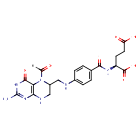
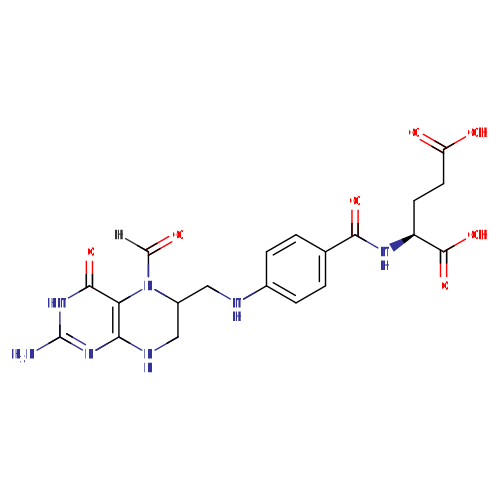
Structure for Leucovorin (DB00650)
- Weight
- Average: 473.446
Monoisotopic: 473.165896109 - Chemical Formula
- C20H23N7O7
- Synonyms
- (5-formyl-5,6,7,8-tetrahydropteroyl)glutamate
- 10-Formyl-7,8-dihydrofolic acid
- 5-Formyl-5,6,7,8-tetrahydrofolic acid
- 5-Formyl-5,6,7,8-tetrahydropteroyl-L-glutamic acid
- 5-Formyltetrahydrofolate
- 5-formyltetrahydrofolic acid
- Acide folinique
- Acido folinico
- Folinate
- Folinic acid
- L(-)-5-Formyl-5,6,7,8-tetrahydrofolic acid
- Leucovorinum
- N-(5-formyl-5,6,7,8-tetrahydropteroyl)-L-glutamic acid
- N5-Formyl-5,6,7,8-tetrahydrofolic acid
- N5-Formyltetrahydrofolic acid

Pharmacology
- Indication
For the treatment of osteosarcoma (after high dose methotrexate therapy). Used to diminish the toxicity and counteract the effects of impaired methotrexate elimination and of inadvertent overdosages of folic acid antagonists, and to treat megaloblastic anemias due to folic acid deficiency. Also used in combination with 5-fluorouracil to prolong survival in the palliative treatment of patients with advanced colorectal cancer.
 Reduce drug development failure ratesBuild, train, & validate machine-learning modelswith evidence-based and structured datasets.Build, train, & validate predictive machine-learning models with structured datasets.
- Associated Conditions
Indication Type Indication Combined Product Details Approval Level Age Group Patient Characteristics Dose Form Used in combination for symptomatic treatment of Advanced colorectal cancer Regimen in combination with: Fluorouracil (DB00544) •••••••••••• •••••••••• ••••••• ••• ••••••••• •••••••••• ••••••• •••••••••••• ••• •••••••• Adjunct therapy in treatment of Advanced gastric cancer ••• ••••• Used in combination to treat Anemia of pregnancy Combination Product in combination with: Ferric cation (DB13949) •••••••••••• •••••••• Adjunct therapy in treatment of Bladder cancer ••• ••••• Used in combination to treat Folate and iron deficiency Combination Product in combination with: Ferric cation (DB13949) •••••••••••• •••••••• - Contraindications & Blackbox Warnings
 Prevent Adverse Drug Events TodayTap into our Clinical API for life-saving information on contraindications & blackbox warnings, population restrictions, harmful risks, & more.Avoid life-threatening adverse drug events with our Clinical API
- Pharmacodynamics
Leucovorin is one of several active, chemically reduced derivatives of folic acid. It is useful as an antidote to drugs which act as folic acid antagonists. Leucovorin is a mixture of the diastereoisomers of the 5-formyl derivative of tetrahydrofolic acid (THF). The biologically active compound of the mixture is the (-)-l-isomer, known as Citrovorum factor or (-)-folinic acid. Leucovorin does not require reduction by the enzyme dihydrofolate reductase in order to participate in reactions utilizing folates as a source of “one-carbon” moieties. Administration of leucovorin can counteract the therapeutic and toxic effects of folic acid antagonists such as methotrexate, which act by inhibiting dihydrofolate reductase. Leucovorin has also been used to enhance the activity of fluorouracil.
- Mechanism of action
As leucovorin is a derivative of folic acid, it can be used to increase levels of folic acid under conditions favoring folic acid inhibition (following treatment of folic acid antagonists such as methotrexate). Leucovorin enhances the activity of fluorouracil by stabilizing the bond of the active metabolite (5-FdUMP) to the enzyme thymidylate synthetase.
- Absorption
Following oral administration, leucovorin is rapidly absorbed. The apparent bioavailability of leucovorin was 97% for 25 mg, 75% for 50 mg, and 37% for 100 mg.
- Volume of distribution
Not Available
- Protein binding
~15%
- Metabolism
Hepatic and intestinal mucosal, the main metabolite being the active 5-methyltetrahydrofolate. Leucovorin is readily converted to another reduced folate, 5,10-methylenetetrahydrofolate, which acts to stabilize the binding of fluorodeoxyridylic acid to thymidylate synthase and thereby enhances the inhibition of this enzyme.
Hover over products below to view reaction partners
- Route of elimination
Not Available
- Half-life
6.2 hours
- Clearance
Not Available
- Adverse Effects
 Improve decision support & research outcomesWith structured adverse effects data, including: blackbox warnings, adverse reactions, warning & precautions, & incidence rates. View sample adverse effects data in our new Data Library!Improve decision support & research outcomes with our structured adverse effects data.
- Toxicity
LD50>8000 mg/kg (orally in rats). Excessive amounts of leucovorin may nullify the chemotherapeutic effect of folic acid antagonists.
- Pathways
Pathway Category Methylenetetrahydrofolate Reductase Deficiency (MTHFRD) Disease Folate Metabolism Metabolic Methotrexate Action Pathway Drug action Folate Malabsorption, Hereditary Disease - Pharmacogenomic Effects/ADRs
- Not Available
Interactions
- Drug Interactions
- This information should not be interpreted without the help of a healthcare provider. If you believe you are experiencing an interaction, contact a healthcare provider immediately. The absence of an interaction does not necessarily mean no interactions exist.
Drug Interaction Integrate drug-drug
interactions in your softwareAcamprosate The excretion of Acamprosate can be decreased when combined with Leucovorin. Acetylsalicylic acid The excretion of Leucovorin can be decreased when combined with Acetylsalicylic acid. Acyclovir The excretion of Acyclovir can be decreased when combined with Leucovorin. Allopurinol The excretion of Allopurinol can be decreased when combined with Leucovorin. Aminohippuric acid The excretion of Leucovorin can be decreased when combined with Aminohippuric acid. - Food Interactions
- No interactions found.
Products
 Drug product information from 10+ global regionsOur datasets provide approved product information including:dosage, form, labeller, route of administration, and marketing period.Access drug product information from over 10 global regions.
- Product Ingredients
Ingredient UNII CAS InChI Key Leucovorin calcium RPR1R4C0P4 1492-18-8 KVUAALJSMIVURS-ZEDZUCNESA-L Leucovorin calcium pentahydrate R3W57OBQ5W 6035-45-6 NPPBLUASYYNAIG-ZIGBGYJWSA-L Leucovorin sodium 4MXU9LJS4Q 163254-40-8 FSDMNNPYPVJNAT-RIWFDJIXSA-L - Product Images
- International/Other Brands
- Uzel / Wellcovorin
- Brand Name Prescription Products
Name Dosage Strength Route Labeller Marketing Start Marketing End Region Image Calcium Folinate Injection, solution 10 mg/1mL Intramuscular; Intravenous Teva Parenteral Medicines, Inc 2011-07-12 2014-07-31 US 
Calcium Folinate Injection, solution 10 mg/1mL Intramuscular; Intravenous Teva Parenteral Medicines, Inc 2011-07-12 2014-02-28 US Lederle Leucovorin Tablet 5 mg Oral Pfizer Canada Ulc 1996-10-25 Not applicable Canada 
Lederle Leucovorin - Liq Im IV 10mg/ml Liquid 10 mg / mL Intramuscular; Intravenous Wyeth Ayerst Canada Inc. 1997-02-04 2001-10-29 Canada Lederle Leucovorin 350mg/vial Powder, for solution 350 mg / vial Intramuscular; Intravenous Lederle Cyanamid Canada Inc. 1991-12-31 1999-04-12 Canada - Generic Prescription Products
Name Dosage Strength Route Labeller Marketing Start Marketing End Region Image Leucovorin Injection, powder, for solution 20 mg/1mL Intramuscular; Intravenous Blue Point Laboratories 2016-07-01 Not applicable US Leucovorin Injection, powder, for solution 10 mg/1mL Intramuscular; Intravenous Blue Point Laboratories 2016-07-01 Not applicable US Leucovorin Calcium Injection, powder, lyophilized, for solution 100 mg/10mL Intramuscular; Intravenous Sagent Pharmaceuticals 2012-09-15 Not applicable US Leucovorin Calcium Tablet 10 mg/1 Oral Hikma Pharmaceuticals USA Inc. 1993-02-22 Not applicable US Leucovorin Calcium Tablet 5 mg/1 Oral Epic Pharma LLC 2020-04-16 Not applicable US - Over the Counter Products
Name Dosage Strength Route Labeller Marketing Start Marketing End Region Image CALCIUM FOLINATE INJECTION 10 mg/ml Injection 10 mg/ml Intramuscular; Intravenous PFIZER PRIVATE LIMITED 1994-11-15 Not applicable Singapore 
Folina Tablets 15mg Tablet Oral PHARM-D SDN. BHD. 2020-09-08 Not applicable Malaysia 
LEUCOVORIN CALCIUM INJECTION USP 10 mg/ml Injection 10 mg/ml Intramuscular; Intravenous PFIZER PRIVATE LIMITED 1993-08-18 Not applicable Singapore NYRIN INJ. 15 mg/ml Injection 15 mg/ml Intramuscular; Intravenous SHOEI UNIVERSAL CORPORATION PTE LTD 1998-10-29 Not applicable Singapore NYRIN INJECTION 3 mg/ml Injection 3 mg/ml Intravenous SHOEI UNIVERSAL CORPORATION PTE LTD 1999-03-08 Not applicable Singapore - Mixture Products
Name Ingredients Dosage Route Labeller Marketing Start Marketing End Region Image EPARMEFOLIN Leucovorin calcium (0.45 mg) + Cyanocobalamin (1 mg) Injection, powder, for solution Intramuscular; Intravenous Substipharm 2014-07-08 2022-06-07 Italy 
EPARMEFOLIN Leucovorin calcium (0.9 mg) + Cyanocobalamin (2 mg) Injection, powder, for solution Intramuscular; Intravenous Substipharm 2014-07-08 2022-06-07 Italy FERPLEX FOL 40 MG + 0.185 MG/15 ML ORAL ÇÖZELTİ, 10 ADET Leucovorin calcium pentahydrate (0.185 mg) + Iron protein succinylate (40 mg) Solution Oral ABDİ İBRAHİM İLAÇ SAN. VE TİC. A.Ş. 2003-11-12 Not applicable Turkey 
KOMFER FOL 40 MG/185 MCG ORAL COZELTI, 10 FLK. Leucovorin calcium pentahydrate (0.235 mg) + Iron protein succinylate (800 mg) Solution Oral KOÇAK FARMA İLAÇ VE KİMYA SAN. A.Ş. 2009-01-28 Not applicable Turkey KOMFER FOL 40 MG/185 MCG ORAL COZELTI, 20 FLK. Leucovorin calcium pentahydrate (0.235 mg) + Iron protein succinylate (800 mg) Solution Oral KOÇAK FARMA İLAÇ VE KİMYA SAN. A.Ş. 2009-01-28 Not applicable Turkey - Unapproved/Other Products
Name Ingredients Dosage Route Labeller Marketing Start Marketing End Region Image BumP DHA Leucovorin (1 mg/1) + Cobamamide (500 mg/1) + Flavin adenine dinucleotide (1 mg/1) + Flavin mononucleotide (2 mg/1) + Iron (15 mg/1) + Levomefolate magnesium (1 mg/1) + Magnesium oxide (125 mg/1) + NADH (25 ug/1) + Omega-3 fatty acids (300 mg/1) + Potassium Iodide (250 ug/1) + Pyridoxal phosphate (5 mg/1) + Pyridoxine hydrochloride (20 mg/1) + Zinc glycinate (15 1/1) Capsule Oral Centurion Labs 2017-03-24 2017-04-17 US Calcium Folinate Leucovorin calcium (10 mg/1mL) Injection, solution Intramuscular; Intravenous Teva Parenteral Medicines, Inc 2011-07-12 2014-07-31 US Calcium Folinate Leucovorin calcium (10 mg/1mL) Injection, solution Intramuscular; Intravenous Teva Parenteral Medicines, Inc 2011-07-12 2014-02-28 US CALCIUM FOLINATE DBL 100 MG/10 ML ENJEKTABL SOLUSYON Leucovorin (100 mg/10ml) Solution Intramuscular; Intravenous ORNA İLAÇ TEKSTİL KİMYEVİ MAD. SAN. VE DIŞ TİC. LTD. ŞTİ. 2019-04-30 Not applicable Turkey CALCIUM FOLINATE DBL 300 MG/30 ML FLAKON ENJEKTABL SOL. Leucovorin (300 mg/30ml) Solution Intramuscular; Intravenous ORNA İLAÇ TEKSTİL KİMYEVİ MAD. SAN. VE DIŞ TİC. LTD. ŞTİ. 2019-04-30 Not applicable Turkey


Categories
- ATC Codes
- V03AF06 — Sodium folinate
- V03AF — Detoxifying agents for antineoplastic treatment
- V03A — ALL OTHER THERAPEUTIC PRODUCTS
- V03 — ALL OTHER THERAPEUTIC PRODUCTS
- V — VARIOUS
- Drug Categories
- Antidotes
- Coenzymes
- Compounds used in a research, industrial, or household setting
- Detoxifying Agents for Antineoplastic Treatment
- Enzymes and Coenzymes
- Folate Analog
- Folic Acid and Derivatives
- Formyltetrahydrofolates
- Heterocyclic Compounds, Fused-Ring
- Micronutrients
- OAT3/SLC22A8 Inhibitors
- OAT3/SLC22A8 Substrates
- Protective Agents
- Pteridines
- Pterins
- Tetrahydrofolates
- Vitamin B Complex
- Vitamins
- Chemical TaxonomyProvided by Classyfire
- Description
- This compound belongs to the class of organic compounds known as glutamic acid and derivatives. These are compounds containing glutamic acid or a derivative thereof resulting from reaction of glutamic acid at the amino group or the carboxy group, or from the replacement of any hydrogen of glycine by a heteroatom.
- Kingdom
- Organic compounds
- Super Class
- Organic acids and derivatives
- Class
- Carboxylic acids and derivatives
- Sub Class
- Amino acids, peptides, and analogues
- Direct Parent
- Glutamic acid and derivatives
- Alternative Parents
- N-acyl-alpha amino acids / Hippuric acids / Pterins and derivatives / Aminobenzamides / Phenylalkylamines / Aniline and substituted anilines / Benzoyl derivatives / Secondary alkylarylamines / Hydroxypyrimidines / Dicarboxylic acids and derivatives show 10 more
- Substituents
- Amine / Amino acid / Aminobenzamide / Aminobenzoic acid or derivatives / Aniline or substituted anilines / Aromatic heteropolycyclic compound / Azacycle / Benzamide / Benzenoid / Benzoic acid or derivatives show 29 more
- Molecular Framework
- Aromatic heteropolycyclic compounds
- External Descriptors
- formyltetrahydrofolic acid (CHEBI:15640)
- Affected organisms
- Humans and other mammals
Chemical Identifiers
- UNII
- Q573I9DVLP
- CAS number
- 58-05-9
- InChI Key
- VVIAGPKUTFNRDU-ABLWVSNPSA-N
- InChI
- InChI=1S/C20H23N7O7/c21-20-25-16-15(18(32)26-20)27(9-28)12(8-23-16)7-22-11-3-1-10(2-4-11)17(31)24-13(19(33)34)5-6-14(29)30/h1-4,9,12-13,22H,5-8H2,(H,24,31)(H,29,30)(H,33,34)(H4,21,23,25,26,32)/t12?,13-/m0/s1
- IUPAC Name
- (2S)-2-[(4-{[(2-amino-5-formyl-4-oxo-3,4,5,6,7,8-hexahydropteridin-6-yl)methyl]amino}phenyl)formamido]pentanedioic acid
- SMILES
- [H]C(=O)N1C(CNC2=CC=C(C=C2)C(=O)N[C@@H](CCC(O)=O)C(O)=O)CNC2=C1C(=O)NC(N)=N2
References
- Synthesis Reference
James C. Wisowaty, Roy A. Swaringen, David A. Yeowell, "Synthesis of leucovorin." U.S. Patent US4500711, issued July, 1955.
US4500711- General References
- Jardine LF, Ingram LC, Bleyer WA: Intrathecal leucovorin after intrathecal methotrexate overdose. J Pediatr Hematol Oncol. 1996 Aug;18(3):302-4. [Article]
- Zittoun J: Pharmacokinetics and in vitro studies of l-leucovorin. Comparison with the d and d,l-leucovorin. Ann Oncol. 1993;4 Suppl 2:1-5. [Article]
- Chuang VT, Suno M: Levoleucovorin as replacement for leucovorin in cancer treatment. Ann Pharmacother. 2012 Oct;46(10):1349-57. doi: 10.1345/aph.1Q677. Epub 2012 Oct 2. [Article]
- Stover PJ, Field MS: Trafficking of intracellular folates. Adv Nutr. 2011 Jul;2(4):325-31. doi: 10.3945/an.111.000596. Epub 2011 Jun 28. [Article]
- Allegra CJ, Chabner BA, Drake JC, Lutz R, Rodbard D, Jolivet J: Enhanced inhibition of thymidylate synthase by methotrexate polyglutamates. J Biol Chem. 1985 Aug 15;260(17):9720-6. [Article]
- Kovoor PA, Karim SM, Marshall JL: Is levoleucovorin an alternative to racemic leucovorin? A literature review. Clin Colorectal Cancer. 2009 Oct;8(4):200-6. doi: 10.3816/CCC.2009.n.034. [Article]
- External Links
- KEGG Drug
- D07986
- KEGG Compound
- C03479
- PubChem Compound
- 6006
- PubChem Substance
- 46505436
- ChemSpider
- 5784
- BindingDB
- 50239970
- 6313
- ChEBI
- 15640
- ChEMBL
- CHEMBL1679
- Therapeutic Targets Database
- DAP001244
- PharmGKB
- PA450198
- RxList
- RxList Drug Page
- Drugs.com
- Drugs.com Drug Page
- Wikipedia
- Folinic_acid
- FDA label
- Download (2.95 MB)
- MSDS
- Download (72.7 KB)
Clinical Trials
- Clinical Trials
Phase Status Purpose Conditions Count 4 Completed Treatment Colorectal Cancer 1 4 Completed Treatment Colorectal Cancer / Cytokine-Induced Killer Cells / Postoperative Complications / Survival 1 4 Completed Treatment Colorectal Neoplasms 1 4 Completed Treatment Stage-Ⅱ Colorectal Cancer 1 4 Recruiting Prevention Mesothelioma / Non-Small Cell Lung Cancer (NSCLC) / Thymoma 1
Pharmacoeconomics
- Manufacturers
- Hospira inc
- Abic ltd
- Abraxis pharmaceutical products
- Bedford laboratories div ben venue laboratories inc
- Elkins sinn div ah robins co inc
- Pharmachemie bv
- Pharmachemie usa inc
- Teva parenteral medicines inc
- App pharmaceuticals llc
- Luitpold pharmaceuticals inc
- Glaxosmithkline
- Barr pharmaceuticals
- Corepharma llc
- Par pharmaceutical inc
- Roxane laboratories inc
- Sandoz inc
- Xanodyne pharmaceutics inc
- Spectrum pharmaceuticals inc
- Packagers
- APP Pharmaceuticals
- Atlantic Biologicals Corporation
- Barr Pharmaceuticals
- Bedford Labs
- Ben Venue Laboratories Inc.
- Bigmar Bioren Pharmaceuticals Sa
- Hospira Inc.
- Major Pharmaceuticals
- Physicians Total Care Inc.
- Qualitest
- Resource Optimization and Innovation LLC
- Roxane Labs
- Sicor Pharmaceuticals
- Teva Pharmaceutical Industries Ltd.
- UDL Laboratories
- Dosage Forms
Form Route Strength Powder Intramuscular; Intravenous 350 mg Powder Intramuscular; Intravenous 35000000 mg Tablet Oral 15 mg Injection, solution Parenteral 10 MG/ML Injection, solution Intramuscular; Intravenous 300 mg/5ml Capsule Oral Injection Intramuscular; Intravenous Injection, solution Intramuscular; Intravenous 10 mg/1mL Solution Intramuscular; Intravenous 100 mg/10ml Solution Intramuscular; Intravenous 300 mg/30ml Solution Intramuscular; Intravenous 50 mg/5ml Solution Intramuscular; Intravenous 7.5 mg/ml Injection, solution Intramuscular; Intravenous 100 mg/10ml Injection, solution Intramuscular; Intravenous 200 mg/20ml Injection, solution Intramuscular; Intravenous 300 mg/30ml Solution Parenteral 10 mg/ml Capsule Oral 15 mg Injection, solution Parenteral 100 mg/10mL Injection, solution Parenteral 1000 mg/100mL Injection, solution Parenteral 300 mg30mL Injection, solution Parenteral 500 mg/50mL Injection, solution Parenteral 800 mg/80mL Injection, solution Parenteral 100 MG Injection, solution Parenteral 500 MG Injection Parenteral 10 MG/ML Injection, solution Parenteral 10 MG Capsule Oral 25 MG Injection, powder, for solution 15 MG/ML Injection, powder, for solution 3 MG/ML Injection, powder, for solution 50 MG Injection, solution Intramuscular; Intravenous 16.2 mg Injection, solution Intramuscular; Intravenous 3 mg Powder, for solution Oral 15 MG Powder, for solution Oral 25 MG Solution Parenteral 15 mg Injection, solution 10 mg/1ml Injection Intramuscular; Intravenous 50 mg/5ml Injection Tablet Oral Tablet Oral Capsule, liquid filled Oral Capsule, delayed release pellets Oral Injection, powder, for solution Intramuscular; Intravenous Solution Oral Solution Intramuscular 3.000 mg Injection, solution Parenteral 1000 MG Injection, solution Parenteral 200 MG Injection, powder, for solution Injection, powder, lyophilized, for solution Intramuscular; Intravenous 5000000 mg Injection, powder, for solution Intravenous Powder, for solution Oral Solution Parenteral 3.24 mg Solution Parenteral 50.000 mg Injection, solution Intramuscular; Intravenous Solution Intramuscular; Intravenous 12.71 mg Injection, solution Intramuscular; Intravenous 50 mg Tablet Oral 5 mg Powder, for solution Intramuscular; Intravenous 350 mg / vial Powder, for solution Intramuscular; Intravenous 50 mg / vial Liquid Intramuscular; Intravenous 10 mg / mL Injection, powder, for solution Intramuscular; Intravenous 10 mg/1mL Injection, powder, for solution Intramuscular; Intravenous 20 mg/1mL Liquid Intravenous 10 mg / mL Injection Intramuscular; Intravenous 10 mg/1mL Injection, powder, lyophilized, for solution Intramuscular; Intravenous 100 mg/1 Injection, powder, lyophilized, for solution Intramuscular; Intravenous 100 mg/10mL Injection, powder, lyophilized, for solution Intramuscular; Intravenous 200 mg/1 Injection, powder, lyophilized, for solution Intramuscular; Intravenous 200 mg/20mL Injection, powder, lyophilized, for solution Intramuscular; Intravenous 350 mg/17.5mL Injection, powder, lyophilized, for solution Intramuscular; Intravenous 50 mg/5mL Injection, powder, lyophilized, for solution Intramuscular; Intravenous 50 mg/1 Injection, powder, lyophilized, for solution Intramuscular; Intravenous 500 mg/50mL Injection, powder, lyophilized, for solution Intramuscular; Intravenous 500 mg/1 Injection, powder, lyophilized, for suspension Intramuscular; Intravenous 100 mg/10mL Injection, powder, lyophilized, for suspension Intramuscular; Intravenous 200 mg/20mL Injection, powder, lyophilized, for suspension Intramuscular; Intravenous 350 mg/17.5mL Tablet Oral 10 mg/1 Tablet Oral 15 mg/1 Tablet Oral 25 mg/1 Tablet Oral 5 mg/1 Solution Intramuscular; Intravenous 10 mg / mL Solution Intravenous 1000 mg / 100 mL Solution Intravenous 200 mg / 20 mL Solution Intravenous 10 mg / mL Injection Intramuscular; Intravenous 10 mg/ml Injection 50 mg/5mL Injection, solution Intramuscular; Intravenous 50 mg/5ml Tablet Oral 15.000 mg Powder, for solution Oral Injection 10 mg Injection Intramuscular; Intravenous 15 mg/ml Injection Intravenous 3 mg/ml Injection Intravenous 50 mg/5ml Injection Parenteral 100 MG Injection, solution Parenteral 300 MG Injection, solution Parenteral 400 MG Injection Parenteral 500 MG Injection Parenteral 900 MG Kit Oral Solution Parenteral 3.000 mg Tablet, chewable Oral Capsule Oral Injection, solution Parenteral 900 mg Injection, solution Parenteral 50 MG Injection, solution Parenteral 50 MG/ML Injection, powder, for solution Parenteral 50 MG Injection, powder, lyophilized, for solution Intramuscular; Intravenous 50 mg Injection, powder, lyophilized, for solution Intravenous 63.51 g Solution Oral 4 MG/8ML Tablet Oral 2 MG Tablet Oral 4 MG Injection, solution Solution 50 mg/1ml Solution 10 mg/1ml - Prices
Unit description Cost Unit Leucovorin calcium 25 mg tablet 24.73USD tablet Leucovorin calcium 500 mg vial 24.42USD vial Leucovorin calcium 200 mg vial 14.4USD vial Leucovorin calcium 350 mg vial 11.86USD vial Leucovorin Calcium 10 mg/ml 10.93USD ml Leucovorin calcium 15 mg tablet 10.61USD tablet Leucovorin calcium 10 mg tablet 7.69USD tablet Lederle Leucovorin Calcium 5 mg Tablet 6.85USD tablet Leucovorin calcium 100 mg vial 6.0USD vial Leucovorin calcium 50 mg vial 3.6USD vial Leucovorin calcium 5 mg tablet 2.05USD tablet DrugBank does not sell nor buy drugs. Pricing information is supplied for informational purposes only.- Patents
- Not Available
Properties
- State
- Solid
- Experimental Properties
Property Value Source melting point (°C) 245 ºC Not Available water solubility Complete Not Available logP -3.2 Not Available - Predicted Properties
Property Value Source Water Solubility 0.297 mg/mL ALOGPS logP -0.46 ALOGPS logP -2.3 Chemaxon logS -3.2 ALOGPS pKa (Strongest Acidic) 3.47 Chemaxon pKa (Strongest Basic) 2.81 Chemaxon Physiological Charge -2 Chemaxon Hydrogen Acceptor Count 11 Chemaxon Hydrogen Donor Count 7 Chemaxon Polar Surface Area 215.55 Å2 Chemaxon Rotatable Bond Count 9 Chemaxon Refractivity 126.66 m3·mol-1 Chemaxon Polarizability 46.33 Å3 Chemaxon Number of Rings 3 Chemaxon Bioavailability 0 Chemaxon Rule of Five No Chemaxon Ghose Filter No Chemaxon Veber's Rule No Chemaxon MDDR-like Rule Yes Chemaxon - Predicted ADMET Features
Property Value Probability Human Intestinal Absorption - 0.5642 Blood Brain Barrier - 0.7779 Caco-2 permeable - 0.8957 P-glycoprotein substrate Substrate 0.7344 P-glycoprotein inhibitor I Non-inhibitor 0.918 P-glycoprotein inhibitor II Non-inhibitor 0.984 Renal organic cation transporter Non-inhibitor 0.8708 CYP450 2C9 substrate Non-substrate 0.7887 CYP450 2D6 substrate Non-substrate 0.814 CYP450 3A4 substrate Non-substrate 0.5852 CYP450 1A2 substrate Non-inhibitor 0.8748 CYP450 2C9 inhibitor Non-inhibitor 0.9123 CYP450 2D6 inhibitor Non-inhibitor 0.9326 CYP450 2C19 inhibitor Non-inhibitor 0.8984 CYP450 3A4 inhibitor Non-inhibitor 0.9475 CYP450 inhibitory promiscuity Low CYP Inhibitory Promiscuity 0.9292 Ames test Non AMES toxic 0.7955 Carcinogenicity Non-carcinogens 0.9361 Biodegradation Not ready biodegradable 0.8534 Rat acute toxicity 2.4254 LD50, mol/kg Not applicable hERG inhibition (predictor I) Weak inhibitor 0.9283 hERG inhibition (predictor II) Non-inhibitor 0.5331
Spectra
- Mass Spec (NIST)
- Not Available
- Spectra
Spectrum Spectrum Type Splash Key Predicted MS/MS Spectrum - 10V, Positive (Annotated) Predicted LC-MS/MS splash10-004i-0019100000-a096d918af5b91166cbf Predicted MS/MS Spectrum - 10V, Negative (Annotated) Predicted LC-MS/MS splash10-004i-0000900000-ed115a407d32d9a21741 Predicted MS/MS Spectrum - 20V, Positive (Annotated) Predicted LC-MS/MS splash10-057j-1589300000-11633c2aeb57ee72e2d1 Predicted MS/MS Spectrum - 20V, Negative (Annotated) Predicted LC-MS/MS splash10-0f89-0902600000-5398a3bd75e206b3ccd7 Predicted MS/MS Spectrum - 40V, Positive (Annotated) Predicted LC-MS/MS splash10-00l2-0900000000-c4cef20d0365aebdf55b Predicted MS/MS Spectrum - 40V, Negative (Annotated) Predicted LC-MS/MS splash10-0uxu-5974500000-cc4f6b1e9afd065bc75b Predicted 1H NMR Spectrum 1D NMR Not Applicable Predicted 13C NMR Spectrum 1D NMR Not Applicable - Chromatographic Properties
Collision Cross Sections (CCS)
Adduct CCS Value (Å2) Source type Source [M-H]- 244.6136854 predictedDarkChem Lite v0.1.0 [M-H]- 244.3217854 predictedDarkChem Lite v0.1.0 [M-H]- 203.36469 predictedDeepCCS 1.0 (2019) [M+H]+ 243.4956854 predictedDarkChem Lite v0.1.0 [M+H]+ 243.3678854 predictedDarkChem Lite v0.1.0 [M+H]+ 205.76025 predictedDeepCCS 1.0 (2019) [M+Na]+ 244.9103854 predictedDarkChem Lite v0.1.0 [M+Na]+ 244.6489854 predictedDarkChem Lite v0.1.0 [M+Na]+ 211.67278 predictedDeepCCS 1.0 (2019)
Transporters
- Kind
- Protein
- Organism
- Humans
- Pharmacological action
- Unknown
- Actions
- SubstrateInhibitor
- Curator comments
- Substrate activity was demonstrated in vitro using human OAT3 expressed on HEK293 cells, while inhibitory action was observed using mouse OAT3 expressed on CHO cells.
- General Function
- Sodium-independent organic anion transmembrane transporter activity
- Specific Function
- Plays an important role in the excretion/detoxification of endogenous and exogenous organic anions, especially from the brain and kidney. Involved in the transport basolateral of steviol, fexofenad...
- Gene Name
- SLC22A8
- Uniprot ID
- Q8TCC7
- Uniprot Name
- Solute carrier family 22 member 8
- Molecular Weight
- 59855.585 Da
References
- VanWert AL, Gionfriddo MR, Sweet DH: Organic anion transporters: discovery, pharmacology, regulation and roles in pathophysiology. Biopharm Drug Dispos. 2010 Jan;31(1):1-71. doi: 10.1002/bdd.693. [Article]

Drug created at June 13, 2005 13:24 / Updated at April 26, 2024 00:46