Identification
- Summary
Ranitidine is a histamine H2 antagonist used to treat duodenal ulcers, Zollinger-Ellison syndrome, gastric ulcers, GERD, and erosive esophagitis.
- Brand Names
- Good Sense Acid Reducer, Wal-zan, Zantac
- Generic Name
- Ranitidine
- DrugBank Accession Number
- DB00863
- Background
Ranitidine is a commonly used drug, classified as a histamine H2-receptor antagonist, and belongs to the same drug class as cimetidine and famotidine. This drug helps to prevent and treat gastric-acid associated conditions, including ulcers, because of its ability to decrease gastric acid secretion.2,11 Ranitidine is often referred to as Zantac, and is available in various forms, including tablet, injection, and effervescent tablet preparations.11,14
The prevalence of GERD is thought to be 10-20% in western countries.4 Ranitidine has proven to be an effective treatment for relieving uncomfortable symptoms of gastric acid associated conditions and is therefore widely used in GERD and other gastric-acid related conditions.5,11
- Type
- Small Molecule
- Groups
- Approved, Withdrawn
- Structure
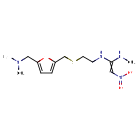
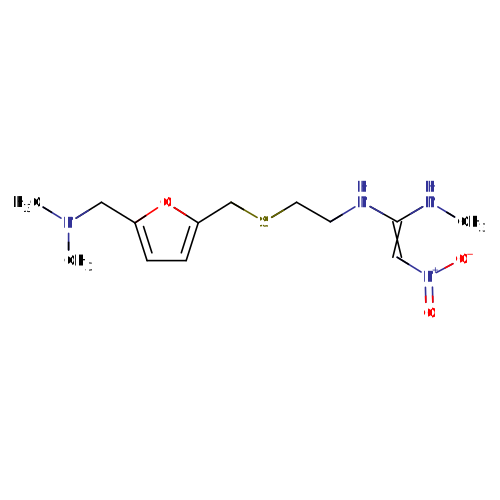
Structure for Ranitidine (DB00863)
- Weight
- Average: 314.4
Monoisotopic: 314.141261758 - Chemical Formula
- C13H22N4O3S
- Synonyms
- Ranitidina
- Ranitidine
- Ranitidinum

Pharmacology
- Indication
This drug is used alone or with concomitant antacids for the following conditions: short-term treatment of active duodenal ulcer, treating gastric acid hypersecretion due to Zollinger-Ellison syndrome, systemic mastocytosis, and other conditions that may pathologically raise gastric acid levels. It also used in the short term treatment of active benign gastric ulcers and maintenance therapy of gastric ulcers at a reduced dose. In addition to the above, ranitidine can be used for the treatment of GERD symptoms, treatment of erosive esophagitis (endoscopically diagnosed) and the maintenance of gastric or duodenal ulcer healing.11,12
 Reduce drug development failure ratesBuild, train, & validate machine-learning modelswith evidence-based and structured datasets.Build, train, & validate predictive machine-learning models with structured datasets.
- Associated Conditions
Indication Type Indication Combined Product Details Approval Level Age Group Patient Characteristics Dose Form Prophylaxis of Acid aspiration syndrome •••••••••••• •••••••••• •••••• Used in combination for symptomatic treatment of Ankylosing spondylitis Regimen in combination with: Capsicum oleoresin (DB11131), Diclofenac (DB00586) •••••••••••• Prophylaxis of Duodenal ulcer •••••••••••• •••••••••• •••••• Treatment of Duodenal ulcer •••••••••••• ••••••••• Used in combination to treat Erosive esophagitis Regimen in combination with: Magnesium carbonate (DB09481), Aluminum hydroxide (DB06723), Calcium carbonate (DB06724), Almasilate (DB13595), Sodium bicarbonate (DB01390), Aluminium phosphate (DB14517), Magnesium trisilicate (DB09281), Magnesium hydroxide (DB09104), Magnesium oxide (DB01377), Magaldrate (DB08938), Aluminium (DB01370) •••••••••••• - Contraindications & Blackbox Warnings
 Prevent Adverse Drug Events TodayTap into our Clinical API for life-saving information on contraindications & blackbox warnings, population restrictions, harmful risks, & more.Avoid life-threatening adverse drug events with our Clinical API
- Pharmacodynamics
Ranitidine decreases the secretion of gastric acid stimulated by food and drugs. It also reduces the secretion of gastric acid in hypersecretory conditions such as Zollinger-Ellison syndrome.6,11 Marked improvements in the appearance of the esophageal tissues have been observed by endoscopic imaging after ranitidine therapy.5,11
- Mechanism of action
After a meal, the hormone gastrin, produced by cells in the lining of the stomach, stimulates the release of histamine, which then binds to histamine H2 receptors, leading to the secretion of gastric acid. Ranitidine reduces the secretion of gastric acid by reversible binding to histamine (H2) receptors, which are found on gastric parietal cells. This process leads to the inhibition of histamine binding to this receptor, causing the reduction of gastric acid secretion. The relief of gastric-acid related symptoms can occur as soon as 60 minutes after administration of a single dose, and the effects can last from 4-10 hours, providing fast and effective symptomatic relief.3,9,11
Target Actions Organism AHistamine H2 receptor antagonistHumans UAcetylcholinesterase inhibitorHumans - Absorption
Ranitidine is rapidly absorbed with peak concentrations reached within 1-3 hours after administration, and varying greatly among patients. Bioavailability is about 50%-60% due to hepatic metabolism.7,13 In a pharmacokinetic study of healthy males, the AUC 0-infinity was about 2,488.6 ng x h/mL and the median Tmax was 2.83 hours.8 Food or antacids have limited effects on absorption. One clinical study found that the administration of a potent antacid (150 mmol) in subjects in the fasted state led to decreased absorption of ranitidine.11
- Volume of distribution
The volume of distribution is higher than body volume, and measures at approximately 1.4 L/kg.7,11 It concentrates in breast milk, but does not readily distribute into the cerebrospinal fluid.7
- Protein binding
The plasma protein binding of ranitidine is approximately 15%.7,11
- Metabolism
The major metabolite in the urine is N-oxide, which represents less than 4% of the dose. Other metabolites of ranitidine include S-oxide (1%) and desmethyl ranitidine (1%).11,13 The feces contain the remainder of the excreted ranitidine dose. Liver dysfunction has been shown to cause small, but clinically insignificant, changes in various ranitidine pharmacokinetic parameters.11
Hover over products below to view reaction partners
- Route of elimination
This drug is mainly excreted in the urine but also excreted in the feces.7,13 About 30% of a single oral dose has been measured in the urine as unchanged drug within 24 hours of ingestion.11
- Half-life
The elimination half-life or ranitidine is about 2.5-3 hours.7,11 It may be longer after oral administration versus injection.7 The plasma half-life is longer for elderly patients population due to a decrease in renal function, and is measured at 3-4 hours.7,11
- Clearance
Renal clearance is about 410 mL/min according to FDA prescribing information.11 Another resource mentions a plasma clearance of approximately 600 ml/min.7 Clearance is decreased in the elderly and those with impaired or hepatic renal function.7,11 It is recommended to decrease the dose of ranitidine by one-half in patients with renal impairment.11
- Adverse Effects
 Improve decision support & research outcomesWith structured adverse effects data, including: blackbox warnings, adverse reactions, warning & precautions, & incidence rates. View sample adverse effects data in our new Data Library!Improve decision support & research outcomes with our structured adverse effects data.
- Toxicity
Oral doses of 1,000 mg/kg in mice and rats were not found to be lethal. Intravenous LD50 values in mice and rats were 77 and 83 mg/kg, respectively.12
Overdose information
There has been limited experience with ranitidine overdose. Reported acute ingestions of up to 18 grams orally were followed by temporary adverse effects similar to the normal adverse effects of this drug, including tachycardia, bradycardia, dizziness, diarrhea, nausea, and vomiting, among other effects.12 Gait abnormalities and hypotension have also been observed. When an overdose with ranitidine is suspected, remove unabsorbed ranitidine from the gastrointestinal tract if possible, and monitor the patient and provide supportive therapy as required.11,13
- Pathways
Pathway Category Ranitidine Action Pathway Drug action - Pharmacogenomic Effects/ADRs
- Not Available
Interactions
- Drug Interactions
- This information should not be interpreted without the help of a healthcare provider. If you believe you are experiencing an interaction, contact a healthcare provider immediately. The absence of an interaction does not necessarily mean no interactions exist.
Drug Interaction Integrate drug-drug
interactions in your softwareAbacavir Ranitidine may decrease the excretion rate of Abacavir which could result in a higher serum level. Abametapir The serum concentration of Ranitidine can be increased when it is combined with Abametapir. Abatacept The metabolism of Ranitidine can be increased when combined with Abatacept. Abiraterone The serum concentration of Ranitidine can be increased when it is combined with Abiraterone. Acebutolol The metabolism of Acebutolol can be decreased when combined with Ranitidine. - Food Interactions
- Take with or without food. The absorption is unaffected by food.
Products
 Drug product information from 10+ global regionsOur datasets provide approved product information including:dosage, form, labeller, route of administration, and marketing period.Access drug product information from over 10 global regions.
- Product Ingredients
Ingredient UNII CAS InChI Key Ranitidine bismuth citrate 7AJ51I17KG 128345-62-0 XAUTYMZTJWXZHZ-UHFFFAOYSA-K Ranitidine hydrochloride BK76465IHM 66357-59-3 GGWBHVILAJZWKJ-UHFFFAOYSA-N - Product Images
- International/Other Brands
- Alquen / Gastrolav / Gastrosedol / Kuracid / Ptinolin / Raniberl / Ranicux / Ranidil / Ranidin / Ranidine / Ranidura / Ranigast / Raniplex / Ranisan / Ranitab / Ranitic / Ranitidin / Ranitin / Ranitine / Ranobel / Rantacid / Ranuber / Renatac / Sostril / Tanidina / Toriol / Ulcodin / Zandid / Zantic
- Brand Name Prescription Products
Name Dosage Strength Route Labeller Marketing Start Marketing End Region Image Acid Reducer Tablet 150 mg Oral Pendopharm Division Of Pharmascience Inc Not applicable Not applicable Canada 
Act Ranitidine Tablet 150 mg Oral TEVA Canada Limited 2004-04-19 2020-08-17 Canada Act Ranitidine Tablet 300 mg Oral TEVA Canada Limited 2004-02-19 2020-08-17 Canada Bci Ranitidine Tablet 300 mg Oral Baker Cummins Inc Not applicable Not applicable Canada Bci Ranitidine Tablet 150 mg Oral Baker Cummins Inc Not applicable Not applicable Canada - Generic Prescription Products
Name Dosage Strength Route Labeller Marketing Start Marketing End Region Image Ag-ranitidine Tablet 150 mg Oral Angita Pharma Inc. 2019-08-14 2021-12-03 Canada Ag-ranitidine Tablet 300 mg Oral Angita Pharma Inc. Not applicable Not applicable Canada Apo-ranitidine Solution 75 mg / 5 mL Oral Apotex Corporation 2006-07-14 Not applicable Canada Apo-ranitidine Tablet 150mg Tablet 150 mg Oral Apotex Corporation 1987-12-31 Not applicable Canada Apo-ranitidine Tablet 300mg Tablet 300 mg Oral Apotex Corporation 1987-12-31 Not applicable Canada - Over the Counter Products
Name Dosage Strength Route Labeller Marketing Start Marketing End Region Image 7 Select Acid Reducer Tablet, film coated 150 mg/1 Oral 7-Eleven 2014-04-22 2020-11-30 US 
Acid Reducer Tablet 150 mg/1 Oral CVS Health 2012-08-21 Not applicable US Acid Reducer Tablet 75 mg Oral Pharmascience Inc 2004-07-13 Not applicable Canada Acid Reducer Tablet, film coated 150 mg/1 Oral Nash Finch 2013-06-15 2018-07-15 US Acid Reducer Tablet 150 mg/1 Oral Fred's 2012-03-30 Not applicable US - Mixture Products
Name Ingredients Dosage Route Labeller Marketing Start Marketing End Region Image DeramsilkRx Anodynexa Pak Ranitidine hydrochloride (150 mg/1) + Capsicum oleoresin (0.25 mg/1mL) + Diclofenac sodium (75 mg/1) Kit Oral; Topical Patchwerx Labs 2015-06-12 Not applicable US DermacinRx Inflammatral Pak Ranitidine hydrochloride (150 mg/1) + Capsicum oleoresin (0.25 mg/1mL) + Diclofenac sodium (75 mg/1) Kit Oral; Topical PureTek Corporation 2015-06-12 2019-03-05 US Inflammation Reduction Pack Ranitidine hydrochloride (150 mg/1) + Diclofenac sodium (75 mg/1) + Lidocaine (25 mg/1g) + Prilocaine (25 mg/1g) Kit Oral; Topical Tmig, Inc. 2015-08-18 Not applicable US - Unapproved/Other Products
Name Ingredients Dosage Route Labeller Marketing Start Marketing End Region Image Deprizine Ranitidine hydrochloride (6.4 g/6.4g) Kit Oral California Pharmaceuticals, Llc 2016-01-01 2018-01-05 US Deprizine Ranitidine hydrochloride (4.2 g/4.2g) Kit Oral Fusion Pharmaceuticals LLC 2010-02-08 2014-08-01 US Gabitidine Ranitidine hydrochloride (150 mg/1) + Choline (125 mg/1) Kit Oral Physician Therapeutics Llc 2011-07-07 Not applicable US Ranitidine Hydrochloride Oral Suspension Kit Ranitidine hydrochloride (6.4 g/6.4g) Kit Oral California Pharmaceuticals, Llc 2017-01-02 Not applicable US Sentradine Ranitidine hydrochloride (150 mg/1) + Choline (250 mg/1) Kit Oral Physician Therapeutics Llc 2011-07-07 Not applicable US


Categories
- ATC Codes
- A02BA07 — Ranitidine bismuth citrate
- A02BA — H2-receptor antagonists
- A02B — DRUGS FOR PEPTIC ULCER AND GASTRO-OESOPHAGEAL REFLUX DISEASE (GORD)
- A02 — DRUGS FOR ACID RELATED DISORDERS
- A — ALIMENTARY TRACT AND METABOLISM
- Drug Categories
- Acid Reducers
- Agents Causing Muscle Toxicity
- Alimentary Tract and Metabolism
- Anti-Ulcer Agents
- Cholinesterase Inhibitors
- Cytochrome P-450 CYP1A2 Inhibitors
- Cytochrome P-450 CYP1A2 Inhibitors (strength unknown)
- Cytochrome P-450 CYP1A2 Substrates
- Cytochrome P-450 CYP2D6 Inhibitors
- Cytochrome P-450 CYP2D6 Inhibitors (strength unknown)
- Cytochrome P-450 CYP3A Inhibitors
- Cytochrome P-450 CYP3A4 Inhibitors
- Cytochrome P-450 CYP3A4 Inhibitors (weak)
- Cytochrome P-450 Enzyme Inhibitors
- Cytochrome P-450 Substrates
- Drugs for Acid Related Disorders
- Drugs for Peptic Ulcer and Gastro-Oesophageal Reflux Disease (Gord)
- Drugs that are Mainly Renally Excreted
- Furans
- Gastric Acid Lowering Agents
- Gastrointestinal Agents
- Histamine Antagonists
- Histamine H2 Antagonists
- OAT1/SLC22A6 inhibitors
- OAT1/SLC22A6 Substrates
- OAT3/SLC22A8 Substrates
- OCT1 inhibitors
- OCT1 substrates
- OCT2 Inhibitors
- OCT2 Substrates
- P-glycoprotein inhibitors
- P-glycoprotein substrates
- Classification
- Not classified
- Affected organisms
- Humans and other mammals
Chemical Identifiers
- UNII
- 884KT10YB7
- CAS number
- 66357-35-5
- InChI Key
- VMXUWOKSQNHOCA-UHFFFAOYSA-N
- InChI
- InChI=1S/C13H22N4O3S/c1-14-13(9-17(18)19)15-6-7-21-10-12-5-4-11(20-12)8-16(2)3/h4-5,9,14-15H,6-8,10H2,1-3H3
- IUPAC Name
- [1-({2-[({5-[(dimethylamino)methyl]furan-2-yl}methyl)sulfanyl]ethyl}amino)-2-nitroethenyl](methyl)amine
- SMILES
- CNC(NCCSCC1=CC=C(CN(C)C)O1)=C[N+]([O-])=O
References
- Synthesis Reference
John W. Clitherow, "Intermediates in the preparation of ranitidine." U.S. Patent US4413135, issued November, 1981.
US4413135- General References
- Mauran A, Goze T, Abadie D, Bondon-Guitton E, Chevrel P, Schmitt L, Montastruc JL, Montastruc F: Mania associated with ranitidine: a case report and review of literature. Fundam Clin Pharmacol. 2016 Aug;30(4):294-6. doi: 10.1111/fcp.12201. Epub 2016 May 5. [Article]
- Grant SM, Langtry HD, Brogden RN: Ranitidine. An updated review of its pharmacodynamic and pharmacokinetic properties and therapeutic use in peptic ulcer disease and other allied diseases. Drugs. 1989 Jun;37(6):801-70. doi: 10.2165/00003495-198937060-00003. [Article]
- Pettit M: Treatment of gastroesophageal reflux disease. Pharm World Sci. 2005 Dec;27(6):432-5. doi: 10.1007/s11096-005-4798-7. [Article]
- Badillo R, Francis D: Diagnosis and treatment of gastroesophageal reflux disease. World J Gastrointest Pharmacol Ther. 2014 Aug 6;5(3):105-12. doi: 10.4292/wjgpt.v5.i3.105. [Article]
- Sontag S, Robinson M, McCallum RW, Barwick KW, Nardi R: Ranitidine therapy for gastroesophageal reflux disease. Results of a large double-blind trial. Arch Intern Med. 1987 Aug;147(8):1485-91. [Article]
- Vezzadini P, Bonora G, Tomassetti P, Pazzaglia M, Labo G: Medical treatment of Zollinger-Ellison syndrome with ranitidine. Int J Tissue React. 1983;5(4):339-43. [Article]
- Roberts CJ: Clinical pharmacokinetics of ranitidine. Clin Pharmacokinet. 1984 May-Jun;9(3):211-21. doi: 10.2165/00003088-198409030-00003. [Article]
- Gschwend MH, Guserle R, Erenmemisoglu A, Martin W, Tamur U, Kanzik I, Hincal AA: Pharmacokinetics and bioequivalence study of ranitidine film tablets in healthy male subjects. Arzneimittelforschung. 2007;57(6):315-9. doi: 10.1055/s-0031-1296625. [Article]
- Caitlin C. Nugent; Jamie M. Terrell (2018). H2 Blockers- StatPearls. StatPearls Publishing.
- FDA drug approval package: Zantac [Link]
- FDA Approved Drug Products: ZANTAC (ranitidine hydrochloride) injection [Link]
- GlaxoSmithKline Canada Inc. Product Monograph: Zantac (ranitidine) [Link]
- Ranitidine product monograph [Link]
- Zantac injection FDA label [File]
- Zantac Canadian Monograph [File]
- External Links
- Human Metabolome Database
- HMDB0259516
- KEGG Drug
- D00422
- PubChem Compound
- 3001055
- PubChem Substance
- 46505543
- ChemSpider
- 4863
- BindingDB
- 50103506
- 9143
- ChEBI
- 92246
- ChEMBL
- CHEMBL1790041
- Therapeutic Targets Database
- DAP000340
- PharmGKB
- PA451224
- Guide to Pharmacology
- GtP Drug Page
- RxList
- RxList Drug Page
- Drugs.com
- Drugs.com Drug Page
- Wikipedia
- Ranitidine
- FDA label
- Download (1.03 MB)
- MSDS
- Download (73.9 KB)
Clinical Trials
- Clinical Trials
Phase Status Purpose Conditions Count 4 Completed Basic Science Cancer 1 4 Completed Prevention Aspiration of Gastric Contents 1 4 Completed Prevention Protamine Adverse Reaction 1 4 Completed Treatment Antimicrobial Drug Susceptibility Pattern / Etiological Organisms / Stress Ulcer Prophylaxis / Ventilator Associated Bacterial Pneumonia (VABP) 1 4 Completed Treatment Coronary Artery Disease (CAD) 1
Pharmacoeconomics
- Manufacturers
- Dr reddys laboratories ltd
- Genpharm inc
- Sandoz inc
- Teva pharmaceuticals usa inc
- Glaxosmithkline
- Bedford laboratories div ben venue laboratories inc
- Ben venue laboratories inc
- Alpharma us pharmaceuticals division
- Amneal pharmaceuticals
- Apotex inc
- Aurobindo pharma usa inc
- Cypress pharmaceutical inc
- Pharmaceutical assoc inc div beach products
- Ranbaxy laboratories ltd
- Vintage pharmaceuticals inc
- Wockhardt ltd
- Boehringer ingelheim pharmaceuticals inc
- Amneal pharmaceuticals ny llc
- Boehringer ingelheim corp
- Contract pharmacal corp
- Dr reddys laboratories inc
- Glenmark generics inc usa
- Ivax pharmaceuticals inc sub teva pharmaceuticals usa
- Mylan pharmaceuticals inc
- Par pharmaceutical inc
- L perrigo co
- Ranbaxy pharmaceuticals inc
- Torpharm inc
- Watson laboratories inc
- Wockhardt americas inc
- Boehringer ingelheim
- Packagers
- Actavis Group
- Advanced Pharmaceutical Services Inc.
- Aidarex Pharmacuticals LLC
- Amerisource Health Services Corp.
- Amneal Pharmaceuticals
- Apotex Inc.
- Apotheca Inc.
- Apothecon
- AQ Pharmaceuticals Inc.
- A-S Medication Solutions LLC
- Banner Pharmacaps Inc.
- Bedford Labs
- Ben Venue Laboratories Inc.
- Blenheim Pharmacal
- Boehringer Ingelheim Ltd.
- Bryant Ranch Prepack
- Cardinal Health
- Central Texas Community Health Centers
- Chain Drug
- Cobalt Pharmaceuticals Inc.
- Comprehensive Consultant Services Inc.
- Corepharma LLC
- Coupler Enterprises Inc.
- CVS Pharmacy
- Dept Health Central Pharmacy
- DHHS Program Support Center Supply Service Center
- Direct Dispensing Inc.
- Dispensing Solutions
- Diversified Healthcare Services Inc.
- Doctor Reddys Laboratories Ltd.
- DSM Corp.
- Fusion Pharmaceuticals LLC
- Genpharm LP
- GlaxoSmithKline Inc.
- Glenmark Generics Ltd.
- Golden State Medical Supply Inc.
- H.J. Harkins Co. Inc.
- Heartland Repack Services LLC
- Hospira Inc.
- Innovative Manufacturing and Distribution Services Inc.
- Innoviant Pharmacy Inc.
- Ivax Pharmaceuticals
- Kaiser Foundation Hospital
- Keltman Pharmaceuticals Inc.
- Lake Erie Medical and Surgical Supply
- Liberty Pharmaceuticals
- Major Pharmaceuticals
- Mckesson Corp.
- Medisca Inc.
- Medvantx Inc.
- Murfreesboro Pharmaceutical Nursing Supply
- Mylan
- Novopharm Ltd.
- Nucare Pharmaceuticals Inc.
- Ohm Laboratories Inc.
- Palmetto Pharmaceuticals Inc.
- Par Pharmaceuticals
- Patheon Inc.
- PCA LLC
- PD-Rx Pharmaceuticals Inc.
- Penn Labs
- Perrigo Co.
- Pharmaceutical Association
- Pharmaceutical Packaging Center
- Pharmedix
- Physicians Total Care Inc.
- Precision Dose Inc.
- Preferred Pharmaceuticals Inc.
- Prepackage Specialists
- Prepak Systems Inc.
- Prescription Dispensing Service Inc.
- Prx Pharmaceuticals
- Ranbaxy Laboratories
- Rebel Distributors Corp.
- Redpharm Drug
- Remedy Repack
- Resource Optimization and Innovation LLC
- Roxane Labs
- Sandhills Packaging Inc.
- Sandoz
- Shasun Chemicals & Drugs Ltd.
- Southwood Pharmaceuticals
- St Mary's Medical Park Pharmacy
- Sunmark
- Teva Pharmaceutical Industries Ltd.
- Torpharm Inc.
- Tya Pharmaceuticals
- UDL Laboratories
- Va Cmop Dallas
- Vangard Labs Inc.
- Vistapharm Inc.
- Walgreen Co.
- Watson Pharmaceuticals
- Wockhardt Ltd.
- Xactdose Inc.
- Dosage Forms
Form Route Strength Tablet Oral 75 mg / tab Tablet Oral 75.0 mg / tab Tablet Oral 300.000 mg Solution Intravenous 56.45 mg Tablet Oral 150.000 mg Injection Intramuscular; Intravenous 50 MG/2ML Tablet, film coated Oral 400 mg Kit Oral 4.2 g/4.2g Kit Oral 6.4 g/6.4g Kit Oral; Topical Tablet, film coated Oral Tablet, effervescent Oral 150 MG Tablet, effervescent Oral 300 MG Tablet Oral 75 mg/1 Tablet, film coated Oral 150.00 mg Tablet, effervescent Oral 75 MG Suspension Oral 3500.000 mg Solution Oral 4.000 g Syrup Oral 1.680 g Injection Parenteral Tablet Oral 400 mg Syrup Oral 1.500 mg Syrup Oral Granule, for solution Oral 150 MG Syrup 150 MG/10ML Tablet Oral 100 MG Solution Parenteral 50.000 mg Tablet Oral 300.00 mg Tablet Oral 75.000 mg Tablet, coated Oral 150 mg Tablet, delayed release Oral 300 mg Tablet, coated Oral 334.88 mg Tablet, coated Oral 33488000 mg Solution Intravenous 50 mg Injection, solution Intravenous 50 MG/5ML Tablet, coated Oral 300 mg Tablet Oral 150 MG Tablet Oral 300 MG Tablet, film coated Oral 75 MG Solution Intramuscular; Intravenous 50 mg Injection Intramuscular; Intravenous 25 mg/1mL Solution Oral 15 mg/1mL Solution Oral 15.0 mg/1mL Solution Oral 150 mg/1mL Syrup Oral 15 mg/1mL Syrup Topical 15 mg/1mL Tablet, coated Oral 150 mg/1 Tablet, coated Oral 75 mg/1 Tablet, film coated Oral 150 mg/1 Tablet, film coated Oral 300 mg/1 Tablet, film coated Oral 167.4 MG Capsule Oral 150 mg/1 Capsule Oral 300 mg/1 Injection Powder Not applicable 1 g/1g Solution Oral 150 mg/10mL Solution Oral 75 mg/5mL Tablet Oral 150 mg/1 Tablet Oral 300 mg/1 Tablet, film coated Oral 75 mg/1 Injection Intramuscular; Intravenous 25 MG/ML Tablet, coated Oral Tablet Oral Injection Intramuscular; Intravenous 29.3 mg/ml Syrup Oral 1.50 g Tablet, coated Oral 15000000 mg Tablet Oral 75 mg Kit Oral Solution 50.000 mg Tablet Oral 150.00 mg Syrup Oral 1.500 g Solution Intramuscular; Intravenous 25 mg / mL Solution Oral 75 mg / 5 mL Injection, solution Tablet, soluble Oral Injection Intramuscular; Intravenous Tablet, delayed release Oral 150 mg Granule, for solution Oral Injection, solution Intravenous Syrup Solution Intramuscular; Intravenous 25 mg/ml Solution Intramuscular; Intravenous Tablet, coated Oral 167.4 mg Solution Intramuscular 50.00 mg Injection Parenteral 50 mg Tablet, effervescent Oral Concentrate Intravenous Injection, solution Intramuscular; Intravenous 50 mg/2ml Solution Parenteral 50 mg Injection, solution Intramuscular; Intravenous 25 mg/1mL Injection, solution Intravenous 50 mg/50mL Liquid Intramuscular; Intravenous 25 mg / mL Solution Intramuscular; Intravenous 50 mg / 2 mL Tablet Oral 84 mg/1 Tablet, effervescent Oral 25 mg/1 Tablet, effervescent Oral 168 mg Tablet, effervescent Oral 150 mg/1 Solution Oral 15 mg / mL Syrup 150 ml Syrup Oral 150 mg/10ml Tablet Oral 150 mg / tab Tablet Oral 300 mg / tab Capsule Oral 150 mg / cap Capsule Oral 300 mg / cap Tablet Oral Injection, solution 25 mg/1ml Tablet, film coated Oral 150 mg Tablet, film coated Oral 300 mg Solution 25 mg/1ml - Prices
Unit description Cost Unit Zantac 300 mg tablet 7.96USD tablet Ranitidine hcl powder 5.2USD g Zantac EFFERdose 25 mg Effervescent Tabs 4.18USD tab Zantac 25 efferdose tablet 4.02USD tablet Zantac 150 mg tablet 3.11USD tablet Ranitidine HCl 300 mg capsule 2.85USD capsule Ranitidine HCl 300 mg tablet 2.79USD tablet Ranitidine 300 mg tablet 2.69USD tablet Ranitidine hcl 25 mg/ml vial 2.0USD ml Zantac 25 mg/ml vial 2.0USD ml Ranitidine HCl 150 mg capsule 1.58USD capsule Zantac 25 mg/ml 1.58USD ml Ranitidine HCl 150 mg tablet 1.54USD tablet Ranitidine 150 mg tablet 1.48USD tablet Ranitidine 25 mg/ml 1.26USD ml Ranitidine HCl 15 mg/ml Syrup 1.0USD ml Ratio-Ranitidine 300 mg Tablet 0.82USD tablet Apo-Ranitidine 300 mg Tablet 0.82USD tablet Co Ranitidine 300 mg Tablet 0.82USD tablet Mylan-Ranitidine 300 mg Tablet 0.82USD tablet Nu-Ranit 300 mg Tablet 0.82USD tablet Pms-Ranitidine 300 mg Tablet 0.82USD tablet Ran-Ranitidine 300 mg Tablet 0.82USD tablet Zantac 15 mg/ml Syrup 0.81USD ml Zantac 75 tablet 0.49USD tablet Apo-Ranitidine 150 mg Tablet 0.42USD tablet Co Ranitidine 150 mg Tablet 0.42USD tablet Mylan-Ranitidine 150 mg Tablet 0.42USD tablet Nu-Ranit 150 mg Tablet 0.42USD tablet Pms-Ranitidine 150 mg Tablet 0.42USD tablet Ran-Ranitidine 150 mg Tablet 0.42USD tablet Ratio-Ranitidine 150 mg Tablet 0.42USD tablet Novo-Ranidine 300 mg Tablet 0.38USD tablet Phl-Ranitidine 300 mg Tablet 0.38USD tablet Sandoz Ranitidine 300 mg Tablet 0.38USD tablet Zantac 300 mg Tablet 0.38USD tablet Zantac 75 mg tablet 0.28USD tablet Wal-zan 75 mg tablet 0.27USD tablet Zantac 15 mg/ml Solution 0.23USD ml Ranitidine hcl 75 mg tablet 0.22USD tablet Sm acid reducer 75 mg tablet 0.22USD tablet Acid reducer 150 mg tablet 0.2USD tablet Wal-zan 75 tablet 0.2USD tablet Novo-Ranidine 150 mg Tablet 0.19USD tablet Phl-Ranitidine 150 mg Tablet 0.19USD tablet Sandoz Ranitidine 150 mg Tablet 0.19USD tablet Zantac 150 mg Tablet 0.19USD tablet CVS Pharmacy ranitidine 75 mg tablet 0.15USD tablet Apo-Ranitidine 15 mg/ml Solution 0.12USD ml Novo-Ranidine 15 mg/ml Solution 0.12USD ml Acid reducer 75 mg tablet 0.11USD tablet CVS Pharmacy acid reducer 75 mg tablet 0.11USD tablet Qc ranitidine 75 mg tablet 0.07USD tablet DrugBank does not sell nor buy drugs. Pricing information is supplied for informational purposes only.- Patents
Patent Number Pediatric Extension Approved Expires (estimated) Region US5098715 No 1992-03-24 2010-12-20 US US5102665 No 1992-04-07 2009-12-23 US CA1332610 No 1994-10-18 2011-10-18 Canada
Properties
- State
- Solid
- Experimental Properties
Property Value Source melting point (°C) 134 https://www.chemicalbook.com/ChemicalProductProperty_US_CB3685534.aspx water solubility soluble in water https://www.chemicalbook.com/ChemicalProductProperty_US_CB3685534.aspx logP 0.2 https://www.fip.org/files/fip/BPS/BCS/Monographs/Ranitidine_Hydrochloride.pdf Caco2 permeability 0.49 https://www.ncbi.nlm.nih.gov/pubmed/9755906 pKa 8.2 and 2.7 https://www.fip.org/files/fip/BPS/BCS/Monographs/Ranitidine_Hydrochloride.pdf - Predicted Properties
Property Value Source Water Solubility 0.0795 mg/mL ALOGPS logP 0.79 ALOGPS logP 0.99 Chemaxon logS -3.6 ALOGPS pKa (Strongest Basic) 7.8 Chemaxon Physiological Charge 1 Chemaxon Hydrogen Acceptor Count 5 Chemaxon Hydrogen Donor Count 2 Chemaxon Polar Surface Area 83.58 Å2 Chemaxon Rotatable Bond Count 10 Chemaxon Refractivity 94.15 m3·mol-1 Chemaxon Polarizability 33.78 Å3 Chemaxon Number of Rings 1 Chemaxon Bioavailability 1 Chemaxon Rule of Five Yes Chemaxon Ghose Filter Yes Chemaxon Veber's Rule No Chemaxon MDDR-like Rule No Chemaxon - Predicted ADMET Features
Property Value Probability Human Intestinal Absorption + 0.9936 Blood Brain Barrier - 0.8783 Caco-2 permeable - 0.5838 P-glycoprotein substrate Substrate 0.8527 P-glycoprotein inhibitor I Non-inhibitor 0.8782 P-glycoprotein inhibitor II Non-inhibitor 0.8893 Renal organic cation transporter Non-inhibitor 0.8177 CYP450 2C9 substrate Non-substrate 0.7702 CYP450 2D6 substrate Substrate 0.7414 CYP450 3A4 substrate Non-substrate 0.5565 CYP450 1A2 substrate Non-inhibitor 0.9046 CYP450 2C9 inhibitor Non-inhibitor 0.9071 CYP450 2D6 inhibitor Non-inhibitor 0.923 CYP450 2C19 inhibitor Non-inhibitor 0.9025 CYP450 3A4 inhibitor Non-inhibitor 0.8308 CYP450 inhibitory promiscuity Low CYP Inhibitory Promiscuity 0.7819 Ames test Non AMES toxic 0.9132 Carcinogenicity Non-carcinogens 0.8077 Biodegradation Not ready biodegradable 0.9249 Rat acute toxicity 2.0903 LD50, mol/kg Not applicable hERG inhibition (predictor I) Strong inhibitor 0.8628 hERG inhibition (predictor II) Non-inhibitor 0.8734
Spectra
- Mass Spec (NIST)
- Not Available
- Spectra
Spectrum Spectrum Type Splash Key Predicted 1H NMR Spectrum 1D NMR Not Applicable Predicted 13C NMR Spectrum 1D NMR Not Applicable - Chromatographic Properties
Collision Cross Sections (CCS)
Adduct CCS Value (Å2) Source type Source [M-H]- 166.67119 predictedDeepCCS 1.0 (2019) [M+H]+ 169.02922 predictedDeepCCS 1.0 (2019) [M+Na]+ 175.12248 predictedDeepCCS 1.0 (2019)
Targets

- Kind
- Protein
- Organism
- Humans
- Pharmacological action
- Yes
- Actions
- Antagonist
- General Function
- Histamine receptor activity
- Specific Function
- The H2 subclass of histamine receptors mediates gastric acid secretion. Also appears to regulate gastrointestinal motility and intestinal secretion. Possible role in regulating cell growth and diff...
- Gene Name
- HRH2
- Uniprot ID
- P25021
- Uniprot Name
- Histamine H2 receptor
- Molecular Weight
- 40097.65 Da
References
- Pattichis K, Louca LL: Histamine, histamine H2-receptor antagonists, gastric acid secretion and ulcers: an overview. Drug Metabol Drug Interact. 1995;12(1):1-36. [Article]
- Grant SM, Langtry HD, Brogden RN: Ranitidine. An updated review of its pharmacodynamic and pharmacokinetic properties and therapeutic use in peptic ulcer disease and other allied diseases. Drugs. 1989 Jun;37(6):801-70. doi: 10.2165/00003495-198937060-00003. [Article]
- Rubinstein R, Nissenkorn I, Cohen S: Acetylcholine mediation of the contractile response to histamine in human bladder detrusor muscle. Eur J Pharmacol. 1987 Oct 6;142(1):45-50. doi: 10.1016/0014-2999(87)90652-2. [Article]
- Doenicke A, Moss J, Lorenz W, Hoernecke R, Gottardis M: Are hypotension and rash after atracurium really caused by histamine release? Anesth Analg. 1994 May;78(5):967-72. doi: 10.1213/00000539-199405000-00023. [Article]
- Kirch W, Hutt HJ, Heidemann H, Ramsch K, Janisch HD, Ohnhaus EE: Drug interactions with nitrendipine. J Cardiovasc Pharmacol. 1984;6 Suppl 7:S982-5. [Article]
- FDA Approved Drug Products: ZANTAC (ranitidine hydrochloride) injection [Link]
- Kind
- Protein
- Organism
- Humans
- Pharmacological action
- Unknown
- Actions
- Inhibitor
- Curator comments
- The FDA label indicates that ranitidine is not an anticholinergic agent, likely because its weak anticholinergic effects observed in studies do not result in clinical effects.
- General Function
- Serine hydrolase activity
- Specific Function
- Terminates signal transduction at the neuromuscular junction by rapid hydrolysis of the acetylcholine released into the synaptic cleft. Role in neuronal apoptosis.
- Gene Name
- ACHE
- Uniprot ID
- P22303
- Uniprot Name
- Acetylcholinesterase
- Molecular Weight
- 67795.525 Da
References
- Petroianu GA, Arafat K, Schmitt A, Hasan MY: Weak inhibitors protect cholinesterases from strong inhibitors (paraoxon): in vitro effect of ranitidine. J Appl Toxicol. 2005 Jan-Feb;25(1):60-7. doi: 10.1002/jat.1036. [Article]
- Kounenis G, Koutsoviti-Papadopoulou M, Elezoglou V: The inhibition of acetylcholinesterase by ranitidine: a study on the guinea pig ileum. J Pharmacobiodyn. 1986 Nov;9(11):941-5. [Article]
- Aono M, Moriga M, Mizuta K, Narusawa H: Cholinergic effects of histamine-H2 receptor antagonists partly through inhibition of acetylcholinesterase. Gastroenterol Jpn. 1986 Jun;21(3):213-9. doi: 10.1007/bf02774563. [Article]
- Laine-Cessac P, Turcant A, Premel-Cabic A, Boyer J, Allain P: Inhibition of cholinesterases by histamine 2 receptor antagonist drugs. Res Commun Chem Pathol Pharmacol. 1993 Feb;79(2):185-93. [Article]
- FDA Approved Drug Products: ZANTAC (ranitidine hydrochloride) injection [Link]
Enzymes
- Kind
- Protein
- Organism
- Humans
- Pharmacological action
- Unknown
- Actions
- Inhibitor
- Curator comments
- Data limited to one in vitro study, with results showing weak inhibition and likely to have little clinical significance.
- General Function
- Vitamin d3 25-hydroxylase activity
- Specific Function
- Cytochromes P450 are a group of heme-thiolate monooxygenases. In liver microsomes, this enzyme is involved in an NADPH-dependent electron transport pathway. It performs a variety of oxidation react...
- Gene Name
- CYP3A4
- Uniprot ID
- P08684
- Uniprot Name
- Cytochrome P450 3A4
- Molecular Weight
- 57342.67 Da
References
- Martinez C, Albet C, Agundez JA, Herrero E, Carrillo JA, Marquez M, Benitez J, Ortiz JA: Comparative in vitro and in vivo inhibition of cytochrome P450 CYP1A2, CYP2D6, and CYP3A by H2-receptor antagonists. Clin Pharmacol Ther. 1999 Apr;65(4):369-76. doi: 10.1016/S0009-9236(99)70129-3. [Article]
- Ranitidine drug summary [Link]
- FDA Drug Development and Drug Interactions: Table of Substrates, Inhibitors and Inducers [Link]
- Kind
- Protein
- Organism
- Humans
- Pharmacological action
- Unknown
- Actions
- Inhibitor
- Curator comments
- Though ranitidine has been found to weakly inhibit acetylcholinesterase, the FDA label mentions that it is not an anticholinergic agent.
- General Function
- Serine hydrolase activity
- Specific Function
- Terminates signal transduction at the neuromuscular junction by rapid hydrolysis of the acetylcholine released into the synaptic cleft. Role in neuronal apoptosis.
- Gene Name
- ACHE
- Uniprot ID
- P22303
- Uniprot Name
- Acetylcholinesterase
- Molecular Weight
- 67795.525 Da
References
- Petroianu GA, Arafat K, Schmitt A, Hasan MY: Weak inhibitors protect cholinesterases from strong inhibitors (paraoxon): in vitro effect of ranitidine. J Appl Toxicol. 2005 Jan-Feb;25(1):60-7. doi: 10.1002/jat.1036. [Article]
- Laine-Cessac P, Turcant A, Premel-Cabic A, Boyer J, Allain P: Inhibition of cholinesterases by histamine 2 receptor antagonist drugs. Res Commun Chem Pathol Pharmacol. 1993 Feb;79(2):185-93. [Article]
- Aono M, Moriga M, Mizuta K, Narusawa H: Cholinergic effects of histamine-H2 receptor antagonists partly through inhibition of acetylcholinesterase. Gastroenterol Jpn. 1986 Jun;21(3):213-9. doi: 10.1007/bf02774563. [Article]
- FDA Approved Drug Products: ZANTAC (ranitidine hydrochloride) injection [Link]
- Kind
- Protein
- Organism
- Humans
- Pharmacological action
- Unknown
- Actions
- SubstrateInhibitor
- Curator comments
- Data supporting this enzyme action are limited to in vitro studies.
- General Function
- Oxidoreductase activity, acting on paired donors, with incorporation or reduction of molecular oxygen, reduced flavin or flavoprotein as one donor, and incorporation of one atom of oxygen
- Specific Function
- Cytochromes P450 are a group of heme-thiolate monooxygenases. In liver microsomes, this enzyme is involved in an NADPH-dependent electron transport pathway. It oxidizes a variety of structurally un...
- Gene Name
- CYP1A2
- Uniprot ID
- P05177
- Uniprot Name
- Cytochrome P450 1A2
- Molecular Weight
- 58293.76 Da
References
- Martinez C, Albet C, Agundez JA, Herrero E, Carrillo JA, Marquez M, Benitez J, Ortiz JA: Comparative in vitro and in vivo inhibition of cytochrome P450 CYP1A2, CYP2D6, and CYP3A by H2-receptor antagonists. Clin Pharmacol Ther. 1999 Apr;65(4):369-76. doi: 10.1016/S0009-9236(99)70129-3. [Article]
- Zhou Q, Yan XF, Zhang ZM, Pan WS, Zeng S: Rational prescription of drugs within similar therapeutic or structural class for gastrointestinal disease treatment: drug metabolism and its related interactions. World J Gastroenterol. 2007 Nov 14;13(42):5618-28. [Article]
- Kind
- Protein
- Organism
- Humans
- Pharmacological action
- Unknown
- Actions
- Inhibitor
- Curator comments
- Data regarding this enzyme action are limited to in vitro studies and show weak inhibition,
- General Function
- Steroid hydroxylase activity
- Specific Function
- Responsible for the metabolism of many drugs and environmental chemicals that it oxidizes. It is involved in the metabolism of drugs such as antiarrhythmics, adrenoceptor antagonists, and tricyclic...
- Gene Name
- CYP2D6
- Uniprot ID
- P10635
- Uniprot Name
- Cytochrome P450 2D6
- Molecular Weight
- 55768.94 Da
References
- Martinez C, Albet C, Agundez JA, Herrero E, Carrillo JA, Marquez M, Benitez J, Ortiz JA: Comparative in vitro and in vivo inhibition of cytochrome P450 CYP1A2, CYP2D6, and CYP3A by H2-receptor antagonists. Clin Pharmacol Ther. 1999 Apr;65(4):369-76. doi: 10.1016/S0009-9236(99)70129-3. [Article]
- Sideras K, Ingle JN, Ames MM, Loprinzi CL, Mrazek DP, Black JL, Weinshilboum RM, Hawse JR, Spelsberg TC, Goetz MP: Coprescription of tamoxifen and medications that inhibit CYP2D6. J Clin Oncol. 2010 Jun 1;28(16):2768-76. doi: 10.1200/JCO.2009.23.8931. Epub 2010 May 3. [Article]
- Flockhart Table of Drug Interactions [Link]
Transporters
- Kind
- Protein
- Organism
- Humans
- Pharmacological action
- Unknown
- Actions
- SubstrateInhibitor
- General Function
- Secondary active organic cation transmembrane transporter activity
- Specific Function
- Translocates a broad array of organic cations with various structures and molecular weights including the model compounds 1-methyl-4-phenylpyridinium (MPP), tetraethylammonium (TEA), N-1-methylnico...
- Gene Name
- SLC22A1
- Uniprot ID
- O15245
- Uniprot Name
- Solute carrier family 22 member 1
- Molecular Weight
- 61153.345 Da
References
- Meyer MJ, Seitz T, Brockmoller J, Tzvetkov MV: Effects of genetic polymorphisms on the OCT1 and OCT2-mediated uptake of ranitidine. PLoS One. 2017 Dec 13;12(12):e0189521. doi: 10.1371/journal.pone.0189521. eCollection 2017. [Article]
- Han TK, Everett RS, Proctor WR, Ng CM, Costales CL, Brouwer KL, Thakker DR: Organic cation transporter 1 (OCT1/mOct1) is localized in the apical membrane of Caco-2 cell monolayers and enterocytes. Mol Pharmacol. 2013 Aug;84(2):182-9. doi: 10.1124/mol.112.084517. Epub 2013 May 16. [Article]
- Kind
- Protein
- Organism
- Humans
- Pharmacological action
- Unknown
- Actions
- SubstrateInhibitor
- General Function
- Xenobiotic-transporting atpase activity
- Specific Function
- Energy-dependent efflux pump responsible for decreased drug accumulation in multidrug-resistant cells.
- Gene Name
- ABCB1
- Uniprot ID
- P08183
- Uniprot Name
- Multidrug resistance protein 1
- Molecular Weight
- 141477.255 Da
References
- Lentz KA, Polli JW, Wring SA, Humphreys JE, Polli JE: Influence of passive permeability on apparent P-glycoprotein kinetics. Pharm Res. 2000 Dec;17(12):1456-60. [Article]
- Faassen F, Vogel G, Spanings H, Vromans H: Caco-2 permeability, P-glycoprotein transport ratios and brain penetration of heterocyclic drugs. Int J Pharm. 2003 Sep 16;263(1-2):113-22. [Article]
- Collett A, Higgs NB, Sims E, Rowland M, Warhurst G: Modulation of the permeability of H2 receptor antagonists cimetidine and ranitidine by P-glycoprotein in rat intestine and the human colonic cell line Caco-2. J Pharmacol Exp Ther. 1999 Jan;288(1):171-8. [Article]
- Dou L, Mai Y, Madla CM, Orlu M, Basit AW: P-glycoprotein expression in the gastrointestinal tract of male and female rats is influenced differently by food. Eur J Pharm Sci. 2018 Oct 15;123:569-575. doi: 10.1016/j.ejps.2018.08.014. Epub 2018 Aug 15. [Article]
- Kind
- Protein
- Organism
- Humans
- Pharmacological action
- Unknown
- Actions
- Substrate
- Curator comments
- Data for this transporter are limited to the results of an in vitro study.
- General Function
- Sodium-independent organic anion transmembrane transporter activity
- Specific Function
- Plays an important role in the excretion/detoxification of endogenous and exogenous organic anions, especially from the brain and kidney. Involved in the transport basolateral of steviol, fexofenad...
- Gene Name
- SLC22A8
- Uniprot ID
- Q8TCC7
- Uniprot Name
- Solute carrier family 22 member 8
- Molecular Weight
- 59855.585 Da
References
- Tahara H, Kusuhara H, Chida M, Fuse E, Sugiyama Y: Is the monkey an appropriate animal model to examine drug-drug interactions involving renal clearance? Effect of probenecid on the renal elimination of H2 receptor antagonists. J Pharmacol Exp Ther. 2006 Mar;316(3):1187-94. Epub 2005 Nov 16. [Article]
- Torres AM: Renal elimination of organic anions in cholestasis. World J Gastroenterol. 2008 Nov 21;14(43):6616-21. doi: 10.3748/wjg.14.6616. [Article]
- Kusuhara H, Sugiyama Y: Active efflux across the blood-brain barrier: role of the solute carrier family. NeuroRx. 2005 Jan;2(1):73-85. doi: 10.1602/neurorx.2.1.73. [Article]
- Kind
- Protein
- Organism
- Humans
- Pharmacological action
- Unknown
- Actions
- Substrate
- General Function
- Quaternary ammonium group transmembrane transporter activity
- Specific Function
- Mediates tubular uptake of organic compounds from circulation. Mediates the influx of agmatine, dopamine, noradrenaline (norepinephrine), serotonin, choline, famotidine, ranitidine, histamin, creat...
- Gene Name
- SLC22A2
- Uniprot ID
- O15244
- Uniprot Name
- Solute carrier family 22 member 2
- Molecular Weight
- 62579.99 Da
References
- Meyer MJ, Seitz T, Brockmoller J, Tzvetkov MV: Effects of genetic polymorphisms on the OCT1 and OCT2-mediated uptake of ranitidine. PLoS One. 2017 Dec 13;12(12):e0189521. doi: 10.1371/journal.pone.0189521. eCollection 2017. [Article]
- Nies AT, Schwab M: Organic cation transporter pharmacogenomics and drug-drug interaction. Expert Rev Clin Pharmacol. 2010 Nov;3(6):707-11. doi: 10.1586/ecp.10.60. [Article]
- Straight Healthcare: OCT2 [Link]

Drug created at June 13, 2005 13:24 / Updated at April 26, 2024 04:15