Identification
- Summary
Ergocalciferol is a vitamin found in many supplement products.
- Brand Names
- Drisdol, Mvi Pediatric
- Generic Name
- Ergocalciferol
- DrugBank Accession Number
- DB00153
- Background
Ergocalciferol is an inactivated vitamin D analog.1 It is synthesized by some plants in the presence of UVB light.6 The production of ergocalciferol was prompted by the identification of dietary deficiency, more specifically vitamin D, as the main causative factor for the development of rickets. Ergocalciferol was isolated for the first time from yeast in 1931 and its structure was elucidated in 1932.7
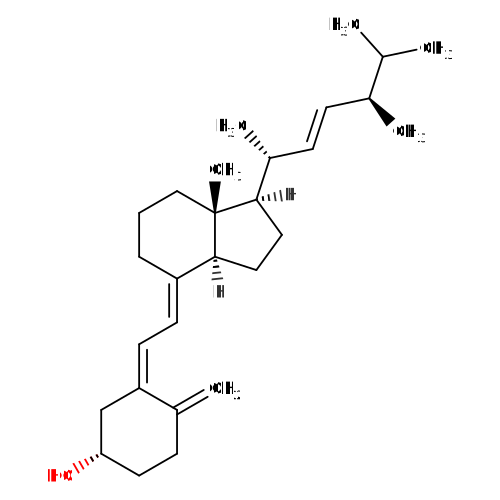
Ergocalciferol is considered the first vitamin D analog and is differentiated from cholecalciferol by the presence of a double bond between C22 and C23 and the presence of a methyl group at C24. These modifications reduce the affinity of ergocalciferol for the vitamin D binding protein resulting in faster clearance, limits its activation, and alters its catabolism.3
The first approved product containing ergocalciferol under the FDA records was developed by US Pharm Holdings and was FDA approved in 1941.10
- Type
- Small Molecule
- Groups
- Approved, Nutraceutical
- Structure
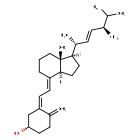
Structure for Ergocalciferol (DB00153)
- Weight
- Average: 396.6484
Monoisotopic: 396.33921603 - Chemical Formula
- C28H44O
- Synonyms
- (3β,5Z,7E,22E)-9,10-secoergosta-5,7,10(19),22-tetraen-3-ol
- (5Z,7E,22E)-(3S)-9,10-seco-5,7,10(19),22-ergostatetraen-3-ol
- (5Z,7E,22E)-(3S)-9,10-secoergosta-5,7,10(19),22-tetraen-3-ol
- Activated ergosterol
- Ercalciol
- Ergocalciferol
- Ergocalciférol
- Ergocalciferolum
- Oleovitamin D2
- Viosterol
- Vitamin D2
- Vitamina D2

Pharmacology
- Indication
Ergocalciferol is indicated for the treatment of hypoparathyroidism, refractory rickets, and familial hypophosphatemia.Label
Hypoparathyroidism is the result of inadequate parathyroid hormone production that occurs due to the presence of damage or removal of the parathyroid glands. This condition produces decreased calcium and increased phosphorus levels.11
Rickets is a condition produced due to a deficiency in vitamin D, calcium or phosphorus. However, this condition can also be related to renal diseases. It is characterized to present weak or soft bones.4
Familial hypophosphatemia is characterized by the impaired transport of phosphate and an altered vitamin D metabolism in the kidneys. The presence of this condition can derive in the presence of osteomalacia, bone softening and rickets.12
 Reduce drug development failure ratesBuild, train, & validate machine-learning modelswith evidence-based and structured datasets.Build, train, & validate predictive machine-learning models with structured datasets.
- Associated Conditions
Indication Type Indication Combined Product Details Approval Level Age Group Patient Characteristics Dose Form Used in combination to prevent Deficiency, vitamin a Combination Product in combination with: Vitamin A (DB00162) ••• ••• ••••••• •••••• Used in combination to prevent Deficiency, vitamin d Combination Product in combination with: Vitamin A (DB00162) ••• ••• ••••••• •••••• Treatment of Hypoparathyroidism •••••••••••• Treatment of Hypophosphatemia, familial •••••••••••• ••••••• Treatment of Vitamin d resistant rickets •••••••••••• - Associated Therapies
- Contraindications & Blackbox Warnings
 Prevent Adverse Drug Events TodayTap into our Clinical API for life-saving information on contraindications & blackbox warnings, population restrictions, harmful risks, & more.Avoid life-threatening adverse drug events with our Clinical API
- Pharmacodynamics
After the activation of the vitamin D receptor, some of the biological changes produced by ergocalciferol include mobilization and accretion of calcium and phosphorus in the bone, absorption of calcium and phosphorus in the intestine, and reabsorption of calcium and phosphorus in the kidney.7
Some other effects known to be produced due to the presence of vitamin D are osteoblast formation, fetus development, induction of pancreatic function, induction of neural function, improvement of immune function, cellular growth and cellular differentiation.7
When compared to its vitamin D counterpart cholecalciferol, ergocalciferol has been shown to present a reduced induction of calcidiol and hence, it is less potent.2
Ergocalciferol supplementation in patients with end-stage renal disease has been shown to generate a significant benefit in lab parameters of bone and mineral metabolism as well as improvement in glycemic control, serum albumin levels and reduced levels of inflammatory markers.1
- Mechanism of action
For its activity, ergocalciferol is required to be transformed to its major active circulating hydroxylated metabolite and transported to the target organs in order to bind to its target, the vitamin D receptor.7
The activation of the vitamin D receptor is part of the vitamin D endocrine system and it is described by the production of a change in the transcription rates of the vitamin D receptor target genes.7 The target genes in the DNA affected by the presence of ergocalciferol are called vitamin D response elements which are dependent on co-modulators.3
The vitamin D receptor is a transcription factor and member of the steroid hormone nuclear receptor family. It presents a DNA binding domain (VDRE) that, when activated, recruits coregulatory complexes to regulate the genomic activity.3
Additionally, ergocalciferol presents nongenomic effects such as the stimulation of intestinal calcium transport via transcaltachia.3
Target Actions Organism AVitamin D3 receptor agonistHumans NVoltage-dependent calcium channel inducerHumans - Absorption
Ergocalciferol is absorbed in the intestine and carried to the liver in chylomicrons. Its intestinal absorption does not present limitations unless the presence of conditions related to fat malabsorption.6 However, for absorption to take place, the presence of bile is required.13
- Volume of distribution
The amount of circulating ergocalciferol is very limited as this compound is rapidly stored in fat tissue such as adipose tissue, liver and muscle. This is very obvious in reports that indicate that circulating ergocalciferol is significantly reduced in obese patients.6
- Protein binding
Ergocalciferol is not found significantly distributed circulating in plasma. It is known to be found in its bound form to the vitamin D plasma protein.9 The parent compound of ergocalciferol does not bind directly to plasma proteins, however, 70-90% of its metabolites such as cholecalciferol and calcitriol are found in the bound form.5
- Metabolism
Ergocalciferol is inactive and hence, the first step in the body is ruled by the conversion of this parent compound to 25-hydroxyvitamin D by the action of CYP2R1 followed by the generation of the major circulating metabolite, 1,25-dihydroxyvitamin D or calcitrol.6 The generation of this major metabolite is ruled by the activity of CYP27B1 which is a key 1-hydroxylase and CYP24A1 which is responsible for the 25-hydroxylation.3
As part of the minor metabolism, ergocalciferol is transformed into 25-hydroxyvitamin D in the liver by the activity of D-25-hydroxylase and CYP2R1. As well, the formation of 24(R),25dihydroxyvitamin D is performed mainly in the kidneys by the action of 25-(OH)D-1-hydroxylase and 25-(OH)D-24-hydroxylase.7
Additionally, there are reports indicating significant activity of 3-epimerase in the metabolism of ergocalciferol which modifies the hydroxy group in C3 from the alpha position to a beta. The epimers formed seemed to have a reduced affinity for the vitamin D plasma proteins and to the vitamin D receptor.3
An alternative activation metabolic pathway has been reported and this process is characterized by the activity of CYP11A1 and its hydroxylation in the C-20. This 20-hydroxylated vitamin D seems to have similar biological activity than calcitriol.3
Hover over products below to view reaction partners
- Route of elimination
The active form of ergocalciferol, calcitrol, cannot be maintained for long periods in storage tissue mainly in periods of dietary or UVB deprivation.6 Therefore, ergocalciferol and its metabolites are excreted via the bile with a minor contribution of renal elimination. This major fecal elimination is explained due to the cubilin-megalin receptor system-mediated renal reuptake of vitamin D metabolites bound to vitamin D binding protein.14
- Half-life
Ergocalciferol can be found circulation for 1-2 days. This quick turnover is presented due to hepatic conversion and uptake by fat and muscle cells where it is transformed to the active form.6
- Clearance
There are no formal reports regarding the clearance rate of ergocalciferol. Due to the structural similarity, it is recommended to consult this parameter with cholecalciferol. On the other hand, the proposed renal clearance of calcitriol is of 31 ml/min.8
- Adverse Effects
 Improve decision support & research outcomesWith structured adverse effects data, including: blackbox warnings, adverse reactions, warning & precautions, & incidence rates. View sample adverse effects data in our new Data Library!Improve decision support & research outcomes with our structured adverse effects data.
- Toxicity
The reported LD50 for orally administered ergocalciferol in the rat is of 10 mg/kg.MSDS Overdosage with this agent is reported to produce hypervitaminosis characterized by hypercalcemia, renal impairment, calcification of soft tissues, a decline in the rate of linear growth and increase in bone mineralization.15
Once an overdose state is registered, immediate withdrawal of vitamin D is required along with a calcium diet, generous intake of fluids and symptomatic treatment. The administration of loop diuretics is an option to increase renal calcium excretion. On the other hand, dialysis and administration of citrates, sulfates, phosphates, corticosteroids, EDTA and mithramycin are recommended.15
There haven't been long term studies analyzing the carcinogenic and mutagenic potential of ergocalciferol or its effects in fertility.
- Pathways
- Not Available
- Pharmacogenomic Effects/ADRs
- Not Available
Interactions
- Drug Interactions
- This information should not be interpreted without the help of a healthcare provider. If you believe you are experiencing an interaction, contact a healthcare provider immediately. The absence of an interaction does not necessarily mean no interactions exist.
Drug Interaction Integrate drug-drug
interactions in your softwareAcetyldigitoxin The risk or severity of ventricular arrhythmias and Cardiac Arrhythmia can be increased when Ergocalciferol is combined with Acetyldigitoxin. Alfacalcidol The risk or severity of adverse effects can be increased when Ergocalciferol is combined with Alfacalcidol. Aluminum hydroxide The serum concentration of Aluminum hydroxide can be increased when it is combined with Ergocalciferol. Beclomethasone dipropionate The therapeutic efficacy of Ergocalciferol can be decreased when used in combination with Beclomethasone dipropionate. Bendroflumethiazide The risk or severity of hypercalcemia can be increased when Bendroflumethiazide is combined with Ergocalciferol. - Food Interactions
- No interactions found.
Products
 Drug product information from 10+ global regionsOur datasets provide approved product information including:dosage, form, labeller, route of administration, and marketing period.Access drug product information from over 10 global regions.
- Product Images
- International/Other Brands
- Deltalin (Lilly)
- Brand Name Prescription Products
Name Dosage Strength Route Labeller Marketing Start Marketing End Region Image D-forte Capsule 50000 unit Oral Euro Pharm International Canada Inc 2017-08-16 Not applicable Canada 
Drisdol Capsule, liquid filled 1.25 mg/1 Oral Avera McKennan Hospital 2016-02-05 2017-05-24 US 
Drisdol Capsule, liquid filled 1.25 mg/1 Oral Sanofi Aventis 1974-11-11 2017-02-28 US Drisdol Capsule, liquid filled 1.25 mg/1 Oral Validus Pharmaceuticals LLC 2018-04-01 Not applicable US Drisdol Capsule 1.25 mg/1 Oral Sanofi Aventis 1974-11-11 2014-04-30 US - Generic Prescription Products
Name Dosage Strength Route Labeller Marketing Start Marketing End Region Image Ergocalciferol Capsule, liquid filled 1.25 mg/1 Oral bryant ranch prepack 2016-06-15 Not applicable US Ergocalciferol Capsule, liquid filled 1.25 mg/1 Oral bryant ranch prepack 2016-06-15 Not applicable US Ergocalciferol Capsule, liquid filled 1.25 mg/1 Oral bryant ranch prepack 2016-06-15 Not applicable US Ergocalciferol Capsule 1.25 mg/1 Oral bryant ranch prepack 2009-08-17 Not applicable US Ergocalciferol Capsule, liquid filled 1.25 mg/1 Oral Bionpharma Inc. 2016-06-15 Not applicable US - Over the Counter Products
Name Dosage Strength Route Labeller Marketing Start Marketing End Region Image CALCIFEROL CAPSULES(VITAMIN D2 CAPSULES) Capsule 20000 unit Oral บริษัท อังกฤษตรางู (แอล.พี.) จำกัด 1985-03-19 Not applicable Thailand 
Vitamin D 400 I.U. Tablets Tablet 400 unit / tab Oral General Nutrition Canada Inc. 1997-04-18 2001-09-12 Canada - Mixture Products
Name Ingredients Dosage Route Labeller Marketing Start Marketing End Region Image Aquasol A & D Drops Ergocalciferol (8000 unit / mL) + Vitamin A (40000 unit / mL) Solution / drops Oral Rhone Poulenc Rorer 1993-12-31 1996-09-09 Canada Cal/mag 2:1 With D Ergocalciferol (100 unit / tab) + Calcium (350 mg / tab) + Magnesium (175 mg / tab) Tablet Oral Wn Pharmaceuticals Ltd. 1998-06-26 2000-02-02 Canada Calcium and Magnesium Citrate With Vitamin D Ergocalciferol (100 unit) + Calcium citrate (275 mg) + Magnesium citrate (137.5 mg) Tablet Oral Sisu Inc. 1997-10-28 2005-07-13 Canada Calcium Chelate Plus Vit D Ergocalciferol (400 unit) + Calcium (50 mg) Tablet Oral Hall Laboratories, Ltd. 1981-12-31 2003-09-11 Canada Calcium Citrate W Vitamin D Tab Ergocalciferol (100 unit / tab) + Calcium citrate (250 mg / tab) Tablet Oral Nutri Dyn Products Ltd. 1994-12-31 1996-09-09 Canada - Unapproved/Other Products
Name Ingredients Dosage Route Labeller Marketing Start Marketing End Region Image Se-Natal Ergocalciferol (400 [iU]/1) + Calcium carbonate (250 mg/1) + Cupric oxide (2 mg/1) + Cyanocobalamin (12 ug/1) + DL-alpha tocopheryl acetate (30 [iU]/1) + Docusate sodium (50 mg/1) + Ferrous fumarate (90 mg/1) + Folic acid (1 mg/1) + Niacin (20 mg/1) + Niacinamide ascorbate (120 mg/1) + Potassium Iodide (150 ug/1) + Pyridoxine hydrochloride (20 mg/1) + Riboflavin (3.4 mg/1) + Thiamine mononitrate (3 mg/1) + Vitamin A acetate (4000 [iU]/1) + Zinc oxide (25 ug/1) Tablet Oral Seton Pharmaceuticals 2009-04-16 2011-07-31 US Vitalipid N Ergocalciferol (40 [iU]/1mL) + DL-alpha-Tocopherol (0.7 [iU]/1mL) + Phylloquinone (20 ug/1mL) + Vitamin A palmitate (230 [iU]/1mL) Emulsion Intravenous Fresenius Kabi USA, LLC 2023-08-18 Not applicable US Vitalipid N Ergocalciferol (20 [iU]/1mL) + DL-alpha-Tocopherol (1 [iU]/1mL) + Phylloquinone (15 ug/1mL) + Vitamin A palmitate (330 [iU]/1mL) Emulsion Intravenous Fresenius Kabi USA, LLC 2023-08-18 Not applicable US Vitalipid N Ergocalciferol (40 [iU]/1mL) + DL-alpha-Tocopherol (0.7 [iU]/1mL) + Phylloquinone (20 ug/1mL) + Vitamin A palmitate (230 [iU]/1mL) Emulsion Intravenous Fresenius Kabi USA, LLC 2023-08-18 Not applicable US VITALIPID N-ADULT 10 AMPUL Ergocalciferol (0.5 mcg/mL) + Phylloquinone (15 mcg/mL) + Vitamin A palmitate (99 mcg/mL) + Vitamin E (0.91 mg/mL) Injection, emulsion Intravenous FRESENİUS KABİ İLAÇ SAN. VE TİC. LTD. ŞTİ. 2013-01-29 2022-11-09 Turkey 


Categories
- ATC Codes
- A11CC01 — Ergocalciferol
- Drug Categories
- Chemical TaxonomyProvided by Classyfire
- Description
- This compound belongs to the class of organic compounds known as vitamin d and derivatives. These are compounds containing a secosteroid backbone, usually secoergostane or secocholestane.
- Kingdom
- Organic compounds
- Super Class
- Lipids and lipid-like molecules
- Class
- Steroids and steroid derivatives
- Sub Class
- Vitamin D and derivatives
- Direct Parent
- Vitamin D and derivatives
- Alternative Parents
- Triterpenoids / Secondary alcohols / Cyclic alcohols and derivatives / Hydrocarbon derivatives
- Substituents
- Alcohol / Aliphatic homopolycyclic compound / Cyclic alcohol / Hydrocarbon derivative / Organic oxygen compound / Organooxygen compound / Secondary alcohol / Triterpenoid
- Molecular Framework
- Aliphatic homopolycyclic compounds
- External Descriptors
- hydroxy seco-steroid, seco-ergostane, vitamin D (CHEBI:28934) / Vitamin D2 and derivatives, Fat-soluble vitamins (C05441) / Vitamin D2 and derivatives (LMST03010000)
- Affected organisms
- Humans and other mammals
Chemical Identifiers
- UNII
- VS041H42XC
- CAS number
- 50-14-6
- InChI Key
- MECHNRXZTMCUDQ-RKHKHRCZSA-N
- InChI
- InChI=1S/C28H44O/c1-19(2)20(3)9-10-22(5)26-15-16-27-23(8-7-17-28(26,27)6)12-13-24-18-25(29)14-11-21(24)4/h9-10,12-13,19-20,22,25-27,29H,4,7-8,11,14-18H2,1-3,5-6H3/b10-9+,23-12+,24-13-/t20-,22+,25-,26+,27-,28+/m0/s1
- IUPAC Name
- (1S,3Z)-3-{2-[(1R,3aS,4E,7aR)-1-[(2R,3E,5R)-5,6-dimethylhept-3-en-2-yl]-7a-methyl-octahydro-1H-inden-4-ylidene]ethylidene}-4-methylidenecyclohexan-1-ol
- SMILES
- CC(C)[C@@H](C)\C=C\[C@@H](C)[C@@]1([H])CC[C@@]2([H])\C(CCC[C@]12C)=C\C=C1\C[C@@H](O)CCC1=C
References
- Synthesis Reference
- US5789397
- General References
- Porter A, Gilmartin C, Srisakul U, Arruda J, Akkina S: Prevalence of 25-OH vitamin D deficiency in a population of hemodialysis patients and efficacy of an oral ergocalciferol supplementation regimen. Am J Nephrol. 2013;37(6):568-74. doi: 10.1159/000351185. Epub 2013 May 30. [Article]
- Lee JY, So TY, Thackray J: A review on vitamin d deficiency treatment in pediatric patients. J Pediatr Pharmacol Ther. 2013 Oct;18(4):277-91. doi: 10.5863/1551-6776-18.4.277. [Article]
- Gallagher JC, Bikle DD: Vitamin D: Mechanisms of Action and Clinical Applications. Endocrinol Metab Clin North Am. 2017 Dec;46(4):xvii-xviii. doi: 10.1016/j.ecl.2017.09.001. Epub 2017 Sep 28. [Article]
- Sahay M, Sahay RK: Refractory rickets in the tropics. J Pediatr Endocrinol Metab. 2010 Jun;23(6):597-601. [Article]
- Hymoller L, Jensen SK: Plasma transport of ergocalciferol and cholecalciferol and their 25-hydroxylated metabolites in dairy cows. Domest Anim Endocrinol. 2017 Apr;59:44-52. doi: 10.1016/j.domaniend.2016.11.002. Epub 2016 Nov 16. [Article]
- Coulston A. and Boushey C. (2008). Nutrition in the Prevention and Treatment of Disease (2nd ed.). Academic Press. [ISBN:978-012-374118-9]
- Eitenmiller R., Ye L. and Landen W. (2008). Vitamin analysis for the health and food sciences (2nd ed.). Taylor and Francis. [ISBN:978-0-8493-9771-4]
- Rajiv Kumar (1984). Vitamin D: Basic and Clinical Aspects. Martinus Nijhoff Publishing. [ISBN:978-1-4612-9793-2]
- Speeckaert M., Speeckaert R., Geel N. and Delanghe J. (2014). Advances in Clinical Chemistry. Elsevier.
- FDA approvals [Link]
- Endocrine Web [Link]
- NORD [Link]
- Pediatric Pharmacotherapy [Link]
- Pubmed books [Link]
- Dailymed [Link]
- External Links
- Human Metabolome Database
- HMDB0000900
- KEGG Drug
- D00187
- KEGG Compound
- C05441
- PubChem Compound
- 5280793
- PubChem Substance
- 46505053
- ChemSpider
- 4444351
- BindingDB
- 50247883
- 4018
- ChEBI
- 28934
- ChEMBL
- CHEMBL1536
- ZINC
- ZINC000004629876
- Therapeutic Targets Database
- DAP000291
- PharmGKB
- PA449484
- PDBe Ligand
- D2V
- RxList
- RxList Drug Page
- Drugs.com
- Drugs.com Drug Page
- PDRhealth
- PDRhealth Drug Page
- Wikipedia
- Ergocalciferol
- PDB Entries
- 3czh
- FDA label
- Download (125 KB)
- MSDS
- Download (167 KB)
Clinical Trials
- Clinical Trials
Phase Status Purpose Conditions Count 4 Active Not Recruiting Treatment Sarcoidosis / Vitamin D Insufficiency 1 4 Completed Basic Science 25-Hydroxyvitamin D Concentration / Deficiency, Vitamin D 1 4 Completed Treatment Active Rheumatoid Arthritis; Rheumatoid Arthritis 1 4 Completed Treatment Chronic Hepatitis, B Virus / Parathyroid Hormone / Tenofovir Disoproxil Fumarate / Vitamin D 1 4 Completed Treatment Chronic Kidney Disease (CKD) / Deficiency, Vitamin D 1
Pharmacoeconomics
- Manufacturers
- Eli lilly and co
- Sanofi aventis us llc
- Orit laboratories llc
- Sigmapharm laboratories llc
- Strides arcolab ltd
- Sun pharmaceutical industries inc
- Banner pharmacaps inc
- Chase chemical co lp
- Everylife
- Impax laboratories inc
- Lannett co inc
- Vitarine pharmaceuticals inc
- West ward pharmaceutical corp
- Packagers
- Banner Pharmacaps Inc.
- Bayer Healthcare
- Breckenridge Pharmaceuticals
- Caraco Pharmaceutical Labs
- Gallipot
- Longs Drug Store
- Major Pharmaceuticals
- Optimum Pharmacueticals Inc.
- PD-Rx Pharmaceuticals Inc.
- Physicians Total Care Inc.
- Pliva Inc.
- Rising Pharmaceuticals
- Sanofi-Aventis Inc.
- Superior Pharmeceuticals
- Walgreen Co.
- Winthrop Us
- Dosage Forms
Form Route Strength Solution Oral 2000 UI Capsule Oral 600 UI Capsule Oral 20000 unit Solution / drops Oral Tablet Capsule Capsule Oral 1.25 mg/1 Capsule, liquid filled Oral 1.25 mg/1 Liquid Oral 0.2 mg/1mL Liquid Oral 8000 [iU]/1mL Capsule, gelatin coated Oral Liquid Oral Tablet, effervescent Oral Capsule, liquid filled Oral Injection, solution, concentrate; kit Intravenous Injection, powder, lyophilized, for solution Intravenous Kit Intravenous Tablet, film coated Oral Liquid Intravenous Capsule Oral 50000 unit Syrup Oral Solution Oral Capsule Oral 50000 unit / cap Capsule Oral Tablet Oral Injection, powder, for solution Intravenous 100 mg Tablet, extended release Oral Tablet, chewable Oral Solution Intravenous Injection Intravenous 330 iu/ml Injection, solution, concentrate Intravenous Injection Intravenous 230 iu/ml Injection, emulsion Intravenous Emulsion Intravenous Capsule Oral 1.25 1/1 Tablet Oral 400 unit / tab Injection, solution Oral Tablet, film coated Suspension - Prices
Unit description Cost Unit Ergocalciferol powder 234.4USD g Doral 15 mg tablet 3.41USD tablet Doral 7.5 mg tablet 3.37USD tablet Drisdol 50000 unit capsule 2.34USD capsule Drisdol 8288 unit/ml Liquid 0.48USD ml Vitamin d 400 unit softgel 0.04USD softgel capsule Longs vitamin d 400 unit tablet 0.03USD tablet DrugBank does not sell nor buy drugs. Pricing information is supplied for informational purposes only.- Patents
- Not Available
Properties
- State
- Solid
- Experimental Properties
Property Value Source melting point (°C) 115-117°C Saxena P. 2007. Chemistry of alkaloids boiling point (°C) Decomposes 'MSDS' water solubility Insoluble 'MSDS' logP 8.89 'MSDS' pKa 6.35 Hart J. and Norman M. 1992. The Analyst. - Predicted Properties
Property Value Source Water Solubility 0.000433 mg/mL ALOGPS logP 7.59 ALOGPS logP 7.05 Chemaxon logS -6 ALOGPS pKa (Strongest Acidic) 18.38 Chemaxon pKa (Strongest Basic) -1.3 Chemaxon Physiological Charge 0 Chemaxon Hydrogen Acceptor Count 1 Chemaxon Hydrogen Donor Count 1 Chemaxon Polar Surface Area 20.23 Å2 Chemaxon Rotatable Bond Count 5 Chemaxon Refractivity 128.89 m3·mol-1 Chemaxon Polarizability 50.72 Å3 Chemaxon Number of Rings 3 Chemaxon Bioavailability 1 Chemaxon Rule of Five No Chemaxon Ghose Filter No Chemaxon Veber's Rule Yes Chemaxon MDDR-like Rule No Chemaxon - Predicted ADMET Features
Property Value Probability Human Intestinal Absorption + 1.0 Blood Brain Barrier + 0.9428 Caco-2 permeable + 0.8323 P-glycoprotein substrate Substrate 0.6628 P-glycoprotein inhibitor I Inhibitor 0.7614 P-glycoprotein inhibitor II Non-inhibitor 0.8391 Renal organic cation transporter Non-inhibitor 0.796 CYP450 2C9 substrate Non-substrate 0.8432 CYP450 2D6 substrate Non-substrate 0.9003 CYP450 3A4 substrate Substrate 0.7362 CYP450 1A2 substrate Non-inhibitor 0.9046 CYP450 2C9 inhibitor Non-inhibitor 0.8924 CYP450 2D6 inhibitor Non-inhibitor 0.9519 CYP450 2C19 inhibitor Non-inhibitor 0.8784 CYP450 3A4 inhibitor Non-inhibitor 0.8142 CYP450 inhibitory promiscuity Low CYP Inhibitory Promiscuity 0.8163 Ames test Non AMES toxic 0.9401 Carcinogenicity Non-carcinogens 0.9169 Biodegradation Not ready biodegradable 0.9742 Rat acute toxicity 3.6931 LD50, mol/kg Not applicable hERG inhibition (predictor I) Weak inhibitor 0.8502 hERG inhibition (predictor II) Non-inhibitor 0.7513
Spectra
- Mass Spec (NIST)
- Download (9.78 KB)
- Spectra
- Chromatographic Properties
Collision Cross Sections (CCS)
Adduct CCS Value (Å2) Source type Source [M-H]- 229.9654254 predictedDarkChem Lite v0.1.0 [M-H]- 226.8595254 predictedDarkChem Lite v0.1.0 [M-H]- 200.3031312 predictedDarkChem Lite v0.1.0 [M-H]- 230.5376254 predictedDarkChem Lite v0.1.0 [M-H]- 223.1345254 predictedDarkChem Lite v0.1.0 [M-H]- 208.9966 predictedDeepCCS 1.0 (2019) [M+H]+ 230.1403254 predictedDarkChem Lite v0.1.0 [M+H]+ 212.4438979 predictedDarkChem Standard v0.1.0 [M+H]+ 203.7900093 predictedDarkChem Lite v0.1.0 [M+H]+ 230.0202254 predictedDarkChem Lite v0.1.0 [M+H]+ 223.2002254 predictedDarkChem Lite v0.1.0 [M+H]+ 211.07413 predictedDeepCCS 1.0 (2019) [M+Na]+ 229.4443254 predictedDarkChem Lite v0.1.0 [M+Na]+ 226.5894254 predictedDarkChem Lite v0.1.0 [M+Na]+ 210.7100051 predictedDarkChem Lite v0.1.0 [M+Na]+ 229.8524254 predictedDarkChem Lite v0.1.0 [M+Na]+ 223.8512254 predictedDarkChem Lite v0.1.0 [M+Na]+ 216.98665 predictedDeepCCS 1.0 (2019)
Targets

- Kind
- Protein
- Organism
- Humans
- Pharmacological action
- Yes
- Actions
- Agonist
- General Function
- Zinc ion binding
- Specific Function
- Nuclear hormone receptor. Transcription factor that mediates the action of vitamin D3 by controlling the expression of hormone sensitive genes. Recruited to promoters via its interaction with BAZ1B...
- Gene Name
- VDR
- Uniprot ID
- P11473
- Uniprot Name
- Vitamin D3 receptor
- Molecular Weight
- 48288.64 Da
References
- Carvallo L, Henriquez B, Olate J, van Wijnen AJ, Lian JB, Stein GS, Onate S, Stein JL, Montecino M: The 1alpha,25-dihydroxy Vitamin D3 receptor preferentially recruits the coactivator SRC-1 during up-regulation of the osteocalcin gene. J Steroid Biochem Mol Biol. 2007 Mar;103(3-5):420-4. Epub 2007 Jan 10. [Article]
- Liu W, Tretiakova M, Kong J, Turkyilmaz M, Li YC, Krausz T: Expression of vitamin D3 receptor in kidney tumors. Hum Pathol. 2006 Oct;37(10):1268-78. Epub 2006 Jul 27. [Article]
- Ewing AK, Attner M, Chakravarti D: Novel regulatory role for human Acf1 in transcriptional repression of vitamin D3 receptor-regulated genes. Mol Endocrinol. 2007 Aug;21(8):1791-806. Epub 2007 May 22. [Article]
- Gallagher JC, Sai AJ: Vitamin D insufficiency, deficiency, and bone health. J Clin Endocrinol Metab. 2010 Jun;95(6):2630-3. doi: 10.1210/jc.2010-0918. [Article]
- Straube S, Derry S, Moore RA, McQuay HJ: Vitamin D for the treatment of chronic painful conditions in adults. Cochrane Database Syst Rev. 2010 Jan 20;(1):CD007771. doi: 10.1002/14651858.CD007771.pub2. [Article]
- Jurutka PW, Bartik L, Whitfield GK, Mathern DR, Barthel TK, Gurevich M, Hsieh JC, Kaczmarska M, Haussler CA, Haussler MR: Vitamin D receptor: key roles in bone mineral pathophysiology, molecular mechanism of action, and novel nutritional ligands. J Bone Miner Res. 2007 Dec;22 Suppl 2:V2-10. doi: 10.1359/jbmr.07s216. [Article]
- Mikhak B, Hunter DJ, Spiegelman D, Platz EA, Hollis BW, Giovannucci E: Vitamin D receptor (VDR) gene polymorphisms and haplotypes, interactions with plasma 25-hydroxyvitamin D and 1,25-dihydroxyvitamin D, and prostate cancer risk. Prostate. 2007 Jun 15;67(9):911-23. [Article]
- Marks HD, Fleet JC, Peleg S: Transgenic expression of the human Vitamin D receptor (hVDR) in the duodenum of VDR-null mice attenuates the age-dependent decline in calcium absorption. J Steroid Biochem Mol Biol. 2007 Mar;103(3-5):513-6. Epub 2007 Jan 5. [Article]
- Chen X, Ji ZL, Chen YZ: TTD: Therapeutic Target Database. Nucleic Acids Res. 2002 Jan 1;30(1):412-5. [Article]
- Kind
- Protein group
- Organism
- Humans
- Pharmacological action
- No
- Actions
- Inducer
- General Function
- Voltage-gated calcium channel activity
- Specific Function
- This protein is a subunit of the dihydropyridine (DHP) sensitive calcium channel. Plays a role in excitation-contraction coupling. The skeletal muscle DHP-sensitive Ca(2+) channel may function only...
Components:
References
- Oxford Academic [Link]
Enzymes
- Kind
- Protein
- Organism
- Humans
- Pharmacological action
- No
- Actions
- Substrate
- General Function
- Catalyzes the reversible epimerization of D-ribulose 5-phosphate to D-xylulose 5-phosphate.
- Specific Function
- Identical protein binding
- Gene Name
- RPE
- Uniprot ID
- Q96AT9
- Uniprot Name
- Ribulose-phosphate 3-epimerase
- Molecular Weight
- 24927.555 Da
References
- Gallagher JC, Bikle DD: Vitamin D: Mechanisms of Action and Clinical Applications. Endocrinol Metab Clin North Am. 2017 Dec;46(4):xvii-xviii. doi: 10.1016/j.ecl.2017.09.001. Epub 2017 Sep 28. [Article]
- Kind
- Protein
- Organism
- Humans
- Pharmacological action
- No
- Actions
- Substrate
- General Function
- Oxidoreductase activity, acting on paired donors, with incorporation or reduction of molecular oxygen, nad(p)h as one donor, and incorporation of one atom of oxygen
- Specific Function
- Catalyzes the side-chain cleavage reaction of cholesterol to pregnenolone.
- Gene Name
- CYP11A1
- Uniprot ID
- P05108
- Uniprot Name
- Cholesterol side-chain cleavage enzyme, mitochondrial
- Molecular Weight
- 60101.87 Da
References
- Gallagher JC, Bikle DD: Vitamin D: Mechanisms of Action and Clinical Applications. Endocrinol Metab Clin North Am. 2017 Dec;46(4):xvii-xviii. doi: 10.1016/j.ecl.2017.09.001. Epub 2017 Sep 28. [Article]
- Kind
- Protein
- Organism
- Humans
- Pharmacological action
- No
- Actions
- Substrate
- General Function
- Oxidoreductase activity
- Specific Function
- Has a role in maintaining calcium homeostasis. Catalyzes the NADPH-dependent 24-hydroxylation of calcidiol (25-hydroxyvitamin D(3)) and calcitriol (1-alpha,25-dihydroxyvitamin D(3)). The enzyme can...
- Gene Name
- CYP24A1
- Uniprot ID
- Q07973
- Uniprot Name
- 1,25-dihydroxyvitamin D(3) 24-hydroxylase, mitochondrial
- Molecular Weight
- 58874.695 Da
References
- Masuda S, Strugnell SA, Knutson JC, St-Arnaud R, Jones G: Evidence for the activation of 1alpha-hydroxyvitamin D2 by 25-hydroxyvitamin D-24-hydroxylase: delineation of pathways involving 1alpha,24-dihydroxyvitamin D2 and 1alpha,25-dihydroxyvitamin D2. Biochim Biophys Acta. 2006 Feb;1761(2):221-34. Epub 2006 Feb 2. [Article]
- Sakaki T, Kagawa N, Yamamoto K, Inouye K: Metabolism of vitamin D3 by cytochromes P450. Front Biosci. 2005 Jan 1;10:119-34. Print 2005 Jan 1. [Article]
- Abe D, Sakaki T, Kusudo T, Kittaka A, Saito N, Suhara Y, Fujishima T, Takayama H, Hamamoto H, Kamakura M, Ohta M, Inouye K: Metabolism of 2 alpha-propoxy-1 alpha,25-dihydroxyvitamin D3 and 2 alpha-(3-hydroxypropoxy)-1 alpha,25-dihydroxyvitamin D3 by human CYP27A1 and CYP24A1. Drug Metab Dispos. 2005 Jun;33(6):778-84. Epub 2005 Mar 11. [Article]
- Sakaki T: [Recent studies on vitamin D metabolizing enzymes]. Clin Calcium. 2006 Jul;16(7):1129-35. [Article]
- Inouye K, Sakaki T: Enzymatic studies on the key enzymes of vitamin D metabolism; 1 alpha-hydroxylase (CYP27B1) and 24-hydroxylase (CYP24). Biotechnol Annu Rev. 2001;7:179-94. [Article]
- Kind
- Protein
- Organism
- Humans
- Pharmacological action
- No
- Actions
- Substrate
- General Function
- Iron ion binding
- Specific Function
- Catalyzes the conversion of 25-hydroxyvitamin D3 (25(OH)D) to 1-alpha,25-dihydroxyvitamin D3 (1,25(OH)2D) plays an important role in normal bone growth, calcium metabolism, and tissue differentiation.
- Gene Name
- CYP27B1
- Uniprot ID
- O15528
- Uniprot Name
- 25-hydroxyvitamin D-1 alpha hydroxylase, mitochondrial
- Molecular Weight
- 56503.475 Da
References
- Turunen MM, Dunlop TW, Carlberg C, Vaisanen S: Selective use of multiple vitamin D response elements underlies the 1 alpha,25-dihydroxyvitamin D3-mediated negative regulation of the human CYP27B1 gene. Nucleic Acids Res. 2007;35(8):2734-47. Epub 2007 Apr 10. [Article]
- Gallagher JC, Sai AJ: Vitamin D insufficiency, deficiency, and bone health. J Clin Endocrinol Metab. 2010 Jun;95(6):2630-3. doi: 10.1210/jc.2010-0918. [Article]
- Sakaki T, Kagawa N, Yamamoto K, Inouye K: Metabolism of vitamin D3 by cytochromes P450. Front Biosci. 2005 Jan 1;10:119-34. Print 2005 Jan 1. [Article]
- Sakaki T: [Recent studies on vitamin D metabolizing enzymes]. Clin Calcium. 2006 Jul;16(7):1129-35. [Article]
- Inouye K, Sakaki T: Enzymatic studies on the key enzymes of vitamin D metabolism; 1 alpha-hydroxylase (CYP27B1) and 24-hydroxylase (CYP24). Biotechnol Annu Rev. 2001;7:179-94. [Article]
- Kind
- Protein
- Organism
- Humans
- Pharmacological action
- Unknown
- Actions
- Substrate
- General Function
- Vitamin d3 25-hydroxylase activity
- Specific Function
- Catalyzes the first step in the oxidation of the side chain of sterol intermediates; the 27-hydroxylation of 5-beta-cholestane-3-alpha,7-alpha,12-alpha-triol. Has also a vitamin D3-25-hydroxylase a...
- Gene Name
- CYP27A1
- Uniprot ID
- Q02318
- Uniprot Name
- Sterol 26-hydroxylase, mitochondrial
- Molecular Weight
- 60234.28 Da
References
- Binkley N, Ramamurthy R, Krueger D: Low vitamin D status: definition, prevalence, consequences, and correction. Endocrinol Metab Clin North Am. 2010 Jun;39(2):287-301, table of contents. doi: 10.1016/j.ecl.2010.02.008. [Article]
- Masuda S, Strugnell SA, Knutson JC, St-Arnaud R, Jones G: Evidence for the activation of 1alpha-hydroxyvitamin D2 by 25-hydroxyvitamin D-24-hydroxylase: delineation of pathways involving 1alpha,24-dihydroxyvitamin D2 and 1alpha,25-dihydroxyvitamin D2. Biochim Biophys Acta. 2006 Feb;1761(2):221-34. Epub 2006 Feb 2. [Article]
- Sakaki T, Kagawa N, Yamamoto K, Inouye K: Metabolism of vitamin D3 by cytochromes P450. Front Biosci. 2005 Jan 1;10:119-34. Print 2005 Jan 1. [Article]
- Abe D, Sakaki T, Kusudo T, Kittaka A, Saito N, Suhara Y, Fujishima T, Takayama H, Hamamoto H, Kamakura M, Ohta M, Inouye K: Metabolism of 2 alpha-propoxy-1 alpha,25-dihydroxyvitamin D3 and 2 alpha-(3-hydroxypropoxy)-1 alpha,25-dihydroxyvitamin D3 by human CYP27A1 and CYP24A1. Drug Metab Dispos. 2005 Jun;33(6):778-84. Epub 2005 Mar 11. [Article]
- Sakaki T: [Recent studies on vitamin D metabolizing enzymes]. Clin Calcium. 2006 Jul;16(7):1129-35. [Article]
- Kind
- Protein
- Organism
- Humans
- Pharmacological action
- No
- Actions
- Substrate
- General Function
- Vitamin d3 25-hydroxylase activity
- Specific Function
- Has a D-25-hydroxylase activity on both forms of vitamin D, vitamin D(2) and D(3).
- Gene Name
- CYP2R1
- Uniprot ID
- Q6VVX0
- Uniprot Name
- Vitamin D 25-hydroxylase
- Molecular Weight
- 57358.82 Da
References
- Ramos-Lopez E, Bruck P, Jansen T, Pfeilschifter JM, Radeke HH, Badenhoop K: CYP2R1-, CYP27B1- and CYP24-mRNA expression in German type 1 diabetes patients. J Steroid Biochem Mol Biol. 2007 Mar;103(3-5):807-10. Epub 2007 Jan 16. [Article]
- Ramos-Lopez E, Bruck P, Jansen T, Herwig J, Badenhoop K: CYP2R1 (vitamin D 25-hydroxylase) gene is associated with susceptibility to type 1 diabetes and vitamin D levels in Germans. Diabetes Metab Res Rev. 2007 Nov;23(8):631-6. [Article]
- Masuda S, Strugnell SA, Knutson JC, St-Arnaud R, Jones G: Evidence for the activation of 1alpha-hydroxyvitamin D2 by 25-hydroxyvitamin D-24-hydroxylase: delineation of pathways involving 1alpha,24-dihydroxyvitamin D2 and 1alpha,25-dihydroxyvitamin D2. Biochim Biophys Acta. 2006 Feb;1761(2):221-34. Epub 2006 Feb 2. [Article]
Carriers
- Kind
- Protein
- Organism
- Humans
- Pharmacological action
- No
- Actions
- Binder
- General Function
- Vitamin transporter activity
- Specific Function
- Involved in vitamin D transport and storage, scavenging of extracellular G-actin, enhancement of the chemotactic activity of C5 alpha for neutrophils in inflammation and macrophage activation.
- Gene Name
- GC
- Uniprot ID
- P02774
- Uniprot Name
- Vitamin D-binding protein
- Molecular Weight
- 52963.025 Da
References
- Speeckaert M., Speeckaert R., Geel N. and Delanghe J. (2014). Advances in Clinical Chemistry. Elsevier.


Drug created at June 13, 2005 13:24 / Updated at May 04, 2024 07:35