Identification
- Summary
Vitamin E is an antioxidant vitamin used in many skin creams and multivitamin preparations.
- Brand Names
- Mvc-fluoride, Vitafol-one
- Generic Name
- Vitamin E
- DrugBank Accession Number
- DB00163
- Background
In 1922, vitamin E was demonstrated to be an essential nutrient12. Vitamin E is a term used to describe 8 different fat soluble tocopherols and tocotrienols, alpha-tocopherol being the most biologically active1. Vitamin E acts as an antioxidant, protecting cell membranes from oxidative damage1. The antioxidant effects are currently being researched for use in the treatment of diseases causing bone loss, cardiovascular diseases, diabetes mellitus and associated comorbidities, eye diseases, inflammatory diseases (including skin conditions), lipid disorders, neurological diseases, and radiation damage13. Though this research is so far inconclusive, vitamin E remains a popular supplement and is generally considered safe by the FDALabel.
- Type
- Small Molecule
- Groups
- Approved, Nutraceutical, Vet approved
- Structure

Structure for Vitamin E (DB00163)
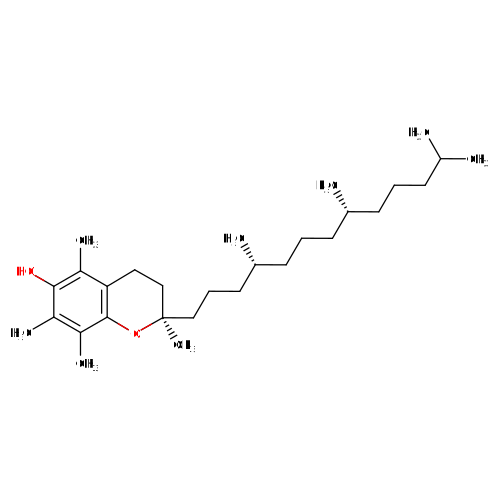
- Weight
- Average: 430.7061
Monoisotopic: 430.381080844 - Chemical Formula
- C29H50O2
- Synonyms
- (+)-α-tocopherol
- (2R,4'R,8'R)-α-tocopherol
- (R,R,R)-α-tocopherol
- 5,7,8-trimethyltocol
- alpha-tocopherol
- d-α-tocopherol
- External IDs
- E-307A
- INS NO.307A
- INS-307A
- J24.260H

Pharmacology
- Indication
Vitamin E supplementation is indicated for treatment of vitamin E deficiency which can occur in cystic fibrosis, cholestasis and severe liver disease, abetalipoproteinemia or simply poor diet1,15.
 Reduce drug development failure ratesBuild, train, & validate machine-learning modelswith evidence-based and structured datasets.Build, train, & validate predictive machine-learning models with structured datasets.
- Associated Conditions
Indication Type Indication Combined Product Details Approval Level Age Group Patient Characteristics Dose Form Used in combination to prevent Vitamin deficiency •••••••••••• ••••••••• - Associated Therapies
- Contraindications & Blackbox Warnings
 Prevent Adverse Drug Events TodayTap into our Clinical API for life-saving information on contraindications & blackbox warnings, population restrictions, harmful risks, & more.Avoid life-threatening adverse drug events with our Clinical API
- Pharmacodynamics
Vitamin E is a collective term used to describe 8 separate fat soluble antioxidants, most commonly alpha-tocopherol1. Vitamin E acts to protect cells against the effects of free radicals, which are potentially damaging by-products of the body's metabolism. Vitamin E deficiency is seen in persons with abetalipoproteinemia, premature, very low birth weight infants (birth weights less than 1500 grams, or 3½ pounds), cystic fibrosis, and cholestasis and severe liver disease1. Preliminary research suggests vitamin E may help prevent or delay coronary heart disease and protect against the damaging effects of free radicals, which may contribute to the development of chronic diseases such as cancer2. It also protects other fat-soluble vitamins (A and B group vitamins) from destruction by oxygen3. Low levels of vitamin E have been linked to increased incidence of breast and colon cancer16.
- Mechanism of action
The mechanism of action for most of vitamin E's effects are still unknown1,4. Vitamin E is an antioxidant, preventing free radical reactions with cell membranes10. Though in some cases vitamin E has been shown to have pro-oxidant activity10.
One mechanism of vitamin E's antioxidant effect is in the termination of lipid peroxidation11. Vitamin E reacts with unstable lipid radicals, producing stable lipids and a relatively stable vitamin E radical11. The vitamin E radical is then reduced back to stable vitamin E by reaction with ascorbate or glutathione11.
Target Actions Organism USEC14-like protein 4 Not Available Humans USEC14-like protein 3 Not Available Humans USEC14-like protein 2 Not Available Humans UNuclear receptor subfamily 1 group I member 2 Not Available Humans UProtein kinase C beta type Not Available Humans UArachidonate 5-lipoxygenase Not Available Humans UProtein kinase C alpha type Not Available Humans UDiacylglycerol kinase alpha Not Available Humans USerine/threonine-protein phosphatase 2A catalytic subunit beta isoform Not Available Humans USerine/threonine-protein phosphatase 2A catalytic subunit alpha isoform Not Available Humans - Absorption
10-33% of deuterium labelled vitamin E is absorbed in the small intestine5,15. Absorption of Vitamin E is dependant upon absorption of the fat in which it is dissolved15,1. For patients with poor fat absorption, a water soluble form of vitamin E may need to be substituted such as tocopheryl polyethylene glycol-1000 succinate15.
In other studies the oral bioavailability of alpha-tocopherol was 36%, gamma-tocotrienol was 9%14. The time to maximum concentration was 9.7 hours for alpha-tocopherol and 2.4 hours for gamma-tocotrienol14.
- Volume of distribution
0.41L/kg in premature neonates given a 20mg/kg intramuscular injection6.
- Protein binding
- Metabolism
Alpha and gamma tocopherol are undergo beta oxidation and a process mediated by cytochrome P450s such as CYP4F2, CYP3A4, and CYP3A57. These processes convert alpha and gamma tocopherol to alpha-CEHC (2,5,7,8-tetramethyl-2-(2’-carboxyethyl)-6-hydroxychroman) and gamma-CEHC (2,7,8-trimethyl-2-(2’-carboxyethyl)-6-hydroxychroman) respectively, however the full process is not known7.
Hover over products below to view reaction partners
- Route of elimination
Alpha tocopherol is excreted in urine as well as bile in the feces mainly as a carboxyethyl-hydrochroman (CEHC) metabolite, but it can be excreted in it's natural form 8.
- Half-life
44 hours in premature neonates given a 20mg/kg intramuscular injection6. 12 minutes in intravenous injection of intestinal lymph11.
- Clearance
6.5mL/hr/kg in premature neonates given a 20mg/kg intramuscular injection6.
- Adverse Effects
 Improve decision support & research outcomesWith structured adverse effects data, including: blackbox warnings, adverse reactions, warning & precautions, & incidence rates. View sample adverse effects data in our new Data Library!Improve decision support & research outcomes with our structured adverse effects data.
- Toxicity
There is no data available for effects in pregnancy, breast feeding, hepatic impairment, or renal impairment. However, it appears that the process of vitamin E elimination is strict and self regulating enough that vitamin E toxicity is exceedingly rare8,9. Studies showing adverse effects from excess vitamin E generally involve people consuming more than 1000mg/day for weeks to months15.
- Pathways
- Not Available
- Pharmacogenomic Effects/ADRs
- Not Available
Interactions
- Drug Interactions
- This information should not be interpreted without the help of a healthcare provider. If you believe you are experiencing an interaction, contact a healthcare provider immediately. The absence of an interaction does not necessarily mean no interactions exist.
Drug Interaction Integrate drug-drug
interactions in your softwareAbametapir The serum concentration of Vitamin E can be increased when it is combined with Abametapir. Abciximab Vitamin E may increase the antiplatelet activities of Abciximab. Abemaciclib The metabolism of Abemaciclib can be increased when combined with Vitamin E. Acalabrutinib The metabolism of Acalabrutinib can be increased when combined with Vitamin E. Acenocoumarol Vitamin E may increase the anticoagulant activities of Acenocoumarol. - Food Interactions
- Take with or without food. High-fat foods may increase absorption of Vitamin E.
Products
 Drug product information from 10+ global regionsOur datasets provide approved product information including:dosage, form, labeller, route of administration, and marketing period.Access drug product information from over 10 global regions.
- Product Images

- International/Other Brands
- Amino-Opti-E / Aquasol E
- Over the Counter Products
Name Dosage Strength Route Labeller Marketing Start Marketing End Region Image Acne C-Patch Patch 0.06 g/2g Topical NeoBiotech Global Corporation 2018-02-10 Not applicable US 
Acti-copherols 200 Cap Capsule 200 unit / cap Oral Acti Form Ltd. 1991-12-31 2005-03-21 Canada 
Acti-D Alphacopherol Cap 400unit Capsule 400 unit / cap Oral Acti Form Ltd. 1991-12-31 2005-03-21 Canada Acti-D Alphacopherol Cap 800unit Capsule 800 unit / cap Oral Acti Form Ltd. 1991-12-31 2005-03-21 Canada BLACKMORES BIO E 500 CAPSULE Capsule 500 IU Oral BLACKMORES (MALAYSIA) SDN. BHD. 2020-09-08 Not applicable Malaysia 
- Mixture Products
Name Ingredients Dosage Route Labeller Marketing Start Marketing End Region Image 24 Multivitamins + Minerals Vitamin E (50 unit) + Ascorbic acid (150 mg) + Beta carotene (10000 unit) + Biotin (25 mcg) + Calcium (130 mg) + Cholecalciferol (400 unit) + Choline bitartrate (25 mg) + Chromium (20 mcg) + Copper (1 mg) + Cyanocobalamin (25 mcg) + Ferrous fumarate (15 mg) + Folic acid (.8 mg) + Inositol (25 mg) + Magnesium (65 mg) + Manganese (2 mg) + Molybdenum (20 mcg) + Niacin (25 mg) + Calcium pantothenate (25 mg) + Potassium (15 mg) + Potassium Iodide (.1 mg) + Pyridoxine hydrochloride (25 mg) + Racemethionine (25 mg) + Riboflavin (25 mg) + Selenium (20 mcg) + Thiamine hydrochloride (25 mg) + Vanadium (20 mcg) + Vitamin A palmitate (5000 unit) + Zinc (10 mg) Tablet Oral Stanley Pharmaceuticals, A Division Of Vita Health Products Inc. 1997-04-30 2002-07-31 Canada 50 Plus Vitamin E (20 unit) + Ascorbic acid (200 mg) + Biotin (20 mcg) + Choline bitartrate (20 mg) + Cyanocobalamin (20 mcg) + Folic acid (.2 mg) + Inositol (20 mg) + Niacin (20 mg) + Calcium pantothenate (20 mg) + Pyridoxine hydrochloride (20 mg) + Racemethionine (20 mg) + Riboflavin (20 mg) + Thiamine hydrochloride (20 mg) + Vitamin A palmitate (10000 unit) + Vitamin D (400 unit) Tablet Oral Quest Vitamins A Div Of Purity Life Health Products 1998-08-04 2001-07-06 Canada A.C.E.S. Capsules Vitamin E (400 unit / cap) + Ascorbic acid (250 mg / cap) + Beta carotene (10000 unit / cap) + Selenium (.025 mg / cap) Capsule Oral Bioforce Canada Inc. 1994-12-31 1997-04-04 Canada ACE PLUS SELENYUM YUMUSAK KAPSUL, 30 ADET Vitamin E (200 mg) + Ascorbic acid (200 mg) + Beta carotene (200 mg) + Selenium (50 mg) Capsule Oral KOÇAK FARMA İLAÇ VE KİMYA SAN. A.Ş. 2009-09-30 Not applicable Turkey 
ACECAP 20/200/200 MG YUMUŞAK KAPSÜL, 30 ADET Vitamin E (200 mg) + Ascorbic acid (200 mg) + Beta carotene (20 mg) Capsule Oral KOÇAK FARMA İLAÇ VE KİMYA SAN. A.Ş. 2008-08-08 Not applicable Turkey - Unapproved/Other Products
Name Ingredients Dosage Route Labeller Marketing Start Marketing End Region Image Acne C-Patch Vitamin E (0.06 g/2g) Patch Topical NeoBiotech Global Corporation 2018-02-10 Not applicable US C-Nate DHA Vitamin E (30 [iU]/1) + Ascorbic acid (100 mg/1) + Cholecalciferol (400 [iU]/1) + Cupric sulfate pentahydrate (1 mg/1) + Cyanocobalamin (15 ug/1) + Ferrous fumarate (28 mg/1) + Folic acid (1 mg/1) + Magnesium (30 mg/1) + Omega-3 fatty acids (200 mg/1) + Pyridoxine hydrochloride (20 mg/1) + Riboflavin (3 mg/1) + Thiamine mononitrate (3 mg/1) + Zinc oxide (20 mg/1) Capsule, gelatin coated Oral Centurion Labs, LLC 2013-01-01 Not applicable US Cavan Prenatal Vitamin E (30 [iU]/1) + Ascorbic acid (120 mg/1) + Calcium carbonate (200 mg/1) + Cholecalciferol (420 [iU]/1) + Choline bitartrate (55 mg/1) + Cyanocobalamin (8 ug/1) + Ferrous fumarate (28 mg/1) + Folic acid (1 mg/1) + Niacin (20 mg/1) + Potassium Iodide (150 ug/1) + Pyridoxine hydrochloride (50 mg/1) + Riboflavin (3 mg/1) + Thiamine mononitrate (3 mg/1) + Zinc oxide (15 ug/1) Tablet Oral Seton Pharmaceuticals 2009-07-09 2009-07-22 US Cavan-EC SOD DHA Vitamin E (30 mg/1) + Ascorbic acid (130 mg/1) + Beta carotene (3000 [iU]/1) + Calcium (230 mg/1) + Cholecalciferol (410 [iU]/1) + Copper (2 mg/1) + Cyanocobalamin (12 ug/1) + Folic acid (1 mg/1) + Magnesium (25 mg/1) + Nicotinamide (20 mg/1) + Omega-3 fatty acids (440 mg/1) + Pyridoxine hydrochloride (28 mg/1) + Riboflavin (4 mg/1) + Sodium feredetate (30 mg/1) + Thiamine mononitrate (1.8 mg/1) + Zinc (26 mg/1) Kit Oral Seton Pharmaceuticals 2010-01-10 2014-07-15 US CitraNatal Assure Vitamin E (30 [iU]/1) + Ascorbic acid (120 mg/1) + Calcium citrate tetrahydrate (124 mg/1) + Cholecalciferol (400 [iU]/1) + Copper (2 mg/1) + Doconexent (300 mg/1) + Docusate sodium (50 mg/1) + Folic acid (1 mg/1) + Icosapent (0.75 mg/1) + Iodine (150 ug/1) + Iron (35 mg/1) + Nicotinamide (20 mg/1) + Pyridoxine hydrochloride (25 mg/1) + Riboflavin (3.4 mg/1) + Thiamine chloride (3 mg/1) + Zinc (25 mg/1) Capsule; Kit; Tablet, coated Oral Mission Pharmacal Company 2014-04-30 Not applicable US

Categories
- Drug Categories
- Antioxidants
- Basic Ointments and Protectants
- Benzopyrans
- Biological Factors
- Compounds used in a research, industrial, or household setting
- Cytochrome P-450 CYP3A Inducers
- Cytochrome P-450 CYP3A Substrates
- Cytochrome P-450 CYP3A4 Inducers
- Cytochrome P-450 CYP3A4 Inducers (strength unknown)
- Cytochrome P-450 CYP3A4 Substrates
- Cytochrome P-450 Enzyme Inducers
- Cytochrome P-450 Substrates
- Diet, Food, and Nutrition
- Dietary Supplements
- Food
- Growth Substances
- Heterocyclic Compounds, Fused-Ring
- Micronutrients
- Physiological Phenomena
- Protective Agents
- Pyrans
- Supplements
- Vitamin E
- Vitamin E, analogs & derivatives
- Vitamins
- Vitamins (Fat Soluble)
- Chemical TaxonomyProvided by Classyfire
- Description
- This compound belongs to the class of organic compounds known as tocopherols. These are vitamin E derivatives containing a saturated trimethyltridecyl chain attached to the carbon C6 atom of a benzopyran ring system. The differ from tocotrienols that contain an unsaturated trimethyltrideca-3,7,11-trien-1-yl chain.
- Kingdom
- Organic compounds
- Super Class
- Lipids and lipid-like molecules
- Class
- Prenol lipids
- Sub Class
- Quinone and hydroquinone lipids
- Direct Parent
- Tocopherols
- Alternative Parents
- Diterpenoids / 1-benzopyrans / Alkyl aryl ethers / Benzenoids / Oxacyclic compounds / Hydrocarbon derivatives
- Substituents
- 1-benzopyran / Alkyl aryl ether / Aromatic heteropolycyclic compound / Benzenoid / Benzopyran / Chromane / Diterpenoid / Ether / Hydrocarbon derivative / Organic oxygen compound
- Molecular Framework
- Aromatic heteropolycyclic compounds
- External Descriptors
- alpha-tocopherol (CHEBI:18145) / vitamin E, Fat-soluble vitamins (C02477) / Vitamin E (LMPR02020000)
- Affected organisms
- Humans and other mammals
Chemical Identifiers
- UNII
- N9PR3490H9
- CAS number
- 59-02-9
- InChI Key
- GVJHHUAWPYXKBD-IEOSBIPESA-N
- InChI
- InChI=1S/C29H50O2/c1-20(2)12-9-13-21(3)14-10-15-22(4)16-11-18-29(8)19-17-26-25(7)27(30)23(5)24(6)28(26)31-29/h20-22,30H,9-19H2,1-8H3/t21-,22-,29-/m1/s1
- IUPAC Name
- (2R)-2,5,7,8-tetramethyl-2-[(4R,8R)-4,8,12-trimethyltridecyl]-3,4-dihydro-2H-1-benzopyran-6-ol
- SMILES
- CC(C)CCC[C@@H](C)CCC[C@@H](C)CCC[C@]1(C)CCC2=C(O1)C(C)=C(C)C(O)=C2C
References
- Synthesis Reference
Ralph E. Close, William Oroshnik, "Synthesis of dehydrophytol and Vitamin E." U.S. Patent US4039591, issued February, 1945.
US4039591- General References
- Okebukola PO, Kansra S, Barrett J: Vitamin E supplementation in people with cystic fibrosis. Cochrane Database Syst Rev. 2017 Mar 6;3:CD009422. doi: 10.1002/14651858.CD009422.pub3. [Article]
- Miller ER 3rd, Pastor-Barriuso R, Dalal D, Riemersma RA, Appel LJ, Guallar E: Meta-analysis: high-dosage vitamin E supplementation may increase all-cause mortality. Ann Intern Med. 2005 Jan 4;142(1):37-46. Epub 2004 Nov 10. [Article]
- Rumbold AR, Crowther CA, Haslam RR, Dekker GA, Robinson JS: Vitamins C and E and the risks of preeclampsia and perinatal complications. N Engl J Med. 2006 Apr 27;354(17):1796-806. [Article]
- Brigelius-Flohe R: Vitamin E: the shrew waiting to be tamed. Free Radic Biol Med. 2009 Mar 1;46(5):543-54. doi: 10.1016/j.freeradbiomed.2008.12.007. Epub 2008 Dec 24. [Article]
- Reboul E: Vitamin E Bioavailability: Mechanisms of Intestinal Absorption in the Spotlight. Antioxidants (Basel). 2017 Nov 22;6(4). pii: antiox6040095. doi: 10.3390/antiox6040095. [Article]
- Colburn WA, Ehrenkranz RA: Pharmacokinetics of a single intramuscular injection of vitamin E to premature neonates. Pediatr Pharmacol (New York). 1983;3(1):7-14. [Article]
- Kaempf-Rotzoll DE, Traber MG, Arai H: Vitamin E and transfer proteins. Curr Opin Lipidol. 2003 Jun;14(3):249-54. doi: 10.1097/01.mol.0000073505.41685.09. [Article]
- Lemaire-Ewing S, Desrumaux C, Neel D, Lagrost L: Vitamin E transport, membrane incorporation and cell metabolism: Is alpha-tocopherol in lipid rafts an oar in the lifeboat? Mol Nutr Food Res. 2010 May;54(5):631-40. doi: 10.1002/mnfr.200900445. [Article]
- Hathcock JN, Azzi A, Blumberg J, Bray T, Dickinson A, Frei B, Jialal I, Johnston CS, Kelly FJ, Kraemer K, Packer L, Parthasarathy S, Sies H, Traber MG: Vitamins E and C are safe across a broad range of intakes. Am J Clin Nutr. 2005 Apr;81(4):736-45. doi: 10.1093/ajcn/81.4.736. [Article]
- Herrera E, Barbas C: Vitamin E: action, metabolism and perspectives. J Physiol Biochem. 2001 Mar;57(2):43-56. [Article]
- Bjorneboe A, Bjorneboe GE, Drevon CA: Absorption, transport and distribution of vitamin E. J Nutr. 1990 Mar;120(3):233-42. doi: 10.1093/jn/120.3.233. [Article]
- Brigelius-Flohe R, Traber MG: Vitamin E: function and metabolism. FASEB J. 1999 Jul;13(10):1145-55. [Article]
- Peh HY, Tan WS, Liao W, Wong WS: Vitamin E therapy beyond cancer: Tocopherol versus tocotrienol. Pharmacol Ther. 2016 Jun;162:152-69. doi: 10.1016/j.pharmthera.2015.12.003. Epub 2015 Dec 17. [Article]
- Qureshi AA, Khan DA, Silswal N, Saleem S, Qureshi N: Evaluation of Pharmacokinetics, and Bioavailability of Higher Doses of Tocotrienols in Healthy Fed Humans. J Clin Exp Cardiolog. 2016 Apr;7(4). doi: 10.4172/2155-9880.1000434. Epub 2016 Apr 28. [Article]
- NIH ODS Vitamin E Fact Sheet for Health Professionals [Link]
- Vitamin E | Linus Pauling Institute | Oregon State University [Link]
- External Links
- Human Metabolome Database
- HMDB0001893
- KEGG Compound
- C02477
- PubChem Compound
- 14985
- PubChem Substance
- 46506524
- ChemSpider
- 14265
- BindingDB
- 50458513
- 11256
- ChEBI
- 18145
- ChEMBL
- CHEMBL47
- ZINC
- ZINC000004095858
- PharmGKB
- PA451900
- PDBe Ligand
- VIV
- Drugs.com
- Drugs.com Drug Page
- PDRhealth
- PDRhealth Drug Page
- Wikipedia
- Vitamin_E
- PDB Entries
- 1oip / 1r5l / 3w67 / 3w68 / 5mue / 5mug / 6zpd / 7n4u / 8c29
- MSDS
- Download (74.1 KB)
Clinical Trials
- Clinical Trials
Phase Status Purpose Conditions Count 4 Completed Prevention Neonatal Asphyxia 1 4 Completed Supportive Care Cirrhosis of the Liver / Muscle Cramps 1 4 Completed Supportive Care Sickle Cell Disease (SCD) 1 4 Completed Supportive Care Symptomatic Irreversible Pulpitis (SIP) 1 4 Completed Treatment Diabetic Macular Edema (DME) 1
Pharmacoeconomics
- Manufacturers
- Not Available
- Packagers
- AAIPharma Inc.
- Accucaps Industries Ltd.
- Actavis Group
- A-S Medication Solutions LLC
- AstraZeneca Inc.
- Basic Drugs Inc.
- Baxter International Inc.
- Breckenridge Pharmaceuticals
- Bristol-Myers Squibb Co.
- Carlisle Laboratories Inc.
- Catalent Pharma Solutions
- Contract Pharm
- CVS Pharmacy
- Dispensing Solutions
- Domel Laboratories Inc.
- DSM Corp.
- E.R. Squibb and Sons LLC
- Equaline Vitamins
- Everett Laboratories Inc.
- Freeda Vitamins
- H and H Laboratories
- Hawthorn Pharmaceuticals
- Hi Tech Pharmacal Co. Inc.
- Hospira Inc.
- Ivax Pharmaceuticals
- IVC Industries Inc.
- KV Pharmaceutical Co.
- Lannett Co. Inc.
- Major Pharmaceuticals
- Medicine Shop
- Medvantx Inc.
- Mission Pharmacal
- National Vitamin Company
- Nature's Bounty
- Nucare Pharmaceuticals Inc.
- Olive Healthcare
- Pharmaceutical Generic Developers Inc.
- Pharmelle LLC
- Pharmics Inc.
- Physicians Total Care Inc.
- Preferred Pharmaceuticals Inc.
- Pronova Corp.
- Puretek Corp.
- Qualitest
- Rasi Laboratories Inc.
- River's Edge Pharmaceuticals
- Rugby Laboratories
- Sandoz
- Sciele Pharma Inc.
- Seton Pharmaceuticals LLC
- Seyer Pharmatec Inc.
- Silarx Pharmaceuticals
- Spectrum Pharmaceuticals
- Tri Med Laboratories Inc.
- V Sab Medical Labs Inc.
- Vintage Pharmaceuticals Inc.
- Vitaline Corp.
- Walgreen Co.
- Warner Chilcott Co. Inc.
- Wockhardt Ltd.
- Dosage Forms
Form Route Strength Patch Topical 0.06 g/2g Capsule Oral 400 unit / cap Capsule; kit; tablet, film coated Oral Capsule, liquid filled Oral 800 mg Capsule Oral 409 mg Capsule Oral 500 IU Lotion Topical Injection, powder, for solution Intramuscular; Intravenous Injection, powder, for solution Parenteral Injection, solution Intramuscular; Intravenous Capsule; kit; tablet, coated Oral Cream Cutaneous Shampoo Topical Tablet Capsule Powder Topical Capsule Oral 200 unit / cap Capsule Oral 15 mg Tablet, chewable Oral 100 mg Capsule, liquid filled Oral 307.68 mg Powder Oral Powder, for solution Intravenous Capsule, gelatin coated 300 mg Capsule Oral 250 IU Solution Intramuscular 100 mg/2ml Capsule Oral 600 I.E. Tablet, sugar coated Oral 75 mcg Capsule, delayed release Oral Ointment Topical 34 unit / g Tablet, coated Oral 150 mcg Tablet, chewable Oral Liquid Oral 27 unit / mL Liquid Oral 200 unit / mL Liquid Intravenous Solution Intravenous Solution / drops Oral Tablet Oral Liquid Oral 150 unit / mL Capsule Oral 1000 unit Capsule Oral Capsule, gelatin coated Capsule, gelatin coated; kit; tablet Oral Tablet, film coated Oral 1000 mcg Liquid Oral Capsule, coated Oral 400 IU Capsule Oral 7 unit / cap Emulsion Parenteral Capsule Oral 400 unit Tablet, film coated Oral Capsule, gelatin coated Oral Tablet, effervescent Oral Syrup Oral Tablet, coated Oral Syrup Lozenge Oral Tablet, extended release Oral Powder, for solution Intramuscular; Intravenous Powder, for solution Oral Capsule, coated Oral Injection, solution Injection, solution 300 mg/2mL Capsule Oral 134 unit / cap Capsule Oral Capsule, liquid filled; kit Oral Capsule, liquid filled Oral Injection Intravenous 330 iu/ml Injection Intravenous 230 iu/ml Injection, emulsion Intravenous Emulsion Intravenous Tablet Oral 200 unit / tab Capsule Oral 1000 unit / cap Capsule Oral 100 unit Capsule Oral 200 unit Tablet Oral 50 unit / tab Capsule Oral 800 unit Cream Topical Ointment Topical 50 unit / g Ointment Topical 1000 unit / 60 g Ointment Topical 30 unit / g Capsule, liquid filled Oral 1000 IU Capsule, liquid filled Oral 1000 mg Capsule, liquid filled Oral 200 IU Capsule, liquid filled Oral 20000000 IU Capsule, liquid filled Oral 400 U Capsule, liquid filled Oral 400 mg Capsule, liquid filled Oral 400 IU Capsule, liquid filled Oral 100 mg Capsule Oral 100 unit / cap Capsule Oral 800 unit / cap Cream Topical 250 unit / mL Capsule Oral 25 unit / cap Kit Oral Liquid Oral 100 unit / mL Tablet, film coated Capsule Oral 200 iu Capsule Oral 400 iu Tablet, film coated 500 iu Tablet, film coated 250 iu Tablet, sugar coated Oral Tablet, sugar coated Oral 100 IU Capsule Oral 168 mg Capsule Oral 335 mg Capsule Oral 100 iu Capsule Oral 500 mg - Prices
Unit description Cost Unit Vitamin e acetate liquid 1.07USD ml Ester-e 400 unit softgel 0.26USD softgel capsule Vit e nat'l blnd 1000 unit capsule 0.2USD capsule Vitamin e 400 unit tablet 0.19USD tablet E pherol 400 unit tablet 0.13USD tablet Vitamin e 1000 unit capsule 0.13USD capsule Vitamin e beauty oil 0.1USD ml CVS Pharmacy vitamin e 800 unit softgel 0.09USD softgel capsule Vitamin e 600 unit capsule 0.07USD capsule Vitamin e 400 unit capsule 0.06USD capsule CVS Pharmacy vitamin e 400 unit capsule 0.05USD capsule Vitamin e 200 unit capsule 0.05USD each CVS Pharmacy vitamin e 200 unit softgel 0.04USD softgel capsule Natural vitamin e 400 unit cap 0.04USD capsule Natural vitamin e 400 unit capsule 0.04USD capsule Vitamin e 100 unit capsule 0.04USD capsule Vitamin e 400 unit softgel 0.04USD softgel capsule CVS Pharmacy vitamin e plus cream 0.03USD g Natural vit e 200 unit capsule 0.03USD capsule Vitamin e cream 0.02USD g DrugBank does not sell nor buy drugs. Pricing information is supplied for informational purposes only.- Patents
- Not Available
Properties
- State
- Solid
- Experimental Properties
Property Value Source melting point (°C) 3 °C MSDS water solubility Insoluble in water, but water-dispersible. MSDS - Predicted Properties
Property Value Source Water Solubility 7.04e-06 mg/mL ALOGPS logP 8.84 ALOGPS logP 10.51 Chemaxon logS -7.8 ALOGPS pKa (Strongest Acidic) 10.8 Chemaxon pKa (Strongest Basic) -4.9 Chemaxon Physiological Charge 0 Chemaxon Hydrogen Acceptor Count 2 Chemaxon Hydrogen Donor Count 1 Chemaxon Polar Surface Area 29.46 Å2 Chemaxon Rotatable Bond Count 12 Chemaxon Refractivity 135.37 m3·mol-1 Chemaxon Polarizability 55.29 Å3 Chemaxon Number of Rings 2 Chemaxon Bioavailability 0 Chemaxon Rule of Five No Chemaxon Ghose Filter No Chemaxon Veber's Rule No Chemaxon MDDR-like Rule No Chemaxon - Predicted ADMET Features
Property Value Probability Human Intestinal Absorption + 0.9795 Blood Brain Barrier + 0.9767 Caco-2 permeable + 0.8484 P-glycoprotein substrate Substrate 0.7189 P-glycoprotein inhibitor I Non-inhibitor 0.7598 P-glycoprotein inhibitor II Inhibitor 0.7802 Renal organic cation transporter Non-inhibitor 0.7882 CYP450 2C9 substrate Non-substrate 0.6949 CYP450 2D6 substrate Non-substrate 0.7813 CYP450 3A4 substrate Substrate 0.7533 CYP450 1A2 substrate Non-inhibitor 0.8122 CYP450 2C9 inhibitor Non-inhibitor 0.9071 CYP450 2D6 inhibitor Non-inhibitor 0.9231 CYP450 2C19 inhibitor Non-inhibitor 0.9026 CYP450 3A4 inhibitor Non-inhibitor 0.8309 CYP450 inhibitory promiscuity Low CYP Inhibitory Promiscuity 0.7762 Ames test Non AMES toxic 0.9132 Carcinogenicity Non-carcinogens 0.8813 Biodegradation Not ready biodegradable 0.9965 Rat acute toxicity 2.1598 LD50, mol/kg Not applicable hERG inhibition (predictor I) Weak inhibitor 0.7192 hERG inhibition (predictor II) Non-inhibitor 0.6449
Spectra
- Mass Spec (NIST)
- Not Available
- Spectra
- Chromatographic Properties
Collision Cross Sections (CCS)
Adduct CCS Value (Å2) Source type Source [M-H]- 236.8917217 predictedDarkChem Lite v0.1.0 [M-H]- 209.2246919 predictedDarkChem Standard v0.1.0 [M-H]- 234.5114217 predictedDarkChem Lite v0.1.0 [M-H]- 236.3862217 predictedDarkChem Lite v0.1.0 [M-H]- 210.88283 predictedDeepCCS 1.0 (2019) [M+H]+ 235.3865217 predictedDarkChem Lite v0.1.0 [M+H]+ 214.6447079 predictedDarkChem Standard v0.1.0 [M+H]+ 235.1494217 predictedDarkChem Lite v0.1.0 [M+H]+ 233.7971217 predictedDarkChem Lite v0.1.0 [M+H]+ 213.2784 predictedDeepCCS 1.0 (2019) [M+Na]+ 237.1184217 predictedDarkChem Lite v0.1.0 [M+Na]+ 235.4504217 predictedDarkChem Lite v0.1.0 [M+Na]+ 234.0374217 predictedDarkChem Lite v0.1.0 [M+Na]+ 236.1496217 predictedDarkChem Lite v0.1.0 [M+Na]+ 219.1909 predictedDeepCCS 1.0 (2019)
Targets

- Kind
- Protein
- Organism
- Humans
- Pharmacological action
- Unknown
- Curator comments
- Also identified as TAP3, this protein binds to Vitamin E , though the exact bond conformation has not been studied.
- General Function
- Transporter activity
- Specific Function
- Probable hydrophobic ligand-binding protein; may play a role in the transport of hydrophobic ligands like tocopherol, squalene and phospholipids.
- Gene Name
- SEC14L4
- Uniprot ID
- Q9UDX3
- Uniprot Name
- SEC14-like protein 4
- Molecular Weight
- 46643.385 Da
References
- Schmolz L, Birringer M, Lorkowski S, Wallert M: Complexity of vitamin E metabolism. World J Biol Chem. 2016 Feb 26;7(1):14-43. doi: 10.4331/wjbc.v7.i1.14. [Article]
- Peter Weber, Marc Birringer, Jeffrey B. Blumberg, Manfred Eggersdorfer, Jan Frank (2019). Vitamin E in Human Health. Springer. [ISBN:978-3-030-05314-7]
- Kind
- Protein
- Organism
- Humans
- Pharmacological action
- Unknown
- General Function
- Transporter activity
- Specific Function
- Probable hydrophobic ligand-binding protein; may play a role in the transport of hydrophobic ligands like tocopherol, squalene and phospholipids.
- Gene Name
- SEC14L3
- Uniprot ID
- Q9UDX4
- Uniprot Name
- SEC14-like protein 3
- Molecular Weight
- 46047.835 Da
References
- Overington JP, Al-Lazikani B, Hopkins AL: How many drug targets are there? Nat Rev Drug Discov. 2006 Dec;5(12):993-6. [Article]
- Imming P, Sinning C, Meyer A: Drugs, their targets and the nature and number of drug targets. Nat Rev Drug Discov. 2006 Oct;5(10):821-34. [Article]
- Ye X, Ji C, Yin G, Tang R, Zeng L, Gu S, Ying K, Xie Y, Zhao RC, Mao Y: Characterization of a human Sec14-like protein cDNA SEC14L3 highly homologous to human SPF/TAP. Mol Biol Rep. 2004 Mar;31(1):59-63. [Article]
- Kind
- Protein
- Organism
- Humans
- Pharmacological action
- Unknown
- General Function
- Vitamin e binding
- Specific Function
- Carrier protein. Binds to some hydrophobic molecules and promotes their transfer between the different cellular sites. Binds with high affinity to alpha-tocopherol. Also binds with a weaker affinit...
- Gene Name
- SEC14L2
- Uniprot ID
- O76054
- Uniprot Name
- SEC14-like protein 2
- Molecular Weight
- 46144.9 Da
References
- Neuzil J, Dong LF, Wang XF, Zingg JM: Tocopherol-associated protein-1 accelerates apoptosis induced by alpha-tocopheryl succinate in mesothelioma cells. Biochem Biophys Res Commun. 2006 May 19;343(4):1113-7. Epub 2006 Mar 31. [Article]
- Ni J, Pang ST, Yeh S: Differential retention of alpha-vitamin E is correlated with its transporter gene expression and growth inhibition efficacy in prostate cancer cells. Prostate. 2007 Apr 1;67(5):463-71. [Article]
- Kind
- Protein
- Organism
- Humans
- Pharmacological action
- Unknown
- General Function
- Zinc ion binding
- Specific Function
- Nuclear receptor that binds and is activated by variety of endogenous and xenobiotic compounds. Transcription factor that activates the transcription of multiple genes involved in the metabolism an...
- Gene Name
- NR1I2
- Uniprot ID
- O75469
- Uniprot Name
- Nuclear receptor subfamily 1 group I member 2
- Molecular Weight
- 49761.245 Da
References
- Rabovsky A, Cuomo J, Eich N: Measurement of plasma antioxidant reserve after supplementation with various antioxidants in healthy subjects. Clin Chim Acta. 2006 Sep;371(1-2):55-60. Epub 2006 Mar 6. [Article]
- Meijerman I, Beijnen JH, Schellens JH: Herb-drug interactions in oncology: focus on mechanisms of induction. Oncologist. 2006 Jul-Aug;11(7):742-52. [Article]
- Kind
- Protein
- Organism
- Humans
- Pharmacological action
- Unknown
- General Function
- Zinc ion binding
- Specific Function
- Calcium-activated, phospholipid- and diacylglycerol (DAG)-dependent serine/threonine-protein kinase involved in various cellular processes such as regulation of the B-cell receptor (BCR) signalosom...
- Gene Name
- PRKCB
- Uniprot ID
- P05771
- Uniprot Name
- Protein kinase C beta type
- Molecular Weight
- 76868.45 Da
References
- Overington JP, Al-Lazikani B, Hopkins AL: How many drug targets are there? Nat Rev Drug Discov. 2006 Dec;5(12):993-6. [Article]
- Imming P, Sinning C, Meyer A: Drugs, their targets and the nature and number of drug targets. Nat Rev Drug Discov. 2006 Oct;5(10):821-34. [Article]
- Wigg SJ, Tare M, Forbes J, Cooper ME, Thomas MC, Coleman HA, Parkington HC, O'Brien RC: Early vitamin E supplementation attenuates diabetes-associated vascular dysfunction and the rise in protein kinase C-beta in mesenteric artery and ameliorates wall stiffness in femoral artery of Wistar rats. Diabetologia. 2004 Jun;47(6):1038-46. Epub 2004 Jun 8. [Article]
- Huang Y, Ishizuka T, Miura A, Kajita K, Ishizawa M, Kimura M, Yamamoto Y, Kawai Y, Morita H, Uno Y, Yasuda K: Effect of 1 alpha,25-dihydroxy vitamin D3 and vitamin E on insulin-induced glucose uptake in rat adipocytes. Diabetes Res Clin Pract. 2002 Mar;55(3):175-83. [Article]
- Ganz MB, Seftel A: Glucose-induced changes in protein kinase C and nitric oxide are prevented by vitamin E. Am J Physiol Endocrinol Metab. 2000 Jan;278(1):E146-52. [Article]
- Kind
- Protein
- Organism
- Humans
- Pharmacological action
- Unknown
- General Function
- Iron ion binding
- Specific Function
- Catalyzes the first step in leukotriene biosynthesis, and thereby plays a role in inflammatory processes.
- Gene Name
- ALOX5
- Uniprot ID
- P09917
- Uniprot Name
- Arachidonate 5-lipoxygenase
- Molecular Weight
- 77982.595 Da
References
- Taccone-Gallucci M, Manca-di-Villahermosa S, Battistini L, Stuffler RG, Tedesco M, Maccarrone M: N-3 PUFAs reduce oxidative stress in ESRD patients on maintenance HD by inhibiting 5-lipoxygenase activity. Kidney Int. 2006 Apr;69(8):1450-4. [Article]
- Kind
- Protein
- Organism
- Humans
- Pharmacological action
- Unknown
- General Function
- Zinc ion binding
- Specific Function
- Calcium-activated, phospholipid- and diacylglycerol (DAG)-dependent serine/threonine-protein kinase that is involved in positive and negative regulation of cell proliferation, apoptosis, differenti...
- Gene Name
- PRKCA
- Uniprot ID
- P17252
- Uniprot Name
- Protein kinase C alpha type
- Molecular Weight
- 76749.445 Da
References
- Overington JP, Al-Lazikani B, Hopkins AL: How many drug targets are there? Nat Rev Drug Discov. 2006 Dec;5(12):993-6. [Article]
- Imming P, Sinning C, Meyer A: Drugs, their targets and the nature and number of drug targets. Nat Rev Drug Discov. 2006 Oct;5(10):821-34. [Article]
- Azzi A, Boscoboinik D, Clement S, Marilley D, Ozer NK, Ricciarelli R, Tasinato A: Alpha-tocopherol as a modulator of smooth muscle cell proliferation. Prostaglandins Leukot Essent Fatty Acids. 1997 Oct;57(4-5):507-14. [Article]
- Sylvester PW, McIntyre BS, Gapor A, Briski KP: Vitamin E inhibition of normal mammary epithelial cell growth is associated with a reduction in protein kinase C(alpha) activation. Cell Prolif. 2001 Dec;34(6):347-57. [Article]
- Huang Y, Ishizuka T, Miura A, Kajita K, Ishizawa M, Kimura M, Yamamoto Y, Kawai Y, Morita H, Uno Y, Yasuda K: Effect of 1 alpha,25-dihydroxy vitamin D3 and vitamin E on insulin-induced glucose uptake in rat adipocytes. Diabetes Res Clin Pract. 2002 Mar;55(3):175-83. [Article]
- Kind
- Protein
- Organism
- Humans
- Pharmacological action
- Unknown
- Curator comments
- The studies referenced have shown that vitamin E (VtE) activates the DGKα isoform in vitro and in vivo in the mouse knockout model.
- General Function
- Phospholipid binding
- Specific Function
- Upon cell stimulation converts the second messenger diacylglycerol into phosphatidate, initiating the resynthesis of phosphatidylinositols and attenuating protein kinase C activity.
- Gene Name
- DGKA
- Uniprot ID
- P23743
- Uniprot Name
- Diacylglycerol kinase alpha
- Molecular Weight
- 82629.55 Da
References
- Hayashi D, Yagi K, Song C, Ueda S, Yamanoue M, Topham M, Suzaki T, Saito N, Emoto N, Shirai Y: Diacylglycerol Kinase alpha is Involved in the Vitamin E-Induced Amelioration of Diabetic Nephropathy in Mice. Sci Rep. 2017 Jun 1;7(1):2597. doi: 10.1038/s41598-017-02354-3. [Article]
- Fukunaga-Takenaka R, Shirai Y, Yagi K, Adachi N, Sakai N, Merino E, Merida I, Saito N: Importance of chroman ring and tyrosine phosphorylation in the subtype-specific translocation and activation of diacylglycerol kinase alpha by D-alpha-tocopherol. Genes Cells. 2005 Apr;10(4):311-9. doi: 10.1111/j.1365-2443.2005.00842.x. [Article]
- Kind
- Protein
- Organism
- Humans
- Pharmacological action
- Unknown
- Curator comments
- Vitamin E's effects and inhibition of PKC is linked to its activation of protein phosphatases and their subsequent downstream effects.
- General Function
- Protein serine/threonine phosphatase activity
- Specific Function
- PP2A can modulate the activity of phosphorylase B kinase casein kinase 2, mitogen-stimulated S6 kinase, and MAP-2 kinase.
- Gene Name
- PPP2CB
- Uniprot ID
- P62714
- Uniprot Name
- Serine/threonine-protein phosphatase 2A catalytic subunit beta isoform
- Molecular Weight
- 35574.85 Da
References
- Ricciarelli R, Tasinato A, Clement S, Ozer NK, Boscoboinik D, Azzi A: alpha-Tocopherol specifically inactivates cellular protein kinase C alpha by changing its phosphorylation state. Biochem J. 1998 Aug 15;334 ( Pt 1):243-9. doi: 10.1042/bj3340243. [Article]
- Zingg JM: Modulation of signal transduction by vitamin E. Mol Aspects Med. 2007 Oct-Dec;28(5-6):481-506. doi: 10.1016/j.mam.2006.12.009. Epub 2007 Jan 12. [Article]
- Millward TA, Zolnierowicz S, Hemmings BA: Regulation of protein kinase cascades by protein phosphatase 2A. Trends Biochem Sci. 1999 May;24(5):186-91. doi: 10.1016/s0968-0004(99)01375-4. [Article]
- Kind
- Protein
- Organism
- Humans
- Pharmacological action
- Unknown
- Curator comments
- Vitamin E's effects and inhibition of PKC is linked to its activation of protein phosphatases and their subsequent downstream effects.
- General Function
- PP2A is the major phosphatase for microtubule-associated proteins (MAPs). PP2A can modulate the activity of phosphorylase B kinase casein kinase 2, mitogen-stimulated S6 kinase, and MAP-2 kinase. Cooperates with SGO2 to protect centromeric cohesin from separase-mediated cleavage in oocytes specifically during meiosis I (By similarity). Can dephosphorylate SV40 large T antigen and p53/TP53. Activates RAF1 by dephosphorylating it at 'Ser-259'.
- Specific Function
- Gaba receptor binding
- Gene Name
- PPP2CA
- Uniprot ID
- P67775
- Uniprot Name
- Serine/threonine-protein phosphatase 2A catalytic subunit alpha isoform
- Molecular Weight
- 35593.93 Da
References
- Millward TA, Zolnierowicz S, Hemmings BA: Regulation of protein kinase cascades by protein phosphatase 2A. Trends Biochem Sci. 1999 May;24(5):186-91. doi: 10.1016/s0968-0004(99)01375-4. [Article]
- Ricciarelli R, Tasinato A, Clement S, Ozer NK, Boscoboinik D, Azzi A: alpha-Tocopherol specifically inactivates cellular protein kinase C alpha by changing its phosphorylation state. Biochem J. 1998 Aug 15;334 ( Pt 1):243-9. doi: 10.1042/bj3340243. [Article]
- Zingg JM: Modulation of signal transduction by vitamin E. Mol Aspects Med. 2007 Oct-Dec;28(5-6):481-506. doi: 10.1016/j.mam.2006.12.009. Epub 2007 Jan 12. [Article]
Enzymes
- Kind
- Protein
- Organism
- Humans
- Pharmacological action
- Unknown
- Actions
- Inhibitor
- General Function
- S-nitrosoglutathione binding
- Specific Function
- Conjugation of reduced glutathione to a wide number of exogenous and endogenous hydrophobic electrophiles. Regulates negatively CDK5 activity via p25/p35 translocation to prevent neurodegeneration.
- Gene Name
- GSTP1
- Uniprot ID
- P09211
- Uniprot Name
- Glutathione S-transferase P
- Molecular Weight
- 23355.625 Da
References
- Ralat LA, Colman RF: Identification of tyrosine 79 in the tocopherol binding site of glutathione S-transferase pi. Biochemistry. 2006 Oct 17;45(41):12491-9. [Article]
- Kind
- Protein
- Organism
- Humans
- Pharmacological action
- Unknown
- Actions
- Inhibitor
- General Function
- Oxidoreductase activity
- Specific Function
- Exhibits glutathione-dependent thiol transferase and dehydroascorbate reductase activities. Has S-(phenacyl)glutathione reductase activity. Has also glutathione S-transferase activity. Participates...
- Gene Name
- GSTO1
- Uniprot ID
- P78417
- Uniprot Name
- Glutathione S-transferase omega-1
- Molecular Weight
- 27565.6 Da
References
- Sampayo-Reyes A, Zakharyan RA: Tocopherol esters inhibit human glutathione S-transferase omega. Acta Biochim Pol. 2006;53(3):547-52. Epub 2006 Oct 1. [Article]
- Kind
- Protein
- Organism
- Humans
- Pharmacological action
- Unknown
- Actions
- Inducer
- General Function
- Protein homodimerization activity
- Specific Function
- Conjugation of reduced glutathione to a wide number of exogenous and endogenous hydrophobic electrophiles. May govern uptake and detoxification of both endogenous compounds and xenobiotics at the t...
- Gene Name
- GSTM3
- Uniprot ID
- P21266
- Uniprot Name
- Glutathione S-transferase Mu 3
- Molecular Weight
- 26559.32 Da
References
- Mustacich DJ, Gohil K, Bruno RS, Yan M, Leonard SW, Ho E, Cross CE, Traber MG: Alpha-tocopherol modulates genes involved in hepatic xenobiotic pathways in mice. J Nutr Biochem. 2009 Jun;20(6):469-76. doi: 10.1016/j.jnutbio.2008.05.007. Epub 2008 Sep 11. [Article]
- Kind
- Protein
- Organism
- Humans
- Pharmacological action
- Unknown
- Actions
- Inducer
- General Function
- Magnesium ion binding
- Specific Function
- Not Available
- Gene Name
- GCLC
- Uniprot ID
- P48506
- Uniprot Name
- Glutamate--cysteine ligase catalytic subunit
- Molecular Weight
- 72765.14 Da
References
- Feng Z, Liu Z, Li X, Jia H, Sun L, Tian C, Jia L, Liu J: alpha-Tocopherol is an effective Phase II enzyme inducer: protective effects on acrolein-induced oxidative stress and mitochondrial dysfunction in human retinal pigment epithelial cells. J Nutr Biochem. 2010 Dec;21(12):1222-31. doi: 10.1016/j.jnutbio.2009.10.010. Epub 2010 Feb 12. [Article]
- Kind
- Protein
- Organism
- Humans
- Pharmacological action
- Unknown
- Actions
- Inducer
- General Function
- Superoxide dismutase activity
- Specific Function
- The enzyme apparently serves as a quinone reductase in connection with conjugation reactions of hydroquinons involved in detoxification pathways as well as in biosynthetic processes such as the vit...
- Gene Name
- NQO1
- Uniprot ID
- P15559
- Uniprot Name
- NAD(P)H dehydrogenase [quinone] 1
- Molecular Weight
- 30867.405 Da
References
- Feng Z, Liu Z, Li X, Jia H, Sun L, Tian C, Jia L, Liu J: alpha-Tocopherol is an effective Phase II enzyme inducer: protective effects on acrolein-induced oxidative stress and mitochondrial dysfunction in human retinal pigment epithelial cells. J Nutr Biochem. 2010 Dec;21(12):1222-31. doi: 10.1016/j.jnutbio.2009.10.010. Epub 2010 Feb 12. [Article]
- Kind
- Protein
- Organism
- Humans
- Pharmacological action
- Unknown
- Actions
- Inducer
- General Function
- Signal transducer activity
- Specific Function
- Heme oxygenase cleaves the heme ring at the alpha methene bridge to form biliverdin. Biliverdin is subsequently converted to bilirubin by biliverdin reductase. Under physiological conditions, the a...
- Gene Name
- HMOX1
- Uniprot ID
- P09601
- Uniprot Name
- Heme oxygenase 1
- Molecular Weight
- 32818.345 Da
References
- Feng Z, Liu Z, Li X, Jia H, Sun L, Tian C, Jia L, Liu J: alpha-Tocopherol is an effective Phase II enzyme inducer: protective effects on acrolein-induced oxidative stress and mitochondrial dysfunction in human retinal pigment epithelial cells. J Nutr Biochem. 2010 Dec;21(12):1222-31. doi: 10.1016/j.jnutbio.2009.10.010. Epub 2010 Feb 12. [Article]
- Kind
- Protein
- Organism
- Humans
- Pharmacological action
- Unknown
- Actions
- Inducer
- General Function
- Zinc ion binding
- Specific Function
- Destroys radicals which are normally produced within the cells and which are toxic to biological systems.
- Gene Name
- SOD1
- Uniprot ID
- P00441
- Uniprot Name
- Superoxide dismutase [Cu-Zn]
- Molecular Weight
- 15935.685 Da
References
- Feng Z, Liu Z, Li X, Jia H, Sun L, Tian C, Jia L, Liu J: alpha-Tocopherol is an effective Phase II enzyme inducer: protective effects on acrolein-induced oxidative stress and mitochondrial dysfunction in human retinal pigment epithelial cells. J Nutr Biochem. 2010 Dec;21(12):1222-31. doi: 10.1016/j.jnutbio.2009.10.010. Epub 2010 Feb 12. [Article]
- Kind
- Protein
- Organism
- Humans
- Pharmacological action
- Unknown
- Actions
- SubstrateInducer
- Curator comments
- Cytochrome P450 3A4 performs omega-hydroxylation on vitamin E in the first step of vitamin E's metabolism.
- General Function
- Vitamin d3 25-hydroxylase activity
- Specific Function
- Cytochromes P450 are a group of heme-thiolate monooxygenases. In liver microsomes, this enzyme is involved in an NADPH-dependent electron transport pathway. It performs a variety of oxidation react...
- Gene Name
- CYP3A4
- Uniprot ID
- P08684
- Uniprot Name
- Cytochrome P450 3A4
- Molecular Weight
- 57342.67 Da
References
- Brigelius-Flohe R: Adverse effects of vitamin E by induction of drug metabolism. Genes Nutr. 2007 Dec;2(3):249-56. doi: 10.1007/s12263-007-0055-0. Epub 2007 Oct 16. [Article]
- Kind
- Protein
- Organism
- Humans
- Pharmacological action
- Unknown
- Actions
- Inducer
- General Function
- Glutathione transferase activity
- Specific Function
- Conjugation of reduced glutathione to a wide number of exogenous and endogenous hydrophobic electrophiles.
- Gene Name
- GSTA2
- Uniprot ID
- P09210
- Uniprot Name
- Glutathione S-transferase A2
- Molecular Weight
- 25663.675 Da
References
- Feng Z, Liu Z, Li X, Jia H, Sun L, Tian C, Jia L, Liu J: alpha-Tocopherol is an effective Phase II enzyme inducer: protective effects on acrolein-induced oxidative stress and mitochondrial dysfunction in human retinal pigment epithelial cells. J Nutr Biochem. 2010 Dec;21(12):1222-31. doi: 10.1016/j.jnutbio.2009.10.010. Epub 2010 Feb 12. [Article]
Carriers
- Kind
- Protein
- Organism
- Humans
- Pharmacological action
- Unknown
- Actions
- Binder
- Curator comments
- SEC14-like protein 2 may be involved in intracellular transport of alpha tocopherol to the mitochondria.
- General Function
- Vitamin e binding
- Specific Function
- Carrier protein. Binds to some hydrophobic molecules and promotes their transfer between the different cellular sites. Binds with high affinity to alpha-tocopherol. Also binds with a weaker affinit...
- Gene Name
- SEC14L2
- Uniprot ID
- O76054
- Uniprot Name
- SEC14-like protein 2
- Molecular Weight
- 46144.9 Da
References
- Lemaire-Ewing S, Desrumaux C, Neel D, Lagrost L: Vitamin E transport, membrane incorporation and cell metabolism: Is alpha-tocopherol in lipid rafts an oar in the lifeboat? Mol Nutr Food Res. 2010 May;54(5):631-40. doi: 10.1002/mnfr.200900445. [Article]
- Kind
- Protein
- Organism
- Humans
- Pharmacological action
- Unknown
- Actions
- Binder
- Curator comments
- SEC14-like protein 3 may be involved in intracellular transport of alpha tocopherol to the mitochondria.
- General Function
- Transporter activity
- Specific Function
- Probable hydrophobic ligand-binding protein; may play a role in the transport of hydrophobic ligands like tocopherol, squalene and phospholipids.
- Gene Name
- SEC14L3
- Uniprot ID
- Q9UDX4
- Uniprot Name
- SEC14-like protein 3
- Molecular Weight
- 46047.835 Da
References
- Lemaire-Ewing S, Desrumaux C, Neel D, Lagrost L: Vitamin E transport, membrane incorporation and cell metabolism: Is alpha-tocopherol in lipid rafts an oar in the lifeboat? Mol Nutr Food Res. 2010 May;54(5):631-40. doi: 10.1002/mnfr.200900445. [Article]
- Kind
- Protein
- Organism
- Humans
- Pharmacological action
- Unknown
- Actions
- Binder
- General Function
- Facilitates the transfer of a spectrum of different lipid molecules, including diacylglycerol, phosphatidic acid, sphingomyelin, phosphatidylcholine, phosphatidylglycerol, cerebroside and phosphatidyl ethanolamine. Essential for the transfer of excess surface lipids from triglyceride-rich lipoproteins to HDL, thereby facilitating the formation of smaller lipoprotein remnants, contributing to the formation of LDL, and assisting in the maturation of HDL particles. PLTP also plays a key role in the uptake of cholesterol from peripheral cells and tissues that is subsequently transported to the liver for degradation and excretion. Two distinct forms of PLTP exist in plasma: an active form that can transfer PC from phospholipid vesicles to high-density lipoproteins (HDL), and an inactive form that lacks this capability.
- Specific Function
- Ceramide binding
- Gene Name
- PLTP
- Uniprot ID
- P55058
- Uniprot Name
- Phospholipid transfer protein
- Molecular Weight
- 54738.85 Da
References
- Lemaire-Ewing S, Desrumaux C, Neel D, Lagrost L: Vitamin E transport, membrane incorporation and cell metabolism: Is alpha-tocopherol in lipid rafts an oar in the lifeboat? Mol Nutr Food Res. 2010 May;54(5):631-40. doi: 10.1002/mnfr.200900445. [Article]
- Kind
- Protein
- Organism
- Humans
- Pharmacological action
- Unknown
- Actions
- Binder
- General Function
- Vitamin e binding
- Specific Function
- Binds alpha-tocopherol, enhances its transfer between separate membranes, and stimulates its release from liver cells (PubMed:7887897). Binds both phosphatidylinol 3,4-bisphosphate and phosphatidyl...
- Gene Name
- TTPA
- Uniprot ID
- P49638
- Uniprot Name
- Alpha-tocopherol transfer protein
- Molecular Weight
- 31749.305 Da
Transporters
- Kind
- Protein
- Organism
- Humans
- Pharmacological action
- Unknown
- Actions
- Substrate
- Curator comments
- SR-BI transporters mediate tocopherol uptake across the brush border membrane in intestinal Caco-2 cells and mouse models
- General Function
- Virus receptor activity
- Specific Function
- Receptor for different ligands such as phospholipids, cholesterol ester, lipoproteins, phosphatidylserine and apoptotic cells. Probable receptor for HDL, located in particular region of the plasma ...
- Gene Name
- SCARB1
- Uniprot ID
- Q8WTV0
- Uniprot Name
- Scavenger receptor class B member 1
- Molecular Weight
- 60877.385 Da
References
- Olivier M, BottG R, Frisdal E, Nowick M, Plengpanich W, Desmarchelier C, Roi S, Quinn CM, Gelissen I, Jessup W, Van Eck M, Guerin M, Le Goff W, Reboul E: ABCG1 is involved in vitamin E efflux. Biochim Biophys Acta. 2014 Dec;1841(12):1741-51. doi: 10.1016/j.bbalip.2014.10.003. [Article]
- Lemaire-Ewing S, Desrumaux C, Neel D, Lagrost L: Vitamin E transport, membrane incorporation and cell metabolism: Is alpha-tocopherol in lipid rafts an oar in the lifeboat? Mol Nutr Food Res. 2010 May;54(5):631-40. doi: 10.1002/mnfr.200900445. [Article]
- Kind
- Protein
- Organism
- Humans
- Pharmacological action
- Unknown
- Actions
- Substrate
- Curator comments
- This transporter is involved in the intestinal absorption of alpha and gamma tocopherol
- General Function
- Syntaxin binding
- Specific Function
- cAMP-dependent and sulfonylurea-sensitive anion transporter. Key gatekeeper influencing intracellular cholesterol transport.
- Gene Name
- ABCA1
- Uniprot ID
- O95477
- Uniprot Name
- ATP-binding cassette sub-family A member 1
- Molecular Weight
- 254299.89 Da
References
- Olivier M, BottG R, Frisdal E, Nowick M, Plengpanich W, Desmarchelier C, Roi S, Quinn CM, Gelissen I, Jessup W, Van Eck M, Guerin M, Le Goff W, Reboul E: ABCG1 is involved in vitamin E efflux. Biochim Biophys Acta. 2014 Dec;1841(12):1741-51. doi: 10.1016/j.bbalip.2014.10.003. [Article]
- Lemaire-Ewing S, Desrumaux C, Neel D, Lagrost L: Vitamin E transport, membrane incorporation and cell metabolism: Is alpha-tocopherol in lipid rafts an oar in the lifeboat? Mol Nutr Food Res. 2010 May;54(5):631-40. doi: 10.1002/mnfr.200900445. [Article]
- Kind
- Protein
- Organism
- Humans
- Pharmacological action
- Unknown
- Actions
- Substrate
- Curator comments
- This transporter is involved in intestinal alpha tocopherol absorption
- General Function
- Rab gtpase binding
- Specific Function
- Plays a major role in cholesterol homeostasis. Is critical for the uptake of cholesterol across the plasma membrane of the intestinal enterocyte. Is the direct molecular target of ezetimibe, a drug...
- Gene Name
- NPC1L1
- Uniprot ID
- Q9UHC9
- Uniprot Name
- Niemann-Pick C1-like protein 1
- Molecular Weight
- 148726.52 Da
References
- Olivier M, BottG R, Frisdal E, Nowick M, Plengpanich W, Desmarchelier C, Roi S, Quinn CM, Gelissen I, Jessup W, Van Eck M, Guerin M, Le Goff W, Reboul E: ABCG1 is involved in vitamin E efflux. Biochim Biophys Acta. 2014 Dec;1841(12):1741-51. doi: 10.1016/j.bbalip.2014.10.003. [Article]
- Kind
- Protein
- Organism
- Humans
- Pharmacological action
- Unknown
- Actions
- Substrate
- General Function
- Toxin transporter activity
- Specific Function
- Transporter involved in macrophage lipid homeostasis. Is an active component of the macrophage lipid export complex. Could also be involved in intracellular lipid transport processes. The role in c...
- Gene Name
- ABCG1
- Uniprot ID
- P45844
- Uniprot Name
- ATP-binding cassette sub-family G member 1
- Molecular Weight
- 75591.275 Da
References
- Olivier M, BottG R, Frisdal E, Nowick M, Plengpanich W, Desmarchelier C, Roi S, Quinn CM, Gelissen I, Jessup W, Van Eck M, Guerin M, Le Goff W, Reboul E: ABCG1 is involved in vitamin E efflux. Biochim Biophys Acta. 2014 Dec;1841(12):1741-51. doi: 10.1016/j.bbalip.2014.10.003. [Article]

Drug created at June 13, 2005 13:24 / Updated at April 26, 2024 00:46