Identification
- Summary
Hydroxocobalamin is a synthetic form of vitamin B12 used to treat vitamin B12 associated disorders and cyanide poisoning.
- Brand Names
- Cyanokit, Hydro-Cobex
- Generic Name
- Hydroxocobalamin
- DrugBank Accession Number
- DB00200
- Background
Hydroxocobalamin, also known as vitamin B12a and hydroxycobalamin, is an injectable form of vitamin B 12 that has been used therapeutically to treat vitamin B 12 deficiency. It is also used in cyanide poisoning, Leber's optic atrophy, and toxic amblyopia.
- Type
- Small Molecule
- Groups
- Approved
- Structure
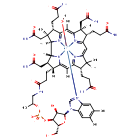
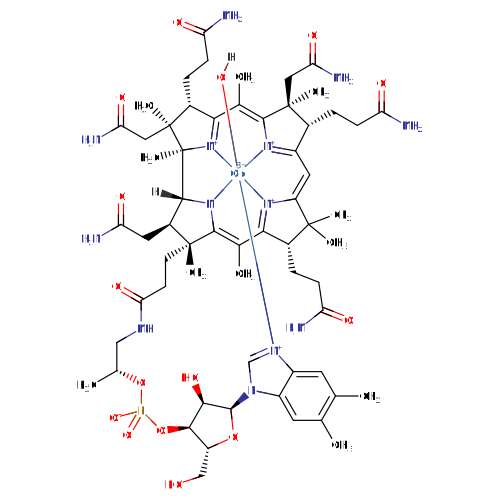
Structure for Hydroxocobalamin (DB00200)
- Weight
- Average: 1346.3551
Monoisotopic: 1345.567070949 - Chemical Formula
- C62H89CoN13O15P
- Synonyms
- Hydroxocobalamin
- Hydroxocobalamin anhydrous
- Hydroxocobalamine
- Hydroxocobalaminum anhydrous
- Hydroxycobalamin
- OH-Cbl
- Vitamin B-12b

Pharmacology
- Indication
For treatment of pernicious anemia and the prevention and treatment of vitamin B12 deficiency arising from alcoholism, malabsorption, tapeworm infestation, celiac, hyperthyroidism, hepatic-biliary tract disease, persistent diarrhea, ileal resection, pancreatic cancer, renal disease, prolonged stress, vegan diets, macrobiotic diets or other restrictive diets. Also for the treatment of known or suspected cyanide poisoning.
 Reduce drug development failure ratesBuild, train, & validate machine-learning modelswith evidence-based and structured datasets.Build, train, & validate predictive machine-learning models with structured datasets.
- Associated Conditions
Indication Type Indication Combined Product Details Approval Level Age Group Patient Characteristics Dose Form Used in combination to treat B vitamin deficiency Combination Product in combination with: Lidocaine (DB00281), Pyridoxine (DB00165), Thiamine (DB00152) •••••••••••• Used in combination to treat B vitamin deficiency Combination Product in combination with: Pyridoxine (DB00165), Thiamine (DB00152), Lidocaine (DB00281) •••••••••••• •••••• Used in combination to treat B vitamin deficiency Combination Product in combination with: Lidocaine (DB00281), Pyridoxine (DB00165), Thiamine (DB00152) •••••••••••• ••••••••••• ••••• •••••••• Used in combination to treat B vitamin deficiency Combination Product in combination with: Pyridoxine (DB00165), Lidocaine (DB00281), Thiamine (DB00152) •••••••••••• •••••• ••• •••••••••• ••••••••• ••• •• •••••••• •••• ••• ••• ••• •• ••••• •••••••••••• ••••••••••• ••••••• ••• Used in combination to treat B vitamin deficiency Combination Product in combination with: Thiamine (DB00152), Pyridoxine (DB00165), Lidocaine (DB00281) •••••••••••• ••••••••• - Contraindications & Blackbox Warnings
 Prevent Adverse Drug Events TodayTap into our Clinical API for life-saving information on contraindications & blackbox warnings, population restrictions, harmful risks, & more.Avoid life-threatening adverse drug events with our Clinical API
- Pharmacodynamics
Hydroxocobalamin is a synthetic, injectable form of Vitamin B12. Hydroxocobalamin is actually a precursor of two cofactors or vitamins (Vitamin B12 and Methylcobalamin) which are involved in various biological systems in man. Vitamin B12 is required for the conversion of methylmalonate to succinate. Deficiency of this enzyme could therefore interfere with the production of lipoprotein in myelin sheath tissue and so give rise to neurological lesions. The second cofactor, Methylcobalamin, is necessary for the conversion of homocysteine to methionine which is essential for the metabolism of folic acid. Deficiency of tetrahydrafolate leads to reduced synthesis of thymidylate resulting in reduced synthesis of DNA which is essential for cell maturation. Vitamin B12 is also concerned in the maintenance of sulphydryl groups in reduced form, deficiency leading to decreased amounts of reduced SH content of erythrocytes and liver cells. Overall, vitamin B12 acts as a coenzyme for various metabolic functions, including fat and carbohydrate metabolism and protein synthesis. It is necessary for growth, cell replication, hematopoiesis, and nucleoprotein as well as myelin synthesis. This is largely due to its effects on metabolism of methionine folic acid, and malonic acid.
- Mechanism of action
Vitamin B12 exists in four major forms referred to collectively as cobalamins; deoxyadenosylcobalamin, methylcobalamin, hydroxocobalamin, and cyanocobalamin. Two of these, methylcobalamin and 5-deoxyadenosyl cobalamin, are primarily used by the body. Methionine synthase needs methylcobalamin as a cofactor. This enzyme is involved in the conversion of the amino acid homocysteine into methionine. Methionine in turn is required for DNA methylation. 5-Deoxyadenosyl cobalamin is a cofactor needed by the enzyme that converts L-methylmalonyl-CoA to succinyl-CoA. This conversion is an important step in the extraction of energy from proteins and fats. Furthermore, succinyl CoA is necessary for the production of hemoglobin, the substances that carries oxygen in red blood cells.
Target Actions Organism AMethionine synthase cofactorHumans AMethylmalonyl-CoA mutase, mitochondrial cofactorHumans UMethylmalonic aciduria type A protein, mitochondrial other/unknownHumans UTranscobalamin-1 otherHumans UProtein amnionless otherHumans UCubilin otherHumans UMethylmalonic aciduria and homocystinuria type C protein other/unknownHumans - Absorption
Readily absorbed from the gastrointestinal tract, except in malabsorption syndromes. Vitamin B12 is absorbed in the lower half of the ileum.
- Volume of distribution
Not Available
- Protein binding
Very high (90%). Cobalamins are extensively bound to two specific plasma proteins called transcobalamin 1 and 2; 70% to transcobalamin 1, 5% to transcobalamin 2.
- Metabolism
Primarily hepatic. Cobalamins are absorbed in the ileum and stored in the liver. They continuously undergo enterohepatic recycling via secretion in the bile. Part of a dose is excreted in the urine, most of it in the first 8 hours.
- Route of elimination
Each hydroxocobalamin molecule can bind one cyanide ion by substituting it for the hydroxo ligand linked to the trivalent cobalt ion, to form cyanocobalamin, which is then excreted in the urine.
- Half-life
Approximately 6 days (peak plasma concentration after 8-12 hours from oral administration)
- Clearance
Not Available
- Adverse Effects
 Improve decision support & research outcomesWith structured adverse effects data, including: blackbox warnings, adverse reactions, warning & precautions, & incidence rates. View sample adverse effects data in our new Data Library!Improve decision support & research outcomes with our structured adverse effects data.
- Toxicity
Not Available
- Pathways
- Not Available
- Pharmacogenomic Effects/ADRs
- Not Available
Interactions
- Drug Interactions
- This information should not be interpreted without the help of a healthcare provider. If you believe you are experiencing an interaction, contact a healthcare provider immediately. The absence of an interaction does not necessarily mean no interactions exist.
Drug Interaction Integrate drug-drug
interactions in your softwareAbacavir Hydroxocobalamin may decrease the excretion rate of Abacavir which could result in a higher serum level. Aceclofenac Aceclofenac may decrease the excretion rate of Hydroxocobalamin which could result in a higher serum level. Acemetacin Acemetacin may decrease the excretion rate of Hydroxocobalamin which could result in a higher serum level. Acetaminophen Hydroxocobalamin may decrease the excretion rate of Acetaminophen which could result in a higher serum level. Acetazolamide Acetazolamide may increase the excretion rate of Hydroxocobalamin which could result in a lower serum level and potentially a reduction in efficacy. - Food Interactions
- No interactions found.
Products
 Drug product information from 10+ global regionsOur datasets provide approved product information including:dosage, form, labeller, route of administration, and marketing period.Access drug product information from over 10 global regions.
- Product Ingredients
Ingredient UNII CAS InChI Key Hydroxocobalamin acetate S535M27N3Q 22465-48-1 XVRCTDQUXAWPBW-FBTIOKFQSA-K - International/Other Brands
- Alpha-Redisol (Merck) / Hydrocobamine (Nycomed)
- Brand Name Prescription Products
Name Dosage Strength Route Labeller Marketing Start Marketing End Region Image Cyanokit Injection, powder, lyophilized, for solution 2.5 g/100mL Intravenous Meridian Medical Technologies , Inc. 2009-08-31 2013-10-31 US 
Cyanokit Injection, powder, for solution 2.5 g Intravenous Serb Sa 2016-09-20 Not applicable EU 
Cyanokit Powder, for solution 5 g / vial Intravenous Serb s.a. 2012-10-19 Not applicable Canada 
Cyanokit Injection, powder, for solution 5 g Intravenous Serb Sa 2016-09-20 Not applicable EU Cyanokit Injection, powder, lyophilized, for solution 5 g/250mL Intravenous BTG International Inc. 2021-12-15 Not applicable US - Generic Prescription Products
Name Dosage Strength Route Labeller Marketing Start Marketing End Region Image Cyanokit Injection, powder, lyophilized, for solution 2.5 g/100mL Intravenous Dey, L.P. 2007-03-23 2011-09-30 US Hydroxocobalamin Injection, solution 1000 ug/1mL Intramuscular A-S Medication Solutions 2010-11-12 Not applicable US Hydroxocobalamin Injection, solution 1000 ug/1mL Intramuscular Actavis Pharma, Inc. 2010-11-12 Not applicable US Hydroxocobalamin Injection, solution 1000 ug/1mL Intramuscular Remedy Repack 2013-12-11 2015-05-29 US - Over the Counter Products
Name Dosage Strength Route Labeller Marketing Start Marketing End Region Image HYDROXO-B12 SOLUTION FOR INJECTION 1MG/1ML Injection, solution 1 mg Intramuscular GOLDPLUS UNIVERSAL PTE LTD 2014-09-18 Not applicable Singapore 
- Mixture Products
Name Ingredients Dosage Route Labeller Marketing Start Marketing End Region Image Aronamin Gold Hydroxocobalamin acetate (5.22 ug/1) + Ascorbic acid (70 mg/1) + Fursultiamine (50 mg/1) + Riboflavin tetrabutyrate (2.5 mg/1) + alpha-Tocopherol acetate (20 mg/1) Tablet, film coated Oral OASIS TRADING 2018-11-20 Not applicable US NOROGRİZOVİM I.M. ENJEKSİYONLUK ÇÖZELTİ, 10 AMPUL (5+5) Hydroxocobalamin (1 mg) + Lidocaine (10 mg) + Pyridoxine (100 mg) + Thiamine (100 mg) Injection, solution Intramuscular Deva Holding A.S. 1988-05-03 Not applicable Turkey 
NOROGRİZOVİM I.M. ENJEKSİYONLUK ÇÖZELTİ, 100 AMPUL (50+50) Hydroxocobalamin (1 mg) + Lidocaine (10 mg) + Pyridoxine (100 mg) + Thiamine (100 mg) Injection, solution Intramuscular Deva Holding A.S. 1988-05-03 Not applicable Turkey NOROGRİZOVİM I.M. ENJEKSİYONLUK ÇÖZELTİ, 50 AMPUL (25+25) Hydroxocobalamin (1 mg) + Lidocaine (10 mg) + Pyridoxine (100 mg) + Thiamine (100 mg) Injection, solution Intramuscular Deva Holding A.S. 1988-05-03 Not applicable Turkey - Unapproved/Other Products
Name Ingredients Dosage Route Labeller Marketing Start Marketing End Region Image Aronamin Gold Hydroxocobalamin acetate (5.22 ug/1) + Ascorbic acid (70 mg/1) + Fursultiamine (50 mg/1) + Riboflavin tetrabutyrate (2.5 mg/1) + alpha-Tocopherol acetate (20 mg/1) Tablet, film coated Oral OASIS TRADING 2018-11-20 Not applicable US DermaNIC Hydroxocobalamin (15 ug/1) + Acetylcysteine zinc (69.5 mg/1) + Chromium nicotinate (0.57 mg/1) + Ferrous cysteine glycinate (1.5 mg/1) + Folic acid (500 ug/1) + Inositol nicotinate (328 mg/1) + Niacin (1.5 mg/1) + Nicotinamide (498 mg/1) Tablet Oral Allegis Pharmaceuticals, LLC 2014-02-03 2016-12-01 US Escavite D Hydroxocobalamin (6 ug/1) + Ascorbic acid (100 mg/1) + Beta carotene (2500 [iU]/1) + Biotin (45 ug/1) + Cholecalciferol (600 [iU]/1) + Cupric oxide (2 mg/1) + DL-alpha-Tocopherol (30 [iU]/1) + Ferrous cysteine glycinate (6 mg/1) + Folic acid (400 ug/1) + Magnesium oxide (60 mg/1) + Niacin (20 mg/1) + Calcium pantothenate (10 mg/1) + Pyridoxine hydrochloride (2 mg/1) + Riboflavin (1.7 mg/1) + Sodium fluoride (0.25 mg/1) + Thiamine hydrochloride (1.5 mg/1) + Zinc oxide (15 mg/1) Tablet, chewable Oral GM Pharmaceuticals, INC 2014-03-03 2018-11-01 US
Categories
- ATC Codes
- B03BA53 — Hydroxocobalamin, combinations
- B03BA — Vitamin B12 (cyanocobalamin and analogues)
- B03B — VITAMIN B12 AND FOLIC ACID
- B03 — ANTIANEMIC PREPARATIONS
- B — BLOOD AND BLOOD FORMING ORGANS
- V03AB — Antidotes
- V03A — ALL OTHER THERAPEUTIC PRODUCTS
- V03 — ALL OTHER THERAPEUTIC PRODUCTS
- V — VARIOUS
- Drug Categories
- Chemical TaxonomyProvided by Classyfire
- Description
- This compound belongs to the class of organic compounds known as cobalamin derivatives. These are organic compounds containing a corrin ring, a cobalt atom, an a nucleotide moiety. Cobalamin Derivatives are actually derived from vitamin B12.
- Kingdom
- Organic compounds
- Super Class
- Organoheterocyclic compounds
- Class
- Tetrapyrroles and derivatives
- Sub Class
- Corrinoids
- Direct Parent
- Cobalamin derivatives
- Alternative Parents
- Metallotetrapyrroles / Benzimidazole ribonucleosides and ribonucleotides / Pentose phosphates / Glycosylamines / Monosaccharide phosphates / Benzimidazoles / Phosphoethanolamines / Dialkyl phosphates / Fatty amides / Benzenoids show 19 more
- Substituents
- 1-ribofuranosylbenzimidazole / Alcohol / Alkyl phosphate / Aromatic heteropolycyclic compound / Azacycle / Azole / Benzenoid / Benzimidazole / Carbonyl group / Carboxamide group show 42 more
- Molecular Framework
- Aromatic heteropolycyclic compounds
- External Descriptors
- cobalamins (CHEBI:27786)
- Affected organisms
- Humans and other mammals
Chemical Identifiers
- UNII
- Q40X8H422O
- CAS number
- 13422-51-0
- InChI Key
- YOZNUFWCRFCGIH-WZHZPDAFSA-K
- InChI
- InChI=1S/C62H90N13O14P.Co.H2O/c1-29-20-39-40(21-30(29)2)75(28-70-39)57-52(84)53(41(27-76)87-57)89-90(85,86)88-31(3)26-69-49(83)18-19-59(8)37(22-46(66)80)56-62(11)61(10,25-48(68)82)36(14-17-45(65)79)51(74-62)33(5)55-60(9,24-47(67)81)34(12-15-43(63)77)38(71-55)23-42-58(6,7)35(13-16-44(64)78)50(72-42)32(4)54(59)73-56;;/h20-21,23,28,31,34-37,41,52-53,56-57,76,84H,12-19,22,24-27H2,1-11H3,(H15,63,64,65,66,67,68,69,71,72,73,74,77,78,79,80,81,82,83,85,86);;1H2/q;+3;/p-3/t31-,34-,35-,36-,37+,41-,52-,53-,56-,57+,59-,60+,61+,62+;;/m1../s1
- IUPAC Name
- (10S,12R,13S,17R,23R,24R,25R,30S,35S,36S,40S,41S,42R,46R)-30,35,40-tris(2-carbamoylethyl)-24,36,41-tris(carbamoylmethyl)-1,46-dihydroxy-12-(hydroxymethyl)-5,6,17,23,28,31,31,36,38,41,42-undecamethyl-15,20-dioxo-11,14,16-trioxa-2lambda5,9,19,26,43lambda5,44lambda5,45lambda5-heptaaza-15lambda5-phospha-1-cobaltadodecacyclo[27.14.1.1^{1,34}.1^{2,9}.1^{10,13}.0^{1,26}.0^{3,8}.0^{23,27}.0^{25,42}.0^{32,44}.0^{39,43}.0^{37,45}]heptatetraconta-2(47),3,5,7,27,29(44),32,34(45),37,39(43)-decaene-2,43,44,45-tetrakis(ylium)-1,1,1-triuid-15-olate
- SMILES
- [N+]1=2[Co-3]345([N+]6=C7[C@H]([C@@](CC(=O)N)(C)[C@@]6([C@@]6(N3C(=C(C)C3=[N+]4C(C(C)(C)[C@@H]3CCC(=O)N)=CC3=[N+]5C(=C7C)[C@@](CC(=O)N)([C@@H]3CCC(=O)N)C)[C@@](C)([C@H]6CC(=O)N)CCC(NC[C@@H](C)OP(=O)(O[C@@H]3[C@H](O[C@H](N(C4=CC(=C(C=C14)C)C)C=2)[C@@H]3O)CO)[O-])=O)[H])C)CCC(=O)N)O[H]
References
- Synthesis Reference
Takayuki Hirayama, Takashi Kiyota, "Process for production of hydroxocobalamin." U.S. Patent US5338418, issued June, 1982.
US5338418- General References
- Seetharam B, Yammani RR: Cobalamin transport proteins and their cell-surface receptors. Expert Rev Mol Med. 2003 Jun 13;5(18):1-18. [Article]
- External Links
- Human Metabolome Database
- HMDB0002308
- KEGG Drug
- D01027
- KEGG Compound
- C08230
- PubChem Compound
- 70678542
- PubChem Substance
- 46505751
- ChemSpider
- 21403074
- 5514
- ChEBI
- 27786
- ChEMBL
- CHEMBL2103737
- Therapeutic Targets Database
- DAP001336
- PharmGKB
- PA164768689
- RxList
- RxList Drug Page
- Drugs.com
- Drugs.com Drug Page
- Wikipedia
- Hydroxocobalamin
- MSDS
- Download (73.6 KB)
Clinical Trials
- Clinical Trials
Phase Status Purpose Conditions Count 4 Completed Treatment Anemia, Pernicious / Megaloblastic anemia 1 4 Completed Treatment Vitamin B12 Deficiency 1 4 Recruiting Treatment Complication of Transplanted Liver / Vasoplegic Syndrome 1 4 Unknown Status Treatment B12 Deficiency Anemia / Iron Deficiency Anemia (IDA) 1 2 Recruiting Treatment Septic Shock 1
Pharmacoeconomics
- Manufacturers
- Merck and co inc
- Merck sante sas
- Abraxis pharmaceutical products
- Watson laboratories inc
- Bel mar laboratories inc
- Packagers
- Abraxis BioScience Inc.
- C.O. Truxton Inc.
- Dey Pharma LP
- Letco Medical Inc.
- Martica Enterprises Inc.
- Meridian Medical Technologies Inc.
- Merit Pharmaceuticals
- Primedics Laboratories
- Watson Pharmaceuticals
- Dosage Forms
Form Route Strength Solution Parenteral 100.000 mg Tablet, film coated Oral Injection, powder, for solution Intravenous 2.5 g Injection, powder, for solution Intravenous 5 g Injection, powder, lyophilized, for solution Intravenous 2.5 g/100mL Injection, powder, lyophilized, for solution Intravenous 5 g/250mL Powder, for solution Intravenous Powder, for solution Intravenous 2.5 g / vial Powder, for solution Intravenous 5 g / vial Tablet Oral Solution Parenteral 100.000 mg Solution Parenteral Solution Intramuscular 100.000 mg Solution Intramuscular; Intravenous 1 mg/ml Tablet, chewable Oral Solution Intramuscular Liquid Intramuscular 1 mg / mL Injection, solution Intramuscular 1 mg Injection, solution Intramuscular 1000 ug/1mL Injection, solution Intramuscular Injection, solution Parenteral 1000 µg Injection, solution Intramuscular; Intravenous; Oral 1000 MCG/2.5ML Solution Parenteral 200 mg Injection, solution Intramuscular Injection, powder, for solution Intravenous Solution Parenteral 104.381 mcg Injection, solution Parenteral 1000 UG - Prices
Unit description Cost Unit Cyanokit 5 g kit 812.5USD kit Hydroxocobalamin 1000 mcg/ml 1.28USD ml DrugBank does not sell nor buy drugs. Pricing information is supplied for informational purposes only.- Patents
Patent Number Pediatric Extension Approved Expires (estimated) Region US5834448 No 1998-11-10 2016-11-14 US
Properties
- State
- Solid
- Experimental Properties
- Not Available
- Predicted Properties
Property Value Source logP -14 Chemaxon pKa (Strongest Acidic) 1.82 Chemaxon pKa (Strongest Basic) -0.55 Chemaxon Physiological Charge 0 Chemaxon Hydrogen Acceptor Count 14 Chemaxon Hydrogen Donor Count 10 Chemaxon Polar Surface Area 437.23 Å2 Chemaxon Rotatable Bond Count 16 Chemaxon Refractivity 340.03 m3·mol-1 Chemaxon Polarizability 135.56 Å3 Chemaxon Number of Rings 12 Chemaxon Bioavailability 0 Chemaxon Rule of Five No Chemaxon Ghose Filter No Chemaxon Veber's Rule No Chemaxon MDDR-like Rule Yes Chemaxon - Predicted ADMET Features
Property Value Probability Human Intestinal Absorption + 0.6922 Blood Brain Barrier - 0.712 Caco-2 permeable - 0.6447 P-glycoprotein substrate Substrate 0.8579 P-glycoprotein inhibitor I Non-inhibitor 0.6643 P-glycoprotein inhibitor II Inhibitor 0.5 Renal organic cation transporter Non-inhibitor 0.9054 CYP450 2C9 substrate Non-substrate 0.8081 CYP450 2D6 substrate Non-substrate 0.8083 CYP450 3A4 substrate Substrate 0.6458 CYP450 1A2 substrate Non-inhibitor 0.8778 CYP450 2C9 inhibitor Non-inhibitor 0.8836 CYP450 2D6 inhibitor Non-inhibitor 0.8717 CYP450 2C19 inhibitor Non-inhibitor 0.709 CYP450 3A4 inhibitor Inhibitor 0.5841 CYP450 inhibitory promiscuity Low CYP Inhibitory Promiscuity 0.8028 Ames test Non AMES toxic 0.5675 Carcinogenicity Non-carcinogens 0.7831 Biodegradation Not ready biodegradable 0.9729 Rat acute toxicity 2.6700 LD50, mol/kg Not applicable hERG inhibition (predictor I) Weak inhibitor 0.8966 hERG inhibition (predictor II) Non-inhibitor 0.6952
Spectra
- Mass Spec (NIST)
- Not Available
- Spectra
- Not Available
- Chromatographic Properties
Collision Cross Sections (CCS)
Not Available
Targets

- Kind
- Protein
- Organism
- Humans
- Pharmacological action
- Yes
- Actions
- Cofactor
- General Function
- Zinc ion binding
- Specific Function
- Catalyzes the transfer of a methyl group from methyl-cobalamin to homocysteine, yielding enzyme-bound cob(I)alamin and methionine. Subsequently, remethylates the cofactor using methyltetrahydrofola...
- Gene Name
- MTR
- Uniprot ID
- Q99707
- Uniprot Name
- Methionine synthase
- Molecular Weight
- 140525.91 Da
References
- Kolhouse JF, Utley C, Stabler SP, Allen RH: Mechanism of conversion of human apo- to holomethionine synthase by various forms of cobalamin. J Biol Chem. 1991 Dec 5;266(34):23010-5. [Article]
- Ogier de Baulny H, Gerard M, Saudubray JM, Zittoun J: Remethylation defects: guidelines for clinical diagnosis and treatment. Eur J Pediatr. 1998 Apr;157 Suppl 2:S77-83. [Article]
- Tkachuck RD, Weinstein PP, Mueller JF: Metabolic fate of cyanocobalamin taken up by Spirometra mansonoides spargana. J Parasitol. 1977 Aug;63(4):694-700. [Article]
- Quadros EV, Jacobsen DW: The dynamics of cobalamin utilization in L-1210 mouse leukemia cells: a model of cellular cobalamin metabolism. Biochim Biophys Acta. 1995 Jun 9;1244(2-3):395-403. [Article]
- Rosenblatt DS, Thomas IT, Watkins D, Cooper BA, Erbe RW: Vitamin B12 responsive homocystinuria and megaloblastic anemia: heterogeneity in methylcobalamin deficiency. Am J Med Genet. 1987 Feb;26(2):377-83. [Article]
- Kind
- Protein
- Organism
- Humans
- Pharmacological action
- Yes
- Actions
- Cofactor
- General Function
- Modified amino acid binding
- Specific Function
- Involved in the degradation of several amino acids, odd-chain fatty acids and cholesterol via propionyl-CoA to the tricarboxylic acid cycle. MCM has different functions in other species.
- Gene Name
- MUT
- Uniprot ID
- P22033
- Uniprot Name
- Methylmalonyl-CoA mutase, mitochondrial
- Molecular Weight
- 83133.755 Da
References
- Willard HF, Rosenberg LE: Inborn errors of cobalamin metabolism: effect of cobalamin supplementation in culture on methylmalonyl CoA mutase activity in normal and mutant human fibroblasts. Biochem Genet. 1979 Feb;17(1-2):57-75. [Article]
- Dayem LC, Carney JR, Santi DV, Pfeifer BA, Khosla C, Kealey JT: Metabolic engineering of a methylmalonyl-CoA mutase-epimerase pathway for complex polyketide biosynthesis in Escherichia coli. Biochemistry. 2002 Apr 23;41(16):5193-201. [Article]
- Mayatepek E, Hoffmann GF, Baumgartner R, Schulze A, Jakobs C, Trefz FK, Bremer HJ: Atypical vitamin B12-unresponsive methylmalonic aciduria in sibship with severe progressive encephalomyelopathy: a new genetic disease? Eur J Pediatr. 1996 May;155(5):398-403. [Article]
- Tkachuck RD, Weinstein PP, Mueller JF: Metabolic fate of cyanocobalamin taken up by Spirometra mansonoides spargana. J Parasitol. 1977 Aug;63(4):694-700. [Article]
- Quadros EV, Jacobsen DW: The dynamics of cobalamin utilization in L-1210 mouse leukemia cells: a model of cellular cobalamin metabolism. Biochim Biophys Acta. 1995 Jun 9;1244(2-3):395-403. [Article]
- Chen X, Ji ZL, Chen YZ: TTD: Therapeutic Target Database. Nucleic Acids Res. 2002 Jan 1;30(1):412-5. [Article]
- Kind
- Protein
- Organism
- Humans
- Pharmacological action
- Unknown
- Actions
- Other/unknown
- General Function
- Hydrolase activity
- Specific Function
- Probable GTPase. May function as chaperone. May be involved in the transport of cobalamin (Cbl) into mitochondria for the final steps of adenosylcobalamin (AdoCbl) synthesis.
- Gene Name
- MMAA
- Uniprot ID
- Q8IVH4
- Uniprot Name
- Methylmalonic aciduria type A protein, mitochondrial
- Molecular Weight
- 46537.865 Da
References
- Manoli I, Sloan JL, Venditti CP: Isolated Methylmalonic Acidemia . [Article]
- Kind
- Protein
- Organism
- Humans
- Pharmacological action
- Unknown
- Actions
- Other
- General Function
- Cobalamin binding
- Specific Function
- Binds vitamin B12 with femtomolar affinity and protects it from the acidic environment of the stomach.
- Gene Name
- TCN1
- Uniprot ID
- P20061
- Uniprot Name
- Transcobalamin-1
- Molecular Weight
- 48206.32 Da
References
- MacDonald CM, Farquharson J, Bessent RG, Adams JF: The forms of vitamin B12 on the transcobalamins. Clin Sci Mol Med. 1977 Feb;52(2):215-8. [Article]
- Rothenberg SP, Marcoullis GP, Schwarz S, Lader E: Measurement of cyanocobalamin in serum by a specific radioimmunoassay. J Lab Clin Med. 1984 Jun;103(6):959-72. [Article]
- Kind
- Protein
- Organism
- Humans
- Pharmacological action
- Unknown
- Actions
- Other
- General Function
- Receptor binding
- Specific Function
- Necessary for efficient absorption of vitamin B12. May direct the production of trunk mesoderm during development by modulating a bone morphogenetic protein (BMP) signaling pathway in the underlyin...
- Gene Name
- AMN
- Uniprot ID
- Q9BXJ7
- Uniprot Name
- Protein amnionless
- Molecular Weight
- 47753.91 Da
References
- Overington JP, Al-Lazikani B, Hopkins AL: How many drug targets are there? Nat Rev Drug Discov. 2006 Dec;5(12):993-6. [Article]
- Imming P, Sinning C, Meyer A: Drugs, their targets and the nature and number of drug targets. Nat Rev Drug Discov. 2006 Oct;5(10):821-34. [Article]
- Seetharam B, Yammani RR: Cobalamin transport proteins and their cell-surface receptors. Expert Rev Mol Med. 2003 Jun 13;5(18):1-18. [Article]
- Kind
- Protein
- Organism
- Humans
- Pharmacological action
- Unknown
- Actions
- Other
- General Function
- Transporter activity
- Specific Function
- Cotransporter which plays a role in lipoprotein, vitamin and iron metabolism, by facilitating their uptake. Binds to ALB, MB, Kappa and lambda-light chains, TF, hemoglobin, GC, SCGB1A1, APOA1, high...
- Gene Name
- CUBN
- Uniprot ID
- O60494
- Uniprot Name
- Cubilin
- Molecular Weight
- 398732.93 Da
References
- Overington JP, Al-Lazikani B, Hopkins AL: How many drug targets are there? Nat Rev Drug Discov. 2006 Dec;5(12):993-6. [Article]
- Imming P, Sinning C, Meyer A: Drugs, their targets and the nature and number of drug targets. Nat Rev Drug Discov. 2006 Oct;5(10):821-34. [Article]
- Seetharam B, Yammani RR: Cobalamin transport proteins and their cell-surface receptors. Expert Rev Mol Med. 2003 Jun 13;5(18):1-18. [Article]
- Kind
- Protein
- Organism
- Humans
- Pharmacological action
- Unknown
- Actions
- Other/unknown
- General Function
- Cobalamin binding
- Specific Function
- May be involved in the binding and intracellular trafficking of cobalamin (vitamin B12).
- Gene Name
- MMACHC
- Uniprot ID
- Q9Y4U1
- Uniprot Name
- Methylmalonic aciduria and homocystinuria type C protein
- Molecular Weight
- 31728.095 Da
References
- Overington JP, Al-Lazikani B, Hopkins AL: How many drug targets are there? Nat Rev Drug Discov. 2006 Dec;5(12):993-6. [Article]
- Imming P, Sinning C, Meyer A: Drugs, their targets and the nature and number of drug targets. Nat Rev Drug Discov. 2006 Oct;5(10):821-34. [Article]
- Lerner-Ellis JP, Tirone JC, Pawelek PD, Dore C, Atkinson JL, Watkins D, Morel CF, Fujiwara TM, Moras E, Hosack AR, Dunbar GV, Antonicka H, Forgetta V, Dobson CM, Leclerc D, Gravel RA, Shoubridge EA, Coulton JW, Lepage P, Rommens JM, Morgan K, Rosenblatt DS: Identification of the gene responsible for methylmalonic aciduria and homocystinuria, cblC type. Nat Genet. 2006 Jan;38(1):93-100. Epub 2005 Nov 27. [Article]
Carriers
- Kind
- Protein
- Organism
- Humans
- Pharmacological action
- Unknown
- Actions
- Substrate
- General Function
- Metal ion binding
- Specific Function
- Primary vitamin B12-binding and transport protein. Delivers cobalamin to cells.
- Gene Name
- TCN2
- Uniprot ID
- P20062
- Uniprot Name
- Transcobalamin-2
- Molecular Weight
- 47534.54 Da
References
- Begley JA, Colligan PD, Chu RC: Transcobalamin II mediated delivery of albumin-bound hydroxocobalamin to human liver cells. Proc Soc Exp Biol Med. 1993 Nov;204(2):206-10. [Article]
- Skouby AP, Hippe E, Olesen H: Antibody to transcobalamin II and B12 binding capacity in patients treated with hydroxocobalamin. Blood. 1971 Dec;38(6):769-74. [Article]
- Hippe E, Olesen H, Skouby A: [Occurrence of antibodies against transcobalamin II in relation to the number of and the intervals between depot therapy with hydroxocobalamin]. Nord Med. 1970 Dec 3;84(49):1570. [Article]
- Brown KL, Marques HM, Jacobsen DW: Heteronuclear NMR studies of cobalamins. 31P NMR observations of cobalamins bound to a haptocorrin from chicken serum. J Biol Chem. 1988 Feb 5;263(4):1872-7. [Article]
- Chu RC, Begley JA, Colligan PD, Hall CA: The methylcobalamin metabolism of cultured human fibroblasts. Metabolism. 1993 Mar;42(3):315-9. [Article]
- Seetharam B, Yammani RR: Cobalamin transport proteins and their cell-surface receptors. Expert Rev Mol Med. 2003 Jun 13;5(18):1-18. [Article]

Drug created at June 13, 2005 13:24 / Updated at April 27, 2024 09:44