Identification
- Summary
Escitalopram is a selective serotonin re-uptake inhibitor used in the treatment of major depressive disorder (MDD), generalized anxiety disorder (GAD), and other select psychiatric disorders such as obsessive-compulsive disorder (OCD).
- Brand Names
- Cipralex, Lexapro
- Generic Name
- Escitalopram
- DrugBank Accession Number
- DB01175
- Background
Escitalopram is a selective serotonin re-uptake inhibitor (SSRI) and the S-enantiomer of racemic citalopram.11 It is used to restore serotonergic function in the treatment of depression and anxiety.18,19,20 Escitalopram is approximately 150 times more potent than citalopram’s R-enantiomer and is responsible for the vast majority of citalopram’s clinical activity, with some evidence suggesting that the R-enantiomer of racemic citalopram actively dampens the activity of escitalopram rather than existing simply as an inactive enantiomer.6,14 Amongst SSRIs, escitalopram exerts the highest degree of selectivity for the serotonin transporter (SERT) relative to other off-targets which may explain its lower rates of adverse effects as compared to other agents in this class.13 Escitalopram also differentiates itself from other SSRIs via allosteric action on its target - this may be the mechanism responsible for its observed superior efficacy and faster onset compared to other SSRIs.16,13,15
- Type
- Small Molecule
- Groups
- Approved
- Structure
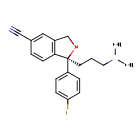
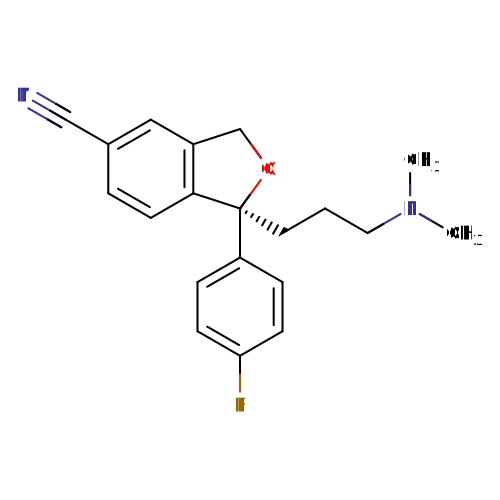
Structure for Escitalopram (DB01175)
- Weight
- Average: 324.3919
Monoisotopic: 324.163791509 - Chemical Formula
- C20H21FN2O
- Synonyms
- (+)-Citalopram
- (S)-Citalopram
- Escitalopram
- Escitalopramum
- S-(+)-Citalopram
- S(+)-Citalopram

Pharmacology
- Indication
Escitalopram is indicated for the acute and maintenance treatment of major depressive disorder (MDD) in adults and pediatric patients 12 years old and older and for the acute treatment of generalized anxiety disorder (GAD) in adults and pediatric patients 7 years old and older.18,18 It is additionally indicated for symptomatic relief of obsessive-compulsive disorder (OCD) in Canada.19
 Reduce drug development failure ratesBuild, train, & validate machine-learning modelswith evidence-based and structured datasets.Build, train, & validate predictive machine-learning models with structured datasets.
- Associated Conditions
Indication Type Indication Combined Product Details Approval Level Age Group Patient Characteristics Dose Form Symptomatic treatment of Anxiety •••••••••••• ••••• •••••• Treatment of Generalized anxiety disorder •••••••••••• •••••• ••••••••• ••••••••• •••••• Treatment of Major depressive disorder •••••••••••• •••••• ••••••••• ••••••••• •••••• Symptomatic treatment of Major depressive disorder (mdd) •••••••••••• ••••• •••••• Symptomatic treatment of Obsessive compulsive disorder •••••••••••• ••••• •••••• - Contraindications & Blackbox Warnings
 Prevent Adverse Drug Events TodayTap into our Clinical API for life-saving information on contraindications & blackbox warnings, population restrictions, harmful risks, & more.Avoid life-threatening adverse drug events with our Clinical API
- Pharmacodynamics
Escitalopram belongs to a class of medications called selective serotonin re-uptake inhibitors (SSRIs). These agents cause an increase in serotonin levels in neuronal synapses by preventing the re-uptake of serotonin (5-HT) into the presynaptic terminals of serotonergic neurons.11,6,18,19 As compared to other SSRIs, it appears to have a relatively quick onset of effect due to its potency.14,15
SSRIs as a class have been associated with abnormal bleeding, particularly in patients receiving concomitant therapy with other medications affecting hemostasis, and with the development of serotonin syndrome. Use escitalopram with caution in patients with a higher-than-baseline risk of bleeding and in patients receiving concomitant therapy with other serotonergic drugs. Escitalopram may also cause a discontinuation syndrome with abrupt removal of the drug, and should be slowly tapered if discontinuation of therapy is warranted.18,19,20
- Mechanism of action
Escitalopram, like other selective serotonin re-uptake inhibitors, enhances serotonergic activity by binding to the orthosteric (i.e. primary) binding site on the serotonin transporter (SERT), the same site to which endogenous 5-HT binds, and thus prevents the re-uptake of serotonin into the presynaptic neuron.11,6,13 Escitalopram, along with paroxetine, is also considered an allosteric serotonin re-uptake inhibitor - it binds to a secondary allosteric site on the SERT molecule to more strongly inhibit 5-HT re-uptake. Its combination of orthosteric and allosteric activity on SERT allows for greater extracellular 5-HT levels, a faster onset of action, and greater efficacy as compared to other SSRIs. 16,13 The sustained elevation of synaptic 5-HT eventually causes desensitization of 5-HT1A auto-receptors, which normally shut down endogenous 5-HT release in the presence of excess 5-HT - this desensitization may be necessary for the full clinical effect of SSRIs and may be responsible for their typically prolonged onset of action.17,13
Escitalopram has shown little-to-no binding affinity at a number of other receptors, such as histamine and muscarinic receptors, and minor activity at these off-targets may explain some of its adverse effects.18,19,20,13
Target Actions Organism ASodium-dependent serotonin transporter inhibitorHumans UMuscarinic acetylcholine receptor M1 inhibitorHumans UHistamine H1 receptor inhibitorHumans U5-hydroxytryptamine receptor 1A inhibitorHumans U5-hydroxytryptamine receptor 2A inhibitorHumans UAlpha-1 adrenergic receptors inhibitorHumans U5-hydroxytryptamine receptor 2C inhibitorHumans UAlpha-2 adrenergic receptors inhibitorHumans UDopamine D2 receptor inhibitorHumans USodium-dependent noradrenaline transporter inhibitorHumans NSodium-dependent dopamine transporter inhibitorHumans - Absorption
Absorption of escitalopram following oral administration is expected to be almost complete, with an estimated absolute bioavailability of approximately 80%. Tmax occurs after about 4-5 hours.18,19,20 Cmax and AUC appear to follow dose proportionality - at steady state, patients receiving 10mg of escitalopram daily had a Cmax of 21 ng/mL and a 24h AUC of approximately 360 ng*h/mL, while patients receiving 30mg daily had a roughly 3-fold increase in both Cmax and 24h AUC, comparatively.6
- Volume of distribution
Escitalopram appears to distribute extensively into tissues, with an apparent volume of distribution of approximately 12-26 L/kg.18,19,20
- Protein binding
Escitalopram exhibits relatively low protein binding at approximately 55-56%.18,19,20,6
- Metabolism
The metabolism of escitalopram is mainly hepatic, mediated primarily by CYP2C19 and CYP3A4 and, to a lesser extent, CYP2D6. Oxidative N-demethylation by the CYP enzyme system results in S-desmethylcitalopram (S-DCT) and S-didesmethylcitalopram (S-DDCT) - these metabolites do not contribute to the pharmacologic activity of escitalopram, and exist in the plasma in small quantities relative to the parent compound (28-31% and <5%, respectively).18,19,20
There is also some evidence that escitalopram is metabolized to a propionic acid metabolite by monoamine oxidase A and B in the brain, and that these enzymes constitute the major route of escitalopram metabolism in the brain.6
Hover over products below to view reaction partners
- Route of elimination
After oral administration of escitalopram, approximately 8% of the total dose is eliminated in the urine as unchanged escitalopram and 10% is eliminated in the urine as S-desmethylcitalopram.18,19,20 The apparent hepatic clearance of escitalopram amounts to approximately 90% of the total dose.19
- Half-life
The elimination half-life of escitalopram is 27-32 hours, though this is increased by approximately 50% in the elderly and doubled in patients with reduced hepatic function.11,18,19,20 The elimination half-life of escitalopram's primary metabolite, S-desmethylcitalopram, is approximately 54 hours at steady state.6
- Clearance
The oral plasma clearance of escitalopram is 600 mL/min, of which approximately 7% is due to renal clearance.18,19,20
- Adverse Effects
 Improve decision support & research outcomesWith structured adverse effects data, including: blackbox warnings, adverse reactions, warning & precautions, & incidence rates. View sample adverse effects data in our new Data Library!Improve decision support & research outcomes with our structured adverse effects data.
- Toxicity
Symptoms of overdose may include CNS effects (dizziness, convulsions, coma, somnolence), gastrointestinal distress (nausea, vomiting), and/or cardiac abnormalities (hypotension, tachycardia, ECG changes).18,19,20 There is no specific antidote for escitalopram overdose. Management of overdose should focus on monitoring for cardiac abnormalities and changes to vital signs as well as treatment with supportive measures as indicated. As escitalopram is highly distributed into tissue following oral administration, forced diuresis, dialysis, and other methods of extracting drug from plasma are unlikely to be beneficial.
- Pathways
Pathway Category Escitalopram Action Pathway Drug action - Pharmacogenomic Effects/ADRs
Interacting Gene/Enzyme Allele name Genotype(s) Defining Change(s) Type(s) Description Details Sodium-dependent serotonin transporter --- (A;A) A allele ADR Directly Studied The presence of this polymorphism in SLC6A4 may potentially be associated with increased risk of adverse events from escitalopram. Details Cytochrome P450 2C19 CYP2C19*2 Not Available 681G>A Effect Directly Studied The presence of this polymorphism in CYP2C19 is associated with poor metabolism of escitalopram. Details Cytochrome P450 2C19 CYP2C19*3 Not Available 636G>A Effect Directly Studied The presence of this polymorphism in CYP2C19 is associated with reduced or poor metabolism of escitalopram. Details Cytochrome P450 2C19 CYP2C19*2A Not Available 681G>A Effect Inferred Poor drug metabolizer. For individual with two non-functional alleles, alternative drug or dose reduction recommended. Details Cytochrome P450 2C19 CYP2C19*2B Not Available 681G>A Effect Inferred Poor drug metabolizer. For individual with two non-functional alleles, alternative drug or dose reduction recommended. Details Cytochrome P450 2C19 CYP2C19*4 Not Available 1A>G Effect Inferred Poor drug metabolizer. For individual with two non-functional alleles, alternative drug or dose reduction recommended. Details Cytochrome P450 2C19 CYP2C19*5 Not Available 1297C>T Effect Inferred Poor drug metabolizer. For individual with two non-functional alleles, alternative drug or dose reduction recommended. Details Cytochrome P450 2C19 CYP2C19*6 Not Available 395G>A Effect Inferred Poor drug metabolizer. For individual with two non-functional alleles, alternative drug or dose reduction recommended. Details Cytochrome P450 2C19 CYP2C19*7 Not Available 19294T>A Effect Inferred Poor drug metabolizer. For individual with two non-functional alleles, alternative drug or dose reduction recommended. Details Cytochrome P450 2C19 CYP2C19*22 Not Available 557G>C / 991A>G Effect Inferred Poor drug metabolizer. For individual with two non-functional alleles, alternative drug or dose reduction recommended. Details Cytochrome P450 2C19 CYP2C19*24 Not Available 99C>T / 991A>G … show all Effect Inferred Poor drug metabolizer. For individual with two non-functional alleles, alternative drug or dose reduction recommended. Details Cytochrome P450 2C19 CYP2C19*35 Not Available 12662A>G Effect Inferred Poor drug metabolizer. For individual with two non-functional alleles, alternative drug or dose reduction recommended. Details
Interactions
- Drug Interactions
- This information should not be interpreted without the help of a healthcare provider. If you believe you are experiencing an interaction, contact a healthcare provider immediately. The absence of an interaction does not necessarily mean no interactions exist.
Drug Interaction Integrate drug-drug
interactions in your software1,2-Benzodiazepine The risk or severity of adverse effects can be increased when 1,2-Benzodiazepine is combined with Escitalopram. Abametapir The serum concentration of Escitalopram can be increased when it is combined with Abametapir. Abatacept The metabolism of Escitalopram can be increased when combined with Abatacept. Abciximab The risk or severity of bleeding can be increased when Escitalopram is combined with Abciximab. Abiraterone The metabolism of Escitalopram can be decreased when combined with Abiraterone. - Food Interactions
- Avoid alcohol. The combined use of alcohol with psychotropic medications should be avoided.
- Take with or without food. The absorption is unaffected by food.
Products
 Drug product information from 10+ global regionsOur datasets provide approved product information including:dosage, form, labeller, route of administration, and marketing period.Access drug product information from over 10 global regions.
- Product Ingredients
Ingredient UNII CAS InChI Key Escitalopram oxalate 5U85DBW7LO 219861-08-2 KTGRHKOEFSJQNS-BDQAORGHSA-N - Product Images
- International/Other Brands
- Cipralex / Esertia
- Brand Name Prescription Products
Name Dosage Strength Route Labeller Marketing Start Marketing End Region Image Act Escitalopram Tablet 5 mg Oral TEVA Canada Limited Not applicable Not applicable Canada 
Act Escitalopram Tablet 20 mg Oral TEVA Canada Limited 2014-09-10 2018-06-12 Canada Act Escitalopram Tablet 10 mg Oral TEVA Canada Limited 2014-09-10 2018-06-12 Canada Act Escitalopram ODT Tablet, orally disintegrating 10 mg Oral TEVA Canada Limited 2016-08-17 Not applicable Canada Act Escitalopram ODT Tablet, orally disintegrating 20 mg Oral TEVA Canada Limited 2016-08-17 Not applicable Canada - Generic Prescription Products
Name Dosage Strength Route Labeller Marketing Start Marketing End Region Image Ach-escitalopram Tablet 20 mg Oral Accord Healthcare Inc 2016-06-10 Not applicable Canada Ach-escitalopram Tablet 10 mg Oral Accord Healthcare Inc 2016-06-10 Not applicable Canada Ag-escitalopram Tablet 5 mg Oral Angita Pharma Inc. Not applicable Not applicable Canada Ag-escitalopram Tablet 20 mg Oral Angita Pharma Inc. 2018-09-06 Not applicable Canada Ag-escitalopram Tablet 15 mg Oral Angita Pharma Inc. Not applicable Not applicable Canada - Mixture Products
Name Ingredients Dosage Route Labeller Marketing Start Marketing End Region Image PramLyte Escitalopram oxalate (10 mg/1) + 1,2-docosahexanoyl-sn-glycero-3-phosphoserine calcium (6.4 mg/1) + 1,2-icosapentoyl-sn-glycero-3-phosphoserine calcium (800 ug/1) + Betaine (500 ug/1) + Citric acid monohydrate (1.83 mg/1) + Cobamamide (50 ug/1) + Cocarboxylase (25 ug/1) + Ferrous cysteine glycinate (13.6 mg/1) + Flavin adenine dinucleotide (25 ug/1) + Folic acid (1 mg/1) + Leucovorin (2.5 mg/1) + Levomefolate magnesium (7 mg/1) + Magnesium ascorbate (24 mg/1) + NADH (25 ug/1) + Phosphatidyl serine (12 mg/1) + Pyridoxal phosphate (25 ug/1) + Sodium citrate (3.67 mg/1) + Zinc ascorbate (1 mg/1) Kit Oral Allegis Pharmaceuticals, LLC 2015-09-11 2016-01-04 US 
- Unapproved/Other Products
Name Ingredients Dosage Route Labeller Marketing Start Marketing End Region Image PramLyte Escitalopram oxalate (10 mg/1) + Cholecalciferol (1000 [iU]/1) + Levomefolate magnesium (800 ug/1) + Mecobalamin (1000 ug/1) + Pyridoxal phosphate (5 mg/1) Kit Oral Allegis Pharmaceuticals, LLC 2015-10-12 2017-09-09 US


Categories
- ATC Codes
- N06AB10 — Escitalopram
- Drug Categories
- Amines
- Anticholinergic Agents
- Antidepressive Agents
- Antidepressive Agents Indicated for Depression
- Antidepressive Agents, Second-Generation
- Benzofurans
- Central Nervous System Agents
- Central Nervous System Depressants
- Combined Inhibitors of Serotonin/Norepinephrine Reuptake
- Cytochrome P-450 CYP2C19 Substrates
- Cytochrome P-450 CYP2D6 Inhibitors
- Cytochrome P-450 CYP2D6 Inhibitors (weak)
- Cytochrome P-450 CYP2D6 Substrates
- Cytochrome P-450 CYP3A Substrates
- Cytochrome P-450 CYP3A4 Substrates
- Cytochrome P-450 Enzyme Inhibitors
- Cytochrome P-450 Substrates
- Drugs causing inadvertant photosensitivity
- Heterocyclic Compounds, Fused-Ring
- Highest Risk QTc-Prolonging Agents
- Hypoglycemia-Associated Agents
- Membrane Transport Modulators
- Monoamine Oxidase A Substrates
- Muscarinic Antagonists
- Nervous System
- Neurotransmitter Agents
- Neurotransmitter Uptake Inhibitors
- Nitriles
- P-glycoprotein substrates
- Photosensitizing Agents
- Propylamines
- Psychoanaleptics
- Psychotropic Drugs
- QTc Prolonging Agents
- Selective Serotonin Reuptake Inhibitors
- Serotonergic Drugs Shown to Increase Risk of Serotonin Syndrome
- Serotonin Agents
- Serotonin Modulators
- Chemical TaxonomyProvided by Classyfire
- Description
- This compound belongs to the class of organic compounds known as phenylbutylamines. These are compounds containing a phenylbutylamine moiety, which consists of a phenyl group substituted at the fourth carbon by an butan-1-amine.
- Kingdom
- Organic compounds
- Super Class
- Benzenoids
- Class
- Benzene and substituted derivatives
- Sub Class
- Phenylbutylamines
- Direct Parent
- Phenylbutylamines
- Alternative Parents
- Isocoumarans / Fluorobenzenes / Aralkylamines / Aryl fluorides / Trialkylamines / Oxacyclic compounds / Nitriles / Dialkyl ethers / Organopnictogen compounds / Organofluorides show 1 more
- Substituents
- Amine / Aralkylamine / Aromatic heteropolycyclic compound / Aryl fluoride / Aryl halide / Carbonitrile / Dialkyl ether / Ether / Fluorobenzene / Halobenzene show 15 more
- Molecular Framework
- Aromatic heteropolycyclic compounds
- External Descriptors
- 1-[3-(dimethylamino)propyl]-1-(4-fluorophenyl)-1,3-dihydro-2-benzofuran-5-carbonitrile (CHEBI:36791)
- Affected organisms
- Humans and other mammals
Chemical Identifiers
- UNII
- 4O4S742ANY
- CAS number
- 128196-01-0
- InChI Key
- WSEQXVZVJXJVFP-FQEVSTJZSA-N
- InChI
- InChI=1S/C20H21FN2O/c1-23(2)11-3-10-20(17-5-7-18(21)8-6-17)19-9-4-15(13-22)12-16(19)14-24-20/h4-9,12H,3,10-11,14H2,1-2H3/t20-/m0/s1
- IUPAC Name
- (1S)-1-[3-(dimethylamino)propyl]-1-(4-fluorophenyl)-1,3-dihydro-2-benzofuran-5-carbonitrile
- SMILES
- CN(C)CCC[C@]1(OCC2=C1C=CC(=C2)C#N)C1=CC=C(F)C=C1
References
- Synthesis Reference
Robert Dancer, "Escitalopram hydrobromide and a method for the preparation thereof." U.S. Patent US20040167209, issued August 26, 2004.
US20040167209- General References
- Moore N, Verdoux H, Fantino B: Prospective, multicentre, randomized, double-blind study of the efficacy of escitalopram versus citalopram in outpatient treatment of major depressive disorder. Int Clin Psychopharmacol. 2005 May;20(3):131-7. [Article]
- Boulenger JP, Huusom AK, Florea I, Baekdal T, Sarchiapone M: A comparative study of the efficacy of long-term treatment with escitalopram and paroxetine in severely depressed patients. Curr Med Res Opin. 2006 Jul;22(7):1331-41. [Article]
- Bielski RJ, Ventura D, Chang CC: A double-blind comparison of escitalopram and venlafaxine extended release in the treatment of major depressive disorder. J Clin Psychiatry. 2004 Sep;65(9):1190-6. [Article]
- Nierenberg AA, Greist JH, Mallinckrodt CH, Prakash A, Sambunaris A, Tollefson GD, Wohlreich MM: Duloxetine versus escitalopram and placebo in the treatment of patients with major depressive disorder: onset of antidepressant action, a non-inferiority study. Curr Med Res Opin. 2007 Feb;23(2):401-16. [Article]
- Chen F, Larsen MB, Sanchez C, Wiborg O: The S-enantiomer of R,S-citalopram, increases inhibitor binding to the human serotonin transporter by an allosteric mechanism. Comparison with other serotonin transporter inhibitors. Eur Neuropsychopharmacol. 2005 Mar;15(2):193-8. [Article]
- Rao N: The clinical pharmacokinetics of escitalopram. Clin Pharmacokinet. 2007;46(4):281-90. doi: 10.2165/00003088-200746040-00002. [Article]
- von Moltke LL, Greenblatt DJ, Giancarlo GM, Granda BW, Harmatz JS, Shader RI: Escitalopram (S-citalopram) and its metabolites in vitro: cytochromes mediating biotransformation, inhibitory effects, and comparison to R-citalopram. Drug Metab Dispos. 2001 Aug;29(8):1102-9. [Article]
- Rudberg I, Reubsaet JL, Hermann M, Refsum H, Molden E: Identification of a novel CYP2C19-mediated metabolic pathway of S-citalopram in vitro. Drug Metab Dispos. 2009 Dec;37(12):2340-8. doi: 10.1124/dmd.109.029355. Epub 2009 Sep 22. [Article]
- Nikisch G, Eap CB, Baumann P: Citalopram enantiomers in plasma and cerebrospinal fluid of ABCB1 genotyped depressive patients and clinical response: a pilot study. Pharmacol Res. 2008 Nov-Dec;58(5-6):344-7. doi: 10.1016/j.phrs.2008.09.010. Epub 2008 Sep 30. [Article]
- Fisar Z: Drugs related to monoamine oxidase activity. Prog Neuropsychopharmacol Biol Psychiatry. 2016 Aug 1;69:112-24. doi: 10.1016/j.pnpbp.2016.02.012. Epub 2016 Mar 2. [Article]
- Pastoor D, Gobburu J: Clinical pharmacology review of escitalopram for the treatment of depression. Expert Opin Drug Metab Toxicol. 2014 Jan;10(1):121-8. doi: 10.1517/17425255.2014.863873. Epub 2013 Nov 30. [Article]
- Bartlett D: Drug-Induced Serotonin Syndrome. Crit Care Nurse. 2017 Feb;37(1):49-54. doi: 10.4037/ccn2017169. [Article]
- Sanchez C, Reines EH, Montgomery SA: A comparative review of escitalopram, paroxetine, and sertraline: Are they all alike? Int Clin Psychopharmacol. 2014 Jul;29(4):185-96. doi: 10.1097/YIC.0000000000000023. [Article]
- Sanchez C: The pharmacology of citalopram enantiomers: the antagonism by R-citalopram on the effect of S-citalopram. Basic Clin Pharmacol Toxicol. 2006 Aug;99(2):91-5. doi: 10.1111/j.1742-7843.2006.pto_295.x. [Article]
- Kasper S, Spadone C, Verpillat P, Angst J: Onset of action of escitalopram compared with other antidepressants: results of a pooled analysis. Int Clin Psychopharmacol. 2006 Mar;21(2):105-10. [Article]
- Zhong H, Haddjeri N, Sanchez C: Escitalopram, an antidepressant with an allosteric effect at the serotonin transporter--a review of current understanding of its mechanism of action. Psychopharmacology (Berl). 2012 Jan;219(1):1-13. doi: 10.1007/s00213-011-2463-5. Epub 2011 Sep 8. [Article]
- Gray NA, Milak MS, DeLorenzo C, Ogden RT, Huang YY, Mann JJ, Parsey RV: Antidepressant treatment reduces serotonin-1A autoreceptor binding in major depressive disorder. Biol Psychiatry. 2013 Jul 1;74(1):26-31. doi: 10.1016/j.biopsych.2012.11.012. Epub 2013 Jan 29. [Article]
- FDA Approved Drug Products: Lexapro (escitalopram) for oral use [Link]
- DPD Approved Drugs: Escitalopram [Link]
- Medsafe NZ: Escitalopram [Link]
- CaymenChem: Escitalopram MSDS [Link]
- FDA Approved Drug Products: Lexapro® (escitalopram) tablets, for oral use (May 2023) [Link]
- FDA Approved Drug Products: Lexapro® (escitalopram) tablets, for oral use (August 2023) [Link]
- External Links
- Human Metabolome Database
- HMDB0005028
- PubChem Compound
- 146570
- PubChem Substance
- 46507040
- ChemSpider
- 129277
- BindingDB
- 50302225
- 321988
- ChEBI
- 36791
- ChEMBL
- CHEMBL1508
- ZINC
- ZINC000003800706
- Therapeutic Targets Database
- DAP000741
- PharmGKB
- PA10074
- PDBe Ligand
- 68P
- RxList
- RxList Drug Page
- Drugs.com
- Drugs.com Drug Page
- PDRhealth
- PDRhealth Drug Page
- Wikipedia
- Escitalopram
- PDB Entries
- 5i71 / 5i73 / 5i75
Clinical Trials
- Clinical Trials
Phase Status Purpose Conditions Count 4 Active Not Recruiting Treatment Post Traumatic Stress Disorder (PTSD) 1 4 Completed Not Available Dysphoria 1 4 Completed Not Available Schizophrenia 1 4 Completed Basic Science Acute Coronary Syndrome (ACS) 1 4 Completed Basic Science Depression 3
Pharmacoeconomics
- Manufacturers
- Not Available
- Packagers
- AQ Pharmaceuticals Inc.
- A-S Medication Solutions LLC
- Atlantic Biologicals Corporation
- Bryant Ranch Prepack
- Cardinal Health
- Direct Pharmaceuticals Inc.
- Diversified Healthcare Services Inc.
- Forest Laboratories Inc.
- Forest Pharmaceuticals
- Heartland Repack Services LLC
- Innoviant Pharmacy Inc.
- Lake Erie Medical and Surgical Supply
- Lundbeck Inc.
- PD-Rx Pharmaceuticals Inc.
- Physicians Total Care Inc.
- Prepak Systems Inc.
- Rebel Distributors Corp.
- Remedy Repack
- Resource Optimization and Innovation LLC
- Southwood Pharmaceuticals
- Stat Rx Usa
- Vangard Labs Inc.
- Dosage Forms
Form Route Strength Tablet Oral 25.540 mg Solution Oral 10 mg Solution Oral 20 mg Solution / drops Oral 10 MG/ML Tablet Oral 15 mg Tablet Oral 20 mg Tablet Oral 5 mg Solution / drops; suspension / drops Oral 20 MG/ML Tablet, orally disintegrating Oral 10 mg Tablet, orally disintegrating Oral 20 mg Tablet Oral 12.775 mg Tablet, film coated Oral 25550 Mg Tablet, film coated Oral 20 mg/1 Tablet Oral 10 mg Tablet, film coated Oral Tablet, orally disintegrating Oral 15 MG Tablet, film coated Oral 15 MG Solution Oral 10 mg/10mL Solution Oral 5 mg/5mL Tablet, film coated Oral 10 mg/21 Tablet, film coated Oral 12775 Mg Tablet, film coated Oral 20 mg/21 Tablet, orally disintegrating Oral Tablet, delayed release Oral 12.774 mg Solution / drops Oral 20 MG/ML Solution / drops Oral Tablet, orally disintegrating Oral 5 MG Tablet Oral 20.000 mg Tablet, effervescent Tablet Oral 25.550 mg Tablet, film coated Oral 10 mg Tablet, film coated Oral 20 mg Tablet Oral 12.770 mg Tablet Oral 10 mg/1 Tablet Oral 20 mg/1 Tablet Oral 5 mg/1 Tablet, film coated Oral 10 mg/1 Tablet, film coated Oral 5 mg/1 Tablet, coated Oral 1000000 mg Tablet, coated Oral 15 mg Tablet, coated Oral 2000000 mg Tablet Oral 10.00 mg Tablet Oral Tablet, film coated Oral 1000000 mg Tablet, film coated Oral 2000000 mg Tablet Oral 25.900 mg Solution / drops Oral 20 MG Kit Oral Tablet Oral 10.000 mg Tablet, film coated Oral 5 mg Tablet Oral 5.000 mg Tablet, coated Oral 10 mg Tablet, coated Oral 20 mg Solution Oral 20 mg/1ml - Prices
Unit description Cost Unit Lexapro 20 mg tablet 3.71USD tablet Lexapro 10 mg tablet 3.55USD tablet Lexapro 5 mg tablet 3.4USD tablet Lexapro 5 mg/5ml Solution 0.72USD ml DrugBank does not sell nor buy drugs. Pricing information is supplied for informational purposes only.- Patents
Patent Number Pediatric Extension Approved Expires (estimated) Region USRE34712 No 1994-08-30 2011-09-14 US CA2373757 No 2010-01-05 2020-07-07 Canada CA1339452 No 1997-09-09 2014-09-09 Canada US7420069 Yes 2008-09-02 2023-02-12 US US6916941 Yes 2005-07-12 2023-02-12 US
Properties
- State
- Solid
- Experimental Properties
Property Value Source melting point (°C) 147-152C DPD Label water solubility Sparingly soluble FDA Label, DPD Label logP 1.34 DPD Label pKa 9.5 DPD Label - Predicted Properties
Property Value Source Water Solubility 0.00588 mg/mL ALOGPS logP 3.58 ALOGPS logP 3.76 Chemaxon logS -4.7 ALOGPS pKa (Strongest Basic) 9.78 Chemaxon Physiological Charge 1 Chemaxon Hydrogen Acceptor Count 3 Chemaxon Hydrogen Donor Count 0 Chemaxon Polar Surface Area 36.26 Å2 Chemaxon Rotatable Bond Count 5 Chemaxon Refractivity 94.02 m3·mol-1 Chemaxon Polarizability 35.3 Å3 Chemaxon Number of Rings 3 Chemaxon Bioavailability 1 Chemaxon Rule of Five Yes Chemaxon Ghose Filter Yes Chemaxon Veber's Rule Yes Chemaxon MDDR-like Rule No Chemaxon - Predicted ADMET Features
Property Value Probability Human Intestinal Absorption + 0.9966 Blood Brain Barrier + 0.9729 Caco-2 permeable + 0.6099 P-glycoprotein substrate Substrate 0.7597 P-glycoprotein inhibitor I Non-inhibitor 0.6361 P-glycoprotein inhibitor II Inhibitor 0.9789 Renal organic cation transporter Inhibitor 0.6993 CYP450 2C9 substrate Non-substrate 0.8401 CYP450 2D6 substrate Substrate 0.8919 CYP450 3A4 substrate Substrate 0.7407 CYP450 1A2 substrate Non-inhibitor 0.9045 CYP450 2C9 inhibitor Inhibitor 0.8949 CYP450 2D6 inhibitor Non-inhibitor 0.5054 CYP450 2C19 inhibitor Inhibitor 0.8994 CYP450 3A4 inhibitor Non-inhibitor 0.8309 CYP450 inhibitory promiscuity High CYP Inhibitory Promiscuity 0.5223 Ames test Non AMES toxic 0.7602 Carcinogenicity Non-carcinogens 0.7452 Biodegradation Not ready biodegradable 1.0 Rat acute toxicity 2.9054 LD50, mol/kg Not applicable hERG inhibition (predictor I) Weak inhibitor 0.7735 hERG inhibition (predictor II) Inhibitor 0.8994
Spectra
- Mass Spec (NIST)
- Not Available
- Spectra
- Chromatographic Properties
Collision Cross Sections (CCS)
Adduct CCS Value (Å2) Source type Source [M-H]- 188.8876377 predictedDarkChem Lite v0.1.0 [M-H]- 179.17375 predictedDeepCCS 1.0 (2019) [M+H]+ 189.9595377 predictedDarkChem Lite v0.1.0 [M+H]+ 181.53175 predictedDeepCCS 1.0 (2019) [M+Na]+ 189.6845377 predictedDarkChem Lite v0.1.0 [M+Na]+ 188.35689 predictedDeepCCS 1.0 (2019)
Targets

- Kind
- Protein
- Organism
- Humans
- Pharmacological action
- Yes
- Actions
- Inhibitor
- General Function
- Serotonin:sodium symporter activity
- Specific Function
- Serotonin transporter whose primary function in the central nervous system involves the regulation of serotonergic signaling via transport of serotonin molecules from the synaptic cleft back into t...
- Gene Name
- SLC6A4
- Uniprot ID
- P31645
- Uniprot Name
- Sodium-dependent serotonin transporter
- Molecular Weight
- 70324.165 Da
References
- Owens MJ, Knight DL, Nemeroff CB: Second-generation SSRIs: human monoamine transporter binding profile of escitalopram and R-fluoxetine. Biol Psychiatry. 2001 Sep 1;50(5):345-50. [Article]
- Burke WJ: Escitalopram. Expert Opin Investig Drugs. 2002 Oct;11(10):1477-86. [Article]
- Waugh J, Goa KL: Escitalopram : a review of its use in the management of major depressive and anxiety disorders. CNS Drugs. 2003;17(5):343-62. [Article]
- Sanchez C, Bergqvist PB, Brennum LT, Gupta S, Hogg S, Larsen A, Wiborg O: Escitalopram, the S-(+)-enantiomer of citalopram, is a selective serotonin reuptake inhibitor with potent effects in animal models predictive of antidepressant and anxiolytic activities. Psychopharmacology (Berl). 2003 Jun;167(4):353-62. Epub 2003 Apr 26. [Article]
- Bareggi SR, Mundo E, Dell'Osso B, Altamura AC: The use of escitalopram beyond major depression: pharmacological aspects, efficacy and tolerability in anxiety disorders. Expert Opin Drug Metab Toxicol. 2007 Oct;3(5):741-53. [Article]
- Fabre V, Hamon M: [Mechanisms of action of antidepressants: new data from Escitalopram]. Encephale. 2003 May-Jun;29(3 Pt 1):259-65. [Article]
- Zhong H, Hansen KB, Boyle NJ, Han K, Muske G, Huang X, Egebjerg J, Sanchez C: An allosteric binding site at the human serotonin transporter mediates the inhibition of escitalopram by R-citalopram: kinetic binding studies with the ALI/VFL-SI/TT mutant. Neurosci Lett. 2009 Oct 25;462(3):207-12. doi: 10.1016/j.neulet.2009.07.030. Epub 2009 Jul 16. [Article]
- Sanchez C, Reines EH, Montgomery SA: A comparative review of escitalopram, paroxetine, and sertraline: Are they all alike? Int Clin Psychopharmacol. 2014 Jul;29(4):185-96. doi: 10.1097/YIC.0000000000000023. [Article]
- FDA Approved Drug Products: Lexapro (escitalopram) for oral use [Link]
- DPD Approved Drugs: Escitalopram [Link]
- Kind
- Protein
- Organism
- Humans
- Pharmacological action
- Unknown
- Actions
- Inhibitor
- General Function
- Phosphatidylinositol phospholipase c activity
- Specific Function
- The muscarinic acetylcholine receptor mediates various cellular responses, including inhibition of adenylate cyclase, breakdown of phosphoinositides and modulation of potassium channels through the...
- Gene Name
- CHRM1
- Uniprot ID
- P11229
- Uniprot Name
- Muscarinic acetylcholine receptor M1
- Molecular Weight
- 51420.375 Da
References
- Sanchez C, Reines EH, Montgomery SA: A comparative review of escitalopram, paroxetine, and sertraline: Are they all alike? Int Clin Psychopharmacol. 2014 Jul;29(4):185-96. doi: 10.1097/YIC.0000000000000023. [Article]
- FDA Approved Drug Products: Lexapro (escitalopram) for oral use [Link]
- DPD Approved Drugs: Escitalopram [Link]
- Kind
- Protein
- Organism
- Humans
- Pharmacological action
- Unknown
- Actions
- Inhibitor
- General Function
- Histamine receptor activity
- Specific Function
- In peripheral tissues, the H1 subclass of histamine receptors mediates the contraction of smooth muscles, increase in capillary permeability due to contraction of terminal venules, and catecholamin...
- Gene Name
- HRH1
- Uniprot ID
- P35367
- Uniprot Name
- Histamine H1 receptor
- Molecular Weight
- 55783.61 Da
References
- Sanchez C, Reines EH, Montgomery SA: A comparative review of escitalopram, paroxetine, and sertraline: Are they all alike? Int Clin Psychopharmacol. 2014 Jul;29(4):185-96. doi: 10.1097/YIC.0000000000000023. [Article]
- FDA Approved Drug Products: Lexapro (escitalopram) for oral use [Link]
- DPD Approved Drugs: Escitalopram [Link]
- Kind
- Protein
- Organism
- Humans
- Pharmacological action
- Unknown
- Actions
- Inhibitor
- General Function
- Serotonin receptor activity
- Specific Function
- G-protein coupled receptor for 5-hydroxytryptamine (serotonin). Also functions as a receptor for various drugs and psychoactive substances. Ligand binding causes a conformation change that triggers...
- Gene Name
- HTR1A
- Uniprot ID
- P08908
- Uniprot Name
- 5-hydroxytryptamine receptor 1A
- Molecular Weight
- 46106.335 Da
References
- Sanchez C, Reines EH, Montgomery SA: A comparative review of escitalopram, paroxetine, and sertraline: Are they all alike? Int Clin Psychopharmacol. 2014 Jul;29(4):185-96. doi: 10.1097/YIC.0000000000000023. [Article]
- FDA Approved Drug Products: Lexapro (escitalopram) for oral use [Link]
- DPD Approved Drugs: Escitalopram [Link]
- Kind
- Protein
- Organism
- Humans
- Pharmacological action
- Unknown
- Actions
- Inhibitor
- General Function
- Virus receptor activity
- Specific Function
- G-protein coupled receptor for 5-hydroxytryptamine (serotonin). Also functions as a receptor for various drugs and psychoactive substances, including mescaline, psilocybin, 1-(2,5-dimethoxy-4-iodop...
- Gene Name
- HTR2A
- Uniprot ID
- P28223
- Uniprot Name
- 5-hydroxytryptamine receptor 2A
- Molecular Weight
- 52602.58 Da
References
- Sanchez C, Reines EH, Montgomery SA: A comparative review of escitalopram, paroxetine, and sertraline: Are they all alike? Int Clin Psychopharmacol. 2014 Jul;29(4):185-96. doi: 10.1097/YIC.0000000000000023. [Article]
- FDA Approved Drug Products: Lexapro (escitalopram) for oral use [Link]
- DPD Approved Drugs: Escitalopram [Link]
- Kind
- Protein group
- Organism
- Humans
- Pharmacological action
- Unknown
- Actions
- Inhibitor
- General Function
- Protein heterodimerization activity
- Specific Function
- This alpha-adrenergic receptor mediates its action by association with G proteins that activate a phosphatidylinositol-calcium second messenger system. Its effect is mediated by G(q) and G(11) prot...
Components:
| Name | UniProt ID |
|---|---|
| Alpha-1A adrenergic receptor | P35348 |
| Alpha-1B adrenergic receptor | P35368 |
| Alpha-1D adrenergic receptor | P25100 |
References
- Sanchez C, Reines EH, Montgomery SA: A comparative review of escitalopram, paroxetine, and sertraline: Are they all alike? Int Clin Psychopharmacol. 2014 Jul;29(4):185-96. doi: 10.1097/YIC.0000000000000023. [Article]
- Kind
- Protein
- Organism
- Humans
- Pharmacological action
- Unknown
- Actions
- Inhibitor
- General Function
- Serotonin receptor activity
- Specific Function
- G-protein coupled receptor for 5-hydroxytryptamine (serotonin). Also functions as a receptor for various drugs and psychoactive substances, including ergot alkaloid derivatives, 1-2,5,-dimethoxy-4-...
- Gene Name
- HTR2C
- Uniprot ID
- P28335
- Uniprot Name
- 5-hydroxytryptamine receptor 2C
- Molecular Weight
- 51820.705 Da
References
- Sanchez C, Reines EH, Montgomery SA: A comparative review of escitalopram, paroxetine, and sertraline: Are they all alike? Int Clin Psychopharmacol. 2014 Jul;29(4):185-96. doi: 10.1097/YIC.0000000000000023. [Article]
- FDA Approved Drug Products: Lexapro (escitalopram) for oral use [Link]
- DPD Approved Drugs: Escitalopram [Link]
- Kind
- Protein group
- Organism
- Humans
- Pharmacological action
- Unknown
- Actions
- Inhibitor
- General Function
- Thioesterase binding
- Specific Function
- Alpha-2 adrenergic receptors mediate the catecholamine-induced inhibition of adenylate cyclase through the action of G proteins. The rank order of potency for agonists of this receptor is oxymetazo...
Components:
| Name | UniProt ID |
|---|---|
| Alpha-2A adrenergic receptor | P08913 |
| Alpha-2B adrenergic receptor | P18089 |
| Alpha-2C adrenergic receptor | P18825 |
References
- Sanchez C, Reines EH, Montgomery SA: A comparative review of escitalopram, paroxetine, and sertraline: Are they all alike? Int Clin Psychopharmacol. 2014 Jul;29(4):185-96. doi: 10.1097/YIC.0000000000000023. [Article]
- Kind
- Protein
- Organism
- Humans
- Pharmacological action
- Unknown
- Actions
- Inhibitor
- General Function
- Potassium channel regulator activity
- Specific Function
- Dopamine receptor whose activity is mediated by G proteins which inhibit adenylyl cyclase.
- Gene Name
- DRD2
- Uniprot ID
- P14416
- Uniprot Name
- D(2) dopamine receptor
- Molecular Weight
- 50618.91 Da
References
- Sanchez C, Reines EH, Montgomery SA: A comparative review of escitalopram, paroxetine, and sertraline: Are they all alike? Int Clin Psychopharmacol. 2014 Jul;29(4):185-96. doi: 10.1097/YIC.0000000000000023. [Article]
- FDA Approved Drug Products: Lexapro (escitalopram) for oral use [Link]
- DPD Approved Drugs: Escitalopram [Link]
- Kind
- Protein
- Organism
- Humans
- Pharmacological action
- Unknown
- Actions
- Inhibitor
- General Function
- Norepinephrine:sodium symporter activity
- Specific Function
- Amine transporter. Terminates the action of noradrenaline by its high affinity sodium-dependent reuptake into presynaptic terminals.
- Gene Name
- SLC6A2
- Uniprot ID
- P23975
- Uniprot Name
- Sodium-dependent noradrenaline transporter
- Molecular Weight
- 69331.42 Da
References
- Sanchez C, Reines EH, Montgomery SA: A comparative review of escitalopram, paroxetine, and sertraline: Are they all alike? Int Clin Psychopharmacol. 2014 Jul;29(4):185-96. doi: 10.1097/YIC.0000000000000023. [Article]
- FDA Approved Drug Products: Lexapro (escitalopram) for oral use [Link]
- DPD Approved Drugs: Escitalopram [Link]
- Kind
- Protein
- Organism
- Humans
- Pharmacological action
- No
- Actions
- Inhibitor
- General Function
- Monoamine transmembrane transporter activity
- Specific Function
- Amine transporter. Terminates the action of dopamine by its high affinity sodium-dependent reuptake into presynaptic terminals.
- Gene Name
- SLC6A3
- Uniprot ID
- Q01959
- Uniprot Name
- Sodium-dependent dopamine transporter
- Molecular Weight
- 68494.255 Da
References
- Sanchez C, Reines EH, Montgomery SA: A comparative review of escitalopram, paroxetine, and sertraline: Are they all alike? Int Clin Psychopharmacol. 2014 Jul;29(4):185-96. doi: 10.1097/YIC.0000000000000023. [Article]
- FDA Approved Drug Products: Lexapro (escitalopram) for oral use [Link]
- DPD Approved Drugs: Escitalopram [Link]
Enzymes
- Kind
- Protein
- Organism
- Humans
- Pharmacological action
- No
- Actions
- Substrate
- General Function
- Vitamin d3 25-hydroxylase activity
- Specific Function
- Cytochromes P450 are a group of heme-thiolate monooxygenases. In liver microsomes, this enzyme is involved in an NADPH-dependent electron transport pathway. It performs a variety of oxidation react...
- Gene Name
- CYP3A4
- Uniprot ID
- P08684
- Uniprot Name
- Cytochrome P450 3A4
- Molecular Weight
- 57342.67 Da
References
- Sangkuhl K, Klein TE, Altman RB: PharmGKB summary: citalopram pharmacokinetics pathway. Pharmacogenet Genomics. 2011 Nov;21(11):769-72. doi: 10.1097/FPC.0b013e328346063f. [Article]
- Rao N: The clinical pharmacokinetics of escitalopram. Clin Pharmacokinet. 2007;46(4):281-90. doi: 10.2165/00003088-200746040-00002. [Article]
- Flockhart Table of Drug Interactions [Link]
- FDA Approved Drug Products: Lexapro (escitalopram) for oral use [Link]
- DPD Approved Drugs: Escitalopram [Link]
- Kind
- Protein
- Organism
- Humans
- Pharmacological action
- No
- Actions
- SubstrateInhibitor
- General Function
- Steroid hydroxylase activity
- Specific Function
- Responsible for the metabolism of many drugs and environmental chemicals that it oxidizes. It is involved in the metabolism of drugs such as antiarrhythmics, adrenoceptor antagonists, and tricyclic...
- Gene Name
- CYP2D6
- Uniprot ID
- P10635
- Uniprot Name
- Cytochrome P450 2D6
- Molecular Weight
- 55768.94 Da
References
- Baumann P: Pharmacokinetic-pharmacodynamic relationship of the selective serotonin reuptake inhibitors. Clin Pharmacokinet. 1996 Dec;31(6):444-69. [Article]
- Han KM, Chang HS, Choi IK, Ham BJ, Lee MS: CYP2D6 P34S Polymorphism and Outcomes of Escitalopram Treatment in Koreans with Major Depression. Psychiatry Investig. 2013 Sep;10(3):286-93. doi: 10.4306/pi.2013.10.3.286. Epub 2013 Sep 16. [Article]
- Noehr-Jensen L, Zwisler ST, Larsen F, Sindrup SH, Damkier P, Brosen K: Escitalopram is a weak inhibitor of the CYP2D6-catalyzed O-demethylation of (+)-tramadol but does not reduce the hypoalgesic effect in experimental pain. Clin Pharmacol Ther. 2009 Dec;86(6):626-33. doi: 10.1038/clpt.2009.154. Epub 2009 Aug 26. [Article]
- Rao N: The clinical pharmacokinetics of escitalopram. Clin Pharmacokinet. 2007;46(4):281-90. doi: 10.2165/00003088-200746040-00002. [Article]
- Flockhart Table of Drug Interactions [Link]
- FDA Drug Development and Drug Interactions: Table of Substrates, Inhibitors and Inducers [Link]
- FDA Approved Drug Products: Lexapro (escitalopram) for oral use [Link]
- DPD Approved Drugs: Escitalopram [Link]
- Kind
- Protein
- Organism
- Humans
- Pharmacological action
- No
- Actions
- Substrate
- General Function
- Steroid hydroxylase activity
- Specific Function
- Responsible for the metabolism of a number of therapeutic agents such as the anticonvulsant drug S-mephenytoin, omeprazole, proguanil, certain barbiturates, diazepam, propranolol, citalopram and im...
- Gene Name
- CYP2C19
- Uniprot ID
- P33261
- Uniprot Name
- Cytochrome P450 2C19
- Molecular Weight
- 55930.545 Da
References
- Bishop JR, Najjar F, Rubin LH, Guter SJ, Owley T, Mosconi MW, Jacob S, Cook EH: Escitalopram pharmacogenetics: CYP2C19 relationships with dosing and clinical outcomes in autism spectrum disorder. Pharmacogenet Genomics. 2015 Nov;25(11):548-54. doi: 10.1097/FPC.0000000000000173. [Article]
- Flockhart Table of Drug Interactions [Link]
- FDA Approved Drug Products: Lexapro (escitalopram) for oral use [Link]
- DPD Approved Drugs: Escitalopram [Link]
- Kind
- Protein
- Organism
- Humans
- Pharmacological action
- No
- Actions
- Substrate
- General Function
- Serotonin binding
- Specific Function
- Catalyzes the oxidative deamination of biogenic and xenobiotic amines and has important functions in the metabolism of neuroactive and vasoactive amines in the central nervous system and peripheral...
- Gene Name
- MAOA
- Uniprot ID
- P21397
- Uniprot Name
- Amine oxidase [flavin-containing] A
- Molecular Weight
- 59681.27 Da
References
- Rao N: The clinical pharmacokinetics of escitalopram. Clin Pharmacokinet. 2007;46(4):281-90. doi: 10.2165/00003088-200746040-00002. [Article]
- Kind
- Protein
- Organism
- Humans
- Pharmacological action
- No
- Actions
- Substrate
- General Function
- Primary amine oxidase activity
- Specific Function
- Catalyzes the oxidative deamination of biogenic and xenobiotic amines and has important functions in the metabolism of neuroactive and vasoactive amines in the central nervous system and peripheral...
- Gene Name
- MAOB
- Uniprot ID
- P27338
- Uniprot Name
- Amine oxidase [flavin-containing] B
- Molecular Weight
- 58762.475 Da
References
- Rao N: The clinical pharmacokinetics of escitalopram. Clin Pharmacokinet. 2007;46(4):281-90. doi: 10.2165/00003088-200746040-00002. [Article]
- Kind
- Protein
- Organism
- Humans
- Pharmacological action
- No
- Actions
- Substrate
- General Function
- Xanthine dehydrogenase activity
- Specific Function
- Oxidase with broad substrate specificity, oxidizing aromatic azaheterocycles, such as N1-methylnicotinamide and N-methylphthalazinium, as well as aldehydes, such as benzaldehyde, retinal, pyridoxal...
- Gene Name
- AOX1
- Uniprot ID
- Q06278
- Uniprot Name
- Aldehyde oxidase
- Molecular Weight
- 147916.735 Da
References
- Rao N: The clinical pharmacokinetics of escitalopram. Clin Pharmacokinet. 2007;46(4):281-90. doi: 10.2165/00003088-200746040-00002. [Article]
Transporters
- Kind
- Protein
- Organism
- Humans
- Pharmacological action
- Unknown
- Actions
- Substrate
- General Function
- Xenobiotic-transporting atpase activity
- Specific Function
- Energy-dependent efflux pump responsible for decreased drug accumulation in multidrug-resistant cells.
- Gene Name
- ABCB1
- Uniprot ID
- P08183
- Uniprot Name
- Multidrug resistance protein 1
- Molecular Weight
- 141477.255 Da
References
- Nikisch G, Eap CB, Baumann P: Citalopram enantiomers in plasma and cerebrospinal fluid of ABCB1 genotyped depressive patients and clinical response: a pilot study. Pharmacol Res. 2008 Nov-Dec;58(5-6):344-7. doi: 10.1016/j.phrs.2008.09.010. Epub 2008 Sep 30. [Article]

Drug created at June 13, 2005 13:24 / Updated at April 26, 2024 00:45