Identification
- Summary
Tryptophan is an amino acid commonly found as a component of total parenteral nutrition.
- Brand Names
- Aminosyn II 7 %, Sulfite-free, Aminosyn-PF 7%, Clinimix 2.75/5, Clinimix E 2.75/5, Clinisol 15, Freamine 6.9, Freamine III 10, Hepatamine 8, Nephramine, Olimel, Periolimel, Plenamine, Premasol, Primene, Procalamine 3, Prosol, Travasol 10, Trophamine 10 %, Tryptan
- Generic Name
- Tryptophan
- DrugBank Accession Number
- DB00150
- Background
An essential amino acid that is necessary for normal growth in infants and for nitrogen balance in adults. It is a precursor of indole alkaloids in plants. It is a precursor of serotonin (hence its use as an antidepressant and sleep aid). It can be a precursor to niacin, albeit inefficiently, in mammals.
- Type
- Small Molecule
- Groups
- Approved, Nutraceutical, Withdrawn
- Structure
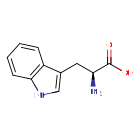
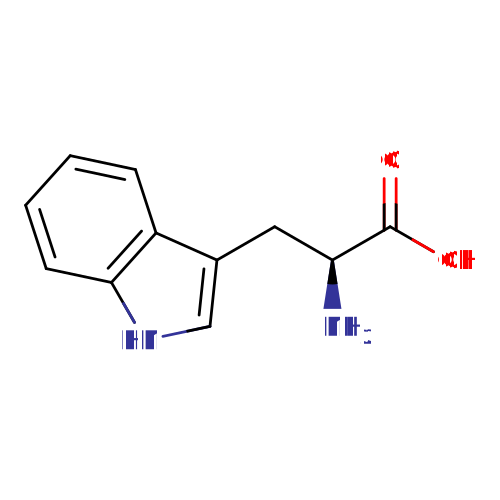
Structure for Tryptophan (DB00150)
- Weight
- Average: 204.2252
Monoisotopic: 204.089877638 - Chemical Formula
- C11H12N2O2
- Synonyms
- (2S)-2-amino-3-(1H-indol-3-yl)propanoic acid
- (S)-alpha-Amino-beta-(3-indolyl)-propionic acid
- (S)-Tryptophan
- (S)-α-amino-1H-indole-3-propanoic acid
- L-(-)-Tryptophan
- L-(−)-tryptophan
- L-Tryptophan
- L-β-3-indolylalanine
- Triptofano
- Trp
- Tryptophan
- Tryptophane
- Tryptophanum
- W
- External IDs
- NSC-13119

Pharmacology
- Indication
Tryptophan may be useful in increasing serotonin production, promoting healthy sleep, managing depression by enhancing mental and emotional well-being, managing pain tolerance, and managing weight.
 Reduce drug development failure ratesBuild, train, & validate machine-learning modelswith evidence-based and structured datasets.Build, train, & validate predictive machine-learning models with structured datasets.
- Associated Conditions
Indication Type Indication Combined Product Details Approval Level Age Group Patient Characteristics Dose Form Used in combination for therapy Acute renal failure (arf) Combination Product in combination with: Leucine (DB00149), Methionine (DB00134), Isoleucine (DB00167), Threonine (DB00156), Phenylalanine (DB00120), Valine (DB00161), Histidine (DB00117), Lysine (DB00123) •••••••••••• •••••••••• •••••••• Used in combination for therapy Chronic renal failure (crf) Combination Product in combination with: Leucine (DB00149), Methionine (DB00134), Isoleucine (DB00167), Valine (DB00161), Phenylalanine (DB00120), Threonine (DB00156), Lysine (DB00123), Histidine (DB00117) •••••••••••• •••••••••• •••••••• Used as adjunct in combination for symptomatic treatment of Depression •••••••••••• •••••••• •••••• - Associated Therapies
- Contraindications & Blackbox Warnings
 Prevent Adverse Drug Events TodayTap into our Clinical API for life-saving information on contraindications & blackbox warnings, population restrictions, harmful risks, & more.Avoid life-threatening adverse drug events with our Clinical API
- Pharmacodynamics
Tryptophan is critical for the production of the body's proteins, enzymes and muscle tissue. It is also essential for the production of niacin, the synthesis of the neurotransmitter serotonin and melatonin. Tryptophan supplements can be used as natural relaxants to help relieve insomnia. Tryptophan can also reduce anxiety and depression and has been shown to reduce the intensity of migraine headaches. Other promising indications include the relief of chronic pain, reduction of impulsivity or mania and the treatment of obsessive or compulsive disorders. Tryptophan also appears to help the immune system and can reduce the risk of cardiac spasms. Tryptophan deficiencies may lead to coronary artery spasms. Tryptophan is used as an essential nutrient in infant formulas and intravenous feeding. Tryptophan is marketed as a prescription drug (Tryptan) for those who do not seem to respond well to conventional antidepressants. It may also be used to treat those afflicted with seasonal affective disorder (a winter-onset depression). Tryptopan serves as the precursor for the synthesis of serotonin (5-hydroxytryptamine, 5-HT) and melatonin (N-acetyl-5-methoxytryptamine).
- Mechanism of action
A number of important side reactions occur during the catabolism of tryptophan on the pathway to acetoacetate. The first enzyme of the catabolic pathway is an iron porphyrin oxygenase that opens the indole ring. The latter enzyme is highly inducible, its concentration rising almost 10-fold on a diet high in tryptophan. Kynurenine is the first key branch point intermediate in the pathway. Kynurenine undergoes deamniation in a standard transamination reaction yielding kynurenic acid. Kynurenic acid and metabolites have been shown to act as antiexcitotoxics and anticonvulsives. A second side branch reaction produces anthranilic acid plus alanine. Another equivalent of alanine is produced further along the main catabolic pathway, and it is the production of these alanine residues that allows tryptophan to be classified among the glucogenic and ketogenic amino acids. The second important branch point converts kynurenine into 2-amino-3-carboxymuconic semialdehyde, which has two fates. The main flow of carbon elements from this intermediate is to glutarate. An important side reaction in liver is a transamination and several rearrangements to produce limited amounts of nicotinic acid, which leads to production of a small amount of NAD+ and NADP+.
Target Actions Organism UTryptophan--tRNA ligase, cytoplasmic inhibitorHumans UTryptophan--tRNA ligase inhibitorGeobacillus stearothermophilus UTryptophan--tRNA ligase, mitochondrial inhibitorHumans - Absorption
Not Available
- Volume of distribution
Not Available
- Protein binding
Not Available
- Metabolism
Hepatic.
- Route of elimination
Not Available
- Half-life
Not Available
- Clearance
Not Available
- Adverse Effects
 Improve decision support & research outcomesWith structured adverse effects data, including: blackbox warnings, adverse reactions, warning & precautions, & incidence rates. View sample adverse effects data in our new Data Library!Improve decision support & research outcomes with our structured adverse effects data.
- Toxicity
Oral rat LD50: > 16 gm/kg. Investigated as a tumorigen, mutagen, reproductive effector. Symptoms of overdose include agitation, confusion, diarrhea, fever, overactive reflexes, poor coordination, restlessness, shivering, sweating, talking or acting with excitement you cannot control, trembling or shaking, twitching, and vomiting.
- Pathways
Pathway Category Tryptophan Metabolism Metabolic - Pharmacogenomic Effects/ADRs
- Not Available
Interactions
- Drug Interactions
- This information should not be interpreted without the help of a healthcare provider. If you believe you are experiencing an interaction, contact a healthcare provider immediately. The absence of an interaction does not necessarily mean no interactions exist.
Drug Interaction Integrate drug-drug
interactions in your software1,2-Benzodiazepine The risk or severity of CNS depression can be increased when Tryptophan is combined with 1,2-Benzodiazepine. Acenocoumarol The risk or severity of adverse effects can be increased when Tryptophan is combined with Acenocoumarol. Acetazolamide The risk or severity of CNS depression can be increased when Tryptophan is combined with Acetazolamide. Acetophenazine The risk or severity of CNS depression can be increased when Tryptophan is combined with Acetophenazine. Agomelatine The risk or severity of CNS depression can be increased when Tryptophan is combined with Agomelatine. - Food Interactions
- No interactions found.
Products
 Drug product information from 10+ global regionsOur datasets provide approved product information including:dosage, form, labeller, route of administration, and marketing period.Access drug product information from over 10 global regions.
- International/Other Brands
- Alti-Tryptophan
- Brand Name Prescription Products
Name Dosage Strength Route Labeller Marketing Start Marketing End Region Image Tryptan Tablet 1 g Oral Bausch Health, Canada Inc. 1986-12-31 Not applicable Canada 
Tryptan Tablet 250 mg Oral Bausch Health, Canada Inc. 1999-01-06 Not applicable Canada Tryptan Capsule 500 mg Oral Bausch Health, Canada Inc. 1986-12-31 Not applicable Canada Tryptan Tablet 500 mg Oral Bausch Health, Canada Inc. 1994-12-31 Not applicable Canada Tryptan Tablet 750 mg Oral Bausch Health, Canada Inc. 1999-01-06 Not applicable Canada - Generic Prescription Products
Name Dosage Strength Route Labeller Marketing Start Marketing End Region Image Apo-tryptophan Capsule 500 mg Oral Apotex Corporation 2003-12-09 Not applicable Canada Apo-tryptophan Tablet 250 mg Oral Apotex Corporation Not applicable Not applicable Canada Apo-tryptophan Tablet 1 g Oral Apotex Corporation 2003-12-09 Not applicable Canada Apo-tryptophan Tablet 750 mg Oral Apotex Corporation 2017-02-06 Not applicable Canada Apo-tryptophan Tablet 500 mg Oral Apotex Corporation 2003-12-09 Not applicable Canada - Mixture Products
Name Ingredients Dosage Route Labeller Marketing Start Marketing End Region Image 2.5% Travasol Amino Acid Injection With Electrolytes In 10% Dextrose Tryptophan (45 mg / 100 mL) + Alanine (520 mg / 100 mL) + Arginine (290 mg / 100 mL) + Dextrose, unspecified form (10 g / 100 mL) + Dipotassium phosphate (130.5 mg / 100 mL) + Glycine (260 mg / 100 mL) + Histidine (120 mg / 100 mL) + Isoleucine (150 mg / 100 mL) + Leucine (182.5 mg / 100 mL) + Lysine hydrochloride (145 mg / 100 mL) + Magnesium chloride (25.5 mg / 100 mL) + Methionine (100 mg / 100 mL) + Phenylalanine (140 mg / 100 mL) + Proline (170 mg / 100 mL) + Serine (125 mg / 100 mL) + Sodium acetate (170 mg / 100 mL) + Sodium chloride (29.3 mg / 100 mL) + Threonine (105 mg / 100 mL) + Tyrosine (10 mg / 100 mL) + Valine (145 mg / 100 mL) Solution Intravenous Baxter Corporation Clintec Nutrition Division 1996-12-31 2015-08-05 Canada 2.5% Travasol Amino Acid Injection With Electrolytes In 10% Dextrose Clinimix Tryptophan (45 mg / 100 mL) + Alanine (520 mg / 100 mL) + Arginine (260 mg / 100 mL) + Dextrose, unspecified form (10 g / 100 mL) + Dipotassium phosphate (130.5 mg / 100 mL) + Glycine (520 mg / 100 mL) + Histidine (110 mg / 100 mL) + Isoleucine (120 mg / 100 mL) + L-Leucine hydrochloride (155 mg / 100 mL) + Lysine hydrochloride (145 mg / 100 mL) + Magnesium chloride (25.5 mg / 100 mL) + Methionine (145 mg / 100 mL) + Phenylalanine hydrochloride (155 mg / 100 mL) + Proline (105 mg / 100 mL) + Sodium acetate (170 mg / 100 mL) + Sodium chloride (29.3 mg / 100 mL) + Threonine (105 mg / 100 mL) + Tyrosine (10 mg / 100 mL) + Valine (115 mg / 100 mL) Solution Intravenous Baxter Corporation Clintec Nutrition Division 1993-12-31 2015-08-05 Canada 2.5% Travasol Amino Acid Injection Without Electrolytes In 10% Dextrose Quickmix Tryptophan (45 mg / 100 mL) + Alanine (520 mg / 100 mL) + Arginine (260 mg / 100 mL) + Dextrose, unspecified form (10 g / 100 mL) + Glycine (520 mg / 100 mL) + Histidine (110 mg / 100 mL) + Isoleucine (120 mg / 100 mL) + L-Leucine hydrochloride (155 mg / 100 mL) + Lysine hydrochloride (195 mg / 100 mL) + Methionine (195 mg / 100 mL) + Phenylalanine hydrochloride (155 mg / 100 mL) + Proline (105 mg / 100 mL) + Threonine (105 mg / 100 mL) + Tyrosine (10 mg / 100 mL) + Valine (115 mg / 100 mL) Solution Intravenous Baxter Corporation Clintec Nutrition Division 1995-12-31 2007-08-02 Canada 2.5%travasol Amino Acid InJ.W.eleC.W.25%dex Tryptophan (45 mg / 100 mL) + Alanine (520 mg / 100 mL) + Arginine (290 mg / 100 mL) + Dextrose, unspecified form (25 g / 100 mL) + Dipotassium phosphate (130.5 mg / 100 mL) + Glycine (260 mg / 100 mL) + Histidine (120 mg / 100 mL) + Isoleucine (150 mg / 100 mL) + Leucine (182.5 mg / 100 mL) + Lysine hydrochloride (145 mg / 100 mL) + Magnesium chloride (25.5 mg / 100 mL) + Methionine (100 mg / 100 mL) + Phenylalanine (140 mg / 100 mL) + Proline (170 mg / 100 mL) + Serine (125 mg / 100 mL) + Sodium acetate (170 mg / 100 mL) + Sodium chloride (29.3 mg / 100 mL) + Threonine (105 mg / 100 mL) + Tyrosine (10 mg / 100 mL) + Valine (145 mg / 100 mL) Liquid Intravenous Clintec Nutrition Company 1996-07-30 1998-08-13 Canada 2.75% Travas. Amino Acid InJ.W.elecw.25%dex Tryptophan (49.5 mg / 100 mL) + Alanine (570 mg / 100 mL) + Arginine (316 mg / 100 mL) + Dextrose, unspecified form (25 g / 100 mL) + Dipotassium phosphate (261 mg / 100 mL) + Glycine (283 mg / 100 mL) + Histidine (132 mg / 100 mL) + Isoleucine (165 mg / 100 mL) + Leucine (201 mg / 100 mL) + Lysine hydrochloride (159.5 mg / 100 mL) + Magnesium chloride (51 mg / 100 mL) + Methionine (110 mg / 100 mL) + Phenylalanine (154 mg / 100 mL) + Proline (187 mg / 100 mL) + Serine (137.5 mg / 100 mL) + Sodium acetate (215.5 mg / 100 mL) + Sodium chloride (112 mg / 100 mL) + Threonine (115.5 mg / 100 mL) + Tyrosine (11 mg / 100 mL) + Valine (159.5 mg / 100 mL) Liquid Intravenous Clintec Nutrition Company 1996-07-30 1998-08-13 Canada - Unapproved/Other Products
Name Ingredients Dosage Route Labeller Marketing Start Marketing End Region Image Clinimix Tryptophan (0.50 g/1L) + Alanine (5.70 g/1L) + Arginine (3.17 g/1L) + Calcium chloride dihydrate (0.33 g/1L) + D-glucose monohydrate (75.00 g/1L) + Dipotassium phosphate (2.61 g/1L) + Glycine (2.84 g/1L) + Histidine (1.32 g/1L) + Isoleucine (1.65 g/1L) + Leucine (2.01 g/1L) + Lysine (2.00 g/1L) + Magnesium chloride hexahydrate (0.51 g/1L) + Methionine (1.10 g/1L) + Phenylalanine (1.54 g/1L) + Proline (1.87 g/1L) + Serine (1.38 g/1L) + Sodium acetate trihydrate (2.16 g/1L) + Sodium chloride (1.12 g/1L) + Threonine (1.16 g/1L) + Tyrosine (0.11 g/1L) + Valine (1.60 g/1L) Solution Intravenous Baxter Healthcare Corporation 2017-10-25 2019-11-30 US 
Clinimix Tryptophan (0.50 g/1L) + Alanine (5.70 g/1L) + Arginine (3.17 g/1L) + Calcium chloride dihydrate (0.33 g/1L) + D-glucose monohydrate (100.00 g/1L) + Dipotassium phosphate (2.61 g/1L) + Glycine (2.84 g/1L) + Histidine (1.32 g/1L) + Isoleucine (1.65 g/1L) + Leucine (2.01 g/1L) + Lysine (2.00 g/1L) + Magnesium chloride hexahydrate (0.51 g/1L) + Methionine (1.10 g/1L) + Phenylalanine (1.54 g/1L) + Proline (1.87 g/1L) + Serine (1.38 g/1L) + Sodium acetate trihydrate (2.16 g/1L) + Sodium chloride (1.12 g/1L) + Threonine (1.16 g/1L) + Tyrosine (0.11 g/1L) + Valine (1.60 g/1L) Solution Intravenous Baxter Healthcare Corporation 2017-10-25 2019-11-30 US Clinimix Tryptophan (1.53 g/2L) + Alanine (17.60 g/2L) + Arginine (9.78 g/2L) + Calcium chloride dihydrate (0.66 g/2L) + D-glucose monohydrate (300.00 g/2L) + Dipotassium phosphate (5.22 g/2L) + Glycine (8.76 g/2L) + Histidine (4.08 g/2L) + Isoleucine (5.10 g/2L) + Leucine (6.20 g/2L) + Lysine (4.93 g/2L) + Magnesium chloride hexahydrate (1.02 g/2L) + Methionine (3.40 g/2L) + Phenylalanine (4.76 g/2L) + Proline (5.78 g/2L) + Serine (4.25 g/2L) + Sodium acetate trihydrate (5.94 g/2L) + Sodium chloride (1.54 g/2L) + Threonine (3.57 g/2L) + Tyrosine (0.34 g/2L) + Valine (4.93 g/2L) Solution Intravenous Baxter Healthcare Corporation 2017-10-25 2019-11-30 US FREAMINE III %10 1000 ML(SETLI) Tryptophan (0.15 %) + Alanine (0.71 %) + Arginine (0.95 %) + Cysteine (0.016 %) + Glycine (1.4 %) + Histidine (0.28 %) + Isoleucine (0.69 %) + Leucine (0.91 %) + Lysine (0.73 %) + Methionine (0.53 %) + Phenylalanine (0.56 %) + Proline (1.12 %) + Serine (0.59 %) + Threonine (0.4 %) + Valine (0.66 %) Solution Intravenous ECZACIBAŞI-BAXTER HASTANE ÜRÜNLERİ SAN.VE TİC. A.Ş. 2013-01-29 2024-01-23 Turkey 
FREAMINE III %10 1000 ML(SETSIZ) Tryptophan (0.15 %) + Alanine (0.71 %) + Arginine (0.95 %) + Cysteine (0.016 %) + Glycine (1.4 %) + Histidine (0.28 %) + Isoleucine (0.69 %) + Leucine (0.91 %) + Lysine (0.73 %) + Methionine (0.53 %) + Phenylalanine (0.56 %) + Proline (1.12 %) + Serine (0.59 %) + Threonine (0.4 %) + Valine (0.66 %) Solution Intravenous ECZACIBAŞI-BAXTER HASTANE ÜRÜNLERİ SAN.VE TİC. A.Ş. 2013-01-29 2024-01-23 Turkey
Categories
- ATC Codes
- N06AX02 — Tryptophan
- Drug Categories
- Amino Acids
- Amino Acids, Aromatic
- Amino Acids, Cyclic
- Amino Acids, Essential
- Amino Acids, Peptides, and Proteins
- Antidepressive Agents
- Antidepressive Agents, Second-Generation
- Central Nervous System Agents
- Central Nervous System Depressants
- Dietary Supplements
- Miscellaneous Antidepressants
- Nervous System
- Proteinogenic Amino Acids
- Psychoanaleptics
- Psychotropic Drugs
- Serotonergic Drugs Shown to Increase Risk of Serotonin Syndrome
- Supplements
- Chemical TaxonomyProvided by Classyfire
- Description
- This compound belongs to the class of organic compounds known as indolyl carboxylic acids and derivatives. These are compounds containing a carboxylic acid chain (of at least 2 carbon atoms) linked to an indole ring.
- Kingdom
- Organic compounds
- Super Class
- Organoheterocyclic compounds
- Class
- Indoles and derivatives
- Sub Class
- Indolyl carboxylic acids and derivatives
- Direct Parent
- Indolyl carboxylic acids and derivatives
- Alternative Parents
- L-alpha-amino acids / 3-alkylindoles / Aralkylamines / Substituted pyrroles / Benzenoids / Heteroaromatic compounds / Amino acids / Monocarboxylic acids and derivatives / Carboxylic acids / Azacyclic compounds show 5 more
- Substituents
- 3-alkylindole / Alpha-amino acid / Alpha-amino acid or derivatives / Amine / Amino acid / Amino acid or derivatives / Aralkylamine / Aromatic heteropolycyclic compound / Azacycle / Benzenoid show 19 more
- Molecular Framework
- Aromatic heteropolycyclic compounds
- External Descriptors
- proteinogenic amino acid, L-alpha-amino acid, tryptophan, erythrose 4-phosphate/phosphoenolpyruvate family amino acid (CHEBI:16828) / Common amino acids (C00078)
- Affected organisms
- Humans and other mammals
Chemical Identifiers
- UNII
- 8DUH1N11BX
- CAS number
- 73-22-3
- InChI Key
- QIVBCDIJIAJPQS-VIFPVBQESA-N
- InChI
- InChI=1S/C11H12N2O2/c12-9(11(14)15)5-7-6-13-10-4-2-1-3-8(7)10/h1-4,6,9,13H,5,12H2,(H,14,15)/t9-/m0/s1
- IUPAC Name
- (2S)-2-amino-3-(1H-indol-3-yl)propanoic acid
- SMILES
- N[C@@H](CC1=CNC2=C1C=CC=C2)C(O)=O
References
- Synthesis Reference
Sten Vilhelm Gatenbeck, Per Olof Hedman, "Fermentative process for the production of L-tryptophan and its derivatives." U.S. Patent US3963572, issued April, 1974.
US3963572- General References
- Not Available
- External Links
- Human Metabolome Database
- HMDB0000929
- KEGG Drug
- D00020
- KEGG Compound
- C00078
- PubChem Compound
- 6305
- PubChem Substance
- 46508329
- ChemSpider
- 6066
- BindingDB
- 21974
- 10898
- ChEBI
- 16828
- ChEMBL
- CHEMBL54976
- ZINC
- ZINC000000083315
- Therapeutic Targets Database
- DAP001316
- PharmGKB
- PA10323
- Guide to Pharmacology
- GtP Drug Page
- PDBe Ligand
- TRP
- Wikipedia
- Tryptophan
- MSDS
- Download (71.7 KB)
Clinical Trials
- Clinical Trials
Phase Status Purpose Conditions Count 4 Active Not Recruiting Treatment Critically Ill Patients / Starvation 1 4 Completed Treatment Alzheimer's Disease (AD) 1 4 Completed Treatment Diabetic Nephropathy 1 4 Recruiting Basic Science Healthy Volunteers (HV) / Obesity / Type 2 Diabetes Mellitus 1 4 Recruiting Prevention Intestinal Obstruction / Laparotomies / Mesenteric vascular insufficiency 1
Pharmacoeconomics
- Manufacturers
- Not Available
- Packagers
- Amend
- B. Braun Melsungen AG
- Mason Distributors
- V Sab Medical Labs Inc.
- Dosage Forms
Form Route Strength Solution Parenteral Tablet Oral Solution Intravenous 10.50 g/1000ml Injection Intravenous 0.5 g/l Injection Intravenous 0.25 g/1000ml Solution, concentrate Intravenous Injection Intravenous 0.52 g/l Injection, solution Intravenous Injection Intravenous 11.000 g/1000ml Solution Intravenous 18.5 g/L Injection Intravenous 5.5 g/1000ml Drug delivery system Oral 0.105 g Injection, emulsion Intravenous Solution Extracorporeal Emulsion Intravenous 0.468 g Injection Intravenous 16 g/1000ml Emulsion Parenteral 20.000 g Injection Intravenous 1.6 g/l Injection Intravenous 0.37 g/l Injection, solution, concentrate Intravenous Injection, emulsion Parenteral Emulsion Intravenous 0.466 g Injection, emulsion; injection, solution Intravenous Emulsion Parenteral Emulsion Intravenous Injection, solution Injection, emulsion Intravenous 4.656 g/1000ml Injection, emulsion Intravenous 6.792 g/1000ml Solution Intraperitoneal Injection, solution Intraperitoneal Liquid Hemodialysis Solution Intraperitoneal 0.184 g/l Emulsion Intravenous 176 g/l Emulsion Intravenous 4 g Solution Extracorporeal; Intrabiliary; Intracardiac Emulsion Intravenous 3 g Solution Intravenous Tablet Oral 105.000 mg Injection Intravenous 4 g/l Injection Intravenous 0.21 g/100ml Liquid Intravenous Emulsion Intravenous 13.000 g Emulsion Parenteral 42.00 g Injection, emulsion Intravenous 14 g/1000ml Tablet Oral 67.000 mg Injection Intravenous 10.30 g/l Capsule Oral 500 mg Tablet Oral 1 g Injection Intravenous Tablet Oral 250 mg Tablet Oral 500 mg Tablet Oral 750 mg - Prices
Unit description Cost Unit Tryptan 1 g Tablet 1.6USD tablet Tryptan 750 mg Tablet 1.2USD tablet Apo-Tryptophan 1 g Tablet 0.9USD tablet Ratio-Tryptophan 1 g Tablet 0.9USD tablet Tryptan 500 mg Capsule 0.8USD capsule Tryptan 500 mg Tablet 0.8USD tablet L-tryptophan crystals 0.72USD g Apo-Tryptophan 500 mg Capsule 0.45USD capsule Apo-Tryptophan 500 mg Tablet 0.45USD tablet Pms-Tryptophan 500 mg Capsule 0.45USD capsule Pms-Tryptophan 500 mg Tablet 0.45USD tablet Ratio-Tryptophan 500 mg Capsule 0.45USD capsule Ratio-Tryptophan 500 mg Tablet 0.45USD tablet Tryptan 250 mg Tablet 0.4USD tablet L-tryptophan 500 mg capsule 0.33USD capsule DrugBank does not sell nor buy drugs. Pricing information is supplied for informational purposes only.- Patents
- Not Available
Properties
- State
- Solid
- Experimental Properties
Property Value Source melting point (°C) 290.5 dec °C PhysProp water solubility 1.34E+004 mg/L (at 25 °C) YALKOWSKY,SH & DANNENFELSER,RM (1992) logP -1.06 HANSCH,C ET AL. (1995) logS -1.23 ADME Research, USCD pKa 7.38 (at 25 °C) KORTUM,G ET AL (1961) - Predicted Properties
Property Value Source Water Solubility 1.36 mg/mL ALOGPS logP -1.1 ALOGPS logP -1.1 Chemaxon logS -2.2 ALOGPS pKa (Strongest Acidic) 2.54 Chemaxon pKa (Strongest Basic) 9.4 Chemaxon Physiological Charge 0 Chemaxon Hydrogen Acceptor Count 3 Chemaxon Hydrogen Donor Count 3 Chemaxon Polar Surface Area 79.11 Å2 Chemaxon Rotatable Bond Count 3 Chemaxon Refractivity 56.2 m3·mol-1 Chemaxon Polarizability 21.05 Å3 Chemaxon Number of Rings 2 Chemaxon Bioavailability 1 Chemaxon Rule of Five Yes Chemaxon Ghose Filter No Chemaxon Veber's Rule No Chemaxon MDDR-like Rule No Chemaxon - Predicted ADMET Features
Property Value Probability Human Intestinal Absorption + 0.984 Blood Brain Barrier + 0.951 Caco-2 permeable - 0.5943 P-glycoprotein substrate Non-substrate 0.5988 P-glycoprotein inhibitor I Non-inhibitor 0.9951 P-glycoprotein inhibitor II Non-inhibitor 0.9779 Renal organic cation transporter Non-inhibitor 0.8805 CYP450 2C9 substrate Non-substrate 0.8463 CYP450 2D6 substrate Non-substrate 0.7897 CYP450 3A4 substrate Non-substrate 0.7841 CYP450 1A2 substrate Non-inhibitor 0.9531 CYP450 2C9 inhibitor Non-inhibitor 0.9481 CYP450 2D6 inhibitor Non-inhibitor 0.9307 CYP450 2C19 inhibitor Non-inhibitor 0.9644 CYP450 3A4 inhibitor Non-inhibitor 0.9432 CYP450 inhibitory promiscuity Low CYP Inhibitory Promiscuity 0.9542 Ames test Non AMES toxic 0.9284 Carcinogenicity Non-carcinogens 0.931 Biodegradation Not ready biodegradable 0.8348 Rat acute toxicity 1.1785 LD50, mol/kg Not applicable hERG inhibition (predictor I) Weak inhibitor 0.9864 hERG inhibition (predictor II) Non-inhibitor 0.9402
Spectra
- Mass Spec (NIST)
- Download (7.51 KB)
- Spectra
- Chromatographic Properties
Collision Cross Sections (CCS)
Adduct CCS Value (Å2) Source type Source [M-H]- 152.0502228 predictedDarkChem Lite v0.1.0 [M-H]- 151.1936497 predictedDarkChem Standard v0.1.0 [M-H]- 152.0445228 predictedDarkChem Lite v0.1.0 [M-H]- 151.9399228 predictedDarkChem Lite v0.1.0 [M-H]- 151.8792228 predictedDarkChem Lite v0.1.0 [M-H]- 140.75209 predictedDeepCCS 1.0 (2019) [M+H]+ 152.3454228 predictedDarkChem Lite v0.1.0 [M+H]+ 149.5914746 predictedDarkChem Standard v0.1.0 [M+H]+ 152.5432228 predictedDarkChem Lite v0.1.0 [M+H]+ 152.4650228 predictedDarkChem Lite v0.1.0 [M+H]+ 152.4852228 predictedDarkChem Lite v0.1.0 [M+H]+ 143.14769 predictedDeepCCS 1.0 (2019) [M+Na]+ 151.9208228 predictedDarkChem Lite v0.1.0 [M+Na]+ 155.7324312 predictedDarkChem Standard v0.1.0 [M+Na]+ 151.9815228 predictedDarkChem Lite v0.1.0 [M+Na]+ 152.0007228 predictedDarkChem Lite v0.1.0 [M+Na]+ 151.8520228 predictedDarkChem Lite v0.1.0 [M+Na]+ 149.28648 predictedDeepCCS 1.0 (2019)
Targets

- Kind
- Protein
- Organism
- Humans
- Pharmacological action
- Unknown
- Actions
- Inhibitor
- General Function
- Tryptophan-trna ligase activity
- Specific Function
- Isoform 1, isoform 2 and T1-TrpRS have aminoacylation activity while T2-TrpRS lacks it. Isoform 2, T1-TrpRS and T2-TrpRS possess angiostatic activity whereas isoform 1 lacks it. T2-TrpRS inhibits f...
- Gene Name
- WARS
- Uniprot ID
- P23381
- Uniprot Name
- Tryptophan--tRNA ligase, cytoplasmic
- Molecular Weight
- 53164.91 Da
References
- Tsuchiya W, Umehara T, Kuno A, Hasegawa T: Determination of tryptophan tRNA recognition sites for tryptophanyl-tRNA synthetase from hyperthermophilic archaeon, Aeropyrum pernix K1. Nucleic Acids Symp Ser (Oxf). 2004;(48):185-6. [Article]
- Retailleau P, Weinreb V, Hu M, Carter CW Jr: Crystal structure of tryptophanyl-tRNA synthetase complexed with adenosine-5' tetraphosphate: evidence for distributed use of catalytic binding energy in amino acid activation by class I aminoacyl-tRNA synthetases. J Mol Biol. 2007 May 25;369(1):108-28. Epub 2007 Mar 12. [Article]
- Zhu L, Ji F, Wang Y, Zhang Y, Liu Q, Zhang JZ, Matsushima K, Cao Q, Zhang Y: Synovial autoreactive T cells in rheumatoid arthritis resist IDO-mediated inhibition. J Immunol. 2006 Dec 1;177(11):8226-33. [Article]
- Yadav MC, Burudi EM, Alirezaei M, Flynn CC, Watry DD, Lanigan CM, Fox HS: IFN-gamma-induced IDO and WRS expression in microglia is differentially regulated by IL-4. Glia. 2007 Oct;55(13):1385-96. [Article]
- Yang XL, Otero FJ, Ewalt KL, Liu J, Swairjo MA, Kohrer C, RajBhandary UL, Skene RJ, McRee DE, Schimmel P: Two conformations of a crystalline human tRNA synthetase-tRNA complex: implications for protein synthesis. EMBO J. 2006 Jun 21;25(12):2919-29. Epub 2006 May 25. [Article]
- Kind
- Protein
- Organism
- Geobacillus stearothermophilus
- Pharmacological action
- Unknown
- Actions
- Inhibitor
- General Function
- Tryptophan-trna ligase activity
- Specific Function
- Not Available
- Gene Name
- trpS
- Uniprot ID
- P00953
- Uniprot Name
- Tryptophan--tRNA ligase
- Molecular Weight
- 37192.385 Da
References
- Overington JP, Al-Lazikani B, Hopkins AL: How many drug targets are there? Nat Rev Drug Discov. 2006 Dec;5(12):993-6. [Article]
- Imming P, Sinning C, Meyer A: Drugs, their targets and the nature and number of drug targets. Nat Rev Drug Discov. 2006 Oct;5(10):821-34. [Article]
- Tsuchiya W, Umehara T, Kuno A, Hasegawa T: Determination of tryptophan tRNA recognition sites for tryptophanyl-tRNA synthetase from hyperthermophilic archaeon, Aeropyrum pernix K1. Nucleic Acids Symp Ser (Oxf). 2004;(48):185-6. [Article]
- Kovaleva GK, Favorova OO, Moroz SG, Krauspe R, Kiselev LL: [Active intermediate compound of tryptophanyl-tRNA-synthetase with tryptophan]. Dokl Akad Nauk SSSR. 1976;229(2):492-5. [Article]
- Kovaleva GK, Degtiarev SKh, Favorova OO: [Affinity modification of tryptophanyl-tRNA synthetase by an alkylating L-tryptophan analog]. Mol Biol (Mosk). 1979 Nov-Dec;13(6):1237-46. [Article]
- Kind
- Protein
- Organism
- Humans
- Pharmacological action
- Unknown
- Actions
- Inhibitor
- General Function
- Tryptophan-trna ligase activity
- Specific Function
- Not Available
- Gene Name
- WARS2
- Uniprot ID
- Q9UGM6
- Uniprot Name
- Tryptophan--tRNA ligase, mitochondrial
- Molecular Weight
- 40146.265 Da
References
- Paley EL, Denisova G, Sokolova O, Posternak N, Wang X, Brownell AL: Tryptamine induces tryptophanyl-tRNA synthetase-mediated neurodegeneration with neurofibrillary tangles in human cell and mouse models. Neuromolecular Med. 2007;9(1):55-82. [Article]
- Retailleau P, Weinreb V, Hu M, Carter CW Jr: Crystal structure of tryptophanyl-tRNA synthetase complexed with adenosine-5' tetraphosphate: evidence for distributed use of catalytic binding energy in amino acid activation by class I aminoacyl-tRNA synthetases. J Mol Biol. 2007 May 25;369(1):108-28. Epub 2007 Mar 12. [Article]
- Banin E, Dorrell MI, Aguilar E, Ritter MR, Aderman CM, Smith AC, Friedlander J, Friedlander M: T2-TrpRS inhibits preretinal neovascularization and enhances physiological vascular regrowth in OIR as assessed by a new method of quantification. Invest Ophthalmol Vis Sci. 2006 May;47(5):2125-34. [Article]
- Yang XL, Otero FJ, Ewalt KL, Liu J, Swairjo MA, Kohrer C, RajBhandary UL, Skene RJ, McRee DE, Schimmel P: Two conformations of a crystalline human tRNA synthetase-tRNA complex: implications for protein synthesis. EMBO J. 2006 Jun 21;25(12):2919-29. Epub 2006 May 25. [Article]
- Charriere F, Helgadottir S, Horn EK, Soll D, Schneider A: Dual targeting of a single tRNA(Trp) requires two different tryptophanyl-tRNA synthetases in Trypanosoma brucei. Proc Natl Acad Sci U S A. 2006 May 2;103(18):6847-52. Epub 2006 Apr 24. [Article]
Enzymes
- Kind
- Protein
- Organism
- Geobacillus stearothermophilus
- Pharmacological action
- Unknown
- Actions
- SubstrateInhibitor
- General Function
- Tryptophan-trna ligase activity
- Specific Function
- Not Available
- Gene Name
- trpS
- Uniprot ID
- P00953
- Uniprot Name
- Tryptophan--tRNA ligase
- Molecular Weight
- 37192.385 Da
References
- Overington JP, Al-Lazikani B, Hopkins AL: How many drug targets are there? Nat Rev Drug Discov. 2006 Dec;5(12):993-6. [Article]
- Imming P, Sinning C, Meyer A: Drugs, their targets and the nature and number of drug targets. Nat Rev Drug Discov. 2006 Oct;5(10):821-34. [Article]
- Tsuchiya W, Umehara T, Kuno A, Hasegawa T: Determination of tryptophan tRNA recognition sites for tryptophanyl-tRNA synthetase from hyperthermophilic archaeon, Aeropyrum pernix K1. Nucleic Acids Symp Ser (Oxf). 2004;(48):185-6. [Article]
- Kovaleva GK, Favorova OO, Moroz SG, Krauspe R, Kiselev LL: [Active intermediate compound of tryptophanyl-tRNA-synthetase with tryptophan]. Dokl Akad Nauk SSSR. 1976;229(2):492-5. [Article]
- Kovaleva GK, Degtiarev SKh, Favorova OO: [Affinity modification of tryptophanyl-tRNA synthetase by an alkylating L-tryptophan analog]. Mol Biol (Mosk). 1979 Nov-Dec;13(6):1237-46. [Article]
- Kind
- Protein
- Organism
- Humans
- Pharmacological action
- Unknown
- Actions
- SubstrateInhibitor
- General Function
- Tryptophan-trna ligase activity
- Specific Function
- Not Available
- Gene Name
- WARS2
- Uniprot ID
- Q9UGM6
- Uniprot Name
- Tryptophan--tRNA ligase, mitochondrial
- Molecular Weight
- 40146.265 Da
References
- Paley EL, Denisova G, Sokolova O, Posternak N, Wang X, Brownell AL: Tryptamine induces tryptophanyl-tRNA synthetase-mediated neurodegeneration with neurofibrillary tangles in human cell and mouse models. Neuromolecular Med. 2007;9(1):55-82. [Article]
- Retailleau P, Weinreb V, Hu M, Carter CW Jr: Crystal structure of tryptophanyl-tRNA synthetase complexed with adenosine-5' tetraphosphate: evidence for distributed use of catalytic binding energy in amino acid activation by class I aminoacyl-tRNA synthetases. J Mol Biol. 2007 May 25;369(1):108-28. Epub 2007 Mar 12. [Article]
- Banin E, Dorrell MI, Aguilar E, Ritter MR, Aderman CM, Smith AC, Friedlander J, Friedlander M: T2-TrpRS inhibits preretinal neovascularization and enhances physiological vascular regrowth in OIR as assessed by a new method of quantification. Invest Ophthalmol Vis Sci. 2006 May;47(5):2125-34. [Article]
- Yang XL, Otero FJ, Ewalt KL, Liu J, Swairjo MA, Kohrer C, RajBhandary UL, Skene RJ, McRee DE, Schimmel P: Two conformations of a crystalline human tRNA synthetase-tRNA complex: implications for protein synthesis. EMBO J. 2006 Jun 21;25(12):2919-29. Epub 2006 May 25. [Article]
- Charriere F, Helgadottir S, Horn EK, Soll D, Schneider A: Dual targeting of a single tRNA(Trp) requires two different tryptophanyl-tRNA synthetases in Trypanosoma brucei. Proc Natl Acad Sci U S A. 2006 May 2;103(18):6847-52. Epub 2006 Apr 24. [Article]
- Kind
- Protein
- Organism
- Humans
- Pharmacological action
- Unknown
- Actions
- Substrate
- General Function
- Tryptophan 5-monooxygenase activity
- Specific Function
- Not Available
- Gene Name
- TPH1
- Uniprot ID
- P17752
- Uniprot Name
- Tryptophan 5-hydroxylase 1
- Molecular Weight
- 50984.725 Da
References
- Pavon JA, Fitzpatrick PF: Insights into the catalytic mechanisms of phenylalanine and tryptophan hydroxylase from kinetic isotope effects on aromatic hydroxylation. Biochemistry. 2006 Sep 12;45(36):11030-7. [Article]
- Langfort J, Baranczuk E, Pawlak D, Chalimoniuk M, Lukacova N, Marsala J, Gorski J: The effect of endurance training on regional serotonin metabolism in the brain during early stage of detraining period in the female rat. Cell Mol Neurobiol. 2006 Oct-Nov;26(7-8):1327-42. Epub 2006 Aug 1. [Article]
- Nakamura K, Hasegawa H: Developmental role of tryptophan hydroxylase in the nervous system. Mol Neurobiol. 2007 Feb;35(1):45-54. [Article]
- Invernizzi RW: Role of TPH-2 in brain function: news from behavioral and pharmacologic studies. J Neurosci Res. 2007 Nov 1;85(14):3030-5. [Article]
- Neckameyer WS, Coleman CM, Eadie S, Goodwin SF: Compartmentalization of neuronal and peripheral serotonin synthesis in Drosophila melanogaster. Genes Brain Behav. 2007 Nov;6(8):756-69. Epub 2007 Mar 21. [Article]
- Kind
- Protein
- Organism
- Humans
- Pharmacological action
- Unknown
- Actions
- Substrate
- General Function
- Tryptophan 5-monooxygenase activity
- Specific Function
- Not Available
- Gene Name
- TPH2
- Uniprot ID
- Q8IWU9
- Uniprot Name
- Tryptophan 5-hydroxylase 2
- Molecular Weight
- 56056.295 Da
References
- Lopez VA, Detera-Wadleigh S, Cardona I, Kassem L, McMahon FJ: Nested association between genetic variation in tryptophan hydroxylase II, bipolar affective disorder, and suicide attempts. Biol Psychiatry. 2007 Jan 15;61(2):181-6. Epub 2006 Jun 27. [Article]
- Kraus MR, Al-Taie O, Schafer A, Pfersdorff M, Lesch KP, Scheurlen M: Serotonin-1A receptor gene HTR1A variation predicts interferon-induced depression in chronic hepatitis C. Gastroenterology. 2007 Apr;132(4):1279-86. Epub 2007 Feb 25. [Article]
- Nakamura K, Hasegawa H: Developmental role of tryptophan hydroxylase in the nervous system. Mol Neurobiol. 2007 Feb;35(1):45-54. [Article]
- Invernizzi RW: Role of TPH-2 in brain function: news from behavioral and pharmacologic studies. J Neurosci Res. 2007 Nov 1;85(14):3030-5. [Article]
- Calcagno E, Canetta A, Guzzetti S, Cervo L, Invernizzi RW: Strain differences in basal and post-citalopram extracellular 5-HT in the mouse medial prefrontal cortex and dorsal hippocampus: relation with tryptophan hydroxylase-2 activity. J Neurochem. 2007 Nov;103(3):1111-20. Epub 2007 Jul 31. [Article]
- Kind
- Protein
- Organism
- Humans
- Pharmacological action
- Unknown
- Actions
- SubstrateInhibitor
- General Function
- Tryptophan-trna ligase activity
- Specific Function
- Isoform 1, isoform 2 and T1-TrpRS have aminoacylation activity while T2-TrpRS lacks it. Isoform 2, T1-TrpRS and T2-TrpRS possess angiostatic activity whereas isoform 1 lacks it. T2-TrpRS inhibits f...
- Gene Name
- WARS
- Uniprot ID
- P23381
- Uniprot Name
- Tryptophan--tRNA ligase, cytoplasmic
- Molecular Weight
- 53164.91 Da
References
- Tsuchiya W, Umehara T, Kuno A, Hasegawa T: Determination of tryptophan tRNA recognition sites for tryptophanyl-tRNA synthetase from hyperthermophilic archaeon, Aeropyrum pernix K1. Nucleic Acids Symp Ser (Oxf). 2004;(48):185-6. [Article]
- Retailleau P, Weinreb V, Hu M, Carter CW Jr: Crystal structure of tryptophanyl-tRNA synthetase complexed with adenosine-5' tetraphosphate: evidence for distributed use of catalytic binding energy in amino acid activation by class I aminoacyl-tRNA synthetases. J Mol Biol. 2007 May 25;369(1):108-28. Epub 2007 Mar 12. [Article]
- Zhu L, Ji F, Wang Y, Zhang Y, Liu Q, Zhang JZ, Matsushima K, Cao Q, Zhang Y: Synovial autoreactive T cells in rheumatoid arthritis resist IDO-mediated inhibition. J Immunol. 2006 Dec 1;177(11):8226-33. [Article]
- Yadav MC, Burudi EM, Alirezaei M, Flynn CC, Watry DD, Lanigan CM, Fox HS: IFN-gamma-induced IDO and WRS expression in microglia is differentially regulated by IL-4. Glia. 2007 Oct;55(13):1385-96. [Article]
- Yang XL, Otero FJ, Ewalt KL, Liu J, Swairjo MA, Kohrer C, RajBhandary UL, Skene RJ, McRee DE, Schimmel P: Two conformations of a crystalline human tRNA synthetase-tRNA complex: implications for protein synthesis. EMBO J. 2006 Jun 21;25(12):2919-29. Epub 2006 May 25. [Article]
- Kind
- Protein
- Organism
- Humans
- Pharmacological action
- Unknown
- Actions
- Substrate
- General Function
- Tryptophan 2,3-dioxygenase activity
- Specific Function
- Catalyzes the first and rate limiting step of the catabolism of the essential amino acid tryptophan along the kynurenine pathway (PubMed:17671174). Involved in the peripheral immune tolerance, cont...
- Gene Name
- IDO1
- Uniprot ID
- P14902
- Uniprot Name
- Indoleamine 2,3-dioxygenase 1
- Molecular Weight
- 45325.89 Da
References
- Agaugue S, Perrin-Cocon L, Coutant F, Andre P, Lotteau V: 1-Methyl-tryptophan can interfere with TLR signaling in dendritic cells independently of IDO activity. J Immunol. 2006 Aug 15;177(4):2061-71. [Article]
- Fallarino F, Gizzi S, Mosci P, Grohmann U, Puccetti P: Tryptophan catabolism in IDO+ plasmacytoid dendritic cells. Curr Drug Metab. 2007 Apr;8(3):209-16. [Article]
- Cozzi A, Zignego AL, Carpendo R, Biagiotti T, Aldinucci A, Monti M, Giannini C, Rosselli M, Laffi G, Moroni F: Low serum tryptophan levels, reduced macrophage IDO activity and high frequency of psychopathology in HCV patients. J Viral Hepat. 2006 Jun;13(6):402-8. [Article]
- Grohmann U, Volpi C, Fallarino F, Bozza S, Bianchi R, Vacca C, Orabona C, Belladonna ML, Ayroldi E, Nocentini G, Boon L, Bistoni F, Fioretti MC, Romani L, Riccardi C, Puccetti P: Reverse signaling through GITR ligand enables dexamethasone to activate IDO in allergy. Nat Med. 2007 May;13(5):579-86. Epub 2007 Apr 8. [Article]
- Zheng X, Koropatnick J, Li M, Zhang X, Ling F, Ren X, Hao X, Sun H, Vladau C, Franek JA, Feng B, Urquhart BL, Zhong R, Freeman DJ, Garcia B, Min WP: Reinstalling antitumor immunity by inhibiting tumor-derived immunosuppressive molecule IDO through RNA interference. J Immunol. 2006 Oct 15;177(8):5639-46. [Article]
- Chen X, Ji ZL, Chen YZ: TTD: Therapeutic Target Database. Nucleic Acids Res. 2002 Jan 1;30(1):412-5. [Article]
- Rafice SA, Chauhan N, Efimov I, Basran J, Raven EL: Oxidation of L-tryptophan in biology: a comparison between tryptophan 2,3-dioxygenase and indoleamine 2,3-dioxygenase. Biochem Soc Trans. 2009 Apr;37(Pt 2):408-12. doi: 10.1042/BST0370408. [Article]
- Kind
- Protein
- Organism
- Humans
- Pharmacological action
- Unknown
- Actions
- Substrate
- General Function
- Tryptophan 2,3-dioxygenase activity
- Specific Function
- Incorporates oxygen into the indole moiety of tryptophan. Has a broad specificity towards tryptamine and derivatives including D- and L-tryptophan, 5-hydroxytryptophan and serotonin (By similarity).
- Gene Name
- TDO2
- Uniprot ID
- P48775
- Uniprot Name
- Tryptophan 2,3-dioxygenase
- Molecular Weight
- 47871.215 Da
References
- Rafice SA, Chauhan N, Efimov I, Basran J, Raven EL: Oxidation of L-tryptophan in biology: a comparison between tryptophan 2,3-dioxygenase and indoleamine 2,3-dioxygenase. Biochem Soc Trans. 2009 Apr;37(Pt 2):408-12. doi: 10.1042/BST0370408. [Article]
- Kind
- Protein
- Organism
- Humans
- Pharmacological action
- Unknown
- Actions
- Substrate
- General Function
- Pyridoxal phosphate binding
- Specific Function
- Catalyzes the decarboxylation of L-3,4-dihydroxyphenylalanine (DOPA) to dopamine, L-5-hydroxytryptophan to serotonin and L-tryptophan to tryptamine.
- Gene Name
- DDC
- Uniprot ID
- P20711
- Uniprot Name
- Aromatic-L-amino-acid decarboxylase
- Molecular Weight
- 53925.815 Da
References
- Tyce GM: Origin and metabolism of serotonin. J Cardiovasc Pharmacol. 1990;16 Suppl 3:S1-7. [Article]
Transporters
- Kind
- Protein
- Organism
- Humans
- Pharmacological action
- Unknown
- Actions
- Inhibitor
- General Function
- Transporter activity
- Specific Function
- Very active and specific thyroid hormone transporter. Stimulates cellular uptake of thyroxine (T4), triiodothyronine (T3), reverse triiodothyronine (rT3) and diidothyronine. Does not transport Leu,...
- Gene Name
- SLC16A2
- Uniprot ID
- P36021
- Uniprot Name
- Monocarboxylate transporter 8
- Molecular Weight
- 59510.86 Da
References
- Friesema EC, Ganguly S, Abdalla A, Manning Fox JE, Halestrap AP, Visser TJ: Identification of monocarboxylate transporter 8 as a specific thyroid hormone transporter. J Biol Chem. 2003 Oct 10;278(41):40128-35. Epub 2003 Jul 18. [Article]
- Kind
- Protein
- Organism
- Humans
- Pharmacological action
- Unknown
- Actions
- Inhibitor
- General Function
- Transporter activity
- Specific Function
- Sodium-independent transporter that mediates the update of aromatic acid. Can function as a net efflux pathway for aromatic amino acids in the basosolateral epithelial cells (By similarity).
- Gene Name
- SLC16A10
- Uniprot ID
- Q8TF71
- Uniprot Name
- Monocarboxylate transporter 10
- Molecular Weight
- 55492.07 Da
References
- Kim DK, Kanai Y, Matsuo H, Kim JY, Chairoungdua A, Kobayashi Y, Enomoto A, Cha SH, Goya T, Endou H: The human T-type amino acid transporter-1: characterization, gene organization, and chromosomal location. Genomics. 2002 Jan;79(1):95-103. [Article]
- Kim DK, Kanai Y, Chairoungdua A, Matsuo H, Cha SH, Endou H: Expression cloning of a Na+-independent aromatic amino acid transporter with structural similarity to H+/monocarboxylate transporters. J Biol Chem. 2001 May 18;276(20):17221-8. Epub 2001 Feb 20. [Article]


Drug created at June 13, 2005 13:24 / Updated at April 26, 2024 00:45