Identification
- Summary
Methionine is an amino acid commonly found as a component in total parenteral nutrition.
- Brand Names
- Aminosyn II 7 %, Sulfite-free, Aminosyn-PF 7%, Clinimix 2.75/5, Clinimix E 2.75/5, Clinisol 15, Freamine 6.9, Freamine III 10, Hepatamine 8, Nephramine, Olimel, Periolimel, Plenamine, Premasol, Primene, Procalamine 3, Prosol, Travasol 10, Trophamine 10 %
- Generic Name
- Methionine
- DrugBank Accession Number
- DB00134
- Background
A sulfur containing essential amino acid that is important in many body functions. It is a chelating agent for heavy metals.
- Type
- Small Molecule
- Groups
- Approved, Nutraceutical
- Structure
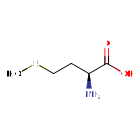
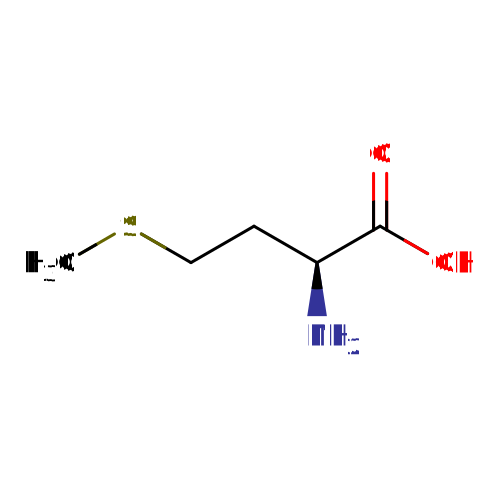
Structure for Methionine (DB00134)
- Weight
- Average: 149.211
Monoisotopic: 149.051049291 - Chemical Formula
- C5H11NO2S
- Synonyms
- (2S)-2-amino-4-(methylsulfanyl)butanoic acid
- (S)-2-amino-4-(methylthio)butanoic acid
- (S)-2-amino-4-(methylthio)butyric acid
- (S)-methionine
- L-(−)-methionine
- L-a-Amino-g-methylthiobutyric acid
- L-Methionin
- L-Methionine
- L-α-amino-γ-methylmercaptobutyric acid
- M
- Met
- Methionine

Pharmacology
- Indication
Used for protein synthesis including the formation of SAMe, L-homocysteine, L-cysteine, taurine, and sulfate.
 Reduce drug development failure ratesBuild, train, & validate machine-learning modelswith evidence-based and structured datasets.Build, train, & validate predictive machine-learning models with structured datasets.
- Associated Conditions
Indication Type Indication Combined Product Details Approval Level Age Group Patient Characteristics Dose Form Used in combination to treat Hepatic encephalopathy (he) Combination Product in combination with: Ascorbic acid (DB00126), Thiamine (DB00152), Calcifediol (DB00146), Adenine (DB00173), Tyrosine (DB00135), Tryptophan (DB00150), Phosphoric acid (DB09394), Biotin (DB00121), Sodium bisulfite (DB14015), Valine (DB00161), Ademetionine (DB00118), Aspartame (DB00168), Vitamin A (DB00162), NADH (DB00157), Cysteine (DB00151), Lysine (DB00123) •••••••••••• •••••••• - Associated Therapies
- Contraindications & Blackbox Warnings
 Prevent Adverse Drug Events TodayTap into our Clinical API for life-saving information on contraindications & blackbox warnings, population restrictions, harmful risks, & more.Avoid life-threatening adverse drug events with our Clinical API
- Pharmacodynamics
L-Methionine is a principle supplier of sulfur which prevents disorders of the hair, skin and nails; helps lower cholesterol levels by increasing the liver's production of lecithin; reduces liver fat and protects the kidneys; a natural chelating agent for heavy metals; regulates the formation of ammonia and creates ammonia-free urine which reduces bladder irritation; influences hair follicles and promotes hair growth. L-methionine may protect against the toxic effects of hepatotoxins, such as acetaminophen. Methionine may have antioxidant activity.
- Mechanism of action
The mechanism of the possible anti-hepatotoxic activity of L-methionine is not entirely clear. It is thought that metabolism of high doses of acetaminophen in the liver lead to decreased levels of hepatic glutathione and increased oxidative stress. L-methionine is a precursor to L-cysteine. L-cysteine itself may have antioxidant activity. L-cysteine is also a precursor to the antioxidant glutathione. Antioxidant activity of L-methionine and metabolites of L-methionine appear to account for its possible anti-hepatotoxic activity. Recent research suggests that methionine itself has free-radical scavenging activity by virtue of its sulfur, as well as its chelating ability.
Target Actions Organism UMethionine synthase reductase product ofHumans UMethionine synthase product ofHumans UMethionine aminopeptidase 2 product ofHumans UBetaine--homocysteine S-methyltransferase 1 product ofHumans US-methylmethionine--homocysteine S-methyltransferase BHMT2 product ofHumans - Absorption
Absorbed from the lumen of the small intestine into the enterocytes by an active transport process.
- Volume of distribution
Not Available
- Protein binding
Not Available
- Metabolism
Hepatic
- Route of elimination
Not Available
- Half-life
Not Available
- Clearance
Not Available
- Adverse Effects
 Improve decision support & research outcomesWith structured adverse effects data, including: blackbox warnings, adverse reactions, warning & precautions, & incidence rates. View sample adverse effects data in our new Data Library!Improve decision support & research outcomes with our structured adverse effects data.
- Toxicity
Doses of L-methionine of up to 250 mg daily are generally well tolerated. Higher doses may cause nausea, vomiting and headache. Healthy adults taking 8 grams of L-methionine daily for four days were found to have reduced serum folate levels and leucocytosis. Healthy adults taking 13.9 grams of L-methionine daily for five days were found to have changes in serum pH and potassium and increased urinary calcium excretion. Schizophrenic patients given 10 to 20 grams of L-methionine daily for two weeks developed functional psychoses. Single doses of 8 grams precipitated encephalopathy in patients with cirrhosis.
- Pathways
- Pharmacogenomic Effects/ADRs
- Not Available
Interactions
- Drug Interactions
- This information should not be interpreted without the help of a healthcare provider. If you believe you are experiencing an interaction, contact a healthcare provider immediately. The absence of an interaction does not necessarily mean no interactions exist.
Drug Interaction Integrate drug-drug
interactions in your softwareLevodopa The therapeutic efficacy of Levodopa can be decreased when used in combination with Methionine. - Food Interactions
- Take with food.
Products
 Drug product information from 10+ global regionsOur datasets provide approved product information including:dosage, form, labeller, route of administration, and marketing period.Access drug product information from over 10 global regions.
- Product Ingredients
Ingredient UNII CAS InChI Key Methionine hydrochloride 99JNR46OKX 6810-12-4 OSUIUMQSEFFIKM-WCCKRBBISA-N - International/Other Brands
- Acimethin
- Mixture Products
Name Ingredients Dosage Route Labeller Marketing Start Marketing End Region Image 2.5% Travasol Amino Acid Injection With Electrolytes In 10% Dextrose Methionine (100 mg / 100 mL) + Alanine (520 mg / 100 mL) + Arginine (290 mg / 100 mL) + Dextrose, unspecified form (10 g / 100 mL) + Dipotassium phosphate (130.5 mg / 100 mL) + Glycine (260 mg / 100 mL) + Histidine (120 mg / 100 mL) + Isoleucine (150 mg / 100 mL) + Leucine (182.5 mg / 100 mL) + Lysine hydrochloride (145 mg / 100 mL) + Magnesium chloride (25.5 mg / 100 mL) + Phenylalanine (140 mg / 100 mL) + Proline (170 mg / 100 mL) + Serine (125 mg / 100 mL) + Sodium acetate (170 mg / 100 mL) + Sodium chloride (29.3 mg / 100 mL) + Threonine (105 mg / 100 mL) + Tryptophan (45 mg / 100 mL) + Tyrosine (10 mg / 100 mL) + Valine (145 mg / 100 mL) Solution Intravenous Baxter Corporation Clintec Nutrition Division 1996-12-31 2015-08-05 Canada 
2.5% Travasol Amino Acid Injection With Electrolytes In 10% Dextrose Clinimix Methionine (145 mg / 100 mL) + Alanine (520 mg / 100 mL) + Arginine (260 mg / 100 mL) + Dextrose, unspecified form (10 g / 100 mL) + Dipotassium phosphate (130.5 mg / 100 mL) + Glycine (520 mg / 100 mL) + Histidine (110 mg / 100 mL) + Isoleucine (120 mg / 100 mL) + L-Leucine hydrochloride (155 mg / 100 mL) + Lysine hydrochloride (145 mg / 100 mL) + Magnesium chloride (25.5 mg / 100 mL) + Phenylalanine hydrochloride (155 mg / 100 mL) + Proline (105 mg / 100 mL) + Sodium acetate (170 mg / 100 mL) + Sodium chloride (29.3 mg / 100 mL) + Threonine (105 mg / 100 mL) + Tryptophan (45 mg / 100 mL) + Tyrosine (10 mg / 100 mL) + Valine (115 mg / 100 mL) Solution Intravenous Baxter Corporation Clintec Nutrition Division 1993-12-31 2015-08-05 Canada 2.5% Travasol Amino Acid Injection Without Electrolytes In 10% Dextrose Quickmix Methionine (195 mg / 100 mL) + Alanine (520 mg / 100 mL) + Arginine (260 mg / 100 mL) + Dextrose, unspecified form (10 g / 100 mL) + Glycine (520 mg / 100 mL) + Histidine (110 mg / 100 mL) + Isoleucine (120 mg / 100 mL) + L-Leucine hydrochloride (155 mg / 100 mL) + Lysine hydrochloride (195 mg / 100 mL) + Phenylalanine hydrochloride (155 mg / 100 mL) + Proline (105 mg / 100 mL) + Threonine (105 mg / 100 mL) + Tryptophan (45 mg / 100 mL) + Tyrosine (10 mg / 100 mL) + Valine (115 mg / 100 mL) Solution Intravenous Baxter Corporation Clintec Nutrition Division 1995-12-31 2007-08-02 Canada 2.5%travasol Amino Acid InJ.W.eleC.W.25%dex Methionine (100 mg / 100 mL) + Alanine (520 mg / 100 mL) + Arginine (290 mg / 100 mL) + Dextrose, unspecified form (25 g / 100 mL) + Dipotassium phosphate (130.5 mg / 100 mL) + Glycine (260 mg / 100 mL) + Histidine (120 mg / 100 mL) + Isoleucine (150 mg / 100 mL) + Leucine (182.5 mg / 100 mL) + Lysine hydrochloride (145 mg / 100 mL) + Magnesium chloride (25.5 mg / 100 mL) + Phenylalanine (140 mg / 100 mL) + Proline (170 mg / 100 mL) + Serine (125 mg / 100 mL) + Sodium acetate (170 mg / 100 mL) + Sodium chloride (29.3 mg / 100 mL) + Threonine (105 mg / 100 mL) + Tryptophan (45 mg / 100 mL) + Tyrosine (10 mg / 100 mL) + Valine (145 mg / 100 mL) Liquid Intravenous Clintec Nutrition Company 1996-07-30 1998-08-13 Canada 2.75% Travas. Amino Acid InJ.W.elecw.25%dex Methionine (110 mg / 100 mL) + Alanine (570 mg / 100 mL) + Arginine (316 mg / 100 mL) + Dextrose, unspecified form (25 g / 100 mL) + Dipotassium phosphate (261 mg / 100 mL) + Glycine (283 mg / 100 mL) + Histidine (132 mg / 100 mL) + Isoleucine (165 mg / 100 mL) + Leucine (201 mg / 100 mL) + Lysine hydrochloride (159.5 mg / 100 mL) + Magnesium chloride (51 mg / 100 mL) + Phenylalanine (154 mg / 100 mL) + Proline (187 mg / 100 mL) + Serine (137.5 mg / 100 mL) + Sodium acetate (215.5 mg / 100 mL) + Sodium chloride (112 mg / 100 mL) + Threonine (115.5 mg / 100 mL) + Tryptophan (49.5 mg / 100 mL) + Tyrosine (11 mg / 100 mL) + Valine (159.5 mg / 100 mL) Liquid Intravenous Clintec Nutrition Company 1996-07-30 1998-08-13 Canada - Unapproved/Other Products
Name Ingredients Dosage Route Labeller Marketing Start Marketing End Region Image Clinimix Methionine (3.40 g/2L) + Alanine (17.60 g/2L) + Arginine (9.78 g/2L) + Calcium chloride dihydrate (0.66 g/2L) + D-glucose monohydrate (300.00 g/2L) + Dipotassium phosphate (5.22 g/2L) + Glycine (8.76 g/2L) + Histidine (4.08 g/2L) + Isoleucine (5.10 g/2L) + Leucine (6.20 g/2L) + Lysine (4.93 g/2L) + Magnesium chloride hexahydrate (1.02 g/2L) + Phenylalanine (4.76 g/2L) + Proline (5.78 g/2L) + Serine (4.25 g/2L) + Sodium acetate trihydrate (5.94 g/2L) + Sodium chloride (1.54 g/2L) + Threonine (3.57 g/2L) + Tryptophan (1.53 g/2L) + Tyrosine (0.34 g/2L) + Valine (4.93 g/2L) Solution Intravenous Baxter Healthcare Corporation 2017-10-25 2019-11-30 US 
Clinimix Methionine (1.10 g/1L) + Alanine (5.70 g/1L) + Arginine (3.17 g/1L) + Calcium chloride dihydrate (0.33 g/1L) + D-glucose monohydrate (75.00 g/1L) + Dipotassium phosphate (2.61 g/1L) + Glycine (2.84 g/1L) + Histidine (1.32 g/1L) + Isoleucine (1.65 g/1L) + Leucine (2.01 g/1L) + Lysine (2.00 g/1L) + Magnesium chloride hexahydrate (0.51 g/1L) + Phenylalanine (1.54 g/1L) + Proline (1.87 g/1L) + Serine (1.38 g/1L) + Sodium acetate trihydrate (2.16 g/1L) + Sodium chloride (1.12 g/1L) + Threonine (1.16 g/1L) + Tryptophan (0.50 g/1L) + Tyrosine (0.11 g/1L) + Valine (1.60 g/1L) Solution Intravenous Baxter Healthcare Corporation 2017-10-25 2019-11-30 US Clinimix Methionine (1.10 g/1L) + Alanine (5.70 g/1L) + Arginine (3.17 g/1L) + Calcium chloride dihydrate (0.33 g/1L) + D-glucose monohydrate (100.00 g/1L) + Dipotassium phosphate (2.61 g/1L) + Glycine (2.84 g/1L) + Histidine (1.32 g/1L) + Isoleucine (1.65 g/1L) + Leucine (2.01 g/1L) + Lysine (2.00 g/1L) + Magnesium chloride hexahydrate (0.51 g/1L) + Phenylalanine (1.54 g/1L) + Proline (1.87 g/1L) + Serine (1.38 g/1L) + Sodium acetate trihydrate (2.16 g/1L) + Sodium chloride (1.12 g/1L) + Threonine (1.16 g/1L) + Tryptophan (0.50 g/1L) + Tyrosine (0.11 g/1L) + Valine (1.60 g/1L) Solution Intravenous Baxter Healthcare Corporation 2017-10-25 2019-11-30 US Distilpure Msm Methionine (0.02 g/100g) + Biotin (0.02 g/100g) + Cysteine (0.02 g/100g) + Cystine (0.05 g/100g) + Thiamine chloride (0.02 g/100g) Powder Topical Mbg Inc (Korea Institute of Science Development) 2017-09-16 2018-09-16 US FREAMINE III %10 1000 ML(SETLI) Methionine (0.53 %) + Alanine (0.71 %) + Arginine (0.95 %) + Cysteine (0.016 %) + Glycine (1.4 %) + Histidine (0.28 %) + Isoleucine (0.69 %) + Leucine (0.91 %) + Lysine (0.73 %) + Phenylalanine (0.56 %) + Proline (1.12 %) + Serine (0.59 %) + Threonine (0.4 %) + Tryptophan (0.15 %) + Valine (0.66 %) Solution Intravenous ECZACIBAŞI-BAXTER HASTANE ÜRÜNLERİ SAN.VE TİC. A.Ş. 2013-01-29 2024-01-23 Turkey 
Categories
- ATC Codes
- V03AB26 — Methionine
- Drug Categories
- Chemical TaxonomyProvided by Classyfire
- Description
- This compound belongs to the class of organic compounds known as methionine and derivatives. These are compounds containing methionine or a derivative thereof resulting from reaction of methionine at the amino group or the carboxy group, or from the replacement of any hydrogen of glycine by a heteroatom.
- Kingdom
- Organic compounds
- Super Class
- Organic acids and derivatives
- Class
- Carboxylic acids and derivatives
- Sub Class
- Amino acids, peptides, and analogues
- Direct Parent
- Methionine and derivatives
- Alternative Parents
- L-alpha-amino acids / Thia fatty acids / Amino acids / Sulfenyl compounds / Monocarboxylic acids and derivatives / Dialkylthioethers / Carboxylic acids / Organopnictogen compounds / Organic oxides / Monoalkylamines show 2 more
- Substituents
- Aliphatic acyclic compound / Alpha-amino acid / Amine / Amino acid / Carbonyl group / Carboxylic acid / Dialkylthioether / Fatty acid / Fatty acyl / Hydrocarbon derivative show 15 more
- Molecular Framework
- Aliphatic acyclic compounds
- External Descriptors
- aspartate family amino acid, proteinogenic amino acid, L-alpha-amino acid, methionine (CHEBI:16643) / Common amino acids (C00073)
- Affected organisms
- Humans and other mammals
Chemical Identifiers
- UNII
- AE28F7PNPL
- CAS number
- 63-68-3
- InChI Key
- FFEARJCKVFRZRR-BYPYZUCNSA-N
- InChI
- InChI=1S/C5H11NO2S/c1-9-3-2-4(6)5(7)8/h4H,2-3,6H2,1H3,(H,7,8)/t4-/m0/s1
- IUPAC Name
- (2S)-2-amino-4-(methylsulfanyl)butanoic acid
- SMILES
- CSCC[C@H](N)C(O)=O
References
- Synthesis Reference
Clyde Eugene Stauffer, "Process for producing N-acyl-L-methionine." U.S. Patent US3963573, issued June, 1950.
US3963573- General References
- Not Available
- External Links
- Human Metabolome Database
- HMDB0000696
- KEGG Drug
- D00019
- KEGG Compound
- C00073
- PubChem Compound
- 6137
- PubChem Substance
- 46505750
- ChemSpider
- 5907
- BindingDB
- 50142500
- 6837
- ChEBI
- 57844
- ChEMBL
- CHEMBL42336
- ZINC
- ZINC000001532529
- PharmGKB
- PA450423
- PDBe Ligand
- MET
- PDRhealth
- PDRhealth Drug Page
- Wikipedia
- Methionine
- MSDS
- Download (72.8 KB)
Clinical Trials
- Clinical Trials
Phase Status Purpose Conditions Count 4 Active Not Recruiting Treatment Critically Ill Patients / Starvation 1 4 Completed Treatment Unipolar Depression 1 4 Recruiting Basic Science Healthy Volunteers (HV) / Obesity / Type 2 Diabetes Mellitus 1 4 Recruiting Prevention Intestinal Obstruction / Laparotomies / Mesenteric vascular insufficiency 1 4 Terminated Supportive Care Cancer-related Malnutrition 1
Pharmacoeconomics
- Manufacturers
- Not Available
- Packagers
- Amend
- Spectrum Pharmaceuticals
- Dosage Forms
Form Route Strength Solution Parenteral Tablet, film coated Oral 500 mg Solution Intravenous 10.50 g/1000ml Injection Intravenous 0.5 g/l Injection Intravenous 0.25 g/1000ml Injection Intravenous 0.52 g/l Injection, solution Intravenous Injection Intravenous 11.000 g/1000ml Solution Intravenous 18.5 g/L Injection Intravenous 5.5 g/1000ml Lotion Topical Liquid Topical Injection, emulsion Intravenous Powder Topical Injection Intravenous 16 g/1000ml Emulsion Parenteral 20.000 g Injection Intravenous 1.6 g/l Tablet Oral Injection Intravenous 0.37 g/l Injection, solution, concentrate Intravenous Injection, emulsion Parenteral Emulsion Intravenous 0.466 g Injection, emulsion; injection, solution Intravenous Emulsion Parenteral Emulsion Intravenous Injection, solution Injection, emulsion Intravenous 4.656 g/1000ml Injection, emulsion Intravenous 6.792 g/1000ml Solution Intraperitoneal Injection, solution Intraperitoneal Liquid Hemodialysis Solution Intraperitoneal 0.184 g/l Emulsion Intravenous 176 g/l Emulsion Intravenous 4 g Emulsion Intravenous 3 g Solution Intravenous Injection Intravenous 4 g/l Injection Intravenous 0.21 g/100ml Liquid Intravenous Capsule Oral Emulsion Intravenous 13.000 g Emulsion Parenteral 42.00 g Injection, emulsion Intravenous 14 g/1000ml Injection Intravenous 10.30 g/l Injection Intravenous Capsule, gelatin coated Oral - Prices
Unit description Cost Unit Dl-methionine powder 0.26USD g Methionine powder 0.03USD g DrugBank does not sell nor buy drugs. Pricing information is supplied for informational purposes only.- Patents
- Not Available
Properties
- State
- Solid
- Experimental Properties
Property Value Source melting point (°C) 283 dec °C PhysProp water solubility 5.66E+004 mg/L (at 25 °C) YALKOWSKY,SH & DANNENFELSER,RM (1992) logP -1.87 HANSCH,C ET AL. (1995) logS -0.42 ADME Research, USCD pKa 2.28 (at 25 °C) ULLMANN VA2:63 (1985) - Predicted Properties
Property Value Source Water Solubility 23.9 mg/mL ALOGPS logP -1.8 ALOGPS logP -2.2 Chemaxon logS -0.8 ALOGPS pKa (Strongest Acidic) 2.53 Chemaxon pKa (Strongest Basic) 9.5 Chemaxon Physiological Charge 0 Chemaxon Hydrogen Acceptor Count 3 Chemaxon Hydrogen Donor Count 2 Chemaxon Polar Surface Area 63.32 Å2 Chemaxon Rotatable Bond Count 4 Chemaxon Refractivity 37.59 m3·mol-1 Chemaxon Polarizability 15.5 Å3 Chemaxon Number of Rings 0 Chemaxon Bioavailability 1 Chemaxon Rule of Five Yes Chemaxon Ghose Filter No Chemaxon Veber's Rule No Chemaxon MDDR-like Rule No Chemaxon - Predicted ADMET Features
Property Value Probability Human Intestinal Absorption + 0.9797 Blood Brain Barrier + 0.8447 Caco-2 permeable - 0.6698 P-glycoprotein substrate Non-substrate 0.5351 P-glycoprotein inhibitor I Non-inhibitor 0.9802 P-glycoprotein inhibitor II Non-inhibitor 0.9919 Renal organic cation transporter Non-inhibitor 0.8913 CYP450 2C9 substrate Non-substrate 0.7875 CYP450 2D6 substrate Non-substrate 0.7323 CYP450 3A4 substrate Non-substrate 0.7008 CYP450 1A2 substrate Non-inhibitor 0.8295 CYP450 2C9 inhibitor Non-inhibitor 0.9489 CYP450 2D6 inhibitor Non-inhibitor 0.9567 CYP450 2C19 inhibitor Non-inhibitor 0.951 CYP450 3A4 inhibitor Non-inhibitor 0.9758 CYP450 inhibitory promiscuity Low CYP Inhibitory Promiscuity 0.9938 Ames test Non AMES toxic 0.9132 Carcinogenicity Non-carcinogens 0.9224 Biodegradation Ready biodegradable 0.5613 Rat acute toxicity 0.6483 LD50, mol/kg Not applicable hERG inhibition (predictor I) Weak inhibitor 0.9725 hERG inhibition (predictor II) Non-inhibitor 0.9655
Spectra
- Mass Spec (NIST)
- Download (9.39 KB)
- Spectra
- Chromatographic Properties
Collision Cross Sections (CCS)
Adduct CCS Value (Å2) Source type Source [M-H]- 129.9462456 predictedDarkChem Lite v0.1.0 [M-H]- 129.9053456 predictedDarkChem Lite v0.1.0 [M-H]- 130.1057456 predictedDarkChem Lite v0.1.0 [M-H]- 129.9135456 predictedDarkChem Lite v0.1.0 [M-H]- 125.45654 predictedDeepCCS 1.0 (2019) [M-H]- 129.9462456 predictedDarkChem Lite v0.1.0 [M-H]- 129.9053456 predictedDarkChem Lite v0.1.0 [M-H]- 130.1057456 predictedDarkChem Lite v0.1.0 [M-H]- 129.9135456 predictedDarkChem Lite v0.1.0 [M-H]- 125.45654 predictedDeepCCS 1.0 (2019) [M+H]+ 130.5222456 predictedDarkChem Lite v0.1.0 [M+H]+ 133.706351 predictedDarkChem Standard v0.1.0 [M+H]+ 130.7864456 predictedDarkChem Lite v0.1.0 [M+H]+ 130.6656456 predictedDarkChem Lite v0.1.0 [M+H]+ 128.71059 predictedDeepCCS 1.0 (2019) [M+H]+ 130.5222456 predictedDarkChem Lite v0.1.0 [M+H]+ 133.706351 predictedDarkChem Standard v0.1.0 [M+H]+ 130.7864456 predictedDarkChem Lite v0.1.0 [M+H]+ 130.6656456 predictedDarkChem Lite v0.1.0 [M+H]+ 128.71059 predictedDeepCCS 1.0 (2019) [M+Na]+ 130.2746456 predictedDarkChem Lite v0.1.0 [M+Na]+ 130.1455456 predictedDarkChem Lite v0.1.0 [M+Na]+ 130.3304456 predictedDarkChem Lite v0.1.0 [M+Na]+ 130.4174456 predictedDarkChem Lite v0.1.0 [M+Na]+ 137.35616 predictedDeepCCS 1.0 (2019) [M+Na]+ 130.2746456 predictedDarkChem Lite v0.1.0 [M+Na]+ 130.1455456 predictedDarkChem Lite v0.1.0 [M+Na]+ 130.3304456 predictedDarkChem Lite v0.1.0 [M+Na]+ 130.4174456 predictedDarkChem Lite v0.1.0 [M+Na]+ 137.35616 predictedDeepCCS 1.0 (2019)
Targets

- Kind
- Protein
- Organism
- Humans
- Pharmacological action
- Unknown
- Actions
- Product of
- General Function
- Oxidoreductase activity, oxidizing metal ions, nad or nadp as acceptor
- Specific Function
- Involved in the reductive regeneration of cob(I)alamin (vitamin B12) cofactor required for the maintenance of methionine synthase in a functional state. Necessary for utilization of methylgroups fr...
- Gene Name
- MTRR
- Uniprot ID
- Q9UBK8
- Uniprot Name
- Methionine synthase reductase
- Molecular Weight
- 80409.22 Da
References
- Kim DJ, Park BL, Koh JM, Kim GS, Kim LH, Cheong HS, Shin HD, Hong JM, Kim TH, Shin HI, Park EK, Kim SY: Methionine synthase reductase polymorphisms are associated with serum osteocalcin levels in postmenopausal women. Exp Mol Med. 2006 Oct 31;38(5):519-24. [Article]
- Tvedegaard KC, Rudiger NS, Pedersen BN, Moller J: Detection of MTRR 66A-->G polymorphism using the real-time polymerase chain reaction machine LightCycler for determination of composition of allele after restriction cleavage. Scand J Clin Lab Invest. 2006;66(8):685-93. [Article]
- Elmore CL, Wu X, Leclerc D, Watson ED, Bottiglieri T, Krupenko NI, Krupenko SA, Cross JC, Rozen R, Gravel RA, Matthews RG: Metabolic derangement of methionine and folate metabolism in mice deficient in methionine synthase reductase. Mol Genet Metab. 2007 May;91(1):85-97. Epub 2007 Mar 21. [Article]
- Kind
- Protein
- Organism
- Humans
- Pharmacological action
- Unknown
- Actions
- Product of
- General Function
- Zinc ion binding
- Specific Function
- Catalyzes the transfer of a methyl group from methyl-cobalamin to homocysteine, yielding enzyme-bound cob(I)alamin and methionine. Subsequently, remethylates the cofactor using methyltetrahydrofola...
- Gene Name
- MTR
- Uniprot ID
- Q99707
- Uniprot Name
- Methionine synthase
- Molecular Weight
- 140525.91 Da
References
- Taurog RE, Matthews RG: Activation of methyltetrahydrofolate by cobalamin-independent methionine synthase. Biochemistry. 2006 Apr 25;45(16):5092-102. [Article]
- Hughes JA: In vivo hydrolysis of S-adenosyl-L-methionine in Escherichia coli increases export of 5-methylthioribose. Can J Microbiol. 2006 Jun;52(6):599-602. [Article]
- Reynolds E: Vitamin B12, folic acid, and the nervous system. Lancet Neurol. 2006 Nov;5(11):949-60. [Article]
- Banks EC, Doughty SW, Toms SM, Wheelhouse RT, Nicolaou A: Inhibition of cobalamin-dependent methionine synthase by substituted benzo-fused heterocycles. FEBS J. 2007 Jan;274(1):287-99. [Article]
- Yamada K, Kawata T, Wada M, Mori K, Tamai H, Tanaka N, Tadokoro T, Tobimatsu T, Toraya T, Maekawa A: Testicular injury to rats fed on soybean protein-based vitamin B12-deficient diet can be reduced by methionine supplementation. J Nutr Sci Vitaminol (Tokyo). 2007 Apr;53(2):95-101. [Article]
- Kind
- Protein
- Organism
- Humans
- Pharmacological action
- Unknown
- Actions
- Product of
- General Function
- Poly(a) rna binding
- Specific Function
- Cotranslationally removes the N-terminal methionine from nascent proteins. The N-terminal methionine is often cleaved when the second residue in the primary sequence is small and uncharged (Met-Ala...
- Gene Name
- METAP2
- Uniprot ID
- P50579
- Uniprot Name
- Methionine aminopeptidase 2
- Molecular Weight
- 52891.145 Da
References
- Upadhya R, Zhang HS, Weiss LM: System for expression of microsporidian methionine amino peptidase type 2 (MetAP2) in the yeast Saccharomyces cerevisiae. Antimicrob Agents Chemother. 2006 Oct;50(10):3389-95. Epub 2006 Aug 17. [Article]
- Sheppard GS, Wang J, Kawai M, Fidanze SD, BaMaung NY, Erickson SA, Barnes DM, Tedrow JS, Kolaczkowski L, Vasudevan A, Park DC, Wang GT, Sanders WJ, Mantei RA, Palazzo F, Tucker-Garcia L, Lou P, Zhang Q, Park CH, Kim KH, Petros A, Olejniczak E, Nettesheim D, Hajduk P, Henkin J, Lesniewski R, Davidsen SK, Bell RL: Discovery and optimization of anthranilic acid sulfonamides as inhibitors of methionine aminopeptidase-2: a structural basis for the reduction of albumin binding. J Med Chem. 2006 Jun 29;49(13):3832-49. [Article]
- Addlagatta A, Matthews BW: Structure of the angiogenesis inhibitor ovalicin bound to its noncognate target, human Type 1 methionine aminopeptidase. Protein Sci. 2006 Aug;15(8):1842-8. Epub 2006 Jul 5. [Article]
- Hu X, Addlagatta A, Lu J, Matthews BW, Liu JO: Elucidation of the function of type 1 human methionine aminopeptidase during cell cycle progression. Proc Natl Acad Sci U S A. 2006 Nov 28;103(48):18148-53. Epub 2006 Nov 17. [Article]
- Nonato MC, Widom J, Clardy J: Human methionine aminopeptidase type 2 in complex with L- and D-methionine. Bioorg Med Chem Lett. 2006 May 15;16(10):2580-3. Epub 2006 Mar 15. [Article]
- Kind
- Protein
- Organism
- Humans
- Pharmacological action
- Unknown
- Actions
- Product of
- General Function
- Zinc ion binding
- Specific Function
- Involved in the regulation of homocysteine metabolism. Converts betaine and homocysteine to dimethylglycine and methionine, respectively. This reaction is also required for the irreversible oxidati...
- Gene Name
- BHMT
- Uniprot ID
- Q93088
- Uniprot Name
- Betaine--homocysteine S-methyltransferase 1
- Molecular Weight
- 44998.205 Da
References
- Slow S, Garrow TA: Liver choline dehydrogenase and kidney betaine-homocysteine methyltransferase expression are not affected by methionine or choline intake in growing rats. J Nutr. 2006 Sep;136(9):2279-83. [Article]
- Sparks JD, Collins HL, Chirieac DV, Cianci J, Jokinen J, Sowden MP, Galloway CA, Sparks CE: Hepatic very-low-density lipoprotein and apolipoprotein B production are increased following in vivo induction of betaine-homocysteine S-methyltransferase. Biochem J. 2006 Apr 15;395(2):363-71. [Article]
- Uthus EO, Reeves PG, Saari JT: Copper deficiency decreases plasma homocysteine in rats. J Nutr. 2007 Jun;137(6):1370-4. [Article]
- Liu J, Xie Y, Cooper R, Ducharme DM, Tennant R, Diwan BA, Waalkes MP: Transplacental exposure to inorganic arsenic at a hepatocarcinogenic dose induces fetal gene expression changes in mice indicative of aberrant estrogen signaling and disrupted steroid metabolism. Toxicol Appl Pharmacol. 2007 May 1;220(3):284-91. Epub 2007 Feb 6. [Article]
- Hazra A, Wu K, Kraft P, Fuchs CS, Giovannucci EL, Hunter DJ: Twenty-four non-synonymous polymorphisms in the one-carbon metabolic pathway and risk of colorectal adenoma in the Nurses' Health Study. Carcinogenesis. 2007 Jul;28(7):1510-9. Epub 2007 Mar 26. [Article]
- Kind
- Protein
- Organism
- Humans
- Pharmacological action
- Unknown
- Actions
- Product of
- General Function
- Zinc ion binding
- Specific Function
- Involved in the regulation of homocysteine metabolism. Converts homocysteine to methionine using S-methylmethionine (SMM) as a methyl donor.
- Gene Name
- BHMT2
- Uniprot ID
- Q9H2M3
- Uniprot Name
- S-methylmethionine--homocysteine S-methyltransferase BHMT2
- Molecular Weight
- 40353.84 Da
References
- Szegedi SS, Castro CC, Koutmos M, Garrow TA: Betaine-homocysteine S-methyltransferase-2 is an S-methylmethionine-homocysteine methyltransferase. J Biol Chem. 2008 Apr 4;283(14):8939-45. doi: 10.1074/jbc.M710449200. Epub 2008 Jan 29. [Article]
Enzymes
- Kind
- Protein
- Organism
- Humans
- Pharmacological action
- Unknown
- Actions
- Substrate
- General Function
- Methionine adenosyltransferase activity
- Specific Function
- Catalyzes the formation of S-adenosylmethionine from methionine and ATP.
- Gene Name
- MAT2A
- Uniprot ID
- P31153
- Uniprot Name
- S-adenosylmethionine synthase isoform type-2
- Molecular Weight
- 43660.37 Da
References
- Rodriguez JL, Boukaba A, Sandoval J, Georgieva EI, Latasa MU, Garcia-Trevijano ER, Serviddio G, Nakamura T, Avila MA, Sastre J, Torres L, Mato JM, Lopez-Rodas G: Transcription of the MAT2A gene, coding for methionine adenosyltransferase, is up-regulated by E2F and Sp1 at a chromatin level during proliferation of liver cells. Int J Biochem Cell Biol. 2007;39(4):842-50. Epub 2007 Jan 20. [Article]
- Yang H, Magilnick N, Noureddin M, Mato JM, Lu SC: Effect of hepatocyte growth factor on methionine adenosyltransferase genes and growth is cell density-dependent in HepG2 cells. J Cell Physiol. 2007 Mar;210(3):766-73. [Article]
- Lin WC, Lin WL: Ameliorative effect of Ganoderma lucidum on carbon tetrachloride-induced liver fibrosis in rats. World J Gastroenterol. 2006 Jan 14;12(2):265-70. [Article]
- Chen H, Xia M, Lin M, Yang H, Kuhlenkamp J, Li T, Sodir NM, Chen YH, Josef-Lenz H, Laird PW, Clarke S, Mato JM, Lu SC: Role of methionine adenosyltransferase 2A and S-adenosylmethionine in mitogen-induced growth of human colon cancer cells. Gastroenterology. 2007 Jul;133(1):207-18. Epub 2007 Apr 11. [Article]
- Kind
- Protein
- Organism
- Humans
- Pharmacological action
- Unknown
- Actions
- Substrate
- General Function
- Zinc ion binding
- Specific Function
- Methionine-sulfoxide reductase that specifically reduces methionine (R)-sulfoxide back to methionine. While in many cases, methionine oxidation is the result of random oxidation following oxidative...
- Gene Name
- MSRB2
- Uniprot ID
- Q9Y3D2
- Uniprot Name
- Methionine-R-sulfoxide reductase B2, mitochondrial
- Molecular Weight
- 19536.055 Da
References
- Schallreuter KU, Rubsam K, Chavan B, Zothner C, Gillbro JM, Spencer JD, Wood JM: Functioning methionine sulfoxide reductases A and B are present in human epidermal melanocytes in the cytosol and in the nucleus. Biochem Biophys Res Commun. 2006 Mar 31;342(1):145-52. Epub 2006 Feb 3. [Article]
- Ranaivoson FM, Kauffmann B, Neiers F, Wu J, Boschi-Muller S, Panjikar S, Aubry A, Branlant G, Favier F: The X-ray structure of the N-terminal domain of PILB from Neisseria meningitidis reveals a thioredoxin-fold. J Mol Biol. 2006 Apr 28;358(2):443-54. Epub 2006 Feb 28. [Article]
- Kind
- Protein
- Organism
- Humans
- Pharmacological action
- Unknown
- Actions
- Substrate
- General Function
- Methionine adenosyltransferase activity
- Specific Function
- Catalyzes the formation of S-adenosylmethionine from methionine and ATP.
- Gene Name
- MAT1A
- Uniprot ID
- Q00266
- Uniprot Name
- S-adenosylmethionine synthase isoform type-1
- Molecular Weight
- 43647.6 Da
References
- Linnebank M, Lagler F, Muntau AC, Roschinger W, Olgemoller B, Fowler B, Koch HG: Methionine adenosyltransferase (MAT) I/III deficiency with concurrent hyperhomocysteinaemia: two novel cases. J Inherit Metab Dis. 2005;28(6):1167-8. [Article]
- Yang H, Magilnick N, Noureddin M, Mato JM, Lu SC: Effect of hepatocyte growth factor on methionine adenosyltransferase genes and growth is cell density-dependent in HepG2 cells. J Cell Physiol. 2007 Mar;210(3):766-73. [Article]
- Chen H, Xia M, Lin M, Yang H, Kuhlenkamp J, Li T, Sodir NM, Chen YH, Josef-Lenz H, Laird PW, Clarke S, Mato JM, Lu SC: Role of methionine adenosyltransferase 2A and S-adenosylmethionine in mitogen-induced growth of human colon cancer cells. Gastroenterology. 2007 Jul;133(1):207-18. Epub 2007 Apr 11. [Article]
- Rodriguez JL, Boukaba A, Sandoval J, Georgieva EI, Latasa MU, Garcia-Trevijano ER, Serviddio G, Nakamura T, Avila MA, Sastre J, Torres L, Mato JM, Lopez-Rodas G: Transcription of the MAT2A gene, coding for methionine adenosyltransferase, is up-regulated by E2F and Sp1 at a chromatin level during proliferation of liver cells. Int J Biochem Cell Biol. 2007;39(4):842-50. Epub 2007 Jan 20. [Article]
- Prudova A, Bauman Z, Braun A, Vitvitsky V, Lu SC, Banerjee R: S-adenosylmethionine stabilizes cystathionine beta-synthase and modulates redox capacity. Proc Natl Acad Sci U S A. 2006 Apr 25;103(17):6489-94. Epub 2006 Apr 13. [Article]
- Kind
- Protein
- Organism
- Humans
- Pharmacological action
- Unknown
- Actions
- Substrate
- General Function
- Zinc ion binding
- Specific Function
- Methionine-sulfoxide reductase that specifically reduces methionine (R)-sulfoxide back to methionine. While in many cases, methionine oxidation is the result of random oxidation following oxidative...
- Gene Name
- MSRB1
- Uniprot ID
- Q9NZV6
- Uniprot Name
- Methionine-R-sulfoxide reductase B1
- Molecular Weight
- 12760.095 Da
References
- Kim HY, Gladyshev VN: Alternative first exon splicing regulates subcellular distribution of methionine sulfoxide reductases. BMC Mol Biol. 2006 Mar 16;7:11. [Article]
- Kim HY, Fomenko DE, Yoon YE, Gladyshev VN: Catalytic advantages provided by selenocysteine in methionine-S-sulfoxide reductases. Biochemistry. 2006 Nov 21;45(46):13697-704. [Article]
- Kind
- Protein
- Organism
- Humans
- Pharmacological action
- Unknown
- Actions
- Substrate
- General Function
- Peptide-methionine (s)-s-oxide reductase activity
- Specific Function
- Has an important function as a repair enzyme for proteins that have been inactivated by oxidation. Catalyzes the reversible oxidation-reduction of methionine sulfoxide in proteins to methionine.
- Gene Name
- MSRA
- Uniprot ID
- Q9UJ68
- Uniprot Name
- Mitochondrial peptide methionine sulfoxide reductase
- Molecular Weight
- 26132.42 Da
References
- Schallreuter KU, Rubsam K, Chavan B, Zothner C, Gillbro JM, Spencer JD, Wood JM: Functioning methionine sulfoxide reductases A and B are present in human epidermal melanocytes in the cytosol and in the nucleus. Biochem Biophys Res Commun. 2006 Mar 31;342(1):145-52. Epub 2006 Feb 3. [Article]
- Su Z, Limberis J, Martin RL, Xu R, Kolbe K, Heinemann SH, Hoshi T, Cox BF, Gintant GA: Functional consequences of methionine oxidation of hERG potassium channels. Biochem Pharmacol. 2007 Sep 1;74(5):702-11. Epub 2007 Jun 7. [Article]
- Oien DB, Moskovitz J: Ablation of the mammalian methionine sulfoxide reductase A affects the expression level of cysteine deoxygenase. Biochem Biophys Res Commun. 2007 Jan 12;352(2):556-9. Epub 2006 Nov 20. [Article]
- Rouhier N, Vieira Dos Santos C, Tarrago L, Rey P: Plant methionine sulfoxide reductase A and B multigenic families. Photosynth Res. 2006 Sep;89(2-3):247-62. Epub 2006 Sep 22. [Article]
- Gand A, Antoine M, Boschi-Muller S, Branlant G: Characterization of the amino acids involved in substrate specificity of methionine sulfoxide reductase A. J Biol Chem. 2007 Jul 13;282(28):20484-91. Epub 2007 May 11. [Article]
- Kind
- Protein
- Organism
- Humans
- Pharmacological action
- Unknown
- Actions
- Substrate
- General Function
- Trna binding
- Specific Function
- Not Available
- Gene Name
- MARS
- Uniprot ID
- P56192
- Uniprot Name
- Methionine--tRNA ligase, cytoplasmic
- Molecular Weight
- 101114.925 Da
References
- Chwatko G, Boers GH, Strauss KA, Shih DM, Jakubowski H: Mutations in methylenetetrahydrofolate reductase or cystathionine beta-synthase gene, or a high-methionine diet, increase homocysteine thiolactone levels in humans and mice. FASEB J. 2007 Jun;21(8):1707-13. Epub 2007 Feb 27. [Article]
- Jakubowski H: Pathophysiological consequences of homocysteine excess. J Nutr. 2006 Jun;136(6 Suppl):1741S-1749S. [Article]
- Vaughan MD, Sampson PB, Daub E, Honek JF: Investigation of bioisosteric effects on the interaction of substrates/ inhibitors with the methionyl-tRNA synthetase from Escherichia coli. Med Chem. 2005 May;1(3):227-37. [Article]
- Kind
- Protein
- Organism
- Humans
- Pharmacological action
- Unknown
- Actions
- Substrate
- General Function
- Methionine-trna ligase activity
- Specific Function
- Not Available
- Gene Name
- MARS2
- Uniprot ID
- Q96GW9
- Uniprot Name
- Methionine--tRNA ligase, mitochondrial
- Molecular Weight
- 66590.29 Da
References
- Overington JP, Al-Lazikani B, Hopkins AL: How many drug targets are there? Nat Rev Drug Discov. 2006 Dec;5(12):993-6. [Article]
- Imming P, Sinning C, Meyer A: Drugs, their targets and the nature and number of drug targets. Nat Rev Drug Discov. 2006 Oct;5(10):821-34. [Article]
- Spencer AC, Heck A, Takeuchi N, Watanabe K, Spremulli LL: Characterization of the human mitochondrial methionyl-tRNA synthetase. Biochemistry. 2004 Aug 3;43(30):9743-54. [Article]
- Kind
- Protein
- Organism
- Humans
- Pharmacological action
- Unknown
- Actions
- Substrate
- General Function
- Methionine adenosyltransferase regulator activity
- Specific Function
- Non-catalytic regulatory subunit of S-adenosylmethionine synthetase 2 (MAT2A), an enzyme that catalyzes the formation of S-adenosylmethionine from methionine and ATP. Regulates the activity of S-ad...
- Gene Name
- MAT2B
- Uniprot ID
- Q9NZL9
- Uniprot Name
- Methionine adenosyltransferase 2 subunit beta
- Molecular Weight
- 37551.535 Da
References
- Overington JP, Al-Lazikani B, Hopkins AL: How many drug targets are there? Nat Rev Drug Discov. 2006 Dec;5(12):993-6. [Article]
- Imming P, Sinning C, Meyer A: Drugs, their targets and the nature and number of drug targets. Nat Rev Drug Discov. 2006 Oct;5(10):821-34. [Article]
- LeGros L, Halim AB, Chamberlin ME, Geller A, Kotb M: Regulation of the human MAT2B gene encoding the regulatory beta subunit of methionine adenosyltransferase, MAT II. J Biol Chem. 2001 Jul 6;276(27):24918-24. Epub 2001 May 3. [Article]
- Kind
- Protein
- Organism
- Humans
- Pharmacological action
- Unknown
- Actions
- Product of
- General Function
- Zinc ion binding
- Specific Function
- Involved in the regulation of homocysteine metabolism. Converts homocysteine to methionine using S-methylmethionine (SMM) as a methyl donor.
- Gene Name
- BHMT2
- Uniprot ID
- Q9H2M3
- Uniprot Name
- S-methylmethionine--homocysteine S-methyltransferase BHMT2
- Molecular Weight
- 40353.84 Da
References
- Szegedi SS, Castro CC, Koutmos M, Garrow TA: Betaine-homocysteine S-methyltransferase-2 is an S-methylmethionine-homocysteine methyltransferase. J Biol Chem. 2008 Apr 4;283(14):8939-45. doi: 10.1074/jbc.M710449200. Epub 2008 Jan 29. [Article]
- Kind
- Protein
- Organism
- Humans
- Pharmacological action
- Unknown
- Actions
- Inhibitor
- General Function
- Manganese ion binding
- Specific Function
- This enzyme has 2 functions: it catalyzes the production of glutamine and 4-aminobutanoate (gamma-aminobutyric acid, GABA), the latter in a pyridoxal phosphate-independent manner (By similarity). E...
- Gene Name
- GLUL
- Uniprot ID
- P15104
- Uniprot Name
- Glutamine synthetase
- Molecular Weight
- 42064.15 Da
References
- Rowe WB, Meister A: Studies on the inhibition of glutamine synthetase by methionine sulfone. Biochemistry. 1973 Apr 10;12(8):1578-82. [Article]
- Rowe WB, Ronzio RA, Meister A: Inhibition of glutamine synthetase by methionine sulfoximine. Studies on methionine sulfoximine phosphate. Biochemistry. 1969 Jun;8(6):2674-80. [Article]
- Orr J, Haselkorn R: Regulation of glutamine synthetase activity and synthesis in free-living and symbiotic Anabaena spp. J Bacteriol. 1982 Nov;152(2):626-35. [Article]
- Kind
- Protein
- Organism
- Humans
- Pharmacological action
- Unknown
- Actions
- Inhibitor
- General Function
- Protein complex binding
- Specific Function
- Catalyzes the conversion of 5,10-methylenetetrahydrofolate to 5-methyltetrahydrofolate, a co-substrate for homocysteine remethylation to methionine.
- Gene Name
- MTHFR
- Uniprot ID
- P42898
- Uniprot Name
- Methylenetetrahydrofolate reductase
- Molecular Weight
- 74595.895 Da
References
- Lor KL, Cossins EA: Regulation of C metabolism by L-methionine in Saccharomyces cerevisiae. Biochem J. 1972 Dec;130(3):773-83. [Article]
Transporters
- Kind
- Protein
- Organism
- Humans
- Pharmacological action
- Unknown
- Actions
- Inhibitor
- General Function
- Transporter activity
- Specific Function
- Sodium-independent transporter that mediates the update of aromatic acid. Can function as a net efflux pathway for aromatic amino acids in the basosolateral epithelial cells (By similarity).
- Gene Name
- SLC16A10
- Uniprot ID
- Q8TF71
- Uniprot Name
- Monocarboxylate transporter 10
- Molecular Weight
- 55492.07 Da
References
- Kim DK, Kanai Y, Chairoungdua A, Matsuo H, Cha SH, Endou H: Expression cloning of a Na+-independent aromatic amino acid transporter with structural similarity to H+/monocarboxylate transporters. J Biol Chem. 2001 May 18;276(20):17221-8. Epub 2001 Feb 20. [Article]


Drug created at June 13, 2005 13:24 / Updated at April 09, 2024 18:11