Identification
- Summary
Glycine is an amino acid commonly used as a component of total parenteral nutrition and is also used as irrigation during surgery.
- Brand Names
- Aminosyn II 7 %, Sulfite-free, Aminosyn-PF 7%, Clinimix 2.75/5, Clinimix E 2.75/5, Clinisol 15, Freamine 6.9, Freamine III 10, Hepatamine 8, Olimel, Periolimel, Plenamine, Premasol, Primene, Procalamine 3, Prosol, Travasol 10, Trophamine 10 %
- Generic Name
- Glycine
- DrugBank Accession Number
- DB00145
- Background
A non-essential amino acid. It is found primarily in gelatin and silk fibroin and used therapeutically as a nutrient. It is also a fast inhibitory neurotransmitter.
- Type
- Small Molecule
- Groups
- Approved, Nutraceutical, Vet approved
- Structure
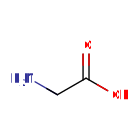
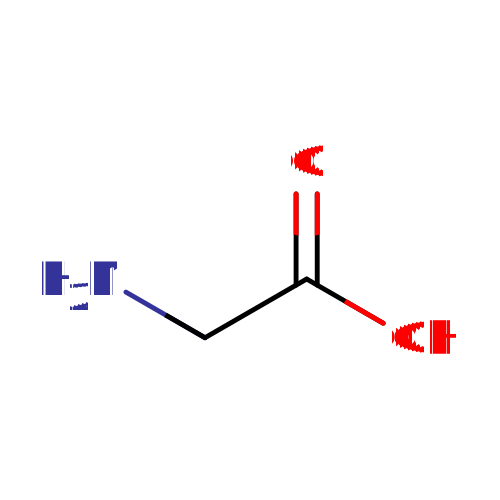
Structure for Glycine (DB00145)
- Weight
- Average: 75.0666
Monoisotopic: 75.032028409 - Chemical Formula
- C2H5NO2
- Synonyms
- Aminoacetic acid
- Aminoessigsäure
- Aminoethanoic acid
- Glicina
- Gly
- Glycin
- Glycine
- Glycocoll
- Glykokoll
- Glyzin
- Leimzucker
- External IDs
- FEMA NO. 3287

Pharmacology
- Indication
Supplemental glycine may have antispastic activity. Very early findings suggest it may also have antipsychotic activity as well as antioxidant and anti-inflammatory activities.
 Reduce drug development failure ratesBuild, train, & validate machine-learning modelswith evidence-based and structured datasets.Build, train, & validate predictive machine-learning models with structured datasets.
- Associated Conditions
Indication Type Indication Combined Product Details Approval Level Age Group Patient Characteristics Dose Form Used in combination for prophylaxis of Coronary vascular graft occlusion Combination Product in combination with: Acetylsalicylic acid (DB00945) ••• ••• •••••••• •••••• •••••• •••••••• •••••• •••••• Used in combination for prophylaxis of Deep vein thrombosis Combination Product in combination with: Acetylsalicylic acid (DB00945) ••• ••• •••••• Used in combination to prevent Myocardial infarction Combination Product in combination with: Acetylsalicylic acid (DB00945) ••• ••• ••••••••• •••••••••• •••••• Used in combination for prophylaxis of Stroke Combination Product in combination with: Acetylsalicylic acid (DB00945) ••• ••• •••••• Used in combination to manage Transient ischemic attack (tia) Combination Product in combination with: Acetylsalicylic acid (DB00945) ••• ••• •••••• - Associated Therapies
- Contraindications & Blackbox Warnings
 Prevent Adverse Drug Events TodayTap into our Clinical API for life-saving information on contraindications & blackbox warnings, population restrictions, harmful risks, & more.Avoid life-threatening adverse drug events with our Clinical API
- Pharmacodynamics
Helps trigger the release of oxygen to the energy requiring cell-making process; Important in the manufacturing of hormones responsible for a strong immune system.
- Mechanism of action
In the CNS, there exist strychnine-sensitive glycine binding sites as well as strychnine-insensitive glycine binding sites. The strychnine-insensitive glycine-binding site is located on the NMDA receptor complex. The strychnine-sensitive glycine receptor complex is comprised of a chloride channel and is a member of the ligand-gated ion channel superfamily. The putative antispastic activity of supplemental glycine could be mediated by glycine's binding to strychnine-sensitive binding sites in the spinal cord. This would result in increased chloride conductance and consequent enhancement of inhibitory neurotransmission. The ability of glycine to potentiate NMDA receptor-mediated neurotransmission raised the possibility of its use in the management of neuroleptic-resistant negative symptoms in schizophrenia. Animal studies indicate that supplemental glycine protects against endotoxin-induced lethality, hypoxia-reperfusion injury after liver transplantation, and D-galactosamine-mediated liver injury. Neutrophils are thought to participate in these pathologic processes via invasion of tissue and releasing such reactive oxygen species as superoxide. In vitro studies have shown that neutrophils contain a glycine-gated chloride channel that can attenuate increases in intracellular calcium and diminsh neutrophil oxidant production. This research is ealy-stage, but suggests that supplementary glycine may turn out to be useful in processes where neutrophil infiltration contributes to toxicity, such as ARDS.
- Absorption
Absorbed from the small intestine via an active transport mechanism.
- Volume of distribution
Not Available
- Protein binding
Not Available
- Metabolism
Hepatic
Hover over products below to view reaction partners
- Route of elimination
Not Available
- Half-life
Not Available
- Clearance
Not Available
- Adverse Effects
 Improve decision support & research outcomesWith structured adverse effects data, including: blackbox warnings, adverse reactions, warning & precautions, & incidence rates. View sample adverse effects data in our new Data Library!Improve decision support & research outcomes with our structured adverse effects data.
- Toxicity
ORL-RAT LD50 7930 mg/kg, SCU-RAT LD50 5200 mg/kg, IVN-RAT LD50 2600 mg/kg, ORL-MUS LD50 4920 mg/kg; Doses of 1 gram daily are very well tolerated. Mild gastrointestinal symptoms are infrequently noted. In one study doses of 90 grams daily were also well tole.
- Pathways
- Pharmacogenomic Effects/ADRs
- Not Available
Interactions
- Drug Interactions
- This information should not be interpreted without the help of a healthcare provider. If you believe you are experiencing an interaction, contact a healthcare provider immediately. The absence of an interaction does not necessarily mean no interactions exist.
Drug Interaction Integrate drug-drug
interactions in your softwareAcetyldigitoxin The risk or severity of adverse effects can be increased when Glycine is combined with Acetyldigitoxin. Deslanoside The risk or severity of adverse effects can be increased when Glycine is combined with Deslanoside. Digitoxin The risk or severity of adverse effects can be increased when Glycine is combined with Digitoxin. Digoxin The risk or severity of adverse effects can be increased when Glycine is combined with Digoxin. - Food Interactions
- No interactions found.
Products
 Drug product information from 10+ global regionsOur datasets provide approved product information including:dosage, form, labeller, route of administration, and marketing period.Access drug product information from over 10 global regions.
- International/Other Brands
- Gyn-Hydralin
- Brand Name Prescription Products
Name Dosage Strength Route Labeller Marketing Start Marketing End Region Image Glycine Solution 1.5 g/100mL Irrigation Baxter Healthcare Corporation 1980-05-30 Not applicable US 
Glycine Irrigant 1.5 g/100mL Irrigation B. Braun Medical Inc. 2013-12-04 Not applicable US Glycine Irrigant 1.5 g/100mL Irrigation B. Braun Medical Inc. 1978-02-06 Not applicable US Glycine Irrigant 1.5 g/100mL Irrigation Hospira, Inc. 2005-07-27 2021-04-01 US Glycine Irrigant 1.5 g/100mL Irrigation Icu Medical Inc. 2019-07-01 Not applicable US - Over the Counter Products
Name Dosage Strength Route Labeller Marketing Start Marketing End Region Image CAREDO Repair Cracked Teeth Toothpastes 100g Paste, dentifrice 0.5 g/100g Dental Hong Kong Prosthodontics Medicine Limited 2018-07-03 Not applicable US CAREDO Treating Gingivitis Toothpastes 100g Paste, dentifrice 0.5 g/100g Dental Hong Kong Prosthodontics Medicine Limited 2018-07-03 Not applicable US - Mixture Products
Name Ingredients Dosage Route Labeller Marketing Start Marketing End Region Image 2.5% Travasol Amino Acid Injection With Electrolytes In 10% Dextrose Glycine (260 mg / 100 mL) + Alanine (520 mg / 100 mL) + Arginine (290 mg / 100 mL) + Dextrose, unspecified form (10 g / 100 mL) + Dipotassium phosphate (130.5 mg / 100 mL) + Histidine (120 mg / 100 mL) + Isoleucine (150 mg / 100 mL) + Leucine (182.5 mg / 100 mL) + Lysine hydrochloride (145 mg / 100 mL) + Magnesium chloride (25.5 mg / 100 mL) + Methionine (100 mg / 100 mL) + Phenylalanine (140 mg / 100 mL) + Proline (170 mg / 100 mL) + Serine (125 mg / 100 mL) + Sodium acetate (170 mg / 100 mL) + Sodium chloride (29.3 mg / 100 mL) + Threonine (105 mg / 100 mL) + Tryptophan (45 mg / 100 mL) + Tyrosine (10 mg / 100 mL) + Valine (145 mg / 100 mL) Solution Intravenous Baxter Corporation Clintec Nutrition Division 1996-12-31 2015-08-05 Canada 
2.5% Travasol Amino Acid Injection With Electrolytes In 10% Dextrose Clinimix Glycine (520 mg / 100 mL) + Alanine (520 mg / 100 mL) + Arginine (260 mg / 100 mL) + Dextrose, unspecified form (10 g / 100 mL) + Dipotassium phosphate (130.5 mg / 100 mL) + Histidine (110 mg / 100 mL) + Isoleucine (120 mg / 100 mL) + L-Leucine hydrochloride (155 mg / 100 mL) + Lysine hydrochloride (145 mg / 100 mL) + Magnesium chloride (25.5 mg / 100 mL) + Methionine (145 mg / 100 mL) + Phenylalanine hydrochloride (155 mg / 100 mL) + Proline (105 mg / 100 mL) + Sodium acetate (170 mg / 100 mL) + Sodium chloride (29.3 mg / 100 mL) + Threonine (105 mg / 100 mL) + Tryptophan (45 mg / 100 mL) + Tyrosine (10 mg / 100 mL) + Valine (115 mg / 100 mL) Solution Intravenous Baxter Corporation Clintec Nutrition Division 1993-12-31 2015-08-05 Canada 2.5% Travasol Amino Acid Injection Without Electrolytes In 10% Dextrose Quickmix Glycine (520 mg / 100 mL) + Alanine (520 mg / 100 mL) + Arginine (260 mg / 100 mL) + Dextrose, unspecified form (10 g / 100 mL) + Histidine (110 mg / 100 mL) + Isoleucine (120 mg / 100 mL) + L-Leucine hydrochloride (155 mg / 100 mL) + Lysine hydrochloride (195 mg / 100 mL) + Methionine (195 mg / 100 mL) + Phenylalanine hydrochloride (155 mg / 100 mL) + Proline (105 mg / 100 mL) + Threonine (105 mg / 100 mL) + Tryptophan (45 mg / 100 mL) + Tyrosine (10 mg / 100 mL) + Valine (115 mg / 100 mL) Solution Intravenous Baxter Corporation Clintec Nutrition Division 1995-12-31 2007-08-02 Canada 2.5%travasol Amino Acid InJ.W.eleC.W.25%dex Glycine (260 mg / 100 mL) + Alanine (520 mg / 100 mL) + Arginine (290 mg / 100 mL) + Dextrose, unspecified form (25 g / 100 mL) + Dipotassium phosphate (130.5 mg / 100 mL) + Histidine (120 mg / 100 mL) + Isoleucine (150 mg / 100 mL) + Leucine (182.5 mg / 100 mL) + Lysine hydrochloride (145 mg / 100 mL) + Magnesium chloride (25.5 mg / 100 mL) + Methionine (100 mg / 100 mL) + Phenylalanine (140 mg / 100 mL) + Proline (170 mg / 100 mL) + Serine (125 mg / 100 mL) + Sodium acetate (170 mg / 100 mL) + Sodium chloride (29.3 mg / 100 mL) + Threonine (105 mg / 100 mL) + Tryptophan (45 mg / 100 mL) + Tyrosine (10 mg / 100 mL) + Valine (145 mg / 100 mL) Liquid Intravenous Clintec Nutrition Company 1996-07-30 1998-08-13 Canada 2.75% Travas. Amino Acid InJ.W.elecw.25%dex Glycine (283 mg / 100 mL) + Alanine (570 mg / 100 mL) + Arginine (316 mg / 100 mL) + Dextrose, unspecified form (25 g / 100 mL) + Dipotassium phosphate (261 mg / 100 mL) + Histidine (132 mg / 100 mL) + Isoleucine (165 mg / 100 mL) + Leucine (201 mg / 100 mL) + Lysine hydrochloride (159.5 mg / 100 mL) + Magnesium chloride (51 mg / 100 mL) + Methionine (110 mg / 100 mL) + Phenylalanine (154 mg / 100 mL) + Proline (187 mg / 100 mL) + Serine (137.5 mg / 100 mL) + Sodium acetate (215.5 mg / 100 mL) + Sodium chloride (112 mg / 100 mL) + Threonine (115.5 mg / 100 mL) + Tryptophan (49.5 mg / 100 mL) + Tyrosine (11 mg / 100 mL) + Valine (159.5 mg / 100 mL) Liquid Intravenous Clintec Nutrition Company 1996-07-30 1998-08-13 Canada - Unapproved/Other Products
Name Ingredients Dosage Route Labeller Marketing Start Marketing End Region Image CAREDO Repair Cracked Teeth Toothpastes 100g Glycine (0.5 g/100g) Paste, dentifrice Dental Hong Kong Prosthodontics Medicine Limited 2018-07-03 Not applicable US CAREDO Treating Gingivitis Toothpastes 100g Glycine (0.5 g/100g) Paste, dentifrice Dental Hong Kong Prosthodontics Medicine Limited 2018-07-03 Not applicable US Clinimix Glycine (2.84 g/1L) + Alanine (5.70 g/1L) + Arginine (3.17 g/1L) + Calcium chloride dihydrate (0.33 g/1L) + D-glucose monohydrate (75.00 g/1L) + Dipotassium phosphate (2.61 g/1L) + Histidine (1.32 g/1L) + Isoleucine (1.65 g/1L) + Leucine (2.01 g/1L) + Lysine (2.00 g/1L) + Magnesium chloride hexahydrate (0.51 g/1L) + Methionine (1.10 g/1L) + Phenylalanine (1.54 g/1L) + Proline (1.87 g/1L) + Serine (1.38 g/1L) + Sodium acetate trihydrate (2.16 g/1L) + Sodium chloride (1.12 g/1L) + Threonine (1.16 g/1L) + Tryptophan (0.50 g/1L) + Tyrosine (0.11 g/1L) + Valine (1.60 g/1L) Solution Intravenous Baxter Healthcare Corporation 2017-10-25 2019-11-30 US Clinimix Glycine (2.84 g/1L) + Alanine (5.70 g/1L) + Arginine (3.17 g/1L) + Calcium chloride dihydrate (0.33 g/1L) + D-glucose monohydrate (100.00 g/1L) + Dipotassium phosphate (2.61 g/1L) + Histidine (1.32 g/1L) + Isoleucine (1.65 g/1L) + Leucine (2.01 g/1L) + Lysine (2.00 g/1L) + Magnesium chloride hexahydrate (0.51 g/1L) + Methionine (1.10 g/1L) + Phenylalanine (1.54 g/1L) + Proline (1.87 g/1L) + Serine (1.38 g/1L) + Sodium acetate trihydrate (2.16 g/1L) + Sodium chloride (1.12 g/1L) + Threonine (1.16 g/1L) + Tryptophan (0.50 g/1L) + Tyrosine (0.11 g/1L) + Valine (1.60 g/1L) Solution Intravenous Baxter Healthcare Corporation 2017-10-25 2019-11-30 US Clinimix Glycine (8.76 g/2L) + Alanine (17.60 g/2L) + Arginine (9.78 g/2L) + Calcium chloride dihydrate (0.66 g/2L) + D-glucose monohydrate (300.00 g/2L) + Dipotassium phosphate (5.22 g/2L) + Histidine (4.08 g/2L) + Isoleucine (5.10 g/2L) + Leucine (6.20 g/2L) + Lysine (4.93 g/2L) + Magnesium chloride hexahydrate (1.02 g/2L) + Methionine (3.40 g/2L) + Phenylalanine (4.76 g/2L) + Proline (5.78 g/2L) + Serine (4.25 g/2L) + Sodium acetate trihydrate (5.94 g/2L) + Sodium chloride (1.54 g/2L) + Threonine (3.57 g/2L) + Tryptophan (1.53 g/2L) + Tyrosine (0.34 g/2L) + Valine (4.93 g/2L) Solution Intravenous Baxter Healthcare Corporation 2017-10-25 2019-11-30 US
Categories
- ATC Codes
- B05CX03 — Glycine
- Drug Categories
- Chemical TaxonomyProvided by Classyfire
- Description
- This compound belongs to the class of organic compounds known as alpha amino acids. These are amino acids in which the amino group is attached to the carbon atom immediately adjacent to the carboxylate group (alpha carbon).
- Kingdom
- Organic compounds
- Super Class
- Organic acids and derivatives
- Class
- Carboxylic acids and derivatives
- Sub Class
- Amino acids, peptides, and analogues
- Direct Parent
- Alpha amino acids
- Alternative Parents
- Amino acids / Monocarboxylic acids and derivatives / Carboxylic acids / Organopnictogen compounds / Organic oxides / Monoalkylamines / Hydrocarbon derivatives / Carbonyl compounds
- Substituents
- Aliphatic acyclic compound / Alpha-amino acid / Amine / Amino acid / Carbonyl group / Carboxylic acid / Hydrocarbon derivative / Monocarboxylic acid or derivatives / Organic nitrogen compound / Organic oxide
- Molecular Framework
- Aliphatic acyclic compounds
- External Descriptors
- alpha-amino acid, proteinogenic amino acid, serine family amino acid (CHEBI:15428) / Common amino acids, Amino acids (C00037)
- Affected organisms
- Humans and other mammals
Chemical Identifiers
- UNII
- TE7660XO1C
- CAS number
- 56-40-6
- InChI Key
- DHMQDGOQFOQNFH-UHFFFAOYSA-N
- InChI
- InChI=1S/C2H5NO2/c3-1-2(4)5/h1,3H2,(H,4,5)
- IUPAC Name
- 2-aminoacetic acid
- SMILES
- NCC(O)=O
References
- Synthesis Reference
Koichi Niimura, Takako Kawabe, Takao Ando, Kenichi Saito, "Phenylalanine-glycine compounds having anti-tumor activity, process for preparation thereof, and pharmaceutical composition containing said compounds." U.S. Patent US5411964, issued August, 1908.
US5411964- General References
- FDA Approved Drug Products: Glycine Irrigation Solution [Link]
- External Links
- Human Metabolome Database
- HMDB0000123
- KEGG Drug
- D00011
- KEGG Compound
- C00037
- PubChem Compound
- 750
- PubChem Substance
- 46508219
- ChemSpider
- 730
- BindingDB
- 18133
- 4919
- ChEBI
- 15428
- ChEMBL
- CHEMBL773
- ZINC
- ZINC000004658552
- Therapeutic Targets Database
- DAP000288
- PharmGKB
- PA449789
- Guide to Pharmacology
- GtP Drug Page
- PDBe Ligand
- GLY
- PDRhealth
- PDRhealth Drug Page
- Wikipedia
- Glycine
- MSDS
- Download (72.3 KB)
Clinical Trials
- Clinical Trials
Phase Status Purpose Conditions Count 4 Active Not Recruiting Treatment Critically Ill Patients / Starvation 1 4 Not Yet Recruiting Prevention Chronic Postoperative Pain / Osteoarthritis of the Knee / Total Knee Arthroplasty (TKA) 1 4 Recruiting Basic Science Healthy Volunteers (HV) / Obesity / Type 2 Diabetes Mellitus 1 4 Recruiting Prevention Intestinal Obstruction / Laparotomies / Mesenteric vascular insufficiency 1 4 Terminated Supportive Care Cancer-related Malnutrition 1
Pharmacoeconomics
- Manufacturers
- Baxter healthcare corp
- B braun medical inc
- Hospira inc
- Packagers
- Amend
- B. Braun Melsungen AG
- Baxter International Inc.
- Chattem Chemicals Inc.
- GlaxoSmithKline Inc.
- Hospira Inc.
- Mallinckrodt Inc.
- Yuki Gosei Kogyo
- Dosage Forms
Form Route Strength Solution 1.5 % Solution Parenteral Powder Topical Solution Intravenous 10.50 g/1000ml Injection Intravenous 0.5 g/l Injection Intravenous 0.25 g/1000ml Solution, concentrate Intravenous Injection Intravenous 0.52 g/l Injection, solution Intravenous Injection Intravenous 11.000 g/1000ml Solution Intravenous 18.5 g/L Injection Intravenous 5.5 g/1000ml Lotion Topical Tablet, orally disintegrating Oral Paste, dentifrice Dental 0.5 g/100g Injection, emulsion Intravenous Tablet Oral Emulsion Intravenous 0.468 g Injection, solution Intravenous Solution Solution Intravesical; Irrigation 1.5 g Solution Intravesical; Irrigation 150000 g Solution Intravesical; Irrigation 45 g Solution Irrigation Solution Irrigation; Parenteral 1.5 g Solution Irrigation; Topical 1.5 g Solution Irrigation 45 g Irrigant Irrigation 1.5 g/100mL Solution Irrigation 1.5 g/100mL Liquid Irrigation 1.5 g / 100 mL Liquid Irrigation 1.5 % Solution Irrigation 15 mg / mL Emulsion Parenteral 20.000 g Injection Intravenous 1.6 g/l Injection Intravenous 0.37 g/l Injection, solution, concentrate Intravenous Injection, emulsion Parenteral Emulsion Intravenous 0.466 g Injection, emulsion; injection, solution Intravenous Emulsion Parenteral Emulsion Intravenous Injection, solution Injection, emulsion Intravenous 4.656 g/1000ml Injection, emulsion Intravenous 6.792 g/1000ml Solution Intraperitoneal Injection, solution Intraperitoneal Liquid Hemodialysis Solution Intraperitoneal 0.184 g/l Solution Oral Emulsion Intravenous 176 g/l Emulsion Intravenous 4 g Emulsion Intravenous 3 g Solution Intravenous Solution Irrigation 1.5 % Injection Intravenous 4 g/l Injection Intravenous 0.21 g/100ml Liquid Intravenous Emulsion Intravenous 13.000 g Emulsion Parenteral 42.00 g Injection, emulsion Intravenous 14 g/1000ml Injection Intravenous 10.30 g/l Injection Intravenous - Prices
Unit description Cost Unit Diluent for flolan vial 0.31USD ml Amino acetic acid powder 0.03USD g Glycine powder 0.03USD g Glycine 1.5% irrigation 0.02USD ml DrugBank does not sell nor buy drugs. Pricing information is supplied for informational purposes only.- Patents
- Not Available
Properties
- State
- Solid
- Experimental Properties
Property Value Source melting point (°C) 262 dec °C PhysProp water solubility 2.49E+005 mg/L (at 25 °C) YALKOWSKY,SH & DANNENFELSER,RM (1992) logP -3.21 HANSCH,C ET AL. (1995) pKa 2.37 (at 20 °C) KORTUM,G ET AL (1961) - Predicted Properties
Property Value Source Water Solubility 552.0 mg/mL ALOGPS logP -3.3 ALOGPS logP -3.4 Chemaxon logS 0.87 ALOGPS pKa (Strongest Acidic) 2.31 Chemaxon pKa (Strongest Basic) 9.24 Chemaxon Physiological Charge 0 Chemaxon Hydrogen Acceptor Count 3 Chemaxon Hydrogen Donor Count 2 Chemaxon Polar Surface Area 63.32 Å2 Chemaxon Rotatable Bond Count 1 Chemaxon Refractivity 16 m3·mol-1 Chemaxon Polarizability 6.65 Å3 Chemaxon Number of Rings 0 Chemaxon Bioavailability 1 Chemaxon Rule of Five Yes Chemaxon Ghose Filter No Chemaxon Veber's Rule No Chemaxon MDDR-like Rule No Chemaxon - Predicted ADMET Features
Property Value Probability Human Intestinal Absorption + 0.9156 Blood Brain Barrier + 0.5728 Caco-2 permeable - 0.7533 P-glycoprotein substrate Non-substrate 0.7821 P-glycoprotein inhibitor I Non-inhibitor 0.9841 P-glycoprotein inhibitor II Non-inhibitor 0.9794 Renal organic cation transporter Non-inhibitor 0.9436 CYP450 2C9 substrate Non-substrate 0.8833 CYP450 2D6 substrate Non-substrate 0.8526 CYP450 3A4 substrate Non-substrate 0.8432 CYP450 1A2 substrate Non-inhibitor 0.9628 CYP450 2C9 inhibitor Non-inhibitor 0.9738 CYP450 2D6 inhibitor Non-inhibitor 0.975 CYP450 2C19 inhibitor Non-inhibitor 0.973 CYP450 3A4 inhibitor Non-inhibitor 0.9405 CYP450 inhibitory promiscuity Low CYP Inhibitory Promiscuity 0.9871 Ames test Non AMES toxic 0.9133 Carcinogenicity Non-carcinogens 0.6261 Biodegradation Ready biodegradable 0.9289 Rat acute toxicity 1.0076 LD50, mol/kg Not applicable hERG inhibition (predictor I) Weak inhibitor 0.9611 hERG inhibition (predictor II) Non-inhibitor 0.9556
Spectra
- Mass Spec (NIST)
- Download (6.91 KB)
- Spectra
- Chromatographic Properties
Collision Cross Sections (CCS)
Adduct CCS Value (Å2) Source type Source [M-H]- 102.1482112 predictedDarkChem Lite v0.1.0 [M-H]- 102.1909112 predictedDarkChem Lite v0.1.0 [M-H]- 125.386215 predictedDeepCCS 1.0 (2019) [M+H]+ 103.0425112 predictedDarkChem Lite v0.1.0 [M+H]+ 103.0808112 predictedDarkChem Lite v0.1.0 [M+H]+ 128.06154 predictedDeepCCS 1.0 (2019) [M+Na]+ 102.2946112 predictedDarkChem Lite v0.1.0 [M+Na]+ 102.1889112 predictedDarkChem Lite v0.1.0 [M+Na]+ 136.26482 predictedDeepCCS 1.0 (2019)
Targets

- Kind
- Protein
- Organism
- Humans
- Pharmacological action
- Unknown
- Actions
- Substrate
- General Function
- Pyridoxal phosphate binding
- Specific Function
- Not Available
- Gene Name
- GCAT
- Uniprot ID
- O75600
- Uniprot Name
- 2-amino-3-ketobutyrate coenzyme A ligase, mitochondrial
- Molecular Weight
- 45284.6 Da
References
- Bashir Q, Rashid N, Akhtar M: Mechanism and substrate stereochemistry of 2-amino-3-oxobutyrate CoA ligase: implications for 5-aminolevulinate synthase and related enzymes. Chem Commun (Camb). 2006 Dec 28;(48):5065-7. Epub 2006 Oct 13. [Article]
- Kind
- Protein
- Organism
- Humans
- Pharmacological action
- Unknown
- Actions
- Substrate
- General Function
- Pyridoxal phosphate binding
- Specific Function
- Not Available
- Gene Name
- ALAS1
- Uniprot ID
- P13196
- Uniprot Name
- 5-aminolevulinate synthase, nonspecific, mitochondrial
- Molecular Weight
- 70580.325 Da
References
- Turbeville TD, Zhang J, Hunter GA, Ferreira GC: Histidine 282 in 5-aminolevulinate synthase affects substrate binding and catalysis. Biochemistry. 2007 May 22;46(20):5972-81. Epub 2007 May 1. [Article]
- He XM, Zhou J, Cheng Y, Fan J: [Purification and production of the extracellular 5-aminolevulinate from recombiniant Escherichia coli expressing yeast ALAS]. Sheng Wu Gong Cheng Xue Bao. 2007 May;23(3):520-4. [Article]
- Kind
- Protein
- Organism
- Humans
- Pharmacological action
- Unknown
- Actions
- Substrate
- General Function
- Pyridoxal phosphate binding
- Specific Function
- Not Available
- Gene Name
- ALAS2
- Uniprot ID
- P22557
- Uniprot Name
- 5-aminolevulinate synthase, erythroid-specific, mitochondrial
- Molecular Weight
- 64632.86 Da
References
- Hungerer C, Troup B, Romling U, Jahn D: Regulation of the hemA gene during 5-aminolevulinic acid formation in Pseudomonas aeruginosa. J Bacteriol. 1995 Mar;177(6):1435-43. [Article]
- Shoolingin-Jordan PM, Al-Daihan S, Alexeev D, Baxter RL, Bottomley SS, Kahari ID, Roy I, Sarwar M, Sawyer L, Wang SF: 5-Aminolevulinic acid synthase: mechanism, mutations and medicine. Biochim Biophys Acta. 2003 Apr 11;1647(1-2):361-6. [Article]
- Munakata H, Yamagami T, Nagai T, Yamamoto M, Hayashi N: Purification and structure of rat erythroid-specific delta-aminolevulinate synthase. J Biochem. 1993 Jul;114(1):103-11. [Article]
- Kind
- Protein
- Organism
- Humans
- Pharmacological action
- Unknown
- Actions
- Substrate
- General Function
- Protein dimerization activity
- Specific Function
- Catalyzes the attachment of glycine to tRNA(Gly). Is also able produce diadenosine tetraphosphate (Ap4A), a universal pleiotropic signaling molecule needed for cell regulation pathways, by direct c...
- Gene Name
- GARS
- Uniprot ID
- P41250
- Uniprot Name
- Glycine--tRNA ligase
- Molecular Weight
- 83164.83 Da
References
- Okamoto K, Kuno A, Hasegawa T: Recognition sites of glycine tRNA for glycyl-tRNA synthetase from hyperthermophilic archaeon, Aeropyrum pernix K1. Nucleic Acids Symp Ser (Oxf). 2005;(49):299-300. [Article]
- Tsang SW, Vinters HV, Cummings JL, Wong PT, Chen CP, Lai MK: Alterations in NMDA receptor subunit densities and ligand binding to glycine recognition sites are associated with chronic anxiety in Alzheimer's disease. Neurobiol Aging. 2008 Oct;29(10):1524-32. Epub 2007 Apr 11. [Article]
- Scherer SS: Inherited neuropathies: new genes don't fit old models. Neuron. 2006 Sep 21;51(6):672-4. [Article]
- Cader MZ, Ren J, James PA, Bird LE, Talbot K, Stammers DK: Crystal structure of human wildtype and S581L-mutant glycyl-tRNA synthetase, an enzyme underlying distal spinal muscular atrophy. FEBS Lett. 2007 Jun 26;581(16):2959-64. Epub 2007 May 29. [Article]
- Antonellis A, Lee-Lin SQ, Wasterlain A, Leo P, Quezado M, Goldfarb LG, Myung K, Burgess S, Fischbeck KH, Green ED: Functional analyses of glycyl-tRNA synthetase mutations suggest a key role for tRNA-charging enzymes in peripheral axons. J Neurosci. 2006 Oct 11;26(41):10397-406. [Article]
- Kind
- Protein
- Organism
- Humans
- Pharmacological action
- Unknown
- Actions
- Antagonist
- General Function
- Zinc ion binding
- Specific Function
- NMDA receptor subtype of glutamate-gated ion channels possesses high calcium permeability and voltage-dependent sensitivity to magnesium. Activation requires binding of agonist to both types of sub...
- Gene Name
- GRIN2A
- Uniprot ID
- Q12879
- Uniprot Name
- Glutamate receptor ionotropic, NMDA 2A
- Molecular Weight
- 165281.215 Da
References
- Liu Y, Wong TP, Aarts M, Rooyakkers A, Liu L, Lai TW, Wu DC, Lu J, Tymianski M, Craig AM, Wang YT: NMDA receptor subunits have differential roles in mediating excitotoxic neuronal death both in vitro and in vivo. J Neurosci. 2007 Mar 14;27(11):2846-57. [Article]
- Domingues A, Almeida S, da Cruz e Silva EF, Oliveira CR, Rego AC: Toxicity of beta-amyloid in HEK293 cells expressing NR1/NR2A or NR1/NR2B N-methyl-D-aspartate receptor subunits. Neurochem Int. 2007 May;50(6):872-80. Epub 2007 Mar 7. [Article]
- Brosnan RJ, Yang L, Milutinovic PS, Zhao J, Laster MJ, Eger EI 2nd, Sonner JM: Ammonia has anesthetic properties. Anesth Analg. 2007 Jun;104(6):1430-3, table of contents. [Article]
- Milutinovic PS, Yang L, Cantor RS, Eger EI 2nd, Sonner JM: Anesthetic-like modulation of a gamma-aminobutyric acid type A, strychnine-sensitive glycine, and N-methyl-d-aspartate receptors by coreleased neurotransmitters. Anesth Analg. 2007 Aug;105(2):386-92. [Article]
- Gabra BH, Kessler FK, Ritter JK, Dewey WL, Smith FL: Decrease in N-methyl-D-aspartic acid receptor-NR2B subunit levels by intrathecal short-hairpin RNA blocks group I metabotropic glutamate receptor-mediated hyperalgesia. J Pharmacol Exp Ther. 2007 Jul;322(1):186-94. Epub 2007 Apr 3. [Article]
- Chen X, Ji ZL, Chen YZ: TTD: Therapeutic Target Database. Nucleic Acids Res. 2002 Jan 1;30(1):412-5. [Article]
- Kind
- Protein
- Organism
- Humans
- Pharmacological action
- Unknown
- Actions
- Substrate
- General Function
- Very long chain acyl-coa hydrolase activity
- Specific Function
- Involved in bile acid metabolism. In liver hepatocytes catalyzes the second step in the conjugation of C24 bile acids (choloneates) to glycine and taurine before excretion into bile canaliculi. The...
- Gene Name
- BAAT
- Uniprot ID
- Q14032
- Uniprot Name
- Bile acid-CoA:amino acid N-acyltransferase
- Molecular Weight
- 46298.865 Da
References
- Styles NA, Falany JL, Barnes S, Falany CN: Quantification and regulation of the subcellular distribution of bile acid coenzyme A:amino acid N-acyltransferase activity in rat liver. J Lipid Res. 2007 Jun;48(6):1305-15. Epub 2007 Mar 22. [Article]
- Visser WF, van Roermund CW, Ijlst L, Waterham HR, Wanders RJ: Demonstration of bile acid transport across the mammalian peroxisomal membrane. Biochem Biophys Res Commun. 2007 Jun 1;357(2):335-40. Epub 2007 Mar 26. [Article]
- Pellicoro A, van den Heuvel FA, Geuken M, Moshage H, Jansen PL, Faber KN: Human and rat bile acid-CoA:amino acid N-acyltransferase are liver-specific peroxisomal enzymes: implications for intracellular bile salt transport. Hepatology. 2007 Feb;45(2):340-8. [Article]
- Nakamura K, Morrison SF: Central efferent pathways mediating skin cooling-evoked sympathetic thermogenesis in brown adipose tissue. Am J Physiol Regul Integr Comp Physiol. 2007 Jan;292(1):R127-36. Epub 2006 Aug 24. [Article]
- Kind
- Protein
- Organism
- Humans
- Pharmacological action
- Unknown
- Actions
- Substrate
- General Function
- G-protein coupled receptor activity
- Specific Function
- Receptor for N-arachidonyl glycine. The activity of this receptor is mediated by G proteins which inhibit adenylyl cyclase. May contribute to regulation of the immune system.
- Gene Name
- GPR18
- Uniprot ID
- Q14330
- Uniprot Name
- N-arachidonyl glycine receptor
- Molecular Weight
- 38133.27 Da
References
- Parmar N, Ho WS: N-arachidonoyl glycine, an endogenous lipid that acts as a vasorelaxant via nitric oxide and large conductance calcium-activated potassium channels. Br J Pharmacol. 2010 Jun;160(3):594-603. doi: 10.1111/j.1476-5381.2009.00622.x. Epub 2010 Feb 5. [Article]
- Kind
- Protein
- Organism
- Humans
- Pharmacological action
- Unknown
- Actions
- Substrate
- General Function
- Protein homodimerization activity
- Specific Function
- Not Available
- Gene Name
- GSS
- Uniprot ID
- P48637
- Uniprot Name
- Glutathione synthetase
- Molecular Weight
- 52384.325 Da
References
- Herrera K, Cahoon RE, Kumaran S, Jez J: Reaction mechanism of glutathione synthetase from Arabidopsis thaliana: site-directed mutagenesis of active site residues. J Biol Chem. 2007 Jun 8;282(23):17157-65. Epub 2007 Apr 22. [Article]
- Ducruix C, Junot C, Fievet JB, Villiers F, Ezan E, Bourguignon J: New insights into the regulation of phytochelatin biosynthesis in A. thaliana cells from metabolite profiling analyses. Biochimie. 2006 Nov;88(11):1733-42. Epub 2006 Sep 7. [Article]
- Ristoff E, Larsson A: Inborn errors in the metabolism of glutathione. Orphanet J Rare Dis. 2007 Mar 30;2:16. [Article]
- Pai CH, Chiang BY, Ko TP, Chou CC, Chong CM, Yen FJ, Chen S, Coward JK, Wang AH, Lin CH: Dual binding sites for translocation catalysis by Escherichia coli glutathionylspermidine synthetase. EMBO J. 2006 Dec 13;25(24):5970-82. Epub 2006 Nov 23. [Article]
- Janaky R, Dohovics R, Saransaari P, Oja SS: Modulation of [3H]dopamine release by glutathione in mouse striatal slices. Neurochem Res. 2007 Aug;32(8):1357-64. Epub 2007 Mar 31. [Article]
- Kind
- Protein
- Organism
- Humans
- Pharmacological action
- Unknown
- Actions
- Agonist
- General Function
- Nmda glutamate receptor activity
- Specific Function
- NMDA receptor subtype of glutamate-gated ion channels with high calcium permeability and voltage-dependent sensitivity to magnesium. Mediated by glycine.
- Gene Name
- GRIN2C
- Uniprot ID
- Q14957
- Uniprot Name
- Glutamate receptor ionotropic, NMDA 2C
- Molecular Weight
- 134207.77 Da
References
- Widdowson PS, Gyte AJ, Upton R, Wyatt I: Failure of glycine site NMDA receptor antagonists to protect against L-2-chloropropionic acid-induced neurotoxicity highlights the uniqueness of cerebellar NMDA receptors. Brain Res. 1996 Nov 4;738(2):236-42. [Article]
- Al-Ghoul WM, Meeker RB, Greenwood RS: Differential expression of five N-methyl-D-aspartate receptor subunit mRNAs in vasopressin and oxytocin neuroendocrine cells. Brain Res Mol Brain Res. 1997 Mar;44(2):262-72. [Article]
- Malayev A, Gibbs TT, Farb DH: Inhibition of the NMDA response by pregnenolone sulphate reveals subtype selective modulation of NMDA receptors by sulphated steroids. Br J Pharmacol. 2002 Feb;135(4):901-9. [Article]
- Kind
- Protein
- Organism
- Humans
- Pharmacological action
- Unknown
- Actions
- Product of
- General Function
- Pyridoxal phosphate binding
- Specific Function
- Interconversion of serine and glycine.
- Gene Name
- Not Available
- Uniprot ID
- Q53ET4
- Uniprot Name
- Serine hydroxymethyltransferase
- Molecular Weight
- 55973.345 Da
References
- Bouwman RA, Musters RJ, van Beek-Harmsen BJ, de Lange JJ, Lamberts RR, Loer SA, Boer C: Sevoflurane-induced cardioprotection depends on PKC-alpha activation via production of reactive oxygen species. Br J Anaesth. 2007 Nov;99(5):639-45. Epub 2007 Sep 27. [Article]
- Chang WN, Tsai JN, Chen BH, Huang HS, Fu TF: Serine hydroxymethyltransferase isoforms are differentially inhibited by leucovorin: characterization and comparison of recombinant zebrafish serine hydroxymethyltransferases. Drug Metab Dispos. 2007 Nov;35(11):2127-37. doi: 10.1124/dmd.107.016840. Epub 2007 Jul 30. [Article]
- Kon K, Ikejima K, Okumura K, Aoyama T, Arai K, Takei Y, Lemasters JJ, Sato N: Role of apoptosis in acetaminophen hepatotoxicity. J Gastroenterol Hepatol. 2007 Jun;22 Suppl 1:S49-52. [Article]
- Kind
- Protein
- Organism
- Humans
- Pharmacological action
- Unknown
- Actions
- Substrate
- General Function
- Transferase activity, transferring acyl groups
- Specific Function
- Mitochondrial acyltransferase which transfers an acyl group to the N-terminus of glycine and glutamine, although much less efficiently. Can conjugate numerous substrates to form a variety of N-acyl...
- Gene Name
- GLYAT
- Uniprot ID
- Q6IB77
- Uniprot Name
- Glycine N-acyltransferase
- Molecular Weight
- 33923.995 Da
References
- Narasipura SD, Ren P, Dyavaiah M, Auger I, Chaturvedi V, Chaturvedi S: An efficient method for homologous gene reconstitution in Cryptococcus gattii using URA5 auxotrophic marker. Mycopathologia. 2006 Dec;162(6):401-9. [Article]
- Zhou CX, Gao Y: Frequent genetic alterations and reduced expression of the Axin1 gene in oral squamous cell carcinoma: involvement in tumor progression and metastasis. Oncol Rep. 2007 Jan;17(1):73-9. [Article]
- Kind
- Protein
- Organism
- Humans
- Pharmacological action
- Unknown
- Actions
- Product of
- General Function
- Pyridoxal phosphate binding
- Specific Function
- Contributes to the de novo mitochondrial thymidylate biosynthesis pathway. Required to prevent uracil accumulation in mtDNA. Interconversion of serine and glycine. Associates with mitochondrial DNA.
- Gene Name
- SHMT2
- Uniprot ID
- P34897
- Uniprot Name
- Serine hydroxymethyltransferase, mitochondrial
- Molecular Weight
- 55992.385 Da
References
- Vatsyayan R, Roy U: Molecular cloning and biochemical characterization of Leishmania donovani serine hydroxymethyltransferase. Protein Expr Purif. 2007 Apr;52(2):433-40. Epub 2006 Oct 26. [Article]
- Rajinikanth M, Harding SA, Tsai CJ: The glycine decarboxylase complex multienzyme family in Populus. J Exp Bot. 2007;58(7):1761-70. Epub 2007 Mar 12. [Article]
- Gagnon D, Foucher A, Girard I, Ouellette M: Stage specific gene expression and cellular localization of two isoforms of the serine hydroxymethyltransferase in the protozoan parasite Leishmania. Mol Biochem Parasitol. 2006 Nov;150(1):63-71. Epub 2006 Jul 13. [Article]
- Mukherjee M, Sievers SA, Brown MT, Johnson PJ: Identification and biochemical characterization of serine hydroxymethyl transferase in the hydrogenosome of Trichomonas vaginalis. Eukaryot Cell. 2006 Dec;5(12):2072-8. Epub 2006 Sep 15. [Article]
- Chang WN, Tsai JN, Chen BH, Huang HS, Fu TF: Serine hydroxymethyltransferase isoforms are differentially inhibited by leucovorin: characterization and comparison of recombinant zebrafish serine hydroxymethyltransferases. Drug Metab Dispos. 2007 Nov;35(11):2127-37. doi: 10.1124/dmd.107.016840. Epub 2007 Jul 30. [Article]
- Kind
- Protein
- Organism
- Humans
- Pharmacological action
- Unknown
- Actions
- Substrate
- General Function
- Glycine n-acyltransferase activity
- Specific Function
- Mitochondrial acyltransferase which transfers the acyl group to the N-terminus of glycine. Conjugates numerous substrates, such as arachidonoyl-CoA and saturated medium and long-chain acyl-CoAs ran...
- Gene Name
- GLYATL2
- Uniprot ID
- Q8WU03
- Uniprot Name
- Glycine N-acyltransferase-like protein 2
- Molecular Weight
- 34277.055 Da
References
- Waluk DP, Schultz N, Hunt MC: Identification of glycine N-acyltransferase-like 2 (GLYATL2) as a transferase that produces N-acyl glycines in humans. FASEB J. 2010 Aug;24(8):2795-803. doi: 10.1096/fj.09-148551. Epub 2010 Mar 19. [Article]
- Kind
- Protein
- Organism
- Humans
- Pharmacological action
- Unknown
- Actions
- Substrate
- General Function
- Glycine n-acyltransferase activity
- Specific Function
- Acyltransferase which transfers an acyl group to the N-terminus of glutamine. Can use phenylacetyl-CoA as an acyl donor.
- Gene Name
- GLYATL1
- Uniprot ID
- Q969I3
- Uniprot Name
- Glycine N-acyltransferase-like protein 1
- Molecular Weight
- 35100.895 Da
References
- Matsuo M, Terai K, Kameda N, Matsumoto A, Kurokawa Y, Funase Y, Nishikawa K, Sugaya N, Hiruta N, Kishimoto T: Designation of enzyme activity of glycine-N-acyltransferase family genes and depression of glycine-N-acyltransferase in human hepatocellular carcinoma. Biochem Biophys Res Commun. 2012 Apr 20;420(4):901-6. doi: 10.1016/j.bbrc.2012.03.099. Epub 2012 Mar 27. [Article]
- Kind
- Protein
- Organism
- Humans
- Pharmacological action
- Unknown
- Actions
- Product of
- General Function
- Pyridoxal phosphate binding
- Specific Function
- Can metabolize asymmetric dimethylarginine (ADMA) via transamination to alpha-keto-delta-(NN-dimethylguanidino) valeric acid (DMGV). ADMA is a potent inhibitor of nitric-oxide (NO) synthase, and th...
- Gene Name
- AGXT2
- Uniprot ID
- Q9BYV1
- Uniprot Name
- Alanine--glyoxylate aminotransferase 2, mitochondrial
- Molecular Weight
- 57155.905 Da
References
- Baker PR, Cramer SD, Kennedy M, Assimos DG, Holmes RP: Glycolate and glyoxylate metabolism in HepG2 cells. Am J Physiol Cell Physiol. 2004 Nov;287(5):C1359-65. Epub 2004 Jul 7. [Article]
- Takada Y, Mori T, Noguchi T: The effect of vitamin B6 deficiency on alanine: glyoxylate aminotransferase isoenzymes in rat liver. Arch Biochem Biophys. 1984 Feb 15;229(1):1-6. [Article]
- Dutta U, Cohenford MA, Guha M, Dain JA: Non-enzymatic interactions of glyoxylate with lysine, arginine, and glucosamine: a study of advanced non-enzymatic glycation like compounds. Bioorg Chem. 2007 Feb;35(1):11-24. Epub 2006 Sep 12. [Article]
- Kind
- Protein
- Organism
- Humans
- Pharmacological action
- Unknown
- Actions
- Product of
- General Function
- Sarcosine oxidase activity
- Specific Function
- Metabolizes sarcosine, L-pipecolic acid and L-proline.
- Gene Name
- PIPOX
- Uniprot ID
- Q9P0Z9
- Uniprot Name
- Peroxisomal sarcosine oxidase
- Molecular Weight
- 44065.515 Da
References
- Goyer A, Johnson TL, Olsen LJ, Collakova E, Shachar-Hill Y, Rhodes D, Hanson AD: Characterization and metabolic function of a peroxisomal sarcosine and pipecolate oxidase from Arabidopsis. J Biol Chem. 2004 Apr 23;279(17):16947-53. doi: 10.1074/jbc.M400071200. Epub 2004 Feb 6. [Article]
- Kind
- Protein
- Organism
- Humans
- Pharmacological action
- Unknown
- Actions
- Substrate
- General Function
- Nmda glutamate receptor activity
- Specific Function
- NMDA receptor subtype of glutamate-gated ion channels with reduced single-channel conductance, low calcium permeability and low voltage-dependent sensitivity to magnesium. Mediated by glycine.
- Gene Name
- GRIN3B
- Uniprot ID
- O60391
- Uniprot Name
- Glutamate receptor ionotropic, NMDA 3B
- Molecular Weight
- 112990.98 Da
References
- Smothers CT, Woodward JJ: Pharmacological characterization of glycine-activated currents in HEK 293 cells expressing N-methyl-D-aspartate NR1 and NR3 subunits. J Pharmacol Exp Ther. 2007 Aug;322(2):739-48. Epub 2007 May 14. [Article]
- Kind
- Protein
- Organism
- Humans
- Pharmacological action
- Unknown
- Actions
- Ligand
- General Function
- Transmitter-gated ion channel activity
- Specific Function
- The glycine receptor is a neurotransmitter-gated ion channel. Binding of glycine to its receptor increases the chloride conductance and thus produces hyperpolarization (inhibition of neuronal firing).
- Gene Name
- GLRA1
- Uniprot ID
- P23415
- Uniprot Name
- Glycine receptor subunit alpha-1
- Molecular Weight
- 52623.35 Da
References
- Heinze L, Harvey RJ, Haverkamp S, Wassle H: Diversity of glycine receptors in the mouse retina: localization of the alpha4 subunit. J Comp Neurol. 2007 Feb 1;500(4):693-707. [Article]
- Eulenburg V, Becker K, Gomeza J, Schmitt B, Becker CM, Betz H: Mutations within the human GLYT2 (SLC6A5) gene associated with hyperekplexia. Biochem Biophys Res Commun. 2006 Sep 22;348(2):400-5. Epub 2006 Jul 26. [Article]
- Kind
- Protein
- Organism
- Humans
- Pharmacological action
- Unknown
- Actions
- Substrate
- General Function
- Transaminase activity
- Specific Function
- Not Available
- Gene Name
- AGXT
- Uniprot ID
- P21549
- Uniprot Name
- Serine--pyruvate aminotransferase
- Molecular Weight
- 43009.535 Da
References
- Ricoult C, Echeverria LO, Cliquet JB, Limami AM: Characterization of alanine aminotransferase (AlaAT) multigene family and hypoxic response in young seedlings of the model legume Medicago truncatula. J Exp Bot. 2006;57(12):3079-89. Epub 2006 Aug 9. [Article]
- Han Q, Robinson H, Gao YG, Vogelaar N, Wilson SR, Rizzi M, Li J: Crystal structures of Aedes aegypti alanine glyoxylate aminotransferase. J Biol Chem. 2006 Dec 1;281(48):37175-82. Epub 2006 Sep 21. [Article]
- Lu TC, Ko YZ, Huang HW, Hung YC, Lin YC, Peng WH: Analgesic and anti-inflammatory activities of aqueous extract from Glycine tomentella root in mice. J Ethnopharmacol. 2007 Aug 15;113(1):142-8. Epub 2007 May 31. [Article]
- Kind
- Protein
- Organism
- Humans
- Pharmacological action
- Unknown
- Actions
- Ligand
- General Function
- Glycine binding
- Specific Function
- The glycine receptor is a neurotransmitter-gated ion channel. Binding of glycine to its receptor increases the chloride conductance and thus produces hyperpolarization (inhibition of neuronal firing).
- Gene Name
- GLRB
- Uniprot ID
- P48167
- Uniprot Name
- Glycine receptor subunit beta
- Molecular Weight
- 56121.62 Da
References
- Eulenburg V, Becker K, Gomeza J, Schmitt B, Becker CM, Betz H: Mutations within the human GLYT2 (SLC6A5) gene associated with hyperekplexia. Biochem Biophys Res Commun. 2006 Sep 22;348(2):400-5. Epub 2006 Jul 26. [Article]
- Kind
- Protein
- Organism
- Humans
- Pharmacological action
- Unknown
- Actions
- Product of
- General Function
- Serine binding
- Specific Function
- Interconversion of serine and glycine.
- Gene Name
- SHMT1
- Uniprot ID
- P34896
- Uniprot Name
- Serine hydroxymethyltransferase, cytosolic
- Molecular Weight
- 53082.18 Da
References
- Vatsyayan R, Roy U: Molecular cloning and biochemical characterization of Leishmania donovani serine hydroxymethyltransferase. Protein Expr Purif. 2007 Apr;52(2):433-40. Epub 2006 Oct 26. [Article]
- Rajinikanth M, Harding SA, Tsai CJ: The glycine decarboxylase complex multienzyme family in Populus. J Exp Bot. 2007;58(7):1761-70. Epub 2007 Mar 12. [Article]
- Chang WN, Tsai JN, Chen BH, Huang HS, Fu TF: Serine hydroxymethyltransferase isoforms are differentially inhibited by leucovorin: characterization and comparison of recombinant zebrafish serine hydroxymethyltransferases. Drug Metab Dispos. 2007 Nov;35(11):2127-37. doi: 10.1124/dmd.107.016840. Epub 2007 Jul 30. [Article]
- Nijhout HF, Reed MC, Lam SL, Shane B, Gregory JF 3rd, Ulrich CM: In silico experimentation with a model of hepatic mitochondrial folate metabolism. Theor Biol Med Model. 2006 Dec 6;3:40. [Article]
- Gagnon D, Foucher A, Girard I, Ouellette M: Stage specific gene expression and cellular localization of two isoforms of the serine hydroxymethyltransferase in the protozoan parasite Leishmania. Mol Biochem Parasitol. 2006 Nov;150(1):63-71. Epub 2006 Jul 13. [Article]
- Kind
- Protein
- Organism
- Humans
- Pharmacological action
- Unknown
- Actions
- Ligand
- General Function
- Transmitter-gated ion channel activity
- Specific Function
- The glycine receptor is a neurotransmitter-gated ion channel. Binding of glycine to its receptor increases the chloride conductance and thus produces hyperpolarization (inhibition of neuronal firing).
- Gene Name
- GLRA3
- Uniprot ID
- O75311
- Uniprot Name
- Glycine receptor subunit alpha-3
- Molecular Weight
- 53799.775 Da
References
- Heinze L, Harvey RJ, Haverkamp S, Wassle H: Diversity of glycine receptors in the mouse retina: localization of the alpha4 subunit. J Comp Neurol. 2007 Feb 1;500(4):693-707. [Article]
- Majumdar S, Heinze L, Haverkamp S, Ivanova E, Wassle H: Glycine receptors of A-type ganglion cells of the mouse retina. Vis Neurosci. 2007 Jul-Aug;24(4):471-87. Epub 2007 May 29. [Article]
- Kind
- Protein
- Organism
- Humans
- Pharmacological action
- Unknown
- Actions
- Ligand
- General Function
- Transmitter-gated ion channel activity
- Specific Function
- The glycine receptor is a neurotransmitter-gated ion channel. Binding of glycine to its receptor increases the chloride conductance and thus produces hyperpolarization (inhibition of neuronal firing).
- Gene Name
- GLRA2
- Uniprot ID
- P23416
- Uniprot Name
- Glycine receptor subunit alpha-2
- Molecular Weight
- 52001.585 Da
References
- Young-Pearse TL, Ivic L, Kriegstein AR, Cepko CL: Characterization of mice with targeted deletion of glycine receptor alpha 2. Mol Cell Biol. 2006 Aug;26(15):5728-34. [Article]
- Qi Z, Stephens NR, Spalding EP: Calcium entry mediated by GLR3.3, an Arabidopsis glutamate receptor with a broad agonist profile. Plant Physiol. 2006 Nov;142(3):963-71. Epub 2006 Sep 29. [Article]
- Majumdar S, Heinze L, Haverkamp S, Ivanova E, Wassle H: Glycine receptors of A-type ganglion cells of the mouse retina. Vis Neurosci. 2007 Jul-Aug;24(4):471-87. Epub 2007 May 29. [Article]
- Kind
- Protein
- Organism
- Humans
- Pharmacological action
- Unknown
- Actions
- Substrate
- General Function
- Glycine n-methyltransferase activity
- Specific Function
- Catalyzes the methylation of glycine by using S-adenosylmethionine (AdoMet) to form N-methylglycine (sarcosine) with the concomitant production of S-adenosylhomocysteine (AdoHcy). Possible crucial ...
- Gene Name
- GNMT
- Uniprot ID
- Q14749
- Uniprot Name
- Glycine N-methyltransferase
- Molecular Weight
- 32742.0 Da
References
- Soriano A, Castillo R, Christov C, Andres J, Moliner V, Tunon I: Catalysis in glycine N-methyltransferase: testing the electrostatic stabilization and compression hypothesis. Biochemistry. 2006 Dec 19;45(50):14917-25. [Article]
- Luka Z, Pakhomova S, Loukachevitch LV, Egli M, Newcomer ME, Wagner C: 5-methyltetrahydrofolate is bound in intersubunit areas of rat liver folate-binding protein glycine N-methyltransferase. J Biol Chem. 2007 Feb 9;282(6):4069-75. Epub 2006 Dec 7. [Article]
- Velichkova P, Himo F: Methyl transfer in glycine N-methyltransferase. A theoretical study. J Phys Chem B. 2005 Apr 28;109(16):8216-9. [Article]
- Kind
- Protein
- Organism
- Humans
- Pharmacological action
- Unknown
- Actions
- Substrate
- General Function
- Glycine amidinotransferase activity
- Specific Function
- Catalyzes the biosynthesis of guanidinoacetate, the immediate precursor of creatine. Creatine plays a vital role in energy metabolism in muscle tissues. May play a role in embryonic and central ner...
- Gene Name
- GATM
- Uniprot ID
- P50440
- Uniprot Name
- Glycine amidinotransferase, mitochondrial
- Molecular Weight
- 48455.01 Da
References
- Wang L, Zhang Y, Shao M, Zhang H: Spatiotemporal expression of the creatine metabolism related genes agat, gamt and ct1 during zebrafish embryogenesis. Int J Dev Biol. 2007;51(3):247-53. [Article]
Enzymes
- Kind
- Protein
- Organism
- Humans
- Pharmacological action
- Unknown
- Actions
- Substrate
- General Function
- Transaminase activity
- Specific Function
- The glycine cleavage system catalyzes the degradation of glycine.
- Gene Name
- AMT
- Uniprot ID
- P48728
- Uniprot Name
- Aminomethyltransferase, mitochondrial
- Molecular Weight
- 43945.65 Da
References
- Wang W, Wu Z, Dai Z, Yang Y, Wang J, Wu G: Glycine metabolism in animals and humans: implications for nutrition and health. Amino Acids. 2013 Sep;45(3):463-77. doi: 10.1007/s00726-013-1493-1. Epub 2013 Apr 25. [Article]
- Kind
- Protein
- Organism
- Humans
- Pharmacological action
- Unknown
- Actions
- Substrate
- General Function
- Lyase activity
- Specific Function
- The glycine cleavage system catalyzes the degradation of glycine. The P protein (GLDC) binds the alpha-amino group of glycine through its pyridoxal phosphate cofactor; CO(2) is released and the rem...
- Gene Name
- GLDC
- Uniprot ID
- P23378
- Uniprot Name
- Glycine dehydrogenase (decarboxylating), mitochondrial
- Molecular Weight
- 112728.805 Da
References
- Wang W, Wu Z, Dai Z, Yang Y, Wang J, Wu G: Glycine metabolism in animals and humans: implications for nutrition and health. Amino Acids. 2013 Sep;45(3):463-77. doi: 10.1007/s00726-013-1493-1. Epub 2013 Apr 25. [Article]
- Kind
- Protein
- Organism
- Humans
- Pharmacological action
- Unknown
- Actions
- Substrate
- General Function
- Nad binding
- Specific Function
- Lipoamide dehydrogenase is a component of the glycine cleavage system as well as of the alpha-ketoacid dehydrogenase complexes. Involved in the hyperactivation of spermatazoa during capacitation an...
- Gene Name
- DLD
- Uniprot ID
- P09622
- Uniprot Name
- Dihydrolipoyl dehydrogenase, mitochondrial
- Molecular Weight
- 54176.91 Da
References
- Wang W, Wu Z, Dai Z, Yang Y, Wang J, Wu G: Glycine metabolism in animals and humans: implications for nutrition and health. Amino Acids. 2013 Sep;45(3):463-77. doi: 10.1007/s00726-013-1493-1. Epub 2013 Apr 25. [Article]
- Kind
- Protein
- Organism
- Humans
- Pharmacological action
- Unknown
- Actions
- Substrate
- General Function
- Aminomethyltransferase activity
- Specific Function
- The glycine cleavage system catalyzes the degradation of glycine. The H protein (GCSH) shuttles the methylamine group of glycine from the P protein (GLDC) to the T protein (GCST).
- Gene Name
- GCSH
- Uniprot ID
- P23434
- Uniprot Name
- Glycine cleavage system H protein, mitochondrial
- Molecular Weight
- 18884.37 Da
References
- Wang W, Wu Z, Dai Z, Yang Y, Wang J, Wu G: Glycine metabolism in animals and humans: implications for nutrition and health. Amino Acids. 2013 Sep;45(3):463-77. doi: 10.1007/s00726-013-1493-1. Epub 2013 Apr 25. [Article]
Transporters
- Kind
- Protein
- Organism
- Humans
- Pharmacological action
- Unknown
- Actions
- SubstrateInhibitor
- General Function
- Transporter activity
- Specific Function
- Sodium-independent transporter that mediates the update of aromatic acid. Can function as a net efflux pathway for aromatic amino acids in the basosolateral epithelial cells (By similarity).
- Gene Name
- SLC16A10
- Uniprot ID
- Q8TF71
- Uniprot Name
- Monocarboxylate transporter 10
- Molecular Weight
- 55492.07 Da
References
- Kim DK, Kanai Y, Chairoungdua A, Matsuo H, Cha SH, Endou H: Expression cloning of a Na+-independent aromatic amino acid transporter with structural similarity to H+/monocarboxylate transporters. J Biol Chem. 2001 May 18;276(20):17221-8. Epub 2001 Feb 20. [Article]
- Kim DK, Kanai Y, Matsuo H, Kim JY, Chairoungdua A, Kobayashi Y, Enomoto A, Cha SH, Goya T, Endou H: The human T-type amino acid transporter-1: characterization, gene organization, and chromosomal location. Genomics. 2002 Jan;79(1):95-103. [Article]
- Kind
- Protein
- Organism
- Humans
- Pharmacological action
- Unknown
- Actions
- Substrate
- General Function
- L-proline transmembrane transporter activity
- Specific Function
- Neutral amino acid/proton symporter. Has a pH-dependent electrogenic transport activity for small amino acids such as glycine, alanine and proline. Besides small apolar L-amino acids, it also recog...
- Gene Name
- SLC36A1
- Uniprot ID
- Q7Z2H8
- Uniprot Name
- Proton-coupled amino acid transporter 1
- Molecular Weight
- 53075.045 Da
References
- Bermingham JR Jr, Pennington J: Organization and expression of the SLC36 cluster of amino acid transporter genes. Mamm Genome. 2004 Feb;15(2):114-25. [Article]
- Broer A, Cavanaugh JA, Rasko JE, Broer S: The molecular basis of neutral aminoacidurias. Pflugers Arch. 2006 Jan;451(4):511-7. Epub 2005 Jul 29. [Article]
- Metzner L, Kalbitz J, Brandsch M: Transport of pharmacologically active proline derivatives by the human proton-coupled amino acid transporter hPAT1. J Pharmacol Exp Ther. 2004 Apr;309(1):28-35. Epub 2004 Jan 12. [Article]
- Kind
- Protein
- Organism
- Humans
- Pharmacological action
- Unknown
- Actions
- Substrate
- General Function
- Glycine transmembrane transporter activity
- Specific Function
- Involved in the uptake of GABA and glycine into the synaptic vesicles.
- Gene Name
- SLC32A1
- Uniprot ID
- Q9H598
- Uniprot Name
- Vesicular inhibitory amino acid transporter
- Molecular Weight
- 57414.58 Da
References
- Fujii M, Arata A, Kanbara-Kume N, Saito K, Yanagawa Y, Obata K: Respiratory activity in brainstem of fetal mice lacking glutamate decarboxylase 65/67 and vesicular GABA transporter. Neuroscience. 2007 May 25;146(3):1044-52. Epub 2007 Apr 5. [Article]
- Aubrey KR, Rossi FM, Ruivo R, Alboni S, Bellenchi GC, Le Goff A, Gasnier B, Supplisson S: The transporters GlyT2 and VIAAT cooperate to determine the vesicular glycinergic phenotype. J Neurosci. 2007 Jun 6;27(23):6273-81. [Article]
- Uchigashima M, Fukaya M, Watanabe M, Kamiya H: Evidence against GABA release from glutamatergic mossy fiber terminals in the developing hippocampus. J Neurosci. 2007 Jul 25;27(30):8088-100. [Article]
- Kind
- Protein
- Organism
- Humans
- Pharmacological action
- Unknown
- Actions
- Substrate
- General Function
- Neurotransmitter:sodium symporter activity
- Specific Function
- Terminates the action of glycine by its high affinity sodium-dependent reuptake into presynaptic terminals. May be responsible for the termination of neurotransmission at strychnine-sensitive glyci...
- Gene Name
- SLC6A5
- Uniprot ID
- Q9Y345
- Uniprot Name
- Sodium- and chloride-dependent glycine transporter 2
- Molecular Weight
- 87433.13 Da
References
- Eulenburg V, Becker K, Gomeza J, Schmitt B, Becker CM, Betz H: Mutations within the human GLYT2 (SLC6A5) gene associated with hyperekplexia. Biochem Biophys Res Commun. 2006 Sep 22;348(2):400-5. Epub 2006 Jul 26. [Article]
- Kind
- Protein
- Organism
- Humans
- Pharmacological action
- Unknown
- Actions
- Substrate
- General Function
- Neurotransmitter:sodium symporter activity
- Specific Function
- Terminates the action of glycine by its high affinity sodium-dependent reuptake into presynaptic terminals. May play a role in regulation of glycine levels in NMDA receptor-mediated neurotransmission.
- Gene Name
- SLC6A9
- Uniprot ID
- P48067
- Uniprot Name
- Sodium- and chloride-dependent glycine transporter 1
- Molecular Weight
- 78259.625 Da
References
- Wiles AL, Pearlman RJ, Rosvall M, Aubrey KR, Vandenberg RJ: N-Arachidonyl-glycine inhibits the glycine transporter, GLYT2a. J Neurochem. 2006 Nov;99(3):781-6. Epub 2006 Aug 8. [Article]
- Lindsley CW, Wolkenberg SE, Kinney GG: Progress in the preparation and testing of glycine transporter type-1 (GlyT1) inhibitors. Curr Top Med Chem. 2006;6(17):1883-96. [Article]
- Igartua I, Solis JM, Bustamante J: Glycine-induced long-term synaptic potentiation is mediated by the glycine transporter GLYT1. Neuropharmacology. 2007 Jun;52(8):1586-95. Epub 2007 Mar 14. [Article]
- Sur C, Kinney GG: Glycine transporter 1 inhibitors and modulation of NMDA receptor-mediated excitatory neurotransmission. Curr Drug Targets. 2007 May;8(5):643-9. [Article]
- Raiteri L, Stigliani S, Usai C, Diaspro A, Paluzzi S, Milanese M, Raiteri M, Bonanno G: Functional expression of release-regulating glycine transporters GLYT1 on GABAergic neurons and GLYT2 on astrocytes in mouse spinal cord. Neurochem Int. 2008 Jan;52(1-2):103-12. Epub 2007 May 16. [Article]


Drug created at June 13, 2005 13:24 / Updated at April 26, 2024 00:45