Identification
- Summary
Phenylalanine is an amino acid commonly found as a component of total parenteral nutrition.
- Brand Names
- Aminosyn II 7 %, Sulfite-free, Aminosyn-PF 7%, Clinimix 2.75/5, Clinimix E 2.75/5, Clinisol 15, Freamine 6.9, Freamine III 10, Hepatamine 8, Nephramine, Olimel, Periolimel, Plenamine, Premasol, Primene, Procalamine 3, Prosol, Travasol 10, Trophamine 10 %
- Generic Name
- Phenylalanine
- DrugBank Accession Number
- DB00120
- Background
Phenylalanine is an essential aromatic amino acid that is a precursor of melanin, dopamine, noradrenalin (norepinephrine), and thyroxine.
- Type
- Small Molecule
- Groups
- Approved, Investigational, Nutraceutical
- Structure
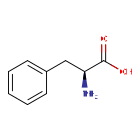
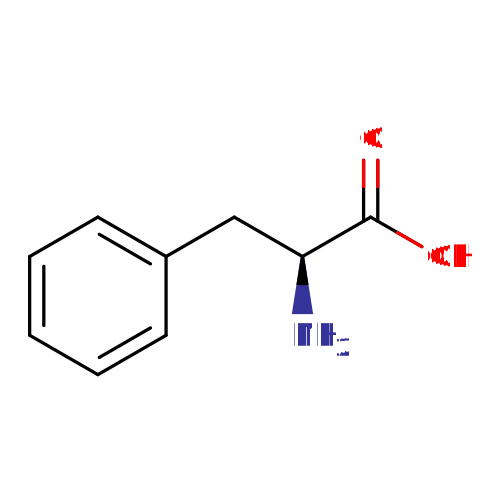
Structure for Phenylalanine (DB00120)
- Weight
- Average: 165.1891
Monoisotopic: 165.078978601 - Chemical Formula
- C9H11NO2
- Synonyms
- (S)-2-Amino-3-phenylpropionic acid
- (S)-alpha-Amino-beta-phenylpropionic acid
- 3-phenyl-L-alanine
- beta-Phenyl-L-alanine
- F
- Fenilalanina
- L-Phenylalanine
- Phe
- Phenylalanine
- Phenylalaninum
- β-phenyl-L-alanine
- External IDs
- FEMA NO. 3585

Pharmacology
- Indication
L-phenylalanine may be helpful in some with depression. It may also be useful in the treatment of vitiligo. There is some evidence that L-phenylalanine may exacerbate tardive dyskinesia in some schizophrenic patients and in some who have used neuroleptic drugs.
 Reduce drug development failure ratesBuild, train, & validate machine-learning modelswith evidence-based and structured datasets.Build, train, & validate predictive machine-learning models with structured datasets.
- Associated Therapies
- Contraindications & Blackbox Warnings
 Prevent Adverse Drug Events TodayTap into our Clinical API for life-saving information on contraindications & blackbox warnings, population restrictions, harmful risks, & more.Avoid life-threatening adverse drug events with our Clinical API
- Pharmacodynamics
Used by the brain to produce Norepinephrine, a chemical that transmits signals between nerve cells and the brain; keeps you awake and alert; reduces hunger pains; functions as an antidepressant and helps improve memory.
- Mechanism of action
The supposed antidepressant effects of L-phenylalanine may be due to its role as a precursor in the synthesis of the neurotransmitters norepinephrine and dopamine. Elevated brain norepinephrine and dopamine levels are thought to be associated with antidepressant effects. The mechanism of L-phenylalanine's possible antivitiligo activity is not well understood. It is thought that L-phenylalanine may stimulate the production of melanin in the affected skin
Target Actions Organism UTyrosine aminotransferase Not Available Humans ULarge neutral amino acids transporter small subunit 2 Not Available Humans UPhenylalanine--tRNA ligase alpha subunit Not Available Humans UPhenylalanine-4-hydroxylase Not Available Humans UPhenylalanine--tRNA ligase, mitochondrial Not Available Humans UPhenylalanine--tRNA ligase beta subunit Not Available Humans UTyrosine 3-monooxygenase binderHumans - Absorption
Absorbed from the small intestine by a sodium dependent active transport process.
- Volume of distribution
Not Available
- Protein binding
Not Available
- Metabolism
Hepatic. L-phenylalanine that is not metabolized in the liver is distributed via the systemic circulation to the various tissues of the body, where it undergoes metabolic reactions similar to those that take place in the liver.
- Route of elimination
Not Available
- Half-life
Not Available
- Clearance
Not Available
- Adverse Effects
 Improve decision support & research outcomesWith structured adverse effects data, including: blackbox warnings, adverse reactions, warning & precautions, & incidence rates. View sample adverse effects data in our new Data Library!Improve decision support & research outcomes with our structured adverse effects data.
- Toxicity
L-phenylalanine will exacerbate symptoms of phenylketonuria if used by phenylketonurics. L-phenylalanine was reported to exacerbate tardive dyskinesia when used by some with schizophrenia.
- Pathways
Pathway Category Tyrosinemia Type 3 (TYRO3) Disease Phenylketonuria Disease Phenylalanine and Tyrosine Metabolism Metabolic Tyrosinemia Type 2 (or Richner-Hanhart Syndrome) Disease - Pharmacogenomic Effects/ADRs
- Not Available
Interactions
- Drug Interactions
- This information should not be interpreted without the help of a healthcare provider. If you believe you are experiencing an interaction, contact a healthcare provider immediately. The absence of an interaction does not necessarily mean no interactions exist.
Drug Interaction Integrate drug-drug
interactions in your softwareAbatacept The risk or severity of adverse effects can be increased when Phenylalanine is combined with Abatacept. Abciximab The risk or severity of bleeding can be increased when Abciximab is combined with Phenylalanine. Acenocoumarol The risk or severity of bleeding can be increased when Acenocoumarol is combined with Phenylalanine. Acetylsalicylic acid The risk or severity of bleeding can be increased when Acetylsalicylic acid is combined with Phenylalanine. Adalimumab The risk or severity of adverse effects can be increased when Adalimumab is combined with Phenylalanine. - Food Interactions
- Not Available
Products
 Drug product information from 10+ global regionsOur datasets provide approved product information including:dosage, form, labeller, route of administration, and marketing period.Access drug product information from over 10 global regions.
- Product Ingredients
Ingredient UNII CAS InChI Key Phenylalanine hydrochloride L6O14A5L6Q 17585-69-2 ZAIZDXVMSSDZFA-QRPNPIFTSA-N Phenylalanine sodium M67R83MDEE 16480-57-2 ZRVUAXXSASAVFG-QRPNPIFTSA-M - Mixture Products
Name Ingredients Dosage Route Labeller Marketing Start Marketing End Region Image 2.5% Travasol Amino Acid Injection With Electrolytes In 10% Dextrose Phenylalanine (140 mg / 100 mL) + Alanine (520 mg / 100 mL) + Arginine (290 mg / 100 mL) + Dextrose, unspecified form (10 g / 100 mL) + Dipotassium phosphate (130.5 mg / 100 mL) + Glycine (260 mg / 100 mL) + Histidine (120 mg / 100 mL) + Isoleucine (150 mg / 100 mL) + Leucine (182.5 mg / 100 mL) + Lysine hydrochloride (145 mg / 100 mL) + Magnesium chloride (25.5 mg / 100 mL) + Methionine (100 mg / 100 mL) + Proline (170 mg / 100 mL) + Serine (125 mg / 100 mL) + Sodium acetate (170 mg / 100 mL) + Sodium chloride (29.3 mg / 100 mL) + Threonine (105 mg / 100 mL) + Tryptophan (45 mg / 100 mL) + Tyrosine (10 mg / 100 mL) + Valine (145 mg / 100 mL) Solution Intravenous Baxter Corporation Clintec Nutrition Division 1996-12-31 2015-08-05 Canada 
2.5% Travasol Amino Acid Injection With Electrolytes In 10% Dextrose Clinimix Phenylalanine hydrochloride (155 mg / 100 mL) + Alanine (520 mg / 100 mL) + Arginine (260 mg / 100 mL) + Dextrose, unspecified form (10 g / 100 mL) + Dipotassium phosphate (130.5 mg / 100 mL) + Glycine (520 mg / 100 mL) + Histidine (110 mg / 100 mL) + Isoleucine (120 mg / 100 mL) + L-Leucine hydrochloride (155 mg / 100 mL) + Lysine hydrochloride (145 mg / 100 mL) + Magnesium chloride (25.5 mg / 100 mL) + Methionine (145 mg / 100 mL) + Proline (105 mg / 100 mL) + Sodium acetate (170 mg / 100 mL) + Sodium chloride (29.3 mg / 100 mL) + Threonine (105 mg / 100 mL) + Tryptophan (45 mg / 100 mL) + Tyrosine (10 mg / 100 mL) + Valine (115 mg / 100 mL) Solution Intravenous Baxter Corporation Clintec Nutrition Division 1993-12-31 2015-08-05 Canada 2.5% Travasol Amino Acid Injection Without Electrolytes In 10% Dextrose Quickmix Phenylalanine hydrochloride (155 mg / 100 mL) + Alanine (520 mg / 100 mL) + Arginine (260 mg / 100 mL) + Dextrose, unspecified form (10 g / 100 mL) + Glycine (520 mg / 100 mL) + Histidine (110 mg / 100 mL) + Isoleucine (120 mg / 100 mL) + L-Leucine hydrochloride (155 mg / 100 mL) + Lysine hydrochloride (195 mg / 100 mL) + Methionine (195 mg / 100 mL) + Proline (105 mg / 100 mL) + Threonine (105 mg / 100 mL) + Tryptophan (45 mg / 100 mL) + Tyrosine (10 mg / 100 mL) + Valine (115 mg / 100 mL) Solution Intravenous Baxter Corporation Clintec Nutrition Division 1995-12-31 2007-08-02 Canada 2.5%travasol Amino Acid InJ.W.eleC.W.25%dex Phenylalanine (140 mg / 100 mL) + Alanine (520 mg / 100 mL) + Arginine (290 mg / 100 mL) + Dextrose, unspecified form (25 g / 100 mL) + Dipotassium phosphate (130.5 mg / 100 mL) + Glycine (260 mg / 100 mL) + Histidine (120 mg / 100 mL) + Isoleucine (150 mg / 100 mL) + Leucine (182.5 mg / 100 mL) + Lysine hydrochloride (145 mg / 100 mL) + Magnesium chloride (25.5 mg / 100 mL) + Methionine (100 mg / 100 mL) + Proline (170 mg / 100 mL) + Serine (125 mg / 100 mL) + Sodium acetate (170 mg / 100 mL) + Sodium chloride (29.3 mg / 100 mL) + Threonine (105 mg / 100 mL) + Tryptophan (45 mg / 100 mL) + Tyrosine (10 mg / 100 mL) + Valine (145 mg / 100 mL) Liquid Intravenous Clintec Nutrition Company 1996-07-30 1998-08-13 Canada 2.75% Travas. Amino Acid InJ.W.elecw.25%dex Phenylalanine (154 mg / 100 mL) + Alanine (570 mg / 100 mL) + Arginine (316 mg / 100 mL) + Dextrose, unspecified form (25 g / 100 mL) + Dipotassium phosphate (261 mg / 100 mL) + Glycine (283 mg / 100 mL) + Histidine (132 mg / 100 mL) + Isoleucine (165 mg / 100 mL) + Leucine (201 mg / 100 mL) + Lysine hydrochloride (159.5 mg / 100 mL) + Magnesium chloride (51 mg / 100 mL) + Methionine (110 mg / 100 mL) + Proline (187 mg / 100 mL) + Serine (137.5 mg / 100 mL) + Sodium acetate (215.5 mg / 100 mL) + Sodium chloride (112 mg / 100 mL) + Threonine (115.5 mg / 100 mL) + Tryptophan (49.5 mg / 100 mL) + Tyrosine (11 mg / 100 mL) + Valine (159.5 mg / 100 mL) Liquid Intravenous Clintec Nutrition Company 1996-07-30 1998-08-13 Canada - Unapproved/Other Products
Name Ingredients Dosage Route Labeller Marketing Start Marketing End Region Image Clinimix Phenylalanine (1.54 g/1L) + Alanine (5.70 g/1L) + Arginine (3.17 g/1L) + Calcium chloride dihydrate (0.33 g/1L) + D-glucose monohydrate (75.00 g/1L) + Dipotassium phosphate (2.61 g/1L) + Glycine (2.84 g/1L) + Histidine (1.32 g/1L) + Isoleucine (1.65 g/1L) + Leucine (2.01 g/1L) + Lysine (2.00 g/1L) + Magnesium chloride hexahydrate (0.51 g/1L) + Methionine (1.10 g/1L) + Proline (1.87 g/1L) + Serine (1.38 g/1L) + Sodium acetate trihydrate (2.16 g/1L) + Sodium chloride (1.12 g/1L) + Threonine (1.16 g/1L) + Tryptophan (0.50 g/1L) + Tyrosine (0.11 g/1L) + Valine (1.60 g/1L) Solution Intravenous Baxter Healthcare Corporation 2017-10-25 2019-11-30 US 
Clinimix Phenylalanine (1.54 g/1L) + Alanine (5.70 g/1L) + Arginine (3.17 g/1L) + Calcium chloride dihydrate (0.33 g/1L) + D-glucose monohydrate (100.00 g/1L) + Dipotassium phosphate (2.61 g/1L) + Glycine (2.84 g/1L) + Histidine (1.32 g/1L) + Isoleucine (1.65 g/1L) + Leucine (2.01 g/1L) + Lysine (2.00 g/1L) + Magnesium chloride hexahydrate (0.51 g/1L) + Methionine (1.10 g/1L) + Proline (1.87 g/1L) + Serine (1.38 g/1L) + Sodium acetate trihydrate (2.16 g/1L) + Sodium chloride (1.12 g/1L) + Threonine (1.16 g/1L) + Tryptophan (0.50 g/1L) + Tyrosine (0.11 g/1L) + Valine (1.60 g/1L) Solution Intravenous Baxter Healthcare Corporation 2017-10-25 2019-11-30 US Clinimix Phenylalanine (4.76 g/2L) + Alanine (17.60 g/2L) + Arginine (9.78 g/2L) + Calcium chloride dihydrate (0.66 g/2L) + D-glucose monohydrate (300.00 g/2L) + Dipotassium phosphate (5.22 g/2L) + Glycine (8.76 g/2L) + Histidine (4.08 g/2L) + Isoleucine (5.10 g/2L) + Leucine (6.20 g/2L) + Lysine (4.93 g/2L) + Magnesium chloride hexahydrate (1.02 g/2L) + Methionine (3.40 g/2L) + Proline (5.78 g/2L) + Serine (4.25 g/2L) + Sodium acetate trihydrate (5.94 g/2L) + Sodium chloride (1.54 g/2L) + Threonine (3.57 g/2L) + Tryptophan (1.53 g/2L) + Tyrosine (0.34 g/2L) + Valine (4.93 g/2L) Solution Intravenous Baxter Healthcare Corporation 2017-10-25 2019-11-30 US FREAMINE III %10 1000 ML(SETLI) Phenylalanine (0.56 %) + Alanine (0.71 %) + Arginine (0.95 %) + Cysteine (0.016 %) + Glycine (1.4 %) + Histidine (0.28 %) + Isoleucine (0.69 %) + Leucine (0.91 %) + Lysine (0.73 %) + Methionine (0.53 %) + Proline (1.12 %) + Serine (0.59 %) + Threonine (0.4 %) + Tryptophan (0.15 %) + Valine (0.66 %) Solution Intravenous ECZACIBAŞI-BAXTER HASTANE ÜRÜNLERİ SAN.VE TİC. A.Ş. 2013-01-29 2024-01-23 Turkey 
FREAMINE III %10 1000 ML(SETSIZ) Phenylalanine (0.56 %) + Alanine (0.71 %) + Arginine (0.95 %) + Cysteine (0.016 %) + Glycine (1.4 %) + Histidine (0.28 %) + Isoleucine (0.69 %) + Leucine (0.91 %) + Lysine (0.73 %) + Methionine (0.53 %) + Proline (1.12 %) + Serine (0.59 %) + Threonine (0.4 %) + Tryptophan (0.15 %) + Valine (0.66 %) Solution Intravenous ECZACIBAŞI-BAXTER HASTANE ÜRÜNLERİ SAN.VE TİC. A.Ş. 2013-01-29 2024-01-23 Turkey
Categories
- Drug Categories
- Chemical TaxonomyProvided by Classyfire
- Description
- This compound belongs to the class of organic compounds known as phenylalanine and derivatives. These are compounds containing phenylalanine or a derivative thereof resulting from reaction of phenylalanine at the amino group or the carboxy group, or from the replacement of any hydrogen of glycine by a heteroatom.
- Kingdom
- Organic compounds
- Super Class
- Organic acids and derivatives
- Class
- Carboxylic acids and derivatives
- Sub Class
- Amino acids, peptides, and analogues
- Direct Parent
- Phenylalanine and derivatives
- Alternative Parents
- Phenylpropanoic acids / L-alpha-amino acids / Amphetamines and derivatives / Aralkylamines / Amino acids / Monocarboxylic acids and derivatives / Carboxylic acids / Organopnictogen compounds / Organic oxides / Monoalkylamines show 2 more
- Substituents
- 3-phenylpropanoic-acid / Alpha-amino acid / Amine / Amino acid / Amphetamine or derivatives / Aralkylamine / Aromatic homomonocyclic compound / Benzenoid / Carbonyl group / Carboxylic acid show 13 more
- Molecular Framework
- Aromatic homomonocyclic compounds
- External Descriptors
- proteinogenic amino acid, L-alpha-amino acid, phenylalanine, erythrose 4-phosphate/phosphoenolpyruvate family amino acid (CHEBI:17295) / Common amino acids (C00079)
- Affected organisms
- Humans and other mammals
Chemical Identifiers
- UNII
- 47E5O17Y3R
- CAS number
- 63-91-2
- InChI Key
- COLNVLDHVKWLRT-QMMMGPOBSA-N
- InChI
- InChI=1S/C9H11NO2/c10-8(9(11)12)6-7-4-2-1-3-5-7/h1-5,8H,6,10H2,(H,11,12)/t8-/m0/s1
- IUPAC Name
- (2S)-2-amino-3-phenylpropanoic acid
- SMILES
- N[C@@H](CC1=CC=CC=C1)C(O)=O
References
- Synthesis Reference
Gerald L. Bachman, "Recovery of L-phenylalanine and L-aspartic acid during preparation of .alpha.-L-aspartyl-L-phenylalanine methyl ester." U.S. Patent US4348317, issued January, 1967.
US4348317- General References
- Not Available
- External Links
- Human Metabolome Database
- HMDB0000159
- KEGG Drug
- D00021
- KEGG Compound
- C00079
- PubChem Compound
- 6140
- PubChem Substance
- 46505708
- ChemSpider
- 5910
- BindingDB
- 18073
- 8156
- ChEBI
- 58095
- ChEMBL
- CHEMBL301523
- ZINC
- ZINC000000105196
- Therapeutic Targets Database
- DAP000807
- PharmGKB
- PA450931
- Guide to Pharmacology
- GtP Drug Page
- PDBe Ligand
- PHE
- PDRhealth
- PDRhealth Drug Page
- Wikipedia
- Phenylalanine
- MSDS
- Download (72.5 KB)
Clinical Trials
- Clinical Trials
Phase Status Purpose Conditions Count 4 Active Not Recruiting Treatment Critically Ill Patients / Starvation 1 4 Recruiting Basic Science Healthy Volunteers (HV) / Obesity / Type 2 Diabetes Mellitus 1 4 Recruiting Prevention Intestinal Obstruction / Laparotomies / Mesenteric vascular insufficiency 1 4 Terminated Supportive Care Cancer-related Malnutrition 1 4 Terminated Supportive Care Critically Ill Patients 1
Pharmacoeconomics
- Manufacturers
- Not Available
- Packagers
- Magno-Humphries Laboratories
- Dosage Forms
Form Route Strength Solution Parenteral Tablet Oral Solution Intravenous 10.50 g/1000ml Injection Intravenous 0.5 g/l Injection Intravenous 0.25 g/1000ml Solution, concentrate Intravenous Injection Intravenous 0.52 g/l Injection, solution Intravenous Injection Intravenous 11.000 g/1000ml Solution Intravenous 18.5 g/L Injection Intravenous 5.5 g/1000ml Injection, emulsion Intravenous Emulsion Intravenous 0.468 g Injection Intravenous 16 g/1000ml Emulsion Parenteral 20.000 g Injection Intravenous 1.6 g/l Tablet Oral Injection Intravenous 0.37 g/l Injection, solution, concentrate Intravenous Injection, emulsion Parenteral Emulsion Intravenous 0.466 g Injection, emulsion; injection, solution Intravenous Emulsion Parenteral Emulsion Intravenous Injection, solution Injection, emulsion Intravenous 4.656 g/1000ml Injection, emulsion Intravenous 6.792 g/1000ml Solution Intraperitoneal Injection, solution Intraperitoneal Liquid Hemodialysis Solution Intraperitoneal 0.184 g/l Emulsion Intravenous 176 g/l Emulsion Intravenous 4 g Emulsion Intravenous 3 g Solution Intravenous Injection Intravenous 4 g/l Injection Intravenous 0.21 g/100ml Liquid Intravenous Emulsion Intravenous 13.000 g Emulsion Parenteral 42.00 g Injection, emulsion Intravenous 14 g/1000ml Injection Intravenous 10.30 g/l Injection Intravenous - Prices
Unit description Cost Unit L-phenylalanine 500 mg tablet 0.11USD each DrugBank does not sell nor buy drugs. Pricing information is supplied for informational purposes only.- Patents
- Not Available
Properties
- State
- Solid
- Experimental Properties
Property Value Source melting point (°C) 283 dec °C PhysProp water solubility 2.69E+004 mg/L (at 25 °C) YALKOWSKY,SH & DANNENFELSER,RM (1992) logP -1.38 AVDEEF,A (1997) pKa 1.24 (at 25 °C) KORTUM,G ET AL (1961) - Predicted Properties
Property Value Source Water Solubility 4.14 mg/mL ALOGPS logP -1.4 ALOGPS logP -1.2 Chemaxon logS -1.6 ALOGPS pKa (Strongest Acidic) 2.47 Chemaxon pKa (Strongest Basic) 9.45 Chemaxon Physiological Charge 0 Chemaxon Hydrogen Acceptor Count 3 Chemaxon Hydrogen Donor Count 2 Chemaxon Polar Surface Area 63.32 Å2 Chemaxon Rotatable Bond Count 3 Chemaxon Refractivity 45.12 m3·mol-1 Chemaxon Polarizability 17.03 Å3 Chemaxon Number of Rings 1 Chemaxon Bioavailability 1 Chemaxon Rule of Five Yes Chemaxon Ghose Filter No Chemaxon Veber's Rule No Chemaxon MDDR-like Rule No Chemaxon - Predicted ADMET Features
Property Value Probability Human Intestinal Absorption + 0.9733 Blood Brain Barrier + 0.5902 Caco-2 permeable + 0.8129 P-glycoprotein substrate Non-substrate 0.721 P-glycoprotein inhibitor I Non-inhibitor 0.9916 P-glycoprotein inhibitor II Non-inhibitor 0.9941 Renal organic cation transporter Non-inhibitor 0.9204 CYP450 2C9 substrate Non-substrate 0.8512 CYP450 2D6 substrate Non-substrate 0.8296 CYP450 3A4 substrate Non-substrate 0.8378 CYP450 1A2 substrate Non-inhibitor 0.9448 CYP450 2C9 inhibitor Non-inhibitor 0.9792 CYP450 2D6 inhibitor Non-inhibitor 0.9674 CYP450 2C19 inhibitor Non-inhibitor 0.9797 CYP450 3A4 inhibitor Non-inhibitor 0.9278 CYP450 inhibitory promiscuity Low CYP Inhibitory Promiscuity 0.9896 Ames test Non AMES toxic 0.9211 Carcinogenicity Non-carcinogens 0.8441 Biodegradation Ready biodegradable 0.7562 Rat acute toxicity 1.9053 LD50, mol/kg Not applicable hERG inhibition (predictor I) Weak inhibitor 0.9805 hERG inhibition (predictor II) Non-inhibitor 0.9737
Spectra
- Mass Spec (NIST)
- Download (8.46 KB)
- Spectra
- Chromatographic Properties
Collision Cross Sections (CCS)
Adduct CCS Value (Å2) Source type Source [M-H]- 139.3087691 predictedDarkChem Lite v0.1.0 [M-H]- 139.256643 predictedDarkChem Standard v0.1.0 [M-H]- 139.3193691 predictedDarkChem Lite v0.1.0 [M-H]- 139.4458691 predictedDarkChem Lite v0.1.0 [M-H]- 139.2625691 predictedDarkChem Lite v0.1.0 [M-H]- 130.50636 predictedDeepCCS 1.0 (2019) [M+H]+ 139.5540691 predictedDarkChem Lite v0.1.0 [M+H]+ 140.2779703 predictedDarkChem Standard v0.1.0 [M+H]+ 139.9188691 predictedDarkChem Lite v0.1.0 [M+H]+ 139.9879691 predictedDarkChem Lite v0.1.0 [M+H]+ 139.9518691 predictedDarkChem Lite v0.1.0 [M+H]+ 133.92598 predictedDeepCCS 1.0 (2019) [M+Na]+ 139.0270691 predictedDarkChem Lite v0.1.0 [M+Na]+ 139.0861691 predictedDarkChem Lite v0.1.0 [M+Na]+ 139.2070691 predictedDarkChem Lite v0.1.0 [M+Na]+ 138.9690691 predictedDarkChem Lite v0.1.0 [M+Na]+ 139.1394691 predictedDarkChem Lite v0.1.0 [M+Na]+ 143.25589 predictedDeepCCS 1.0 (2019)
Targets

- Kind
- Protein
- Organism
- Humans
- Pharmacological action
- Unknown
- General Function
- Pyridoxal phosphate binding
- Specific Function
- Transaminase involved in tyrosine breakdown. Converts tyrosine to p-hydroxyphenylpyruvate. Can catalyze the reverse reaction, using glutamic acid, with 2-oxoglutarate as cosubstrate (in vitro). Has...
- Gene Name
- TAT
- Uniprot ID
- P17735
- Uniprot Name
- Tyrosine aminotransferase
- Molecular Weight
- 50398.895 Da
References
- Luong TN, Kirsch JF: A continuous coupled spectrophotometric assay for tyrosine aminotransferase activity with aromatic and other nonpolar amino acids. Anal Biochem. 1997 Nov 1;253(1):46-9. [Article]
- Rege AA: Purification and characterization of a tyrosine aminotransferase from Crithidia fasciculata. Mol Biochem Parasitol. 1987 Aug;25(1):1-9. [Article]
- De-Eknamkul W, Ellis BE: Behavior of Free Aromatic Amino Acid Pools in Rosmarinic Acid-Producing Cell Cultures of Anchusa officinalis L. Plant Physiol. 1989 Feb;89(2):429-33. [Article]
- Patrizio M, Colucci M, Levi G: Human immunodeficiency virus type 1 Tat protein decreases cyclic AMP synthesis in rat microglia cultures. J Neurochem. 2001 Apr;77(2):399-407. [Article]
- Kind
- Protein
- Organism
- Humans
- Pharmacological action
- Unknown
- General Function
- Toxin transporter activity
- Specific Function
- Sodium-independent, high-affinity transport of small and large neutral amino acids such as alanine, serine, threonine, cysteine, phenylalanine, tyrosine, leucine, arginine and tryptophan, when asso...
- Gene Name
- SLC7A8
- Uniprot ID
- Q9UHI5
- Uniprot Name
- Large neutral amino acids transporter small subunit 2
- Molecular Weight
- 58381.12 Da
References
- Shennan DB, Calvert DT, Travers MT, Kudo Y, Boyd CA: A study of L-leucine, L-phenylalanine and L-alanine transport in the perfused rat mammary gland: possible involvement of LAT1 and LAT2. Biochim Biophys Acta. 2002 Aug 19;1564(1):133-9. [Article]
- Rossier G, Meier C, Bauch C, Summa V, Sordat B, Verrey F, Kuhn LC: LAT2, a new basolateral 4F2hc/CD98-associated amino acid transporter of kidney and intestine. J Biol Chem. 1999 Dec 3;274(49):34948-54. [Article]
- Babu E, Kanai Y, Chairoungdua A, Kim DK, Iribe Y, Tangtrongsup S, Jutabha P, Li Y, Ahmed N, Sakamoto S, Anzai N, Nagamori S, Endou H: Identification of a novel system L amino acid transporter structurally distinct from heterodimeric amino acid transporters. J Biol Chem. 2003 Oct 31;278(44):43838-45. Epub 2003 Aug 20. [Article]
- Satoh S, Kimura T, Toda M, Maekawa M, Ono S, Narita H, Miyazaki H, Murayama T, Nomura Y: Involvement of L-type-like amino acid transporters in S-nitrosocysteine-stimulated noradrenaline release in the rat hippocampus. J Neurochem. 1997 Nov;69(5):2197-205. [Article]
- Nemoto T, Shimma N, Horie S, Saito T, Okuma Y, Nomura Y, Murayama T: Involvement of the system L amino acid transporter on uptake of S-nitroso-L-cysteine, an endogenous S-nitrosothiol, in PC12 cells. Eur J Pharmacol. 2003 Jan 1;458(1-2):17-24. [Article]
- Kind
- Protein
- Organism
- Humans
- Pharmacological action
- Unknown
- General Function
- Trna binding
- Specific Function
- Not Available
- Gene Name
- FARSA
- Uniprot ID
- Q9Y285
- Uniprot Name
- Phenylalanine--tRNA ligase alpha subunit
- Molecular Weight
- 57563.225 Da
References
- Overington JP, Al-Lazikani B, Hopkins AL: How many drug targets are there? Nat Rev Drug Discov. 2006 Dec;5(12):993-6. [Article]
- Imming P, Sinning C, Meyer A: Drugs, their targets and the nature and number of drug targets. Nat Rev Drug Discov. 2006 Oct;5(10):821-34. [Article]
- Kodama K, Fukuzawa S, Sakamoto K, Nakayama H, Kigawa T, Yabuki T, Matsuda N, Shirouzu M, Takio K, Tachibana K, Yokoyama S: A new protein engineering approach combining chemistry and biology, part I; site-specific incorporation of 4-iodo-L-phenylalanine in vitro by using misacylated suppressor tRNAPhe. Chembiochem. 2006 Oct;7(10):1577-81. [Article]
- Kotik-Kogan O, Moor N, Tworowski D, Safro M: Structural basis for discrimination of L-phenylalanine from L-tyrosine by phenylalanyl-tRNA synthetase. Structure. 2005 Dec;13(12):1799-807. [Article]
- Kind
- Protein
- Organism
- Humans
- Pharmacological action
- Unknown
- General Function
- Phenylalanine 4-monooxygenase activity
- Specific Function
- Not Available
- Gene Name
- PAH
- Uniprot ID
- P00439
- Uniprot Name
- Phenylalanine-4-hydroxylase
- Molecular Weight
- 51861.565 Da
References
- Thorolfsson M, Ibarra-Molero B, Fojan P, Petersen SB, Sanchez-Ruiz JM, Martinez A: L-phenylalanine binding and domain organization in human phenylalanine hydroxylase: a differential scanning calorimetry study. Biochemistry. 2002 Jun 18;41(24):7573-85. [Article]
- Pueschel SM, Boylan J, Ellenbogen R: Studies on experimentally induced hyperphenylalaninemia. J Ment Defic Res. 1988 Aug;32 ( Pt 4):309-19. [Article]
- Nagasaki Y, Matsubara Y, Takano H, Fujii K, Senoo M, Akanuma J, Takahashi K, Kure S, Hara M, Kanegae Y, Saito I, Narisawa K: Reversal of hypopigmentation in phenylketonuria mice by adenovirus-mediated gene transfer. Pediatr Res. 1999 Apr;45(4 Pt 1):465-73. [Article]
- Fusetti F, Erlandsen H, Flatmark T, Stevens RC: Structure of tetrameric human phenylalanine hydroxylase and its implications for phenylketonuria. J Biol Chem. 1998 Jul 3;273(27):16962-7. [Article]
- Stokka AJ, Flatmark T: Substrate-induced conformational transition in human phenylalanine hydroxylase as studied by surface plasmon resonance analyses: the effect of terminal deletions, substrate analogues and phosphorylation. Biochem J. 2003 Feb 1;369(Pt 3):509-18. [Article]
- Kind
- Protein
- Organism
- Humans
- Pharmacological action
- Unknown
- General Function
- Trna binding
- Specific Function
- Is responsible for the charging of tRNA(Phe) with phenylalanine in mitochondrial translation. To a lesser extent, also catalyzes direct attachment of m-Tyr (an oxidized version of Phe) to tRNA(Phe)...
- Gene Name
- FARS2
- Uniprot ID
- O95363
- Uniprot Name
- Phenylalanine--tRNA ligase, mitochondrial
- Molecular Weight
- 52356.21 Da
References
- Overington JP, Al-Lazikani B, Hopkins AL: How many drug targets are there? Nat Rev Drug Discov. 2006 Dec;5(12):993-6. [Article]
- Imming P, Sinning C, Meyer A: Drugs, their targets and the nature and number of drug targets. Nat Rev Drug Discov. 2006 Oct;5(10):821-34. [Article]
- Kodama K, Fukuzawa S, Sakamoto K, Nakayama H, Kigawa T, Yabuki T, Matsuda N, Shirouzu M, Takio K, Tachibana K, Yokoyama S: A new protein engineering approach combining chemistry and biology, part I; site-specific incorporation of 4-iodo-L-phenylalanine in vitro by using misacylated suppressor tRNAPhe. Chembiochem. 2006 Oct;7(10):1577-81. [Article]
- Kotik-Kogan O, Moor N, Tworowski D, Safro M: Structural basis for discrimination of L-phenylalanine from L-tyrosine by phenylalanyl-tRNA synthetase. Structure. 2005 Dec;13(12):1799-807. [Article]
- Kind
- Protein
- Organism
- Humans
- Pharmacological action
- Unknown
- General Function
- Rna binding
- Specific Function
- Not Available
- Gene Name
- FARSB
- Uniprot ID
- Q9NSD9
- Uniprot Name
- Phenylalanine--tRNA ligase beta subunit
- Molecular Weight
- 66114.93 Da
References
- Kotik-Kogan O, Moor N, Tworowski D, Safro M: Structural basis for discrimination of L-phenylalanine from L-tyrosine by phenylalanyl-tRNA synthetase. Structure. 2005 Dec;13(12):1799-807. [Article]
- Kind
- Protein
- Organism
- Humans
- Pharmacological action
- Unknown
- Actions
- Binder
- General Function
- Tyrosine 3-monooxygenase activity
- Specific Function
- Plays an important role in the physiology of adrenergic neurons.
- Gene Name
- TH
- Uniprot ID
- P07101
- Uniprot Name
- Tyrosine 3-monooxygenase
- Molecular Weight
- 58599.545 Da
References
- Fukami MH, Haavik J, Flatmark T: Phenylalanine as substrate for tyrosine hydroxylase in bovine adrenal chromaffin cells. Biochem J. 1990 Jun 1;268(2):525-8. [Article]
- Ogawa S, Ichinose H: Effect of metals and phenylalanine on the activity of human tryptophan hydroxylase-2: comparison with that on tyrosine hydroxylase activity. Neurosci Lett. 2006 Jul 3;401(3):261-5. Epub 2006 Apr 11. [Article]
- Schallreuter KU, Kothari S, Hasse S, Kauser S, Lindsey NJ, Gibbons NC, Hibberts N, Wood JM: In situ and in vitro evidence for DCoH/HNF-1 alpha transcription of tyrosinase in human skin melanocytes. Biochem Biophys Res Commun. 2003 Feb 7;301(2):610-6. [Article]
- McQuade PS, Juorio AV: The effect of various amino acids and drugs on the para- and meta-hydroxyphenylacetic acid concentrations in the mouse caudate nucleus. Neurochem Res. 1983 Jul;8(7):903-12. [Article]
- Fusetti F, Erlandsen H, Flatmark T, Stevens RC: Structure of tetrameric human phenylalanine hydroxylase and its implications for phenylketonuria. J Biol Chem. 1998 Jul 3;273(27):16962-7. [Article]
- Chen X, Ji ZL, Chen YZ: TTD: Therapeutic Target Database. Nucleic Acids Res. 2002 Jan 1;30(1):412-5. [Article]
Transporters
- Kind
- Protein
- Organism
- Humans
- Pharmacological action
- Unknown
- Actions
- Inhibitor
- General Function
- Transporter activity
- Specific Function
- Sodium-independent transporter that mediates the update of aromatic acid. Can function as a net efflux pathway for aromatic amino acids in the basosolateral epithelial cells (By similarity).
- Gene Name
- SLC16A10
- Uniprot ID
- Q8TF71
- Uniprot Name
- Monocarboxylate transporter 10
- Molecular Weight
- 55492.07 Da
References
- Kim DK, Kanai Y, Matsuo H, Kim JY, Chairoungdua A, Kobayashi Y, Enomoto A, Cha SH, Goya T, Endou H: The human T-type amino acid transporter-1: characterization, gene organization, and chromosomal location. Genomics. 2002 Jan;79(1):95-103. [Article]
- Kim DK, Kanai Y, Chairoungdua A, Matsuo H, Cha SH, Endou H: Expression cloning of a Na+-independent aromatic amino acid transporter with structural similarity to H+/monocarboxylate transporters. J Biol Chem. 2001 May 18;276(20):17221-8. Epub 2001 Feb 20. [Article]


Drug created at June 13, 2005 13:24 / Updated at April 09, 2024 18:11