Identification
- Summary
Aspartic acid is an amino acid commonly found as a component in total parenteral nutrition.
- Brand Names
- Aminosyn II 7 %, Sulfite-free, Aminosyn-PF 7%, Clinisol 15, Olimel, Periolimel, Plenamine, Premasol, Primene, Prosol, Trophamine 10 %
- Generic Name
- Aspartic acid
- DrugBank Accession Number
- DB00128
- Background
One of the non-essential amino acids commonly occurring in the L-form. It is found in animals and plants, especially in sugar cane and sugar beets. It may be a neurotransmitter.
- Type
- Small Molecule
- Groups
- Approved, Nutraceutical
- Structure
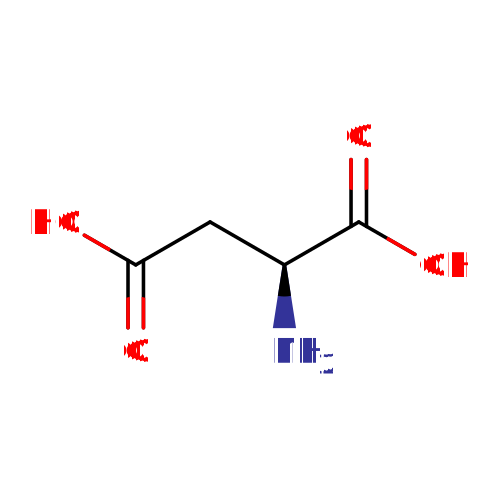
Structure for Aspartic acid (DB00128)
- Weight
- Average: 133.1027
Monoisotopic: 133.037507717 - Chemical Formula
- C4H7NO4
- Synonyms
- (S)-2-aminobutanedioic acid
- (S)-2-aminosuccinic acid
- 2-Aminosuccinic acid
- ácido aspártico
- Acidum asparticum
- Asp
- Aspartic acid
- D
- L-Asp
- L-Asparaginsäure
- L-Aspartate
- L-Aspartic acid
- External IDs
- FEMA NO. 3656

Pharmacology
- Indication
There is no support for the claim that aspartates are exercise performance enhancers, i.e. ergogenic aids.
 Reduce drug development failure ratesBuild, train, & validate machine-learning modelswith evidence-based and structured datasets.Build, train, & validate predictive machine-learning models with structured datasets.
- Associated Therapies
- Contraindications & Blackbox Warnings
 Prevent Adverse Drug Events TodayTap into our Clinical API for life-saving information on contraindications & blackbox warnings, population restrictions, harmful risks, & more.Avoid life-threatening adverse drug events with our Clinical API
- Pharmacodynamics
L-aspartate is considered a non-essential amino acid, meaning that, under normal physiological conditions, sufficient amounts of the amino acid are synthesized in the body to meet the body's requirements. L-aspartate is formed by the transamination of the Krebs cycle intermediate oxaloacetate. The amino acid serves as a precursor for synthesis of proteins, oligopeptides, purines, pyrimidines, nucleic acids and L-arginine. L-aspartate is a glycogenic amino acid, and it can also promote energy production via its metabolism in the Krebs cycle. These latter activities were the rationale for the claim that supplemental aspartate has an anti-fatigue effect on skeletal muscle, a claim that was never confirmed.
- Mechanism of action
There are also claims that L-aspartate has ergogenic effects, that it enhances performance in both prolonged exercise and short intensive exercise. It is hypothesized that L-aspartate, especially the potassium magnesium aspartate salt, spares stores of muscle glycogen and/or promotes a faster rate of glycogen resynthesis during exercise. It has also been hypothesized that L-aspartate can enhance short intensive exercise by serving as a substrate for energy production in the Krebs cycle and for stimulating the purine nucleotide cycle.
Target Actions Organism UAdenylosuccinate Synthetases substrateHumans UCalcium-binding mitochondrial carrier protein Aralar2 Not Available Humans UAspartate aminotransferase, cytoplasmic Not Available Humans UAspartoacylase Not Available Humans UAsparagine synthetase [glutamine-hydrolyzing] substrateHumans UArgininosuccinate synthase Not Available Humans UAminoacylase-1 Not Available Humans UAspartate aminotransferase, mitochondrial Not Available Humans UAspartate--tRNA ligase, cytoplasmic Not Available Humans UCalcium-binding mitochondrial carrier protein Aralar1 Not Available Humans UAspartyl/asparaginyl beta-hydroxylase Not Available Humans UMultifunctional protein ADE2 substrateHumans UAdenylosuccinate synthetase isozyme 2 Not Available Humans UExcitatory amino acid transporter 3 Not Available Humans UAspartate--tRNA ligase, mitochondrial Not Available Humans UIsoaspartyl peptidase/L-asparaginase Not Available Humans URibonuclease pancreatic Not Available Humans ULysozyme C Not Available Humans - Absorption
Absorbed from the small intestine by an active transport process
- Volume of distribution
Not Available
- Protein binding
Not Available
- Metabolism
- Not Available
- Route of elimination
Not Available
- Half-life
Not Available
- Clearance
Not Available
- Adverse Effects
 Improve decision support & research outcomesWith structured adverse effects data, including: blackbox warnings, adverse reactions, warning & precautions, & incidence rates. View sample adverse effects data in our new Data Library!Improve decision support & research outcomes with our structured adverse effects data.
- Toxicity
Mild gastrointestinal side effects including diarrhea. LD50 (rat) > 5,000 mg/kg.
- Pathways
- Pharmacogenomic Effects/ADRs
- Not Available
Interactions
- Drug Interactions
- This information should not be interpreted without the help of a healthcare provider. If you believe you are experiencing an interaction, contact a healthcare provider immediately. The absence of an interaction does not necessarily mean no interactions exist.Not Available
- Food Interactions
- No interactions found.
Products
 Drug product information from 10+ global regionsOur datasets provide approved product information including:dosage, form, labeller, route of administration, and marketing period.Access drug product information from over 10 global regions.
- Mixture Products
Name Ingredients Dosage Route Labeller Marketing Start Marketing End Region Image 20% Prosol Aspartic acid (0.6 g) + Alanine (2.76 g) + Arginine (1.96 g) + D-Methionine (0.76 g) + Glutamic acid (1.02 g) + Glycine (2.06 g) + Histidine (1.18 g) + Isoleucine (1.08 g) + Leucine (1.08 g) + Lysine (1.35 g) + Methionine (0.76 g) + Phenylalanine (1 g) + Proline (1.34 g) + Serine (1.02 g) + Threonine (0.98 g) + Tryptophan (0.32 g) + Tyrosine (0.05 g) + Valine (1.44 g) Liquid Intravenous Baxter Laboratories 1996-10-09 Not applicable Canada 
Aminoplasmal B. Braun 10% Solution for Intravenous Infusion Aspartic acid (5.6 g/1000ml) + Alanine (10.5 g/1000ml) + Arginine (11.5 g/1000ml) + Glutamic acid (7.2 g/1000ml) + Glycine (12 g/1000ml) + Histidine (3 g/1000ml) + Isoleucine (5 g/1000ml) + Leucine (8.9 g/1000ml) + Lysine acetate (5.74 g/1000ml) + Lysine monohydrate (3.12 g/1000ml) + Methionine (4.4 g/1000ml) + Phenylalanine (4.7 g/1000ml) + Proline (5.5 g/1000ml) + Serine (2.3 g/1000ml) + Threonine (4.2 g/1000ml) + Tryptophan (1.6 g/1000ml) + Tyrosine (0.4 g/1000ml) + Valine (6.2 g/1000ml) Injection, solution Intravenous B.BRAUN MEDICAL INDUSTRIES SDN BHD 2020-09-08 Not applicable Malaysia 
Aminoplasmal B. Braun 10%E Solution for Intravenous Infusion Aspartic acid (5.6 g/1000ml) + Alanine (10.5 g/1000ml) + Arginine (11.5 g/1000ml) + Glutamic acid (7.2 g/1000ml) + Glycine (12 g/1000ml) + Histidine (3 g/1000ml) + Isoleucine (5 g/1000ml) + Leucine (8.9 g/1000ml) + Lysine hydrochloride (8.56 g/1000ml) + Magnesium chloride hexahydrate (0.508 g/1000ml) + Methionine (4.4 g/1000ml) + Phenylalanine (4.7 g/1000ml) + Potassium acetate (2.453 g/1000ml) + Proline (5.5 g/1000ml) + Serine (2.3 g/1000ml) + Sodium acetate trihydrate (2.858 g/1000ml) + Sodium hydroxide (0.36 g/1000ml) + Sodium phosphate, dibasic dodecahydrate (3.581 g/1000ml) + Threonine (4.2 g/1000ml) + Tryptophan (1.6 g/1000ml) + Tyrosine (0.4 g/1000ml) + Valine (6.2 g/1000ml) Injection, solution Intravenous B.BRAUN MEDICAL INDUSTRIES SDN BHD 2020-09-08 Not applicable Malaysia Aminoplasmal B.Braun 10 % Infusionslösung Aspartic acid (2.8 g) + Alanine (5.25 g) + Arginine (5.75 g) + Glutamic acid (3.6 g) + Glycine (6 g) + Histidine (1.5 g) + Isoleucine (2.5 g) + Leucine (4.45 g) + Lysine acetate (5.74 g) + Lysine monohydrate (3.12 g) + Methionine (2.2 g) + Phenylalanine (2.35 g) + Proline (2.75 g) + Serine (1.15 g) + Threonine (2.1 g) + Tryptophan (0.8 g) + Tyrosine (0.2 g) + Valine (3.1 g) Solution Parenteral B. Braun Melsungen Ag 2006-06-27 Not applicable Austria 
AMINOPLASMAL B.BRAUN 10% E SOLUTION FOR INFUSION Aspartic acid (5.60 g/1000ml) + Alanine (10.50 g/1000ml) + Arginine (11.50 g/1000ml) + Glutamic acid (7.20 g/1000ml) + Glycine (12.00 g/1000ml) + Histidine (3.00 g/1000ml) + Isoleucine (5.00 g/1000ml) + Leucine (8.90 g/1000ml) + Lysine hydrochloride (8.56 g/1000ml) + Magnesium chloride hexahydrate (0.508 g/1000ml) + Methionine (4.40 g/1000ml) + Phenylalanine (4.70 g/1000ml) + Potassium acetate (2.453 g/1000ml) + Proline (5.50 g/1000ml) + Serine (2.30 g/1000ml) + Sodium acetate trihydrate (2.858 g/1000ml) + Sodium hydroxide (0.360 g/1000ml) + Sodium phosphate, dibasic dodecahydrate (3.581 g/1000ml) + Threonine (4.20 g/1000ml) + Tryptophan (1.60 g/1000ml) + Tyrosine (0.40 g/1000ml) + Valine (6.20 g/1000ml) Solution Intravenous B. BRAUN SINGAPORE PTE LTD 2018-01-23 Not applicable Singapore 
- Unapproved/Other Products
Name Ingredients Dosage Route Labeller Marketing Start Marketing End Region Image KABIVEN 1026 ML Aspartic acid (1 g) + Alanine (4.8 g) + Arginine (3.4 g) + Calcium chloride dihydrate (0.29 g) + D-glucose monohydrate (110 g) + Glutamic acid (1.7 g) + Glycine (2.4 g) + Histidine (2 g) + Isoleucine (1.7 g) + Leucine (2.4 g) + Lysine (2.7 g) + Magnesium sulfate heptahydrate (0.99 g) + Methionine (1.7 g) + Phenylalanine (2.4 g) + Potassium chloride (1.8 g) + Proline (2 g) + Serine (1.4 g) + Sodium acetate trihydrate (2.5 g) + Sodium glycerophosphate (1.5 g) + Soybean oil (40 g) + Threonine (1.7 g) + Tryptophan (0.57 g) + Tyrosine (0.07 g) + Valine (2.2 g) Injection Intravenous FRESENİUS KABİ İLAÇ SAN. VE TİC. LTD. ŞTİ. 2013-01-29 2022-11-10 Turkey 
KABIVEN 1540 ML Aspartic acid (1.5 g) + Alanine (7.2 g) + Arginine (5.1 g) + Calcium chloride dihydrate (0.44 g) + D-glucose monohydrate (165 g) + Glutamic acid (2.5 g) + Glycine (3.6 g) + Histidine (3.1 g) + Isoleucine (2.5 g) + Leucine (3.6 g) + Lysine (4.1 g) + Magnesium sulfate heptahydrate (1.5 g) + Methionine (2.5 g) + Phenylalanine (3.6 g) + Potassium chloride (2.7 g) + Proline (3.1 g) + Serine (2 g) + Sodium acetate trihydrate (3.7 g) + Sodium glycerophosphate (2.3 g) + Soybean oil (60 g) + Threonine (2.5 g) + Tryptophan (0.86 g) + Tyrosine (0.1 g) + Valine (3.3 g) Injection Intravenous FRESENİUS KABİ İLAÇ SAN. VE TİC. LTD. ŞTİ. 2013-01-29 2022-11-10 Turkey KABIVEN 2053 ML Aspartic acid (2 g) + Alanine (9.6 g) + Arginine (6.8 g) + Calcium chloride dihydrate (0.59 g) + D-glucose monohydrate (220 g) + Glutamic acid (3.4 g) + Glycine (4.7 g) + Histidine (4.1 g) + Isoleucine (3.4 g) + Leucine (4.7 g) + Lysine (5.4 g) + Magnesium sulfate heptahydrate (2 g) + Methionine (3.4 g) + Phenylalanine (4.7 g) + Potassium chloride (3.6 g) + Proline (4.1 g) + Serine (2.7 g) + Sodium acetate trihydrate (4.9 g) + Sodium glycerophosphate (3 g) + Soybean oil (80 g) + Threonine (3.4 g) + Tryptophan (1.1 g) + Tyrosine (0.14 g) + Valine (4.4 g) Injection Intravenous FRESENİUS KABİ İLAÇ SAN. VE TİC. LTD. ŞTİ. 2013-01-29 2022-11-10 Turkey KABIVEN PERIPHERAL 1440 ML Aspartic acid (1 g) + Alanine (4.8 g) + Arginine (3.4 g) + Calcium chloride dihydrate (0.29 g) + D-glucose monohydrate (107 g) + Glutamic acid (1.7 g) + Glycine (2.4 g) + Histidine (2 g) + Isoleucine (1.7 g) + Leucine (2.4 g) + Lysine (2.7 g) + Magnesium sulfate heptahydrate (0.99 g) + Methionine (1.7 g) + Phenylalanine (2.4 g) + Potassium chloride (1.8 g) + Proline (2 g) + Serine (1.4 g) + Sodium acetate trihydrate (2.5 g) + Sodium glycerophosphate (1.5 g) + Soybean oil (51 g) + Threonine (1.7 g) + Tryptophan (0.57 g) + Tyrosine (0.069 g) + Valine (2.2 g) Injection Intravenous FRESENİUS KABİ İLAÇ SAN. VE TİC. LTD. ŞTİ. 2013-01-29 2024-03-28 Turkey KABIVEN PERIPHERAL 1920 ML Aspartic acid (1.4 g) + Alanine (6.4 g) + Arginine (4.5 g) + Calcium chloride dihydrate (0.39 g) + D-glucose monohydrate (143 g) + Glutamic acid (2.2 g) + Glycine (3.2 g) + Histidine (2.7 g) + Isoleucine (2.2 g) + Leucine (3.2 g) + Lysine (3.6 g) + Magnesium sulfate heptahydrate (1.3 g) + Methionine (2.2 g) + Phenylalanine (3.2 g) + Potassium chloride (2.4 g) + Proline (2.7 g) + Serine (1.8 g) + Sodium acetate trihydrate (3.3 g) + Sodium glycerophosphate (2 g) + Soybean oil (68 g) + Threonine (2.2 g) + Tryptophan (0.76 g) + Tyrosine (0.092 g) + Valine (2.9 g) Injection Intravenous FRESENİUS KABİ İLAÇ SAN. VE TİC. LTD. ŞTİ. 2013-01-29 2024-03-28 Turkey
Categories
- Drug Categories
- Chemical TaxonomyProvided by Classyfire
- Description
- This compound belongs to the class of organic compounds known as aspartic acid and derivatives. These are compounds containing an aspartic acid or a derivative thereof resulting from reaction of aspartic acid at the amino group or the carboxy group, or from the replacement of any hydrogen of glycine by a heteroatom.
- Kingdom
- Organic compounds
- Super Class
- Organic acids and derivatives
- Class
- Carboxylic acids and derivatives
- Sub Class
- Amino acids, peptides, and analogues
- Direct Parent
- Aspartic acid and derivatives
- Alternative Parents
- L-alpha-amino acids / Fatty acids and conjugates / Dicarboxylic acids and derivatives / Amino acids / Carboxylic acids / Organopnictogen compounds / Organic oxides / Monoalkylamines / Hydrocarbon derivatives / Carbonyl compounds
- Substituents
- Aliphatic acyclic compound / Alpha-amino acid / Amine / Amino acid / Aspartic acid or derivatives / Carbonyl group / Carboxylic acid / Dicarboxylic acid or derivatives / Fatty acid / Hydrocarbon derivative
- Molecular Framework
- Aliphatic acyclic compounds
- External Descriptors
- aspartate family amino acid, proteinogenic amino acid, L-alpha-amino acid, aspartic acid (CHEBI:17053) / Common amino acids, Amino acids (C00049)
- Affected organisms
- Humans and other mammals
Chemical Identifiers
- UNII
- 30KYC7MIAI
- CAS number
- 56-84-8
- InChI Key
- CKLJMWTZIZZHCS-REOHCLBHSA-N
- InChI
- InChI=1S/C4H7NO4/c5-2(4(8)9)1-3(6)7/h2H,1,5H2,(H,6,7)(H,8,9)/t2-/m0/s1
- IUPAC Name
- (2S)-2-aminobutanedioic acid
- SMILES
- N[C@@H](CC(O)=O)C(O)=O
References
- Synthesis Reference
Nguyen-Cong Duc, "Method of making L-aspartic acid from fumaric acid." U.S. Patent US3933586, issued August, 1965.
US3933586- General References
- Not Available
- External Links
- Human Metabolome Database
- HMDB0000191
- KEGG Drug
- D00013
- KEGG Compound
- C00049
- PubChem Compound
- 5960
- PubChem Substance
- 46507997
- ChemSpider
- 5745
- BindingDB
- 18125
- 1169
- ChEBI
- 17053
- ChEMBL
- CHEMBL274323
- ZINC
- ZINC000000895032
- PharmGKB
- PA448494
- Guide to Pharmacology
- GtP Drug Page
- PDBe Ligand
- IAS
- PDRhealth
- PDRhealth Drug Page
- Wikipedia
- Aspartic_acid
- PDB Entries
- 1at6 / 1c9p / 1dlg / 1dy5 / 1ejc / 1ejd / 1eyn / 1h0i / 1jg3 / 1lsq … show 90 more
- MSDS
- Download (72.8 KB)
Clinical Trials
- Clinical Trials
Phase Status Purpose Conditions Count 4 Recruiting Basic Science Healthy Volunteers (HV) / Obesity / Type 2 Diabetes Mellitus 1 4 Terminated Supportive Care Parenteral Nutrition (No Primary Condition Studied) 1 4 Unknown Status Treatment Extranodal NK/T-cell Lymphoma, Nasal Type 1 4 Withdrawn Supportive Care Malnutrition 1 3 Active Not Recruiting Treatment Acute Lymphoblastic Leukemia (ALL) / Acute Undifferentiated Leukemia (AUL) / T-cell Childhood Acute Lymphoblastic Leukemia 1
Pharmacoeconomics
- Manufacturers
- Not Available
- Packagers
- Spectrum Pharmaceuticals
- Dosage Forms
Form Route Strength Solution Parenteral Solution Intravenous 10.50 g/1000ml Injection Intravenous 0.5 g/l Injection Intravenous 0.25 g/1000ml Solution, concentrate Intravenous Injection, solution Intravenous Emulsion Intravenous 0.468 g Injection Intravenous 16 g/1000ml Emulsion Parenteral 20.000 g Injection Intravenous 1.6 g/l Injection, solution, concentrate Intravenous Injection, emulsion Parenteral Emulsion Intravenous 0.466 g Emulsion Parenteral Emulsion Intravenous Injection, solution Injection, emulsion Intravenous 4.656 g/1000ml Injection, emulsion Intravenous 6.792 g/1000ml Injection, emulsion Intravenous Emulsion Intravenous 4 g Emulsion Intravenous 3 g Solution Intravenous Injection Intravenous Injection Intravenous 4 g/l Liquid Intravenous Liquid Ophthalmic - Prices
Unit description Cost Unit L-aspartic acid powder 2.46USD g DrugBank does not sell nor buy drugs. Pricing information is supplied for informational purposes only.- Patents
- Not Available
Properties
- State
- Solid
- Experimental Properties
Property Value Source melting point (°C) 270 °C PhysProp water solubility 5390 mg/L (at 25 °C) YALKOWSKY,SH & DANNENFELSER,RM (1992) logP -3.89 CHMELIK,J ET AL. (1991) pKa 2.01 (at 0 °C) KORTUM,G ET AL (1961) - Predicted Properties
Property Value Source Water Solubility 142.0 mg/mL ALOGPS logP -3.5 ALOGPS logP -3.5 Chemaxon logS 0.03 ALOGPS pKa (Strongest Acidic) 1.7 Chemaxon pKa (Strongest Basic) 9.61 Chemaxon Physiological Charge -1 Chemaxon Hydrogen Acceptor Count 5 Chemaxon Hydrogen Donor Count 3 Chemaxon Polar Surface Area 100.62 Å2 Chemaxon Rotatable Bond Count 3 Chemaxon Refractivity 26.53 m3·mol-1 Chemaxon Polarizability 11.28 Å3 Chemaxon Number of Rings 0 Chemaxon Bioavailability 1 Chemaxon Rule of Five Yes Chemaxon Ghose Filter No Chemaxon Veber's Rule No Chemaxon MDDR-like Rule No Chemaxon - Predicted ADMET Features
Property Value Probability Human Intestinal Absorption - 0.5825 Blood Brain Barrier - 0.6594 Caco-2 permeable - 0.8271 P-glycoprotein substrate Non-substrate 0.7668 P-glycoprotein inhibitor I Non-inhibitor 0.9714 P-glycoprotein inhibitor II Non-inhibitor 0.9916 Renal organic cation transporter Non-inhibitor 0.9672 CYP450 2C9 substrate Non-substrate 0.856 CYP450 2D6 substrate Non-substrate 0.8541 CYP450 3A4 substrate Non-substrate 0.7916 CYP450 1A2 substrate Non-inhibitor 0.9605 CYP450 2C9 inhibitor Non-inhibitor 0.9657 CYP450 2D6 inhibitor Non-inhibitor 0.9547 CYP450 2C19 inhibitor Non-inhibitor 0.973 CYP450 3A4 inhibitor Non-inhibitor 0.9372 CYP450 inhibitory promiscuity Low CYP Inhibitory Promiscuity 1.0 Ames test Non AMES toxic 0.9133 Carcinogenicity Non-carcinogens 0.8906 Biodegradation Ready biodegradable 0.9088 Rat acute toxicity 1.1037 LD50, mol/kg Not applicable hERG inhibition (predictor I) Weak inhibitor 0.9849 hERG inhibition (predictor II) Non-inhibitor 0.9795
Spectra
- Mass Spec (NIST)
- Download (2.96 KB)
- Spectra
- Chromatographic Properties
Collision Cross Sections (CCS)
Adduct CCS Value (Å2) Source type Source [M-H]- 123.4302882 predictedDarkChem Lite v0.1.0 [M-H]- 119.7666892 predictedDarkChem Standard v0.1.0 [M-H]- 123.3646882 predictedDarkChem Lite v0.1.0 [M-H]- 119.226944 predictedDeepCCS 1.0 (2019) [M+H]+ 123.0715882 predictedDarkChem Lite v0.1.0 [M+H]+ 123.3399882 predictedDarkChem Lite v0.1.0 [M+H]+ 123.1749882 predictedDarkChem Lite v0.1.0 [M+H]+ 123.09349 predictedDeepCCS 1.0 (2019) [M+Na]+ 122.8659882 predictedDarkChem Lite v0.1.0 [M+Na]+ 122.8833882 predictedDarkChem Lite v0.1.0 [M+Na]+ 122.7103882 predictedDarkChem Lite v0.1.0 [M+Na]+ 132.08076 predictedDeepCCS 1.0 (2019)
Targets

- Kind
- Protein group
- Organism
- Humans
- Pharmacological action
- Unknown
- Actions
- Substrate
- General Function
- Phosphate ion binding
- Specific Function
- Component of the purine nucleotide cycle (PNC), which interconverts IMP and AMP to regulate the nucleotide levels in various tissues, and which contributes to glycolysis and ammoniagenesis. Catalyz...
Components:
| Name | UniProt ID |
|---|---|
| Adenylosuccinate synthetase isozyme 1 | Q8N142 |
| Adenylosuccinate synthetase isozyme 2 | P30520 |
References
- Wiesmuller L, Wittbrodt J, Noegel AA, Schleicher M: Purification and cDNA-derived sequence of adenylosuccinate synthetase from Dictyostelium discoideum. J Biol Chem. 1991 Feb 5;266(4):2480-5. [Article]
- Jayalakshmi R, Sumathy K, Balaram H: Purification and characterization of recombinant Plasmodium falciparum adenylosuccinate synthetase expressed in Escherichia coli. Protein Expr Purif. 2002 Jun;25(1):65-72. [Article]
- Jahngen EG, Rossomando EF: Adenylosuccinate synthetase from Dictyostelium discoideum: effects of hadacidin analogs and binding of [14C]hadacidin. Arch Biochem Biophys. 1984 Feb 15;229(1):145-54. doi: 10.1016/0003-9861(84)90139-5. [Article]
- Sun H, Li N, Wang X, Chen T, Shi L, Zhang L, Wang J, Wan T, Cao X: Molecular cloning and characterization of a novel muscle adenylosuccinate synthetase, AdSSL1, from human bone marrow stromal cells. Mol Cell Biochem. 2005 Jan;269(1-2):85-94. [Article]
- Powell SM, Zalkin H, Dixon JE: Cloning and characterization of the cDNA encoding human adenylosuccinate synthetase. FEBS Lett. 1992 May 25;303(1):4-10. [Article]
- Kind
- Protein
- Organism
- Humans
- Pharmacological action
- Unknown
- General Function
- Transporter activity
- Specific Function
- Catalyzes the calcium-dependent exchange of cytoplasmic glutamate with mitochondrial aspartate across the mitochondrial inner membrane. May have a function in the urea cycle.
- Gene Name
- SLC25A13
- Uniprot ID
- Q9UJS0
- Uniprot Name
- Calcium-binding mitochondrial carrier protein Aralar2
- Molecular Weight
- 74174.95 Da
References
- Contreras L, Gomez-Puertas P, Iijima M, Kobayashi K, Saheki T, Satrustegui J: Ca2+ Activation kinetics of the two aspartate-glutamate mitochondrial carriers, aralar and citrin: role in the heart malate-aspartate NADH shuttle. J Biol Chem. 2007 Mar 9;282(10):7098-106. Epub 2007 Jan 9. [Article]
- Saheki T, Iijima M, Li MX, Kobayashi K, Horiuchi M, Ushikai M, Okumura F, Meng XJ, Inoue I, Tajima A, Moriyama M, Eto K, Kadowaki T, Sinasac DS, Tsui LC, Tsuji M, Okano A, Kobayashi T: Citrin/mitochondrial glycerol-3-phosphate dehydrogenase double knock-out mice recapitulate features of human citrin deficiency. J Biol Chem. 2007 Aug 24;282(34):25041-52. Epub 2007 Jun 25. [Article]
- Satrustegui J, Pardo B, Del Arco A: Mitochondrial transporters as novel targets for intracellular calcium signaling. Physiol Rev. 2007 Jan;87(1):29-67. [Article]
- Ikeda S: [Adult-onset citrullinemia]. Brain Nerve. 2007 Jan;59(1):59-66. [Article]
- Ikeda S: [Adult-onset citrullinemia]. No To Shinkei. 2007 Jan;59(1):59-66. [Article]
- Kind
- Protein
- Organism
- Humans
- Pharmacological action
- Unknown
- General Function
- Pyridoxal phosphate binding
- Specific Function
- Biosynthesis of L-glutamate from L-aspartate or L-cysteine. Important regulator of levels of glutamate, the major excitatory neurotransmitter of the vertebrate central nervous system. Acts as a sca...
- Gene Name
- GOT1
- Uniprot ID
- P17174
- Uniprot Name
- Aspartate aminotransferase, cytoplasmic
- Molecular Weight
- 46247.14 Da
References
- Tordjman J, Leroyer S, Chauvet G, Quette J, Chauvet C, Tomkiewicz C, Chapron C, Barouki R, Forest C, Aggerbeck M, Antoine B: Cytosolic aspartate aminotransferase, a new partner in adipocyte glyceroneogenesis and an atypical target of thiazolidinedione. J Biol Chem. 2007 Aug 10;282(32):23591-602. Epub 2007 Jun 1. [Article]
- Girgin S, Gedik E, Tacyildiz IH, Akgun Y, Bac B, Uysal E: Factors affecting morbidity and mortality in gangrenous cholecystitis. Acta Chir Belg. 2006 Sep-Oct;106(5):545-9. [Article]
- Guidetti P, Amori L, Sapko MT, Okuno E, Schwarcz R: Mitochondrial aspartate aminotransferase: a third kynurenate-producing enzyme in the mammalian brain. J Neurochem. 2007 Jul;102(1):103-11. Epub 2007 Apr 17. [Article]
- Wu ZM, Wen T, Tan YF, Liu Y, Ren F, Wu H: Effects of salvianolic acid a on oxidative stress and liver injury induced by carbon tetrachloride in rats. Basic Clin Pharmacol Toxicol. 2007 Feb;100(2):115-20. [Article]
- Zappacosta B, Manni A, Persichilli S, Boari A, Scribano D, Minucci A, Raffaelli L, Giardina B, De Sole P: Salivary thiols and enzyme markers of cell damage in periodontal disease. Clin Biochem. 2007 Jun;40(9-10):661-5. Epub 2007 Jan 26. [Article]
- Kind
- Protein
- Organism
- Humans
- Pharmacological action
- Unknown
- General Function
- Metal ion binding
- Specific Function
- Catalyzes the deacetylation of N-acetylaspartic acid (NAA) to produce acetate and L-aspartate. NAA occurs in high concentration in brain and its hydrolysis NAA plays a significant part in the maint...
- Gene Name
- ASPA
- Uniprot ID
- P45381
- Uniprot Name
- Aspartoacylase
- Molecular Weight
- 35734.79 Da
References
- Wang J, Matalon R, Bhatia G, Wu G, Li H, Liu T, Lu ZH, Ledeen RW: Bimodal occurrence of aspartoacylase in myelin and cytosol of brain. J Neurochem. 2007 Apr;101(2):448-57. Epub 2007 Jan 24. [Article]
- Bitto E, Bingman CA, Wesenberg GE, McCoy JG, Phillips GN Jr: Structure of aspartoacylase, the brain enzyme impaired in Canavan disease. Proc Natl Acad Sci U S A. 2007 Jan 9;104(2):456-61. Epub 2006 Dec 28. [Article]
- Janson CG, McPhee SW, Francis J, Shera D, Assadi M, Freese A, Hurh P, Haselgrove J, Wang DJ, Bilaniuk L, Leone P: Natural history of Canavan disease revealed by proton magnetic resonance spectroscopy (1H-MRS) and diffusion-weighted MRI. Neuropediatrics. 2006 Aug;37(4):209-21. [Article]
- Srikanth SG, Chandrashekar HS, Nagarajan K, Jayakumar PN: Restricted diffusion in Canavan disease. Childs Nerv Syst. 2007 Apr;23(4):465-8. Epub 2007 Jan 12. [Article]
- Moffett JR, Ross B, Arun P, Madhavarao CN, Namboodiri AM: N-Acetylaspartate in the CNS: from neurodiagnostics to neurobiology. Prog Neurobiol. 2007 Feb;81(2):89-131. Epub 2007 Jan 5. [Article]
- Kind
- Protein
- Organism
- Humans
- Pharmacological action
- Unknown
- Actions
- Substrate
- General Function
- Protein homodimerization activity
- Specific Function
- Not Available
- Gene Name
- ASNS
- Uniprot ID
- P08243
- Uniprot Name
- Asparagine synthetase [glutamine-hydrolyzing]
- Molecular Weight
- 64369.39 Da
References
- Yu Q, Wang X, Wang L, Zheng J, Wang J, Wang B: Knockdown of asparagine synthetase (ASNS) suppresses cell proliferation and inhibits tumor growth in gastric cancer cells. Scand J Gastroenterol. 2016 Oct;51(10):1220-6. doi: 10.1080/00365521.2016.1190399. Epub 2016 Jun 2. [Article]
- Kind
- Protein
- Organism
- Humans
- Pharmacological action
- Unknown
- General Function
- Toxic substance binding
- Specific Function
- Is indirectly involved in the control of blood pressure.
- Gene Name
- ASS1
- Uniprot ID
- P00966
- Uniprot Name
- Argininosuccinate synthase
- Molecular Weight
- 46530.055 Da
References
- Overington JP, Al-Lazikani B, Hopkins AL: How many drug targets are there? Nat Rev Drug Discov. 2006 Dec;5(12):993-6. [Article]
- Imming P, Sinning C, Meyer A: Drugs, their targets and the nature and number of drug targets. Nat Rev Drug Discov. 2006 Oct;5(10):821-34. [Article]
- Flam BR, Eichler DC, Solomonson LP: Endothelial nitric oxide production is tightly coupled to the citrulline-NO cycle. Nitric Oxide. 2007 Nov-Dec;17(3-4):115-21. Epub 2007 Aug 3. [Article]
- Ben-Yoseph Y, Mitchell DA: Detection of kinetically abnormal argininosuccinate synthase in neonatal citrullinemia by conversion of citrulline to arginine in intact fibroblasts. Clin Chim Acta. 1989 Aug 15;183(2):125-33. [Article]
- Shen LJ, Beloussow K, Shen WC: Accessibility of endothelial and inducible nitric oxide synthase to the intracellular citrulline-arginine regeneration pathway. Biochem Pharmacol. 2005 Jan 1;69(1):97-104. [Article]
- Kind
- Protein
- Organism
- Humans
- Pharmacological action
- Unknown
- General Function
- Metallopeptidase activity
- Specific Function
- Involved in the hydrolysis of N-acylated or N-acetylated amino acids (except L-aspartate).
- Gene Name
- ACY1
- Uniprot ID
- Q03154
- Uniprot Name
- Aminoacylase-1
- Molecular Weight
- 45884.705 Da
References
- Overington JP, Al-Lazikani B, Hopkins AL: How many drug targets are there? Nat Rev Drug Discov. 2006 Dec;5(12):993-6. [Article]
- Imming P, Sinning C, Meyer A: Drugs, their targets and the nature and number of drug targets. Nat Rev Drug Discov. 2006 Oct;5(10):821-34. [Article]
- Mitta M, Ohnogi H, Yamamoto A, Kato I, Sakiyama F, Tsunasawa S: The primary structure of porcine aminoacylase 1 deduced from cDNA sequence. J Biochem. 1992 Dec;112(6):737-42. [Article]
- Kind
- Protein
- Organism
- Humans
- Pharmacological action
- Unknown
- General Function
- Pyridoxal phosphate binding
- Specific Function
- Catalyzes the irreversible transamination of the L-tryptophan metabolite L-kynurenine to form kynurenic acid (KA). Plays a key role in amino acid metabolism. Important for metabolite exchange betwe...
- Gene Name
- GOT2
- Uniprot ID
- P00505
- Uniprot Name
- Aspartate aminotransferase, mitochondrial
- Molecular Weight
- 47517.285 Da
References
- Collier RH, Kohlhaw G: Nonidentity of the aspartate and the aromatic aminotransferase components of transaminase A in Escherichia coli. J Bacteriol. 1972 Oct;112(1):365-71. [Article]
- Grell EH: Genetic analysis of aspartate aminotransferase isozymes from hybrids between Drosophila melanogaster and Drosophila simulans and mutagen-induced isozyme variants. Genetics. 1976 Aug;83(4):753-64. [Article]
- Recasens M, Mandel P: Similarities between cysteinesulphinate transaminase and aspartate aminotransferase. Ciba Found Symp. 1979;(72):259-70. [Article]
- Berman HM, Westbrook J, Feng Z, Gilliland G, Bhat TN, Weissig H, Shindyalov IN, Bourne PE: The Protein Data Bank. Nucleic Acids Res. 2000 Jan 1;28(1):235-42. [Article]
- Kind
- Protein
- Organism
- Humans
- Pharmacological action
- Unknown
- General Function
- Poly(a) rna binding
- Specific Function
- Catalyzes the specific attachment of an amino acid to its cognate tRNA in a 2 step reaction: the amino acid (AA) is first activated by ATP to form AA-AMP and then transferred to the acceptor end of...
- Gene Name
- DARS
- Uniprot ID
- P14868
- Uniprot Name
- Aspartate--tRNA ligase, cytoplasmic
- Molecular Weight
- 57135.8 Da
References
- Overington JP, Al-Lazikani B, Hopkins AL: How many drug targets are there? Nat Rev Drug Discov. 2006 Dec;5(12):993-6. [Article]
- Imming P, Sinning C, Meyer A: Drugs, their targets and the nature and number of drug targets. Nat Rev Drug Discov. 2006 Oct;5(10):821-34. [Article]
- Eiler S, Dock-Bregeon A, Moulinier L, Thierry JC, Moras D: Synthesis of aspartyl-tRNA(Asp) in Escherichia coli--a snapshot of the second step. EMBO J. 1999 Nov 15;18(22):6532-41. [Article]
- Fender A, Sauter C, Messmer M, Putz J, Giege R, Florentz C, Sissler M: Loss of a primordial identity element for a mammalian mitochondrial aminoacylation system. J Biol Chem. 2006 Jun 9;281(23):15980-6. Epub 2006 Apr 5. [Article]
- Cavarelli J, Eriani G, Rees B, Ruff M, Boeglin M, Mitschler A, Martin F, Gangloff J, Thierry JC, Moras D: The active site of yeast aspartyl-tRNA synthetase: structural and functional aspects of the aminoacylation reaction. EMBO J. 1994 Jan 15;13(2):327-37. [Article]
- Kind
- Protein
- Organism
- Humans
- Pharmacological action
- Unknown
- General Function
- L-glutamate transmembrane transporter activity
- Specific Function
- Catalyzes the calcium-dependent exchange of cytoplasmic glutamate with mitochondrial aspartate across the mitochondrial inner membrane. May have a function in the urea cycle.
- Gene Name
- SLC25A12
- Uniprot ID
- O75746
- Uniprot Name
- Calcium-binding mitochondrial carrier protein Aralar1
- Molecular Weight
- 74761.225 Da
References
- Correia C, Coutinho AM, Diogo L, Grazina M, Marques C, Miguel T, Ataide A, Almeida J, Borges L, Oliveira C, Oliveira G, Vicente AM: Brief report: High frequency of biochemical markers for mitochondrial dysfunction in autism: no association with the mitochondrial aspartate/glutamate carrier SLC25A12 gene. J Autism Dev Disord. 2006 Nov;36(8):1137-40. [Article]
- Contreras L, Gomez-Puertas P, Iijima M, Kobayashi K, Saheki T, Satrustegui J: Ca2+ Activation kinetics of the two aspartate-glutamate mitochondrial carriers, aralar and citrin: role in the heart malate-aspartate NADH shuttle. J Biol Chem. 2007 Mar 9;282(10):7098-106. Epub 2007 Jan 9. [Article]
- Satrustegui J, Contreras L, Ramos M, Marmol P, del Arco A, Saheki T, Pardo B: Role of aralar, the mitochondrial transporter of aspartate-glutamate, in brain N-acetylaspartate formation and Ca(2+) signaling in neuronal mitochondria. J Neurosci Res. 2007 Nov 15;85(15):3359-66. [Article]
- Satrustegui J, Pardo B, Del Arco A: Mitochondrial transporters as novel targets for intracellular calcium signaling. Physiol Rev. 2007 Jan;87(1):29-67. [Article]
- Kind
- Protein
- Organism
- Humans
- Pharmacological action
- Unknown
- General Function
- Structural molecule activity
- Specific Function
- Isoform 1: specifically hydroxylates an Asp or Asn residue in certain epidermal growth factor-like (EGF) domains of a number of proteins.Isoform 8: membrane-bound Ca(2+)-sensing protein, which is a...
- Gene Name
- ASPH
- Uniprot ID
- Q12797
- Uniprot Name
- Aspartyl/asparaginyl beta-hydroxylase
- Molecular Weight
- 85862.095 Da
References
- Overington JP, Al-Lazikani B, Hopkins AL: How many drug targets are there? Nat Rev Drug Discov. 2006 Dec;5(12):993-6. [Article]
- Imming P, Sinning C, Meyer A: Drugs, their targets and the nature and number of drug targets. Nat Rev Drug Discov. 2006 Oct;5(10):821-34. [Article]
- Whiteman P, Marks C, Freese E: The sodium effect of Bacillus subtilis growth on aspartate. J Gen Microbiol. 1980 Aug;119(2):493-504. [Article]
- Iijima T, Diesterhaft MD, Freese E: Sodium effect of growth on aspartate and genetic analysis of a Bacillus subtilis mutant with high aspartase activity. J Bacteriol. 1977 Mar;129(3):1440-7. [Article]
- Kind
- Protein
- Organism
- Humans
- Pharmacological action
- Unknown
- Actions
- Substrate
- Curator comments
- Literature suggests that aspartic acid targets the phosphoribosylaminoimidazole-succinocarboxamide synthase domain of the multifunctional protein ADE2.
- General Function
- Phosphoribosylaminoimidazolesuccinocarboxamide synthase activity
- Specific Function
- Not Available
- Gene Name
- PAICS
- Uniprot ID
- P22234
- Uniprot Name
- Multifunctional protein ADE2
- Molecular Weight
- 47078.82 Da
References
- Nelson SW, Binkowski DJ, Honzatko RB, Fromm HJ: Mechanism of action of Escherichia coli phosphoribosylaminoimidazolesuccinocarboxamide synthetase. Biochemistry. 2005 Jan 18;44(2):766-74. doi: 10.1021/bi048191w. [Article]
- Buchanan JG, Wightman RH: Synthesis of nucleosides as potential inhibitors of purine biosynthesis. Nucleic Acids Symp Ser. 1991;(25):53-4. doi: 10.1002/chin.199031303. [Article]
- Patey CA, Shaw G: Purification and properties of an enzyme duet, phosphoribosylaminoimidazole carboxylase and phosphoribosylaminoimidazolesuccinocarboxamide synthetase, involved in the biosynthesis of purine nucleotides de novo. Biochem J. 1973 Nov;135(3):543-5. doi: 10.1042/bj1350543. [Article]
- Kind
- Protein
- Organism
- Humans
- Pharmacological action
- Unknown
- General Function
- Phosphate ion binding
- Specific Function
- Plays an important role in the de novo pathway and in the salvage pathway of purine nucleotide biosynthesis. Catalyzes the first committed step in the biosynthesis of AMP from IMP.
- Gene Name
- ADSS
- Uniprot ID
- P30520
- Uniprot Name
- Adenylosuccinate synthetase isozyme 2
- Molecular Weight
- 50097.075 Da
References
- Raman J, Mehrotra S, Anand RP, Balaram H: Unique kinetic mechanism of Plasmodium falciparum adenylosuccinate synthetase. Mol Biochem Parasitol. 2004 Nov;138(1):1-8. [Article]
- Mehrotra S, Balaram H: Kinetic characterization of adenylosuccinate synthetase from the thermophilic archaea Methanocaldococcus jannaschii. Biochemistry. 2007 Nov 6;46(44):12821-32. Epub 2007 Oct 11. [Article]
- Datta SK, Guicherit OM, Kellems RE: Adenylosuccinate synthetase: a dominant amplifiable genetic marker in mammalian cells. Somat Cell Mol Genet. 1994 Sep;20(5):381-9. [Article]
- Kind
- Protein
- Organism
- Humans
- Pharmacological action
- Unknown
- General Function
- Sodium:dicarboxylate symporter activity
- Specific Function
- Transports L-glutamate, L- and D-aspartate and L-cystein (PubMed:21123949). Essential for terminating the postsynaptic action of glutamate by rapidly removing released glutamate from the synaptic c...
- Gene Name
- SLC1A1
- Uniprot ID
- P43005
- Uniprot Name
- Excitatory amino acid transporter 3
- Molecular Weight
- 57099.835 Da
References
- Tao Z, Grewer C: Cooperation of the conserved aspartate 439 and bound amino acid substrate is important for high-affinity Na+ binding to the glutamate transporter EAAC1. J Gen Physiol. 2007 Apr;129(4):331-44. [Article]
- Teichman S, Kanner BI: Aspartate-444 is essential for productive substrate interactions in a neuronal glutamate transporter. J Gen Physiol. 2007 Jun;129(6):527-39. [Article]
- Tai YH, Wang YH, Tsai RY, Wang JJ, Tao PL, Liu TM, Wang YC, Wong CS: Amitriptyline preserves morphine's antinociceptive effect by regulating the glutamate transporter GLAST and GLT-1 trafficking and excitatory amino acids concentration in morphine-tolerant rats. Pain. 2007 Jun;129(3):343-54. Epub 2007 Mar 7. [Article]
- Ozawa S: [Role of glutamate transporters in excitatory synapses in cerebellar Purkinje cells]. Brain Nerve. 2007 Jul;59(7):669-76. [Article]
- Kind
- Protein
- Organism
- Humans
- Pharmacological action
- Unknown
- General Function
- Trna binding
- Specific Function
- Not Available
- Gene Name
- DARS2
- Uniprot ID
- Q6PI48
- Uniprot Name
- Aspartate--tRNA ligase, mitochondrial
- Molecular Weight
- 73562.02 Da
References
- Overington JP, Al-Lazikani B, Hopkins AL: How many drug targets are there? Nat Rev Drug Discov. 2006 Dec;5(12):993-6. [Article]
- Imming P, Sinning C, Meyer A: Drugs, their targets and the nature and number of drug targets. Nat Rev Drug Discov. 2006 Oct;5(10):821-34. [Article]
- Eiler S, Dock-Bregeon A, Moulinier L, Thierry JC, Moras D: Synthesis of aspartyl-tRNA(Asp) in Escherichia coli--a snapshot of the second step. EMBO J. 1999 Nov 15;18(22):6532-41. [Article]
- Fender A, Sauter C, Messmer M, Putz J, Giege R, Florentz C, Sissler M: Loss of a primordial identity element for a mammalian mitochondrial aminoacylation system. J Biol Chem. 2006 Jun 9;281(23):15980-6. Epub 2006 Apr 5. [Article]
- Cavarelli J, Eriani G, Rees B, Ruff M, Boeglin M, Mitschler A, Martin F, Gangloff J, Thierry JC, Moras D: The active site of yeast aspartyl-tRNA synthetase: structural and functional aspects of the aminoacylation reaction. EMBO J. 1994 Jan 15;13(2):327-37. [Article]
- Kind
- Protein
- Organism
- Humans
- Pharmacological action
- Unknown
- General Function
- Beta-aspartyl-peptidase activity
- Specific Function
- Has both L-asparaginase and beta-aspartyl peptidase activity. May be involved in the production of L-aspartate, which can act as an excitatory neurotransmitter in some brain regions. Is highly acti...
- Gene Name
- ASRGL1
- Uniprot ID
- Q7L266
- Uniprot Name
- Isoaspartyl peptidase/L-asparaginase
- Molecular Weight
- 32054.325 Da
References
- Liu C, Luo L, Lin Q: Antitumor activity and ability to prevent acrylamide formation in fried foods of asparaginase from soybean root nodules. J Food Biochem. 2019 Mar;43(3):e12756. doi: 10.1111/jfbc.12756. Epub 2019 Jan 7. [Article]
- Long S, Zhang X, Rao Z, Chen K, Xu M, Yang T, Yang S: Amino acid residues adjacent to the catalytic cavity of tetramer L-asparaginase II contribute significantly to its catalytic efficiency and thermostability. Enzyme Microb Technol. 2016 Jan;82:15-22. doi: 10.1016/j.enzmictec.2015.08.009. Epub 2015 Aug 18. [Article]
- Covini D, Tardito S, Bussolati O, Chiarelli LR, Pasquetto MV, Digilio R, Valentini G, Scotti C: Expanding targets for a metabolic therapy of cancer: L-asparaginase. Recent Pat Anticancer Drug Discov. 2012 Jan;7(1):4-13. doi: 10.2174/157489212798358001. [Article]
- Kind
- Protein
- Organism
- Humans
- Pharmacological action
- Unknown
- General Function
- Ribonuclease a activity
- Specific Function
- Endonuclease that catalyzes the cleavage of RNA on the 3' side of pyrimidine nucleotides. Acts on single-stranded and double-stranded RNA.
- Gene Name
- RNASE1
- Uniprot ID
- P07998
- Uniprot Name
- Ribonuclease pancreatic
- Molecular Weight
- 17644.125 Da
References
- Berman HM, Westbrook J, Feng Z, Gilliland G, Bhat TN, Weissig H, Shindyalov IN, Bourne PE: The Protein Data Bank. Nucleic Acids Res. 2000 Jan 1;28(1):235-42. [Article]
- Kind
- Protein
- Organism
- Humans
- Pharmacological action
- Unknown
- General Function
- Lysozyme activity
- Specific Function
- Lysozymes have primarily a bacteriolytic function; those in tissues and body fluids are associated with the monocyte-macrophage system and enhance the activity of immunoagents.
- Gene Name
- LYZ
- Uniprot ID
- P61626
- Uniprot Name
- Lysozyme C
- Molecular Weight
- 16536.885 Da
References
- Berman HM, Westbrook J, Feng Z, Gilliland G, Bhat TN, Weissig H, Shindyalov IN, Bourne PE: The Protein Data Bank. Nucleic Acids Res. 2000 Jan 1;28(1):235-42. [Article]
Enzymes
- Kind
- Protein
- Organism
- Humans
- Pharmacological action
- Unknown
- Actions
- Substrate
- General Function
- Zinc ion binding
- Specific Function
- This protein is a "fusion" protein encoding four enzymatic activities of the pyrimidine pathway (GATase, CPSase, ATCase and DHOase).
- Gene Name
- CAD
- Uniprot ID
- P27708
- Uniprot Name
- CAD protein
- Molecular Weight
- 242981.73 Da
References
- Grande-Garcia A, Lallous N, Diaz-Tejada C, Ramon-Maiques S: Structure, functional characterization, and evolution of the dihydroorotase domain of human CAD. Structure. 2014 Feb 4;22(2):185-98. doi: 10.1016/j.str.2013.10.016. Epub 2013 Dec 12. [Article]
Transporters
- Kind
- Protein
- Organism
- Humans
- Pharmacological action
- Unknown
- Actions
- Inhibitor
- General Function
- Transporter activity
- Specific Function
- Sodium-independent transporter that mediates the update of aromatic acid. Can function as a net efflux pathway for aromatic amino acids in the basosolateral epithelial cells (By similarity).
- Gene Name
- SLC16A10
- Uniprot ID
- Q8TF71
- Uniprot Name
- Monocarboxylate transporter 10
- Molecular Weight
- 55492.07 Da
References
- Kim DK, Kanai Y, Chairoungdua A, Matsuo H, Cha SH, Endou H: Expression cloning of a Na+-independent aromatic amino acid transporter with structural similarity to H+/monocarboxylate transporters. J Biol Chem. 2001 May 18;276(20):17221-8. Epub 2001 Feb 20. [Article]


Drug created at June 13, 2005 13:24 / Updated at April 09, 2024 18:11