Identification
- Generic Name
- Asparagine
- DrugBank Accession Number
- DB00174
- Background
A non-essential amino acid that is involved in the metabolic control of cell functions in nerve and brain tissue. It is biosynthesized from aspartic acid and ammonia by asparagine synthetase. (From Concise Encyclopedia Biochemistry and Molecular Biology, 3rd ed)
- Type
- Small Molecule
- Groups
- Approved, Investigational, Nutraceutical
- Structure
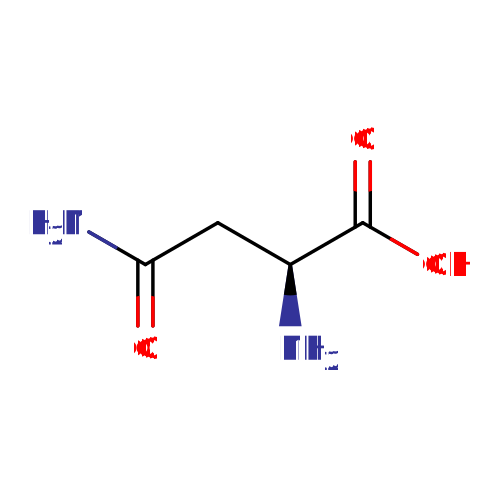
Structure for Asparagine (DB00174)
- Weight
- Average: 132.1179
Monoisotopic: 132.053492132 - Chemical Formula
- C4H8N2O3
- Synonyms
- (2S)-2-amino-3-carbamoylpropanoic acid
- (2S)-2,4-diamino-4-oxobutanoic acid
- (S)-2-amino-3-carbamoylpropanoic acid
- (S)-Asparagine
- 2-Aminosuccinamic acid
- alpha-aminosuccinamic acid
- Asn
- Asparagine
- Aspartamic acid
- L-2-aminosuccinamic acid
- L-Asparagine
- L-aspartic acid beta-amide
- L-aspartic acid β-amide
- α-aminosuccinamic acid

Pharmacology
- Indication
Used for nutritional supplementation, also for treating dietary shortage or imbalance.
 Reduce drug development failure ratesBuild, train, & validate machine-learning modelswith evidence-based and structured datasets.Build, train, & validate predictive machine-learning models with structured datasets.
- Contraindications & Blackbox Warnings
 Prevent Adverse Drug Events TodayTap into our Clinical API for life-saving information on contraindications & blackbox warnings, population restrictions, harmful risks, & more.Avoid life-threatening adverse drug events with our Clinical API
- Pharmacodynamics
A non-essential amino acid. Asparagine is critical for the production of the body's proteins, enzymes and muscle tissue. Supplements of this amino acid are claimed to balance nervous system function.
- Mechanism of action
Asparagine, a non-essential amino acid is important in the metabolism of toxic ammonia in the body through the action of asparagine synthase which attaches ammonia to aspartic acid in an amidation reaction. Asparagine is also used as a structural component in many proteins.
Target Actions Organism ASodium-coupled neutral amino acid transporters inhibitorHumans UNeutral amino acid transporter B(0) Not Available Humans UAsparagine synthetase [glutamine-hydrolyzing] Not Available Humans UAsparagine--tRNA ligase, cytoplasmic Not Available Humans NIsoaspartyl peptidase/L-asparaginase substrateHumans UProbable asparagine--tRNA ligase, mitochondrial Not Available Humans - Absorption
Not Available
- Volume of distribution
Not Available
- Protein binding
Not Available
- Metabolism
- Not Available
- Route of elimination
Not Available
- Half-life
Not Available
- Clearance
Not Available
- Adverse Effects
 Improve decision support & research outcomesWith structured adverse effects data, including: blackbox warnings, adverse reactions, warning & precautions, & incidence rates. View sample adverse effects data in our new Data Library!Improve decision support & research outcomes with our structured adverse effects data.
- Toxicity
Not Available
- Pathways
- Pharmacogenomic Effects/ADRs
- Not Available
Interactions
- Drug Interactions
- This information should not be interpreted without the help of a healthcare provider. If you believe you are experiencing an interaction, contact a healthcare provider immediately. The absence of an interaction does not necessarily mean no interactions exist.Not Available
- Food Interactions
- Not Available
Products
 Drug product information from 10+ global regionsOur datasets provide approved product information including:dosage, form, labeller, route of administration, and marketing period.Access drug product information from over 10 global regions.
- Mixture Products
Name Ingredients Dosage Route Labeller Marketing Start Marketing End Region Image AMINOPLASMAL-10% E INFUSION Asparagine (3.27 g/l) + Acetylcysteine (0.5 g/l) + Alanine (13.7 g/l) + Arginine (9.2 g/l) + Aspartic acid (1.3 g/l) + Glutamic acid (4.6 g/l) + Glycine (7.9 g/l) + Histidine (5.2 g/l) + Isoleucine (5.1 g/l) + Leucine (8.9 g/l) + Lysine hydrochloride (5.6 g/l) + Magnesium acetate (0.56 g/l) + Malic acid (1.01 g/l) + Methionine (3.8 g/l) + N-acetyltyrosine (1 g/l) + Ornithine hydrochloride (2.51 g/l) + Phenylalanine (5.1 g/l) + Potassium acetate (2.45 g/l) + Proline (8.9 g/l) + Serine (2.4 g/l) + Sodium acetate (3.95 g/l) + Sodium hydroxide (0.2 g/l) + Sodium phosphate, monobasic (1.4 g/l) + Threonine (4.1 g/l) + Tryptophan (1.8 g/l) + Tyrosine (0.3 g/l) + Valine (4.8 g/l) Injection Intravenous B. BRAUN SINGAPORE PTE LTD 1991-05-13 Not applicable Singapore 
AMINOPLASMAL-5% E INFUSION Asparagine (1.64 g/1000ml) + Acetylcysteine (0.25 g/1000ml) + Alanine (6.85 g/1000ml) + Arginine (4.6 g/1000ml) + Aspartic acid (0.65 g/1000ml) + Glutamic acid (2.3 g/1000ml) + Glycine (3.95 g/1000ml) + Histidine (2.6 g/1000ml) + Isoleucine (2.55 g/1000ml) + Leucine (4.45 g/1000ml) + Lysine hydrochloride (2.8 g/1000ml) + Magnesium acetate (0.56 g/1000ml) + Malic acid (1.01 g/1000ml) + Methionine (1.9 g/1000ml) + N-acetyltyrosine (0.35 g/1000ml) + Ornithine hydrochloride (1.25 g/1000ml) + Phenylalanine (2.55 g/1000ml) + Potassium acetate (2.45 g/1000ml) + Proline (4.45 g/1000ml) + Serine (1.2 g/1000ml) + Sodium acetate (3.95 g/1000ml) + Sodium hydroxide (0.2 g/1000ml) + Sodium phosphate, monobasic (1.4 g/1000ml) + Threonine (2.05 g/1000ml) + Tryptophan (0.9 g/1000ml) + Tyrosine (0.3 g/1000ml) + Valine (2.4 g/1000ml) Injection Intravenous B. BRAUN SINGAPORE PTE LTD 1991-05-13 Not applicable Singapore EXODERMA Brightening Mellow Foam Asparagine (2 g/100g) + Glycerin (0.04 g/100g) Gel Topical The Classeum Co., Ltd 2022-12-18 2023-12-17 US 
EXODERMA Brightening Peeling Gel Asparagine (2 g/100g) + Glycerin (0.04 g/100g) Gel Topical The Classeum Co., Ltd 2022-12-18 2023-12-17 US EXODERMA Calming Toner Pad Asparagine (2 g/100g) + Glycerin (0.04 g/100g) Liquid Topical The Classeum Co., Ltd 2022-12-18 2023-12-17 US - Unapproved/Other Products
Name Ingredients Dosage Route Labeller Marketing Start Marketing End Region Image EXODERMA Brightening Mellow Foam Asparagine (2 g/100g) + Glycerin (0.04 g/100g) Gel Topical The Classeum Co., Ltd 2022-12-18 2023-12-17 US EXODERMA Brightening Peeling Gel Asparagine (2 g/100g) + Glycerin (0.04 g/100g) Gel Topical The Classeum Co., Ltd 2022-12-18 2023-12-17 US EXODERMA Calming Toner Pad Asparagine (2 g/100g) + Glycerin (0.04 g/100g) Liquid Topical The Classeum Co., Ltd 2022-12-18 2023-12-17 US The Classeum Co., Ltd. Asparagine (2 g/100g) + Glycerin (0.04 g/100g) Liquid Topical The Classeum Co., Ltd 2022-12-18 2023-12-17 US The Classeum Co., Ltd. Asparagine (2 g/100g) + Glycerin (0.04 g/100g) Gel Topical The Classeum Co., Ltd 2022-12-18 2023-12-17 US
Categories
- Drug Categories
- Chemical TaxonomyProvided by Classyfire
- Description
- This compound belongs to the class of organic compounds known as asparagine and derivatives. These are compounds containing asparagine or a derivative thereof resulting from reaction of asparagine at the amino group or the carboxy group, or from the replacement of any hydrogen of glycine by a heteroatom.
- Kingdom
- Organic compounds
- Super Class
- Organic acids and derivatives
- Class
- Carboxylic acids and derivatives
- Sub Class
- Amino acids, peptides, and analogues
- Direct Parent
- Asparagine and derivatives
- Alternative Parents
- L-alpha-amino acids / Fatty amides / Fatty acids and conjugates / Primary carboxylic acid amides / Amino acids / Monocarboxylic acids and derivatives / Carboxylic acids / Organopnictogen compounds / Organic oxides / Monoalkylamines show 2 more
- Substituents
- Aliphatic acyclic compound / Alpha-amino acid / Amine / Amino acid / Asparagine or derivatives / Carbonyl group / Carboxamide group / Carboxylic acid / Fatty acid / Fatty acyl show 13 more
- Molecular Framework
- Aliphatic acyclic compounds
- External Descriptors
- aspartate family amino acid, proteinogenic amino acid, L-alpha-amino acid, asparagine (CHEBI:17196) / Common amino acids (C00152)
- Affected organisms
- Humans and other mammals
Chemical Identifiers
- UNII
- 5Z33R5TKO7
- CAS number
- 70-47-3
- InChI Key
- DCXYFEDJOCDNAF-REOHCLBHSA-N
- InChI
- InChI=1S/C4H8N2O3/c5-2(4(8)9)1-3(6)7/h2H,1,5H2,(H2,6,7)(H,8,9)/t2-/m0/s1
- IUPAC Name
- (2S)-2-amino-3-carbamoylpropanoic acid
- SMILES
- N[C@@H](CC(N)=O)C(O)=O
References
- Synthesis Reference
Sang C. Park, "Pharmaceutical preparation containing L-aspartate or L-asparagine for preventing ethanol toxicity, and process for preparation thereof." U.S. Patent US5389359, issued November, 1991.
US5389359- General References
- Not Available
- External Links
- Human Metabolome Database
- HMDB0000168
- KEGG Compound
- C00152
- PubChem Compound
- 6267
- PubChem Substance
- 46507804
- ChemSpider
- 6031
- BindingDB
- 181137
- 1157
- ChEBI
- 58048
- ChEMBL
- CHEMBL58832
- ZINC
- ZINC000001532556
- PharmGKB
- PA164776968
- PDBe Ligand
- 41Q
- Wikipedia
- Asparagine
- PDB Entries
- 3x2o / 3x2p
- MSDS
- Download (72.2 KB)
Clinical Trials
Pharmacoeconomics
- Manufacturers
- Not Available
- Packagers
- Not Available
- Dosage Forms
Form Route Strength Injection, solution Intravenous Injection Intravenous 0.5 g/l Injection Intravenous 0.25 g/1000ml Gel Topical Liquid Topical - Prices
- Not Available
- Patents
- Not Available
Properties
- State
- Solid
- Experimental Properties
Property Value Source melting point (°C) 234-235 °C PhysProp water solubility 2.94E+004 mg/L (at 25 °C) YALKOWSKY,SH & DANNENFELSER,RM (1992) logP -3.82 CHMELIK,J ET AL. (1991) logS -0.74 ADME Research, USCD pKa 8.82 (at 18 °C) KORTUM,G ET AL (1961) - Predicted Properties
Property Value Source Water Solubility 168.0 mg/mL ALOGPS logP -3.4 ALOGPS logP -4.3 Chemaxon logS 0.1 ALOGPS pKa (Strongest Acidic) 2 Chemaxon pKa (Strongest Basic) 8.43 Chemaxon Physiological Charge 0 Chemaxon Hydrogen Acceptor Count 4 Chemaxon Hydrogen Donor Count 3 Chemaxon Polar Surface Area 106.41 Å2 Chemaxon Rotatable Bond Count 3 Chemaxon Refractivity 28.35 m3·mol-1 Chemaxon Polarizability 11.68 Å3 Chemaxon Number of Rings 0 Chemaxon Bioavailability 1 Chemaxon Rule of Five Yes Chemaxon Ghose Filter No Chemaxon Veber's Rule No Chemaxon MDDR-like Rule No Chemaxon - Predicted ADMET Features
Property Value Probability Human Intestinal Absorption + 0.5517 Blood Brain Barrier + 0.8465 Caco-2 permeable - 0.8457 P-glycoprotein substrate Non-substrate 0.8088 P-glycoprotein inhibitor I Non-inhibitor 0.9513 P-glycoprotein inhibitor II Non-inhibitor 0.9935 Renal organic cation transporter Non-inhibitor 0.9753 CYP450 2C9 substrate Non-substrate 0.8403 CYP450 2D6 substrate Non-substrate 0.8337 CYP450 3A4 substrate Non-substrate 0.7705 CYP450 1A2 substrate Non-inhibitor 0.9617 CYP450 2C9 inhibitor Non-inhibitor 0.9717 CYP450 2D6 inhibitor Non-inhibitor 0.9669 CYP450 2C19 inhibitor Non-inhibitor 0.9763 CYP450 3A4 inhibitor Non-inhibitor 0.9079 CYP450 inhibitory promiscuity Low CYP Inhibitory Promiscuity 0.9922 Ames test Non AMES toxic 0.6386 Carcinogenicity Non-carcinogens 0.8619 Biodegradation Ready biodegradable 0.8549 Rat acute toxicity 1.4003 LD50, mol/kg Not applicable hERG inhibition (predictor I) Weak inhibitor 0.9979 hERG inhibition (predictor II) Non-inhibitor 0.9786
Spectra
- Mass Spec (NIST)
- Download (2.96 KB)
- Spectra
- Chromatographic Properties
Collision Cross Sections (CCS)
Adduct CCS Value (Å2) Source type Source [M-H]- 123.9305101 predictedDarkChem Lite v0.1.0 [M-H]- 124.3906675 predictedDarkChem Standard v0.1.0 [M-H]- 123.9937101 predictedDarkChem Lite v0.1.0 [M-H]- 120.16135 predictedDeepCCS 1.0 (2019) [M+H]+ 124.2593101 predictedDarkChem Lite v0.1.0 [M+H]+ 127.6950326 predictedDarkChem Standard v0.1.0 [M+H]+ 124.5710101 predictedDarkChem Lite v0.1.0 [M+H]+ 124.02746 predictedDeepCCS 1.0 (2019) [M+Na]+ 123.6796101 predictedDarkChem Lite v0.1.0 [M+Na]+ 123.6385101 predictedDarkChem Lite v0.1.0 [M+Na]+ 123.6230101 predictedDarkChem Lite v0.1.0 [M+Na]+ 133.03358 predictedDeepCCS 1.0 (2019)
Targets

- Kind
- Protein group
- Organism
- Humans
- Pharmacological action
- Yes
- Actions
- Inhibitor
- Curator comments
- Literature referenced performed experiment on rats.
- General Function
- Functions as a sodium-dependent amino acid transporter. Mediates the saturable, pH-sensitive and electrogenic cotransport of glutamine and sodium ions with a stoichiometry of 1:1. May also transport small zwitterionic and aliphatic amino acids with a lower affinity. May supply glutamatergic and GABAergic neurons with glutamine which is required for the synthesis of the neurotransmitters glutamate and GABA.
- Specific Function
- Amino acid transmembrane transporter activity
Components:
References
- Keep RF, Xiang J: N-system amino acid transport at the blood--CSF barrier. J Neurochem. 1995 Dec;65(6):2571-6. doi: 10.1046/j.1471-4159.1995.65062571.x. [Article]
- Kind
- Protein
- Organism
- Humans
- Pharmacological action
- Unknown
- General Function
- Virus receptor activity
- Specific Function
- Sodium-dependent amino acids transporter that has a broad substrate specificity, with a preference for zwitterionic amino acids. It accepts as substrates all neutral amino acids, including glutamin...
- Gene Name
- SLC1A5
- Uniprot ID
- Q15758
- Uniprot Name
- Neutral amino acid transporter B(0)
- Molecular Weight
- 56597.64 Da
References
- Dun Y, Mysona B, Itagaki S, Martin-Studdard A, Ganapathy V, Smith SB: Functional and molecular analysis of D-serine transport in retinal Muller cells. Exp Eye Res. 2007 Jan;84(1):191-9. Epub 2006 Nov 13. [Article]
- Oppedisano F, Pochini L, Galluccio M, Cavarelli M, Indiveri C: Reconstitution into liposomes of the glutamine/amino acid transporter from renal cell plasma membrane: functional characterization, kinetics and activation by nucleotides. Biochim Biophys Acta. 2004 Dec 15;1667(2):122-31. [Article]
- Kind
- Protein
- Organism
- Humans
- Pharmacological action
- Unknown
- General Function
- Protein homodimerization activity
- Specific Function
- Not Available
- Gene Name
- ASNS
- Uniprot ID
- P08243
- Uniprot Name
- Asparagine synthetase [glutamine-hydrolyzing]
- Molecular Weight
- 64369.39 Da
References
- Tesson AR, Soper TS, Ciustea M, Richards NG: Revisiting the steady state kinetic mechanism of glutamine-dependent asparagine synthetase from Escherichia coli. Arch Biochem Biophys. 2003 May 1;413(1):23-31. [Article]
- Fresquet V, Thoden JB, Holden HM, Raushel FM: Kinetic mechanism of asparagine synthetase from Vibrio cholerae. Bioorg Chem. 2004 Apr;32(2):63-75. [Article]
- Chaffei C, Pageau K, Suzuki A, Gouia H, Ghorbel MH, Masclaux-Daubresse C: Cadmium toxicity induced changes in nitrogen management in Lycopersicon esculentum leading to a metabolic safeguard through an amino acid storage strategy. Plant Cell Physiol. 2004 Nov;45(11):1681-93. [Article]
- Al Sarraj J, Vinson C, Thiel G: Regulation of asparagine synthetase gene transcription by the basic region leucine zipper transcription factors ATF5 and CHOP. Biol Chem. 2005 Sep;386(9):873-9. [Article]
- Iwamoto S, Mihara K, Downing JR, Pui CH, Campana D: Mesenchymal cells regulate the response of acute lymphoblastic leukemia cells to asparaginase. J Clin Invest. 2007 Apr;117(4):1049-57. Epub 2007 Mar 22. [Article]
- Kind
- Protein
- Organism
- Humans
- Pharmacological action
- Unknown
- General Function
- Nucleic acid binding
- Specific Function
- Not Available
- Gene Name
- NARS
- Uniprot ID
- O43776
- Uniprot Name
- Asparagine--tRNA ligase, cytoplasmic
- Molecular Weight
- 62942.425 Da
References
- Iwasaki W, Sekine S, Kuroishi C, Kuramitsu S, Shirouzu M, Yokoyama S: Structural basis of the water-assisted asparagine recognition by asparaginyl-tRNA synthetase. J Mol Biol. 2006 Jul 7;360(2):329-42. Epub 2006 May 15. [Article]
- Iwamoto S, Mihara K, Downing JR, Pui CH, Campana D: Mesenchymal cells regulate the response of acute lymphoblastic leukemia cells to asparaginase. J Clin Invest. 2007 Apr;117(4):1049-57. Epub 2007 Mar 22. [Article]
- Kind
- Protein
- Organism
- Humans
- Pharmacological action
- No
- Actions
- Substrate
- General Function
- Beta-aspartyl-peptidase activity
- Specific Function
- Has both L-asparaginase and beta-aspartyl peptidase activity. May be involved in the production of L-aspartate, which can act as an excitatory neurotransmitter in some brain regions. Is highly acti...
- Gene Name
- ASRGL1
- Uniprot ID
- Q7L266
- Uniprot Name
- Isoaspartyl peptidase/L-asparaginase
- Molecular Weight
- 32054.325 Da
References
- Li W, Irani S, Crutchfield A, Hodge K, Matthews W, Patel P, Zhang YJ, Stone E: Intramolecular Cleavage of the hASRGL1 Homodimer Occurs in Two Stages. Biochemistry. 2016 Feb 16;55(6):960-9. doi: 10.1021/acs.biochem.5b01157. Epub 2016 Feb 2. [Article]
- Li W, Cantor JR, Yogesha SD, Yang S, Chantranupong L, Liu JQ, Agnello G, Georgiou G, Stone EM, Zhang Y: Uncoupling intramolecular processing and substrate hydrolysis in the N-terminal nucleophile hydrolase hASRGL1 by circular permutation. ACS Chem Biol. 2012 Nov 16;7(11):1840-7. doi: 10.1021/cb300232n. Epub 2012 Aug 29. [Article]
- Kind
- Protein
- Organism
- Humans
- Pharmacological action
- Unknown
- General Function
- Nucleic acid binding
- Specific Function
- Not Available
- Gene Name
- NARS2
- Uniprot ID
- Q96I59
- Uniprot Name
- Probable asparagine--tRNA ligase, mitochondrial
- Molecular Weight
- 54089.64 Da
References
- Iwasaki W, Sekine S, Kuroishi C, Kuramitsu S, Shirouzu M, Yokoyama S: Structural basis of the water-assisted asparagine recognition by asparaginyl-tRNA synthetase. J Mol Biol. 2006 Jul 7;360(2):329-42. Epub 2006 May 15. [Article]
- Roy H, Becker HD, Reinbolt J, Kern D: When contemporary aminoacyl-tRNA synthetases invent their cognate amino acid metabolism. Proc Natl Acad Sci U S A. 2003 Aug 19;100(17):9837-42. Epub 2003 Jul 21. [Article]
Transporters
- Kind
- Protein
- Organism
- Humans
- Pharmacological action
- Unknown
- Actions
- Inhibitor
- General Function
- Transporter activity
- Specific Function
- Sodium-independent transporter that mediates the update of aromatic acid. Can function as a net efflux pathway for aromatic amino acids in the basosolateral epithelial cells (By similarity).
- Gene Name
- SLC16A10
- Uniprot ID
- Q8TF71
- Uniprot Name
- Monocarboxylate transporter 10
- Molecular Weight
- 55492.07 Da
References
- Kim DK, Kanai Y, Chairoungdua A, Matsuo H, Cha SH, Endou H: Expression cloning of a Na+-independent aromatic amino acid transporter with structural similarity to H+/monocarboxylate transporters. J Biol Chem. 2001 May 18;276(20):17221-8. Epub 2001 Feb 20. [Article]


Drug created at June 13, 2005 13:24 / Updated at April 09, 2024 18:12