Identification
- Summary
Acetylcysteine is a medication that can be used as a mucolytic in patients with certain lung conditions and as an antidote for acetaminophen overdose.
- Brand Names
- Acetadote
- Generic Name
- Acetylcysteine
- DrugBank Accession Number
- DB06151
- Background
Acetylcysteine is an antioxidant and glutathione inducer indicated for mucolytic therapy and the treatment of acetaminophen overdose.14,15,16,17 Acetylcysteine has also been studied for a wide variety of off-label indications with mixed results.8,9,10
Acetylcysteine was granted FDA approval on 14 September 1963.18
- Type
- Small Molecule
- Groups
- Approved, Investigational
- Structure
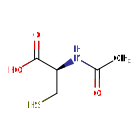
Structure for Acetylcysteine (DB06151)
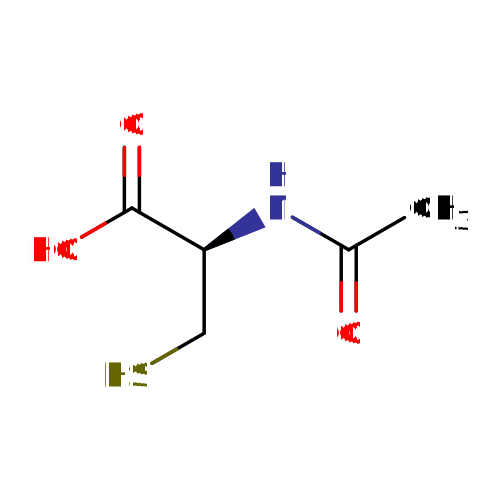
- Weight
- Average: 163.195
Monoisotopic: 163.030313849 - Chemical Formula
- C5H9NO3S
- Synonyms
- (2R)-2-acetylamino-3-sulfanylpropanoic acid
- (R)-2-acetylamino-3-mercaptopropanoic acid
- (R)-mercapturic acid
- Acetilcisteina
- Acetylcysteine
- Acetylcysteinum
- L-acetylcysteine
- L-α-acetamido-β-mercaptopropionic acid
- Mercapturic acid
- N-acetyl-L-(+)-cysteine
- N-acetyl-L-cysteine
- N-acetylcysteine
- NAC
- External IDs
- 5052
- NSC-111180
- RK-0202

Pharmacology
- Indication
Acetylcysteine is indicated for mucolytic therapy and in the management of acetaminophen overdose.14,15,16,17
 Reduce drug development failure ratesBuild, train, & validate machine-learning modelswith evidence-based and structured datasets.Build, train, & validate predictive machine-learning models with structured datasets.
- Associated Conditions
Indication Type Indication Combined Product Details Approval Level Age Group Patient Characteristics Dose Form Treatment of Acetaminophen overdose •••••••••••• •••••••• Treatment of Acetaminophen overdose •••••••••••• •••••••••• ••••••••• ••••••••••• Treatment of Acetaminophen overdose •••••••••••• •••••••••• •••••••••• •••••••• Used in combination to treat Chronic rhinitis Combination Product in combination with: Tuaminoheptane (DB13238) •••••••••••• ••••• Treatment of Corneal diseases •••••••••••• - Associated Therapies
- Contraindications & Blackbox Warnings
 Prevent Adverse Drug Events TodayTap into our Clinical API for life-saving information on contraindications & blackbox warnings, population restrictions, harmful risks, & more.Avoid life-threatening adverse drug events with our Clinical API
- Pharmacodynamics
Acetylcysteine is indicated for mucolytic therapy and in the management of acetaminophen overdose.14,15,16,17 It has a short duration of action as it is given every 1-8 hours depending on route of administration, and has a wide therapeutic window.14,15,16,17 Patients should be counselled regarding diluting oral solutions in cola for taste masking,7 the risk of hypersensitivity, and the risk of upper gastrointestinal hemorrhage.14,15,16,17
- Mechanism of action
A number of possible mechanisms for the mucolytic activity of acetylcysteine have been proposed. Acetylcysteine's sulfhydryl groups may hydrolize disulfide bonds within mucin, breaking down the oligomers, and making the mucin less viscous.11,16 Acetylcysteine has also been shown to reduce mucin secretion in rat models.11 It is an antioxidant in its own right but is also deacetylated to cysteine, which participates in the synthesis of the antioxidant glutathione.11 The antioxidant activity may also alter intracellular redox reactions, decreasing phosphorylation of EGFR and MAPK, which decrease transcription of the gene MUC5AC which produces mucin.11
In the case of acetaminophen overdoses, a portion of the drug is metabolized by CYP2E1 to form the potentially toxic metabolite N-acetyl-p-benzoquinone imine (NAPQI).16 The amount of NAPQI produced in an overdose saturates and depletes glutathione stores.16 The free NAPQI promiscuously binds to proteins in hepatocytes, leading to cellular necrosis.16 Acetylcysteine can directly conjugate NAPQI or provide cysteine for glutathione production and NAPQI conjugation.16
Target Actions Organism AGlutathione synthetase stimulatorHumans ACystine/glutamate transporter activatorHumans UNAPQI (N-acetyl-p-benzoquinone imine) reducerHumans UAminoacylase-1 substrateHumans UInhibitor of nuclear factor kappa-B kinase subunit beta inhibitorHumans UInhibitor of nuclear factor kappa-B kinase subunit alpha inhibitorHumans UGlutamate receptor ionotropic, NMDA 2B activatorHumans UGlutamate receptor ionotropic, NMDA 1 activatorHumans UGlutamate receptor ionotropic, NMDA 2A activatorHumans UGlutamate receptor ionotropic, NMDA 2D activatorHumans UGlutamate receptor ionotropic, NMDA 3A activatorHumans - Absorption
An 11 g dose in the form of an effervescent tablet for solution reaches a mean Cmax of 26.5 µg/mL, with a Tmax of 2 hours, and an AUC of 186 µg*h/mL.17
- Volume of distribution
The volume of distribution of acetylcysteine is 0.47 L/kg.15
- Protein binding
Acetylcysteine is 66-97% protein bound in serum,15 usually to albumin.12
- Metabolism
Acetylcysteine can be deacetylated by aminoacylase 1 or other undefined deacetylases before undergoing the normal metabolism of cysteine.1,5
Hover over products below to view reaction partners
- Route of elimination
An oral dose of radiolabelled acetylcysteine is 13-38% recovered in the urine in the first 24 hours,15 while 3% is recovered in the feces.6
- Half-life
The mean terminal half life of acetylcysteine in adults is 5.6 hours15 and in pre-term neonates is 11 hours.2
- Clearance
Acetylcysteine has a mean clearance of 0.11 L/hr/kg.15
- Adverse Effects
 Improve decision support & research outcomesWith structured adverse effects data, including: blackbox warnings, adverse reactions, warning & precautions, & incidence rates. View sample adverse effects data in our new Data Library!Improve decision support & research outcomes with our structured adverse effects data.
- Toxicity
Patients experiencing an overdose may present with vomiting, nausea, bronchospasm, periorbital angioedema, and hypotension.3 Treat patients with symptomatic and supportive measures.15 Hemodialysis may remove some acetylcysteine from circulation as it is somewhat protein bound.15
- Pathways
- Not Available
- Pharmacogenomic Effects/ADRs
- Not Available
Interactions
- Drug Interactions
- This information should not be interpreted without the help of a healthcare provider. If you believe you are experiencing an interaction, contact a healthcare provider immediately. The absence of an interaction does not necessarily mean no interactions exist.
Drug Interaction Integrate drug-drug
interactions in your softwareAmbrisentan The excretion of Ambrisentan can be decreased when combined with Acetylcysteine. Asunaprevir The excretion of Asunaprevir can be decreased when combined with Acetylcysteine. Atogepant The serum concentration of Atogepant can be increased when it is combined with Acetylcysteine. Atorvastatin The excretion of Atorvastatin can be decreased when combined with Acetylcysteine. Axitinib The excretion of Axitinib can be decreased when combined with Acetylcysteine. - Food Interactions
- No interactions found.
Products
 Drug product information from 10+ global regionsOur datasets provide approved product information including:dosage, form, labeller, route of administration, and marketing period.Access drug product information from over 10 global regions.
- International/Other Brands
- Fluimucil / Lysox / Mucolysin (Zambon)
- Brand Name Prescription Products
Name Dosage Strength Route Labeller Marketing Start Marketing End Region Image Acetadote Injection, solution 200 mg/1mL Intravenous Cumberland Pharmaceuticals 2004-06-04 2011-01-21 US 
Acetadote Injection, solution 200 mg/1mL Intravenous Cumberland Pharmaceuticals Inc. 2004-01-23 Not applicable US Acetylcysteine Injection 200 mg/1mL Intravenous Paddock Laboratories, LLC 2013-10-15 2021-02-01 US Acetylcysteine Injection Solution 200 mg / mL Intravenous; Oral; Respiratory (inhalation) Teligent Ou 2009-08-18 2022-02-01 Canada 
Acetylcysteine Injection Solution 200 mg / mL Intravenous Auro Pharma Inc Not applicable Not applicable Canada - Generic Prescription Products
Name Dosage Strength Route Labeller Marketing Start Marketing End Region Image Acetylcysteine Solution 200 mg/1mL Oral; Respiratory (inhalation) Fresenius Kabi USA, LLC 2012-09-01 Not applicable US Acetylcysteine Solution 200 mg/1mL Oral; Respiratory (inhalation) Hospira, Inc. 2005-06-01 Not applicable US Acetylcysteine Solution 100 mg/1mL Oral; Respiratory (inhalation) Fresenius Kabi USA, LLC 2014-03-31 Not applicable US Acetylcysteine Inhalant 200 mg/1mL Respiratory (inhalation) AMERICAN REGENT, INC. 1995-10-01 Not applicable US Acetylcysteine Injection, solution 200 mg/1mL Intravenous Zydus Lifesciences Limited 2019-01-17 Not applicable US - Over the Counter Products
Name Dosage Strength Route Labeller Marketing Start Marketing End Region Image ACETIN Powder, for solution Oral HEALOL PHARMACEUTICALS SDN. BHD. 2020-09-08 Not applicable Malaysia 
ACETIN-200 Powder, for solution Oral HEALOL PHARMACEUTICALS SDN. BHD. 2020-09-08 Not applicable Malaysia Acetylcysteine Sandoz Effervescent Tablet 200mg Tablet, effervescent 200 mg Oral NOVARTIS CORPORATION (MALAYSIA) SDN. BHD. 2020-09-08 Not applicable Malaysia Acetylcysteine Sandoz Effervescent Tablet 600mg Tablet, effervescent 600 mg Oral NOVARTIS CORPORATION (MALAYSIA) SDN. BHD. 2020-09-08 Not applicable Malaysia ACETYLCYSTEINE SANDOZ EFFERVESCENT TABLETS 600MG Tablet, effervescent 600 mg Oral NOVARTIS (SINGAPORE) PTE LTD 2014-07-30 Not applicable Singapore 
- Mixture Products
Name Ingredients Dosage Route Labeller Marketing Start Marketing End Region Image AKE 1100 GLUKOZLU IV SOLOSYONU, 1000 ML Acetylcysteine (0.25 g/mL) + Alanine (4.5 g/mL) + Arginine (3.6 g/mL) + D-glucose monohydrate (66 g/mL) + Glycerin (3.61 g/mL) + Glycine (4.2 g/mL) + Histidine (3.6 g/mL) + Isoleucine (1.5 g/mL) + Leucine (2.52 g/mL) + Lysine monohydrate (2.476 g/mL) + Malic acid (2.64 g/mL) + Methionine (1.6 g/mL) + Phenylalanine (1.062 g/mL) + Potassium chloride (1.865 g/mL) + Proline (4.5 g/mL) + Threonine (1.32 g/mL) + Tryptophan (0.6 g/mL) + Zinc chloride (3 mg/mL) Solution Intravenous FRESENİUS KABİ İLAÇ SAN. VE TİC. LTD. ŞTİ. 1995-03-08 2022-03-03 Turkey 
AKE 1100 GLUKOZLU IV SOLOSYONU, 500 ML Acetylcysteine (0.25 g/mL) + Alanine (4.5 g/mL) + Arginine (3.6 g/mL) + D-glucose monohydrate (66 g/mL) + Glycerin (3.61 g/mL) + Glycine (4.2 g/mL) + Histidine (3.6 g/mL) + Isoleucine (1.5 g/mL) + Leucine (2.52 g/mL) + Lysine monohydrate (2.476 g/mL) + Malic acid (2.64 g/mL) + Methionine (1.6 g/mL) + Phenylalanine (1.062 g/mL) + Potassium chloride (1.865 g/mL) + Proline (4.5 g/mL) + Threonine (1.32 g/mL) + Tryptophan (0.6 g/mL) + Zinc chloride (3 mg/mL) Solution Intravenous FRESENİUS KABİ İLAÇ SAN. VE TİC. LTD. ŞTİ. 1995-03-08 2022-03-03 Turkey Amino - Mel "nephro" - Infusionsflasche Acetylcysteine (0.54 g/L) + Alanine (6.2 g/L) + Arginine (8.2 g/L) + Glycine (5.31 g/L) + Glycyltyrosine (3.16 g/L) + Histidine (9.8 g/L) + Isoleucine (5.8 g/L) + Leucine (12.8 g/L) + Lysine acetate (16.93 g/L) + Methionine (2 g/L) + Phenylalanine (3.5 g/L) + Proline (3 g/L) + Serine (7.6 g/L) + Threonine (8.2 g/L) + Tryptophan (3 g/L) + Tyrosine (0.6 g/L) + Valine (8.7 g/L) Solution Intravenous Fresenius Kabi Austria Gmb H 1991-03-05 Not applicable Austria 
Aminoplasmal Paed 10% Infusionslösung Acetylcysteine (0.7 g) + Alanine (15.9 g) + Arginine (9.1 g) + Aspartic acid (6.6 g) + Glutamic acid (9.3 g) + Glycine (2 g) + Histidine (4.6 g) + Isoleucine (5.1 g) + Leucine (7.6 g) + Lysine (8.8 g) + Methionine (2 g) + N-acetyltyrosine (1.3 g) + Phenylalanine (3.1 g) + Proline (6.1 g) + Serine (2 g) + Taurine (0.3 g) + Threonine (5.1 g) + Tryptophan (4 g) + Valine (6.1 g) Solution Parenteral B. Braun Melsungen Ag 2013-09-04 Not applicable Austria AMINOPLASMAL-10% E INFUSION Acetylcysteine (0.5 g/l) + Alanine (13.7 g/l) + Arginine (9.2 g/l) + Asparagine (3.27 g/l) + Aspartic acid (1.3 g/l) + Glutamic acid (4.6 g/l) + Glycine (7.9 g/l) + Histidine (5.2 g/l) + Isoleucine (5.1 g/l) + Leucine (8.9 g/l) + Lysine hydrochloride (5.6 g/l) + Magnesium acetate (0.56 g/l) + Malic acid (1.01 g/l) + Methionine (3.8 g/l) + N-acetyltyrosine (1 g/l) + Ornithine hydrochloride (2.51 g/l) + Phenylalanine (5.1 g/l) + Potassium acetate (2.45 g/l) + Proline (8.9 g/l) + Serine (2.4 g/l) + Sodium acetate (3.95 g/l) + Sodium hydroxide (0.2 g/l) + Sodium phosphate, monobasic (1.4 g/l) + Threonine (4.1 g/l) + Tryptophan (1.8 g/l) + Tyrosine (0.3 g/l) + Valine (4.8 g/l) Injection Intravenous B. BRAUN SINGAPORE PTE LTD 1991-05-13 Not applicable Singapore - Unapproved/Other Products
Name Ingredients Dosage Route Labeller Marketing Start Marketing End Region Image ASTEIN 600 MG EFERVESAN TABLET, 20 ADET Acetylcysteine (600 mg) Tablet, effervescent Oral RP FARMA İLAÇ KOZMETİK SAN. VE TİC.LTD.ŞTİ 2020-07-21 Not applicable Turkey BRUNAC % 5 GÖZ DAMLASI, ÇÖZELTİ Acetylcysteine (50 mg/ml) Solution / drops Ophthalmic BİO-GEN İLAÇ SAN.TİC.LTD. ŞTİ. 2013-01-29 Not applicable Turkey Folcyteine Acetylcysteine (200 mg/1) + Calcium citrate tetrahydrate (47 mg/1) + Cholecalciferol (800 [iU]/1) + Folic acid (1000 ug/1) + Magnesium citrate (16 mg/1) Tablet Oral PureTek Corporation 2023-09-14 Not applicable US L-Methyl MC NAC Acetylcysteine (600 mg/1) + Levomefolate calcium (6 mg/1) + Mecobalamin (2 mg/1) Tablet, coated Oral Virtus Pharmaceuticals 2014-04-09 2015-02-15 US Levomefolate Calcium Acetylcysteine and Mecobalamin Algal Acetylcysteine (600 mg/1) + Levomefolate calcium (6 mg/1) + Mecobalamin (2 mg/1) + Schizochytrium DHA oil (90.314 mg/1) Tablet, coated Oral Virtus Pharmaceuticals 2014-05-09 2015-02-15 US
Categories
- ATC Codes
- R05CB01 — Acetylcysteine
- R05CB — Mucolytics
- R05C — EXPECTORANTS, EXCL. COMBINATIONS WITH COUGH SUPPRESSANTS
- R05 — COUGH AND COLD PREPARATIONS
- R — RESPIRATORY SYSTEM
- S01XA — Other ophthalmologicals
- S01X — OTHER OPHTHALMOLOGICALS
- S01 — OPHTHALMOLOGICALS
- S — SENSORY ORGANS
- Drug Categories
- Amino Acids
- Amino Acids, Neutral
- Amino Acids, Peptides, and Proteins
- Amino Acids, Sulfur
- Antidote for Acetaminophen Overdose
- Antidotes
- Antioxidants
- Compounds used in a research, industrial, or household setting
- Cough and Cold Preparations
- Cysteine
- Decreased Respiratory Secretion Viscosity
- Expectorants
- Free Radical Scavengers
- Increased Glutathione Concentration
- OATP1B1/SLCO1B1 Inhibitors
- Ophthalmologicals
- Protective Agents
- Reduction Activity
- Respiratory System Agents
- Sensory Organs
- Sulfhydryl Compounds
- Sulfur Compounds
- Chemical TaxonomyProvided by Classyfire
- Description
- This compound belongs to the class of organic compounds known as n-acyl-l-alpha-amino acids. These are n-acylated alpha amino acids which have the L-configuration of the alpha-carbon atom.
- Kingdom
- Organic compounds
- Super Class
- Organic acids and derivatives
- Class
- Carboxylic acids and derivatives
- Sub Class
- Amino acids, peptides, and analogues
- Direct Parent
- N-acyl-L-alpha-amino acids
- Alternative Parents
- Cysteine and derivatives / Acetamides / Secondary carboxylic acid amides / Monocarboxylic acids and derivatives / Carboxylic acids / Alkylthiols / Organopnictogen compounds / Organonitrogen compounds / Organic oxides / Hydrocarbon derivatives show 1 more
- Substituents
- Acetamide / Aliphatic acyclic compound / Alkylthiol / Carbonyl group / Carboxamide group / Carboxylic acid / Cysteine or derivatives / Hydrocarbon derivative / Monocarboxylic acid or derivatives / N-acyl-l-alpha-amino acid show 8 more
- Molecular Framework
- Aliphatic acyclic compounds
- External Descriptors
- L-cysteine derivative, N-acetyl-L-amino acid, acetylcysteine (CHEBI:28939)
- Affected organisms
- Humans and other mammals
Chemical Identifiers
- UNII
- WYQ7N0BPYC
- CAS number
- 616-91-1
- InChI Key
- PWKSKIMOESPYIA-BYPYZUCNSA-N
- InChI
- InChI=1S/C5H9NO3S/c1-3(7)6-4(2-10)5(8)9/h4,10H,2H2,1H3,(H,6,7)(H,8,9)/t4-/m0/s1
- IUPAC Name
- (2R)-2-acetamido-3-sulfanylpropanoic acid
- SMILES
- CC(=O)N[C@@H](CS)C(O)=O
References
- Synthesis Reference
Rolf-Dieter Juch, Gerd Birrenbach, Christian Pflugshaupt, "Solid, fast-soluble pharmaceutical preparation containing S-(carboxymethyl)-L-cysteine and/or N-acetylcysteine." U.S. Patent US5401514, issued November, 1990.
US5401514- General References
- Cotgreave I, Moldeus P, Schuppe I: The metabolism of N-acetylcysteine by human endothelial cells. Biochem Pharmacol. 1991 Jun 21;42(1):13-6. doi: 10.1016/0006-2952(91)90674-t. [Article]
- Ahola T, Fellman V, Laaksonen R, Laitila J, Lapatto R, Neuvonen PJ, Raivio KO: Pharmacokinetics of intravenous N-acetylcysteine in pre-term new-born infants. Eur J Clin Pharmacol. 1999 Nov;55(9):645-50. doi: 10.1007/s002280050687. [Article]
- Mahmoudi GA, Astaraki P, Mohtashami AZ, Ahadi M: N-acetylcysteine overdose after acetaminophen poisoning. Int Med Case Rep J. 2015 Feb 27;8:65-9. doi: 10.2147/IMCRJ.S74563. eCollection 2015. [Article]
- Holdiness MR: Clinical pharmacokinetics of N-acetylcysteine. Clin Pharmacokinet. 1991 Feb;20(2):123-34. doi: 10.2165/00003088-199120020-00004. [Article]
- Uttamsingh V, Keller DA, Anders MW: Acylase I-catalyzed deacetylation of N-acetyl-L-cysteine and S-alkyl-N-acetyl-L-cysteines. Chem Res Toxicol. 1998 Jul;11(7):800-9. [Article]
- Pei Y, Liu H, Yang Y, Yang Y, Jiao Y, Tay FR, Chen J: Biological Activities and Potential Oral Applications of N-Acetylcysteine: Progress and Prospects. Oxid Med Cell Longev. 2018 Apr 22;2018:2835787. doi: 10.1155/2018/2835787. eCollection 2018. [Article]
- Crouch BI, Caravati EM, Dandoy C: Effect of dilution with beverages on the smell and taste of oral acetylcysteine. Am J Health Syst Pharm. 2007 Sep 15;64(18):1965-8. doi: 10.2146/ajhp060568. [Article]
- Bass S, Zook N: Intravenous acetylcysteine for indications other than acetaminophen overdose. Am J Health Syst Pharm. 2013 Sep 1;70(17):1496-501. doi: 10.2146/ajhp120645. [Article]
- Thompson CA: Acetylcysteine's off-label use presents dosage-form issue. Am J Health Syst Pharm. 2007 Jul 1;64(13):1362, 1364, 1368. doi: 10.2146/news070062. [Article]
- Slattery KM, Dascombe B, Wallace LK, Bentley DJ, Coutts AJ: Effect of N-acetylcysteine on cycling performance after intensified training. Med Sci Sports Exerc. 2014 Jun;46(6):1114-23. doi: 10.1249/MSS.0000000000000222. [Article]
- Sadowska AM: N-Acetylcysteine mucolysis in the management of chronic obstructive pulmonary disease. Ther Adv Respir Dis. 2012 Jun;6(3):127-35. doi: 10.1177/1753465812437563. Epub 2012 Feb 23. [Article]
- Harada D, Anraku M, Fukuda H, Naito S, Harada K, Suenaga A, Otagiri M: Kinetic studies of covalent binding between N-acetyl-L-cysteine and human serum albumin through a mixed-disulfide using an N-methylpyridinium polymer-based column. Drug Metab Pharmacokinet. 2004 Aug;19(4):297-302. doi: 10.2133/dmpk.19.297. [Article]
- Serjeant EP, Dempsey B (1979). Ionisation constants of organic acids in aqueous solution (1st ed.). Oxford ; New York : Pergamon Press. [ISBN:9780080223391]
- Dailymed: Acetylcysteine Respiratory Inhalant [Link]
- Dailymed: Acetylcysteine Intravenous Injection, Solution [Link]
- Health Canada Approved Drug Products: Acetylcysteine USP Solution for Intravenous Injection, Respiratory Inhalation, or Oral Administration [Link]
- FDA Approved Drug Products: Cetylev (Acetylcysteine) Oral Effervescent Tablets for Solution [Link]
- FDA Approved Drug Products: Mucomyst (Acetylcysteine) Oral and Respiratory Solution (Discontinued) [Link]
- External Links
- Human Metabolome Database
- HMDB0001890
- KEGG Drug
- D00221
- KEGG Compound
- C06809
- PubChem Compound
- 12035
- PubChem Substance
- 99443235
- ChemSpider
- 11540
- BindingDB
- 50420190
- 197
- ChEBI
- 28939
- ChEMBL
- CHEMBL600
- ZINC
- ZINC000003589203
- Therapeutic Targets Database
- DNC000981
- PharmGKB
- PA448033
- PDBe Ligand
- SC2
- RxList
- RxList Drug Page
- Drugs.com
- Drugs.com Drug Page
- Wikipedia
- Acetylcysteine
- PDB Entries
- 207l / 2j1g / 2j2p / 2j58 / 5hpm / 5icx / 5nn4
- FDA label
- Download (238 KB)
- MSDS
- Download (59.9 KB)
Clinical Trials
- Clinical Trials
Phase Status Purpose Conditions Count 4 Completed Basic Science Dependence, Cocaine 1 4 Completed Diagnostic Anatomic renal artery stenosis / Chronic Kidney Disease (CKD) / Lung Cancer / Pulmonary Embolism 1 4 Completed Diagnostic Gastric Mucosal Lesion 1 4 Completed Diagnostic Insulin Resistance Syndrome X / Pancreatic Beta Cell Function 1 4 Completed Diagnostic Neoplasm of Stomach 1
Pharmacoeconomics
- Manufacturers
- Not Available
- Packagers
- Amend
- American Regent
- Bedford Labs
- Ben Venue Laboratories Inc.
- Bioniche Pharma
- Boehringer Ingelheim Ltd.
- Bristol-Myers Squibb Co.
- Cardinal Health
- Cumberland Pharmaceuticals
- Hospira Inc.
- Luitpold Pharmaceuticals Inc.
- Roxane Labs
- Spectrum Pharmaceuticals
- Dosage Forms
Form Route Strength Solution Oral 3.000 g Syrup Oral 200 MG/10ML Solution Oral 200 mg/10mL Tablet, effervescent Oral 200 mg Granule Oral 200000 g Tablet, effervescent Oral 60000000 mg Injection, solution Intravenous 200 mg/1mL Solution Oral 2000 mg Powder Oral 200 mg Powder Oral 100 mg Granule Oral 0.2 g Granule Oral 200 mg Powder 200 MG/10ML Powder, for solution Oral 200 MG Powder Powder Oral 600 MG Granule Oral 60000000 mg Powder, for solution Oral 2 g Tablet, effervescent Oral 600 mg/1 Tablet, soluble Oral 100 mg Tablet, soluble Oral 600 mg Capsule Oral 200 mg Inhalant Oral; Respiratory (inhalation) 100 mg/1mL Inhalant Oral; Respiratory (inhalation) 200 mg/1mL Inhalant Respiratory (inhalation) 100 mg/1mL Inhalant Respiratory (inhalation) 200 mg/1mL Injection Intravenous 200 mg/1mL Injection Intravenous 200 mg/mL Injection, solution Intravenous 6 g/30mL Solution Intravenous 200 mg / mL Solution Intravenous; Oral; Respiratory (inhalation) 200 mg / mL Granule, effervescent Oral 100 mg Tablet, soluble Oral Granule, effervescent Oral 200 mg Granule Oral 6.666 g Granule, for solution Oral 400 MG Spray Intravenous 300 MG/3ML Solution Intravenous Injection, solution Intravenous Solution Parenteral Injection Intravenous 0.5 g/l Injection Intravenous 0.25 g/1000ml Syrup Oral 4 % Powder Oral 1200 mg Powder Oral 900 mg Powder Oral Powder 600 mg Tablet, effervescent Oral 1200 mg Tablet, effervescent Oral 900 mg Powder, for solution Oral 900 mg Powder; powder, for solution; powder, for suspension Oral 200 MG Powder; powder, for solution; powder, for suspension Oral 600 MG Powder; powder, for solution; powder, for suspension Oral 100 MG Solution / drops Ophthalmic Solution / drops Ophthalmic 50 mg/ml Tablet, effervescent Oral 2.5 g/1 Tablet, effervescent Oral 500 mg/1 Tablet, effervescent Oral 400 mg Powder 1200 mg Injection Intravenous 300 mg/3ml Capsule, coated Oral 200 mg Tablet; tablet, film coated Oral Tablet, effervescent Oral Syrup Oral 2 g Solution Oral 20 MG/ML Syrup Oral 200 mg/5ml Syrup Oral Powder, for solution Oral Solution Oral 2 g Aerosol Respiratory (inhalation) 100 mg/ml Granule Oral 100 mg Injection, solution Intravenous 300 MG/3ML Solution 300 MG/3ML Solution Intravesical Spray Intravenous Syrup Oral Solution Oral 10 g Injection, solution, concentrate Parenteral Granule Oral Tablet, effervescent Oral 600 mg Powder Oral 2 g Solution Oral 200 mg Granule Oral 100 MG/5ML Syrup Oral 600 MG/15ML Solution Intramuscular; Intravenous; Respiratory (inhalation) 300 mg Solution Intravenous; Respiratory (inhalation) 0.1 g Powder, for solution Oral 0.1 g Powder Oral 0.2 g Powder Oral 0.6 g Granule Oral 6.6667 g Syrup Oral 4 g Granule, for solution Oral Tablet Oral Capsule Oral 600 mg Injection, solution Intravenous Solution 200 mg/1ml Injection, solution Intravenous 5 g/25ml Injection Intravenous 5 g/25ml Powder Oral Solution Oral Tablet, soluble Oral 200 mg Powder, for solution Oral Injection, solution Intravenous 200 mg/mL Tablet, coated Oral Tablet Oral Solution Oral 2.000 g Solution Nasal 300.000 mg Capsule Oral Powder 900 mg Tablet, effervescent Oral 200.00 mg Tablet, effervescent Oral 600.00 mg Solution Powder Oral 6.6666 mg Granule Oral 0.6 g Powder, for solution Oral 1200 mg Powder, for solution Oral 100 mg Powder, for solution Oral 600 mg Tablet, effervescent Oral Syrup Oral 150 ml Powder 200 mg Syrup Oral 100 ml Granule Oral 40 g Powder, for solution Oral 3 g Powder, for suspension Oral 4 g Solution Oral; Respiratory (inhalation) 100 mg/1mL Solution Oral; Respiratory (inhalation) 200 mg/1mL Liquid Intravenous; Oral; Respiratory (inhalation) 200 mg / mL Granule, effervescent Oral 400 mg Syrup Oral 20 mg/ml Tablet, effervescent Oral 200.000 mg Solution Respiratory (inhalation) 400.000 mg Powder, for solution Oral 4 g Powder, for solution Oral 0.2 g Aerosol Respiratory (inhalation) Granule Oral 5 g Granule Oral 10 g Granule Oral 30 g Granule Oral 0.1 g Solution Intravenous; Respiratory (inhalation) 300 mg Granule Oral 2 g Syrup Oral 3 g Aerosol Respiratory (inhalation) 100 MG Tablet, effervescent Oral 100 MG Tablet, for solution; tablet, for suspension Oral 200 MG Powder Parenteral 600 MG Tablet, for solution; tablet, for suspension Oral 600 MG Powder Parenteral 200 MG Tablet, film coated Oral Granule Oral 200 mg/5ml Liquid Intravenous 200 mg / mL Powder Oral 6.67 g Spray Nasal Solution Intrasinal; Nasal 10 mg Suspension Nasal; Respiratory (inhalation) 10 mg Granule, for solution Oral 100 MG Granule, for solution Oral 200 MG Granule, for solution Oral 600 MG Syrup Oral 100 MG/5ML Tablet Oral 100 MG Tablet Oral 200 MG Tablet Oral 600 MG Granule, for suspension Oral 100 mg Emulsion Parenteral Injection Intramuscular 400 mg/2mL Granule Oral 6666.66 mg Granule Oral 600 mg Powder, for solution Oral 200000 g Syrup Oral 4000 mg Powder 600 mg/1sachet Powder, for solution Oral 100 mg/1sachet Powder 100 mg/1sachet Powder, for suspension Oral 100 mg/1sachet Powder, for suspension Oral 200 mg/1sachet Powder 200 mg/1sachet Solution 100 mg/1ml Granule Oral 100 mg/1sachet Granule Oral 200 mg/1sachet - Prices
Unit description Cost Unit Mucomyst-10 10% Solution 30ml Vial 25.99USD vial Acetylcysteine 20% Solution 10ml Vial 22.99USD vial Acetylcysteine 10% Solution 30ml Vial 19.99USD vial Mucomyst 20% Solution 30ml Vial 18.99USD vial Acetylcysteine 20% Solution 30ml Vial 17.99USD vial Acetylcysteine 20% Solution 4ml Vial 16.99USD vial Acetylcysteine 10% Solution 10ml Vial 8.66USD vial Acetadote 200 mg/ml vial 6.65USD ml Acetylcysteine powder 3.07USD g N-acetyl-l-cysteine powder 0.84USD g Mucomyst 20 % Solution 0.75USD ml Acetylcysteine 20 % Solution 0.68USD ml DrugBank does not sell nor buy drugs. Pricing information is supplied for informational purposes only.- Patents
Patent Number Pediatric Extension Approved Expires (estimated) Region US8399445 No 2013-03-19 2025-08-24 US US8722738 No 2014-05-13 2032-04-06 US US8653061 No 2014-02-18 2025-08-24 US US8148356 No 2012-04-03 2026-05-21 US US8747894 No 2014-06-10 2032-05-08 US US9327028 No 2016-05-03 2031-07-21 US US9427421 No 2016-08-30 2032-05-08 US US9561204 No 2017-02-07 2032-05-08 US
Properties
- State
- Solid
- Experimental Properties
Property Value Source melting point (°C) 109-110 Martin, T.A. and Waller, C.W.; US. Patent 3,184,505; May 18, 1965; assigned to Mead Johnson & Company. pKa 9.52 (at 25 °C) SERJEANT & DEMPSEY (1979) - Predicted Properties
Property Value Source Water Solubility 5.09 mg/mL ALOGPS logP -0.03 ALOGPS logP -0.71 Chemaxon logS -1.5 ALOGPS pKa (Strongest Acidic) 3.82 Chemaxon pKa (Strongest Basic) -2 Chemaxon Physiological Charge -1 Chemaxon Hydrogen Acceptor Count 3 Chemaxon Hydrogen Donor Count 3 Chemaxon Polar Surface Area 66.4 Å2 Chemaxon Rotatable Bond Count 3 Chemaxon Refractivity 37.67 m3·mol-1 Chemaxon Polarizability 15.34 Å3 Chemaxon Number of Rings 0 Chemaxon Bioavailability 1 Chemaxon Rule of Five Yes Chemaxon Ghose Filter No Chemaxon Veber's Rule No Chemaxon MDDR-like Rule No Chemaxon - Predicted ADMET Features
- Not Available
Spectra
- Mass Spec (NIST)
- Download (8.35 KB)
- Spectra
- Chromatographic Properties
Collision Cross Sections (CCS)
Adduct CCS Value (Å2) Source type Source [M-H]- 131.8274557 predictedDarkChem Lite v0.1.0 [M-H]- 131.8400557 predictedDarkChem Lite v0.1.0 [M-H]- 127.70276 predictedDeepCCS 1.0 (2019) [M+H]+ 132.0941557 predictedDarkChem Lite v0.1.0 [M+H]+ 132.5999557 predictedDarkChem Lite v0.1.0 [M+H]+ 131.5301 predictedDeepCCS 1.0 (2019) [M+Na]+ 131.7661557 predictedDarkChem Lite v0.1.0 [M+Na]+ 131.6540557 predictedDarkChem Lite v0.1.0 [M+Na]+ 140.41031 predictedDeepCCS 1.0 (2019)
Targets

- Kind
- Protein
- Organism
- Humans
- Pharmacological action
- Yes
- Actions
- Stimulator
- General Function
- Protein homodimerization activity
- Specific Function
- Not Available
- Gene Name
- GSS
- Uniprot ID
- P48637
- Uniprot Name
- Glutathione synthetase
- Molecular Weight
- 52384.325 Da
References
- Martensson J, Gustafsson J, Larsson A: A therapeutic trial with N-acetylcysteine in subjects with hereditary glutathione synthetase deficiency (5-oxoprolinuria). J Inherit Metab Dis. 1989;12(2):120-30. [Article]
- Kind
- Protein
- Organism
- Humans
- Pharmacological action
- Yes
- Actions
- Activator
- General Function
- Cystine:glutamate antiporter activity
- Specific Function
- Sodium-independent, high-affinity exchange of anionic amino acids with high specificity for anionic form of cystine and glutamate.
- Gene Name
- SLC7A11
- Uniprot ID
- Q9UPY5
- Uniprot Name
- Cystine/glutamate transporter
- Molecular Weight
- 55422.44 Da
References
- Dean O, Giorlando F, Berk M: N-acetylcysteine in psychiatry: current therapeutic evidence and potential mechanisms of action. J Psychiatry Neurosci. 2011 Mar;36(2):78-86. doi: 10.1503/jpn.100057. [Article]
References
- Jones AL: Mechanism of action and value of N-acetylcysteine in the treatment of early and late acetaminophen poisoning: a critical review. J Toxicol Clin Toxicol. 1998;36(4):277-85. [Article]
- Prescott LF, Critchley JA: The treatment of acetaminophen poisoning. Annu Rev Pharmacol Toxicol. 1983;23:87-101. [Article]
- Marzullo L: An update of N-acetylcysteine treatment for acute acetaminophen toxicity in children. Curr Opin Pediatr. 2005 Apr;17(2):239-45. [Article]
- Kind
- Protein
- Organism
- Humans
- Pharmacological action
- Unknown
- Actions
- Substrate
- General Function
- Metallopeptidase activity
- Specific Function
- Involved in the hydrolysis of N-acylated or N-acetylated amino acids (except L-aspartate).
- Gene Name
- ACY1
- Uniprot ID
- Q03154
- Uniprot Name
- Aminoacylase-1
- Molecular Weight
- 45884.705 Da
References
- Uttamsingh V, Keller DA, Anders MW: Acylase I-catalyzed deacetylation of N-acetyl-L-cysteine and S-alkyl-N-acetyl-L-cysteines. Chem Res Toxicol. 1998 Jul;11(7):800-9. [Article]
- Kind
- Protein
- Organism
- Humans
- Pharmacological action
- Unknown
- Actions
- Inhibitor
- General Function
- Scaffold protein binding
- Specific Function
- Serine kinase that plays an essential role in the NF-kappa-B signaling pathway which is activated by multiple stimuli such as inflammatory cytokines, bacterial or viral products, DNA damages or oth...
- Gene Name
- IKBKB
- Uniprot ID
- O14920
- Uniprot Name
- Inhibitor of nuclear factor kappa-B kinase subunit beta
- Molecular Weight
- 86563.245 Da
References
- Oka S, Kamata H, Kamata K, Yagisawa H, Hirata H: N-acetylcysteine suppresses TNF-induced NF-kappaB activation through inhibition of IkappaB kinases. FEBS Lett. 2000 Apr 28;472(2-3):196-202. [Article]
- Kind
- Protein
- Organism
- Humans
- Pharmacological action
- Unknown
- Actions
- Inhibitor
- General Function
- Scaffold protein binding
- Specific Function
- Serine kinase that plays an essential role in the NF-kappa-B signaling pathway which is activated by multiple stimuli such as inflammatory cytokines, bacterial or viral products, DNA damages or oth...
- Gene Name
- CHUK
- Uniprot ID
- O15111
- Uniprot Name
- Inhibitor of nuclear factor kappa-B kinase subunit alpha
- Molecular Weight
- 84638.88 Da
References
- Oka S, Kamata H, Kamata K, Yagisawa H, Hirata H: N-acetylcysteine suppresses TNF-induced NF-kappaB activation through inhibition of IkappaB kinases. FEBS Lett. 2000 Apr 28;472(2-3):196-202. [Article]
- Kind
- Protein
- Organism
- Humans
- Pharmacological action
- Unknown
- Actions
- Activator
- General Function
- Zinc ion binding
- Specific Function
- NMDA receptor subtype of glutamate-gated ion channels with high calcium permeability and voltage-dependent sensitivity to magnesium. Mediated by glycine. In concert with DAPK1 at extrasynaptic site...
- Gene Name
- GRIN2B
- Uniprot ID
- Q13224
- Uniprot Name
- Glutamate receptor ionotropic, NMDA 2B
- Molecular Weight
- 166365.885 Da
References
- Lipton SA, Choi YB, Takahashi H, Zhang D, Li W, Godzik A, Bankston LA: Cysteine regulation of protein function--as exemplified by NMDA-receptor modulation. Trends Neurosci. 2002 Sep;25(9):474-80. [Article]
- Wright DJ, Gray LJ, Finkelstein DI, Crouch PJ, Pow D, Pang TY, Li S, Smith ZM, Francis PS, Renoir T, Hannan AJ: N-acetylcysteine modulates glutamatergic dysfunction and depressive behavior in Huntington's disease. Hum Mol Genet. 2016 Jul 15;25(14):2923-2933. doi: 10.1093/hmg/ddw144. Epub 2016 May 14. [Article]
- Kind
- Protein
- Organism
- Humans
- Pharmacological action
- Unknown
- Actions
- Activator
- General Function
- Voltage-gated cation channel activity
- Specific Function
- NMDA receptor subtype of glutamate-gated ion channels with high calcium permeability and voltage-dependent sensitivity to magnesium. Mediated by glycine. This protein plays a key role in synaptic p...
- Gene Name
- GRIN1
- Uniprot ID
- Q05586
- Uniprot Name
- Glutamate receptor ionotropic, NMDA 1
- Molecular Weight
- 105371.945 Da
References
- Lipton SA, Choi YB, Takahashi H, Zhang D, Li W, Godzik A, Bankston LA: Cysteine regulation of protein function--as exemplified by NMDA-receptor modulation. Trends Neurosci. 2002 Sep;25(9):474-80. [Article]
- Wright DJ, Gray LJ, Finkelstein DI, Crouch PJ, Pow D, Pang TY, Li S, Smith ZM, Francis PS, Renoir T, Hannan AJ: N-acetylcysteine modulates glutamatergic dysfunction and depressive behavior in Huntington's disease. Hum Mol Genet. 2016 Jul 15;25(14):2923-2933. doi: 10.1093/hmg/ddw144. Epub 2016 May 14. [Article]
- Kind
- Protein
- Organism
- Humans
- Pharmacological action
- Unknown
- Actions
- Activator
- General Function
- Zinc ion binding
- Specific Function
- NMDA receptor subtype of glutamate-gated ion channels possesses high calcium permeability and voltage-dependent sensitivity to magnesium. Activation requires binding of agonist to both types of sub...
- Gene Name
- GRIN2A
- Uniprot ID
- Q12879
- Uniprot Name
- Glutamate receptor ionotropic, NMDA 2A
- Molecular Weight
- 165281.215 Da
References
- Lipton SA, Choi YB, Takahashi H, Zhang D, Li W, Godzik A, Bankston LA: Cysteine regulation of protein function--as exemplified by NMDA-receptor modulation. Trends Neurosci. 2002 Sep;25(9):474-80. [Article]
- Wright DJ, Gray LJ, Finkelstein DI, Crouch PJ, Pow D, Pang TY, Li S, Smith ZM, Francis PS, Renoir T, Hannan AJ: N-acetylcysteine modulates glutamatergic dysfunction and depressive behavior in Huntington's disease. Hum Mol Genet. 2016 Jul 15;25(14):2923-2933. doi: 10.1093/hmg/ddw144. Epub 2016 May 14. [Article]
- Kind
- Protein
- Organism
- Humans
- Pharmacological action
- Unknown
- Actions
- Activator
- General Function
- Nmda glutamate receptor activity
- Specific Function
- NMDA receptor subtype of glutamate-gated ion channels with high calcium permeability and voltage-dependent sensitivity to magnesium. Mediated by glycine.
- Gene Name
- GRIN2D
- Uniprot ID
- O15399
- Uniprot Name
- Glutamate receptor ionotropic, NMDA 2D
- Molecular Weight
- 143750.685 Da
References
- Lipton SA, Choi YB, Takahashi H, Zhang D, Li W, Godzik A, Bankston LA: Cysteine regulation of protein function--as exemplified by NMDA-receptor modulation. Trends Neurosci. 2002 Sep;25(9):474-80. [Article]
- Wright DJ, Gray LJ, Finkelstein DI, Crouch PJ, Pow D, Pang TY, Li S, Smith ZM, Francis PS, Renoir T, Hannan AJ: N-acetylcysteine modulates glutamatergic dysfunction and depressive behavior in Huntington's disease. Hum Mol Genet. 2016 Jul 15;25(14):2923-2933. doi: 10.1093/hmg/ddw144. Epub 2016 May 14. [Article]
- Kind
- Protein
- Organism
- Humans
- Pharmacological action
- Unknown
- Actions
- Activator
- General Function
- Protein phosphatase 2a binding
- Specific Function
- NMDA receptor subtype of glutamate-gated ion channels with reduced single-channel conductance, low calcium permeability and low voltage-dependent sensitivity to magnesium. Mediated by glycine. May ...
- Gene Name
- GRIN3A
- Uniprot ID
- Q8TCU5
- Uniprot Name
- Glutamate receptor ionotropic, NMDA 3A
- Molecular Weight
- 125464.07 Da
References
- Lipton SA, Choi YB, Takahashi H, Zhang D, Li W, Godzik A, Bankston LA: Cysteine regulation of protein function--as exemplified by NMDA-receptor modulation. Trends Neurosci. 2002 Sep;25(9):474-80. [Article]
- Wright DJ, Gray LJ, Finkelstein DI, Crouch PJ, Pow D, Pang TY, Li S, Smith ZM, Francis PS, Renoir T, Hannan AJ: N-acetylcysteine modulates glutamatergic dysfunction and depressive behavior in Huntington's disease. Hum Mol Genet. 2016 Jul 15;25(14):2923-2933. doi: 10.1093/hmg/ddw144. Epub 2016 May 14. [Article]
Enzymes
- Kind
- Protein
- Organism
- Humans
- Pharmacological action
- Unknown
- Actions
- Substrate
- General Function
- Metallopeptidase activity
- Specific Function
- Involved in the hydrolysis of N-acylated or N-acetylated amino acids (except L-aspartate).
- Gene Name
- ACY1
- Uniprot ID
- Q03154
- Uniprot Name
- Aminoacylase-1
- Molecular Weight
- 45884.705 Da
References
- Uttamsingh V, Keller DA, Anders MW: Acylase I-catalyzed deacetylation of N-acetyl-L-cysteine and S-alkyl-N-acetyl-L-cysteines. Chem Res Toxicol. 1998 Jul;11(7):800-9. [Article]
Carriers
- Kind
- Protein
- Organism
- Humans
- Pharmacological action
- Unknown
- Actions
- Binder
- General Function
- Toxic substance binding
- Specific Function
- Serum albumin, the main protein of plasma, has a good binding capacity for water, Ca(2+), Na(+), K(+), fatty acids, hormones, bilirubin and drugs. Its main function is the regulation of the colloid...
- Gene Name
- ALB
- Uniprot ID
- P02768
- Uniprot Name
- Serum albumin
- Molecular Weight
- 69365.94 Da
References
- Harada D, Anraku M, Fukuda H, Naito S, Harada K, Suenaga A, Otagiri M: Kinetic studies of covalent binding between N-acetyl-L-cysteine and human serum albumin through a mixed-disulfide using an N-methylpyridinium polymer-based column. Drug Metab Pharmacokinet. 2004 Aug;19(4):297-302. doi: 10.2133/dmpk.19.297. [Article]
Transporters
- Kind
- Protein
- Organism
- Humans
- Pharmacological action
- Unknown
- Actions
- Inhibitor
- General Function
- Sodium-independent organic anion transmembrane transporter activity
- Specific Function
- Mediates the Na(+)-independent uptake of organic anions such as pravastatin, taurocholate, methotrexate, dehydroepiandrosterone sulfate, 17-beta-glucuronosyl estradiol, estrone sulfate, prostagland...
- Gene Name
- SLCO1B1
- Uniprot ID
- Q9Y6L6
- Uniprot Name
- Solute carrier organic anion transporter family member 1B1
- Molecular Weight
- 76447.99 Da
References
- Daily A, Monks NR, Leggas M, Moscow JA: Abrogation of microcystin cytotoxicity by MAP kinase inhibitors and N-acetyl cysteine is confounded by OATPIB1 uptake activity inhibition. Toxicon. 2010 Apr 1;55(4):827-37. doi: 10.1016/j.toxicon.2009.11.019. Epub 2009 Nov 24. [Article]
- Kind
- Protein
- Organism
- Humans
- Pharmacological action
- Unknown
- Actions
- Substrate
- General Function
- Sodium-independent organic anion transmembrane transporter activity
- Specific Function
- Involved in the renal elimination of endogenous and exogenous organic anions. Functions as organic anion exchanger when the uptake of one molecule of organic anion is coupled with an efflux of one ...
- Gene Name
- SLC22A6
- Uniprot ID
- Q4U2R8
- Uniprot Name
- Solute carrier family 22 member 6
- Molecular Weight
- 61815.78 Da
References
- Aslamkhan AG, Han YH, Yang XP, Zalups RK, Pritchard JB: Human renal organic anion transporter 1-dependent uptake and toxicity of mercuric-thiol conjugates in Madin-Darby canine kidney cells. Mol Pharmacol. 2003 Mar;63(3):590-6. [Article]


Drug created at January 15, 2008 16:45 / Updated at April 26, 2024 00:46