Identification
- Generic Name
- Ademetionine
- DrugBank Accession Number
- DB00118
- Background
Physiologic methyl radical donor involved in enzymatic transmethylation reactions and present in all living organisms. It possesses anti-inflammatory activity and has been used in treatment of chronic liver disease. (From Merck, 11th ed)
- Type
- Small Molecule
- Groups
- Approved, Investigational, Nutraceutical
- Structure
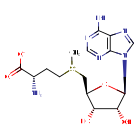
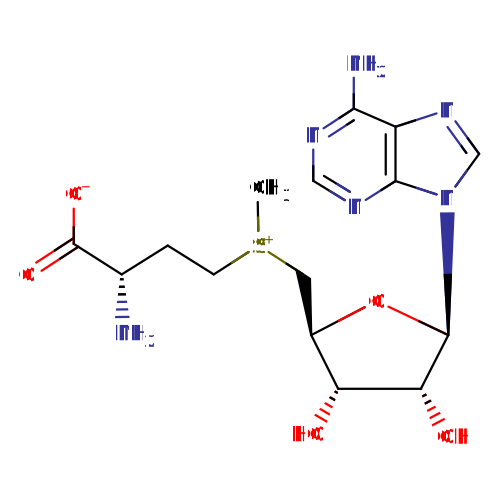
Structure for Ademetionine (DB00118)
- Weight
- Average: 398.44
Monoisotopic: 398.137239006 - Chemical Formula
- C15H22N6O5S
- Synonyms
- Ademetionine
- AdoMet
- L-S-Adenosylmethionine
- S-Adenosylmethionine
- SAM
- SAM-e
- SAMe

Pharmacology
- Indication
S-Adenosylmethionine (SAMe) is used as a drug in Europe for the treatment of depression, liver disorders, fibromyalgia, and osteoarthritis. It has also been introduced into the United States market as a dietary supplement for the support of bone and joint health, as well as mood and emotional well being.
 Reduce drug development failure ratesBuild, train, & validate machine-learning modelswith evidence-based and structured datasets.Build, train, & validate predictive machine-learning models with structured datasets.
- Associated Conditions
Indication Type Indication Combined Product Details Approval Level Age Group Patient Characteristics Dose Form Treatment of Fatigue •••••••••••• ••••••• •••••• Treatment of Intrahepatic cholestasis •••••••••••• ••••• ••••••••• ••••••• ••••••• ••••••• Treatment of Intrahepatic cholestasis •••••••••••• ••••• ••••••• ••••••• ••••••• Treatment of Intrahepatic cholestasis •••••••••••• ••••• ••••••••••••• ••••• ••••••• ••••••• ••••••• Treatment of Intrahepatic cholestasis •••••••••••• ••••••• •••••• - Contraindications & Blackbox Warnings
 Prevent Adverse Drug Events TodayTap into our Clinical API for life-saving information on contraindications & blackbox warnings, population restrictions, harmful risks, & more.Avoid life-threatening adverse drug events with our Clinical API
- Pharmacodynamics
S-adenosylmethionine is an intermediate metabolite of methionine. Its involvement in methylation assists in cellular growth and repair, maintains the phospho-bilipid layer in cell membranes. It also helps in the maintenance of the action of several hormones and neurotransmitters that affect mood. Highest concentration are found in the brain and the liver.
- Mechanism of action
S-Adenosylmethionine (SAMe) is a natural substance present in the cells of the body. It is a direct metabolite of the essential amino acid L-methionine. SAMe plays a crucial biochemical role in the body by donating a one-carbon methyl group in a process called transmethylation. SAMe, formed from the reaction of L-methionine and adenosine triphosphate catalyzed by the enzyme S-adenosylmethionine synthetase, is the methyl-group donor in the biosynthesis of both DNA and RNA nucleic acids, phospholipids, proteins, epinephrine, melatonin, creatine and other molecules.
Target Actions Organism UCatechol O-methyltransferase cofactorHumans UCap-specific mRNA (nucleoside-2'-O-)-methyltransferase 1 Not Available Humans UArsenite methyltransferase Not Available Humans UGlycine N-methyltransferase cofactorHumans US-adenosylmethionine decarboxylase proenzyme cofactorHumans US-adenosylmethionine synthase isoform type-2 cofactorHumans UCystathionine beta-synthase activatorHumans US-adenosylmethionine synthase isoform type-1 cofactorHumans - Absorption
S-Adenosylmethionine is absorbed from the small intestine following oral intake. As absorption is affected by food, it is best to take on an empty stomach. Bioavailability is low following oral intake.
- Volume of distribution
Not Available
- Protein binding
Not Available
- Metabolism
Significant first-pass metabolism in the liver. Approximately 50% of S-Adenosylmethionine (SAMe) is metabolized in the liver. SAMe is metabolized to S-adenosylhomocysteine, which is then metabolized to homocysteine. Homocysteine can either be metabolized to cystathionine and then cysteine or to methionine. The cofactor in the metabolism of homocysteine to cysteine is vitamin B6. Cofactors for the metabolism of homocysteine to methionine are folic acid, vitamin B12 and betaine.
Hover over products below to view reaction partners
- Route of elimination
Not Available
- Half-life
Not Available
- Clearance
Not Available
- Adverse Effects
 Improve decision support & research outcomesWith structured adverse effects data, including: blackbox warnings, adverse reactions, warning & precautions, & incidence rates. View sample adverse effects data in our new Data Library!Improve decision support & research outcomes with our structured adverse effects data.
- Toxicity
Irritating to mucus membranes and upper respiratory tract. Can cause CNS depression.
- Pathways
- Pharmacogenomic Effects/ADRs
- Not Available
Interactions
- Drug Interactions
- This information should not be interpreted without the help of a healthcare provider. If you believe you are experiencing an interaction, contact a healthcare provider immediately. The absence of an interaction does not necessarily mean no interactions exist.
Drug Interaction Integrate drug-drug
interactions in your softwareAcetaminophen Ademetionine may increase the hepatotoxic activities of Acetaminophen. Aminophylline The metabolism of Aminophylline can be decreased when combined with Ademetionine. Benzocaine The metabolism of Benzocaine can be decreased when combined with Ademetionine. Benzyl alcohol The metabolism of Benzyl alcohol can be decreased when combined with Ademetionine. Carvedilol The metabolism of Carvedilol can be decreased when combined with Ademetionine. - Food Interactions
- Not Available
Products
 Drug product information from 10+ global regionsOur datasets provide approved product information including:dosage, form, labeller, route of administration, and marketing period.Access drug product information from over 10 global regions.
- Product Ingredients
Ingredient UNII CAS InChI Key Ademetionine butanedisulfonate C5BTS0548U 200393-05-1 TYXBLACMHQBEEW-XKGORWRGSA-N Ademetionine disulfate ditosylate Not Available Not Available Not applicable Ademetionine disulfate monotosylate Not Available Not Available Not applicable Ademetionine disulfate tosylate 564ROC9U09 97540-22-2 XDCFCHNAIMYBAZ-XQVUROGGSA-N Ademetionine tosylate Not Available Not Available Not applicable - International/Other Brands
- Donamet / Sam-Sulfate (Natrol) / SAMe / SAMe Rx-Mood (Nature's Plus)
- Over the Counter Products
Name Dosage Strength Route Labeller Marketing Start Marketing End Region Image Heptral 500mg Gastroresistant Tablets Tablet Oral ABBOTT LABORATORIES (M) SDN. BHD. 2020-09-08 Not applicable Malaysia 
- Mixture Products
Name Ingredients Dosage Route Labeller Marketing Start Marketing End Region Image HEPASELAMİN AMİNOASİT IV İNFÜZYON ÇÖZELTİSİ 500 ML SETLİ ŞİŞE Ademetionine (0.24 %) + Adenine (0.8 %) + Ascorbic acid (0.6 %) + Aspartame (0.9 %) + Biotin (0.1 %) + Calcifediol (0.9 %) + Cysteine (0.066 %) + Lysine (0.61 %) + Methionine (0.5 %) + NADH (0.45 %) + Phosphoric acid (0.115 %) + Thiamine (0.02 %) + Tryptophan (1.1 %) + Tyrosine (0.1 %) + Valine (0.77 %) + Vitamin A (0.84 %) Solution Intravenous OSEL İLAÇ SAN. VE TİC. A.Ş. 2003-12-31 Not applicable Turkey 
HEPASELAMİN AMİNOASİT IV İNFÜZYON ÇÖZELTİSİ 500 ML SETSİZ ŞİŞE Ademetionine (0.24 %) + Adenine (0.8 %) + Ascorbic acid (0.6 %) + Aspartame (0.9 %) + Biotin (0.1 %) + Calcifediol (0.9 %) + Cysteine (0.066 %) + Lysine (0.61 %) + Methionine (0.5 %) + NADH (0.45 %) + Phosphoric acid (0.115 %) + Thiamine (0.02 %) + Tryptophan (1.1 %) + Tyrosine (0.1 %) + Valine (0.77 %) + Vitamin A (0.84 %) Solution Intravenous OSEL İLAÇ SAN. VE TİC. A.Ş. 2003-12-31 Not applicable Turkey HEPATAMINE %8 500 ML(SETLI) Ademetionine (0.24 %) + Adenine (0.8 %) + Ascorbic acid (0.6 %) + Aspartame (0.9 %) + Biotin (0.1 %) + Calcifediol (0.9 %) + Cysteine (0.066 %) + Lysine (0.61 %) + Methionine (0.5 %) + NADH (0.45 %) + Phosphoric acid (0.115 %) + Sodium bisulfite (0.01 %) + Thiamine (0.02 %) + Tryptophan (1.1 %) + Tyrosine (0.1 %) + Valine (0.77 %) + Vitamin A (0.84 %) Solution Intravenous ECZACIBAŞI-BAXTER HASTANE ÜRÜNLERİ SAN.VE TİC. A.Ş. 1990-01-16 2024-01-23 Turkey HEPATAMINE %8 500 ML(SETSIZ) Ademetionine (0.24 %) + Adenine (0.8 %) + Ascorbic acid (0.6 %) + Aspartame (0.9 %) + Biotin (0.1 %) + Calcifediol (0.9 %) + Cysteine (0.066 %) + Lysine (0.61 %) + Methionine (0.5 %) + NADH (0.45 %) + Phosphoric acid (0.115 %) + Sodium bisulfite (0.01 %) + Thiamine (0.02 %) + Tryptophan (1.1 %) + Tyrosine (0.1 %) + Valine (0.77 %) + Vitamin A (0.84 %) Solution Intravenous ECZACIBAŞI-BAXTER HASTANE ÜRÜNLERİ SAN.VE TİC. A.Ş. 1990-01-16 2024-01-23 Turkey
Categories
- ATC Codes
- A16AA02 — Ademetionine
- Drug Categories
- Alimentary Tract and Metabolism
- Amino Acids
- Amino Acids and Derivatives
- Amino Acids, Peptides, and Proteins
- Amino Acids, Sulfur
- Cytochrome P-450 CYP2E1 Inhibitors
- Cytochrome P-450 CYP2E1 Inhibitors (weak)
- Cytochrome P-450 Enzyme Inhibitors
- Dietary Supplements
- Heterocyclic Compounds, Fused-Ring
- Nucleic Acids, Nucleotides, and Nucleosides
- Nucleosides
- Purine Nucleosides
- Purines
- Ribonucleosides
- Sulfur Compounds
- Supplements
- Chemical TaxonomyProvided by Classyfire
- Description
- This compound belongs to the class of organic compounds known as 5'-deoxy-5'-thionucleosides. These are 5'-deoxyribonucleosides in which the ribose is thio-substituted at the 5'position by a S-alkyl group.
- Kingdom
- Organic compounds
- Super Class
- Nucleosides, nucleotides, and analogues
- Class
- 5'-deoxyribonucleosides
- Sub Class
- 5'-deoxy-5'-thionucleosides
- Direct Parent
- 5'-deoxy-5'-thionucleosides
- Alternative Parents
- Methionine and derivatives / Glycosylamines / Pentoses / 6-aminopurines / L-alpha-amino acids / Thia fatty acids / Aminopyrimidines and derivatives / Hydroxy fatty acids / N-substituted imidazoles / Imidolactams show 18 more
- Substituents
- 1,2-diol / 5'-deoxy-5'-thionucleoside / 6-aminopurine / Alcohol / Alpha-amino acid / Alpha-amino acid or derivatives / Amine / Amino acid / Amino acid or derivatives / Aminopyrimidine show 40 more
- Molecular Framework
- Aromatic heteropolycyclic compounds
- External Descriptors
- sulfonium betaine (CHEBI:67040) / Coenzymes (C00019)
- Affected organisms
- Humans and other mammals
Chemical Identifiers
- UNII
- 7LP2MPO46S
- CAS number
- 29908-03-0
- InChI Key
- MEFKEPWMEQBLKI-AIRLBKTGSA-N
- InChI
- InChI=1S/C15H22N6O5S/c1-27(3-2-7(16)15(24)25)4-8-10(22)11(23)14(26-8)21-6-20-9-12(17)18-5-19-13(9)21/h5-8,10-11,14,22-23H,2-4,16H2,1H3,(H2-,17,18,19,24,25)/t7-,8+,10+,11+,14+,27?/m0/s1
- IUPAC Name
- (2S)-2-amino-4-({[(2S,3S,4R,5R)-5-(6-amino-9H-purin-9-yl)-3,4-dihydroxyoxolan-2-yl]methyl}(methyl)sulfaniumyl)butanoate
- SMILES
- C[S+](CC[C@H](N)C([O-])=O)C[C@H]1O[C@H]([C@H](O)[C@@H]1O)N1C=NC2=C1N=CN=C2N
References
- Synthesis Reference
Takayasu Tsuchida, Fumihiro Yoshinaga, Shinji Okumura, "Method for producing S-adenosylmethionine or methylthioadenosine by yeast." U.S. Patent US3962034, issued November, 1971.
US3962034- General References
- Finkelstein JD, Martin JJ: Homocysteine. Int J Biochem Cell Biol. 2000 Apr;32(4):385-9. [Article]
- Fodinger M, Horl WH, Sunder-Plassmann G: Molecular biology of 5,10-methylenetetrahydrofolate reductase. J Nephrol. 2000 Jan-Feb;13(1):20-33. [Article]
- Roje S: S-Adenosyl-L-methionine: beyond the universal methyl group donor. Phytochemistry. 2006 Aug;67(15):1686-98. [Article]
- Loenen WA: S-adenosylmethionine: jack of all trades and master of everything? Biochem Soc Trans. 2006 Apr;34(Pt 2):330-3. [Article]
- Chiang PK, Gordon RK, Tal J, Zeng GC, Doctor BP, Pardhasaradhi K, McCann PP: S-Adenosylmethionine and methylation. FASEB J. 1996 Mar;10(4):471-80. [Article]
- External Links
- Human Metabolome Database
- HMDB0062709
- KEGG Compound
- C00019
- PubChem Compound
- 34755
- PubChem Substance
- 46505280
- ChemSpider
- 31982
- BindingDB
- 28422
- 9504
- ChEBI
- 67040
- ChEMBL
- CHEMBL1088977
- PharmGKB
- PA164754994
- PDBe Ligand
- SAM
- Drugs.com
- Drugs.com Drug Page
- PDRhealth
- PDRhealth Drug Page
- Wikipedia
- S-Adenosyl_methionine
- MSDS
- Download (35.5 KB)
Clinical Trials
- Clinical Trials
Phase Status Purpose Conditions Count 4 Recruiting Treatment Decompensated Cirrhosis / Hepatic Failure / Thrombocytopenia 1 4 Unknown Status Treatment Cholestasis / Viral Hepatitis B 1 3 Completed Treatment Hepatitis 1 3 Completed Treatment Intrahepatic Cholestasis Associated With Alcoholic Liver Disease 1 3 Completed Treatment Severe alcoholic liver disease 1
Pharmacoeconomics
- Manufacturers
- Not Available
- Packagers
- CVS Pharmacy
- Pharmavite
- Dosage Forms
Form Route Strength Tablet, delayed release Oral 300 MG Tablet, delayed release Oral 500 MG Tablet Oral Solution Intravenous Injection, powder, for solution Intramuscular; Intravenous 100 MG/5ML Injection, powder, for solution Intramuscular; Intravenous 200 MG/5ML Injection, powder, for solution Intramuscular; Intravenous 400 MG/5ML Tablet, delayed release Oral 200 MG Tablet, delayed release Oral 400 MG Injection, powder, for solution Intramuscular; Intravenous 300 MG/5ML Injection, powder, for solution Intramuscular; Intravenous 500 MG/5ML Tablet Oral 300 MG Tablet Oral 500 MG - Prices
Unit description Cost Unit Sam-e 400 mg tablet 0.86USD tablet CVS Pharmacy sam-e 400 mg tablet 0.79USD tablet Sam-e 200 mg tablet 0.59USD tablet DrugBank does not sell nor buy drugs. Pricing information is supplied for informational purposes only.- Patents
- Not Available
Properties
- State
- Solid
- Experimental Properties
Property Value Source boiling point (°C) 78 °C Not Available - Predicted Properties
Property Value Source Water Solubility 1.62 mg/mL ALOGPS logP 0.05 ALOGPS logP -5.3 Chemaxon logS -2.4 ALOGPS pKa (Strongest Acidic) 1.7 Chemaxon pKa (Strongest Basic) 9.41 Chemaxon Physiological Charge 1 Chemaxon Hydrogen Acceptor Count 10 Chemaxon Hydrogen Donor Count 4 Chemaxon Polar Surface Area 185.46 Å2 Chemaxon Rotatable Bond Count 7 Chemaxon Refractivity 107.07 m3·mol-1 Chemaxon Polarizability 39.26 Å3 Chemaxon Number of Rings 3 Chemaxon Bioavailability 1 Chemaxon Rule of Five Yes Chemaxon Ghose Filter No Chemaxon Veber's Rule No Chemaxon MDDR-like Rule Yes Chemaxon - Predicted ADMET Features
Property Value Probability Human Intestinal Absorption + 0.8102 Blood Brain Barrier - 0.8894 Caco-2 permeable - 0.7307 P-glycoprotein substrate Substrate 0.7584 P-glycoprotein inhibitor I Non-inhibitor 0.9664 P-glycoprotein inhibitor II Non-inhibitor 0.993 Renal organic cation transporter Non-inhibitor 0.9295 CYP450 2C9 substrate Non-substrate 0.8308 CYP450 2D6 substrate Non-substrate 0.8224 CYP450 3A4 substrate Substrate 0.5753 CYP450 1A2 substrate Non-inhibitor 0.8308 CYP450 2C9 inhibitor Non-inhibitor 0.8396 CYP450 2D6 inhibitor Non-inhibitor 0.9192 CYP450 2C19 inhibitor Non-inhibitor 0.8457 CYP450 3A4 inhibitor Non-inhibitor 0.9731 CYP450 inhibitory promiscuity Low CYP Inhibitory Promiscuity 0.9647 Ames test Non AMES toxic 0.6899 Carcinogenicity Non-carcinogens 0.9417 Biodegradation Not ready biodegradable 0.9486 Rat acute toxicity 2.5758 LD50, mol/kg Not applicable hERG inhibition (predictor I) Weak inhibitor 0.9755 hERG inhibition (predictor II) Non-inhibitor 0.7962
Spectra
- Mass Spec (NIST)
- Not Available
- Spectra
Spectrum Spectrum Type Splash Key Predicted GC-MS Spectrum - GC-MS Predicted GC-MS splash10-0a6r-5945000000-faee11753c0aa9b74806 Predicted 1H NMR Spectrum 1D NMR Not Applicable Predicted 13C NMR Spectrum 1D NMR Not Applicable - Chromatographic Properties
Collision Cross Sections (CCS)
Adduct CCS Value (Å2) Source type Source [M-H]- 205.3486255 predictedDarkChem Lite v0.1.0 [M-H]- 203.0333255 predictedDarkChem Lite v0.1.0 [M-H]- 181.81721 predictedDeepCCS 1.0 (2019) [M+H]+ 204.3834255 predictedDarkChem Lite v0.1.0 [M+H]+ 200.4574255 predictedDarkChem Lite v0.1.0 [M+H]+ 183.88329 predictedDeepCCS 1.0 (2019) [M+Na]+ 204.3789255 predictedDarkChem Lite v0.1.0 [M+Na]+ 202.2660255 predictedDarkChem Lite v0.1.0 [M+Na]+ 189.84372 predictedDeepCCS 1.0 (2019)
Targets

- Kind
- Protein
- Organism
- Humans
- Pharmacological action
- Unknown
- Actions
- Cofactor
- General Function
- O-methyltransferase activity
- Specific Function
- Catalyzes the O-methylation, and thereby the inactivation, of catecholamine neurotransmitters and catechol hormones. Also shortens the biological half-lives of certain neuroactive drugs, like L-DOP...
- Gene Name
- COMT
- Uniprot ID
- P21964
- Uniprot Name
- Catechol O-methyltransferase
- Molecular Weight
- 30036.77 Da
References
- Lee BW, Sun HG, Zang T, Kim BJ, Alfaro JF, Zhou ZS: Enzyme-catalyzed transfer of a ketone group from an S-adenosylmethionine analogue: a tool for the functional analysis of methyltransferases. J Am Chem Soc. 2010 Mar 24;132(11):3642-3. doi: 10.1021/ja908995p. [Article]
- Rutherford K, Le Trong I, Stenkamp RE, Parson WW: Crystal structures of human 108V and 108M catechol O-methyltransferase. J Mol Biol. 2008 Jun 27;380(1):120-30. doi: 10.1016/j.jmb.2008.04.040. Epub 2008 Apr 23. [Article]
- Kind
- Protein
- Organism
- Humans
- Pharmacological action
- Unknown
- General Function
- S-adenosyl-L-methionine-dependent methyltransferase that mediates mRNA cap1 2'-O-ribose methylation to the 5'-cap structure of mRNAs. Methylates the ribose of the first nucleotide of a m(7)GpppG-capped mRNA and small nuclear RNA (snRNA) to produce m(7)GpppRm (cap1). Displays a preference for cap0 transcripts. Cap1 modification is linked to higher levels of translation. May be involved in the interferon response pathway.
- Specific Function
- Mrna (nucleoside-2'-o-)-methyltransferase activity
- Gene Name
- CMTR1
- Uniprot ID
- Q8N1G2
- Uniprot Name
- Cap-specific mRNA (nucleoside-2'-O-)-methyltransferase 1
- Molecular Weight
- 95319.96 Da
References
- Haline-Vaz T, Silva TC, Zanchin NI: The human interferon-regulated ISG95 protein interacts with RNA polymerase II and shows methyltransferase activity. Biochem Biophys Res Commun. 2008 Aug 8;372(4):719-24. doi: 10.1016/j.bbrc.2008.05.137. Epub 2008 Jun 3. [Article]
- Kind
- Protein
- Organism
- Humans
- Pharmacological action
- Unknown
- Curator comments
- S-Adenosylmethionine is a substrate to the enzyme
- General Function
- S-adenosylmethionine-dependent methyltransferase activity
- Specific Function
- Catalyzes the transfer of a methyl group from AdoMet to trivalent arsenicals producing methylated and dimethylated arsenicals. It methylates arsenite to form methylarsonate, Me-AsO(3)H(2), which is...
- Gene Name
- AS3MT
- Uniprot ID
- Q9HBK9
- Uniprot Name
- Arsenite methyltransferase
- Molecular Weight
- 41747.49 Da
References
- Wang S, Li X, Song X, Geng Z, Hu X, Wang Z: Rapid equilibrium kinetic analysis of arsenite methylation catalyzed by recombinant human arsenic (+3 oxidation state) methyltransferase (hAS3MT). J Biol Chem. 2012 Nov 9;287(46):38790-9. doi: 10.1074/jbc.M112.368050. Epub 2012 Sep 6. [Article]
- Wang S, Geng Z, Shi N, Li X, Wang Z: The functions of crucial cysteine residues in the arsenite methylation catalyzed by recombinant human arsenic (III) methyltransferase. PLoS One. 2014 Oct 28;9(10):e110924. doi: 10.1371/journal.pone.0110924. eCollection 2014. [Article]
- Kind
- Protein
- Organism
- Humans
- Pharmacological action
- Unknown
- Actions
- Cofactor
- General Function
- Glycine n-methyltransferase activity
- Specific Function
- Catalyzes the methylation of glycine by using S-adenosylmethionine (AdoMet) to form N-methylglycine (sarcosine) with the concomitant production of S-adenosylhomocysteine (AdoHcy). Possible crucial ...
- Gene Name
- GNMT
- Uniprot ID
- Q14749
- Uniprot Name
- Glycine N-methyltransferase
- Molecular Weight
- 32742.0 Da
References
- Rowling MJ, Schalinske KL: Retinoid compounds activate and induce hepatic glycine N-methyltransferase in rats. J Nutr. 2001 Jul;131(7):1914-7. [Article]
- Luka Z, Cerone R, Phillips JA 3rd, Mudd HS, Wagner C: Mutations in human glycine N-methyltransferase give insights into its role in methionine metabolism. Hum Genet. 2002 Jan;110(1):68-74. Epub 2001 Dec 7. [Article]
- Rowling MJ, McMullen MH, Chipman DC, Schalinske KL: Hepatic glycine N-methyltransferase is up-regulated by excess dietary methionine in rats. J Nutr. 2002 Sep;132(9):2545-50. [Article]
- Moller MT, Samari HR, Fengsrud M, Stromhaug PE, oStvold AC, Seglen PO: Okadaic acid-induced, naringin-sensitive phosphorylation of glycine N-methyltransferase in isolated rat hepatocytes. Biochem J. 2003 Jul 15;373(Pt 2):505-13. [Article]
- Uthus EO, Brown-Borg HM: Altered methionine metabolism in long living Ames dwarf mice. Exp Gerontol. 2003 May;38(5):491-8. [Article]
- Kind
- Protein
- Organism
- Humans
- Pharmacological action
- Unknown
- Actions
- Cofactor
- General Function
- Putrescine binding
- Specific Function
- Essential for biosynthesis of the polyamines spermidine and spermine. Promotes maintenance and self-renewal of embryonic stem cells, by maintaining spermine levels (By similarity).
- Gene Name
- AMD1
- Uniprot ID
- P17707
- Uniprot Name
- S-adenosylmethionine decarboxylase proenzyme
- Molecular Weight
- 38339.335 Da
References
- Dudkowska M, Stachurska A, Grzelakowska-Sztabert B, Manteuffel-Cymborowska M: Up-regulation of spermidine/spermine N1-acetyltransferase (SSAT) expression is a part of proliferative but not anabolic response of mouse kidney. Acta Biochim Pol. 2002;49(4):969-77. [Article]
- Ndjonka D, Zou Y, Bi X, Woster P, Walter RD, Luersen K: The activator-binding site of Onchocerca volvulus S-adenosylmethionine decarboxylase, a potential drug target. Biol Chem. 2003 Aug;384(8):1195-201. [Article]
- Notari S, Lucchi R, Traversa U, Fabbri E, Poli A: Reversible changes in goldfish brain polyamine concentrations and synthetic enzymes after cold exposure. Brain Res. 2004 May 1;1006(2):241-7. [Article]
- Yerlikaya A, Stanley BA: Structural basis for the inactivation of AdoMetDC K12R mutant. Protein Pept Lett. 2006;13(3):313-7. [Article]
- Kind
- Protein
- Organism
- Humans
- Pharmacological action
- Unknown
- Actions
- Cofactor
- General Function
- Methionine adenosyltransferase activity
- Specific Function
- Catalyzes the formation of S-adenosylmethionine from methionine and ATP.
- Gene Name
- MAT2A
- Uniprot ID
- P31153
- Uniprot Name
- S-adenosylmethionine synthase isoform type-2
- Molecular Weight
- 43660.37 Da
References
- Mudd SH, Cerone R, Schiaffino MC, Fantasia AR, Minniti G, Caruso U, Lorini R, Watkins D, Matiaszuk N, Rosenblatt DS, Schwahn B, Rozen R, LeGros L, Kotb M, Capdevila A, Luka Z, Finkelstein JD, Tangerman A, Stabler SP, Allen RH, Wagner C: Glycine N-methyltransferase deficiency: a novel inborn error causing persistent isolated hypermethioninaemia. J Inherit Metab Dis. 2001 Aug;24(4):448-64. [Article]
- Farrar C, Clarke S: Altered levels of S-adenosylmethionine and S-adenosylhomocysteine in the brains of L-isoaspartyl (D-Aspartyl) O-methyltransferase-deficient mice. J Biol Chem. 2002 Aug 2;277(31):27856-63. Epub 2002 May 22. [Article]
- Martinez-Chantar ML, Latasa MU, Varela-Rey M, Lu SC, Garcia-Trevijano ER, Mato JM, Avila MA: L-methionine availability regulates expression of the methionine adenosyltransferase 2A gene in human hepatocarcinoma cells: role of S-adenosylmethionine. J Biol Chem. 2003 May 30;278(22):19885-90. Epub 2003 Mar 26. [Article]
- Martinez-Chantar ML, Garcia-Trevijano ER, Latasa MU, Martin-Duce A, Fortes P, Caballeria J, Avila MA, Mato JM: Methionine adenosyltransferase II beta subunit gene expression provides a proliferative advantage in human hepatoma. Gastroenterology. 2003 Apr;124(4):940-8. [Article]
- Kind
- Protein
- Organism
- Humans
- Pharmacological action
- Unknown
- Actions
- Activator
- General Function
- Ubiquitin protein ligase binding
- Specific Function
- Hydro-lyase catalyzing the first step of the transsulfuration pathway, where the hydroxyl group of L-serine is displaced by L-homocysteine in a beta-replacement reaction to form L-cystathionine, th...
- Gene Name
- CBS
- Uniprot ID
- P35520
- Uniprot Name
- Cystathionine beta-synthase
- Molecular Weight
- 60586.05 Da
References
- Janosik M, Kery V, Gaustadnes M, Maclean KN, Kraus JP: Regulation of human cystathionine beta-synthase by S-adenosyl-L-methionine: evidence for two catalytically active conformations involving an autoinhibitory domain in the C-terminal region. Biochemistry. 2001 Sep 4;40(35):10625-33. [Article]
- Jacobs RL, Stead LM, Brosnan ME, Brosnan JT: Hyperglucagonemia in rats results in decreased plasma homocysteine and increased flux through the transsulfuration pathway in liver. J Biol Chem. 2001 Nov 23;276(47):43740-7. Epub 2001 Sep 14. [Article]
- Choumenkovitch SF, Selhub J, Bagley PJ, Maeda N, Nadeau MR, Smith DE, Choi SW: In the cystathionine beta-synthase knockout mouse, elevations in total plasma homocysteine increase tissue S-adenosylhomocysteine, but responses of S-adenosylmethionine and DNA methylation are tissue specific. J Nutr. 2002 Aug;132(8):2157-60. [Article]
- Evande R, Blom H, Boers GH, Banerjee R: Alleviation of intrasteric inhibition by the pathogenic activation domain mutation, D444N, in human cystathionine beta-synthase. Biochemistry. 2002 Oct 1;41(39):11832-7. [Article]
- Kind
- Protein
- Organism
- Humans
- Pharmacological action
- Unknown
- Actions
- Cofactor
- General Function
- Methionine adenosyltransferase activity
- Specific Function
- Catalyzes the formation of S-adenosylmethionine from methionine and ATP.
- Gene Name
- MAT1A
- Uniprot ID
- Q00266
- Uniprot Name
- S-adenosylmethionine synthase isoform type-1
- Molecular Weight
- 43647.6 Da
References
- Carretero MV, Latasa MU, Garcia-Trevijano ER, Corrales FJ, Wagner C, Mato JM, Avila MA: Inhibition of liver methionine adenosyltransferase gene expression by 3-methylcolanthrene: protective effect of S-adenosylmethionine. Biochem Pharmacol. 2001 May 1;61(9):1119-28. [Article]
- Martinez-Chantar ML, Corrales FJ, Martinez-Cruz LA, Garcia-Trevijano ER, Huang ZZ, Chen L, Kanel G, Avila MA, Mato JM, Lu SC: Spontaneous oxidative stress and liver tumors in mice lacking methionine adenosyltransferase 1A. FASEB J. 2002 Aug;16(10):1292-4. Epub 2002 Jun 7. [Article]
- Santamaria E, Avila MA, Latasa MU, Rubio A, Martin-Duce A, Lu SC, Mato JM, Corrales FJ: Functional proteomics of nonalcoholic steatohepatitis: mitochondrial proteins as targets of S-adenosylmethionine. Proc Natl Acad Sci U S A. 2003 Mar 18;100(6):3065-70. Epub 2003 Mar 11. [Article]
- Martinez-Chantar ML, Latasa MU, Varela-Rey M, Lu SC, Garcia-Trevijano ER, Mato JM, Avila MA: L-methionine availability regulates expression of the methionine adenosyltransferase 2A gene in human hepatocarcinoma cells: role of S-adenosylmethionine. J Biol Chem. 2003 May 30;278(22):19885-90. Epub 2003 Mar 26. [Article]
- Martinez-Chantar ML, Garcia-Trevijano ER, Latasa MU, Martin-Duce A, Fortes P, Caballeria J, Avila MA, Mato JM: Methionine adenosyltransferase II beta subunit gene expression provides a proliferative advantage in human hepatoma. Gastroenterology. 2003 Apr;124(4):940-8. [Article]
Enzymes
- Kind
- Protein
- Organism
- Humans
- Pharmacological action
- Unknown
- Actions
- Substrate
- General Function
- Spermidine synthase activity
- Specific Function
- Catalyzes the production of spermidine from putrescine and decarboxylated S-adenosylmethionine (dcSAM). Has a strong preference for putrescine as substrate, and has very low activity towards 1,3-di...
- Gene Name
- SRM
- Uniprot ID
- P19623
- Uniprot Name
- Spermidine synthase
- Molecular Weight
- 33824.455 Da
References
- Cyriac J, Haleem R, Cai X, Wang Z: Androgen regulation of spermidine synthase expression in the rat prostate. Prostate. 2002 Mar 1;50(4):252-61. [Article]
- Dejima H, Kobayashi M, Takasaki H, Takeda N, Shirahata A, Samejima K: Synthetic decarboxylated S-adenosyl-L-methionine as a substrate for aminopropyl transferases. Biol Pharm Bull. 2003 Jul;26(7):1005-8. [Article]
- Franceschetti M, Fornale S, Tassonia A, Zuccherelli K, Mayer MJ, Bagni N: Effects of spermidine synthase overexpression on polyamine biosynthetic pathway in tobacco plants. J Plant Physiol. 2004 Sep;161(9):989-1001. [Article]
- Kind
- Protein
- Organism
- Humans
- Pharmacological action
- Unknown
- Actions
- Inhibitor
- General Function
- Steroid hydroxylase activity
- Specific Function
- Metabolizes several precarcinogens, drugs, and solvents to reactive metabolites. Inactivates a number of drugs and xenobiotics and also bioactivates many xenobiotic substrates to their hepatotoxic ...
- Gene Name
- CYP2E1
- Uniprot ID
- P05181
- Uniprot Name
- Cytochrome P450 2E1
- Molecular Weight
- 56848.42 Da
References
- Caro AA, Cederbaum AI: Inhibition of CYP2E1 catalytic activity in vitro by S-adenosyl-L-methionine. Biochem Pharmacol. 2005 Apr 1;69(7):1081-93. [Article]
- Cederbaum AI: Hepatoprotective effects of S-adenosyl-L-methionine against alcohol- and cytochrome P450 2E1-induced liver injury. World J Gastroenterol. 2010 Mar 21;16(11):1366-76. [Article]

Drug created at June 13, 2005 13:24 / Updated at April 09, 2024 18:11